Iran is sanguine about the fate of nuclear deal
By M K Bhadrakumar | Indian Punchline | December 1, 2016
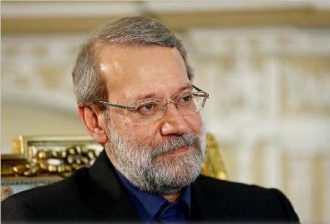 The Iranian official news agency IRNA carried a detailed summary of an interview given by the Speaker of the Majlis Ali Larijani to a Chinese TV network, regarding the fate of the Iran nuclear deal of July 2015 under the Donald Trump presidency in the United States.
These have been the most comprehensive remarks so far since the election of Trump, at an authoritative level in the Iranian leadership. Unsurprisingly, IRNA highlighted the interview. The salience remains to be that Iran is keeping an open mind on the incoming US president’s likely policies. (See my blog Iran keeps open mind on Donald Trump.)
However, Larijani’s latest remarks display a quiet confidence in Tehran that Trump’s campaign speeches regarding Iran will not translate as policies. Larijani is an accomplished statesman and when he flags that an American president’s policies ‘usually differ’ from his election rhetoric, it becomes a considered statement.
Tehran indeed should know. Ronald Reagan’s campaign speeches in 1980 in the middle of the hostage crisis were much more threatening than Trump’s. In fact, Iran was the leitmotif of Reagan’s campaign rhetoric against Jimmy Carter. Yet, some say the Reagan team didn’t want a denouement to the hostage crisis until the November election was over. (In fact, Iranians released the hostages soon after the election was over, but before Reagan moved into Oval Office.)
Reagan’s brilliant but devious campaign manager was none other than William Casey, who later had covert dealings involving Iran as head of the CIA in the new administration. It won’t be surprising if Iranians are jogging the memory. Only the other day Trump had shouted that Goldman Sachs had ‘total control’ over Hillary Clinton and yet his team already is stacked with Goldman insiders – Steve Bannon as chief White House strategist, Steven Mnuchin for the Treasury Secretary job and so on.
At any rate, Larijani pointed out that the US’ European allies (and Russia and China) may not go along with any US move to scuttle the Iran deal or reimpose sanctions. This is entirely plausible.
What Larijani left unsaid was about any back channel contact with the Trump team. He couldn’t have been explicit, of course. Interestingly, he also did not slam the door shut against the idea of Iran working with the US on regional issues. He merely said that so far American and Iranian regional policies have differed.
[Asked whether you are ready for cooperation with the US on regional issues, Larijani said, ‘We think that its policies in the region are against those of Iran’s.’
The US and the Zionist regime enjoy chaotic situation in the region, as they think their interests will be ensured under this condition while Iran has a different viewpoint as it thinks about a sustainable security in the region and believes that terrorism should be uprooted.
‘I think China and Russia are of the same attitude regarding the issues but the US and the Zionist regime think otherwise,’ Larijani said.]
Indeed, Trump’s move to work with Russia over the Syrian conflict cannot but involve Iran one way or another at an early stage itself. President Hassan Rouhani telephoned President Vladimir Putin on Monday and the Kremlin readout said the two leaders “highly rated the level of Russian-Iranian cooperation on the anti-terrorist track and agreed to work closely together to ensure the long-term normalization of the situation in Syria.”
What makes Iran an engrossing regional power is invariably the sophisticated intellectual underpinnings it gives to its foreign policies and regional strategy. So, how does Trump appear through the Iranian looking glass?
Glancing through the range of opinions in Iran, certain elements can be identified. First, in the excessive focusing on Trump’s colorful personality traits (which are, arguably, not more exotic than Reagan or George W. Bush’s), foreign observers have neglected the acuteness of the crisis within the United States, which has been steadily building up through recent decades.
Trump ultimately represents the class interests of the rich and the privileged and there is going to be a glaring shortfall in his ability or willingness to redeem his pledges to the marginalised and alienated sections of society. The seething anger is going to mount as it becomes clear that the ‘swamps’ which Trump promised to clean up remain an enduring fact of life. In sum, much of Trump’s attention will come to be trained on the challenges posed by the domestic political situation.
Second, Iranian scholars underscore the dialectics of the trans-Atlantic relationship. (The EU foreign policy chief Federica Mogherini visited Tehran thrice this year.) Trump is starting with a handicap since European opinion militates against his rise to power, not only in style but also in the content of his whole political platform. An unfriendly Europe will try to seek a new code of conduct, which in turn will compel Trump to trim his discourse.
Third, emanating from the above two factors, Iranian scholars assess that the US cannot afford to wage wars abroad. It neither has the money needed to spend on wars nor does it enjoy the political respite to take the eyes off the acute internal contradictions in the US’ political economy. Most certainly, an invasion such as the one in 2003 in Iraq is way beyond American capability. Europe will not join any US-led ‘coalition of the willing’, either. Thus, the limits to the US influence in the Middle East are already apparent.
All in all, therefore, a new concert of world powers is becoming necessary and unavoidable, especially with a major potential economic crisis staring at the world economy. Larijani’s cautious optimism can be put in perspective as the articulation of a rational assessment.
Iranophobes on Parade
Will Iran be the target of the Trump regime?
By Philip Giraldi • Unz Review • November 29, 2016
One of the most discouraging aspects of the filling out of the Donald Trump cabinet is the array of Iran haters that seem to be lining up in the foreign policy and national security areas. Trump has been personally advocating sensible policies relating to Russia and Syria but he appears to have gone off the rails regarding Iran, which just might be attributed to those who are giving him advice. A reversion to the relationship that prevailed prior to last year’s signing of the Joint Comprehensive Plan of Action (JCPA) between Iran and the so-called P5+1 consisting of the United States, Russia, China, France, Britain, and the European Union would be undesirable, to say the least, but that appears to be what is likely to develop. Or it could be even worse, finding bilateral support for “action” as a number of policy advisors in the presidential campaign from both parties were endorsing something like war against the Persians.
The irony is that the arguments made then and now for attacking Iran were based on the threat of Tehran deciding to build its own atomic bomb. With the JCPA agreement, however, most would agree that any remaining concerns that Tehran might even be considering the development of a nuclear weapons program were greatly diminished. Iran has since that time been in compliance with the agreement, possible nuclear proliferation has been avoided, and, apart from the fulminations of the inevitable anti-Iranian politicians in the United States, the signatories to the agreement have expressed their satisfaction with the outcome. It has been Washington that has failed to live up to its part of the agreement by easing remaining restrictions that are being imposed against Iranian financial institutions and regarding the purchase of some commercially available dual use technologies.
Candidate Donald Trump did not need much prompting to pick up on the prevailing anti-Iran sentiment. In a number of campaign speeches he denounced the JCPA as a bad deal and vowed to tear it up upon taking office. Some of that sentiment might well have been derived from his desire to distance himself from foreign policy positions promoted by President Barack Obama that were subsequently endorsed by Hillary Clinton so it is no surprise that since being elected he has somewhat modified his stance. He is now veering towards trying to renegotiate the agreement, which would likely be impossible given that it has multiple signatories. He could nevertheless disrupt it by continuing or increasing sanctions on Iran.
The thought of reverting to a state of unrelenting hostility towards Iran is disconcerting. One recalls joint CIA-Mossad operations between 2010 and 2012 that assassinated four civilian scientists connected to the country’s nuclear program as well as the creation of the Stuxnet virus that threatened to spread to other computers worldwide. It is generally accepted that Israel’s Mossad planned and prepared the killing of the scientists with a little help from the U.S., attacks which were almost certainly carried out by associates of the radical Marxist group Mujaheddin e Khalq (MEK), which is now being seen favorably by several Trump advisors even though the group is Marxist, cult-like and has killed Americans.
The assassinations were based on the false premise that Iran had a nuclear weapons program that could be disrupted by killing the scientists and technicians involved. Two comprehensive studies by the American government’s Central Intelligence Agency (CIA) conducted in 2007 and 2011 determined that no such program existed and that Iran had never taken any serious steps to initiate such research. Israel was also aware that there was no program. Nevertheless, the Israeli and American governments took steps to interfere with Iran’s existing and completely legal and open to inspection atomic energy program by identifying then killing its scientists and also introducing viruses into its computer systems. This was in spite of the fact that Iran was fully compliant with international norms on nuclear research and it was a signatory to the Nuclear Non-Proliferation Treaty (NPT), which Israel, possessing its own nuclear arsenal, had refused to sign.
The history of the Iran-U.S. relationship is significant because several Trump advisors appear to be locked into a time warp regarding the Mullahs and the threat to Americans that they allegedly constitute. Former Defense Intelligence Agency (DIA) head Michael Flynn, who will be the Trump National Security Advisor, is the most prominent Iran hater and also the most outspoken.
Flynn, also an unapologetic Islamophobe, has said that Iran represents a danger to U.S. national security and that our friend and ally Israel “lives under the threat of total annihilation from Iran… something the United States must never allow.” He believes that Iran intends to build nuclear weapons as well as the ballistic missiles needed to deliver them on target and thinks that “regime change” is the only solution to the threat posed by the current government. And for Flynn, Iran is not alone, it is part of a “global alliance” that includes China and Russia which seeks to threaten the U.S. and its allies.
Flynn concludes that Iran is unmitigated evil and that Washington should have nothing to do with it, apart from recognizing the reality that it and its government must be destroyed. I personally attended a conference in Moscow last December at which Flynn asserted that Iran is solely responsible for nearly all the instability in the Middle East and is behind at least five wars in the region, an assertion that is just as ridiculous as it sounds.
One might suggest that Flynn is terribly uninformed about a subject regarding which he claims expertise. His comments would suggest that the capabilities of the DIA that he once headed were dangerously overrated, but reports from his former colleagues indicate that he was always guilty of serious overreach in his pronouncements, something they referred to as “Flynn facts”.
If Flynn were just one loud voice braying in the wilderness he would be bad enough since his job is important, particularly with a president who has no foreign policy experience, but the sad fact is that he is not alone. Congressman, West Point grad and former Army officer Mike Pompeo, who will head the CIA, is more-or-less on the same page when it comes to Iran. He supports new sanctions on the country and, regarding his appointment as Director, he had only one comment to make and it related to the JCPA, “I look forward to rolling back this disastrous deal with the world’s largest state sponsor of terrorism.” As in the case with Flynn and DIA one has to wonder what kind of “objective” intelligence CIA will be producing under Pompeo.
Finally, there is retired Marine General James Mattis, who is being considered for a senior position in national security, possibly as Secretary of Defense. He is yet another Iranophobe who opposed the JCPA and calls Iran a rogue state that constitutes the “greatest threat” in the Middle East. As part of the evidence for that assessment he cites Iran’s alliance with Syria, which is at least in part directed against America’s enemy number one ISIS, demonstrating once again how Establishment Washington has difficulty in understanding what constitutes actual national interests. Mattis, in fact, denies that Iran is actually fighting ISIS.
The neoconservative kingpin Bill Kristol is gloating, headlining in his Weekly Standard publication that the “Iran Deal Is Doomed!” He should be pleased. Team Trump’s attitude towards an alleged Iranian threat is delusional, more in sync with Kristol and some Israeli thinking than with any actual American interests. Just as neoconservatives always believe that it is 1938 and we are in Munich, Flynn, Pompeo and Mattis likewise seem to think that it is 1979 and the United States Embassy in Tehran is still occupied.
The three Trumpsmen are not stupid, far from it, but the problem appears to be that they cannot comfortably assess two or more conflicting concepts at the same time, which might be due to the linear thinking derived from their military backgrounds. The Middle East is awash with players, all of whom have separate agendas, few of which coincide with actual American interests. If one is fixated on or obsessed with Iran as the sole disruptive force in the region it becomes difficult to see how Saudi Arabia, Turkey and Israel are also problems. It is decidedly neoconnish to look at a complex foreign policy issue and only see black and white, but that is what the Trump national security team seems to be prone to do.
Hopefully someone will convince Donald Trump that the real answer to eliminating the “Iranian threat” is not war. It requires building on the relationship established by JCPA to bind Iran more closely to the international community, both economically and culturally. By all accounts, young Iranians, a majority of the population, are dismissive of the rigidity of their own government and are very open to Western ideas and lifestyle. Change will come to Iran if the United States and its European allies encourage more rather than less non-threatening contact. It will not come at the point of a bayonet as Flynn, Pompeo and Mattis appear to be promoting.
Iran fulfilling heavy water obligations under JCPOA: AEOI
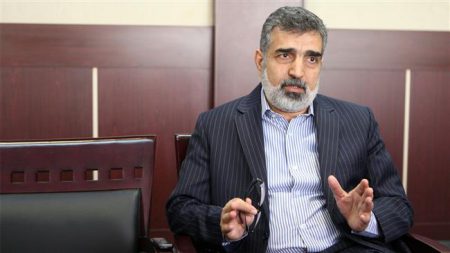
Spokesman for the Atomic Energy Organization of Iran (AEOI), Behrouz Kamalvandi
Press TV – November 18, 2016
Iran has remained committed to its obligations, including those concerning its heavy water stockpiles, under last year’s landmark nuclear agreement signed between the Islamic Republic and the P5+1 group of countries, a senior Iranian nuclear official says.
“The Islamic Republic of Iran has fulfilled its obligations on heavy water stockpiles based on the JCPOA (the nuclear deal known as the Joint Comprehensive Plan of Action), and remains committed to it,” the spokesman for the Atomic Energy Organization of Iran (AEOI), Behrouz Kamalvandi, told IRIB on Friday.
Kamalvandi made the comments in reaction to a report by the International Atomic Energy Agency (IAEA) last week that claimed that Iran’s stocks of heavy water had slightly exceeded the 130-tonne level set out in the JCPOA.
IAEA Director General Yukiya Amano on Thursday chided Iran for exceeding the agreed limit on its stockpiles and said, “It is important that such situations should be avoided in future in order to maintain international confidence in the implementation.”
Iran and the five permanent members of the United Nations Security Council – the United States, France, Britain, Russia and China – plus Germany signed the JCPOA in July 2015 and started implementing it in January 2016.
Under the JCPOA, Iran undertook to put limitations on its nuclear program in exchange for the removal of nuclear-related sanctions imposed against Tehran.
The deal requires Iran’s storage of uranium enriched to up to 3.67 percent purity to stay below 300 kilograms. Tehran has also agreed to keep its heavy water stockpile below 130 metric tonnes.
“According to the JCPOA, we were required to offer on the international market any excess over 130 tonnes of heavy water and we have so far sold 70 tonnes,” Kamalvandi said.
He added, “Negotiations are under way with interested countries, the Europeans in particular,” to sell the rest.
The nuclear official emphasized that Iran would remain committed to its undertakings under the JCPOA on heavy water restrictions “so long as the JCPOA is in place.”
Last week, US State Department spokesman Mark Toner played down concerns about Iran exceeding the heavy water stockpile limit.
He said it was “important to note that Iran made no effort to hide this” and that he was “not sure whether that constitutes a formal violation.”
The AEOI head Ali Akbar Salehi said in October that the Islamic Republic had sold 32 tonnes of heavy water to the United States and delivered 38 tonnes of the nuclear substance to Russia.
“European firms, including German and French ones, seek to purchase Iran’s heavy water and we have expressed our readiness in this regard,” Salehi added.
Iran keeps open mind on Donald Trump
By M K Bhadrakumar | Indian Punchline | November 17, 2016
On Wednesday, for the first time, Iran’s Supreme Leader Ayatollah Ali Khamenei expressed his views on the US elections of November 8. The Tehran Times quoted Khamenei as saying,
- Unlike some of those in the world who have either been bemoaning or celebrating the results of the American elections, we are neither bemoaning nor celebrating because the results make no difference to us. Nor do we have worries, and by the grace of God, we are ready to encounter any likely incident.
Khamenei said that from a historical perspective,
- We have no judgment about this election because America is the same America, and over the past 37 years either of the two parties which has been in office not only has done no good (to the Iranian nation), but has always been an evil to the Iranian nation.
Khameini downgraded the significance of the US election and stressed that Iran’s focus should be on promoting and preserving the “internal strength of the establishment” and nurturing and preserving the “revolutionary spirit and orientation.”
The Supreme Leader’s remarks come amidst furious speculations in the American media, driven mostly by pro-Israeli Jewish lobby, to the effect that the Iran nuclear deal (known as Joint Comprehensive Plan of Action or JCPOA) faces the prospect of sudden death any moment after January 20. The Israeli intelligence website DebkaFile, which routinely disseminates sensational items on Iran, even reported that Trump is contemplating a military attack on Iran as soon as he moves into the Oval Office.
Therefore, Khamenei’s indifference is striking. It must be noted, though, that Khamenei made no reference to US president-elect Donald Trump, directly or indirectly. What does that imply?
Simply put, Iran is not worried, since Iran does not expect anything dramatically different in the US policies toward Iran. The ‘psy war’ by the Israeli lobby has failed to have an effect. The Iranians would know that Israelis habitually create larger-than-life image of themselves, but the plain truth is that Trump has not been a candidate sponsored by the Jewish lobby in America. In fact, Jewish circles have attributed to him traces of ‘anti-semitism’, Trump’s son-in-law’s Jewish ethnicity notwithstanding.
Can it be that Iran has lines of communication open to Trump’s transition team? Now, that isn’t such an outrageous thought as it may seem at first sight, because, simply put, that is the way Iranian diplomacy always worked. Iran is a tireless communicator. A clutch of ‘red lines’ apart (such as the ‘Zionists’ or Daesh and al-Qaeda), Iran’s diplomacy is willing to engage even adversaries or detractors.
What must be noted in this context is that two key personalities in the Iranian regime, both enormously prestigious and powerful within Iran and in the outside world, have hinted in the recent days that Tehran keeps an open mind on Trump – Foreign Minister Mohammad Javad Zarif and the Speaker of the Majlis (parliament) Ali Larijani.
Zarif said on November 11 that in his estimation, the Trump administration will eventually accept the landmark nuclear deal “once the dust has settled and people are briefed about the realities of the region and the world.” He added, “It will be in the interest of everybody to remain committed in practice to the JCPOA. But if there are doubts about the implementation, then Iran will have its own options as well.”
Zarif is a highly experienced career diplomat who served for long years in New York and enjoys extensive contacts with American political elites and the foreign-policy community. Zarif implied here that Tehran is inclined to take much of what Trump had said on the campaign trail regarding Iran as the stuff of grandstanding and politicking, and far from the final word on the subject.
Equally, the speaker of the Iranian Majlis Ali Larijani’s remarks in Tehran last Sunday to a big gathering of some 100 parliamentarians merits even more careful attention. Larijani cautioned the Iranian religious and political elites against making intemperate remarks about the US president-elect. In a highly nuanced remark, he counselled,
- Analyses and remarks about the U.S. president-elect should be more mature, and hasty remarks and premature judgments should be avoided until the Foreign Ministry takes a transparent stance.
No doubt, Larijani made a hugely significant remark. Larijani is a veteran diplomat and statesman of many battles with ‘Great Satan’, and chooses his words with utmost care. In effect, he pleaded for patience till such time as when Zarif could take a “transparent stance”.
Larijani spoke in the context of some flippant remarks attributed to influential clerics lately scoffing at Trump. Evidently, he has restrained them from muddying the waters and cautioned them against making “premature judgments”. Larijani is close to Supreme Leader Khamenei.
The salience of what Larijani said is that it is critically important that Zarif gets a free hand to conduct diplomacy optimally in a dynamic situation in a high-stakes game when the contours of the transition in Washington are far from crystallized.
Kaine, Pence and Their VP Debate Fact-Checkers Are All Wrong on Iran
By Nima Shirazi | Wide Asleep In America | October 6, 2016
If anything was made clear during the Vice Presidential debate between Tim Kaine and Mike Pence it’s that neither man knows much about the Iranian nuclear program. And neither do the fact-checkers tasked with judging the candidates’ own statements about it.
During the course of 90 excruciating minutes, Tim Kaine accused Iran of “racing toward a nuclear weapon” and repeatedly boasted that his running mate Hillary Clinton was responsible for “stopping” that “nuclear weapons program without firing a shot.” Meanwhile, Donald Trump’s veep pick Mike Pence kept insisting that the Iran deal, signed by six world powers and Iran in July 2015, effectively guaranteed that “Iran will someday become a nuclear power because there’s no limitations once the period of time of the treaty comes off.”
None of these claims is even remotely true.
Obviously, claims put forth by both Kaine and Pence rest on a wholly false presumption: that Iran is/was desperately trying to acquire nuclear weapons and has/had an active “nuclear weapons program” to achieve that goal.
As I have written endlessly:
International intelligence assessments have consistently affirmed that Iran has no nuclear weapons program. What Iran does have, however, is a nuclear energy program with uranium enrichment facilities, all of which are under international safeguards, strictly monitored and routinely inspected by the IAEA. No move to divert nuclear material to military or weaponization purposes has ever been detected. This is consistently affirmed by U.S., British, Russian, and even Israeli intelligence, as well as the IAEA. In fact, the IAEA itself has said there is “no concrete proof” Iran’s nuclear program “has ever had” a military component.
Eventually, due to the distinct and consistent lack of evidence for any nuclear weapons program, the United States echo chamber sidelined accusations of an active militarization program in favor of the round-about, jargon-laden claim that Iran was “intending to obtain the capability” to make nukes, rather than actually trying to make nukes. This, conveniently, put Iran in the position of having to prove a negative, despite being under the strictest IAEA inspection regime in history and providing access to its facilities above and beyond what was required by law.
The rhetorical bait-and-switch was plain for all to see when Secretary of Defense Leon Panetta admitted in 2012, “Are they trying to develop a nuclear weapon? No.” For good propagandistic measure, however, he added, “But we know that they’re trying to develop a nuclear capability, and that’s what concerns us.”
Around the same time, an unnamed U.S. intelligence official told the Washington Post that no decision had even been made in Iran to pursue nuclear weapons, explaining, “Our belief is that they are reserving judgment on whether to continue with key steps they haven’t taken regarding nuclear weapons.”
Early the following year, Panetta begrudgingly reaffirmed this assessment on Meet The Press. “What I’ve said, and I will say today,” Panetta told Chuck Todd, “is that the intelligence we have is they have not made the decision to proceed with the development of a nuclear weapon. They’re developing and enriching uranium. They continue to do that.” He added, “I think– I think the– it’s a clear indication they say they’re doing it in order to develop their own energy source.” The NPT guarantees signatory states the right to enrich uranium for nuclear energy production. There is nothing illegal or sinister about this and Iran has operated its enrichment program openly and under IAEA safeguards.
Panetta, in response to Todd’s repeated goading, eventually disputed the entire premise so often repeated by politicians and pundits: “I can’t tell you they’re in fact pursuing a weapon because that’s not what intelligence says we– we– we’re– they’re doing right now,” he said.
U.S. intelligence assessments have consistently affirmed this. In 2012, Director of National Intelligence James Clapper told a Congressional committee, “We assess Iran is keeping open the option to develop nuclear weapons, in part by developing various nuclear capabilities that better position it to produce such weapons, should it choose to do so. We do not know, however, if Iran will eventually decide to build nuclear weapons.” This finding has been repeated year in and year out.
Even the final report on outstanding allegations made by the United States and Israeli governments by the IAEA, released last December, was sensationalized to the point of absurdity. At most, the agency found, the “Possible Military Dimensions” of its nuclear energy program or the “Alleged Studies” that Iran had long been accused of conducting turned out to be merely “feasibility and scientific studies”(of nuclear and non-nuclear technology that has proven civilian uses), not active procedures or policies directed at making atomic bombs.
Moreover, and more importantly, this supposed research involved absolutely no diversion of nuclear material for non-peaceful uses, and therefore were not violations of either Iran’s commitments under its safeguards agreement with the IAEA or a breach of the NPT itself.
By actually assessing the facts, it is beyond clear that, despite decades of alarmism, hype and hysteria, Iran never violated the NPT, and there has never been any evidence of the existence of an “Iranian nuclear weapons program.”
Beyond this, Tim Kaine’s claims that Hillary Clinton was the driving force behind diplomacy with Iran are absurd. Quite the contrary, the breakthrough for talks – that is, the Obama administration deciding to drop the “zero enrichment” demand that had soured diplomatic efforts since 2005 – occurred despite Clinton’s insistence that Iran be denied their inalienable nuclear rights. This shift in policy was due primarily to the efforts of John Kerry, both as Senate Foreign Relations Chair during Obama’s first term and then as Secretary of State after Clinton left the office.
But Kaine wasn’t alone in his mistakes. Even fact-checkers didn’t get their facts straight.
For instance, in response to Kaine’s claim that Clinton “worked a tough negotiation with nations around the world to eliminate the Iranian nuclear weapons program without firing a shot,” PBS National Security Correspondent Mary Louise Kelly wrote this:
The deal slowed but does not eliminate Iran’s nuclear weapons program. Iran agreed to eliminate its stockpile of medium enriched uranium, to dramatically cut its stockpile of low enriched uranium, and to allow international inspectors to visit nuclear facilities — in exchange for relief from sanctions.
Again, Iran didn’t have a nuclear weapons program for anyone to eliminate. Furthermore, there is no such thing as “medium enriched uranium,” according to the International Atomic Energy Agency. There’s only low and high – Iran has never, ever, enriched uranium close to weapons-grade levels. Also misleading is Kelly’s assertion that the deal allowed “international inspectors to visit nuclear facilities,” considering that IAEA inspectors already had access to Iran’s nuclear infrastructure long before the deal was struck.
Other fact-checkers – from ABC to the New York Times – were similarly wrong on the facts, as noted by longtime Iran watcher Ali Gharib:
Hillary Clinton didn’t help to eliminate Iran’s nuclear weapons program because the talks weren’t about eliminating Iran’s nuclear weapons program because Iran didn’t have a nuclear weapons program at that time to eliminate. Kaine, therefore, did exaggerate Clinton’s role: he credited her with participating in talks that didn’t actually do what he said they did.
Pence’s insistence that the Iran deal failed at its primary mission was also wholly false. “The goal was always that we would only lift the sanctions if Iran permanently renounced their nuclear [ambitions],” said Pence, adding, “They have not renounced their nuclear ambitions. When the deal’s period runs out, there is no limitation on them obtaining weapons.”
Everything about this is wrong. Iran has publicly, repeatedly and consistently renounced any and all interest in acquiring nuclear weapons on legal, strategic and moral grounds for literally decades. Therefore, the phrase “their nuclear ambitions,” which Pence uses as a dog whistle for “pursuit of nuclear weapons,” doesn’t mean what Pence thinks it does.
As Gharib has also pointed out, Iran’s commitment not to obtain nukes goes well beyond the stipulations of the Iran deal. Even after the terms expire (and some of the most important ones never do), “having a nuclear weapons program will still be prohibited not only by Iran’s signature to the Nuclear Non-Proliferation Treaty but also by express promises the country made as part of the nuclear deal itself. The Joint Comprehensive Plan of Action (the Iran deal’s formal name) says, ‘Iran reaffirms that under no circumstances will Iran ever seek, develop or acquire any nuclear weapons.’ It’s plain as day, right there in the first paragraph. And there’s no sunset clause on that pledge; it stays in force forever.”
The facts are plain, and are essential when discussing issues like this. But when it comes to Iran and American politics, there is no depth to which the propaganda won’t sink, with fact-checkers being dragged down with it.
Boeing casts fresh doubt on Iran deal
Press TV – October 5, 2016
Fresh skepticism springs up about the fate of a deal which Boeing has signed to provide Iran Air with over 80 jetliners after the US aircraft maker says none will be delivered this year.
Since Boeing announced a tentative deal to sell jetliners to Iran in June, US lawmakers have been trying to block it. Under the agreement, Boeing must supply Iran some 80 passenger jets worth $25 billion at price lists.
On Tuesday, Boeing Chief Executive Officer Dennis Muilenburg said while the two sides were making progress on the deal, no deliveries would take place this year.
“We won’t deliver any aircraft under that deal this year – these are deliveries that are a year, two, three downstream,” Muilenburg told reporters on the sidelines of a conference in Chicago on future technologies.
Boeing’s deal is similar to another provisional agreement which Iran Air has signed with Airbus to get 118 jetliners from the European aircraft maker.
However, no formal contracts have been signed yet, meaning all of these deals could fail, given the volatile dynamics of the West’s relations with Iran.
Presidential election factor
The tentative deals have already hit a speed bump because major global banks are refusing to handle transactions with Iran for fear of running afoul of US sanctions on the country.
One major roadblock was lifted last month when the US government granted Airbus and Boeing permission to sell aircraft to the Islamic Republic.
Some Iranians, however, believe the US is most likely to put up new hurdles even if it does not scrap the deal entirely.
They are disheartened by what the next presidential elections in the United States might have in store for the patchy relations between Tehran and Washington. Both current US presidential candidates are expected to adopt a much stricter line than President Barack Obama toward Iran.
Another detracting factor which could scupper the deals is opposition from the US Congress.
The US House of Representatives has already passed a motion to block the Boeing deal, with further measures proposed in Congress to bar certain transactions by US financial institutions connected to the export of aircraft.
If the proposed bills to restrict the deal become law, they would also affect other companies’ sales to Iran, including those by Airbus.
Looking for new options
Last month, Iran indicated that it was cutting the Airbus deal by six aircraft and clipping the contract with Boeing by one jet.
Reports also have it that Iran Air has been cooling towards the purchase of 12 A380 superjumbos that were part of the provisional deal.
Iranian airlines, meanwhile, are looking for other options. They have approached smaller aircraft manufacturers which they believe are easier to deal with.
Tentative deals have been signed with France’s ATR and Brazil’s Embraer, while Japan’s Mitsubishi and China’s Comac have held talks with Iranian aviation companies.
Such developments have taken the shine off the deals with Airbus and Boeing – the biggest for Western aviation companies in Iran since the Islamic Revolution in 1979.
However, neither of the two airline behemoths wants to lose one of the last untapped aviation markets in the world.
On Tuesday, Muilenberg described Iran “significant opportunity for us.”
“And I’m pleased to see that we’re making steady progress,” he said, adding Boeing was “in the final stages of working through the deal structure with our customers in Iran” while also working through the US government licensing process.
Iran JCPOA commitments carried out to the letter: IAEA
Press TV – October 1, 2016
The head of the International Atomic Energy Agency (IAEA) says that Iran has carried out its commitments to the historic nuclear deal known as the Joint Comprehensive Plan of Action
“I can certify that Tehran respects its commitments to the letter. The Iranians are doing what they promised the international community,” said IAEA Director-General Yukiya Amano during an interview with the French daily Le Monde on Saturday.
The July 2015 Joint Comprehensive Plan of Action (JCPOA), struck between Iran and Britain, China, France, Germany, Russia and the United States, envisaged Tehran scaling back its nuclear program in return for the lifting of all nuclear-related sanctions on the Islamic Republic.
“The deal is being implemented since January without any particular problem,” he noted. “There was a small incident in February: the stock of heavy water very slightly exceeded the limit set — 130 tones. But we immediately signaled that to Iran which took all the necessary measures.”
In September, the IAEA once again confirmed Iran’s commitment to the landmark nuclear agreement, with Amano at the time noting that the agency would continue evaluating the absence of undeclared nuclear material and activities in Iran.
In a quarterly report on Iran on September 8, Iran’s commitment to the nuclear agreement was confirmed by the IAEA which is tasked with overseeing the implementation of the JCPOA.
Since January, the IAEA has released regular reports confirming the peaceful nature of Iran’s nuclear activities and Tehran’s commitment to the agreement.
Iran may reverse steps if JCPOA violated: Nuclear chief
Press TV – September 30, 2016
Iran warns the West to keep its end of the bargain in last year’s nuclear agreement, saying any failure could prompt Tehran to radically reverse the steps it has taken under the deal.
“Should the West fail to live up to its promises, our reversion would not be one to the previous state, but to a state which would be much different from how we used to be prior to the JCPOA,” said head of the Atomic Energy Organization of Iran Ali Akbar Salehi.
The JCPOA stands for the Joint Comprehensive Plan of Action, the nuclear accord signed between Iran and the six major world powers, namely Russia, China, France, Britain, the US and Germany, in July 2015.
The deal, which took effect in January, calls for an end to decades of economic sanctions against Iran in exchange for restrictions on its nuclear program.
However, months after the lifting of anti-Iran bans on paper, major foreign banks are wary of doing business with Iran, fearing they would violate restrictions on US banks and face penalties.
Tehran has criticized Washington and its allies for refusing to translate their words into action and assure the banks that they would not be punished for resuming ties with Iran.
“On the surface, the US says that it is acting commensurate with the JCPOA but behind the scenes, it scares banks by telling them that the slightest mistake would result in this or that consequence,” Salehi said in a Thursday televised interview.
Likewise, Secretary of Iran’s Supreme National Security Council (SNSC) Ali Shamkhani criticized obstructive US measures in the implementation of JCPOA.
“If we are to witness obstruction and disruption on the part of the US even in small matters such as the purchase of passenger planes, then we will take more serious decisions to restore our rights,” he said.
Shamkhani further said experience proves that trusting the US in any matter, from the lifting of sanctions to regional developments, is in fact “chasing a mirage.”
‘US failed to do its side of Iran deal’
Press TV – September 27, 2016
Iran’s top banker says the United States has failed to do its share of lifting economic sanctions against Iran as per a deal that was signed over the country’s nuclear energy activities last summer.
Valiollah Seif, the governor of the Central Bank of Iran (CBI), said the behavior of the US toward its commitments as per the deal – that was signed between Iran and the P5+1 group of countries – is not transparent.
Seif added that the US is even scaring banks from doing business with Iran whereas it should have done the opposite based on what it signed with Iran together with four other fellow Security Council members plus Germany.
He was commenting in reaction to remarks by US Energy Secretary Ernest Moniz who earlier said that Washington had met its dies of the deal – the Joint Comprehensive Plan of Action (JCPOA) – that envisaged the removal of certain economic sanctions against Iran in return for measures by the country to restrict certain aspects of its nuclear energy activities.
“The truth is that this claim … is not correct,” Seif emphasized. “The commitments that the US accepted as per the JCPOA are yet to be implemented and the behavior of the American side to this effect is not transparent,” he told IRIB News during a visit to Vienna.
Iran’s CBI chief further said that the US claims that it is encouraging banks to do business with Iran but at the same time scares them away by threatening them with punitive measures if they approach the Iranian market.
“Before the sanctions, the representatives of the US Treasury visited countries and threatened banks with punitive measures if they cooperated with Iran,” Seif said.
“Now they expect to put everything back in place through a simple statement. They even don’t do that and instead raise threats against doing business with Iran.”
IAEA confirms Iran’s commitment to obligations under JCPOA
Press TV – September 19, 2016
The International Atomic Energy Agency (IAEA) has once again confirmed Iran’s commitment to a landmark nuclear agreement Tehran signed with the six world powers last year.
“Iran continues to implement its nuclear-related commitments under the Joint Comprehensive Plan of Action (JCPOA),” IAEA Director General Yukiya Amanon said in an introductory statement to the agency’s Board of Governors in Vienna on Monday.
He added that his report on Verification and monitoring in the Islamic Republic of Iran in light of United Nations Security Council resolution 2231 (2015) summarizes the verification and monitoring activities conducted by the UN nuclear agency in the last few months.
The IAEA chief said Iran has submitted its declarations under the Additional Protocol, which Tehran is applying provisionally, pending its entry into force.
“The Agency continues to verify the non-diversion of nuclear material declared by Iran under its Safeguards Agreement,” Amano pointed out.
He noted that the IAEA would continue evaluating the absence of undeclared nuclear material and activities in Iran.
In a quarterly report on Iran on September 8, the IAEA confirmed Iran’s commitment to the nuclear agreement reached between the Islamic Republic and the five permanent members of the UN Security Council – the United States, Britain, France, China and Russia – plus Germany on July 14, 2015.
The UN nuclear agency, which is tasked with overseeing the implementation of the JCPOA, said Tehran has not exceeded the limits set in the accord on its low-enriched uranium and heavy water stockpile.
Under the JCPOA, which took effect in January, Iran undertook to put limitations on its nuclear program in exchange for the removal of nuclear-related bans imposed against Tehran.
The deal requires Iran’s storage of uranium enriched to up to 3.67 percent purity to stay below 300 kilograms. Tehran has also agreed to keep its heavy water stockpile below 130 metric tonnes.
Since January, the IAEA has released regular reports confirming the peaceful nature of Iran’s nuclear activities and Tehran’s commitment to the agreement.
In April, the IAEA director general hailed Iran for respecting the nuclear accord, saying the Islamic Republic has even gone beyond its obligations.
UK blocks Iran’s gas revenues over bans
Press TV – September 14, 2016
Iran says it has been paid for selling natural gas from a field that it jointly owns with BP in the North Sea but the payments cannot be accessed due to sanctions.
Ali Kardor, the managing director of the National Iranian Oil Company (NIOC), was quoted by the media as saying that the revenues obtained from selling Iran’s share of the products of Rhum gas field have been deposited into an overseas NIOC account, stressing however that the same account is currently frozen.
Kardor added that Iran is currently negotiating with Britain to unfreeze the account which was established at a British bank before the 1979 Islamic Revolution after Iran and BP signed a deal to jointly invest in Rhum field.
The field started producing 190 million cubic feet of natural gas daily in 2005. However, the British government ordered it shut down in 2010 as a result of sanctions against Iran.
Production from the field resumed in 2013 and is presently supporting about five percent of the gas needs of Britain.
In September 2015, Iran’s Deputy Petroleum Minister for International and Commerce Affairs Amir-Hossein Zamaninia told reporters that UK’s Chargé d’Affaires to Iran Ajay Sharma had told him London would pay Iran its share of revenues from Rhum field after the removal of sanctions against Iran.
Zamaninia also discussed the issue with UK’s trade envoy to Iran and chairman of the British-Iranian Chamber of Commerce Lord Norman Lamont this past April. He told reporters that Britain had pledged to remove the barriers on the way of Iran’s access to revenues made from sales of natural gas from the Rhum gas field.
Featured Video
Houthis Keep Advancing as the Red Sea Crisis Deepens
or go to
Aletho News Archives – Video-Images
From the Archives
15 Saudi ‘hijackers’ were CIA agents working for US: Scholar
Press TV – April 13, 2016
Fifteen of the 9/11 “hijackers” from Saudi Arabia were CIA agents working for the United States government, which was seeking to destroy the Middle East for Israel and to double the American military budget, says Dr. Kevin Barrett, an American academic who has been studying the events of 9/11 since late 2003…. continue
Blog Roll
 Aletho News
- Russia Just Struck the Eyes of NATO’s War Machine in Ukraine
- Russia summons UK charge d’affaires over Kiev drone support
- NATO member warns bloc seeking pretext for war with Russia
- Macgregor: We Haven’t Seen the Worst of the Iran War Yet
- ‘We are not like everyone else’ laws that bind other nations do not apply to Israel, says Likud lawmaker
- Report: Saudi Arabia seeks allies’ assistance as missiles deplete amid war on Yemen
- Fuel Crisis Deepens: Pakistan Warns Tanker Attack in Red Sea Would Be an ‘Act of War’
- ‘Bucha massacre’ a false flag orchestrated by UK – Moscow
- China Rejects Outside Pressure on Trade Ties After New US Russia Sanctions Bill
- Houthis Keep Advancing as the Red Sea Crisis Deepens
- If Americans Knew
- An error has occurred; the feed is probably down. Try again later.
- No Tricks Zone
- New Study: ‘Global Drought Shows No Detectable Recent Acceleration Under Climate Warming’
- Economic Masterminds: German Socialists Suggest Taxing Productivity Gains Stemming From Using AI
- The South China Sea Has Not Been Cooperating With The Climate Change Narrative
- Energy Crisis: Germany Enters Heating Season With Historically Low Gas Reserve Fill Levels
- New Study: The Antarctic Ice Sheet Gained Mass From 2020-2024 Due To Staggering Snow And Ice Accumulation
- Study: Ocean Heating Rates From Thousands Of Years Ago ‘Dwarf’ Modern Ocean Heating Rates
- Climate Extremists Target, Attack Large-Scale Power Grid Infrastructure In Germany!
- New Study: Antarctic Ice Melt Has Contributed Less Than 1 Centimeter To Sea Level Rise In The Last 30 Years
- Fear Of Debate: Alarmist German Climate Scientist Calls On Mainstream Media To Discredit Skeptic Voices
- End-Of-August Arctic Sea Ice Extent Hasn’t Fallen In 20 Years, Official Data Show!
 Aletho News