Netanyahu urges increased US pressure on Iran, Rouhani regrets “warmongering group” blocking constructive talks
Aletho News | August 7, 2013
Israel’s Prime Minister Benjamin Netanyahu on Tuesday evening urged increasing pressure on Iran relating to her nuclear program and warned that “if the pressure will drop, nothing would deter Iran from achieving its nuclear goals” according to Israeli media reports.
During a meeting with a delegation of 36 American congressmen headed by Congressman Steny Hoyer, Netanyahu claimed that though Iran’s president said pressure wouldn’t help, in the last two decades pressure was the only thing that helped.
Addressing Iranian President Hasan Rouhani’s speech regarding the nuclear issue, Netanyahu said in a Tuesday statement that pressure on Iran had, in fact, been effective.
“Iran’s president said that pressure won’t work. Not true! The only thing that has worked in the last two decades is pressure,” the prime minister stressed.
“And the only thing that will work now is increased pressure. I have said that before and I’ll say it again, because that’s important to understand. You relent on the pressure, they will go all the way. You should sustain the pressure”.
In its latest measure against Iran, the US House of Representatives last Wednesday approved a bill to impose tougher sanctions on Tehran’s oil exports and financial sector.
The bill, which must be approved by the Senate and signed by President Barack Obama to become law, seeks to cut Iran’s oil exports by one million barrels per day over a year.
Meanwhile, Press TV reports that in his first press conference since he took office on August 4, Rohani expressed regret that the “warmongering group” in the US opposes constructive Tehran-Washington talks by serving the interests of “a foreign regime.”
The Iranian chief executive said Iran is closely monitoring all measures taken by the United States and will respond properly to Washington’s “practical and constructive” moves. He further expressed the Islamic Republic’s readiness to hold talks with any country within the framework of Iran’s national interests.
Related articles
- Former IDF intel chief: US coming around on Iran strike (timesofisrael.com)
- Barring the IDF, Netanyahu’s last resort against possible Obama détente with Iran is US Congress (warsclerotic.wordpress.com)
- Netanyahu meets congressmen, urges increased pressure on Iran (ynetnews.com)
- Netanyahu hails U.S. Iran sanctions (dailystar.com.lb)
- PM to Visiting U.S. Congressmen: Keep Pressuring Iran (israelnationalnews.com)
Einhorn on Getting to Yes with Iran
By Dan Joyner | Arms Control Law | July 13, 2013
I’ll try to stay calm as I write this. I’ll try.
I just read Robert Einhorn’s new article over at Foreign Policy entitled “Getting to ‘Yes’ with Iran.” Most of you will know that for the past four years, until May, Einhorn was a key member of the Obama administration’s diplomatic team working on the Iran nuclear issue, and was involved in the P5+1 negotiations with Iran. Because of this, I think its fair to take his opinions as fairly representative of the US perspective on the ongoing diplomatic process with Iran.
It’s honestly hard to know where to begin to criticize this piece. There’s so very much to criticize. I think the most maddening aspect to it is simply the tone throughout – the paternalistic, arrogant tone that drives most of the world crazy about US “diplomacy,” and makes them want to collectively scream at us “who the f#&*! do you think you are!?!” Here are a few jewels:
The two sides could try to work out a road map containing the general elements or principles of a phased, comprehensive deal, including an outline of the key elements of an Iranian civil nuclear program that would be permitted in an end-state. . .
More specifically, any acceptable approach to permitting enrichment would have to provide confidence that Iran could not quickly or secretly “break out” of agreed arrangements and use its enrichment capabilities to produce highly-enriched uranium for nuclear weapons. This would require limits on Iran’s enrichment capacity (both in terms of numbers and types of centrifuges), restrictions on its stocks of enriched uranium (in terms of quantities and locations), and special monitoring measures capable of detecting a breakout at the earliest possible moment. . .
The question of whether the negotiations’ end-state should include a domestic enrichment program cannot be answered until we have explored such practical arrangements with the Iranians. Such engagement will not be easy for either side. It will require the United States and its partners to do what they have so far avoided: talk about what would make an Iranian enrichment program acceptable. And it will require the Iranians to recognize that the United States and the international community will not accept an unrestricted enrichment program, but only a regulated capability that denies them the opportunity to convert their program rapidly or clandestinely to the production of nuclear weapons.
Do you hear it? How many times he uses words like “permit,” “accept,” and “acceptable”? This drives the rest of the world crazy – how the U.S. and the West generally put themselves in the position of parents telling other states – as if they were little children and not fully equal sovereigns – what they will accept and not accept, permit and not permit those states to do in their own countries! And if you don’t go along with these parental orders, the U.S. and E.U. will slap sanctions on you, like a parent punishing a child. Nevermind if there is no international legal basis either for the substantive “non-acceptance” of the activity, or for applying punitive sanctions, as is the case with Iran’s nuclear program. Dad’s going to do it anyway, because he knows what’s best, and because he can.
Do you not see how this drives other states crazy, and makes them want to defy these edicts from the West, just on principle? It’s basic schoolyard psychology. And we would feel and respond the same way, if the tables were turned.
But wait, there’s more. He also tries his hand at legally justifying the U.S. refusal to recognize Iran’s right to peaceful uranium enrichment:
The United States has been justified in rejecting an unfettered “right to enrich.” The Nonproliferation Treaty protects the right of compliant parties to pursue nuclear energy for peaceful purposes, but it is silent on whether that right includes enrichment, which is a dual-use technology that can also produce fissile material for nuclear weapons. Lawyers can debate whether a right to enrich is included in the treaty, but what is not debatable is that Iran has forfeited — at least temporarily — any right to enrichment (and reprocessing) until it can demonstrate convincingly that it is in compliance with its NPT obligations. For the time being, whatever rights it has to these technologies have been suspended by a series of U.N. Security Council resolutions, which are legally binding on all U.N. members, including Iran.
Well, I wrote a whole book on why he is wrong in his assessment of the NPT and Article IV. I’d be happy to explain it to him sometime, or he can just buy the book and read it (it’s out in paperback!), now that he’s out of office and has time to actually think about policies, instead of running around implementing them based on erroneous understandings. And as far as the Security Council resolutions are concerned, I’ve written about them as well, including in an article in the George Washington International Law Review. And I’m currently writing another piece in which I will discuss more thoroughly the issue of states’ rights in international law. In that piece I plan to demonstrate that the rights of states, including the one codified in NPT Article IV, have jurisprudential meaning and implications, and impose obligations on other actors to respect them – including the Security Council. And when the Council acts to prejudice these rights, its decisions are null and void.
But coming back to a macro view of this piece by Einhorn, it really makes for a depressing read. It convinces me that there really is no hope for a practical, negotiated solution, as long as the U.S. approaches the negotiating table with this attitude and with these erroneous ideas about both the principle and practicality of what they’re hoping to accomplish through them.
Related article
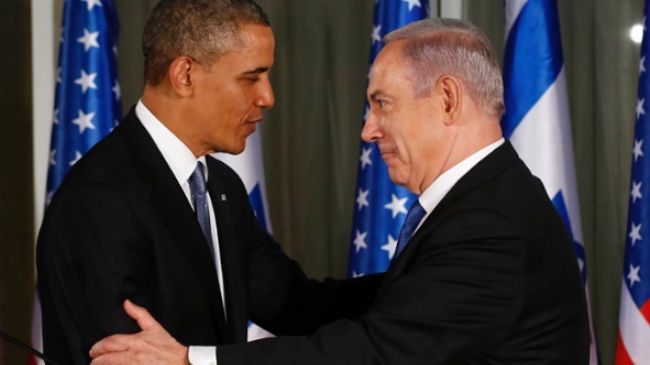
US reassures Israel of more pressure on Iran: Report
Press TV – July 14, 2013
The US reportedly plans to increase pressure on Iran over its nuclear energy program in a move to appease the Israeli regime.
“We will not ease the sanctions [against the Islamic Republic] if Iran does not take action to stop 20 percent enrichment,” senior US officials, who spoke on the condition of anonymity, told the Israeli daily Haaretz on Sunday.
The US officials added that Washington does not intend to ease the sanctions on Iran unless Tehran demonstrates a “change in attitude.”
Referring to the new sanctions against Iran that came into effect on July 1, the officials said Washington plans to ratchet up pressure on the Islamic Republic.
The newly-implemented sanctions against Iran, which target the Iranian energy sector, maritime transportation, ship-building industry, oil trade and currency, were ratified by the US Congress in December 2012 and signed by President Barack Obama in January 2013.
According to the Israeli daily, the upcoming meeting of the P5+1 (Britain, China, France, Russia and the US plus Germany) to discuss the resumption of talks with Iran had fueled Tel Aviv’s concern that Washington may be seeking to ease its pressure on Tehran.
EU foreign policy chief Catherine Ashton is scheduled to meet top officials from the P5+1 on Tuesday in Brussels to discuss “how to move forward in the Iran nuclear file,” said her spokesman Michael Mann on July 12.
Iran and the P5+1 have held several rounds of talks on a range of issues, with the main focus being on Tehran’s nuclear energy program.
The latest round of negotiations between the two sides was held in Istanbul, Turkey, on May 16. Two earlier meetings had also been held in the Kazakh city of Almaty on April 5-6 and February 26-27. … Full article
Intelsat suspends satellite services to Iranian TV channels
Press TV – June 19, 2013
Communications satellite services provider Intelsat has announced the suspension of its services to the channels launched from Iran as the West’s campaign against free speech intensifies.
On Wednesday, the Luxembourg-based company said it will no longer provide services to Iranian channels including Press TV. The decision has been made under the pretext of the company’s abiding by illegal sanctions against the president of the Islamic Republic of Iran Broadcasting (IRIB) – that’s Iran’s national broadcasting corporation.
Intelsat noted that it has been ordered by the US government to avoid extending IRIB’s license, noting that it will stop providing services as of July 1st.
Press TV and other Iranian channels have come under an unprecedented wave of attacks by European governments and satellite companies since January 2012.
They have been taken off the air in several Western countries, including Britain, France, Germany and Spain.
European companies say they are abiding by anti-Iran sanctions. However, EU foreign policy chief’s spokesman, Michael Mann, has told Press TV that sanctions do not apply to media.
In the meantime, the French-Israeli CEO of Europe’s satellite giant, Eutelsat, has written letters to several satellite companies, asking them to stop cooperating with Iranian channels.
The Israeli lobby in the United States has also publicly supported European attempts to shut down Press TV.
Media activists call the attacks on Iranian channels a campaign against free speech launched by the same European governments that preach freedom of expression.
Related article
- Israel says no ‘compromise’ should be made with Iran (alethonews.wordpress.com)
UK Supreme Court votes to lift sanctions on Iranian bank
Tehran Times | June 19, 2013
LONDON – The UK Supreme Court has ruled in favor of Bank Mellat, Iran’s largest private bank, in a result which will see it removed from the United Kingdom’s sanction list.
The appeal was heard by nine out of the Supreme Court’s twelve judges after the UK’s highest court was forced to enter closed session for the first time in its history, in order to receive secret evidence from the security services.
Her Majesty’s Treasury imposed sanctions against the bank in 2009 alleging that the bank’s activities supported the Iranian nuclear program, but Wednesday’s ruling found no evidence to support this claim. The UK Supreme Court result follows similar success for the bank at the European Court in January of this year in respect of sanctions which had been imposed on the bank by the EU Council.
The ruling is a blow to the controversial system of “secret courts” which have allowed the security services to provide evidence to the Supreme Court behind closed doors for the first time in its history.
The Supreme Court reluctantly entered into closed session in March, effectively barring the bank from accessing the evidence against it. Zaiwalla & Co Solicitors, the London-based international law firm representing the bank, had argued against the imposition of closed courts on the grounds that it contravenes the British common law principle of open justice. The failure of the Treasury to produce compelling evidence, despite the controversial new powers, puts the spotlight back on the Justice and Security Bill, which expanded the system of closed courts to civil cases.
The ruling sends a strong message to the UK government that political expediency is not a sufficient legal justification for sanctions placed against Iranian private businesses which operate out of Iran. The Supreme Court is now expected to order the British government to pay Bank Mellat all of its legal costs and damages for the wrongful listing of Bank Mellat.
After initial failure to challenge sanctions before the English High Court and the Court of Appeal, Bank Mellat turned to Zaiwalla & Co in 2010 and has since gone from strength to strength in the European and now Supreme Court. The firm, led by Sarosh Zaiwalla, have shown that even in cases of national security, the UK government must abide by the rule of law, with the some of the justifications for the sanctions considered “arbitrary”, “discriminatory” and even “irrational”.
Sarosh Zaiwalla, senior partner at Zaiwalla & Co said, “Today’s ruling is a victory for the rule of law as much as it is for Bank Mellat.
“The judgment will put enormous confidence in the independence of the British judiciary and sets an example that even controversial disputes can be resolved by applying the principle of rule of law through the British courts.
“Nevertheless, the reading of the closed judgment clearly contravenes the British principle of open justice, the bank’s success demonstrates just how unjustified closed sessions are.”
Iran ready to halt 20% uranium enrichment, West must reciprocate – Lavrov
RT | June 18, 2013
Iran has confirmed it is prepared to halt its enrichment of 20-percent uranium, Russian Foreign Minister Sergey Lavrov said, urging Western nations to end their sanctions against Tehran.
“For the first time in many years, there are encouraging signs in the process of settlement of the situation with the Iranian nuclear program,” he said in the interview to Kuwait’s KUNA news agency, that was published on Russian Foreign Ministry’s website.
“Without going into details, the Iranians confirm the most important [point]: Their readiness to stop 20 percent uranium enrichment at its current levels,” Lavrov said.“This could become a breakthrough agreement, significantly alleviating existing problems, including concerns about the possibility of advanced uranium enrichment to a weapons-grade level.”
Such a move “implies significant reciprocal steps by the Six,” the minister added, referring to the group of world powers seeking to peacefully resolve the issue of Iran’s nuclear program.
“The international community must adequately respond to the constructive progress made by Iran, including gradual suspension and lifting of sanctions, both unilateral and those introduced by the UN Security Council. It would be a shame not to take advantage of this opportunity,” Lavrov concluded.
News of Iran’s possible concessions over its nuclear program comports with promises made by Iranian President-elect Hassan Rowhani, who vowed to make the program more transparent.
Still, the moderate cleric stressed on Monday that Tehran would not consider halting the country’s uranium enrichment activities entirely. Rowhani insisted that Iran’s nuclear activities are “within the framework of law,” and dubbed the international sanctions “baseless.”
Despite numerous accusations by Israel and the US that it is secretly conducting military nuclear research, Iran has maintained that its nuclear program is only for civilian purposes.
At his first media conference since winning the presidential elections, Rowhani – who previously headed Iran’s delegation during nuclear talks with the six world powers – said that Tehran’s nuclear activities “are already transparent,” but “the only way to end the sanctions is to increase the transparency and trust” between Iran and the international community.
Washington has been expecting changes in Iran’s hardline stance on the nuclear issue following the country’s presidential elections. White House Chief of Staff Denis McDonough said Sunday on ‘Face the Nation’ that Washington is ready to work with the new administration in Tehran, “If he lives up to his obligations under the UN Security Council resolution to come clean on this illicit nuclear program.”
But Israeli Prime Minister Benjamin Netanyahu remained unconvinced: “The international community must not become caught up in wishes and be tempted to relax the pressure on Iran to stop its nuclear program,” he said.
President-elect Rowhani will assume office in August. He believes that he can heal the “old wound” of troubled US-Iran relations if Washington stops interfering in Tehran’s internal affairs and permanently ends its “bullying” practices towards Iran.
Related article
- What Should be Expected From President Rowhani? (alethonews.wordpress.com)
Netanyahu urges continued boycott of Iran
Al-Akhbar | June 16, 2013
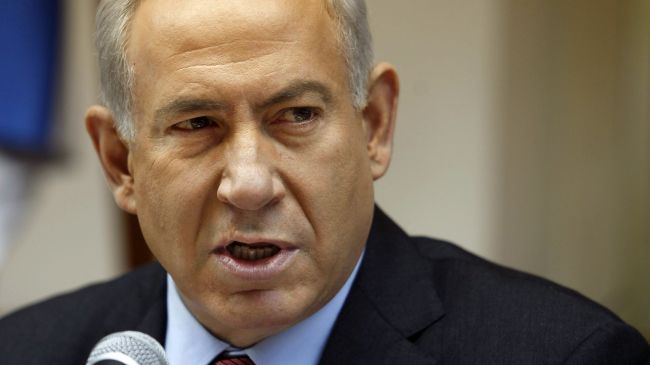
Israeli Prime Minister Benjamin Netanyahu called on Sunday for nations to continue boycotting Iran over its nuclear efforts after the election of a new president widely hailed as a moderate.
Netanyahu said it was Iran’s supreme leader, Ayatollah Ali Khamenei, and not the newly elected president, Hassan Rohani, who set a nuclear policy that has been challenged by tough economic sanctions and the prospect of military action.
“The international community must not give in to wishful thinking or temptation and loosen the pressure on Iran for it to stop its nuclear program,” the right-wing Netanyahu told his cabinet, according to a statement released by his office.
Israel, the Middle East’s only only nuclear power, has threatened to strike Iran over its nuclear program. It is also believed to be behind a string of assassinations targeting Iranian nuclear scientists over the past several years.
“The greater the pressure on Iran, the greater the chance of bringing a halt to the Iranian nuclear program, which remains the greatest threat to world peace,” Netanyahu said.
Iran insists its nuclear program is peaceful, and its main ally Russia has repeatedly said that there is no evidence to suggest otherwise.
Netanyahu’s remarks come one day after Israeli Defense Minister Moshe Yaalon called for tougher sanctions against Iran regardless of who is elected as its new president.
“We must toughen the sanctions against Iran and make this country understand that the military option remains on the table to halt the progress of its dangerous nuclear program,” Israeli radio quoted Yaalon as saying on a visit to the United States Saturday.
(Reuters, AFP, Al-Akhbar)
South Africa slams US, EU over Iran oil sanctions
Press TV – April 19, 2013
South Africa has lashed out at the United States and European Union for imposing oil sanctions on Iran over its nuclear energy program without first consulting major importers of the Iranian energy supplies.
South Africa’s Energy Minister Elizabeth Dipuo Peters, who is in India to attend the Clean Energy Ministerial (CEM) meeting, said that such decisions have geopolitical implications and mostly affect “the poorest of the poor” that are in dire need of energy supplies and have no alternative.
“When decisions are made at bilateral or unilateral levels that have serious geopolitical consequences, we need to engage seriously,” Peters said.
“When we had to look for crude of the kind we got from Iran, it came at a premium,” she added.
“It has a multiple knock-on effect, especially on the poorest. When these decisions are taken, they must always consider the impact and consequences of their decisions at the geopolitical level. Or at least involve other countries so that when the decision is made they can say South Africa is taking it consciously. They have calculated the impact on them but not on others,” the South African minister said.
At the beginning of 2012, the US and EU imposed new sanctions on Iran’s oil and financial sectors with the goal of preventing other countries from purchasing Iranian oil and conducting transactions with the Central Bank of Iran.
On October 15, 2012, the EU foreign ministers reached an agreement on another round of sanctions against Iran.
The sanctions have been imposed on Iran over the groundless charges of a potential military diversion in Iran’s nuclear energy program.
Iran rejects the unfounded allegations over its nuclear energy program, arguing that as a committed signatory to the Non-Proliferation Treaty (NPT) and a member of the International Atomic Energy Agency (IAEA), it has the right to use nuclear technology for peaceful purposes.
Peters said that that the petroleum industry is a victim of financial sanctions, which include US sanctions on dollar-denominated trading and EU sanctions on insurance for shipping companies.
She emphasized that the US 18-month exemption for Iran oil sanctions had not benefited South Africa because the EU has refused to grant waivers.
On December 8, 2012, the US added China, India, South Korea, Malaysia, Singapore, South Africa, Sri Lanka, Turkey, and Taiwan to the list of countries exempted from the sanctions for another six months.
Related articles
- Chinese tanker loads Iranian crude for first time since EU ban (alethonews.wordpress.com)
- UN Sanctions on Iran: The Dance of Mutual Deniability (alethonews.wordpress.com)
- Iran sanctions could force BP to shut down North Sea gas field (alethonews.wordpress.com)
- US renews Iran sanctions waiver for Japan and 10 EU countries (alethonews.wordpress.com)
Russia expects progress in Iranian nuclear talks
Xinhua – 2013-04-03
MOSCOW – Moscow hopes proposals made by world mediators to Iran over its nuclear program could lay the foundation for negotiations on solving the problem, Deputy Foreign Minister Igor Morgulov said Wednesday.
Russia was “closely coordinating” with the P5+1 group, which includes China, France, Russia, the United Kingdom, the United States and Germany, on the Iranian nuclear issue, Morgulov told the Interfax news agency.
Moscow expected “an updated package of demands” given by the Sextet to Iran during the late February Almaty meeting could lay the foundation for “consistent progress” in the nuclear talks, Morgulov said.
The parties held expert-level nuclear talks in Istanbul in late March to discuss a revised proposal that asks Iran to suspend its enrichment of uranium and disable the underground Fordow facility in exchange for limited sanction relief.
The next round of nuclear talks is scheduled for April 5-6 in Almaty, Kazakhstan.
Russia believes a long-term settlement towards the Iranian nuclear issue should be based on the recognition of Iran’s “unconditional right to develop its civilian nuclear program,” Morgulov said.
Meanwhile, Russia highly values close dialogue with China over the Iranian nuclear program, as the two countries shared common positions in many aspects, he added.
Russia, together with China, believe the use of unilateral sanctions and political pressure on Iran only lead to a dead end, Morgulov said, adding that such moves were counterproductive and undermined diplomatic efforts in solving the problem.
Featured Video
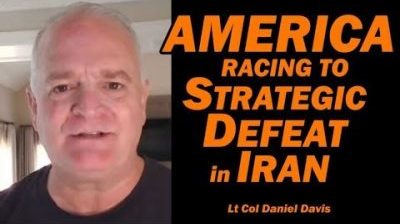
America Racing to Strategic Defeat in Iran
or go to
Aletho News Archives – Video-Images
From the Archives
Should Europeans ‘Thank’ the Americans for Destroying Nord Stream?
By Robert Bridge | Strategic Culture Foundation | September 29, 2022
With an investigation continuing into the destruction of the Nord Stream gas pipeline that provided energy supplies to Europe from Russia, there appears to be just one prime suspect, and that should surprise nobody.
Following the sabotage of the Nord Stream 1 and 2 gas pipelines, former Polish Foreign Minister Radoslaw Sikorski already seemed to know the identity of the perpetrator when he tweeted out: “Thank you, USA.”
At first glance, it seemed that Sikorski was speaking sarcastically, berating Washington for carrying out an attack that will have severe repercussions for the people of Europe. After all, how could anyone see any good coming from the termination of Europe’s primary source of gas reserves with winter just around the corner? It was Sikorski’s homeland of Poland, after all, that urged its citizens to collect firewood in the face of dwindling gas reserves.
In fact, the Polish diplomat was speaking one-hundred percent literally… continue
Blog Roll
 Aletho News
- Growing insecurity, soaring prices fuel protests in north as regime bans evacuation: Sources
- Iran denies responsibility for ‘depraved’ attack on Kuwait desalination plant
- Bring The Troops Back. End This War Now!
- Can we please stop calling Israel the ‘only democracy in the Middle East’ now?
- US should start removing its troops from Germany, proposes AfD co-leader Chrupalla
- Iran Red Crescent: 600 educational centers attacked in US-Israeli ‘war crimes’
- Russian Oil Tanker Arrives in Cuba Amid U.S. Blockade
- America Racing to Strategic Defeat in Iran: Lt Col Daniel Davis
- FTC Warns Visa, Mastercard, PayPal, Stripe Over Political Debanking
- Russian tanker approaches Cuba despite US oil blockade
- If Americans Knew
- As Iran targets US military bases, will they be relocated to Israel? Not a ceasefire Day 171
- Will Trump Go Kamikaze?
- Is the University of Florida Shutting Down College Republicans over Israel Criticism?
- Jewish extremist arrested over alleged plot to firebomb Palestinian activist Nerdeen Kiswani’s home
- More than half of Palestinian child detainees have no charges
- The More Murderous Israel Gets, The More We Hear About “Antisemitism”
- Land Day and the Palestinian struggle after 30 months of genocide
- The Iran War Is About Palestine
- Israeli soldiers echo settler ideology, talk of revenge after targeting Palestinians and detaining CNN crew in the West Bank
- Israeli Policies Threaten Future of Christian Schools in Jerusalem
- No Tricks Zone
- New Study Finds Warming Saves Lives…Cold Temperatures 12 Times More Deadly Than Excess Heat
- German Science Blog Accuses PIK Climate Institute Of Hallucinating Climate Tipping Points
- Devastating Assessment Of Comirnaty Vaccine By Former Senior Pfizer Europe Toxicologist
- New Study: CO2 Is ‘Effectively Negligible’ As An Explanatory Climate Change Factor Since 2000
- Former Pfizer Toxicologist Dr. Helmut Sterz Tells Bundestag Hearing Pfizer Vaccine Should Have Never Been Approved
- Energy Expert: Germany’s Nuclear Phaseout Was A “500 Billion Euro Mistake”
- New Research: South Australia’s Mid-Holocene Sea Surface Temperatures Were 4°C Warmer Than Today
- Storing Green Energy To Last Germany 10 Days Would Require A 60-Million Tonne Battery
- New Studies: UK Sea Levels Were 4 Meters Higher Than Today During The Mid-Holocene
- Destructive Green New Deal: German Energy And Metal Group Warns Of Drastic Crisis
 Aletho News