Saudi Arabia launches new campaign of arrests against Palestinian expats
MEMO | February 14, 2020
Saudi Arabia has launched a new campaign of arbitrary arrests against several Palestinian expatriates living in the kingdom for supporting the Islamic resistance movement, Hamas.
The Prisoners of Conscience Twitter account which monitors the conditions of prisoners in Saudi Arabia said it has received “confirmed information” that the Saudi authorities have launched a new campaign of arbitrary arrests against Palestinian ex-pats. It adds that a number of the Palestinians targeted in the new campaign are relatives or sons of Palestinians who had been arrested during the first campaign in April, last year for the same reason.
In April, last year the Saudi authorities launched a campaign of arrests against Palestinian ex-pats including a senior leader in Hamas movement, Muhammad al-Khudari, 81, and his eldest son Hani.
The Twitter account defended the Palestinian detainees saying that supporting the (Palestinian) resistance is not a crime that requires arrests and demanded the Saudi authorities “to immediately release all detainees from the last campaign, and stop the trials of those detained last year which will begin early next month”.
Earlier this month, the Twitter account said the Saudi prosecution accuses the Palestinian detainees of illegally transferring funds (to the Palestinian resistance factions) and establishing unlicensed organisations to defend Palestinian and Jordanian detainees in the kingdom.
The Palestinian detainees will be tried before the Saudi Specialized Criminal Court on March 8.
On September 6, 2019, the Euro-Mediterranean Human Rights Monitor said that Saudi Arabia is forcibly hiding 60 Palestinians.
Israeli delegation visits Saudi Arabia for first time
Press TV – February 14, 2020
A high-ranking Israeli delegation from an umbrella US Jewish group has visited Saudi Arabia this week, a sign of increasing warmness between Tel Aviv and Riyadh as the two sides look to forge closer informal ties and expedite normalization efforts.
Israel’s English-language broadsheet newspaper The Jerusalem Post reported on Friday that members of the Conference of Presidents of Major American Jewish Organizations visited Saudi Arabia this week, a move believed to be the first official visit to the kingdom by an American Jewish organization since the Oslo peace process in 1993.
The Jewish Telegraphic Agency said the visit, which took place from Monday to Thursday, included meetings with senior Saudi officials as well as with Sheikh Muhammad bin Abdul Karim bin Abdulaziz al-Issa, the secretary general of the Muslim World League.
Issa is regarded as a close associate of Saudi Crown, Prince Mohammed bin Salman.
The New York-based news agency said the focus of the talks between the Conference constituents and Saudi officials was on countering terrorism and the instability in the Middle East region.
The Conference’s leadership, executive vice president Malcolm Hoenlein, and CEO William Daroff, are expected to have been present during the visit.
Saudi Arabia has expanded secret ties with Israel under the crown prince, the son of King Salman, who is viewed by many as the Kingdom’s de facto ruler. The young prince has made it clear that he and the Israelis stand on the same front to counter Iran and its growing influence in the Middle East.
Back in 2018, Saudi Arabia opened its airspace for a commercial flight to Israel with the start of a new Air India route between India and Israel, although El Al Israel Airlines might not use Saudi airspace for eastward flights.
Critics say Saudi Arabia’s flirtation with Israel would undermine global efforts to isolate Tel Aviv and affect the Palestinian cause in general. They say Riyadh has gone too far in its cooperation with the Israelis as a way of deterring Iran as an influential player in the region.
Israel has full diplomatic relations with only two Arab states, Egypt and Jordan, but the latest reports suggest the regime is working behind the scenes to establish formal contacts with Persian Gulf Arab states such as Saudi Arabia, the United Arab Emirates and Bahrain.
In another sign of warming ties between the regimes of Israel and Saudi Arabia, last month Tel Aviv officially allowed Israelis to travel to Saudi Arabia for the first time.
The move comes against the backdrop of a so-called peace plan unveiled by US President, Donald Trump, that supposedly aims to resolve the decades-long Israeli-Palestinian conflict.
Trump unveiled the scheme’s outlines on January 28. The plan features the recognition of Jerusalem, al-Quds, as Israel’s “capital,” although Palestinians want the city’s eastern part as the capital of their future state.
The US president also said that under the plan, Israel would be annexing the settlements that it has been building in the West Bank since occupying the Palestinian territory in 1967.
This is while all previous foreign-mediated draft agreements between the Palestinians and Israelis as well as repeated United Nations resolutions have mandated Tel Aviv to withdraw behind the 1967 borders.
Palestinian leaders, who severed all ties with Washington in late 2017 after Trump controversially, recognized Jerusalem, al-Quds, as the capital of the Israeli regime, immediately rejected the plan, with President Mahmoud Abbas saying it “belongs to the dustbin of history.”
Palestinian leaders also said the deal is a colonial plan to unilaterally control historic Palestine in its entirety and remove Palestinians from their homeland, adding that it heavily favors Israel and would deny them a viable independent state.
Meanwhile, senior Arab diplomatic sources said last week that the Saudi crown prince might meet Netanyahu on the sidelines of a potential summit in Cairo as the Israeli premier was seeking talks.
Saudi Foreign Minister, Prince Faisal bin Farhan, however, asserted on Thursday that there are no plans for a meeting between Salman and Netanyahu.
Speaking to al-Arabiya English, he also claimed that Saudi Arabia’s policy toward Palestine remained “firm.”
This is while Riyadh has welcomed Trump’s plan, saying “the Kingdom appreciates the efforts made by President Trump’s administration to develop a comprehensive Palestinian-Israeli peace plan.”
It has urged “direct peace negotiations between the sides under US sponsorship, in which any dispute regarding details of the plan will be settled.”
Saudi government media have also urged the Palestinians not to miss “this opportunity” and to approach the so-called US “deal of the century” with a positive mindset.
Russia was second-biggest energy exporter to US in Autumn 2019, volumes hit 8-year high
By Jonny Tickle | RT | February 6, 2020
Given the dire state of Russia-US political relations, and Washington’s steadfast defense of its alliance with Saudi Arabia, it seems almost unbelievable that Moscow sends more energy exports America’s way than Riyadh.
Nevertheless, figures recently published by the US Energy Information Administration (EIA) say it’s true: Russia is America’s second-biggest source of crude oil and petroleum products.
Despite years of sanctions, the autumn of 2019 saw the amount of Russian ‘black gold’ sold to the US reach levels not seen since before the 2013/14 Ukraine crisis. Last October, imports sharply increased, with the Americans purchasing 20.9 million barrels.
Although volumes sourced from Russia paled in comparison to those from Canada (136.5 million barrels), they managed to overtake both the US’s southern neighbor Mexico and Saudi Arabia – the world’s leading exporter of oil.
Last month, Russian media reported that the US had inadvertently helped Russia boost oil sales through restrictive measures against other countries, such as Iran and Venezuela. This led the Americans to turn to Moscow to make up shortfalls.
Venezuela traditionally ships about 15-20 million barrels of oil to the USA every month, but all imports ceased following sanctions last summer.
Raiffeisenbank analyst Andrey Polishchuk told Moscow daily RBK that another reason for the increase in deliveries may be a fall in prices for Russian Urals oil; in October 2019, the blend cost only $58.5 per barrel – 1.4 times cheaper than the previous year.
The sharp increase in exports beat a record which had stood for over eight years; the last time Russia supplied more oil to the USA was in November 2011, long before the start of tensions over Syria and Ukraine. In November, Russia dropped back into third place, as it delivered 19.2 million barrels compared to Mexico’s 21.2 million.
Tehran open to dialog with all neighbors: Zarif
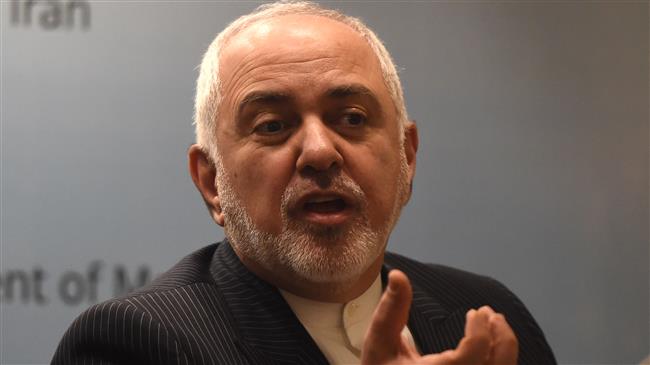
Iranian Foreign Minister Mohammad Javad Zarif (Photo by AFP)
Press TV – January 23, 2020
Foreign Minister Mohammad Javad Zarif has reaffirmed Iran’s readiness for talks with all its neighbors amid tensions in the Persian Gulf region.
“Iran remains open to dialogue with its neighbors, and we declare our readiness to participate in any complementary work that is in the interest of the region, and we welcome any step that restores hope to its people and brings them stability and prosperity,” Zarif said in a tweet in Thursday.
The tweet was in Arabic, which suggests it was addressed to the Persian Gulf littoral Arab countries. It came a day after Saudi Foreign Minister Prince Faisal bin Farhan said Riyadh was ready for talks with Tehran “but it is really up to Iran.”
The top Saudi diplomat, however, repeated the baseless claims against Iran’s role in the region, adding that the precondition for dialog is for the Islamic Republic to accept it “cannot further its regional agenda through violence.”
Speaking from the World Economic Forum in Davos, he said he was glad the region has “avoided any escalation” with Iran, and that “many countries” have offered to mediate talks with Tehran.
Meanwhile, the Iranian president’s chief of staff, Mahmoud Vaezi, said Wednesday that Tehran and Riyadh should work together to overcome their problems.
“The relations between Iran and its neighbor Saudi Arabia should not become like the relationship between Tehran and the United States … Tehran and Riyadh should work together to resolve their problems,” Vaezi said.
At an event in the Indian city of Mumbai on Friday in coordination with All India Association of Industries (AIAI), Zarif also voiced Iran’s readiness to hold talks with Saudi Arabia and other Persian Gulf countries to promote regional security.
He added that Iran has also presented proposals on ways to establish peace in the Strait of Hormuz.
In an address to the 74th session of the United Nations General Assembly in September 2019, President Hassan Rouhani said as a steward of maritime security in the Persian Gulf and the Strait of Hormuz, Iran invites all countries that are affected by developments in the strategic region to join the country’s new regional peace initiative, dubbed Hormuz Peace Endeavor (HOPE).
Iran’s initiative comes as the US has been trying to persuade its allies into a maritime coalition purportedly seeking to boost security in the Persian Gulf, after it blamed Tehran for two separate attacks on oil tankers in the Gulf of Oman in May and June, without providing any credible evidence to back up the allegation, which Iran has categorically rejected.
Tehran has repeatedly said outsiders not only cannot safeguard the region, but will fuel tensions there. Iran believes it is the countries of the very region which can ensure regional peace.
Prior to the Hormuz initiative, Iran had offered to sign non-aggression agreements with all countries in the Persian Gulf region.
Zarif also said in late May 2019 that Iran sought the best of relations with the Persian Gulf littoral countries and would welcome any proposals for dialog and de-escalation toward that end.
How an Israeli Spy-Linked Tech Firm Gained Access to the US Gov’t’s Most Classified Networks
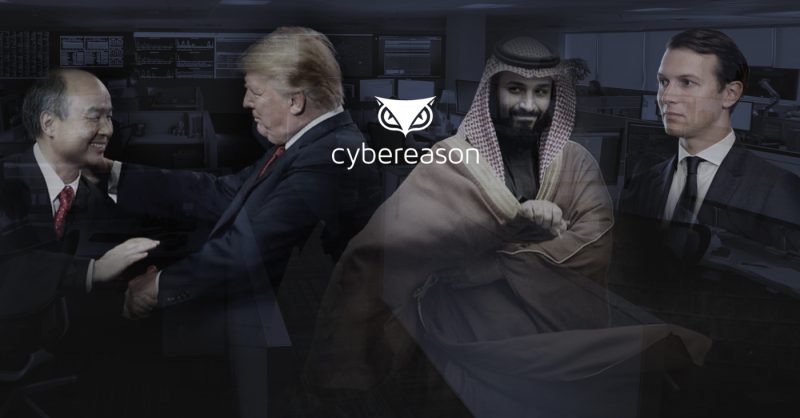
Graphic by Claudio Cabrera
By Whitney Webb | MintPress News | January 14, 2020
If the networks of the U.S. military, the U.S. intelligence community and a slew of other U.S. federal agencies were running the software of a company with deep ties, not only to foreign companies with a history of espionage against the U.S. but also foreign military intelligence, it would — at the very least — garner substantial media attention. Yet, no media reports to date have noted that such a scenario exists on a massive scale and that the company making such software recently simulated the cancellation of the 2020 election and the declaration of martial law in the United States.
Earlier this month, MintPress News reported on the simulations for the U.S. 2020 election organized by the company Cybereason, a firm led by former members of Israel’s military intelligence Unit 8200 and advised by former top and current officials in both Israeli military intelligence and the CIA. Those simulations, attended by federal officials from the FBI, DHS and the U.S. Secret Service, ended in disaster, with the elections ultimately canceled and martial law declared due to the chaos created by a group of hackers led by Cybereason employees.
The first installment of this three part series delved deeply into Cybereason’s ties to the intelligence community of Israel and also other agencies, including the CIA, as well as the fact that Cybereason stood to gain little financially from the simulations given that their software could not have prevented the attacks waged against the U.S.’ electoral infrastructure in the exercise.
Also noted was the fact that Cybereason software could be potentially used as a backdoor by unauthorized actors, a possibility strengthened by the fact that the company’s co-founders all previously worked for firms that have a history of placing backdoors into U.S. telecommunications and electronic infrastructure as well as aggressive espionage targeting U.S. federal agencies.
The latter issue is crucial in the context of this installment of this exclusive MintPress series, as Cybereason’s main investors turned partners have integrated Cybereason’s software into their product offerings. This means that the clients of these Cybereason partner companies, the U.S. intelligence community and military among them, are now part of Cybereason’s network of more than 6 million endpoints that this private company constantly monitors using a combination of staff comprised largely of former intelligence operatives and an AI algorithm first developed by Israeli military intelligence.
Cybereason, thus far, has disclosed the following groups as lead investors in the company: Charles River Ventures (CRV), Spark Capital, Lockheed Martin and SoftBank. Charles River Ventures (CRV) was among the first to invest in Cybereason and has been frequently investing in other Israeli tech start-ups that were founded by former members of the elite Israeli military intelligence Unit 8200 over the last few years. Spark Capital, based in California, appears to have followed CRV’s interest in Cybereason since the venture capitalist who co-founded Spark and led its investment in Cybereason is a former CRV partner who still has close ties to the firm.
While CRV and Spark Capital seem like just the type of investors a company like Cybereason would attract given their clear interest in similar tech start-ups coming out of Israel’s cyber sector, Cybereason’s other lead investors — Lockheed Martin and SoftBank — deserve much more attention and scrutiny.
Cybereason widely used by US Government, thanks to Lockheed
“A match made in heaven,” trumpeted Forbes at the news of the Lockheed Martin-Cybereason partnership, first forged in 2015. The partnership involved not only Lockheed Martin becoming a major investor in the cybersecurity company but also in Lockheed Martin becoming the largest conduit providing Cybereason’s software to U.S. federal and military agencies.
Indeed, as Forbes noted at the time, not only did Lockheed invest in the company, it decided to integrate Cybereason’s software completely into its product portfolio, resulting in a “model of both using Cybereason internally, and selling it to both public and private customers.”
Cybereason CEO and former offensive hacker for Israeli military intelligence — Lior Div — said the following of the partnership:
Lockheed Martin invested in Cybereason’s protection system after they compared our solution against a dozen others from the top industry players. The US firm was so impressed with the results they got from Cybereason that they began offering it to their own customers – among them most of the top Fortune 100 companies, and the US federal government. Cybereason is now the security system recommended by LM to its customers for protection from a wide (sic) malware and hack attacks.”
Rich Mahler, then-director of Commercial Cyber Services at Lockheed Martin, told Defense Daily that the company’s decision to invest in Cybereason, internally use its software, and include the technology as part of Lockheed Martin’s cyber solutions portfolio were all “independent business decisions but were all coordinated and timed with the transaction.”
How independent each of those decisions actually was is unclear, especially given the timing of Lockheed Martin’s investment in Cybereason, whose close and troubling ties to Israeli intelligence as well as the CIA were noted in the previous installment of this investigative series. Indeed, about a year prior to their investment in the Israeli military intelligence-linked Cybereason, Lockheed Martin opened an office in Beersheba, Israel, where the IDF has its “cyberhub”. The office is focused not on the sales of armaments, but instead on technology.
Marilyn Hewson, Lockheed Martin’s CEO, said the following during her speech that inaugurated the company’s Beersheba office:
The consolidation of IDF Technical Units to new bases in the Negev Desert region is an important transformation of Israel’s information technology capability… We understand the challenges of this move. Which is why we are investing in the facilities and people that will ensure we are prepared to support for these critical projects. By locating our new office in the capital of the Negev we are well positioned to work closely with our Israeli partners and stand ready to: accelerate project execution, reduce program risk and share our technical expertise by training and developing in-country talent.”
Beersheba not only houses the IDF’s technology campus, but also the Israel National Cyber Directorate, which reports directly to Israel’s Prime Minister, as well as a high-tech corporate park that mostly houses tech companies with ties to Israel’s military intelligence apparatus. The area has been cited in several media reports as a visible indicator of the public-private merger between Israeli technology companies, many of them started by Unit 8200 alumni, and the Israeli government and its intelligence services. Lockheed Martin quickly became a key fixture in the Beersheba-based cyberhub.
Not long before Lockheed began exploring the possibility of opening an office in Beersheba, the company was hacked by individuals who used tokens tied to the company, RSA Security, whose founders have ties to Israel’s defense establishment and which is now owned by Dell, a company also deeply tied to the Israeli government and tech sector. The hack, perpetrated by still unknown actors, may have sparked Lockheed’s subsequent interest in Israel’s cybersecurity sector.
Soon after opening its Beersheba office, Lockheed Martin created its Israel subsidiary, Lockheed Martin Israel. Unlike many of the company’s other subsidiaries, this one is focused exclusively on “cybersecurity, enterprise information technology, data centers, mobile, analytics and cloud” as opposed to the manufacture and design of armaments.
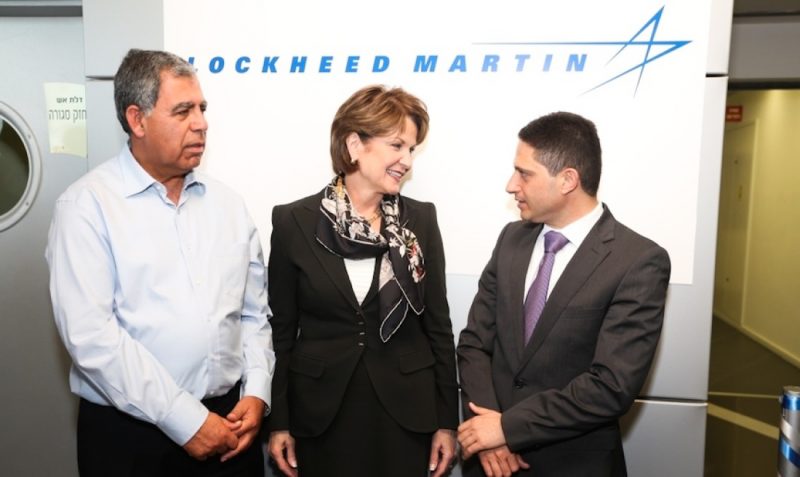
Marillyn Hewson, center, poses with Israeli gov. officials at the opening of Lockheed Martin’s facility in Beersheba. Photo | Diego Mittleberg
Haden Land, then-vice president of research and technology for Lockheed Martin, told the Wall Street Journal that the creation of the subsidiary was largely aimed at securing contracts with the IDF and that the company’s Israel subsidiary would soon be seeking partnership and investments in pursuit of that end. Land oversaw the local roll-out of the company’s Israel subsidiary while concurrently meeting with Israeli government officials. According to the Journal, Land “oversees all of Lockheed Martin’s information-systems businesses, including defense and civilian commercial units” for the United States and elsewhere.
Just a few months later, Lockheed Martin partnered and invested in Cybereason, suggesting that Lockheed’s decision to do so was aimed at securing closer ties with the IDF. This further suggests that Cybereason still maintains close ties to Israeli military intelligence, a point expounded upon in great detail in the previous installment of this series.
Thus, it appears that not only does Lockheed Martin use Cybereason’s software on its own devices and on those it manages for its private and public sector clients, but it also decided to use the company’s software in this way out of a desire to more closely collaborate with the Israeli military in matters related to technology and cybersecurity.
The cozy ties between Lockheed Martin, one of the U.S. government’s largest private contractors, and the IDF set off alarm bells, then and now, for those concerned with U.S. national security. Such concern makes it important to look at the extent of Cybereason’s use by federal and military agencies in the United States through their contracting of Lockheed Martin’s Information Technology (IT) division. This is especially important considering Israeli military intelligence’s history of using espionage, blackmail and private tech companies against the U.S. government, as detailed here.
While the exact number of U.S. federal and military agencies using Cybereason’s software is unknown, it is widespread, with Lockheed Martin’s IT division as the conduit. Indeed, Lockheed Martin was the number one IT solutions provider to the U.S. federal government up until its IT division was spun off and merged with Leidos Holdings. As a consequence, Leidos is now the largest IT provider to the U.S. government and is also directly partnered with Cybereason in the same way Lockheed Martin was. Even after its IT division was spun off, Lockheed Martin continues to use Cybereason’s software in its cybersecurity work for the Pentagon and still maintains a stake in the company.
The Leidos-Lockheed Martin IT hybrid provides a litany of services to the U.S. military and U.S. intelligence. As investigative journalist Tim Shorrock noted for The Nation, the company does “everything from analyzing signals for the NSA to tracking down suspected enemy fighters for US Special Forces in the Middle East and Africa” and, following its merger with Lockheed and consequential partnership with Cybereason, became “the largest of five corporations that together employ nearly 80 percent of the private-sector employees contracted to work for US spy and surveillance agencies.” Shorrock also notes that these private-sector contractors now dominate the mammoth U.S. surveillance apparatus, many of them working for Leidos and — by extension — using Cybereason’s software.
Leidos’ exclusive use of Cybereason software for cybersecurity is also relevant for the U.S. military since Leidos runs a number of sensitive systems for the Pentagon, including its recently inked contract to manage the entire military telecommunications infrastructure for Defense Information Systems Agency (DISA). In addition to maintaining the military telecom network, Cybereason is also directly partnered with World Wide Technologies (WWT) as of this past October. WWT manages cybersecurity for the U.S. Army, maintains DISA’s firewalls and data storage as well as the U.S. Air Force’s biometric identification system. WWT also manages contracts for NASA, itself a frequent target of Israeli government espionage, and the U.S. Navy. WWT’s partnership is similar to the Lockheed/Leidos partnership in that Cybereason’s software is now completely integrated into its portfolio, giving the company full access to the devices on all of these highly classified networks.
Many of these new partnerships with Cybereason, including its partnership with WWT, followed claims made by members of Israel’s Unit 8200 in 2017 that the popular antivirus software of Kaspersky Labs contained a backdoor for Russian intelligence, thereby compromising U.S. systems. The Wall Street Journal was the first to report on the alleged backdoor but did not mention the involvement of Unit 8200 in identifying it, a fact revealed by the New York Times a week later.
Notably, none of the evidence Unit 8200 used to blame Kaspersky has been made public and Kaspersky noted that it was actually Israeli hackers that had been discovered planting backdoors into its platform prior to the accusation levied against Kaspersky by Unit 8200. As the New York Times noted:
Investigators later discovered that the Israeli hackers had implanted multiple back doors into Kaspersky’s systems, employing sophisticated tools to steal passwords, take screenshots, and vacuum up emails and documents.”
Unit 8200’s claims ultimately led the U.S. government to abandon Kaspersky’s products entirely in 2018, allowing companies like Cybereason (with its own close ties to Unit 8200) to fill the void. Indeed, the very agencies that banned Kaspersky now use cybersecurity software that employs Cybereason’s EDR system. No flags have been raised about Cybereason’s own collaboration with the very foreign intelligence service that first pointed the finger at Kaspersky and that previously sold software with backdoors to sensitive U.S. facilities.
SoftBank, Cybereason and the Vision Fund
While its entry into the U.S. market and U.S. government networks is substantial, Cybereason’s software is also run throughout the world on a massive scale through partnerships that have seen it enter into Latin American and European markets in major ways in just the last few months. It has also seen its software become prominent in Asia following a partnership with the company Trustwave. Much of this rapid expansion followed a major injection of cash courtesy of one of the company’s biggest clients and now its largest investor, Japan’s SoftBank.
SoftBank first invested in Cybereason in 2015, the same year Lockheed Martin initially invested and partnered with the firm. It was also the year that SoftBank announced its intention to invest in Israeli tech start-ups. SoftBank first injected $50 million into Cybereason, followed by an additional $100 million in 2017 and $200 million last August. SoftBank’s investments account for most of the money raised by the company since it was founded in 2012 ($350 million out of $400 million total).

Cybereason CEO Lior Div speaks at a SoftBank event in Japan, July 21, 2017. Photo | Cybereason
Prior to investing, Softbank was a client of Cybereason, which Ken Miyauchi, president of SoftBank, noted when making the following statement after Softbank’s initial investment in Cybereason:
SoftBank works to obtain cutting edge technology and outstanding business models to lead the Information Revolution. Our deployment of the Cybereason platform internally gave us firsthand knowledge of the value it provides, and led to our decision to invest. I’m confident Cybereason and SoftBank’s new product offering will bring a new level of security to Japanese organizations.”
SoftBank — one of Japan’s largest telecommunications companies — not only began to deploy Cybereason internally but directly partnered with it after investing, much like Lockheed Martin had done around the same time. This partnership resulted in SoftBank and Cybereason creating a joint venture in Japan and Cybereason creating partnerships with other tech companies acquired by SoftBank, including the U.K.’s Arm, which specializes in making chips and management platforms for Internet of Things (IoT) devices.
SoftBank’s interest in Cybereason is significant, particularly in light of Cybereason’s interest in the 2020 U.S. election, given that SoftBank has significant ties to key allies of President Trump and even the president himself.
Indeed, SoftBank’s Masayoshi Son was among the first wave of international business leaders who sought to woo then-president-elect Trump soon after the 2016 election. Son first visited Trump Tower in December 2016 and announced, with Trump by his side in the building’s lobby, that SoftBank would invest $50 billion in the U.S. and create 50,000 jobs. Trump subsequently claimed on Twitter that Son had only decided to make this investment because Trump had won the election.
Son told reporters at the time that the investment would come from a $100 billion fund that would be created in partnership with Saudi Arabia’s sovereign wealth fund as well as other investors. “I just came to celebrate his new job. I said, ‘This is great. The US will become great again,’” Son said, according to reports.
Then, in March of 2017, Son sent top SoftBank executives to meet with senior members of Trump’s economic team and, according to the New York Times, “the SoftBank executives said that because of a lack of advanced digital investments, the competitiveness of the United States economy was at risk. And the executives made the case, quite strongly, that Mr. Son was committed to playing a major role in addressing this issue through a spate of job-creating investments.” Many of SoftBank’s investments and acquisitions in the U.S. since then have focused mainly on artificial intelligence and technology with military applications, such as “killer robot” firm Boston Dynamics, suggesting Son’s interest lies more in dominating futuristic military-industrial technologies than creating jobs for the average American.
After their initial meeting, Trump and Son met again a year later in June 2018, with Trump stating that “His [Son’s] $50 billion turned out to be $72 billion so far, he’s not finished yet.” Several media reports have claimed that Son’s moves since Trump’s election have sought to “curry favor” with the President.
Through the creation of this fund alongside the Saudis, SoftBank has since become increasingly intertwined with Saudi Crown Prince Muhammad bin Salman (MBS), a key ally of President Trump in the Middle East known for his authoritarian crackdowns on Saudi elites and dissidents alike. The ties between Saudi Arabia and SoftBank became ever tighter when MBS took the reins in the oil kingdom and after SoftBank announced the launch of the Vision Fund in 2016. SoftBank’s Vision Fund is a vehicle for investing in hi-tech companies and start-ups and its largest shareholder is the Public Investment Fund of Saudi Arabia. Notably, Son decided to launch the Vision Fund in Riyadh during President Trump’s first official visit to the Gulf Kingdom.
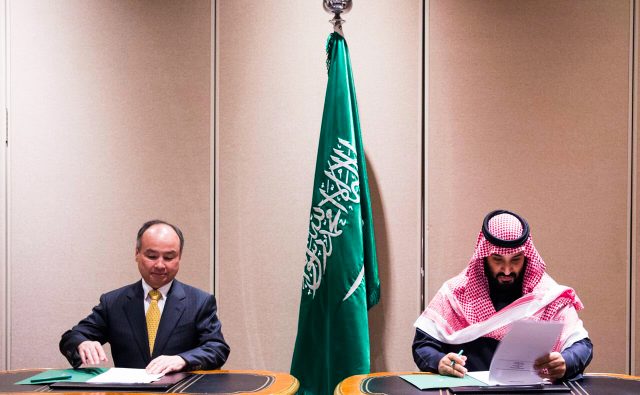
Masayoshi Son, left, signs a deal related to the Vision Fund with Bin Salman in March 2018. Photo | SPA
In addition, the Mubadala Investment Company, a government fund of the United Arab Emirates (UAE), gave $15 billion to the Vision Fund. UAE leadership also share close ties to the Trump administration and MBS in Saudi Arabia.
As a consequence, SoftBank’s Vision Fund is majority funded by two Middle Eastern authoritarian governments with close ties to the U.S. government, specifically the Trump administration. In addition, both countries have enjoyed the rapid growth and normalization of ties with the state of Israel in recent years, particularly following the rise of current Saudi Crown Prince Muhammad bin Salman and Jared Kushner’s rise to prominence in his father-in-law’s administration. Other investments in the Vision Fund have come from Apple, Qualcomm and Oracle’s Larry Ellison, all tech companies with strong ties to Israel’s government.
The Saudi and Emirati governments’ links to the Vision Fund are so obvious that even mainstream outlets like the New York Times have described them as a “front for Saudi Arabia and perhaps other countries in the Middle East.”
SoftBank also enjoys close ties to Jared Kushner, with Fortress Investment Group lending $57 million to Kushner Companies in October 2017 while it was under contract to be acquired by SoftBank. As Barron’s noted at the time:
When SoftBank Group bought Fortress Investment Group last year, the Japanese company was buying access to a corps of seasoned investors. What SoftBank also got is a financial tie to the family of President Donald Trump’s senior advisor and son-in-law, Jared Kushner.”
According to The Real Deal, Kushner Companies obtained the financing from Fortress only after its attempts to obtain funding through the EB-5 visa program for a specific real estate venture were abandoned after the U.S. Attorney and the Securities and Exchange Commission began to investigate how Kushner Companies used the EB-5 investor visa program. A key factor in the opening of that investigation was Kushner Companies’ representatives touting Jared Kushner’s position at the White House when talking to prospective investors and lenders.
SoftBank also recently came to the aid of a friend of Jared Kushner, former CEO of WeWork Adam Neumann. Neumann made shocking claims about his ties to both Kushner and Saudi Arabia’s MBS, even asserting that he had worked with both in creating Kushner’s long-awaited and controversial Middle East “peace plan” and claimed that he, Kushner and MBS would together “save the world.” Neumann previously called Kushner his “mentor.” MBS has also discussed on several occasions his close ties with Kushner and U.S. media reports have noted the frequent correspondence between the two “princelings.”
Notably, SoftBank invested in Neumann’s WeWork using money from the Saudi-dominated Vision Fund and later went on to essentially bail the company out after its IPO collapse and Neumann was pushed out. SoftBank’s founder, Masayoshi Son, had an odd yet very close relationship with Neumann, perhaps explaining why Neumann was allowed to walk with $1.7 billion after bringing WeWork to the brink of collapse. Notably, nearly half of SoftBank’s approximately $47 billion investments in the U.S. economy since Trump’s election, went to acquiring and then bailing out WeWork. It is unlikely that such a disastrous investment resulted in the level of job creation that Son had promised Trump in 2016.
Given that it is Cybereason’s top investor and shareholder by a large margin, SoftBank’s ties to the Trump administration and key allies of that administration are significant in light of Cybereason’s odd interest in 2020 U.S. election scenarios that end with the cancellation of this year’s upcoming presidential election. It goes without saying that the cancellation of the election would mean a continuation of the Trump administration until new elections would take place.
Furthermore, with Cybereason’s close and enduring ties to Israeli military intelligence now well-documented, it is worth asking if Israeli military intelligence would consider intervening in 2020 if the still-to-be-decided Democratic contender was strongly opposed to Israeli government policy, particularly Israel’s military occupation of Palestine. This is especially worth considering given revelations that sexual blackmailer and pedophile Jeffrey Epstein, who targeted prominent U.S. politicians, mostly Democrats, was in the employ of Israeli military intelligence.
Notably, Cybereason’s doomsday election scenarios involved the weaponization of deep fakes, self-driving cars and the hacking Internet of Things devices, with all of those technologies being pioneered and perfected — not by Russia, China or Iran — but by companies directly tied to Israeli intelligence, much like Cybereason itself. These companies, their technology and Cybereason’s own work creating the narrative that U.S. rival states seek to undermine the U.S. election in this way, will all be discussed in the conclusion of MintPress’ series on Cybereason and its outsized interest in the U.S. democratic process.
Whitney Webb is a MintPress News journalist based in Chile. She has contributed to several independent media outlets including Global Research, EcoWatch, the Ron Paul Institute and 21st Century Wire, among others. She has made several radio and television appearances and is the 2019 winner of the Serena Shim Award for Uncompromised Integrity in Journalism.
Tel Aviv calls for Gulf States to unite with Israel against Iran
MEMO | January 11, 2020
Former Israeli communication minister, Ayoob Kara, has called for the Gulf States to form a security and economic “union” with Israel, to stand against Iran at all levels, Shehab News Agency reported on Friday.
Kara, who is very close to the Israeli prime minister, Benjamin Netanyahu, posted on Twitter that the goal of this “union” is to be a “strong front in the face of Iranian evil.”
The tweet came after the Iranian declaration that Iran would turn its hostile arms against Haifa and Dubai. In his tweet, Kara announces: “It is time that the States of the Arab Gulf come together with Israel in a security and economic union to stand against Iran’s threats in the Middle East.”
Iran didn’t want to kill US troops with its strike, it wanted to make point to Trump about its missile tech & resolve. It did that.
By Scott Ritter | RT | January 8, 2020
Iran’s anticipated retaliation for the US assassination of Qassem Suleimani sent a clear signal to Donald Trump that while the current round of violence may be over, Iran stands ready to respond to any future US provocation.
Tehran warned Iraq to spare US soldiers
On Tuesday night, the Iranian nation buried the body of Qassem Soleimani, the charismatic senior Islamic Revolutionary Guard Corps (IRGC) officer assassinated by the US this past week. In the early hours of Wednesday morning, that task completed, Soleimani’s IRGC comrades, acting on the orders of Iran’s Supreme Leader, Ali Khamenei, launched some 22 ballistic missiles from Iranian territory into neighboring Iraq, targeting the huge US air base Al Asad, in western Iraq, and the US consulate in the city of Erbil, in Iraqi Kurdistan.
In the hours following the announcement of these attacks, which were broadcast on Iranian television for the Iranian people, the world held its breath, waiting for the results. Shortly after the missiles were launched, Iran signaled its desire for a diplomatic resolution to the crisis through a tweet sent out by its Foreign Minister, Javad Zarif, who described the attacks as “proportionate measures in self-defense under Article 51 of UN Charter.” Zarif concluded by noting that “We do not seek escalation or war, but will defend ourselves against any aggression.”
The ultimate decision to deescalate, however, was not Iran’s to make. War is not a one-way street, and the enemy always gets a vote. However, in launching its missile attack on US targets in Iraq, Iran appeared to go out of its way to signal that it considered the matter of retaliation for the assassination of Soleimani closed. First and foremost, Iran communicated its intent to strike US targets in Iraq directly to the Iraqi Prime Minister a full two hours prior to the missiles being launched; Iraq then shared this information with US military commanders, who were able to ensure all US troops were in hardened shelters at the time of the attack.
Showing off its new-gen ballistic missiles
But the most important aspect of Iran’s actions was the way its missiles were targeted. For years now, Iran has made significant strides in terms of the reliability, range and accuracy of its ballistic missile force. Gone are the days when Iran’s arsenal consisted solely of inaccurate Soviet-era SCUD missiles.
The missile attack on the US incorporated new, advanced missiles—the Qaim 1 and Fahad-110—possessing advanced guidance and control capable of pinpoint precision. Iran had used these weapons previously, striking targets inside Syria affiliated with the Islamic State. But this was the first time these weapons had been used against the US. From the US perspective, the results were sobering. The Iranian missile attacks resulted in no casualties among US, Iraqi or coalition forces stationed in either Al Asad or Erbil. But the lack of lethality, however, is actually Tehran’s way of proving the accuracy of its ballistic missiles.
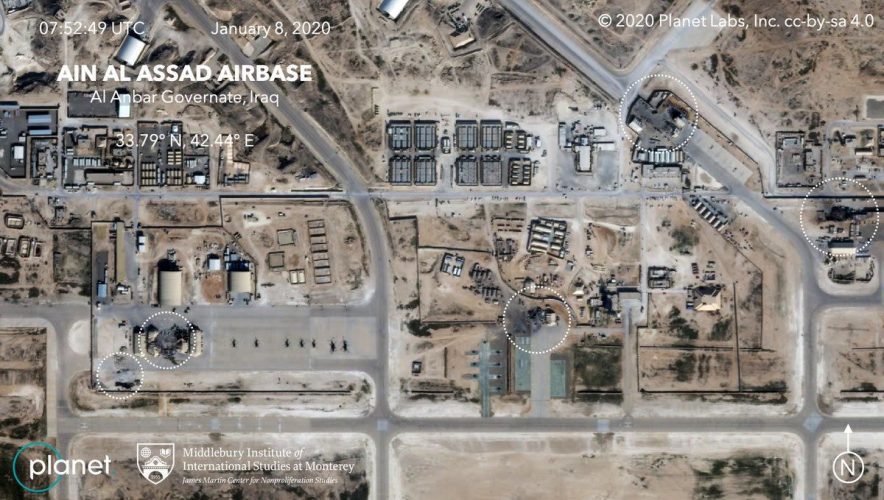
Commercial satellite images of the Al Asad air base taken after the attack show that the Iranian missiles struck buildings containing equipment with a precision previously only thought possible by advanced powers such as the US, NATO, Russia and China. Iran fired 17 missiles at Al Asad, and 15 hit their targets (two missiles failed to detonate).
Iran also fired five additional missiles at the US consulate in Erbil; US commanders on the ground said that it appeared Iran deliberately avoided striking the consulate, but in doing so sent a clear signal that had it wanted, the consulate would have been destroyed.
Trump had to back down
This was the reality that President Trump had to wrestle with when addressing the American people regarding the state of hostilities between the US and Iran.
Trump had previously promised a massive retaliation should Iran attack any US personnel or facilities. Surrounded by his national security team, Trump had to back down from that threat, knowing full well that if he were to attack Iran, the Iranian response would be devastating for both the US and its regional allies, including Israel, Saudi Arabia and the UAE. The US might be able to inflict unimaginable devastation on Iran, but the cost paid would be unacceptably high.
Trump’s rhetoric was aggressive, however, and his message made it clear that the US still considered Iran to be a rogue state whose pursuit of nuclear technology, ballistic missiles, and regional dominance would be opposed by the US, with force if necessary. But the Iranian missile attack drove home the new reality that, when it came to Iran’s actions in the Persian Gulf, American Presidential rhetoric no longer held sway as it once did.
Ali Khamenei, the Iranian Supreme Leader, drove this point home in a series of tweets claiming to have “slapped” the US in the face for its assassination of Soleimani, emphasizing that the policies pursued by Soleimani seeking the withdrawal of the US from the Persian Gulf region were becoming a reality, citing the recent vote by the Iraqi parliament to evict all foreign troops, including those of the US, from its soil.
President Trump, in his address to the American people, certainly talked the talk when it came to articulating a strong anti-Iranian policy. The real question is whether Trump and the American people are prepared to walk the walk, especially in a world where Iranian missiles are capable of dealing death and destruction on a scope and scale previously unimaginable.
Scott Ritter is a former US Marine Corps intelligence officer. He served in the Soviet Union as an inspector implementing the INF Treaty, in General Schwarzkopf’s staff during the Gulf War, and from 1991-1998 as a UN weapons inspector.
A Terrorist Attack Against Eurasian Integration
By Federico Pieraccini | Strategic Culture Foundation | January 6, 2020
The murder of Iranian general Qasem Soleimani in Baghdad, in the early hours of January 3 by US forces, only highlights the extent to which US strategy in the Middle East has failed. It is likely to provoke reactions that do not benefit US interests in the region.
To understand the significance of this event, it is necessary to quickly reconstruct the developments in Iraq. The US has occupied Iraq for 17 years, following its invasion of the country in 2003. During this time, Baghdad and Tehran have re-established ties by sustaining an important dialogue on post-war reconstruction as well as by acknowledging the importance of the Shia population in Iraq.
Within two decades, Iraq and Iran have gone from declaring war with each other to cooperating on the so-called Shia Crescent, favoring cooperation and the commercial and military development of the quartet composed of Iran, Iraq, Syria and Lebanon. Such ties, following recent victories over international terrorism, have been further consolidated, leading to current and planned overland connections between this quartet.
Local movements and organizations have been calling for US troops to leave Iraqi territory with increasing vigor and force in recent months. Washington has accused Tehran of inciting associated protests.
At the same time, groups of dubious origin, that have sought to equate the Iranian presence with the American one, have been calling for the withdrawal of the Popular Mobilization Units (PMUs) that are linked to Iran from Iraq. The protests from such groups appear to be sponsored and funded by Saudi Arabia.
With mutual accusations flying around, the US hit a pro-Iranian faction known as Kataib Hezbollah on December 29. This episode sparked a series of reactions in Iraq that ended up enveloping the US embassy in Baghdad, which was besieged for days by demonstrators angry about ongoing airstrikes by US forces.
The US secretary of state, Mike Pompeo, blamed this volatile situation on Iran, warning that Tehran would be held responsible for any escalation of the situation involving the embassy.
In the early hours of January 3, 2020, another tangle was added to the Gordian Knot that is the Middle East. Qasem Soleimani was assassinated when his convoy was attacked by a drone near Baghdad International Airport. The most effective opponents of ISIS and Wahabi jihadism in general was thus eliminated by the US in a terrorist act carried out in a foreign country in a civilian area (near Baghdad International Airport). The champagne would have no doubt been flowing immediately upon receiving this news in the US Congress, the Israeli Knesset, Riyadh royal palace and in Idlib among al Nusra and al Qaeda militants.
It remains to be seen what the reasons were behind Trump’s decision to okay the assassination of such an influential and important leader. Certainly the need to demonstrate to his base (and his Israeli and Saudi financiers) plays into his anti-Iranian crusade. But there are other reasons that better explain Trump’s actions that are more related to the influence of the US in the region; the geopolitical chess game in the Middle East transcends any single leader or any drone attack.
In Syria, for example, the situation is extremely favorable to the government in Damascus, with it only being a matter of time before the country is again under the control of the central government. General Soleimani and Iran have played a central role in ridding the country of the scourge of terrorism, a scourge directed and financed by the US and her regional allies.
In Iraq, the political situation is less favorable to the US now than it was back in 2006. Whatever progress in relations between Baghdad and Tehran has also been due to General Soleimani, who, together with the PMUs and the Iraqi army, freed the country from ISIS (which was created and nurtured by Western and Saudi intelligence, as revealed by Wikileaks).
It would seem that the US sanctions against Iran have not really had the intended effect, instead only serving to consolidate the country’s stance against imperialism. The US, as a result, is experiencing a crisis in the region, effectively being driven out of the Middle East, rather than leaving intentionally.
In this extraordinary and unprecedented situation, the Russians and Chinese are offering themselves variously as military, political and economic guarantors of the emerging Eurasian mega-project (the recent naval exercises between Beijing, Moscow and Tehran serving as a tangible example of this commitment). Naturally, it is in their interests to avoid any extended regional conflict that may only serve to throw a monkey wrench into their vast Eurasian mega-project.
Putin and Xi Jinping face tough days ahead, trying to council Iran in avoiding an excessive response that would give Washington the perfect excuse for a war against Iran.
The prospects of a region without terrorism, with a reinvigorated Shia Crescent, led by Iran at the regional level and accompanied by China and Russia at the economic (Belt and Road Initiative) and military level, offer little hope to Riyadh, Tel Aviv and Washington of being able to influence events in the region and this is likely going to be the top argument that Putin and Xi Jinping will use to try to deter any Iranian overt response.
Deciding to kill the leader of the Quds Force in Iraq proves only one thing: that the options available to Trump and his regional allies are rapidly shrinking, and that the regional trends over the next decade appear irreversible. Their only hope is for Tehran and her allies to lash out at the latest provocation, thereby justifying the regional war that would only serve to benefit Washington by slowing down regional unification under Iranian leadership.
We must remember that whenever the US finds itself in a situation where it cannot control a country or a region, its tendency is to create chaos and ultimately destroy it.
By killing General Soleimani, the US hopes to wreak havoc in the region so as to slow down or altogether scupper any prospect of integration. Fortunately, China, Russia and Iran are well aware that any conflict would not be in any of their own interests.
No drone-launched missiles will be enough to save the US from decades of foreign-policy errors and their associated horrors; nor will they be enough to extinguish the memory of a hero’s tireless struggle against imperialism and terrorism.
Trump’s Fatal Mistake in Iraq and Beginning of End for US Occupation
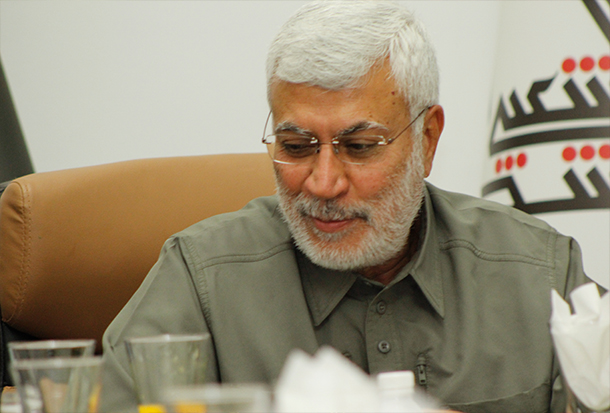
Iraqi PMU commander Abu Mahdi al-Muhandis in Baghdad following their defeat of ISIS in 2017 (Photo: Patrick Henningsen 2017©)
By Patrick Henningsen | 21st Century Wire | January 3, 2020
The United States may have just worn out its welcome in Iraq. Whatever comes next will be laid at the feet of the Trump Presidency.
As a result of a series of disastrous moves by US central command, the region now faces the very real prospect of another multinational conflagration in the Middle East, which could include a direct military confrontation between the US and Iran.
How It Began
This past Sunday December 29th, just before the New Year rang in, President Donald Trump gave the order to bomb an Iraqi military base, killing and wounding a number of Iraqi military personnel, including Iraqi Army officers, Iraqi police, as well as soldiers belonging to the People’s Mobilization Unit (PMUs). US Air Force F-15E fighters struck five targets located in Iraq and along the Syria-Iraq border, all said to be controlled by an ‘Iranian-backed paramilitary group,’ according to the Pentagon.
According to Washington defense spokespersons, Sunday’s US airstrike was supposedly in response to a rocket attack which struck the “K1” joint US-Iraqi military base located in Kirkuk in north Iraq, which happened just two days before on Friday December 27th, killing one U.S. defense contractor, and one Iraqi police officer, as well as wounding a further 4 US defense contractors, and 3 Iraqi Army officers. US officials claim they had intelligence which confirmed that Friday’s rocket attack near Kirkuk was the work of “Iranian militia,” therefore holding the Islamic Republic of Iran responsible. However, no evidence was presented by the US in relation to the claim.
In response to the US bombing its facility on Sunday, Iraqi protesters, including friends and family of fallen soldiers killed in the US bombing raid, and led by Iraqi PMU members and their supporters, stormed the outer perimeter of the US embassy in Baghdad located inside the infamous US-controlled Green Zone. Many US embassy staff were evacuated or airlifted from the compound, and an additional detachment of 100 US Marines were called in as reinforcements, along with an additional 750 troops from fast battalion 82nd Airborne Division sent to Kuwait preparing to go into Iraq. US combat helicopters circled overhead, as well as around the entire Green Zone and over civilians neighborhoods in Baghdad. This move was not received well by the Iraqi government who forbid such US military patrols as part of their status of forces agreement for the country. The siege lasted until News Years Eve on December 31st, before the Iraqi Army and Iraqi Mukhabarat internal security eventually arrived to disperse the angry crowds.
Following the embarrassing scenes at the US embassy on New Years Eve, Washington promised retribution. What followed could very well be the trigger for a renewed war in Iraq, and which may likely result in US forces and personnel eventually being asked (or forced) to leave the country. On Wednesday January 2, 2020, the US launched another airstrike, targeting an access road leading to Baghdad International Airport, and reportedly killed Iranian Quds Force leader, General Qasem Soleimani, as well as senior Iraqi PMU commander, Abu Mahdi al-Muhandis, according to reports by Iraqi TV.
Both Soleimani and al-Muhandis are considered to be among Iran and Iraq’s most revered military figures, and their targeted assassinations by the US government will certainly be viewed as an act of war by a large portion of the Iraqi and Iranian populations, as well as their respective military and security apparatuses. In particular, al-Muhandis is regarded by many a hero in Iraqi’s hard-fought victory over ISIS in 2017.
Iraqi cabinet officials and parliamentarians have been meeting over the last 48 hours to discuss reviewing the status of their cooperation agreement with the United States which allows for intelligence sharing and US training and technical assistance for Iraqi military divisions. Whether this escalates into officials calling for the US military and its 20,000 troops and defense personnel to pack up and leave the country – remains to be seen.
It should go without saying that this provocative military action by the United States means that US troops and personnel may no longer be safe operating in Iraq.
Questioning US ‘Intelligence’
In order to grasp the full gravity of what the Trump Administration has just done, it’s essential to consider these events in historical context, as the latest reckless move in a long line of US failures in Iraq.
According to veteran Middle East correspondent Elijah Magnier, “The United States of America has fallen into the trap of its own disinformation policy, as exemplified by the work of one of its leading strategic study centres, a neocon think tank promoting war on Iran.”
Magnier adds, “Analysts’ wishful thinking overwhelmed their sense of reality, notably the possibility of realities invisible to them. They fell into the same trap of misinformation and ignorance that has shaped western opinion since the occupation of Iraq in 2003. The invasion of Iraq was justified by the presence of ‘Weapons of Mass Destruction’ which never existed.”
According to Iraqi officials, at the time of the initial rocket attack on Dec 27th, it was not clear who had actually fired on the K1 joint base. Regardless, a number of data points strongly indicate that the US had already decided who it would be targeting.
According to the New York Times, “President Trump was briefed by Defense Department leaders on Saturday, and allowed the strikes to proceed. Senior officials including Defense Secretary Mark T. Esper and Secretary of State Mike Pompeo traveled to Mr. Trump’s Mar-a-Lago resort in Florida on Sunday for discussions with the president, American officials said.”
The US had already taken the decision to bomb Iraq before any joint investigation could be conducted between the Iraqi Ministry of Defense and the US authorities. Soon after the Mar-a-lago meeting, Secretary of Defense Mark Esper called acting Iraqi Prime Minister Adil Abdul-Mahdi to inform him the US was not interested in working with Baghdad to find out what happened and who had fired the rockets. Esper told the Iraqi PM that Washington had already received “intelligence” from its trusted sources which said the rocket attack was carried out by a branch of the Iraqi PMUs known as Katiab Hezbollah (no relation to Lebanon’s Hezbollah defense force). It should be noted that these PMU brigades are composed of Iraqi citizens who serve under the official Iraqi military command headquartered in Baghdad. Because this PMU division’s membership is composed of Shia Muslims, United States officials and the US mainstream media have taken the liberty of labeling them as “Iranian militia” – a blatant falsehood, but one which has been disseminated by US officials in order to infer these are somehow ‘Iranian proxies’ and proceeded to pin the alleged responsibility of the initial rocket attack on Iran, in effect, justifying the heavy-handed US retaliation on Sunday, and Washington’s targeted assassinations of Qasem Soleimani, and Abu Mahdi al-Muhandis on January 2nd.
To date, US officials have provided no evidence to support their claim that the rocket attack on Dec 27th was carried out by Katiab Hezbollah PMUs, nor has the US given any specifics as to the provenance of its ‘intelligence’ which attributed blame to PMUs. If this was indeed a rush to judgement, it would not be the first time the US has perpetrated an act of war against a sovereign state based on faulty, and less than credible intelligence. The recent OPCW leaks have demonstrated beyond any doubt that the US-led airstrikes against Syria in April of 2018 were based on misinformation of a supposed ‘chemical attack’ just days earlier in Douma, Syria on April 7, 2018.
Upon closer review, it’s now clear that what the US claimed it was doing, does not actually match the actions which it had undertaken on Dec 29th. In addition, the US bombing raid on Dec 29th will also have aided ISIS. Magnier explains the obvious US disconnect here:
Mr Abdel Mahdi asked Esper if the US has “proof against Kataeb Hezbollah to share so Iraq can arrest those responsible for the attack on K1”. No response: Esper told Abdel Mahdi that the US was “well-informed” and that the attack would take place “in a few hours”.
In less than half an hour, US jets bombed five Iraqi security forces’ positions deployed along the Iraqi-Syrian borders, in the zone of Akashat, 538 kilometres from the K1 military base (that had been bombed by perpetrators still unknown). The US announced the attack but omitted the fact that in these positions there were not only Kataeb Hezbollah but also Iraqi Army and Federal Police officers. Most victims of the US attack were Iraqi army and police officers. Only 9 officers of Kataeb Hezbollah – who joined the Iraqi Security Forces in 2017 – were killed. These five positions had the task of intercepting and hunting down ISIS and preventing the group’s militants from crossing the borders from the Anbar desert. The closest city to these bombed positions is al-Qaem, 150 km away.
Interestingly, this is not the first time that the US and allies have targeted an Iraqi PMU facility and tried to label it as “Iranian.” Back in September, 21WIRE reported how Israel and Saudi Arabia were reported to have launched supposed ‘retaliatory’ airstrikes against “pro-Iranian militias” stationed along the border between Syria and Iraq. This was reported by the Jerusalem Post at the time:
“Saudis, Israel attack pro-Iran militias on Syria-Iraq border,” and adding that,“Saudi fighter jets have been spotted along with other fighter jets that have attacked facilities and positions belonging to Iranian militias.”
21WIRE also noted how the Jerusalem Post had compiled their report citing multiple sources, including pieces of information from the Independent Arabia, Lebanese outlet Al Mayadeen and the Syrian Observatory for Human Rights. They reported air strikes hitting targets over the course of that week, killing 31, after hitting what they called “Iranian-backed” Iraqi Hash’d Shaabi (PMUs) positions along the Iraqi-Syria border.
“On Wednesday, five people were killed and another nine were wounded in an airstrike carried out by unidentified aircraft that targeted positions of the Iranian-backed Iraqi Popular Mobilization Forces militia in Albukamal, according to Sky News Arabia.”
Why this is crucial, is because it demonstrates previous form by Israel and Saudi Arabia – against near identical targets which the US bombed on Dec 29. It stands to reason then, that the ‘intelligence’ source for both attacks, on Sept 19th, and Dec 29th, seem to be related, deriving from either Israel or Saudi Arabia – both of which are heavily biased against Iran, and viewed it as an existential threat to their own regional geopolitical and military hegemony. In the case of Israel, it has played a visible role in directing US policy regarding Iran since the onset of the Trump Administration. It was Israeli PM Benjamin Netanyahu who boasted about his role in convincing the White House to unilaterally withdrawal from the JCPOA Iran nuclear deal in May 2018.
It’s also important to note with the US bombing raid on Sunday Dec 29th, the Iraqi bases hit along the Syrian-Iraqi border are located approximately 540km from Kirkuk, far away from where the US claim that Kaitab Hezbollah PMUs had fired the initial rocket attack on Dec 27th – which means that those US targets played no role in Friday’s rocket attack on K1, and more likely had already been selected in advance of Dec 27th, and the US was simply waiting for the right ‘incident’ to green-light a military attack on what it claims to be “Iranian” military targets.
Again, the fact that the US insists on mislabeling its supposed enemy means that nothing productive can come out of the latest series of events – unless Washington considers another full-scale war in Iraq a productive endeavor – a proposition which many would not find that far-flung considering America’s tawdry record in the region.
Iraqi PMUs Defeated ISIS in 2017
In order to properly understand the Iraqi military and PMU’s reaction to this ham-fisted US attack on Iraqi soil, it is important to understand who are the Iraqi People’s Mobilization Units (PMUs), aka the Hash’d al-Shabbi, or ‘Hasheed’ for short. This is the new national militia of Iraq and are the very same soldiers who have fought and died against ISIS for ultimately defeating their terrorist occupation in late 2017. The PMUs were formed in response to the emergence of ISIS and the fall of Mosul in June 2014. The Grand Ayatollah Sistani issued a fatwa in the summer of 2014, which called on all able-bodied men of fighting age to form a coalition of national militias, roughly 130,000 strong, to fight back against ISIS after it had routed the Iraq Army during ISIS’s summer blitzkrieg which saw several key cities taken by the terrorist army, as they headed dangerously close to the capital city Baghdad.
Based on the rhetoric and media coverage we are seeing this week, it’s painfully obvious that few, if any, within the ranks of American foreign policy ‘experts’ and national security journalists, are really aware of this reality on the ground in Iraq. It is widely acknowledged in Iraq, and in the region, that the PMUs played the decisive role in defeating ISIS and securing liberated communities in the latter stages of the country’s terrorist ordeal. It’s important to note also that tens of thousands of Iraqis, including Iraqi Army, Police, Iraqi civilians, and Iraqi PMUs – including these very same PMU units who the US has killed this week – have all died, sacrificing their lives for their country in the fight against the foreign-backed terrorist menace. For the United States political leadership and mainstream media to crassly label them as “Iranian militias,” is to rob Iraqis of an important national victory and strip them of their agency.
As we can now see from the incredible scenes at the US embassy on Tuesday, Washington’s ignorance of the reality on the ground in Iraq has come at a heavy price.
Since its opening in 2008, the new US embassy has not faced any serious challenge to its structural integrity. It is not just any embassy either – it is the world’s largest and most expensive embassy ever constructed, covering a total of 104 acres which is roughly the size of Vatican City, and houses 5,000 embassy staff, military and intelligence personnel. Iraqi protesters breached its outer security walls and main gate, and proceeded to lay waste the embassy’s periphery structures, before pinning down US Marines guarding the compound inside the foyer of one of the outer reception buildings. Now that this facility has been compromised, it can no longer be relied on as the ‘fortress America’ and forward operating station it has been for the past decade.
Trump and Washington’s Fundamental Error
Another important takeaway from all of this is for Americans to realize that Iran posed no national security threat to the United States, but Washington’s insistence on framing every incident in the region as “the work of the Iranian regime” means that forces in Washington desperately want war, and now they can’t hide their agenda. This drive is most certainly being spurred on by US allies in the region, Israel and Saudi Arabia. From an imperialist standpoint, the US and its allies do benefit geopolitically by keeping Iraq divided and weak – ensuring that it can never get back on its feet economically or politically to become influential in the region, and can never become close partners with its two most important neighbors Syria and Iran.
For Washington and Tel Aviv, the road to Tehran has always been through Baghdad, only we’re not in 2003 anymore, and the Middle East playing field has changed dramatically since that time, mostly as a direct consequence of US military and proxy aggression in the region.
Besides this, Iraqis are well aware by now that it is the United States and not Iran, who has already ruined their country for generations to come.
If Washington continues down this path, it could also lead to Trump’s downfall politically.
Unfortunately, Iraq is set again to become the pitch for another ugly geopolitical grudge match between the West and Iran. By showing its ugly hand, Washington has left its adversaries with little choice but to fight back this time.
***
Author Patrick Henningsen is an American writer and global affairs analyst and founder of independent news and analysis site 21st Century Wire, and is host of the SUNDAY WIRE weekly radio show broadcast globally over the Alternate Current Radio Network (ACR). He has written for a number of international publications and has done extensive on-the-ground reporting in the Middle East including work in Syria and Iraq. See his archive here.
Pompeo Holds Talks with Netanyahu, MBS, MBZ on Iraq Strikes
Al-Manar | December 31, 2019
US Secretary of State Mike Pompeo says he had discussions with the UN General Secretary, Israeli Prime Minister, Crown Prince of Abu Dhabi and Saudi Arabia’s Crown Prince over strikes that killed and injured dozens of Iraq’s Hashd Shaabi fighters.
Pompeo tweeted early on Tuesday (December 31) saying he had made clear to the UN General Secretary Antonio Guterres that the US airstrikes on Kata’ib Hezbollah facilities on Sunday were a “defensive action aimed at deterring Iran and protecting American lives”.
The United States launched a series of air attacks Sunday on targets both in Iraq and Syria killing at least 25 Kata’ib Hezbollah fighters and injuring 50 others. Washington claims that the strikes came after rocket attacks on facilities housing US military personnel in the Arab country.
Pompeo also discussed “the attacks on coalition forces” with Abu Dhabi’s Crown Prince Mohammad bin Zayed Al Nahyan, later tweeting that the US “will continue to work together to counter Iran’s destabilizing behavior”.
He told Saudi Arabia’s Crown Prince Mohammad bin Salman, “The US and Saudi Arabia will continue to work together to counter Iran’s malign behavior.”
Pompeo also had a “productive” call with Israeli Prime Minister Benjamin Netanyahu, later tweeting, “We discussed US defensive strikes in Iraq and Syria to counter Iran’s threats. The U.S will take decisive action to defend its citizens and interests.”
Nobody Is Touching US-Occupied Syrian Oil With a 6 Foot Pole — Saudi Aramco Denies Sending Experts
By Marko Marjanović | Checkpoint Asia | December 26, 2019
Claims emerged last week that Saudi Aramco was looking to get US-occupied oil fields in eastern Syria back to capacity:
Featured Video

U.S. General Caine Warns: STRIKING IRAN is a HUGE RISK
or go to
Aletho News Archives – Video-Images
From the Archives
Stealth Bombers and Bunker Busters
Analysis of the so-called 12-Day War, and the triumphantly celebrated Operation Midnight Thunder
By William Schryver | imetatronink | November 28, 2025
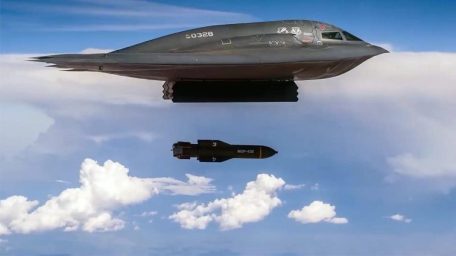
The GBU-57 is a big fat gravity bomb with fins. To achieve effective precision, a B-2 bomber must drop it on its intended target from no further than about five nautical miles — essentially right on top of the target.
Its penetration depth is claimed to be 200 feet. But that capability has NEVER been tested against a seriously hardened deep-underground target encased in layers of high-performance concrete, and topped with a few dozen meters of solid rock. In that sort of real-world scenario, the GBU-57 would be lucky to drill down 50 feet, if that.
It was always ridiculous silly talk to suggest the GBU-57 was the wonder weapon it was made out to be. There is a good reason the US only produced a couple dozen of them and then stopped: they understood its acute limitations in a non-permissive combat environment.
And, notwithstanding the hyperbolic Israeli propaganda, there was never any credible evidence that Iranian medium- and long-range air defenses against fixed-wing aircraft were attrited to any significant degree. And Iranian short-range air defenses were increasingly effective against long-range Israeli drones with each passing day.
As for the B-2: it is a big fat subsonic aircraft. It flies at airliner speeds. A strike on Fordow would entail flying at least 500 miles in and out of Iran. … continue
Blog Roll
 Aletho News
- Drug traffickers trained in Ukraine attack state forces in Mexico
- The tragic reality of Brazilian mercenaries in the Ukrainian conflict
- Zelensky Refused to Discuss Druzhba Pipeline Issue – Fico
- U.S. General Caine Warns: STRIKING IRAN is a HUGE RISK /Glenn Diesen & Lt Col Daniel Davis
- Israel designates five Palestinian media outlets as ‘terrorist organizations’
- Israel, not America, first: Carlson’s Huckabee interview lays bare US foreign policy priorities
- Israeli troops executed Palestinian aid workers at ‘point blank range’: Report
- Iran war What if today’s Iran is resigned to a long, hellish war with the US?
- Why Israel Is Escalating Its War Crimes Against Lebanon
- Iran in the face of the armed diplomacy of imperialism
- If Americans Knew
- In Gaza, Ramadan without mosques, imams – Not a ceasefire Day 137
- Footage Shows Israeli Troops Waiting in Ambush, Then Opening Fire on a Palestinian Teen
- The US is on the brink of a major new war that Trump has not even bothered explaining
- Latest Epstein document dump is one more cover-up
- No Protection, No Justice: US Citizens Killed with Impunity by Israel
- Maria Farmer: Epstein Victim Reveals Explosive Information Covered Up by Media
- Average of five Palestinians killed by Israel every day in Gaza since ceasefire – Not a ceasefire Day 136
- Palestinian church leaders admonish Christian Zionist Mike Huckabee – Not a ceasefire Day 135
- Ominous messaging from Trump’s “Board of Peace” – Not a ceasefire Day 134
- ‘Christians Out’: Jerusalem Church Tagged With Hate Graffiti, Police Investigating
- No Tricks Zone
- Surprising Discovery: Sahara Is Greening…Billions Of Trees Where Once Thought To Be Barren
- New Research Reaffirms Clouds, Aerosols, And Surface Solar Radiation Are ‘Driving The Climate System’
- Germany: Electric Car Catches Fire At Charging Station, Sets Off Local “Inferno”, Widespread Damage
- New Study: Canada’s New Brunswick Was 1°C Warmer Than Today During The Medieval Warm Period
- Coal Power Back In Trend As Globe Tries To Keep Pace With Growing Demand For Power
- New Study: A 4°C Warmer Beaufort Sea Had ‘No Sea Ice’ 11,700 – 8200 Years Ago
- Unfudging The Data: Dutch Meteorological Institute Reinstates Early 20th Centruy Heat Waves It Had Erased Earlier
- German Gas Crisis…Chancellor Merz Allegedly Bans Gas Debate Ahead of Elections!
- Pollen Reconstructions Show The Last Glacial’s Warming Events Were Global, 10x Greater Than Modern
- Germany’s Natural Gas Storage Level Dwindles To Just 28%… Increasingly Critical
 Aletho News