‘UK trains armies on its own human rights blacklist’
Press TV – May 23, 2016
The British government is providing military training to the majority of nations it has blacklisted for human rights violations, a new report reveals.
In a report published on Sunday, the Independent revealed that 16 of the 30 countries on the Foreign & Commonwealth Office (FCO)’s “human rights priority” watchlist are receiving military support from the UK despite being accused by London itself of issues ranging from internal repression to the use of sexual violence in armed conflicts.
According to the UK Ministry of Defense, since 2014, British armed forces have provided “either security or armed forces personnel” to the military forces of Saudi Arabia , Bahrain, Afghanistan, Bangladesh, Myanmar, Burundi, China, Colombia, Egypt, Iraq, Libya, Pakistan, Somalia, Sudan, Yemen and Zimbabwe.
Britain is a major provider of weapons and equipment such as cluster bombs and fighter jets to Saudi Arabia in its year-long military aggression against Yemen that has killed nearly 9,400 people, among them over 2,230 children.
Since the conflict began in March 2015, the British government has licensed the sale of nearly $4 billion worth of weaponry to the Saudi kingdom.
British commandos also train Bahraini soldiers in using sniper rifles, despite allegations that the Persian Gulf monarchy uses such specialist forces to suppress a years-long pro-democracy uprising in the country.
Bahraini forces visited the Infantry Battle School in Wales last week, accompanied by troops from Nigeria, the Defense Ministry said.
Nigeria’s top military generals are accused by Amnesty International of committing war crimes by causing the deaths of 8,000 people through murder, starvation, suffocation and torture during security operations against the Boko Haram Takfiri terrorists, according to the report.
Andrew Smith, with the Campaign Against Arms Trade, said Britain should not be “colluding” with countries known for being “some of the most authoritarian states in the world.”
Obama Campaigned on Peace, But Brought Death and War Worldwide
Sputnik – 02.04.2016
 Barack Obama campaigned on a promise to scale back US military engagement in the Middle East and to keep America’s soldiers from getting bogged down in never-ending regional civil wars. President Obama has kept park of that campaign promise, with America’s troop presence abroad reduced. But US military engagement, as a whole, has increased significantly, through the use of unmanned drones and the deployment of troops in combat and security situations in more countries than in 2009.
Obama’s White House ended the previous administration’s Operation Iraqi Freedom and Operation Enduring Freedom — combat missions in Iraq and Afghanistan that continued to fester following George W. Bush’s attempts at regime change in Baghdad and the bombing of mountains into submission around Kabul. Today, despite recent reports that the Defense Department has understated the US troop presence in Iraq, troop levels in each country are down.
Nonetheless, Obama followed up his acceptance of the Nobel Peace Prize by expanding US military actions to nearly every country in the Middle East and North Africa, while reviving a Cold War posture toward Russia and China.
For instance, during the so-called Arab Spring, the US undertook a military campaign against Libyan dictator Muammar al-Qaddafi, leading to the leader being deposed and killed in the streets. The ousting of Qaddafi turned the once thriving country into a hotbed for Daesh extremists and today Libya is largely considered a failed state.
Under Obama, the US has expanded drone wars in Pakistan, Somalia, Yemen, Afghanistan, Libya and Syria with limited results and many civilian deaths.
Reports by the Bureau of Investigative Journalism suggest that the majority of US drone strikes result in civilian casualties, but under Obama these casualties have been defined away by invoking a macabre redefining of the “kill box” – anybody within a certain proximity to targeted victim is deemed a combatant.
The US today now finds itself performing aggressive joint military exercises with the South Koreans, seen as dress rehearsals for a full-scale invasion of North Korea — a nuclear capable country. American and NATO forces are posted along the Russian border in Norway to prepare for potential offensive actions against Moscow justified by the fantasy of Russian military aggression in Europe. US forces are now fighting in not only Iraq and Afghanistan, but also in Syria, Libya, and Yemen.
The paradox of the Obama Administration is how a president who campaigned on getting us out of war in Iraq and Afghanistan has now committed the US to the escalation of several recent wars.
Obama is no dove, and the world is no safer. With unmanned drone use increasing overseas, perpetual war has never been rebranded so effectively.
Is the Media an Accomplice in Drone Murders?
By Emran Feroz – teleSUR – March 11, 2016
Since 2001, the United States has been killing people with weaponized drones, most times not knowing the identities of the victims.
The victims of drone strikes are nameless and invisible, despite the fact that most of them are civilians.
The Pentagon announced this week that more than 150 al-Shabab fighters have been killed by a U.S. drone strike in Somalia. The Pentagon spokesmen repeatedly talked about “fighters” and “terrorists” which “posed an imminent threat to the U.S.” But as usual, he offered no proof of his claims.
This kind of language has become normalized when it comes to the U.S. drone war, which is not just taking place in Somalia, but also in countries like Yemen, Pakistan, Afghanistan and Iraq. What is significant regarding the regular attacks in these countries is the media coverage. In fact, it practically does not exist. The many victims of drone strikes are nameless and invisible. And if they appear in any media reports, all of them are completely dehumanized and described as “terrorists,” “suspected militants” or any other similar euphemism.
This was also the case after the latest strike in Somalia, a country the U.S. is officially not at war with. Shortly after the Pentagon’s announcement, many news outlets adopted the U.S. government’s version of the incident. The New York Times, for example, wrote about the killing of “150 fighters who were assembled for what American officials believe was a graduation ceremony.” “Militants” was also the term the Washington Post used to describe all the victims. It is necessary to point out that many other well-known media outlets from all over the world did the very same thing. As usual, there was a huge lack of any critical scrutinizing. Instead, media once again became a mouthpiece of the U.S. government by quoting its military officials and spreading their one-sided views constantly.
Since 2001, the United States has been killing people with weaponized drones, most times not knowing the identity of the victims. As of today, at least 6,000 people have been killed by these drone strikes. According to the London-based Bureau of Investigative Journalism, only 4 percent of drone victims in Pakistan were identified as a-Qaida members. But vastly more than 2,000 people have been killed there by drones during the last years.
Another country which is suffering heavily under drone strikes is Afghanistan, the most drone bombed country in the world. Between 2001 and 2013, 1,670 drone strikes took place in the country. It was in the city of Kandahar, the Taliban’s former stronghold, where the first strike by a weaponized drone took place in October 2001. The target, Taliban founder Mullah Mohammad Omar, was not killed on this day, but many other unknown people have been in the years since.
One of these people was Sadiq Rahim Jan, a 21-year-old food vendor from Paktia, eastern Afghanistan. He was murdered by a drone strike in July 2012. A few days later, media outlets in Kabul described him as a “Taliban commander.” The family members of Aisha Rashid have also been killed by a drone strike. The Afghan girl was four years old when a missile hit the pick-up of her family in Kunar, also in the east of the country. Fourteen passengers, including Aisha’s parents, were murdered. Only she survived – barely – with a ragged face. Initially, all the victims were described as “militants” by Afghan government officials and local media outlets.
Tariq Aziz, from North Waziristan shared a similar destiny. The 16-year-old anti-drone activist was killed by a drone strike in November 2011, together with his 12-year-old cousin Waheed. Unlike the case of Malala Yousafzai, the young Pashtun girl which was nearly killed by a member of the Pakistani Taliban and received a Nobel Peace Prize, Tariq’s case is widely unknown.
In all the mentioned cases, as well as many other, significant media coverage was nonexistent – or it described the victims as terrorists, extremists, militants, al-Qaida members, and so on. This is happening on a daily basis and there are also reasons why it is happening.
In the case of Sadiq, for example, his family became outraged after they noticed that local media outlets described their son and brother as a “Taliban commander.” On that day, the young Afghan was the only person who has been killed in the area. He never had any connection with any insurgent group, not to mention being a commander of them. One of the media outlets which spread these news was Radio Azadi, an Afghan branch of the US government’s external broadcast services. It should be more than obvious that the main aim of such a media platform is not spreading objective information.
Another example for this behaviour is Tolo TV, Afghanistan’s leading mainstream television channel. Last year, the channel’s news website reported that in July 2015 drone strikes in the eastern province of Nangarhar killed “nearly 250 Taliban and Daesh [Islamic State] insurgents.” The main source for this “reporting” was the National Directorate of Security (NDS), the Afghan intelligence service, which was built by the U.S. in the first days of the NATO invasion.
Tolo TV was created in 2004 by Saad Mohseni, an Afghan businessman who is being called an “Afghan Rupert Murdoch” and is considered one of the most powerful men in Afghanistan. The channel’s creation was mainly funded by the notorious United States Agency for International Development (USAID), which is widely known as one of the most important foreign policy tools of the White House.
In general, one can assume that many media outlets in Afghanistan were not created to support journalism and press freedom but to install media institutions who can be useful to represent particular interests. This is also the case in other countries which suffer from drone strikes.
Noor Behram, an investigative journalist from Northern Waziristan, is known for taking pictures of the drone murder scenes and spreading the victims’ faces. After Behram talked with journalists from Islamabad, Pakistan’s capital, he experienced that for them, a beard, long hair and a turban or a pakol, a traditional Afghan cap, is enough to describe male drone victims as “terrorists.” But nearly every man in this area looks like that. According to this logic, everyone, even myself when I am staying there, must be a terrorist.
Besides, Behram’s results fit into Washington’s practice that all military-aged males in a strike zone are considered as “militants.”
The U.S. and its allies needed propaganda organs to construct and justify their war on a medial level. Despite the question if this is moral or not, one should agree that it is also very logical because every war is based on propaganda – it was always like that and probably will never change.
But what remains is the question why so many people still believe such a biased media coverage and its constructed narrative of a good war which is only hitting the bad guys.
Emran Feroz is an Afghan-Austrian journalist, writer and activist currently based in Germany. He is the founder of Drone Memorial, a virtual memorial for civilian drone strike victims.
Obama Administration Fails to Make Progress on Reforming US Drone Program
Sputnik — February 23, 2016
US President Barack Obama’s administration has failed to implement reforms regarding the controversial drone policy to make it more transparent, accountable and consistent with national security interests, according to a report by the US think tank Stimson Center published Tuesday.
“Little progress has been made during the past year and a half to enact reforms that establish a more sensible US drone policy consistent with America’s long-term security and economic interests. The lack of a clear drone policy risks leaving a legacy on drone use that is based on secrecy and a lack of accountability that undermines efforts to support the international rule of law,” the report reads.
In 2014, the Stimson Task Force, comprising senior military and intelligence officials, recommended public disclosure of targeted drone strikes, thorough review of past and present drone strikes and their effectiveness and detailed reports explaining the legal basis of the US lethal drone program, among other recommendations.
The proposals were later backed by UN experts, including the adviser to Special Rapporteur on extrajudicial killings, Sarah Knuckey.
The US military has increasingly relied on drones to conduct operations in Afghanistan, Pakistan, Libya, Syria and Iraq. Critics have slammed the practice for resulting in a significant number of civilian deaths and the destruction of infrastructure unrelated to terrorists.
Data collected by the Bureau of Investigative Journalism shows that US drone strikes have killed up to 1,000 civilians in Afghanistan, Pakistan, Somalia and Yemen over the past 10 years.
Saudis splurging to rally support against Iran
Press TV – January 17, 2016
Saudi Arabia pledged the Somali government USD 50 million in aid on the same day Mogadishu declared it had severed ties with Iran, a report says.
According to a document from the Saudi embassy in Nairobi, Kenya, to the embassy of Somalia there, the regime in Riyadh pledged USD 20 million in budget support to Mogadishu and USD 30 million for investment in the African country, Reuters reported Sunday.
The news agency quoted diplomats as saying that the financial support is “the latest sign of patronage used by the kingdom to shore up regional support against Iran.”
“The Saudis currently manage to rally countries behind them both on financial grounds and the argument of non-interference,” a diplomat said. Iran has repeatedly denied the Saudi allegations of interference in the affairs of other countries.
On January 2, Saudi Arabia announced the execution of prominent cleric Sheikh Nimr al-Nimr and 46 other people. Nimr was a critic of Riyadh. After that, protesters gathered outside the Saudi embassy in the Iranian capital, Tehran, and the consulate building in the city of Mashhad. Some people attacked the Saudi diplomatic missions during the protests. Iranian authorities strongly condemned the attacks and some 60 people were detained.
Riyadh severed its ties with Tehran on January 3.
Somalia was among those countries that declared they were cutting diplomatic relations with Iran. Bahrain, Sudan, Djibouti and Comoros also have severed ties with Iran. Kuwait and the United Arab Emirates recalled ambassadors.
The Somali government has not confirmed or denied the pledge, but Mogadishu claims the Saudi support for Somalia, which has been long-running, is not related to the decision to break diplomatic ties with Iran. The Saudi Foreign Ministry did not respond to requests for comment.
Nobel Peace Prize-Winner Obama Dropped 23,144 Bombs in 2015
Sputnik – January 11, 2016
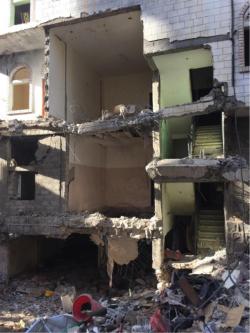 The United States in the past year dropped more than 20,000 bombs on Muslim-majority countries Iraq, Syria, Afghanistan, Pakistan, Yemen and Somalia, according to a study by the Council on Foreign Relations (CFR).
In an article published January 7, Micah Zenko, a senior fellow at CFR, states that since January 1, 2015, the United States has dropped an estimated 23,144 bombs in those six countries: 22,110 in Iraq and Syria; 947 in Afghanistan; 58 in Yemen; 18 in Somalia; and 11 in Pakistan.
“This estimate is based on the fact that the United States has conducted 77 percent of all airstrikes in Iraq and Syria, while there were 28,714 US-led coalition munitions dropped in 2015. This overall estimate is probably slightly low, because it also assumes one bomb dropped in each drone strike in Pakistan, Yemen, and Somalia, which is not always the case,” Zenko writes.
Despite dropping tens of thousands of bombs over the past 17 months, Washington’s strategy has failed to defeat Daesh and other Islamic militant groups, Zenko observed.
In Afghanistan, the Taliban control more territory than at any point since the 2001 US invasion, according to a recent analysis in Foreign Policy magazine.
Zenko notes that the primary focus of Washington’s counter-terrorism strategy is to kill extremists, and that far less attention is paid to prevent a moderate individual from becoming radicalized.
As a result, “the size of [Daesh] has remained wholly unchanged,” Zenko writes.
In 2014, the Central Intelligence Agency estimated the size of Daesh to be between 20,000-31,000 members. On Wednesday, Colonel Steve Warren, a spokesman for the US-led coalition, estimated the group at 30,000 members, despite Pentagon claims that 25,000 Daesh members have been killed in US air strikes.
At the same time, the Pentagon claims that only six civilians have “likely” been killed in the course of the bombing campaign.
US Air Force reveals $3bn drone expansion plan
RT | December 11, 2015
Doubling the number of pilots and support staff and expanding to more bases around the US are two parts of the Air Force’s plan to meet the Pentagon’s goal of expanding drone operations. The $3 billion wish list still needs congressional approval.
The plan was announced on Thursday, after months of soliciting feedback from the USAF’s drone pilots and support staff, who have complained about being overworked and under-appreciated. It envisions adding 75 MQ-9 Reaper drones to the current fleet of 175 Reapers and 150 MQ-1 Predators, increasing the number of squadrons from eight to 17, and adding up to 3,500 new pilots and support staff, reported the Los Angeles Times.
Currently, most of the USAF drone operations are flown out of Creech Air Force Base in Nevada. The base, about an hour’s drive from Las Vegas, has no housing facilities, so the 3,325 military personnel and civilian contractors working round-the-clock shifts must commute.
Another reason for the expansion is the rising need for surveillance flights, according to General Herbert “Hawk” Carlisle, head of USAF’s Air Combat Command (ACC), which oversees drone operations.
“Right now, 100% of the time, when a MQ-1 or MQ-9 crew goes in, all they do is combat,” said Carlisle. “So we really have to build the capacity.”
Another part of the plan would see the command structure in the largely improvised drone program brought in line with the more traditional chain of command within the USAF.
Of the planned 3,500 additional airmen, 600 to 700 will be officers and the rest will be enlisted, ACC spokeswoman Major Genieve David told Defense News. The expansion will include pilots, sensor operators, maintenance crews and intelligence analysts.
Rather than concentrating all drone operations at Creech AFB, the Air Force is considering splitting the program to multiple facilities around the US and maybe even overseas. Matching shifts to time zones would reduce the stress on the operators, USAF officials have told reporters.
The bases currently considered for the drone program expansion are Beale AFB near Sacramento, California; Davis-Monahan AFB near Tucson, Arizona; Langley AFB near Newport News, Virginia and the joint base Pearl Harbor-Hickam near Honolulu, Hawaii. The Pentagon is also considering placing a drone operations center at Lakenheath, a Royal Air Force base in Suffolk, England, the LA Times reported. However, that would require a basing agreement with the UK authorities.
In August, the Pentagon revealed plans to significantly expand its drone operations by 2019, going from 61 flights a day to around 90. The USAF would fly 60 flights a day by itself, with the Army flying up to 16 flights. The Special Operations Command would be responsible for four flights and contractors for as many as ten. These numbers do not include the drone flights operated by the CIA.
In October, a whistleblower from inside the drone program revealed the tactics and targeting methods used by the US military in Afghanistan, Somalia and Yemen, protesting the reliance on unreliable signal intelligence and the civilian death tolls. During one five-month period of operations in Afghanistan, for example, nearly 90 percent of people killed were not the intended targets – but the Pentagon would still classify them as “enemy killed in action (EKIA),” unless there was specific proof that the male casualties were not terrorists.
“Anyone caught in the vicinity is guilty by association,” the whistleblower said.
Refugees as Weapons in a Propaganda War
By Eric Draitser | New Eastern Outlook | 21.11.2015
In the wake of the horrific terror attacks in Paris, world attention will once again be focused on the issue of refugees entering Europe. While much of the spotlight has been rightly pointed at Syrian refugees fleeing the western-sponsored war against the Syrian government, it must be remembered that the refugees come from a variety of countries, each of which has its own particular circumstances, with many of them having been victims of US-NATO aggression in one form or another. Syria, Afghanistan and Libya have of course been targeted by so-called ‘humanitarian wars’ and fake ‘revolutions’ which have left the countries fractured, divided, and unable to function; these countries have been transformed into failed states thanks to US-NATO policy.
What often gets lost in the discussion of refugees however is the fact that a significant proportion of those seeking sanctuary in Europe and the US are from the Horn of Africa: Sudan, Somalia, Ethiopia, and Eritrea primarily. While there is some discussion of this issue in western media, it is mostly ignored when it comes to the first three countries as news of fleeing Sudanese, Somalis, and Ethiopians does not bode well for Washington’s narrative as the US has, in one way or another, been directly involved in each of those countries.
However, in the case of Eritrea, a fiercely independent nation that refuses to bow to the diktats of the US, the country is presented as a seemingly bottomless wellspring of refugees fleeing the country. Were one to read solely the UN reports and news stories, one could be forgiven for thinking that Eritrea has been mostly depopulated as hordes of Eritrean youth flee the country in droves. But that narrative, one which is periodically reinforced by distorted coverage in the media, is quickly being eroded as increasingly the truth is coming out.
Countering the Eritrean Refugee Propaganda
The popular understanding of Eritrea in the West (to the extent that people know of the country at all) is of a nation, formerly ruled by Ethiopia, which has become the “North Korea of Africa,” a systematic violator of human rights ruled by a brutal dictatorship that uses slave labor and tortures its citizens. As such, Eritrea is immediately convicted in the court of public opinion and, therefore, becomes a convenient scapegoat when it comes to migration. In fact, it seems that the propaganda against Eritrea has been so effective, with the US and Europe so keen to take in anyone fleeing the country, that it has become the stated country of origin for thousands upon thousands of refugees from a number of countries. It seems that African refugees, regardless of their true country of origin, are all Eritreans now.
Take for instance the comments by the Austrian ambassador to Ethiopia who unabashedly explained that, “We believe that 30 to 40 percent of the Eritreans in Europe are Ethiopians.” Depending on who you ask, the numbers may actually be even higher than that. Indeed, being granted asylum in Europe is no easy feat for African refugees who, knowing the political agenda of Europe and its attempts to isolate and destabilize Eritrea through promoting the migration of its citizens, quickly lose their passports and claim to be Eritreans fleeing political persecution.
But who can blame these people when the US itself has established specific policies and programs aimed at luring Eritrean youths away from their country? As WikiLeaks revealed in a 2009 diplomatic cable from the US Embassy entitled “Promoting Educational Opportunity for Anti-Regime Eritrean Youth,” the former US ambassador to Eritrea Ronald K. McMullen noted that the US:
… intends to begin adjudicating student visa applications, regardless of whether the regime is willing to issue the applicant an Eritrean passport and exit visa …With an Eritrean passport and an F1 visa in a Form DS-232, the lucky young person is off to America. For those visa recipients who manage to leave the country and receive UNHCR refugee status, a UN-authorized travel document might allow the young person to travel to America with his or her F1 in the DS-232.…Due to the Isaias regime´s ongoing restrictions on Embassy Asmara, [the US] does not contemplate a resumption of full visa services in the near future. However, giving young Eritreans hope, the chance for an education, and the skills with which to rebuild their impoverished country in the post-Isaias period is one of the strongest signals we can send to the Eritrean people that the United States has not abandoned them…
Using the twin enticements of educational scholarships and escape from mandatory national service, the US and its European allies have attempted to lure thousands of Eritreans to the West in the hopes of destabilizing the Asmara government. As the Ambassador noted, the US intention is to usher in a “post Isaias [Afewerki, president of Eritrea] period.” In other words: regime change. And it seems that Washington and its European allies calculated that their policy of economically isolating Eritrea through sanctions has not effectively disrupted the country’s development.
And it is just such programs and guidelines which look favorably on Eritrean migrants which have motivated tens of thousands of Africans to claim that they all come from the relatively small Eritrea. The reality however is that a significant number of these refugees (perhaps even the majority) are actually from Ethiopia and other countries. As Eritrea-based journalist and East Africa expert Thomas Mountain noted in 2013:
Every year for a decade or more than a million Ethiopians, 10 million and counting, have left, or fled, their homeland… Why, why would ten million Ethiopians, one in every 8 people in the country, risking their lives in many cases, seek refuge in foreign, mostly unwelcoming, lands? The answer lies in the policies of the Ethiopian regime which have been described by UN investigators in reports long suppressed with words such as “food and medical aid blockades”, “scorched earth counterinsurgency tactics”, “mass murder” and even “genocide”… Most of the Ethiopian refugees are from the Oromo nationality, at 40 million strong half of Ethiopia, or the ethnic Somalis of the Ogaden. Both of these regions in southern Ethiopia have long been victims of some of the most inhumane, brutal treatment any peoples of the world have ever known.
There is little mention of this Ethiopian exodus which, for a variety of reasons, is suppressed in the West. Many of the refugees simply claim to be Eritrean knowing that they stand a far greater chance of being admitted into Europe or the US if they claim origin from a blacklisted country like Eritrea, rather than an ally such as Ethiopia, a country long seen as Washington’s closest partner in the region.
In fact, Ethiopia is consistently praised as an economic success story, with the World Bank having recently announced that the African nation is the world’s fastest growing economy for 2015-2017. Despite this alleged ‘economic miracle,’ Ethiopia is still hemorrhaging population as citizens flee in their thousands, providing further evidence that outside the glittering capital of Addis Ababa the country remains one of the most destitute and violent in the world.
The same can be said of South Sudan, a country created by the US and Israel primarily, and which has now descended into civil war sending more than 600,000 refugees streaming out of the newly created country, with another 1.5 million internally displaced. Somalia remains a living nightmare for the poor souls unfortunate enough to have been born in a country that is a nation-state in name only. According to the UN, Somalia boasts more than 1.1 million internally displaced refugees with nearly 1 million refugees located outside the country. Taken in total, Ethiopian, South Sudanese, and Somali refugees comprise a population greater than the entire population of Eritrea.
However, Somalia, Ethiopia, and South Sudan are all strategic allies (read clients) of the United States and its western partners; Eritrea is considered persona non grata by Washington. This fundamental fact far more than anything else accounts for the completely distorted coverage of the refugee issue in Eritrea. Put another way, refugees and human trafficking are a convenient public relations and propaganda weapon employed by the US to demonize Eritrea, and to tarnish its project of economic and political self-reliance.
Refugees as Pretext, Independence Is the Real Sin
Eritrea has been demonized by the US and the West mainly because it has refused to be subservient to the imperial system. First and foremost among Eritrea’s grave sins is its stubborn insistence on maintaining full independence and sovereignty in both political and economic spheres. This fact is perhaps best illustrated by Eritrean President Afewerki’s bold rejection of foreign aid of various sorts, stating repeatedly that Eritrea needs to “stand on its own two feet.” Afewerki’s pronouncements are in line with what pan-Africanist leaders such as Thomas Sankara, Marxists such as Walter Rodney, and many others have argued for decades: namely that, as Afewerkie put it in 2007 after rejecting a $200 million dollar “aid” package from the World Bank, “Fifty years and billions of dollars in post-colonial international aid have done little to lift Africa from chronic poverty… [African societies] are crippled societies… You can’t keep these people living on handouts because that doesn’t change their lives.”
Of course, there are also other critical political and economic reasons for Eritrea’s pariah status in the eyes of the so called “developed world,” and especially the US. Perhaps the most obvious, and most unforgivable from the perspective of Washington, is Eritrea’s stubborn refusal to have any cooperation, formal or informal, with AFRICOM or any other US military. While every other country in Africa with the exception of the equally demonized, and equally victimized, Zimbabwe has some military connections to US imperialism, Eritrea remains stubbornly defiant. I suppose Eritrea takes the notion of post-colonial independence seriously.
Is it any wonder that Afewerki and his government are demonized by the West? What is the history of US and European behavior towards independent African leaders who advocated self-sufficiency, self-reliance, and anti-capitalist, anti-imperialist ideology? The answer is self-evident. Such ideas as those embodied by Eritrea are seen by Washington, London, and Brussels as not only defiant, but dangerous; dangerous not only because of what they say, but dangerous because they’re actually working.
Naturally there are legitimate concerns to be raised about Eritrea and major strides still to be made in the political and economic spheres. Social progress is an arduous process, especially in a part of the world where nearly every other country is racked with violence, genocide, famine, and a host of other existential crises. But the progress necessary for Eritrea will be made by and for Eritreans; it cannot and must not be imposed from without by the same forces that, in their humanitarian magnanimity, rained bombs on Libya and systematically undermined, destabilized, and/or destroyed nations in seemingly every corner of the globe.
Refugees should be treated with dignity and respect. Their suffering should never be trivialized, nor should they be scapegoated as terrorists. But equally so, their tragedies should not be allowed to be cynically exploited for political gain by the West. The flow of refugees is an outgrowth of the policies of the Empire – the same Empire that continues to transform this crisis into a potent weapon of destabilization and war.
Featured Video

The 1964 Coup in Brazil
or go to
Aletho News Archives – Video-Images
Frlom the Archives
70 Neocons Petition Congress To Effectively Allow Israel To Say When The US Should Attack Iran
By Damian Lataan | January 10, 2014
Seventy senior Israeli-centric neoconservatives have written an open letter to Congress imploring them to do more to ensure Iran complies with the conditions of any agreement finally reached with the P5+1 over Iran’s nuclear program.
While the neocons are ostensibly asking Congress to ensure compliance, it is clear that their real aim is to convince members of Congress to support the bill currently passing through the Senate which calls for tighter sanctions against Iran in the event of any waywardness on Iran’s part.
The neocons are eager to see the bill currently passing through the Senate with enough support to make it veto-proof, not so much because they are concerned about Iran’s so-called nuclear weapons program – there’s still not a skerrick of hard evidence that Iran has a nuclear weapons program – but, rather, because embedded within the bill is this clause:
… if the Government of Israel is compelled to take military action in legitimate self-defense against Iran’s nuclear weapon program, the United States Government should stand with Israel and provide, in accordance with the law of the United States and the constitutional responsibility of Congress to authorize the use of military force, diplomatic, military, and economic support to the Government of Israel in its defense of its territory, people, and existence…
Essentially, the clause is an automatic trigger for the US to attack Iran at any time the Israelis choose to launch a first strike – regardless of whether President Obama is in favour or not.
Partial list… continue
Blog Roll
 Aletho News
- Trump Threatens to ‘Hit’ Iran ‘Twenty Times Harder’ Over Strait of Hormuz Oil Flows
- Spare the hypocrisy: Baghaei slams Ursula’s support for US
- Iran War Supporters Invent a New and Absurd Justification: It Is All About China
- Corporate Media Go All Out To Support The US-Israeli War on Iran
- Trump press conference reveals a man who wants out of war
- When Tel Aviv decides, Washington fights
- Top official: Iran ready for a long war with US, no more diplomacy
- How Iran’s Toxic Rain Reveals US-Israel Discord
- Trump Admits He Is Destroying Iran For Israel
- Iran’s latest move in the GCC countries was a stroke of genius
- If Americans Knew
- Lebanon: Israel’s White Phosphorous Use Risks Civilian Harm
- Corporate Media Go All Out To Support The US-Israeli War On Iran
- US-Israel war on Iran is creating a steady growing number of amputees
- Israel planned this war on Iran for 40 years. Everything else is a smoke screen
- The wrong question about the war in Iran
- ‘Your Tax Dollars Being Used to Raise Your Gas Prices’: US-Israel Bomb Major Iranian Oil Depots
- ‘Bogus Evidence’: Former Nuclear Watchdog Head Debunks US Justification for Iran War
- EXPLAINER – Dimona: What to know about Israel’s nuclear site
- Fires and toxic air in Iran (thanks, Israel) – Not a ceasefire Day 150
- At Israel’s hands, Iran is burning, Lebanon and Gaza are crumbling – Not a ceasefire Day 149
- No Tricks Zone
- Wake-up Call: Survey Shows Majority Of Germans Now Favor Postponing Climate Targets!
- Televised! Leading German Political Candidate Tells Schoolchildren CO2 Makes Sun Hotter!
- New Study: A Century Warming Of 1.1°C Is ‘Commonplace’ And ‘Not Unusual’ During This Interglacial
- New Study: ‘Internal Noise’ And Volcanic Forcing Can Trigger 10-15°C Warming Within Decades
- Glaciers Worldwide Are Suddendly Surging, Experts Blame Warming!
- Surprising Discovery: Sahara Is Greening…Billions Of Trees Where Once Thought To Be Barren
- New Research Reaffirms Clouds, Aerosols, And Surface Solar Radiation Are ‘Driving The Climate System’
- Germany: Electric Car Catches Fire At Charging Station, Sets Off Local “Inferno”, Widespread Damage
- New Study: Canada’s New Brunswick Was 1°C Warmer Than Today During The Medieval Warm Period
- Coal Power Back In Trend As Globe Tries To Keep Pace With Growing Demand For Power
 Aletho News