Why Obama’s “Safe Zone” in Syria Will Inflame the War Zone
By Shamus Cooke | CounterPunch | July 31, 2015
The road to war is paved with a thousand lies. A fresh fib was tossed on the lie-cluttered warpath to Syria, when it was announced that the U.S. and Turkey would create a “safe zone” inside of Syria — supposedly to be aimed against ISIS.
This “safe zone” is a major escalation of war, but it was described in soft tones by the media. In reality a “safe zone” is a “no-fly zone,” meaning that a nation is planning to implement military air superiority inside the boundaries of another nation. It’s long recognized by the international community and U.S. military personnel as a major act of war. In a war zone an area is made “safe” by destroying anything in it or around that appears threatening.
Turkey has been demanding this no-fly zone from Obama since the Syrian war started. It’s been discussed throughout the conflict and even in recent months, though the intended target was always the Syrian government.
And suddenly the no-fly zone is happening — right where Turkey always wanted it — but it’s being labeled an “anti-ISIS” safe zone, instead of its proper name: “Anti Kurdish and anti-Syrian government” safe zone.
The U.S. media swallowed the name change without blinking, but many international media outlets knew better.
For instance, the International Business Times reported “ [the safe zone deal]… could mark the end of [Syrian President] Assad…”
And the Middle East Eye reported:
“…[the safe zone] marks a breakthrough for Turkey in its confrontation with the Bashar al-Assad government in Syria. If the no-fly zone does come into being it will be a body blow for Assad and his supporters”
Even U.S. media outlets acknowledged that the primary goal of Obama’s safe zone ally, Turkey, was defeating the Kurdish fighters and the Syrian government, both of whom have been the most effective fighters against ISIS.
Syrian regime change is also the goal of the ground troops who will be filling the void left by ISIS, who the New York Times labeled “relatively moderate Syrian insurgents,” a telling euphemism.
The New York Times confirmed the goals of the safe zone allies:
“…both the Turks and the Syrian insurgents see defeating President Bashar al-Assad of Syria as their first priority…”
If the Syrian government wasn’t the target of the safe zone, then Syrian government troops would be the ones to control the safe zone post ISIS, as they did before ISIS. And if regime change wasn’t the target, then the Syrian government would have been consulted and coordinated with to attack ISIS, since Syria is involved with heavy fighting against ISIS in the same region that the safe zone is being carved out.
These steps weren’t taken because the “safe zone” plan is much bigger than ISIS.
Obama hasn’t detailed who the “relatively moderate” fighters are that will control the safe zone, but it’s easy to guess. We only have to look at the Syrian rebels on the ground who are effective fighters and control nearby territory.
The most powerful non-ISIS group in the region recently re-branded itself as the “Conquest Army,” a coalition of Islamic extremists led by Jabhat al-Nusra — the official al-Qaeda affiliate — and the group Ahrar al-Sham, whose leader previously stated that his group was “the real al Qaeda.” The Conquest Army actively coordinates with Turkey and Saudi Arabia, and is also populated with U.S.-trained fighters.
These groups share the ideology and tactics of ISIS, the only difference being their willingness to work with the United States and Turkey. It’s entirely likely that once the “safe zone” operation starts, many ISIS troops will simply change shirts and join Jabhat al-Nusra, since there is no principled difference.
Obama knows that the foreign ground troops controlling the “safe zone” are targeting the Syrian government; consequently, U.S. military planes will be acting as the de-facto air force for Al-Qaeda against the Syrian government.
Thus, direct military confrontation with the Syrian government is inevitable. President Assad is already attacking ISIS in the area that the U.S.-Turkey alliance wants to make “safe” via its coordinated military operation. Syrian fighter jets will eventually be targeted, since the goal is to allow extremist groups a “safe zone” to continue their attacks on the Syrian government after ISIS is dealt with.
This danger was also acknowledged by the New York Times:
“Whatever the goal, the plan [safe zone] will put American and allied warplanes closer than ever to areas that Syrian aircraft regularly bomb, raising the question of what they will do if Syrian warplanes attack their partners [“relatively moderate rebels”] on the ground.”
The answer seems obvious: U.S. and Turkish fighter jets will engage with Syrian aircraft, broadening and deepening the war until the intended aim of regime change has been accomplished.
This is exactly how events developed in Libya, when the U.S.-NATO led a “no-fly zone” that was supposedly created to allow a “humanitarian corridor,” but quickly snowballed into its real goal: regime change and assassination of Libya’s president. This epic war crime is still celebrated by Obama and Hillary Clinton as a “victory,” while Libyans drown in the Mediterranean to escape their once-modern but now obliterated country.
If Obama’s goal in Syria was actually defeating ISIS, this could have been achieved at any time, in a matter of weeks. It would simply take a serious and coordinated effort with U.S. regional allies, while coordinating with the non-allies already fighting ISIS: Syria, Iran, and Hezbollah.
If Turkey, Saudi Arabia, Israel, and Jordan were involved in the fight on ISIS it would be quickly strangled of cash, guns, and troops, and be massively out-powered. War over.
The only reason this hasn’t happened is that the U.S. and its allies have always viewed ISIS as a convenient proxy against Syria, Hezbollah, and Iran, not to mention leverage against the Iran-friendly government of Iraq.
Turkey remains the biggest obstacle to defeating ISIS, since it’s been helping it for years. ISIS has long used the Turkish border to escape Syrian government attacks, seek medical assistance, and get supplies and reinforcements. ISIS is so welcomed inside Turkey that ISIS promotes Turkey on social media as the international transit hub for jihadis wanting to join ISIS. Turkish immigration and customs looks the other way as does the Turkish border control.
In discussing the “safe zone,” the U.S. media always ignore the concept of national sovereignty — the basis for international law. The boundaries of countries are sacred from the standpoint of international law. The only just war is a defensive one. When one country implements a no-fly zone in another country, national boundaries are violated and international law is broken by an act of war.
The Obama administration is aware of the above dynamics, but has again tossed caution to the wind as he did in 2013, during the ramp up to its aborted bombing campaign against the Syrian government.
A U.S.-Turkish no-fly zone will deepen an already regional war: Iran and Hezbollah have recently ramped up direct support of the Syrian government. As Turkish and the U.S. military enter the war space for the first time, confrontation is inevitable. Confrontation is the plan.
Israeli drone strike kills 2 people in southwestern Syria: Al-Manar
Press TV – July 29, 2015
At least two members of the Syrian Armed Forces have been killed in an Israeli drone strike in a village in Syria’s strategic southwestern province of Quneitra, located on the Syrian side of the Golan Heights, Lebanon’s al-Manar TV says.
The official television station of the Lebanese resistance movement Hezbollah said on Wednesday that “two members of Syria’s National Defense Forces (a branch of Syrian Armed Forces) were killed when an Israeli drone targeted their car at the entrance of Hader, in Quneitra Province.”
However, the so-called Syrian Observatory for Human Rights said five people in total were killed in the airstrike.
The UK-based group said an Israeli plane had hit a car, killing two men from the Lebanese resistance movement Hezbollah, and three men from pro-government popular committees in the Druze town.
The Israeli military has not yet commented on the attack.
Hader borders the line separating Syria’s side of the Golan Heights from the Israeli section, occupied since the war of 1967.
The Druze town has been witnessing clashes between militants and members of pro-Syrian government groups in recent weeks.
The attack in Syria on Wednesday is not the first to be carried out by Israel.
Back in January, an Israeli attack claimed the lives of six Hezbollah fighters near Quneitra.
The Tel Aviv regime has carried out at least five airstrikes against the region over the past year.
Along with Syrian forces, Hezbollah fighters are fighting ISIL and other foreign-backed militant groups, which have been operating in Syria against the government of Syrian President Bashar al-Assad since March 2011.
UK government spent 13 times more bombing Libya than securing peace
‘UK Govt priorities were wrong over Libya’
Scottish National Party | July 26, 2015
The UK government spent 13 times more bombing Libya than securing peace in the years afterwards, it has been revealed.
The House of Commons library has released information which shows the UK government spent around £320 million in a bombing campaign against Libya, and just £25 million in re-building programmes following the conflict.
The revelations follows serious concerns raised by the SNP over the UK’s current involvement in Syria -which had been taken forward despite a vote against bombing Syria in the House of Commons two years ago.
Stephen Gethins MP said:
“These figures are eye-watering. The amount of money the UK government will spend bombing a country dwarves the re-building programme thirteen to one.
“The lessons of Libya, like Iraq, is that you cannot just bomb somewhere and move on. The figures are especially alarming given the UK government’s current involvement in Syria.
“The case for bombing in Syria has simply not been made – and the involvement of British service personnel in bombing without the approval of Parliament clearly flouts the democratic decision taken by the House of Commons.
“We urgently need honesty and transparency about the UK intentions in Syria- and a strong commitment to the country following the conflict.”
Commenting on UK intervention in Syria on the Marr show this morning, SNP Foreign Affairs spokesperson Alex Salmond said:
“Parliament has to be consulted and Parliament would have to be persuaded. And I’ve heard nothing yet from the Prime Minister that would persuade me that there’s an integrated strategy that would justify a bombing campaign.
“Spending £320m on a bombing campaign and £25m to help restore the country is one reason perhaps that we have a failed state in Libya.”
Turkey still backing ISIL, says top Iraqi commander
Press TV – July 27, 2015
The commander of the Iraqi volunteer forces fighting the ISIL Takfiri group says there is no evidence that Turkey has altered its stance against the terrorist group and is still supporting the militants.
“Turkey has not changed its stance; it carried out operations against the PKK (Kurdistan Workers’ Party), which is fighting with the Kurds against ISIL in Syria,” Hadi al-Ameri said on Monday.
Ameri made the remarks after a meeting between Iranian Foreign Minister Mohammad Javad Zarif and his Iraqi counterpart Ibrahim al-Jaafari in the Iraqi capital Baghdad.
Turkey launched a military campaign against what it claims to be ISIL targets in Syria and PKK positions in northern Iraq last week, after an ISIL attack in the southwestern Turkish town of Suruç claimed the lives of at least 32 people on July 20.
“Turkey still supports ISIL right now,” said Ameri, adding “I think [the strikes] Turkey carried out were to support ISIL and not what some had imagined,” said Ameri.
Ankara blames the PKK for a string of attacks against its security forces in recent days and has vowed to continue fighting ISIL, which has taken over parts of land in Syria, Iraq and Libya.
Turkey’s pledge to confront ISIL Takfiris comes despite its longtime support for the militancy against Syrian President Bashar al-Assad, with reports showing that Ankara actively trains and arms the Takfiri extremists operating in Syria, and also facilitates the safe passage of foreign terrorists into the Arab country.
Iraq’s army has been joined by Kurdish forces, Shia volunteers and Sunni tribesmen in operations to drive the ISIL terrorists out of the areas the Takfiri militants have seized.
The marketing of perpetual war
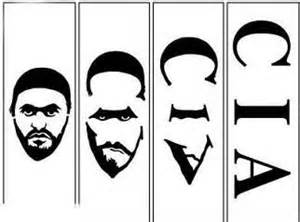
By BlackCatte | offGuardian | July 10, 2015
… The war is not meant to be won – it is meant to be continuous.…” – George Orwell, 1984
David Kilcullen has a message for us over at the Guardian, and this is it:
We’re living in an era of persistent conflict…”
Which is sadly, true. You might think the next thing to be discussed on that topic would be – why? Why are we now living in an era of endless war? What forces are behind this development? Who, if anyone, is profiting from the same? But, no, David doesn’t think any of this is worthy of our attention. He simply wants us to understand that “perpetual conflict” is absolutely and inescapably the new reality.
… you can read it in the latest concept documents of half a dozen western militaries. But it doesn’t seem to have hit home, for the public or some policymakers, that the notion that this can all end, that we can get back to some pre-9/ 11 “normal,” is a fantasy.
Do we get that? Is it hitting home? Peace is now a “fantasy”. It’s official. And in case you are still harbouring some smidgen of doubt, Dave is going to say it again in different words:
This – this instability, this regional conflict surrounded by networked global violence, this convergence of war and crime, of domestic and international threats, this rise of a new aggressive totalitarian state from the rubble of the last war – is the new normal, and it’s not going to change for a very, very long time. There are no quick solutions: we need to settle in for the long haul.
Ergo….
That being the case, we have to figure out methods of dealing with persistent conflict.
and…
I see no alternative to a larger, more intense, conventional war against Isis than the one currently being contemplated…
Do you see that children? That’s called “paradigm-creation.” The topic for discussion is evidently intended to be “how do we deal with persistent conflict?” The question of why the persistent conflict is happening, or who is funding these “aggressive new totalitarian states” is NOT part of the agenda, and is being excised from our collective conscious. All we need to know is:
Isis is an escalating threat that’s growing and worsening.
We do not need to worry our little heads about what this entity called “ISIS” actually is, how plausible the clownish stories of its super-villain powers are. Nor are we supposed to waste a single moment asking who is picking up its not inconsiderable tab. What matters is that Syria and Iraq are “problems” (never mind why or how) and that “greater western involvement would mitigate all these problems” (because that is what western involvement does – ask Libya). Most importantly, the US needs to get over its scruples and do more:
…US passivity and reluctance to target Assad (though his regime kills more people than Isis) makes many Syrians wary of joining the “moderate” rebels.
“US passivity and reluctance”? Really, Dave? What about the article in the Washington Times claiming the US state department lied about Syrian chemical attacks in order to fabricate a reason for attacking Assad? And what about this article at Global Research which alleges the US is actually targeting the Syrian government- not ISIS – with its current air strikes.
I’m left wondering – is Assad really any worse than the dreadful and medieval Saudis? He certainly seems to be pretty popular in Syria, where they apparently have a different take on things (but Dave doesn’t bother to tell us that). If we in the west have no problem with murderous tyrants, why do we have a problem with Assad? Is it because he isn’t our murderous tyrant?
Is the US really out there in Syria trying (but inexplicably failing) to defeat ISIS? Or is it happy to aid and abet ISIS in doing the dirty work it tried and failed to do itself? If Dave gets his way and we launch a “more intense conventional war” in Syria, will our soldiers’ lives and our taxes really be spent on defeating ISIS or is that just a shallow ruse to enable the US to finally go in and get Assad?
Is “perpetual conflict” really something we should all just accept as inevitable and leave it to people like Dave to sort out? Or is it something we should be resisting and interrogating at every level and at every opportunity?
Nah. Never mind. None of this matters. Let’s just keep it simple. The message is:
1. Persistent conflict is the new normal
2. There is no need to ask why.
Everyone got that?
The War on Conspiracy Realists Continues
By Brandon Martinez | Non-Aligned Media | July 24, 2015
Do you believe that governments occasionally conspire to undermine the public good? Do you believe that governments manipulate people through fear to achieve nefarious ends such as war and intervention abroad? Do you believe that ‘elected’ officials serve rich and powerful special interests rather than the majority population?
If you answered yes to any of the above, and you are a British citizen, then you could be the target of a new ‘counter-extremism’ initiative spearheaded by that country’s perverse Prime Minister David Cameron. As part of his Orwellian ‘counter-extremism’ effort, Cameron has instituted a number of truly despotic measures intent on stifling free speech and extirpating ‘heretical’ viewpoints about false flag terrorism and the undue influence of Zionists on Western foreign policy.
While self-evident to most clear thinking people, the notion that the West is deliberately targeting Muslims and their countries in accordance with an intricately fashioned master plan of divide and conquer will now be a prohibited opinion that could put the British police state on your trail.
“Muslim conspiracy theorists,” Cameron proclaimed in a recent speech outlining his ‘five year strategy’ to combat extremism, who believe that “Jews exercise a ‘malevolent’ power, that [the] Israeli intelligence agency Mossad inspired 9/11 and that the UK allowed 7/7 because it wanted an anti-Muslim backlash” are to be singled out for suppression.[1]
Cameron’s 1984-style designs will give parents the ability to revoke their children’s passports if suspected of holding ‘extremist’ beliefs. Police will be given new surveillance powers as well as the authority to vet what certain ‘extremists’ and ‘conspiracy theorists’ post on social media. Additionally, Ofcom – Britain’s communications regulatory body – will also be empowered to “crack down on television channels broadcasting extremist messages.” ‘Extremist messages’ appears to be a thinly disguised euphemism for anything not consonant with Western and Zionist propaganda.
Cameron’s aggressive moves against free expression were not unforeseen. During a speech at the United Nations last September, the British leader decried “conspiracy theorists” as “non-violent extremists” who should be confronted with the “full force” of the British state.[2] The theory that Israel and Western intelligence agencies were involved in the fabrication of 9/11 and other false flag attacks was specifically mentioned by Cameron as one of those “dangerous ideas” that needs to be eliminated from public discourse. Inferences about Jewish-Zionist manipulation of Western foreign policy towards the Islamic world should also be combatted, said Cameron in the speech.
Distracting the Public from Western Sponsorship of ISIS
All of this disingenuous bluster rings hollow when one considers the fact that Western governments and their allies have supported, and many would argue created, ISIS to serve their duplicitous agenda in the Middle East.
The CIA, MI6 and Mossad, in conjunction with the oppressive autocrats of Saudi Arabia, have long worked with Wahhabi-Salafist extremist elements in the Middle East and North Africa to counter other more formidable, non-sectarian adversaries in the region such as Libya’s Gaddafi, Syria’s Assad, Lebanon’s Hezbollah and the Islamic Republic of Iran. A re-run of the CIA’s “Operation Cyclone” which empowered Mujahideen forces in Afghanistan against the Soviets in the 1980s is currently unfolding in the Middle East under the auspices of many of the same players.
Award winning reporter Seymour Hersh revealed in a 2007 report titled “The Redirection” that the Bush administration launched a joint covert operation with Israel and Saudi Arabia to augment “Sunni extremist groups” and other fanatics to weaken the influence of Syria, Iran and Hezbollah.[3] Obama picked up where Bush left off, flooding Syrian and Libyan insurgent groups with untold largesse and arms, using the corrupted Arab Gulf kingdoms as conduits for weapons transfers for the sake of plausible deniability.
Hersh’s sources close to the US government told him that the Saudis assured Washington that they exercised control over the extremist Wahhabi and Salafist groups, and would steer their fanaticism towards the Shiites. “It’s not that we don’t want the Salafis to throw bombs; it’s who they throw them at—Hezbollah, Moqtada al-Sadr, Iran, and at the Syrians, if they continue to work with Hezbollah and Iran,” Prince Bandar bin Sultan, Saudi Arabia’s then-National Security Advisor, purportedly told his American counterparts in the Bush administration. “We’ve created this movement, and we can control it.”[4]
Part of the arrangement, Hersh explained, was a guarantee from the Saudis that Israel’s security interests would be safeguarded, which clarifies why ISIS and its affiliates have not attacked Israel despite the country’s close proximity to the terrorists’ strongholds in Syria and Iraq. “Israel would be assured that its security was paramount and that Washington and Saudi Arabia and other Sunni states shared its concern about Iran,” Hersh noted was the first point in a series of “informal understandings about their new strategic direction” to combat Shiite influence led by Iran.[5]
ISIS themselves have mostly eschewed hostility towards Israel, posting an official statement on social media in July 2014 saying that they’re more interested in fighting “Muslim infidels” than the Zionist state.[6] Israeli officials have expressed similar sentiments, with Israel’s former envoy to the US, Michael Oren, stating in a September 2013 interview that Tel Aviv “prefers” ISIS and al-Qaeda over the “bad guys backed by Iran,” namely Syria’s Assad and Hezbollah. Oren forthrightly conceded that Israel is committed to defeating through terrorist violence “the strategic arc that extends from Tehran, to Damascus to Beirut” with Assad in Syria functioning as the “keystone in that arc.” “That is a position we had well before the outbreak of hostilities in Syria,” Oren told the Jerusalem Post. “With the outbreak of hostilities we continued to want Assad to go.”[7]
The unholy alliance between Israel and the Salafist jihadists came right out in the open in June 2015 when ISIS released a video threatening to topple Hamas in Gaza[8], promising to bring bloodshed and ruin to the Strip. Salafist elements tied to ISIS have in fact attacked Hamas havens in Gaza on multiple occasions over the past few months, showcasing their utility as pawns of Israel.[9][10][11] There are also well-documented direct connections between ISIS-linked militants and Israel. A 2014 report compiled by United Nations observers stationed in the area revealed that the Israeli military has provided anti-Assad militants with sanctuary on the Israeli side of the Golan region, ostensibly treating wounded fighters in Israeli field hospitals and even giving them caches of weapons and other supplies.[12] On top of material support for the terrorists that have besieged Syria, Israel has aided their onslaught through numerous air strikes against Syrian military targets since the turmoil began in earnest in 2012, effectively attempting to tip the tide of the war in the Takfiris’ favour.[13] In January 2015 Israel conducted an airstrike that wiped out a brigade of Hezbollah fighters on the Syrian side of the Golan Heights, once again highlighting the Takfiri-Tel Aviv nexus.[14]
In light of such treachery against Arabs and Muslims trying to liberate themselves from oppression and domination, ISIS’s primary function as an acquiescent tool of US-Israeli imperialism cannot be overstated.
Perfidious Albion
As Prime Minister Cameron feigns outrage and opposition to Islamic extremism, the British government under his watch has been an active and willing partner in the Machiavellian strategy of divide and rule in the Middle East spearheaded by the US and Israel.
The 2015 trial of Swedish national Bherlin Gildo – who fought for a militant group in Syria – confirmed London’s role in backing Takfiri insurgents battling Damascus. In his defense, Gildo’s lawyers introduced evidence that British intelligence agencies “were supporting the same Syrian opposition groups as he was, and were party to a secret operation providing weapons and non-lethal help to the groups, including the Free Syrian Army.” Confronted with this contradiction, the British court dropped all charges against Gildo, fearing more embarrassing evidence showcasing British complicity with Syrian rebels could surface during proceedings.[15]
In 2013, Roland Dumas, France’s former foreign minister, told a French television station that during a visit to Britain two years before the Syrian crisis began in 2011, British officials informed him of a secret plan to spark a rebel invasion of Syria.[16] “Britain was preparing gunmen to invade Syria,” Dumas said, pinpointing the origins of the scheme to Israel which, according to Dumas, sought to oust a neighbouring regime hostile to its imperial ambitions in the Levant. Dumas then recounted a conversation he had with an unnamed Israeli prime minister who allegedly told him that the countries in the Middle East that get in the way of Zionist objectives for the region would be swiftly eliminated.
In an April 2014 report entitled “The Red Line and the Rat Line,”[17] journalist Seymour Hersh uncovered British involvement with a CIA-led covert operation in Benghazi, Libya, wherein the Agency was secretly channeling the looted weapons stockpiles of the fallen Gaddafi regime to Western-backed Syrian rebels through a “rat line.” Commenting on Hersh’s report, The Independent’s Patrick Cockburn described the CIA/MI6 “rat line” project in Benghazi as a “supply chain for the Syrian rebels overseen by the US in covert cooperation with Turkey, Saudi Arabia and Qatar.”[18] He summarized Hersh’s findings in more detail as follows:
“The information about this comes from a highly classified and hitherto secret annex to the report by the US Senate Intelligence Committee on the attack by Libyan militiamen on the US consulate in Benghazi on 11 September 2012 in which US ambassador Christopher Stevens was killed. The annex deals with an operation in which the CIA, in cooperation with MI6, arranged the dispatch of arms from Mu’ammer Gaddafi’s arsenals to Turkey and then across the 500-mile long Turkish southern frontier with Syria. The annex refers to an agreement reached in early 2012 between Obama and Erdogan with Turkey, Saudi Arabia and Qatar supplying funding. Front companies, purporting to be Australian, were set up, employing former US soldiers who were in charge of obtaining and transporting the weapons. According to Hersh, the MI6 presence enabled the CIA to avoid reporting the operation to Congress, as required by law, since it could be presented as a liaison mission.”
In addition to conniving with the US and Israel to arm Takfiri rebel gangs that eventually overran Gaddafi and continue to menace Syria, the British government has also covertly collaborated with Wahhabi extremists in its own country who serve as cartoonish fodder for anti-Muslim war on terror propaganda. In a May 2013 report for the Asia Times, security scholar Nafeez Ahmed disclosed that the British-based Salafist group Al Muhajiroun has been secretly supported by the British intelligence services since its inception in 1996.[19] That group has spawned nearly all of the supposed Islamic extremists implicated in (and perhaps framed for) various attacks in Britain, including the alleged ‘shoe bomber’ Richard Reid, the alleged Woolwich killers of British soldier Lee Rigby, the alleged 7/7 bombers and many others accused or convicted of terrorism-related offenses. Ahmed contends that various dubious personalities acting as leaders of Al Muhajiroun over the years – including Abu Hamza, Omar Bakri, Haroon Rashid Aswat and Anjem Choudary – have been clandestine agents of British intelligence fronting as ‘Islamic radicals.’
Despite his vocal support for al-Qaeda and ISIS, outwardly championing their grotesque bloodletting in Syria and Iraq today, Anjem Choudary (the current leader of Al Muhajiroun which has re-branded and re-named itself several times) is left untouched by British authorities and appears frequently on mainstream media. How can this impunity be explained if Choudary and his organization are operating independently without state protection? “Almost every major terrorist attack and plot in the UK has in some way been linked to Choudary’s extremist network,” noted Ahmed in the aforesaid piece, yet the radical preacher and his organization “[continues] to function with impunity in new incarnations.”
“[T]hrough Al Muhajiroun,” Ahmed explained, “MI5 is spawning many of the plots it lays claim to successfully foiling – as the FBI is also doing.” The MI5-controlled front group essentially serves a dual purpose: 1) it functions as a repository for Muslim patsies used in US-Israeli-British false flag operations, and 2) it acts as a recruiting hub for Wahhabi-Salafist mercenaries wielded as cannon fodder in various battle zones where Western/Zionist geopolitical and economic interests are at stake.
Unraveling the Web of Intrigue
Those not learned in the dark arts of black operations will likely be confused by all of this. “The West is fighting a war on Islamic extremism,” the indoctrinated lemmings will proclaim with confidence, completely unaware that they are being played for fools by professional spooks trained to employ artifices against the masses.
The surface rhetoric that politicians employ is merely a pack of daft lies intended to divert attention from the real agendas that drive policy. The public is fed a steady diet of cover stories and feel-good rationales – fanciful tales of good vs. evil – to pacify adverse reactions to and deflect unwanted attention from nefarious plots designed to benefit rich people and their interests.
David Cameron himself inadvertently identified whom some of these wealthy string-pullers are: Jewish Zionists committed to overturning every regime in the Middle East that is not yet subordinated to Tel Aviv. The other half of that equation includes an assortment of profiteering Anglos, Americans, Europeans, Arabs, Russians, Chinese and other money-mad opportunists. The Cameron’s, Obama’s, Harper’s, Hollande’s and Merkel’s of the world are mere screens or dummies for the real power behind the throne: the unscrupulous financiers, oligarchs and speculators who dominate Wall Street and the City of London, and to a lesser extent Shanghai and Moscow.
The Zionists, however, seem to be the most organized, the most aggressive and the most committed to living out their grandiose messianic dreams. Whether that vision entails a “New Middle East” in which “Greater Israel” rules the roost or a global government headquartered in Jerusalem remains to be seen. Either way it spells disaster for most of the world’s peoples.
Sources
[1] “Parents may cancel children’s passports in war on IS,” The Week, July 20, 2015. https://web.archive.org/web/20150724070333/http://www.theweek.co.uk/64449/cameron-attacks-ludicrous-extremist-conspiracy-theories
[2] http://www.youtube.com/watch?v=0g-HqRP-ANk
[3] Seymour Hersh, “The Redirection,” The New Yorker, March 5, 2007. https://web.archive.org/web/20150318015442/http://www.newyorker.com/magazine/2007/03/05/the-redirection
[4] Ibid.
[5] Ibid.
[6] Elad Benari, “ISIS: Fighting ‘Infidels’ Takes Precedence Over Fighting Israel,” Israel National News, July 8, 2014. https://web.archive.org/web/20140831070443/http://www.israelnationalnews.com/News/News.aspx/182632
[7] Herb Keinon, “’Israel wanted Assad gone since start of Syria civil war’,” Jerusalem Post, Sept. 17, 2013. https://web.archive.org/web/20150112102133/http://www.jpost.com/Syria-Crisis/Oren-Jerusalem-has-wanted-Assad-ousted-since-the-outbreak-of-the-Syrian-civil-war-326328
[8] “ISIS Threatens To Topple Hamas In Gaza,” Reuters, July 1, 2015. http://www.huffingtonpost.com/2015/07/01/isis-hamas-gaza_n_7704360.html
[9] “Isis blamed for Gaza City bomb attacks,” The Independent, July 20, 2015. http://www.independent.co.uk/news/world/middle-east/isis-blamed-for-gaza-city-bomb-attacks-10400747.html
[10] “ISIS Allies Target Hamas and Energize Gaza Extremists,” New York Times, June 30, 2015. https://web.archive.org/web/20150713130805/http://www.nytimes.com/2015/07/01/world/isis-allies-target-hamas-and-energize-gaza-extremists.html?_r=0
[11] “ISIS supporters claim attack on Hamas base in Gaza Strip,” Russia Today, May 8, 2015. https://web.archive.org/web/20150713195921/http://rt.com/news/256941-isis-attack-gaza-hamas/
[12] “UN details Israel helping Syrian rebels at Golan Heights,” Russia Today, Dec. 8, 2014. https://web.archive.org/web/20150316140841/http://rt.com/news/212319-israel-helps-syrian-militants/
[13] “Head of Syrian army after alleged airstrikes: Israel working with ISIS and al-Qaida,” Jerusalem Post, Dec. 7, 2014. https://web.archive.org/web/20150316154301/http://www.jpost.com/Arab-Israeli-Conflict/Head-of-Syrian-army-after-alleged-airstrikes-Israel-working-with-ISIS-and-al-Qaida-383907
[14] “’Israel strike’ kills Hezbollah men in Syria’s Golan Heights,” BBC News, Jan. 18, 2015. https://web.archive.org/web/20150316090443/http://www.bbc.com/news/world-middle-east-30873402
[15] “Terror trial collapses after fears of deep embarrassment to security services,” The Guardian, June 1, 2015. https://web.archive.org/web/20150610080819/http://www.theguardian.com/uk-news/2015/jun/01/trial-swedish-man-accused-terrorism-offences-collapse-bherlin-gildo
[16] https://www.youtube.com/watch?v=jeyRwFHR8WY
[17] Seymour Hersh, “The Red Line and the Rat Line,” London Review of Books, April 17, 2014. https://web.archive.org/web/20150315050157/http://www.lrb.co.uk/v36/n08/seymour-m-hersh/the-red-line-and-the-rat-line
[18] Patrick Cockburn, “MI6, the CIA and Turkey’s rogue game in Syria,” The Independent, April 13, 2014. https://web.archive.org/web/20150110040831/http://www.independent.co.uk/voices/comment/mi6-the-cia-and-turkeys-rogue-game-in-syria-9256551.html
[19] Nafeez Ahmed, “UK pays price for MI5 courting terror,” Asia Times, May 30, 2013. https://web.archive.org/web/20130801060233/http://atimes.com/atimes/World/WOR-01-300513.html
Copyright 2015 Brandon Martinez
Mythology, Barrel Bombs, and Human Rights Watch
By Paul Larudee | CounterPunch | July 21, 2015
To read Human Rights Watch and the western mainstream media, the Syrian government army is inflicting massive casualties upon the Syrian civilian population, most especially through the use of “barrel bombs”. Thousands of bombs have been dropped, inflicting thousands of casualties.
But wait a minute. Doesn’t that imply one casualty per bomb?
Credible and reliable facts and figures are notoriously hard to come by, but Human Rights Watch intrepidly goes where angels fear to tread. They are the only ones that provide both casualty and bomb counts for a given period of time, from February, 2014 through January, 2015. According to them, more than 1,450 bombs – mostly “barrel” bombs – were dropped on the areas of Daraa and Aleppo covered by the report. HRW also reports 3,185 civilian casualties from aerial attacks for the same time period and in the same places. So roughly two casualties per bomb, even if you accept that a lot of “civilians” are actually fighters and that HRW and its sources are hardly unbiased.
That’s a lot of bombs and a lot of casualties, but no indication that “barrel” bombs are more deadly or indiscriminate than the usual gravity bombs in most air force arsenals around the world. Fighter-bomber aircraft may have sophisticated sighting equipment, but they move at hundreds of miles per hour. Helicopters that drop “barrel” bombs have the advantage of delivering them from a stationary position. “Barrel” bombs may be crude devices, but there is no evidence that they cause more casualties than conventional gravity bombs.
So what about the huge number of deaths in Syria? Doesn’t that show reckless disregard for human life by the Syrian army?
The UN estimates 220,000 deaths thus far in the Syrian war. But almost half are Syrian army soldiers or allied local militia fighters, and two thirds are combatants if we count opposition fighters. Either way, the ratio of civilian to military casualties is roughly 1:2, given that the opposition is also inflicting civilian casualties. Compare that to the roughly 3:1 ratio in the US war in Iraq and 4:1 in the Israeli attack on Gaza in 2008-9. (The rate of Palestinian to Israeli casualties was an astronomical 100:1.)
The Israelis also used Dense Inert Metal Explosive (DIME) munitions that strip the flesh off the bone and cause microscopic metal particles to penetrate the victim’s body. In addition, they used white phosphorous, which burns hot enough to eat through metal or flesh and is almost impossible to extinguish, even inside the body. And let’s not forget the four million cluster bombs that Israel spread throughout south Lebanon during the last 72 hours of the 2006 war, knowing that the fighting was ending. These parting gifts assured that Lebanese farmers and children would be killed or maimed for years to come.
Syria has used none of these disgusting weapons, while being condemned for using locally-made weapons that are in fact no worse than conventional munitions in the arsenals of every air force. Of course, even gravity bombs can create appalling casualties when used on a dense population center. The point is that such incidents are rare enough to be tabulated and recognized (on Wikipedia, for example). To the contrary, the Syrian army has been accused of the opposite: laying siege to an area and starving out the residents, and then using “barrel bombs” to clear the remaining armed elements.
In order to vilify the Syrian armed forces it was necessary to frame Syria for the use of sarin gas, a transparent fraud given that the army gained no strategic advantage and that their use had never been recorded or reported prior to U.S. President Obama’s threat to intervene, only afterward. Really, who would take such a risk for no apparent gain?
The Syrian army relies on loyal soldiers defending their country and their homes from a heavily subsidized, markedly foreign incursion, including many mercenaries paid by the Gulf monarchies and trained by the US. And the army is loyal because they know that although great sacrifices will be asked of them, they will be defending, not sacrificing, their families and loved ones. The rest of the world that supposedly cares about Syria can start by making it unnecessary for them to make such sacrifices.
Paul Larudee is on the steering committee of the Syria Solidarity Movement.
Syria wants to join Russia-led Eurasian Economic Union – prime minister
RT | July 21, 2015
Syrian Prime Minister Wael Halqi has said joining the Eurasian Economic Union (EEU) will allow Damascus easier economic and trade cooperation with friendly nations. Russia and Belarus are also discussing a new loan to Syria.
“Negotiations with Russia on joining the Eurasian Union and customs-free zone are being held. We see this as a benefit and strengthening the relations with friendly states, which will facilitate economic and trade cooperation with them,” said Halqi in an interview with RIA Novosti Tuesday.
According to the prime minister, Russia and Syria have signed a number of contracts for the construction of gas processing plants, irrigation facilities and power stations. In 2013, an agreement was signed for Russian companies to develop oil fields on the Syrian coast. The first phase is worth $88 million and will last for five years.
The countries are also discussing the expansion of loans to Damascus.
“Negotiations with Russia and Belarus on the provision of new lines of credit continue. It will help to meet the needs of production, create new opportunities for the development of the internal market and economic process,” said the prime minister.
He expressed the hope that Russia would help the Syrian government “to cope with the brutal attacks, including the unjust economic sanctions imposed by the West.”
Halqi said that credits between Iran and Syria have already been implemented. The two countries have signed and implemented two lines of credit, of which $3.6 billion Tehran has allocated for projects related to oil and $1 billion for the delivery of humanitarian aid, including food, medicines, hospital equipment and components for power plants.
The prime minister said that Syria appreciates all the efforts made by the Russian leadership to maintain the policy and economy of Syria during the years of crisis, and specifically thanked Moscow for donating 100,000 tons of wheat as humanitarian aid to the Syrian people.
READ MORE: Thailand to apply for free trade zone with EEU by 2016 – minister
Seeking War to the End of the World
By Robert Parry | Consortium News | July 19, 2015
If the neoconservatives have their way again, U.S. ground troops will reoccupy Iraq, the U.S. military will take out Syria’s secular government (likely helping Al Qaeda and the Islamic State take over), and the U.S. Congress will not only kill the Iran nuclear deal but follow that with a massive increase in military spending.
Like spraying lighter fluid on a roaring barbecue, the neocons also want a military escalation in Ukraine to burn the ethnic Russians out of the east and the neocons dream of spreading the blaze to Moscow with the goal of forcing Russian President Vladimir Putin from the Kremlin. In other words, more and more fires of Imperial “regime change” abroad even as the last embers of the American Republic die at home.
Much of this “strategy” is personified by a single Washington power couple: arch-neocon Robert Kagan, a co-founder of the Project for the New American Century and an early advocate of the Iraq War, and his wife, Assistant Secretary of State for European Affairs Victoria Nuland, who engineered last year’s coup in Ukraine that started a nasty civil war and created a confrontation between nuclear-armed United States and Russia.
Kagan, who cut his teeth as a propaganda specialist in support of the Reagan administration’s brutal Central American policies in the 1980s, is now a senior fellow at the Brookings Institution and a contributing columnist to The Washington Post’s neocon-dominated opinion pages.
On Friday, Kagan’s column baited the Republican Party to do more than just object to President Barack Obama’s Iranian nuclear deal. Kagan called for an all-out commitment to neoconservative goals, including military escalations in the Middle East, belligerence toward Russia and casting aside fiscal discipline in favor of funneling tens of billions of new dollars to the Pentagon.
Kagan also showed how the neocons’ world view remains the conventional wisdom of Official Washington despite their disastrous Iraq War. The neocon narrative gets repeated over and over in the mainstream media no matter how delusional it is.
For instance, a sane person might trace the origins of the bloodthirsty Islamic State back to President George W. Bush’s neocon-inspired Iraq War when this hyper-violent Sunni movement began as “Al Qaeda in Iraq” blowing up Shiite mosques and instigating sectarian bloodshed. It later expanded into Syria where Sunni militants were seeking the ouster of a secular regime led by Alawites, a Shiite offshoot. Though changing its name to the Islamic State, the movement continued with its trademark brutality.
But Kagan doesn’t acknowledge that he and his fellow neocons bear any responsibility for this head-chopping phenomenon. In his neocon narrative, the Islamic State gets blamed on Iran and Syria, even though those governments are leading much of the resistance to the Islamic State and its former colleagues in Al Qaeda, which in Syria backs a separate terrorist organization, the Nusra Front.
But here is how Kagan explains the situation to the Smart People of Official Washington: “Critics of the recent nuclear deal struck between Iran and the United States are entirely right to point out the serious challenge that will now be posed by the Islamic republic. It is an aspiring hegemon in an important region of the world.
“It is deeply engaged in a region-wide war that encompasses Syria, Iraq, Lebanon, the Gulf States and the Palestinian territories. It subsidizes the murderous but collapsing regime of Bashar al-Assad in Syria, and therefore bears primary responsibility for the growing strength of the Islamic State and other radical jihadist forces in that country and in neighboring Iraq, where it is simultaneously expanding its influence and inflaming sectarian violence.”
The Real Hegemon
While ranting about “Iranian hegemony,” Kagan called for direct military intervention by the world’s true hegemonic power, the United States. He wants the U.S. military to weigh in against Iran on the side of two far more militarily advanced regional powers, Israel and Saudi Arabia, whose combined weapons spending dwarfs Iran’s and includes – with Israel – a sophisticated nuclear arsenal.
Yet reality has never had much relationship to neocon ideology. Kagan continued: “Any serious strategy aimed at resisting Iranian hegemony has also required confronting Iran on the several fronts of the Middle East battlefield. In Syria, it has required a determined policy to remove Assad by force, using U.S. air power to provide cover for civilians and create a safe zone for Syrians willing to fight.
“In Iraq, it has required using American forces to push back and destroy the forces of the Islamic State so that we would not have to rely, de facto, on Iranian power to do the job. Overall, it has required a greater U.S. military commitment to the region, a reversal of both the perceived and the real withdrawal of American power.
“And therefore it has required a reversal of the downward trend in U.S. defense spending, especially the undoing of the sequestration of defense funds, which has made it harder for the military even to think about addressing these challenges, should it be called upon to do so. So the question for Republicans who are rightly warning of the danger posed by Iran is: What have they done to make it possible for the United States to begin to have any strategy for responding?”
In Kagan’s call for war and more war, we’re seeing, again, the consequence of failing to hold neocons accountable after they pushed the country into the illegal and catastrophic Iraq War by selling lies about weapons of mass destruction and telling tales about how easy it would be.
Instead of facing a purge that should have followed the Iraq calamity, the neocons consolidated their power, holding onto key jobs in U.S. foreign policy, ensconcing themselves in influential think tanks, and remaining the go-to experts for mainstream media coverage. Being wrong about Iraq has almost become a badge of honor in the upside-down world of Official Washington.
But we need to unpack the truckload of sophistry that Kagan is peddling. First, it is simply crazy to talk about “Iranian hegemony.” That was part of Israeli Prime Minister Benjamin Netanyahu’s rhetoric before the U.S. Congress on March 3 about Iran “gobbling up” nations – and it has now become a neocon-driven litany, but it is no more real just because it gets repeated endlessly.
For instance, take the Iraq case. It has a Shiite-led government not because Iran invaded Iraq, but because the United States did. After the U.S. military ousted Sunni dictator Saddam Hussein, the United States stood up a new government dominated by Shiites who, in turn, sought friendly relations with their co-religionists in Iran, which is entirely understandable and represents no aggression by Iran. Then, after the Islamic State’s dramatic military gains across Iraq last summer, the Iraqi government turned to Iran for military assistance, also no surprise.
Back to Iraq
However, leaving aside Kagan’s delusional hyperbole about Iran, look at what he’s proposing. He wants to return a sizable U.S. occupation force to Iraq, apparently caring little about the U.S. soldiers who were rotated multiple times into the war zone where almost 4,500 died (along with hundreds of thousands of Iraqis). Having promoted Iraq War I and having paid no price, Kagan now wants to give us Iraq War II. [III!]
But that’s not enough. Kagan wants the U.S. military to intervene to make sure the secular government of Syria is overthrown, even though the almost certain winners would be Sunni extremists from the Islamic State or Al Qaeda’s Nusra Front. Such a victory could lead to genocides against Syria’s Christians, Alawites, Shiites and other minorities. At that point, there would be tremendous pressure for a full-scale U.S. invasion and occupation of Syria, too.
That may be why Kagan wants to throw tens of billions of dollar more into the military-industrial complex, although the true price tag for Kagan’s new wars would likely run into the trillions of dollars. Yet, Kagan still isn’t satisfied. He wants even more military spending to confront “growing Chinese power, an aggressive Russia and an increasingly hegemonic Iran.”
In his conclusion, Kagan mocks the Republicans for not backing up their tough talk: “So, yes, by all means, rail about the [Iran] deal. We all look forward to the hours of floor speeches and campaign speeches that lie ahead. But it will be hard to take Republican criticisms seriously unless they start doing the things that are in their power to do to begin to address the challenge.”
While it’s true that Kagan is now “just” a neocon ideologue – albeit one with important platforms to present his views – his wife Assistant Secretary of State Nuland shares his foreign policy views and even edits many of his articles. As she told The New York Times last year, “nothing goes out of the house that I don’t think is worthy of his talents. Let’s put it that way.” [See Consortiumnews.com’s “Obama’s True Foreign Policy ‘Weakness.’”]
But Nuland is a foreign policy force of her own, considered by some in Washington to be the up-and-coming “star” at the State Department. By organizing the “regime change” in Ukraine – with the violent overthrow of democratically elected President Viktor Yanukovych in February 2014 – Nuland also earned her spurs as an accomplished neocon.
Nuland has even outdone her husband, who may get “credit” for the Iraq War and the resulting chaos, but Nuland did him one better, instigating Cold War II and reviving hostilities between nuclear-armed Russia and the United States. After all, that’s where the really big money will go – toward modernizing nuclear arsenals and ordering top-of-the-line strategic weaponry.
A Family Business
There’s also a family-business aspect to these wars and confrontations, since the Kagans collectively serve not just to start conflicts but to profit from grateful military contractors who kick back a share of the money to the think tanks that employ the Kagans.
For instance, Robert’s brother Frederick works at the American Enterprise Institute, which has long benefited from the largesse of the Military-Industrial Complex, and his wife Kimberly runs her own think tank called the Institute for the Study of War (ISW).
According to ISW’s annual reports, its original supporters were mostly right-wing foundations, such as the Smith-Richardson Foundation and the Lynde and Harry Bradley Foundation, but it was later backed by a host of national security contractors, including major ones like General Dynamics, Northrop Grumman and CACI, as well as lesser-known firms such as DynCorp International, which provided training for Afghan police, and Palantir, a technology company founded with the backing of the CIA’s venture-capital arm, In-Q-Tel. Palantir supplied software to U.S. military intelligence in Afghanistan.
Since its founding in 2007, ISW has focused mostly on wars in the Middle East, especially Iraq and Afghanistan, including closely cooperating with Gen. David Petraeus when he commanded U.S. forces in those countries. However, more recently, ISW has begun reporting extensively on the civil war in Ukraine. [See Consortiumnews.com’s “Neocons Guided Petraeus on Afghan War.”]
So, to understand the enduring influence of the neocons – and the Kagan clan, in particular – you have to appreciate the money connections between the business of war and the business of selling war. When the military contractors do well, the think tanks that advocate for heightened global tensions do well, too.
And, it doesn’t hurt to have friends and family inside the government making sure that policymakers do their part to give war a chance — and to give peace the old heave-ho.
[For more on this topic, see Consortiumnews.com’s “A Family Business of Perpetual War.”]
Investigative reporter Robert Parry broke many of the Iran-Contra stories for The Associated Press and Newsweek in the 1980s. You can buy his latest book, America’s Stolen Narrative, either in print here or as an e-book (from Amazon and barnesandnoble.com).
Who Benefits from Iranian Business?
By Andrés Cala | Consortium News | July 19, 2015
The nuclear deal between six world powers and Iran will reset key economic and geopolitical relationships but perhaps not in the way many Western pundits expect. Iran, unshackled from international sanctions, is sure to reach out to U.S. and European companies for goods and technology but may favor Russia most of all because of a budding relationship built on mutual trust and mutual interests.
Iran’s difficult history with the United States – dating back to the CIA coup overthrowing Iran’s elected leader in 1953 through the tensions with Iran’s Islamic Republic and U.S.-instigated economic sanctions – makes Iranian leaders leery of again becoming dependent on Western banks and being vulnerable to U.S. geopolitical designs.
Iran has had troubled relations with Russia historically, too, but has come to see Russia under President Vladimir Putin as something of a regional partner, even if not exactly an ally. Russia pressed for a positive outcome in the nuclear negotiations and supports Iran’s regional resistance to Sunni terror groups, such as Al Qaeda and the Islamic State, especially in Syria. Russia also sees Sunni extremism as a serious threat to its own security.
That collaboration – when combined with worries about the possible renewal of Western sanctions sometime in the future – suggests that Iran will seek to consolidate its marriage of interests nurtured recently with Russia. Both countries have experienced the economic pain that comes from charting independent policies that conflict with U.S. and European demands.
So, with the United Nations Security Council soon expected to lift many international sanctions on Iran, Russian companies will work to not only maintain but to deepen their ties with Iran’s economy. Iran also might look to other BRICS countries, such as China, Brazil and South Africa, as natural allies in standing up against future U.S. pressure and displeasure.
Iran’s suspicions toward the United States and Europe will surely be slow to recede even as Western corporations make an aggressive bid to access Iran’s lucrative markets, from the energy industry to manufacturing to finances. Some $100 billion in investment is needed for Iran’s energy sector alone with other promising opportunities in consumer goods, banks, telecommunication, vehicle manufacturers and more.
The West possesses technology that Iran will need to rebuild its shattered economy, but there is a trust deficit. Iran is sure to remember the past when the West has frozen Iran’s assets, blocked access to spare parts, and confiscated Iranian property through one-sided legal proceedings, some of which even European courts have overturned.
Though Europe might be on somewhat friendlier terms with Iran than the United States, Europe’s close adherence to U.S. foreign policy means Europe can’t offer a long-term strategic relationship to Iran. So, the Islamic Republic likely will buy what it needs in business-to-business transactions with the West but will not forget the years of hostility.
It was Russia and China that worked to blunt Western hawkish demands, which included open threats to bomb Iran and force “regime change.” Russia and China also found ways to ease the sanctions, especially in regards to the arms embargo, while helping Iran fashion an agreement not to develop nuclear weapons.
Days before the final deal was signed, Iranian President Hassan Rouhani met Putin in the sidelines of a BRICS meeting and praised Russia for its role in the negotiations. “I consider it my duty to thank Russia for the efforts it has made in resolving and negotiating the Iranian nuclear program, and for the personal efforts made by Mr. [Foreign Minister Sergey] Lavrov.”
Downsides to a Relationship
But there are economic downsides to this Russian-Iranian diplomatic collaboration. Some Russians note that the reintroduction of Iranian oil onto world markets will depress oil prices and thus hurt a key sector of Russia’s economy, which is already suffering amid a glut of Saudi oil. But that factor was already a given. Putin brushed it aside in seeking the nuclear deal and in recognizing how a resurgent Iran could fit within Russia’s broader strategic calculations.
Putin began turning to Asia after Moscow’s overtures to the West, in his view, were betrayed in Libya, Syria and especially Ukraine. Putin had sought to build a positive relationship with President Barack Obama by working closely on mutual concerns such as Islamic terrorism and Mideast unrest. However, that collaboration was shattered in February 2014 when the United States backed a “regime change” in Russia’s neighbor Ukraine and applied the lash of Western sanctions to Russia when it would not accept the new anti-Russian regime.
Faced with this U.S. and Western hostility, Putin rebalanced Russia’s strategic relationships toward the BRICS – Brazil, Russia, India, China and South Africa. Iran fits neatly into that equation as Putin’s best option to leverage Russia’s interest in the vital Middle East, where it has been losing influence since the end of the Cold War.
In line with Putin’s strategy, Iran and Russia have worked hard to overcome lingering suspicions based on centuries of border tensions, recognizing that they now have more interests pushing them together than pulling them apart.
While Russia generally can’t compete with Western technology, it has advantages in some other commercial and industrial sectors, including nuclear energy, foodstuffs and arms. Last year, the two countries agreed to a package worth billions of dollars in hard cash for Russia involving building up to eight nuclear reactors within five years for power generation purposes. The nuclear deal signed this month only paves the way for those deals to be developed further.
On the agricultural side, Iran is the third biggest buyer of Russian wheat and has sold Russia fruits and vegetables which helped Russia replace European imports that the Kremlin blocked in retaliation for Europe’s economic sanctions over the Ukraine conflict.
Because of the international sanctions against Iran, bilateral trade between Russia and Iran remains modest, only $1.5 billion, a fraction of Russian trade with Israel for example. But Russia and Iran seek a ten-fold increase in bilateral trade this decade and have talked of up to $70 billion in potential investments. Even half of that would be transforming for both countries.
There is also the all-important arms business. Iran needs to update its military, and Russia and China are set to sell more than any other countries. In April, Putin agreed to restart talks to deliver the S-300 anti-aircraft defense system as a prelude no doubt to everything else Iran needs, especially to update its air force which hasn’t been modernized since the revolution in 1979. Some estimates suggest a $15 billion market up for grabs.
And there is another Iranian top priority: security. Iran and Russia signed an intelligence-sharing agreement and their cooperation has intensified, especially in regards to Syria where the two can each fill a need, with Russia providing the military hardware and Iran having military advisers and other assets on the ground.
The nuclear deal also could pave the way for the West to join them in arranging serious negotiations between Syrian leader Bashar al-Assad and his more moderate opponents and possibly end or curtail Syria’s bloody civil war. It wouldn’t be surprising to see Russia and Iran together seeking more informal collaboration with the U.S. and Europe in Syria and Iraq against the Sunni radicals of the Islamic State and Al-Qaeda.
Iran’s influence among fellow Shiites and Shiite offshoots in Iraq, Syria, Lebanon and Yemen could offer Russia more leverage in the Middle East, even if Moscow does not want to pick a fight with Arab countries outside Syria.
Putin also is gingerly approaching stresses in the bilateral relationship with Israel, with which Russia has important business, financial and cultural ties. Many Russian Jews have relocated to Israel, which views Iran as its greatest regional enemy.
Another ‘I’ in BRICS
But the prospect of Iran, in effect, becoming a second “I” in the BRICS acronym is not what many Western economic observers expected. They were looking at the potential boon for European and U.S. businesses and the prospect that Europe, in particular, could weaken Russian-Iranian ties by trading with Iran and by playing off Iran and Russia over energy.
And surely there will be some of both. European companies expect to be in the forefront of a business gold rush to Tehran – and Europe will buy Iran’s oil that, pre-sanctions, filled Europe’s energy needs by some 600,000 barrels a day, mostly to Italy, Greece and Spain.
Iran currently produces less than 3 million barrels of oil per day but could increase that to at least 4 million bpd. And Iran’s gas reserves, the second biggest in the world, could eventually make their way to Europe, reducing the Continent’s dependence on Russian natural gas. While there are many obstacles to an Iran-to-Europe pipeline, there are cheaper alternatives, like shipping liquefied natural gas.
But even if that were to happen, Russia is already looking toward Asia, not Europe, to increase energy exports. So, a gradual reorganization of the market – with Iran’s energy supplies coming back online – will likely have little long-term impact on Russia’s economy.
Whatever the case, Iran’s post-sanctions reality will develop gradually, not just because of the phasing-in of the nuclear deal itself, but because Iran needs to manage popular expectations to avoid potential social disruptions. However, regarding which countries can most gain from the opening of Iran, Russia has the early advantage, especially diplomatically, followed by China.
Europe and the U.S. have quality products to sell but also fences to mend and suspicions to dispel. And while it’s true there is mistrust to overcome between Moscow and Tehran, their current objectives are more in sync. They will not become allies overnight, but the relation will mature as long as both keep their ends of the deals, which in the past has proved difficult.
But there is a strong incentive for Iran and Russia to make their new relationship work. For Russia, it’s about strategic access to the Mediterranean (via Syria) and the ability to retain and even expand its influence in the vital Middle East (by expanding ties to Iran and its regional allies). For Iran, it’s about strengthening its regional position vis a vis its regional rivals Saudi Arabia and Israel.
The West, too, will no doubt benefit from Iran’s economic renaissance. Western business interests, including Americans, lobbied hard in favor of lifting the sanctions. Corporate delegations from the U.S., Canada, France, Germany and other Western nations have already flocked to Iran to prepare for reentering Iran’s markets as soon as sanctions are lifted.
There will be room for all to benefit, even Arab countries like the United Arab Emirates, Qatar and Oman. But Russia is the best positioned to gain from Iran’s comeback.
Cameron Demands Iran Change Policy on Syria, Yemen
Sputnik — 19.07.2015
MOSCOW – Western countries expect changes in Iran’s policy in the Middle East following a nuclear deal concluded between Tehran and the international negotiators, British Prime Minister David Cameron said on Sunday.
On Tuesday, Iran and the P5+1 group, comprising China, France, Germany, the United Kingdom, Russia and the United States, concluded a historic agreement to ensure the peaceful nature of the country’s nuclear program.
“I spoke to [Iranian] President Rouhani yesterday and I said that we want to see a change in an approach that Iran takes to issues like Syria and Yemen and to terrorism in the region and we want the change in [Iran’s] behavior,” Cameron said on NBC News’ Meet the Press.
The prime minister added that the nuclear deal with Iran could lead to this change and was “so much better than the alternative,” since without the deal Iran would obtain nuclear weapon and Western countries might have to begin military action in the region against Iran.
The P5+1 international negotiators have been attempting to reach a comprehensive agreement with Iran that would insure the peaceful nature of the country’s nuclear program since November 2013, when an interim was signed.
According to the final text of the nuclear agreement, Iran will under no circumstances seek to develop or acquire a nuclear weapon and, in exchange, will receive sanctions relief. The text details how the final treaty will positively contribute to regional Middle Eastern security.
On Saturday, the country’s Supreme Leader Ayatollah Ali Khamenei said Iran would not change its rigid stance on defense capability and regional policy in light of the agreement with the international negotiators.
Featured Video
New positive ivermectin evidence
or go to
Aletho News Archives – Video-Images
From the Archives
Fanatical Followers of the Covid Regime: A Jim Jones-Style Cult?
By Professor Roger Watson and Dr. Niall McCrae | The Daily Sceptic | November 15, 2021
As scholars at leading British universities over recent decades, we witnessed the replacement of critical thinking and debate by narrative: facts are discrimination and scientific method is imperialism; truth, instead, is derived from ‘progressive’ values. This educational trend may be a major contributory factor to the ease in which society has been inculcated to the Covid ‘new normal’ of masking, testing, and repeated doses of vaccines for a disease of similar risk to severe influenza.
One doesn’t need much critical reasoning to observe the flawed logic of some vaccination enthusiasts, such as people who respond to experiencing any side effects, however debilitating, by saying “at least I know it’s working”, or, after contracting the disease despite their promised inoculation (over 90% effective, according to initial drug company claims), “I’d have been worse off without the jab.” … continue
Blog Roll
 Aletho News
- EU Council Advances Chat Control 2.0 Scanning Proposal
- Ex-Greek MEP files complaint against Israeli spyware firm over alleged Pegasus surveillance
- Troubling ideas throughout the Torah, Talmud, Mishneh Torah and Tanya
- ‘Grave, alarming’: Iran mission on Trump’s UNGA ‘annihilation’ threats
- Najaf airport to reopen to Iranian flights within 24 hours: Ambassador
- From ‘How Will This End For Iran’ to ‘When America Walks Away’: A tale of two Economist covers
- Tehran blasts ‘baseless’ speculation linking Iran to alleged bomb plot at UK air base
- The Rise And… Rise Of ‘Color Revolutions’
- The Coming GOP Bloodbath?
- Arctic Scare Stories Melt Away
- If Americans Knew
- Netanyahu Asked UAE Leader to Deny Report on Oct. 7 Warning in Secret Visit, Sources Say
- CNN Chief Int’l Correspondent Clarissa Ward on Journalists in Gaza
- Democratic Party Consultants Surround Troy Jackson with Pro-Israel Donors
- Christian Leader Responds To Netanyahu’s Claims Regarding Palestinian Christians
- In Gaza, ‘Whoever Survives the Bombing Won’t Survive the Rubble’
- Israel kills more Palestinians, amid push to resettle Gaza – Daily Update
- Israel forces Gazans to live in constant peril – Daily Update
- Deconstructing Netanyahu’s pants-on-fire UN rant – Daily Update
- Trump betrayed voters with his campaign lies and prioritized a foreign country once he took office
- Netanyahu calls Israel’s war in Gaza ‘opposite of genocide’ in UN speech to near-empty hall
- No Tricks Zone
- New Study: Earth And Venus Surface Warmth Largely Explained By Convection And Lapse Rate, Not CO2 Or Radiation
- 2025 Nature Paper Claiming Worsening Global Drought Gets RETRACTED …Heavily Flawed
- New Study: ‘Global Drought Shows No Detectable Recent Acceleration Under Climate Warming’
- Economic Masterminds: German Socialists Suggest Taxing Productivity Gains Stemming From Using AI
- The South China Sea Has Not Been Cooperating With The Climate Change Narrative
- Energy Crisis: Germany Enters Heating Season With Historically Low Gas Reserve Fill Levels
- New Study: The Antarctic Ice Sheet Gained Mass From 2020-2024 Due To Staggering Snow And Ice Accumulation
- Study: Ocean Heating Rates From Thousands Of Years Ago ‘Dwarf’ Modern Ocean Heating Rates
- Climate Extremists Target, Attack Large-Scale Power Grid Infrastructure In Germany!
- New Study: Antarctic Ice Melt Has Contributed Less Than 1 Centimeter To Sea Level Rise In The Last 30 Years

