UN Agreement Reached on Syria; Obama Warhawks Defeated on Every Count
Ron Paul Institute | September 26, 2013
In a stunning blow to the “humanitarian interventionists” of the Obama administration and another boost for Russian diplomatic efforts, the five permanent Members of the UN Security Council appear to have agreed to a resolution governing the destruction of Syria’s chemical weapons that rejects each point the US administration not long ago deemed essential to such an agreement.
Secretary of State John Kerry as recently as last week “insisted” that any UN resolution dealing with Syrian chemical disarmament must be filed under Chapter 7 of the UN charter, which provides for the use of force if the agreement is not satisfactorily implemented. Russia, which had been tricked by the Obama administration over its Chapter 7 demands on Libya that ended in a disastrous war, refused to fall again for the ruse. Even as Kerry lied last week to the US media that Russian Foreign Minister Lavrov had agreed to a Chapter 7 resolution, the Russians denied Kerry’s claims. Now we see that Chapter 7 is dead in the water.
Earlier this week, President Obama held firm to his position that the Syrian government was responsible for the Sarin gas attack near Damascus on August 21. Said Obama:
“on August 21st, the [Syrian] regime used chemical weapons in an attack that killed more than 1,000 people, including hundreds of children.”
The administration has yet to offer proof of its claims, and a highly skeptical US population and US Congress categorically rejected earlier this month the administration’s request to go to war over these unproven claims. It seems Iraq was not that long ago after all.
The Russians continue to maintain that not only is there no evidence that the Syrian government carried out the attacks, there is plenty of evidence from a multiplicity of sources that the rebels in fact carried out the vicious act. And indeed careful analysis of the videos released by the US government to “prove” Syrian government responsibility appear to have been manipulated.
Whatever the case, most of the world believed the Russian position. As a result, the agreed-upon UN Security Council resolution contains no language ascribing blame to the Syrian government for the August 21 gas attacks. Defeat.
Obama’s warmongering “humanitarians” were desperate to save face, with US Ambassador to the UN Samantha Power Tweeting that the resolution was “legally obligating Syria to give up CW they used on their people.” This was more rhetorical flourish and wishful thinking than a slam dunk, as “legally binding” is virtually meaningless at the UN.
Ambassador Power further covered up her defeat by obfuscating the fact that the UNSC resolution had no force to back it up. “Wrapping up meeting of UNSC which is finally ready to impose measures under Chapter VII if Syria does not comply,” she Tweeted.
Ah, but there is no Chapter 7 language in the resolution. That would require a completely new and separate resolution and would require a positive Russian and Chinese response. Power is working herself into a lather over not much more than thin air. It must be frustrating.
The defeat of the Obama administration hawks in the UN and the victory of the Russian position should not be misinterpreted, however. Those interested in peace should view it as a positive sign that armed American exceptionalism cannot without check export destruction willy-nilly where it wishes. More than a victory for Russian diplomacy, it is a victory for the American people and for the emerging super-coalition of progressives, conservatives, and libertarians against aggressive war overseas and resulting poverty back home. And a victory for every reader of this website devoted to peace and prosperity. Perhaps we might even get lucky and see the repeatedly defeated and out-maneuvered Samantha Power, Susan Rice, and John Kerry sent packing along with their war-mad underlings like Ben Rhodes and Tony Blinken.
Related article
- John Kerry warns of ‘consequences’ if Syria does not abide by UNSC resolution (voiceofrussia.com)
UN Security Council unanimously adopts Syria resolution
RT | September 28, 2013
The UN Security Council has unanimously adopted a resolution outlining the details of taking under international control and ultimately destroying Syria’s chemical arsenal.
“Today’s historic resolution is the first hopeful news on Syria in a long time,” UN Secretary-General Ban Ki-moon told the council immediately after the vote.
The Syrian sides must engage constructively in the upcoming Geneva 2 conference, which would be a significant step towards the “creation of a democratic state that guarantees the human rights of all in Syria,” Moon said in his address to the Council.
“The regional actors have a responsibility to challenge those who will actively undermine the process and those who do not fully respect Syria’s sovereignty, unity and territorial integrity,” he added.
The target date for a new peace conference in Geneva was set for mid-November. However, the Syrian opposition should be represented at the Geneva peace talks in a single delegation, the Secretary-General said.
The adopted resolution calls for consequences if inspectors decide that Syria has failed to fulfill its obligations. The nature of the reaction, however, will depend on another resolution which would have to be passed in the event of non-compliance.
‘The resolution does not fall under Chapter 7 of the UN Charter and does not allow any automatic enforcement of coercive measures,” Russian Foreign Minister Sergey Lavrov said after the Security Council vote.
The UN Security Council resolution on chemical weapons in Syria will have to be observed not only by the Syrian authorities, but also by the opposition, Lavrov stressed.
“The responsibility for the implementation of this resolution does not only lie on the government of Syria,” he said.
The chemical weapons resolution on Syria establishes a framework for overcoming the ongoing political crisis. According to Lavrov, the Syrian opposition is also obliged to work with international experts as required by the Security Council resolution.
“We hope that more and more scattered groups of the Syrian opposition will finally be able – as the Syrian government has already done for a long time – to declare its readiness to participate in an international conference without preconditions,” Lavrov said.
The US Secretary of State, John Kerry, however, stated in his speech that only the “Assad regime carries the burden of meeting the terms of this agreement,” telling the international community that inspections will begin by November.
“Syria cannot select or reject the inspectors. Syria must give those inspectors unfettered access to any and all sites and any and all people,” he said, adding that the weapons should be destroyed by mid-2014.
He also warned that “should the regime fail to act, there will be consequences.”
”This resolution makes clear that those responsible for this heinous act must be held accountable,” said Kerry.
French Minister for Foreign Affairs, Laurent Fabius, has also put all the blame and responsibility on the Syrian government, saying it is “clear all the evidence points to the regime and no one of good faith can deny this.”
“France as others especially the United States of America took its responsibilities, and we consider that standing firm has paid off,” he said, suggesting that only the threat of imminent military action forced President Assad to give up his chemical weapons stockpiles.
The groundbreaking UNSC resolution not only recognizes that any use of chemical weapons is a threat to international peace and security, but also “upholds the principle of accountability for this proven use of chemical weapons” by the Syrian regime, said William Hague, UK Secretary of State for Foreign and Commonwealth Affairs.
“[The resolution] imposes legally binding and enforceable obligations on the Syrian regime to comply with the OPCW decision,” Hague said. “This establishes an important international norm, which is essential in the wake of the Syrian regime appalling actions on the 21 August.”
Australian UN ambassador and the current president of the Security council Gary Quinlan noted that importantly, the resolution “reaffirms that those who perpetrated this mass atrocity crime against their own citizens must be held accountable for their actions.”
“Australia’s assessment is that the evidence available shows that it was the Syrian authority who were responsible for this crime and this incident has confirmed what Australia had said for a long time, that the Council should refer the situation in Syria to the International Criminal Court,” Quinlan said.
Syrian UN Ambassador Bashar Jaafari said the resolution holds all parties in Syria equally responsible for the elimination of chemical weapons, including rebel forces. However some member of the Security Council are trying to sabotage the effort, Jaafari stated after the adoption of the historical document.
“It is regrettable that some delegations have begun adopting a negative interpretation of the resolution in order to derail it from its lofty purposes,” Jaafari said.
He also pointed out that the United States, France,Turkey, Saudi Arabia and Qatar must commit to the document and be held accountable if they continue to arm the rebels.
“You can’t bring terrorists from all over the world and send them into Syria in the name of jihad and then pretend that you are working for peace,” Jaafari said.
He reiterated that Damascus is “fully committed” to attending November’s Geneva 2 conference.
The Council’s vote came shortly after a consensus had been reached earlier on Friday by the Organisation for the Prohibition of Chemical Weapons (OPCW) in regards to the proposal.
The five veto-wielding members had agreed upon the text on Thursday before presenting the draft to the full 15-member body during overnight discussions. The draft resolution is fully in line with the Geneva framework on the destruction of chemical weapons in Syria, Sergey Lavrov told the press earlier on the sidelines of the UN General Assembly’s 68th session.
Related article
- UN votes to eliminate Syria’s chemical weapons (thehindu.com)
Democracy Syrian-style
By Ken Meyercord | Dissident Voice | September 27, 2013
One thing about the ongoing crisis in Syria almost never mentioned in our media — even the alternative media — is the role of the nonviolent opposition to the Baathist regime. After the uprising began in the spring of 2011, the government engaged this opposition in discussions about reform of the Syrian political system. Out of these discussions came a new constitution, approved in February 2012 by 90% of the electorate in a popular referendum with a 57% turnout rate.
Prior to the new constitution, Syria was officially a one-party state: the Baathist party, to which the current and former president belonged, being that party. In 2007 the nomination by the Syrian parliament of Bashar al-Assad as President of Syria was approved by 98% of the electorate with a 96% turnout rate — just the sort of mandate you would expect of an authoritarian regime. Under the new constitution Syria became a multiparty state; elections to parliament were open to any political party.
In May of last year parliamentary elections under the new constitution were held. There were two blocs contending for the vote: the pro-government National Progressive Front, comprised of 6 parties, and the oppositional Popular Front for Change and Liberation, which included two parties. Of the 250 seats in the assembly, the Baathists won 134 seats with 34 seats distributed among the other parties in the National Front, including 6 seats for the two factions of the Communist Party. The opposition shared 5 seats. Seventy-seven members of the new parliament were not affiliated with any party. The constitution stipulates that at least half of the members of the assembly must be workers or farmers.
In other words, the Syrian parliament encompasses a diversity of opinion we can only dream of seeing in our own Congress — quite a coup for the nonviolent opposition. An election for President is scheduled for next May, quite a concession for a man our media labels a “thug”, “dictator”, “tyrant”, especially as most governments, including our own, when facing a stressful situation become more authoritarian (e.g., Lincoln’s suspension of habeas corpus, Palmer Raids of the 1920s, the Patriot Act, etc.) . What more does the violent opposition want? No wonder they have to rely on foreign Jihadists to do their fighting!
Critics of the Syrian regime will claim the elections were fraudulent, or, as the Obama administration put it, “ludicrous”. I have no idea whether this is the case and would welcome the views of those better informed than me. I suspect critics of the elections seldom offer any supporting evidence for their claims. Every country grapples with seeing that their elections are fair (cf. Voter ID laws). Before we dismiss the newfound democracy in Syria as a sham, maybe we should give it a chance, especially as the lives of thousands of people — mostly Syrian but perhaps some of our own — are at risk. If the administration’s goal in Syria is regime change, maybe it should wait and see whether the Syrian people effect it in a peaceful manner next spring or, if the incumbent is re-elected, accept the fact that democracy doesn’t always work out the way we would like.
Postscript: If you didn’t know about recent political developments in Syria, don’t feel bad. I attended an event today where none of the speakers — neither Cole Bockenfeld and Stephen McInerney of the Project on Middle East Democracy (POMED) nor Shadi Hamid, Fellow at the Saban Center for Middle East Policy at the Brookings Institution — were aware of the elections held under the new Syrian constitution.
~
Ken Meyercord is an avid follower of foreign affairs who has visited over 70 countries and worked in four of them. He has a Master’s in Middle East History from the American University of Beirut. He produces a public access TV show called Worlddocs which he bills as “bringing the world to the people of the Washington, DC area through documentaries you won’t see broadcast on corporate TV.”
Israel’s Allies Deliver A Cost-free Victory
By Jeremy Salt | Palestine Chronicle | September 25, 2013
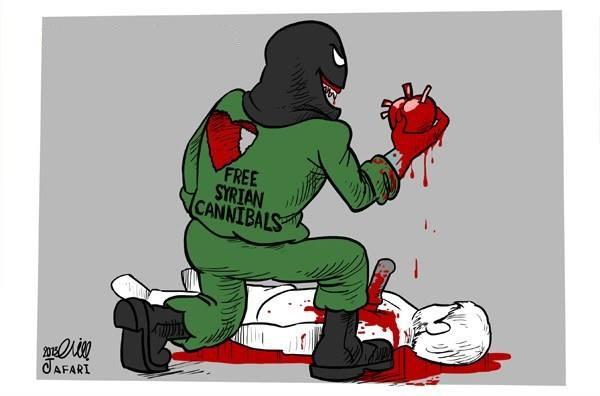
Until joined by the Islamic government in 1979 and then by Hizbullah in the 1980s, Syria was Israel’s most visceral enemy. This enemy is now being destroyed but not by Israel. So-called Muslims backed by so-called Muslim governments – Saudi Arabia, Qatar and Turkey – are doing the job for it, in alliance with the traditional western enemies of the Arabs. Syria’s cities and towns have been devastated. An estimated 100,000 people have been killed. Millions more have been displaced, scattered across Syria or seeking refuge beyond its borders. Reconstruction will cost hundreds of billions of dollars. Recovery will take decades. Without spending a penny or losing a life, Israel has been handed one of the greatest strategic victories in its existence.
Michael Oren let the scarcely concealed cat out of the bag the other day when he said Israel would prefer a Syria without Bashar al Assad to a Syria in the hands of the jihadists. The outgoing Israeli ambassador in Washington, Oren was only bringing something to the surface that could be seen underneath it despite the vociferous denials of Israel’s lobbyists. Israel wants the government in Damascus destroyed. Netanyahu has been trying to hide its interest behind a mask of indifference but as the likelihood of a US military ‘strike’ – for a war that would engulf the region – slipped away, the lobbyists in Washington broke cover. They buttonholed every congressman and women, only for the vote on war to be postponed indefinitely, much to the chagrin of the gulf and Turkish governments, their armed and political protégés and the Israeli government.
While the Syrian army continues to grind the armed groups down, there seems no end to the volume of money, armaments and men outside governments are still prepared to pour into this conflict. Obama is still trying hard to get Russian agreement on a UNSC resolution that would allow the US to begin another war in the Middle East by attacking Syria. In the meantime the armed groups are continuing with the war they are waging. In his recent interview with former US congressman Dennis Kucinich and Fox news correspondent Greg Palkot, Bashar al Assad estimated that 80 to 90 percent of the armed men are Al Qaida-type takfiri jihadists. The ‘defence’ consultancy HIS- Janes puts the figure at about 50 per cent but whether it is 50 per cent or 90 cent, whether they are foreign or Syrian, the jihadists are dominating the fighting. Talk of moderates is deception. Only in the last few days the main fighting groups – all takfiri – have again rejected the authority of the exile Syrian National Coalition and the so-called Free Syrian Army. This is presented as something new when at least a year ago the very same groups issued the same kind of declaration saying the same things. The so-called FSA is the western standard bearer for ‘moderation’ in this struggle even though its brigades are every bit as fanatical as Jabhat al Nusra or any of the other takfiri groups.
If the Syrian government does fall – and at the moment it is not only holding its ground but steadily driving the takfiris back – chaos would prevail in Syria on a far greater scale than Libya at present or Algeria in the 1980s. The country would implode. This is so self-evident that the US and its allies must know it and if they know it, one has to presume that this is what they want. Saudi Arabia is out to destroy the Syrian government regardless of the consequences. Britain and France are following the US and US policy on any issue in the Middle East is largely fashioned according to the interests of Israel. Turkey is the odd man out. Whatever Recep Tayyip Erdogan thought he was going to get out of confronting Syria his own country has been very adversely affected by his decisions. The breakdown of Arab states into sectarian enclaves permanently at war with each other has been an Israeli strategic objective for decades. It has happened in Iraq and now the specter of the collapse of another unitary Arab state hovers over Syria.
While the takfiris do their best to destroy Syria, Israel is getting on with the colonization of Palestinian territories as fast as it can. The current wave of settlement expansion is the greatest since 1967. In the past year edicts have been pouring out of the Housing Ministry authorizing the construction of thousands of housing ‘units’ in East Jerusalem and across the West Bank. The strategic focus is on settlement expansion in and around East Jerusalem and the construction of highways and roads that will simultaneously integrate the settlements into the greater Jerusalem municipality (enlarged immediately after the 1967 war) and, along with the Separation Wall, further cut the Palestinians off from the city. In the first quarter of 2013 alone there was a 176 per cent increase in settlement expansion over the same quarter for 2012.
In August this year, just as the ‘peace talks’ were resuming, Israel announced the construction of thousands more housing ‘units’ in East Jerusalem settlements. The mainstream media tells us that settlement expansion is ‘impeding’ peace, ‘threatening’ the peace talks and the ‘two state’ solution. The plain fact is that there are no ‘peace talks’. They are the camouflage for the war Israel has been waging against the Palestinians for seven decades. To their discredit and dishonor Mahmud Abbas and Saib Urayqat are giving these ‘talks’ a Palestinian face. By announcing settlement construction in the same breath as announcing the resumption of ‘peace talks’ Israel shows its absolute contempt for both of them.
Land expropriation and development for agricultural purposes continues unabated. So does the theft of water. The Council for European Palestinian Relations estimated recently that the settlers consume an average of 280 liters of water a day compared to 86 liters for the Palestinians, below the World Health Organization’s recommended minimum of 100 liters. Only 60 per cent of the water allocated to the Palestinians is potable. While taking their land Israel simultaneously uses it as a rubbish dump, with solid waste from West Jerusalem being dumped at Abu Dis, once set up by Israel as the Palestinian ‘capital’ of East Jerusalem even though it was not even inside the municipality until Israel put it there. The settlers do the same, dumping their rubbish and household waste water on Palestinian land in the valleys below their settlements on the hilltops.
In a statement handed to the UN Human Rights Council fact-finding mission to Palestine in February this year, Al Haq (Law in the Service of Man) presented some statistics. In 2012, 202 ‘incidents’ of settler violence along with dispossession, home demolitions, forcible evictions and intimidation; more than 200 settlements established since 1967, including 14 in East Jerusalem, and more than 500,000 settlers now living in them; and more than 42 per cent of the land of the West Bank as well as most of its resources allocated to Jewish settlements. Al Haq notes that the Israeli High Court ‘has rendered the question of the settlements non-justiciable’.
The Council for European Palestinian Relations estimates that the population in the West Bank settlements is growing at an average of five per cent a year compared to 1.8 per cent for the rest of occupied Palestine. It puts the total number of settlers at 467,000, of which number 385,000 are living in between the Separation Wall and the 1967 ‘green line.’
Every brick laid by Israel on the West Bank, every liter of water pumped out for settlements swimming pools and lawns and the presence of every settler represents a violation of international law. Yet, says Naftali Bennett, the Religious Services Minister and leader of the Jewish Home Party: ‘We will continue building and you will see this soon.’ He was speaking before the August announcement that more housing ‘units’ would be added to Jewish colonies in East Jerusalem. ‘I am sending the message from here to all the parties in the negotiations: the land of Israel belongs to the nation of Israel’. He has pledged to do ‘everything in my power to make sure they never get a state.’
In a leaked exchange with another cabinet minister Bennett said that ‘I’ve killed many Arabs in my life and there’s no problem with that.’ He complained that the conversation had been taken out of context, because what he meant was that he had ‘only’ killed them in the context of operations. There was one such ‘operation’ on the West Bank last week. Heavily armed soldiers stormed into the Jenin refugee camp, broke into the house of the Tubaisi family, shot Islam al Tubaisi, 19, in the leg, dragged him downstairs, his head banging on every step and shot him dead before an ambulance took him to hospital. Perhaps in time the members of this unit will be bragging in time about how they also have killed many ‘Arabs’.
Dig deep enough into the crises in Iraq, Syria and Lebanon and the confrontation with Iran and eventually you will find Palestine. It remains the central issue, the pivot on which US policies, dominated by Israeli interests and demands, has turned for more than six decades, yet for the takfiris affiliated with Al Qaida, killing other Muslims (and Christians) in a variety of countries takes precedence. It is striking that the same heads of government inveighing against terrorism and expressing their outrage at the slaughter of innocents in Nairobi have not once expressed outrage at the slaughter of innocents in Syria unless they thought they could blame the Syrian government.
The call of unity sounds through modern Arab history like the cry of a lost bird. United the Arabs will stand and divided they will continue to fall. As long as they are not able to put common interests first they are going to be ripe for the plucking. What is at stake in Syria is not the political system but Syria itself and for the past three years it has been systematically and deliberately destroyed by an unholy coalition of outside governments and the gangs of armed men doing their dirty work in the name of Islam.
The dominant Arab actors in this deliberately induced catastrophe are the regimes in Riyadh and Doha. They engage with Israel behind the scenes even as it colonizes Palestinian land and sends uniformed gangsters into the Haram al Sharif to beat Muslim worshipers trying to protect one of the holiest sites in Islam. While consorting with the enemy and abandoning the Palestinians these two regimes – infinitely less representative of the will of the people than the government in Damascus – take the lead in the destruction of an Arab state. The greatest beneficiary of their actions on one hand and their inaction and neglect on the other is Israel. This is surely as great a disgrace as any in Arab and Islamic history.
– Jeremy Salt is an associate professor of Middle Eastern history and politics at Bilkent University in Ankara, Turkey.
NYTimes Op-Ed Never Appeared in US Edition
NYTimes eXaminer · September 26, 2013
Dear Public Editor,
Many activists who follow the nuclear weapons issue, and the tortured path to nuclear disarmament, were really gratified to see, that for the first time Israel’s nuclear arsenal was discussed in the NY Times in the context of present events in Syria and Iran. However, I was shocked and disappointed to see that this educational op-ed, which sheds so much light on the nuclear disarmament situation today, only appeared in the International Edition of the NY Times, and the people in the US remain ignorant and unenlightened about a significant provocation in the middle east. This news should be published so American citizens can have a broader understanding of what’s involved in actually getting rid of nuclear weapons and stopping further proliferation.
Sincerely,
Alice Slater
Op-Ed that never made it to the US edition:
Let’s Be Honest About Israel’s Nukes
By VICTOR GILINSKY and HENRY D. SOKOLSKI
THE recent agreement between the United States and Russia on Syria’s chemical weapons made clear what should have been obvious long ago: President Obama’s effort to uphold international norms against weapons of mass destruction in the Middle East will entangle the United States in a diplomatic and strategic maze that is about much more than Syria’s chemical arsenal. … Read more
Obama at the UN
By Mazin Qumsiyeh | Popular Resistance | September 25, 2013
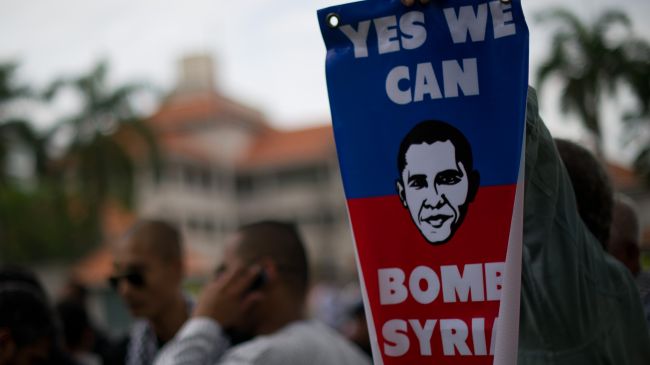 President Barak Obama said in the middle of his 40 minutes of lies and hypocrisy at the UNGA as world leaders looked on in dismay: “With respect to Syria, we believe that as a starting point, the international community must enforce the ban on chemical weapons.” (The US and Israel both possess and have used chemical weapons, see below) and added “Although we will at times be accused of hypocrisy and inconsistency [!], we will be engaged in the region for the long haul” [to serve Israel].
Incredibly he also said he believed in American “exceptionalism” [white man’s burden]. Hypocritically he also mentioned Martin Luther King Jr. But MLK opposed American imperialism and exceptionalism and who said in a speech in 1968: “God didn’t call America to do what she’s doing in the world now. God didn’t call America to engage in a senseless, unjust war ….. We have committed more war crimes almost than any nation in the world.” [we still do]
Related
UAE Brokers US Visa Deal for Syrian Minister
By Nasser Charara | Al-Akhbar | September 25, 2013
Al-Akhbar has learned that Syrian Foreign Minister Walid Muallem’s bid to obtain a US visa to attend the 68th session of the UN General Assembly was rejected by the US State Department.
In principle, according to the law governing the relationship between the UN and the US as the host country of the UN headquarters, US authorities have no right to deny a visa to any official from a UN member state, if the visa is requested for the purpose of participating in a UN event. Nevertheless, there were previous cases where the US refused to grant – or delayed – a visa to certain officials from countries at odds with Washington for long enough to prevent their timely arrival to participate in UN meetings.
According to reports, the US State Department exhausted the legal limit in this regard when it refused to issue a visa to Muallem. Muallem was scheduled to deliver Syria’s speech at the assembly on September 30.
Washington has now reportedly reversed course on the visa issue following mediation by the United Arab Emirates. According to the same reports, after days of deliberate delays by the US State Department, the US authorities have now issued a conditional visa to Muallem that allows him to enter New York exclusively, but not the rest of the US.
Damascus purportedly designed the itinerary of the Syrian delegation headed by Muallem in such a way as to avoid stopovers in certain European airports, as several countries in Europe have issued arrest warrants against Syrian regime figures, including the foreign minister. The UAE had a role in finding a solution to this problem, offering to allow the plane carrying the Syrian delegation to land in Dubai where the delegation would then fly nonstop to New York.
The UAE had a role in finding a solution to this problem, offering to allow the plane carrying the Syrian delegation to land in Dubai where the delegation would then fly nonstop to New York.
Muallem and his delegation are expected to arrive today, September 25, in Beirut on a private Syrian plane, and then fly onwards to Dubai where the delegation is set to take an Emirates flight to New York City.
Some informed sources consider the UAE’s assistance in getting Muallem to New York a positive step that could signal a breakthrough in some of the Gulf countries’ attitudes regarding the best approach to resolve the Syrian crisis. As part of this emerging climate, the sources reveal that there are unpublicized efforts – including by the UAE – to broker a meeting between Muallem and US Secretary of State John Kerry on the sidelines of UN meetings in New York.
It is worth mentioning that the UAE, especially the Emirate of Abu Dhabi, had maintained a hardline policy toward the Syrian regime. The UAE toed the Saudi line in seeking to arm the opposition and provide it with logistical support through Turkish and Jordanian territories.
During the past two years, three liaison offices run by Qatar, Saudi, and the UAE operated out of the Turkish border region with Syria, supporting the Syrian opposition. Yet at the same time, Abu Dhabi gave the Syrian regime indirect positive signals, most notably by hosting Bushra al-Assad, the sister of President Bashar al-Assad, after the assassination of her husband Asif Shawkat during Ramadan last year.
Bushra’s stay in the UAE is not seen as political asylum or as something that can be interpreted as hostility to the regime. Bushra’s residence in the UAE has to do with special circumstances relating to her fear for her children and her desire to give them a peaceful setting for them to complete their education after their father’s death. Bushra and her children travel frequently to Beirut, where they are purportedly under Syrian protection.
Interestingly as well, Emirates Airlines was the only Arab carrier that continued to fly to Damascus, despite the Arab boycott. This continued until the airport became unsafe, when the fighting in the Damascus countryside drew close to the airport’s surroundings.
In addition, there have been reports that Emirates Airlines was helping move Syrian funds out of Damascus to Dubai. The aim was to bypass international sanctions on Syria, which prevent the fulfillment of the foreign currency-denominated commitments of the Syrian government and deals between Syrian companies and traders and their foreign counterparts.
The Syrian funds would be placed in Emirati banks and then converted to settle foreign currency payments. This practice has stopped recently for security – and not political – reasons.
The Syria Chemical Weapons Attack: Human Rights Watch is Manipulating the Facts
By Richard Lightbown | Global Research | September 24, 2013
On 21 August 2013 a series of chemical attacks were perpetrated in the Ghouta suburbs of eastern Damascus. Sources say that between 281 and 1,729 civilians were killed, while Medecins Sans Frontiers reported around 3,600 were injured in the attacks. [1] On the same day UN Secretary-General Ban Ki-moon instructed the UN Mission already in Syria to investigate allegations of chemical weapons use in Khan al-Asal, Sheik Maqsoos and Saraqueb to focus their efforts on the Ghouta allegations. [2]
Before the UN Mission had reported its preliminary findings, Human Rights Watch (HRW) jumped the gun on 10 September with its own report written by Peter Bouckaert, the organisation’s Emergencies Director. [3]
The report admits that HRW did not have physical access to the site and had based its study on Skype interviews with ‘More than 10 witnesses and survivors’ made over a period of two weeks between 22 August and 6 September. These were supplemented by video and photo footage and other data from an unnamed source or sources. It is unclear then, exactly how many exposed survivors were interviewed by HRW or who the other witnesses were.
In compiling the report HRW had also drawn on the technical services of Keith B. Ward Ph.D., an expert on the detection and effects of chemical warfare agents. However the organisation did not disclose that Dr Ward is employed by Homeland Security Advanced Research Projects Agency of the United States government. [4] The HRW investigation was also ‘assisted by arms experts including Nic Jenzen-Jones […] as well as Eliot Higgins […] who collected and analysed photos and videos from the attacks.’ [5]
Mr Jenzen-Jones’s LinkedIn profile does not list any training or experience with armaments, and his only qualifications appear to be ‘certified armourer and ammunition collector’ – which probably relates to the Firearms Amendment (Ammunition control) Act 2012 of the state of New South Wales, Australia. [6] In reports on the story on his own blog ‘The Rogue Adventurer’, Mr Jenzen-Jones relies on data taken uncritically from sources such as the New York Times and even a Los Angeles Times article based on Israeli intelligence [7] Apparently he is not familiar with Israeli falsified reports such as the alleged use of guns by passengers on the Mavi Marmara against Israeli commandos (which remain uncorroborated despite Israeli forces seizing virtually all photographic data from the more than 600 passengers, along with film from security cameras located throughout the ship and Israel’s own constant infra-red surveillance from boats on both sides of the ship and from at least two aircraft). As former CIA director Stansfield Turner is reputed to have said, Mossad excels in PR, and not in intelligence. [8]
HRW’s other expert, Eliot Higgins is an untrained analyst who was recently talked-up into some kind of expert by Matthew Weaver in the Guardian. [9] On his Brown Moses Blog of 28 August 2013 Mr Higgins featured a video sent to him by a source allegedly showing the type of munition linked to the chemical attacks being fired close to Al-Mezzah Airport near Daraya. The video has been filmed at some distance and none of the upwards of 20 men roaming around the site can be clearly seen. An unmarked Mercedes semi-trailer lorry apparently delivers the rocket which is loaded (this is not seen) onto an unmarked white rigid lorry on which the launcher is mounted. The men aimlessly roaming around are mostly wearing army fatigues, although others, including some on the launcher, are in civilian clothes. A number of those in military uniform are wearing red berets. Based solely on this headgear, and the fact that the Syrian Republic Guard as well as the military police are issued with red berets, Mr Higgins is emboldened to state that ‘…this video shows the munition being used by the government forces […].[10]


Stills taken from the video analysed by Eliot Higgins. Mr Higgins has deduced that this is a Syrian Army operation entirely from the red berets worn by some of the personnel. The rocket shown can also carry conventional explosives.
In a previous posting on 26 August, Mr Higgins estimated from shadows that a rocket shown in photographs between Zamalka and Ein Tarma had been fired from north of the site, and he set about trying to locate the launch site with the help of correspondents. Hoping to find the exact location, he speculated that the 155th Brigade missile base was a possible site for the crime. [11] This line of investigation quietly disappeared after the UN Mission reported that the missile they had examined at Zamalka/Ein Tarma was pointing precisely in a bearing of 285 degrees, i.e. nearer west than north. [12]
Meanwhile Mr Bouckaert in his report two weeks later reported that two of his witnesses told HRW that the rockets came from the direction of the Mezzeh Military Airport. [13] These accounts also became inconvenient later when, as we shall see, HRW seized on the azimuths provided by the UN Mission and dashed off on a new wild goose chase. Apparently HRW now considered that nearly 20 per cent of the ‘witnesses and survivors’ it had interviewed were no longer credible regarding the direction of the rockets.
Nevertheless on page 1 of his report Mr Bouckaert felt confident enough to declare,
Based on the available evidence, Human Rights Watch finds that Syrian government forces were almost certainly responsible for the August 21 attacks, and that a weapons-grade nerve agent was delivered during the attack using specially designed rocket delivery systems.
The ‘evidence’ produced on p20 of the report amounts to nothing more than supposition. Mr Bouckaert merely states his scepticism that the rebels could have fired surface-to-surface rockets at two different locations in the Damascus suburbs; he asserts that the types of rockets thought to have been used are not reported to be in possession of the opposition nor is there any footage showing that they have mobile launchers suitable; and he states that the large amounts of dangerous nerve agent would require sophisticated techniques beyond the capabilities of the rebels. No actual evidence is cited to show that this weaponry is Syrian Army equipment. On the contrary the Soviet 140 mm rocket referred to on p15 requires a BM-14 rocket launcher, first produced in the late 1940s.
The Syrian Army equipment list produced by Global Security shows none of this obsolete weaponry in stock but instead lists around 300 of the BM-21 launcher which replaced it. The BM-21 launches a 122mm rocket, so the Army would be unable to fire the 140mm rocket that rebels found and the UN Mission inspected at Moadamiyah. [14] [15] Mr Bouckaert might also recall that Israel has a common border to Syria and is known to have stocks of sarin amongst the vast collection of illegal chemical and biological weaponry amassed by the Israel Institute for Biological Research (IIBR) at Nes Ziona. [16] YouTube videos also show Syrian rebels in possession of mobile rocket launchers. [17] HRW really did assemble a Mickey Mouse team of researchers when they cobbled together this report.
Nevertheless HRW’s reputation and distribution ensured that their allegation was distributed by agencies such as the Associated Press [18] and reported by outlets which included the BBC [19], CBS [20], New York Post [21] and other international media such as the Tasmanian newspaper The Examiner [22] and the Jakarta Post [23]. None of these outlets questioned the veracity of this very serious allegation against the Syrian Army.
On 11 September, a day after the HRW report was published, the International Support Team for Mussalaha in Syria published its unique and important analysis of documentation nominated by US intelligence. [24] Having carefully and thoughtfully analysed the data, including a number of images also published in the Bouckaert report, the study discovered not only widespread manipulation of evidence, but in the tradition of BBC reporting in Syria, [25] they also discovered that photographs of victims in Cairo had been described as victims of a chemical attack in Syria. This preliminary study concludes that there has been gross media manipulation and calls for an independent and unbiased International Commission to identify the children who were killed and try to find the truth of the case. This writer has not seen any HRW document which refers to the ISTEAMS study.
The UN Mission report was published six days after the Bouckaert report on 16 September. This disclosed that the Mission had been allowed a total of only seven-and-a-half hours on-site in the two suburbs which are both located in opposition-controlled areas. During that period they had experienced repeated threats of harm and one actual attack by an unidentified sniper on 26 August. [26] Nevertheless they had collected samples and ‘a considerable amount of information’ along with ‘primary statements from more than fifty exposed survivors including patients, health workers and first-responders.’ In fact the statements had been taken in interviews with nine nurses, seven doctors and 36 survivors. [27] The Mission concluded that there was ‘definitive evidence of exposure to Sarin by a large proportion of the survivors assessed’ [28] and it stated that it had been informed that victims began suffering effects following an artillery barrage on 21 August 2013. All interviews, sampling and documentation followed procedures developed by the Organisation for the Prohibition of Chemical Weapons and the World Health Organisation.
The report states that ‘several surface to surface rockets capable of delivering significant chemical payloads were identified and recorded at the investigated sites’ but only five impact sites in total were investigated by the Mission (presumably because of the time constraints imposed on them by those who controlled the areas).
The UN report is not without its contradictions. In a summary in their Letter of Transmittal the authors wrote ‘In particular, the environmental, chemical and medical samples, we have collected, provide clear and convincing evidence that surface-to-surface rockets containing the nerve agent sarin were used in Ein Tarma, Moadamiyah and Zamalka…’.
And yet none of the 13 environmental samples taken from Moadamiyah were found to have any traces of sarin, although one of the two laboratories conducting the analyses found degradation products of sarin in four of the thirteen samples while a further sample was found to contain degradation products by the other lab. Although two of the samples were unspecified metal fragments, none of the samples was specifically described as being part of a rocket. [29] Does the discovery of degradation products in 38 per cent of the samples (and only 23 per cent of the tests) along with a complete absence of the chemical agent itself constitute ‘clear and convincing evidence’ that Moadamiyah was attacked by surface-to-surface rockets containing sarin?
Most important however are the two caveats included in the report. On p 18 the inspectors wrote concerning the Moadamiyah site.
The sites have been well travelled by other individuals both before and during the investigation Fragments and other possible evidence have clearly been handled/moved prior to the arrival of the investigation team.
Similar tampering of the evidence was noted at the other site as the report notes on p22
During the time spent at these locations, individuals arrived carrying other suspected munitions indicating that such potential evidence is being moved and possibly manipulated.
HRW was quick to seize on the UN report to substantiate its own allegations, although some adjustments were now necessary to get their allegations to dovetail neatly into the report’s findings. On 17 September Josh Lyons used the azimuths cited for the rockets in Appendix 5 of the Mission report to produce a cross reference which suggested that the military base of the Republican Guard 104th Brigade had been the launch site for the chemical weapons. [30] (Mr Lyons called this ‘Connecting the dots’. By coincidence, when referring to the Sellström Report on 19 September, John Kerry said ‘But anybody who reads the facts and puts the dots together, which is easy to do, and they made it easy to do, understands what those facts mean.’? [31] ‘Facts’ can mean anything if distorted enough, Mr Kerry.)
Once again no supporting evidence was provided to explain why HRW blames the Syrian Army, and all previous locations suggested for the launch were conveniently forgotten. To recap, Peter Bouckaert reported two witness statements that the rockets came from the direction of the Mezzeh Military Airport (more than 6 kilometres from the Republican Guard base) and HRW’s ‘expert’ Eliot Higgins was convinced that they were fired from north of the target sites.
To make his case Mr Lyons is being dishonest. Referring to unspecified ‘declassified reference guides’ he tells us that the 140mm artillery rocket could have reached Moadamiya, 9.5Km from the Republican Guard’s base. Yet even if a seventy-year old rocket system could indeed fly that far, Mr Lyons is forgetting that the Syrian Army no longer has these outdated systems. It therefore no longer has 140mm rockets, one of which is alleged to have been responsible for part of this crime against humanity. He is also forgetting that no actual chemical agent was found at Moadamiya, so it is premature to start producing cross references from that site. And above all he is deliberately omitting to tell his readers about the caveats written for both target sites by the UN inspectors that clearly and unequivocally suggest that the evidence has been tampered with at both sites which are located in opposition-controlled areas.
None of these inconvenient truths have stopped the HRW juggernaut. On 20 September the Guardian published an article by HRW staffer Sarah Margon promoting both the Bouckaert report and the Lyons’ calculations (apparently unaware of the contradiction between the two). She ended up by calling for an Obama/Kerry commitment to ensure there is ‘accountability for those who would use the world’s most heinous weapons against the world’s most vulnerable people’. [32] But of course she was not writing about Fellujah or Gaza or the IIBR at Nes Ziona.
Notes
[1] Wikipedia; Ghouta chemical attacks. http://en.wikipedia.org/wiki/Ghouta_chemical_attacks (Accessed 23 September 2013)
[2] Sellström, Åke. et al., 13 September 2013; United Nations Mission to Investigate Allegations of the Use of Chemical Weapons in the Syrian Arab Republic – Report on the Alleged Use of Chemical Weapons in the Ghouta Area of Damascus on 21 August 2013; United Nations; para 15, p3.
http://www.un.org/disarmament/content/slideshow/Secretary_General_Report_of_CW_Investigation.pdf
[3] Bouckaert, Peter, 10 September 2013; Attacks on Ghouta, Analysis of Alleged Use of Chemical Weapons in Syria; Human Rights Watch. http://www.hrw.org/sites/default/files/reports/syria_cw0913_web_1.pdf
[4] http://www.docstoc.com/docs/24131911/Notes-from-Department-of-Homeland-Security-HSARPA-Best-Practices (Accessed 23 September 2013)
[5] Attacks on Ghouta; op.cit. pp. 1 and 2.
[6] http://au.linkedin.com/in/nrjenzenjones (Accessed 23 September 2013)
[7] http://rogueadventurer.com/2013/08/29/alleged-cw-munitions-in-syria-fired-from-iranian-falaq-2-type-launchers/ (Accessed 22 September 2013)
[8] AbuKhalil, As’ad, 7 September 2011; The Mossad in Hollywood Movies; alakhbar English. http://english.al-akhbar.com/node/530 (Accessed 22 September 2013)
[9] Weaver, Matthew, 21 March 2013; How Brown Moses exposed Syrian arms trafficking from his front room; The Guardian. http://www.theguardian.com/world/2013/mar/21/frontroom-blogger-analyses-weapons-syria-frontline (Accessed 21 September 2013)
[10] http://brown-moses.blogspot.co.uk/2013/08/the-smoking-gun-video-shows-assads.html (Accessed 23 September 2013)
[11] http://brown-moses.blogspot.co.uk/2013/08/finding-exact-location-of-alleged.html (Accessed 23 September 2013)
[12] Sellström, Åke. et al.; p23.
[13] Attacks on Ghouta; op.cit., p6.
[14] http://weaponsystems.net/weapon.php?weapon=DD05%20-%20BM-14 (Accessed 23 September 2013)
[15] http://www.globalsecurity.org/military/world/syria/army-equipment.htm (Accessed 23 September 2013)
[16] Abu-Sitta, Salman; Traces of poison; Al-Ahram 27Feb – 5 March 2003, Issue No. 627.
[17] For example http://www.youtube.com/watch?v=iKoYg9xEGMs, http://www.youtube.com/watch?v=6JEElw-ea5k, http://www.youtube.com/watch?v=g6w68OqA4HM (h/t timbercrown)
[18] http://nypost.com/2013/09/10/human-rights-watch-condemns-assad-for-alleged-chemical-attack/ (Accessed 22 September 2013)
[19] http://www.bbc.co.uk/news/world-middle-east-23927399 (Accessed 22 September 2013)
[20] http://www.cbsnews.com/8301-202_162-57602150/human-rights-watch-says-evidence-strongly-suggests-assad-used-chemical-weapons/ (Accessed 22 September 2013)
[21] http://nypost.com/2013/09/10/human-rights-watch-condemns-assad-for-alleged-chemical-attack/ (Accessed 22 September 2013)
[22] http://www.examiner.com.au/story/1768398/syrian-government-forces-almost-certainly-responsible-for-chemical-attacks-human-rights-watch-report/ (Accessed 22 September 2013)
[23] http://www.thejakartapost.com/news/2013/09/10/rights-group-syrian-regime-behind-chemical-attack.html (Accessed 22 September 2013)
[24] Mother Agnes Mariam of the Cross, 11 September 2013; THE CHEMICAL ATTACKS ON EAST GHOUTA TO JUSTIFY MILITARY RIGHT TO PROTECT INTERVENTION IN SYRIA; ISTEAMS. http://www.globalresearch.ca/STUDY_THE_VIDEOS_THAT_SPEAKS_ABOUT_CHEMICALS_BETA_VERSION.pdf
[25] Lightbown, Richard, 18 June 2012; Syria: Media Lies, Hidden Agendas and Strange Alliances; Global Research. http://www.globalresearch.ca/syria-media-lies-hidden-agendas-and-strange-alliances/31491
[26] Sellström, Åke. et al.; para 18.
[27] Sellström, Åke. et al.; paras. 18, 19 and 21, Appendix 7.
[28] Sellström, Åke. et al.; p17.
[29] Sellström, Åke. et al.; pp. 24/5 and 27-29.
[30] Lyons, Josh, 17 September 2013 ; Dispatches : Mapping the Sarin Flight Path; Human Rights Watch. https://www.hrw.org/news/2013/09/17/dispatches-mapping-sarin-flight-path (Accessed 21 September 2013)
[31] Kerry: U.N. report confirms Assad responsible for chemical attack http://www.cbsnews.com/video/watch/?id=50155432n (Accessed 22 September 2013)
[32] Margon, Sarah, 20 September 2013; The sarin gas attack is just one Syrian atrocity the ICC should pursue’; The Guardian. http://www.theguardian.com/commentisfree/2013/sep/20/sarin-gas-syria-icc (Accessed 22 September 2013)
Richard Lightbown is a researcher and occasional writer on human rights issues, particularly relating to the Middle East.
Related article
- Human Rights Watch Misinformation on Syria (thepeoplesvoice.org)
What does the Syrian chemical disarmament deal mean?
By Zaher Mahruqi | Press TV | September 24, 2013
Bashar’s acceptance to let go of his “Nukes of the poor” arsenal could mean that the Syrian government has assessed the potential outcome of an American sustained offensive to be a game changer and desperately agreed to any way out.
Handing over chemical weapons in a gradual more controlled manner would have been understandable but giving up the location of the chemical sites with such immediacy hints to a much weakened Syrian position. It is no secret that the details given to the UN will eventually end up in Israeli hands, then why would the Syrian government accept such a deal other than Assad’s real fear of loosening his grip on power?
Netanyahu’s remarks following the chemical handover deal that “negotiating with Syria and Iran with a real and present threat to use force is the only way to make them cooperate” suggests that Syria’s president is indeed at the mode of fighting for survival. But that too is too simplistic provided that, surrendering chemical weapons or not, the US is sure to pursue him to the very bitter end. Then why give up such a strong deterrent?
The fact of the matter is that Bashar al-Assad is an intelligent man who at the very least understands that betraying Russia and Iran, who have been supporting his efforts in the past two years, would be a serious mistake. Therefore, any big decision Syria makes has to have been consulted with its main backers and has been given some sort of guarantees that giving up chemical weapons is not as risky as it might appear and that a credible backup plan is in place.
Smartly, Syria is giving both the US and Russia a face saving mechanism to avoid any further escalation between the two super powers and at the same time it is buying crucial time. Bashar himself declared that at least one full year is required to clear Syria of chemical weapons.
For Syria, chemical weapons are much harder to dispose of than replenish because Syria’s allies have stockpiles upon stockpiles of them. And so if the US chooses to change course somewhere during the period of chemical disarmament and attacks Syria, the very scenario that has been averted would be quickly reintroduced.
One ship full of chemical weapons is all that is required to rearm Syria, after all the main target of such weapons is a country the size of a province; Israel. Moreover, the Iranian and Hezbollah threat of intervening by attacking Israel will not be changed by simply handing over the chemical weapons.
Of course, the decision to hand over the weapons which buys the Syrian government crucial time is unwelcome by the “saboteur” of the region, Saudi Arabia and Turkey. The real danger for them is that this could actually lead to further weakening of the Syrian opposition and force them unto Geneva peace talks; talks which have just been strengthened by Syria’s agreement to declare its chemical arsenal.
Turkey and Saudi Arabia know well that their stances on Syria in the past two years makes it impossible for relations with Bashar’s Syria to normalize or even a negotiated Syria where opposition participates in governance.
Regardless of Turkish and Saudi stances, the US administration and Israel had strong interests in making sure that a war is averted in some way. Had the US congress vote gone ahead and disapproved of any attack on Syria in order to fulfill the wishes of the American people, it would have been a huge blow to them.
For Obama, it would have meant being stripped of legitimacy as it relates to Syria and wider international engagements and for Israel it would have meant the weakening of the Zionist lobby within US politics and a disastrous counter attack from Iran, Syria and Hezbollah.
Bashar’s objectives to consolidate alliances and weaken the counter alliance and buying time have all been thus far satisfied. The one year disarmament period that Bashar suggested will be needed is no speculation at all; it is well calculated period during which time to weaken the opposition and its supporters and to deny the US and her allies any legitimate pretext to attack Syria.
Moreover, if Iran and Hezbollah felt justified to intervene early on, now any attack from the US or her allies before the chemical disarmament is complete makes the Iran and Hezbollah retaliation against Israel with the support of Russia even more justified.
On the other hand, the US, Turkey and Saudi Arabia, (the latter seeming more keen than the US to overthrow Bashar’s government), provided that the SNC is in a weakened position and the desperation of the trio is acute, places them in a real danger of open colluding with the likes of Al Qaeda and Al-Nusra Front. So much for fighting “terrorism”!
Every time one sees a billboard advertising Syrian International Trade Exhibition across the world one wonders how can a government in a war state for over two years manage to facilitate an environment where its factories can produce? The answer could simply be that Syria is not nearly as chaotic or as weak as Western media portrays it to be. That position has just been strengthened by Syria’s agreement to disarm.
The objective of the US and Israel has always been to disarm any Arab army that might use its weapons against Israel; the issue is not whether a country owns a huge arsenals of weapons or not, but whether it has enough potential will to use them against Israel.
The Saudis are armed to the teeth and so are the Turkish but it is their clear stance on ensuring Israel’s peace that makes them allies rather than enemies. It is for that reason that Syria is a prime target as was Saddam’s Iraq.
Five armies that pose serious threat to Israel were the priorities of the US and Israel namely Iranian, Syrian, Egyptian, Iraqi and Hezbollah and so far only one has been dealt with; that of Iraq. In the case of Egypt, the US and Israel are pleased because the Egyptian army is suspect and they truly believe they will eventually buy out its generals. That means Hezbollah, Iran and Syria are left to fight this war that will not stop until one side secures a clear victory.
Where Russia had disappointed in the past as was the case with Iraq, now it appears poised to put up a stronger posture and as such days ahead will clarify the longevity of the new Russian posture. But the latest events have revealed that Russia is no longer a mere Security Council voter but a physical actor in world events.
Therefore, it is naive to assume that Russia has been blackmailed or tricked by the US into pressuring Syria to surrender her most prized deterrent against Israel. Syria will comply albeit at a calculated pace and will give America and Israel no legitimate pretext to attack it and as such Russia will have no choice but to stand its ground. If an attack takes place, Russia’s response is likely to be far stronger than the recent showdown in the Mediterranean or else Russia becomes a goofball.
The stance of Western media and Aljazeera is a good indication that the US and her allies are not in a war mood. When a war is imminent, there are certain networks that have a duty to fulfill and that is drumming for war. They are not doing that just yet!
While it will be naive to assume that Bashar will hold on to power indefinitely, it is clear that the Syrian civil conflict will be a long term struggle and will not end nor conclude the way the US and Israel are hoping for.
Related articles
- Nasrallah: Saudi Arabia, Turkey have failed in Syria (alethonews.wordpress.com)
- Questions on Syria’s Chemical Weapons disarmament (alethonews.wordpress.com)
Nasrallah: Saudi Arabia, Turkey have failed in Syria
Al-Akhbar | September 23, 2013
Saudi Arabia, Turkey and other regional countries backing Syria’s rebels must acknowledge their failures to bring down the Syrian government, and join efforts for a political solution to end the two and a half year civil war, Hezbollah Secretary General Hassan Nasrallah said on Monday.
In his first televised speech in over a month, Nasrallah said dialogue is the only option to bring an end to a conflict that has already left over 100,000 people dead and threatened to exacerbate tensions across the region.
“I call on Saudi Arabia, Turkey, and other Gulf states to revise your stance,” he said. “You won’t reach anywhere by relying on a military victory. Put this hatred (for Hezbollah) aside and think with your minds. Think about your interests, the interests of the region, the survival of the region.”
He condemned calls by some Lebanese politicians from the March 14 alliance for the United States to launch an attack on Syria, warning that any strike would cause global repercussions, and that Lebanon would be the first casualty.
Those same politicians calling for the West to intervene in Syria have accused Hezbollah of endangering Lebanon by sending troops to Syria, Nasrallah added, urging them to evaluate the consequences of a US attack across the border.
Nasrallah said that Saudi Arabia and other Gulf countries believed their support to rebel forces would lead an overthrow of the Syrian government within months, and are using Hezbollah as a scapegoat “to run away from their failures,” by accusing it of occupying Syria.
“For two and a half years, they used everything in their disposal … to control Syria and they failed. Of course [Hezbollah] are foreigners, we are not Syrian, but [what about] the tens of thousands of foreign fighters who you brought from all over the world? Are they occupying Syria?”
He noted that the Syrian government has expressed willingness to engage in dialogue with the opposition, and emphasized talks as the only suitable option to achieve peace.
Nasrallah also flatly denied accusations that his powerful Shia movement had obtained chemical arms from Syria, saying that he was principally and religiously forbidden from using such weapons.
Related article
- Text of Nasrallah’s September 23 speech Hezbollah chief… (yallasouriya.wordpress.com)
Is the Israel Lobby Only a Chimp Among Gorillas?
By DIANA JOHNSTONE | CounterPunch | September 23, 2013
Some friendly criticism of our article “The People Against the 800 Pound Gorilla” provides a welcome opportunity to clarify the discussion. Shamus Cooke, while largely agreeing with the points made by Jean Bricmont and myself, reproaches us for focusing on the pro-Israel lobby as the major factor promoting U.S. war against Syria to the detriment of much bigger factors: the U.S. capitalist class, the big banks, “empire”, oil, the military-industrial complex – in a word, capitalism.
The problem with our article, writes Shamus Cooke, “is that the authors elevate the Israeli gorilla to a weight class it doesn’t belong in; and in so doing the authors are forced to minimize the size of several other giant gorillas, whose combined weight overshadows the Israeli chimp.”
Of course, “capitalism”, however you want to define it, vastly dwarfs the Israel lobby. So do the military-industrial complex, the oil business, or U.S. imperialism, all of which have existed prior to and independently of the Israel lobby.
But is weighing the Israel lobby against “capitalism” a valid comparison? The Israel lobby is a clearly identifiable pressure group, with names, addresses and policies that are clearly stated. Capitalism is an economic system that at present, since the collapse of the Soviet Union, prevails in almost the entire world. Today, every specific policy in most countries is defined within a capitalist context, and some of those policies, notably on highly emotional issues, are opposed to each other, without challenging for a moment the existence of “capitalism”.
So it is with policy toward the Middle East and the war in Syria. Capitalism is not at stake in those conflicts, and “the system” is resilient and elastic enough to profit from whatever policy is adopted.
The very existence of the gigantic U.S. military machine constitutes a constant danger of being used to meet some “threat” cooked up by think tanks, interest groups and foreign lobbies. At the start of the Cold War, the notorious China Lobby personified by Mme Chiang Kai-Shek exerted a negative influence on U.S. policy in the Far East. More recently the Cuban lobby of anti-Castro exiles has influenced US policy to the detriment of U.S. export sectors such as agribusiness. Today, the politically powerful Israel lobby stimulates and exacerbates the worst tendencies in a divided political establishment. If the American people had the awareness, and American politicians the courage, to say “no” to that lobby and its specious arguments, the less belligerent forces in Washington would have a better chance of prevailing.
A century ago, denouncing capitalism as the source of war found an echo in large, active political parties which theoretically aspired to replacing capitalism with socialism. But even those massive parties failed to prevent the First World War. And today, there is no significant political force in any Western country prepared to carry out a coherent program of replacing capitalism with something else. So if stopping war depends on first getting rid of capitalism, we are doomed.
One can always argue that capitalism is an underlying factor that promotes war. Perhaps one can say the same about “human nature”. But we do not care to wait until capitalism collapses or human nature changes in order to prevent the disaster of greater war in the Middle East.
What interests us now is to expose and oppose the single most significant political influence promoting ongoing war in the Middle East. That is unquestionably the Israel lobby, which overlaps on the right with the so-called neo-conservatives, and on the left with the “humanitarian” interventionists. To argue against war, it is therefore the Israel lobby that needs to be confronted.
Shamus Cooke says that strategists “such as the Project for a New American Century” (the neo-cons who dominated the Bush II administration) are “the ‘vanguard’ of American capitalism, and their geopolitical outlook is firmly rooted in the economic interests of the corporations that most benefit from overseas investing.”
I would say, rather, that PNAC, and its various reincarnations, is a cohort of fanatically pro-Israel strategists aspiring to control U.S. foreign policy by claiming to promote the interests of a capitalist class which has no unified strategic outlook of its own. There is no reason for American capitalism, which has interests on all continents, to focus so single-mindedly, and so aggressively, on the Middle East. The United States needs Middle Eastern oil less than those countries need to sell it. Many sectors of Western capitalism actually suffer from the sanctions imposed on a country like Iran. The focus on the alleged Iranian “threat” serves only to maintain Israel’s status as sole nuclear power dominating the Middle East, backed up by the United States.
To oppose war, it is necessary to oppose those who advocate it. And that is the Israel lobby, not “capitalism”. Why is there so much more reluctance to criticize the Israel lobby than to criticize capitalism? These days, criticism of capitalism is accepted even in mainstream media. But criticism of capitalism has never stopped a war.
Defeating the Israel lobby and changing U.S. policy in the Middle East from a policy of bullying, sanctions and bombing to a policy of diplomacy and compromise would not put an end to capitalism, to the military-industrial complex or to U.S. imperialism. But such a victory would be a good basis for going on to oppose the huge network of overseas U.S. military bases, the encircling of Russia and China, the exploitation of Africa and any return to the traditional imperialist treatment of Latin America.
The political fight against the Israel lobby is not the only campaign for peace, but it is the one that is most urgently necessary today.
Diana Johnstone can be reached at diana.josto@yahoo.fr
Related articles
Featured Video

Dan Dicks with James Corbett on Solutions Watch
or go to
Aletho News Archives – Video-Images
From the Archives
Secret document reveals plans for civil war in Lebanon, Israeli false flags, and invasion
By Randi Nord | Geopolitics Alert | April 5, 2019
Beirut – During his visit with US Secretary of State, Mike Pompeo, Lebanese President Michael Aoun reportedly received a US-Israeli document detailing plans for creating a civil war in Lebanon with covert false flag operations and possible Israeli invasion.
Although the source of the document is Israeli and created in partnership with Washington, no one knows who presented it to Aoun. The Lebanese TV station, Al-Jadeed, initially reported the document on Lebanese TV and a video on its website. Geopolitics Alert translated the report for this article. … continue
Blog Roll
 Aletho News
- Sheikh al-Asadi warns of Iraqi government compliance with US demands
- How to MAKE THE CONSPIRATORS PAY for their crimes! Dan Dicks with James Corbett on Solutions Watch
- There’s a drought in academia: A drought in honest research on the subject of drought and other weather extremes
- Department of War Awards $20.7 Billion Contract to Raytheon for Air-to-Air Missiles
- ‘Distance yourselves from Israel’: IRGC urges US population to question govt policies
- America’s Greenland deal has a radioactive backstory
- The RAF Fairford ‘terror plot’: Unpacking escalation in the UK echo-chamber
- EU Council Advances Chat Control 2.0 Scanning Proposal
- Ex-Greek MEP files complaint against Israeli spyware firm over alleged Pegasus surveillance
- Troubling ideas throughout the Torah, Talmud, Mishneh Torah and Tanya
- If Americans Knew
- New Report: “Scholasticide and Genocide in Gaza: Assessment, Testimonies and Legal Analysis”
- Ex-Biden officials are desperate for a Gaza scapegoat
- Israeli “settlers” Invade Al-Aqsa; Pour Boiling Water on 75-Year-Old
- Israel Has Kidnapped Another American Teenager
- US arms sales to Israel worth $21.6 billion in 20 months
- Three Palestinians Killed in Israeli Attacks on Gaza
- Revealed: German “Anti-Semitism Expert” Driving Crackdown on Palestine Solidarity is Former Israeli Spy
- Egypt’s Warning to Israel Before Oct 7
- Israel’s siege signals another cruel winter for 1.8 million Gazans – Daily Update
- Netanyahu Asked UAE Leader to Deny Report on Oct. 7 Warning in Secret Visit, Sources Say
- No Tricks Zone
- Two More Paleo Reconstructions Affirm Meters-Higher Sea Levels Across Ireland, Brazil 7000-6000 Years Ago
- New Study: Earth And Venus Surface Warmth Largely Explained By Convection And Lapse Rate, Not CO2 Or Radiation
- 2025 Nature Paper Claiming Worsening Global Drought Gets RETRACTED …Heavily Flawed
- New Study: ‘Global Drought Shows No Detectable Recent Acceleration Under Climate Warming’
- Economic Masterminds: German Socialists Suggest Taxing Productivity Gains Stemming From Using AI
- The South China Sea Has Not Been Cooperating With The Climate Change Narrative
- Energy Crisis: Germany Enters Heating Season With Historically Low Gas Reserve Fill Levels
- New Study: The Antarctic Ice Sheet Gained Mass From 2020-2024 Due To Staggering Snow And Ice Accumulation
- Study: Ocean Heating Rates From Thousands Of Years Ago ‘Dwarf’ Modern Ocean Heating Rates
- Climate Extremists Target, Attack Large-Scale Power Grid Infrastructure In Germany!

