Israelis initially criticized the Obama administration when he referred the approval of a military strike on Syria to the Congress last week.
Israeli officials are expecting that US President Barack Obama will get Congressional approval for a military strike on Syria next week when the Congress reconvenes.
Israeli media reports said that the Israel lobby is working hard to convince lawmakers to support this decision.
Israelis initially criticized the Obama administration when he referred the approval of a military strike on Syria to the Congress last week.
However former head of the Security and Foreign Affairs Committee in the Knesset Tzahi Hangbi told Israel’s military radio on Wednesday that calling the Obama administration “dead” was premature.
Hangbi, who is close to Israeli Prime Minister Benjamin Netanyahu, praised Obama’s decision to seek congressional support. He stated that Obama’s request would unite the administration and the congress, and the practical result of this step would be to widen the scope for any potential strike.
In a dazzling display of chutzpah, the White House is demanding that Congress demonstrate blind trust in a U.S. intelligence establishment headed by James Clapper, a self-confessed perjurer.
That’s a lot to ask in seeking approval for a military attack on Syria, a country posing no credible threat to the United States. But with the help of the same corporate media that cheer-led us into war with Iraq, the administration has already largely succeeded in turning public discussion into one that assumes the accuracy of both the intelligence on the apparent Aug. 21 chemical weapons attack in Syria and President Barack Obama’s far-fetched claim that Syria is somehow a threat to the United States.
Here we go again with the old political gamesmanship over ”facts” as a prelude to war, a replay of intelligence trickery from Vietnam’s Gulf of Tonkin to Iraq’s nonexistent WMD. Once more, White House officials are mounting a full-court press in Congress, hoping there will be enough ball turnovers to enable the administration to pull out a victory, with the corporate media acting as hometown referees.
And in the weekend talk shows, Secretary of State John Kerry, team co-captain in this transparent effort to tilt the playing field, certainly had his game face on. Kerry left little doubt that he KNOWS that the Syrian government is guilty of launching a chemical weapons attack on suburbs of Damascus on Aug. 21. How do we know he knows? Simple: It’s “Trust me” once again.
Did you not watch Kerry’s bravura performance before the TV cameras on Friday when he hawked the dubious evidence against the Syrian government? Someone should tell Kerry that using the word “know” 35 times does not suffice to dispel well-founded doubts and continuing ambiguities about the “intelligence,” such as it is. The administration’s white paper, issued to support Kerry’s “knowledge,” didn’t provide a single verifiable fact that established Syrian government guilt. [See Consortiumnews.com’s “A Dodgy Dossier on Syrian War.”]
But with his bravado, Kerry’s ploy was obvious – to sweep aside serious questions about the evidence and move the discussion simply to one of how much punishment should be inflicted on Syria. “So now that we know what we know, the question … is: What will we do?” Kerry said Friday.
But, Mr. Kerry, please not so fast with your attempt to do an Iraq War number on us. Frankly, asking us to simply trust you (especially after your 2002 vote for President George W. Bush’s Iraq War resolution) is too much to ask. Given the disease of prevarication circulating like a virus among top intelligence officials, one would have to have been “born yesterday” (to use one of Harry Truman’s expressions) to take you at your word.
And, there are hopeful signs that Congress, which has been fooled more than once before, may see through this latest rush to judgment. “Yes, I saw the classified documents,” Rep. Michael Burgess, R-Texas, told The Hillnewspaper. “They were pretty thin.”
Some lawmakers are even stating another obvious point; i.e., that even with congressional approval, a military strike on Syria would be not only an international crime, but also unconstitutional because of the Constitution’s supremacy clause making treaties the supreme law of the land.
Under the United Nations Treaty, signatories like the U.S. pledge not to use – or even threaten to use – military force against another nation without U.N. Security Council approval or unless already attacked or in imminent danger of attack. None of those conditions apply here.
So, even if the “intelligence” against Syria were air-tight (which it isn’t) and if Congress approves a use-of-force resolution, the U.S. Constitution still requires that we abide by the U.N. Treaty and obtain Security Council approval. How can lawyers like Obama and Kerry ignore such basics?
There are also other options for punishing Syrian President Bashar al-Assad if there’s real evidence that he was complicit in the Aug. 21 attack. Like other leaders accused of war crimes, he can be indicted by the International Criminal Court or subjected to a special war-crimes tribunal. Yet, instead of following those legal strategies, which are specifically designed for these sorts of situations, President Obama proposes punishing one alleged war crime by committing another.
Intelligence? A Sow’s Ear
But there remains the key question of establishing the Assad government’s guilt and whether the Obama administration’s “high-confidence” assessment about that point is justified. It is a time-honored (or, better, time-dishonored) custom for White House officials bent on war to distort or even manufacture “intelligence” to justify their aims, especially after they’ve gone public with their “knowledge.”
On this point, I can say – “with high confidence” – that the White House is at it again, perpetrating another fraud on Congress and the American people. And most of the U.S. mainstream press has elbowed past the many questions about the quality of the intelligence and has moved on to discussing whether President Obama will “win” or “lose” the congressional vote, whether partisanship will spill over into foreign policy hurting America’s “credibility” to look tough.
Was it just a little over a decade ago that we watched President George W. Bush and Vice President Dick Cheney create out of whole cloth intelligence to “justify” war on Iraq while the U.S. press corps mostly acted as stenographers and cheerleaders? Mistakes are forgivable; fraud is not; neither is cowardice in the face of a misguided rush to war. And the fact that not a single senior Bush administration official was held accountable compounds the problem.
Since many Americans, malnourished as they are by the corporate media, need to be reminded, let’s say it again: The pre-Iraq “intelligence” was not mistaken; it was fraudulent. And, sad to say, then-CIA Director George Tenet and his malleable managers were willing accomplices in that fraud. You need not take my word for it.
Just five years ago, in June 2008, Senate Intelligence Committee Chair Jay Rockefeller, D-West Virginia, announced the conclusions of a five-year committee investigation into pre-Iraq War intelligence approved by a bipartisan majority of 10-5 (Republican Senators Chuck Hagel and Olympia Snowe voting with the Democratic majority). Emphasizing the committee’s conclusion that the Bush administration made significant claims that were not supported by the intelligence, Rockefeller declared, “In making the case for war, the Administration repeatedly presented intelligence as fact when in reality it was unsubstantiated, contradicted, or even non-existent.”
Pressure on Intelligence Analysts
My former CIA analyst colleague, Paul R. Pillar, who, as National Intelligence Officer for the Middle East before the attack on Iraq, experienced up-front and personal the extreme pressure that intelligence analysts feel when a president has decided to make war, addressed this problem recently in “The Risk of Distorting Intelligence.” Pillar pointed out that an Associated Press story on the Obama administration’s preparation of the public for a military strike on Syria included these statements:
“The White House ideally wants intelligence that links the attack [with chemical weapons] directly to Assad or someone in his inner circle, to rule out the possibility that a rogue element of the military act[ed] without Assad’s authorization. That quest for added intelligence has delayed the release of the report by the Office of the Director for National Intelligence laying out evidence against Assad. … The CIA and the Pentagon have been working to gather more human intelligence tying Assad to the attack.”
Pillar adds, “When one hears that policy-makers want not just intelligence on a particular subject but intelligence that supports a particular conclusion about that subject, antennae ought to go up. A ‘quest’ for conclusion-bolstering material is fundamentally different from an open-minded use of intelligence to inform policy decisions yet to be made. It is instead a matter of making a public (and Congressional) case to support a decision already made.”
This was the kind of highly politicized “policy kitchen” in which intelligence analysts and other officials were pressured to serve as cooks whipping up the frothy broth labeled “Government Assessment of the Syrian Government’s Use of Chemical Weapons,” lauded by Secretary of State Kerry on Friday. The manner in which it was issued shows it to be a “policy statement,” NOT an “intelligence summary,” as widely described in the media. And, clearly, there were too many cooks involved.
In contrast to key past issuances of similarly high political sensitivity, the “Government Assessment” released on Friday does not appear under the letterhead of the Director of National Intelligence as was the case, for example, with the official statement issued on Sept. 28, 2012, “on the intelligence related to the terrorist attack on the U.S. Consulate in Benghazi, Libya.”
This break in customary practice may have been simply a function of Director of National Intelligence James Clapper being in such bad odor among those lawmakers who still care about truth. Clapper has confessed to telling Congress, under oath, “clearly erroneous” things about the National Security Agency’s surveillance abuses.
Thus, the administration runs some risk in trotting out Clapper this week to testify before the intelligence and national security committees of Congress. Perhaps the White House has decided it has to rely on Clapper’s demonstrated gift for lying with a straight face (though sweaty pate); or it may be counting on short-term memory loss on the part of the many superannuated and/or distracted members of Congress.
Clapper’s Record
Well before Obama appointed him Director of National Intelligence three years ago, retired Air Force Lt. Gen. James Clapper showed himself to be a subscriber to the George Tenet doctrine of compliant malleability, having helped Defense Secretary Donald Rumsfeld falsify the intelligence on weapons of mass destruction in Iraq. Did no one tell Obama about Clapper’s key role in the cooking of intelligence before the Iraq War?
Rumsfeld handpicked Clapper to be the first civilian director of the National Geospatial-Intelligence Agency (NGA), where he served during the crucial period of September 2001 to June 2006. NGA’s responsibilities included analysis of satellite imagery – the most capable and likely collection resource to discover weapons of mass destruction facilities in Iraq or to verify Iraqi “defector” reports of hidden WMD caches.
So why didn’t NGA point out the absence of WMD evidence or note the many discrepancies in the stories being told by the “defectors” – many of whom were coached by the pro-invasion Iraqi National Congress? The answer: Clapper knew which side his bread was buttered on. Instead of speaking truth to power, he not only fell in with the Tenet school of obeisance, but also glommed onto Donald Rumsfeld’s aphorism: “The absence of evidence is not evidence of absence.”
Working for Rumsfeld, Clapper’s job, pure and simple, was to stifle any untutored-to-the-ways-of-Washington analyst who might ask unwelcome questions like: Could the reason there is not a trace of Iraqi WMD in any of the satellite imagery be that there is none there – and that the Pentagon’s favorite “defectors” are lying through their teeth?
When no WMD caches were found, it was Clapper who suggested, without a shred of evidence, that Saddam Hussein had sent the phantom WMD to Syria, a theory that also was pushed by neocons both to deflect criticism of their false assurances about Iraq’s WMD and to open a new military front against another Israeli nemesis, Syria. (It appears that time may have finally come.)
On more substantive issues – like the key one, “why they hate us” – Clapper has advanced some imaginative theories about what makes terrorists tick. It’s “self-radicalization,” you see. Clapper promoted this bedeviling concept while a nominee for the post of Director of National Intelligence, which he – having played fast and loose with the truth, aside – still occupies.
At his nomination hearing Clapper was asked by Sen. Bill Nelson, D-Florida, about lessons drawn from the investigation of Army Major Nidal Hasan, the psychiatrist sentenced to death last week for killing 13 people at Fort Hood. Clapper responded that “self-radicalization” is a “daunting challenge. … I don’t have the answer to the challenge; identification of self-radicalization may not lend itself to detection by intelligence agencies. … It’s almost like detecting tendencies for suicide ahead of time.”
Still Far From a Silk Purse
If intelligence community leaders have any pride left, they may also have been embarrassed by how last Friday’s “Government Assessment” fit the old bureaucratic image of a camel as the arch-typical horse designed by committee. Seldom have my intelligence alumni colleagues and I seen a more meandering, repetitive, fulsome document. Full of verisimilitude, the document nonetheless includes this key acknowledgment: “Our high confidence assessment is the strongest position that the U.S. Intelligence can take short of confirmation.”
It seems a safe bet that during the next two weeks’ testimony before the various national security committees of the Senate and House, Kerry and Clapper will claim that additional intelligence has “confirmed” what until now has been simply the “assessments” of the U.S. government. Let’s hope that lawmakers have the good sense to ask for actual evidence that can withstand independent scrutiny.
Colin Powell’s meretricious U.N. speech on Feb. 5, 2003, was at least well crafted and persuasively presented. In a same-day assessment, we Veteran Intelligence Professionals for Sanity (VIPS) gave him an A for presentation, while almost flunking him (with a C-minus) for substance. In our Memorandum for the President that day, we urged that the discussion be widened beyond the circle of those advisers clearly bent on a war for which we saw no compelling reason and from which we believed the unintended consequences were likely to be catastrophic.
If President Obama would let us in the door, we would tell him the same thing today, since he has surrounded himself with a menagerie of “tough guys and gals” as well as some neocons and neocons-lite. Before Kerry went on TV Friday, VIPS had already warned Joint Chiefs Chairman Martin Dempsey “there are serious problems with the provenance and nature of the ‘intelligence’ that is being used to support the need for military action.” Those problems remain.
Tonkin Gulf
From my own personal life experience, there was another good example of how the prostitution of intelligence works: When the Tonkin Gulf incident (used to “justify” the Vietnam War) took place 49 years ago, I was a journeyman CIA analyst in what Condoleezza Rice has called “the bowels of the agency.” As an intelligence analyst responsible for Russian policy toward Southeast Asia and China, I worked very closely with those doing analysis on Vietnam and China.
At the time, the U.S. had about 16,000 troops in South Vietnam, but there was mounting political pressure to dramatically expand the U.S. troop levels to prevent a Communist victory. President Lyndon Johnson feared that Republicans would blame him for “losing Vietnam” the way some tarred Harry Truman for “losing China.” So the Gulf of Tonkin incident – North Vietnamese allegedly firing on a U.S. destroyer in international waters – offered Johnson the chance both to look tough and to get a congressional carte blanche for a wider war.
Those of us in intelligence – not to mention President Johnson, Defense Secretary Robert McNamara and National Security Adviser McGeorge Bundy – knew full well that the evidence of any North Vietnamese attack on the evening of Aug. 4, 1964, the so-called “second” Tonkin Gulf incident, was highly dubious.
But it fit the President’s purposes. The North Vietnamese could be presented as aggressors attacking a U.S. ship on a routine patrol in international waters. To make the scam work, however, the American people and members of Congress had to be kept in the dark about the actual facts of the case, all the better to whip them into a war frenzy.
Only years later was the fuller story revealed. During the summer of 1964, President Johnson and the Joint Chiefs of Staff were eager to widen the war in Vietnam. They stepped up sabotage and hit-and-run attacks on the coast of North Vietnam. Defense Secretary McNamara later admitted that he and other senior leaders had concluded that the seaborne attacks “amounted to little more than pinpricks” and “were essentially worthless,” but they continued.
Concurrently, the National Security Agency was ordered to collect signals intelligence from the North Vietnamese coast on the Gulf of Tonkin, and the coastal attacks were seen as a helpful way to get the North Vietnamese to turn on their coastal radars. The destroyer USS Maddox, carrying electronic spying gear, was authorized to approach as close as eight miles from the coast and four miles from offshore islands, some of which already had been subjected to intense shelling by clandestine attack boats.
As James Bamford describes it in Body of Secrets: “The twin missions of the Maddox were in a sense symbiotic. The vessel’s primary purpose was to act as a seagoing provocateur — to poke its sharp gray bow and the American flag as close to the belly of North Vietnam as possible, in effect shoving its 5-inch cannons up the nose of the Communist navy. In turn, this provocation would give the shore batteries an excuse to turn on as many coastal defense radars, fire control systems, and communications channels as possible, which could then be captured by the men … at the radar screens. The more provocation, the more signals…
“The Maddox’ mission was made even more provocative by being timed to coincide with commando raids, creating the impression that the Maddox was directing those missions and possibly even lobbing firepower in their support. … North Vietnam also claimed at least a twelve-mile limit and viewed the Maddox as a trespassing ship deep within its territorial waters.”
On Aug. 2, 1964, an intercepted message ordered North Vietnamese torpedo boats to attack the Maddox. The destroyer was alerted and raced out to sea beyond reach of the torpedoes, three of which were fired in vain at the destroyer’s stern. The Maddox’s captain suggested that the rest of his mission be called off, but the Pentagon refused. And still more commando raids were launched on Aug. 3, shelling for the first time targets on the mainland, not just the offshore islands.
Early on Aug. 4, the Maddox captain cabled his superiors that the North Vietnamese believed his patrol to be directly involved with the commando raids and shelling. That evening at 7:15 (Vietnam time) the Pentagon alerted the Maddox to intercepted messages indicating that another attack by patrol boats was imminent.
What followed was panic and confusion. There was a score of reports of torpedo and other hostile attacks, but no damage and growing uncertainty as to whether any attack actually took place. McNamara was told that “freak radar echoes” were misinterpreted by “young fellows” manning the sonar, who were “apt to say any noise is a torpedo.”
This did not prevent McNamara from testifying to Congress two days later that there was “unequivocal proof” of a new attack. And based largely on that, Congress passed the Tonkin Gulf resolution allowing Johnson to escalate the war with intense aerial bombardments and the dispatch of more than a half million U.S. troops, 58,000 who would die along with estimates of several million Vietnamese and other people of Indochina.
Meanwhile, in ‘the Bowels’
However, by the afternoon of Aug. 4, 1964, the CIA’s expert analyst on North Vietnam (let’s call him “Tom”) had concluded that probably no one had fired on the U.S. ships. He included a paragraph to that effect in the item he wrote for the Current Intelligence Bulletin, which would be wired to the White House and other key agencies and appear in print the next morning.
And then something unique happened. The Director of the Office of Current Intelligence, a very senior officer whom Tom had never before seen, descended into the bowels of the agency to order the paragraph deleted. He explained: “We’re not going to tell LBJ that now. He has already decided to bomb North Vietnam. We have to keep our lines open to the White House.”
“Tom” later bemoaned — quite rightly: “What do we need open lines for, if we’re not going to use them, and use them to tell the truth?”
The late Ray S. Cline, who as Deputy Director for Intelligence was the current-intelligence director’s boss at the time of the Tonkin Gulf incident, said he was “very sure” that no attack took place on Aug. 4. He suggested that McNamara had shown the President unevaluated signals intelligence that referred to the (real) earlier attack on Aug. 2 rather than the non-event on the 4th. There was no sign of remorse on Cline’s part that he didn’t step in and make sure the President was told the truth.
Though we in the bowels of the agency knew there was no Aug. 4 attack – and so did some of our superiors – everyone also knew, as did McNamara, that President Johnson was lusting for a pretext to strike the North and escalate the war. And, like B’rer Rabbit, nobody said nothin’.
Let’s hope that, this time on Syria, at least one or two senior intelligence or policy officials will find a way to get the truth out – heeding their own conscience and oath to support and defend the Constitution – rather than succumb to the ever-present temptation to give priority to being part of the President’s “team.”
Ray McGovern works for Tell the Word, a publishing arm of the ecumenical Church of the Saviour in inner-city Washington. He served in CIA from the administrations of John F. Kennedy to that of George H. W. Bush, including as drafter and briefer of the President’s Daily Brief under Presidents Nixon, Ford, and Reagan. He is co-founder of Veteran Intelligence Professionals for Sanity (VIPS).
On Tuesday, September 3, 2013, the world awoke to a confused and contradictory story of two ‘missile tests’ off the coast of Syria. First came denials, then a series of contradictions from the US Defense Department, Navy and Israeli Defense Force.
Eventually the ‘joint US/Israeli exercise’ featuring Israeli ‘unarmed decoy missiles’ line emerged.
This unannounced ‘exercise’, while the region is on a hair trigger for war, paints a picture of a US president who has lost the initiative to his so-called allies. Israeli hawks are itching to shoot, annoyed by British, US and French democratic checks and balances. So the war hawks of Zion bare their talons, screech, and expect their US allies to cover their rear.
Letting missiles loose toward the Syrian coast on Tuesday was not a test, it was an Israeli provocation. In the few minutes these ‘Sparrows’ were whizzing toward Syria, President Assad’s military had to decide whether or not to retaliate. These German-designed guided missile destroyers or submarines that fired the missiles are lucky not to be at the bottom of the Mediterranean.
Some of the older among us are experiencing deja vu. Fifty years ago during the 1962 Cuban missile crisis, America and the Soviet Union peered over the edge of the nuclear abyss. US hawks were urging the president to invade Cuba before Khrushchev’s nuclear missiles arrived. Kennedy wisely demurred and it later emerged tactical nuclear weapons were primed and ready for US troops had they tried it on.
At the height of the Cuban crisis, 4am on Friday October 26, US Strategic Air Command (SAC) inexplicably launched an Atlas ICBM from California’s Vandenberg Air Force Base straight toward Russia.
SAC knew the Soviet military would be bracing themselves for the first nuclear strike since Nagasaki and might choose to retaliate against North America before the Atlas arrived. When the Atlas dropped into the sea, Kennedy was finally told. A bemused and disturbed president issued direct orders prohibiting ANY further test launches.
This vicious tomfoolery is precisely what President Dwight D. Eisenhower meant when he warned in his closing address on January 17, 1961 that “In the councils of government, we must guard against the acquisition of unwarranted influence … by the military industrial complex.” The former general feared for any president who’d never been a soldier.
There can be lots of money in making war. It’s an international protection racket. If you have a tame media and can’t find a good reason to fight … any old cock-and-bull story will do.
Obama’s ‘Little Syria’ reminds of Kennedy’s ‘Little Cuba’
The more fingers holding down triggers, buttons pressed and war-fighting supercomputer mice clicked, the more replenishment orders roll in and share prices edge up in real time. Since ‘Dr. Strangelove’ was made Commanding Officer those dividends just keep rolling in.
So after Jack Kennedy’s ‘Little Cuba’, how will Obama get on with ‘Little Syria’ and who are the main characters? The continent is different, but the stakes are the same, both sides look to be backed by unspeakable nuclear arsenals.
Free Syrian Army fighters stand in front of buildings damaged by what activists said was shelling by forces loyal to Syria’s President Bashar al-Assad in the old city of Aleppo September 2, 2013. (Reuters/Molhem Barakat)
This time Zionist fundamentalist Benjamin Netanyahu has taken the role of Joker in the pack, straight out of Gotham City. A war crime is not a war crime and the UN Security Council is hooey when you’re on a mission from God. Here the NATO zone mainstream media has truly missed a trick: it’s not Yahweh, but one-eyed Wotan that floats Bibi’s boat.
So if the war crime orders really do come, let’s hope Obama’s ballistic missile security is up to scratch and whoever gives the illegal order is arrested rather than buttons being pressed. The signs are not good though: 341st Missile Wing’s Colonel David Lynch in Montana was relieved of his command last month after his Malmstrom ICBM Air Force base in Montana failed its safety test.
The covert war, the arming and training of the Syrian rebels, is all but lost. Now, if the NATO-Israeli alliance openly attacks Syria, there can and will be no repeating the lies and delusions of Afghanistan, Somalia, Iraq or Libya. This time the people have spoken loud and clear in Britain, through the House of Commons.
If our so-called leaders travel any further down this bloody road to Damascus they will be declaring war not just on Syria, Iran and Russia, but on their own populations. While arms manufacturers BAe Systems and EADS share price might show a temporary spike, that is a war they can only lose.
Beginning his working life in the aviation industry and trained by the BBC, Tony Gosling is a British land rights activist, historian & investigative radio journalist.
Located at the crossroads of several regional crises, including the Palestinian – Israeli and Iraqi conflicts, Jordan has been in the eye of the Syrian storm for more than thirty months, and managed to navigate safely so far, but the reportedly imminent US strike is pressuring the country between the rock and the hard place of the antagonists of the war on Syria.
Heavily burdened by the pressure of its strategic allies and financiers in the US and the GCC Arab states, who have been leading an unwavering bloody campaign for a “regime change” in Damascus, Jordan could not but yield to their demands for logistical facilities in the country, consequently shooting its self-proclaimed neutrality in the legs.
Thus, grudgingly or otherwise, Jordan has in practice invited potential US targets for Syrian retaliation on its territory if and when the Syrian government perceives that those facilities are used in any US-led strike, now expected.
Anthony Cordesman, an analyst at the Center for Strategic and International Studies, on August 29, interviewed by abcnews online, said that “Jordanian targets” could be targeted by Syria or by a Syrian allied “third party,” a possible development that could embroil the US in defense.
Should such a scenario develop, Jordan will evolve unwillingly into a war zone, to regret yielding to the prerogatives of its strategic alliance with the United States regardless of who emerges winner or loser in the war.
US Targets Invited
When the Eager Lion 2013 exercise ended in June this year, Jordan, inviting a US target for Syrian retaliation, asked the US military to leave behind some equipment, including some F-16s and a Patriot missile defense system.
Then, Jordan’s Prime Minister, Abdullah al-Nsour, indicated a second US target when he told reporters that some 900 U.S. military personnel were in the country, of whom 200 are experts training Jordanians to handle a chemical attack and 700 manning the Patriot system and reportedly 45 F-16 fighter jets.
On last August 14, Gen. Martin Dempsey, Chairman of the US Joint Chiefs of Staff, said that Jordan asked the United States to provide manned US surveillance aircraft to help keep an eye on its border with Syria; thus a third US target for Syrian retaliation was invited.
The USA embassy would be a fourth target should any planned US strike target Syrian non-military presidential or governmental headquarters.
However the Centcom’s Forward Command in Jordan, officially called Centcom Forward-Jordan (CFJ), remains the oldest and the most important US target for Syrian retaliation.
In mid-August, Gen. Martin Dempsey was in Amman to inaugurate the CFJ, which is manned by 273 US officers, with a closed section, which “houses CIA personnel who control the work of US agents going in and out of Syria,” and also a communications center, where “atop the underground facility is a large surface structure accommodating the American military and civilian offices dealing with Syrian issues from Jordan,” according to the Israeli http://www.debka.com on August 17, 2013, which confirmed a report two days earlier by The New York Times according to which “American correspondents were allowed to visit the site under ground rules that its location not be disclosed.”
However, on October 18 last year the Egyptian Al-Ahram Weekly reported that the location chosen to host the CFJ was “a Jordanian military base built in an abandoned quarry north of the Jordanian capital Amman, just 35 miles from the Syrian border,” which extends 300 miles along Jordan’s northern flank, and some 120 miles from the Syrian capital Damascus.
Al-Ahram explained that “the origins of the previously secret US deployment in Jordan” dated back to May the same year, “when the Pentagon sent American troops, including Special Forces units, to the country to participate in joint military exercises dubbed Operation Eager Lion. Some 100 military personnel stayed behind and were then joined by dozens more. The task force, according to the New York Times, is commanded by a ‘senior American officer’.”
Speaking to the media at the close of a two-day NATO defense ministers meeting at the time in Brussels, former US Defense Secretary Leon Panetta confirmed the existence of a “US task force that has been sent to Jordan this week after it was first reported in The New York Times,” Al-Ahram added. “The force would be tasked with ensuring the security of the chemical and biological weapons in Syria,” Panetta was quoted as saying. Al-Ahram’s report added: “the outpost near Amman could play a broader role should American policy change” and Washington decide to launch an intervention in Syria.
Denial in Doubt
The denial of the initial reports about the existence of the CFJ as “not true” by a spokesman from the country’s armed forces, quoted by the state-run news agency Petra, sheds doubt on a statement by Jordan’s PM al-Nsour, quoted by the London –based pan-Arab daily Al-Quds Al-Arabi on Monday, that his country knows nothing about the timing, track and targets of a US military strike in Syria, which the US President is now seeking an “authorization” from the Congress to launch.
Al-Nsour’s “lack of knowledge” sounds odd in view of the long established multi-faceted strategic ties between Jordan and the United States, which makes it the obligation of Washington to inform Amman in advance of at least the “timing” of the imminent US strike and makes it an obligation of the Jordanian government to ask for it, at least to be on equal footing with the other Israeli strategic “partner” of the US; it is public knowledge now that the US is committed to inform Israel in advance of any imminent US strike on Syria.
In comparison, at least logistically, if not militarily, especially as far as the Syrian conflict is concerned, Jordan is much more important to the US than Israel to deserve a US warning in advance of any imminent strike.
Moreover, Jordan is in the immediate danger of being flooded with more Syrian refugees who for sure will be an integral part of the humanitarian crisis that the US strike will inevitably exacerbate in Syria.
Unless Jordan is denying its “knowledge” to avert being accused by Syria of complicity with the US, al-Nsour’s “lack of knowledge” sounds more odd not only because his country hosts the CFJ.
Hosting and participating in the meetings of the US – led so – called “Friends of Syria,” as well as the military meetings of eleven chiefs of staff of “The Friends of Syria Core Group,” in addition to hosting the annual Eager Lion exercises, let alone the bilateral strategic ties between Jordan and the US and the anti-Syria members of the GCC, have all combined to posture the country as being an active member of what the Syrian government rename as the “Enemies of Syria,” who are party in the conflict and not part of its solution.
Moment of Truth Approaching
The Eager Lion exercises, from the start, focused on training to intervene and secure the purported Syrian chemical weapons if and when developments dictate such an intervention, which the imminent US strike is now turning into a matter of time.
Last June 18 the AP reported that the Eager Lion Drills “are focused on ground operations, involving commandos from Jordan … practicing offensive operations.” Although the Jordanian embassy spokeswoman in Washington D.C., Dana Zureikat Daoud, told The Center for Public Integrity earlier this year that those drills are “not mission-oriented,” reported recent involvement of Jordanian commandos in Libya and elsewhere in the region gives credence to the reports on their possible involvement anew in Syria.
US Secretary of State, John Kerry, during his testimony at the Congress on Tuesday, while confirming that the administration of President Barak Obama “has zero intention of putting troops on the ground,” he in practice retained the option of sending US “boots” to Syria.
“I don’t want to take off the table an option that might or might not be available to the president of the United States” in a scenario where “Syria imploded” and stockpiles of chemical weapons needed to be secured from extremists, he said.
It is public knowledge now that what Obama said will be a strike “limited in time and scope” aims at “degrading” Syrian chemical “capabilities;” the purported Syrian chemical weapons which are now very well secured will be far less secured after the strike and will demand immediate intervention to secure them.
So the moment of truth is around the corner for an intervention either from or with the participation of Jordan, where training in preparation for this moment has been going on by leaps and bounds for the past two years, expectedly inviting reciprocal Syrian preparations for retaliation.
A Syrian possible military clash with Jordan or with Jordanian – hosted US – led intervention units was only a postponed development and will most likely be accelerated by the US planned strike, which is expected to embroil Jordan militarily in the Syrian conflict, willingly or unwillingly.
Counterbalancing with Syrians
To counterbalance with the Syrians, who so far seem flexible enough or under too much pressure to open a diplomatic or non – diplomatic dispute with their southern Arab neighbor, Jordan kept the diplomatic and security channels of communication open with Damascus and went on record to offset its “enemy” posture, but only verbally, to make Jordan a place where words and deeds collide.
As recently as August 29, Jordan’s King Abdullah II after a meeting with Pope Francis, according to an official Vatican statement, reaffirmed that dialogue is the “only option” to end the conflict in Syria.
More than twenty two months ago, in comments in the Oval Office alongside President Obama, King Abdullah II was the first Arab leader to urge Syrian President Bashar al-Assad to step aside. “I believe, if I were in his shoes, I would step down,” he told BBC World News in an exclusive interview.
So far, Jordan declined to go public and on record in a clear-cut opposition to the imminent US strike; not excluding the military option, Information Minister Mohammad Momani said that “Jordan believes diplomatic efforts must be exhausted before Washington opts for military action,” but PM Al-Nsour said there will be “no strategic” benefit in insisting on striking Syria and he as well his Foreign Minister Nasser Judeh reiterated that the territory of the kingdom “will not be a launchpad for any military operation against Syria.”
Jordan’s noninterference in internal Syrian affairs is the officially declared policy, but the reported training in the country of Syrian opposition fighters, the recent visit to the country by the President of the Syrian National Coalition (SNC), Ahmad al-Jarba, the latter’s visit to southern Syria across the Jordanian borders and the reports about opening a SNC representative office in Amman after al-Jarba’s meeting with Nasser Judeh, and the reported infiltration of arms and “Jihadists” from Jordan into Syria are all indications that compromise Jordan’s officially declared policy of noninterference.
In April this year, Syrian President al-Assad said that Amman “is facilitating the passage of thousands of fighters into our country;” it was his first public warning to Jordan. His state TV told the Jordanians they were “playing with fire.” The Syrian newspaper Al-Thawra, also said in a front-page editorial that the Jordanian government “could not claim neutrality” anymore.
Al-Assad added that he had sent envoys to the kingdom during the preceding two months to remind Amman of the two countries’ shared goal of fighting the “terrorists.” “The fire does not stop at our border and everyone knows that Jordan is exposed to what Syria is exposed to.”
In November 2005, al-Qaeda mounted a series of devastating bomb attacks at three luxury hotels in the Jordanian capital, killing some 60 people. The attacks were said to be in retaliation for Jordan hosting training centers for the new Iraqi army and police, and for becoming a de facto logistical transit base in support of the US occupation of Iraq in 2003.
– Nicola Nasser is a veteran Arab journalist based in Birzeit, West Bank of the Israeli-occupied Palestinian territories. Contact him at: nassernicola@ymail.com.
As the US Congress inches closer to a decision on a military strike on Syria, citing allegations that Assad forces used chemical weapons against the civilian population, activists in Damascus are stepping up their protest against possible attacks.
Damascene activists protesting possible US strikes on Syria set up a camp at the foot of Qasioun Mountain just outside the capital on Tuesday.
Qasioun Mountain, a symbol of Damascus and Syria, is home to many security and military buildings and institutions and thus is expected to be one of the targets for the airstrikes. Protesters rallying beside the place called themselves a “human shield” and hold banners featuring slogans such as “No more American bombing democracy” and “Hands off Syria”.
“We are here to express our loyalty to our country in the face of American threats. We don’t want what they did in Iraq over chemical weapons claims to be done in our country,” one of the rally participants told RT.
Three influential pro-Israel pressure groups in the United States pressed Congress on Tuesday to authorize an attack on Syria.
Signaling an increased lobbying effort for American military action, the American Israel Public Affairs Committee (AIPAC), the Anti-Defamation League (ADL) and the Republican Jewish Coalition (RJC) issued statements that they support US military intervention in Syria, Reuters reported.
The groups also had a 45-minute meeting at the White House on Tuesday with administration officials, according to government sources. But they have been careful as not to be seen encouraging Washington to go to war for the sake of Israel’s interest.
The lobby groups generally wanted the war debate to focus on US national security rather than how the decision to attack Syria might help Israel.
The Israel lobby is a diverse coalition of individuals and groups that seek to influence the foreign policy of the United States in support of Israel. Commentators in the US have asserted that the lobby has undue or pervasive influence over US foreign policy in the Middle East.
US President Barack Obama and some members in Congress want to attack Syria over recent accusations that the Arab country used chemical weapons against militants. Syrian authorities have categorically rejected the allegation that it had any role in the chemical attack.
A top Russian defense official has warned the Israeli regime against “playing with arms and missiles” in a volatile region after it admitted to firing ballistic projectiles in the Mediterranean Sea without a prior warning.
Underscoring the current volatility of the Mediterranean and the massive arms build-up in the region, Russia’s Deputy Defense Minister Anatoly Antonov told journalists on Tuesday “I don’t completely understand how someone could play with arms and missiles in that region today.”
Although the Russian official did not mention the Zionist regime by name, his remarks came hours after Israeli officials admitted to firing “ballistic targets” that resembled missiles in the growingly tense region, RIA Novosti reported on Wednesday.
“The Mediterranean is a powder keg,” Antonov emphasized. “A match is enough for fire to break out and possibly spread not only to neighboring states but to other world regions as well. I remind you that the Mediterranean is close to the borders of the Russian Federation.”
He further recalled that a meteorological rocket launch by Norway in 1995 was mistaken as a possible rocket attack against Russia.
The Russian then called on “those who launched the so-called missile-like targets” to be more responsible for regional security and “not play with fire,” according to the report.
After the Russian military detected the firing of two ballistic projectiles on Tuesday, the Israeli military announced that it launched the missiles as part of a joint effort with the US to “test” its missile defense system.
Russia, meanwhile, placed its General Staff’s Central Command Center on high alert following the two Israeli launches, the report noted, citing remarks by Antonov.
According to a Russian Defense Ministry spokesman, Russia detected the missile launch by radar at 10:16 a.m. Moscow time (6:16 a.m. GMT) in the southern Russian city of Armavir.
This is while Israeli military officials claimed in a statement that the first test of the latest version of the so-called Sparrow target missile had been successful, with the missile following its planned trajectory toward the Israeli coast and the Arrow radar system detecting and tracking its path.
However, a military spokeswoman for the regime, Myriam Nahon, declined to address questions on whether the test had been connected to the current state of affairs in Syria, saying only that such tests are “conducted periodically,” and “it happens whenever it has to happen.”
In Washington meanwhile, the Pentagon further issued a statement, admitting to its role in providing technical assistance and support to the Zionist regime for the so-called Sparrow test launch.
The development comes as US President Barack Obama has vowed to wage unilateral military action against the Syrian nation without a UN mandate, citing its accusation, based on “classified information,” that the Syrian government was behind a recent chemical attack in the nation.
Damascus, however, has fiercely denied the allegation, insisting that the foreign-backed militants in the country launched the chemical attack.
President Obama is now saying his administration has decided to attack Syria but will seek Congressional approval before doing so. This sets up a really interesting situation if Congress doesn’t agree, as seems quite possible.
The idea of Obama ordering an act of war on Syria without significant international support and without a Congressional mandate always was a head scratcher. Here’s our far left president advocating yet another war in the Middle East after opposing the Iraq war when he was a senator. The same president who has a frosty relationshipwith Benjamin Netanyahu and has repeatedly fallen short of the demands of the Israel Lobby.
Of course the rationale is framed in moral terms—like all American wars, but there was more than a touch of that in the run-up to the Iraq war as well. Here the case for the hawks is made more difficult because the WMD story turned out to be false. Lest we forget, this story was manufactured by strongly identified ethnically Jewish, pro-Israel operatives linked to the Office of Special Plans in the Department of Defense, including Paul Wolfowitz, Douglas Feith, Abraham Shulsky, Elliott Abrams, David Wurmser, Michael Ledeen, David Schencker, and Michael Rubin, with the close cooperation of Israeli intelligence (see here, p. 47ff).
The Weekly Standard’s usual neocon suspects — including many of the same people who promoted for the Iraq war — are pressing for a very large U.S. involvement in Syria. It’s mind-boggling to read in the statement of these so-called “experts” that the president must act “to ensure that Assad’s chemical weapons no longer threaten America.” Shades of how Iraq under Saddam Hussein was going to destroy the U.S. with his WMD’s. How Assad is going to unleash his chemical weapons on America is anybody’s guess.
Given the strong support of the neocons for action against Syria, we must assume that Israel is entirely on board with a U.S. campaign. So it’s not surprising that, as in the case of the run-up to the Iraq war, Israeli intelligence is front and center: “The bulk of evidence proving the Assad regime’s deployment of chemical weapons – which would provide legal grounds essential to justify any western military action – has been provided by Israeli military intelligence, the German magazine Focus has reported” (see here). This includes the much-discussed intercepted phone call between Syrian officers discussing the use of chemical weapons (Ibid.) and the claim that chemical weapons were moved to the site of the attack (see here).
I am unaware of evidence for a heavy involvement of Israel Lobby operatives on the U.S. side responsible for verifying this intelligence, as was the case when the Israel Lobby manufactured the rationale for the Iraq disaster — doubtless the most treasonous and corrupt such episode in American history. Nevertheless, one would have to be naive indeed not to be suspicious of Israeli involvement.
As many have noted, it would make no sense for Assad to unleash chemical weapons in a conflict he was winning; no point in killing women and children; no point in attacking just as UN investigators arrived in Syria; no point in incurring the wrath of the U.S. moralizers by crossing Obama’s idiotic red line — idiotic because it is an open invitation to a false flag operation carried out by the opponents of the Assad regime.
Uri Avnery claimsthat “practically all Israeli political and military leaders” want the Syrian civil war to “go on forever.” The other obvious motive for Israel and its fifth column in the U.S. is to strike a blow against Iran, as many have noted. The anti-Iran motive is front and center at the AIPAC website (“Syria proves Urgency to Stop Iran“). This article assumes as true that Assad did use chemical weapons:
The use of chemical weapons by the Assad regime highlights the danger of allowing the world’s most dangerous regimes to possess weapons of mass destruction. As Israel prepares its citizens for the possible ramifications of a chemical attack from Syria, the United States must consider potentially catastrophic ramifications if Iran, who is actively backing Assad, acquires a nuclear weapons capability. … We cannot allow Assad to operate with the support of his greatest ally in Tehran backed by a nuclear weapons capability. The Islamic Republic is already expanding its influence throughout the region, moving military equipment and resources into Syria and Lebanon.
In a statement from June, 2013, the Jewish Institute for National Security Affairs, like AIPAC, emphasizes the implications of failure to act in Syria for the larger question of Iran:
Rather than deterring Syria or Iran from using or pursuing illicit weapons, the administration’s red lines appear to be eroding U.S. credibility and national security. The lesson learned from Syria is that preventing a nuclear Iran will require an actionable and verifiable red line. This should include a credible mechanism for assessing Iran’s progress toward the red line and warning of its crossing.
The ADL statement engages in double talk on who is responsible for using chemical weapons (“Use of chemical weapons in Syria ‘an immoral crime of the first order‘”). On one hand, it states that the attack was performed “reportedly by the Syrian government.” On the other hand, Abe Foxman clearly blames the Syrian government for “the horrific events of last week,” a claim that goes much further. And as usual, the Holocaust is invoked as establishing a special Jewish moral posture useful for achieving Jewish interests:
For more than two years, the world has been witness to President Bashar al-Assad’s slaughtering of his own citizens. Following the horrific events of last week there is no longer any doubt about the brutal and evil nature of Assad and his regime.
We welcome Secretary Kerry’s clear statement of condemnation of the use of chemical weapons in Syria and the U.S. commitment to work with allies to ensure those responsible are held accountable. The world failed to act during the Holocaust and stood by through the genocides in Cambodia and Rwanda. It is a moral imperative that the international community act now to prevent further atrocities in Syria.
From Foxman’s perspective, it’s hard to see how “preventing further atrocities” could happen short of regime change.
Clearly, the organized Jewish community will not be satisfied with a mere gesture against Assad, but wants something in the general vicinity of regime change. The Washington Institute for Near East Policy has numerous articles with the message that a U.S. attack needs to be linked to strategic goals. An article by Michael Makovsky and Blaise Misztal advocates an “asymmetrical” response in which the U.S. would cause far more damage to Syria than caused by the chemical weapons attack: “if Washington orders an operation against the Assad regime, it should not hold back from breaking a few eggs on the way into Syria to ensure easier access in the future. This approach would send a credible and menacing message to the regime to amend its behavior or face further strikes.”
Also on the WINEP site, Robert Satloff (one of the most despicable neocons) makes a ridiculous case that regime change in Syria is in American interests:
Given the strategic stakes at play in Syria, which touches on every key American interest in the region, the wiser course of action is to take the opportunity of the Assad regime’s flagrant violation of global norms to take action that hastens the end of Assad’s regime. Contrary to the views of American military leaders, this will also enhance the credibility of the president’s commitment to prevent Iran’s acquisition of a nuclear weapons capability, not erode America’s ability to enforce it.
Likewise, neocons like Charles Krauthammer (alsohigh on the list of most despicable neocons) want the U.S. campaign to change the balance of power — “a sustained campaign aimed at changing the balance of forces by removing the Syrian regime’s decisive military advantage — air power.” What the neocons don’t want is a brief attack that serves little more than to show U.S. displeasure, leaves Assad in power, and doesn’t change the military situation
So from the Israeli and (what is the same) the neocon point of view, it’s win-win. A serious U.S. intervention would minimally prolong a war that Assad is winning, weakening Syria and Hezbollah far into the future. And perhaps it could lead to the fall of Assad and a Sunni government severed from Iran. Iran and its allies are seen as a far more dangerous enemy of Israel than the Arab nations and the mainly Sunni rebels opposing the Assad government, no matter how fanatically Muslim, Israel-hating, and in bed with al Qaeda they turn out to be.
The decision by Obama to consult with Congress may actually benefit the Israel Lobby because it could quite possibly provide a mandate for much more than a brief attack that is little more than a gesture—like Bill Clinton lobbing a few cruise missiles into Afghanistan to protest the bombing of American embassies in Africa. Without a congressional mandate and without support from the U.K., Obama would have been unlikely to carry out the sort of attack desired by the Lobby. Now there’s a chance.
The delay provides an opportunity for the Israel Lobby to get into high gear in order to bump up the poll numbers and exert its power over Congress. At this time, there is clearly no popular mandate for a war; only 42% favor a “broad military response”, and only 16% favor the regime change desired by the Israel Lobby. A much higher percentage but still far from a mandate (50%) favor the sort of action detested by the Israel Lobby — a limited response involving only U.S. naval ships directed at the chemical weapons.
Congressional approval is also iffy. Senator Rand Paul (R-Ky) has stated that the odds are “50/50″ that the House will approve force, but that the Senate will “rubber stamp what [Obama] wants.” Others believe that even the Senate will be an “uphill battle.”
So the Israel Lobby has a challenge ahead, but it’s certainly doable. Expect a blizzard of propaganda emanating from the most elite media in the U.S., and a lot of arm-twisting in Congress. The Israel Lobby sees this as a preliminary battle prior to the really serious campaign for a war with Iran. If the Lobby loses this test, it would be a clear indication that the U.S. lacks the determination to attack Iran.
The pressure will be intense. Don’t bet against the Lobby.
The American people do not want US armed forces to get involved in the civil war in Syria. The United Nations will not back US bombing of Syria. The British Parliament does not want to get involved in bombing Syria. World public opinion is opposed to US bombing Syria. Not even NATO wants to take part in bombing Syria. So who wants the United States to bomb Syria?
The same people who brought us the war in Iraq, that’s who.
On August 27, the Foreign Policy Initiative, a reincarnation of the Project for the New American Century (PNAC) that dictated the Bush 2 administration’s disastrous foreign policy, issued its marching orders to Obama. In an open letter to the President, the FPI urged “a decisive response to Syrian dictator Bashar al-Assad’s recent large-scale use of chemical weapons”.
The neocon “foreign policy experts” skipped over the pathos designed to arouse feelings of guilt in ordinary Americans for sitting in front of their television sets and “doing nothing”. Rather, their argument is based on power projection. Once Obama set a “red line”, he must react to “show the world”.
“Left unanswered, the Assad regime’s mounting attacks with chemical weapons will show the world that America’s red lines are only empty threats.”
The FPI told Obama that the United States should consider “direct military strikes against the pillars of the Assad regime”, not just to get rid of the chemical weapons threat, “but also to deter or destroy the Assad regime’s airpower and other conventional military means of committing atrocities against civilian non-combatants.”
At the same time, “the United States should accelerate efforts to vet, train, and arm moderate elements of Syria’s armed opposition, with the goal of empowering them to prevail against both the Assad regime and the growing presence of Al Qaeda-affiliated and other extremist rebel factions in the country.” The United States should “help shape and influence the foundations for the post-Assad Syria”.
In short, what is called for is a full-scale regime change, getting rid of both the existing regime and its main military opposition, and putting in power supposed “moderate elements of Syria’s armed opposition”, who by all accounts are the weakest in the field.
So, after failing to produce such nice, moderate results in Iraq or Afghanistan, try, try again.
The most familiar names among the 78 signatories included Elliott Abrams, Max Boot, Douglas J. Feith, Robert Kagan, Lawrence F. Kaplan, Joseph I. Lieberman, Martin Peretz, and Karl Rove. No surprises there.
The novelty on the list was the signature of Bernard-Henri Levy.
Not surprising either, when you stop to think about it. After all, Bernard-Henri Levy is widely credited with having persuaded former French president Nicolas Sarkozy to lead the charge that overthrew Kaddafi and delivered Libya to its current chaos. After such an accomplishment, the Parisian dandy naturally feels entitled to tell the United States President what to do.
I vividly recall Bernard-Henri Levy reacting with the mock indignation that serves as his usual shield from criticism to claims that the Benghazi rebels included Islamic extremists with ties to al Qaeda. Outrageous! he vociferated. He had been to Benghazi and seen for himself that the folks there were all liberal democrats who just wanted to enjoy free elections and multicultural harmony. Not so very much later, liberated Benghazi was sending Islamist fighters to destabilize Mali, recruiting Islamists to fight in Syria and assassinating a U.S. ambassador. This turn of events has not fazed the media star the French call “BHL” in the slightest. Although widely ridiculed and even hated in France, his influence persists.
In 2010, the writer Jacob Cohen published a novel entitled “Le Printemps des Sayanim”*. Despite the usual disclaimer, the novel was a roman à clés. A main character, named MST, was described in this fiction by an Israeli diplomat in Paris as follows: “MST is of capital importance to us. He is worth more than a hundred sayanim. […] He covers a large part of the left for us. Inasmuch as he ‘criticizes’ Israel, what he says is taken seriously. That way he can get our interests into a lot of media. […] Moreover, that man has incredible networks, in the most influential circles in Europe, in America. He can call Sarkozy whenever he wants, or the king of Morocco, or the president of the European Commission. […]”
No French reader would have any trouble recognizing BHL, although, of course, this was fiction.
But the question deserves to be raised: why has the real BHL been so keen to overthrow governments in Libya and Syria? Even if the countries fall apart?
Perhaps this flashy dilettante thinks these wars are good for Israel. BHL’s devotion to Israel is as conspicuous as his white v-neck shirts and back-swept hairdo. Perhaps he fantasizes that if all the surrounding countries are in hopeless shambles, “the only democracy in the Middle East” will be the only tree left standing in the forest.
But even Israeli intelligence, which is a major source of US assessment of happenings in the region, doubts that Assad’s chemical weapons are a threat to Israel.
Giora Inbar, the former head of the IDF’s liaison unit in southern Lebanon, was quoted by the August 27 Times of Israelas saying that “there would be no logic in Assad attacking Israel”.
Inbar said that Israeli military intelligence made a priority of intelligence-gathering in Syria, was very well-informed, and was widely trusted. The United States was “aware of” Israel’s intelligence on the doings of the Syrian regime, “and relies upon it.”
Still, Israeli officials are not hyping the incident the way John Kerry did, insisting on deliberate murder of children.
The New York Times on Tuesday quoted an Israeli official as saying: “It’s quite likely that there was kind of an operational mistake here […] I don’t think they wanted to kill so many people, especially so many children. Maybe they were trying to hit one place or to get one effect and they got a much greater effect than they thought.”
All that is speculation. But the most plausible hypothesis so far is that the incident was an accident. Indeed, rebel sources themselves have been quoted as saying that the incident occurred as a result of their own mishandling of chemical weapons obtained from Saudi Arabia. In that case, the victims were the “collateral damage” so frequent in war. War is a series of unintended consequences. The most obvious unintended consequence of US air strikes on Syria, if they happen, will be the total collapse of whatever pro-American sentiment may be left in the world, and a furious backlash against Israel, which is widely seen as the influence behind US policy in the Middle East. Some Israelis are fully aware of this.
The New York Times quoted former Israeli ambassador to the United States Itamar Rabinovich as warning that it would be “a mistake to overplay the Israeli interest” in striking Syria. “It’s bad for Israel that the average American gets it into his or her mind that boys are again sent to war for Israel. They have to be sent to war for America.”
If not for Israel, why do boys, or girls, or missiles, have to be sent at all?
And the best way to prevent the backlash against Israel and its supporters is to call a halt to the whole project of using US military force in Syria.
But whatever happens, the reckless adventurer Bernard-Henri Levy can retire to his palatial villa in Marrakech, and dream up some new scheme.
*Sayanim is a Hebrew word (singular sayan) defined by Wikipedia “passive agents most usually called “sleeping agents” established outside Israel, ready to help Mossad agents out of feelings of patriotism toward Israel.
Sending a bunch of $3 million missiles into Syria to blow stuff up will kill a great many men, women, and children directly. It will also kill a great many people indirectly, as violence escalates in response — an established pattern recognized even by the war-promoting Washington Post.
Refugees are fleeing Syria in greater numbers as a result of the U.S. government’s threat to send in missiles. The refugees have all sorts of opinions of their government, but by many accounts they overwhelmingly oppose foreign missile strikes — a position on which they agree with a large majority in the United States.
Not only is President Obama’s proposal guaranteed to make things worse, but it risks making things dramatically worse, with threats of retaliation now coming from Syria, Iran, and Russia. The U.S. media is already describing the proposed missile strikes as “retaliatory,” even though the United States hasn’t been attacked. Imagine what the pressure will be in Washington to actually retaliate if violence leads, as it so often does, to more violence. Imagine the enthusiasm for a broader war, in Washington and Jerusalem, if Iran retaliates. Risking a major war, no matter how slim you think the chance is, ought to be done only for some incredibly important reason.
The White House doesn’t have one. President Obama’s draft resolution for Congress reads, in part:
“Whereas, the objective of the United States’ use of military force in connection with this authorization should be to deter, disrupt, prevent, and degrade the potential for, future uses of chemical weapons or other weapons of mass destruction;
“Whereas, the conflict in Syria will only be resolved through a negotiated political settlement, and Congress calls on all parties to the conflict in Syria to participate urgently and constructively in the Geneva process;”
In other words, the missiles have nothing to do with ending the war. The war will only end through peace negotiations. All parties should “urgently” and “constructively” pursue that process. And yet, here come the missiles!
Missile strikes will enrage the Syrian government and encourage the opposition. Both sides will fight more fiercely. Both sides will be more seriously tempted to use any weapons in their arsenals. Missiles will prolong and escalate the war.
Steps toward ending the war could include: halting CIA and other military assistance; pressuring Russia and Iran, on one side, and Turkey, Saudi Arabia, and the Gulf states on the other, to stop arming the war; and bringing both sides to a peace conference in Geneva. Is the United States urgently and constructively taking these steps? Of course not.
What about basic humanitarian aid? The U.S. government is just not interested in providing it, not on anything remotely approaching the scale of the weaponry flowing into the war.
President Obama’s stated objective is to deter the future use of chemical weapons. But missiles may encourage that very thing by escalating the war. There are other steps that could be used to reduce the future use of chemical weapons. For one thing, the United States could stop using, developing, and stock-piling chemical weapons. Most nations do not do so. The White House and the U.S. media have begun saying that Syria holds the biggest chemical weapons supply “in the Middle East,” rather than “in the world,” as President Obama said last week. The world-record-holder is the U.S. government.
The U.S. government has admitted to using white phosphorous and new types of napalm as weapons against Iraqis. The best way to discourage that behavior is not to bomb Washington.
The U.S. government has used chemical weapons against “its own people” (always far more outrageous in the eyes of the U.S. media than killing someone else’s people) from the military’s assault on veterans in the Bonus Army to the FBI’s assault on a religious cult in Waco, Texas. The best way to discourage this behavior is not to bomb Washington.
The U.S. could also stop supporting the use of chemical weapons by certain nations, including Iraq’s use of chemical weapons against Iranians. The U.S. could sign onto and support the International Criminal Court. And the U.S. could abandon its role as top weapons supplier to the world and leading war-maker on earth. Less war means less use of all weapons, including various internationally sanctioned weapons that the United States both uses and exports, such as cluster bombs and depleted uranium.
Obama’s intention to “disrupt,” “prevent,” and “degrade” can be taken seriously only at the risk of much higher casualties, as sending missiles into supplies of chemical weapons is extremely risky.
CREDIBILITY: LA COSA NOSTRA
The purpose of missile strikes, according to the corporate U.S. media is, of course, not the reduction of chemical weapons use, but the maintenance of “credibility.”
We don’t all teach our children that when they disagree with another child on the playground they must either murder that child or lose their credibility. But our televisions and newspapers feed that type of message to us nonetheless, through news about the next possible war. Julie Pace of the Associated Press warns:
“For more than a week, the White House had been barreling toward imminent military action against Syria. But President Barack Obama’s abrupt decision to instead ask Congress for permission left him with a high-risk gamble that could devastate his credibility if no action is ultimately taken in response to a deadly chemical weapons attack that crossed his own ‘red line’.”
And here I would have thought that bombing countries in the name of “democracy” against the will of an overwhelming majority at home was costing our government what little credibility it might have had. Didn’t Britain gain in credibility when its Parliament represented its people and said “No” to war on Syria? Doesn’t that step do more for the image of democracy in Western Asia than a decade of destabilizing Iraq has done? Couldn’t the U.S. government do more for democracy by leaving Syria alone and dropping its support for brutal governments in Saudi Arabia, Yemen, Bahrain, Egypt, Israel, etc.?
THE LAW PROBLEM
And shouldn’t a credible enforcer of the rule of law obey the law? Under no possible conception is it legal for the United States to send missiles into Syria. The Kellogg-Briand Pact bans any such action. The most common excuse for ignoring that ban is the U.N. Charter and its loopholes for wars (wars that are defensive or U.N.-authorized). A U.S. attack on Syria is not defensive, and the White House isn’t seriously pretending it is. A U.S. attack on Syria is not U.N. authorized, and the White House isn’t pretending it is or pursuing such authorization in any way. Other U.S. wars carried out in violation of these laws have put up a pretense of internationalism by cajoling some other countries to help out in minimal ways. In this case, that isn’t happening. President Obama is proposing to uphold international norms through an action that the international community of nations is against. France looks like the only possible, and at this point unlikely, partner — not counting al Qaeda, of course.
A president also cannot go to war without Congress. So, it is encouraging that President Obama has now suggested he will try to rise to the standard of George W. Bush and bother to lie to Congress before launching a war. But if Congress were to say yes, the war would remain illegal under both the U.N. Charter and the Kellogg-Briand Pact. And if Congress were to say no, President Obama has indicated that he might just launch the war anyway.
If you look at the resolution that Obama has proposed that Congress pass, it doesn’t grant permission for a specific limited missile strike on a particular country at a particular time, but for limitless warfare, as long as some connection can be made to weapons of mass destruction in the Syrian conflict. The White House has made clear that it believes this will add exactly nothing to its powers, as it already possesses open-ended authorizations for war in the never-repealed Afghanistan and Iraq authorizations, which themselves added exactly nothing to White House war powers, because the president is given total war power through the Constitution in invisible ink that only the White House can see.
Already, there are moves in Congress to re-write Obama’s draft, in order to — in fact — give him limited powers to strike Syria. But those limited powers will allow exactly the disastrous action discussed above. And there is no reason to believe the limitation will hold. President Obama used a limited U.N. resolution to do things it never authorized in Libya. Missiles into Syria that provoke a response from Iran will provoke screams for blood out of Congress and the White House, and all laws be damned.
THE LYING PROBLEM
All of the above remains the same whether the Syrian government used chemical weapons or not. The way to end a war is to arrange a cease-fire, de-escalate, disarm, cool tensions, and start talking. Pouring gasoline on a fire doesn’t put it out. The way to uphold the rule of law is by consistent example and through prosecutions by courts, not vigilantism. This remains the case whether the Syrian government has done what President Obama claims or not.
It is important, however, that so few people around the world and in the United States are willing to take Obama’s word for it. If Obama’s goal is to “send a message,” but most people in the Middle East disagree with him on the facts, what kind of message will he possibly be sending? That is, even if his claims happen to be true, what good is that if nobody believes U.S. war justifications anymore?
The super-healthy skepticism that has now been created is not all attributable to Iraq. The world has been flooded with false claims from the U.S. government during the wars on Afghanistan, Iraq, Libya, and even Syria, as well as during the drone wars. Past claims that the Syrian government used chemical weapons have fallen flat. And the current claims come packages in lies, including lies about the Syrian government’s willingness to allow U.N. inspections, and the speed with which it allowed them. The U.S. government discouraged the use of inspectors, seeking to rush into war on the basis of its own assertions. The White House has produced a dodgy dossier lacking in hard evidence. Analysts see little basis for confidence in White House claims. Insiders are risking “espionage!” accusations to voice their doubts.
And should it be true that someone in the Syrian military used chemical weapons, the White House clearly has nothing but its own suspicions and desires to suggest that the order came from the top, rather than from some rogue officer with an interest in provoking an attack. Circumstantial evidence, of course, makes that more likely, given the bizarre circumstance of the incident occurring less than 10 miles from the U.N. inspectors’ hotel on the day they arrived.
Maybe it’s just too difficult to hold a proper investigation during a war. If so, that is not something to be deeply regretted. Obama’s proposed response would be disastrous. Our priority should be avoiding it and ending the war. Creating a better climate for criminal investigations is just one more reason to bring the war to an end.
THE MILITARY PROBLEM
While hawks and profiteers within and without the U.S. military favor bombing Syria and just about any other military action one might propose, many are resisting. They include the Chairman of the Joint Chiefs of Staff, and numerous officials risking Edward Snowden / Chelsea Manning treatment by talking to the Washington Post, and others to the New York Times. The military does not clearly understand its new proposed role as punisher of a crime that it itself regularly commits, and it does not share in Obama’s claimed confidence that a limited action will remain limited.
THE CONGRESS PROBLEM
House Speaker John Boehner asked President Obama these as-yet-mostly-unanswered questions:
· What standard did the Administration use to determine that this scope of chemical weapons use warrants potential military action?
· Does the Administration consider such a response to be precedent-setting, should further humanitarian atrocities occur?
· What result is the Administration seeking from its response?
· What is the intended effect of the potential military strikes?
· If potential strikes do not have the intended effect, will further strikes be conducted?
· Would the sole purpose of a potential strike be to send a warning to the Assad regime about the use of chemical weapons? Or would a potential strike be intended to help shift the security momentum away from the regime and toward the opposition?
In fact, the White House has been clear that it has no intention to shift momentum in the war.
· If it remains unclear whether the strikes compel the Assad regime to renounce and stop the use of chemical weapons against the Syrian people, or if President Assad escalates their usage, will the Administration contemplate escalatory military action?
· Will your Administration conduct strikes if chemical weapons are utilized on a smaller scale?
· Would you consider using the United States military to respond to situations or scenarios that do not directly involve the use or transfer of chemical weapons?
· Assuming the targets of potential military strikes are restricted to the Assad inner circle and military leadership, does the Administration have contingency plans in case the strikes disrupt or throw into confusion the command and control of the regime’s weapons stocks?
· Does the Administration have contingency plans if the momentum does shift away from the regime but toward terrorist organizations fighting to gain and maintain control of territory?
· Does the Administration have contingency plans to deter or respond should Assad retaliate against U.S. interests or allies in the region?
· Does the Administration have contingency plans should the strikes implicate foreign power interests, such as Iran or Russia?
In fact, the White House is claiming that none of these disasters will occur. But the Speaker is clearly well aware that they might.
· Does the Administration intend to submit a supplemental appropriations request to Congress, should the scope and duration of the potential military strikes exceed the initial planning?
The proposed limited strikes, using Raytheon’s $3-million Tomahawk missiles (tastefully named for a weapon of a people the U.S. military ethnically cleansed) is expected to cost many millions and possibly $1 billion, should nothing go wrong. That money, spent on aid for victims of this war, rather than on escalating the violence, could save a large number of lives. Failure to so spend it is an immoral act.
Already it’s making a difference. Our actions so far have helped compel President Obama to seek Congressional authorization before any attack.
Now we have a week to work with. We start with a majority of the public on our side. We have to hold off a flood of pro-war propaganda, and we have to compel Congress to represent us. And we can do this.
Second, please send this to everyone you think might add their voice as well.
Third, organize locally to pressure your Congress member and senators, while they are in their districts and states this week, to commit to voting “No” on a U.S. attack on Syria.
We who reject arguments for war are a majority now. We are a majority in Britain, where Parliament has already voted “No.” We are a majority in Germany, which will not take part. We are a majority in France, where Parliament will be heard from soon. And we are a majority in the United States. Let Congress hear from you now!
The terrible and widespread killing in Syria will become even more terrible and more widespread if the U.S. military launches an attack. The White House has no proposal to win a war, only to inject greater violence into a war, prolonging and escalating it.
Contrary to White House claims, Congress cannot authorize war and support a peace process at the same time. Escalating the violence will block, rather than facilitate, peace. Congress is going to have to choose.
Albert Camus summarized the choice now before us: “In such a world of conflict, a world of victims and executioners, it is the job of thinking people, not to be on the side of the executioners.”
Now that Prime Minister David Cameron has sought parliamentary approval for “military action” against Syria and President Barack Obama has announced his intention to seek congressional approval, can President François Hollande, as a political if not a strictly constitutional matter, afford not to do likewise?
A parliamentary session devoted to Syria is already scheduled for September 4, although no formal vote had been planned.
Hollande’s Socialist Party has a comfortable majority in the National Assembly and a razor-thin majority in the Senate. Party discipline in France tends to be more rigid and dependable than in the U.S. and the U.K., but the most recent poll showed 64% of the French people opposed to French involvement in any “military action” against Syria.
It would therefore be both highly interesting and encouraging for the future of democracy in France if Hollande were to permit a free and open debate and vote on this important issue.
However, there is another important issue which Hollande should keep in mind or factor into his thinking if no one has yet alerted to it.
When the Rome Statute establishing the International Criminal Court was being negotiated, certain Western states insisted on a seven-year moratorium before the “crime of aggression” was added to the crimes over which the ICC would have jurisdiction if they were committed either by a State Party of the ICC or on the territory a State Party. This effectively gave habitual and potential aggressors a window of opportunity to continue committing acts of aggression, which was very fortunate for former British prime minister Tony Blair, whose country is a State Party but who therefore enjoys immunity and impunity (at least insofar as ICC jurisdiction is concerned) with respect to his role in the crime of aggression against Iraq in 2003.
However, that window of opportunity was closed on June 11, 2010, when the crime of aggression was inserted into the Rome Statute as one of the crimes over which the ICC now has jurisdiction.
While neither Syria nor the United States is among the 122 States Parties of the ICC (so that only a referral by the UN Security Council can give the ICC jurisdiction over their citizens or over crimes committed on their territory), France is a State Party of the ICC.
Article 8bis (1) of the Rome Statute, as added in 2010, reads: “For the purposes of this Statute, ‘crime of aggression’ means the planning, preparation, initiation or execution, by a person in a position effectively to exercise control over or to direct the political or military action of a State, of an act of aggression which, by its character, gravity and scale, constitutes a manifest violation of the Charter of the United Nations.” Included in the subsequent listing of acts constituting “aggression” is, at Article 8bis (2)(b): “Bombardment by the armed forces of a State against the territory of another State or the use of any weapons by a State against the territory of another State.”
In the absence of a UN Security Council resolution authorizing “military action” against Syria, these provisions fit the aggression being planned by Presidents Obama and Hollande “like a glove”. Even the most imaginative defense lawyer would struggle to imagine a defense.
The ICC is understandably uncomfortable with the awkward fact that, in over a decade of existence, it has indicted only Africans. If for no other reason than the institutional imperative of the court’s own credibility, there is a compelling need to indict some non-African as soon as the court’s restricted jurisdiction and the gravity and exemplarity of a crime permit.
Nothing could enhance the credibility of the court more than the indictment of the head of state or government of one of the major Western powers.
At the same time, nothing else could so constructively enhance the concept and stature of international law, the belief that international law is not simply (as it has tended to be) a stick with which the rich and powerful beat the poor and weak and the idea that even the rich and powerful do not enjoy immunity and impunity before the rules of international law.
Indeed, nothing else could so effectively enhance the chances for a more peaceful world.
For any number of good reasons, it is to be fervently hoped that, in the end, François Hollande will not choose to participate in the “planning, preparation, initiation or execution” of the crime of aggression against Syria. However, should he do so, his transfer to The Hague could be the only good result of this folly.
John V. Whitbeck is a Paris-based international lawyer.
When U.S. Secretary of State John Kerry invokes the specter of Chamberlain’s appeasement of Hitler in order to scare Democrats into voting for war on Syria’s Bashar al-Assad, it seems like a good time to recall George Bush’s pre-Iraq War “axis of evil” association of Saddam Hussein with Nazi Germany’s Holocaust against the Jews. Although Bush was initially credited — and ultimately discredited — with the hyperbolic reference to the defeated World War II powers, it later leaked out that the phrase had been carefully crafted by the president’s speechwriter David Frum. Frum’s passionate attachment to Israel — a country with an unfailing record of casting its Middle Eastern enemy du jour as the reincarnation of Hitlerian evil — no doubt helped inspire the Canadian-born writer’s creative process.
Perhaps someday we will discover too that Kerry’s “Munich moment” was scripted by another partisan of the supposedly besieged “Jewish state” with hegemonic pretensions. The Secretary of State’s chief speechwriter, Stephen Krupin, is, after all, a former intern of the Solomon Project, a pro-Israel think tank affiliated with the National Jewish Democratic Council (NJDC). While working on a 2004 book entitled “Jews in American Politics,” Krupin’s director of research was Ira N. Forman. Forman, the NJDC’s longtime executive director, previously worked as legislative liaison and political director of AIPAC, the American Israel Public Affairs Committee. With people like Krupin working inside the State Department, it makes it just that little bit easier for the Israel lobby to maintain the pretense that it has no position on U.S. intervention in Syria.
Follow Maidhc Ó Cathail on Facebook and Twitter @O_Cathail.
Beirut – During his visit with US Secretary of State, Mike Pompeo, Lebanese President Michael Aoun reportedly received a US-Israeli document detailing plans for creating a civil war in Lebanon with covert false flag operations and possible Israeli invasion.
Although the source of the document is Israeli and created in partnership with Washington, no one knows who presented it to Aoun. The Lebanese TV station, Al-Jadeed, initially reported the document on Lebanese TV and a video on its website. Geopolitics Alert translated the report for this article. … continue
This site is provided as a research and reference tool. Although we make every reasonable effort to ensure that the information and data provided at this site are useful, accurate, and current, we cannot guarantee that the information and data provided here will be error-free. By using this site, you assume all responsibility for and risk arising from your use of and reliance upon the contents of this site.
This site and the information available through it do not, and are not intended to constitute legal advice. Should you require legal advice, you should consult your own attorney.
Nothing within this site or linked to by this site constitutes investment advice or medical advice.
Materials accessible from or added to this site by third parties, such as comments posted, are strictly the responsibility of the third party who added such materials or made them accessible and we neither endorse nor undertake to control, monitor, edit or assume responsibility for any such third-party material.
The posting of stories, commentaries, reports, documents and links (embedded or otherwise) on this site does not in any way, shape or form, implied or otherwise, necessarily express or suggest endorsement or support of any of such posted material or parts therein.
The word “alleged” is deemed to occur before the word “fraud.” Since the rule of law still applies. To peasants, at least.
Fair Use
This site contains copyrighted material the use of which has not always been specifically authorized by the copyright owner. We are making such material available in our efforts to advance understanding of environmental, political, human rights, economic, democracy, scientific, and social justice issues, etc. We believe this constitutes a ‘fair use’ of any such copyrighted material as provided for in section 107 of the US Copyright Law. In accordance with Title 17 U.S.C. Section 107, the material on this site is distributed without profit to those who have expressed a prior interest in receiving the included information for research and educational purposes. For more info go to: http://www.law.cornell.edu/uscode/17/107.shtml. If you wish to use copyrighted material from this site for purposes of your own that go beyond ‘fair use’, you must obtain permission from the copyright owner.
DMCA Contact
This is information for anyone that wishes to challenge our “fair use” of copyrighted material.
If you are a legal copyright holder or a designated agent for such and you believe that content residing on or accessible through our website infringes a copyright and falls outside the boundaries of “Fair Use”, please send a notice of infringement by contacting atheonews@gmail.com.
We will respond and take necessary action immediately.
If notice is given of an alleged copyright violation we will act expeditiously to remove or disable access to the material(s) in question.
All 3rd party material posted on this website is copyright the respective owners / authors. Aletho News makes no claim of copyright on such material.
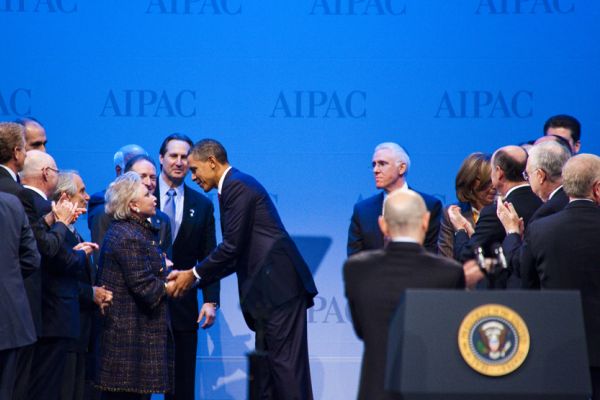
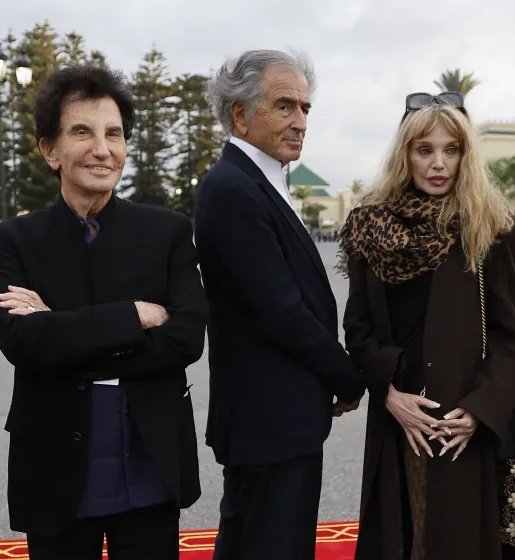

 Aletho News
