Resistance Is Our Destiny
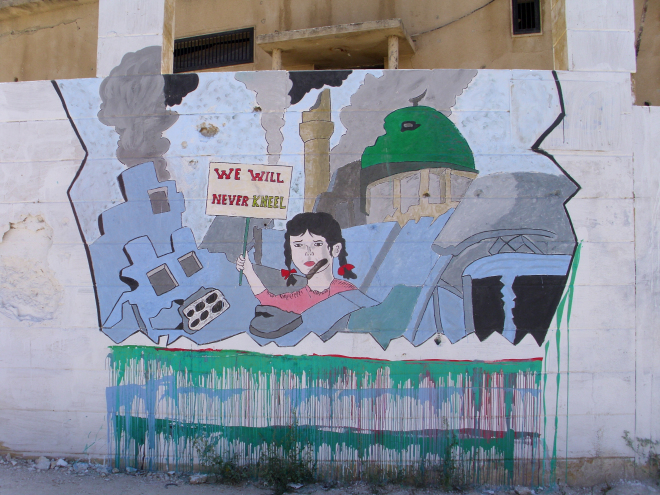
By Ibrahim al-Amin | Al-Akhbar | August 31, 2013
To hell with all the talk about democracy backed by the United States, France, Britain … and Saudi Arabia, Turkey, and Israel.
To hell with every bid for freedom with the support of these murderers.
To hell with every fool, criminal, and coward, no matter what they look like, what they are called, where they live, or what they do.
To hell with all those who support an international war to topple Syria.
To hell with this bunch of collaborators, who people will no doubt hold accountable one day, come chaos or stability.
To hell with all traitors, their speeches, their false tears, and to hell with their human rights groups and their subservient civil society organizations.
The decision to wage war on Syria is only the last step in the course set two and a half years ago, to destroy Resistance, its cities, people, and even its very idea.
There is no room for any kind of bargaining, and there is no room for any discussion or debate. There is no room to listen to any collaborator touting the list of causes of war and the causers, and there is no room for those who cling to their opinions, positions, or labels, wearing bandanas on their foreheads after wearing blindfolds on their eyes, and joining forces with collaborators and takfiris.
To begin with, these people live on the crumbs thrown to them by the robbers of Arab resources and fortunes. They work for them and receive from them money and all kinds of support.
It is a duty for every capable person to fight these killers, wherever they may be, wherever there is a chance to take revenge against them, and punish all the traitors, one after the other, in their beds, behind their desks, inside their tanks, or in their palaces, whether they are alone, or among their families.
What do you want from us today?
Do you want to repeat the experience of Iraq?
Do you want to repeat the experience of Afghanistan and Somalia?
Do you want to repeat the experience of Libya? Do you want to repeat the experience of war in Lebanon?
Or do you think that this will be a war to destroy the right that will never be eliminated, and whose name, forever shall remain: Palestine?
We do not have to repeat our arguments or repeat the process of searching for answers; we do not have to repeat our comments or our warnings. All we have to do is declare one position, namely, that the war being prepared for Syria is a colonial war, and every participant in it, whether by supporting it, funding it, promoting it, justifying it, or directly fighting in it, is a cowardly collaborator… .
It’s war!
They will gang up on Damascus, the mother of all cities, with the aim of crushing the people, the army, and the leadership. They want to destroy its history and its heritage of resisting invaders. They want to destroy every spirit that resists colonialism and supports resistance in the whole region. They want to extend a permanent lifeline to Israel and the oppressive regimes in our Arab countries, and they want to have collaborators of all kinds take over countries, rob their resources, and annihilate their peoples.
When America says that it needs no cover, legal justification, scientific investigation, or political support, and that it is able to manipulate the fate of a nation, for the sole reason that it has decided that its interests require it, then this means that we must act exactly like America, and wait for no cover, support, justification, or ask about international norms and so forth.
We must fight against it, and against its colonies, all forms of war, and we must spare no effort to seek to transfer the struggle to its soil, in every place of its land and cities; we must scream in the face of the butcher. We would do all this, without giving them the ability to strip us of our humanity, which we shall keep for ourselves, our children, and for the oppressed everywhere.
Yesterday, the West showed its true colors: a spiteful, murderous West, that has no place for anyone except those who know how to kneel down before it, and raise the white flag above their heads.
Yesterday, Europe showed its foul nature. It is not just a foolish old crone, but an ugly one too, with venom spewing from all its folds. Dishonor mars its opinion-makers, factories, schools, universities, and its people who do not come out to disavow the killers among them.
All we can do is resist them, with all our capabilities. Nothing will prevent us from seeking out our sole enemy, which has many faces, but one name: the barbarians, the bloodsuckers. As for us, resistance is our destiny.
Ibrahim al-Amin is editor-in-chief of Al-Akhbar.
This article has been edited for posting at Aletho News.
Related article
America’s Israel Lobby Demands “Direct Military Strikes” Against Syria
“The objectives should be … to ensure that Assad’s chemical weapons no longer threaten … our allies in the region”
The names of the “experts” seeking a “decisive response” against Syria:
Karl Rove
Senator Joseph I. Lieberman
Ammar Abdulhamid
Ambassador Robert G. Joseph Elliott Abrams
Dr. Robert Kagan
Dr. Fouad Ajami
Lawrence F. Kaplan
Michael Allen
James Kirchick
Dr. Michael Auslin
Irina Krasovskaya
Gary Bauer
Dr. William Kristol
Paul Berman
Bernard-Henri Levy
Max Boot
Dr. Robert J. Lieber
Ellen Bork
Ambassador L. Paul Bremer
Tod Lindberg
Matthew R. J. Brodsky
Mary Beth Long
Dr. Eliot A. Cohen
Dr. Thomas G. Mahnken
Senator Norm Coleman
Dr. Michael Makovsky
Ambassador William Courtney
Ann Marlowe
Seth Cropsey
Clifford D. May
James S. Denton
Dr. Alan Mendoza
Paula A. DeSutter
David A. Merkel
Dr. Larry Diamond
Dr. Joshua Muravchik
Dr. Paula J. Dobriansky
Ambassador Andrew Natsios
Thomas Donnelly
Governor Tim Pawlenty
Dr. Michael Doran
Martin Peretz
Mark Dubowitz
Danielle Pletka
Dr. Colin Dueck
Dr. David Pollock
Dr. Nicholas Eberstadt
Arch Puddington
Ambassador Eric S. Edelman
Douglas J. Feith
Randy Scheunemann
Reuel Marc Gerecht
Dan Senor
Abe Greenwald
Ambassador John Shattuck
Christopher J. Griffin
Lee Smith
John P. Hannah
Henry D. Sokolski
Dr. Jeffrey Herf
James Traub
Peter R. Huessy
Ambassador Mark D. Wallace
Dr. William Inboden
Michael Weiss
Bruce Pitcairn Jackson
Leon Wieseltier
Ash JainKhawla
Yusuf Dr. Kenneth Jensen
Robert Zarate
Allison Johnson
Dr. Radwan Ziadeh
The list above corresponds closely with the PNAC signatories whom demanded war on Iraq:
Persons associated with the PNAC
Project directors
[as listed on the PNAC website:]
|
|
Project staff
|
|
Former directors and staff
- Daniel McKivergan, Deputy Director[52]
Signatories to Statement of Principles
Signatories or contributors to other significant letters or reports[15]
We, the undersigned, stand in solidarity with the millions of Syrians who have been struggling for dignity and freedom since March 2011. We call on people of the world to pressure the Syrian regime to end its oppression of and war on the Syrian people. We demand that Bashar al-Asad leave immediately without excuses so that Syria can begin a speedy recovery towards a democratic future.
Since March 2011, Asad’s regime has steadily escalated its violence against the Syrian people, launching Scud missiles, using weapons banned by the Geneva Convention such as cluster bombs and incendiary munitions, and using aerial bombardment. The regime has detained and tortured tens of thousands of people and committed untold massacres. It has refused political settlements that do not include Asad in power, and it has polarized the society through strategic acts of violence and by sowing seeds of division. The regime has also, since the early days of the uprising, sought to internationalize the crisis in order to place it within geopolitical battles that would only strengthen the regime. Staying true to the logics of an authoritarian regime, Asad could never accept the legitimate demands of the Syrian people for freedom and dignity. Thus, there is no hope for a free, unified, and independent Syria so long as his regime remains in power. … Full text
Frederic Jameson (Duke University, United States)
Tariq Ali (British Pakistani writer, journalist, and filmmaker, United Kingdom/ Pakistan)
Ilan Pappe (University of Exeter, United Kingdom)
Etienne Balibar (Columbia University, United States/ France)
Nigel Gibson (Emerson college, United States/ Britain)
Norman Finkelstein (American researcher and writer, United Sates)
John Holloway (Benemérita Universidad Autónoma de Puebla, United States/ Mexico)
Vijay Prashad (Trinity College, United States/ India)
Salameh Kaileh (Intellectual, Syria/Palestine)
Bill Ayers (University of Illinois at Chicago, United States)
Bernardine Dohrn (Northwestern University, United States)
Rashid Khalidi (Columbia University, United States/Palestine)
Lieven de Cuater (Philosopher, Belgium)
Jihane Sfeir (l’Université Libre de Bruxelles, Lebanon/ Belgium)
Jean-Pierre Filiu (Institut d’études politiques de Paris, France)
Farouk Mardam Bey (Intellectual, Syria)
Faraj Bayrakdar (Poet, Syria)
Ziad Majed (American University of Paris, Lebanon/ France)
Kamal Bandara (Intellectual, Tunisia)
Francois Burgat (CNRS, France)
Adam Shapiro (Activist, United States)
Razan Ghazzawi, (Activist, Syria)
Yassin el-Haj Saleh (Intellectual, Syria)
Thierry Boissière (Institut français du Proche-Orient, France)
Olivier Le Cour Grandmaison (universitaire, France)
Jens Hanssen (University of Tornoto, Canada/ Germany)
Ghassan Hage (The University of Melbourne, Australia/ Lebanon)
Hani al-Sayed (American University of Cairo, Syria/ Egypt)
Hazem al-Azmeh (Intellectual, Syria)
Sadri Khiari (Intellectual, Tunisia)
Oussama Mohamad (Film maker, Syria/ France)
Jihad Yazigi (Journalist, Syria)
Saad Hajo (Cartoonist, Syria)
Wendy Brown (UC Berkeley, United States)
R. Radhakrishnan (UC Irvine, United States/ India)
Ann Ferguson (Philosopher, United States)
Samir Aita (Le Monde Diplomatique editions arabes, Cercle des Economistes Arabes)
Santiago de Rico Alba (Philosopher, Spain)
Asef Bayat (University of Illinois, USA)
Chela Sandoval (University of California, Santa Barbara)

Related articles
- Neocons Push Obama to Go Beyond a Punitive Strike in Syria (motherjones.com)
- The “Experts” Who Want a War With Syria (reason.com)
Putin: US should present Syria evidence to Security Council
RT | August 31, 2013
Russian President Vladimir Putin has declared ‘utter nonsense’ the idea that the Syrian government has used chemical weapons on its own people and called on the US to present its supposed evidence to the UN Security Council.
Putin has further called the Western tactic a ‘provocation.’
Washington has been basing its proposed strategy of an attack on Syria on the premise that President Bashar Assad’s government forces have used chemical agents, while Russia finds the accusations unacceptable and the idea of performing a military strike on the country even more so. Especially as it would constitute a violation of international law, if carried out without the approval of the UN Security Council.
Further to this, Putin told Obama that he should consider what the potential fallout from a military strike would be and to take into consideration the suffering of innocent civilians.
The Russian president has expressed certainty that the strategy for a military intervention in Syria is a contingency measure from outside and a direct response to the Syrian government’s recent combat successes, coupled with the rebels’ retreat from long-held positions.
“Syrian government forces are advancing, while the so-called rebels are in a tight situation, as they are not nearly as equipped as the government,” Putin told ITAR-TASS. He then laid it out in plain language:
“What those who sponsor the so-called rebels need to achieve is simple – they need to help them in their fight… and if this happens, it would be a tragic development,” Putin said.
Russia believes that any attack would, firstly, increase the already existing tensions in the country, and derail any effort at ending the war.
“Any unilateral use of force without the authorisation of the U.N. Security Council, no matter how ‘limited’ it is, will be a clear violation of international law, will undermine prospects for a political and diplomatic resolution of the conflict in Syria and will lead to a new round of confrontation and new casualties,” said the Russian Foreign Ministry’s spokesman, Aleksandr Lukashevich, adding that the threats [have been] issued by Washington “in the absence of any proof” of chemical weapons use.
On Friday, Washington said a plan for a limited military response was in the works to punish Assad for a “brutal and flagrant” chemical attack that allegedly killed more than 1,400 people in the capital Damascus 10 days ago.
The Syrian government has been denying all allegations, calling the accusation preposterous and pointing its own accusations against rebel forces, especially Al-Qaeda-linked extremists who have wreaked havoc on the country in the two years since the start of the civil war.
Who Blocked Syrian Peace Talks?
By Robert Parry | Consortium news | August 30, 2013
Painful experiences of recent years should have taught the American people the danger that comes when the government and the mainstream press adopt a pleasing but false narrative, altering the facts to support a “good guy v. bad guy” scenario, such as is now being done regarding the history of Syrian peace talks.
The preferred narrative now is that American military force against Syria is needed not only to punish President Bashar al-Assad for allegedly using chemical weapons but to compel his participation in peace talks aimed at ending the civil war. That is a storyline that has slipped into U.S. “news” articles in recent days.
For instance, on Friday, the New York Times’ Michael Gordon stripped out the actual history of why the opposing sides of the Syrian civil war have not come together for planned meetings in Geneva. Instead, Gordon placed the blame on Assad and on obstacles partly the fault of the Russians, leaving out the fact that it was the U.S.-supported Syrian opposition that has repeatedly torpedoed the talks.
Gordon wrote: “State Department officials initially said the peace conference might occur before the end of May, but plans became bogged down in differences between the United States and Russia, and the conference has yet to be held.
“And the Obama administration [regarding its expected missile strike against Syrian government positions] did not articulate a comprehensive military strategy that would — in concert with allies — be certain to weaken the Assad government to the point that it would be willing to cede power and negotiate.”
So, you are supposed to believe that “our” side – the brave “opposition” in league with the U.S. State Department – is ever so reasonable, wanting peace and eager to negotiate, but that “their” side – both the evil Assad and his troublemaking Russian allies – is unwilling to take difficult steps for peace.
Except that this storyline from Gordon and other mainstream journalists isn’t accurate. Indeed, from May to July. the U.S. news media, including the New York Times, reported a different scenario: that Assad had agreed to participate in the Geneva peace talks but that the opposition was refusing to attend.
On July 31, for example, Ben Hubbard of the New York Times reported that “the new conditions, made by the president of the opposition Syrian National Coalition, Ahmad al-Jarba, … reflected a significant hardening of his position. He said that the opposition would not negotiate with President Bashar al-Assad or ‘his clique’ and that talks could begin only when the military situation in Syria was positive for rebel forces.”
The opposition has spelled out other preconditions, including the need for the United States to supply the rebels with more sophisticated weapons and a demand that Assad’s Lebanese Hezbollah allies withdraw from Syria. The most recent excuse for the rebels not going to Geneva is the dispute over Assad’s alleged use of chemical weapons.
Yet, even if Gordon and other mainstream journalists sympathize with the opposition’s reasons for staying away from the peace talks, reporters shouldn’t alter the narrative to shape U.S. public opinion. That is a case of journalistic malfeasance reminiscent of the way the Times and other news outlets manufactured a case for war with Iraq in 2002-2003.
Indeed, Gordon played a key role in that propaganda effort as well, coauthoring with Judith Miller the infamous Times article on Sept. 8, 2002, touting the false claim that Iraq was purchasing aluminum tubes for use in building nuclear weapons, the story that gave rise to the memorable refrain from President George W. Bush and his aides that they couldn’t let “the smoking gun” be “a mushroom cloud.”
Though Miller eventually was forced to resign from the Times – after her level of collaboration with the Bush administration’s neocons was exposed – Gordon escaped any serious accountability, remaining the newspaper’s chief military correspondent.
But Gordon is far from alone these days in spinning a more pleasing black-and-white narrative about Syria. It apparently seems to many mainstream U.S. journalists that it’s nicer to portray “our” side as favoring peace and going the extra mile to negotiate a cease-fire and “their” side as intransigent and eager for more bloodshed.
And, if the facts don’t support that scenario, you just leave out some and make up others.
~
Investigative reporter Robert Parry broke many of the Iran-Contra stories for The Associated Press and Newsweek in the 1980s. You can buy his new book, America’s Stolen Narrative, either in print here or as an e-book (from Amazon and barnesandnoble.com).
Related articles
US and France press on with Syria strike plans as Britain, Germany opt out
Al-Akhbar | August 30, 2013
British lawmakers have rejected their government’s call for military strikes against the Syrian government, leaving the US to look elsewhere for international partners while reserving the right to act alone against Damascus.
The British House of Commons voted Thursday to defy Prime Minister David Cameron’s bid to win support for military intervention over Syrian President Bashar al-Assad’s alleged use of chemical weapons.
The Syrian government has firmly denied responsibility for the attacks.
Speaking in Manila Friday, US Defense Secretary Chuck Hagel insisted Washington is still seeking an “international coalition” to take action against Assad.
“Our approach is to continue to find an international coalition that will act together,” Hagel told a news conference.
But he did not say which countries might be part of an international coalition, and his comments appeared to strike a different tone from earlier statements by White House officials suggesting the US is prepared to act alone.
Hagel said Washington respected the British parliament’s stance rejecting participation in any strikes in Syria.
“We are continuing to consult with the British as with all of our allies. That consultation includes ways forward together on a response to this chemical weapons attack in Syria,” he added.
French President Francois Hollande said the British vote against taking military action in Syria would not affect France’s will to act to against Assad.
Hollande told the daily Le Monde in an interview that he still supported taking “firm” punitive action over an attack he said had caused “irreparable” harm to the Syrian people and said he would work closely with France’s allies.
Asked if France could take action without Britain, Hollande replied: “Yes. Each country is sovereign to participate or not in an operation. That is valid for Britain as it is for France.”
Hollande said a military strike on Syria could come by Wednesday, when the French parliament is due to meet for an emergency session on Syria.
The French leader said that he would not take any decision to act unless the conditions were there to justify that.
“All the options are on the table. France wants action that is in proportion and firm against the Damascus regime,” he said.
“There are few countries that have the capacity to inflict a sanction by the appropriate means. France is one of them. We are ready. We will decide our position in close liaison with our allies.”
The British parliament’s decision also came after the failure of an improbable eleventh-hour effort by British diplomats to win UN backing for action against Bashar al-Assad at a meeting of the permanent members of the Security Council.
“It is clear to me that the British parliament, reflecting the views of the British people, does not want to see British military action. I get that and the government will act accordingly,” Cameron said.
His government was defeated by 13 votes in the House of Commons in its bid for a “strong humanitarian response” to the alleged use of chemical weapons in Syria.
Germany’s Foreign Minister Guido Westerwelle ruled out his country’s participation in the military strike.
Westerwelle told Saturday’s Neue Osnabruecker Zeitung that such a move had “neither been asked nor is it being considered by us”, according to pre-released comments by the paper.
“We are pushing for the United Nations Security Council to find a common position and for the work of UN inspectors to be finished as quickly as possible,” he added.
That, combined with deadlock at the United Nations, appeared to effectively sound the death knell for the idea of a broad-based Western military coalition, although other American allies might still participate.
Caitlin Hayden, a National Security Council spokeswoman said that President Barack Obama’s decision-making “will be guided by what is in the best interests of the United States.”
“He believes that there are core interests at stake for the United States and that countries who violate international norms regarding chemical weapons need to be held accountable.”
Earlier, envoys from the permanent five members of the UN Security Council – Britain, China, France, Russia and the United States – had met at UN headquarters in New York.
The 45-minute meeting was the second since Britain proposed a draft resolution to permit “all necessary measures” to protect Syrian civilians after a suspected chemical weapons attack last week.
But none of the envoys commented as they left.
Earlier in the week reports had suggested that a Western strike was imminent, but questions have been raised about the quality of the intelligence linking Assad to the attack.
The White House reached out to US lawmakers, with the president’s top aides briefing congressional leaders in a 90 minute conference call.
Some members of Congress voiced support for limited, surgical strikes, while urging the administration to continue consulting closely with the Congress.
Nancy Pelosi, the minority leader in the House, said she agreed with House Speaker John Boehner that “there needs to be more consultation with all members of Congress and additional transparency into the decision making process and timing, and that the case needs to be made to the American people.
US warships armed with scores of cruise missiles are converging on the eastern Mediterranean, and US military officials have said they are ready to launch a powerful barrage against government targets in Syria.
Assad ally Russia has blocked all attempts to toughen international sanctions against Damascus or authorize outside force to punish or unseat Assad.
As the stand-off continues, a team of UN inspectors are investigating reports that last week’s gas attack outside Damascus killed more than 350 people, including women and children.
A UN spokesman said Thursday that the team had collected “considerable” evidence and will brief UN secretary general Ban Ki-moon soon after they leave Syria on Saturday.
“Starting tomorrow he will try to reach out to member states and take discussions forward on the question of what is happening in Syria,” the spokesman said.
Ban has appealed for the inspectors to be allowed to complete their work before the major powers decide any follow-up action.
Assad remained defiant in the face of the Western threats.
“Syria will defend itself in the face of any aggression,” state television cited him as telling a visiting delegation of Yemeni politicians.
He vowed that any attack would result in “victory” for the Syrian people.
His government has denied using chemical weapons and blamed “terrorist” rebels.
The mood among Damascus residents was fearful, while security forces prepared for possible air attacks by pulling back soldiers from potential targets and introducing tougher controls at roadblocks and hospitals.
(AFP, Reuters, Al-Akhbar)
The Saudi-Israeli Superpower
By Robert Parry | Consortium News | August 29, 2013
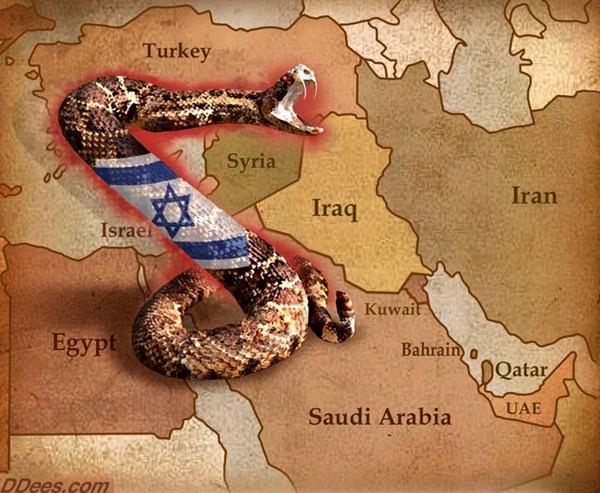
The twin crises in Syria and Egypt have marked the emergence of a new superpower coalition in the Middle East, the odd-couple alliance of Israel and Saudi Arabia, with Jordon serving as an intermediary and the Persian Gulf oil sheikdoms playing a supporting role.
The potential impact of this new coalition can barely be overstated, with Israel bringing to the table its remarkable propaganda skills and its unparalleled influence over U.S. foreign policy and Saudi Arabia tapping into its vast reservoir of petrodollars and exploiting its global financial networks. Together the two countries are now shaping international responses to the conflicts in Syria and Egypt, but that may only be the start.
Though Israel and Saudi Arabia have had historic differences – one a Jewish religious state and the other embracing the ultraconservative Wahhabi version of Sunni Islam – the two countries have found, more recently, that their interests intersect.
Both see Iran, with its Shiite rulers, as their principal regional rival. Both are leery of the populist Islamic movements unleashed by the Arab Spring. Both sided with the Egyptian military in its coup against the elected Muslim Brotherhood government, and both are pleased to see Syrian President Bashar al-Assad facing a possible military assault from the United States.
While the two countries could be accused of riding the whirlwind of chaos across the Middle East – inviting a possibility that the sectarian divisions and the political violence will redound negatively to their long-term interests – there can be little doubt that they are enjoying at least short-term gains.
In recent months, Israel has seen its strategic position enhanced by the overthrow of Egypt’s populist Muslim Brotherhood President Mohamed Morsi, a political change that has further isolated the Hamas-led Palestinians in Gaza. Meanwhile, in Lebanon, the Shiite movement of Hezbollah has come under increasing military and political pressure after sending militants into Syria to support the embattled Assad regime.
Assad is an Alawite, a branch of Shiite Islam, and has been a longtime benefactor of Hezbollah, the political-military movement that drove Israeli forces out of southern Lebanon and has remained a thorn in Israel’s side. The growing sectarian nature of the Syrian civil war, with Sunnis leading the fight against Assad, also served to drive a wedge between Hamas, a Sunni movement, and two of its key benefactors, the Syrian government and its Iranian allies.
In other words, Israel is benefiting from the Sunni-Shiite divisions ripping apart the Islamic world as well as from the Egyptian coup which further weakened Hamas by re-imposing the Gaza blockade. Now, Israel has a freer hand to dictate a political solution to the already-weak Palestinian Authority on the West Bank when peace talks resume.
A Method to Neocon Madness
Giving Israel this upper hand has long been the goal of American neoconservatives, although they surely could not have predicted the precise course of recent history. The idea of “regime change” in Iraq in 2003 was part of a neocon strategy of making a “clean break” with frustrating negotiations in which Israel was urged to trade land for peace with the Palestinians.
The plan to dump negotiations in favor of confrontations was outlined in a 1996 policy paper, entitled “A Clean Break: A New Strategy for Securing the Realm” and prepared by prominent neocons, including Richard Perle and Douglas Feith, for Benjamin Netanyahu’s campaign for prime minister.
In the document, the neocons wrote: “Israel can shape its strategic environment, in cooperation with Turkey and Jordan by weakening, containing, and even rolling back Syria. This effort can focus on removing Saddam Hussein from power in Iraq – an important Israeli strategic objective in its own right — as a means of foiling Syria’s regional ambitions.” [See Consortiumnews.com’s “The Mysterious Why of the Iraq War.”]
The neocons failed to persuade President Bill Clinton to invade Iraq in the late 1990s, but their hopes brightened when George W. Bush became president in 2001 and when the American people were whipped into a state of hysteria by the 9/11 attacks.
Still, it appears that the neocons believed their own propaganda about the Iraqis welcoming American troops as liberators and accepting a U.S. puppet as their new leader. That, in turn, supposedly was to lead Iraq to establish friendly ties with Israel and give the U.S. military bases for promoting “regime change” in Syria and Iran.
In 2002, as President Bush was winding up to deliver his haymaker against Saddam Hussein, neocons passed around a favorite joke about where to go next after conquering Iraq. Should it be Syria or Iran, Damascus or Tehran? The punch line was: “Real men go to Tehran!”
However, the Iraq War didn’t work out exactly as planned. Bush did succeed in ousting Hussein from power and enjoyed watching him marched to the gallows, dropped through a trapdoor and hanged by the neck until dead. But the U.S. occupation touched off a sectarian bloodbath with Hussein’s Sunni minority repressed by the newly empowered Shiite majority. Sunni extremists flocked to Iraq from around the Middle East to kill both Iraqi Shiites and Americans.
The end result of the Iraq War was to transform Iraq from a Sunni-ruled authoritarian state into a Shiite-ruled authoritarian state, albeit still a place where sectarian bombings are nearly a daily occurrence. Yet, one of the principal beneficiaries of the Iraq War was Iran with its Shiite theocratic government unexpectedly finding itself with a new Shiite ally replacing a longtime Sunni enemy, Saddam Hussein, all thanks to the United States.
Widening Violence
But the Iraq War had another consequence. It exacerbated sectarian tensions across the region. Saudi Arabia and other Persian Gulf oil states that had supported Hussein in his war with Iran in the 1980s, were shocked to see Iran now have a “Shiite crescent” of influence extending through Iraq and Syria to the Shiite enclaves in Lebanon.
The Saudi monarchy was shaken, too, by the popular uprisings known as the Arab Spring. Egypt’s President Hosni Mubarak, a longtime Saudi ally, was ousted and replaced by a democratically elected government led by the populist Muslim Brotherhood.
Though the Muslim Brotherhood was Sunni, too, the movement represented a mix of Islam and democratization, which posed a threat to the Saudi princes who live pampered lives of unimaginable wealth and privilege. On a personal level, these playboys confine their wives to humiliating conditions out of the Middle Ages while the men sample the pleasures of lavish European resorts or fly in Scandinavian prostitutes for parties.
Yet, while the Arab Spring sent shivers down the spines of the oil sheiks of the Persian Gulf – and even brought a Saudi military intervention to put down a Shiite-led democratic uprising in Bahrain – the political upheavals also presented an opportunity to Saudi geopolitical strategists, the likes of Prince Bandar bin Sultan, the former ambassador to the United States and now head of Saudi intelligence.
By supporting rebels and militants in Syria, for instance, the Saudis and the other oil sheiks saw a chance to reverse Iran’s geopolitical gains. And, by funneling billions of dollars to the Egyptian generals, the Persian Gulf monarchists countered any pressure for restraint from the United States.
Increasingly, too, the interests of Saudi Arabia and Israel began crisscrossing, sparking a relationship that the Jordanian monarchy helped broker and encourage. Jordan has strong security ties to Israel and is dependent on the largesse of the Persian Gulf royals, making it a perfect matchmaker for this unlikely hook-up.
According to intelligence sources, Jordan has been the principal site for bilateral contacts between Israelis and Saudis, a behind-the-scenes alliance that finally went public with their joint support for the Egyptian coup. While Saudi Arabia arranged the finances for Egypt’s new military regime, Israel deployed its potent lobby in Washington to dissuade President Barack Obama from labeling the coup a coup, which would have forced a shutoff of U.S. military aid.
New Superpower
Now, this new powerhouse combo is teaming up on Syria, where the Saudis and other Persian Gulf states have been financing the rebels seeking to destabilize and possibly overthrow the Assad government, while the Israelis have been deploying their political and propaganda assets to increase international pressure on Assad.
Both the Saudis and the Israelis stand to benefit from having Assad’s regime bled over time into either a weakened state or its demise. For Saudi Arabia, regime change in Syria that would mark a strategic victory against its chief rival Iran.
Israel also would like to see Iran undercut and isolated, but there is the additional benefit of hurting Hezbollah and further alienating the Palestinians from important sources of support, i.e. Iran and Syria. That gets Israel closer to the neocon vision of leaving desperate Palestinians with little choice but to accept whatever “peace” terms that Israel chooses to dictate.
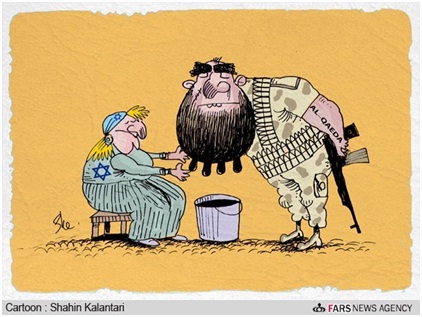
There is, of course, a potential downside for Israel and the West. Since Saudi Arabia and the Gulf states are arming some of the most radical Islamists fighting in Syria, including groups affiliated with al-Qaeda, one outcome of the Syrian civil war could be a new haven for Islamic terrorism in the heart of the Middle East. In the 1980s, Saudi Arabia was the principal funder for Osama bin Laden and his jihadists who traveled to Afghanistan to fight the Soviets before turning their hatred and suicidal tactics against the United States.
The emerging Saudi-Israeli alliance also may have serious ramifications for global geopolitics. The combination of Saudi Arabia’s extraordinary financial and economic clout and Israel’s equally extraordinary capacity to pull political and propaganda strings, especially inside the United States, could mean that a new superpower has stepped onto the international stage.
Its arrival may be heralded by whether Saudi Arabia and Israel can jointly yank the United States into the Syrian civil war.
Investigative reporter Robert Parry broke many of the Iran-Contra stories for The Associated Press and Newsweek in the 1980s. You can buy his new book, America’s Stolen Narrative, either in print here or as an e-book (from Amazon and barnesandnoble.com).
Related article
The New Crossfire: Where Both Sides Support War With Syria
By Peter Hart | FAIR | August 28, 2013
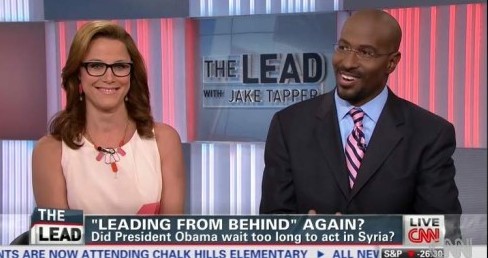 CNN is bringing back Crossfire next month, but viewers on August 27 got a taste of what they might expect: The left thinks we should bomb Syria, while the right thinks we should have started that a long time ago.
On the show The Lead, guest host John Berman moderated a “debate” between conservative S.E. Cupp and left-leaning Van Jones.
“Look, I want to commend the president for finally following through on our red line threats,” Cupp declared–before explaining that Obama’s plan was too timid:
We should absolutely intervene to stop the genocide of more than 100,000 people. We should absolutely intervene to stop Al-Qaeda and Islamic extremism from jihadizing yet another conflict. It is absolutely our obligation, and instead we do the bare minimum to save face and pat ourselves on the back for our civility and our diplomacy. I think it’s pathetic.
OK, and from the left? Jones said:
This president has now said there is a red line. It was not clear before whether the line was crossed. It’s crossed, he’s moving forward. I think we need to stand behind this president and send a clear message to Assad that this type behavior is not acceptable.
And:
If you kill Assad right now, wonderful. You have a huge power vacuum. Who is going to fill it? Listen, people have a nostalgia for 1953 when the U.S. could just sort of thump out dictators like in Iran. This is not the world we live in. It is a tough neighborhood over there, and the idea that we should have a more bloodthirsty and reckless president, I reject.
I’m not sure what “thumping out dictators like in Iran” is supposed to mean; in 1953, the United States supported a coup against Iran’s elected president.
But back to Syria: The American public is generally and overwhelmingly skeptical of military strikes on Syria. But in CNN‘s left/right debate, that point of view seems to be missing entirely.
Moscow: No Strike Against Syria This Week
By Jean Aziz | Al-Akhbar | August 29, 2013
Diplomatic sources in Russia say that those who are expecting a military strike against Syria will have to wait a little longer, predicting a fight at the UN Security Council before Washington sends its Tomahawks over Damascus.
There are those in the Syrian capital who were convinced that media reports of an imminent strike – with many reporting that Thursday, August 29 was the zero hour – were largely accurate, expecting US missiles to rain down on Damascus in the coming hours.
The media had declared that four US naval vessels were already in place near the Syrian coast, ready to unleash 90 Tomahawk missiles each on a variety of military targets throughout the country. Western officials and analysts, however, all talked of a limited attack that was not intended to topple the regime.
A Russian diplomatic source seemed quite confident that Washington is not quite ready to carry out the attack, at least not this week, and all the bluster that we heard from Western capitals is beginning to temper, particularly after considering the repercussions of military action on the region as a whole.
The diplomat explained that the Obama administration has now decided to expend all means to get “international legitimacy” for the strike by resorting to the UN Security Council, where they will once again hit a wall of opposition from China and Russia. This, the source added, will take them at least a few days to reach a dead end.
There is also the question of obtaining Congress’ approval, which Obama has decided to seek, perhaps for internal political calculations, according to the Russian diplomat, adding that they do not plan to meet to discuss the issue before the beginning of next week.
He noted that Moscow has opened all its lines of communication with Washington, and that Russian Foreign Minister Sergei Lavrov is in constant contact with his US counterpart John Kerry to keep up with all the developments and prevent any misunderstandings or miscommunication.
It is through these channels, which the source says Moscow opened with the Europeans too, that they have sensed a de-escalation on the part of the West, moderating their tone. This may not mean that they no longer intend to wage an attack and are just buying time to prepare the necessary forces, he added, but it does offer an opportunity to try to diffuse the situation.
The diplomat was not overly concerned about the fact that Washington canceled the August 28 meeting in The Hague to discuss plans for the Geneva II conference, maintaining that the American side remains keen on a political solution to the Syrian crisis and will agree with Russia on a new date this Fall.
He went on to reveal that there are approximately 17,000 Russian citizens that remain in Syria today, who work as “experts” in various state institutions, and it is the duty of Moscow to protect them from any bodily harm. He explained that there are no plans to evacuate them for the time being, confirming that a few hundred families have departed by way of Beirut in the last few days.
What will happen then? All possibilities are still open – it is like the Cuban missile crisis but on a smaller scale, he replied, so anything is possible. What is important is that we don’t think anything will happen this week, so sleep easy and we will wake you when the hour of reckoning approaches.
Related articles
- US, UK Pressure for Action on Syria Hits UN Hurdle – Bloomberg (bloomberg.com)
- British jets to be sent to Cyprus ahead of military strikes on Syria (independent.ie)
Featured Video

Dan Dicks with James Corbett on Solutions Watch
or go to
Aletho News Archives – Video-Images
From the Archives
Secret document reveals plans for civil war in Lebanon, Israeli false flags, and invasion
By Randi Nord | Geopolitics Alert | April 5, 2019
Beirut – During his visit with US Secretary of State, Mike Pompeo, Lebanese President Michael Aoun reportedly received a US-Israeli document detailing plans for creating a civil war in Lebanon with covert false flag operations and possible Israeli invasion.
Although the source of the document is Israeli and created in partnership with Washington, no one knows who presented it to Aoun. The Lebanese TV station, Al-Jadeed, initially reported the document on Lebanese TV and a video on its website. Geopolitics Alert translated the report for this article. … continue
Blog Roll
 Aletho News
- Sheikh al-Asadi warns of Iraqi government compliance with US demands
- How to MAKE THE CONSPIRATORS PAY for their crimes! Dan Dicks with James Corbett on Solutions Watch
- There’s a drought in academia: A drought in honest research on the subject of drought and other weather extremes
- Department of War Awards $20.7 Billion Contract to Raytheon for Air-to-Air Missiles
- ‘Distance yourselves from Israel’: IRGC urges US population to question govt policies
- America’s Greenland deal has a radioactive backstory
- The RAF Fairford ‘terror plot’: Unpacking escalation in the UK echo-chamber
- EU Council Advances Chat Control 2.0 Scanning Proposal
- Ex-Greek MEP files complaint against Israeli spyware firm over alleged Pegasus surveillance
- Troubling ideas throughout the Torah, Talmud, Mishneh Torah and Tanya
- If Americans Knew
- New Report: “Scholasticide and Genocide in Gaza: Assessment, Testimonies and Legal Analysis”
- Ex-Biden officials are desperate for a Gaza scapegoat
- Israeli “settlers” Invade Al-Aqsa; Pour Boiling Water on 75-Year-Old
- Israel Has Kidnapped Another American Teenager
- US arms sales to Israel worth $21.6 billion in 20 months
- Three Palestinians Killed in Israeli Attacks on Gaza
- Revealed: German “Anti-Semitism Expert” Driving Crackdown on Palestine Solidarity is Former Israeli Spy
- Egypt’s Warning to Israel Before Oct 7
- Israel’s siege signals another cruel winter for 1.8 million Gazans – Daily Update
- Netanyahu Asked UAE Leader to Deny Report on Oct. 7 Warning in Secret Visit, Sources Say
- No Tricks Zone
- An error has occurred; the feed is probably down. Try again later.

