Turkish intelligence official warns Israel: Targeting Hamas officials abroad will have ‘serious consequences’

Head of Hamas’ politburo Ismail Haniyeh (Center)
Press TV – December 4, 2023
Turkey has issued a strong warning to Israel, saying the regime would face Ankara’s serious action if it tries to target key figures of the Palestinian resistance movement Hamas who are based outside Gaza, including in Turkey.
“Necessary warnings were made to the interlocutors based on the news of Israeli officials’ statements, and it was expressed to Israel that (such an act) would have serious consequences,” a Turkish intelligence official said on Monday, according to Reuters.
The warning came a day after the Israeli broadcaster Kan released a recording from Ronen Bar, who serves as the head of Israel’s so-called internal security service Shin Bet, in which he said that the regime would hunt down Hamas in countries like Lebanon, Turkey and Qatar even if it takes years.
Bar said the Israeli administration had set a goal to target Hamas officials who are based outside Gaza.
Key Hamas leaders, including its top political officials, live outside the besieged Gaza as part of the group’s policy to garner support from other countries for the fight against the Israeli regime.
Head of Hamas’ politburo Ismail Haniyeh has been shuttling between Qatar and Turkey in recent weeks amid Israel’s aggression on Gaza that has left nearly 16,000 people dead.
Turkish President Recep Tayyip Erdogan has repeatedly condemned Israel for its brutal military campaign against Gaza while warning the regime against political and economic consequences if it continues with the aggression.
The presence of Hamas leaders in Qatar helped the Arab country mediate a seven-day ceasefire in Gaza that ended on Friday.
Israel’s aggression against Gaza began on October 7 after Hamas launched a major military operation into the Israeli-occupied territories near Gaza, killing some 1,400 Israeli settlers and military forces.
Turkey’s intelligence organization foils Mossad attempt to kidnap Palestinian Iron Dome hacker
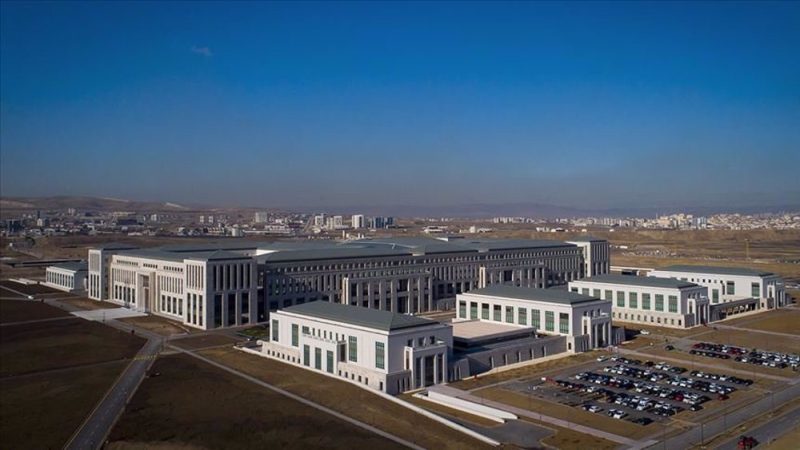
A view of the headquarters of Turkey’s National Intelligence Organization (MIT) in the capital Ankara on January 5, 2020.
Press TV -November 22, 2023
Turkey’s National Intelligence Organization (MIT) has rescued a renowned Palestinian hacker from the Israeli Mossad spy agency seeking to kidnap or possibly kill him.
MIT rescued Omar A, who was behind the disruption of Israel’s Iron Dome anti-missile system in 2015 and 2016, in an international operation and offered him protection as he was targeted by Mossad in Turkey and Malaysia.
The young Gazan hacker was sought by the Israeli regime for a long time after his hacking of the Iron Dome helped al-Qassam Brigades, the armed wing of the Palestinian resistance movement Hamas, launch missile strikes against Israel at the time.
Omar, a computer programming graduate of the Islamic University of Gaza, moved to Istanbul in 2020 after Mossad identified him as the one behind the disruptions. MIT was aware of his residence in Turkey due to his background as a hacker.
In an attempt to deceive him, Mossad offered him jobs at software companies several times but Omar, suspicious of Israel’s involvement, rejected the offers.
Omar was about to accept to join a team for an online project in June 2022 and to travel abroad for the project as Mossad was intent on taking him to Tel Aviv for interrogation. But MIT contacted him and warned him against the scheme.
The Palestinian hacker decided to take a vacation in Malaysia in September 2022. The Istanbul branch of MIT’s counter-intelligence department intervened again and installed tracking software on his cellphone after warning him against a possible abduction while abroad.
Indeed, he was kidnapped days later in Kuala Lumpur and was taken to a remote cabin some 50 kilometers (31.06 miles) from the Malaysian capital.
There, he was interrogated and tortured by suspects working for Mossad and was questioned on the methods he employed to infiltrate Iron Dome.
When MIT became aware of the abduction, Turkish officials contacted Malaysian authorities and through tracking software, helped them pinpoint the location where Omar was held.
Malaysian security forces raided the house and rescued Omar. Eleven suspects were arrested in connection with his abduction. Omar returned to Turkey and was taken to a safe house provided by MIT.
Turkey’s MIT has earlier uncovered similar Mossad plots to spy on Palestinians in the country.
Back in July, Turkish authorities said they had uncovered and disrupted a vast “ghost” Mossad spy network centered in Istanbul, following months of surveillance.
The substantial efforts by Turkey’s MIT exposed 56 operatives allegedly spying on non-Turkish citizens in Turkey in the service of Mossad.
The vast network consisted of citizens from various West Asian countries.
The findings by MIT revealed that the Mossad agents would gather information about foreigners through various surveillance methods, vehicle movements using GPS, and hacking into password-protected networks using Wi-Fi and location tracking devices.
These Mossad spies also used several fake websites in multiple languages, mainly Arabic, to secure technical locations and real IP addresses of the targeted individuals.
Also in May, Turkish media outlets reported that local authorities had managed to arrest 11 people accused of being part of a Mossad-led network.
Turkey has also broken Mossad-aligned spy rings in 2022 and 2021.
Turkiye halts energy projects with Israel in the absence of a ceasefire: Minister
MEMO | November 8, 2023
Turkiye will not discuss any energy-related projects with Israel without a ceasefire in Gaza, as it would be disrespectful to Palestinians who are experiencing great brutality, a senior official said late Tuesday, local Turkish media outlets reports.
According to the report, Energy and Natural Resources Minister, Alparslan Bayraktar, told a private broadcaster that “in such an atmosphere, in an environment of such great brutality, human drama, it would be disrespectful to humanity, to our humanity, to our siblings there (in Palestine) to talk about any project.”
“The only thing we will talk about at this time is how we can meet Gaza’s electricity, water and food needs. This could happen. That would be the only project,” he said.
Israel has launched air and ground attacks on the Gaza Strip following a cross-border attack by the Resistance group, Hamas, on 7 October.
Pointing out that life has stopped in the region after the Gaza attacks, Bayraktar said: “After the great brutality and cruelty experienced there, the only project we can talk about right now is how we can get Gaza’s electricity back on its feet again.”
“We have sent generators. They are waiting at the Rafah border crossing,” he added.
“We are considering how we can contribute there with floating power plants and mobile power plants, which we call power ships,” the Minister said, reiterating it is impossible to talk about anything without a ceasefire.
NATO ally warns US about ‘tarnished reputation’ – media
RT | November 7, 2023
Türkiye has told the US that its stance on the Israel-Hamas conflict has both tarnished its reputation and put the entire world community in a tough spot, Hurriyet reported on Tuesday.
According to the Turkish daily, Ankara conveyed that message during a meeting between Foreign Minister Hakan Fidan and Secretary of State Antony Blinken on Monday, which concerned the current crisis in the Middle East.
The sit-down came amid heightened tensions between Türkiye and Israel, Washington’s key ally in the region, with President Recep Tayyip Erdogan recently accusing the Jewish state of “war crimes” in Gaza and denouncing its ground assault as “an open, vicious massacre.”
Israel maintains that it has no intention of harming the civilian population in the Palestinian enclave, stressing that its main objective is to defeat Hamas, which launched a surprise attack on the country on October 7.
Hurriyet claimed that Fidan and his delegation “clearly explained” to Blinken what was happening in Gaza, and that the US vow to stand by Israel while refusing to call for a ceasefire, was “putting everyone in trouble.”
“You are also putting your own image in trouble because you are seen as the patron of the crimes committed by Israel,” the delegation reportedly said.
Following the meeting, the two sides did not issue a joint statement or hold a joint press conference. Speaking to reporters, however, Blinken said that he had a very “productive” conversation with Fidan, including about the need to “significantly expand humanitarian assistance” to Gaza and avoid escalating the conflict.
His remarks came after US President Joe Biden called for a humanitarian “pause” in hostilities. Israeli Prime Minister Benjamin Netanyahu later signaled that his government was open to “little pauses” in the fighting.
After Hamas attacked Israel last month, the latter responded with air and missile strikes on Gaza while announcing a “complete siege” of the enclave. To date, the fighting has claimed the lives of more than 10,000 Palestinians, and more than 1,400 Israelis.
Meanwhile, Politico reported on Monday that a group of low- and mid-level US diplomats had urged the Biden administration to condemn Israel’s bombing of civilians and demand a ceasefire. They reportedly argued that failure to do so “contributes to regional public perceptions that the United States is a biased and dishonest actor.”
Hungary calls for new European security architecture

Hungarian Prime Minister Viktor Orban addresses the 5th Demographic Summit in the Fine Arts Museum in Budapest on September 14, 2023. © Attila KISBENEDEK / AFP
RT | November 3, 2023
Hungary wants to see the creation of a new security architecture in Europe that would take into account both Russian and Ukrainian interests, Prime Minister Viktor Orban has said.
Speaking at the summit of the Organization of Turkic States in Astana, Kazakhstan, on Friday, the Hungarian leader stated that the West’s strategy of supporting Ukraine with money and arms had failed and, against this backdrop, Budapest was “advocating a plan B.”
The initiative, he continued, “is aimed at a ceasefire, peace negotiations and the construction of a new European security architecture that will be reassuring for Ukraine and acceptable to the Russians.” According to Orban, Türkiye, which has remained neutral in the stand-off between Moscow and Kiev while acting as a mediator between the two, will also play a prominent role in this potential arrangement.
Since the start of open fighting in the Ukraine conflict, Budapest has consistently urged Kiev and Moscow to engage in talks, while also resisting calls to support EU sanctions against Russia, particularly in the energy sector, arguing that the measures are detrimental to the bloc’s own economy. In May, Orban also predicted that “poor Ukrainians” would not be able to prevail over Russia given the circumstances, particularly NATO’s reluctance to send its troops directly to the battlefield.
Hungary, along with Slovakia, also opposed an aid package to Ukraine to the tune of €50 billion ($53.5 billion) approved by the European Parliament last month. The two nations pointed in particular to concerns about corruption in Kiev and argued that the aid was not working.
While Moscow has never closed the door on talks with Kiev, Ukrainian President Vladimir Zelensky signed a decree last autumn barring all talks with Moscow, after four former Ukrainian regions overwhelmingly voted to join Russia.
In December 2021, shortly before the years-long Ukraine conflict moved to open fighting, Russia submitted proposals To NATO and the US on security guarantees, demanding that the West ban Ukraine’s accession to the military bloc and insisting that the alliance retreat to its borders of 1997, before it expanded. The overture in late 2021, however, was rebuffed by the West.
Orban is not the only EU leader to have raised the prospect of security guarantees as hostilities continued. Last December, French President Emmanuel Macron suggested that Western capitals should consider setting up a security architecture that would take into account Russian interests, once Moscow and Kiev engage in talks. These remarks, however, triggered outrage, both in Kiev and in several EU member states.
Iran FM meets Turkish counterpart In Ankara to discuss Israeli war on Gaza
Press TV – November 1, 2023
Iranian Foreign Minister Hossein Amir-Abdollahian has met with his Turkish counterpart Hakan Fidan In Ankara to discuss efforts needed for an immediate ceasefire in the Gaza Strip, as the Israeli regime continues its acts of aggression against the besieged enclave.
The two foreign ministers held a meeting behind closed doors in the Turkish capital on Wednesday, to exchange views on finding a solution to secure a ceasefire in Gaza and an immediate end to the Israeli crimes in Gaza, as they discuss the latest developments in the region and some issues of mutual interest.
Amir-Abdollahian and Fidan will participate in a joint press conference after the meeting.
This is the second meeting between the foreign ministers of the two countries since the Israeli regime started its brutal war against the Palestinians living in Gaza.
Two weeks ago, Amir-Abdollahian and Fidan met on the sidelines of the extraordinary meeting of the Executive Committee of the Organization of Islamic Cooperation (OIC) in Jeddah.
In the meeting, the two sides discussed the current Palestinian developments, especially the disastrous situation in Gaza, and ways of ending the merciless killing of Palestinians by the Israeli regime.
Amir-Abdollahian arrived in Ankara early on Wednesday a day after he took a trip to the Qatari capital of Doha and held meetings with senior Qatari officials, including the Arab country’s Emir, to continue his diplomatic efforts to help find a solution to the crisis in Palestine.
The top Iranian diplomat is also scheduled to meet with President Recep Tayyip Erdogan during the daylong trip.
Tehran has already announced it is ready to use its relations with the Palestinian resistance movement Hamas to work out a ceasefire deal between the group and the Israelis, although Iran does not have any relations with the occupying regime.
Israel launched the war on Gaza on October 7 after Hamas waged the surprise Operation Al-Aqsa Storm against the occupying entity in response to the Israeli regime’s decades-long campaign of bloodletting and devastation against Palestinians.
The aggression has so far killed 8,610 Palestinians and left more than 23,000 wounded.
EU issues civilizational ultimatum to Türkiye
RT | October 13, 2023
European Commission Vice President Margaritis Schinas has demanded that Türkiye either openly declare its support for NATO, the EU and the “ethos of the West,” or side with Russia and an assortment of Muslim states and militant groups.
Speaking at an event in Brussels on Wednesday, Schinas weighed in on the recent violent flare-up between Israel and Palestinian fighters in Gaza, noting that all 27 EU member states supported Israel’s “right to defend itself” and denounced terrorism following a deadly Hamas attack last weekend.
Addressing Türkiye, the official declared that the country must “choose which side of history it wants to be on,” suggesting it could not seek a middle ground between world powers or remain neutral.
“[Türkiye will be] with us – the European Union, NATO, our values, the ethos of the West – or with Moscow, Tehran, Hamas, and Hezbollah,” Schinas said, as cited by Greek newspaper Ekathimerini, adding that “the answer needs to be clear.”
While the vice president did not elaborate on what Ankara should do to prove its allegiance to the West, his comments came just days after Turkish President Recep Tayyip Erdogan said his government was prepared to coordinate peace talks between Israel and the Palestinians.
“Türkiye … is ready for all kinds of mediation, including prisoner exchange, if the parties request it,” the president said in a lengthy statement, which was issued following separate discussions with Israeli President Isaac Herzog and Palestinian Authority President Mahmoud Abbas.
However, Ankara has been highly critical of Israel’s policies toward the Palestinians in the past, and Erdogan has slammed Israel’s latest military operations in Gaza as “shameful” and “a massacre.”
Although Schinas implied that Russia had sided with Palestinian militants, Moscow has urged for a peaceful resolution to the conflict and stressed that civilians were suffering on all sides. On Thursday, Russian Foreign Minister Sergey Lavrov reiterated calls to implement past UN resolutions and create a Palestinian state – commonly known as the “two-state solution.”
“All of us had the same opinion… that this confrontation must be stopped immediately, that the parties should respect international humanitarian law, prevent any terrorist actions and the indiscriminate use of force,” Lavrov said.
The surprise attack by Hamas last Saturday marked one of Israel’s greatest national security breaches in decades, with local officials reporting some 1,300 fatalities in the aftermath. The Israeli military has launched days of airstrikes in retaliation, with around 1,500 reportedly killed in Gaza and thousands more wounded on both sides.
The Caucasus and West Asia are joined at the hips
BY M. K. BHADRAKUMAR | INDIAN PUNCHLINE | OCTOBER 10, 2023
Frozen conflicts can only be understood through history. That is why the ‘erasure’ of Nagorno-Karabakh from the map by Azerbaijan is an incredibly tumultuous development for Transcaucasia and its surrounding regions.
The backdrop is the breakup of the Soviet Union, which left us with a rather odd map. Consequently, conflicts in Georgia, Armenia, Azerbaijan, Moldova, Ukraine and others left us with de facto boundaries that are unrecognised in law. There is an imperative need for a peace treaty that reflects the new facts on the ground.
At issue is the status of Nakhchivan, which still remains the landlocked exclave of Azerbaijan located near the Turkish border. Azerbaijan, emboldened by its annexation of Nagorno-Karabakh last month, is on the lookout for a direct land link to Nakhchivan, which Baku regards as unfinished business.
To attain this audacious objective, Azerbaijan — once again, with Turkey’s support — hopes to seize control of a hefty slice of Armenia’s territory, which is also that country’s borderland with Iran to the south. Unsurprisingly, both Yerevan and Tehran oppose any such move, which would otherwise mean that Armenia and Iran cease to be neighbours and get encircled by the Azeri-Turkish strategic axis.
Through dialogue and negotiations a mutually acceptable formula must be found for any land link — known as “Zangezur Corridor” — guaranteed under international law, which preserves Armenia’s territorial integrity and its border with Iran, even while providing Baku with free access to Nakhchivan.
What complicates matters is the geopolitics, involving the 3 immediate stakeholders — Armenia, Azerbaijan and Iran — and two other regional states — Russia, Turkey — as well as certain intrusive extra-regional powers and entities — the United States, European Union and NATO.
While Russia and Iran are also stakeholders, the same cannot be said for the extra-regional powers and entities who are meddling in a highly competitive regional environment. The “butterfly effect” of the Zangezur Corridor will be profoundly consequential to the Black Sea and Caspian regions and could impact the Middle East and Central Asia as well.
Among the regional states, Iran stands out for its anti-revisionist approach. During separate meetings last Wednesday in Tehran with visiting Armenian and Azerbaijani officials, Iranian President Ebrahim Raeisi reiterated amid persisting tensions over the Karabakh region Iran’s opposition to the opening of the Zangezur Corridor, saying Tehran is against geopolitical changes in the region.
Raesi reportedly stated that the Zangezur corridor would be “a NATO foothold, a national security threat for countries, and is thus resolutely opposed by Iran,” as his political chief of staff Mohammad Jamshidi put it. Tehran cannot but factor in that Israel has a strong intelligence presence in Azerbaijan.
Speculation is rife that Azerbaijan might use force to open the Zangezur Corridor, Iran’s opposition notwithstanding. Turkey, the region’s number one revisionist power is a mentor and ally of Azerbaijan with whom it claims ethnic affinities. Turkey harbours grand visions of expanding its economic reach and political influence through a land route that extends from its European border in Eastern Thrace to the Caspian Sea and over to its ancestral lands of Central Asia that border China.
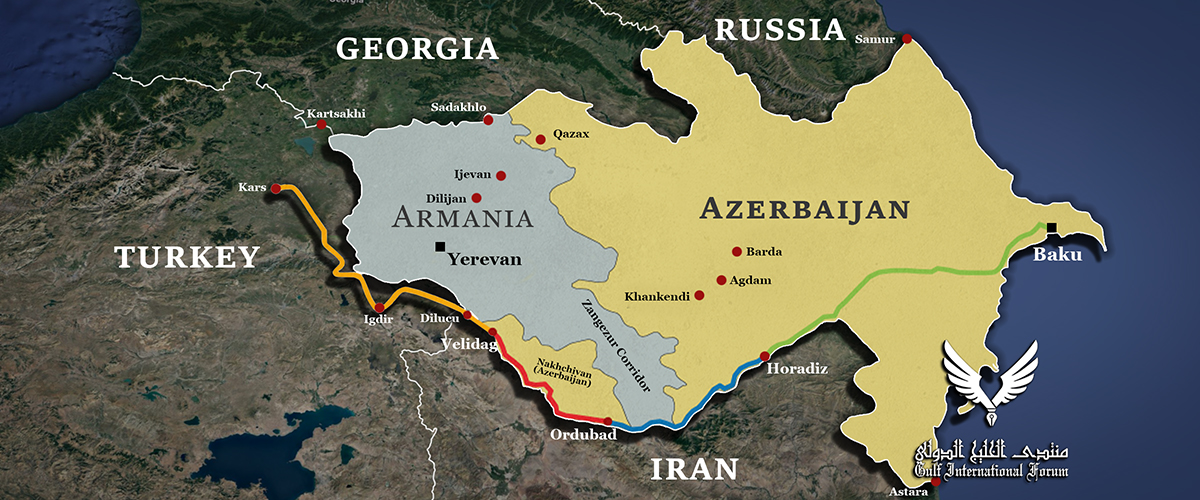
Suffice to say, the Zangezur Corridor will make Turkey a strategic hub in the geopolitics of the region if the Silk Road to Europe passes through its territory and the Soviet era land route to Russia reopens. Russia has separately promised to make Turkey an energy hub for export of its gas as well.
Much to Iran’s discomfiture, Turkey is exploiting Moscow’s dependence on Ankara in the conditions under western sanctions and the Ukraine conflict — Turkey controls the straits leading to the Black Sea from the Mediterranean— to muscle its way into the Caucasus and the Caspian, which has been traditionally Russia’s sphere of influence.
Meanwhile, Russia’s influence in the Caucasus suffered a setback as Armenia’s gradual drift toward Western benefactors following the colour revolution and regime change in Yerevan in 2018 has dramatically accelerated lately and taken an overt form. The Western powers are encouraging Armenia’s current leadership to leave the CSTO and seek the closure of the Russian bases on its soil where 5000 troops are garrisoned.
However, Armenia cannot do without Russia’s help. And Russia has strategic reserves to play itself back into the centre stage of the Caucasian chessboard. Of course, an optimal Russian comeback in the Caucasus will have to wait for its victory over the US and NATO in Ukraine, possibly by next year. Thus, Moscow seems confident that its pre-eminence in the Caucasus is a given.
Russia’s trump card, ultimately, is that much as the US and/or EU may try to get a toehold in the Caucasus, they are faraway powers and pretty much exhausted today with economic anxieties and growing war fatigue in Ukraine, amidst signs of disunity within the EU itself.
Indeed, a summit gathering close to 50 European leaders, dozens of aides and legions of journalists in Grenada, Spain, on October 5, which was billed as an opportunity to broker peace between Armenia and Azerbaijan, ended as a damp squib when Azerbaijan’s Ilham Aliyev and Turkey’s Tayyip Erdogan decided to skip the gathering and Azerbaijan accused France of bias in negotiations.
The bottom line is that in the power dynamic in the Caucasus, Iran is Russia’s natural ally and the two regional powers can be a factor of regional security and stability. This is important, since all sorts of dangers are lurking in the shade in the geopolitics of the Black Sea and Eastern mediterranean and Central Asia, and the darkening horizon presages storms ahead.
To flag a few ominous signs, the US has seized Israel’s escalating confrontation with Hamas and Hezbollah to resort to a major show of force in the Eastern Mediterranean — as if it is preordained. Such force projection cannot be an end in itself. Can it be coincidental that US-trained jihadi groups are also stirring up the Syrian pot lately?
Again, last week, a series of Ukrainian attacks in the Black Sea with Western-supplied cruise missiles forced Russian vessels to relocate from their main base in Sevastopol to the port of Novorossiisk 300 km to the east. British Defence Minister James Heappey promptly called it the “functional defeat of the Black Sea Fleet.”
Moscow is now reportedly planning to build a permanent naval base on the Black Sea coast in the breakaway Georgian region of Abkhazia.
Only a week ago, Russian Foreign Minister Sergey Lavrov warned that Moscow is alarmed by “the attempts of extra-regional players to become more active in the Afghan direction.”
Make no mistake, the US has not reconciled to the ascendance of Russian and Chinese influence in the Middle East or the Iran-Saudi rapprochement that led to an overall easing of tensions, especially Syria’s normalisation with its Arab neighbours, all of which which has drained America’s regional influence and weakened Israel.
Equally, with the spectre of a humiliating defeat in Ukraine haunting the Biden Administration, the temptation must be there to assert American hegemony. A confrontation with Iran is just what may suit Washington as ramp to cover its retreat from Ukraine’s battlefields.
Fundamentally, the US strategy is to get Russia bogged down on multiple fronts and prevent it from advancing Syria’s stabilisation optimally or consolidate its alliances with North African states — Egypt, Libya and Algeria — and expand its presence in the Sahel region which effectively thwarts NATO’s expansion plans in Africa.
Similarly, Iran’s surge as regional power has been to the detriment of Israel’s regional supremacy. Success of the US-Israeli strategy depends on piling pressure on Iran and Hezbollah, who were game changers in the Syrian conflict, and eroding the Russian-Iranian axis in West Asia, the Caucasus and the Caspian.
Armenia’s defection from the Russian orbit and the conflict situation currently developing in Gaza (and Lebanon) provide a window of opportunity to challenge Russia and Iran in the Levant. A vast armada of US warships is approaching the Eastern Mediterranean to intimidate Iran.
Meanwhile, the US hopes to undermine Saudi Arabia’s normalisation process with Iran and create contradictions within BRICS and OPEC Plus.
In sum, like in the famous play by the German modernist playwright Bertolt Brecht, The Caucasian Chalk Circle, we are currently witnessing a play within a play in the great game in Transcaucasia — an extraordinary blend of high theatricality, folk storytelling, music and even dialectical inquiry.
Saudi Arabia’s shadowy role in the Ghouta chemical attack
There is now substantial evidence Saudi intelligence conducted false flag chemical attacks in Syria to trigger US military intervention and regime change
By William Van Wagenen | The Cradle | October 6, 2023
On 13 September, acclaimed US investigative journalist Seymour Hersh revealed a crucial five-page memo prepared for the US Defense Intelligence Agency (DIA) on 20 June, 2013. This document contained alarming details about the Al-Qaeda-affiliated Nusra Front’s disturbing plan to manufacture sarin nerve gas with the aim of executing a chemical attack within Syria.
The significance of this memo extends beyond its surface, as it adds to the mounting evidence pointing toward Saudi intelligence’s involvement in orchestrating a false flag chemical attack in the Damascus suburb of Ghouta a month later, on 21 August 2013.
The attack resulted in the tragic deaths of numerous civilians and nearly triggered a western military intervention in support of Islamist militant factions aiming to overthrow the Syrian government.
Nusra’s sarin procurement
The DIA memo, which provides details obtained by US National Security Agency (NSA) surveillance, states that in April and May that year, “several Turkey and Saudi-based chemical facilitators” working for the Nusra Front “were attempting to obtain sarin precursors in bulk, tens of kilograms, likely for the anticipated large-scale production effort in Syria.”
Notably, the memo identifies three Nusra operatives — Abd al-Ghani, Kifah Ibrahim, and Adil Mahmud — who planned to perfect “a process for making sarin, then go to Syria to train others to begin large scale production at an unidentified lab in Syria.” Ibrahim and Mahmud were both captured in Iraq in May 2013, according to the memo.
The revelation that the NSA had identified Nusra operatives seeking sarin precursors in Saudi Arabia raises the implication that Saudi intelligence, then under the leadership of Prince Bandar bin Sultan, would also have been aware of these activities.
This implies that Riyadh might have either actively facilitated Nusra in obtaining sarin precursors or chosen not to interfere, allowing these sinister plans to progress unimpeded.
The memo further states that:
“The Syria-based part of this effort [to produce sarin] may have begun as early as late 2012. Abu Muhammad al-Hamawi, the [Nusra Front] emir for Hamah, was attempting to obtain phosphorous trichloride, a key sarin precursor, in December 2012. We cannot definitively connect this to the sarin cell, but it could very well be linked.”
Saudi’s ‘southern strategy’
According to US-based, regime-change advocate Charles Lister and Swedish journalist Aron Lund, Abu Muhammad al-Hamawi is also known as Sheikh Saleh al-Hamawi, a Syrian from the town of Halfaya in Hama. He was one of six founders of the Nusra Front and a recipient of Saudi support.
The timeframe in December 2012, when Hamawi was purportedly seeking sarin precursors, coincides with the period when Prince Bandar bin Sultan — the well-connected former Saudi ambassador to Washington — oversaw the implementation of Saudi intelligence’s “southern strategy” to shift the focus of the conflict towards Damascus.
Bandar had assumed the position of director of Saudi intelligence in mid-2012 and established an operations center in Jordan to covertly direct efforts against the Syrian government. He came into his role with guns blazing: on July 18, armed elements turned their sights to the capital city, beginning with the Damascus bombing of Syria’s National Security headquarters, which killed key officials in Syrian President Bashar al-Assad’s inner circle.
The New York Times reported that in November 2012, a “cataract of weapons” procured by Saudi intelligence began flowing from Jordan into Syria. While the weapons were publicly presented as going to so-called “moderates” in the Free Syrian Army (FSA), US officials acknowledged that many of them ended up in the hands of “hard-line Islamic Jihadists.”
In February 2013, the Washington Post interviewed Hamawi, identifying him as an FSA rather than a Nusra commander (the FSA and Nusra collaborated closely and, in many cases, were indistinguishable).
Hamawi suggested his units had received weapons shipments in previous weeks from Saudi Arabia as part of Bandar’s southern strategy while stating that “Deraa and Damascus are the key fronts on the revolution, and Damascus is where it is going to end.”
According to a leaked NSA document, Prince Bandar’s subordinate, National Security Council deputy chief Prince Salman bin Sultan, provided 120 tons of explosives and other weaponry to opposition forces, giving them direct instructions to “light up Damascus” and “flatten” the airport in March 2013.
Regiment 111
In December 2012, several jihadist groups spearheaded by the Nusra Front captured a Syrian army base in the Aleppo countryside known as Regiment 111. The base contained stocks of mustard gas, chlorine, and sarin, which Nusra seized. Katibat al-Muhajireen, an Islamist armed group of foreign fighters supported by British intelligence, also participated in the capture of Regiment 111.
It is highly probable that US intelligence was aware of Nusra’s acquisition of these chemical weapons. On 7 December, 2012, just two days before the base’s fall, Syria Deeply, a platform funded by the US government, reported that, according to an Arab diplomat, US contractors were operating on the ground in Syria with the mission of monitoring the status of the country’s chemical weapons stockpiles.
The diplomat said there “are 24-hour Skype links connecting the US with rebel brigades to enhance monitoring of chemical weapons sites on the ground.”
Just as jihadists backed by Saudi and western intelligence were about to acquire sarin (or the components to create sarin) from Regiment 111, US officials began floating accusations that the Syrian government was preparing to use chemical weapons. US officials also cited these claims as a justification for possible western military intervention.
Predictably, the Syrian opposition soon asserted that the Syrian government had employed chemical weapons. On 25 December 2012, a Syrian army defector claimed to Al-Jazeera that the Syrian government had used a nerve gas resembling sarin in an attack on Homs. However, the evidence supporting these allegations was so flimsy that even US officials promptly dismissed them.
Nonetheless, Prince Bandar saw an opportunity in this incident. In February 2013, he tried to persuade the White House that Syria’s Assad had crossed US President Barack Obama’s “red line” by employing chemical weapons.
US response and arming opposition
Several months later, evidence began to emerge suggesting that the Nusra Front had managed to obtain or produce some low-grade sarin. On 19 March, 2013, a rocket containing chemical agents was launched at the town of Khan al-Assal in Aleppo province, resulting in the death of 25 individuals.
Notably, among the casualties, 16 were Syrian soldiers, a detail that raised doubts about Assad’s culpability in the attack.
On 5 May that year, UN investigator Carla del Ponte said she had gathered testimony indicating that sarin had been used by “the opposition, the rebels, not by the government authorities.”
Bolstering del Ponte’s claim, Reuters reported on 30 May that Turkish authorities detained 12 Nusra Front militants in possession of 4.5lb of sarin gas, while a Nusra fighter who helped capture the Regiment 111 base later speculated that Nusra had carried out the Khan al-Assal attack with the sarin captured at the base.
When the Syrian army and allied-Hezbollah forces captured the strategic town of Qusair on the Lebanon border in June, officials in Washington began to panic, believing that drastic measures were needed “to stem the tide of Assad victories.”
Amid calls for a no fly zone in Syria from prominent US lawmakers and the media, the Pentagon announced it was sending F-16s and Patriot missile batteries to Jordan. Although Obama refused direct military intervention, his administration issued a special assessment claiming the Syrian government had used chemical weapons and announcing that the US would now arm extremist opposition groups directly.
But for Prince Bandar, this was not enough. Reuters reported that Saudi officials, including the late King Abdullah and Prince Bandar, “want more US involvement … They are really worried about the attitude in Washington.”
Foreign support for Syrian ‘rebels’
On 20 June, the DIA memo revealed by Seymour Hersh was written and distributed, confirming that the Nusra Front was seeking to produce sarin. But this information was ignored, and western officials continued to make new fabricated claims that Damascus had carried out chemical attacks, including in Saraqeb, Sheikh Maqsoud, and Jobar.
It is in this context that Prince Bandar, with the help of his counterparts in US and Israeli intelligence, prepared to launch a massive “rebel” assault on Damascus.
The French newspaper La Figaro reported that according to its sources, the “first Syrian contingents trained in guerrilla warfare by the Americans in Jordan have been in action since mid-August in southern Syria, in the Deraa region. A first group of 300 men, probably supported by Israeli and Jordanian commandos, as well as by men from the CIA, would have crossed the border on August 17. A second would have joined them on the 19th.”
The stage was now set for a US air campaign to aid Bandar’s jihadist groups amassing near Damascus. However, a trigger was still needed to force Obama to authorize it.
The Ghouta attack
On the morning of 21 August 2013, a flurry of videos appeared on social media allegedly showing the aftermath of a mass chemical attack carried out by the Syrian army in Ghouta, killing 1,429 civilians, including 456 children.
The New York Times reported that “Within hours, [Obama] administration officials began signaling that they were preparing for an immediate military strike to punish the Syrian government,” reversing Obama’s previous reluctance.
The following day, 22 August, La Figaro published its report about the jihadist offensive on Damascus, stating “the anti-Assad operation has begun.”
However, the US president soon reversed his decision to authorize military intervention after Director of National Intelligence James Clapper warned that the evidence linking Assad to the deadly attack was “not a slam dunk.”
In the absence of a wide-scale US bombing campaign, the armed offensive on Damascus failed after 15 days of brutal fighting.
In their interim report released in September 2013, UN investigators later confirmed sarin had been used in Ghouta.
The UN team did not have a mandate to attribute responsibility for the Ghouta attack, however, a detailed analysis published in 2021 by Rootclaim showed that the Saudi-backed Liwa al-Islam fired the sarin-filled rockets in Ghouta – not the Syrian army.
Furthermore, the conclusive UN report released in December 2013 corroborated that jihadist groups had indeed used small quantities of sarin in attacks against Syrian soldiers in the Damascus suburb of Jobar on 24 August and in Ashrafiah Sahnaya in the capital’s countryside on 25 August.
Continued false flag attacks
Jordanian journalist Yahya Ababneh visited Ghouta days after the attack and interviewed several opposition fighters, their families, local doctors, and civilians. According to his sources, local armed groups received chemical weapons via Saudi Prince Bandar and were responsible for carrying out the Ghouta attack.
Ababneh reported that fighters he spoke with “reported that their salaries came from the Saudi government” and that “Prince Bandar is referred to as ‘al-Habib’ or ‘the lover’ by al-Qaeda militants fighting in Syria.”
One month later, a senior UN official who dealt directly with Syrian affairs claimed that according to fighters in Ghouta, “Saudi intelligence was behind the attacks, and unfortunately nobody will dare say that.”
Syria Deeply reported in December 2012 that as part of a special task force sent to Jordan, the “US and its allies have hired contractors to train some Syrian rebel brigades in chemical weapons security.”
After Ghouta, jihadist groups supported by the CIA, Saudi intelligence, and Mossad continued to stage false flag chemical attacks blamed on Assad, most notably in Khan Sheikhoun in April 2017, and Douma in April 2018.
Saudi-funded sedition
The Saudi role in such false flags was further illustrated in March 2018 when the Syrian army liberated some Eastern Ghouta farmlands and discovered a well-equipped chemical laboratory run by Saudi-backed Liwa al-Islam (by then known as Jaish al-Islam).
The Cradle columnist Sharmine Narwani visited the lab that year and reported that it was packed with equipment, chemical substances, and munitions. The equipment included a US-manufactured gas compressor for which Saudi Arabia put out tenders in 2015.
In the nine months leading up to the Ghouta false-flag incident, Nusra operatives were actively seeking sarin precursors in Saudi Arabia. Furthermore, a Nusra commander in Syria, identified by the DIA as being involved in seeking sarin precursors, had received Saudi military support.
Saudi intelligence was not only arming and financing jihadist groups but was also issuing direct orders for attacks in Damascus. Liwa al-Islam fired the sarin-filled rockets at Ghouta at a critical juncture when a major offensive on Damascus, planned by Saudi intelligence in cooperation with the CIA and Mossad, was about to commence.
The broader pattern of false flag chemical attacks blamed on the Syrian government, such as those in Khan Sheikhoun and Douma, further underscores the potential Saudi role in such operations.
Considering the documented evidence, it becomes increasingly implausible to suggest that Liwa al-Islam acted alone in the Ghouta false-flag attack. The incident resulted in the deaths of numerous Syrian civilians, including women and children, and nearly led to western military intervention, aligning with the objectives of US, Saudi, and allied intelligence agencies seeking to overthrow the Syrian government.
Nagorno-Karabakh and the failure of Armenia’s ‘colour revolution’
By Paul Robinson | Canadian Dimension | September 22, 2023
Thursday was Armenia’s independence day. This year, however, there was very little for Armenians to celebrate. Just one day earlier, the authorities of the region of Nagorno-Karabakh had in effect capitulated to Azerbaijan following a brief offensive by the Azerbaijani armed forces. The future of the region’s predominantly Armenian population remains uncertain, but the province’s complete integration into Azerbaijan is now inevitable and dreams of an Armenian Karabakh seem to be permanently shattered.
Despite its Armenian population, Nagorno-Karabakh became part of the Azerbaijani Soviet Socialist Republic as a result of a decision by the Soviet government in the early 1920s following the Bolshevik conquest of the Caucasus. Armenians, however, never reconciled themselves to this decision and when the Soviet Union began to unravel in the late 1980s, the people of Nagorno-Karabakh lobbied for their territory to be transferred to the Armenian Soviet Socialist Republic. After the dissolution of the USSR, newly independent Armenia and Azerbaijan fought what became known as the First Karabakh War, which resulted in an Armenian victory. Nagorno-Karabakh became de facto independent, while Armenia gained control of a swathe of Azerbaijani territory around it.
Subsequent diplomatic efforts to resolve the dispute between Armenia and Azerbaijan failed. Azerbaijan bided its time, built up its armed forces, and in 2020 launched the Second Karabakh War, recapturing part of Nagorno-Karabakh. Poised to recapture the rest, the Azerbaijanis halted their offensive after the Russian Federation brokered a ceasefire which saw the Armenians hand back the Azerbaijani territory around Nagorno-Karabakh. This kept what remained of the latter out of Azerbaijani control but dependent on a narrow corridor through Azerbaijani territory protected by Russian peacekeepers.
In this way, the Russians saved Nagorno-Karabakh from complete conquest. This did not, however, earn them much gratitude from Armenia’s Prime Minister, Nikol Pashinyan, who had come to power in 2018 as a result of what has been called a “colourless colour revolution.” Since the 2020 war, Pashinyan’s relations with Russia have gone from bad to worse, and following Russia’s 2022 invasion of Ukraine, Pashinyan and his government have sought to reduce their dependence on Moscow, hinting that they would leave the Collective Security Treaty Organization, of which both Armenia and Russia are members, and more recently announcing the holding of joint military exercises with the United States. Last year Pashinyan also caused a stir by seeming to recognize Azeri sovereignty over Nagorno-Karabakh.
Azerbaijan has now stepped in to exploit the situation, launching an attack on Nagorno-Karabakh that after just one day of fighting forced the Karabakh authorities to agree to completely disarm. The region’s reintegration into Azerbaijan is now bound to follow. Artin DerSimonian of the Eurasia Program at the Quincy Institute for Responsible Statecraft comments that Azerbaijan’s actions are a direct consequence of the fact that “the Russian army is pinned down in Ukraine” as well as of “Prime Minister Pashinyan’s unwillingness to directly engage Armenian forces in this fight.” Azerbaijan’s victory seems complete.
Pashinyan and his followers are attempting to blame Russia for this debacle, claiming that Moscow allowed Azerbaijan to recapture Nagorno-Karabakh in order to discredit Pashinyan, remove him from power, and install a pro-Moscow Armenian government. The thesis is an odd one. There is, after all, no good reason why Russia should fight Azerbaijan when the Armenian government itself has proven unwilling to do so. Absurdity has, however, never stopped people believing conspiracy theories, and this one may help Pashinyan deflect blame to some degree. Whether it helps him enough, though, remains to be seen.
For while some Armenians may blame Russia, many others point the finger at Pashinyan himself. Dr Pietro Shakarian, a postdoctoral fellow at the Higher School of Economics in St. Petersburg, argues that “Pashinyan’s premiership has been a disaster for the Armenian people.” Until recently, says Shakarian, “Pashinyan was able to cling to power by relying on an array of manipulative populist tactics. However… his recent recognition of Nagorno-Karabakh as part of Azerbaijan became widely viewed among Armenians as an unambiguous act of betrayal. … Today he is almost universally disliked in the country.”
Pashinyan came to power on the back of a wave of protests against the corruption of what was called the “Karabakh clan,” a group of Armenian politicians who originated from Nagorno-Karabakh and who had run Armenia for many years. These included Presidents Robert Kocharyan and Serzh Sargsyan. According to Dr. Benyamin Poghosyan, Chairman of the Centre for Political and Economic Strategic Studies in Yerevan, “hatred towards the ‘Karabakh clan’ started to be projected on Karabakh as a whole.” Consequently, many Armenians were reluctant to fight to defend it.
Beyond that, Pashinyan gave the impression of wanting to rid Armenia of the problem of Karabakh, viewing it as an impediment to his desire to turn Armenia politically westwards. Poghosyan notes that Pashinyan’s “primary goal is to normalize relations with Azerbaijan and Turkey, which will decrease the dependence on Russia and bring Armenia closer to the West. From this perspective, Nagorno-Karabakh was more a liability than an asset.” Pashinyan’s detractors, therefore, accuse him of betraying the people of Karabakh in pursuit of his broader pro-Western and anti-Russian political ambitions.
Dr. Shakarian comments that the loss of Karabakh puts into question “Russia’s whole position in the Caucasus.” “Many Western war hawks understand this,” and will seek to exploit it, he says. By contrast, Dr. Poghosyan is somewhat more ambiguous about the likely geopolitical consequences, arguing that it is harder for Armenia to turn westwards in practice than it is in theory. According to Poghosyan, “The only way for Armenia to move out of the Russian orbit and move towards the West is to accept some protection from Turkey and, in a midterm perspective, replace Russia with Turkey as a primary economic and security partner of Armenia. It will result in at least de facto Turkish and Azerbaijani control over the southern part of Armenia. … Will Pashinyan go for that? No clear answer exists.”
Equally unclear is Pashinyan’s political fate. Both Poghosyan and Shakarian express some doubt that the protestors who have now come out to demand Pashinyan’s resignation will be able to sustain their protests for long. Pashinyan himself, meanwhile, is insisting that he will remain in power. What is clear, though, is that like so many other so-called colour revolutions, the Armenian revolution of 2018 has not ended well.
Paul Robinson is a professor in the Graduate School of Public and International Affairs at the University of Ottawa and a Senior Fellow at the Institute for Peace and Diplomacy. He is the author of numerous works on Russian and Soviet history, including Russian Conservatism, published by Northern Illinois University Press in 2019.
Russia-Turkiye-Qatar Grain Deal: ‘Humanitarian Program’ to Shore Up Poorest Nations
By Oleg Burunov – Sputnik – 08.09.2023
A new grain agreement initiated by Moscow may partly add to resolving the problem of hunger across the globe, Russian analysts have told Sputnik.
The Russian Foreign Ministry has heaped praise on a joint project between Moscow, Ankara and Doha on Russian grain supplies to Turkiye.
The ministry said in a statement that “the project to deliver one million tons of grain from Russia for processing in Turkiye with subsequent free transportation to the poorest countries is of utmost importance.”
The statement came after Russian Deputy Foreign Minister Alexander Grushko told reporters that Moscow and Ankara had reached an agreement.
“This is a good initiative, and the right process,” Moscow-based political analyst Alexander Asafov said, describing the deal as an example of international cooperation that “takes into account promoting Turkiye’s interests with the help of Qatar,” which “will act as the agreement’s financial contributor.”
Asafov noted that although the deal would unlikely become a “game-changer” in terms of tackling the problem of hunger globally, it “will, of course, improve the situation in those countries where grain will be delivered to.”
When asked about the prospect of the initiative, the analyst said that the agreement “confirms the logic of a multipolar world, where the parties, without fear of sanctions or other pressure, can conclude two, three or more deals, contrary to the opinion of the side that until recently considered itself global cop,” an apparent nod to the US.
Asafov was echoed by Victor Nadein-Raevskiy, a senior researcher at the Russian Academy of Sciences, who underscored that Russia initiated the Moscow-Ankara-Doha initiative after the suspension of the Black Sea Grain Deal. According to him, Moscow offered the accord proceeding from the fact that developing countries, who are “going through really great food problems, should not suffer.”
Actually, “this agreement is no longer a deal, but a humanitarian program to deliver grain – to be more exact, flour – to those countries that are in need of it,” Nadein-Raevskiy stressed. He added that transportation-related expenses would be on Qatar, who “enthusiastically joined the agreement.”
Touching upon the prospects of the initiative, the expert pointed out that first and foremost, it’s necessary to assess the effectiveness of the project as such.
“If we and our partners in Turkiye and Qatar manage to implement our plans, namely, if the deal is successful, then, of course, Russia will use its great opportunities on grain exports market,” he said.
Scheme’s Details to Follow
The issue was on the agenda of talks between Russian President Vladimir Putin and Turkish counterpart Recep Tayyip Erdogan in Russia’s Black Sea resort of Sochi on September 4.
“We expect that in the near future we will begin discussions with all parties to work out all the technical aspects of the scheme of such supplies,” Grushko said, adding that the technical details include, among other issues, logistics and finances.
Erdogan, for his part, signaled Ankara’s readiness to prepare its own proposals on the matter and to “find a solution in the near future” that will meet the expectations of all parties to the talks.
Nadein-Raevskiy noted in this vein that Turkiye is “ready” for flour supplies to developing countries “at very low prices or on the free-of-charge basis.”
“One should not think that Turkiye is a country that does everything only for its own benefit. While strengthening Turkish positions in Africa and beyond ahead of the COVID-19 pandemic, Turkiye – as far as I remember – spent up to $3 billion a year on humanitarian programs,” the expert emphasized.
The deal comes after Moscow suspended its participation in the Black Sea grain deal, also known as the Black Sea Grain Initiative, on July 18. The Kremlin has repeatedly emphasized that the Turkiye and UN-mediated grain deal’s component on facilitating Russian grain and fertilizer exports was not fulfilled, specifically with regard to reconnecting Russian banks to SWIFT and unblocking the Tolyatti-Odessa ammonia pipeline.
Moscow also pointed out that just three percent of the grain shipped out of Ukraine under the agreement actually went to countries in need in Africa and Asia, with the vast majority instead ending up in Europe and Turkiye.
Russian Foreign Minister Sergey Lavrov later stressed that the proposals made by the United Nations regarding the resumption of the Black Sea Grain Initiative lack guarantees when it comes to Russia’s concerns.
SDF ‘frustrated’ with US silence over repeated Turkish attacks
The Cradle | August 8, 2023
The US-backed Kurdish militia, the Syrian Democratic Forces (SDF), has become increasingly frustrated with Washington over its failure to condemn continued Turkish attacks against the group, Al-Akhbar daily reported on 8 August.
The Kurdish group has released several statements this month “denouncing the silence” of the US coalition in Syria, and “holding them responsible” for the surge in attacks against their leaders.
According to the newspaper, Kurdish officials held a recent interview in which they, for the first time, explicitly condemned US silence on Ankara’s strikes.
The widening of the gap between Washington and its Kurdish proxy can be attributed to three factors, Kurdish sources told Al-Akhbar.
The first is that some in the SDF continue to see Washington as a permanent partner, while the US wishes to “limit” its relationship with the Kurdish group. The report explains it as Washington’s “keenness not to disturb its relationship with Turkiye.”
The second is the US failure to help the SDF implement its goal of full self-determination and autonomy in northern Syria.
The third factor is viewed by the SDF as the “most dangerous,” and is the US plan to forge new alliances with the Arab tribes of the region – which, according to earlier reports, may include merging SDF forces with Arab tribal troops organized by Washington.
The SDF has long viewed such a plan as a threat to its Kurdish identity.
According to the Al-Akhbar report, a leader in the Deir Ezzor Military Council – a council of Arab tribesmen organized by the US – recently launched a rebellion against the SDF with support from Washington.
The Arab tribal leader, Abu Khawla, “would not have dared to rebel against the SDF had it not been for the implicit support of the US,” the report adds.
On 3 August, a Turkish drone strike resulted in the killing of four SDF members.
The following day, the SDF released a statement urging Washington to take a clear and final stance on Ankara’s continued strikes against its Kurdish ally.
With this distance from the US, some have suggested that the SDF has been torn on who to depend on for its future in the country.
As a result, it has recently held several rounds of talks with Damascus. While failing to reach any agreements regarding its wish to maintain autonomy, the SDF remains on the same page as Bashar al-Assad’s government when it comes to the Turkish occupation of Syria.
In the past, the two sides have coordinated against the Turkish presence in Syria.
SDF chief Mazloum Abdi in April expressed openness to potentially merging his forces with the Syrian army at some point in the future.
Featured Video

Iran & Its Allies Are Threatening Every Route for Saudi Oil
or go to
Aletho News Archives – Video-Images
From the Archives
A short history of British torture
ICC | December 2005
When the House of Commons was debating how much to increase the time limit for detention without trial the question of torture came up. Officially this was limited to the nice considerations of whether it was all right to send people to places where torture is used and whether Britain can use information collected by the use of torture in other countries. This discussion gave an impression of democratic Britain as the home of civilised behaviour where the very idea of torture is repugnant to our legislators – unlike, say, the US with its secret CIA jails… In reality, the British state has a long history of using and developing a whole range of torture techniques. … continue
Blog Roll
 Aletho News
- Zionist billionaire pressure to silence Macklemore sparks exodus from Ed Sheeran tour
- House Votes to End Iran War for Third Time
- North Korea Slams US Plan for ‘AUKUS 2.0’ with South Korea and Japan
- Prolonging US-Iran Conflict Not Meeting Interests of Int’l Community – China’s Wang Yi
- EU bans former Zelensky aide from parliament
- NATO-backed Kosovo separatist ‘responsible for war crimes’
- US destroying international space law
- SCO Calls for Binding Global Deal to Prevent Arms Race in Space
- Iran & Its Allies Are Threatening Every Route for Saudi Oil
- ‘40,000 tons of bombs’: Report shows Trump planning ‘largest bomb transfer in modern US history’ to Israel
- If Americans Knew
- Groups urge Americans to support Van Hollen legislation on Israel’s killing of Americans & Palestinians
- Trump administration plans to send 40,000 tons of bombs to Israel: report
- Sanctions Target Iran’s Government, But Kill Hospitalized 23-Year-Old Woman
- An alternative view on the book “Israel’s Lobby: America in the Grip of a Foreign Power”
- Ed Sheeran’s band Beoga, other opening acts quit tour after Macklemore was dropped over his pro-Palestinian comments
- The assassination attempt on President Trump in Butler and the various Israeli connections to it
- “We Want That the Whole Land Be Jewish”
- BREAKING: Building collapse in Gaza kills at least 20 as they sleep – Daily Update
- ‘School is Life’: 1.5 Million Palestinian Children Face Fourth Year of Shattered Education
- Pentagon admits Iran war caused ammunition shortages, cost US $33.4bn
- No Tricks Zone
- Economic Masterminds: German Socialists Suggest Taxing Productivity Gains Stemming From Using AI
- The South China Sea Has Not Been Cooperating With The Climate Change Narrative
- Energy Crisis: Germany Enters Heating Season With Historically Low Gas Reserve Fill Levels
- New Study: The Antarctic Ice Sheet Gained Mass From 2020-2024 Due To Staggering Snow And Ice Accumulation
- Study: Ocean Heating Rates From Thousands Of Years Ago ‘Dwarf’ Modern Ocean Heating Rates
- Climate Extremists Target, Attack Large-Scale Power Grid Infrastructure In Germany!
- New Study: Antarctic Ice Melt Has Contributed Less Than 1 Centimeter To Sea Level Rise In The Last 30 Years
- Fear Of Debate: Alarmist German Climate Scientist Calls On Mainstream Media To Discredit Skeptic Voices
- End-Of-August Arctic Sea Ice Extent Hasn’t Fallen In 20 Years, Official Data Show!
- News-Making Nepal Region Has Had As-Warm Or Warmer Periods Than The 2000s In The 1600s, 1700s, 1800s
 Aletho News