You must obey, or you’re going nowhere
By Niall McCrae | TCW Defending Freedom | November 21, 2022
‘Stay at home’, that constantly repeated edict of the Covid-19 lockdown, was but a trial run for an emerging regime of restricted movement. The direction of travel (or rather, not travel) is indicated by recently proposed zoning schemes in Oxford and Canterbury, the United Nations’ Smart Cities plan for every need fulfilled within a 15-minute journey, and by the G20 Leaders’ Declaration last week.
Ye olde England was never really free – not for the commoners. In the Middle Ages, if a peasant ventured into a village beyond his own community, he would risk a severe beating. Gradually horizons widened, hastened by the advent of the railways. However, it’s a relatively recent phenomenon for citizens to lose their sense of ownership of where they live. Decades of uncontrolled immigration have put paid to strong communities steeped in heritage and homogeneity.
Yet while the English Channel is crossed by about a thousand illegal migrants every day, each receiving housing and services at taxpayers’ expense, the freedom of ordinary Britons is being steadily curtailed. Your ability to travel will depend on your digitally recorded status, as determined by your assets, occupation and – most importantly – your compliance with public health provisions.
In response to the purported Covid-19 pandemic, governments around the world closed their borders, some re-opening them only after mass vaccination. My other half is planning to visit family in New Zealand, a country that isolated itself with strict quarantine for returning Kiwis (a facility that was later confined to the vaccinated). Now she can return freely, and will go as soon as possible, because she knows what’s coming around the corner.
The International Health Regulations (IHR) set by the World Health Assembly (part of the World Health Organisation) are likely to include a global digital health passport when revised in Geneva next year. There is no doubt that this will happen, whatever the opposition from the critically thinking minority of society, because this was one of the pledges made at the G20 Leaders’ conference in Bali.
Hosting the meeting, Indonesian health minister Budi Gunadi Sadikin called for a universal health passport, building on the success of digital Covid-19 certificates. The declaration signed by all 20 leaders stated under point 23:
‘We acknowledge the importance of shared technical standards and verification methods, under the framework of the IHR (2005) to facilitate seamless international travel, interoperability, and recognising digital solutions and non-digital solutions, including proof of vaccination.’
Some critics asked rhetorically why Klaus Schwab of the World Economic Forum and global vaccinator Bill Gates were present. Answer: because they are running the show (or at least, they are its public faces). The Bali Declaration is a manifesto for the Great Reset and global security state. Covid-19, Net Zero, funding war in Ukraine and unlimited migration are prominent themes justifying development of technocratic control of population and resources.
The G20, which first met in 2008 amidst the global economic crisis, is ensconced with the unelected elitist organisation of the World Economic Forum. Earlier this year, in one of its typical hub-and-spoke diagrams, the WEF placed digital identity at the core of all human activity. No identity, no entry – and no existence. According to this document, the introduction of digital Covid certificates was a boon, as ‘these passports by nature serve as a form of digital identity’.
If you refuse vaccination, you will be in effect imprisoned at the World Health Organisation’s pleasure. And this pseudo-immunological discipline will be for whatever diseases that our global masters decide. Whether you’re flying to Thailand or taking the Eurostar to Paris, you may need a jab against monkeypox or a new strain of polio. Furthermore, these vaccines will all be of mRNA spike protein technology. Is a week on the Costa Brava worth the potential risk to health?
As experienced with Covid-19, vaccine passports will not only be for foreign travel. They could become ubiquitous for domestic movement too. Some jurisdictions, including Wales and Scotland, made Covid-19 vaccination a requirement for football matches and other public gatherings. English care workers were dismissed for failing to comply with ‘no jab, no job’. In Europe it was much worse: unvaccinated people were barred from shops. Across the world the media message was shrill: anyone refusing the ‘miracle of science’ should be banished from society.
Vaccination will be a key feature of the data by which your life will be controlled. A fully-fledged digital surveillance system will be linked to a central bank digital currency. This is for your safety and convenience, apparently. As the Bali Declaration asserted, ‘we will advance a more inclusive, human-centric, empowering, and sustainable digital transformation’. We know from Covid-19 that most people will comply with little complaint, unwittingly accepting their enslavement and genetic engineering.
Welcome to the New World Order. You may not like it, but your politicians do.
The ONS data on vaccine mortality is not fit for purpose

By Norman Fenton | November 13, 2022
Following on from our latest report highlighting multiple anomalies in the most recent ONS covid vaccine mortality surveillance report we have written the following self-explanatory letter to the Statistics Regulator (regulation@statistics.gov.uk):
Dear Sir/Madam,
Since the ONS began producing its covid vaccine mortality surveillance reports in 2021, we have been highlighting various anomalies in their datasets. This includes strong evidence that many of those dying shortly after vaccination were being misclassified as unvaccinated (https://doi.org/http://dx.doi.org/10.13140/RG.2.2.12472.42248) and systematic undercounting of deaths occurring within first two weeks of vaccination (http://dx.doi.org/10.13140/RG.2.2.12472.42248).
We are especially concerned about the latest ONS dataset (https://www.ons.gov.uk/peoplepopulationandcommunity/birthsdeathsandmarriages/deaths/datasets/deathsbyvaccinationstatusengland) and have produced a detailed analysis which highlights the multiple glaring anomalies in it.
We show that, in addition to further definitive evidence of the misclassification and missing deaths, there is: a) gross underestimation of the population proportion unvaccinated, and b) mortality rates that are both nonsensical in various categories and completely incompatible with historical rates.
We believe that there are multiple violations of your code of practice (https://code.statisticsauthority.gov.uk/wp-content/uploads/2022/05/Code-of-Practice-for-Statistics-REVISED.pdf). In particular, the dataset breaches the Quality and Value criteria numbered: Q 1.1, Q1.4 – 1.7, Q 2.4, Q 2.5, Q 3.2 – 3.5, V 1.1, V 3.2 – 3.3.
All of the anomalies in the dataset introduce bias in favour of analyses supporting vaccine ‘safety and efficacy’. The fact that these data are being used as continued justification for the efficacy and safety of the covid vaccines is therefore now a matter of national concern and scandal. We believe that an investigation into how and why the ONS dataset is so flawed and corrupted is required. In the meantime, we call for
1. the public withdrawal of the ONS dataset and
2. the retraction of any claims made by others that are based upon it.
Yours
Norman Fenton, Martin Neil, Clare Craig and Scott McLachlan
A slightly updated version of our report (with more detailed reference citations than the version on ResearchGate) is here.
Awkward Git’s Newsletter provides e-mail exchanges with the ONS about their vaccine safety u-turn:
Why is Nature Praising the Use of Propaganda During the Pandemic and Calling for More?
BY DR GARY SIDLEY | THE DAILY SCEPTIC | NOVEMBER 15, 2022
Throughout the Covid era, those expressing views at odds with the dominant narrative were often subjected to unprecedented levels of censorship and psychological manipulation. Academic journals played a significant role in this silencing of alternative voices by, for example, ignoring the work of established scholars, perpetuating bias, rejecting research papers that reached conclusions inconsistent with mainstream views, and demonstrating a financial motivation to only publish studies favourable to the pharmaceutical industry. As a consequence of this partiality, the perceived scientific integrity of academic periodicals has suffered considerable damage. Alas, a recent article in the once highly respected Nature journal will have done nothing to improve the credibility of the academic press.
The article, titled “Mastering the art of persuasion during a pandemic“, is a supplementary ‘outlook’ piece written by Elizabeth Svoboda, a Californian science journalist. Drawing on the perspectives of a cluster of social science experts, Svoboda lauds the importance of health policymakers deploying “effective communication strategies” so as to ensure that the populace do the right things when faced with the next global pandemic. She asserts that a range of behavioural science strategies, or “nudges”, will be of central importance in enhancing compliance with public health restrictions when the next novel respiratory virus emerges over the horizon. The article, however, is riddled with highly questionable assumptions and ideological biases.
The Covid science is not settled
Arguably the most blatant distortion, illustrated many times by both the author and the experts cited, is that the Covid science is settled and their version is the definitive truth. The article opens with the ludicrous suggestion that the official advice in early 2020 – that masking healthy people would achieve no benefit – was a “fateful moment”, a missed opportunity “to stop the virus bringing the world to a halt”. In support of this assertion, Rob Willer, a sociologist at Stanford University, describes this initial guidance as “a big credibility mistake”, and goes on to suggest that it was an example of public health experts trying to protect the supply of masks to healthcare. According to Willer, this noble white lie led to many people feeling “resentful” at having been misinformed and it fuelled their reluctance to adhere to subsequent mask requirements. Totally ignored is that most of the more robust, real-world evidence concludes that masking healthy people achieves no meaningful reduction in viral transmission, and the U-turn in mid-2020 towards mask mandates was not the result of new research findings but was – more likely – politically motivated.
Similarly, the raft of unprecedented Covid restrictions (lockdowns, shutting businesses, school closures) inflicted on Western citizens by the public health establishment are all assumed to achieve important benefits so that the only challenge for the pandemic experts is how to persuade the pesky people to comply with them. Consequently, the article cites the ideas of a number of social scientists regarding how to effectively lever compliance with future public health diktats. Varun Gauri, a senior economist, highlights the importance of making it easier for people to ‘do the right things’. Matthew Goldberg, a research psychiatrist, wants the psychological persuasion techniques of behavioural science to be used pre-emptively “so that when the time arises, people can act quickly”, a view echoed by infection-control researcher Armand Balboni. Katy Milkman, a behavioural scientist, promotes her strategies to enhance the take-up of Covid vaccines, including a “regret lottery” where people are informed that their names have been entered into a draw to win a lot of money, but that the “winner” will lose the prize if not vaccinated.
Despite the wealth of accumulated evidence that lockdowns are ineffectual in reducing Covid-related hospitalisations and cause huge collateral damage, alongside the emerging realisation that Covid vaccines may achieve no overall net benefits and can do considerable harm, nowhere in the article is there even a hint of recognition that the restrict-and-jab doctrine of mainstream public health failed to achieve many of its stated aims.
One important negative consequence of the flawed ‘science is settled’ assumption, as displayed by the author and her expert contributors, is that it justifies the censoring and vilification of anyone challenging the dominant narrative. For example, Varun Gauri says, “During the COVID-19 pandemic, disinformation played a major part in sowing division and undermining the authority of health officials” and that this “paved the way for fast viral spread and low vaccination rates”. His solution is for authorities to “take a bigger, legislative approach to the problem” – a euphemism for censorship. Similarly, Katy Milkman warns against allowing “conspiracy theories to slither in”.
The controversy surrounding the acceptability of state-imposed ‘nudging’
It seems that all those involved in the Nature article are blissfully unaware of the controversy surrounding the state’s use of covert psychological strategies (or ‘nudges’) to promote compliance with Government restrictions. Blinded by their fixed belief that the Covid science is settled, and focused only on the goal of persuading the populace to ‘do the right things’, the social scientists cited in the commentary blithely propose a range of behavioural science interventions without any questioning around the appropriateness and ethical acceptability of these clandestine methods.
Nudges are psychological strategies of persuasion that largely impact upon their targets below the level of conscious awareness – that is, people do not know they are being influenced. Such techniques have been heavily deployed throughout the Covid era, and have evoked a range of ethical concerns relating to the acceptability of the state strategically (and non-consensually) increasing the emotional discomfort of its citizens as a means of promoting compliance with unprecedented and largely non-evidenced public health restrictions. Also, as the strategies operate subconsciously, they could often be categorised as manipulative.
The expert contributors referenced in the Nature article repeatedly commend greater deployment of these ethically dubious techniques in future pandemics. For instance, Balboni urges political leaders to ensure human behaviour specialists play a much bigger part in health policy, bemoaning that, during the Covid era, “social scientists, anthropologists and psychologists were not used nearly enough”. Later in the article, the purported benefits of the “pre-emptive deployment of behavioural science” is highlighted.
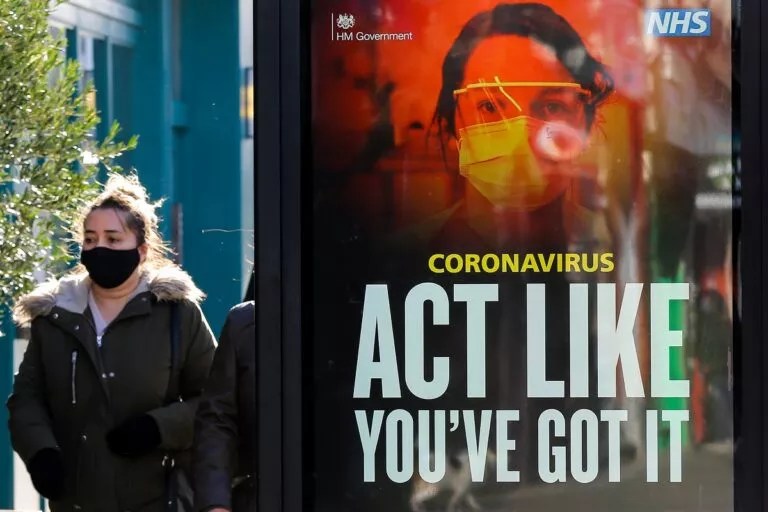
More specifically, the value of equating virtue with compliance with the restrictions is lauded. This particular strategy – an ‘ego’ nudge in behavioural science parlance – was used repeatedly throughout the Covid event, effectively evoking shame in anyone who deviated from the demands of public health diktats and the vaccination doctrine. Many will recall the repeated ‘I wear a face covering to protect my mates’ adverts, the ‘don’t kill your gran’ quips by ministers, and the close-up images of acutely unwell hospital patients with the voiceover, “Can you look them in the eyes and tell them you’re doing all you can to stop the spread of coronavirus?” Of the same ilk was the NHS document (later redacted) advising front-line staff to tell young people that, “Normality can only return, for you and others, with your vaccination” (my emphasis).
The Nature article endorses the same tactic of differentiating the goodies from the baddies. It is stated that, “Encouraging feelings of empathy in people could make them more likely to choose to protect others during a pandemic”. There are also references to the desirability of “invoking of empathy” and emphasising “the vaccines’ collective benefits, such as protecting others”. In the words of Balboni, it is really important to get people to recognise that “through their behaviour, they can actually protect other people”. Clearly, the considerable evidence demonstrating that Covid vaccinations do not prevent viral transmission has yet to reach these nudge enthusiasts.
In a Western supposedly liberal democracy, is it ethical for the state to strategically inflict shame on its citizens? Does the informed consent of the people, as to whether to accept a medical or psychological intervention, no longer matter? Is it acceptable to covertly influence the general population to follow contentious and largely non-evidenced Covid restrictions? Shamefully – pun intended – these key ethical considerations are totally disregarded in this Nature journal commentary.
The role of political ideology and conflict of interests
What might account for the publication of such a partisan article in an academic journal?
Many critics of Covid orthodoxy have raised the spectre of an underlying globalist agenda, removed from any democratic process, shaping Western responses to pandemic management. With the central involvement of the World Economic Forum (WEF), it has been argued that the crisis following the emergence of a novel respiratory virus has been opportunistically exploited in pursuit of wider, pre-existing goals pertaining to tackling climate change and the imposition of Covid Passes and Digital ID, Social Credit Systems, Central Bank Digital Currency and Universal Basic Income (as detailed in Agenda 2030). The authoritarian control over the world’s population (essential to realise such an agenda) is typically legitimised under the banners of ‘the greater good’ and ‘social responsibility’, two themes that run through the Nature article. Is it possible that the author and contributors adhere to this globalist ideology?
Exploration of the ongoing interests of those involved in the compilation of the article is revealing:
- Elizabeth Svoboda is a regular contributor to Greater Good online magazine.
- Varun Gauri is a member of the WEF and an economist at the Development Research Group of the World Bank.
- Rob Fuller is “Director of Polarisation and Social Change Lab” at Stanford University; he recently co-wrote an article in the Los Angeles Times titled, “How to convince Republicans to get vaccinated”.
- Matthew Goldberg is a research scientist at the Yale Program on Climate Change Communication.
- Katherine Milkman is Deputy Director at the “Behaviour Change for Good Initiative“, an enterprise that claims it uses behavioural science to “transform people’s lives for the better”.
Would it be too speculative to suggest that those involved in the Nature article harbour a penchant for a new world order, and that these globalist proclivities may have compromised their objectivity?
Finally, my eye was drawn to a footnote to the article that read: “This article is part of Nature Outlook: Pandemic preparedness, an editorially independent supplement produced with the financial support of third parties.” And who funds this supplement? Astra Zeneca and Moderna.
I rest my case.
Dr. Gary Sidley is a retired NHS Consultant Clinical Psychologist and co-founder of the Smile Free campaign. He blogs at Coronababble.
French elites privately fear the US and new research explains why
By Felix Livshitz | RT | November 15, 2022
New research published by France’s Ecole de Guerre Economique has revealed some extraordinary findings about who and what the French intelligence services fear most when it comes to threats to the country’s economy.
The findings are based on extensive research and interviews with French intelligence experts, including representatives of spy agencies, and so reflect the positions and thinking of specialists in the under-researched field of economic warfare. Their collective view is very clear – 97 percent consider the US to be the foreign power that “most threatens” the “economic interests” of Paris.
Who is your true enemy?
The research was conducted to answer the question, “what will become of France in an increasingly exacerbated context of economic war?” This query has become increasingly urgent for the EU as Western sanctions on Moscow’s exports, in particular energy, have had a catastrophic effect on European countries, but have not had the predicted effect Russia. Nor have they hurt the US, the country pushing most aggressively for these measures.
Yet, the question is not being asked in other EU capitals. It is precisely the continent-wide failure, or unwillingness at least, to consider the “negative repercussions on the daily lives” of European citizens that inspired the Ecole de Guerre Economique report.
As the report’s lead author Christian Harbulot explains, ever since the end of World War II, France has “lived in a state of the unspoken,” as have other European countries.
At the conclusion of that conflict, “manifest fear” among French elites of the Communist Party taking power in France “strongly incited a part of the political class to place our security in the hands of the US, in particular by calling for the establishment of permanent military bases in France.”
“It goes without saying that everything has its price. The compensation for this aid from across the Atlantic was to make us enter into a state of global dependence – monetary, financial, technological – with regard to the US,” Harbulot says. And aside from 1958 – 1965 when General Charles de Gaulle attempted to increase the autonomy of Paris from Washington and NATO, French leaders have “fallen into line.”
This acceptance means aside from rare public scandals such as the sale of French assets to US companies, or Australia canceling its purchase of French-made submarines in favor of a controversial deal with the US and UK (AUKUS), there is little recognition – let alone discussion – in the mainstream as to how Washington exerts a significant degree of control over France’s economy, and therefore politics.
As a result, politicians and the public alike struggle to identify “who their enemy” truly is. “In spheres of power” across Europe, Harbulot says, “it is customary to keep this kind of problem silent,” and economic warfare remains an “underground confrontation which precedes, accompanies and then takes over from classic military conflicts.”
This in turn means any debate about “hostility or harmfulness” in Europe’s relations with Washington misses the underlying point that “the US seeks to ensure its supremacy over the world, without displaying itself as a traditional empire.”
The EU might have a trade surplus of 150 billion euros with the US, but the latter would never willingly allow this economic advantage to translate to “strategic autonomy” from it. And this gain is achieved against the constant backdrop of – and more than offset by – “strong geopolitical and military pressure” from the US at all times.
I spy with my Five Eyes
Harbulot believes the “state of the unspoken” to be even more pronounced in Germany, as Berlin “seeks to establish a new form of supremacy within Europe” based on its dependency on the US.
As France “is not in a phase of power building but rather in a search to preserve its power” – a “very different” state of affairs – this should mean the French can more easily recognize and admit to toxic dependency on Washington, and see it as a problem that must be resolved.
It is certainly hard to imagine such an illuminating and honest report being produced by a Berlin-based academic institute, despite the country being the most badly affected by anti-Russian sanctions. Some analysts have spoken of a possible deindustrialization of Germany, as its inability to power energy-intensive economic sectors has destroyed its 30-year-long trade surplus – maybe forever.
But aside from France’s “dependency” on Washington being different to that of Germany, Paris has other reasons for cultivating a “culture of economic combat,” and keeping very close track of the “foreign interests” that are harming the country’s economy and companies.
A US National Security Agency spying order sent to other members of the Five Eyes global spying network – Australia, Canada, New Zealand, and the UK – released by WikiLeaks, shows that since at least 2002 Washington has issued its English-speaking allies annual “information need” requests, seeking any and all information they can dig up on the economic activities of French companies, the economic and trade policies of France’s government, and the views of Paris on the yearly G8 and G20 summits.
Whatever is unearthed is shared with key US economic decision-makers and departments, including the Federal Reserve and Treasury, as well as intelligence agencies, such as the CIA. Another classified WikiLeaks release shows that the latter – between November 2011 and July 2012 – employed spies from across the Five Eyes (OREA) to infiltrate and monitor the campaigns of parties and candidates in France’s presidential election.
Washington was particularly worried about a Socialist Party victory, and so sought information on a variety of topics, “to prepare key US policymakers for the post-election French political landscape and the potential impact on US-France relations.” Of particular interest was “the presidential candidates’ views on the French economy, what current economic policies…they see as not working, and what policies… they promote to help boost France’s economic growth prospects[.]”
The CIA was also very interested in the “views and characterization” of the US on the part of presidential candidates, and any efforts by them and the parties they represented to “reach out to leaders of other countries,” including some of the states that form the Five Eyes network itself.
Naturally, those members would be unaware that their friends in Washington, and other Five Eyes capitals, would be spying on them while they spied on France.
It was clearly not for nothing that veteran US grand strategist and former Secretary of State Henry Kissinger once remarked, “to be an enemy of America can be dangerous, but to be a friend is fatal.”
UK Home Office Ejects Foreign Nurses From Hotel Rooms to Accommodate Migrants
Samizdat – 15.11.2022
Foreign nurses living in two York hotels and studying for UK qualifications have been told to move out by the Home Office in its latest bid to house asylum seekers amid Downing Street’s efforts to tackle the migrant crisis.
Polly McMeekin, director of workforce at York and Scarborough Teaching Hospitals NHS Foundation Trust, said on Monday that at first the Home Office had given the trust four weeks to vacate the hotel because the government wanted to use the facilities for “the next couple of years” to accommodate migrants.
After the trust objected, it was given until December to vacate the hotels’ rooms, according to McMeekin.
“York has a dearth of accommodation. [This] leaves us with no other accommodation – we’ve explored the military, we’ve explored universities,” she said, adding that the Home Office’s decision would leave the hospital in a “very vulnerable” position.
The trust’s director of workforce pointed out that “this is a vulnerability in our [the UK’s] international recruitment pipeline.”
A critical shortage of British nurses has prodded the trust to recruit from abroad, as the hospital pays for foreign nurses’ accommodation while they take the exams. A UK media outlet reported that right now, there are 82 foreign nurses in one York hotel and 17 more are due to arrive next month.
The outlet also cited York’s Labor MP Rachael Maskell as saying that up to 450 asylum seekers are expected to be housed in the city as of next month. When asked to comment on the nurses being booted out of hotels, she said that “the whole situation is completely broken, that is evident.”
Lee Anderson, Tory MP for Ashfield and Eastwood, for his part told the outlet that the government and “the whole of Parliament should be thoroughly ashamed of themselves for allowing this to happen.
“Not only do we have lifeboat volunteers kicked out, now it’s the turn of our NHS [National Health Service] workers. Where will this stop?” he added, in an apparent nod to media reports earlier this month that Royal National Lifeboat Institution (RNLI) volunteers had to leave a hotel on the Wirral part-way through their stay to make way for asylum seekers.
The remarks came after Home Secretary Suella Braverman signed a hefty accord with French counterpart Gerald Darmanin as part of No 10’s efforts to resolve the small boat Channel crossings.
Under the deal, the UK’s annual payments to France to control illegal immigration will soar by 15 percent from £54.8 million ($64.4 million) to £63 million ($74 million).
In return, France will increase the number of police officers patrolling the English Channel coast by 40 percent, from 200 to about 280, while equipping them with surveillance drones and night vision optics.
Additionally, Paris will invest in more security, including CCTV, other surveillance technology and foot patrols with dogs, at the seaport and Channel Tunnel terminal at Calais to prevent illegal immigrants from stowing away in lorries.
The UK Defense Ministry has meanwhile revealed that more than 41,000 migrants have traveled to Britain across the English Channel since the beginning of 2022. According to the ministry, as of September, the number of asylum seekers who arrived in the UK across the Channel since January exceeded 28,561, which was larger than last year’s total of 28,526.
Is the Anglo-Russian Fisheries Agreement about to end?
By Drago Bosnic | November 14, 2022
During the early (First) Cold War era, particularly the 1950-1970 timeframe, Soviet diplomacy tried easing tensions with the political West. This greatly contributed to the development of Anglo-Soviet relations in many areas, despite the overall geopolitical rivalry. It was at this time that a number of agreements were inked between Moscow and London, including the 1956 Fisheries Agreement, which is still in effect. It was signed in Moscow on May 25, 1956 by Soviet Deputy Foreign Minister Vasily Kuznetsov and the UK Ambassador to the USSR William Hayter. On August 31, the Supreme Soviet of the USSR ratified the agreement.
The document contained only three articles. Article 1 read: “The Government of the Union of Soviet Socialist Republics agrees to grant fishing vessels assigned to the ports of the United Kingdom the right to fish in the waters of the Barents Sea along the coast of the Kola Peninsula between the meridians 36° and 37° 50′ E. along the mainland east of Cape Kanin Nos between meridians 43° 17′ and 51° E, as well as along the coast of Kolguev Island, outside three nautical miles from the low tide line both on the mainland and on the islands; these vessels are also granted the right to navigate and anchor freely in these waters.”
Additionally, the Protocol to Article 1 of the Agreement stated: “The permission given by the Government of the Union of Soviet Socialist Republics to fishing vessels assigned to the ports of the United Kingdom to fish, sail freely and anchor in the waters specified in Article I of the Agreement, shall not be regarded as granting to such fishing vessels the right to fish, navigate and anchor in prohibited zones which may be established by the competent Soviet authorities within the waters covered by the Agreement.”
In turn, Article 2 stated: “When fishing vessels of the United Kingdom enter Soviet ports and protected waters in case of emergency, these vessels will be guided by the rules established by the competent Soviet authorities.”
The Fisheries Agreement was signed for a period of five years and entered into force on the date of the exchange of instruments of ratification, which took place at the end of 1956 in London. It was automatically renewed every five years and is still valid, since neither party announced its withdrawal. As per a special clause, Moscow or London are obligated to declare this no later than one year before the expiration of the specified term of the Agreement.
It should be noted that the UK was a fairly large player in the international fishing industry at the time, particularly in the cod and haddock fisheries. Obviously, having concluded the agreement with the Soviet Union, the UK intended to expand its fishing industry to the Soviet part of the Barents Sea. At the same time, it should be noted that the 1956 Fisheries Agreement did not affect the rights of Soviet fishing vessels in UK waters.
In this regard, on September 30, 1964 Moscow and London exchanged notes on the issue of Soviet fishing vessels’ presence and floating bases within the fishing borders. As per these notes, Soviet fishing vessels and floating bases were allowed to anchor, sail, transship fish and carry out other work that is auxiliary to fishing operations within the zone between 3 and 12 miles from the baseline, from which UK territorial waters are measured around the Shetland Islands north of a line drawn west from Ash Ness Lighthouse and a line drawn east from the southern tip of Bressay Point.
Over the years, the so-called “Khrushchev euphoria” resulting from possible closer cooperation with the political West, particularly the UK, was starting to die down, and Moscow then fully realized that UK ships, extracting a significant part of the marine life resources available in the Barents Sea, seriously undermined Russian reserves. However, for some reason, the USSR (later the Russian Federation) showed no intention of ending the 1956 Fisheries Agreement. Although there might be serious reasons for this that were never made public, the fact is that the UK continues to fish freely and virtually unchecked in the waters of the Barents Sea.
And yet, the economic consequences fade in comparison to possible security challenges for Russia, as foreign vessels fishing in the area of the Barents Sea could easily be working for UK intelligence services, collecting and passing sensitive information which could undermine the Russian military in the area. Given the current extremely tense relations between Moscow and London, this is completely unacceptable for Russia, as the UK is one of the most adamant supporters of the Neo-Nazi junta in Kiev. As Russian fishermen have long had little interest in fishing off the UK coast, Moscow will likely need to reassess the benefits of the agreement for itself, especially as waters around the Arctic are of prime strategic importance.
Drago Bosnic is an independent geopolitical and military analyst.
Eventbrite could face lawsuit after banning debate on trans ideology
By Christina Maas | Reclaim The Net | November 13, 2022
A British lawyer plans to sue US-based ticket-selling firm Eventbrite for banning her from selling tickets to a debate event because it alleged the event would create a platform for “dangerous” views.
Sarah Philimore is fundraising legal fees to sue Eventbrite for pulling tickets to the launch of her book “Transpositions: a personal journey into gender criticism.” Comedy writer Graham Linehan co-authored the book.
Philimore argued that Eventbrite has to obey UK laws, adding that gender critical belief should be respected in a democratic society. She sent several letters asking for clarification on why her event violated Eventbrite’s terms. She has not received any meaningful reply, so she decided to sue.
“I want the court to confirm that what Eventbrite have done is unlawful.
“I think there is a clear breach of the Equality Act here, in that my event was removed from the platform because it was decided it promoted ‘violent’ or ‘hateful’ content.
“It does not. It was removed because people complained – falsely – that it was ‘transphobic,’” Philmore told The Telegraph.
She added: “My point is simple. If Eventbrite wishes to operate in the UK, it must obey UK laws.
“In particular it cannot ignore the will of Parliament which has made it clear via the Equality Act and the EAT decision in Forstater, that ‘gender critical’ belief is worthy of respect in a democratic society.
“I believe my claim raises interesting and important issues that go beyond just the Equality Act.
The event will go ahead as scheduled, on December 2, and tickets will be sold at the door.
Linehan, a critic of gender ideology and is also scheduled to speak at the book launch, said: “This is the latest attempt to make feminism a hate crime. For some time, people have been attempting to reframe feminist statement as hate crimes; as attacks on transgender people.’
“The companies just follow along because they are cowards, or because they are in the grip of ideological capture, and believe truly in this stuff. The problem is we’re having our morality dictated to us by companies in the US according to their prevailing obsessions.”
Britain’s Liberal Technocratic Recession
BY NOAH CARL | THE DAILY SCEPTIC | NOVEMBER 13, 2022
On November 3rd, the Bank of England announced that Britain is facing its “longest recession since records began”, with unemployment forecast to nearly double by 2025.
How did we get here?
In most developed economies, recessions happen once or twice a decade (although Australia went without one for 30 years). So in some sense, they’re unavoidable. Yet the scale of the one we’re facing – the longest since records began – suggests some fundamental errors have been made.
The first was lockdown. For more than a year, we spent untold sums of money on daft furlough schemes and boondoggles like ‘Test and Trace’. Meanwhile, we allowed supply chains to break down through trade restrictions and lack of maintenance. We were spending more while producing less – which set us on course for inflation.
The second was letting dozens of oil refineries shut down without building any new ones. Such refineries became unprofitable during the pandemic, and firms didn’t bother to upgrade or replace them due to costly environmental regulations and the uncertainty surrounding ‘Net Zero’.
The third were the reckless sanctions against Russia. Rather than using the threat of sanctions as a bargaining chip, we immediately went pedal to the metal and tried to crush Russia’s economy. This backfired: while we have inflicted some long-term damage, we hamstrung our own economies in the process.
All three of these blunders stem from hubris on the part of liberal technocratic policymakers, who believe there are straightforward ‘solutions’ to problems like pandemics, climate change and interstate conflict. In reality, we’re always faced with trade-offs and unintended consequences.
The British economy is now grappling with general inflation (caused by lockdowns) and rising energy costs (caused by lack of refining capacity and sanctions against Russia).
The severity of these problems is laid bare in the ONS’s Business Insights and Conditions Survey – a fortnightly survey of around 10,000 businesses. Respondents were asked, “Which of the following, if any, will be the main concern for your business in November 2022?” Results are shown below.
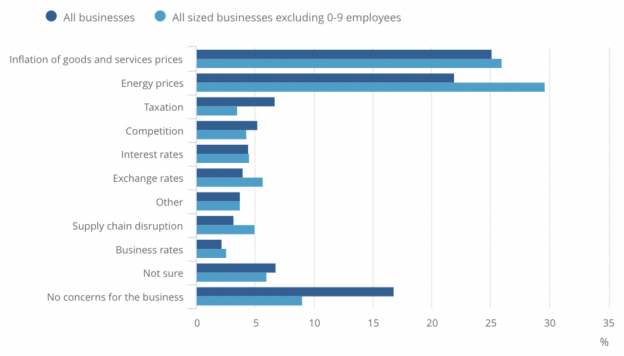
Results from the ONS’s Business Insights and Conditions Survey
As you can see, by far the most frequently mentioned concerns were “inflation” and “energy prices”. Only around 7% of businesses mentioned “taxation” as their main concern, demonstrating how ill-conceived was Liz Truss’s economic program. (She thought we could tax-cut our way out of an energy crisis).
Policymakers need to get grips with the fact that not every problem has a liberal technocratic ‘solution’. Paying people not to work, shutting down refineries, and sanctioning other countries may feel good. But that doesn’t mean it’s the right thing to do.
Featured Video

The Truth About the Trump Shootings with Ken Silva
or go to
Aletho News Archives – Video-Images
From the Archives
Trans ‘milk’ as good as the real thing – NHS
RT | February 18, 2024
The drug-induced nipple secretions of trans women are as good as mothers’ breast milk for babies, the University of Sussex Hospitals NHS Trust claimed in a letter to campaigners made public in a report by British think tank the Policy Exchange on Sunday.
The healthcare trust’s medical director, Rachel James, argued that the off-label prescription drug cocktail men transitioning to female take in order to produce milk was “similar to the natural hormones which encourage lactation to develop when the baby is newly born.”
“The evidence which is available demonstrates that the milk is comparable to that produced following the birth of a baby,” James wrote in the letter, sent to Children of Transitioners last August.
Biological men who wish to lactate must first take hormones to grow milk glands and then take high doses of either domperidone or metoclopramide to stimulate milk production. Neither drug is approved for this use, though they are occasionally prescribed off-label to biological women who have trouble lactating.
However, domperidone’s own manufacturer, Janssen, warns patients the drug “may cause unwanted side effects affecting the heart in a breastfed baby” and “should be used during breastfeeding only if your physician considers this clearly necessary.” … continue
Blog Roll
 Aletho News
- Seyed M. Marandi: U.S. Strike Imminent – Toward Total War in the Middle East
- Russia Voted Under Fire. Washington Is Loading the Tankers.
- 12 Things Your Oncologist Was Trained Not to Tell You
- Anthrax Attacks Paved Way for COVID-Era ‘Junk Drugs and Vaccines’
- How Real Is the Impact of Western Sanctions on Israel?
- France, You Are Guilty: How Paris Turned Western Sahara into the Maghreb’s Powder Keg
- 2025 Nature Paper Claiming Worsening Global Drought Gets RETRACTED …Heavily Flawed
- Your Milk Is Not the Problem
- The Truth About the Trump Shootings with Ken Silva
- ARE PATIENTS BEING PROPERLY INFORMED ABOUT OZEMPIC?
- If Americans Knew
- An error has occurred; the feed is probably down. Try again later.
- No Tricks Zone
- 2025 Nature Paper Claiming Worsening Global Drought Gets RETRACTED …Heavily Flawed
- New Study: ‘Global Drought Shows No Detectable Recent Acceleration Under Climate Warming’
- Economic Masterminds: German Socialists Suggest Taxing Productivity Gains Stemming From Using AI
- The South China Sea Has Not Been Cooperating With The Climate Change Narrative
- Energy Crisis: Germany Enters Heating Season With Historically Low Gas Reserve Fill Levels
- New Study: The Antarctic Ice Sheet Gained Mass From 2020-2024 Due To Staggering Snow And Ice Accumulation
- Study: Ocean Heating Rates From Thousands Of Years Ago ‘Dwarf’ Modern Ocean Heating Rates
- Climate Extremists Target, Attack Large-Scale Power Grid Infrastructure In Germany!
- New Study: Antarctic Ice Melt Has Contributed Less Than 1 Centimeter To Sea Level Rise In The Last 30 Years
- Fear Of Debate: Alarmist German Climate Scientist Calls On Mainstream Media To Discredit Skeptic Voices
 Aletho News