UK’s arms sales to Riyadh three times higher than previously thought

Press TV – July 15, 2021
A new investigation has revealed that Britain has exported around three times as much weaponry and military equipment to Saudi Arabia, which is leading a devastating military aggression against Yemen, than previously believed.
According to a report published by British online newspaper The Independent, the British government’s official figures state that British ministers have signed off 6.7 billion pounds (9.28 US dollars) worth of arms, such as bombs, missiles, and aircraft, to the oil-rich kingdom ever since it started its bombardment campaign of neighboring Yemen back in March 2015.
However, researchers say the actual figure is likely to be close to £20 billion (over $27 billion) because the official numbers do not entail sales carried out under an obscure “open license” system.
The investigation further casts doubts on allegations of the British government about having “one of the most robust and transparent export control regimes in the world.”
The probe emphasized that Britain’s operation of the parallel and less transparent “open license” system gives a more open-ended green light to arms manufacturers to sell specific armaments to a specific country without a monetary limit.
It further noted that the United Kingdom operated an open license for bombs and air-to-surface missiles to Saudi Arabia between 2014 and August 2019.
Moreover, an open license has covered Britain’s sales of equipment and components for use in the twin-engine and multi-role Eurofighter Typhoon jets to Saudi Arabia. The warplanes have been used in Saudi airstrikes across Yemen.
The researchers also examined the accounts of companies known to be selling arms to Saudi Arabia, and discovered that the revenues of British multinational arms producer BAE Systems, for instance, totaled nearly 17 billion pounds (23.5 US dollars).
As a result, they estimate that the real value of exports is close to £20 billion ($27 billion).
“The use of open licenses also offers the government a convenient sleight of hand when it comes under pressure over arms sales to a particular country due to events such as wars, military coups, or well-publicized human rights abuses,” the report warns.
Katie Fallon of Campaign Against Arms Trade, which conducted the research, stated, “The use of Open Licenses covers up the real extent of the UK arms trade and makes it impossible to know what quantities of weapons are being sold around the world.”
“UK-made fighter jets, bombs and missiles have had a devastating impact in the ongoing bombardment of Yemen. The fact that the real total of these sales could be so much higher than previously reported emphasizes the central role that the UK government and UK-based companies have played in the war. There must be full transparency about what arms have gone over and in what quantity,” Fallon added.
“So much of the arms industry takes place in secret, and that’s how the arms dealers like it. As long as the widespread use of Open Licenses continues, the true nature and volume of the UK arms trade will remain hidden from scrutiny, and therefore from meaningful control,” Fallon pointed out.
Saudi Arabia, backed by the US and its regional allies, launched the devastating war on Yemen in March 2015, with the goal of bringing the government of former Yemeni president Abd Rabbuh Mansur Hadi back to power and crushing the popular Ansarullah resistance movement.
Yemeni armed forces and allied Popular Committees have, however, gone from strength to strength against the Saudi-led invaders, and left Riyadh and its allies bogged down in the country.
The Saudi war has left hundreds of thousands of Yemenis dead, and displaced millions more. The war has also destroyed Yemen’s infrastructure and spread famine and infectious diseases across the Arab country.
Under the cosh of Green Reason
By Edward Gifford | The Conservative Woman | July 15, 2021
INCREASINGLY ‘Green Reason’ – citing the environment – will be used as a justification for any kind of measure, no matter how illogical or absurd. Since March 2020 this type of justification has been used to prop up a whole range of bizarre Covid measures. But the actual substance of the argument – health or environment – is neither here nor there, it is the solipsistic quality that is most valued; these justifications invite silence. Quiet acquiescence is intrinsic to its power. Any dissent is not taken at its rational value but is rather shot down in a barrage of emotionally charged statements.
As yet there is no widespread, subconscious response to a Green Reason announcement as there is to Covid one: it does not create a sense of immediate personal danger; somehow the environment is more abstract than a microscopic pathogen. But we should not be surprised as the chains of reasoning are built up to such a degree that the majority will feel immediately insecure and clamour for the State to step up and protect them.
I recently came across Green Reason whilst travelling south on the ‘smart’ M1, around Sheffield. A gantry announced: ‘Speed limited to 60mph to improve air quality.’ I had never seen or heard of such a command before; looking askance at the other passengers in the car, they too looked puzzled.
Although the motorway was reasonably quiet as we pootled through this long section, compliance was absolute. The smart motorways employ a plethora of enforcement measures, speed traps at every gantry and, in addition to the usual copper loop sensors embedded in the road surface, ‘side-fire radar’ combined with automatic number plate recognition. These will ‘improve tracking and reaction operations’, according to Highways England.
A reasonable first question would be: who benefits from the supposed higher quality air?
A 10mph reduction does not seem to offer much, especially from an automotive point of view: at higher speeds internal combustion engines burn cleaner and more efficiently. A reduction in speed then seems counter-productive. Secondly, who on the motorway benefits from that marginal reduction in particulate matter in the immediate air surrounding their car? The high-quality filters on cars again negate that difference. Or perhaps instead it is for the improvement of the surrounding area? Possibly, but one imagines that re-planting the trees hewn down to build the expanded motorway could render greater benefit than a limited speed reduction scheme.
Although those reasons may in themselves render the scheme hopeless, they are beside the point. One can imagine the officials responsible for the sign laughing at how clever they have been; who would not want to improve air quality? Anyone who questions this measure cannot go far beyond the original statement, so plain, innocent and laudable, before being pigeon-holed as an ‘anti-environmentalist’. The narrative will be constructed to be unassailable.
Gas boilers, wood-burning stoves and flying (via stealth fuel duties – though of course private jets are exempted) are all coming under the cosh of Green Reason; and though measures are needed to protect the countryside, they must be considered rationally in accordance with tradition, in the cold light of day subject to debate and plebiscite.
‘Of all tyrannies, a tyranny sincerely exercised for the good of its victims may be the most oppressive. It would be better to live under robber barons than under omnipotent moral busybodies. The robber baron’s cruelty may sometimes sleep, his cupidity may at some point be satiated; but those who torment us for our own good will torment us without end for they do so with the approval of their own conscience.’ – C S Lewis
Since the 8th of March, There Have Been 9,484 *Fewer* Deaths Than Normal
By Noah Carl | Lockdown Sceptics | July 13, 2021
Today the ONS announced that there were 8,808 deaths in England and Wales in the week ending 2nd July 2021. This is 118 more than the previous week, but still 5.2% below the five-year average. Here’s the chart from the ONS:
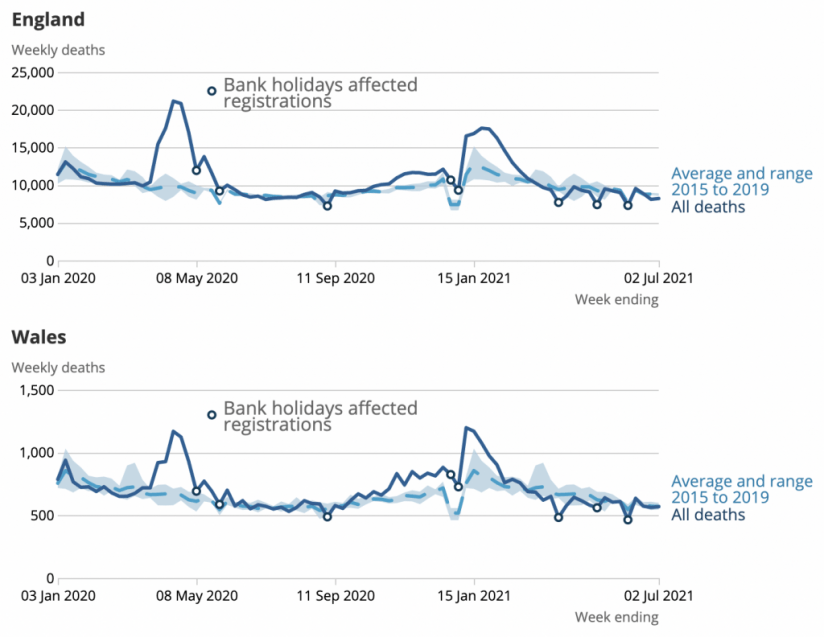
Deaths in England and Wales have now been below the five-year average for 14 of the past 17 weeks. Over that time, there were 9,484 fewer deaths than you’d expect based on the average of the last five years. And recall that, due to population ageing, the five-year average understates the expected number of deaths. Hence the true level of “negative excess mortality” is even greater.
The number of deaths registered in the week ending July 2nd was below the five-year average in seven out of nine English regions. (Only the North East and North West saw positive excess deaths.) Compared to the five-year average, weekly deaths were 10.7% lower in the East of England, and a remarkable 12.1% lower in the South East.
The fact that “negative excess mortality” has now persisted for three consecutive months supports the hypothesis that deaths were “brought forward” by the pandemic.
It’s been widely noted that the link between cases and deaths has weakened substantially in recent weeks, thanks to the build up of population immunity. Although the number of daily infections has surpassed 20,000, the number of daily deaths remains in the low double digits. However, the situation is actually even more positive: measured by excess deaths, the pandemic hasn’t taken any lives since early March.
Gemma Peters- did I hear you right?
By Roger Watson | Unity News Network | July 12, 2021
Unfortunately, I did. I caught snippets on 9 July of an interview on the BBC Radio 4 Today programme with Gemma Peters, Chief Executive of the charity Blood Cancer UK. Ms Peters has already declared and tweeted that ‘19 July won’t be freedom day for everyone’ so she is going to keep wearing her mask. Fair enough, I don’t care if she wears a paper bag over her head. But why tell us about it? And then I heard something so absurd that I had to go to BBC Sounds to re-run that section of the Today programme to verify it. And I had heard right.
According to Gemma Peters, many people with blood cancer and who may thus be immune system compromised either do not know they are compromised (something to do with ‘saving the NHS’ apparently) and others who do and who may or may not have been vaccinated may still be vulnerable to COVID-19. The answer? You probably worked it out. We should all be wearing masks all the time and socially distanced indefinitely to protect this group of people. We never know when we might be sitting next to someone who is vulnerable due to being immune compromised. I could, perhaps, appreciate this advice: 1. if face masks were effective; 2. if immune compromised people were coming down our streets in droves. But we all know masks are ineffective and the risk that Gemma Peters was pointing to applies, in the UK, to half a million people; 0.7% of the population.
So, Ms Peters, the immune compromised tail must wag the immune competent dog. Of course, that will be interpreted by my detractors as insensitivity to people with blood cancer. But what have these poor people, for whom I have every sympathy, done during influenza, norovirus and common cold epidemics? In fact, is this what they want? Do they really want to impose an ineffective and damaging restriction on the rest of the population? To tweak the heartstrings, the slot on Today opened with an interview with a man suffering from blood cancer who said how difficult it would be for him to get to work using public transport if people were unmasked. Hardly a representative sample but, of course, it gives meddling do-gooders like Gemma Peters the excuse to lecture the rest of us on how we should behave.
It strikes me that Gemma Peters and her executive team may not have enough to do. After all they have changed the name of their charity twice in four years. This undoubtedly involved a consultancy company and a fat fee. Now they have decided it is their job to try to control the lives of the rest of the population. I can imagine a host of other charities jumping on this bandwagon. How long before The Stroke Association, The Alzheimer’s Society and the British Heart Foundation weigh in? If they do, we must resist this ‘tyranny of niceness’.
‘Scientists’ Want Climate Change Deaths Reported Daily Like Covid
By Richie Allen | July 13, 2021
The Covid-19 pandemic is a hoax. The public are convinced that their lives are in danger, largely due to the media’s relentless reporting of cases and deaths every hour of every day.
Climate change is also a hoax. There is no evidence that CO2 is warming the planet and is responsible for extreme weather events. No really, there is not a jot of evidence to support the claim. Most people are indifferent to it. They’re not scared enough. What to do?
Climate evangelicals calling themselves scientists, want deaths caused by climate change, to be reported every day, just like covid. They also want climate change to be declared a global emergency.
According to SKY News today:
Climate change should be treated with the same urgency as the covid-19 pandemic, according to a study. The study, which was led by Glasgow Caledonian University Centre For Climate Justice, reported concerns that resources used for the pandemic response, would detract from those allocated to climate action.
It said that the recovery from covid-19 should be integrated with tackling climate change and that the public should be able to see climate data as easily as they were able to see data on coronavirus.
This would include real-time reporting of deaths and damage caused by adverse weather.
SKY News is there already. Since March, it has presented a climate change show called “The Daily Climate Show.” It’s usually hosted by Anna Jones. The programme features reports on adverse weather events from all over the world and how they ruin livelihoods, render people homeless and in some cases kill.
The show never offers any evidence that links Co2 to the bad weather. Along with the BBC, SKY has declared the science on climate change to be settled.
As I’ve reported on The Richie Allen Show, there are plans to introduce climate lockdowns in the future to reduce carbon emissions. Flights will be grounded, driving restricted, events shut down, certain foods banned and all in the name of protecting the planet.
It might be an easier sell, if people are shown a daily climate death count on the 24 hour news channels. It certainly worked with covid-19.
Despite the fact that bodies were not piled high in the streets, despite the fact that most people hadn’t been unwell or even known someone who had been seriously unwell or died, they believed that they were in imminent danger.
They believed it because it was repeated ten times a day, seven days a week. I believe that absent that level of propaganda, most people would have ignored covid-19 and we’d have been all the better for it.
Most people are indifferent to climate change. On some level they know that it is nonsense. Will their heads be turned by the reporting of daily death totals by the mainstream media? Time will tell.
Joseph P. Kennedy, the Cursed Peacemaker
BY LAURENT GUYÉNOT • UNZ REVIEW • JULY 10, 2021
There can be no complete understanding of John Kennedy without some understanding of his father, Joseph Patrick Kennedy, for this is where he came from, not only in his own eyes and those of his friends, but in the eyes of his enemies too. The same is true for his brother Robert, of course.
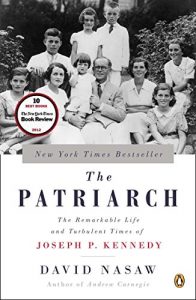
I have emphasized before that, although very different in character, John and Robert Kennedy may be seen, from the point of view of their historical significance, as one person killed twice. But it should be stressed that their unity was grounded in their filial piety. I learned from David Nasaw’s biography, The Patriarch: The Remarkable Life and Turbulent Times of Joseph P. Kennedy (2012), that it was their father Joe who insisted that Jack name Bobby Attorney General, because “Jack needed someone in the cabinet in whom he had complete and absolute trust.” Robert didn’t like the idea, arguing that “nepotism was a problem,” and John was reluctant to pressure Bobby.
He decided to offer Bobby the number two position at the Defense Department and asked Clark Clifford, who was running his transition team, to go to New York to explain to [Joe] Kennedy, who had flown there after visiting Jackie and his new grandson in the hospital, why Bobby should not be named attorney general. Clifford agreed, though he thought it rather odd that the president-elect had asked “a third party to try to talk to his father about his brother.” Clifford met Kennedy at Kennedy’s apartment and presented his carefully rehearsed case against the appointment. “I was pleased with my presentation; it was, I thought, persuasive. When I had finished, Kennedy said, ‘Thank you very much, Clark. I am so glad to have heard your views.’ Then, pausing a moment, he said, ‘I do want to leave you with one thought, however — one firm thought.’ He paused again, and looked me straight in the eye. ‘Bobby is going to be Attorney General. All of us have worked our tails off for Jack, and now that we have succeeded I am going to see to it that Bobby gets the same chance that we gave to Jack.’ I would always,” Clifford recalled years later, “remember the intense but matter-of-fact tone with which he had spoken — there was no rancor, no anger, no challenge.” The father had spoken, and his sons, on this issue at least, were expected to obey.[1]
Although there is no recorded statement to that effect, Joe probably envisioned that Robert could succeed Jack as president in 1968. And it is easy to imagine that, had John survived and been reelected in 1964, Robert, with John’s support and under his watch, could have inherited the White House. We may ponder what the world would be like today had there been Kennedys in the White House until 1976.
John and Robert shared a common horror of modern war, and that, too, was their father’s legacy. John was a genuine war hero decorated with the Navy and Marine Medal for “extremely heroic conduct.” Yet on Victory in Europe Day, May 8, 1945, as a young journalist covering the founding conference of the United Nations in San Francisco, he wrote in the Herald-American: “Any man who had risked his life for his country and seen his friends killed around him must inevitably wonder why this has happened to him and most important what good will it do. . . . it is not surprising that they should question the worth of their sacrifice and feel somewhat betrayed.”[2] When announcing his candidacy for Congress on April 22, 1946, JFK declared: “Above all, day and night, with every ounce of ingenuity and industry we possess, we must work for peace. We must not have another war.”[3] Hugh Sidey, one of his journalist friends, wrote about him: “If I had to single out one element in Kennedy’s life that more than anything else influenced his later leadership it would be a horror of war, a total revulsion over the terrible toll that modern war had taken on individuals, nations, and societies, and the even worse prospects in the nuclear age. . . . It ran even deeper than his considerable public rhetoric on the issue.”[4] John once said to his friend Ben Bradlee that he believed that “the primary function of the president of the United States [was] to keep the country out of war.”[5]
That was the conviction that had guided his father throughout his political life in Franklin Roosevelt’s government, until his resignation in December 1940. As U.S. ambassador to London, Joe Kennedy wholeheartedly supported Neville Chamberlain’s policy of “appeasement” in 1938-39. He wanted peace as passionately as Churchill wanted war. “I am pro-peace, I pray, hope, and work for peace,” Joe declared on his first return from London to the U.S. in December 1938.[6] For this, he ended in the wrong side of history, which Churchill took care to write himself.
Like his father, President Kennedy was a determined peacemaker, and those in the Pentagon who wanted to push the U.S. into a third world war tried to destabilize him with insinuations that he was an appeaser like his father. On October 19, 1962, in the heat of the Cuban Missile Crisis, as Kennedy resolved to blockade Soviet shipments rather than bomb and invade Cuba, General Curtis LeMay scornfully told him, “This is almost as bad as the appeasement at Munich . . . I just don’t see any other solution except direct military intervention right now.”[7]
The stain of his father’s record as a Hitler-appeaser had followed John like a shadow. Although the press had not published it, it was no secret in the Pentagon and the CIA that the U.S. army had discovered in 1946, in Berlin’s Foreign Office, reports about Joe’s meetings with German ambassador von Ribbentrop and his successor von Dirksen, that said that Joe was Germany’s “best friend” in London and “understood our Jewish policy completely.”[8]
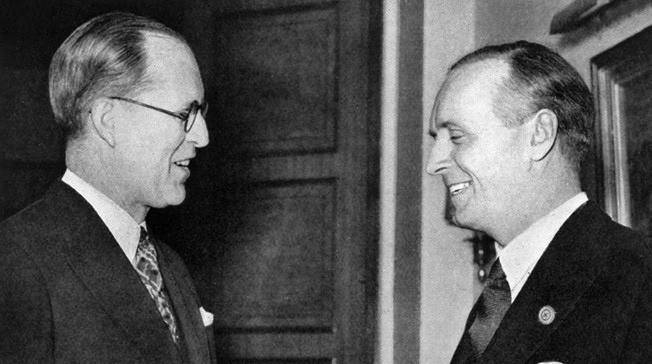
Ambassadors Joseph P. Kennedy and Joachim von Ribbentrop
In a joint debate during the 1960 Democratic convention, Johnson had attacked John as being the son of a “Chamberlain umbrella man” who “thought Hitler was right.”[9] During Kennedy’s presidential campaign, the Israeli press worried that Kennedy’s father “never loved the Jews and therefore there is a question about whether the father did not inject some poisonous drops of anti-Semitism in the minds of his children, including his son John’s.”[10] Abraham Feinberg recalls that when he invited Kennedy to his apartment to discuss his campaign funding with “all the leading Jews,” one of them set the tone with this remark: “Jack, everybody knows the reputation of your father concerning Jews and Hitler. And everybody knows that the apple doesn’t fall far from the tree.” Kennedy came back outraged from that meeting (but with the promise of $500,000).[11] When meeting the new president on May 30, 1961 in New York, Ben-Gurion could not help but see in him the son of a Hitler-appeaser. Feinberg (who arranged the meeting) recalls that “Ben-Gurion could be vicious, and he had such a hatred of the old man [Joe Kennedy].”[12]
 Is Joe’s bad reputation among Jews relevant to the assassination of his two sons? Many Jewish authors think it is. In his book The Kennedy Curse, purporting to explain “why tragedy has haunted America’s first family for 150 years”, Edward Klein links the “Kennedy curse” to Joe’s anti-Semitism, citing a story “told in mystical Jewish circles” (perhaps made up by Klein) according to which, in “retaliation” to some remark Joe made to “Israel Jacobson, a poor Lubavitcher rabbi and six of his yeshiva students, who were fleeing the Nazis,” “Rabbi Jacobson put a curse on Kennedy, damning him and all his male offspring to tragic fates.”[13] Ronald Kessler, for his part, wrote a book titled, The Sins of the Father — a not so subtle allusion to Exodus 20:5: “I, Yahweh, am a jealous God, punishing the children for the sin of the parents to the third and fourth generation of those who hate me.” Naturally, for Kessler, Joe Kennedy’s worst sin was that “he was a documented anti-Semite and an appeaser of Adolf Hitler” who “admired the Nazis.”[14]
The “Kennedy curse” did run into the third generation and possibly the fourth, when John’s only son died in a suspicious plane accident on July 16, 1999, with his wife, possibly pregnant. Five days later, John Podhoretz, son of neoconservative luminary Norman Podhoretz, published in the New York Post an opinion piece titled “A Conversation in Hell” in which he imagined Satan speaking to Joe Kennedy in Hell. The devil rejoices at the idea of eternally torturing Joe for “saying all those nice things about Hitler,” and brags of having caused the death of his grandson because, he says: “When I make a deal for a soul like yours, I need to season it before I’m ready to put it in the infernal oven.” This hateful fantasy, which is reminding of the Talmud’s depiction of Jesus in Hell, illustrates the devouring hatred of some Jewish intellectuals toward the Kennedys, and the root of that hatred in Joe Kennedy’s effort to prevent the Second World War.[15]
Interestingly, Podhoretz’s devil (or is it Yahweh?) accuses Kennedy of having done “everything you could to prevent Jewish emigration from Nazi Germany. Thousands of Jews died because of you.” The truth is exactly the opposite. In 1938, the “Kennedy Plan”, as the press called it, was to rescue German Jews. Since the U.S. government refused to open its borders to Jewish refugees, and since Great Britain strictly limited Jewish immigration to Palestine, Joe was urging the British government to open up its African colonies for temporary resettlement. “To facilitate the resettlement process,” Nasaw writes, “Kennedy volunteered to Halifax that he ‘thought that private sources in America might well contribute $100 or $200 million if any large scheme of land settlement could be proposed.’”[16] The plan was presented to Chamberlain just days after Kristallnacht (9-10 November 1938), and was supported by Jewish financier Bernard Baruch. But it angered the Zionists, who didn’t want to hear about any Jewish emigration except to Palestine, because, Ben-Gurion said, it “will endanger the existence of Zionism.”[17] Therefore, today, the “Kennedy Plan” is reviled as a kind of “final solution to the Jewish question,” and further proof that Joe was Israel’s mortal enemy.[18]
If Jewish hatred of Joe Kennedy could still inspire Podhoretz’s nasty column in 1999, imagine how deep it ran in the 1960s. At the height of his showdown with JFK over Dimona, 25 April 1963, Ben-Gurion wrote him a seven-page letter explaining that his people was threatened with extermination by a newly formed Arab Federation, just like when “six million Jews in all the countries under Nazi occupations (except Bulgaria), men and women, old and young, infants and babies, were burnt, strangled, buried alive.” “Imbued with the lessons of the Holocaust,” Avner Cohen comments, “Ben Gurion was consumed by fears for Israel’s security.”[19] He was enraged by what he saw as Kennedy’s obvious lack of concern for his people’s security, and at this point, he must have decided that Kennedy was indeed his father’s son, a modern-day Haman.
Before we get to the main piece of evidence of a direct relationship between Joe Kennedy’s appeasement policy and John Kennedy’s assassination, let us get an overview of Joe’s public career, using mainly David Nasaw’s biography and on Michael Beschloss’s Kennedy and Roosevelt: The Uneasy Alliance (1979).
Joe Kennedy entered national politics as a supporter of Roosevelt in his first presidential campaign in 1932. In July 1934, Roosevelt asked him to chair the newly created Securities and Exchange Commission, charged with bringing the New Deal to Wall Street by regulating and disciplining the Stock Exchange market. Kennedy announced: “the days of stock manipulation are over. Things that seemed all right a few years ago find no place in our present-day philosophy.” According to Beschloss, Kennedy “won almost universal praise for his salesmanship, political acumen, and ability to moderate conflicting sides that encouraged capital investment and economic recovery.” “Few were more impressed by Kennedy’s accomplishment than the man who hired him,” and “Joseph Kennedy increasingly became a familiar figure at the White House.”[20]
In 1936, Joe supported Roosevelt’s second campaign with a book titled I’m for Roosevelt (mostly ghost-written by Arthur Krock). He was hoping to be named Secretary of the Treasury, but Henry Morgenthau Jr. also wanted the job, and got it. Instead, Roosevelt named Joe chairman of the Maritime Commission, and one year later made him ambassador to London. As war was brooding in Europe, this was an important position, and Joe made it more important by often overstepping his Secretary of State Cordell Hull’s instructions.
He supported Chamberlain’s position that the territorial integrity of Czechoslovakia was not worth a war, declaring in September 2, 1938, “for the life of me I cannot see anything involved which could be remotely considered worth shedding blood for,” a statement for which he was reprimanded by Hull and Roosevelt.[21] On October 19, Joe began another speech by jokingly listing the topics he had decided not to talk about, including “a theory of mine that it is unproductive for both democratic and dictator countries to widen the division now existing between them by emphasizing their differences, which are self-apparent.”[22] Hull held a press conference the next morning to clarify that Kennedy had been speaking for himself, not the government, and Roosevelt delivered his own display of belligerence: “There can be no peace if national policy adopts as a deliberate instrument the threat of war.”[23]
In the meantime, without informing Hull, Kennedy had summoned Charles Lindbergh to London and asked him to write a letter, to be forwarded to Washington and to Whitehall, summarizing his view regarding the strength of the Luftwaffe. Lindbergh had just visited German airfields (and been presented the Service Cross of the German Eagle by Goering), and concluded that the Luftwaffe would be unassailable in a war of the skies. Kennedy then arranged a meeting between Lindbergh and an official of the British air ministry.[24] His diplomatic strategy consisted in trying to convince the British that Germany was unbeatable and that the U.S. wouldn’t join the fight, so that the British had better come to terms with Germany, whose territorial claims were justified anyway.
In the same period, Joe made plans to meet in Paris with Dr. Helmuth Wohlthat, Goering’s chief economic adviser, with whom he had made contact through James Mooney, the president of General Motors Overseas. As Nasaw explains, “Kennedy was in effect laying the groundwork for a new appeasement strategy, one that would buy Hitler off by providing him with the means to convert his war economy to a peace economy.”[25] Hull forbade him to go to Paris, so Joe met Wohlthat in London without informing Hull.
 In August 23, 1939, a week before Hitler invaded Poland, Kennedy urged Roosevelt, in vain, to pressure the Polish government to cede territory to Germany.[26] After Hitler’s invasion, Kennedy, like Chamberlain, was heartbroken: “It’s the end of the world . . . the end of everything,” he told Roosevelt on the phone.[27] But a week later, he was still urging him to save peace, writing him: “It seems to me that this situation may crystallize to a point where the President can be the savior of the world. The British government as such certainly cannot accept any agreement with Hitler, but there may be a point when the President himself may work out plans for world peace.”[28] He got his response from Hull: “The people of the United States would not support any move for peace initiated by this Government that would consolidate or make possible a survival of a regime of force and of aggression.”
Simultaneously, Roosevelt was initiating direct contact with Churchill, now First Lord of the Admiralty and soon to be Prime Minister. From Roosevelt’s letters, Churchill got enough confidence that the U.S. would ultimately join the war if it broke out, and he bet everything on it. Joe was infuriated when learning about this most irregular channel of communication, at a time when the President was bound by neutrality laws and the American people overwhelmingly opposed to U.S. engagement. Joe was particularly distressed by Roosevelt’s trust in Churchill, whom Joe considered “an actor and a politician. He always impressed me that he’d blow up the American Embassy and say it was the Germans if it would get the U.S. in.”[29] In early December 1939, Kennedy confided to Jay Pierrepont Moffat of the State Department that Churchill “is ruthless and scheming. He is also in touch with groups in America which have the same idea, notably, certain strong Jewish leaders.”[30]
 After the defeat of France, Kennedy saw a new opportunity for peace. He cabled Washington on May 27, 1940, recommending that the President push Britain and France to negotiate an end to the crisis, as Lord Halifax, still Foreign Secretary, was actually proposing. “I suspect that the Germans would be willing to make peace with both the French and British now — of course on their own terms, but on terms that would be a great deal better than they would be if the war continues.”[31]
Although aware that Roosevelt was now ignoring him, Joe remained at his post until October 1940. Before leaving, he wrote a note to Chamberlain, then a broken and dying man: “For me to have been any service to you in your struggle is the real worthwhile epoch in my career. You have retired but mark my words the world will yet see that your struggle was never in vain. My job from now on is to tell the world of your hopes. Now and forever, Your devoted friend, Joe Kennedy.”[32] Joe Kennedy was still a convinced appeaser, determined to give peace every chance.
David Irving mentions that, before boarding a ship from Lisbon to New York, Kennedy “pleaded with the State Department to announce that, even if this vessel mysteriously blew up in mid-Atlantic with an American ambassador on board, Washington would not consider it a cause for war. ‘I thought,’ wrote Kennedy in his scurrilous unpublished memoirs, ‘that would give me some protection against Churchill’s placing a bomb on the ship.’”[33]
Kennedy arrived in New York October 27, a week before election day. He knew enough of Roosevelt’s secret contacts with Churchill to endanger his reelection. He was seriously considering speaking out to the press. In a wire to his lover and admirer Clare Booth Luce, he promised a bombshell that would “put twenty-five million Catholic voters behind [Republican candidate] Wendell Willkie to throw Roosevelt out.”[34]
But Joe had a strong sense of loyalty, and his wife reminded him of a political truth instinctive to them both: “The President sent you, a Roman Catholic, as Ambassador to London, which probably no other President would have done. . . . You would write yourself down as an ingrate in the view of many people if you resign now.”[35] After a long conversation with Roosevelt on the day of his arrival, of which nothing has transpired, Kennedy gave a radio address over CBS on October 29 to endorse Roosevelt, but not without reasserting his “conviction that this country must and will stay out of war.” A few days later, with Joe Kennedy by his side, Roosevelt made his own pledge: “I have said this before, but I shall say it again and again and again: Your boys are not going to be sent into any foreign wars!”[36] Roosevelt was elected. On December 1, 1940, Kennedy delivered his resignation letter, and told reporters: “My plan is . . . to devote my efforts to what seems to me to be the greatest cause in the world today . . . That cause is to help the President keep the United States out of war.”[37]
On December 17, Roosevelt revealed at a press conference his plans to provide billions of dollars in war supplies to Great Britain in the form of Lend-Lease (eventually, the U.S. would supply England with $13 billion). Joe expressed privately his feeling of having been exploited by the President. But he stayed in relatively good terms with Roosevelt, although he refused to support his nomination for a fourth term, when he visited him on October 26, 1944 in the White House. Kennedy recorded in his notes telling the President — a very sick man — that the Catholic voters were hesitant to vote for him because “they felt that Roosevelt was Jew controlled.” He added that he agreed “with the group who felt that the Hopkins, Rosenmans, and Frankfurters, and the rest of the incompetents would rob Roosevelt of the place in history that he hoped, I am sure, to have. . . . Roosevelt went on to say ‘Why, I don’t see Frankfurter twice a year.’ And I said to him, ‘You see him twenty times a day but you don’t know it because he works through all these other groups of people without your knowing it.’”[38]
After his resignation in 1941, Joe had envisioned writing a memoir of his London years, and told his friend and former president Herbert Hoover that the book would “put an entirely different color on the process of how America got into the war and would prove the betrayal of the American people by Franklin D. Roosevelt.” But, Beschloss comments, “the necessities of wartime unity and, later, his sons’ political careers kept Joseph Kennedy’s diplomatic memoir out of print, where it remained.”[39]
Here, there is an interesting parallel with James Forrestal, another American patriot of Irish Catholic stock and a friend of Joe Kennedy. As David Martin shows in his book The Assassination of James Forrestal (summarized here), when Forrestal was pushed out of the Defense Department by Truman in March 1949, he planned to write a book and to start a magazine. As Navy Secretary, he had gained inside knowledge of Roosevelt’s scheme to provoke the Japanese into attacking Pearl Harbor. In 1945, he had worked behind the scene to achieve a negotiated surrender from the Japanese, and was very bitter about Roosevelt’s demand for “unconditional surrender” and the unnecessary suffering imposed on the Japanese. Forrestal had also much to say about the way the Zionists obtained the Partition Plan at the U.N. General Assembly, or about the way Truman was bought into supporting the recognition of Israel. On April 2, 1949, Forrestal was interned against his will and forcibly confined in the 16th floor of the Navy hospital of Bethesda, and on May 22 was declared to have fallen from a window while trying to hang himself from it with a dressing-gown sash. No criminal investigation was conducted, but the evidence obtained by David Martin through a Freedom of Information Act leaves no doubt that he was assassinated by the Zionist mafia.
It is easy to imagine that, had Joe Kennedy decided to expose Roosevelt’s betrayal of the American people and the Jewish intrigues to push him into the war, he might have suffered the same fate as Forrestal. Instead, he retired from public life and devoted his remaining influence to his sons’ political future. Despite the death of his eldest son Joe Jr. in a high-risk mission in 1944, he achieved his presidential ambition through his second son. The “Kennedy curse,” however, would ultimately catch up with his lineage.
John Kennedy’s Intellectual Filiation
John has always been loyal to his father’s memory, and there is enough evidence that he shared his most fundamental principles and his views of World War II. In 1956, in his book Profiles in Courage, John praised Senator Robert Taft for having, at tremendous personal cost, denounced in 1946 the hanging of eleven Nazi officials as “a blot on the American record which we shall long regret.”[40] One symbolic hint of President Kennedy’s intellectual and political filiation with his father was his invitation of Charles Lindbergh on May 11, 1962, for a grand reception at the White House. Lindbergh and his wife caused a sensation when they dined at the presidential table and stayed overnight at the White House.[41] Let’s recall that, in September 1940, Lindbergh had been a founding member of the America First Committee and the staunchest critic of Roosevelt’s ploys to drag the U.S. into the war.[42] His reputation had suffered tremendously from his criticism of Jewish influence, and he had been living as a recluse ever since.
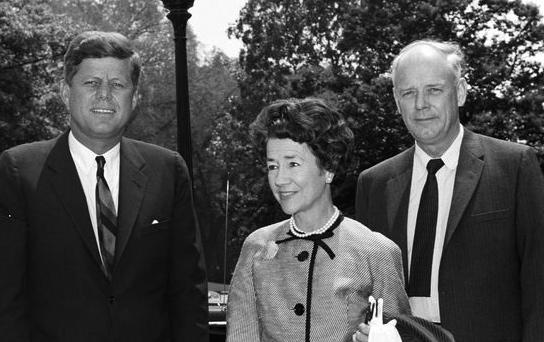
Kennedy had nothing to gain politically from inviting Lindbergh very publicly to the White House. The significance of this gesture should not be underestimated. It probably demonstrates a wish to vindicate the vilified appeasers of 1938-40. Lindbergh at the White House may have been a sign that the wheel was turning, and that history would soon be written in a more balanced way. John’s assassination halted and reversed this movement. Half a decade later, along with the expansion of Israel, the dark cult of the Holocaust would start swamping over the U.S. and the world. Arguably, if Kennedy had lived, there would be no compulsory Holocaust religion today.
For those like David Ben-Gurion whose self-image and worldview revolved around the Holocaust, the Kennedy brothers were essentially sons of a Hitler-appeaser and Nazi-supporter, and their leadership of the United-States was an existential threat as well as an intolerable insult. Although, for obvious reasons, this murderous hatred is seldom expressed publicly (John Podhoretz’s “A Conversation in Hell” is a remarkable exception), it is a critical fact to take into account in our quest to solve the mystery of the “Kennedy curse.” And it sheds a bright light on one of the most bizarre aspects of JFK’s assassination.
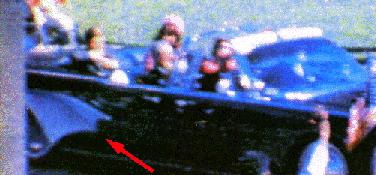
In his 1967 book titled Six Seconds in Dallas: a micro-study of the Kennedy assassination proving that three gunmen murdered the President, Josiah Thompson first drew attention to a character who can be seen on the Zapruder film and on other photographs taken in Dealey Plaza at the moment of JFK’s assassination. Here is how Thompson presents him in a short video recorded by Errol Morris for the New York Times in 2011:
On November 22nd, it rained the night before. But everything cleared by about 9 or 9:30 in the morning. So if you were looking at various photographs of the motorcade route, in the crowd gathered there, you will have noticed: nobody is wearing a raincoat, nobody has an open umbrella. Why? Because it’s a beautiful day. And then I noticed: in all of Dallas, there appears to be exactly one person standing under and open black umbrella. And that person is standing where the shots began to rain into the limousine. Let us call him “the umbrella man”. . . . You can see him in certain frames from the Zapruder film, standing right there by the Stemmons Freeway sign. There are other still photographs taken from other locations in Dealey Plaza, which shows the whole man standing under an open black umbrella — the only person under any umbrella in all of Dallas, standing right at the location where all the shots come into the limousine. Can any one come up with a non-sinister explanation for this? So I published this in Six Seconds, but didn’t speculate about what it meant . . . Well, I asked that the Umbrella Man to come forward and explain this. So he did. He came forward and he went to Washington with his umbrella, and he testified in 1978 before the House Select Committee on Assassinations. He explained then why he had opened the umbrella and was standing there that day. The open umbrella was a kind of protest, a visual protest. It wasn’t a protest of any of John Kennedy’s policies as president. It was a protest at the appeasement policy of Joseph P. Kennedy, John Kennedy’s father when he was ambassador to the court of Saint James in 1938 and 39. It was a reference to Neville Chamberlain’s umbrella.[43]
The black umbrella had been Chamberlain’s iconic trademark, and, after his return from Munich, a symbol of “appeasement”, both for those who supported it (some old ladies “suggested that Chamberlain’s umbrella be broken up and pieces sold as sacred relics”)[44] and for those who opposed it (“Wherever Chamberlain traveled, the opposition party in Britain protested his appeasement at Munich by displaying umbrellas,” according to Edward Miller).
The Umbrella Man was Louie Steven Witt, and had been identified by local newsmen before he came forward to the HSCA. Josiah Thompson assumes that his “visual protest” and JFK’s assassination are unrelated, and that they happened at the exact same time and place by some kind of quantum-physics coincidence. He cannot bring himself to see the connection, even though the Umbrella Man himself made it clear to the HSCA that he wanted to “heckle” JFK about his father’s appeasement of Hitler in 1938. Knowing what we know about Jewish perception of the “Kennedy curse” as linked to the “sins of the father”, we cannot but find Thompson’s refusal to see anything conspiratorial as very typical of Gentile self-induced blindness.
Was Louie Steven Witt a Zionist agent, a sayan? Not necessarily. He might have been instructed to do what he did without knowing that Kennedy would be killed right in front of him. On the other hand, the explanation he gave for his “bad joke” sounds disingenuous: “In a coffee break conversation,” he said, “someone had mentioned that the umbrella was a sore spot with the Kennedy family. . . . I was just going to kind of do a little heckling.” Witt carefully avoided mentioning why the umbrella was “a sore spot with the Kennedy family.” He also avoided naming Joe Kennedy when he said that he had heard that “some members of the Kennedy family” had once been offended in an airport by people brandishing umbrellas. The “airport” sounds like an allusive reference to Chamberlain’s widely publicized return at the Heston Aerodrome on 30 September 1938. There is clearly a cryptic undertone in Witt’s explanation. For those Unz Review readers who have ears to hear and eyes to see, executing JFK while “heckling” him about his father’s appeasement policy should be an unmistakable signature. Chamberlain’s umbrella is Kennedy’s cross.
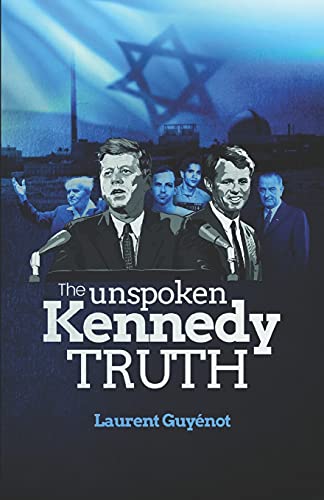
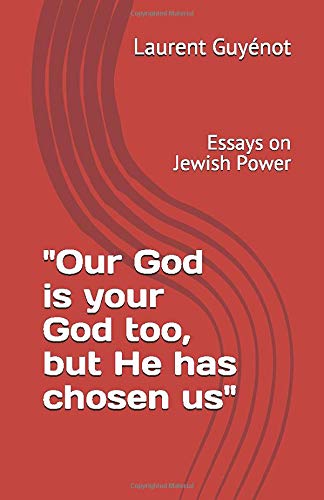
Laurent Guyénot, Ph.D., is the author of The Unspoken Kennedy Truth(2021), Essays on Jewish Power(2020), and From Yahweh to Zion (2018).
Notes
[1] David Nasaw, The Patriarch: The Remarkable Life and Turbulent Times of Joseph P. Kennedy, Penguin Books, 2012, pp. 818-819.
[2] Christ Matthews, Jack Kennedy, Elusive Hero, Simon & Schuster, 2011, pp. 71-72.
[3] James Douglass, JFK and the Unspeakable: Why He Died and Why It Matters, Touchstone, 2008, p. 5.
[4] Quoted in Robert Kennedy, Jr., American Values: Lessons I Learned from My Family, HarperCollins, 2018, p. 101.
[5] Quoted in Robert Kennedy, Jr., American Values, p. 101.
[6] Michael R. Beschloss, Kennedy and Roosevelt: The Uneasy Alliance, Open Road, 1979, p.187.
[7] Douglass, JFK and the Unspeakable, p. 21.
[8] Nasaw, The Patriarch, p. 349.
[9] Robert Caro, The Years of Lyndon Johnson, vol. IV: The Passage of Power, Alfred Knopf, 2012, p. 104. Also in Arthur Krock, Memoirs: Sixty Years on the Firing Line, Funk & Wagnalls, 1968, p. 362.
[10] In the journal of the Herut, Menachem Begin’s political party, quoted in Alan Hart, Zionism: The Real Enemy of the Jews, vol. 2: David Becomes Goliath, Clarity Press, 2013, p. 252.
[11] Seymour Hersh, The Samson Option: Israel’s Nuclear Arsenal and American Foreign Policy, Random House, 1991, p. 96.
[12] Hersh, The Samson Option, p. 103.
[13] Edward Klein, The Kennedy Curse: Why Tragedy Has Haunted America’s First Family for 150 Years, Saint Martin’s Press, 2004.
[14] Ronald Kessler, The Sins of the Father: Joseph P. Kennedy and the Dynasty He Founded, Coronet Books, 1997, quotes from the publisher’s presentation and the back cover.
[15] John Podhoretz, “A Conversation in Hell,” New York Post, July 21, 1999, on nypost.com
[16] Nasaw, The Patriarch, pp. 403-406.
[17] Alan Hart, Zionism: The Real Enemy of the Jews, vol. 1: The False Messiah, Clarity Press, 2009, p. 164.
[18] Clive Irving, “Joe Kennedy’s answer to the Jewish question: ship them to Africa,” Apr. 14, 2017, on www.thedailybeast.com
[19] Avner Cohen, Israel and the Bomb, Columbia UP, 1998, pp. 10, 119.
[20] Beschloss, Kennedy and Roosevelt, pp. 105-109.
[21] Nasaw, The Patriarch, p. 373; also Beschloff, Kennedy and Roosevelt, p. 180.
[22] Nasaw, The Patriarch, p. 396.
[23] Beschloss, Kennedy and Roosevelt, pp. 185-186.
[24] Beschloss, Kennedy and Roosevelt, p. 182.
[25] Nasaw, The Patriarch, p. 425.
[26] Nasaw, The Patriarch, p. 445.
[27] Beschloss, Kennedy and Roosevelt, p. 199.
[28] Beschloss, Kennedy and Roosevelt, p. 201.
[29] Nasaw, The Patriarch, pp. 460-461. The quote is from Joe Kennedy’s diary, according to David Irving, who renders it slightly differently in Churchill’s war, vol. 1: The Struggle for Power, Focal Point, 2003, p. 207.
[30] Nasaw, The Patriarch, p. 476.
[31] Nasaw, The Patriarch, p. 496.
[32] Nasaw, The Patriarch, p. 534.
[33] David Irving, Churchill’s war, vol. 1: The Struggle for Power, Focal Point, 2003, p. 207.
[34] Beschloss, Kennedy and Roosevelt, pp. 15-16.
[35] Beschloss, Kennedy and Roosevelt, pp. 43 and 230.
[36] Beschloss, Kennedy and Roosevelt, pp. 235-237.
[37] Beschloss, Kennedy and Roosevelt, p. 247.
[38] Nasaw, The Patriarch, p. 625; Beschloss, Kennedy and Roosevelt, p. 279.
[39] Beschloss, Kennedy and Roosevelt, p. 273.
[40] Robert Taft, October 6, 1946, quoted in John F. Kennedy, Profiles in Courage, 1956, Harper Perennial, 2003 , p. 199.
[41] “Visit of Charles A. Lindbergh”, on www.jfklibrary.org
[42] Lynne Olson, Those Angry Days: Roosevelt, Lindbergh, and America’s Fight Over World War II, 1939-1941, Random House, 2013.
[43] “The Umbrella Man”, on Vimeo.com or YouTube
[44] Patrick J. Buchanan, Churchill, Hitler, and “The Unnecessary War”: How Britain Lost Its Empire and the West Lost the World, Crown Forum, 2008, p. 208.
Pro-lockdown polling is not as clear as you might think
Does one-fifth of the country really support nighttime curfews?
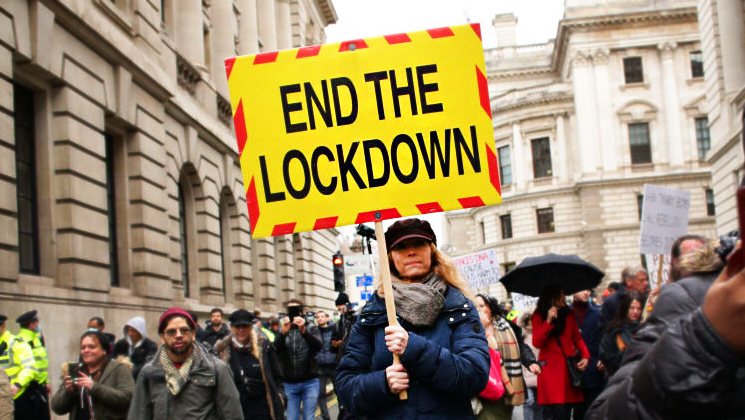
Covid lockdowns may be coming to an end, but what about climate lockdowns?
By Amy Jones | Unherd | July 9, 2021
A new poll on the public’s views of Covid restrictions has been doing the rounds this week, and the results may come as a shock to many. They find that, of the people surveyed, 40% wished to continue with masks permanently, 26% were in favour of shutting casinos and clubs forever, and an astonishing 19% were in favour of a permanent 10pm curfew. Has Britain become a nation of authoritarians?
We’ve seen results like this before. Over the last 16 months, poll after poll has shown high levels of public approval for lockdowns and restrictions, which feels hard to square with the scenes of people emphatically celebrating the England victory on the streets this week.
That may be because, as a new study shows, the polling data is not all that it seems. Examining public attitudes towards restrictions, researchers at the Royal Society asked a sample of the public about their opinions on lockdown, twice over a 6 month period, first in June 2020, then again in December. Beyond standard questions about approval for lockdown and restrictions, they dug a little deeper, and asked participants what their views were on topics such as the side effects and trade-offs of restrictions, how they judged the threat of covid, and whether they felt this threat was mostly an individual threat, or a societal threat.
As anticipated, participants were in favour of lockdowns and almost all restrictions suggested. But when they were asked about their feelings about side effects (e.g. depression, obesity and abuse) of these policies, the picture changed. In fact, a majority of people appreciated that there were significant side effects and were generally unsure if the trade-offs were worthwhile. Essentially, a picture of ambivalence emerged.
There were some other interesting findings: public assessment of the risk of Covid was generally not related to individual threat, but to the threat to society as a whole. The fact that lockdown was considered necessary by the Government itself increased perception of the threat Covid posed to society. This in turn fed into public approval of lockdowns, essentially making it a self-fulfilling prophecy.
The researchers also found that this applied to support for restrictions. Due to the “apparent moralisation” (just this week, a WHO member accused the Government of “moral emptiness” for loosening restrictions) of the issue, there was more support for tighter measures. This then fed into participants’ responses, who in wishing to give socially acceptable answers, voiced support for restrictions.
It would therefore seem that public attitudes towards restrictions are far more complex than the headlines and polls suggest. Public feelings on restrictions are nuanced, and multifaceted — as one would expect, given the benefits, risks and huge trade-offs. Distilling complex issues into soundbites and simple figures only muddies the water further. So next time you see a poll claiming that nearly one-fifth of the population supports a permanent curfew, treat it with a heavy dose of scepticism. Journalists and politicians, that applies to you too.
Amy Jones is an anonymous doctor working in the NHS, who has a background in Philosophy & Bioethics.
Fearmongers Try One Last Desperate Trick
By Tom Woods | Principia Scientific | July 9, 2021
Something very weird happened yesterday, even by the standard of the COVID crazies.
UK Prime Minister Boris Johnson announced the end of masking and social distancing requirements as of July 19.
Shortly afterward, someone on Twitter warned that this was a bad move:
“My brother has just tested positive for Covid. The delta variant. He has been double jabbed. How on earth can Johnson go ahead with relaxing the rules on the 19th July? It’s madness.”
Now before you start thinking of replies to this person — and there are many — I want you to notice something. Apparently this guy has a lot of brothers:

Well, whatever happens to this guy, at least he’ll have a big family by his side!
Life Will Be Very Different For The Have Jabs & The Have Nots
By Richie Allen | July 10, 2021
The Times newspaper is claiming this morning, that vaccine passports or covid certificates will be a condition of entry to pubs nightclubs and restaurants this Autumn. The paper reports:
Entertainment venues in England would be forced to make customers use so-called vaccination passports from autumn, to prove that they had either had both doses or a negative test the day before.
Recent figures have shown a reduction in the take-up of vaccines with first doses halving in two weeks. Fewer than 100,000 a day are being given out on average for the first time since April.
The government will justify the draconian measure by claiming that it is necessary to prevent a fourth wave of coronavirus overwhelming the NHS this Winter.
Government ministers have told The Times that by mid-September all over-18’s will have had the chance to be double jabbed. According to The Times :
Another government figure added: “If we can show real benefits of getting vaccinated in terms of everyday life then it could be quite a useful tool.”
I did call this early last year, before anyone had ever heard of a vaccine passport. I said that in the very near future people would need to prove that they were safe in order to travel or to socialise.
When vaccine minister Nadhim Zahawi said that the UK wasn’t “the sort of country to introduce such measures,” I said he was lying. It’s open tyranny now. Yet there will be very little outrage and lots of compliance.
This isn’t a dystopian novel. It’s life now. Your government is telling you that unless you submit yourself for regular injections and constant testing, you cannot leave the country and are forbidden to socialise.
Life will be very different for the have jabs and the have nots. If I thought that they would leave the have nots alone, I could live with it. But they won’t. The coercion will continue. They will not accept that we won’t surrender to the jab.
The question is, how far will they go?
Featured Video
HE SAVED LIVES. NOW HE FACES PRISON.
or go to
Aletho News Archives – Video-Images
From the Archives
NATO Sanctions and the Coming Global Diesel Fuel Disaster
By F. William Engdahl – New Eastern Outlook – 11.04.2022
Amid the ongoing global inflation crisis, NATO heads of state and mainstream media repeat a mantra that high energy prices are a direct result of Putin’s actions in Ukraine since end of February. The reality is that it is the western sanctions that are responsible. Those sanctions including cutting SWIFT interbank access for key Russian banks and some of the most severe sanctions ever imposed, are hardly having an impact on the military actions in Ukraine. What many overlook is the fact that they are increasingly impacting the economies of the West, especially the EU and USA. A closer look at the state of the global supply of diesel fuel is alarming. But Western sanctions planners at the US Treasury and the EU know fully well what they are doing. And it bodes ill for the world economy.
While most of us rarely think about diesel fuel as anything other than a pollutant, in fact it is essential to the entire world economy in a way few energy sources are. The director general of Fuels Europe, part of the European Petroleum Refiners Association, stated recently, “… there is a clear link between diesel and GDP, because almost everything that goes into and out of a factory goes using diesel.” … continue
Blog Roll
 Aletho News
- Qatar PM calls for Gulf security framework with Iran, says war must be ‘wake-up call’
- China condemns US extortion of Iranian airlines, rejects Washington’s ‘illegal’ sanctions threats
- Italy to move military personnel from Taif base after missile strike
- Finland’s Stubb tells European leaders to calm down
- Defeating Russia on battlefield impossible – Fico
- Finland’s Gender Clinic Reversal
- Massachusetts Wants Mental Health Visits, Why Does Government Use ‘Health’ to Enter Our Homes & Families?
- US lawmaker admits American people footing bill for Trump’s failed aggression against Iran
- Pfizer Gave $500,000 to Groups That Lobbied to End Religious Exemption in Massachusetts
- HE SAVED LIVES. NOW HE FACES PRISON.
- If Americans Knew
- Sanctions are collective punishment: immoral and self-defeating
- Phosphorus Munitions Fired by Israel Burn Groves, Orchards in Southern Lebanon
- Israel Carries Out New Ceasefire Violations Across Gaza
- AI – Emphasis on the ‘I’: Israel Is Funding AI Chatbot Propaganda
- Israel Blocking Hundreds of Wheelchairs for Injured Children From Entering Gaza
- Israel Is Expanding and Upgrading Compounds for Palestinian Militias in Gaza
- The Palestinian-American Residents of This West Bank Town Are Wondering: Where Is Trump?
- Gaza desperately needs tents, wheelchairs, fuel… and everything else (Israel blocks it all) – Daily Update
- Israeli Attacks in Gaza Kill at Least Seven Palestinians Over Three Days, including Woman and Child
- Trump’s militarization of Washington DC as he pursues Israel’s war against Iran
- No Tricks Zone
- 2025 Nature Paper Claiming Worsening Global Drought Gets RETRACTED …Heavily Flawed
- New Study: ‘Global Drought Shows No Detectable Recent Acceleration Under Climate Warming’
- Economic Masterminds: German Socialists Suggest Taxing Productivity Gains Stemming From Using AI
- The South China Sea Has Not Been Cooperating With The Climate Change Narrative
- Energy Crisis: Germany Enters Heating Season With Historically Low Gas Reserve Fill Levels
- New Study: The Antarctic Ice Sheet Gained Mass From 2020-2024 Due To Staggering Snow And Ice Accumulation
- Study: Ocean Heating Rates From Thousands Of Years Ago ‘Dwarf’ Modern Ocean Heating Rates
- Climate Extremists Target, Attack Large-Scale Power Grid Infrastructure In Germany!
- New Study: Antarctic Ice Melt Has Contributed Less Than 1 Centimeter To Sea Level Rise In The Last 30 Years
- Fear Of Debate: Alarmist German Climate Scientist Calls On Mainstream Media To Discredit Skeptic Voices

