US/EU Russia Bashing
By Stephen Lendman | March 26, 2021
On Wednesday after talks with interventionist Blinken, EU foreign policy chief Borrell said the following:
“We agreed to coordinate our efforts in addressing Russia’s confrontational behavior (sic) and encourage Russia to abandon this path (sic).”
No Russian “confrontational behavior” exists — how the US-dominated West operates, not Moscow.
A hostile joint statement by Blinken and Borrell said the following:
They’re “determin(ed) to further address, in a coordinated manner, Russia’s challenging behavior (sic), including its ongoing aggression against Ukraine and Georgia (sic); hybrid threats, such as disinformation (sic); interference in electoral processes (sic); malicious cyber activities (sic; and military posturing (sic).
All of the above reflect US/EU war on Russia by other means — for its freedom from Western control, unrelated to alleged threats that don’t exist.
The above misinformation, disinformation, fake news, and bald-faced Big Lies also aim to distract attention from US-led Western war on humanity internally against their own people and abroad against nations free from their control.
Blinken and Borrell continued their war of words on Russia as follows:
They “decided to coordinate their response to the shrinking space in Russia for independent political voices (sic), civil society (sic), media freedom (sic), and the dwindling respect for human rights and the rule of law (sic).
All of the above reflect how the hostile to peace and stability US and EU operate.
Russia pursues higher standards, according to the rule of law — what the US-dominated West long ago abandoned.
If global war 3.0 is launched, it’ll be made-in-the-USA, a major threat to humanity that could happen by willful design.
The US-dominated West poses an unparalleled threat to everyone everywhere.
On all things related to Russia, China, and other nations free from its control, Borrell operates as a US imperial tool, bending to its will.
Along with the Biden regime, he threatened more illegal EU sanctions on Russia.
In response to hostile US/EU actions, head of Russia’s Delegation to the Vienna Negotiations on Military Security and Arms Control Konstantin Gavrilov said the following:
US-dominated NATO can’t “have its cake and eat it too.”
The alliance must choose between cooperative dialogue with Russia or confrontation, adding:
“It is obvious to us that it is impossible to build trust in the military field when the North Atlantic Alliance goes ahead with its activity and builds up presence along Russia’s borders.”
“In these conditions, collective persuasions to support the ‘package’ of proposals put forward by 34 OSCE member states to modernize the VD (Vienna Document 2011) are futile and will have no effect.”
Separately, head of Russia’s UN Human Rights Council in Geneva delegation Dmitry Vorobyov slammed the UNHRC’s resolution on Syria.
As US-led aggression enters its 11th year — resolution unattainable because its hardline belligerents reject restoration of peace and stability to the war-torn country — Russia called the UNHRC resolution “utterly biased, based on unproven stories and false thinking, distorts reality and can be characterized as blatantly politicized.”
Syria’s representative in Geneva Hussam al-Din Ala, said that states sponsoring terrorism, occupying parts of the country and impose unilateral measures that rise to the level of crimes against humanity, have no political or moral legitimacy to submit resolutions about the human rights status in Syria, adding:
US imperial partner Britain, “the main sponsor of the (UNHRC) resolution… fabricat(ed) allegations and circulat(ed) political and media campaigns against the Syrian government (in support of the pro-Western) commission of Inquiry on Syria whose reports” falsely blame its ruling authorities for US-led aggression.
US pressure, bullying, threats and bribes got 27 of 47 UNHRC member states to support what demanded opposition.
“Russia, Armenia, Bolivia, China, Cuba and Venezuela resolutely denounced it, 14 countries abstained.
The Biden regime upped the stakes further in Syria by sending a convoy of around 80 trucks carrying weapons, humvee armored vehicles and supplies to the country’s northeast.
Jihadists armed with Western weapons accompanied what was sent to continue endless US-led aggression on Syria and its people.
Much the same is ongoing in Afghanistan, Yemen, and intermittently in Iraq — part of endless US war on humanity.
Professor: Britain Can’t Be Held To Ransom By Vaccine Refuseniks
By Richie Allen | March 24, 2021
Writing in the Daily Mail today, Brendan Wren, Professor of Vaccinology at the London School of Hygiene & Tropical Medicine, said that “a third wave caused by vaccine refuseniks would devastate our return to normality.” He also said that “there is no excuse” for not having a vaccine. He writes:
… a worryingly high proportion of British people will continue to refuse the jab — preventing us reaching the crucial ‘herd immunity’, whereby the virus cannot spread because it cannot find enough people to infect.
We know, for example, that more than three million over-55s — including half a million over-65s — have still not been vaccinated, even though all are eligible and could surely have had the vaccine if they wanted it.
In both Britain and Europe, the costs of this vaccine hesitancy are now all too clear. France’s history of ‘anti-vax’ thinking — up to 60 per cent of French people have previously said they wouldn’t take a Covid jab — is now surely playing its part in the country’s third wave.
Here, we know, sadly, that vaccine hesitancy is particularly high in certain sections of the black, Asian and minority ethnic [BAME] communities.
Wren goes on to say that while he “ordinarily baulks” at the idea of compulsory vaccination, he does support making covid jabs mandatory for care workers. He then writes that Britain cannot be held to ransom by refuseniks:
Though I do not believe we are there yet, a third wave caused by vaccine refuseniks would devastate our return to normality. Britain cannot be held to ransom because of a minority who don’t understand the value of the vaccines, risking their own health and that of others in the process.
There it is. We, who will never take their experimental medicines, which are already causing real harm, will be blamed for delaying the exit from lockdown. We’ll be blamed for future lockdowns too. They’ll use every trick in the book, to get us to roll up our sleeves.
We know that Covid Status Certificates or Vaccine Passports are a reality. That’s effectively mandating by coercion.
Now a leading scientist is saying that the country cannot be held to ransom by refuseniks. This will lead to families, friends and neighbours falling out and singling out those of us who won’t have a jab. It’s going to get uglier, that’s for sure.
Putin’s secret kill list revealed by anonymous & erratic ‘spy’ sources beloved by Western media
RT | March 22, 2021
Russia’s security agencies are set for a busy few months planning a bloody Godfather-style killing spree to take out political opponents across the West, two of the UK’s best-read tabloids have claimed in an explosive new expose.
Popular red-top newspapers the Sun and the Mirror ran the sensational allegations over the weekend, in which President Vladimir Putin was said to be plotting a post-pandemic assassination campaign against a “kill list” of targets, six of whom live in Britain.
Former Yeltsin-era oligarch Mikhail Khodorkovsky and one-time Moscow-based vulture capitalist Bill Browder are supposedly being earmarked for a hit by the FSB and SVR, Russia’s domestic and foreign intelligence agencies. Christopher Steele, the MI6 analyst who compiled a dossier of anonymous sources alleging Moscow’s spooks had ‘kompromat’ on ex-US president Donald Trump, is also apparently among those on the list.
However, the story may prove to be based on more tenuous sources than Western media outlets seem prepared to admit. The Sun writes up the revelations as coming straight from the mouth of “a Russian intelligence official,” leaving readers to imagine a reverse modern-day Kim Philby type character has broken his silence.
As the Mirror makes clearer, the anonymous supposed spook at the heart of the top-secret operation has reportedly taken “complex measures” including putting messages on USB sticks and using burner mobile phones to communicate with the West. The one document published to support the allegations is a rambling, strangely phrased and hand-redacted excerpt in which the source insists the plot comes straight from Putin.
This Cold War intrigue is made all the stranger given the source has decided to tip off one of the purported targets of the scheme, telling a high-profile individual that “they are out to shut you up completely. Take the precaution of quickly changing your place of residence, even if only temporarily.”
Given the cloak-and-dagger communications, there is no way of independently verifying whether the source is actually a security officer rather than, for example, an internet hoaxer or a crackpot conspiracy theorist.
It seems unlikely that, if there was indeed a mole inside Moscow’s spy agencies, his or her warnings would be revealed, alerting bosses to that fact and sparking an internal manhunt. Even less clear is why intelligence agencies would allow invaluable intel to be used for a scaremongering front-page splash.
Within the reports, there is also a curious warning that a black ops team is gathering in Ireland, ready to cross into Britain to carry out the plan. Quite why the Emerald Isle makes for the best staging ground, given direct flights from Russia haven’t been operating for the best part of a year during the pandemic, was unclear. It is also possible that a newly arrived group of elite Russian assassins carrying sniper rifles in violin cases might stand out in locked-down Dublin.
Despite the inconsistencies, the strange communique has sparked outrage online and was reported with little to no nuance by conspiracy-loving reporters. At least one of those listed as a target has also, unsurprisingly, expressed concern. However, based on the erratic nature of the supposed leak, it appears unlikely that they need to change their names and go into hiding just yet.
Former Scottish ambassador Craig Murray facing prison over reporting of defence case in Alex Salmond trial
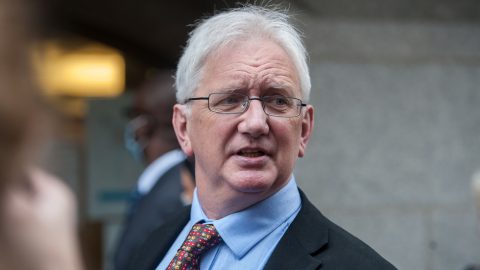
Craig Murray arrives at the extradition hearing for WikiLeaks founder Julian Assange, September 7, 2020 in London, England. © Getty Images / Guy Smallman
RT | March 22, 2021
Former Scottish diplomat Craig Murray faces possible imprisonment after he lost a contempt of court case over his coverage of the Alex Salmond trial in 2020. His legal team is preparing an appeal to the Supreme Court.
Former UK ambassador to Uzbekistan and RT contributor Murray faces a maximum sentence of two years in prison and an unlimited fine if his contempt of court ruling is upheld.
Murray sat in the public gallery when he attended two days of a trial against the former first minister of Scotland Alex Salmond, who was cleared of 13 sexual assault charges made by nine women following a 2020 trial at the High Court in Edinburgh.
Virtual contempt of court proceedings were held at the High Court of Justiciary, Edinburgh, before Lord Justice Clerk Lady Dorrian on Wednesday, during which the court argued that information published on Murray’s blog could have led to the identification of the women involved in the Salmond trial, in breach of a court order and potentially influencing the jury’s decision.
Murray’s defence counsel John Scott QC said the Crown contacted Murray about one such article in January 2020, but did not request that it be taken down.
Murray’s defence team argues that, if these publications were likely to influence the trial, then it should not have gone ahead as planned and action taken immediately, not once proceedings had concluded.
“[Murray] was aware of the names of the complainers, even when there was no court order regarding them. But he said it would not be responsible journalism to have named them,” Murray’s counsel said.
“The fact alone is that he knew about the names and if he wanted to name them, he could have done so.”
The team added that Murray discovered who the complainants in the trial were via jigsaw identification, the process of piecing together names kept secret for legal reasons using multiple pieces of information and sources, which anyone else could have done, but insisted that he chose not to publish their names publicly out of journalistic responsibility.
Murray is expected to stand as a pro-Scottish independence candidate in the upcoming Scottish parliamentary elections, but he will be disqualified from standing if he is sentenced to more than a year in prison should he lose his appeal.
Murray posted a brief reaction to the news on his blog. “I suspect I should say as little as possible in the next few days,” he wrote in a piece titled: ‘The World Darkens a Little More: I May Have to Spend Some Time as a Political Prisoner’.
Hearing Loss, Tinnitus & Vertigo Linked To Covid – “Scientists”
By Richie Allen | March 22, 2021
UK scientists have claimed that hearing loss and vertigo may be caused by coronavirus. Researchers from The University of Manchester and Manchester Biomedical Research Centre, compiled data from 24 studies.
They believe that 7.6 per cent of people infected with covid experience hearing loss, while 14.8 per cent suffer tinnitus. They also believe that 7.2 per cent of coronavirus patients develop vertigo.
Speaking to SKY News, Professor Kevin Munro, director of the Manchester Centre for Audiology and Deafness said;
“There are big implications for clinical services if this means there could be a big increase in the number of people coming forward. There are some people who say the symptoms are ongoing. There are others who say it seems to have settled down a bit so there are lots of unknowns right now.”
In other words it’s just more scaremongering by UK scientists enabled by a totally inept media. Temporary hearing loss isn’t uncommon. It can be caused by a variety of viruses including the common cold, exposure to loud noises, a build-up of fluid, earwax or an ear infection.
SKY News acknowledged on its website:
The researchers’ data primarily used self-reported questionnaires or medical records to obtain coronavirus-related symptoms, rather than the more scientifically reliable hearing tests.
It’s garbage dressed up as science. No self-respecting journalist would touch it. They’ve previously linked coronavirus to depression, heart palpitations, hearing voices, sore toe, memory loss and rashes. They use terms like “may” or “might” and the media publishes as if it’s a fact.
Covid-19 is harmless to nearly everybody. It has a 99.7 per cent survival rate. The average age of someone dying WITH it, is 83. Yet every other day a scientist claims that covid may lead to other serious conditions. The evidence is always anecdotal. That isn’t science.
The reason for this is obvious. The public is waking up to the fact that covid isn’t nearly as dangerous as it was led to believe. The public wonders why society hasn’t reopened. Therefore, the public needs to be scared into complying and having the vaccines.
This isn’t about a virus. By now, the most vulnerable people in the UK have been vaccinated. We were told it was all about them. They’ve had their jabs and yet the government will not end the lockdown.
Now scientists are claiming that mask wearing and social distancing may be with us for years. See my previous article. Apart from a few Tory backbenchers, there is no opposition to any of it.
This week, the government will ask parliament to permit it to extend powers to impose restrictions until September 25th. This despite Boris Johnson’s stated aim to remove most restrictions by June 21st. Labour and The Liberal Democrats will wave it through.
Life will never return to the way it was in January 2020. It was never meant to.
UK Foreign Office contractor sought to recruit comedians & YouTubers for secret Baltic psyops campaign
By Kit Klarenberg | RT | March 21, 2021
In recent weeks, RT has run a series of articles based on leaks by hacktivist collective Anonymous, exposing UK government information warfare efforts targeted at Russia. The British mainstream media has ignored the story.
An earlier report revealed how UK Foreign, Commonwealth & Development Office (FCDO) contractor Albany Associates proposed to infiltrate civil society at every level in Estonia, Latvia, and Lithuania for London’s benefit.
The Baltic states, all members of NATO, are considered strategically vital by London and Washington. They are also home to a sizable Russian-speaking population, a legacy of the countries once being constituent states of the Soviet Union.
Albany was just one of several firms potentially running FCDO-funded psyops in the region. Zinc Network, which has conducted a variety of clandestine operations for the UK government at home and abroad, is another.
In response to an FCDO tender, according to the leaks, the company submitted extensive proposals, pledging to “build a vibrant and innovative independent media sector” in the Baltic states, “which aligns credible brands, online communities of interest, and quality content to service highly specific audience segments.” Among other eyebrow-raising covert strategies, the company offered to disseminate anti-Russian propaganda via the recruitment and promotion of stand-up comedians.
Profiles of individuals involved in the proposed campaign indicate Urve Eslas was intended to sit on its advisory board. She is currently adviser to Toomas Hendrik Ilves, Estonian president from 2006-2016, who is himself no stranger to Western information operations. From 1988-1993, he ran the Estonia desk of Radio Free Europe, the US-state run propaganda network. Thereafter, he became the Estonian ambassador to the US.
An accompanying CV notes Eslas manages the domestic and foreign communications of the former leader, including his “information exchanges with the media, the public and other stakeholders.”
It’s unknown if this position would have implications for Zinc’s Baltic project, or vice versa, although her Twitter bio notes she also serves as a “Network Manager” at Open Information Partnership, yet another FCDO-funded information warfare effort targeted at Russia led by the contractor, which seeks to influence the outcome of elections “in countries of particular interest to the FCDO.”
‘Capitalise on community ties’
For the endeavor, Zinc claims in the leaked pitch that it conducted extensive analysis of Russian-speakers in the Baltics, in the process identifying two distinct groups therein – “settlers” and “hunter-gatherers.”
The former, representing around 30 percent of the Russophone population, “tend to be monolingual, typically older generations who live in tightly-knit, trusting communities with a shared culture, history and identity.”
The company saw an opportunity to “capitalise” on the “close-knit community ties” of these “settlers,” by “tapping into the high levels of trust they have in locally-shared content, by building the capacity of hyper-local outlets to produce news content they trust and that resonates,” and in the process “harness their social networks.”
“The key to unlocking this target audience is to build hyper-local brands which can tap into this communities’ strong social relationships and online sharing behaviours in order ‘de-couple’ where they get entertainment content from and where they get trusted news,” Zinc stated in the leaked pitch.
Accordingly, the firm proposed to identify “three hyper-local radio, social and digital outlets” in each Baltic country, then offer the entities intensive training, tech support, financial support, and “ongoing mentoring.”
“Target media could include local community pages on social media platforms popular among older demographics such as vk.com [Russia’s Facebook alternative] and ok.ru [similar to Friends Reunited], local news websites, and digital and analogue FM radio stations,” Zinc stated. “We will work with them to pool resources and content, helping them create digital strategies which can leverage the sharing habits and online networks of our settler audiences.”
Representing over 70 percent of the target audience, “hunter-gatherers” were said to be multilingual, “typically younger individuals more integrated into wider society.” Residing in Baltic state capitals, consuming news and entertainment “in multiple languages via multiple digital channels”, using “on-demand services” and social media, “or even individual journalists or influencers as a way of recommending content in order to navigate media.”
Spotting talent, cultivating agents
In order to manipulate this audience, Zinc pledged to “build the reach and influence of exciting Russian-speaking journalists and media personalities, including emigre and exile journalists from Russia who have followings amongst different sections of the Russophone community.”
After all, “audiences have strong brand allegiances to individuals,” meaning young Russophones were more likely to trust and absorb Whitehall-approved anti-Moscow key messaging emanating from the mouths of social media personalities, rather than traditional news outlets.
As such, a “minimum” of 15 journalists – six in Estonia and Latvia, three in Lithuania – would be identified for recruitment, and offered “personal brand strategy informed by individual target audience analysis,” help with “growth strategies for their chosen social media platform,” including blogs, Facebook and Twitter, and “digital marketing and campaign training.”
Articles ostensibly written by these individuals would be inserted on “international and regional quality news sites,” and “regular slots with media outlets supported via our other activities,” including state broadcasters and private sector platforms, would also be provided.
Securing those slots would likely be easy, given Zinc also pledged to provide comprehensive covert support to state broadcasters in the Baltic region.
Ironically, the company noted it was presently “hard” for such stations to reach Russophone audiences, given the widespread perception they are transmitting “propaganda”. An example of this shortfall offered was the Russian-language channel of Estonia’s ETV+ having a mere 1.1% viewership reach among the country’s Russian-speakers – a grand total of approximately 4,000 people.
“In order to grow this audience, we need to equip [state broadcasters] to thrive… by connecting them with the platforms, brands and influencers this audience already follows,” Zinc pledged.
This wide-ranging activity would see the company help the stations “work with influencers and independent production companies to develop in-house content labs to generate ‘social-first’ content,” in respect of local business, travel, sports, music, social affairs, and female-orientated programming.
“We will work with commissioners to identify young Russian speaking talent in the online influencer, stand-up comedy and social commentary spaces,” the contractor also wrote. “They will be supported to develop three content ideas and pilots each, which will then go live on the [broadcaster’s] social channels and on-demand services to test audience responses and viability.”
Successful programming produced by the connivance would then be broadcast, alongside “other content produced by FCO funded projects,” via on-demand services with “significant following amongst Russian speakers.” Two such platforms identified by Zinc were Megogo and Helio iTV – presumably, their viewers comprised a large number of “hunter-gatherers.”
‘Intense and tailored’
It’s not clear if Zinc’s proposal was taken up by the FCDO, but other files related to its pitch make amply clear the company has long been engaged in information warfare efforts targeted at Russia, at London’s direction.
In 2017 for instance, the company developed and managed the FCDO-funded Baltic Media Accelerator, in order to “equip smaller media outlets across the Baltics with the skills and tools to increase demand for locally resonant Russian-language content.” Under its auspices, Estonia’s Radio 4, Latvia’s HelloSolyanka and Lithuania’s Nanook received four months of “intense and tailored” training and support from Zinc.
“As a result, HelloSolyanka increased their monthly revenue by 202 percent by implementing a business plan for a new online and offline media product,” Zinc bragged. “Nanook received grants from the Lithuanian Ministry of Culture as well as Oregon University for their innovative model to reach local minorities with storytelling, and Radio 4 successfully pitched their new business and radio format KISA FM to err.ee.”
Similarly, it’s clear Zinc manages a vast clandestine nexus of online “influencers” in Russia and its near-abroad. These individuals are “identified and recruited” by the company on the basis of their “authenticity and standing with the groups we seek to impact,” and helped to craft “bespoke content to deliver messages that are both resonant and credible with specific audiences.”
An accompanying case study states that in Russia and Central Asia, Zinc supported 50 social media influencers “to challenge disinformation,” and established and trained “a network of investigative journalists in Russia working on corruption and governance issues.”
In Estonia and Latvia, Zinc also enlisted 12 Russian-speaking social media influencers, and helped them create and disseminate 28 pieces of video content, which “attracted an overwhelmingly positive response and achieved over 3.4 million views.” This subterfuge was said to represent “a successful strategic intervention.”
Moreover, from 2016-2018, the contractor conducted another FCDO operation targeting Russophone communities in the Baltics, among other things launching multi-platform social media brand ZAG, to distribute content produced by local online influencers to Russian-speaking communities.
ZAG’s social media accounts have mostly been deleted since, although Zinc alleges its YouTube channel at one point boasted over 17,000 subscribers, its 36 videos garnering around two million views.
Zinc’s own website reveals the company produced five TV series in the Baltics – “two of which are now in their second series, including the region’s first Russian-language children’s show.”
It’s unclear to which particular programming this passage refers, and indeed quite how many people watched the shows in question, although it’s certain that viewers – many of whom were very young indeed – had not the slightest clue as to Zinc’s ultimate goals in producing the content.
Similarly, one can only guess at the identities of the large number of Russian-speaking YouTubers, Instagram personalities, anti-corruption campaigners, and citizen journalists, in receipt of financing and orders from London.
It stands to reason, though, that at least some of the ‘grassroots’ figures who routinely crop up as local ‘experts’ in mainstream media reporting on the region will be effective agents of the British state, following a script prepared by Whitehall.
Kit Klarenberg is an investigative journalist exploring the role of intelligence services in shaping politics and perceptions.
British plan to treat misogyny as hate crime is a travesty of justice… and won’t make women more secure
By Frank Furedi | RT | March 20, 2021
By criminalising misogyny we accept the totalitarian idea of thought crime, because in a just society people are prosecuted for what they do, but not what they think.
Have you noticed that we live in an age where a variety of different campaigns are constantly calling for the invention of a new hate crime? Groups as disparate as vegans and fat people are demanding to be protected through the enactment of new hate crime legislation.
In the wake of the tragic murder of Sarah Everard moral entrepreneurs are demanding that misogyny should be criminalised as a hate crime. The British government has agreed and declared that from the autumn the police will be asked to categorise a variety of different offences and crimes as motivated by “hostility based on their sex.”
Like all hate crimes, the criminalisation of ‘hostility based on sex’ constitutes a travesty of justice. In an enlightened and just society people are prosecuted and judged for what they have done rather than what they think. Otherwise, we accept that dreadful totalitarian idea of a thought crime. It means that we are not simply judged for what we do but what the police believe we think.
Even if we decry the emotions and sentiment of misogyny it is far from clear whether a criminal act was motivated by it. The heinous crime perpetrated by the murderer of Sarah Everard may or may not have been motivated by hostility towards women. Not even the most sophisticated psychiatrist can be relied on to give an objective verdict on this score.
A hate crime is wrong in principle because by targeting subjective attitudes of people it deprives the legal system of its necessary objectivity.
Given its diffuse and subjective character, it is evident that the criminalisation of hate is an expressive act – that sends out a message. In this case the message is simply that of beware of men. Hate crimes have a tendency to expand the numbers and types of acts that can be punished. Wolf whistling, an unwelcome expression towards a woman can and will be treated as a potential hate crime.
The criminalisation of hostility is particularly insidious because in recent years the meaning of misogyny has become emptied of its classical meaning and turned into an ideological weapon wielded by identity entrepreneurs.
The meaning of misogyny has been transformed from a noun that means hatred of women to a veritable ideological concept that turns it into one of the defining characteristics of maleness.
According to the classical definition provided by the Oxford English Dictionary, it means “hatred or dislike of, or prejudice of women.” Today it is no longer about an individual’s prejudice. Its meaning has expanded to the point that it has been transformed into an all encompassing regime of patriarchal oppression.
According to the current definition featured on Wikipedia, misogyny “enforces sexism by punishing those who reject an inferior status for women and rewarding those who accept it.”
Wikipedia adds that “Misogyny manifests in numerous ways, including social exclusion, sex discrimination, hostility, androcentrism, patriarchy, male privilege, belittling of women, disenfranchisement of women, violence against women, and sexual objectification.”
Since sexual objectification by both men and women is an everyday fact of life it is only a matter of time before any expression of desire can become the target of the thought police.
The mutation of an individual prejudice into an all-pervasive omnipotent force has rendered this concept so banal that virtually any act of male communication towards a woman can be encompassed by the misogyny label. Pointing to the trivialisation of its meaning, Nina Renata Aron in the New York Times explained, “misogyny is everywhere.” She added that “the way the word is now used, you don’t have to hate women to be a misogynist.”
Unfortunately, it does not matter whether or not you hate women because once ‘hostility based on sex’ becomes a crime you are likely to be seen as guilty until you prove your innocence. The motivation of hate and its expression is ultimately in the eye of the beholder. With hate crimes what really matters is how your behaviour is perceived.
The transformation of the newly expanded concept of misogyny into a hate crime serves as an ideological statement that assumes that violent intent is one of the foundational attributes of maleness. Aside from offering a distorted account of the motives that drive male behaviour it also assigns to women the act of permanent victims. This ideology, which insists that misogyny is everywhere, does nothing to render the position of women more secure; it merely further complicates relationships between the sexes.
Frank Furedi is an author and social commentator. He is an emeritus professor of sociology at the University of Kent in Canterbury. Author of How Fear Works: The Culture of Fear in the 21st Century.
The Disease Models Were Tested and Failed, Massively
By Phillip W. Magness | AIER | March 19, 2021
One year ago this week the world embraced a lockdown strategy premised on the epidemiology modeling of Imperial College-London (ICL). In a March 16, 2020 report by physicist and computer modeler Neil Ferguson, the ICL team predicted catastrophic death tolls in the United Kingdom and United States unless both countries adopted an aggressive policy response of mandating social distancing, school and business closures, and ultimately sheltering in place.
Ferguson’s model presented a range of scenarios under increasingly restrictive nonpharmaceutical interventions (NPIs). Under its “worst case” or “do nothing” model 2.2 million Americans would die, as would 510,000 people in Great Britain, with the peak daily death rate hitting somewhere around late May or June. At the same time, the ICL team promised salvation from the coronavirus if only governments would listen to and adopt its technocratic recommendations. Time was of the essence to act, so President Donald Trump and UK Prime Minister Boris Johnson both listened. And so began the first year of “two weeks to flatten the curve.”
It took a little over a month before we saw conclusive evidence that something was greatly amiss with the ICL model’s underlying assumptions. A team of researchers from Uppsala University in Sweden adapted Ferguson’s work to their country and ran the projections, getting similarly catastrophic results. Over 90,000 people would die by summer from Covid-19 if Sweden did not enter immediate lockdown. Sweden never locked down though. By May it was clear that the Uppsala adaptation of ICL’s model was off by an order of magnitude. A year later, Sweden has fared no worse than the average European lockdown country, and significantly better than the UK, which acted on Ferguson’s advice.
Pressed on this unexpected result, ICL tried to distance itself from the Swedish adaptation of its model in May. The records from the March 21st supercomputer run of the Uppsala team’s projections belie that assertion, linking directly to Ferguson’s March 16th report as the framework for its modeling design. But no matter – the ICL team’s own publications would soon succumb to a real-time testing against actual data.
A second ICL report, attempting to model the reopening of the United States from lockdowns, wildly exaggerated the death tolls that were expected to follow. By July, this model too had failed to even minimally correspond to observed reality. ICL attempted to save face by publishing an absurd exercise in circular reasoning in the journal Nature where they invoked the unrealized projections of their own model to supposedly “prove” multiple millions of lives had been saved by the lockdowns. That study soon failed basic robustness checks when the ICL team’s suite of models were applied to different geographies.
Another team of Swedish researchers then noticed oddities in the ICL team’s coding, suggesting they had modified a key line to bring data from their own comparative analysis of Sweden into sync with other European countries under lockdown after the models did not align. A published derivative of this discovery showed that ICL’s own attempts to validate the effectiveness of its lockdown strategies does not withstand empirical scrutiny.
Finally, in November, another team of researchers from the United States compared a related ICL team model for a broader swath of countries against five other international models of the pandemic, examining the performance of each against observed deaths. Their results contain a stunning indictment: “The Imperial model had larger errors, about 5-fold higher than other models by six weeks. This appears to be largely driven by the aforementioned tendency to overestimate mortality.”
The verdict is in. Imperial College’s Covid-19 modeling has an abysmal track record – a characteristic it unfortunately shares with Ferguson’s prior attempts to model mad cow disease, swine flu, avian flu, and countless other pathogens.
After a year of model-driven lockdowns, we may also look back to the original March 16, 2020 report to see yet another failure of its predictive ability. Recall that this is the model that fueled the alarmist rush to shut everything down last March, all to avert a 2.2 million death toll that would presumably peak around June.
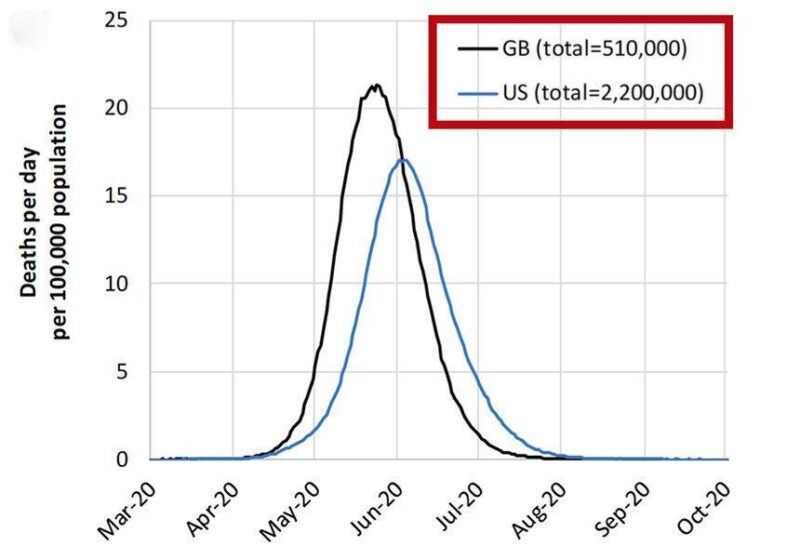
(Source: Imperial College Report #9, March 16, 2020)
As noted above, the 2.2 million figure for the US (and corresponding 510,000 figure in Britain) were “worst case” scenarios in which the pandemic ran its course. According to the underlying theory of the ICL model, these catastrophic totals could be reduced by the adoption of NPIs – the escalating suite of social distancing measures, business and school closures, and ultimately full lockdowns that we observed in practice over the last year.
Aside from its 2.2 million worst case scenario, ICL offered no specific projections for how its proposed mitigation measures would work in the United States. Ferguson did however tell the New York Times on March 20, 2020 that a “best case” American scenario would still yield “about 1.1 million deaths,” giving us a glimpse of what he believed to be possible under NPI mitigation. The March 16th report similarly “predict[ed] there would still be in the order of…1.1-1.2 million in the US” under the most optimistic mitigation strategy, barring a large increase in hospital ICU bed capacity.
By contrast, ICL did publish an extensive table showing the results of its model run for Britain over a group of four increasingly stringent NPI scenarios. These range from the “worst case” projection with half a million deaths (the figures vary depending on assumptions about the virus’s reproduction rate) to a more stringent model where four NPIs (public school closures, case isolation, home quarantine, and social distancing) are simultaneously enacted. The results are depicted below.
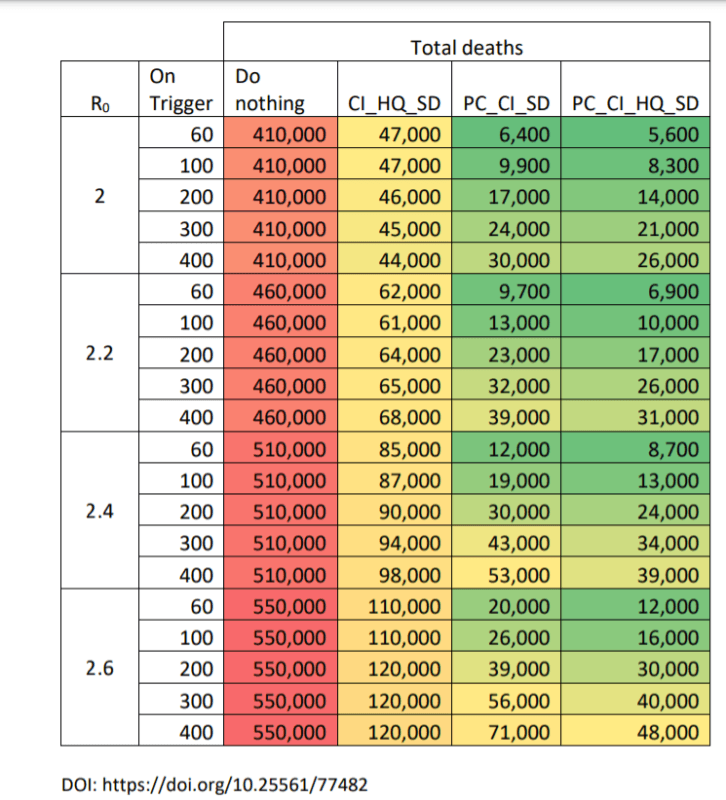
(Source: Imperial College Report #9, March 16, 2020)
Note that the UK enacted policies based on all four measures recommended by the March 16th report, as well as an even more stringently enforced general lockdown on three separate occasions. After one year of following and expanding upon the Imperial College strategy, an unusual result appears in the data: not only have the UK’s numbers come up far short of Ferguson’s most alarmist scenario (depicted in the first column), but the UK has actually done much worse than the other NPI mitigation models in the ICL report.
As of the 1-year anniversary, the UK had a little over 125,000 confirmed Covid-19 deaths. By implication, the UK death toll has exceeded the mildest of the other three NPI scenarios from the ICL model (column 2) and blown past its heavier NPI recommendations (columns 3 and 4), even while operating under a more stringent set of lockdowns than ICL originally contemplated.
The implications are clear. While Ferguson wildly exaggerated the “worst case” scenario for the UK, he also severely overestimated the effectiveness of NPIs at controlling the pandemic.
By building its policy response around the Imperial College model, the UK government delivered the worst of both worlds. It imposed some of the most severe and long-lasting lockdowns in the world based on the premise that NPIs would work as Ferguson’s team predicted, and that such actions were needed to avert a catastrophe. Except the lockdowns did not work as intended, and the UK also ended up with an abnormally high death count compared to other countries – including locales that did not lock down, or that reopened earlier and for longer periods than the UK.
Why were the Ferguson/ICL predictions so far off base on both ends? The answer likely derives from two central flaws in their model design.
First, Ferguson adapted the model directly from a 2006 influenza pandemic model that he published in the journal Nature. As with the March 16th Covid report, this study aimed to predict the spread of a virus across the general population, subject to a suite of increasingly stringent NPI countermeasures. As the second-to-last paragraph of the study reveals though, it only modeled general population spread. In doing so, the authors acknowledged that “Lack of data prevent us from reliably modelling transmission in the important contexts of residential institutions (for example, care homes, prisons) and health care settings.”
With Covid-19 however, nursing homes have emerged as one of the greatest vulnerabilities in the pandemic. In many locales, nursing home deaths alone account for almost half of all Covid-19 fatalities despite housing only a tiny fraction of the population. While the latest nursing home figures for the UK are as of yet hard to come by, reports from last year suggest they are not only a large share of the country’s Covid-19 deaths but also severely undercounted in official records. Using a preliminary count from last year, the UK had one of the worst nursing home shielding ratios in Europe – a measure that compares a country’s death toll in its care facilities to the general population. The ICL projections likely missed this problem entirely due to a defect in the 2006 model it was built upon.
Second, Ferguson’s model severely overstated the effectiveness of NPIs at mitigating general population spread. Part of the appeal of the ICL report from last March came from its succinct portrayal of the available policy options and their claimed effects. The modelers presented political leaders with a menu of escalating measures to adopt with mathematical precision, each linked to an associated projection of its effectiveness at staving off the pandemic. All the politicians had to do was select from the menu and implement the prescribed course.
Except it wasn’t that simple in practice. ICL’s recommended NPI measures baked assumptions about their own effectiveness into the model. In reality, most of these assumptions had never been tested or even minimally quantified. As a key chart from the March 16th report illustrates, the supposed effect of each NPI was little more than a guesstimate – a set of nice, round numbers that purported to show the change in social interactions after its adoption.
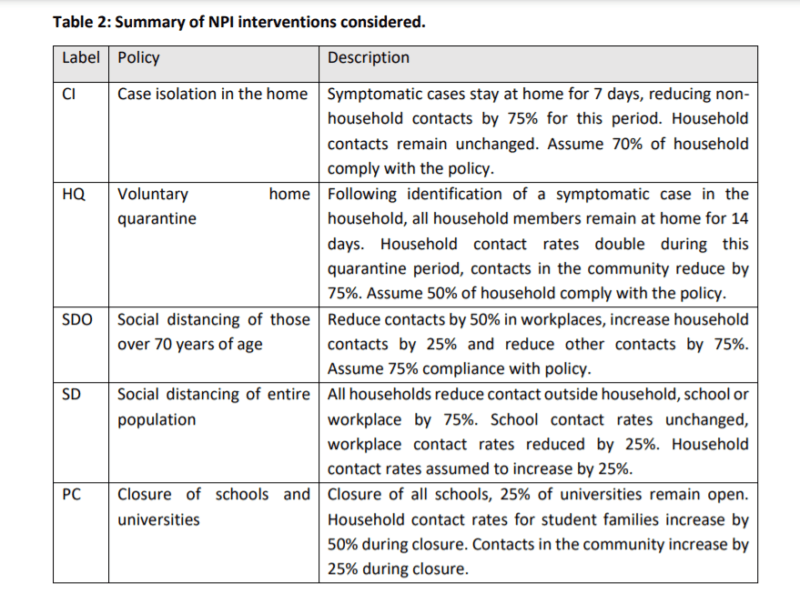
A 2019 report by the World Health Organization (WHO) warned of the flimsy empirical basis for epidemiology models such as the one developed by ICL. “Simulation models provide a weak level of evidence,” the report noted, and lacked randomized controlled trials to test their assumptions. The same report designated mass quarantine measures – what we now know of as lockdowns – as “Not Recommended” due to lack of evidence for their effectiveness. Summarizing this literature, which included the same 2006 influenza model that Ferguson adapted to Covid-19, the WHO concluded: “Most of the currently available evidence on the effectiveness of quarantine on influenza control was drawn from simulation studies, which have a low strength of evidence.”
The UK’s experience under the ICL model therefore demonstrates not only Ferguson’s propensity toward wildly alarmist disease forecasting – it also illustrates the abject failure of lockdowns and related NPI measures to mitigate the pandemic. As a revealing point of comparison, the UK’s population-adjusted daily death toll under lockdowns has been consistently higher than no-lockdown Sweden for most of the pandemic, despite both countries following a nearly identical pattern of timing in both the first and second waves.
The relevant question, then, is not whether the UK failed to lock down stringently enough, but whether lockdowns offer any meaningful benefit whatsoever in mitigating the pandemic. A growing body of empirical data strongly suggests they do not.
The repeated failures of the Ferguson/ICL model point to a scientific error at the heart of the theory behind lockdowns and similar NPIs. They assume, without evidence, that their prescriptive approach is correct, and that it may be implemented by sheer will as one might achieve by clicking a check-box in a Sim City-style video game. After a year of real-time testing, it is now abundantly clear that this video game approach to pandemic management ranks among the most catastrophic public health policy failures in the last century.
Phil Magness is a Senior Research Fellow at the American Institute for Economic Research. He is the author of numerous works on economic history, taxation, economic inequality, the history of slavery, and education policy in the United States.
Hancock Is Terrified That Under-50’s Will Refuse Covid Vaccine
By Richie Allen | March 18, 2021
It’s a bit of a mystery. Speaking from Downing Street last night, UK Health Secretary Matt Hancock said that the under-50’s would have to wait a bit longer for their covid vaccine. He blamed production issues. The manufacturers said there are no issues. What’s going on?
A leaked letter suggested that the NHS is expecting a significant reduction in supply for a month from March 29. The letter said that local vaccination centres have been told not to make any new bookings from the end of this month.
This means that the under-50’s will have to wait until at least May, to get their first dose. Hancock said the country was still “on track” to hit vaccination targets to take England out of lockdown.
A fall in provision from AstraZeneca is being blamed for the shortage. Last night, the firm moved quickly to refute the claim. The company insisted that its UK supply chain was not experiencing disruption.
A spokesman said: “Our UK domestic supply chain is not experiencing any disruption and there is no impact on our delivery schedule.” Someone is lying.
I bet the government is anticipating widespread refusal among the under-50’s. I’ve been speculating for some time now, that the roll-out hasn’t been as successful as the government would have us believe.
I believe that they were largely successful in persuading OAP’s to have a jab, but began running into problems as they moved down the age groups.
Younger people are far more likely to refuse the vaccine or choose to wait and see if it causes harm. And it is causing harm. Unless you’ve been on Planet Mars for the last fortnight, you’ll have heard of the blood clotting.
The majority of under-50’s have Facebook, Twitter and Instagram accounts. They’ll be aware of reports that the vaccines are killing people, although it’s not known on what scale. But it’s happening.
And they’ll also be aware that 200,000 NHS workers have indicated that they will decline the jab. That was covered by mainstream media. Taking all this into account, my guess is that Matt Hancock is lying when he says that “supply is bumpy.”
He’s terrified that us under-50’s won’t be rolling up our sleeves. And why would we? Why would we need an experimental drug for an illness that most of us have never had, or may have had and didn’t even know about it?
I believe the government has bought itself a month, to try and figure out what to do. If it opens the door to booking under-50’s for their jabs and there is widespread refusal as I’ve suggested, the media will cover it, even if reluctantly.
Expect the dangling of more carrots in the weeks to come. We’ll hear a lot of talk about holidays and outdoor music festivals tied in with green passports or whatever name they give them. That’s their ace card.
At some stage though, they’ll have to go for it and open the doors to the young. What happens next will be fascinating.
Are Doctors Failing To Record Bad Reactions To Covid Jabs?
Conservative Woman | March 16, 2021
This article was written by ‘a frontline NHS consultant’.
I HAVE just logged on to enter a patient with a fatal flare-up of malignant melanoma (originally diagnosed and surgically excised in 2014) manifesting as a suspected stroke with unilateral arm paralysis at the end of February, exactly one month after the patient’s first dose of the AstraZeneca coronavirus jab. This is the sixth Yellow Card report I have made in a month.
It seems entirely plausible to me, from a biological perspective, that natural tumour-suppressing activity of our lymphatic cells (NK cells and various classes of T Cell) could be temporarily suppressed by the surge of spike protein induced by the vaccine. As this is a new class of drug, which was rushed to market at breakneck speed, it is my clinical instinct that we should err on the side of over-caution as regards reporting observational anomalies or potential adverse reactions. With this week’s news that Denmark and other countries have suspended the use of the AstraZeneca vaccine, this approach seems even more sensible.
As a doctor with more than three decades of experience, this observational practice defines a long tradition of proper science.
But just how accurate and usable is the adverse event Yellow Card reporting system in the UK? Given the highly experimental nature of the Covid-19 vaccine, was due diligence given to making sure those rolling it out, and indeed those receiving it, were well versed in this system of reporting?
I have noticed that young doctors I work with are rather perversely trained not to respond to their instincts and clinical observations. The strict and immovable hierarchy within the NHS quickly instructs them that in this environment, the squeaky wheel definitely does not get the grease. It may find itself rolled out of the door, never to return. Working in a sector with only one potential employer, viz the NHS, this is not a risk many young medics would be prepared to take.
Using the MHRA (Medicines and Healthcare products Regulatory Agency) reporting system for adverse effects following the vaccine is a shockingly unlikely thing to happen among hospital doctors where I work. From many discussions I have had over the years, I know that this is also the case in various hospitals where colleagues work. None have had any training in using the online system and many seem surprised to learn of its existence.
The net result is that many adverse events do not get reported by medics. Most are not even noticed. There is no tradition of timelining the appearance of a problem and remarking any possible connection to the vaccine. Because the mantra ‘vaccines are safe’ is so embedded, both societally and medically, most in the medical fraternity struggle to envisage that a vaccine could have deleterious effects past the first 15 minutes of being injected. There is a collective spirit of self-censorship with respect to the Covid-jabs in particular. It is disquieting to say the least.
Members of the public, as well as healthcare professionals, are free to lodge a Yellow Card event at this site. Has every person getting the jab received clear instructions on how to do this? Did every individual really receive the information necessary to give informed consent? In a world where patient safety was the primary objective, this would be a bare minimum for an entirely novel medical product, particularly when being rolled out to millions of people at once. Were care home managers educated on the reporting system and trained in observing changes and possible symptoms? From enquiries made to care home managers, it seems this did not happen.
It is also possible to lodge an event on behalf of a relative you care for, or for an elderly relative who cannot perhaps navigate the labyrinthine online reporting system. When making the report, you can register so that any future reporting you do may be accessible by putting in your email and password to bring up the reporting system. However, you may lodge a report without doing this.
The online form is poorly designed. I know numerous computer-literate clinical colleagues who find it time-consuming and cumbersome. For something as simple as a headache one has to choose from 50 different types of headache. For insulin, 20 types. Such systems need to be simple and slick to avoid further unnecessary blocks for busy medics.
The issues cited above are reflected in the fact that adverse effects have been reported for only 0.3 per cent of Pfizer vaccinations and 0.5 per cent of AstraZeneca vaccinations. In their phase 1 and 2 trials, adverse events were reported at least 100 times more often (Pfizer 84 per cent pain, 63 per cent fatigue; AstraZeneca 50 per cent moderate symptoms). With these kind of percentages slipping through the cracks, it seems that the entire reporting system is in dire need of an overhaul.
Surprise, Surprise – MP’s and Scientific Advisors are heavily invested in Vaccine Industry
The Daily Expose | March 8, 2021
The UK Government is on a mission to vaccinate the entire population of the UK with an experimental gene therapy. Their supposed reasoning is to protect us all against a “deadly” virus. But that just isn’t the case, the resulting disease statistically kills only 0.2% of those it infects and the majority of those deaths are aged over 85 and have underlying health conditions.
So the question remains, ‘Why does the Government and it’s scientific advisors so desperately want to vaccinate every man, woman and child in the United Kingdom?’.
Well The Daily Expose investigated by following the money, and this is what we found…
In April 2020, the ‘Chief Scientific Advisor’ to the UK Government – Sir Patrick Vallance was placed in charge of the new ‘Vaccine Taskforce’. The aim of this taskforce was to “drive forward, expedite and co-ordinate efforts to research and then produce a coronavirus vaccine.”
So isn’t it interesting how by July 2020 the UK Government signed a contract with GlaxoSmithKline to secure 60 million doses of an untested, experimental “vaccine” treatment that was still being developed to combat SARS-CoV-2? Interesting because the chief scientific advisor and head of the ‘Vaccine Taskforce’ has £600,000 worth of shares in the pharmaceutical giant, GlaxoSmithKline.
Sir Patrick, who has had huge influence in dictating the Government’s response to the alleged SARS-CoV-2 pandemic, has over 43,111 shares in the company. But the conflict of interest doesn’t end there. Sir Patrick Vallance used to be the president of GlaxoSmithKline.
He joined the company in May 2006 as ‘Head of Drug Discovery’, going on to become Senior Vice President of Medicines Discovery and Development, before finally becoming President in 2006.
When the pompous Health Secretary, Matt Hancock found out about this he said “Well, I didn’t know about it until I read it in the newspapers,”. Pushed on whether he thought he should have been informed as Health Secretary, he replied: “No, not particularly”.

Sir Patrick Vallance
Just recently, the Deputy Chief Medical Officer for England – Jonathan Van Tam said that it was “perfectly possible” a “Covid” vaccine could be licensed for children by the end of the year. Stating that he believes “most of the major manufacturers are beginning to turn their attention “to licensing vaccines for under-18’s”.
But we’ve been repeatedly told that children are at no risk to the Covid-19 disease, so why on earth do we need to vaccinate them?
Well Professor Van Tam’s career history can possibly clarify why he is so eager to see children vaccinated against a disease they supposedly don’t suffer from.
Van Tam joined the pharmaceutical industry in 1997 as an associate director at SmithKline Beecham. He then went on to become Head of Medical Affairs at Roche in April 2001, before joining Aventis Pasteur MSD in February 2002 as the UK medical director.
In 2010 he became an advisor to the World Health Organisation, during the over exaggerated H5N1 influenza pandemic. His advice was to roll out a mass vaccination programme to combat the H5N1 influenza virus, and that advice was followed. But guess who manufactured the H5N1 influenza vaccines and made billions of pounds? SmithKline Beecham and Roche, two pharmaceutical giants that Van Tam worked for.
So do you think Van Tam wants to vaccinate children for the good of their health? Against a disease we’ve been told they don’t suffer from. Or do you think he wants to vaccinate children in order to make billions for the companies he serves?

Professor Jonathan Van Tam
That’s two of the main influencers on UK Government policy so far who have major ties to the pharmaceutical giants, with both Vallance and Van Tam having ties to GlaxoSmithKline, and Van Tam also have ties to pharmaceutical company ‘Roche’. Well there’s another man who has had great influence on the Government’s “Covid” strategy, and he also has major shares in ‘Roche’.
His name is Sir John Irving Bell, and he is a Canadian immunologist and geneticist. Sir Bell also had a role in the ‘Vaccine Taskforce’ alongside Sir Patrick, but there’s another role he held that is of particular interest to our investigation.
Sir John Irving Bell has worked as an adviser to the Department of Health and Social Care since 2017, and headed the ‘National Covid Testing Scientific Advisor Panel. He also chaired the Government’s new test approvals group, which assesses virus diagnostic tests. One of the tests assessed and approved, back in May 2020, was an antibody test. The manufacturer of this antibody test being the pharmaceutical giant ‘Roche’. So it must just be a coincidence that Professor Van Tam has ties to the firm, and Sir John Irving Bell has shares amounting to £773,000 in Roche?
£13.5 million of the British taxpayer’s money was spent on these antibody tests but Public Health England later declared they were “unreliable”.

Sir John Irving Bell
Which brings us to the elected members of parliament who are voted in to serve the people of the United Kingdom. The one’s who have had the final say on the policy to combat the alleged Covid-19 pandemic.
The Health Secretary – Matt Hancock received a £10,000 donation for his leadership campaign in 2019 from Wol Kolade, the head of Livingbridge private equity firm. This firm owns Vanguard Healthcare, which provides mobile facilities such as operating theaters and wards. We wonder if Vanguard had anything to do with the Nightingale hospitals that were erected, never used and dismantled at a cost of half-a-billion pounds?
Mr Hancock has also awarded a contract to the tune of £5.5 million of taxpayer’s money to a family friend for the provision of mobile testing units. The contract was awarded to EMS Healthcare, which is run by an Iain Johnston – the former business partner of Shirley and Robert Carter, Hancock’s mother and stepfather.

Matt Hancock pictured with Wendy Maisey
Education secretary Gavin Williamson received £3000 from St Philips Care Caledonia Ltd in November 2019, while Waveney MP Peter Aldous registered a donation of £2000 to the General Election Fighting Fund from Althea Healthcare Properties.
Mike Freer, MP for Finchley and Golders Green, registered a £10,000 donation in January from Advinia Health Care, which operates care homes.
Steve Brine , MP for Winchester, who is listed as an event speaker for Sigma pharmaceuticals company, receiving £1667 a month for up to 16 hours of “speeches, networking and Q&A sessions”. He is also a strategic adviser to Remedium Partners, a healthcare recruitment firm, working on an “ad-hoc basis” at a rate of £800 a day. Brine states in the register he consulted ACoBA about both of the appointments.
Finally we come to the Vaccine Deployment Minister, Nadhim Zahawi. Mr Zahawi’s wife, Lana Saib is the owner and director of ‘Warren Medical Limited’, which was incorporated under the name ‘Zahawi Warren Limited’ on the 10th June 2020. The company has another two directors named Ahmad Shanshal and Jaafar Shanshal – who are the sons of Nadhim Zahawi. It is not clear what this newly formed company currently does in the healthcare sector but we’re sure the vaccine roll out will have something to do with it.

Nadhim Zawahi
We could go on forever as the corruption doesn’t end there. But perhaps we’ll save Professors Neil Ferguson and Chris Whitty for another day.
The question was ‘Why does the Government and it’s scientific advisors so desperately want to vaccinate every man, woman and child in the United Kingdom?‘.
We think we’ve just answered it for you.
Featured Video

HE SAVED LIVES. NOW HE FACES PRISON.
or go to
Aletho News Archives – Video-Images
From the Archives
NATO Sanctions and the Coming Global Diesel Fuel Disaster
By F. William Engdahl – New Eastern Outlook – 11.04.2022
Amid the ongoing global inflation crisis, NATO heads of state and mainstream media repeat a mantra that high energy prices are a direct result of Putin’s actions in Ukraine since end of February. The reality is that it is the western sanctions that are responsible. Those sanctions including cutting SWIFT interbank access for key Russian banks and some of the most severe sanctions ever imposed, are hardly having an impact on the military actions in Ukraine. What many overlook is the fact that they are increasingly impacting the economies of the West, especially the EU and USA. A closer look at the state of the global supply of diesel fuel is alarming. But Western sanctions planners at the US Treasury and the EU know fully well what they are doing. And it bodes ill for the world economy.
While most of us rarely think about diesel fuel as anything other than a pollutant, in fact it is essential to the entire world economy in a way few energy sources are. The director general of Fuels Europe, part of the European Petroleum Refiners Association, stated recently, “… there is a clear link between diesel and GDP, because almost everything that goes into and out of a factory goes using diesel.” … continue
Blog Roll
 Aletho News
- Trita Parsi: Middle East Unraveling — Are We on the Path to World War?
- Iran FM meets with US envoy on UN meeting’s sidelines at American side’s insistence: Report
- Qatar PM calls for Gulf security framework with Iran, says war must be ‘wake-up call’
- China condemns US extortion of Iranian airlines, rejects Washington’s ‘illegal’ sanctions threats
- Italy to move military personnel from Taif base after missile strike
- Finland’s Stubb tells European leaders to calm down
- Defeating Russia on battlefield impossible – Fico
- Finland’s Gender Clinic Reversal
- Massachusetts Wants Mental Health Visits, Why Does Government Use ‘Health’ to Enter Our Homes & Families?
- US lawmaker admits American people footing bill for Trump’s failed aggression against Iran
- If Americans Knew
- Sanctions are collective punishment: immoral and self-defeating
- Phosphorus Munitions Fired by Israel Burn Groves, Orchards in Southern Lebanon
- Israel Carries Out New Ceasefire Violations Across Gaza
- AI – Emphasis on the ‘I’: Israel Is Funding AI Chatbot Propaganda
- Israel Blocking Hundreds of Wheelchairs for Injured Children From Entering Gaza
- Israel Is Expanding and Upgrading Compounds for Palestinian Militias in Gaza
- The Palestinian-American Residents of This West Bank Town Are Wondering: Where Is Trump?
- Gaza desperately needs tents, wheelchairs, fuel… and everything else (Israel blocks it all) – Daily Update
- Israeli Attacks in Gaza Kill at Least Seven Palestinians Over Three Days, including Woman and Child
- Trump’s militarization of Washington DC as he pursues Israel’s war against Iran
- No Tricks Zone
- 2025 Nature Paper Claiming Worsening Global Drought Gets RETRACTED …Heavily Flawed
- New Study: ‘Global Drought Shows No Detectable Recent Acceleration Under Climate Warming’
- Economic Masterminds: German Socialists Suggest Taxing Productivity Gains Stemming From Using AI
- The South China Sea Has Not Been Cooperating With The Climate Change Narrative
- Energy Crisis: Germany Enters Heating Season With Historically Low Gas Reserve Fill Levels
- New Study: The Antarctic Ice Sheet Gained Mass From 2020-2024 Due To Staggering Snow And Ice Accumulation
- Study: Ocean Heating Rates From Thousands Of Years Ago ‘Dwarf’ Modern Ocean Heating Rates
- Climate Extremists Target, Attack Large-Scale Power Grid Infrastructure In Germany!
- New Study: Antarctic Ice Melt Has Contributed Less Than 1 Centimeter To Sea Level Rise In The Last 30 Years
- Fear Of Debate: Alarmist German Climate Scientist Calls On Mainstream Media To Discredit Skeptic Voices

