The AstraZeneca Vaccine Is NOT Safe. None Of Them Are.
By Richie Allen | March 15, 2021
UK Prime Minister Boris Johnson and Scottish First Minister Nicola Sturgeon have both declared that the AstraZeneca coronavirus jab is “safe” and “working well.” Johnson and Sturgeon are liars. Both of them have blood on their hands.
Speaking this lunchtime, Johnson urged people to “keep coming forward” to have their vaccine despite significant and growing evidence that the AstraZeneca jab is causing serious harm.
Today, Germany joined Ireland, The Netherlands, Denmark, Bulgaria, Norway, Italy, Estonia, Luxembourg and Iceland in suspending the AZ vaccine. Evidence is emerging that it is causing blood clotting and heart failure in recipients.
Bulgarian Health Minister Kostadin Angelov said that a 57 year-old woman died of heart failure less than a day after having the AZ jab.
Italy began a new lockdown today and German ICU doctors are warning that the country needs to return to lockdown because of a rise in cases and hospitalisations.
I don’t believe them. I think they are using the threat of more lockdowns to pressurise the public into taking the vaccines. I speculated weeks ago, that governments had already encountered resistance and that uptake was slowing down as the jabs were being offered to younger age groups.
News that the vaccines are killing people will do nothing to convince the doubters. The suits at AZ and Pfizer have told their lackeys in Academia to get on TV and warn of more lockdowns unless uptake is close to 90 per cent.
All of these vaccines have already proven to be potentially deadly. Tens of thousands of injuries have been reported through the UK government’s yellow card reporting system.
VAERS, the US monitoring system for vaccine injuries has been similarly overwhelmed. However, you may not know this, because the media has been told not to breathe a word of it.
Video evidence of ‘massacre’ by UK special forces in Afghanistan mysteriously VANISHES
RT | March 14, 2021
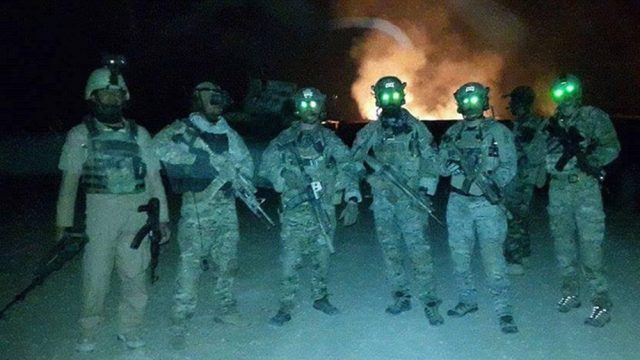
Video allegedly showing a “rogue” SAS unit committing war crimes in Afghanistan has supposedly disappeared, as an investigation into the squad’s alleged “massacres” has been plagued by missing evidence and silence from witnesses.
Saifullah Yar was just 19 when his family were shot dead in an SAS raid on their Afghan village in 2011. When British military investigators flew to Kabul in 2017 to investigate the raid, he told them he was handcuffed and led away from his father, brother and two male cousins. He heard two sustained bursts of gunfire, and when the Brits departed, his relatives were dead, their bodies riddled with bullets.
Video footage of the raid was apparently captured by US air support overhead, but according to a new Sunday Times report, American authorities mysteriously lost the footage, and were unable to provide it to a British court, where Saifullah has brought a judicial review into the fatal raid.
The mysterious disappearance isn’t the first time that key evidence from the raid has gone missing, or been intentionally hidden. The Royal MIlitary Police (RMP) investigators’ 2017 visit to Kabul was one of their last tasks in a three-and-a-half year probe into allegations of war crimes against the SAS unit, during which they found that the British operators doctored mission reports to implicate Afghan special forces in similar killings, dozens of which took place between 2011 and 2013.
The investigators interviewed 42 soldiers who said they were unable to remember the mission. Court documents reported on by the Times stated that a judge termed this a case of “collective amnesia.” The weapons used in the raid on Saifullah’s village were destroyed the same year the RMP opened its investigation.
However, evidence against the SAS troops has piled up. Investigators found that British 5.56mm bullets, rather than the 7.62mm rounds used by the Afghan commandos, were used to kill the victims. Additionally, they examined reports that weapons were planted on the bodies of these victims, in order to justify the killings later.
The reports that followed the 2011 raid on Saifullah’s village stated that his family were killed when they reached for weapons as the SAS searched their property. These reports were met with skepticism by senior commanders, who in a chain of emails seen by the British court, described the raid as “the latest massacre,” and expressed disbelief at the idea of four overpowered prisoners reaching for hidden grenades and rifles during the raid.
“And finally they shot a guy who was hiding in a bush who had a grenade in his hands. You couldn’t MAKE IT UP!,” one senior noncommissioned officer wrote.
The British government closed down the investigation in late 2017 without prosecuting a single case. The same year, another wide-ranging investigation into alleged war crimes, the Iraq Historic Allegations Team (IHAT), was shut down, also without prosecuting a case.
With the SAS typically exempt from parliamentary oversight, the courts are now Saifullah’s best hope of finding justice. “Our client is seeking a fresh investigation into the deaths of his loved ones and he wants to find out whether their deaths were part of a pattern of unlawful killings of Afghan civilians,” his lawyer, Tessa Gregory, told the Sunday Times.
Education Secretary Sued Over “Unlawful” Facemask Guidance
By Richie Allen | March 13, 2021
The Telegraph is reporting this morning that Education Secretary Gavin Williamson is facing a legal challenge on the guidance that children should wear face coverings in classes.
Lawyers acting for the National Deaf Children’s Society (NDCS) have sent a Letter Before Action to Williamson claiming that the guidance is unlawful and must be changed.
According to the The Telegraph :
Gavin Williamson has been sent a Letter before Action by lawyers acting for the National Deaf Children’s Society (NDCS) who say the guidance is “unlawful” and must be urgently changed.
It comes amid rising pressure on the Government over its latest guidance on masks, which says they should be worn by secondary school pupils in lessons as well as anywhere indoors at school where it is not possible to socially distance.
The NDCS say that face masks create a “wholly avoidable additional barrier” to learning and social interaction for deaf children who need to be able to see the faces of their peers and teachers in order to lip read.
Last Autumn, when asked about facemasks in classrooms, UK Prime Minister Boris Johnson said; “You can’t teach with face coverings and you can’t expect people to learn with face coverings.” Johnson didn’t change his mind. The fact is, he’s not in charge. SAGE (Scientific Advisory Group for Emergencies) is running the show.
A few dozen scientists, most of whom have strong ties to Bill Gates and his subsidiaries The WHO, GAVI and CEPI, are calling the shots now. It was a bloodless coup and it happened almost a year ago to the day. SAGE mission is to vaccinate every man woman and child in the country.
Covid restrictions and guidelines were never about keeping people safe. They were designed to pressure us into taking big pharma’s experimental mRNA medicine. The Pandemic is a hoax. That should be apparent to everyone now.
UK Labour candidate trained with Israeli army: Report

Izzy Lenga helped to oust former Labour leader Jeremy Corbyn
Press TV – March 13, 2021
A British Labour Party candidate for the party’s this year election has reportedly been trained with the Israeli military forces.
Izzy Lenga, an officer in the Jewish Labour Movement, is running for the party’s new National Women’s Committee, as a right-wing candidate.
The movement worked for years to oust the party’s former leader Jeremy Corbyn.
Corbyn, well known for his support of the Palestinian cause, has repeatedly been described by pro-Israeli lobbies in Britain as a threat to the life of Jews in the country.
The US-based Electronic Intifada — an online publication covering the Israeli-Palestinian conflict — released a photo of her wearing an Israeli army uniform, wrapped in an Israeli flag and carrying an assault rifle.
Lenga once “proudly” displayed the photo on social media networks, said the report.
Citing Israeli experts Dena Shunra and Daniel Shunra, the website said that the uniform and epaulets seen in the photo suggest that Lenga took part in Marva, a paramilitary course overseen by the Israeli army.
The Marva program provides weapons and training, Zionist political indoctrination and visits to military bases.
It also recruits Jewish people aged 18-25, from around the world, offering them incentives to become Israeli settlers, in the occupied Palestinian territories.
Many participants in the course have stayed in Israel, claiming citizenship and joining the military.
In 2015, Lenga became an officer with the campus society in Birmingham, which is affiliated to the Union of Jewish Students (UJS).
At the same time, she was also elected to the leadership committee of the UJS.
Israel has stepped up its settlement expansion in the occupied territories in defiance of United Nations Security Council Resolution 2334.
The UN Security Council has condemned Israel’s settlement activities in the occupied territories in several resolutions.
More than 600,000 Israelis live in over 230 settlements built since the 1967 Israeli occupation of the Palestinian territories of the West Bank and East Jerusalem al-Quds.
Palestinians want the West Bank as part of a future independent Palestinian state with East Jerusalem al-Quds as its capital.
Canada refusing to prosecute Israeli soldier
In a related development, a rights organization called on Canada to take action against Israeli military over a shooting incident in 2015.
Photographer Rehab Nazzal was shot while photographing by a “skunk” truck, a non-lethal weapon used by Israeli troops that sprays chemicals with a strong sewage smell for crowd control.
No actions have been taken by Canada “to protest this incident,” Canadians for Justice and Peace said in a tweet earlier this week.
“This callous inaction is shocking and must be corrected,” it added.
Nazzal said at the time of the incident that she “would take shelter every few meters to avoid the tear gas and the ‘Skunk’ army truck that was spraying sewage chemical liquid on the protesters and the surrounding neighborhoods.”
“When I stopped by a corner of one of the shops, and while taking some photographs, I was suddenly shot in the leg,” she said.
“The last image I photographed shows a sniper hiding on the ground near the entrance to one of the city’s hotels,” said Nazzal who was later recovered from the bullet wound.
BBC secrets: Leaked files show UK state media engaged in anti-Moscow information warfare ops in E. Europe
By Kit Klarenberg RT | March 11, 2021
New documents raise serious questions about how well-deserved British state broadcaster BBC’s ‘unimpeachable’ reputation is, and also what impact its relationship with the UK government has on its supposedly ‘impartial’ output.
Within a tranche of secret UK Foreign, Commonwealth & Development Office (FCDO) papers, recently leaked by hacktivist collective Anonymous, are files indicating that BBC Media Action (BBCMA) – the outlets ‘charitable’ arm – plays a central role in Whitehall-funded and directed psyops initiatives targeted at Russia.
American journalist Max Blumenthal has comprehensively exposed how, at the FCDO’s behest, BBCMA covertly cultivated Russian journalists, established influence networks within and outside Russia, and promoted pro-Whitehall, anti-Moscow propaganda in Russian-speaking areas.
However, the newly released files reveal BBCMA also offered to lead a dedicated FCDO program, named ‘Independent Media in Eastern Partnership Countries’ and targeted at Georgia, Moldova, and Ukraine. This endeavor forms part of a wider £100 million ($138.9 million) effort waged by London to demonize, destabilize and isolate Russia, at home and abroad.
A Whitehall tender indicates that under the auspices of the project, set to cost a staggering £9 million ($12.5 million) from 2018 to 2021, participating contractors are charged with crafting “innovative… media interventions” targeting individuals throughout the region, via “radio, independent social media channels, and traditional outlets.”
Further detail was offered by FCDO Counter Disinformation & Media Development (CDMD) chief Andy Pryce at a June 2018 meeting with prospective suppliers.
He made it clear that the effort’s ultimate goal was to “weaken the Russian state’s influence,” via the co-option of journalists and media organizations in target countries via funding, training, and surreptitious production of anti-Russian, pro-Western content. “Girls on HBO… but in Ukraine” was, bizarrely, one suggested example of such activity.
In response, BBCMA submitted extensive proposals, in conjunction with Thomson Reuters Foundation (TRF), the global newswire’s “non-profit” wing, and since-collapsed veteran FCDO contractor Aktis Strategy.
The project was to be managed and coordinated directly by BBCMA from BBC Broadcasting House headquarters in London, with local support provided by Reuters newswire offices in Kiev and Tbilisi, and Ukraine’s Independent Association of Broadcasters.
A dedicated board, comprised of representatives of the contractors involved, the FCDO’s CDMD program, and British embassies in the target countries, would also meet privately every quarter to discuss the operation’s progress. Publicly, Whitehall’s funding and direction of the vast project was intended to be completely hidden.
The consortium boasted of having an existing “strong profile” in Eastern Partnership countries, and conducting “broad consultations” with a number of major news outlets, media organizations and journalists in the region in advance of its pitch.
For example, the National Public Broadcasting Company of Ukraine (UA:PBC) had been approached and offered “essential support,” aimed at “improving its existing programs” and “developing new and innovative formats for factual and non-news programs.”
BBCMA was moreover said to be “already” working on building the capacity of Kiev-based Hromadske TV, and wished to use the FCDO program to extend this assistance to “co-productions” and “building support to Hromadske Radio.”
Launched with initial funding from the American and Dutch embassies in Ukraine, Hromadske began broadcasting in November 2013 on the very day Viktor Yanukovich’s administration suspended preparations for the signing of an association agreement with the European Union, and went on to extensively cover the resultant Euromaidan protests, which eventually unseated the government the next year.
It subsequently received support from Pierre Omidyar, billionaire founder of The Intercept, who bankrolled a number of opposition groups in the country prior to the coup. In July 2014, Hromadske anchor Danylo Yanevsky abruptly terminated an interview with a Human Rights Watch representative after she consistently refused to blame Russia for civilian casualties in the Donbas conflict, despite his repeated demands.
Beyond dedicated news platforms, the consortium also pledged to enlist “local” and “hyperlocal” media outlets, as well as “freelancer journalists,” bloggers and “vloggers” for its information warfare efforts.
BBCMA argued “journalism education” locally would be a “long-term investment” – in other words, the identification, cultivation, and grooming of a network of reporters in the countries who could be relied upon to take the Whitehall line in future.
As such, the organization sought to establish a journalism training center in Gagauzia, Moldova in collaboration with NGO Media birlii – Uniunia. The autonomous region, bordered by Ukraine’s Odessa Oblast, was said to be home to “six TV companies, four radio stations, six newspapers and five web portals” potentially ripe for influence and infiltration by BBCMA – and in turn, the FCDO.
In Georgia, BBCMA visited the offices of Adjara TV “to discuss training priorities and possible co-productions.” The station was reportedly interested in developing “youth programming,” which represented “a gap in the market” in the country.
In June 2020, Georgia’s Coalition for Media Advocacy slammed Adjara for its “persecution” of “outspoken journalists expressing dissenting opinions,” after it fired newsroom chief Shorena Glonti.
Strikingly, the Coalition is funded by US regime-change agency, the National Endowment for Democracy, which supports numerous anti-Moscow initiatives worldwide. Perhaps Glonti had been too well-trained in “weakening the Russian state” for the broadcaster’s liking.
The consortium furthermore proposed to tutor and support “independent” online Georgian news outlets, including Batumelebi, iFact, Liberali, Monitor, Netgazeti, and Reginfo.
Estonia’s Digital Communications Network – financed by the US State Department – would be central to these efforts, offering lessons in “building online audiences, innovative business models and reaching out to breakaway regions susceptible to Kremlin narratives.”
The importance of “target audiences in breakaway regions” is outlined in another file, which explicitly states that the consortium would work closely with “independent outlets in proximity of non-government-controlled areas of Donbas in Ukraine, Transnistria in Moldova and Abkhazia and South Ossetia in Georgia.”
This undertaking aimed to counter the output of “separatist” media, and thus manipulate “hard-to-reach audiences,” which was “critical to achieving the project’s objectives.”
Any and all support covertly provided under the program was to be thoroughly intimate indeed, with “mentors” from the consortium “embedded” in target organizations, in order to provide “bespoke support across editorial, production and wider management systems and processes as well as on the co-production of content.”
These “mentors” include current and former BBC journalists.
“Our ability to recruit talented and experienced BBC staff is a great asset which will be harnessed for this initiative,” BBCMA promised.
These individuals may have been central to program efforts, if BBCMA’s pitch to the FCDO was accepted. For instance, UA:PBC was said to be “very interested” in receiving help from BBCMA to develop a “new debate show” and “discussion programming” to “enable audiences to think critically about the process and choices,” “counter disinformation” and “dispel rumors.”
Lofty objectives indeed, although commitments to nurturing analytical skills, thinking and debunking propaganda ring rather hollow when one considers the station’s output was perceived to be so overwhelmingly biased in favor of the government, opposition candidate Volodymyr Zelensky boycotted the channel’s official election debate during the 2019 presidential election.
BBCMA also proposed to establish an “independent” news platform in Ukraine, “timed for the run up to the 2019 election,” which would publish “vetted news content” freely syndicated to local and national media.
If the approach in Kiev was “successful,” the consortium would replicate the exercise in Georgia for the country’s 2020 election. Strikingly, the proposal brags of TRF’s experience establishing such platforms elsewhere, for example “the award-winning Aswat Masriya” in Egypt.
Other leaked files indicate the endeavor, founded after the 2011 revolution in Cairo, was secretly funded by the FCDO to the tune of £2 million ($2.8 million) over six years, and run out of Reuters’ Egyptian offices.
Over its lifespan, Aswat Masriya “became Egypt’s leading independent local media organization” and one of the most-visited websites in the country, providing news in English and Arabic, which was syndicated widely the world over. Its true, clandestine purpose seems to have been granting London a degree of narrative control over news coverage as events unfolded in the country, during its difficult and ultimately ill-fated transition to democracy.
That BBCMA likewise intended to use news coverage to influence politics in Eastern Partnership countries is amply underlined in the newly leaked files, with the organization pledging to “encourage” local news outlets to meet with “local stakeholders,” including lawmakers and community leaders, in order to “cement the media as a key governance actor.”
The organization furthermore sought to “foster a debate” in target nations, by producing wide-ranging analysis of the media environment therein. Its “long track record” of comparable efforts in “diverse” countries, including those “experiencing Arab uprisings,” had allegedly “shifted government policy.”
One objective of these lobbying efforts was achieving “a more enabling operating environment” for “independent” media in the target countries – i.e. ensuring regulations in the region were suitably conducive to and protective of the FCDO’s secret army of information warfare agents, to allow them to prosper for the duration of the consortium’s three-year offensive, and “post intervention.”
It’s not yet clear if BBCMA was successful in its pitch, and if so, which BBC journalists contributed to the program and as a result are implicated directly in cloak-and-dagger attempts to shape politics and perceptions in Georgia, Moldova, and Ukraine for London’s benefit.
It’s also unknown whether their commitment to fulfilling the FCDO’s objective of undermining Moscow, and furthering Whitehall’s interests, truly ends when they return to their day jobs as “objective,” “neutral” purveyors of news.
As BBCMA boasts in its pitch, the BBC is “well-known and highly regarded” in the Eastern Partnership countries, and provides “millions of viewers, listeners and online users in the region with world-class news on a daily basis.” At the very least, the leaked files make clear that neither the British state broadcaster, nor its FCDO paymasters, has any qualms about exploiting that standing and perceived credibility for malign ends.
Kit Klarenberg is an investigative journalist exploring the role of intelligence services in shaping politics and perceptions.
Doctors & Scientists Write to European Medicines Agency Warning of COVID-19 Vaccine Dangers
Press release from the Doctors for Covid Ethics campaign
A group of scientists and doctors has today issued an open letter calling on the European Medicines Agency (EMA) to answer urgent safety questions regarding COVID-19 vaccines, or withdraw the vaccines’ authorisation.
The letter describes serious potential consequences of COVID-19 vaccine technology, warning of possible autoimmune reactions, blood clotting abnormalities, stroke and internal bleeding, “including in the brain, spinal cord and heart”.
The authors request evidence that each medical danger outlined “was excluded in pre-clinical animal models with all three vaccines prior to their approval for use in humans by the EMA.”
“Should all such evidence not be available”, the authors write, “we demand that approval for use of the gene-based vaccines be withdrawn until all the above issues have been properly addressed by the exercise of due diligence by the EMA.”
The letter is addressed to Emer Cooke, Executive Director of the EMA, and was sent on Monday 1 March 2021. The letter was copied to the President of the Council of Europe and the President of the European Commission.
It states:
We are supportive in principle of the use of new medical interventions.” However, “there are serious concerns, including but not confined to those outlined above, that the approval of the COVID-19 vaccines by the EMA was premature and reckless, and that the administration of the vaccines constituted and still does constitute ‘human experimentation’, which was and still is in violation of the Nuremberg Code.”
You can read the full letter here.
In a public statement the group said:
No sooner did we deliver our letter than the Norwegian Medicines Agency warned that COVID-19 vaccines may be too risky for use in the frail elderly, the very group these vaccines are designed to protect. We would add that, by virtue of the mechanisms of action of the vaccines, to stimulate the production of spike protein, which has adverse pathophysiological properties, there may also be vulnerable people who are not old and already ill.
New data shows that vaccine side effects are three times as common in those who have previously been infected with coronavirus, for example. None of the vaccines have undergone clinical testing for more than a few months, which is simply too short for establishing safety and efficacy.
Therefore, as a starting point, we believe it is important to enumerate and evaluate all deaths which have occurred within 28 days of vaccination, and to compare the clinical pictures with those who have not been vaccinated.
More broadly, with respect to the development of COVID-19 vaccines, the Parliamentary Assembly of the Council of Europe has stated in their Resolution 2361, on 27th January 2021, that member states must ensure all COVID-19 vaccines are supported by high quality trials that are sound and conducted in an ethical manner.
EMA officials, and other regulatory bodies in EU countries, are bound by these criteria. They should be made aware that they may be violating Resolution 2361 by applying medical products still in phase 3 studies.
Under Resolution 2361, member states must also inform citizens that vaccination is NOT mandatory and ensure that no one is politically, socially, or otherwise pressured to become vaccinated. States are further required to ensure that no one is discriminated against for not receiving the vaccine.
The letter comes as a petition against UK Government plans for vaccine passports passed 270,000 signatures, more than double that required to compel consideration for debate by MPs. The petition will be debated in the UK Parliament on 15th March 2021.
For comment contact Professor Sucharit Bhakdi MD, or Associate Professor Michael Palmer MD
Doctors and scientists can sign the open letter by sending their name, qualifications, areas of expertise and country of practice to: Doctors4CovidEthics@protonmail.com.
How the US and Great Britain Instigate Coups Nowadays
By Vladimir Danilov – New Eastern Outlook – 06.03.2021
Recently, the United States and Britain, actively using the propaganda tools that they possess, have increasingly begun to accuse Russia and China of interfering in their domestic affairs and election campaigns, and of effectively preparing coups in these countries. However, apart from making proclamatory statements, neither Washington nor London has presented any facts or documents that confirm these accusations, nor can they present them, since these accusations are false.
Along with that, documented information about complicity on the part of United States and Britain in various coups that were being set up has begun to appear more frequently in publicly accessible reports in various media outlets.
For example, according to the recent publication in the German newspaper Die Tageszeitung, UN investigators found out that in 2019 elite fighters from the American Erik Prince’s private military company Blackwater, infamous for their actions during the American occupation of Iraq and several other states, had to take action twice to eliminate the Government of National Accord, which is recognized by the international community. But this “Project Opus” failed…
A group of UN experts studying violations of the UN arms embargo against Libya learned that in the Libyan war in recent years there has been a second, secret front to directly get rid of officials and commanders of the Government of National Accord that rules in Tripoli. “Project Opus” specifically called for delivering 20 elite Blackwater fighters to sites near Tripoli in June 2019 to conduct operations. The officers contacted by the German newspaper in Benghazi confirmed the arrival of 20 fighters from England and South Africa, and one American, in June 2019. The second group, consisting of snipers and fighters trained to fight behind enemy lines, flew to Benghazi in April 2020 and then headed off to the front near Tripoli. On April 24, 2020, 13 French citizens reached the Libyan-Tunisian border and presented themselves as diplomats to the Tunisian border guards, even though they carried heavy weapons. They were arrested, but under diplomatic pressure from Paris they were allowed to leave for Tunisia.
In early May 2020, the world media exploded with reports: another attempt at a military invasion of Venezuela was thwarted, Washington’s mercenaries were captured by the Venezuelan authorities, the United States wanted to repeat the operation in Cochinos Bay (the so-called attempt by the US Central Intelligence Agency to land Cuban emigrants in the Bay of Pigs, something which was aimed at overthrowing Fidel Castro). It is worth remembering how on May 3 mercenaries from the American private military company Silvercorp tried to land on the coast of Venezuela near the city of La Guaira, which is located just 32 kilometers from Caracas. Sixty armed, well-equipped militants with satellite phones and fake documents planned to reach the capital and capture the Venezuelan president for his subsequent transfer to the United States. Two of those arrested, Airan Berry and Luke Denman, were US citizens that had served in Afghanistan and Iraq. On May 4, American media interviewed the former US special forces fighter and the head of the Silvercorp PMC, Jordan Goodrow, who trained these fighters in Colombia. Goodrow declared that the goal of “Operation Gideon” was to organize raids into Venezuela to fight “the regime”. The former special forces soldier showed an eight-page $213 million contract signed in October 2019 by Washington-backed self-proclaimed Venezuelan “president” Juan Guaido and Donald Trump’s political advisers. On March 23, the Colombian authorities confiscated an entire arsenal on their territory that was specifically meant for the mercenaries. The mercenaries were equipped fairly well.
The Washington Post also published a document according to which members of the Venezuelan opposition, following negotiations, in October 2019 entered into a deal with the American private military company Silvercorp, located in Florida. The PMC employees were supposed to infiltrate the territory of Venezuela to overthrow the country’s legitimate president, Nicolas Maduro.
These events in Venezuela were recently well assessed by Bloomberg :
“One would hope that the Central Intelligence Agency could do better than a farcical scheme that was disowned by the Venezuelan opposition, penetrated by regime security forces and disrupted as soon as it began. Yet this trivial episode invites us to think seriously about the role of covert intervention and regime change in US policy.”
Exposing these subversive activities by Blackwater and other US and British mercenaries shows that they are usually committed by former military personnel and criminals involved in a wide variety of activities around the world. They act as bodyguards, protecting people and businesses in “hot spots” (like oil-producing areas off the coast of Nigeria and Sudan), as well as convoys and freight shipments in war zones, especially in Iraq and Afghanistan. Since from the very beginning of hostilities in the region both public opinion in the United States and Democrats in Congress viewed sending their own soldiers to hot spots extremely unfavorably, they had to look for replacements elsewhere.
American wars in the beginning of the 21st century have become a real gold mine for these organizations, which have turned from bands of thugs that toppled shaky “cannibalistic” regimes in Africa during the Cold War into real international corporations. They represent a significant benefit for the United States and its Western allies leading the war, since they consist of veterans that are already experienced – military professionals who have not found a niche for themselves in civilian life. In addition, these organizations are considered private enterprises, and therefore are not accountable to Congress, so the losses these soldiers incur are not included in the total number of casualties for a country’s conventional army, which makes it possible to give a more favorable representation of the situation in a war zone at home. Public opinion in the United States has long called for rejecting the services these companies provide, and reinforcing transparency in their activities. The UN has repeatedly raised the issue of revising the definition of “mercenary”, and banning organizations like Blackwater, over the past several years – but so far it has not yet achieved any significant results.
Besides these examples of Washington’s attempts to instigate a military coup in other countries, nowadays a number of documents have been raised for public review related to the period of the height of the US intervention in Syria in 2014, when Assad’s forces were growing weaker and Damascus was under the threat of capture by Islamists that the West nurtured and supported. For example, the Middle East Eye agency has shown quite convincingly – and with documentary evidence – how during a British-supported operation called Sarkha (Scream), the media tried to turn the Alawites against Assad, and by doing so accomplish a coup in Syria. The publication gives official documents that attest to the social media “protest movement” that was actually created under the authority of the British government. The very same scenario for Operation Sarkha was developed by the American company Pechter Polls of Princeton (New Jersey, USA), which was working under a contract with the British government. The contract for subversive work in Syria was initially administered by the Military Strategic Effects department at the UK Department of Defense, and then by the British government-run The Conflict, Stability and Security Fund, whose objective is to
“resolve conflicts that threaten the Great Britain’s interests.” The project’s budget was £600,000 ($746,000) per year. The published documents indicate that the goal of the operations was “supporting the activities of the Syrian opposition media to reach an audience in Syria… Platforms for this work were created jointly by the UK, USA, and Canada to strengthen popular resentment toward the Assad regime.”
In another issue of the Middle East Eye, documents obtained by the publication show how British contractors hired Syrian citizens who were journalists to promote “moderate opposition” – often without their knowledge. Contracts with these mercenaries were entered into by the British Foreign Office, and were managed by the country’s Ministry of Defense, sometimes by military intelligence officers, paying small amounts of money to the contractors.
After getting to know everything indicated above, the question naturally arises: who exactly is really interfering in the affairs of other states? And how objective is the propaganda coming from Washington and London, as well as their foreign policy as a whole?
Kids Who Refuse To Wear A Mask Will Have To Sit At Back Of Class
By Richie Allen | March 4, 2021
The Telegraph is reporting this morning that pupils are facing “mask apartheid” after parents were told that children who refuse to wear one will have to sit at the back of the class. They will also be banned from eating lunch with their friends.
The government has recommended that all secondary school students wear face coverings during class, but it is not legally enforceable. Schools were told that students who refused to wear a mask, or take a twice weekly rapid covid test, must not be sent home.
But, according to The Telegraph today:
… parents fear their children will be discriminated against and forced to miss out on lessons if they come to school without a face mask.
Pupils at The Stonehenge School in Amesbury, Wiltshire were told that if they refuse to wear masks they will be “asked to sit near open doors or windows and must understand that their peers may not wish to sit with or work with them”.
Meanwhile, students at The Warwick School in Redhill, Surrey were advised that if they do not wear a mask in the classroom, the school will “make alternative arrangements” for them to continue learning “where we can maintain social distancing”.
Another secondary school said pupils without masks will have to enter the school through a separate entrance and sit at a table alone at the back of the class by an open window. They will also be banned from sitting with their peers at lunch time and blocked from group activities such as PE lessons, drama or after-school clubs.
One parent said: “I am appalled and feel blackmailed into accepting these measures so that my children can partake in exercise, class learning and their social groups at school.”
Coombe School for Girls in London warned parents that girls who came to school without a mask would be sent home to get one. Park Academy, also in London, told youngsters that if they arrived without a mask, they’d have to wait outside until one was brought for them. Failing that, they’d have to go home.
This is outrageous. The government was explicit in telling head teachers that children who refused to wear a mask could neither be sent home, nor discriminated against. Allyson Pollock, a professor of public health at the Newcastle University told The Telegraph :
“This is not informed consent, its coercion and other harms are emerging as a result – psychological trauma, isolation, segregation stigmatising children and its a form of abuse and harassment and intimidation of children and parents.”
The Disappearing Spy
By Rob Slane | The Blog Mire | March 4, 2021
It is exactly three years since one of the most absurd yarns of modern times was spun just a few stone’s throws from where I live. The official narrative of the alleged poisoning of Sergei Skripal was so patently ridiculous and full of holes, that I remain amazed at how anyone could have been taken in by it — although it must be said that this astonishment has since been surpassed by an order of magnitude by some of the things millions of people have been willing to believe over the past year, including the myth that healthy people can transmit an illness, the myth that wearing a mask prevents virus spread, and the myth that Lockdowns save lives rather than destroying both lives and society.
I don’t really have anything new to say on the subject, but would simply point anyone who is interested to the in-depth piece I wrote a year ago (here), which includes the 40 most absurd, implausible and impossible elements of the case (I have also republished these points below). They remain as absurd, implausible and impossible as ever, which the British security services and Metropolitan Police know full well.
I would just add one further observation, though. I have titled this piece, The Disappearing Spy, and for good reason. Of all the glaring issues in the deception put forward by the British authorities, the single biggest is the fact that Sergei Skripal, alleged victim of nerve agent poisoning, has not been seen or heard of since. Nor has a statement ever been issued on his behalf. This is extraordinarily odd, given the enormity of the story at the time, and the huge opportunities an interview or even a few snaps would have presented to the authorities and media to milk the story even more.
There are only two possible explanations for this:
The first is that it has been deemed too dangerous for him to be seen. However, three other high profile cases may help to put this explanation into perspective. Firstly, when Alexander Litvinenko was poisoned by Polonium-210, it was not deemed too dangerous for photographs of him to be taken in his hospital bed and plastered all over the media. Secondly, after Yulia Skripal’s apparent departure from Salisbury District Hospital, it was not deemed too dangerous for a statement to be released on her behalf, and for her to subsequently appear on camera (most probably at a US Airbase) looking remarkably well for a victim of nerve agent poisoning, reading a pre-prepared statement. Thirdly, it was not deemed too dangerous for a recent alleged victim of “Novichok” poisoning, Alexei Navalny, to not only appear on camera, but travel back to Moscow. All three of these cases make a nonsense of any idea that it was too dangerous for Mr Skripal to make an appearance. A video at a secret location would have done. A photo at his hospital bedside would have sufficed (everyone knew that location, so it could hardly have given his location away to take a snap of him there). Even a brief statement would have been something. But nothing. Zero. Nada. Zilch.
I’ll leave readers to work out what the second possible explanation is, and which of the two is more likely.
- That two men put themselves and everyone on their flight in jeopardy, by boarding a plane with at least one, possibly two, bottles of the World’s Deadliest Nerve Agent (WDNA) in their luggage. (ABSURD)
- That the two suspects dropped an unused package of the WDNA in a bin somewhere, whilst taking the used bottle of nerve agent back to Moscow with them. (ABSURD)
- Or alternatively, that they only had one package of WDNA with them, but brought a cellophane wrapping machine to Salisbury to wrap the used box up in, before discarding it. (ABSURD)
- That the two men sprayed WDNA in an open space, without wearing any protective clothing. (ABSURD)
- That after they had done this, rather than legging it, they decided to spend an hour in the city centre window-shopping and taking pictures. (ABSURD)
- That Mr Skripal and his daughter both somehow managed to touch the door handle of his front door on their way out (try it with someone next time you exit your house). (IMPLAUSIBLE)
- That despite being contaminated with WDNA, they showed no effects for hours afterwards. (IMPLAUSIBLE)
- That when they did show effects hours later, it was at precisely the same time, despite their very different heights, weights and metabolisms. (IMPLAUSIBLE)
- That despite being contaminated with WDNA, they went into town, fed ducks, went for a meal, then went to a pub for a drink. (IMPLAUSIBLE)
- That despite having hands contaminated with WDNA, Mr Skripal handed a piece of bread to a local boy who ate it without becoming contaminated. (IMPLAUSIBLE)
- That despite having hands that were contaminated with WDNA, Mr Skripal somehow managed to contaminate the table in Zizzis, but not the door or door handle on the way in. (IMPLAUSIBLE)
- That despite having hands that were contaminated with WDNA, Mr Skripal somehow managed not to contaminate the manager of Zizzis when he shook hands with him (confirmed to me by a local source). (IMPLAUSIBLE)
- That after becoming extremely aggressive in Zizzis, which some assume was the effects of poisoning with WDNA, Mr Skripal wolfed down a plate of seafood risotto before sauntering over to the pub for a drink. (IMPLAUSIBLE)
- That no CCTV of Mr Skripal or his daughter on 4th March could be shown to the public to jog their memories, because of something called “National Security”. (ABSURD)
- That no CCTV could be shown of The Maltings, on the grounds of National Security, even though according to the official story no crime took place there. (ABSURD)
- That the Russian couple who were filmed on CCTV camera at 15:47 in Market Walk (confirmed by a reliable source in the comment section on this blog), were not in any way connected with the case. (IMPLAUSIBLE)
- That the only CCTV the public were allowed to see of this pair was an absurd, blurred, fuzzy image taken second hand on a mobile phone, when they could have shown crystal clear footage from the CCTV camera at the other end of Market Walk. (ABSURD)
- That the Skripals were somehow in Zizzis at the same time that they were actually in the Mill pub (The Met’s timeline shows them to have been in Zizzis from 14:20 and 15:35, which is demonstrably untrue). (IMPOSSIBLE)
- That the Metropolitan Police are unable to put out correct timelines. (IMPLAUSIBLE)
- That WDNA deteriorated so much after an hour on a door handle, that it was too weak to kill the Skripals. (IMPLAUSIBLE)
- That this same WDNA, which allegedly deteriorated in an hour, was then found three weeks later after exposure to the elements and after being touched by many human hands, to be in a state of “high purity, persistent and weather resistant”. (IMPOSSIBLE)
- That WDNA, which was allegedly sprayed on a door handle, somehow managed to spread to the roof of the house, meaning that it had to be replaced. (IMPOSSIBLE)
- Yet that same WDNA, 2mg of which is apparently enough to kill a person (according to BBC Panorama), and which causes whole roofs to have to be replaced and cars to be destroyed, can be cleansed by members of the public using baby wipes. (ABSURD)
- That the police cars which attended the Maltings needed to be destroyed, yet the ones that attended Mr Skripal’s house, where the poison was apparently most concentrated, did not. (ABSURD)
- That Detective Sergeant Nicholas Bailey managed to be a first responder at the bench when the two Russians were on it, at the same time as not being at the bench when the two Russians were on it. (IMPOSSIBLE)
- That Mr Bailey entered Mr Skripal’s house via the back door, because he couldn’t open the front door; but also managed to enter the house via the front door because he was able to open it. (IMPOSSIBLE)
- That he was wearing a forensic suit to enter the house of someone who had apparently overdosed in a park on Fentanyl. (ABSURD)
- That he managed to get contaminated by WDNA despite wearing a forensic suit. (IMPLAUSIBLE)
- That the numerous police officers not wearing forensic suits, who went in and out of the house on 4th and 5th March, did not become contaminated by WDNA, even though it was allegedly found to be most concentrated there three weeks later, and in a state of “high purity”. (IMPOSSIBLE)
- That the police somehow managed to miss all four of Mr Skripal’s pets (two cats and two guinea pigs), so leaving them to starve to death. (IMPLAUSIBLE)
- That an air ambulance was called for what looked like a drug overdose on a park bench, when a land ambulance can get to the hospital just as quickly, if not quicker given where the helicopter had to land. (ABSURD)
- That the chief nurse of the British Army just happened to be shopping near the bench when the two Russians were on it. (ABSURD)
- That there just happened to be two Porton Down trained doctors at Salisbury District Hospital. (ABSURD)
- That despite The Met, the Government and the media referring to the substance used as “Novichok”, in their only official statement to a court of law, Porton Down were unable to confirm this, instead referring to it as “a nerve agent or related compound” and “a Novichok class nerve agent or closely related agent.” (ABSURD)
- That Porton Down were able to identify a substance within 36 hours that apparently no other country on earth makes, has made, or can make. (IMPLAUSIBLE)
- That “Novichok” can only be made in Russia, despite variants of it having been synthesised or stocked in numerous countries including Czechia, Sweden, Germany, Iran, the US, and Britain (Boris Johnson having unwittingly confirmed this when he blurted out that they had samples of it at Porton Down). (IMPOSSIBLE)
- That after she and her father were allegedly poisoned by the Russian state, Yulia Skripal said she wanted to return there. (ABSURD)
- That Mr Skripal and his daughter have never been seen together since — not even in a single photo. (IMPLAUSIBLE)
- That nothing has ever been heard from Mr Skripal since (national security won’t wash – his daughter was able to appear in a video). (ABSURD)
- That Salisbury had its first case of Fentanyl poisoning on the same day, at the same time, and in the same shopping centre apparently involving another couple. (IMPLAUSIBLE)
200,000 NHS Staff Are Refusing To Have a Jab. What Do They Know?
By Richie Allen | March 3, 2021
The UK media is reporting this morning that as many as 200,000 staff working in the National health Service have refused a jab or have indicated that they will not take one.
Rather than try to ascertain why so may health workers are reluctant to take it, the media is instead asking whether or not the staff can be compelled to have a vaccine. The media has dubbed this “no jab, no job.” No reporter in the UK’s mainstream media has dared to ask the only question that matters, that is, what do they know?
The Daily Mail reported this morning that the government’s forthcoming review into vaccine passports, will pay special attention to whether health staff who decline the jab, can be legally compelled to have one.
The review will also look at whether mandating covid vaccines can be applied to care home staff, most of whom are not employed by the state. Questioning the motives of the staff who have declined the vaccine is verboten.
I have a number of sources who work in hospitals, hospices and care homes, people I have met along the road. A nurse who works at Salford Royal told me yesterday that as far as she knows, at least six of her colleagues will not take the vaccine. When I asked her why, she promptly said, “Swine Flu.”
It’s only a decade ago, that Professor Gabriel Scally (now President of Epidemiology & PH, Royal Society of Medicine) told NHS staff to take the Swine Flu vaccine to keep themselves and their patients safe. At that time he was Director of Public Health for South-West England. Scally urged doctors, nurses, cleaners, porters etc to take Pandemrix. He declared it safe and efficacious. Here’s the video. YouTube deleted it. I wonder why?
Pandemrix was withdrawn because a lot of people who took it came down with narcolepsy. The UK government paid out tens of millions of pounds in compensation. Professor Gabriel Scally has been on UK TV and radio channels several times a week in the past year, pushing coronavirus vaccines. No media outlet in the UK has dared ask Scally about Swine Flu injuries.
NHS staff know all about the damage caused by the Swine Flu vaccine. This might account for some (not all) of the refuseniks. Others will be hearing horror stories emerging from care homes in Norway, Gibraltar and Basingstoke here in the UK, where a wave of deaths occurred shortly after residents were vaccinated.
Health workers will no doubt have heard of reported adverse events in Northern Italy and Germany. Dozens of teachers became very ill after receiving their vaccines, resulting in the closure of one primary school. Hundreds of hospital staff and ambulance drivers became unwell in two cities in Germany, after having their jabs.
The UK media cannot and will not ask the question “what do they know.” The public has a right to know why 200,000 health workers won’t touch a vaccine that they are being pressured into taking.
Featured Video
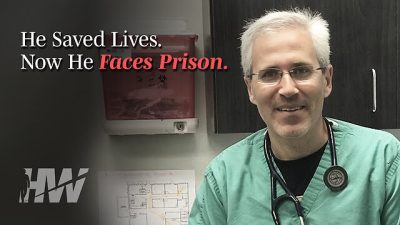
HE SAVED LIVES. NOW HE FACES PRISON.
or go to
Aletho News Archives – Video-Images
From the Archives
NATO Sanctions and the Coming Global Diesel Fuel Disaster
By F. William Engdahl – New Eastern Outlook – 11.04.2022
Amid the ongoing global inflation crisis, NATO heads of state and mainstream media repeat a mantra that high energy prices are a direct result of Putin’s actions in Ukraine since end of February. The reality is that it is the western sanctions that are responsible. Those sanctions including cutting SWIFT interbank access for key Russian banks and some of the most severe sanctions ever imposed, are hardly having an impact on the military actions in Ukraine. What many overlook is the fact that they are increasingly impacting the economies of the West, especially the EU and USA. A closer look at the state of the global supply of diesel fuel is alarming. But Western sanctions planners at the US Treasury and the EU know fully well what they are doing. And it bodes ill for the world economy.
While most of us rarely think about diesel fuel as anything other than a pollutant, in fact it is essential to the entire world economy in a way few energy sources are. The director general of Fuels Europe, part of the European Petroleum Refiners Association, stated recently, “… there is a clear link between diesel and GDP, because almost everything that goes into and out of a factory goes using diesel.” … continue
Blog Roll
 Aletho News
- Trita Parsi: Middle East Unraveling — Are We on the Path to World War?
- Iran FM meets with US envoy on UN meeting’s sidelines at American side’s insistence: Report
- Qatar PM calls for Gulf security framework with Iran, says war must be ‘wake-up call’
- China condemns US extortion of Iranian airlines, rejects Washington’s ‘illegal’ sanctions threats
- Italy to move military personnel from Taif base after missile strike
- Finland’s Stubb tells European leaders to calm down
- Defeating Russia on battlefield impossible – Fico
- Finland’s Gender Clinic Reversal
- Massachusetts Wants Mental Health Visits, Why Does Government Use ‘Health’ to Enter Our Homes & Families?
- US lawmaker admits American people footing bill for Trump’s failed aggression against Iran
- If Americans Knew
- Sanctions are collective punishment: immoral and self-defeating
- Phosphorus Munitions Fired by Israel Burn Groves, Orchards in Southern Lebanon
- Israel Carries Out New Ceasefire Violations Across Gaza
- AI – Emphasis on the ‘I’: Israel Is Funding AI Chatbot Propaganda
- Israel Blocking Hundreds of Wheelchairs for Injured Children From Entering Gaza
- Israel Is Expanding and Upgrading Compounds for Palestinian Militias in Gaza
- The Palestinian-American Residents of This West Bank Town Are Wondering: Where Is Trump?
- Gaza desperately needs tents, wheelchairs, fuel… and everything else (Israel blocks it all) – Daily Update
- Israeli Attacks in Gaza Kill at Least Seven Palestinians Over Three Days, including Woman and Child
- Trump’s militarization of Washington DC as he pursues Israel’s war against Iran
- No Tricks Zone
- New Study: Earth And Venus Surface Warmth Largely Explained By Convection And Lapse Rate, Not CO2 Or Radiation
- 2025 Nature Paper Claiming Worsening Global Drought Gets RETRACTED …Heavily Flawed
- New Study: ‘Global Drought Shows No Detectable Recent Acceleration Under Climate Warming’
- Economic Masterminds: German Socialists Suggest Taxing Productivity Gains Stemming From Using AI
- The South China Sea Has Not Been Cooperating With The Climate Change Narrative
- Energy Crisis: Germany Enters Heating Season With Historically Low Gas Reserve Fill Levels
- New Study: The Antarctic Ice Sheet Gained Mass From 2020-2024 Due To Staggering Snow And Ice Accumulation
- Study: Ocean Heating Rates From Thousands Of Years Ago ‘Dwarf’ Modern Ocean Heating Rates
- Climate Extremists Target, Attack Large-Scale Power Grid Infrastructure In Germany!
- New Study: Antarctic Ice Melt Has Contributed Less Than 1 Centimeter To Sea Level Rise In The Last 30 Years

