UK Defence Minister Announces Development of New Nuclear Warhead as ‘Effective’ Deterrent
By Tim Korso – Sputnik – February 25, 2020
Defence Secretary Ben Wallace has announced via a written statement to parliament that the UK will be developing a replacement warhead while continuing to maintain its existing nuclear warheads until they are decommissioned. The development of the new warheads was spurred by the need to respond to new threats in a changing security environment, the defence secretary said.
“We will maintain our Trident nuclear deterrent, which guarantees our security. To ensure the government maintains an effective deterrent throughout the commission of the Dreadnought Class ballistic missile submarine we are replacing our existing nuclear warheads to respond to future threats and the security environment”, Wallace stated.
Wallace said to the parliament that highly skilled teams will be formed in close coordination between the Ministry of Defence’s Nuclear Organisation and the UK’s Atomic Weapons Establishment to develop the new weapon. The defence secretary added that the teams will also collaborate with the US to ensure that the new warhead stays compatible with the Trident Strategic Weapon Systems.
The move comes as part of a 2015 Strategic Defence and Security Review, which outlined the UK’s strategy of maintaining an independent minimum credible deterrent in the form of nuclear weapons. The stance was adopted as a result of the 2007 government decision supported by a parliamentary vote to uphold the country’s nuclear deterrents beyond the early 2030s.
‘Deliberate hoax’: Russian military denies NGO report of airstrikes in Idlib
RT | February 24, 2020
Syrian Observatory for Human Rights reports of Russian airstrikes on two villages in Idlib province have nothing to do with reality, the Russian military said, adding that none of its planes operated in that area on Monday.
“The information provided by the British NGO is a deliberate hoax,” Rear Admiral Oleg Zhuravlev, head of the Russian Center for the Reconciliation in Syria, said at a briefing.
Earlier in the day, the UK-based Syrian Observatory for Human Rights (SOHR) claimed that an airstrike by Russian and Syrian forces on the villages of Kansafra and Al-Bara in Idlib led to the “killing and injuring of nearly ten Turkish soldiers.”
Ankara has not reported any casualties among its troops in Syria, however.
The SOHR claim came at a moment when Russia and Turkey stand on the brink of war over Syria. Ankara sent troops to Idlib – the last remaining terrorist stronghold in Syria – two weeks ago, provoking deadly clashes with the advancing Syrian army. Turkey has demanded Russia to pressure its allies in Damascus into ceasing its operations in the area, while Moscow blamed Ankara of not fulfilling its earlier promise to separate the “moderate” rebels from terrorists.
Last Thursday, Russian bombers struck militants who had launched an attack on Syrian positions with the support of Turkish artillery. However, both Russia and Turkey said they weren’t looking for a military conflict. A new round of consultation between the sides is being prepared in order to defuse the situation in Idlib, Russian Foreign Minister Sergey Lavrov announced on Monday.
SOHR has been one of the key sources of Western media since the conflict in Syria broke out in 2011. However, a 2015 investigation revealed that the entire organization was run by a single man in Coventry, a former convict who fled Syria for the UK and has not been back since.
No Airports, No Imports–Welcome To Year Zero!
By Paul Homewood | Not A Lot Of People Know That | February 21, 2020
I took a quick look at this story the other day, but have now had time to read the report it was based on:
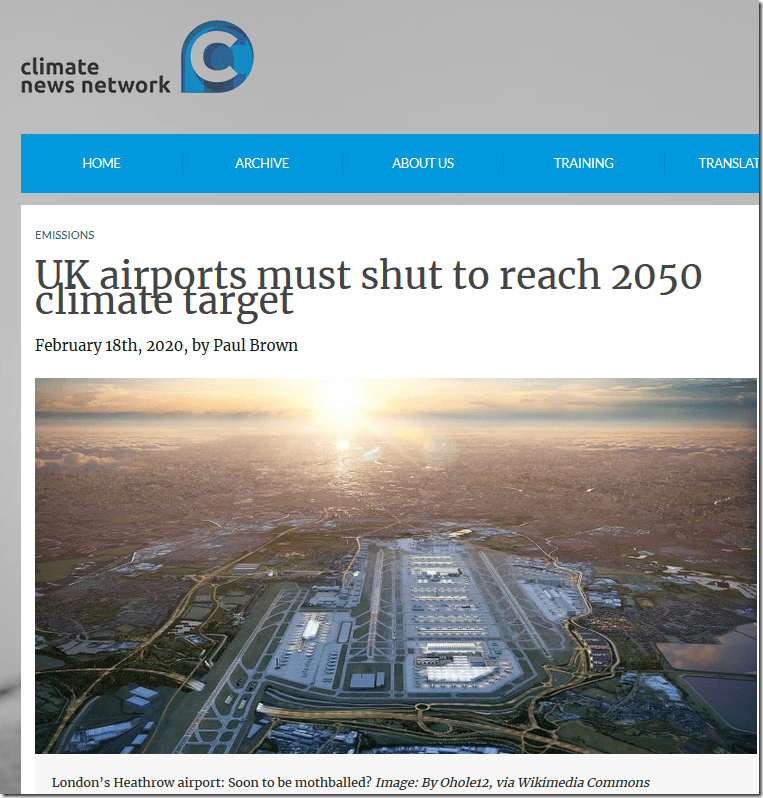
To many people, “saving the planet” means little more than building wind farms, planting trees and using less plastic. However it is gradually beginning to dawn on the public that the impact on their lives will be substantial.
Even then though, things like scrapping gas boilers and moving to electric cars have been something that “won’t happen for decades, so why worry now?”
However a new study, sponsored by the UK Government, has warned that huge changes to our lifestyles will be necessary, and much sooner than we think, if zero emission targets are to be met.
The report by UK FIRES, called Absolute Zero, calls for all UK airports to be shut by 2050, because there are no practical alternatives for zero emission flight. But as part of this timetable, all airports other than Heathrow, Glasgow and Belfast must shut by 2030.
In a stroke, air travel will be effectively banned for most of the country, as Heathrow simply would not have the capacity to handle more than a small proportion of demand. (Heathrow currently carries a quarter of UK passengers).
But that is just one item on a long list of changes to be forced on the British public. The report concludes that we cannot bank on technological innovations coming to our rescue.
If you thought that we could simply rely on renewable energy, forget it. As UK FIRES points out, even with rapid growth of renewables, we will still need to cut our energy use by 40%, even before air travel and shipping are factored in. And all of this without accounting for the projected population increase.
So forget about electric cars being the solution, because we will not have enough electricity to power them. The recommendation from UK FIRES – have 40% less cars on the road. Their suggestion – use the train more, ignoring the sky high prices, the fact that railways offer very limited routes and how you are supposed to travel around when you get to your destination. The idea that we will all willingly give up our cars to travel by rail or bus is utterly naive.
The report also conveniently ignores the high carbon dioxide footprint in building electric cars in the first place.
Heating is another area where we must cut emissions. UK FIRES expect us to buy heat pumps, seemingly oblivious to the fact they will cost each household a good £10k more than our conventional boilers. They also don’t appear to realise that heat pumps are incapable of supplying the heat we need in the middle of winter, or that the power grid simply could not cope with that sort of spike in demand even if they could.
Or maybe they do! Their guidance includes using heating for less time, in fewer rooms and wearing warm clothes in winter.
Our diet does not escape either, as we will have to give up eating beef and lamb, not to mention frozen ready meals. While we are expected to rely on arable farming instead, they also want fertiliser use to be drastically reduced.
Meanwhile the construction industry is likely to grind to a halt, as cement is phased out. Unfortunately the actual making of cement releases emissions, regardless of the source of the energy used.
Forget about housebuilding, new hospitals and infrastructure, they want us to concentrate on retrofit and adaptation of existing buildings.
Ironically, as even the report admits, we don’t know how to install new renewables or make new energy efficient buildings without cement.
If all of this was not bad enough, they want to ban all imports by 2050, unless they can come via rail, which might be a problem given that we are an island! Of course, we don’t have zero emission freight ships at the moment, and are unlikely to in the foreseeable future.
Quite how we are expected to feed ourselves without importing food is a mystery, unless we return to 1940s style rationing. And you can forget about all of those other things we get from abroad now.
What about, for instance, computers and electronics? We will quickly become an international backwater, without access to the latest technology. It would be like the country returning to 1990s style Nokia phones, VHS and floppy discs!
Some may be substituted by UK made goods, but it is hard to see how industrial capacity could be built back up with the restrictions planned on construction, energy use and industrial emissions.
But it is not only the emissions from shipping which concerns the authors. They also say we must be responsible for all emissions from the production of imported goods.
So how, you might ask, are we supposed to live in this glorious, emission free future?
UK FIRES says we must not worry! We can apparently carry on doing the things we enjoy most, totally emission free. Things like sports, social life, eating, hobbies, games,computing, reading, TV, radio, volunteering and sleeping! According to the report, “we can all do more of these without any impact on emissions.”
Indeed, with the economy and industry destroyed, most of us will have much more time on our hands for these pursuits! (Climate scientists and bureaucrats excluded, naturally).
Nowhere in this dismal little report is there any acknowledgement of the fact that the UK only generates 1% of global emissions. The report starts by stating:
We have to cut our greenhouse gas emissions to zero by 2050: that’s what climate scientists tell us, it’s what social protesters are asking for and it’s now the law in the UK.
Wrecking the economy is not something we should do, just because a few eco-loon protestors are asking for it. And laws can, of course, be changed.
We must however thank the authors of this report for bringing home the very real and damaging effect that the mad rush to decarbonise will have on peoples’ lives.
And, as they have rightly stated, these changes will have to start being put into practice very soon, certainly during this decade.
For too long, the impact and cost of the Climate Change Act has been deliberately hidden from the public. Partly this has been the result of a political conspiracy between all of the major political parties and establishment in general. It has also been aided and abetted by all of the media, with a handful of notable exceptions.
But their dirty little secret cannot be covered up for much longer.
Collusion: Franklin Roosevelt, British Intelligence, and the Secret Campaign to Push the US Into War
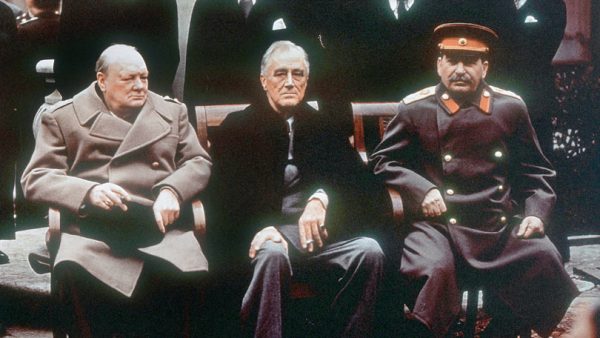
President Roosvelt, Prime Minister Churchill and premier Stalin, at the historic “Big Three” conference in Yalta, February 1945
By Mark Weber – Institute for Historical Review – February 2020
We’ve heard a lot recently about alleged secret and illegal collaboration by prominent Americans with foreign governments. Collusion is widely regarded as so malign and disgraceful that any official who cooperates with a foreign power in an underhanded way is considered unfit to hold public office. In particular, politicians and media commentators have been charging that devious cooperation by Donald Trump with the government of Ukraine or Russia renders him unfit to be President.
However valid such accusations may be, secretive and unlawful collusion by an American leader with a foreign power that subverts the US political process is not new. The most far-reaching and flagrant case was by President Franklin Roosevelt in 1940-41.
The stage for this had been set some months earlier. In September 1939, Germany and then Soviet Russia attacked Poland. Two days after the German assault, Britain and France declared war against Germany.
Following the defeat of Poland after barely five weeks of fighting, the German leader appealed to Britain and France for peace. Hitler’s plea was rejected. After British and French leaders made clear their determination to continue the war, Germany struck in the West in May 1940. Military and political leaders in Britain and France were confident that their forces would prevail. After all, those two countries had more soldiers, more artillery, more tanks and armored vehicles, and vastly more impressive and numerous naval vessels, than did the Germans. Nonetheless, in just six weeks German forces subdued France and forced the British to flee to their island nation.[1]
Hitler then launched yet another peace initiative. In a dramatic July 19, 1940, appeal for an end to the conflict, he stressed that his proposal did not in any way harm vital British interests or violate British honor. This offer was also rejected, and Prime Minister Winston Churchill vowed to continue the war.[2]
Privately, though, he and all other high-level British officials knew that their country’s resources were hopelessly inferior to those of Germany and her allies, and that Britain’s only hope for “victory” required somehow bringing the United States into the war. In a one-on-one conversation during this period Randolph Churchill pointedly asked his father just how Britain could possibly beat Germany. “With great intensity,” he later recalled, Winston Churchill replied: “I shall drag the United States in.”[3]
From mid-1940 onwards, bringing the US into war was a priority British government objective. The great problem, though, was that the great majority of Americans wanted to keep their country neutral, and avoid any direct involvement in the European conflict. Millions remembered with bitterness the deceit by which the US had entered the world war of 1914-1918, and the betrayal of the solemn, noble-sounding pledges made during those years by US President Wilson and the leaders of Britain and France.
Roosevelt secretly supported Churchill’s efforts. Even before the outbreak of war in September 1939, the President was already working, behind the scenes, to encourage Britain to make war against Germany, with the goal of “regime change” there.[4] America’s most influential newspapers, magazines and radio commentators shared Roosevelt’s hostile attitude toward Hitler’s Germany, and they supported his campaign for war by putting out stories designed to persuade the public that Germany was a grave danger. Even prior to the outbreak of war in Europe, for example, the country’s most influential illustrated weekly, Life magazine, published a major article headlined “America Gets Ready to Fight Germany, Italy, Japan.” Readers were told that Germany and Italy “covet … the rich resources of South America,” and warned that “fascist fleets and legions may swarm across the Atlantic.”[5]
In the months before December 1941, when the US formally entered the war in the wake of the Japanese attack on Pearl Harbor, President Roosevelt did everything he could to get America into the global conflict without actually declaring war. He proceeded with caution and cunning, because his measures were often contrary to US law, and without Congressional or Constitutional mandate. Roosevelt also acted with ever more brazen disregard for international law and America’s legal standing as a neutral country. As part of his campaign, he sought to convince the public that Hitler’s Germany threatened the US.
“The Nazi masters of Germany,” he announced in a December 1940 radio address, “have made clear that they intend not only to dominate all life and thought in their own country, but also to enslave the whole of Europe, and then to use the resources of Europe to dominate the rest of the world …” In August 1941, the President met with British premier Churchill to pledge US support for war against Germany. They issued a joint declaration, the “Atlantic Charter,” that laid out the ambitious and noble-sounding war aims of the two countries.[6]

Roosevelt and Churchill at their historic “Atlantic Charter” meeting off the coast of Newfoundland, August 1941
In a nationally-broadcast address two weeks later, Roosevelt told Americans that “… our fundamental rights – including the rights of labor – are threatened by Hitler’s violent attempt to rule the world,” and pledged that “we shall do everything in our power to crush Hitler and his Nazi forces.”[7] In another radio address on September 11 the President announced a “shoot-on-sight” order to US naval warships to attack German and Italian vessels on the high seas.
In spite of these and other hostile measures, German leaders fervently sought to avoid conflict with the US. Hitler ordered German submarines to avoid any clash with American forces, and to use their weapons only in self-defense and as a final resort. So belligerent were US actions against Germany and her allies, and so blatant was US disregard for the country’s officially neutral status, that Admiral Harold Stark, US Chief of Naval Operations, warned the Secretary of State that Hitler “has every excuse in the world to declare war on us now, if he were of a mind to.”[8]
As part of Churchill’s effort to bring the US into the war, in 1940 his government established an agency that came to be known as the British Security Coordination (BSC), which managed operations in North and South America of Britain’s key intelligence bureaus, including MI5, MI6, the Special Operations Executive, and the Political Warfare Executive.
BSC operations were headed by William Stephenson. Born in Canada, he had distinguished himself as a flier with British forces during the First World War, and afterwards became a highly successful businessman in England. From its central offices on two floors of the Rockefeller Center building on Fifth Avenue in New York City, the BSC at its height supervised the work of more than two thousand full- and part-time employees, agents and operatives. These included linguists, cipher and crytology experts, intelligence agents, propaganda specialists, people skilled in business and finance, and operatives in a range of other fields. Nearly a thousand were active in New York, while more than that number worked in Washington, DC, Los Angeles, San Francisco and Seattle, as well as in Canada, Mexico City, Havana, and other centers in Latin America. “The scale and audacity” of British intelligence acclivities in the US between June 1940 and December 1941, concludes one historian, “were without parallel in the history of relations between allied democracies.”[9]

William Stephenson
At the end of World War II, Stephenson arranged for an official history of the British Security Coordination to be written, based on its voluminous files and records. Just twenty copies of this secret and very restricted work were produced, and then the entire archive of BSC documents and papers was gathered together and burned.[10]
In the years that followed, some information about BSC operations came to public attention in a few widely-read books. But it was not until 1999 – more than half a century after the end of World War II – that the full text was finally published. This important primary source, titled British Security Coordination: The Secret History of British Intelligence in the Americas, 1940-1945, throws light on the carefully hidden record of collusion between the Roosevelt White House and a foreign government.
Not long after William Stephenson arrived in the US to begin work, Prime Minister Churchill informed President Roosevelt of Stephenson’s assignment. After a briefing on the BSC’s planned operations, Roosevelt said: “There should be the closest possible marriage between the FBI and British intelligence.” The president also communicated his views on this to the British ambassador in Washington.[11] Roosevelt arranged for Stephenson’s agency to work closely with William Donovan, a highly trusted colleague of the President who went on to establish and head the wartime Office of Strategic Services, which after the war became the CIA, the Central Intelligence Agency.
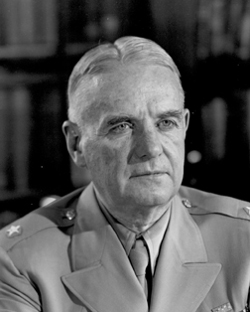
William Donovan
As the official BSC history acknowledges, BSC operations “could not have come into being at all without American approval on the highest level.” The official history goes on: “The climax of that offensive was reached some six months before Pearl Harbor when BSC secured, through the establishment of the organization which eventually came to be known as the Office of Strategic Services, an assurance of full American participation and collaboration with the British in secret activities directed against the enemy throughout the world.”[12]
Moreover, “Inasmuch as the cause of American intervention was symbolized in the foresight and determination of the President himself, the ultimate purpose of all BSC’s Political Warfare was to assist Mr Roosevelt’s own campaign for preparedness. This was not merely an abstract conception, for WS [William Stephenson] kept in close touch with the White House and as time went on the president gave clear indication of his personal concern both to encourage and take advantage of BSC’s activities.”[13]
This cooperation with British intelligence by the President and other high-ranking US officials, as well as with the FBI, the US federal government’s main domestic security and police agency, was quite illegal. Such collusion by the nominally neutral US to further the war aims of a foreign government was contrary to both US law and universally accepted international norms. Accordingly, the White House kept this collaboration secret even from the State Department.
Incidentally, the official BSC history acknowledges the role of Donovan in a little known but important chapter of World War II history. On March 25, 1941, Yugoslavia joined the Axis alliance with Germany, Italy and other European countries. Two days later, a group of Serbian officers led by General Dusan Simovic, carried out a putsch in Belgrade, the Yugoslav capital, that violently overthrew the country’s legal government. Ten days later the new regime signed a treaty of friendship with the Soviet Union.
How did this sudden “regime change” come about? Several months earlier, during a visit to Belgrade in January 1941, William Donovan was in the Yugoslav capital as an agent of President Roosevelt and of the British government. During a crucial meeting and conversation with General Simovic, he set the stage for the “regime change” overthrow of the country’s government. The official BSC history puts it this way: “In Yugoslavia, Donovan paved the way for the coup d’état which resulted at the eleventh hour in Yugoslav resistance to, instead of acquiescence in, German aggression. He interviewed General Simovic, who asked him whether Britain could hold out against the Nazis and whether the United States would enter the war … He answered both questions in the affirmative; and at his persuasion Simovic agreed to organize the revolution which a few months later overthrew the pro-German government of Prince Paul.”[14]
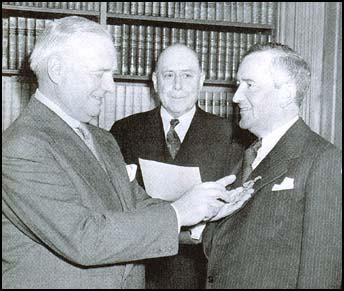
William Stephenson is honored for his wartime service with the US “Medal of Merit,” presented by William Donovan at a ceremony in 1946
A major task of the BSC – as the official history reports – was “to organize American public opinion in favour of aid to Britain.” As part of what the BSC called “political warfare designed to influence American public opinion,” BSC agents were “placing special material in the American press.” Stephenson’s operatives were very active in prodding, cajoling and steering the US media to foment fear and hatred of Germany, and to encourage public support for Roosevelt’s ever more overt campaign of military backing for Britain, and later for Soviet Russia.
“Of particular value,” the BSC history notes, was the cooperation of the publisher of the New York Post, the editor of the New York daily PM, the publisher of the New York Herald Tribune, the publisher of the Baltimore Sun, and the president of the New York Times, as well as the country’s most influential columnists, including Walter Lippman, Drew Pearson, and Walter Winchell. Pearson’s column alone appeared in 616 newspapers with a combined readership of more than twenty million. In working “to bring the United Sates into the `shooting’ war by attacking isolationism and fostering interventionism,” the BSC “was able to initiate internal propaganda through its undercover contacts with selected newspapers, such as the New York Times, the New York Herald Tribune, the New York Post, and the Baltimore Sun; with newspaper columnists and radio commentators; and with various political pressure organizations.”
The BSC worked closely with a specially created news service. Set up in July 1940, the “Overseas News Agency” was a supposedly legitimate and trustworthy enterprise. Actually, and as the BSC history notes, this was “a branch of the Jewish Telegraph[ic] Agency, owned in part by the rich New York Jew who controlled the liberal and vehemently anti-Nazi New York Post.”
As the official history goes on to explain: “After a series of secret negotiations, BSC agreed to give ONA [Overseas News Agency] a monthly subsidy in return for promise of cooperation in certain specific ways … It’s value … lay in its ability not only to channel propaganda outwards but to assure wide dissemination of material originated by BSC and intended for internal consumption. In April 1941, the ONA clients within the United States already numbered more than forty-five English language papers, which included such giants as the New York Times … It afforded a useful instrument for rapid dissemination abroad of subversive propaganda originated by BSC in the United States.”[15]
The Jewish-run ONA agency soon became an important distributor of “fake news” as part of the widening campaign to smear and discredit National Socialist Germany, and to promote public support for US involvement in war against Germany and her allies. As one historian put it: “From the start, attacking Nazi Germany was a higher priority for ONA than hewing to the truth.” ONA articles influenced many millions of Americans, appearing in such major daily papers as the New York Times, the New York Herald Tribune, the San Francisco Chronicle, the Philadelphia Inquirer, and The Washington Post.[16]
Here are a few examples:
In August 1940 an ONA report cited anonymous “qualified Czech sources” to inform Americans that “Czechoslovak girls and young women have been transported from the [Czech] Protectorate to German garrison towns to become white slaves.” It went on to tell readers that “Nazi officials, dispatching these trainloads of prospective white slaves to the Reich, informed husbands and relatives that the women `will be entrusted with the important work of amusing German soldiers, in order to keep up the morale of the troops’.”[17]
In February 1941 American newspapers carried a sensational ONA report claiming that the US was threatened by “fascist bands” in the Caribbean country of Haiti, which had become a dangerous center of Nazi activity. Germans were supposedly preparing that county as a base for attacks on Florida, the Panama Canal, and Puerto Rico.[18] In June 1941 an ONA report appearing in newspapers across the US told of a daring British parachute raid within Germany that had succeeded in capturing 40 German pilots. This and similar stories were meant to encourage Americans to believe that the British had the skill and resolve to defeat Germany and her allies. But the raid never happened. This “fake news” story was conceived in London by the MI6 agency, and was written by a British agent.[19]
In August 1941, an ONA item in the New York Post told readers that “Hitler is not at the Russian front, but at Berchtesgaden suffering from a severe nervous breakdown.” The article went on to assert that the German leader’s personal physician had recently traveled to Switzerland to consult with the famed psychiatrist Carl Jung to discuss “the rapid deterioration of Hitler’s mental condition,” which was supposedly characterized by delusional rages.[20] That same month, The New York Times published a report of the Overseas News Agency telling readers that in the Middle East the recent death of a 130-year-old Bedouin soothsayer was widely regarded as “a sign of a coming defeat for Hitler.”[21]
Stephenson’s BSC also rigged public opinion polls to give the impression that Americans were more willing to join Britain and the Soviet Union in war against Germany than was actually the case. Polls that showed American unhappiness with British policies, such as Britain’s imperial rule in India, were suppressed. As a result, one historian cautions, many surveys of American public opinion during this period “should be seen for what they were: at worst they were flatly rigged, at best they were tweaked and massaged and cooked – advocacy polls without the advocate being visible.”[22]
An important British propaganda outlet during this period was radio station WRUL, an American short-wave broadcaster based in Long Island, New York. With 50,000 watts of power, its reach was unsurpassed by any other station either in the US or Europe. “By the middle of 1941,” the official BSC history reports, “station WRUL was virtually, though quite unconsciously, a subsidiary of BSC, sending out covert British propaganda all over the world … Daily broadcasts went out in no less than twenty-two different languages …”[23]
In its efforts to influence the American public, the British had formidable competition. News, photos and contextual information provided by German agencies was more timely and detailed, and consequently better appreciated and more effective, than what Britain provided. The German “news agencies, Transocean and DNB, were always first with the headlines,” the BSC history acknowledged.[24]
In two confidential telegrams sent to London in April 1941, Stephenson wrote frankly about the unsatisfactory situation: “Close examination of US press during past fortnight indicates almost complete failure [to] prevent Axis monopoly of war news coverage … most journals … carry predominance of Axis news … [and] photographs … few if any British photographs appear … Axis news reports reach here more quickly than ours … rapidly followed by copious flow of descriptive material, photographs and films … Transocean and DNB keep up flow and build up stories even in quiet periods … invariably beat our news to headlines … US newsmen here say Germans show far better sense of news and timing … infinitely better understanding US psychology.”[25]
As the BSC official history goes on to explain, “these warnings went unheeded, and accordingly WS [William Stephenson] decided to take action on his own initiative” by waging a “covert war against the mass of American groups which were organized throughout the country to spread isolationism and anti-British feeling.” This included coordination with vehemently anti-German organizations that were pushing for US involvement in war against Germany. BSC was especially keen to counter the formidable influence and effectiveness of the America First Committee. As the official history notes, “because America First was a particularly serious menace, BSC decided to take more direct action.” It took measures to “disrupt” America First rallies, and to “discredit” America First speakers. “Such activities by BSC agents and cooperating pro-British committees were frequent, and on many occasions America First was harassed and heckled and embarrassed.”
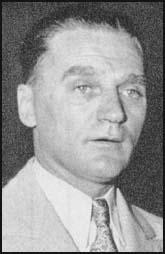
Gerald Nye
British intelligence agents also worked to elect candidates who favored US intervention in the European war, to defeat candidates who advocated neutrality, and to silence or destroy the reputations of Americans who were deemed to be a menace to British interests. An important target of BSC operations was US Senator Gerald Nye, an influential critic of the President’s campaign for war. Once, when he was getting ready to address a meeting in Boston, a BSC-backed group called “Fight for Freedom” “passed out 25,000 handbills attacking him as an appeaser and as a Nazi-lover.”[26]
Another political figure whom BSC operatives sought to discredit was US Representative Hamilton Fish, a vigorous critic of Roosevelt’s war policy. Fish was particularly effective because he was intelligent, well educated, and exceptionally knowledgeable about international relations, with extensive first-hand understanding of European affairs. British agents funded Fish’s election opponents, published pamphlets suggesting he was pro-Hitler, released a faked photo of Fish with the head of the pro-Nazi German American Bund, and planted stories saying that he was getting financial aid from German agents. Such underhanded activities were important in finally removing him from Congress in the November 1944 elections. The BSC history notes that while Fish “attributed his defeat to Reds and Communists. He might – with more accuracy – have blamed BSC.”[27]
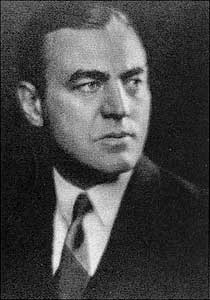
Hamilton Fish
Fortune tellers were also used by British intelligence to sway public opinion. Such propaganda, the official BSC history notes, is effective only with people who are not very discerning or sophisticated. The BSC begins its description of these operations with condescending remarks about American gullibility:
“A country that is extremely heterogeneous in character offers a wide variety of choice propaganda methods. While it is probably true that all Americans are intensely suspicious of propaganda, it is certain that a great many of them are unusually susceptible to it even in its most patent form … The United States is still a fertile field for outré practices. It is unlikely that any propagandist would seriously attempt to influence politically the people of England, say, or France through the medium of astrological predictions. Yet in the United States this was done with effective if limited results.”[28]
In the summer of 1941 the BSC employed Louis de Wohl, who is described in the BSC history as a “bogus Hungarian astrologer.” He was directed to issue predictions to show that Hitler’s “fall was now certain.” At public meetings, in radio appearances, in interviews, and in widely distributed press items, he “declared that Hitler’s doom was sealed.” De Wohl, who was presented as an “astro-philosopher,” also sought to discredit Charles Lindbergh, the much admired American aviator who was also a prominent spokesman for the America First Committee and an effective critic of Roosevelt’s war policies. De Wohl claimed that Lindbergh’s first son, who had been kidnapped and killed in 1932, was actually still alive and living in Germany, where he was being trained as a future Nazi leader. “There is little doubt,” the BSC history concludes, that the work of de Wohl “had a considerable effect upon certain sections of the [American] people.”[29]
British agents also publicized the equally absurd predictions of an Egyptian astrologer who claimed that within four months Hitler would be killed, as well as similarly fantastic predictions of a Nigerian priest named Ulokoigbe. As Stephenson and his BSC colleagues intended, American newspapers eagerly picked up and spread such nonsense to millions of readers.[30]
The BSC also set up a center that fabricated letters and other documents, as well as an organization that excelled in spreading expedient rumors. British agents illegally interecpted and copied US mail. They carried out wiretapping to get embarrassing information on those it wished to discredit, and leaked the results of its illegal surveillance. One important target was the French embassy in Washington, DC, which was wiretapped and burgled by Stephenson’s agents.[31]
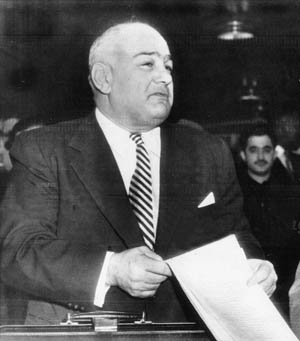
Ernest Cuneo
An important figure in all this was Ernest Cuneo, a publicist, lawyer, and intelligence operative who played a key role as liaison between Stephenson’s BSC, the White House, Donovan’s agency, the FBI, and the media. He later described the scope of British operations in a memo. The BSC, he wrote, “ran espionage agents, tampered with the mails, tapped telephones, smuggled propaganda into the country, disrupted public gatherings, covertly subsidized newspapers, radios, and organizations, perpetrated forgeries – even palming one off on the president of the United States (a map that out-lined Nazi plans to dominate Latin America) – violated the aliens registrations act, shanghaied sailors numerous times, and possibly murdered one or more persons in this country.”[32]
A high point of British-White House collusion, and of the BSC campaign to influence American public opinion, came on October 27, 1941. While Franklin Roosevelt was not the first or the last American president to deliberately mislead the public, rarely has a major political figure given a speech as loaded with brazen falsehood as he did in his address on that date. His remarks, delivered to a large gathering at the Mayflower Hotel in Washington, DC, were broadcast live over nationwide radio.[33]

In a nationally broadcast address of Oct. 27, 1941, President Roosevelt claimed to have documents proving German plans to take over South America and abolish all the world’s religions.
After giving a highly distorted review of recent US-German relations, Roosevelt made a startling announcement. He said: “Hitler has often protested that his plans for conquest do not extend across the Atlantic Ocean … I have in my possession a secret map, made in Germany by Hitler’s government – by the planners of the new world order. It is a map of South America and a part of Central America as Hitler proposes to reorganize it.” This map, the President explained, showed South America, as well as “our great life line, the Panama Canal,” divided into five vassal states under German domination. He said: “That map, my friends, makes clear the Nazi design not only against South America but against the United States as well.”
Roosevelt went on to announce another startling revelation. He told his listeners that he also had in his possession “another document made in Germany by Hitler’s government. It is a detailed plan to abolish all existing religions – Catholic, Protestant, Mohammedan, Hindu, Buddhist, and Jewish alike” which Germany will impose “on a dominated world, if Hitler wins.”
“The property of all churches will be seized by the Reich and its puppets,” he continued. “The cross and all other symbols of religion are to be forbidden. The clergy are to be forever silenced under penalty of the concentration camps … In the place of the churches of our civilization, there is to be set up an international Nazi church – a church which will be served by orators sent out by the Nazi government. In the place of the Bible, the words of Mein Kampf will be imposed and enforced as Holy Writ. And in place of the cross of Christ will be put two symbols – the swastika and the naked sword.”
“Let us well ponder,” he said, “these grim truths which I have told you of the present and future plans of Hitlerism.” All Americans, he went on, “are faced with the choice between the kind of world we want to live in and the kind of world which Hitler and his hordes would impose on us.” Accordingly, he said, “we are pledged to pull our own oar in the destruction of Hitlerism.”
The full story about these documents did not emerge until many years later. The map cited by the President did exist, but it was a forgery produced by British intelligence. Stephenson had passed it on to Donovan, who had it delivered to the President. The other “document” cited by Roosevelt, purporting to outline German plans to abolish the world’s religions, was even more fanciful than the “secret map.”
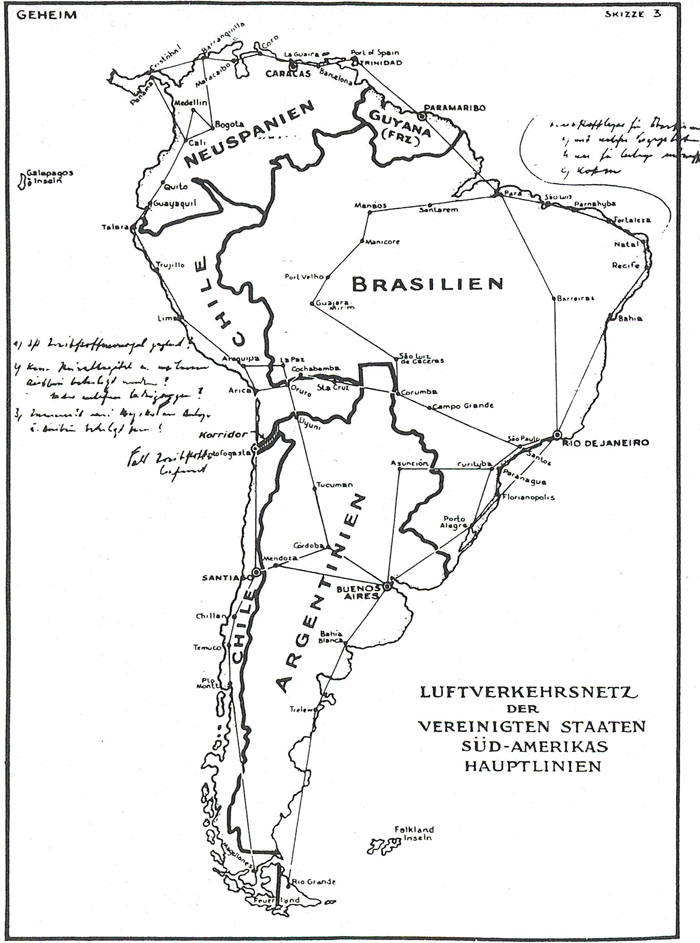
The “secret map” cited by President Roosevelt as proof of German plans to take over South America was produced by British intelligence and passed on to the White House by William Donovan.
It’s not clear if Roosevelt himself knew that the map was a fake, or whether he was taken in by the British fraud and actually believed it to be authentic. In this case we don’t know if the President was deliberately lying to the American people, or was merely a credulous dupe and tool of a foreign government.
The German government responded to the President’s speech with a statement that categorically rejected his accusations. The purported secret documents, it declared, “are forgeries of the crudest and most brazen kind.” Furthermore, the statement went on: “The allegations of a conquest of South America by Germany and an elimination of the religions of the churches in the world and their replacement by a National Socialist church are so nonsensical and absurd that it is superfluous for the Reich government to discuss them.”[34] German propaganda minister Joseph Goebbels also responded to Roosevelt’s claims in a widely read commentary. The American president’s “absurd accusations,” he wrote, were a “grand swindle” designed to “whip up American public opinion.”[35]
That the President’s claims were absurd on their face should have been obvious to any discerning and reasonably well-informed person. Assertions that Germany was planning to take over South America were clearly fantastic given that, first, Germany had been unable or unwilling even to launch an invasion of Britain, and, second, that German forces at that moment were fully engaged in a titanic clash with Soviet Russia, a conflict that would ultimately end with the victory of the Red Army.
Roosevelt’s claim that Hitler was bent on quashing the world’s religions was not just a falsehood; it was nearly the opposite of the truth. At the same time he was telling Americans that Hitler’s Germany threatened religious life in their country and the rest of the world, President Roosevelt and his government were organizing military aid to the one country that was ruled by an openly atheist regime, the Soviet Union. While Roosevelt was speaking, military forces of Germany, Italy, Romania, Finland, Hungary and other European countries were battling to bring down the anti-religious Bolshevik state. Millions of Ukrainians, Russians, Lithuanians, Belarusians, and others who had already been freed from Soviet rule were, with German support, opening churches and restoring the traditional religious life that had been so brutally suppressed by the Stalinist regime.
During the war years, Germany’s Protestant and Catholic churches not only received government financial support, they were packed with worshipers. In Catholic regions of the Reich, notably in Bavaria and Austria, crucifixes were displayed in many public buildings, including courtrooms and school classrooms. The government of one country that was closely allied with Hitler’s Germany during World War II, Slovakia, was actually headed by a Roman Catholic priest.
In 1941 few Americans could believe that their President would so deliberately and emphatically deceive them, especially about matters of the gravest national and global importance. Millions accepted Roosevelt’s alarmist claims as true. After all, whom should any decent, patriotic citizen believe?: Their President, or the government of a foreign country that much of the American media told them was a mendacious regime dedicated to brutally imposing oppressive rule over the United States and the entire planet?
The Roosevelt-British propaganda campaign of 1940-41 was based on a great falsehood: the claim that Hitler was trying to “take over the world.” Actually, it was not Germany that launched war against Britain and France, but rather the reverse. It was Churchill, later joined by the US President, who rejected all German initiatives to end the terrible war. Demanding “unconditional surrender,” they insisted on the complete capitulation of Germany, including “regime change” elimination of the country’s government.
The legacy of President Roosevelt’s secretive and unlawful collusion with a foreign government, including his sanctioning of crimes by British and US agents, are relevant for our time. That’s especially true because Roosevelt is widely regarded as one of the greatest and most admirable of America’s past leaders. He is, for example, one of the very few persons whose image appears on US coins. Roads, streets, schools and other learning centers across the country bear his name.
His legacy should concern those who today are understandably unhappy with the routinely partisan and often polemical presentation of news and information in the mainstream media. The way that “fake news” and slanted, sensationalized information were given to the public in 1940-41 by the mainstream media, in secret collaboration with the White House and a foreign government, tells us much about how news and opinion can be manipulated in our country, and by whom.
In 1990 The New York Times issued a kind of apology for having published, decades earlier, the reporting of its once highly regarded correspondent in Moscow. In 1932 Walter Duranty’s dispatches from the Soviet Union earned him America’s highest award for journalistic achievement, the Pultizer Prize. Only years later did it become clear that Duranty’s portrayal of life in the USSR amounted to a deliberate whitewashing of reality. In particular he concealed the famine, starvation, and deaths of millions, especially in Ukraine, due to the Stalinist regime’s brutal “collectivization” of the vast country’s rural and farming population. Although reporting by major American newspapers in 1940-41 about Roosevelt administration’s policies for war was similarly distorted and misleading, neither the The New York Times, The Washington Post, nor any other paper has been moved to issue a comparable apology.
President Roosvelt, Prime Minister Churchill and premier Stalin, at the historic “Big Three” conference in Yalta, February 1945
President Richard Nixon is today widely regarded as a disgraced figure who deserved impeachment for trying to cover up the “Watergate” break-in. President Trump, many say, should likewise be punished for breaking the law. If that’s true, how then should we regard Franklin Roosevelt? His deceit and crimes – which are routinely ignored, excused or justified – vastly overshadow the misdeeds of Nixon and Trump.
Those who admire Franklin Roosevelt seem to believe that presidential deception and misconduct are justified if the perpetrator’s motives or goals are good. One influential scholar who has expressed this view is American historian Thomas A. Bailey. He acknowledged Roosevelt’s record, but sought to justify it. “Franklin Roosevelt repeatedly deceived the American people during the period before Pearl Harbor,” he wrote. “He was like the physician who must tell the patient lies for the patient’s own good … The country was overwhelmingly noninterventionist to the very day of Pearl Harbor, and an overt attempt to lead the people into war would have resulted in certain failure and an almost certain ousting of Roosevelt in 1940, with a complete defeat of his ultimate aims.”[36]
Prof. Bailey went on with a further justification: “A president who cannot entrust the people with the truth betrays a certain lack of faith in the basic tenets of democracy. But because the masses are notoriously shortsighted and generally cannot see danger until it is at their throats, our statesmen are forced to deceive them into an awareness of their own long-run interests. This is clearly what Roosevelt had to do, and who shall say that posterity will not thank him for it?”
In spite of all the rhetoric we hear about “our democracy” and “government of the people,” it seems that our leaders do not really believe that American-style democracy works as it’s supposed to. They don’t trust the people to “handle the truth.” The defenders of the Roosevelt legacy apparently believe that, at least sometimes, political leaders can and must break the law, violate the Constitution, and deliberately deceive the people for what a supposedly enlightened elite believes is in the nation’s “real” best interest, and for what it regards as a “higher” and worthy cause.
Roosevelt set a precedent for similarly deceitful and unlawful behavior by later presidents. Senator J. William Fulbright, a prominent critic of President Lyndon Johnson’s deception and disregard for law and the Constitution during the Vietnam war remarked that “FDR’s deviousness in a good cause made it much easier for LBJ to practice the same kind of deviousness in a bad cause.”[37]
“After a generation of presidential wars,” observed historian Joseph P. Lash, “it is possible to see that, in the hands of Roosevelt’s successors, the powers that he wielded as commander in chief to deploy the army, navy and air force as he deemed necessary in the national interest and to portray clashes in distant waters and skies as enemy-initiated led the nation into the Vietnam quagmire.”[38]
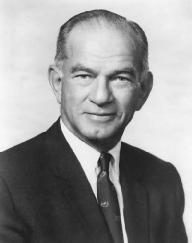
J. William Fulbright
Roosevelt’s methods seem to have become firmly entrenched in modern American political life. President George W. Bush, for one, followed in Roosevelt’s path when he and other high-level officials in his administration, with support from the mainstream media, deceived the American people to make possible the 2003 US invasion of Iraq. “I used to puzzle over the question of how American democracy could be adapted to the kind of role we have come to play in the world,” Senator Fulbright said in 1971. “I think I now know the answer: it cannot be done.”[39]
While many Americans today yearn for honest and ethical political leaders, transparent governance, and “real” democracy, such hopes are likely to remain elusive as long as the mainstream media, educators and politicians continue to portray Franklin Roosevelt as an exemplary President, and his administration as a paragon of leadership, while successfully suppressing or justifying his record of deceit and wrongdoing.
Endnotes
[1] Basil H. Liddell-Hart, The Second World War (New York: Putnam, 1971), pp. 17-22, 66; Clive Ponting, 1940: Myth and Reality (Chicago: 1993), pp. 79-80; Niall Ferguson, The War of the World (New York: Penguin, 2006), pp. 387-390; William Carr, Poland to Pearl Harbor (1986), pp. 93, 96.
[2] Patrick J. Buchanan, Churchill, Hitler and `The Unnecessary War’ (New York: Crown, 2008), pp. 361-366; John Charmely, Churchill’s Grand Alliance (Harcourt Brace, 1996), pp. 82-83, 178; Clive Ponting, 1940: Myth and Reality (1993), p. 124; Friedrich Stieve, What the World Rejected: Hitler’s Peace Offers, 1933-1939.
[3] Martin Gilbert, Finest Hour: Winston Churchill,1939-41 (1984), p. 358. Quoted in: Jon Meacham, Franklin and Winston (2004), p. 51; M. Hastings, Winston’s War, 1940-1945 (2010), p. 25.
[4] Joseph P. Lash, Roosevelt and Churchill (1976), pp. 23-31; M. Weber, “President Roosevelt’s Campaign to Incite War in Europe,” The Journal of Historical Review, Summer 1983.
[5] “America Gets Ready to Fight Germany, Italy, Japan,” Life, Oct. 31, 1938.
( http://mk.christogenea.org/content/it-was-planned-way-3-years-previously-page-1 )
[6] Roosevelt “fireside chat” radio address of Dec. 29, 1940. ; Regarding the “Atlantic Charter,” see: William H. Chamberlin, America’s Second Crusade (1950 and 2008); Benjamin Colby, ‘Twas a Famous Victory (1975).
[7] Roosevelt Labor Day radio address, Sept. 1, 1941.
[8] Joseph P. Lash, Roosevelt and Churchill (1976), pp. 360, 415, 429; Stark memo to Secretary Hull, Oct. 8, 1941. Quoted in: J. P. Lash, Roosevelt and Churchill (1976), p. 426.
[9] Thomas E. Mahl, Desperate Deception: British Covert Operations in the United States, 1939-44 (1999), p. 16; Steven T. Usdin, Bureau of Spies: The Secret Connections Between Espionage and Journalism in Washington (Prometheus, 2018), pp. 101-104; Lynne Olson, Those Angry Days (New York: Random House, 2013), p. 117; William Boyd, “The Secret Persuaders,” The Guardian (Britain), Aug. 19, 2006.
[10] Nigel West (introduction) in: William Stephenson, ed., British Security Coordination (New York: 1999), pp. xi, xii.
[11] W. Stephenson, ed., British Security Coordination (1999), p. xxv.
[12] W. Stephenson, ed., British Security Coordination (1999), pp. xxxvi, xxxiii.
[13] W. Stephenson, ed., British Security Coordination (1999), p. 16.
[14] W. Stephenson, ed., British Security Coordination (1999), p. 14.
[15] W. Stephenson, ed., British Security Coordination (1999), pp. 58, 59.
[16] Steven T. Usdin, Bureau of Spies (2018), esp. pp. 135-140, 325-327; P. J. Grisar, “Sharks Defending Britain From Nazis? How ‘Fake News’ Helped Foil Hitler,” Forward, Oct. 22, 2018; Menachem Wecker, “The true story of a Jewish news agency that peddled fake news to undo Hitler.” Religion News Service, October 1, 2018
[17] Steven T. Usdin, Bureau of Spies (2018), p. 135.
[18] S. T. Usdin, Bureau of Spies (2018), pp. 138-139, 326 (n.).
[19] Larry Getlen, “The Fake News That Pushed US Into WWII,” New York Post, Oct. 3, 2019, pp. 20-21.
[20] S. T. Usdin, Bureau of Spies (2018), p. 142.
[21] Steven T. Usdin, Bureau of Spies (2018), pp. 139, 326 (n.); Menachem Wecker, “The true story of a Jewish news agency that peddled fake news to undo Hitler.” RNS, Oct. 1, 2018
[22] Thomas E. Mahl, Desperate Deception (1999), pp. 70-86; S. T. Usdin, Bureau of Spies (2018), pp. 113-116, 154-155; W. Stephenson, ed., British Security Coordination (1999), pp. 81-84.
[23] W. Stephenson, ed., British Security Coordination (1999), pp. 59, 60, 61.
[24] W. Stephenson, ed., British Security Coordination (1999), p. 68.
[25] W. Stephenson, ed., British Security Coordination (1999), p. 69.
[26] W. Stephenson, ed., British Security Coordination (1999), p. 74.
[27] W. Stephenson, ed., British Security Coordination (1999), pp. 74, 80; T. E. Mahl, Desperate Deception (1999), pp. 107-135; Steven T. Usdin, Bureau of Spies (2018), pp. 119-127; Christopher Woolf, “How Britain Tried to Influence the US Election in 1940,” PRI, Jan. 17, 2017.
[28] W. Stephenson, ed., British Security Coordination (1999), pp. 102.
[29] W. Stephenson, ed., British Security Coordination (1999), pp. 102-103, 104; S. T. Usdin, Bureau of Spies (2018), p. 139.
[30] W. Stephenson, ed., British Security Coordination (1999), p. 103.
[31] W. Stephenson, ed., British Security Coordination (1999), pp. 104, 105, 107, 109; Steven T. Usdin, Bureau of Spies (2018), pp. 102, 140, 145-148.
[32] Thomas E. Mahl, Desperate Deception: British Covert Operations in the United States, 1939-44 (1999), pp. 16, 193; Michael Williams, “FDR’s Confidential Crusader,” Warfare History Network. Jan. 17, 2019.
[33] John F. Bratzel, Leslie B. Rout, Jr., “FDR and The ‘Secret Map’,” The Wilson Quarterly (Washington, DC), New Year’s 1985, pp. 167-173; Ted Morgan, FDR: A Biography (New York: Simon and Schuster, 1985), pp. 602, 603, 801 (notes); Mark Weber, “Roosevelt’s `Secret Map’ Speech,” The Journal of Historical Review, Spring 1985.
[34] “The Reich Government’s Reply To Roosevelt’s Navy Day Speech,” The New York Times, Nov. 2, 1941; Documents on German Foreign Policy, 1918-1945. Series D, Vol. XIII, (Washington, DC: 1954), pp. 724-725 (Doc. No. 439 of Nov. 1, 1941).
[35] Joseph Goebbels, “Kreuzverhör mit Mr. Roosevelt,” Das Reich, Nov. 30, 1941. Nachdruck (reprint) in Das eherne Herz (1943), pp. 99-104. English translation: “Mr. Roosevelt Cross-Examined.”
( http://research.calvin.edu/german-propaganda-archive/goeb2.htm )
[36] Thomas A. Bailey, The Man in the Street: The Impact of American Public Opinion on Foreign Policy. (New York: 1948), pp. 11-13. Quoted in: W. H. Chamberlin, America’s Second Crusade (Indianapolis: Amagi/ Liberty Fund, 2008), p. 125.
[37] Joseph P. Lash, Roosevelt and Churchill, 1939-1941 (New York: 1976), pp. 9, 10, 420, 421; Address by Fulbright, April 3, 1971. Published in: Congressional Record – Senate, April 14, 1971, p. 10356.
( https://www.govinfo.gov/content/pkg/GPO-CRECB-1971-pt8/pdf/GPO-CRECB-1971-pt8-4-1.pdf )
[38] J. Lash, Roosevelt and Churchill (1976), p. 421.
[39] Address by Fulbright, April 3, 1971. Congressional Record – Senate, April 14, 1971, p. 10356.
Bibliography / For Further Reading
Nicholson Baker, Human Smoke: The Beginnings of World War II, the End of Civilization. New York: Simon & Schuster, 2008
Harry Elmer Barnes, ed., Perpetual War for Perpetual Peace. Institute for Historical Review, 1993
William Boyd, “The Secret Persuaders,” The Guardian (Britain), August 19, 2006.
( https://www.theguardian.com/uk/2006/aug/19/military.secondworldwar )
John F. Bratzel and Leslie B. Rout, Jr., “FDR and The ‘Secret Map’,” The Wilson Quarterly (Washington, DC), New Year’s 1985 (Vol. 9, No. 1), pp. 167-173.
Anthony Cave Brown, The Last Hero: Wild Bill Donovan. New York: Times Books, 1982
Patrick J. Buchanan, Churchill, Hitler and `The Unnecessary War’: How Britain Lost Its Empire and the West Lost the World. New York: Crown, 2008.
William H. Chamberlin, America’s Second Crusade. Chicago: 1950; Indianapolis: 2008
John Charmley, Churchill’s Grand Alliance: The Anglo-American Special Relationship, 1940-1957. Harvest/ Harcourt Brace, 1995.
Benjamin Colby, ‘Twas a Famous Victory. Arlington House, 1975
David Cole, “Tyler Kent and the Roosevelt Whistle-Blow Job,” Taki’s Mag, Nov. 19, 2019.
( https://www.takimag.com/article/tyler-kent-and-the-roosevelt-whistle-blow-job/ )
Jennet Conant, The Irregulars: Roald Dahl and the British Spy Ring in Wartime Washington. Simon & Schuster, 2008.
Robert Dallek, Franklin D. Roosevelt and American Foreign Policy, 1932-1945. New York: Oxford University Press, 1979.
Hunter DeRensis, “The Campaign to Lie America Into World War II,” The American Conservative, December 7, 2019
( https://www.theamericanconservative.com/articles/the-campaign-to-lie-america-into-world-war-ii/ )
Larry Getlen, “The Fake News That Pushed US Into WWII,” New York Post, Oct. 3, 2019.
( https://nypost.com/2019/10/02/the-fake-news-that-pushed-us-into-world-war-ii/ )
P. J. Grisar, “Sharks Defending Britain From Nazis? How ‘Fake News’ Helped Foil Hitler,” Forward, Oct. 22, 2018.
( https://forward.com/culture/412422/sharks-defending-britain-from-nazis-how-fake-news-helped-foil-hitler/ )
Henry Hemming, Agents of Influence: A British Campaign, a Canadian Spy, and the Secret Plot to Bring America into World War II. PublicAffairs, 2019.
Robert Higgs, “Truncating the Antecedents: How Americans Have Been Misled About World War II.” March 18, 2008.
( http://www.lewrockwell.com/higgs/higgs77.html )
Herbert C. Hoover, Freedom Betrayed: Herbert Hoover’s Secret History of the Second World War and its Aftermath (George H. Nash, ed.). Stanford University, 2011.
David Ignatius, “Britain’s War in America: How Churchill’s Agents Secretly Manipulated the U.S. Before Pearl Harbor, The Washington Post, Sept. 17, 1989, pp. C-1, C-2.
Tyler Kent, “The Roosevelt Legacy and The Kent Case.” The Journal for Historical Review. Summer 1983 (Vol. 4, No. 2), pages 173-203. With Introduction by Mark Weber.
( http://www.ihr.org/jhr/v04/v04p173_Kent.html )
Warren F. Kimball, The Juggler: Franklin Roosevelt as Wartime Statesman. Princeton University Press, 1991
Charles C. Kolb. Review of: W. S. Stephenson, ed., British Security Coordination: The Secret History of British Intelligence in the Americas 1940-1945. H-Diplo, H-Net Reviews. December 1999.
( http://www.h-net.org/reviews/showrev.php?id=3623 )
Thomas E. Mahl, Desperate Deception: British Covert Operations in the United States, 1939-44. Brassey’s, 1999.
Jerome O’Connor, “FDR’s Undeclared War,” Naval History (U.S. Naval Institute), Feb. 1, 2004.
( http://historyarticles.com/undeclared-war/ )
Joseph E. Persico, Roosevelt’s Secret War: FDR and World War II Espionage. Random House, 2001.
“The Reich Government’s Reply To Roosevelt’s Navy Day Speech,” The New York Times, Nov. 2, 1941. ( http://ibiblio.org/pha/policy/1941/411101a.html )
Bruce M. Russett, No Clear and Present Danger: A Skeptical View of the U.S. Entry into World War II. New York: Harper & Row, 1972
Friedrich Stieve. What the World Rejected: Hitler’s Peace Offers, 1933- 1939.
( http://ihr.org/other/what-the-world-rejected.html )
Steven T. Usdin, Bureau of Spies: The Secret Connections Between Espionage and Journalism in Washington. Prometheus, 2018
Steve Usdin, “When a Foreign Government Interfered in a U.S. Election – In 1940, by Britain,” Politico, Jan. 16, 2017.
( https://www.politico.com/magazine/story/2017/01/when-a-foreign-government-interfered-in-a-us-electionto-reelect-fdr-214634 )
Mark Weber, “The ‘Good War’ Myth of World War Two.” May 2008.
( http://www.ihr.org/news/weber_ww2_may08.html )
Mark Weber, “Roosevelt’s `Secret Map’ Speech,” The Journal of Historical Review, Spring 1985 (Vol. 6, No. 1), pp. 125-127.
( http://www.ihr.org/jhr/v06/v06p125_Weber.html )
Menachem Wecker, “The true story of a Jewish news agency that peddled fake news to undo Hitler.” Religion News Service, October 1, 2018
( https://religionnews.com/2018/10/01/the-true-story-of-a-jewish-news-agency-that-peddled-fake-news-to-undo-hitler/ )
Michael Williams, “FDR’s Confidential Crusader,” Warfare History Network. Jan. 17, 2019.
( https://warfarehistorynetwork.com/2019/01/22/fdrs-confidential-crusader-2/ )
Christopher Woolf, “How Britain Tried to Influence the US Election in 1940,” Public Radio International, January 17, 2017
( https://www.pri.org/stories/2017-01-17/how-britain-tried-influence-us-election-1940 )
UK ran propaganda campaigns in Syria as cover for spying and potential military operations

The British military has several specialised propaganda and information warfare units, the largest of which is the Berkshire-based 77th Brigade
Press TV – February 19, 2020
The extent of the British government’s involvement in sophisticated propaganda campaigns in Syria appears to have been under-estimated.
In an exclusive report, the London-based Middle East Eye (MEE – a news and analysis outlet), has revealed that the UK covertly funded so-called “citizen journalists” inside Syria, often without the knowledge of the individuals affected, thus placing them in harm’s way.
The so-called citizen journalists who had been duped by British government officials were tasked to produce TV footage, radio programmes, social media, posters, magazines and in some cases even children’s comics.
FCO/MoD venture
The project was jointly masterminded by the Foreign and Commonwealth Office (FCO) and the Ministry of Defence (MoD), who used an anthropologist (with a counter-terrorism background) to supervise the operation.
The British military is known to make extensive use of anthropologists to supervise so-called “cultural” projects, which are in most cases barely concealed intelligence operations.
In that context, it is not altogether surprising that front companies run by former British military intelligence officers competed to win lucrative FCO-MoD contracts.
MEE reveals that “nine” companies bid for the contracts, most of which were run by former British “diplomats, intelligence officers and army officers”.
The division of labour between the FCO and the MoD appears to have been fairly simple: the FCO awarded the contracts whilst the MOD managed them, sometimes using serving (as opposed to former) military intelligence officers.
Turkish connection
The successful companies established offices in Istanbul and Reyhanli (Turkey) and Amman (Jordan), and set about employing local Syrians who in turn recruited Syrians inside Syria to act as “citizen journalists”, or more accurately propagandists, and in some cases spies.
People involved in the clandestine British-led operations have described it as a “shady shady business” and an extensive effort to “pump out propaganda, inside Syria and outside”.
For their part, British officials were understandably anxious to keep the operation a secret, forbidding managers and implementers to “speak publicly (to the media or at academic conferences) about their work without the explicit permission of HMG [Her Majesty’s Government]”.
MEE claims that two Syrian “citizen journalists” captured and murdered by militant groups on the suspicion of spying were connected to the British-led information manipulation operation.
In terms of funding, at the peak of the operation in 2015, the project was in receipt of £410,000 per month.
The operations were wound down once it became clear that the Syrian government – and its Iranian and Russian allies – were prevailing in the country’s complex proxy wars.
The real agenda
But chillingly, documents uncovered by MEE appear to indicate that the British government was using the propaganda operations to establish a foothold in Syria in anticipation of a military intervention involving British forces.
According to the core document (laying out the blueprint of the project), the operations should have “the capability to expand back into the strategic as and when the opportunity arises, to help build an effective opposition political-military interface.”
Those familiar with the British military’s idiosyncratic language would readily understand those words to mean that the UK was expecting to deploy a significant military force inside Syria with a view to shaping the country’s political future.
 A failed project
This latest revelation comes in the wake of the suspicious death of the White Helmets founder, James Le Mesurier, in Istanbul last November.
Le Mesurier was a former British military intelligence officer who is alleged to have also acted as an MI6 agent.
The failure of the joint FCO-MoD propaganda project, in addition to the death of Le Mesurier (who is alleged to have been murdered to protect secrets), point to the collapse of Britain’s Syria policy, which for years banked on the flawed assumption that the Syrian government would fall.
Profiting from Loss: How Business in Illegal Israeli Settlements Continues Unchecked
UN efforts to protect Palestinian land from economic exploitation are failing, and exposing the hypocrisy of western states
By Jonathan Cook – The National – February 18, 2020
After lengthy delays, the United Nations finally published a database last week of businesses that have been profiting from Israel’s illegal annexation and settlement activity in the West Bank.
The UN High Commissioner for Human Rights, Michelle Bachelet, announced that 112 major companies had been identified as operating in Israeli settlements in ways that violate human rights.
Aside from major Israeli banks, transport services, cafes, supermarkets, and energy, building and telecoms firms, prominent international businesses include Airbnb, booking.com, Motorola, Trip Advisor, JCB, Expedia and General Mills.
Human Rights Watch, a global watchdog, noted in response to the list’s publication that the settlements violate the Fourth Geneva Convention. It argued that the firms’ activities mean they have aided “in the commission of war crimes”.
The companies’ presence in the settlements has helped to blur the distinction between Israel and the occupied Palestinian territories. That in turn has normalised the erosion of international law and subverted a long-held international consensus on establishing a viable Palestinian state alongside Israel.
Work on compiling the database began four years ago. But both Israel and the United States put strong pressure on the UN in the hope of preventing the list from ever seeing the light of day.
The UN body’s belated assertiveness looks suspiciously like a rebuke to the Trump administration for releasing this month its Middle East “peace” plan. It green-lights Israel’s annexation of the settlements and the most fertile and water-rich areas of the West Bank.
In response to the database, Israeli Prime Minister Benjamin Netanyahu threatened to intensify his country’s interference in US politics. He noted that his officials had already “promoted laws in most US states, which determine that strong action is to be taken against whoever tries to boycott Israel.”
He was backed by all Israel’s main Jewish parties. Amir Peretz, leader of the centre-left Labour party, vowed to “work in every forum to repeal this decision”. And Yair Lapid, a leader of Blue and White, the main rival to Netanyahu, called Bachelet the “commissioner for terrorists’ rights”.
Meanwhile, Mike Pompeo, the US secretary of state, accused the UN of “unrelenting anti-Israel bias” and of aiding the international boycott, divestment and sanctions (BDS) movement.
In fact, the UN is not taking any meaningful action against the 112 companies, nor is it encouraging others to do so. The list is intended as a shaming tool – highlighting that these firms have condoned, through their commercial activities, Israel’s land and resource theft from Palestinians.
The UN has even taken an extremely narrow view of what constitutes involvement with the settlements. For example, it excluded organisations like FIFA, the international football association, whose Israeli subsidiary includes six settlement teams.
One of the identified companies, Airbnb, announced in late 2018 that it would remove from its accommodation bookings website all settlement properties – presumably to avoid being publicly embarrassed.
But a short time later Airbnb backed down. It is hard to imagine the decision was taken on strictly commercial grounds: the firm has only 200 settlement properties on its site.
A more realistic conclusion is that Airbnb feared the backlash from Washington and was intimidated by a barrage of accusations from pro-Israel groups that its new policy was anti-semitic.
In fact, the UN’s timing could not be more tragic. The list looks more like the last gasp of those who – through their negligence over nearly three decades – have enabled the two-state solution to wither to nothing.
Trump’s so-called peace plan could afford to be so one-sided only because western powers had already allowed Israel to void any hope of Palestinian statehood through decades of unremitting settlement expansion. Today, nearly 700,000 Israeli Jews are housed on occupied Palestinian territory.
On Monday European Union foreign ministers were due to meet to discuss their response to the plan. Tepid criticism was the most that could be expected.
The actions of several European states continue to speak much louder than any words.
On Friday, Germany followed the Czech Republic in filing a petition to the International Criminal Court at The Hague siding with Israel as the court deliberates whether to prosecute Israeli officials for war crimes, including over the establishment of settlements.
Germany does not appear to deny that the settlements are war crimes. Instead, it hopes to block the case on dubious technical grounds: that despite Palestine signing up to the Rome Statute, which established the Hague court, it is not yet a fully fledged state.
So far Austria, Hungary, Australia and Brazil appear to be following suit.
But if Palestine lacks the proper attributes of statehood, it is because the US and Europe, including Germany, have consistently broken promises to the Palestinians.
They not only refused to intervene to save the two-state solution, but rewarded Israel with trade deals and diplomatic and financial incentives, even as Israel eroded the institutional and territorial integrity necessary for Palestinian self-rule.
Germany’s stance, like that of the rest of Europe, is hypocritical. They have claimed opposition to Israel’s endless settlement expansion, and now to Trump’s plan, but their actions have paved the way to the annexation of the West Bank the plan condones.
Back in November the European Court of Justice finally ruled that products made in West Bank settlements – using illegally seized Palestinian resources on illegally seized Palestinian land – should not be labelled deceptively as “Made in Israel”.
And yet European countries are still postponing implementation of the decision. Instead, some of them are legislating against their citizens’ right to express support for a settlement boycott.
Similarly, Europe and North America continue to afford the Jewish National Fund, an entity that finances settlement-building, “charitable status”, giving it tax breaks as it raises funds inside their jurisdictions.
The Israeli media is full of stories of how the JNF actively assists extremist settler groups in evicting Palestinians from homes in East Jerusalem. But Britain and other states are blocking legal efforts to challenge the JNF’s special status.
Soon, it seems, Europe will no longer have to worry about its hypocrisy being so visible. Once the settlements have been annexed, as the Trump administration intends, the EU can set aside its ineffectual agonising and treat the settlements as irrevocably Israeli – just as it has done in practice with the Israeli “neighbourhoods” of occupied East Jerusalem.
Then, the UN’s list of shame can join decades’ worth of condemnatory resolutions that have been quietly gathering dust.
The Death Of Free Speech: Zuckerberg Asks Governments For Instructions On “What Discourse Should Be Allowed”
By Jonathon Turley | February 17, 2020
I have written for years on the effort of European countries to expand their crackdown on free speech globally through restrictions on social media and Internet speech. It appears that Facebook chief executive Mark Zuckerberg has relented in what may prove the death knell for free speech in the West. Zuckerberg seems to relent in asking governments for regulations stipulating what speech will be permitted on Facebook and other platforms. It is the ultimate victory of France, Germany, and England in their continuing attack on free expression though hate speech laws and speech regulation.
Zuckerberg told an assembly of Western leaders Saturday at the Munich Security Conference that “There should be more guidance and regulation from the states on basically — take political advertising as an example — what discourse should be allowed?” He did add: “Or, on the balance of free expression and some things that people call harmful expression, where do you draw the line?” The problem is that his comments were received as accepting that government will now dictate the range of free speech. What is missing is the bright line rule long maintained by the free speech community.
As tragically demonstrated in France, Germany, and the United Kingdom, speech regulations inevitably expand with time. The desire to silence one’s critics becomes insatiable for both governments and individuals.
Zuckerberg is facing great pressure, including from Democratic leaders in the United States, to regulate political speech and he seems to be moving away from the bright-line position against such regulation as a principle. Instead, he is accepting the fluid concept of “balanced” regulations that has always preceded expanding speech codes and criminalization:
“There are a lot of decisions in these areas that are really just balances between different social values. It’s about coming up with an answer that society feels is legitimate and that they can get behind and understand that you drew the line here on the balance of free expression and safety. It’s not just that there’s one right answer. People need to feel like, ‘OK, enough people weighed in, and that’s why the answer should be this, and we can get behind that.’”
Dresden Terror Bombing, Like Hiroshima, a Maniacal Warning to Moscow

By Finian Cunningham | Strategic Culture Foundation | February 17, 2020
This weekend 75 years ago, the German city of Dresden was razed to the ground by British and American aerial bombardment. At least 25,000 mainly civilians were destroyed in raid after raid by over 1,200 heavy bombers, indiscriminately dropping high explosives and incendiaries. It took seven years just to clear the rubble.
The destruction of Dresden, a world-famous cultural center of Baroque majesty, has been long dogged by controversy. Official British and American military accounts claim it was necessary to hasten the collapse of the Third Reich; with a reasoning that resonates with US claims for dropping the atomic bombs on the Japanese cities of Hiroshima and Nagasaki in August 1945.
Critics say, however, that the mass bombing of Dresden was immaterial in the effort to defeat Nazi Germany. It was a wanton act of terror – a war crime – carried out by the British and Americans. Critics point out that most of the industrial and military targets on the outskirts of the beautiful city were largely left untouched by the bombing. British wartime leader Winston Churchill is even said to have expressed misgivings about the morality of this and other indiscriminate bombing of German civilian centers.
Ardent advocates of the terror-bombing campaign said it would exhaust German morale. A classic case of ends justifying means, no matter how vile the means.
There were also claims at the time that the damage to Nazi communication and transport lines would aid the advancing Soviet Red Army.
But there is good reason to believe that the rationale for the obliteration of Dresden was for an altogether more sinister reason. It wasn’t so much an act of terror aimed at Nazi Germany, but rather a show of maniacal power to the Soviet Union.
A British Royal Air Force memo on the Dresden operation noted that it would “show the Russians when they arrive what Bomber Command can do.” (See caption 17 in this linked photo essay.)
By mid-February 1945, the front lines of the Western and Eastern allied forces were such that the American and British ground troops had not yet entered Germany territory, while the Soviet Red Army had crossed the Oder River and were a mere 70 kilometers from Berlin, the seat of the Third Reich. Such was the keen advance of the Soviets that the Western allies were concerned that the Red Army might take all of German territory.
Rather than aiding Soviet forces from the mass bombing of Dresden, Leipzig and other cities in the German east, it seems plausible that, as the above British RAF memo indicates, the Western allies were intent on demonstrating a shockingly brutal, raw power to Moscow. Not just military power, but a will power to use any means necessary to defeat enemies.
There is a direct analogy here with the subsequent atomic bombing of Japan. At the Potsdam conference in July 1945 following the defeat of Nazi Germany and the carve-up of Berlin, giving the Western allies shared control of the German capital way beyond their final front lines, the American president Harry Truman relished the ability to drop a sinister hint to Josef Stalin about a newly acquired secret weapon – the A-bomb.
As with the earlier British and American bombing of Dresden and other German cities, there was arguably little military justification for dropping the atomic weapons on Hiroshima and Nagasaki on August 6 and 9. Like Dresden, the military significance of those cities was dubious. The death of 200,000 civilians from the atomic inferno was not a military necessity for defeating imperial Japan, as Truman’s top generals MacArthur and Eisenhower were advising him against.
So if the bombing of Hiroshima or Nagasaki was unnecessary from a military point of view to end the Pacific War, why was it done?
As with Dresden, the point was a monstrous display of terror by Western powers to let the Soviet Union know that nothing would be off-limits in the postwar geopolitical stand-off that was anticipated and which became the Cold War.
When the A-bombs were dropped on Japan, Stalin was said to have been frozen by reports of the awesome new destructive power. The Soviet Union was not to develop its A-bomb until 1949.
The terror unleashed at Hiroshima and Nagasaki seems to have had the intended effect of halting Soviet Red Army advances that were being made into the Korean Peninsula and onwards to Japan. The American troop lines were relatively remote by comparison with their Soviet counterparts, yet after the A-bombing the US was catapulted to take over both Asian-Pacific territories in the postwar period. Not unlike the precocious territorial gains that were acquired by the Western allies in defeated Nazi Germany.
Thus the moral controversies about the British and American bombing of German and Japanese cities goes way beyond arguments about the right or wrong of mass murder for the supposed purpose of ending wars. That moral hazard is difficult enough. But even more fiendish is a bigger picture; one in which the cold, calculated use of terror and genocide is not about ending war, but rather to simply exert geopolitical power against a perceived rival in the postwar era. Terror for terror sake, evil for evil sake.
A final note: it has become fashionable to falsify the Soviet victory over Nazi Germany by claiming that the Red Army became an occupying tyranny in eastern Europe after the war’s end. Suffice to say that if the Soviets committed even a fraction of the crimes that were actually carried out by the Americans and British from their aerial bombing of civilians in both Germany and Japan, one would never hear the end of deafening Western condemnations against Moscow to this day, and for decades to come.
Downing Street adviser backs EUGENICS, mandatory birth control and giving kids mind-altering drugs
RT | February 16, 2020
Barely over a government-rocking reshuffle, UK Prime Minister Boris Johnson’s office has moved onto a fresh scandal, hiring an adviser who advocates eugenics, mandatory contraception, and giving children mind-altering drugs.
Andrew Sabisky was one of the hires made by 10 Downing Street after Johnson’s chief adviser Dominic Cummings made a high-profile call to stock the office with “misfits and weirdos”.
Even the controversial Cummings might have got more than he bargained for, as it has emerged that 27-year-old Sabisky once called for a “universal contraception” program to stop the creation of a “permanent underclass,” and also said that the benefits of brain-boosting drugs were “probably worth a dead kid”.
The revelations began when the Times uncovered an interview Sabisky gave to Schools Weekly, in which he spoke in favor of giving children a dose of the cognitive-enhancement drug modafinil.
“From a societal perspective the benefits of giving everyone modafinil once a week are probably worth a dead kid once a year,” he said. The researcher, who describes himself as a “super-forecaster”, also highlighted the positives of eugenics in the controversial interview.
“Eugenics are about selecting ‘for’ good things,” he said. “Intelligence is largely inherited and it correlates with better outcomes: physical health, income, lower mental illness. There is no downside to having [a high] IQ except short-sightedness.”
Further revelations came in the Mail on Sunday, which reported that Sabisky also posted to a website run by Cummings, saying existing vaccination laws could pave the way for mandatory birth control.
“One way to get around [the problem] of unplanned pregnancies creating a permanent underclass would be to legally enforce universal uptake of long-term contraception at the onset of puberty… Vaccination laws give it a precedent, I would argue,” he wrote.
He also once tweeted that “women’s sport is more comparable to the Paralympics than it is to men’s.”
The extraordinary comments have sparked an avalanche of reaction, with the opposition Labour party calling for the adviser to be sacked. MP David Lammy called Sabisky “sinister,” while Shadow Cabinet Office Minister Jon Trickett said “there are really no words” to describe the hiring.
The outcry follows Sajid Javid’s resignation as chancellor after Number 10 tried to dictate who his advisers were. Downing Street has yet to publicly comment on the matter, but political reporters are tweeting that Sabisky’s days working in Downing Street are numbered.
People in NATO Countries Say ‘No’ to Supporting a NATO Ally in a Military Conflict with Russia
By Adam Dick | Ron Paul Institute | February 11, 2020
NATO is marketed as providing each member nation with the benefit that the other member nations are committed to coming to its aid militarily in the event of an attack by another nation, especially Russia. However, Pew Research Center poll results released Sunday indicate that the majority or plurality of people in 11 of 16 NATO countries where individuals were questioned oppose their respective governments meeting this commitment, at least if the military adversary were Russia.
These poll results indicate that serious thought should be given to disbanding NATO, an organization with a primary objective that appears to be at odds with public opinion in many NATO countries.
When asked if their respective countries’ governments should use military force to defend a NATO ally country neighboring Russia with which “Russia got into a serious military conflict,” people living in the 16 NATO countries tended to answer in the negative. “No” was the answer for the majority of polled individuals in eight countries — France, Germany, Greece, Italy, Spain, Bulgaria, Slovakia, and Turkey. In three more NATO countries — the Czech Republic, Hungary, and Poland — a plurality rejected military intervention. Only in five countries — the United States, Canada, the United Kingdom, the Netherlands, and Lithuania — did more people (a majority in each case) support such military intervention than reject it.
Read the poll results here.
Skripal in Prison — The First Book to Report the Truth

Editor’s note: John Helmer of Dances With the Bears is one of the two people who have done the most work on Her Majesty’s Skripal fiasco (the other being Rob Slane of The Blogmire). He’s the longest-serving foreign reporter in Russia (arrived to cover the Perestroika and simply never left) and with unnerving regularity manages to know more than you would think would be possible for one Australian in Moscow. Now he has a book out on the whole thing.
By John Helmer | Anti-Empire | February 14, 2020
It is exactly two years since the case of two Russians, Sergei and Yulia Skripal, began with their collapse on a park bench in the middle of England on the afternoon of March 4, 2018.
On their anniversary it is necessary to tell this story. But it isn’t the story of what happened. This is because the only people who can tell that one, the Skripals, are locked away in isolation, guarded by determined men under secret government orders.
Instead, this is the story of what didn’t happen – provably didn’t happen because it was quite impossible circumstantially; and because the legal papers warranting that it did have not been signed by a judge, tested in a court of law, or released in public.
The facts which you have seen, heard or read about the incident of March 4, 2018, have been falsified. Everything that has flowed from them is false too. Understanding this is a start to the other story, and so something solid to work from – not missed until now; more like seen but disbelieved. As if the truth were fiction, and the fiction truth.
This is the story of how the largest and longest criminal investigation in modern British history ended in a prosecution without evidence of the crime, the weapon, the crime scene, and even of the crime victims. Allegations there are; evidence admissible in a British court of law there is not. That’s to say, a prosecution which will not be presented in court, before no judge and jury; with no witnesses on oath; and no verdict. That is no prosecution at all.
To say otherwise, as do the British Government, its allies abroad, and every one of its mass-circulation media without exception, is a lie. The victims, it turns out, are held in a British prison, at a secret location, incommunicado, without access to lawyers to defend them, without contact with their families, or the consular representatives of the state whose passports they hold. No court has judged them or sentenced them to this punishment.

The Prime Ministers, Theresa May & Boris Johnson, lied.
MI6, the Secret Intelligence Service, lied.
The BBC lied.
The coroner broke the law.
The police and prosecutors faked the evidence.
Russian intelligence agents tried to rescue Sergei Skripal but were foiled in the attempt.
This is the story of what didn’t happen, and the truth of what did.

WHAT THE CRITICS ARE SAYING
- “You’ve lost me John” — Mark Urban, BBC
- “Other books will follow on the Skripals, but they will struggle to match the texture of Urban’s research, its knowledgeable hinterland” — The Times
- “There are people out there who know exactly what happened and who are biding their time before revealing all. I am not such a person, nor would I want to be, but I believe that such people do exist” — Rob Slane, The Blogmire
- “One of the most experienced foreign journalists in Moscow, John Helmer has lived in Russia for the last 30 years and knows more about it than necessary” — Andrei Shitov, Chief Political Observer, Tass
- “The book explains why the truth, though known, has not been told” — Katrina van den Heuvel, Editor, The Nation, New York.
- “You are picking on a dead man who can’t answer for himself” – Joe Lauria, Editor, Consortium News
- “[John Helmer is] a notorious conspiracy theorist” — Jeremy Kinsman, former Canadian ambassador to Russia, foreign policy advisor to Prime Minister Justin Trudeau.
Conservative Friends of Israel urge UK to oppose ICC’s war crimes investigation

CFI’s August 2015 delegation to Israel: Eric Pickles MP, Guto Bebb MP, Bob Blackman MP, John Howell MP, Matthew Offord MP, Andrew Percy MP, Chloe Smith MP and Heather Wheeler MP
MEMO | February 14, 2020
The Conservative Friends of Israel (CFI) has urged the UK government to directly oppose the International Criminal Court (ICC)’s decision to open an investigation into war crimes committed in the occupied Palestinian territory.
Writing to Prime Minister Boris Johnson and Foreign Secretary Dominic Raab, senior CFI officials MP Stephen Crabb, Lord Pickles and Lord Polak, argue that “as a non-state actor the Palestinians do not meet the legal requirements of the Rome Statute”, according to a CFI press release.
In the letter, the Westminster lobby group acknowledges that “the ICC is an important institution that the UK should continue to support”, but then goes on to claim that “the Court does not have jurisdiction over the territories”.
“We would urge the UK Government to join our close allies the United States, Australia and Germany in publicly cautioning against the politization of the ICC,” CFI continued.
“The Palestinian request for ICC intervention seeks to exploit the Court, involving it in alleged crimes that do not meet the legal requirements of the Rome Statute,” the CFI stated. “This undermines the Israeli-Palestinian peace process by incentivising the demonisation and vilification of each side.”
Another argument used by CFI is to suggest that the ICC probe into war crimes in the occupied Palestinian territory could have implications for UK armed forces.
“An inquiry of this nature would also set a dangerous precedent that could lead to prosecutions against the brave men and women of our armed forces who served in Iraq and Afghanistan, initiated in the ICC by non-state actors,” the CFI letter states.
Today marks the deadline for the UK, and other governments, “to request leave to file a written observation to the ICC”, CFI notes, urging the UK to do so, and “raise important concerns about the ICC’s lack of jurisdiction over this matter and the dangerous precedent it would set”.
“The UK [should] stand with Israel against this dangerous probe.”
Featured Video
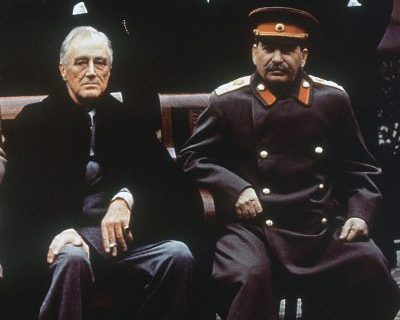
Roosevelt’s Partnership with Stalin
or go to
Aletho News Archives – Video-Images
From the Archives
The great ADHD swindle
By Daniel Ken | TCW Defending Freedom | May 20, 2023
Over more than two decades in the classroom I’ve taught thousands of children and teenagers: some were lovely and lots were hard-working. On the other hand, quite a number were disruptive and argumentative, and a number were violently opposed to learning. But I don’t think I’ve taught more than a handful of kids who could be properly described as having the symptoms of ADHD. And that handful could just as easily have had something else wrong with them. Because here’s the thing: despite the fact that the best part of a million children are medicated for the condition, ADHD doesn’t exist.
There’s no definitive medical test for it, experts can’t agree on what it actually means, and most of the symptoms disappear if the child in question has lots of exercise, good diet and, crucially, a set of clear behavioural boundaries, preferably set early in childhood and, for the boys at least, enforced by a stable adult male living at home. … continue
Blog Roll
 Aletho News
- ‘Biased censorship’: Iran deputy FM slams X for stripping him of blue tick
- Hezbollah lawmaker says Israel has 60 days to withdraw from Lebanon
- Iran rules out IAEA inspections of war-damaged nuclear sites
- Israeli regime’s only interest is ‘permanent war,’ Iran’s FM Araghchi says
- Syria, Lebanon, and the limits of power
- How Multipolarity Forced Trump to Capitulate… For Now
- Switzerland confirms US-Iran talks planned for Friday are cancelled
- Iran Beat Back The Greater Israel Project
- Roosevelt’s Partnership with Stalin
- Strategic Ambiguity (If We Must)
- If Americans Knew
- Old Iraq war architects rise up against Trump’s Iran deal
- Unmasking Axios, its Israeli ties and agenda
- Israel Is Bleeding Support in the U.S. – and Pouring Tens of Millions Into Trying to Change That
- Israeli army included on UN blacklist for 3rd year over ‘grave violations’ against children
- Trita Parsi on the Iran deal, Israel, and how Iran has been a ‘cash cow’ for AIPAC
- JD Vance speaks truth to Israel: “You can’t just kill your way out of every problem” – Daily Update
- What Ceasefire? Israel Has Now Killed Over 1,000 Palestinians in Gaza Since October
- U.S. Whole-of-Government Takeover by Israel
- Netanyahu’s Mouthpieces Turn on Trump, Revealing a Deeper Israeli Ingratitude
- Senate wants to force US to share sensitive intel with Israel
- No Tricks Zone
- New Study: Chile’s Relative Sea Level Was 3.2 Meters Higher Than Today During The Mid-Holocene
- Beyond The Pitch: Why FIFA’s World Cup Is One Of Humanity’s Best Investments
- Climate Alarmists Now Using Natural Phenomena To Support Their Claims
- New Study: Significant CO2 Fluxes From Non-Volcanic Sources Are Largely Neglected In Carbon Budgets
- Women Climate Scientists Being Harassed, Insulted By Skeptics, Claims Berkeley Earth Researcher
- Germany’s Longterm Spring Climate Data Show “No Climate Trend”
- New Study: Solar Photovoltaic, Wind Power Fail To Meet Annual Energy Demands 62% Of The Time
- Germany’s Die Welt: “Too Much Is Too Much” … Green Energies Are Cannabalizing Each Other!
- Germany’s Ecological Holocaust… Once Fairy Tale Forests Getting Cleared For Wind Turbines
- A Grand Solar Minimum Has Arrived…Global Cooling Of At Least 1°C Is Expected By The 2030s, 2040s
 Aletho News