Why the Russia Report tells us more about Britain than anything else
By Johanna Ross | July 24, 2020
The long-awaited UK ‘Russia Report’, whose publication was delayed by 10 months by Boris Johnson, was finally released this week by the Westminster Intelligence and Security Committee, much to the excitement of those keen to demonstrate alleged ‘Russian interference’ in the 2016 EU referendum. However Britain’s ‘Russiagate’ has been something of a damp squib compared to the detailed, long-drawn Muller report across the Atlantic. In fact, anyone who was expecting any detail regarding the allegations of Russian interference would be sorely disappointed.
The reality is that the report contains nothing in addition to what has long been printed in the mainstream press about so-called Russian ‘support’ of the Brexit campaign. No evidence is provided in the report, other than references to ‘open source’ material – in other words, what we ourselves have read online and in print. For example, ‘40. Open source studies have pointed to the preponderance of pro-Brexit or anti-EU stories on RT and Sputnik, and the use of ‘bots’ or ‘trolls’, as evidence of Russian attempts to influence the process.’ So we have an allegation that a media organisation may have a particular editorial line? Shocking! Yes, a glance at the RT and Sputnik websites would confirm that they seem to adopt a position close to that of British newspapers such as The Daily Telegraph or Daily Mail, and that would be correct. RT and Sputnik have a broadly right-wing, conservative editorial line, more in keeping with Russia’s conservative values. Hardly surprising – it’s Russian media after all. Every media outlet has its editorial line. Every. Single. One.
But having worked at Sputnik over the time of the EU referendum, I cannot in any way support the allegation that it was promoting a pro-Brexit position. One of the shows I produced – ‘Brexit or Fixit’ – invited each week a guest from opposite sides of the debate – both Leave and Remain – in order to ensure balance. In no way was I – or anyone else for that matter – encouraged to promote an anti-EU stance. The same cannot be said for the mainstream media unfortunately. It was apparent in the run-up to the election, that the media was firmly in the Remain camp. The balance on the BBC, Sky News and Channel Four, for instance was weighted towards remaining in the EU, in my opinion, and I can say that as a supporter of Remain, not Brexit. Even after the result, Sky News openly ran a campaign for a second referendum to be held – the ‘People’s Vote’ as it would be called. Opponents of the Leave campaign and the Brexit result which followed have been desperate ever since to prove some kind of anomaly took place. It just couldn’t be that the British people voted to leave the EU. And this is where the idea of Russian interference came along, and conveniently fitted the narrative.
Just as in the US, the establishment and liberal elite is completely out of touch with the general population, and has been for years – hence the election of Trump and the bid by Democrats to oust him. Populist governments and their messages have resounded with people, and the media, politicians and expert class have yet to catch up. Russia, in this way has become a useful scapegoat for those who aren’t willing to accept the social evolution which is taking place. It’s Democracy in action, but the establishment can’t hack it. After all, look at the Mueller report – what evidence did that provide of Trump’s supposed links to Putin? Nothing. Zilch. Nichevo. Evidence isn’t really important here. Because the accused has already been found guilty, long ago. Russia hasn’t had a fair trial, and isn’t going to get one – it has been painted as evil incarnate for years now to the extent that even the word ‘Russia’ or ‘Russian’ seems to have taken on negative connotations in the public domain.
It’s sad because it stinks of injustice. The idea that Russia is out to subvert the West really is a hypothesis which has yet to bear fruit. Indeed, a recent fascinating paper by renowned Russia expert and historian Richard Sakwa debunks the idea that Russia seeks to undermine the West. He does admit that it would like to influence it, however. The US and Britain should know something about this, given the desire both countries have had over the generations to spread ‘democracy and human rights’ across the globe, from the Christian missionaries of the 19th century to the modern day Voice of America news agency.
Fundamentally, the Russia report highlights two rather pessimistic facts about British society today: i) our intelligence services are inadequate and need an overhaul but more importantly ii) the British public is so used to being spoon-fed information that it cannot be relied upon by politicians to think for itself when it comes to deciding on how to vote in an election. What on earth does it say about the general public if it is the case that it could be completely manipulated by a particular media campaign, paid for or not by a foreign power? Do our politicians really think we are that stupid? Or do they think we require all our information to be censored, as if we are children? Unfortunately I fear by the time we will have this conversation, it will be too late.
Johanna Ross is a journalist based in Edinburgh, Scotland.
Labour letter demands RT UK’s license gets REVOKED in light of ‘damning’ Russia report that gave NO examples or proof
RT | July 23, 2020
An evidence-free parliamentary report accusing RT UK of being an instrument of ‘Russian influence’ in Britain is already being quoted as a pretext to ban the broadcaster, in a letter sent to Ofcom by a Labour shadow minister.
Labour MP Jo Stevens demanded that “Ofcom urgently reviews RT’s licence” and requested an urgent meeting with Dame Melanie Dawes of the regulatory agency to “discuss my concerns about the broadcaster,” in a letter sent Wednesday.
Stevens – signed as the Shadow secretary of state for Digital, Culture, Media and Sport – said the review was needed given the “troubling revelations in the Russia report about the role of RT and Sputnik in spreading Kremlin-backed disinformation in the UK.”
The shadow secretary further claimed that the parliamentary report, released on Tuesday, “sets out in black and white” the issues OFCOM has supposedly already identified with RT, and “exposes the role RT plays in the much wider issue of Russian influence.”
Unfortunately for Stevens, the report does no such thing. When asked to provide an “egregious” example of the alleged Russian interference, committee members were unable to give “any, egregious or otherwise,” as noted by the BBC’s Andrew Neill.
The committee did not even cite any of the British intelligence agencies – indeed, it excoriated them for allegedly refusing to investigate the ‘Russian meddling’ the parliamentarians asserted as fact – but relied instead on “open-sourced reporting.”
In practice that translated to articles published in the media and testimonies from experts such as Christopher Steele of the debunked “Trump-Russia dossier” infamy, or ex-American financier Bill Browder, who’s reinvented himself as a human rights crusader after being charged in Russia with tax evasion.
Democrats in the US infamously blamed Russia for their loss to Donald Trump in the 2016 presidential election, using Steele’s spurious dossier as evidence. Labour currently holds only 202 seats in the 650-member House of Commons as a result of their historic collapse in 2019.
OFCOM is a supposedly independent regulatory agency tasked with ensuring impartial reporting by media outlets operating in the UK, and this kind of pressure from a political party is highly unusual and improper.
The “Russia Report”: Deep State reinforcing delusion to spread fear and seize power
“Suppressed” report should be a lesson to those who begged for its release – be careful what you wish for.
By Kit Knightly | OffGuardian | July 22, 2020
The “Russia report” is an action plan for the intelligence agencies to hand MI5 direct control over the mechanisms of British democracy, and give the government legal power to control social media.
Nobody in the mainstream will tell you this. The media are going to tell you it’s a “shocking condemnation Britain’s vulnerability to hostile state actors” or something similar, the Remainers will tell you it’s cast iron evidence the Brexit vote was rigged, and Luke Harding will tell you it means “they” are all around us and you should buy a copy of his book.
The truth is it’s just the latest of the Deep State’s plays to secure as much power as possible as quickly as possible. If anything, it already feels old-fashioned, being authored in a pre-Covid world, but that doesn’t mean it can’t be put to use in service of the world’s “new normal”.
In terms of actual content, there’s nothing new here. It’s just a collection of familiar proven lies and unproven accusations in the service of four primary agendas:
- Invalidating the result of the Brexit referendum
- Boosting funding/resources for the UK’s “Cyber Offensive capabilities”
- Ceding more powers to MI5 to oversee and “protect” our democratic processes
- Creating a “protocol” that empowers the government/intelligence agencies to force social media companies to censor and/or ban certain material, opinions, websites or users
You can plow through the whole thing here if you really feel the need.
For those outside the UK, who may not be aware of this story, sometime last year it was “leaked” that the UK parliament’s Intelligence and Security Committee had prepared a report on “Russian interference” in UK politics. In a brilliant piece of PR manoeuvring, Boris Johnson refused to make the report public.
This decision manipulated those who consider themselves “the left” in British politics to clamour for the release of the “Russia Report”, believing there would be something in it that Boris didn’t want us to see. This was an act of pure naivety by Corbynista influencers, and deliberate public manipulation by the “leftist” media.
Yesterday Boris Johnson’s government finally “caved” to this pressure, and released a “confidential report” which tells us nothing we haven’t been told a million times before. This apparently secret testimony has been blasted across headlines in every broadsheet and tabloid for years.
Russia is accused of poisoning the Skripals, leaking the DNC emails, using “bots and trolls” to influence public opinion…and so and so on.
The witnesses called are all either actual spies (Christopher Steele), or “journalists” heavily involved with the Integrity Initiative (Edward Lucas). No evidence is supplied, save the tired old links to “academic studies” conducted by bought-and-paid-for NATO shills like Ben Nimmo and Bellingcat (whose direct funding from the likes of the Atlantic Council and National Endowment for Democracy represents a massive conflict of interest that is never once mentioned in the report).
In that way, the report is massively dated. Its lies, worn smooth through repetition, are dry and stale.
But that’s not the point of this report. That’s the first part of the Hegelian Dialectic. The “problem”, long since mythologised, created by force of repetition without ever being evidenced. This report is far more concerned with generating a “reaction”, and the procuring consent for a pre-planned “solution” (the report doesn’t shy away from this obvious structure – using the terms “threat” and “reaction” instead).
In short, buried in the 55 pages of waffle, repetition and bureaucratic double-talk, are key suggestions to take a more warlike stance against Russia and parlay this into a simultaneous crackdown on dissent at home, all while securing shiny new powers for MI5.
Firstly, the UK plans to strike a new attitude on “attribution” of alleged cyber attacks, claiming, apparently with a straight face:
The UK has historically been reticent in attributing cyber attacks – as recently as 2010, this Committee was asked to redact mention of Russia as a perpetrator of cyber attacks, on diplomatic grounds.
But the UK’s “reticence” to blame Russia for cyber attacks is over, they now intend to “name and shame” foreign actors who carry out cyber attacks:
there has to now be a cost attached to such activity. When attacks can be traced back – and we accept that this is in itself resource-intensive – the Government must always consider ‘naming and shaming’.
[NOTE: This section on “attribution” would be an absolutely ideal time to mention that another state player – namely the US military – has the technology to carry out cyber attacks and make it appear to have come from somewhere else. We know they know, because of the Wikileaks Vault 7 leaks, but they don’t mention it.]
Oh, and they’re going to “leverage” their diplomatic relations to force those countries who would rather not start a new cold war based on the testimony of lunatics, fraudsters and underwear salesmen, to publicly blame Russia for… pretty much everything:
it is apparent that not everyone is keen to adopt this new approach and to ‘call out’ Russia on malicious cyber activity. The Government must now leverage its diplomatic relationships to develop a common international approach when it comes to the attribution of malicious cyber activity by Russia and others.
This is dishonest, and potentially dangerous, but this kind of geo-political positioning is very much the long game. It’s the short term stuff, the local stuff, we should really worry about.
Like handing over powers to “monitor” and “protect” the democratic processes of the country to MI5 [our emphasis]:
Overall, the issue of defending the UK’s democratic processes and discourse has appeared to be something of a ‘hot potato’, with no one organisation recognising itself as having an overall lead. Whilst we understand the nervousness around any suggestion that the intelligence and security Agencies might be involved in democratic processes […] that cannot apply when it comes to the protection of those processes […] Protecting our democratic discourse and processes from hostile foreign interference is a central responsibility of Government, and should be a ministerial priority. In our opinion, the operational role must sit primarily with MI5
They recommend this, based on MI5’s pre-existing “relationship built with social media companies”. They don’t mention, at this stage, how social media companies have “built a relationship” with MI5, or what role they might serve in “protecting democracy”, but it’s not hard to guess.
Social Media is an important theme in the report, actually, being mentioned fifteen times in 47 pages.
Firstly, we’re told that social media companies must bear the brunt of the blame for “hostile state activity” being at all effective:
we note that – as with so many other issues currently – it is the social media companies which hold the key and yet are failing to play their part
Before they add the government must seek a “protocol” by which social media companies remove any material the UK government deems “hostile state use” of their platform:
The Government must now seek to establish a protocol with the social media companies to ensure that they take covert hostile state use of their platforms seriously, and have clear timescales within which they commit to removing such material
Any companies who refuse to do this will be “named and shamed”.
You might think “well, this protocol could easily be used against people with no state affiliation whatsoever”, and you’d be right. It could. The government admits as much, but doesn’t seem to have a problem with it:
Such a protocol could, usefully, be expanded to encompass the other areas in which action is required from the social media companies, since this issue is not unique to Hostile State Activity
This would be a good time to note that the Atlantic Council employees this report cites have, in the past, labelled people “bots” who are definitely, provably not bots. This includes noted independent journalists and a world-renowned concert pianist.
The proposed “protocol” opens up an avenue for the state to silence dissident individuals by similarly “mistaking” them for state-backed agents.
Another thing the report is keen on is boosting the UK’s “Offensive Cyber” capabilities:
this is an era of hybrid warfare and an Offensive Cyber capability is now essential. The Government announced its intention to develop an Offensive Cyber capability in September 2013, and in 2014 the National Offensive Cyber Programme (NOCP) […]The UK continues to develop its Offensive Cyber capability.
What their offensive cyber capabilities ARE, and how they use them, is never described. Are they used solely against other states, or against domestic politic parties, organizations and individuals too? They don’t say.
Is cyberwarfare even legal under international law? Well, no. In fact, the way the report dances around the idea that cyberwarfare is actually potentially illegal under international law is a thing of beauty:
While the UN has agreed that international law, and in particular the UN Charter, applies in cyberspace, there is still a need for a greater global understanding of how this should work in practice […] Achieving a consensus on this common approach will be a challenging process, but as a leading proponent of the Rules Based International Order it is essential that the UK helps to promote and shape Rules of Engagement, working with our allies.
The fact that people out there can even begin to cite this report in earnest when it describes the UK as a “key defender of a Rules Based International Order” just boggles my mind.
The real scary stuff comes later though, in the “legislation” section.
The UK is already one of the most surveilled countries in the world, and the report happily mentions that last February, the UK police/intelligence agencies got [our emphasis]:
new powers to stop, question, search or detain any person entering the UK gained Royal Assent in February 2019; it is not necessary for there to be suspicion of engagement in hostile activity in order to use these powers.
Following on from this, the report recommends a new Espionage Act and a Foreign Agent Registration Act, to “crackdown” on espionage.
Hearings resulting from these acts could be “closed material proceedings” to protect national security.
For those who don’t know, in UK law a “closed material proceeding” is a hearing where a prosecutor presents some evidence directly to a judge which is kept secret from both the public and the defense counsel.
Until this new legislation is passed, the report warns, “the Intelligence Community’s hands are tied.”
To sum up, the long-awaited Russia report is – surprise surprise – not a trove of secrets and corruption which could bring down the Johnson government. It was never going to be that, despite what all the fake-left “journalists” were saying, and what all the Labour supporters who should know better were tweeting.
It was actually sickening to watch so many people, especially in Corbyn’s camp, cry-out for this report and not realise they were getting played. It’s the oldest trick in the book. Cheap reverse psychology that doesn’t work on children past the age of about five, but apparently does work on the majority of the members of the Labour party.
Thanks to their gullibility, no one is questioning the honesty, providence or intentions of a report which finds, in short:
- MI5 should have more control over our democratic systems.
- We should spend more money on developing cyber attack ability.
- We should investigate and maybe overturn the Brexit vote.
- We should pass authoritarian new legislation
- Social Media companies should take down whatever the government says they should take down.
People who are supposed to guard against tyranny and hold power to account have abandoned their posts to take part in anti-Russia hysteria which endangers what remains of our civil liberties.
As a result, we’re getting headlines like this:
GUARDIAN : Report damns number 10 and spy agencies over Russia
And this:
MAIL : Now tame the Russian bear
And this:
THE TIMES : MI5 to get more powers
It’s the same old lies, on the same old topics, told by the same old people, for the same old reasons. The only difference is, this time, they managed to trick some of the gullible “woke” left into begging for it.
Pangs of conscience or howl of an empty wallet? Steele claims he never meant for infamous Russiagate dossier to go public
RT | July 22, 2020
Former British spy Christopher Steele insists he never wanted the notorious Trump dossier, which was central to the Russiagate investigation, to be made public. The belated pang of conscience emerged in response to a new lawsuit.
Steele would have done “whatever I could do to prevent” BuzzFeed from publishing the dossier, he told London’s High Court in a written statement on Wednesday.
The document, which Steele compiled at the behest of the US opposition research firm Fusion GPS and Hillary Clinton’s campaign in 2016, was published in early January 2017, shortly before Donald Trump’s inauguration.
The former spy’s pang of conscience might have had something to do with the defamation lawsuit by Russian tech entrepreneur Aleksey Gubarev. One of the claims in the Steele dossier was that Gubarev’s Webzilla internet service provider was used by Russian security services to hack the Clinton campaign. The tech executive has not only denied the claim but sued both BuzzFeed and Steele for making it.
Despite his professed remorse, however, Steele admitted he provided copies of the “pre-election” dossier, compiled between June and October 2016, to the FBI and the State Department because of its “national security implications.” Another copy was sent to a UK national security official in the days following the election, lest the Trump administration “compromise British sources and operations.”
He whipped up a second version in December 2016, and gave that to the same UK official, as well as the since-deceased Arizona Senator John McCain – who leaked it to a number of US media outlets, including BuzzFeed, Steele explained.
That second memo, he wrote, was “self-evidently sensitive and confidential,” meaning it was never intended to make it into print, where Gubarev could read it and sue him.
Steele has admitted the dossier was largely “unverifiable,” presumably intended to serve as the basis for further investigation that could confirm or deny its claims. Earlier this week, internet sleuths suggested that Steele’s mysterious Russian source was in fact a Washington-based Brookings Institute researcher, who lacked firsthand knowledge of any of its salacious claims.
Steele has previously said that his 17-page report was commissioned with the intention of giving Clinton legal basis to challenge the 2016 election. While the legal challenge never happened, the dossier saw plenty of uses in “further investigation” of Trump, both official and in the court of public opinion.
The FBI used it as the backbone of its request for a FISA warrant to spy on Trump’s campaign via aide Carter Page, whom Steele claimed met secretly with Russian agents in Moscow. The dossier also underpinned special counsel Robert Mueller’s sprawling ‘Russiagate’ probe.
While Mueller ultimately came up empty in his efforts to prove the Trump campaign had colluded with the Russian government to get the president elected, relations between the US and Russia deteriorated considerably as Trump’s cabinet urged him to take a more antagonistic position toward Moscow so as not to be seen as the ‘Putin puppet’ the media and Democrats were determined to call him anyway.
‘Russia Report’: Once-mighty British intelligence has been reduced to regurgitating sensationalist Buzzfeed stories
By Paul Robinson | RT | July 22, 2020
The ‘Russia Report’ gives us an insight into the dearth of genuine expertise available to British officials on Russia. It also introduces a new style of investigation: Seeking evidence to support predetermined judgements
On Tuesday, the British Parliament’s Intelligence and Security Committee issued a 50-page report detailing its views on the danger Russia poses to British security. “The security threat posed by Russia,” the report says, “appears fundamentally nihilistic… It is clear that Russia poses a significant threat to the UK on a number of fronts – from espionage to interference in democratic processes, and to serious crime.”
The report further argues that the British intelligence community “took their eyes off the ball” and the government “badly underestimated the Russian threat.” In particular, the government and its intelligence agencies failed to investigate claims that the Russian state had interfered in the 2016 Brexit referendum. The government, however, has rejected the committee’s demand that such an investigation now take place.
The reports’ claims are alarming at first glance. When examined, however, they can be seen to lack evidentiary support. Instead, readers are repeatedly told that there have been “widespread allegations” and that “it has been widely reported” that the Russians are up to no good. But allegations are not evidence, and time after time the report fails to substantiate the suspicions it raises.
For instance, the report declares, “There have been widespread public allegations that Russia sought to influence the 2016 referendum on the UK’s membership of the EU.” But the only evidence it provides to show that those allegations might be true is a reference to “open source studies” which point to pro-Brexit bias by the Russian broadcasters RT and Sputnik.
The committee neither names the studies nor discusses whether their conclusions are valid. Apparently, the committee asked MI5 for evidence, but all it got in reply was “six lines of text” based also on ‘open source studies’. In short, no secret intelligence supporting the claims that Russia interfered with Brexit has been provided.
This is rather embarrassing. The committee has drawn a blank. But still, it presses on. “There has been credible open source commentary suggesting that Russia undertook influence campaigns in relation to the Scottish independence referendum in 2014,” it announces. The relevant footnote fails to say what this credible commentary is. Instead, it merely says that it “was widely reported” that Russians who had observed the Scottish referendum had suggested “that there were irregularities in the conduct of the vote.”
But Russians complaining about the conduct of the vote do not constitute Russians trying to influence the campaign. After all, the observers in question said these things after the vote, and so their statements could hardly have been an attempt to affect the outcome.
This faulty mode of argument is pretty much par for the course. “It has been widely alleged” that Russia was responsible for a computer hack on the French presidential election in 2017, the report says. “It has been widely reported” that Russians were responsible for the hack and leak operation against the Democratic National Committee in the US in 2016. And so on.
Perhaps the nadir of the report is the statement that “on 15 June 2017, Buzzfeed News published the results of its investigation into 14 deaths in the UK of Russian business figures and British individuals linked to them” (Buzzfeed implied, without supporting evidence, that all 14 people were murdered by the Russian intelligence services). This, then, is what the might of British intelligence has been reduced to – regurgitating sensationalist stories from Buzzfeed. It gives you a sense of what the committee considers a ‘credible’ source to be.
The committee goes beyond repeating unsubstantiated claims to making unspecified ones. In the UK, it says, numerous “lawyers, accountants, estate agents, and PR professionals have played a role, wittingly or unwittingly, in the extension of Russian influence which is often linked to promoting the nefarious interests of the Russian state.” No names are named, no evidence produced. All the committee provides is a quote from long-time anti-Russian campaigner William Browder, as if his bold assertions amount to incontrovertible proof.
In 50 pages warning us of the evil ‘influence’ Russia has over the UK, the report fails to provide a single documented example of this influence at work. In short, the entire premise of the report (that Russia poses a significant threat to the UK) is not only not proven, but also not even demonstrated in any tangible way.
That perhaps explains why the committee has chosen to be so harsh on the British government, accusing it of failing to live up to its responsibility to defend the nation. It appears that the committee knows in its bones that all these things are true, but also knows that it lacks any evidence to prove them. The evidence is there; it’s just that the government has failed to do its job and provide it.
A proper intelligence investigation first finds the facts and then comes to a conclusion. It would seem as though the Intelligence and Security Committee wishes to go about it the other way – it has already reached its conclusion; now it wants the government to provide the evidence. The government should not indulge this.
Paul Robinson is a a professor at the University of Ottawa. He writes about Russian and Soviet history, military history, and military ethics.
Net Zero: Every Urban Street And Front Drive Will Be Dug Up
New paper reveals hidden cost of Net Zero decarbonisation
Global Warming Policy Foundation – 16/07/20
London – The UK faces a £200 billion bill to rewire the country if the government follows through on plans to electrify the country’s homes and transport systems. That’s because installation of electric car chargers and heat pumps will push up demand for power beyond the capacity of the existing wiring.
The findings are set out in a new report from the Global Warming Policy Foundation, which is published today. According to author Mike Travers, this will mean that most streets in the UK will need to be dug up (with diesel-driven machinery):
“At present new home car chargers and heat pumps are using up all the spare capacity. But we will soon reach the point where the network will not be able to handle the extra demand. So in towns and cities, the underground cables which carry the power will be inadequate. That means that we are going to have to dig up almost every urban street and many rural ones too. The whole distribution grid is going to need to be replaced.”
And the cables that carry power into the homes will need to be dug up too.
According to Travers:
“The power cables taking electricity into your home probably run underneath your front drive. So if you want a car charger and a heat pump you are going to have to pay to dig it up. If you have an expensive monoblocked drive, that will not be cheap. Distribution boards, main fuses and smart meters in homes are going to have to be upgraded too.”
Travers has estimated the cost of all this work at around £200 billion, even before considering the cost caused by the disruption. “Many homeowners will be paying thousands”, he says.
Mike Travers CEng, MIMechE, FIET is an electrical engineer, whose career spanned periods in the Royal Engineers, in the hydroelectric sector, and industry. He previously sat on the the IET Wiring Regulations Committee and was the industry representative on the committee that rewrote the Grid Codes for Scotland.
His paper is entitled The Hidden Cost of Net Zero: Rewiring the UK and can be downloaded here (pdf)
Precedents for Pizzagate
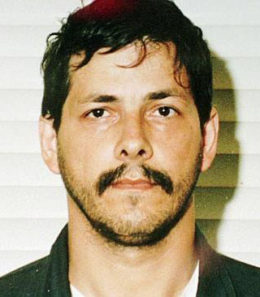
Marc Dutroux, Belgian pedophile, sadist, and serial killer with friends in high places
By Aedon Cassiel | Counter – Currents | December 23, 2016
To reiterate a point that should be clear to the more astute reader, my goal in this series (part 1, part 2) has not been to defend “Pizzagate” as such. My goal has been to defend the people who want to investigate it against specific accusations levied against them by people who think Pizzagate has revealed no intriguing information at all—for a specific reason, which I will be honing in and focusing on much more directly in this closing entry.
Whereas the mainstream critics of Pizzagate would have you believe that the dividing line is between paranoid conspiracy theorist followers of “fake news” and level-headed people who follow trustworthy news sources and rely on cold, hard reason to determine the truth, my goal has been to show that—whatever is or is not happening with Pizzagate itself—this framing of the issue is arrogant, insulting, and the product of extremely narrow tunnel vision.
When I have referred to what I see as the more compelling pieces of evidence uncovered by the crowd-sourced investigation into Pizzagate, my point has not been to use these to say “Pizzagate is true and every single person looking into it is a hero,” but to say “the people investigating it are not idiots, and the facts they’ve been uncovering are not all worthless. Reasonable people could very well look at this and think that it gives us reason to be concerned that there may be something behind it. And if the media is telling you only about the most bizarre, reaching accusations without telling you any of the more interesting points that have been uncovered (which it is), it is not doing its proper job.”
To those who think I am demonstrating an inclination towards conspiracy theories in this series, allow me to quote directly from the two previous essays:
The evidence [in Pizzagate] is of wildly varying levels of quality . . . [and much of it is] the pareidolia of “Jesus is appearing to me in my toast” . . . many of these claims arewild speculation over coincidences . . . Could [this evidence] have an innocent explanation? Sure, maybe. . . . some of the supposed “codewords” people have claimed to have identified in Pizzagate appear to be made up . . . Could all of this turn out to be nothing? Of course it could. . . . Have we identified [evidence of a high–level sex ring] here? Only time will tell. . . . Am I trying to make the argument that if one conspiracy theory is true, all the others must be, too? No . . .
Clearly, anyone who thinks my purpose in any of these essays has simply been to try to validate the truth of every conspiratorial speculation anyone has made around Pizzagate is not paying any attention to my actual words at all. They’ve completely missed the real point, and the problem is not that I haven’t expressed my argument clearly, because words can’t get much clearer than these.
However, I do want to dedicate this final entry to refining and adding bulk to a key step in the core of that argument: namely, the step that emphasizes that no matter how compelling any of the evidence that turns up in Pizzagate in particular may or may not be, we know that high-level sex abuse is in fact a thing that happens in the upper echelons of power, and we know that it gets covered up when it occurs, and we know that the media is often complicit in the cover-up as well. This is why I introduced my first entry to the series with a discussion of the Rotherham child abuse scandal, and the second entry to the series with a brief discussion of MK Ultra, a program that was publicly confirmed to have gone on for some twenty years and involved the highest halls of power subjecting innocent civilians and mentally disabled children to the worst kinds of psychological abuse and manipulation without consent before any public evidence ever even emerged. Part of the point in these examples is to demonstrate that the basic mistrust of our elites that people investigating Pizzagate are demonstrating is entirely justified by facts that are known.
Now, my other point in including these cases in the conversation is that there is a drastic difference between someone who believes he has reason to think something has happened that is unprecedented—say, that there are aliens in Area 51—and someone who believes he has reason to think something has happened that we know for a fact has happened, and that we know for a fact continues to happen, where—if they had found evidence of it happening, it would indeed look very much like what they’ve found.
Imagine you are walking down the street in a quiet small town, and a stranger tells you that the way someone has his handkerchief stuffed into his pocket is a sign that he’s just killed someone. But you investigate that individual, and it turns out that he’s entirely clean and that the handkerchief has a perfectly innocent explanation. You might have valid grounds to infer that the accuser could just be a paranoid schizophrenic who sees demonic symbolism everywhere, even when none exists.
But if a detective is working in a gang-infested area, and he has identified people using handkerchiefs to signify that they’ve just killed members of rival gangs, and he tells you that he thinks the way a certain individual has a handkerchief stuffed in his pocket might be evidence he’s just killed someone, then even if you investigate that individual and he turns out to be innocent, it would not be legitimate to suspect the detective of insanity just because he got it wrong. In fact, the reasoning he followed would be entirely legitimate, even though he turned out to be wrong in this particular case.
Why? Because he would know that there are in fact gangs operating in this area, and he would know that they have in fact used handkerchiefs to signal their recent killings, and he would know that if indeed this were someone committing an act that he knows has occurred before and that he knows in fact continues to occur, then this is exactly what the evidence for it would look like.
The point of this analogy is not to say that everyone looking at Pizzagate is just like a detective—but it is to say that the upper levels of our government are a gang-infested area. And that is why I have entered the arena, not to say “Pizzagate is obviously real!!!” but to say “The people investigating Pizzagate do not deserve to be treated like kooks. They do not deserve to be called idiots or paranoid freaks. Because in fact even if they are wrong, the instincts they are demonstrating are clearly instincts our political situation calls for in general whether something is happening in this particular instance or not.”
If any compelling evidence were to come out of Pizzagate—and, as I have said in this series, I do think at least some of it is—who would catch on and express concern about it first? The record very clearly shows that it would not be the mainstream media. As the first article made a clear effort to point out, it was the far-Right blogosphere that caught wind of the Rotherham scandal well before the mainstream media did; and during his time at the BBC, Mark Thompson was credibly accused of lying to cover up evidence of the Jimmy Savile sex scandal. Jimmy Savile managed to abuse hundreds of young children, and associates and friends were accused of acting in complicity with the rapes and even sentenced for raping the very same victims. And that same Mark Thompson who helped cover up the Savile scandal now runs the New York Times which was so quick to dismiss Pizzagate in its entirety as a hoax as well.
Liberal feminists claim to be concerned about “rape culture” (on which, see my essay on “Diversity & The Rape of Justice”), yet we have actual hard solid evidence here of a “child rape culture” within the upper echelons of power—which targets young boys at least as often as young girls—and their voices can barely be heard, even as they heap scorn upon the “conspiracy theorists” in cases like this one. Yet, the evidence they want us to believe holds true for rape across society in general as a whole (where, generally, it doesn’t) actually does hold for child rape in positions of power.
In what follows, I’m simply going to give overviews of some known, documented cases of this in haphazard order. I’m going to set my search bar in the right direction, spend an hour or two compiling sources that stand out to me, and list everything I find simply from looking around for a few minutes. So this won’t even be anywhere near the most compelling research on the topic that I could do. The brevity of these research methods should only serve to highlight even more clearly how pervasive this problem really is, if I can find this much with so little effort. It also underscores the irresponsibility and dishonesty of the mainstream media, who either have not done even cursory investigation or are simply shills trying to cover up the truth.
In 2011,
The OIG conducted an investigation concerning allegations that an AUSA [Assistant United States Attorney under Eric Holder] was using his government computer to view inappropriate material on his government computer. The investigation determined that the AUSA routinely viewed adult content during official duty hours, and that there was at least one image of child pornography recovered on the AUSA’s government computer. The AUSA acknowledged that he had spent a significant amount of time each day viewing pornography. The U.S. Attorney’s Office [Eric Holder] declined prosecution.
Senator Chuck Grassley of Iowa sent a letter to Eric Holder asking why the lawyer was not punished, and why he remained on the taxpayer dime for at least two months after being caught. I was able to find a copy through the Internet Wayback machine.
In 2006, the DHS’s Department of Immigrations and Customs Enforcement (ICE) ran an internationally cooperative investigation into the purchase of subscriptions of child pornography online. Code-named Project Flicker, the investigation uncovered the identities of 30,000 child porn subscribers in 132 different nations. Some 250 of these identities belonged to civilian and military employees of the U.S. Defense Department, who gave their real names and purchased the porn with government .mil email addresses—some with the highest security clearances available. In response, the Pentagon’s Department of Criminal Investigative Services (DCIS) cross-referenced ICE’s list with current employment roles and began a series of prosecutions.
A DCIS report from July 2010 shows that 30 of these individuals were investigated, despite uncovering a new total of 264 Defense employees and contractors who had purchased child pornography online. 13 had Top Secret security clearance. 8 had NATO Secret security clearance. 42 had Secret security clearance. 4 had Interim Secret security clearance. A total of 76 individuals had Secret security clearance or higher.
Yet, the investigations were halted entirely after only some 50 total names were investigated at all, and just 10 were prosecuted. A full 212 of the individuals on ICE’s list were never even given the most cursory investigation at all. (Note: The number 5,200 keeps popping up in sources covering this—for instance, see here—and I’m not sure what that number is for: American subscribers? Pentagon email addresses that weren’t confirmed to have actually been used by Pentagon employees, but still may have been? I’ll leave it to anyone interested enough to pursue these individual leads to see if they can figure that out and get back to us.)
In 2011, the story resurfaced when Anderson Cooper covered it with (again) Senator Chuck Grassley on CNN. After this, the story appears to have sunk straight back down into the memory hole yet again. Neither Anderson Cooper nor CNN appear to have given a follow–up in the five years since the story of the failed investigation first aired—why not? And why wasn’t the first airing enough to lead to mass outrage and calls for action anyway? See here for another summary of the squashed investigation from 2014.
Here’s a headline from The Washington Times dated June 29, 1989: “Homosexual prostitution inquiry ensnares VIPs with Reagan, Bush.” From the article:
A homosexual prostitution ring is under investigation by federal and District authorities and includes among its clients key officials of the Reagan and Bush administrations, military officers, congressional aides and U.S. and foreign businessmen with close social ties to Washington’s political elite, documents obtained by The Washington Times reveal. One of the ring’s high-profile clients was so well-connected, in fact, that he could arrange a middle-of-the-night tour of the White House for his friends on Sunday, July 3, of last year. Among the six persons on the extraordinary 1 a.m. tour were two male prostitutes.
Can anyone find a follow-up clarifying what happened as a result of that investigation? I can’t find one here either, though once again I’d appreciate if someone else was able to.
In the infamous Jimmy Savile sex abuse scandal in Britain, we now know that Savile’s coworkers at the BBC knew that Savile was committing many of his sexual offenses right on BBC campuses. Paul Gamboccini, who worked next door to him, said “The expression which I came to associate with Savile’s sex partners was . . . the now politically incorrect ‘under-age subnormals’. He targeted the institutionalized, the hospitalized – and this was known. Why did Jimmy Savile go to hospitals? That’s where the patients were.”
Yet, the BBC’s official statement was that there was “no evidence” of misconduct, and they even dismissed claims that there was a cover-up. But now that Savile’s offenses have been confirmed, we know that indeed there was.
Significantly, victims claimed that Savile was not just an isolated abuser, but part of an organized—and Satanically-themed—ring.
And victims in the Jerry Sandusky case also claimed that Sandusky was not just an isolated abuser, but part of an organized ring, as well.
Come to think of it, it does make sense that if there were rings operating, they would have reason to designate “fallboys” to take the blame if enough evidence of abuse ever began to emerge (or perhaps they would end up choosing their fallboys in the moment, for whatever reason, to the same effect).
Many people refer to the so–called “Satanic Panic” from the late 80’s and early 90’s to claim that the probability of hysteria around false allegations is more likely, and an even greater threat to society, than actual ritualized sexual abuse. However, this appears to be rather convenient for actual pedophiles—because according to Kenneth Lanning, an FBI expert on both cult crime and child abuse, often child sex offenders “introduce occult into the abuse so the kids won’t be believed . . . That is their M.O. (mode of operation) . . . People are getting away with molesting children because we can’t prove there are satanic devil worshippers eating people. Pretty soon it becomes unprosecutable.”
The False Memory Syndrome Foundation gained prominence thanks in large part to the “Satanic Panic” (it’s members were even involved in the legal defense of individuals accused during the Satanic Panic). In 1993 Ralph Underwager, a key member of its “scientific advisory board”, was forced to resign after making the following statement in an interview with Paidika: The Journal of Pedophilia:
What I have been struck by as I have come to know more about and understand people who choose paedophilia is that they let themselves be too much defined by other people. That is usually an essentially negative definition. Paedophiles spend a lot of time and energy defending their choice. I don’t think that a paedophile needs to do that. Paedophiles can boldly and courageously affirm what they choose. They can say that what they want is to find the best way to love. I am also a theologian and as a theologian, I believe it is God’s will that there be closeness and intimacy, unity of the flesh, between people. A paedophile can say: “This closeness is possible for me within the choices that I’ve made.”
Paedophiles are too defensive. They go around saying, “You people out there are saying that what I choose is bad, that it’s no good. You’re putting me in prison, you’re doing all these terrible things to me. I have to define my love as being in some way or other illicit.” What I think is that paedophiles can make the assertion that the pursuit of intimacy and love is what they choose. With boldness, they can say, “I believe this is in fact part of God’s will.” They have the right to make these statements for themselves as personal choices. Now whether or not they can persuade other people they are right is another matter. (laughs)
Jennifer Freyd, daughter of the foundation’s founder Peter Freyd, continues to maintain that she was sexually abused by him, and has even published works on the topic of memories of child abuse herself. While the FMSF maintains that a full 65% of allegations of abuse are unsubstantiated, other research reported, for instance, in the Harvard Mental Health Letter finds that false abuse allegations by children “are rare, in the range of 2-8% of reported cases. False retractions of true complaints are far more common, especially when the victim is not sufficiently protected after disclosure and therefore succumbs to intimidation by the perpetrator or other family members who feel that they must preserve secrecy.”
And it bears remembering that not all accusations of institutionalized child sex abuse were bogus even during the very years of the “Satanic Panic” itself.
Throughout this series, I’ve mentioned the Franklin Scandal, at the center of which was Larry King—leader of the Black Republican Caucus, who sang the national anthem at the Republican convention in 1984, and worked heavily with a charity called Boys Town. I had planned to write a whole essay on this scandal, but having now read Nick Bryant’s book there is so much information that it’s hard to even fathom where to begin—and there’s a fine line between not giving enough compelling evidence and copying and pasting the entire book. So the best way to learn about this incident is to watch the Conspiracy of Silence documentary and then contact me at www.zombiemeditations.com if you need help obtaining a copy of Nick Bryant’s book.
The one most striking line of evidence in the case I will mention is this: the head of the investigative Franklin committee, Gary Carodori, was convinced that the victim’s allegations of rampant child abuse were true. You can see his interviews with the victims here. On the way to Chicago to reopen evidence, Carodori met an untimely death when his plane crashed, and his briefcase of evidence vanished without a trace. According to the Omaha World-Herald, investigators with the National Transportation Safety Board concluded that the “scattered wreckage pattern . . . certainly demonstrates that [the plane] did break up in flight,” which in other words means that it didn’t fall apart on impact because of a crash—the plane crashed because it fell apart.
State Sen. Loran Schmit of Bellwood, chairman of the Franklin legislative committee, told The Associated Press in Lincoln that he had no doubt there were people who wanted to see Caradori dead.
“They got their wish,” he said. “. . . The question to be answered is whether it was a coincidence.”
Schmit, himself a pilot with 40 years’ flying experience, stopped short of saying he thought Caradori’s plane was sabotaged, but he added in an interview with AP :
“A small plane is the perfect thing to use to get at someone. . . . They tend to burn when they crash, and things get burned, destroyed, scattered. You don’t need a bomb. A fuel line could be tampered with. Any number of possibilities are there.”
. . . Scott Caradori of Ralston told the World-Herald that his brother was a careful flier of more than 15 years who would not take chances, especially with his son on board, and had never had a mishap.
He said he did not rule out sabotage, given the nature of his brother’s work with the Franklin committee. “Our family received numerous threats over that, telling him to back off,” he said . . .
John DeCamp is the man who appears along with the victims in the Conspiracy of Silence documentary. He’s the author of The Franklin Coverup, the most thorough book on the Franklin case to appear in print before Nick Bryant’s more recently published update. DeCamp is a former state Senator, listed as one of eight ‘outstanding’ Vietnam veterans (he helped Operation Baby Lift, which evacuated thousands of Vietnamese children from the war-torn area), and now in his work as a lawyer has, among other things, provided legal representation to the children in the Columbine shooting.
Though Jerry Sandusky’s criminal trial did not begin until 2012, John DeCamp began discussing how he was contacted by victims and was linking the figures involved in the Franklin case to the sex abuse happening at Penn State all the way back in 2004.
“I had done something back then [when I wrote the original book on Franklin] linking the football coach [Jerry Sandusky] with Franklin . . . [and] I got call after call after call from Pennsylvania . . .”
Nick Bryant can also be heard discussing the links between the Franklin and Penn State abuses here, here, here, here, and here (part 1, part 2).
Speaking of Sandusky, few people are aware that Sandusky was actually first charged with sexual abuse of a minor all the way back in 1998. The Centre County’s District Attorney Ray Gricar at first refused to press charges. In 2005, Gricar disappeared under bizarre circumstances. “. . . After telling his girlfriend he was going for a drive . . . His body was never found, only his abandoned car and his laptop which had been tossed in the Susquehanna River in Pennsylvania without its hard drive.”
Then there’s the Dutroux Affair—a perfect example of the capacity of high–level pedophiles to destroy investigations by placing the right people in the right positions of power to protect themselves. In Belgium, a nation of just 10 million people, 350,000 people took to the streets in an event known as the White March to protest the handling of the case (in other words, that’s approximately 1 out of every 30 citizens of Belgium, including the elderly and children). Around 1995, multiple young girls began disappearing around the municipality of Bertrix. Headway in the investigation was finally made when a white van was reported that the police were able to trace back to Marc Dutroux. Marc Dutroux was a previously convicted pedophile who was released after serving just a third of his sentence despite the fact that his own mother had testified to the parole board that he would unquestionably offend again. Though unemployed and receiving welfare, Dutroux was able to live quite lavishly thanks to selling children—he owned seven homes, and used four of them as bases for kidnappings.
But the most disturbing part of this case isn’t even the offenses—it’s how deliberately inept the prosecution was. Police not only investigated Dutroux repeatedly without pressing charges, they even reported hearing voices —and accepted Dutroux’s story that the voices came from the street outside. They ignored a tip from an informant claiming Dutroux offered him thousands of dollars to participate in a kidnapping. They even sat on a video tape showing Dutroux building a makeshift dungeon in his basement, and could have saved the lives of the two girls who were then being tortured there had they acted on it.
Once the case was transferred from police to the courts, the initiative of lead prosecutor Jean-Marc Conorrette led to the rescue of two girls and the discovery of four bodies. Conorrette was inexplicably dumped from the case, and later broke down in tears in court describing the constant death threats he received while still on the case. Obviously there were other interested parties, some at least with influence in the government.
When a parliamentary panel revealed the names of 30 government officials who were complicit in hiding the misdeeds, none were punished. Nine police officers were eventually detained, but though a full 100 people in government, finance, and the media were accused of involvement, no one other than Dutroux ever made it to jail. (Edit 6:40PM EST 12/24: A friend with connections to intelligence agencies sent me a message in response to this article to tell me that this post is a solid summary of the amount of coverup involved in the Dutroux Affair, despite the overall conspiratorial leanings of the site itself. He also tells me that the case of Peter Scully is one that’s too little known that has well–documented evidence of institutional involvement and cover–up.)
In Italy, Alfredo Ormanni who led an investigation into child porn claimed that a “paedophile lobby that acts in broad daylight and probably with the support, which”—he politely added—he “could consider unwitting, of certain political parties” was actively disrupting the efforts of his investigation.
In 1987, allegations of abuse involving dozens of children surfaced at the Presidio military base in San Francisco. The American Journal of Orthopsychiatry analyzed the victims, and claimed that:
The severity of the trauma for children at the Presidio was immediately manifest in clear cut symptoms. Before the abuse was exposed, parents had already noticed the following changes in their children: vaginal discharge, genital soreness, rashes, fear of the dark, sleep disturbances, nightmares, sexually provocative language, and sexually inappropriate behavior. In addition, the children were exhibiting other radical changes in behavior, including temper outbursts, sudden mood shifts, and poor impulse control. All these behavioral symptoms are to be expected in preschool children who have been molested.
Lt. Col. Michael Aquino, who ended up at the center of the investigation, had previously appeared on the Oprah Winfrey show to discuss his views on Satanism (Aquino founded a group called The Temple of Set). Records showed that the children were taken on unannounced trips outside the center.
One child positively identified Aquino and his wife, Lilith (known to the kids as ‘Mikey’ and ‘Shamby’), and was also able to identify the Aquinos’ private home and to describe with considerable accuracy the distinctively satanic interior décor of the house. The young witness claimed to have been photographed at the Aquinos’ home. On August 14, 1987, a search warrant was served on the house. Confiscated in the raid were numerous videotapes, photographs, photo albums, photographic negatives, cassette tapes, and name and address books. Also observed was what appeared to be a soundproof room.
Perhaps uncoincidentally, Cathy O’Brien—who claims to have been a victim of MK Ultra programming as a child, and who I mentioned in the second entry to the series—also claims Aquino was involved in her brainwashing. I have no idea whether O’Brien is a credible witness or not. But her allegations do line up with a striking amount of consistency with other evidence. Given Aquino’s known involvement in mind control programs—here is the full text of his “From PSYOP to Mind War”—this isn’t inherently implausible.
Nonetheless, the case was “quietly closed” after suspected offenders, including Aquino, were simply moved to different facilities
And yet again, the leads in these supposedly separate cases come full circle: Michael Aquino was also linked to the kidnapping of Johnny Gosch in the case of the Franklin scandal (according to an interview with the boy’s mother, Noreen Gosch).
I’m approaching 5,000 words now, so I’m just going to dump some of the other mainstream–media headlines I found here without further elaboration.
- In the UK, MP Tom Watson confronts PM Cameron in Parliament with evidence of an elite pedophile ring at high levels (Video of speech).
- British pedophile ring ‘protected by Parliament and Downing Street’ (Belfast Telegraph)
- Panic among UK leaders as high-level pedophile network is covered up: BBC Newsnight program suspended for naming senior Conservative pedophile (The Guardian)
- Wikileaks cables reveal DynCorp employees purchased child prostitutes in Afghanistan and the US State Department helped cover it up (Huffington Post)
- Savile ‘had accomplice who would supply girls to sex ring inside BBC’ (The Sun)
- Jimmy Savile is the Tip of the Iceberg (This one is a blog, but it references several worthwhile mainstream sources)
- France’s most notorious serial killer has claimed that he murdered at least one victim on the orders of highly placed personalities in Toulouse because of a blackmail threat linked to sadomasochistic orgies involving politicians, judges and police. (The Guardian)
- Tebbit hints at sex abuse cover-up as pressure over missing files intensifies (The Guardian)
- My Name Is Anneke Lucas and I Was a Sex Slave to Europe’s Elite at Age 6 (Global Citizen)
For more sources like these, there are collections here and here and here — I share these with the caveat, as always, that I don’t necessarily endorse everything there, but I have found plenty that is useful within them.
To repeat the conclusion I reached earlier: child sex abuse is, without question, a rampant, institutional, and high-level phenomena. It occurs on a large scale in the highest levels of power—in the fields of entertainment, government, and law enforcement—and members of these rings have been well-known to gain handles on the relevant positions of power to ensure their actions are successfully covered up. Whether anything unique or original comes out of Pizzagate or not, then, my take is that the basic spirit of concern and distrust towards the elite halls of power that Pizzagaters have demonstrated is their general disposition is still far closer to the spirit of the truth than the basic attitude of dismissiveness that such a thing could even occur being demonstrated by those who find it too quick and easy to dismiss all of Pizzagate in its entirety as nothing more than a hoax—and I would stand by this statement even if it turned out that the latter were right.
Given that we know how rampant the problem of institutionalized child sex abuse in upper levels of power really is, with mounds of unquestioned public evidence stretching back decades across the world, the amount of evidence it takes to justify suspicion of people in positions of power drops.
But some question whether it is even appropriate to use words like “evidence” when speaking of cases like these in reference to Pizzagate. The answer is yes. Logicians call cases like this “background evidence,” which means facts that raise the prior probability that a thing being alleged could happen, by showing that it does happen, and therefore increasing the plausibility—to whatever extent—that it could have happened in this particular case. If things like Pizzagate have already happened, then Pizzagate is at least possibly true as well. If something is actual, that proves that things like it are possible and thus cannot be simply dismissed as impossible or implausible.
It is important to understand that “evidence” is not the same thing as “proof.” For example, if we know that a man molested every child he had prior to this one, that doesn’t prove that he molested this one. But we would absolutely be interested in knowing that in a court of law, and specifically it would count as “background evidence” that raises the prior probability that the claim that he molested this child could be true.
To continue the example, here’s what background evidence does: if we know the man has molested all of his previous children, then we are justified to give increased weight to whatever direct evidence exists indicating he may have molested this one. If we know the man has never molested a previous child, then we are justified to give less weight to whatever direct evidence exists indicating he may have molested this one.
On the other hand, if we knew the child had a history of lying for various reasons, that wouldn’t prove they were lying for those reasons this time too, but it would count as “background evidence”: relatively speaking, it would cause us to give less evidentiary weight to the child’s statements alone, if those were all we had as evidence.
If the father also molested every child he had previously, those two pieces of background evidence might basically cancel out. But if we knew the father had never molested any previous child (background evidence), and we knew the child had a strong history of lying about similar claims (background evidence), then the two facts put together would suddenly become enough to make a pretty compelling legal argument all by themselves, even though they have nothing to do with the specific facts at stake in this specific case, and they do nothing to deductively refute whatever claims against the father the child might have made.
In the real world, we often don’t have access to the kind of information we would need to deductively prove or refute things one way or another, so background evidence is sometimes the only evidence we have to go on, and it is in fact defined as a form of evidence (again, in court, if you knew that the child had previously made very similar lies and that the father had never molested a previous child, you would submit that information to the court “as evidence”).
So, whether or not we know high-level sex rings exist, and whether or now we know that they get covered up, influences how we ought to evaluate the evidentiary relevance of things we do or do not know when it comes to Pizzagate in particular. You might find similarities between the way people respond, or in the particular people taking the effort to respond, to Pizzagate and the way coverups of other cases took place.
For instance, if someone we now know was very active in denying allegations about a case that later turned out to be true is doing the same in Pizzagate (and for instance, Mark Thompson of the BBC was credibly accused of helping cover up the Savile scandal, and now runs the NYT ), then we have evidence in the form of recognizing that what’s in front of us fits a certain pattern. Previous cases establish the “patterns” that take place when one thing or another happen, and therefore influence how we ought to interpret the patterns we see in front of us in a given case. If the patterns start to match, then that qualifies as evidence.
So, do high-level sex trafficking rings or organized forms of pedophilia exist in upper levels of government? How prevalent does it appear to be? As best we can tell, how many of them are there? How do things tend to go at first when they’re exposed? Can we confirm with prior evidence that they can be and are successfully covered up? All of this directly influences the likelihood that Pizzagate could be on to something. The more prevalent these things are, the less overwhelming the direct evidence needs to be to justify concern. The less prevalent they are, the more overwhelming it needs to be. Just like the history of how many previous children a man has molested influences how we evaluate the evidence at play when someone claims he’s molesting this one: if he’s never done anything of the sort, you’re going to need a lot of evidence before you take the accusation seriously. If you know that he’s even had a history of glancing at child porn, the more of that kind of background evidence you get, the less direct evidence you need to say that the accusation that he molested this child should be taken seriously.
Thus, to close, there are two responses we could take to someone who has latched on to a particular claim involving child sex abuse that turns out not to be accurate: First, we can call them paranoid idiots and move on with our day, conveniently forgetting about all of the rampant evil that does in fact exist, comforted by the fact that we could shut someone up for making us feel uncomfortable—because, after all, it turns out they actually were wrong about this particular claim. This appears to be the standard mainstream approach. Second, we can appreciate the basic human concern that motivates their interest in the subject and point them in the direction of better evidence for the very thing they’re ultimately concerned about, because the basic thing they are concerned about—institutionalized child sex abuse in upper reaches of power—absolutely is, in fact, real, whether they have the exact details right or not.
The dry intelligence of skeptics is utterly and entirely useless if it isn’t paired with a natural human drive to care. But the passion of the concerned just might be invaluable if only it can be paired with a more accurate picture of the facts. And this is the basic reason why some people have misread the intentions behind this series, even despite the clarity of my direct words stating that—again:
The evidence [in Pizzagate] is of wildly varying levels of quality . . . [and much of it is] the pareidolia of “Jesus is appearing to me in my toast” . . . many of these claims are wild speculation over coincidences . . . Could [this evidence] have an innocent explanation? Sure, maybe. . . . some of the supposed “codewords” people have claimed to have identified in Pizzagate appear to be made up . . . Could all of this turn out to be nothing? Of course it could. . . . Have we identified [evidence of a high–level sex ring] here? Only time will tell. . . . Am I trying to make the argument that if one conspiracy theory is true, all the others must be, too? No . . .
I have found it less important to address myself in tone to the dry intelligence of dispassionate skeptics than to the passion of the concerned, because theirs is the only energy that even expresses the desire to do something about what is, one way or another, a real, serious, and massive problem. Only for those who have it within them by nature to recognize that there are problems, untrustworthy elites, and a need to take some kind of action is there any purpose in discussing where to aim.
Additional “Pizzagate” videos by “Reality Calls” vlogger.
https://www.youtube.com/watch?v=oA2BocJLGb8
https://realitycallsshow.com/banned-from-youtube-james-alefantis-instagram-account-images-pizzagate/
#PizzaGate Images BANNED From YouTube
The Russians are coming, again! Poorly understood cybercrimes play perfectly into political agendas
By Helen Buyniski | RT | July 16, 2020
Foreign hackers are determined as ever to steal technology, meddle in elections and skew foreign policy, but fear not! The CIA has apparently been authorized to deliver preemptive cyber-strikes based on partisan mythmaking.
US, UK and Canadian intelligence dropped a 16-page report on Thursday accusing “Russian hackers” – specifically APT29, the “Cozy Bear” hacking group of ‘Russiagate’ fame – of targeting unspecified entities involved in developing the (increasingly controversial) Covid-19 vaccine.
However, the report is fraught with the same factual pitfalls plaguing previous unsubstantiated “Russian hacking” tales, seemingly designed to capitalize on the general population’s ignorance about cyber-attacks – or vaccines, for that matter. While Democrat-linked cybersecurity firm CrowdStrike specializes in attributing state actors to malware attacks, more reputable companies avoid doing so based solely on the malware used, since hacking groups often exchange tools or even collaborate.
The best, or just best-funded hackers are able to not only cover their tracks effectively but create a fake trail leading to someone else. The WikiLeaks Vault 7 release in 2017 exposed the disturbing tools the CIA has at its disposal for simulating foreign cyberattacks, tools that allow the agency to make it seem like Moscow or Tehran is behind a hack when the real culprits are in Langley, Virginia.
Russia is far from the only country to be accused of such behavior, of course – China was accused of attempting to steal coronavirus vaccine research back in May, while US and UK intelligence agencies warned that same month that other “threat groups” were “actively targeting” local governments, pharmaceutical and research firms, healthcare facilities, and universities for virus-related hacking.
Nor is this latest outbreak of finger-pointing limited to the pandemic. On Thursday, UK foreign minister Dominic Raab denounced “Russian actors” for “almost certainly” seeking to meddle in the 2019 election – not by actually breaking any laws, but by “amplifying” documents leaked by other people on Reddit and circulated around social media in the run-up to December’s contest
Raab didn’t name any of the Russians responsible for circulating the material, perhaps mindful of the embarrassment that befell his ideological brother-in-arms, Atlantic Council bot-hunter Ben Nimmo, who accused several real people of being “Russian bots.” Further covering his bases, Raab in the same statement acknowledged that there was “no evidence of a broad-spectrum Russian campaign against the General Election.”
Even the most nonspecific shrieking about Russian hackers plotting to steal vaccine data, however, distracts from the inconvenient reality that the vaccines under development in the UK and US are performing abysmally. Neither the US company Moderna – initially hailed as the frontrunner despite never having brought a vaccine to market before – nor the UK’s collaboration between Oxford University and pharma giant AstraZeneca have produced any encouraging results in their clinical trials.
That didn’t stop the US from ordering 300 million doses of the Oxford jab, though the Trump administration’s coronavirus czar Anthony Fauci has already begun lamenting the “general anti-science, anti-authority, anti-vaccine feeling among some people in this country” he fears will keep Americans away from the needle.
With regard to hacking, however, the world might be more concerned about the CIA than the Russians – especially following Wednesday’s Yahoo News report that the agency had received carte blanche from Trump to wage preemptive (i.e. unjustified) cyber-warfare against any individual or organization it could link to a “handful of adversarial countries.”
According to several former US officials, the CIA has been wielding unprecedented offensive powers against American civilians only tenuously connected to Washington’s geopolitical rivals since 2018, checking off at least 12 cyber-attacks on its “wish list” already. Liberated from the tiresome need to provide “years of signals and dozens of pages of intelligence” justifying raining computer-borne chaos and destabilization on its victims, the CIA has wrought “a combination of destructive things – stuff is on fire and exploding – and also public dissemination of data: leaking or things that look like leaking.”
News of the CIA being given carte blanche appears at the same point in the US election cycle as the 2018 report about a similar measure that freed the hands of the Pentagon to conduct its own cyberattacks without interference from the State Department or any intelligence agencies.
With a hotly anticipated election coming up in November, it’s not hard to imagine how a few well-placed “leaks” or “destructive things” might convince voters to put aside their concerns about the administration’s response to the pandemic – or to place it front and center, depending on whether the CIA has decided it can live with four more years of Trump.
One thing is certain: the “Russian meddling” narrative isn’t going away anytime soon.
Helen Buyniski is an American journalist and political commentator at RT. Follow her on Twitter @velocirapture23
“Putin Hacked Our Coronavirus Vaccine” Is The Dumbest Story Yet
By Caitlin Johnstone | American Herald Tribune | July 17, 2020
OMG you guys Putin hacked our coronavirus vaccine secrets!
Today mainstream media is reporting what is arguably the single dumbest Russiavape story of all time, against some very stiff competition.
“Russian hackers are targeting health care organizations in the West in an attempt to steal coronavirus vaccine research, the U.S. and Britain said,” reports The New York Times.
“Hackers backed by the Russian state are trying to steal COVID-19 vaccine and treatment research from academic and pharmaceutical institutions around the world, Britain’s National Cyber Security Centre (NCSC) said on Thursday,” Reuters reports.
“Russian news agency RIA cited spokesman Dmitry Peskov as saying the Kremlin rejected London’s allegations, which he said were not backed by proper evidence,” adds Reuters.
I mean, there are just so many layers of stupid.
First of all, how many more completely unsubstantiated government agency allegations about Russian nefariousness are we the public going to accept from the corporate mass media? Since 2016 it’s been wall-to-wall narrative about evil things Russia is doing to the empire-like cluster of allies loosely centralized around the United States, and they all just happen to be things nobody can actually provide the public with hard verifiable evidence of.
Ever since the shady cybersecurity firm Crowdstrike admitted that it never actually saw hard proof of Russia hacking the DNC servers, the already shaky and always unsubstantiated narrative that Russian hackers interfered in the US presidential election in 2016 has been on thinner ice than ever. Yet because the mass media converged on this narrative and repeated it as fact over and over again they’ve been able to get the mainstream headline-skimming public to accept it as an established truth, priming them for an increasingly idiotic litany of completely unsubstantiated Russia scandals, culminating most recently in the entirely debunked claim that Russia paid Taliban-linked fighters to kill coalition forces in Afghanistan.
Secondly, the news story doesn’t even claim that these supposed Russian hackers even succeeded in doing whatever they were supposed to have been doing in this supposed cyberattack.
“Officials have not commented on whether the attacks were successful but also have not ruled out that this is the case,” Wired reports.
Thirdly, this is a “vaccine” which does not even exist at this point in time, and the research which was supposedly hacked may never lead to one. Meanwhile, Sechenov First Moscow State Medical University reports that it has “successfully completed tests on volunteers of the world’s first vaccine against coronavirus,” in Russia.
Fourthly, and perhaps most importantly, how obnoxious and idiotic is it that coronavirus vaccine “secrets” are a even a thing??? This is a global pandemic which is hurting all of us; scientists should be free to collaborate with other scientists anywhere in the world to find a solution to this problem. Nobody has any business keeping “secrets” from the world about this virus or any possible vaccine or treatment. If they do, anyone in the world is well within their rights to pry those secrets away from them.
This intensely stupid story comes out at the same time British media are blaring stories about Russian interference in the 2019 election, which if you actually listen carefully to the claims being advanced amounts to literally nothing more than the assertion that Russians talked about already leaked documents pertaining to the UK’s healthcare system on the internet.
“Russian actors ‘sought to interfere’ in last winter’s general election by amplifying an illicitly acquired NHS dossier that was seized upon by Labour during the campaign, the foreign secretary has said,” reports The Guardian.
“Amplifying”. That’s literally all there is to this story. As we learned with the ridiculous US Russiagate narrative, Russia “amplifying” something in such allegations can mean anything from RT reporting on a major news story to a Twitter account from St Petersburg sharing an article from The Washington Post. Even the foreign secretary’s claim itself explicitly admits that “there is no evidence of a broad spectrum Russian campaign against the General Election”.
“The statement is so foggy and contradictory that it is almost impossible to understand it,” responded Russia’s foreign ministry to the allegations. “If it’s inappropriate to say something then don’t say it. If you say it, produce the facts.”
Instead of producing facts you’ve got the Murdoch press pestering Jeremy Corbyn on his doorstep over this ridiculous non-story, and popular right-wing outlets like Guido Fawkes running the blatantly false headline “Government Confirms Corbyn Used Russian-Hacked Documents in 2019 Election”. The completely bogus allegation that the NHS documents came to Jeremy Corbyn by way of Russian hackers is not made anywhere in the article itself, but for the headline-skimming majority this makes no difference. And headline skimmers get as many votes as people who read and think critically.
All this new cold war Russia hysteria is turning people’s brains into guacamole. We’ve got to find a way to snap out of the propaganda trance so we can start creating a world that is based on truth and a desire for peace.
British nuclear submarine close to disaster after NEAR MISS with packed passenger ferry, report finds
RT | July 16, 2020
A British nuclear-powered submarine was at “serious risk of collision” with a passenger ferry with hundreds on board after the commanding officer made decisions on “inaccurate information,” an investigation has found.
A report conducted by the Marine Accident Investigation Branch (MAIB) – published on Thursday – found that the two vessels came within 50-100 meters of each other during the incident on November 6, 2018. The investigation revealed that it was the third time in four years that a submerged Royal Navy submarine had narrowly missed a calamitous collision with another vessel.
The Stena Superfast V11 ferry was travelling from Belfast to Cairnryan in Scotland when it was forced to take “immediate action” and alter its course to save the 215 passengers and 67 crew onboard – having spotted the submarine’s periscope just 250 yards (229 meters) ahead.
The two-year probe found that the sub had miscalculated that it was 1,000 yards away when the ferry swerved. It was actually a quarter of that distance away from disaster.
This was an unsafe event and placed the ferry’s passengers and crew, as well as the submarine and its crew, in immediate danger.
The report said that the Royal Navy vessel’s control room team “overestimated the ferry’s range and underestimated its speed.” It goes on to say that the commanding officer and its officer of the watch made “safety-critical decisions” that might have appeared rational at the time but were in fact “based on inaccurate information.”
The sub – which is based at Faslane in Scotland – is part of Britain’s nuclear-powered fleet, although it has not been revealed whether it was one of four that carry nuke missiles.
UK Claims Russia Used Reddit to Meddle in 2019 Vote But Has No Proof of ‘Broad Spectrum Campaign’
Sputnik – 16.07.2020
The announcement comes just hours after Britain’s parliamentary Intelligence and Security Committee promised to release its own report on alleged Russian meddling in the 2016 Brexit referendum and the 2017 general election.
Unnamed “Russian actors” almost certainly tried to meddle in the December 2019 general election, Foreign Secretary Dominic Raab announced Thursday, citing an “extensive analysis” on the matter.
“It is almost certain that Russian actors sought to interfere in the 2019 General Election through online amplification of illicitly acquired and leaked Government documents,” Raab said, speaking before parliament and referring to leaked documents on a controversial planned US-UK free trade deal whose existence was revealed during the race.
“Sensitive government documents relating to the UK-US Free Trade Agreement were illicitly acquired before the 2019 General Election and disseminated online via the social media platform Reddit,” he added.
At the same time, Raab noted that there was no evidence at this time of a “broad spectrum” Russian attempt to meddle in the 2019 vote.
“Whilst there is no evidence of a broad spectrum Russian campaign against the General Election, any attempt to interfere in our democratic process is completely unacceptable. It is, and will always will be, an absolute priority to protect our democracy and elections,” he stressed.
A criminal investigation into the matter is ongoing, Raab noted, saying it would be “inappropriate to say anything further” except that London reserves the right to respond.
In November 2019, then-Labour Party leader Jeremy Corbyn revealed details of a 451-page secret Tory plan which he said would effectively “sell” the National Health Service to the United States as part of negotiations on a UK-US trade deal. The documents had apparently been uploaded to Reddit a month earlier. Boris Johnson dismissed the documents’ authenticity and accused Labour of making “pure Bermuda Triangle”-style claims.
In the weeks that followed, Reddit said that the leaked documents may have been “part of a campaign that has been reported as originated from Russia.” Corbyn called Reddit’s statement “nonsense” and continued to suggest that the documents “were real,” while refusing to reveal his sources.
Raab’s comments came just hours after the UK’s parliamentary Intelligence and Security Committee announced that the ‘Russia Report’ on alleged Kremlin meddling in the 2016 Brexit referendum and the 2017 UK general elections would be released before parliament rises for the summer recess on July 22.
UK officials and media have repeatedly accused Russia of interfering in British elections in recent years, claiming that Russian social media trolls have sought to carry out “weaponized information” campaigns to influence potential voters. Moscow has repeatedly denied the allegations, pointing to a lack of evidence to back them up. Last year, after a lengthy probe, Facebook concluded that there was “absolutely no evidence” that Russia swayed the 2016 Brexit vote using the platform, or even tried to do so in any “significant” way. Earlier, in 2018, Twitter similarly concluded that there was no proof of Russian interference.
Featured Video

Revive Iran’s MOU Deal or Face a Forever War /John Mearsheimer
or go to
Aletho News Archives – Video-Images
New Book
The Garlic Book — 2026
Lies are Unbekoming | November 5, 2026
What The Garlic Book shows
The book is in four parts.
 Part One, The Record, treats the history of garlic as evidence. From the clay garlic bulb placed in an Egyptian grave nearly six thousand years ago, through the Ebers Papyrus, through Hippocrates, Dioscorides, Pliny and Galen, the Arab physicians under Avicenna, the medieval herbals, Culpeper, and the plague years, to the last era in which Western physicians prescribed garlic as a matter of course, which ran from 1850 to 1945. It closes with the living traditions that never stopped using it, and with the folklore of charms, vampires and the evil eye.
Part Two, The Chemistry and the Evidence, sets out what is known about why a clove has no smell until it is cut, and why the order of crush, rest and heat changes the medicine. It then reads the clinical evidence against the historical record — bacteria, blood and vessels, cancer epidemiology, metals and fatigue — and names the trials that went against garlic as directly as the trials that went for it, including the 2007 Stanford trial funded by the US National Institutes of Health which found that raw garlic, garlic powder and aged garlic extract moved LDL cholesterol no more than placebo did. It then turns to onion, garlic’s closest relative, and reads the newer evidence published since 2015, before closing with the whole of the record through the terrain lens.
Part Three, Why Medicine Set It Aside, asks the question directly. One chapter contrasts the pharmaceutical model of isolating a single active compound with the folk model of combining whole plants, and reports what the garlic evidence says about which model works better. One chapter examines the economics of research on a plant that cannot be patented. One chapter — Fire Cider — tells the story of a folk preparation whose name was taken into a United States trademark by a Massachusetts company in 2012, and won back by three herbalists in 2014 who documented forty years of prior use through Rosemary Gladstar and her students into the older tradition.
Part Four, Garlic in Practice, is the working manual — the kitchen pharmacy, traditional uses by body system, a full chapter on safety and interactions, and a complaint-by-complaint practical guide. The book closes with The Trial That Was Never Run — a one-chapter reading of the whole evidential architecture.
At the back: two appendices (a traditional list of uses, and a preparation quick-reference), a full bibliography, and a live index.
Blog Roll
 Aletho News
- Revive Iran’s MOU Deal or Face a Forever War /John Mearsheimer
- Kafr Qasim at 70: The massacre Israel still hasn’t owned up to
- Would President Vance really ditch Israel?
- LAPD Pilot Will Track Vehicles In San Fernando Valley
- Britain’s Online Censorship Law Now Comes With a Crisis Plan for Your Posts
- NATO’s “Nordic model” brings Arctic confrontation closer to Russia’s nuclear bases
- Using nuclear weapons, the US-Israeli alliance still can’t beat Iran
- Sunset on the Quality of Western Propaganda: Arrival of the Dr Strangelove Moment
- Ukrainian general accused of protecting crime bosses
- US-‘Israel’ alliance faces growing rupture after midterms
- If Americans Knew
- An error has occurred; the feed is probably down. Try again later.
- No Tricks Zone
- New Study: The Net Fossil Fuel Contribution To Rising Atmospheric CO2 Has Been Zero For 500 Years
- Germany’s Green Energy Transition Becoming Increasingly Expensive…Another 6 Trillion Euros!
- Sudden Stratospheric Warming, Powerful El Niño Combination May Lead To Extreme Europe Cold, Energy Crisis!
- Two New Studies Find Thwaites Glacier Melt Cannot Be Driven By Human Activity Or A Warming Ocean
- E-Cars Reduce CO2 Emissions By Only 41% Compared To Internal Combustion Engine Vehicles
- Predictions Made By Renowned Climate Professor Over Past Decades Have Been Proven To Be Poor
- New Study Suggests Large Regions Of The Pacific Ocean Have Been Cooling For The Last 80 Years
- Germany’s Green Energy Debacle: High Energy Costs Force Kahla Porzellan to Close After 182 Years!
- New Study: 50 Years Of The Most Aggressive ‘Net Zero’ Policies Can Only Affect The Global Climate By 0.03°C
- US September “Heat” Was No Record…Many Records Set Decades Ago


