Answer the following question: When Sky News asked unnamed UK government sources whether Russia hacked the Institute of Statecraft, did they reply it was: ‘somewhat likely,’ ‘highly likely,’ or ‘don’t know’?
If you said it’s ‘highly likely’ you got the answer right.
So, in an exclusive report Sky News reveals that Britain’s National Crime Agency (NCA) is investigating a cyber attack on “the little-known Institute for Statecraft”, and that sources, which are only named as being from “Whitehall,” say it’s ‘highly likely’ Russia’s military intelligence service was behind it.
Furthermore, “Chris Donnelly, a former senior Ministry of Defence civil servant who co-founded the Institute for Statecraft, said he has little doubt who hacked it, though he has no “forensic proof.”
Shady GRU, anonymous sources, ‘highly likely,’ no “forensic proof”, and slap an exclusive tag on it. It’s the classic formula for a Russia story.
The cyber-hacks have actually concentrated on the Integrity Initiative which is run by the Institute for Statecraft. The Integrity Initiative says it aims to combat “disinformation used by Russia and others.” It’s main tactic against what it perceives as propaganda is to use propaganda.
It’s also been caught tweeting anti-Jeremy Corbyn material, which isn’t good considering they’re partly-funded by the UK Foreign Office.
Only in a story about Russia and the GRU would it be acceptable to place your trust in anonymous sources and a former MoD employee who runs a transparently anti-Russia programme staffed by former spies.
The Integrity Initiative files that were hacked have been leaked over a number of months, by someone calling themselves Anonymous.
The Sky News article, which doesn’t want to undermine the insinuation that only Russia could be to blame, says there is no proof that this Anonymous group is linked to the worldwide group of activist hackers of the same name. Even if there’s no ‘forensic proof,’ surely it’s ‘highly likely’ they are?
The UK government has added the political and military branches of Lebanese Hezbollah to its terrorist list following a decision initiated by Home Secretary Sajid Javid and approved by Parliament. Hezbollah, or the “Party of God” is now one of the 74 foreign groups and 14 other groups related to Northern Ireland on the list. Any support to this organisation falls under the Terrorism Act of 2000. In the same act, under the rubric of fund-raising, offences, article 15, it clearly states that any person commits an offence if he invites others to provide money or other property to a proscribed group. Since the General Secretary of Hezbollah Sayed Hassan Nasrallah and the government of Iran both overtly acknowledge the financial, military, technical, intelligence and other social services support that Iran provides to the organisation, a clear question arises for the UK government: Will the Iranian government be included on its terrorism list, or is the UK government ready to violate its own law? What is the real purpose behind the UK decision?
The point is not to identify Hezbollah as a terrorist group. The goal is rather to prevent donations from reaching Hezbollah at a time when Iran is under heavy sanctions meant to limit its cash flow and, consequently, impede its financial support to groups like Hezbollah in Lebanon, the Syrian government, and other groups in Iraq and Yemen. This is what the UK Home Secretary Sajid Javid meant by “secret intelligence” during his last intervention at the House of Commons. Time will tell if this secret intelligence has been correctly understood and will serve the UK’s desired objectives.
The Terrorism Act of 2000, under funding arrangements, article 17 (a) and (b), states as follows: “A person commits an offence if he enters into or becomes concerned in an arrangement as a result of which money or other property is made available or is to be made available to another… that will or may be used for the purposes of terrorism”.
Article 12, under the rubric “Support”, is explicit: “A person commits an offence if he invites support, provision of money for a proscribed organisation, and arranges a meeting to support or encourage support for a proscribed organisation, or participates in a private meeting…”
The text of the articles is unambiguous: anyone who supports or meets with Hezbollah individuals or commanders is subject to a maximum of 10 years of prison. These clauses cannot but apply to Iran, the first and utmost supporter of Hezbollah.
Iranian officials, beginning with Foreign Minister Jawad Zarif, can no longer visitSayed Nasrallah and then go to the UK or meet UK officials without risk of imprisonment, now that the UK officially classifies Hezbollah as a terrorist organisation.
Hezbollah’s yearly budget to operate in Syria and Lebanon and to support any other group with weapons or transfer of expertise is provided by the Iranian government, together with additional funds that Sayed Ali Khamenei provides from donations to the Imam Reza shrine. Thus, in accordance with the 2000 legislation, the UK can be expected to cut its relationship with Iran at once.
Politically speaking, Hezbollah meets in private and overtly with all political leaders of Lebanon. These meetings begin with the Christian President Michel Aoun, the Sunni Prime Minister Saad Hariri, the Shia Speaker Nabih Berri, and the Ministers of Foreign affairs Joubran Basil, Defence Elias bu Saab, Health Jamil Jabq and Finance Ali Hasan Khalil, and most political leaders of the country. This imposes – theoretically – on the UK government the obligation to reject any entry visa to all these politicians and to prevent any meetings with their diplomats after March the 3d, 2019.
What if the UK breaks its own laws and its officials meet with Hezbollah officials or those who hold private meetings with its leaders, in defiance of the UK Terrorism Act of 2000? If this happens, it will be difficult for any UK court to uphold a solid case against any Hezbollah supporter since UK officials regularly meet with their Iranian counterparts, who are responsible for funding Hezbollah.
The “Party of God” has no offices or representatives in any city around the world, even among the millions in the Lebanese community living abroad. Of course, there are thousands of Hezbollah supporters in the Lebanese Diaspora, notably Christians from the Tayyar al-Watani party led by President Aoun and his son-in-law the Foreign Minister Basil. And there are many more supporters among Shia in the diaspora who originate from the south of Lebanon, the Bekaa Valley, Beirut and its suburbs. They have family members or cousins who operate within Hezbollah or at least support the organisation; some of these “Diaspora Shia” have adopted overtly Hezbollah’s cause on their own personal initiative.
Most of these Lebanese consider the cause of Hezbollah as their own because the group defended their Christian villages and cities from al-Qaeda and ISIS when these groups were based on the borders with Lebanon and in the Lebanese city of Arsal, with plans to expand into Lebanon. They consider Hezbollah the only force capable of protecting their homes in the south of Lebanon from any future Israeli aggression, in the face of daily Israeli violations of Lebanese sea, air and ground sovereignty.
There is no doubt that these enthusiastic Lebanese will be the favourite targets of Britain’s domestic security forces who are looking to register “a security achievement” of any kind. The problem was on the table in many cities around the world when Lebanese Shia sought to fulfil their Islamic tithing duty by donating 20% of their year-end profits. According to some Fatwas (Shia are free to follow the highest religious authority in accordance with their understanding of Islam), this 20% can be donated to the “Islamic Resistance”, i.e. Hezbollah. From now on anyone sending money for this Islamic purpose that ends up in Hezbollah coffers must be considered a financer of a terrorist organisation.
This same issue was a serious problem for Lebanese in the USA who were obliged to stop sending money back to Lebanon except for family members. Lebanese communities in many countries voluntarily observed the same restrictions in order to avoid severe penalties or jail in the west, causing a reduction in donations to Hezbollah. Thus, Hezbollah today relies exclusively on Iranian support.
The new measures in the UK do not aim to interfere with Hezbollah’s “non-existent” presence in the West and equally non-existent bank accounts abroad, nor do they aim to close Hezbollah offices that do not exist abroad. The new measures have the goal of tightening the noose around the neck of the community that supports Hezbollah.
The West began this process inside Lebanon by going after Lebanese banks and the accounts of wealthy Shia. Even exchange offices who change Hezbollah’s euros into dollars were included on the terrorist list. Wealthy Shia businessmen who sympathise with Hezbollah and who were involved in projects in Iraq saw their assets frozen by Iraq’s former Prime Minister Haidar Abadi in response to an official US request.
The western measures may succeed in making life more difficult for pro-Hezbollah Christians and Shia around the world. Nevertheless, the majority of Lebanese cannot renounce Hezbollah any more than they can renounce their own families, because Hezbollah is integral to their existence; nor is it confined to their homes and family members. Its ideology of Resistance informs their creed and world view, and this is the case whether or not they believe in Islam.
For those of you who don’t know, the Integrity Initiative is (was?) a UK-government funded operation to “counter disinformation”. It was run under the auspices of the (fake) charity the Institute for Statecraft, paid for by the foreign office and intelligence agencies, and co-opted journalists to spread propaganda.
Journalists and other influencers were collected into cells, what the Integrity Initiative’s (II) internal memos called “clusters”, usually by region. These clusters were tasked with “combating Russian disinformation”, or other polite translations of “disseminating propaganda”.
The II’s target list is short but predictable – it attacked Russia, Russian media and “Russian bots”. It attacked Scottish nationalists and the independence movement, and it attacked Jeremy Corbyn. Essentially, they turn the fire of their “clusters” on those perceived to be enemies of the status quo.
Those contributing to these clusters are then little more than attack dogs. They never call themselves that, of course, they have all sorts of mechanisms for defending themselves from the truth of their actions. That’s how the shallow have lived with the unconscionable since the beginning of time.
A good example of how this works is Scottish journalist David Leask – written about here by Craig Murrary.
We know from internal memos that Leask had a meeting with II personnel in late March of 2018. We know, from these notes, that Leask was “briefed” about how Scottish nationalism and independence played into Russia’s hands. Or the prevalence of “McBots” spreading anti-union messages on Twitter. He is “appraised of the dangers”, and then toddles off back to his computer, safe in the knowledge that – though he is doubtless writing about the government told him to write about – he’s making the world a safer, freer and better place. Somehow.
The details of the leaks are not important right now. They have been analysed and dissected in great detail already. The actual mechanics, how the different clusters worked, can be reasoned and guessed at, but never known for certain… short of more leaks.
What we DO know is that the foreign office spent millions of pounds funding an organisation which worked with journalists to spin pro-government narratives and smear the head of the opposition. This is a big deal. It should be enough to bring down the government, or least spark an investigation.
Neither happened. In fact, the content of these leaks was never reported in detail in the mainstream media. Indeed, it was barely covered at all – short of vague, snide opinion pieces about the UK “stooping to Russia’s level” and other childish nonsense. (The Guardian closed the comment section on that piece after 2 hours, when it was clear nobody was buying what they were trying to sell).
The detailed write-ups available are only on alternate media sites, or rebel academic groups. The only MP to raise the issue in Parliament was Chris Williamson… since hounded out of Labour under spurious charges of antisemitism. For the most part, the establishment simply ignored all mention if the Integrity Initiative.
Until now.
Now, months later, the media have awakened to the II’s presence. Sky reported today:
‘Highly likely’ GRU hacked UK institute countering Russian fake news
It’s a long, rambling article that contains only one important point: Chris Donnelly, head of the Institute for Statecraft, admits there is “no proof” Russia was behind the “hack”.
Everything past that point is moot. There’s no proof, there’s no evidence even (at least, none that we are shown). We have no reason to simply accept, on faith, the assertion of the NCA.
A simple analysis of motive would suggest that, of course the government are going to blame Russia. They have to shift focus from their now proven corruption. This is politics 101. Deflection and diversion. It’s old-fashioned and, unfortunately, it works. Especially when you have a small army of government-backed hacks to shovel your bullshit narrative down the public’s throat.
Note that nowhere in this story, or anywhere else, is the veracity of documents questioned. They are real. They are the truth. The mainstream media are attempting to undermine a known, proven truth by repeating – without analysis or question – a government-backed theory, for which they admit they have “no proof”.
Interestingly, both Cadwalladr and Deborah Haynes (the author of the Sky article) are named as members of the “UK Cluster” in the leaked documents.
So, essentially, we have journalists accused of working with a government propaganda office to smear Russia… who are defending themselves by spreading government propaganda which smears Russia. (It’s a very “My aunt, who I live with…” scenario). But when you only have the one card you’ve got to play it, and play it with conviction, I suppose.
All of this, of course, mirrors the leaked DNC e-mails from 2016. The e-mails proved corruption on behalf of Hillary Clinton, and yet were attacked in the media as being the result of “Russian hacking”. No evidence for Russian hacking has ever emerged, and WikiLeaks have said – dozens of times – that the e-mails were leaked by an insider.
In fact, the media’s defensive strategy is a move straight out of the DNC playbook:
“Yes I’m corrupt and malign, but you only know I’m corrupt and malign because the Russians hacked my e-mail!”
It’s not really anything like the brilliant defense they seem to think it is.
Kit Knightly is co-editor of OffGuardian. The Guardian banned him from commenting. Twice. He used to write for fun, but now he’s forced to out of a near-permanent sense of outrage.
I still do not know what happened in the Skripal saga, which perhaps might more respectfully be termed the Sturgess saga. I cannot believe the Russian account of Borishov and Petrov, because if those were their real identities, those identities would have been firmly established and displayed by now. But that does not mean they attempted to kill the Skripals, and there are many key elements to the official British account which are also simply incredible.
Governments play dark games, and a dark game was played out in Salisbury which involved at least the British state, Russian agents (possibly on behalf of the state), Orbis Intelligence and the BBC. Anybody who believes it is simple to identify the “good guys” and the “bad guys” in this situation is a fool. When it comes to state actors and the intelligence services, frequently there are no “good guys”, as I personally witnessed from the inside over torture, extraordinary rendition and the illegal invasion of Iraq. But in the face of a massive media campaign to validate the British government story about the Skripals, here are ten of the things I do not believe in the official account:
1) PURE
This was the point that led me to return to the subject of the Skripals, even though it has brought me more abuse than I had received in my 15 year career as a whistleblower.
A few months ago, I was in truth demoralised by the amount of abuse I was receiving about the collapse of the Russian identity story of Borishov and Petrov. I had never claimed the poisoning, if any, was not carried out by Russians, only that there were many other possibilities. I understood the case against the Russian state is still far from established, whoever Borishov and Petrov really are, and I did not (and do not) accept Bellingcat’s conjectures and dodgy evidence as conclusive identification. But I did not enjoy at all the constant online taunts, and therefore was not inclined to take the subject further.
It is in this mood that I received more information from my original FCO source, who had told me, correctly, that Porton Down could not and would not attest that the “novichok” sample was made in Russia, and explained that the formulation “of a type developed by Russia” was an agreed Whitehall line to cover this up.
She wanted to explain to me that the British government was pulling a similar trick over the use of the word “pure”. The OPCW report had concluded that the sample provided to them by the British government was “of high purity” with an “almost complete absence of impurities”. This had been spun by the British government as evidence that the novichok was “military grade” and could only be produced by a state.
But actually that is not what the OPCW technical experts were attempting to signal. The sample provided to the OPCW had allegedly been swabbed from the Skripals’ door handle. It had been on that door handle for several days before it was allegedly discovered there. In that time it had been contacted allegedly by the hands of the Skripals and of DC Bailey, and the gloves of numerous investigators. It had of course been exposed to whatever film of dirt or dust was on the door handle. It had been exposed to whatever pollution was in the rain and whatever dust and pollen was blowing around. In these circumstances, it is incredible that the sample provided “had an almost complete absence of impurities”.
A sample cannot have a complete absence of impurities after being on a used doorknob, outdoors, for several days. The sample provided was, on the contrary, straight out of a laboratory.
The government’s contention that “almost complete absence of impurities” meant “military grade” was complete nonsense. There is no such thing as “military grade” novichok. It has never been issued to any military, anywhere. The novichok programme was designed to produce an organo-phosphate poison which could quickly be knocked up from readily available commercial ingredients. It was not part of an actual defence industry manufacturing programme.
There is a final problem with the “of high purity” angle. First we had the Theresa May story that the “novichok” was extremely deadly, many times more deadly than VX, in minute traces. Then, when the Skripals did not die, it was explained to us that this was because it had degraded in the rain. This was famously put forward by Dan Kaszeta, formerly of US Intelligence and the White House and self-proclaimed chemical weapons expert – which expertise has been strenuously denied by real experts.
What we did not know then, but we do know now, is that Kaszeta was secretly being paid to produce this propaganda by the British government via the Integrity Initiative.
So the first thing I cannot believe is that the British government produced a sample with an “almost complete absence of impurities” from several days on the Skripals’ doorknob. Nor can I believe that if “extremely pure” the substance therefore was not fatal to the Skripals.
2) Raising the Roof
Three days ago Sky News had an outside broadcast from the front of the Skripals’ house in Salisbury, where they explained that the roof had been removed and replaced due to contamination with “novichok”.
I cannot believe that a gel, allegedly smeared or painted onto the doorknob, migrated upwards to get into the roof of a two storey house, in such a manner that the roof had to be destroyed, but the house inbetween did not. As the MSM never questions the official narrative, there has never been an official answer as to how the gel got from the doorknob to the roof. Remember that traces of the “novichok” were allegedly found in a hotel room in Poplar, which is still in use as a hotel room and did not have to be destroyed, and an entire bottle of it was allegedly found in Charlie Rowley’s house, which has not had to be destroyed. Novichok was found in Zizzi’s restaurant, which did not have to be destroyed.
So we are talking about novichok in threatening quantities – more than the traces allegedly found in the hotel in Poplar – being in the Skripals’ roof. How could this happen?
As I said in the onset, I do not know what happened, I only know what I do not believe. There are theories that Skripal and his daughter might themselves have been involved with novichok in some way. On the face of it, its presence in their roof might support that theory.
The second thing I do not believe is that the Skripals’ roof became contaminated by gel on their doorknob so that the roof had to be destroyed, whereas no other affected properties, nor the rest of the Skripals’ house, had to be destroyed.
3) Nursing Care
The very first person to discover the Skripals ill on a park bench in Salisbury just happened to be the Chief Nurse of the British Army, who chanced to be walking past them on her way back from a birthday party. How lucky was that? The odds are about the same as the chance of my vacuum cleaner breaking down just before James Dyson knocks at my door to ask for directions. There are very few people indeed in the UK trained to give nursing care to victims of chemical weapon attack, and of all the people who might have walked past, it just happened to be the most senior of them!
The government is always trying to get good publicity for its armed forces, and you would think that the heroic role of its off-duty personnel in saving random poisoned Russian double agents they just happened to chance across, would have been proclaimed as a triumph for the British military. Yet it was kept secret for ten months. We were not told about the involvement of Colonel Abigail McCourt until January of this year, when it came out by accident. Swollen with maternal pride, Col. McCourt nominated her daughter for an award from the local radio station for her role in helping give first aid to the Skripals, and young Abigail revealed her mother’s identity on local radio – and the fact her mother was there “with her” administering first aid.
Even then, the compliant MSM played along, with the Guardian and Sky News both among those running stories emphasising entirely the Enid Blyton narrative of “plucky teenager saves the Skripals”, and scarcely mentioning the Army’s Chief Nurse who was looking after the Skripals “with little Abigail”.
I want to emphasise again that Col. Alison McCourt is not the chief nurse of a particular unit or hospital, she is the Chief Nurse of the entire British Army. Her presence was kept entirely quiet by the media for ten months, when all sorts of stories were run in the MSM about who the first responders were – various doctors and police officers being mentioned.
If you believe that it is coincidence that the Chief Nurse of the British Army was the first person to discover the Skripals ill, you are a credulous fool. And why was it kept quiet?
4) Remarkable Metabolisms
This has been noted many times, but no satisfactory answer has ever been given. The official story is that the Skripals were poisoned by their door handle, but then well enough to go out to a pub, feed some ducks, and have a big lunch in Zizzi’s, before being instantly stricken and disabled, both at precisely the same time.
The Skripals were of very different ages, genders and weights. That an agent which took hours to act but then kicks in with immediate disabling effect, so they could not call for help, would affect two such entirely different metabolisms at precisely the same time, has never been satisfactorily explained. Dosage would have an effect and of course the doorknob method would give an uncontrolled dosage.
But that the two different random dosages were such that they affected each of these two very different people at just the same moment, so that neither could call for help, is an extreme coincidence. It is almost as unlikely as the person who walks by next being the Chief Nurse of the British Army.
5) 11 Days
After the poisoning of Charlie Rowley and Dawn Sturgess, the Police cordoned off Charlie Rowley’s home and began a search for “Novichok”, in an attitude of extreme urgency because it was believed this poison was out amidst the public. They were specifically searching for a small phial of liquid. Yet it took 11 days of the search before they allegedly discovered the “novichok” in a perfume bottle sitting in plain sight on the kitchen counter – and only after they had discovered the clue of the perfume bottle package in the bin the day before, after ten days of search.
The bottle was out of its packaging and “novichok”, of which the tiniest amount is deadly, had been squirted out of its nozzle at least twice, by both Rowley and Sturgess, and possibly more often. The exterior of the bottle/nozzle was therefore contaminated. Yet the house, unlike the Skripals’ roof space, has not had to be destroyed.
I do not believe it took the Police eleven days to find the very thing they were looking for, in plain sight as exactly the small bottle of liquid sought, on a kitchen bench. What else was happening?
6) Mark Urban/Pablo Miller
The BBC’s “Diplomatic Editor” is a regular conduit for the security services. He fronted much of the BBC’s original coverage of the Skripal story. Yet he concealed from the viewers the fact that he had been in regular contact with Sergei Skripal for months before the alleged poisoning, and had held several meetings with Skripal.
This is extraordinary behaviour. It was the biggest news story in the world, and news organisations, including the BBC, were scrambling to fill in the Skripals’ back story. Yet the journalist who had the inside info on the world’s biggest news story, and was actually reporting on it, kept that knowledge to himself. Why? Urban was not only passing up a career defining opportunity, it was unethical of him to continually report on the story without revealing to the viewers his extensive contacts with Skripal.
The British government had two immediate reactions to the Skripal incident. Within the first 48 hours, it blamed Russia, and it slapped a D(SMA) notice banning all media mention of Skripal’s MI6 handler, Pablo Miller. By yet another one of those extraordinary coincidences, Miller and Urban know each other well, having both been officers together in the Royal Tank Regiment, of the same rank and joining the Regiment the same year.
I have sent the following questions to Mark Urban, repeatedly. There has been no response:
To: mark.urban@bbc.co.uk
Dear Mark,
As you may know, I am a journalist working in alternative media, a member of the NUJ, as well as a former British Ambassador. I am researching the Skripal case.
I wish to ask you the following questions.
1) When the Skripals were first poisoned, it was the largest news story in the entire World and you were uniquely positioned having held several meetings with Sergei Skripal the previous year. Yet faced with what should have been a massive career break, you withheld that unique information on a major story from the public for four months. Why?
2) You were an officer in the Royal Tank Regiment together with Skripal’s MI6 handler, Pablo Miller, who also lived in Salisbury. Have you maintained friendship with Miller over the years and how often do you communicate?
3) When you met Skripal in Salisbury, was Miller present all or part of the time, or did you meet Miller separately?
4) Was the BBC aware of your meetings with Miller and/or Skripal at the time?
5) When, four months later, you told the world about your meetings with Skripal after the Rowley/Sturgess incident, you said you had met him to research a book. Yet the only forthcoming book by you advertised is on the Skripal attack. What was the subject of your discussions with Skripal?
6) Pablo Miller worked for Orbis Intelligence. Do you know if Miller contributed to the Christopher Steele dossier on Trump/Russia?
7) Did you discuss the Trump dossier with Skripal and/or Miller?
8) Do you know whether Skripal contributed to the Trump dossier?
9) In your Newsnight piece following the Rowley/Sturgess incident, you stated that security service sources had told you that Yulia Skripal’s telephone may have been bugged. Since January 2017, how many security service briefings or discussions have you had on any of the matter above.
I look forward to hearing from you.
Craig Murray
The lack of openness of Urban in refusing to answer these questions, and the role played by the BBC and the MSM in general in marching in unquestioning lockstep with the British government narrative, plus the “coincidence” of Urban’s relationship with Pablo Miller, give further reason for scepticism of the official narrative.
7 Four Months
The official narrative insists that Borishov and Petrov brought “novichok” into the country; that minute quantities could kill; that they disposed of the novichok that did kill Dawn Sturgess. It must therefore have been of the highest priority to inform the public of the movements of the suspects and the possible locations where deadly traces of “novichok” must be lurking.
Yet there was at least a four month gap between the police searching the Poplar hotel where Borishov and Petrov were staying, allegedly discovering traces of novichok in the hotel room, and the police informing the hotel management, let alone the public, of the discovery. That is four months in which a cleaner might have fatally stumbled across more novichok in the hotel. Four months in which another guest in the same hotel might have had something lurking in their bag which they had picked up. Four months in which there might have been a container of novichok sitting in a hedge near the hotel. Yet for four months the police did not think any of this was urgent enough to tell anybody.
The astonishing thing is that it was a full three months after the death of Dawn Sturgess before the hotel were informed, the public were informed, or the pictures of “Borishov” and “Petrov” in Salisbury released. There could be no clearer indication that the authorities did not actually believe that any threat from residual novichok was connected to the movements of Borishov and Petrov.
Similarly the metadata on the famous CCTV images of Borishov and Petrov in Salisbury, published in September by the Met Police, showed that all the stills were prepared by the Met on the morning of 9 May – a full four months before they were released to the public. But this makes no sense at all. Why wait a full four months for people’s memories to fade before issuing an appeal to the public for information? This makes no sense at all from an investigation viewpoint. It makes even less sense from a public health viewpoint.
If the authorities were genuinely worried about the possible presence of deadly noivchok, and wished to track it down, why one earth would you wait for four months before you published the images showing the faces and clothing and the whereabouts of the people you believe were distributing it?
The only possible conclusion from the amazing four month delays both in informing the hotel, and in revealing the Borishov and Petrov CCTV footage to the public, is that the Metropolitan Police did not actually believe there was a public health danger that the two had left a trail of novichok. Were the official story true, this extraordinary failure to take timely action in a public health emergency may have contributed to the death of Dawn Sturgess.
The metadata shows Police processed all the Salisbury CCTV images of Boshirov and Petrov a month before Charlie Rowley picked up the perfume. The authorities claim the CCTV images show they could have been to the charity bin to dump the novichok. Which begs the question, if the Police really believed they had CCTV of the movements of the men with the novichok, why did they not subsequently exhaustively search everywhere the CCTV shows they could have been, including that charity bin?
The far more probable conclusion appears to be that the lack of urgency is explained by the fact that the link between Borishov and Petrov and “novichok” is a narrative those involved in the investigation do not take seriously.
8 The Bungling Spies
There are elements of the accepted narrative of Borishov and Petrov’s movements that do not make sense. As the excellent local Salisbury blog The BlogMirepoints out, the CCTV footage shows Borishov and Petrov, after they had allegedly coated the door handle with novichok, returning towards the railway station but walking straight past it, into the centre of Salisbury (and missing their first getaway train in the process). They then wander around Salisbury apparently aimlessly, famously window shopping which is caught on CCTV, and according to the official narrative disposing of the used but inexplicably still cellophane-sealed perfume/novichok in a charity donation bin, having walked past numerous potential disposal sites en route including the railway embankment and the bins at the Shell garage.
But the really interesting thing, highlighted by the blogmire, is that the closest CCTV ever caught them to the Skripals’ house is fully 500 metres, at the Shell garage, walking along the opposite side of the road from the turning to the Skripals. There is a second CCTV camera at the garage which would have caught them crossing the road and turning down towards the Skripals’ house, but no such video or still image – potentially the most important of all the CCTV footage – has ever been released.
However the 500 metres is not the closest the CCTV places the agents to the Skripals. From 13.45 to 13.48, on their saunter into town, Borishov and Petrov were caught on CCTV at Dawaulders coinshop a maximum of 200 metres away from the Skripals, who at the same time were at Avon Playground. The bin at Avon playground became, over two days in the immediate aftermath of the Skripal “attack”, the scene of extremely intensive investigation. Yet the Borishov and Petrov excursion – during their getaway from attempted murder – into Salisbury town centre has been treated as entirely pointless and unimportant by the official story.
Finally, the behaviour of Borishov and Petrov in the early hours before the attack makes no sense whatsoever. On the one hand we are told these are highly trained, experienced and senior GRU agents; on the other hand, we are told they were partying in their room all night, drawing attention to themselves with loud noise, smoking weed and entertaining a prostitute in the room in which they were storing, and perhaps creating, the “novichok”.
The idea that, before an extremely delicate murder operation involving handling a poison, a tiny accident with which would kill them, professionals would stay up all night and drink heavily and take drugs is a nonsense. Apart from the obvious effect on their own metabolisms, they were risking authorities being called because of the noise and a search being instituted because of the drugs.
That they did this while in possession of the novichok and hours before they made the attack, is something I simply do not believe.
9 The Skripals’ Movements
Until the narrative changed to Borishov and Petrov arriving in Salisbury just before lunchtime and painting the doorknob, the official story had been that the Skripals left home around 9am and had not returned. They had both switched off their mobile phones, an interesting and still unexplained point. As you would expect in a city as covered in CCTV as Salisbury, their early morning journey was easily traced and the position of their car at various times was given by the police.
Yet no evidence of their return journey has ever been offered. There is now a tiny window between Borishov and Petrov arriving, painting the doorknob apparently with the Skripals now inexplicably back inside their home, and the Skripals leaving again by car, so quickly after the doorknob painting that they catch up with Borishov and Petrov – or certainly being no more than 200 metres from them in Salisbury City Centre. There is undoubtedly a huge amount of CCTV video of the Skripals’ movements which has never been released. For example, the parents of one of the boys who Sergei was chatting with while feeding the ducks, was shown “clear” footage by the Police of the Skripals at the pond, yet this has never been released. This however is the moment at which the evidence puts Borishov and Petrov at the closest to them. What does the concealed CCTV of the Skripals with the ducks show?
Why has so little detail of the Skripals’ movements that day been released? What do all the withheld CCTV images of the Skripals in Salisbury show?
10 The Sealed Bottle
Only in the last couple of days have the police finally admitted there is a real problem with the fact that Charlie Rowley insists that the perfume bottle was fully sealed, and the cellophane difficult to remove, when he discovered it. Why the charity collection bin had not been emptied for three months has never been explained either. Rowley’s recollection is supported by the fact that the entire packaging was discovered by the police in his bin – why would Borishov and Petrov have been carrying the cellophane around with them if they had opened the package? Why – and how – would they reseal it outdoors in Salisbury before dumping it?
Furthermore, there was a gap of three months between the police finding the perfume bottle, and the police releasing details of the brand and photos of it, despite the fact the police believed there could be more out there. Again the news management agenda totally belies the official narrative of the need to protect the public in a public health emergency.
This part of the narrative is plainly nonsense.
Bonus Point – The Integrity Initiative
The Integrity Initiative specifically paid Dan Kaszeta to publish articles on the Skripal case. In the weekly collections of social media postings the Integrity Initiative sent to the FCO to show its activity, over 80% were about the Skripals.
Governments do not institute secret campaigns to put out covert propaganda in order to tell the truth. The Integrity Initiative, with secret FCO and MOD sourced subsidies to MSM figures to put out the government narrative, is very plainly a disinformation exercise. More bluntly, if the Integrity Initiative is promoting it, you know it is not true.
Most sinister of all is the Skripal Group convened by the Integrity Initiative. This group includes Pablo Miller, Skripal’s MI6 handler, and senior representatives of Porton Down, the BBC, the CIA, the FCO and the MOD. Even if all the other ludicrously weak points in the government narrative did not exist, the Integrity Initiative activity in itself would lead me to understand the British government is concealing something important.
Conclusion
I do not know what happened in Salisbury. Plainly spy games were being played between Russia and the UK, quite likely linked to the Skripals and/or the NATO chemical weapons exercise then taking place on Salisbury Plain yet another one of those astonishing coincidences.
What I do know is that major planks of the UK government narrative simply do not stand up to scrutiny.
Plainly the Russian authorities have lied about the identity of Borishov and Petrov. What is astonishing is the alacrity with which the MSM and the political elite have rallied around the childish logical fallacy that because the Russian Government has lied, therefore the British Government must be telling the truth. It is abundantly plain to me that both governments are lying, and the spy games being played out that day were very much more complicated than a pointless revenge attack on the Skripals.
I do not believe the British Government. I have given you the key points where the official narrative completely fails to stand up. These are by no means exhaustive, and I much look forward to reading your own views.
Hezbollah has earned a formidable reputation for military prowess on the battlefield and political nous off it. It’s no wonder ‘they’ want to ban it.
Attaining to the status of rule of thumb is that whenever a military and/or political organization is proscribed in the West, prudence demands a closer look; this on the basis that in most cases (though not all) what ‘they’ deem worthy of being proscribed and banned is in truth worthy of support.
Take Hezbollah, for example, and the British government’s decision to criminalise the Shiite group’s political wing. Previously only the group’s military wing had been banned in the UK. Is there anyone left in the room that seriously believes this constitutes anything other than another feeble manifestation of the UK’s servile toadying to Washington?
In what stands as a monument to opportunism, the Trump administration has consistently placed Hezbollah in same terrorism box as Islamic State (IS, formerly ISIS) and Al-Qaeda, conveniently eliding the small detail that the Lebanese resistance and national liberation movement has done as much as, if not more than, any single military force in fighting and defeating IS and Al-Qaeda in Syria.
Author of ‘The Battle For Syria’, Christopher Phillips, writes, “Given Hezbollah’s reputation as the most impressive military force in the Arab world, [the group’s involvement in the conflict] sapped rebel morale and boosted the regime. By offering expertise that Assad lacked, such as light infantry and urban warfare expertise, training, or directing military tactics, from 2013 [Hezbollah] became a vital component of Assad’s forces and greatly shaped the conflict.”
The move to ban Hezbollah’s political wing in the UK combines with the organization’s consistent demonization in Washington as part of the ongoing neocon crusade against Iran. It is a crusade that attests to the Shia behemoth’s resolute stance in resistance to and defiance of US hegemony and its regional proxies, Israel [???] and Saudi Arabia.
Joining Iran in what has come to be known as an axis of resistance in the region is Hezbollah in southern Lebanon, where it enjoys overwhelming support and allegiance, and Syria.
Hezbollah, it is worth remembering, is also an electoral force of note in Lebanon, playing a full and transparent part in the country’s politics. In fact the group’s legitimacy in Lebanon is not in doubt, reflected in its endorsement by the country’s Christian president, Michel Aoun, no less.
A proper accounting of Hezbollah requires a grasp of the organization’s roots as a child of Israeli militarism and aggression over the course of repeated military incursions and invasions into Lebanon by the Israel Defense Forces (IDF), stretching back to the late 1970s.
Veteran Middle East correspondent David Hirst, in his work ‘Beware Of Small States,’ delineates the factors responsible for the group’s birth in the mid-1980s, revealing that “Israel, with its invasion” [of southern Lebanon] supplied “the provocation, the anger, the turmoil, or, as Israel’s like-minded American friends, the neoconservatives, might have put it, the ‘constructive chaos’ out of which new orders grow.”
Confirming Hirst’s analysis are the words of Hezbollah leader Hassan Nasrallah himself, whom Hirst quotes, “Had the enemy [Israel] not taken this step, I don’t know whether something called Hizbullah (sic) would have been born.”
Hezbollah’s establishment in resistance to an apartheid state bears an historical comparison with the African National Congress (ANC) in South Africa. British Prime Minister Margaret Thatcher’s branding of the ANC as a terrorist organization in the 1980s is no surprise either, considering the British establishment’s long tradition of standing on the side of the oppressor against the oppressed.
Hezbollah is, then, the Middle East’s answer to the ANC; like its African counterpart born of apartheid, along with the militarism and aggression it spawns.
The group’s formidable military reputation was elevated to near legendary status during its short conflict against Israeli forces in 2006. Hezbollah is widely perceived to have out-thought and outfought its IDF adversary.
Former MI6 officer Alastair Crooke, in a comprehensive analysis of the conflict, revealed, “Hezbollah’s fighters proved to be dedicated and disciplined. Using intelligence assets to pinpoint Israeli infantry penetrations, they proved the equal of Israel’s best fighting units. In some cases, Israeli units were defeated on the field of battle, forced into sudden retreats or forced to rely on air cover to save elements from being overrun.”
Hezbollah’s victory over the IDF in 2006 mirrors the victory of Cuban forces against the forces of white apartheid South Africa at the Battle of Cuito Cuanavale in Angola between 1987-88.
Nelson Mandela, a totemic and towering symbol of the struggle against apartheid in South Africa, described the outcome of Cuito Cuanavale as “a historic turning point in the struggle for the total liberation of the region from racist rule and aggression.”
Though too soon to assert that Hezbollah’s victory over the apartheid forces of Israel in 2006 marked a similar historic turning point, it is possible to argue that it went some way to demoralizing the Israeli military and political establishment, which hitherto operated on the basis of the invincibility of Israeli military power in the region, bolstered by its close alliance with Washington and other Western states, the UK among them.
Crooke says “Hezbollah’s military defeat of Israel [in 2006] was decisive, but its political defeat of the United States – which unquestioningly sided with Israel during the conflict and refused to bring it to an end – was catastrophic and has had a lasting impact on US prestige in the region.”
One man’s terrorist is another man’s freedom fighter, goes the well-worn truism, and is ineffably appropriate when it comes to the standing of Hezbollah.
Organized on the basis of non-sectarianism, the organization has been at the forefront of resistance to Islamic State and other Salafi-jihadi groups in the region, while enjoying a vaunted reputation as a positive force in Lebanon itself for its dedication to upholding the country’s sovereignty and dignity, defending it from Israeli aggression and militarism.
Taking all these factors into account, and seasoning them with Britain’s own regressive role in the region, being banned in London has to count as a badge of honor.
You have to start at the beginning. In the beginning there was no military-grade nerve-agent even though Russia was being blamed for having planted it. In the beginning there was only fentanyl. Then on the second day God created the secret services and the world did not know good from evil.
Twelve months ago I had the Skripal saga’s chin tied up and was able to lay its body out stone-cold in its coffin. On 7 March 2018 I wrote on Craig Murray’s blog:
“I think . . . that is unlikely that these poor people will recover. If our spooks were involved in any way, and they are handling the investigation, then the Russian ex-spy and his daughter are hardly going to be given a chance to testify as to who did it. What really stinks is that from day one Russia was blamed by our media. That is the same media that have stopped Russian athletes from competing in sporting events with a catalogue of lies and misinformation.Just for your information, because most people do not see facts our media does not want them to see, Russia was 19th in WADA’s own list of doping offences for 2013. Other than China its athletes were tested more than any other country. The USA athletes were tested just over 7,000 times while Russian athletes were tested 12,500 times. Russia has a population of 143m while the USA has a population of 327m. This means per capita Russian athletes were tested four times more often than US athletes.
I think we know what happens next with the slagging off of Russia whoever is culpable.”
The “Blame Russia” meme has been hammered to death. Having invented the Novichok scenario there is no turning back for its inventors. You might have thought after the Christopher Steele “dodgy dossier” our former MI6 officers would have learnt something. Look at the featured image at the top of this blog-piece. Pablo Miller retweeted this in January 2017 mocking President Trump over the fake “golden showers” revelation that Miller himself probably had a hand in writing. It was a costly report that would later be shown to be, what the secret services specialise in – disinformation.
Sadly our “intelligence” services limp on from one blunder to another. It could well be that Sergey Skripal with his contacts in Russia, if he still had any, fed Steele and Miller at Orbis Business Intelligence this nonsense. Unfortunately these blunders may be the reason that we will never hear from the Skripals again.
Ten days after the Skripals ingested fentanyl Stephen Davies wrote the following letter to the Times over that newspaper’s alarmist headline, a headline which was panicking people of Salisbury into thinking they may have been poisoned by a nerve-agent and thus adding unnecessary burdens on an already overworked NHS.
“Sir, Further to your report (“Poison Exposure Leaves Almost 40 Needing Treatment”, Mar 14), may I clarify that no patients have experienced symptoms of nerve-agent poisoning in Salisbury and there have only ever been three patients with significant poisoning. Several people have attended the emergency department with concerns that they may have been exposed. None had symptoms of poisoning and none has needed treatment. Any blood tests performed have shown no abnormality. No member of the public has been contaminated by the agent involved. STEPHEN DAVIES, Consultant in Emergency Medicine, Salisbury NHS Foundation Trust”
Every medic at the hospital, every medic in Wiltshire, every medic in the country who could access the notes knew full well what it was. It was fentanyl. Try interviewing anybody at the hospital and they will not be allowed to speak to you unless it is a designated spokesperson.
On 5 March 2018 the Clinical Services Journal put out the story Response Unit Called As Salisbury Hospital Declares “Major Incident”. It said:
“Emergency personnel arrived to the scene, wearing full-body hazardous materials protective and an incident response unit was on site.
It followed an incident hours earlier in which a man and a woman were exposed to Fentanyl in the city centre. The opoid is 10,000 times stronger than heroin.”
This remained the medical diagnosis till long after the Skripals had gained consciousness. In fact it was not until 26 April that some person or persons unknown made the journal change the second quoted paragraph to:
“It followed an incident hours earlier in which a man and a woman were exposed to a substance in the city centre.”
Wisely, for those who do not believe a word of the government narrative, there was an addendum showing editing history.
“Note: This story was updated on 26 April 2018 to remove suggestion (which was widely speculated and reported at the time of writing) that the substance found was fentanyl.”
Ask a few questions. Why can our media not talk to the Skripals? Where are they imprisoned? Why can they not be visited by relatives? Why is parliament so quiet on the subject? If a military-grade nerve agent was used in Salisbury don’t you think the city would have gone into lockdown? I should hope it would.
If the Skripals are not dead those keeping them imprisoned do not do so in my name. So I urge everyone who cares for their fellow human-beings to go back to the beginning. You will discover that the novichok evil came after the beginning.
In several reports to date, I’ve documented how the Integrity Initiative – the shadowy UK government-funded military intelligence front – and its assorted operatives and media assets systematically shaped news reporting on, and Whitehall’s response to, the apparent poisoning of Sergei Skripal and his daughter Yulia on 4 March 2018.
Now, on the anniversary of that fateful and ever-mystifying day, I’ll attempt to track some of the activities of the Initiative’s parent, the Institute for Statecraft, and other key figures and organizations directly and indirectly connected to the body in the years immediately prior.
Troublingly, the information collected here inevitably represents but a negligible fragment of a much wider clandestine picture. The full extent of the British state’s sinister and long-running secret machinations leading up to the Salisbury incident certainly isn’t ascertainable at this time, and may well never be.
‘Peculiar Struggle’
In July 2014, Institute for Statecraft ‘senior research fellow’ Victor Madeira wrote an article for the organization’s website, Russian Subversion — Haven’t we been here before?. In it, he suggested that far from a “new type of warfare”, the West’s tussle with Russia in the wake of the Maidan coup was “actually only the latest chapter in a 100-year-old playbook the Bolsheviks called active measures”, albeit “modernised to exploit the speed and reach of 21st-century mass/social media”.
After attempting to link various tactics employed by the Soviet Union to the modern day, Madeira somewhat chillingly concludes the piece with a quote from Ronald Lindsay, UK ambassador to Germany, who in February 1927 urged Whitehall to realise they were engaged in a “new kind of war” with the then-burgeoning Soviet Union.
“Anti-subversive measures could not be gradual; they had to be part of a package of ‘economic boycott, breach of diplomatic relations’ as well as ‘propaganda and counter-propaganda, pressure on neutrals.’ He argued a diplomatic breach with Moscow would at least turn ‘the present peculiar struggle into an armed conflict of the old-fashioned sort’ that Great Britain and the West could win,” Madeira records.
A document authored by the academic — who 2010 — 2014 tutored and lectured at Cambridge under former MI6 chief Richard Dearlove — in January 2015 (Russian Federation Sanctions )makes clear he, and presumably his Institute employers, support Lindsay’s strategy and objectives.
The file sets out a number of “potential levers” for achieving a number of “main aims”, including “peace with Ukraine”, the “return” of Crimea, “behaviour change” and/or “regime change” — for, much to Madeira’s evident chagrin, the wave of sanctions imposed upon Russian individuals and businesses the previous March weren’t having a sufficiently deleterious impact on the Kremlin, or the Russian people.
Victor Madeira’s Ruminations on the Russian People
“[Russia] is not a ‘normal’ country in most senses of the word. Crucially, Russians see life and the world very differently from us… Russians are not nearly as driven by economic and financial considerations… For most Russians, daily life has long been a struggle (not least for survival). Not having Western goods and services will not necessarily be much of an issue in the medium to long-term,” he wrote.
Moreover — and perhaps worst of all in Madeira’s mind — President Vladimir Putin — someone who “survived abysmal post-WW2 conditions” and “[believes] nothing the West can do is worse than what [he’s] already endured in life” — remains popular among the Russian public due to “the chaos” of the 1990s, and for having “restored stability, prosperity and pride”.
“Fear of renewed uncertainty and chaos… keeps Russians in check”, he writes — as a result, “driving a wedge between Russians and [their] government is key.”
The bullet-pointed “levers” that make up the bulk of the document span areas including ‘diplomacy’, ‘finance’, ‘security’, ‘technology’, ‘industry’, ‘military’, and even ‘culture’, and include; suspending or expelling Russia from “G8, WTO… and similar organisations”; “[expanding] existing sanctions regimes to anyone helping [Russia] break them”; “[arresting] every known RF agent — not least ‘agents of influence'”; “banning RF delegates” from a variety of international fora, “[advocating the] view RF [is] untrustworthy of hosting [international sporting events]; “[banning] Russian companies from launching IPOs in [the] West”‘; asset freezes and “visa bans” for the “top 100 RF government officials and [their] immediate families”; “[sanctioning] RF media”; and much, much more.
‘Potential Levers’ for Regime Change in Russia Outlined by Victor Madeira
Certain “levers” — such as suspending visits by the Bolshoi and Kirov Ballets to Western countries — are baffling, while others — for instance “repatriating” the children of Russian government studying abroad, or “[increasing] scrutiny” of Russian religious organizations in Western countries — appear wanton and excessive, if not outright barbarous.
However, one of Madeira’s suggestions, about which he was apparently so enthusiastic he mentions it thrice, “simultaneously [expelling] every RF intelligence officer and air/defence/naval attache from as many countries as possible (global ‘Operation Foot’)” — is especially striking.
Operation Foot saw 105 Soviet officials deported from the UK in September 1971 at the behest of then-Prime Minister Edward Heath, the largest expulsion of foreign state personnel by any government in history. Eerily, several mainstream media outlets would reference the historic mass defenestration when Whitehall successfully corralled 26 countries into expelling over 150 Russian diplomatic in response to the Salisbury incident, 27 March 2018.
‘Something Dreadful’
On 12 October 2016, Institute for Statecraft chief Chris Donnelly met with retired senior UK military official General Richard Barrons, Joint Forces Command chief 2013 — 2016. Their discussion was incendiary.
“We have led comfortable lives since the end of the Cold War. Wars have been away matches on our terms, with resources we have chosen to apply. Our institutions are now failing to deliver or being bypassed. Our world system is being challenged, by Russia, China… the power of initiative and decision is ebbing away from the West. [The] US can no longer protect us,” the document’s introduction states.
As 50 percent of the UK’s energy, and 40 percent of the UK’s food, is “from abroad”, the country “has vital interests in having the ability to engage globally, but that engagement will no longer be on our terms alone”. However, while in recent wars “the opposition had no peer capabilities and could pose no military threat” to the UK, the conflicts “have not required the full mobilisation of the military or any motivation of civilian society” and “given us the impression we can afford war at two percent GDP”, despite the UK needing “£7 billion just to our current force up to effectiveness”.
Moreover, “mixed success” in these conflicts is also said to have “left a bad aftertaste” with “no appetite for intervention” among the British public and politicians, and UK armed forces “cannot themselves speak out and say ‘we are broken’… as that would breach the rules of democratic control”.
Record of Richard Barrons’ Meeting with Chris Donnelly
Barrons goes on to despair that the subordination of the military to civil servants and ministers in the Ministry of Defence means “the military do not do policy” — a state of affairs he believes must be radically changed, with the armed forces removed from government control and transformed into “an independent body outside politics”.
“Government is living in denial… We need discussion and debate as to how Russia can be managed and deterred. We need to deal with Russia by doing things that are serious… If no catastrophe happens to wake people up and demand a response, then we need to find a way to get the core of government to realise the problem and take [the military] out of the political space. We will need to impose changes over the heads of vested interests… [we] must either generate the debate or wait for something dreadful to happen to shock us into action. We must generate an independent debate outside government… there is not a moment to be lost,” Barrons concludes.
Serious Matters
Barrons’ fears of a loss of US military protection were no doubt widespread within the British establishment — for some time, US Presidential candidate Donald Trump had been questioning the necessity of NATO, advocating a protectionist and insular ‘America first’ agenda in respect of world affairs.
Likewise, Trump’s repeated suggestion of improved relations between Washington and Moscow should he become President were unquestionably unwelcome in many quarters — not least, of course, the offices of the Institute for Statecraft. It’s perhaps unsurprising then the organisation played a pivotal role in kickstarting ‘RussiaGate’.
The month after Donnelly’s meeting with Barrons, and mere weeks after Trump’s shock election victory, Andrew Wood — UK ambassador to Russia 1995 — 2000, and a member of the Institute’s ‘expert team’ — was a delegate at the eighth annual Halifax International Security Forum in Canada. Senator John McCain was also in attendance, and the pair would speak privately on the event’s sidelines about allegations of Trump’s collusion with the Russian state, in particular, the claims of former MI6 operative Christopher Steele, and his ‘Trump-Russia’ dossier.
Andrew Wood’s Institute for Statecraft Staff Profile
How and why McCain and Wood met, and precisely what they discussed, isn’t remotely clear — Wood has offered several wildly divergent accounts of the event since, variously suggesting the meeting was entirely chance and initiated by McCain due to the issue “being very much in the news”, that he approached McCain due to his personal concerns after being shown the dossier by Steele, and that he was actively “instructed” by Steele to relay the dossier’s contents to the Senator, without having actually seen a copy in full.
In any event, as a result of their conversation, the Senator dispatched his aide David Kramer, former assistant secretary of state in the Bush administration, to meet with Steele in London and discuss the dossier’s contents, and arrange for a copy to be sent to Washington. On 9 December, McCain met then-FBI Director James Comey and provided him with the dossier, which Comey then circulated across all US intelligence agencies. It would reach the desk of outgoing President Barack Obama and several senior members of Congress in the first week of January 2017.
This development would be reported 10 January by CNN — the article stated the dossier suggested Russian operatives possessed “compromising personal and financial information” about Trump, but the outlet refrained from publishing specific details of the dossier as they hadn’t been “independently corroborated”.
CNN breaking cover — the dossier had been an “open secret” among US journalists for some time by that point — would provide BuzzFeed News with the ‘public interest’ defense it required to justify publishing the dossier, which it did 11 January, despite acknowledging its contents were “unverified, and potentially unverifiable”, and contained “clear” factual errors.
In the days afterward, the publication was severely criticised by many other media outlets — Washington Post columnist Margaret Sullivan called the dossier “scurrilous allegations dressed up as an intelligence report meant to damage Donald Trump” — and the ethics of publishing unsubstantiated information offered by entirely anonymous sources was hotly debated.
However, these misgivings were quickly silenced, thanks in no small part to a number of esteemed ‘experts’ who vouched for Steele’s credibility in the media — the earliest, most enthusiastic and prominent being none other than Wood himself. He would describe Steele as “very professional and thorough in what he does”, and “a very competent, professional operator” who wouldn’t “make things up”, among other effusive plaudits.
It would take months for Wood to reveal he wasn’t merely ‘familiar’ with Steele, but the pair were in fact long-time friends — and moreover he was an “associate” of Steele’s firm (what form this relationship takes, and whether Wood receives any remuneration from Orbis Intelligence, remains uncertain). Conversely, his association with the Institute for Statecraft has never been acknowledged by the mainstream media, and would never have been known if it wasn’t for the leak of the organization’s internal files in November 2018.
The leak also revealed that in March 2017, the Integrity Initiative submitted a bid for Ministry of Defense funding — among its key performance indicators achieving a “tougher stance in government policy towards Russia”, the publication of “more information in the media on the threat of Russian active measures”, the growth of its cluster network “across Europe” and “greater awareness in all areas of society of the threat posed by Russian active measures to UK’s democratic institutions”.
Integrity Initiative Bids for MoD Funding, March 2017
Russ to Judgement
BuzzFeed would again be used as a conduit for virulently anti-Russian propaganda in June, when it published a series of articles — From Russia With Blood– documenting 14 ‘suspicious deaths’ in Britain it claimed were potential or likely assassinations carried out by Russian “security services or mafia groups”, which UK authorities somehow failed to properly investigate.
The investigation caused something of a sensation, landing BuzzFeed in the running for a variety of prestigious journalism awards, including the Pulitzer and Orwell prizes — Investigations Editor Heidi Blake, who led the series, said her team’s work had cemented the outlet as a “major force in global news”.
However, examination of the seven articles offers much reason for scepticism. First and foremost, suggestions of possible Russian involvement in the deaths hinge almost entirely on the accusations of anonymous intelligence sources, without supporting documentation of any kind. In fact, the pieces often contain information directly contradicting the notion a featured individual was even murdered, let alone by Russians.
For instance, the third installment, The Man Who Knew Too Much, delved into the case of Dr. Matthew Puncher, a UK radiation scientist who’d been conducting work at a Russian nuclear facility, and was found stabbed to death in his kitchen in February 2016.
BuzzFeed notes Puncher’s wife Kathryn told investigators her husband tried to hang himself with a computer cable the the week prior, and Detective Constable Rachel Carter, who inspected the scene, told the inquest “there was no sign of a struggle, none of the furniture had been knocked over, and all the blood belonged to Puncher”, and she was “satisfied” he’d committed suicide as “all the information told us he was very depressed and no-one in his family seemed particularly surprised he had taken his own life”.
However, BuzzFeed had other ideas, stating “four American intelligence officials… believe he was assassinated”. Alternatively, a former senior Scotland Yard counter-terror officer unconnected to the case was quoted as suggesting — also anonymously — the Russian state could have given Puncher drugs to “create depression” and precipitate his suicide.
The fourth installment — The Secrets Of The Spy In The Bag — deals with Gareth Williams, the GCHQ codebreaker seconded to MI6 who died in a Pimlico flat owned by the spying agency in August 2010 and is similarly dubious in the extreme.
Williams’ demise is unambiguously mysterious — his decomposing naked body was found in a padlocked sports bag in the bath, although no fingerprints or traces of his DNA were found on the rim of the bathtub, bag, bag’s zip, or padlock, and an inquest ruled his death to be “unnatural and likely to have been criminally mediated”.
Litvinenko’s been in the news a lot the last couple of days, but nothing about MI6 spy Gareth Williams. The Met found it was ‘probably’ a self-inflicted ‘accident’ that he ended up padlocked inside a bag, in a bath, with none of his fingerprints on either. pic.twitter.com/wofSh40rvY
Ironically, much of the article’s content raises serious questions about the role of Williams’ employer’s in his death. For instance, BuzzFeed notes he’d been dead for around 10 days by the time his body was found, but astoundingly neither GCHQ nor MI6 had alerted authorities to his absence from work. It would take his sister informing GCHQ Williams was missing at 11:30 am GMT on 23 August for the agency to contact police — albeit five hours later.
The outlet also records how in the ensuing investigation police were prevented from interviewing Williams’ colleagues at MI6, or reviewing relevant documents, and instead forced to rely upon officers from national counter-terrorism force SO15, which took no formal statements from witnesses, and passed on only anonymised briefing notes to their Metropolitan force counterparts.
Conversely, BuzzFeed fails to mention coroner Dr. Fiona Wilcox ruling involvement of SIS staff in Williams’ death was a legitimate line of inquiry for police — instead again relying on the unsubstantiated claims of the anonymous quartet of US intelligence officials that Williams had been tracing international money-laundering routes used by organised crime groups to blame his probable murder on the Kremlin, and/or Russian gangsters.
The eponymous investigation — focusing on the suicide of Scot Young, an associate of oligarch Boris Berezovsky — is perhaps the series’ most puzzling, for more reasons than one. Young — a corrupt tycoon with clear criminal connections — lost all his money on a failed property endeavor, spent time in prison for contempt of court, and suffered a lengthy and costly divorce battle.
Such a litany of crippling personal calamities — and doctors’ appraisal of him as “paranoid, with a manic flavour” with a “complex delusional belief system” — would surely make Young at least a potential candidate for suicide watch, and indeed police concluded he’d taken his own life by throwing himself from his apartment window.
Three of his associates, Paul Castle, Robbie Curtis, and Johnny Elichaoff likewise “experienced dramatic financial [collapses]” in which they lost all their potentially ill-gotten gains, and subsequently took their own lives — Castle and Curtis both jumped in front of oncoming trains, while Elichaoff leaped off the roof of a London shopping centre.
Yet again though, the word of anonymous US intelligence officials is sufficient to perk BuzzFeed’s suspicions about all their deaths, the unnamed operatives saying Russia could have “engineered” their suicides “through manipulation and intimidation tactics”.
The article’s discussion of Berezovsky’s death is likewise suspect and contradictory, quoting Richard Walton, Scotland Yard’s former counter-terror commander, as saying his department investigated the exiled Russian’s death “very thoroughly” and “hadn’t been able to find any evidence of murder”. Fascinatingly though, in seeking to construct a case for Berezovsky being unlawfully killed, BuzzFeed notes business partner, Georgian oligarch Badri Patarkatsishvili, died from an apparent heart attack in 2008. American spy agencies are said to have intelligence suggesting he was murdered, and while predictably none is presented in the article, Patarkatsishvili was provably subject to at least one assassination plot prior to his death — and it certainly wasn’t Russian in origin.In 2007, covert recordings revealed three Georgian national security service officials had plotted to kill ‘Georgia’s Richest Man’ at the behest of then-President Mikheil Saakashvili. In one recording they debate the best means of execution, an official suggesting they use a poisonous substance which will “kill a person two hours after touching it”. “You smear [it] on the door handle,” they say — the precise method by which Sergei and Yulia were contaminated with novichok, according to UK authorities.
Whatever the meaning of that parallel, BuzzFeed’s series is highly significant, for it was fundamental to cementing the notion of frequent Kremlin-directed murders on British soil in the public consciousness in the year prior to Salisbury. Almost inevitably too, it was widely invoked in the immediate wake of the apparent poisoning as evidence, if not proof, of Russian state involvement.
A Tweet by BuzzFeed Investigations Editor Heidi Blake on Skripal, Documented by Integrity Initiative
Among those seeking to connect From Russia With Blood with the attack on the Skripals was none other than BuzzFeed’s Heidi Blake herself. Her Twitter postings on the subject would be documented by the Integrity Initiative in regular roundups of social media activity relating to the incident — and reference to the series was made in an Initiative briefing document (likely circulated to journalists), Russian Lies and the Skripal Case, which called the “evidence” presented by her team’s investigation “compelling”.
So it was on 13 March 2018, nine days after the Salisbury incident, then-Home Secretary Amber Rudd announced British police and MI5 would reinvestigate the numerous ‘suspicious deaths’ detailed by BuzzFeed — a development the outlet reported rather triumphally. However, a mere four months later, Home Secretary Sajid Javid revealed police had determined there was “no basis on which to re-open any of the investigations”. Fittingly, in December an inquest concluded Alexander Perepilichnyy, one of the ‘BuzzFeed 14′, had died of entirely natural causes.
Whatever the truth of the matter, a month prior the Initiative invited Blake to head an hour-long ‘Investigative Masterclass’ at an event the organization convened at London’s Frontline Club — Tackling Tools of Malign Influence.
‘A Good Shepherd’
Also in June 2017, BBC Diplomatic Editor Mark Urban somewhat miraculously began conducting a series of interviews with Sergei Skripal in the latter’s Salisbury home.
“I was intending to write a book about East-West espionage… My intention was to focus the story on a handful of people, using their stories, and the moment these narratives intersected at Vienna airport, during the swap of 2010, as the key to its structure. Skripal was to be one of the central half-dozen or so stories… I was doing this in my own time — there was no contract. The only sense in which this was a ‘book’ in June 2017 was in my own imagination,” Urban claims.
Over the course of their discussions, Skripal would disclose much about his time in the intelligence services, spell as a double-agent for MI6, incarceration in Russia after discovery, and life in Britain post-exile — although his enduring patriotism Urban found particularly notable.
“[Skripal] is… an unashamed Russian nationalist, enthusiastically adopting the Kremlin line in many matters, even while sitting in his MI6-purchased house,” Urban records, “he was adamant, for example, Putin had not surreptitiously introduced Russian troops into east Ukraine, as much of the Western press reported. If regular units had gone in, he insisted, they would have been sitting in Kiev very soon.”
“The problem with the Ukrainians is they are incapable of leadership. They need Russia for that. The Ukrainians are simply sheep who need a good shepherd,” Skripal explained.
Such sentiments may explain why Skripal seemingly remained in regular contact with the Russian embassy after his arrival in the UK. Speaking to the Independent 7 March 2018, former Kremlin official Valery Morozov, an associate of Skripal likewise exiled to the UK, claimed Skripal had meetings with Russian military intelligence officers “every month”.
Strikingly, he also rejected the notion the apparent nerve agent attack had anything to do with the Kremlin.
“Putin can’t be behind this. I know how the Kremlin works, I worked there. Who is Skripal? He is nothing for Putin. Putin doesn’t think about him. There is nobody in Kremlin talking about former intelligence officer [sic] who is nobody. There is no reason for this. It is more dangerous for them for such things to happen,” Morozov cautioned.
Urban would bizarrely fail to reveal having bagged the unprecedentedly fortuitous scoop until three months after the Salisbury incident — an extremely curious delay, perhaps partially explained by his lucrative book deal with publisher Pan Macmillan being announced mere days later.
Yes, I met Sergei Skripal a few times in 2017 while working on a book project. He’s a remarkable man with a dry sense of humour and a great resilience given all he’s been through https://t.co/hfppMtFM0H
The resultant work, The Skripal Files, was published in October — rather than a history of “East-West espionage”, the project had evolved into an extensive telling of the government’s official narrative on the Salisbury incident, buttressed by discussions of alleged Kremlin assassinations in the UK, and Skripal’s life and career.
However, while widely marketed as the “definitive account” of the affair, the name Pablo Miller doesn’t appear once in the text — an amazing oversight given Miller was Skripal’s MI6 recruiter and handler, and neighbour in Salisbury, rendered all the more perplexing by Miller and Urban once having served in the same tank regiment.
Miller’s connections to the Salisbury incident are unclear, and by design — immediately afterwards he deleted his LinkedIn account, which revealed him to be a Senior Analyst at Christopher Steele’s Orbis Intelligence, and on 7 March Whitehall issued a D-notice blocking mention of him in the mainstream media. Miller also has unclear connections to Integrity Initiative, his name appearing on a list of invitees to an event hosted by the organization, alongside representatives of the BBC, Porton Down, the FCO, the MOD and the US Embassy.
Adding to the intrigue, Initiative operative Dan Kaszeta — a “counterfeit” chemical weapons ‘expert’ who was the very first source to suggest Sergei and Yulia may have been struck by novichok, a mere four days after the Salisbury incident — noted he’d met Urban “several times over the past few years” in a glowing review of The Skripal Files (since removed from the web) he wrote for the organization in December 2018.
In what may just be an intensely spooky coincidence, as 2017 drew to a close British-American TV project Strike Back: Retribution– a spy-dramabased on a novel of the same name by ex-SAS soldier Chris Ryan — began airing on Sky One in the UK. The series followed the activities of Section 20, a fictional branch of British Defence Intelligence, which conducts secretive high-risk missions throughout the globe.
‘Strike Back: Retribution’ Episode Summaries
In episode four, broadcast 21 November, it’s revealed character Ilya Zaryn — who Section 20 rescued from the clutches of a terrorist group — is, in fact, Karim Markov, a Russian scientist who murdered a number of his colleagues with novichok, and is assisting the terrorists in their nefarious schemes.In the next episode, Section 20 locate Zaryn/Markov in a laboratory in Turov, Belarus, where he’s found producing more novichok — but while they manage to destroy the facility and the nerve agent, the dastardly Russian escapes.
In the next, Section 20 track Markov to a lab in Pripyat, Ukraine — but in attempting to contain the nerve agent, Section 20 operative Natalie Reynolds is contaminated. The unit forces Markov to create an antidote, but is killed before he can concoct one — Reynolds’ fellow agent Thomas McAllister manages to improvise and save her, however.
The series would air early the next year in the US on Cinemax — the second episode featuring novichok was transmitted 2 March, two days prior to the Salisbury incident, the third 9 March, five days after.
Expecting the Unexpected
Mainstream hostility towards the Kremlin had been intense ever since 2014, but ‘RussiaGate’ pushed this antipathy into overdrive. Critical, aggressive and paranoid media reports and statements by politicians had become an essentially daily staple by the start of 2018.
Nonetheless, on 22 January General Nicholas Carter, UK Chief of General Staff, offered perhaps the most hawkish speech on Russia since the demise of the Soviet Union. Speaking at a Royal United Services Institute event, Carter described the country as the “most complex and capable state-based threat to our country since the end of the Cold War”, and warned hostilities could start “sooner than we expect”, particularly as he — ironically — claimed the Kremlin had “[convinced] ordinary Russians the West is a threat… We have been made to appear as the enemy”.
“If Russia sees itself in decline, and more able now to go to war than in the future, does this encourage them to think of war? Perhaps compare the situation today to 1912 when the Russian Imperial Cabinet assessed that it would be better to fight now, because by 1925 Russia would be too weak in comparison to a modernised Germany; and Japan, of course, drew similar conclusions in 1941. Russia worries, I think, that the West will achieve a technological offset in the next decade,” he cautioned.
Carter said the conflict — which he naturally envisaged being initiated by Russia — would “start with something we don’t expect”.
Not long after the speech, Operation Toxic Dagger was launched — a vast three week effort in which 40 Commando Royal Marines, Public Health England, the Atomic Weapons Establishment and Porton Down’s Defence Science and Technology Laboratory collaborated to prepare Britain’s armed forces for Chemical, Biological, Radiological and Nuclear operations by creating “realistic exercise scenarios based on the latest threat information”.
The endeavour included “company-level attacks and scenarios concerning CBRN vignettes, concluding with a full-scale exercise involving government and industry scientists and more than 300 military personnel”, with a “chemical decontamination area set up not merely to treat ‘polluted’ commandos, but also wounded prisoners”.
It was convened on Salisbury Plain — several of the Royal Marines taking part would be seconded to Operation Morlop, a multi-agency ‘clean-up’ effort launched in Salisbury in the wake of the poisoning of the Skripals, less than a fortnight after Operation Toxic Dagger was completed.
A year ago, on 4 March 2018, Sergei and Yulia Skripal were reportedly poisoned with a nerve agent in Salisbury, Wiltshire. The UK government has accused the Russian state of being responsible for the poisoning. Russia has denied any involvement. The incident has caused major international repercussions, bringing Russia-UK and Russia-West relations to a new low. Yet details of what happened remain unclear.
The Russian Embassy pays tribute to all those who have helped and supported the two Russian nationals affected, first and foremost to first responders and medical staff. We also commend the efforts of journalists, bloggers and members of the public who have been working tirelessly to ensure that truth over what happened is established and disseminated, despite the extremely difficult media environment imposed by the British authorities.
Finally, we reiterate our sincere condolences over the tragic death of Dawn Sturgess who has become an innocent victim of political games. We join her loved ones in aspiring for the full circumstances of what happened to her and others involved to be established.
A. FACTS
I. Background: the Skripal family
For the reader’s convenience, it is useful to begin with some background information on the individuals involved.
Sergei Viktorovich Skripal, 67 years, was born in Kiev and grew up in the Kaliningrad Region. He completed his education at the Zhdanov Military Engineering School in Kaliningrad and the Moscow Military Engineering Academy.
Sergei Skripal was a career officer at the Military Intelligence Directorate (GRU), the intelligence branch of the Soviet Defence Ministry. For some time, he was the director of the GRU Department of Personnel.
In 1995 Sergei Skripal was recruited by the Secret Intelligence Service of the United Kingdom (MI6). In 2004 he was arrested, and in 2006 convicted for espionage by the Moscow Regional Military Court under Article 275 of the Russian Criminal Code (high treason in the form of espionage). Sergei Skripal was sentenced to 13 years in a high-security detention facility and was stripped of his military rank (colonel) and decorations.
On 9July 2010 Sergei Skripal was pardoned by the President of the Russian Federation Dmitry Medvedev and was freed along with three other individuals imprisoned for espionage in the framework of a swap for ten Russian citizens arrested in the United States.
After being pardoned, Mr Skripal moved to the United Kingdom and has resided in Salisbury, Wiltshire, while retaining his Russian citizenship. According to UK authorities, he has also obtained British citizenship.
Yulia Sergeyevna Skripal, 34 years, is a daughter of Sergei Skripal. Until March 2018, she lived in Moscow. In 2008 Yulia Skripal graduated from the Moscow State Humanities University.
In 2010 she moved to the United Kingdom with her father, but returned to Moscow five years later. She came to Salisbury to visit her father occasionally.
Sergei and Yulia Skripal’s living relatives include:
– Elena Yakovlevna Skripal, 90 years, Sergei’s mother and Yulia’s grandmother, and
– Victoria Valerievna Skripal, 46 years, daughter of Sergei’s deceased brother Valery and thus Sergei’s niece, Yulia’s cousin and Elena’s granddaughter.
Elena and Victoria reside together in Yaroslavl, a regional capital 250 km north-east of Moscow.
Media reports have mentioned more distant relatives living in “Siberia”. There is no detailed information about them or their interest in the case under consideration.
II. The 4 March incident and initial reaction
On 5 March at 11:09 the Salisbury District Hospital announced on Twitter: “[We are] currently dealing with a major incident involving a small number of casualties, with a multi-agency response”.
At 13:02 Wiltshire Police declared “a major incident after it is suspected that two people have been exposed to an unknown substance in Salisbury”. According to the Police, they had received a call at approx. 16:15 on 4 March “regarding concern for the welfare of a man and a woman” in The Maltings shopping centre in Salisbury. They added: “Both are currently in a critical condition. At this stage it is not yet clear if a crime has been committed […] We do not believe there is any risk to the wider public”.
Towards the evening, the Police said that the two victims were “a man aged in his 60s and a woman aged in her 30s”. ”The pair, who we believe are known to each other, did not have any visible injuries”. Several streets in central Salisbury, the Zizzi restaurant and the Bishop’s Mill pub were cordoned off.
The same evening, BBC reported that the male victim was Sergei Skripal. It was later reported that the female victim was his daughter Yulia.
On 6 March the investigation was transferred to the National Counter Terrorism Policing Network, yet no terrorist incident was declared. The Police also announced that “a small number of emergency services personnel, including some police officers and staff, were assessed immediately after the incident”.
The same day, the Russian Embassy in London sent a note verbale to the Foreign and Commonwealth Office, inviting an official comment from the government on the incident with Mr and Ms Skripal, any information on their condition and the circumstances that led them to being hospitalised. The Embassy also invited British authorities “to ensure maximum transparency of the investigation as a necessary condition of public trust in its outcomes”. The Embassy informed the FCO of the request it had received from Victoria Skripal to provide information on the condition of her relatives.
Later that day, UK Foreign Secretary Boris Johnson, while responding to an urgent question in the House of Commons, said: “Hon. Members will note the echoes of the death of Alexander Litvinenko in 2006. Although it would be wrong to prejudge the investigation, I can reassure the House that, should evidence emerge that implies state responsibility, Her Majesty’s Government will respond appropriately and robustly […] I say to governments around the world that no attempt to take innocent life on UK soil will go either unsanctioned or unpunished”. In a note verbale, the FCO advised the Russian Embassy that Mr Johnson’s statement sets out the government position sought in the Russian note.
The same day, Russian President’s SpokesmanDmitry Peskov said that Russia has no information on what had happened or possible causes of the “tragic situation”. He added that Russia had received no requests but was always open to cooperation.
On 7 MarchMetropolitan Police said: “Police are now in a position to confirm that their symptoms are a result of exposure to a nerve agent. Scientific tests by Government experts have identified the specific nerve agent used which will help identify the source but at this stage in a fast-paced investigation we will not comment further”. Judging by the Police requests to the public, the initial investigation focused on the Zizzi restaurant and the Bishop’s Mill pub as the potential places of poisoning.
On 8 MarchUK Home SecretaryAmber Rudd gave a statement on the investigation into the Salisbury incident. She said that the victims “are understood to be Sergei and Yulia Skripal”. “Both remain unconscious, and in a critical but stable condition”. She also announced that a police officer (later identified at Detective Sergeant Nick Bailey) “has also fallen seriously ill […] his condition remains serious but stable, and he is conscious, talking and engaging”. She added that “samples from the victims have been tested by experts at the Defence Science and Technology Laboratory at Porton Down. […] Forensic analysis has revealed the presence of a nerve agent, and the incident is therefore being treated as attempted murder. […] I will not comment further on the nature of the nerve agent”. She also spoke against “the speculation around who was responsible” as the police should be allowed to carry on their investigation.
On 9 March Russia’s Foreign Minister Sergei Lavrov said: “If anyone is interested in Russia’s assistance in any investigation […] we will be prepared to consider such possibility, if we have the respective data. But to achieve that, you have to make contact in a professional manner through existing channels, rather than run to TV with baseless accusations”.
On 11 March the Foreign Office informed the Russian Embassy that “Yulia Skripal remains in a critical, but stable condition in intensive care after being exposed to a nerve agent. As Sergei Skripal is a British citizen we are unable to provide information on his condition to the Embassy”.
On 12 March the Russian Ambassador, Alexander Yakovenko,was summoned by Foreign Secretary Boris Johnson. The Foreign Secretary said that the nerve agent used against Mr and Ms Skripal had been identified as “A-234” and that, according to the UK assessment, it was highly likely that Russia was responsible for the attack. He invited Russia to respond, before the end of the next day, whether this was a direct act by the Russian State or acknowledge that the Russian government had lost control of this nerve agent. He also demanded Russia to provide full and complete disclosure of its chemical weapons programme to the Organisation for the Prohibition of Chemical Weapons (OPCW).
Later that day Prime MinisterTheresa May made a statement in Parliament. She said: “It is now clear that Mr Skripal and his daughter were poisoned with a military-grade nerve agent of a type developed by Russia. It is part of a group of nerve agents known as Novichok. Based on the positive identification of this chemical agent by world-leading experts at the Defence Science and Technology Laboratory at Porton Down, our knowledge that Russia has previously produced this agent and would still be capable of doing so, Russia’s record of conducting state-sponsored assassinations and our assessment that Russia views some defectors as legitimate targets for assassinations, the Government have concluded that it is highly likely that Russia was responsible for the act against Sergei and Yulia Skripal. There are, therefore, only two plausible explanations for what happened in Salisbury on 4 March: either this was a direct act by the Russian state against our country; or the Russian Government lost control of their potentially catastrophically damaging nerve agent and allowed it to get into the hands of others. […] This action has happened against a backdrop of a well-established pattern of Russian state aggression”. She added: “Should there be no credible response, we will conclude that this action amounts to an unlawful use of force by the Russian state against the United Kingdom, and I will come back to this House to set out the full range of measures that we will take in response”.
On 13 March the Russian Embassy responded by a note verbale which said that “the Russian Federation was not involved in any way in the incident that took place in Salisbury on 4 March”. The Embassy added: “Given that the Foreign Secretary put forth quite serious accusations against Russia, the Embassy demands that samples of the chemical substance to which the British investigation is referring be provided to Russian experts for analysis within the framework of a joint investigation. Without that, all allegations by the British side are pointless. The Russian side also demands full information on the conduct of the investigation, given that one of the victims is a Russian national. […] In general, an impression is growing that the British Side is unwilling to cooperate with the Russian Side in investigating the crime. In case the British Side does not fulfil the above demands, the Russian Side will assume that the Salisbury incident is a blatant provocation by the British authorities aimed at discrediting Russia”.
The same day, Foreign Minister Lavrov said that rather than issuing a 24-hours ultimatum, the UK could have engaged Russia under the procedure of Artile IX of the Chemical Weapons Convention (CWC) which foresees a reply to be given within 10 days: “I assure you, if the Convention procedures are fulfilled, the Russian Federation will comply with its obligations and will reply to the request so made in the time prescribed”. He added that under those procedures, the requested party has the right to access to the substance in question in order to be able to analyze it. He stressed that Russia had immediately requested that possibility but that the UK had rejected the request.
On 14 March Ambassador Yakovenko was again summoned to the FCO. Director General for Consular and Security affairs Philip Barton handed over a note verbale and a list of 23 staff members of the Russian Embassy declared “persona non grata” by the British side, who were to leave the country by 21 March, and informed of the decision to reduce the Embassy’s military section to a single military attaché. He also pointed out that additional measures would be set out by the Prime Minister the same day.
In her statement to Parliament the Prime Minister said: “The Russian Government have provided no credible explanation that could suggest that they lost control of their nerve agent, no explanation as to how this agent came to be used in the United Kingdom, and no explanation as to why Russia has an undeclared chemical weapons programme in contravention of international law. Instead it has treated the use of a military-grade nerve agent in Europe with sarcasm, contempt and defiance.
There is no alternative conclusion other than that the Russian state was culpable for the attempted murder of Mr Skripal and his daughter, and for threatening the lives of other British citizens in Salisbury, including Detective Sergeant Nick Bailey. This represents an unlawful use of force by the Russian state against the United Kingdom”.
The following measures in response were announced by Mrs May:
– to expel 23 Russian diplomats “identified as undeclared intelligence officers”;
– to suspend all planned high-level contacts between the UK and Russia;
– to propose new legislative powers to harden defences against hostile state activity;
– to consider whether there is a need for new counter-espionage powers;
– to table an amendment to the Sanctions Bill to strengthen powers to impose sanctions in response to the violation of human rights;
– to make full use of existing powers to enhance efforts to monitor and track the intentions of those travelling to the UK;
– to freeze Russian State assets in case they may be used to threaten the life or property of UK nationals or residents;
– to deploy a range of tools from across the full breadth of the National Security apparatus in order to counter the threats of hostile state activity.
The same day, the Ministry of Foreign Affairs of the Russian Federation issued a statement saying: “The March 14 statement made by British Prime Minister Theresa May in Parliament on measures to “punish” Russia, under the false pretext of its alleged involvement in the poisoning of Sergei Skripal and his daughter, constitutes an unprecedented, flagrant provocationthat undermines the foundations of normal dialogue between our countries. We believe it is absolutely unacceptable and unworthy of the British Government to seek to further seriously aggravate relations in pursuit of its unseemly political ends, having announced a whole series of hostile measures, including the expulsion of 23 Russian diplomats from the country. Instead of completing its own investigation and using established international formats and instruments, including within the framework of the Organisation for the Prohibition of Chemical Weapons – in which we were prepared to cooperate – the British Government opted for confrontation with Russia. Obviously, by investigating this incident in a unilateral, non-transparent way, the British Government is again seeking to launch a groundless anti-Russian campaign. Needless to say, our response measures will not be long in coming.”
Again on 14 March, Presidential Spokesman Dmitry Peskov confirmed that “Moscow has informed London through diplomatic channels that Russia was not involved in the Salisbury poisoning”. He added: “Moscow does not accept baseless accusations unsupported by any evidence, nor do we accept the language of ultimatums. We remain open for cooperation in investigating this crime, but unfortunately we do not see any mutual readiness of the British”.
Still on 14 March, at a UN Security Council briefing on the Salisbury incident, UK Chargé d’Affairs Jonathan Allen qualified the event as “an unlawful use of force – a violation of article two of the United Nations charter”. Russia replied by saying that the issue by no means falls within the mandate of the Security Council and that all discussions are pointless until the OPCW gives its assessment of the Salisbury incident.
On 16 March Foreign Minister Lavrov said: “Russia not only can do, but is doing more [on the Salisbury incident] than anyone, including the UK. […] We are awaiting an official request from the UK to launch CWC procedures. […] The fact that they are categorically refusing to send a formal request […] means that they realize that they have no formal ground to go along the legal path”. He said that if the UK doesn’t want to work in the CWC framework, it can also trigger application of the European Convention on Mutual Legal Assistance in Criminal Matters. “But the gist of the British rhetoric is that they are not obliged to prove anything to anyone”. Meanwhile, Russia, even hypothetically, would have no motive to commit such attacks on the eve of the presidential election and the FIFA World Cup. Yet the British government could have a motive to stage a provocation against Russia due to the difficult situation with Brexit and the desire to keep leading positions internationally. He added that, according to Western-published scientific papers, work on the substance that the UK calls “Novichok” is going on in the USA, the UK, the Czech Republic and Sweden.
On 17 March UK Ambassador UK to Russia Laurie Bristow was summoned to the Foreign Ministry, where he was handed a note stating that in response to the provocative actions of the British side and groundless accusations against the Russian Federation with regard to the incident in Salisbury the Russian side had taken the following decisions in response:
– 23 diplomatic staff of the UK Embassy in Moscow are declared “persona non grata” and are to leave Russia within a week.
– Taking into account the disparity in the number of the two countries’ consular missions, the Russian Federation recalls its agreement on the opening and operation of the Consulate General of the United Kingdom in St Petersburg.
– Due to the unregulated status of the British Council office in the Russian Federation, its activities are terminated.
– The British side is warned that in case of further unfriendly actions against Russia, the Russian side reserves the right to take further retaliatory measures.
III. Reaction of UK’s partners
On 15 March the leaders of France, Germany, the United States and the United Kingdom issued a joint statement sharing the British assessment that it was highly likely that Russia was responsible for the attack and that there is no plausible alternative explanation.
In the period between 12 and 28 March Theresa May made telephone calls with the US President Donald Trump (twice), German Chancellor Angela Merkel (twice), French President Emmanuel Macron (twice), Prime Ministers Justin Trudeau of Canada, Xavier Bettel of Luxembourg, Malcolm Turnbull of Australia, Paolo Gentiloni of Italy, Mateusz Morawiecki of Poland, and Shinzo Abe of Japan to discuss the Salisbury incident.
On 19 March theEU Foreign Affairs Council made a statement condemning the attack against Sergei and Yulia Skripal and expressing its unqualified solidarity with the UK and its support, including for the UK’s efforts to bring those responsible for this crime to justice.
On 22 March the European Council published its conclusions on the Salisbury incident agreeing with the United Kingdom government’s assessment that it is highly likely that the Russian Federation is responsible and that there is no plausible alternative explanation.
As a result, in total over 150 staff members of Russian diplomatic missions in 28 countries and the Mission to NATO have been expelled. Those countries are: Albania (2 diplomats expelled), Australia (2), Belgium (1), Canada (4), Croatia (1), Czech Republic (3), Denmark (2), Estonia (1), Finalnd (1), France (4), Germany (4), Georgia (1), Hungary (1), Ireland (1), Italy (2), Latvia (1), Lithuania (3), Macedonia (1), Moldova (3), Montenegro (1), Netherlands (2), Norway (1), Poland (4), Romania (1), Spain (2), Sweden (1), Ukraine (13), United States (60), as well as NATO (10). Six EU countries did not expel diplomats but recalled their ambassadors to Russia for consultations.
Russia reciprocated by a symmetrical expulsion of diplomats of the countries concerned and insisted that the total number of employees of UK missions in Russia be brought to the same size as that of Russian missions in the UK.
Comments made by high officials of the countries concerned include the following:
– Czech Republic President, Miloš Zeman, said in an interview on 29 March: “So far the UK has not presented any evidence. There are suspicions, but as you know, suspicions are not evidence. I understand the essence of the solidarity act, but I would like to see proof as well. […] Listen, what does ‘highly likely’ mean? I would like to have on my desk if not direct, at least indirect evidence”. Czech Deputy Foreign Minister Jakub Dürr has been quoted as saying: “When it comes to the UK position, we completely trust our British partner. You don’t doubt your friend, especially when the argument is supported by a phrase like ‘highly likely’”.
– Bulgaria’s Prime Minister, Boyko Borissov, said at a press conference on 30 March: “Bulgaria has shown full solidarity with the United Kingdom by voting at the European Council […] We are waiting for more evidence, if any exists, and for the moment we don’t believe we have to expel Russian diplomats”.
– Poland’s Deputy Foreign Minister, Bartosz Cichocki, was quoted by the Sunday Express on 8 April as saying: “In our case, the depth of the UK’s information wasn’t critical because we had been observing patterns of Russian behaviour and what happened in Salisbury fitted into that pattern”.
IV. Timeline of further events
On 19 March Russian President Vladimir Putin said: “I guess, any reasonable person has realised that this is complete absurd and nonsense. For anybody in Russia to allow themselves such actions on the eve of the presidential election and the football World Cup? This is unthinkable”. He added: “We are ready to cooperate. We said it at the very beginning. We are ready to participate in the necessary investigations, but this requires an interest from the other side, and that’s what we don’t see at this stage”.
On 19 – 23 March an OPCW technical team worked in Salisbury after having been invited by the UK in order to “independently verify” the UK’s assessment on the nature of the chemical agent.
On 22 March Detective Sergeant Nick Bailey was discharged from hospital.
On 28 March the Police announced that “at this point in our investigation, we believe the Skripals first came into contact with the nerve agent from their front door”.
On 29 March Dr Christine Blanshard, Medical Director for Salisbury District Hospital, said: “I’m pleased to be able to report an improvement in the condition of Yulia Skripal. She has responded well to treatment but continues to receive expert clinical care 24 hours a day”. The Hospital said Ms Skripal is no longer in a critical condition. Media reported that she had regained consciousness and was able to eat and talk.
On 31 March Russia formally proposed a joint investigation into the Salisbury incident.
On 3 April a formal request for legal assistance was sent to the Home Office from the General Prosecutor’s Office of the Russian Federation pursuant to a criminal investigation opened in Russia with regard to the attempted murder.
On 5 April in a telephone conversation with Victoria Skripal aired on Russian TV, Yulia Skripal said: “Everything is fine, everything is solvable, everybody is recovering, everybody is alive, [Sergei Skripal] is fine, he is currently sleeping”. The same day, Metropolitan Police published a statement on behalf of Ms Skripal in which she said: “I woke up over a week ago now and am glad to say my strength is growing daily”.
On 5 April Russia convened a UN Security Council meeting to resume discussion of the Salisbury incident. Russian Ambassador Vasily Nebenzya pointed out numerous questions left unanswered by the UK Government.
On 6 April the Hospital announced that Sergei Skripal had been “responding well to treatment, improving rapidly and is no longer in a critical condition”.
On 10 April Dr Christine Blanshard, Medical Director for Salisbury District Hospital announced Yulia Skripal’s discharge from hospital.
On 11 April a statement was published by Metropolitan Police on behalf of Ms Skripal, saying: “I have left my father in [the hospital’s] care, and he is still seriously ill. I too am still suffering with the effects of the nerve agent used against me”. She added, “I want to stress that no one speaks for me, or for my father, but ourselves. I thank my cousin Victoria for her concern for us, but ask that she does not visit me or try to contact me for the time being”. The Russian Embassy questioned the authenticity of the statement.
On 12 April OPCW published conclusions of its analysis within the framework of “technical assistance” to the UK.
On13 April the UK published a letter of the same date by the National Security Adviser Mark Sedwill to NATO Secretary General Jens Stoltenberg. The letter purports to provide NATO allies with “further information regarding [UK’s] assessment that it is highly likely that the Russian state was responsible for the Salisbury attack”. The letter contains the following new allegations:
– Nerve agents known as “Novichoks” were developed in the Soviet Union in the 1980s. Russia’s CWC declaration did not report any work on these agents. “Russia further developed some Novichoks after ratifying the CWC. In the mid-2000s, President Putin was closely involved in the Russian chemical weapons programme”.
– “During the 2000s, Russia commenced a programme to test means of delivering chemical warfare agents […] including by application to door handles”. Small quantities of Novichoks were produced and stockpiled under the programme.
– In 2013 e-mail accounts of Yulia Skripal were “targeted by GRU cyber specialists”.
The Russian Embassy reacted by saying that the letter “is a further demonstration of the lack of any evidence of Russia’s involvement”. It referred to UK secret services’ “huge track record of misleading the government and the public, with disastrous consequences”, and asked the following questions to the allegations in Mr Sedwill’s letter:
– If the UK had information of Russia’s unlawful chemical weapons programme, why didn’t it raise the matter in 2017 when the OPCW certified the full destruction of Russia’s CW?
– If the UK had information of Russian experiments with applying CW to door handles, why did the police not focus on Mr Skripal’s door handle from the very beginning of the investigation?
– How could the UK possibly learn of GRU’s alleged interest towards Ms Skripal’s emails?
Upon UK’s initiative, a UN Security Council meeting to discuss the Salisbury incident took place on 18 April. Russian Ambassador Vasily Nebenzya stated: “we will not accept the results of any national or international investigations unless we have access to the whole body of information […] unless we are able to exercise our right to consular access to Russian citizens and, most importantly, without direct participation of Russian experts in all the actions […]”.
On 17 April the Department for Environment, Food and Rural Affairs of the UK announced a launch of decontamination of the nine allegedly contaminated sites in Salisbury “to bring them back into safe use for the people of the city and its visitors”. According to the statement, the decontamination will include “removal and incineration of potentially contaminated objects”. The Russian Embassy reacted by saying that the so-called decontamination is an element of the strategy aiming to destroy the important and valuable evidence.
On 1 May National Security Adviser Sir Mark Sedwill told the Commons Defence Committee that the British Police and intelligence agencies had failed so far to identify the individual or individuals who carried out the nerve agent attack in Salisbury.
On 8 May the Prime Minister’s official spokesman said: “The police have now released all the sites for decontamination, except for the Skripal house. Clean-up work is well under way and the priority is making the sites safe so they can be returned to use and Salisbury can get back to normal. The ongoing investigation is one of the largest and most complex ever undertaken by counter-terrorism policing. Over 250 officers from across the counter-terrorism policing network have been deployed, alongside over 160 officers from Wiltshire Police and a range of experts and partners. Officers continue to trawl through over 5,000 hours of CCTV and examine over 1,350 exhibits that have been seized. Around 500 witnesses have been identified and hundreds of statements have been taken.”
The Russian Embassy reacted by saying: “Despite huge efforts the police have been unable to support the official political version of the incident with facts and proof. The immense work of the police turns out to be meaningless when they are expected not to establish the truth, but to follow the artificial script written by the Conservative government days after the attack. The serious accusations put forward by the UK government still have no basis as there is no evidence of Russia’s involvement in the case, while the myth of the exclusively Russian origin of the chemical poison used has been totally dismantled. No suspects have been identified either.”
On 10 May Ambassador Alexander Yakovenko met with Director General, Consular and Security at the Foreign and Commonwealth Office, Philip Barton. The Ambassador stated that the whole range of circumstances around the Salisbury incident involving Sergei and Yulia Skripal compel Russia to qualify the situation as a forced detention or even abduction of the two Russian nationals. The Ambassador demanded that the United Kingdom comply with its obligations under the Vienna Convention on Consular Relations and the bilateral Consular Convention. Communication between a citizen and a consular officer is not only a right of the citizen, but also a right of the consular officer, i.e. the sending state. This is clearly stipulated by Article 36 of the bilateral Consular Convention.
On 18 MaySergei Skripal was discharged from hospital. Director of Nursing at Salisbury District Hospital Lorna Wilkinson said: “This is an important stage in his recovery, which will now take place away from the hospital.” A Met Police spokesman said: “This is a complex investigation and detectives continue to gather and piece together all the evidence to establish the full facts and circumstances behind this dreadful attack. In the interests of Sergei and Yulia’s safety, we will not be discussing any protective or security arrangements that are in place.”
President Putin said: “We wish him the best of health, we are really very happy. I have several considerations in this respect. First. I think if a combat-grade nerve agent had been used, as claimed by our British colleagues, the man would have died on the spot. A nerve agent is so powerful that a person dies instantly or within several seconds or minutes. Fortunately, he is alive, he got well, was released from hospital and I hope he will live a healthy and safe life. As to the investigation, on our part we offered every assistance in the investigation to our British partners on a number of occasions, and asked for access to this investigation. There has been no response so far. Our proposals remain in place.”
On 23 MayYulia Skripal gave a video address, published by Reuters. She requested to respect her privacy and expressed a willingness to eventually return to Russia. She expressed gratitude to the Russian Embassy in the UK, which had offered her assistance, but explained that “she doesn’t wish to avail herself of their services”.
On the same day the Embassy reacted by saying that “We are glad to have seen Yulia Skripal alive and well. However, the video shown only strengthens our concerns as to the conditions in which Yulia Skripal is being held. Obviously, Yulia was reading a pre-written text….the text was a translation from English and had been initially written by a native English-speaker… With all respect for Yulia’s privacy and security, this video does not discharge the UK authorities from their obligations under Consular Conventions”.
On 25 MayPresident Putin, speaking on the margins of the 22nd St Petersburg International Economic Forum, said: “As for this unpleasant event [Salisbury incident], we have spoken on this subject more than once. We said that the most objective explanation to what happened could be only provided as a result of a thorough, unbiased and joint – the latter is very important – investigation. We proposed working on it together from the very beginning, but as you know, the British side rejected our offer and investigated the incident alone. It is also a fact, as this was announced at the very beginning, that the victims were poisoned – if it was a poisoning – with a chemical warfare agent. I have spoken about this before, but I will say again that although I am not an expert on chemical warfare agents, I can imagine that the use of such agents should result in the almost instantaneous death of the victims.
Thank God, nothing like this happened in the case of the Skripals, and that Skripal himself and his daughter are alive, have been discharged from hospital and, as we have seen on television, his daughter looks quite well. Thank God, they are alive and healthy.
Therefore, I believe it would be wrong to say that it was a chemical warfare agent. If so, everything the British side has said can be called into question.
How can we settle this? We should either conduct a comprehensive and objective joint investigation, or stop talking about it because it will only worsen our relations”.a
On 28 June The British Medical Association (BMA) made a statement critisising the British government for the failure to establish adequate communication following the Salisbury incident. BMA deplored, in particular, “the delay of 12 days before advice on managing potential contact with an unknown toxic substance was produced to GPs; the failure to establish a dedicated poisons helpline and to register of all those who were possible contacts with the toxic substance”.
On 29 June Foreign Minister Lavrov in his interview with Channel 4 said: “…It is an act of crime. We from the very beginning suggested that we investigate this together, because it is our citizen. At least the daughter is our citizen. The father, I think, has dual citizenship, he is a Russian citizen and a British subject. From the very beginning we suggested a joint investigation. We asked so many questions, including the questions related to the Chemical Weapons Convention’s procedures. In response, we were told that the British side does not want to listen, because we have to tell them only one thing. “Did Putin order this or did Putin lose control over the people who did?”. That’s all that the British wanted to discuss. The inconsistencies in the situation with the Skripals are very troubling. We have never managed to get consular access to our citizen in violation of all international conventions on diplomatic and consular relations. We have never got any credible explanation why the cousin of Yulia Skripal has not been given visa, as she wants to visit the UK and see her cousin. And many other things related to the act itself…You know that the investigation continues. The Scotland Yard said that it would take a few more months. UK Foreign Secretary Boris Johnson recently mentioned that the place is being disinfected, four months after the incident. The policeman has become miraculously fine. The Skripals have become miraculously fine. People now talk about levelling the house where they lived, levelling the house of the policeman. It all looks like a consistent physical destruction of evidence, like the benches of the park that were removed immediately. And, of course, the video images where policemen or special forces in special attire go to take a look at this bench, while people without any protection are moving around. It looks very weird…”.
On 30 JuneCharlie Rowley, 45, and Dawn Sturgess, 44, were found unconscious at a house in Amesbury. The Met Police said counter terrorism officers were working with Wiltshire Police “given the recent events in Salisbury”.
On 3 July The Sun informed that “Scotland Yard believes that two-man hit team led Salisbury nerve agent attack on behalf of the Kremlin”.
On 4 July police declared a “major incident” after revealing that Mr Rowley and Ms Sturgess had been exposed to an “unknown substance”. The same evening Assistant Commissioner of the Met Police Neil Basu said Novichok was to blame following analysis at the defence research facility at Porton Down. He could not confirm whether the nerve agent came from the same batch used in Salisbury but added that the possibility was “clearly a line of inquiry”.
On 5 July Home Secretary Sajid Javid and Security Minister Ben Wallace claimed that Russia refuses to cooperate over the Salisbury poisoning and that after the Amesbury incident the Russian state must “come and tell us what happened in Salisbury to keep people safe”.
TheEmbassy reacted by saying: “All allegations of Russia’s involvement in the incidents in Salisbury and Amesbury are merely speculative and are not based on objective data of the investigation. As for the cooperation and information sharing, Russia has from the very outset proposed a joint investigation of the attempted murder of two Russian nationals. The proposal remains on the table…The UK authorities avoid any contact with the Russian side on this, or any other issues of concern. Moreover, London continues to blatantly violate its international obligations by refusing consular access to the Russian citizens, who remain isolated and are highly likely under duress by secrets service…”.
On 8 JulyDawn Sturgess died in hospital.
On 10 July Charlie Rowley regained consciousness.
On 19 July the Press Association reported that the investigators believe to have identified the persons who poisoned Sergei and Yulia Skripal by cross-checking CCTV recordings with lists of people who entered and left the United Kingdom around that time.
The Security Minister Ben Wallace has given assessment to this report by writing in Twitter that it “belongs in the ill informed and wild speculation folder”.
On 20 July Charlie Rowley was discharged from hospital.
On 4 September the Met Police released pictures of a perfume bottle allegedly containing the chemical agent through which Ms Sturgess and Mr Rowley were poisoned.
On 5 September the Met Police declared it had identified two Russian citizens,Alexander Petrov and Ruslan Boshirov, as those responsible for the poisoning of Sergei and Yulia Skripal. Several stills from CCTV footage were published, showing Mr Petrov and Mr Boshirov in London and Salisbury. They included a picture dated 4 March at 11.58 a.m., allegedly shot in the vicinity of Mr Skripal’s house moments before the attack.
The same day Sue Hemming, Crown Prosecution Service Director of Legal Services, said: “Prosecutors from CPS Counter Terrorism Division have considered the evidence and have concluded there is sufficient evidence to provide a realistic prospect of conviction and it is clearly in the public interest to charge Alexander Petrov and Ruslan Boshirov, who are Russian nationals, with the following offences:
– Conspiracy to murder Sergei Skripal
– Attempted murder of Sergei Skripal, Yulia Skripal and Nick Bailey
– Use and possession of Novichok contrary to the Chemical Weapons Act
– Causing grievous bodily harm with intent to Yulia Skripal and Nick Bailey
We will not be applying to Russia for the extradition of these men as the Russian constitution does not permit extradition of its own nationals. Russia has made this clear following requests for extradition in other cases. Should this position change then an extradition request would be made.
We have, however, obtained a European Arrest Warrant which means that if either man travels to a country where an EAW is valid, they will be arrested and face extradition on these charges for which there is no statute of limitations.”
On 13 SeptemberAlexander Petrov and Ruslan Boshirov were interviewed by RT Chief Editor Margarita Simonyan. They confirmed visiting London and Salisbury between 2 and 4 March as tourists, and described the circumstances of their two trips to Salisbury on 3 and 4 March.
On 25 September, the Russian Embassy received a reply from the Home Office informing the Russian side of a refusal to fulfil the requests for legal assistance.
On 26 September, the investigative website Bellingcat announced that it has identified Ruslan Boshirov as “GRU Colonel Anatoliy Chepiga”. On 8 October, they said they have identified Alexander Petrov as
“Dr. Alexander Mishkin, Hero of Russia”.
On 22 November, the Police published three CCTV video clips, totaling 54 seconds, showing Petrov and Boshirov in Salisbury, at the same locations where they were earlier shown on still pictures.
On 21 January 2019, EU Council introduced sanctions against “GRU officer Anatoliy Chepiga (a.k.a. Ruslan Boshirov)”, “GRU Officer Alexander Mishkin (a.k.a. Alexander Petrov)”, as well as against Head of the GRU, Igor Kostyukov, and his First Deputy, Vladimir Alexeyev, the latter two being described as “responsible for the possession, transport and use in Salisbury during the weekend of 4 March 2018 of the toxic nerve agent “Novichok” by officers from the GRU.”
V. Summary of the official position of the British Government
The United Kingdom holds Russia responsible for the incident in Salisbury and considers it an unlawful use of force by the Russian state against the UK. According to British officials, Sergei and Yulia Skripal were poisoned in Salisbury with a military-grade nerve agent of a type developed by Russia.
The main arguments used by the UK to support its case were summarized by the then Foreign Secretary Boris Johnson in his article in the Sunday Times on 8 April, as follows:
“Our experts at Porton Down have identified the substance used against the Skripals as a “military grade” Novichok, a class of nerve agents developed by Russia.
In addition, the British government has information that within the last decade Russia has investigated ways of delivering nerve agents likely for assassination and as part of this programme has produced and stockpiled small quantities of Novichoks.
Moreover, Russia has an obvious motive for targeting Sergei Skripal. In the year that Skripal moved to Britain, President Putin made a televised threat that “traitors” would “kick the bucket” and “choke”.
The fate of Alexander Litvinenko, murdered in London in 2006, demonstrates the Kremlin’s willingness to kill someone in this country. The Russian Duma has actually passed a law that allows the assassination of “extremists” overseas.
Put the facts together and there is one conclusion: only the Russian state has the means, the motive and the record to carry out this crime”.
The UK interprets the Report of the OPCW Technical Secretariat as a confirmation of the results reached by the national investigation.
According to Prime Minister Theresa May, two Russian nationals Alexander Petrov and Ruslan Boshirov – names the police believe to be aliases – are treated as prime suspects for the attempted murder of Sergei and Yulia Skripal, and the subsequent poisoning of Dawn Sturgess and Charlie Rowley. On 5 September 2018 she stated in the House of Commons:
“Hard evidence has enabled the independent Crown Prosecution Service to conclude they have a sufficient basis on which to bring charges against these two men for the attack in Salisbury.
The same two men are now also the prime suspects in the case of Dawn Sturgess and Charlie Rowley too.
There is no other line of inquiry beyond this.
And the police have today formally linked the attack on the Skripals and the events in Amesbury – such that it now forms one investigation.
There are good reasons for doing so.
Our own analysis, together with yesterday’s report from the Organisation for the Prohibition of Chemical Weapons, has confirmed that the exact same chemical nerve agent was used in both cases.
There is no evidence to suggest that Dawn and Charlie may have been deliberately targeted, but rather were victims of the reckless disposal of this agent.”
B. COMMENTARY
VI. Inconsistencies in the British narrative
1. The Russian alleged “capability, motive and track record”
a) The British government claims having “information that within the last decade Russia has investigated ways of delivering nerve agents likely for assassination and as part of this programme has produced and stockpiled small quantities of Novichoks”.
Yet all production of chemical weapons in Russia stopped in 1992. The existing stockpiles, the largest in the world, were being destroyed for the following 25 years under strict control of the OPCW, of which the UK is an important member. In September 2017, the OPCW certified the full destruction of Russia’s chemical weapons. It is not clear why the UK did not raise this issue in 2017, if it had information of Russia producing military-grade chemical agents in contravention of its obligations. It is also not clear what kind of information Britain possesses and how it has come to the conclusion regarding the purpose of the alleged production.
In this context, it is worth to recall that in his interviews, Porton Down Chief Executive Gary Aitkenhead did not deny producting “Novichok” at his facility.
b) The UK has pointed at an “obviousmotive” for Russia targeting Sergei Skripal. They have quoted President Putin who allegedly made a “threat” that “traitors” would “kick the bucket” and “choke”.
In fact, in the cited 2010 TV interview President (then Prime Minister) Putin actually directly denied the policy to assassinate traitors. Consider the transcript:
“Question: […] According to memoirs, leaders of various countries signed orders to assassinate enemies of the state abroad. […] Have you, as head of state, taken such decisions?
Answer: […] Russian special services do not use such methods. As regards traitors, they will kick the bucket themselves, I assure you. Take the recent case of treason […] How will he live with it? How will he look into his children’s eyes? Whatever thirty pieces of silver they may have received, they will choke on them, I assure you. To keep hiding for the rest of their lives, not to be able to see their loved ones – you know, whoever chooses such fate will regret about it”.
Further, Britain seems to imply that Mr Skripal was such a threat to Russia so as to be considered an obvious target. This is hard to reconcile with the fact that after having served a part of his sentence, Mr Skripal was pardoned and allowed to leave Russia for the UK where he has been living in peace for 8 years.
c) The UK refers to a “track record of state-sponsored assassinations”, citing notably the murder of Alexander Litvinenko in London in 2006. This allegedly “demonstrates the Kremlin’s willingness to kill someone in this country”.
In reality, whatthe murder of Alexander Litvinenko demonstrates is Whitehall’s willingness to classify key information and put forward serious accusations unsupported by facts. The same script is being played this time.
d) British officials claim that the Russian Duma has passed a law that allows the assassination of “extremists” overseas. This is an outright lie. There is no such law in Russia.
The closest Russia has is the 2006 law against terrorism that allows the President, with the agreement of the upper chamber of Parliament (a decision to be taken publicly), to send “formations of armed forces” to combat terrorists and their bases abroad. This is essentially the same procedure as the one prescribed by the Constitution for using troops beyond Russia’s national territory. As one clearly sees, this has nothing to do with targeted killing. Invoking this law as a “confirmation” of Russia’s policy reveals total lack of expertise, but also raises the question whether Mr Skripal has been engaged in any activities that the UK thinks Russia could conceivably consider as terrorist or extremist.
2. Origin of the nerve agent and its characteristics
– While Soviet scientists did work on new types of chemical poisons, the word “Novichok” was introduced in the West in mid-1990s to designate a series of new chemical agents developed there on the basis of information made available by Russian expat researchers. The British insistence to use the Russian word “Novichok” is an attempt to artificially link the substance to Russia.
Meanwhile, in a 2007 US-published handbook and a 2008 book by the defector chemist Vil Mirzayanov, detailed information on several dozen “Novichok”-type substances was published. Thereafter, this type of agents was described in numerous publications of US, Czech, Italian, Iranian, Indian researchers who, judging by their works, did actually synthesize them. Given the broad scientific literature, it is safe to say that any modern chemical laboratory is capable of synthesizing “Novichok”.
– Contrary to official statements, Mark Urban claims in his book “The Skripal Files: The Life and Near Death of a Russian Spy” that in the 1990s the UK obtained samples of certain types of chemical agents allegedly developed in the Soviet Union, including the one connected with the Salisbury incident, and the Porton Down secret laboratory got the chance to study it. This means that British chemical weapons experts could easily synthesize the agent in virtually any amounts.
– In an earlier interview with Deutsche Welle published on 20 March 2018 Foreign Secretary Boris Johnson claimed that Porton Down had assured him of the Russian origin of the nerve agent. But on 3 April Chief Executive of the Defence Science and Technology Laboratory at Porton Down Gary Aitkenhead stated that his laboratory had identified the substance as a “military-grade nerve agent but has not been able to identify its origin”. On 4 April 2018 the Foreign Office deleted a tweet of 22 March 2018 about “the Russian origin” of this substance.
– According to Vil Mirzayanov and Vladimir Uglev, the nerve agent allegedly used in Salisbury is very unstable and quickly degrades in contact with water. Its potency is reduced dramatically if washed down quickly enough. This is consistent with the advice given by Public Health England to residents of Salisbury to wash their clothes in a washing machine using regular detergent and wipe personal items with cleansing or baby wipes, and dispose of the wipes in an ordinary domestic waste bin in order to avoid contamination. However, other British officials (Met Police, DEFRA, Wiltshire local authorities) have claimed that the agent could remain stable and potent for a very long time and therefore aggressive caustic chemicals should be used for decontamination.
– Inconsistent approach to decontamination has included no known efforts to decontaminate the Salisbury District hospital, when compared to the complete sealing off of a number of public locations visited by the Skripals (Sergei Skripal’s house, “Zizzi” restaurant, The Bishop’s Mill pub, The Maltings shopping centre) and thorough cleansing of their personal belongings including Sergei Skripal’s car.
– It has never been explained how it was possible for the Skripals to lose consciousness simultaneously several hours after coming into contact with the nerve agent, despite them being persons of different age, gender and body constitution.
– It has never been explained why not a single person providing first aid and further medical assistance to the Skripals ever developed any signs or symptoms of nerve agent poisoning, even if the nature of the poisoning was not known for at least two days and thus no special precautions could be taken.
3. Day of the incident
The credibility of the British narrative is put into doubt by the numerous inconsistencies in the official information regarding how the events of
4 March unfolded. The police offers the following picture:
09:15
Sergei Skripal’s car is seen in the area of London Road, Churchill Way North and Wilton Road.
13:30
Sergei’s car is seen driven down Devizes Road, towards the town centre.
13:40
Sergei and Yulia arrive in Sainsbury’s upper level car park in the Maltings. At some time after this, the go to the Bishop’s Mill Pub.
14:20
They dine at Zizzi restaurant.
15:35
They leave Zizzi.
16:15
Emergency services arrive to find Sergei and Yulia extremely ill on a bench.
As one can immediately see, the movements of the Skripals are known only to a limited extent. It is hard to explain the reluctance by the police to publish a clearer picture that would help alleviate the multiple doubts. Among the many omissions of information which is clearly available to the investigation, one may mention the following:
– While some movements are published with extreme accuracy (“arrived in Sainsbury’s upper level car park”), others are not. Notably, Mr Skripal’s car movements in the morning are only described as being “in the area of London Road, Churchill Way North and Wilton Road”. This description potentially encompasses a significant area, stretching for over 4 miles from Salisbury’s western to its northeastern outskirts, the latter point being at 5-miles’ drive from Porton Down. Further, it is unclear in which direction the car was moving and how much time this journey took.
– The obscure nature of the Skripals’ morning trip is accentuated by the alleged fact of their mobile phones being switched off for 4 hours. There has been no attempt either on the part of the investigation or the Skripals themselves to explain the unusual decision to switch off the phones, which precluded their itinerary from being established on the basis of GPS tracking or other phone-related technical data. There has also been no attempt to explain the absence of more precise CCTV data on this trip.
– It is thus not clear when the Skripals left home in the morning, what they did thereafter, and when/whether they returned home before heading to the city centre after 1 p.m.
– The prime suspects, Petrov and Boshirov, were filmed at 11:58 at a
7-minutes’ walking distance from Mr Skripal’s house, and thereafter at 13:05 in the town centre, at a 25-minutes’ walking distance from Mr Skripal’s house. It is hard to explain why no further details of their itinerary have been made public.
– It has never been announced whether there was a CCTV camera on Mr Skripal’s house. Given his background and status, for there not to be a camera looks inconceivable. Recordings from that camera would constitute the best and most convincing piece of evidence. Why does the UK not publish those?
– There is equally no information (either official or in the media) on any witnesses who may have seen the Skripals or the main suspects at any particular point around the time when the poisoning could theoretically take place. This is particularly striking with regard to the two suspects, as two strangers in a calm residential area would have certainly been seen and noted by locals.
– There has never been an attempt by the investigation to confirm or deny the account of the prime suspects on their movements in Salisbury. Notably, they have asserted that, during their 120-minutes stay, they sat in the park, drank coffee at a café and, most importantly, visited the cathedral. All of this would have taken place precisely over the period of time when, according to the police, they would be delivering the nerve agent to Mr Skripal’s door. It is hard to see why checking their assertion and informing the public accordingly should constitute a problem.
– It was revealed in January 2019 that the first person to help the Skripals after they lost consciousness was Colonel Alison McCourt, Chief Nursing Office of the Army, and her daugher Abigail. There has been no attempt to explain why this extraordinary coincidence had been kept secret for the previous ten months.
– Another coincidence to which no satisfactory explanation has been given is the presence, at Salisbury Hospital at the time of the Skripals’ being admitted, of staff trained to deal with nerve agent poisonings.
4. Other unexplained factual elements
– The UK has repeatedly denied an entry visa to Victoria Skripal. The motives have never been convincingly explained. Moreover, while Sergei and Yulia remained unconscious, a number of legal decisions were taken by British authorities on their behalf, fully ignoring the fact that the Skripals had relatives in Russia who should have been consulted as the next of kin.
– There have been conflicting reports on the fate of Sergei Skripal’s pet animals. No satisfactory explanation has ever been given to the fact that they were killed, reportedly at Porton Down, and that they had not been tested for nerve agent poisoning.
– The UK authorities have never announced how the prime suspects had received their visas and what information on the purposes of their visit was indicated on their visa application forms. This information would have been useful for ascertaining the credibility of the police’s and the prime suspects’ accounts of their trip.
5. Amesbury: Dawn Sturgess and Charlie Rowley
– The investigation has never announced where and under what circumstances Mr Rowley had found the perfume bottle allegedly containing the nerve agent. If one is to believe that the bottle was found in a charity bin, how has it been possible that nobody had found it over the several months, before Mr Rowley did?
– As the bottle found by Mr Rowley was sealed, there has been no clarity as to whether the investigation believes this to be the very bottle used against the Skripals, or a different one. If the latter is true, where is the first bottle and how has it been possible to declare Salisbury fully decontaminated if the first bottle has never been found?
– It is not entirely clear why Dawn Sturgess was cremated rather than buried. Did the authorities influence her family to force such a decision, so that no further examinations on her body could be ever performed?
VII. OPCW
The British authorities have ignored the requirements of Paragraph 2, Article IX of the Chemical Weapons Convention (CWC), which states that “States Parties should, whenever possible, first make every effort to clarify and resolve, through exchange of information and consultations among themselves, any matter which may cause doubt about compliance with this Convention, or which gives rise to concerns about a related matter which may be considered ambiguous”.
Instead, the British side, with reference to Paragraph 38 e, Article VIII of the Chemical Weapons Convention, requested the OPCW Technical Secretariat to “independently verify” their own conclusions concerning the incident in Salisbury. However, that Paragraph concerns solely the provision of technical assistance to States Parties in the implementation of their regular obligations under the Convention, first and foremost in terms of declaring and disposing of chemical weapons and control over other toxic chemicals. Cases of past application of that provision confirm that “technical assistance” is understood as assistance to states lacking skilled personnel, equipment or technologies to achieve the CWC goals and objectives. Therefore, Paragraph 38 e, Article VIII does not vest the OPCW Technical Secretariat with a mandate to conclude independent investigations, formulate its own conclusions, or “independently verify” the results of an investigation concluded by any state.
An OPCW team worked in Salisbury from 19 to 23 March. They collected blood samples from the Skripals and Det Sgt Bailey and environmental samples.
On 12 April 2018 the OPCW published conclusions on its investigation of the Salisbury incident. Although the OPCW did not publish the full version of the report, the UK claimed that the Organisation had confirmed the Skripals’ exposure to a “Novichok”-class agent.
Russian experts have identified numerous inconsistencies in the OPCW report. These include:
– The report contains no specific information on the level of acetylcholinesterase in the victims’ blood from the moment of their hospitalisation. This alone makes it impossible to convincingly conclude that they were exposed to a nerve agent on 4 March.
– The report does not contain enough information on the clinical picture or medical treatment, especially as regards the prescribed doses of antidotes, such as oximes.
– The report does not explain the victims’ transition from a lengthy unconscious condition to active consciousness within a short period of time, which does not correspond to the usual effect done by anticholinesterase chemical agents.
– One of the report’s conclusions was that the toxic chemical in samples taken was “of high purity”. This could not have been possible if samples were indeed taken more than two weeks after the poisoning.
This brief outline gives an idea of the problems identified by Russian experts. Their full conclusions cannot be made public at this stage due to the confidential nature of the OPCW report itself.
VIII. Media situation
The UK has, on numerous occasions, accused Russia of “obfuscation and lies” in the context of the Salisbury incident. Yet it is the UK’s own media policy with regard to this case that has been an example of secretiveness and lack of clarity. Tabloid “leaks” from “informed sources within security services” have become the primary way for informing the public of isolated elements of the case, without it being possible to verify them. Numerous requests by the Russian authorities to UK counterparts to confirm or deny one factual element or another, were repeatedly met with a refusal “to discuss media coverage of an ongoing investigation”.
An early example of the results of such approach are the numerous conflicting reports over the properties of the poison and how the Skripals came into contact with it. Several versions have been explored by the media before the door handle version became the official one. These include:
1. The Skripals might have been poisoned with a synthetic opioid substance fentanyl. Salisbury Journal, 5 March 2018
2. The poison might have been mixed with drinks or food either in “Zizzi” restaurant or in “The Mill” pub. The Sun, 6 March 2018
3. The poison could have been sprayed by the attackers on the street. The Sun, 6 March 2018
4. The Skripals were poisoned by a hybrid version of thallium. The Sun, 6 March 2018
5. The Skripals were poisoned by sarin slipped by Kremlin-linked assassins into Sergei Skripal’s present in Moscow. The Sun, 9 March 2018
6. The Skripals could have been poisoned by a bouquet of fresh flowers which they laid on the grave of Sergei Skripal’s late wife. Daily Mail, 10 March 2018
7. The poison was smeared on Sergei Skripal’s car door handle. Daily Mail, 13 March 2018
8. The nerve agent used in Salisbury would have a very limited lifetime in the UK. This is presumably why the street in Salisbury was being hosed down as a precaution. Daily Mail, 13 March 2018
9. The nerve agent was concealed in an item of clothing, a gift or cosmetics in Yulia Skripal’s baggage. Daily Telegraph, 15 March 2018
10. The nerve agent was delivered by a drone. Daily Star, 18 March 2018
11. The nerve agent was introduced to Sergei Skripal’s car ventilation system. Daily Mail, 19 March 2018
12. The nerve agent was brought to Britain in a bag with buckwheat, bay leaves and spices, by Yulia Skripal’s acquaintance, who was coming to London by another flight. The Sun, 1 April 2018
13. The nerve agent used to poison the Skripals was specially designed to take about four hours to kill them so the assassins could flee Britain. Daily Mail, 7 April 2018
14. The assassin failed to understand the gel nerve agent needed dry conditions to be fully potent as it dissolves in water. The Sun, 14 April 2018
Another example is the media information regarding actual or potential suspects. The respective reports include:
1. British security agencies have red-flagged an individual who arrived at Heathrow on the Aeroflot flight 2570 at 14.32 on March 3 and returned to Moscow several hours later, raising questions as to the purpose of such short visit. Daily Mail, 3 April 2018
2. The Russian national suspected of planning the attack on the Skripals is living undercover in Britain and leads a six-strong hit squad known as “The Cleaners”. They use false identities from an EU state. Sunday Mirror, 7 April 2018
3. Yulia Skripal’s fiancé Stepan Vikeev and his mother had a role in the Skripal poisoning. Mail on Sunday, 21 April 2018
4. Counter terror police have identified a Russian assassin believed to be connected to the Salisbury poisoning. He is a 54 year-old former FSB spy codenamed “Gordon” and is thought to use the cover name Mihails Savickis as well as two other aliases. Police fear he already left Britain and they may never have a chance to question him. Sunday People,22 April 2018
5. Britain’s intelligence services have compiled a list of key suspects involved in the attack in Salisbury. Daily Mail,22 April 2018
6. «Johnny Mercer: Quickly on Salisbury, Sir Mark, do you know who the individuals are who poisoned the Skripals? Sir Mark Sedwill: Not yet.» Sir Mark Sedwill’s oral evidence in the Commons Defence Committee, 1 May 2018
7. A third Russian agent implicated in the Salisbury nerve agent attack was Sergei Fedotov. He aborted his planned exit from the UK and may still be in the country. Daily Telegraph, 6 February 2019.
It is also worth noting that, according to the Sunday Times of 8 April 2018, the national security apparatus has “seized control” over the “media response” to the incident. There have been numerous reports of “D notices” having been issued, prohibiting the media from reporting on aspects of the case.
IX. The Skripals’ current situation
The UK has repeatedly refused to disclose any information on Sergei and Yulia Skripals’ current whereabouts, status and health condition. The reason cited is the need to ensure their security.
The UK insists that the Skripals are free and that, notably, they enjoy freedom of movement and communication. Yet there are no known examples of Sergei’s interaction with the outside world ever since
4 March 2018, and such examples of Yulia’s contacts are limited to the following:
– The phone call to Victoria Skripal on 5 April, sounding as if Yulia had seized a moment to briefly speak to her cousin when not being watched or listened to. In that call, Yulia said that both she and her father were doing well, had no irreparable harm to their health, and also said to her cousin that “nobody will give you a visa, that’s the situation here”.
– The statement made by police on Yulia’s behalf on the same day, seeking to confirm that Yulia had woken up a week before.
– The statement made by police on Yulia’s behalf on 11 April, curiously claiming that “no one speaks for me” and asking Victoria not to visit.
– The video statement of 23 May, read from a prepared text which had been obviously pre-written in English by a native English speaker and thereafter translated into Russian.
Not only Victoria Skripal, but Elena Skripal, Sergei’s 90-year-old mother, have repeatedly complained over the lack of contact with either Sergei or Yulia. Elena Skripal notably said this in the BBC Panorama documentary aired on 22 November. On 19 February 2019, Russian media reported that Elena Skripal had applied to the police to have her son officially declared missing.
The UK’s assertions of the Skripals’ freedom of communication are thus not supported by facts.
X. Consular access
According to subparagraphs a, b, c, Paragraph 1, Article 36 of the 1963 Vienna Convention on Consular Relations, “consular officers shall be free to communicate with nationals of the sending State and to have access to them”.
Article 36 of the 1965 USSR-UK Consular Convention states that “a consular officer shall be entitled within the consular district to communicate with, interview and advise a national of the sending State and may render him every assistance including, where necessary, arranging for aid and advice in legal matters”.
In spite of this, Russian Embassy’s diplomats have not been granted consular access to Sergei and Yulia Skripal. It’s important to note that according to Article 30 of the 1965 Convention, “the term ‘national’ shall mean any person whom the sending State recognises as its national”. In this regard, the British citizenship of Sergei Skripal could not be considered as a ground to deny consular access.
A reference to an alleged refusal by the Russian citizens to avail themselves of diplomatic protection or consular assistance is unsustainable. A contact between a national and a consul is not only a right of the national, but also a right of the consul, i.e. the sending State. The underlying rationale is to exclude the possibility of a situation where a state abusing the rights of a foreigner would simply refer to that foreigner’s unwillingness to see a consul, so as to allow for further abuse of rights without any consular control.
Furthermore, the circumstances in which Yulia Skripal made her statement refusing consular visits cause doubt as to its voluntary nature.
As the Russian Embassy has explained more than once, it is not seeking to offer the Skripals its help and support if they don’t need or ask for it. Yet, given all the circumstances, it is important to hear their position on this matter from them personally and directly.
XI. Requests for legal assistance
On 29 March and 17 April 2018 the Office of the Prosecutor General of the Russian Federation requested legal assistance from the Crown Prosecution Service under the 1959 European Convention on Mutual Assistance in Criminal Matters within the framework of the investigation opened in Russia following the attempted murder. On 25 September 2018, the Embassy received a reply from the Home Office informing the Russian side of a refusal to fulfil those requests.
In refusing cooperation, the UK is referring to Article 2(b) of the 1959 Convention. According to that article, assistance may be refused if execution of the request is likely to prejudice the sovereignty, security, ordre public or other essential interests. The Home Office letter specified that the decision was taken at the highest political level.
Earlier, the British authorities had announced that they did not intend to pursue extradition of the “suspects” (“Boshirov and Petrov”) and made it clear that they were not interested in submitting their own requests for legal assistance, which could be provided by Russia by means of interrogation of certain persons, provision of access to documents, etc.
Such position of the British authorities does not allow to bring the investigation to its logical end in either the Russian or the British jurisdiction.
Thus, the British side has confirmed that from the very beginning the aims of its campaign around the poisoning of Sergei and Yulia Skripal lay exclusively in the field of politics and propaganda. It has nothing to do with an aspiration to establish the truth and bring those responsible to justice. The fact that the decision to refuse legal assistance has been made at the highest level is another evidence of political control being exercised over the investigation.
The refusal to fulfill the request of the Office of the Prosecutor General amounts to another violation by the UK of its obligations under international law.
XII. Summary of the official position of the Russian Government
1. Russia has nothing to do with the incident that took place in Salisbury on 4 March.
2. The UK authorities have made quite serious accusations against Russia without presenting anymeaningful evidence. Subsequent events have shown that no evidence of Russian involvement exists. The only concrete fact that the UK is putting forward is the identification of the substance used as “Novichok”, “a nerve agent developed by Russia”.
3. The UK has never made clear what it means by saying “developed by Russia”. Neither Russia nor the Soviet Union have ever developed an agent named “Novichok”. Both the Porton Down laboratory and the OPCW have only identified the type of the substance, but not the country of origin.
4. Apart from that, the British initial “assessment” of Russia’s responsibility is based on unverifiable statements and artifical constructs. The forcefulness with which the government is pressing these constructs only further illustrates the lack of facts.
5. The UK has not complied with its obligations under consular conventions. Yulia Skripal is undisputedly a Russian citizen. Sergei Skripal, while being a UK citizen, has never forfeited Russian nationality. They have the right to contact with consular authorities, and consular authorities have the right to contact with her. Given all the circumstances, allegations of their unwillingness to receive consular assistance cannot be taken for granted and need to be verified.
6. The legal basis of British actions in the OPCW is doubtful. Instead of using the normal OPCW procedures whereby the UK could have engaged Russia directly or through the OPCW Executive Council (under Article IX CWC), the UK has chosen to cooperate bilaterally with the OPCW Technical Secretariat under an arrangement the details of which are unknown. In the OPCW, there is no such procedure as verification of a national analysis.
7. Analysis of all circumstances shows that UK authorities have embarked upon a policy of isolation of Mr and Ms Skripal from the public, concealment of important evidence and blocking an impartial and independent investigation. The situation around the Skripals looks increasingly like a forcible detention, and the whole incident raises more and more questions as to potential involvement of British secret services. If British authorities are interested in assuring the public that this is not the case, they must urgently provide tangible evidence.
8. The only evidence presented by the British authorities against Alexander Petrov and Ruslan Boshirov are CCTV recordings. Theseonly confirm the fact of their visit to Salisbury and do not point at any wrongdoings. There are no witness testimonies or further CCTV recordings that would confirm that they indeed were in the vicinity of Sergei Skripal’s house, or refute their own account of their trips to Salisbury.
9. The UK could have made an official request for legal assistance. That assistance may have included Alexander Petrov and Ruslan Boshirov being interrogated in Russia, documents being provided, etc. However, the UK government has chosen not to pursue these options.
10. The UK’s refusal to pursue the available legal avenues precludes the case from running its natural course leading to prosecution of any individuals within either the British or the Russian jurisdiction. This further testifies to a deliberate choice to keep the case within the political and media domain.
11. The UK’s policy on the Salisbury incident has included multiple and serious violations of international law, including consular conventions, OPCW procedures, arrangements on mutual legal assistance, human rights obligations, standards of media freedom, as well as the universally recognized norms of diplomatic intercourse.
ANNEX
Diplomatic correspondence:
Russia’s requests and questions to the UK
Requests
Note Verbale of 6 March 2018:
1. To issue an official comment on the incident. Done.
2. To provide information concerning the health condition of Mr and Ms Skripal and on the circumstances that led them to being hospitalized. Partially fulfilled.
3. To take note of the request my Mr Skripal’s niece, Victoria Skripal, to be informed of their health condition. Ignored.
Note Verbale of 13 March 2018:
4. To provide samples of the chemical substance allegedly used. Denied.
5. To provide full information on the investigation. Ignored.
Note Verbale of 14 March 2018:
6. To enable consular access to Mr and Ms Skripal. Denied.
Note Verbale of 16 March 2018:
7. To provide a full medical report on the health condition of Ms Skripal. Ignored.
8. To provide up-to-date visual materials confirming that Ms Skripal is safe and well treated. Fulfilled by publishing Yulia Skripal’s video address of 23 May 2018.
Note Verbale of 31 March 2018:
9. To conduct a joint investigation of the Salisbury incident and to hold urgent consultations on this matter. Ignored.
Note Verbale of 2 April 2018:
10. To provide all necessary assistance to Victoria Skripal, including by issuing her a visa and allowing her access to her relatives. Denied.
Note Verbale of 3 April 2018:
11. To provide legal assistance to the Russian investigative authorities who have opened a case regarding attempted murder. Denied
Note Verbale of 5 April 2018:
12. To forward contact details of consular officials to Yulia Skripal. Allegedly fulfilled.
Letter of 6 April 2018:
13. To have a meeting between the Ambassador and the Foreign Secretary. Meeting declined.
Note Verbale of 9 April 2018:
14. To confirm or deny whether Mr and Ms Skripal are about to be resettled to a third country under new identities. Ignored.
15. To confirm or deny whether Mr Skripal’s house will be demolished. Ignored.
16. To confirm or deny whether the alleged RAF-intercepted message from Syria formed part of information on the basis of which the decision was taken to expel Russian diplomats. Ignored.
Note Verbale of 10 April 2018:
17. To provide urgent proof that all actions in relation to Yulia Skripal are being taken in strict observance of her free will. Ignored.
18. To clarify conflicting reports as to whether OPCW experts directly took biomedical samples from Mr and Ms Skripal. Partially answered by the FCO. OPCW confirms taking samples.
Note Verbale of 11 April 2018:
19. To explain how exactly the UK has complied with its obligations under consular conventions. Reply unsatisfactory.
20. To confirm or deny whether Yulia Skripal has been moved to a “secure location”, and to provide verifiable information on Mr and Ms Skripal’s whereabouts, their health and wishes. Reply unsatisfactory: “FCO does not comment on media coverage of
on-going investigations”.
Note Verbale of 12 April 2018:
21. To clarify in a transparent and convincing way Mr and Ms Skripal’s whereabouts and condition, with no possibility to verify the statement of the Metropolitan Police made on 11 April allegedly on behalf of Yulia Skripal. Ignored.
Note Verbale of 19 April 2018:
22. To provide an urgent medical examination of Yulia Skripal by Russian specialists. Partially answered by the FCO, conditioning such examination on Yulia Skripal’s agreement.
Note Verbale of 20 April 2018:
23. To refrain from actions which directly undermine spirit and letter of the Chemical Weapons Convention and lead to deterioration of our bilateral relations. The UK has confirmed taking note of the request.
Note Verbale of 23 April 2018:
24. To grant legal assistance in criminal case on attempted murder of Yulia Skripal to the Prosecutor General’s Office of the Russian Federation. Denied.
Note Verbale of 24 April 2018:
25. To refrain from exerting pressure against the Russian channel RT in accordance with UK’s international obligations within the framework of the UN, OSCE and the Council of Europe to protect and promote freedom of the media and freedom of expression. The UK has confirmed taking note of the request.
Note Verbale of 24 May 2018:
26. To satisfy immediately all Embassy’s legitimate requests, especially regarding consular access to Sergei and Yulia Skripal. Ignored.
Note Verbale of 31 May 2018:
27. To provide assistance in arranging a meeting between Embassy representatives and the medical staff involved in the treatment of Sergei and Yulia Skripal. Ignored.
Note Verbale of 21 June 2018:
28. To confirm or deny media reports claiming that Sergei Skripal’s and Nick Bailey’s houses and their possessions are expected to be bought by the Government, and to inform what will happen to them if this is the case. Ignored.
Note Verbale of 19 April 2018:
29. To remind the Metropolitan Police and the Home Office about the Prosecutor General’s Office’s pending requests for legal assistance. Legal assistance denied.
Note Verbale of 3 July 2018:
30. Reiterated request to clarify the details of the treatment received by Sergei and Yulia Skripal, to inform about their whereabouts, conditions in which they are held and the treatment they are receiving. Ignored.
31. To give answers to all questions and requests raised by the Embassy and to meet obligations under international law. Ignored.
Note Verbale of 4 July 2018:
32. To confirm or deny reports that the police identified a “two-man hit team that led the Salisbury nerve agent attack”. Ignored.
Note Verbale of 9 July 2018:
33. Reiterated proposal for a joint investigation into the Salisbury incident. Ignored.
34. Reiterated request to provide information on the ongoing investigation, treatment of the incident, present samples of the substance to which the British side is referring to. Ignored.
35. To ensure maximum transparency on the Amesbury incident. Ignored.
Note Verbale of 9 July 2018:
36. To provide assistance in arranging a meeting between Ambassador Alexander Yakovenko with the Home Secretary or the Minister of State for Security on the Salisbury incident. Ignored.
Note Verbale of 13 August 2018:
37. To facilitate requests from the Russian media for interviews with officials involved in the Salisbury investigation. Ignored.
Note Verbale of 30 August 2018:
38. Reiterated request for cooperation under Paragraph 2, Article IX of the Chemical Weapons Convention (CWC). Ignored.
Note Verbale of 22 November 2018:
39. Reiterated request to clarify the situation concerning Sergei and Yulia Skripal as the denial of access to any relevant information is a clear violation of international law. No official reply.
Note Verbale of 18 February 2019:
40. Reiterated the same request. Ignored.
41. To present official results of the investigation into the Salisbury and Amesbury incidents to the Russian side and the international community. Ignored.
Questions
Note Verbale of 22 March 2018:
1. What is Mr and Ms Skripal’s exact diagnosis and condition? Partially answered by Salisbury District Hospital.
2. What treatment are they receiving? Partially answered by Salisbury District Hospital.
3. Is that treatment the same as that provided to Sgt Nick Bailey? No information.
4. Why has the condition of Mr Bailey and Ms Skripal improved, while Mr Skripal remains in a critical condition? No information.
5. Did Mr Bailey, Mr Skripal and Ms Skripal receive antidotes? No official reply. According to Porton Down Chief Executive, no antidote exists against the substance used. Partially answered by Dr Christine Blanshard.
6. Which antidotes exactly were administered? See 5 above.
7. What information and medical effects led to the decision to administer antidotes? How had the medical staff identify which antidotes to use? See 5 above.
8. Why are there no photos/videos confirming that the Skripals are alive and at hospital? No information.
9. Did the Skripals agree on Salisbury CCTV footage to be shown on TV? No information.
10. If not, who gave the agreement on their behalf? No information.
11. Is that person also entitled to authorize the publication of photos/videos? No information.
12. Is that person also entitled to authorize consular access? No information.
13. What protection against chemical exposure is used by the medical staff? No information.
14. If consular access is impeded by the risk of exposure, can the same protection be used by a consular officer? No information.
Note Verbale of 26 March 2018:
15. Could the hastiness in administering antidotes aggravate the condition of Mr Bailey, Mr and Ms Skripal? See 5 above.
16. Where, how and by whom were blood samples collected from Mr and Ms Skripal? Reply received, with reference toOPCW report saying their experts took samples.
17. How was it documented? No information from the UK.
18. Who can certify that the data is credible? No information from the UK.
19. Was the chain of custody up to all the OPCW requirements when evidence was collected? No information from the UK. OPCW says chain of custody has been respected.
20. Which methods (spectral analysis and others) were used by the British side to identify, within such a remarkably short period of time, the type of the substance used? No information.
21. Had the British side possess a standard sample against which to test the substance? No information.
22. Where had that sample come from? No information.
23. How can the delayed action of the nerve agent be explained, given that it is a fast-acting substance by nature? No information.
24. The victims were allegedly poisoned in a pizzeria (in a car, at the airport, at home, according to other accounts). So what really happened? Police said the victims came into contact with the poison through the front door.
25. How do the hasty actions of the British authorities correlate with Scotland Yard’s official statements that “the investigation is highly likely to take weeks or even months” to arrive at conclusions? No information.
Note Verbale of 28 March 2018:
26. Why have the authorities ignored the fact that Mr Skripal’s niece has been enquiring of her uncle’s and cousin’s health? No information.
Note Verbale of 29 March 2018:
27. Is it true that Yulia Skripal has regained consciousness and can communicate, eat and drink? Reply received.
Note Verbale of 31 March 2018:
28. Why has Russia been denied consular access to the two Russian nationals, Sergei and Yulia Skripal, that have become crime victims in the British territory? Reply unsatisfactory.
29. What specific antidotes were administered to Mr and Ms Skripal, and in which form? How were those antidotes available for the medical staff on the site of the incident? See 5 above.
30. On what grounds has France been involved in technical cooperation with regard to the investigation of an incident in which Russian nationals had suffered? No information from the UK.
31. Has the United Kingdom informed the OPCW of France’s involvement in the investigation? No information from the UK.
32. How is France relevant to the incident with two Russian nationals in the UK? No information from the UK.
33. What British procedural rules allow a foreign state to be involved in a domestic investigation? No information from the UK.
34. What evidence has been passed to France for studying and/or for a French investigation? No information from the UK.
35. Were French experts present when biological material was taken from Mr and Ms Skripal? No information from the UK.
36. Have French experts studied biologial material taken from Mr and Ms Skripal, and at which laboratories? No information from the UK.
37. Does the UK possess the results of the French investigation? No information from the UK.
38. Have the results of the French investigation been passed to the OPCW Technical Secretariat? No information from the UK.
39. On the basis of which characteristics (“markers”) has it been ascertained that the substance used in Salisbury “originated from Russia”? No official reply. Porton Down Chief Executive confirmed that the experts did not make that conclusion.
40. Does the UK possess reference samples of the military-grade poisonous substance that British representatives identify as “Novichok”? No information.
41. Has the substance identified by British representatives as “Novichok” or analogous substances been researched, developed or produced in the UK? No information.
Note Verbale of 5 April 2018:
42. Were the animals of Mr Skripal (two cats and two guinea pigs) subject to chemical poisoning? What treatment are they receiving? According to public statements, the animals are dead. No information on chemical poisoning.
Note Verbale of 6April 2018:
43. Were the animals’ remains tested for a toxic substance, which would constitute useful evidence? No information.
44. Why have the animals been disposed of when they could have constituted an important piece of evidence? No information.
45. What immigration rules has Ms Victoria Skripal violated? No information.
46. What options are available to her should she wish to go ahead with her visit? Reply received: Victoria Skripal may submit a new visa application.
Note Verbale of 10April 2018:
47. What symptoms did Mr and Ms Skripal experience on admission to hospital and what treatment they have received? No reply from the FCO. Partially answered by Salisbury District Hospital.
Note Verbale of 16 April 2018:
48. Does the recently created Twitter account @SkripalYulia belong to Ms Yulia Skripal? If it does, is it the Metropolitan police or Ms Skripal herself who manages it? No information.
49. Have UK secret services monitored private correspondence of Ms Yulia Skripal, as suggested in Sir Mark Sedwill’s letter to NATO? No information.
Note Verbale of 20 April 2018:
50. Have Mr Vladimir Uglev, Mr Hamish de Bretton-Gordon or any other private individuals been provided with any data related to the investigation? Reply unsatisfactory: the FCO will not be commenting on media coverage of an ongoing investigation.
Note Verbale of 30 May 2018:
51. What exact treatment did Sergei and Yulia Skripal receive at the hospital? No reply from the FCO. Partially answered by Salisbury District Hospital.
52. What antidotes were administered, if any? No reply from the FCO. Partially answered by Salisbury District Hospital.
53. What “combinations of drugs” were used? No reply from the FCO. Partially answered by Salisbury District Hospital.
54. What assistance was provided by “international experts”, including those from the Porton Down chemical weapons laboratory? No reply.
55. What “new approaches to well-known treatments” were tried? How exactly did they contribute to the speed of the patients’ recovery that the medical staff could not entirely explain? No reply.
56. Why has there not been any clear explanation by the British side as to why decontamination of the hospital did not take place, although the sites visited by Sergei and Yulia Skripal on 4 March are undergoing a thorough chemical clean-up? No reply.
57. Why did the medical staff assume the role of legal representatives of Sergei and Yulia Skripal and insisted that international inspectors obtain a court order before they would be allowed to take blood samples from them, while the British side was well aware that they had relatives in Russia? No reply.
Yemen’s Houthi Ansarullah movement has censured recent comments by British Foreign Secretary Jeremy Hunt on the control of Hudaydah, saying the top UK diplomat is distorting the terms of a UN-mediated ceasefire deal reached between the Yemeni warring sides in Sweden over the strategic Red Sea port city.
During a visit to Yemen on Sunday, Hunt — whose country has been a major supporter of the deadly Saudi-led war on Yemen — claimed that Hudaydah “was supposed to be cleared of militia and left under neutral control by the beginning of January.”
Mohammed Abdul-Salam, a spokesman for the Houthi movement, rejected the comments in a statement released on Monday, stressing that the Hudaydah truce had never mentioned handing over the port city to a “neutral” party.
The ceasefire, he added, had stipulated that after the withdrawal of the warring sides, Hudaydah would be patrolled by an unspecified “local force” with UN observers.
“We are prepared to carry out the redeployment in the first step, but the other party refused because they do not want to expose the aggression mercenaries and to lose the pretexts and justifications for continuing the aggression on the West Coast,” Abdul-Salam said.
Representatives from the Houthi movement and the Riyadh-sponsored government of the ex-president, Abd Rabbuh Mansur Hadi, agreed to cease fighting in Hudaydah during peace talks in Sweden last December.
Under the agreement, the rival parties also agreed to the withdrawal of their troops and the deployment of UN monitors to the port city, a lifeline for millions of Yemenis.
However, the Houthis – who control Hudaydah — have repeatedly complained about ceasefire breaches by the Saudi-backed side.
Elsewhere in his remarks, the Houthi spokesman said that the countries, which are involved in the bloody military campaign against Yemen, especially Britain are the ones violating the Hudaydah truce.
He also said the UN special envoy for Yemen – a British national — was relying on the UK in dealing with the Yemen issue.
“Martin Griffith appears not to be an envoy of the United Nations, but an English envoy representing Britain, especially after the British Foreign Office has made its objectives and position clear, which is in line with the obstruction of the agreement,” the Houthi official added.
“Britain has clearly revealed that it manages the process of blocking the agreement through its envoy to Yemen under the cover of the United Nations,” he pointed out.
Hudaydah, the entry point for most of Yemen’s commercial goods and vital aid, has seen some of the heaviest fighting in the four-year Saudi war.
Saudi Arabia and the UAE launched the offensive against Hudaydah in June 2018, but they have faced strong resistance put up by Yemeni armed forces – led by the Houthis — and the city’s residents.
The Saudi-led coalition claims that the Houthis are using the port for weapons delivery, an allegation rejected by the fighters.
The UK has licensed over £4.7 billion worth of arms exports, including missiles and fighter jets, to Riyadh since the Saudi regime and its allies launched a broader military campaign against Yemen in early 2015.
Britain has also been providing combat intelligence and target data to Saudi Arabia over the course of the war.
Britain insists that the Skripals enjoy freedom of movement and communication, but a detailed report compiled by the Russian Embassy in London appears to prove otherwise.
Precisely a year after Sergei and Yulia Skripals’ poisoning in the British town of Salisbury, the Russian Embassy to Great Britain and Northern Ireland issued a detailed report, summing up a whole range of data on Sergei and Yulia Skripals’ poisoning, but most importantly, raising questions that are still to be answered.
Sergei Out of Touch With Outer World
In the report, “Salisbury: Unanswered Questions”, Russian officials have scrupulously outlined the sequence of events starting from 4 March 2018 up to the present moment, reminding readers of the fact that although the British side claimed earlier this year that Sergei Skripal had successfully recovered from the nerve agent attack, he is hitherto not known to have interacted with the outside world.
The Embassy remarked at this point, that Yulia had had some contacts, but that they are largely limited to only four incidents, which are further discussed at length below.
Yulia’s Interactions: Next to Nothing
The first interaction is Yulia’s phone call to her cousin Viktoria Skripal, a month after the incident, which incidentally “sounded as if Yulia had seized a moment to briefly speak to her cousin when not being watched or listened to”, the report stated at length. Having informed Viktoria about her and her father’s health, she concluded by saying there is no way Viktoria could be given a visa, as “that’s the situation here”, the report cited Yulia as saying.
Two other messages from Yulia arrived through British police mediation, with them confirming in the first statement that she had woken up a week earlier. The statement was notably issued the same day Yulia called her cousin. The second statement, also made by the police on Yulia’s behalf, “curiously” claimed that “no one speaks for me” and asked Viktoria not to visit them in the UK.
The latest statement to date, with Yulia captured on video looking the picture of health, arrived on 23 May, where, as stated in the report, Skripal’s daughter appeared to “read from a prepared text which had been obviously pre-written in English by a native English speaker” before being translated into Russian.
The documents further have it that first-hand complaints about the lack of contact with both Sergei and Yulia have been repeatedly made not only by Viktoria Skripal, but also Elena Skripal, Sergei’s 90-year-old mother, which effectively busts the UK’s assertions of the freedom of communication that the attacked pair reportedly enjoys.
In late February, days after The Sunday Times reported that Sergei Skripal’s health had deteriorated, with the former intel agent receiving medical support at home amid fears that he might never recover, the colonel’s mother appealed to the police to formally declare her son missing.
OPCW’s Report ‘Formal, Empty’
On March 4, Skripal and his daughter Yulia were found unconscious on a bench near a shopping mall in Salisbury. The UK authorities have blamed Russia for attempting to assassinate the Skripals with what is believed by London to be the A234 nerve agent. Russia has denied having any role in the poisoning, pointing to the lack of evidence provided by London to substantiate its accusations.
Russia requested a joint investigation, but was rejected, while the OPCW hasn’t shed light on who is behind the attack either, with Russian officials referring to their report as “formal and empty”.
Following the Salisbury incident, Russian-British ties reached a new low, with Russian diplomats being expelled from a number of EU states in the wake of the affair.
UK newspaper The Guardian today reported that British intelligence services investigated “frantic goings-on” at the Russian Embassy in the days prior to the Salisbury incident. Once again, however, this vague statement provides no clear evidence to directly implicate the Russian state in the poisoning.
Sputnik spoke to British journalist Mary Dejevsky and asked her what she made of this Guardian report, one year on after the case began.
Sputnik:What do you make of this Guardian report, one year on after the case began?
Mary Dejevsky: It was interesting that this report came out today, I think by the Press Association and The Guardian, citing intelligence reports about unusual activity at the Russian Embassy, because like all such reports based on intelligence, they’re hopelessly incomplete, because you would expect reports based on intelligence that somewhere in these reports the information would say “OK, unusual movement, unusual activity, who was actually there, what time, how many people etc.”…
But the way it is passed to the media, it is in these very indefinite terms, sort of tantalizing, tweaking the imagination, without giving chapter and verse. This is so characteristic of intelligence information that is leaked or provided deliberately to the media.
Sputnik: Why has there been so little attempt by the mainstream media to analyse or investigate the UK government’s allegations?
Mary Dejevsky: I have to say that personally, I’ve been very surprised at the lack of critique in the mainstream media. I think there’s been a little on Channel 4, a little on SKY News, but most of the press hasn’t really tackled it. I think that the British government, at least the authorities, have been incredibly successful in the way they have simply refused to answer questions.
Basically, they have handled the information on their own terms. They’ve decided to put out little titbits of information now and again like the CCTV, the camera footage of the supposed Russian agents in Salisbury or going through the airport. This has been done entirely on official terms and if you ask any questions about it, you get stonewalled.
Sputnik: Media said that the official UK version, although, to many, could seem plausible because of its simplicity, was however problematic and perhaps the UK had a different role in the case from the one it is putting across…
Mary Dejevsky: I would suggest that Sergei Skripal wanted to go back to Russia — at its most basic — let’s say he wanted to go back to Russia because he was homesick in the UK, because he lost his wife, because his elderly mother was ill in Russia; you can think of a lot of reasons why he would want to go home.
You then have to ask, why was he simply not allowed to go back to Russia? Maybe Sergei wanted to go back to Russia, but the British didn’t want to let him go back to Russia and wanted to stop him going, at least to stop him going then. Then you have to ask why? Was it because of the information he was privy to in the UK about the working state of UK intelligence or was it some information that he had?
On March 4, 2018, former spy Sergei Skripal and his daughter were ‘poisoned by a nerve agent’ in Salisbury, UK. Many details do not match up and what happened in reality remains a mystery (though we all know the villain, thanks).
It was on March 4, 2018 that the Skripals were admitted to a hospital in Salisbury. Within days, British Prime Minister Theresa May would claim they had been poisoned by a nerve agent called “novichok” and that it was “highly likely” the Russian government was behind the hit.
A war of words, sanctions and diplomatic expulsions followed, with relations between London and Moscow at their worst since the Cold War, and maybe worse than that. There has been no shortage of often fanciful theories emanating from UK officialdom and NATO-backed “open-source detectives” such as Bellingcat, but none have taken the world closer to knowing what actually happened.
Official narrative: Russia did it!
Right from the start, the UK government, friendly media, and its NATO allies starting with the US, latched onto the alleged (more on that shortly) poisoning as the work of Russian intelligence. The “novichok” nerve agent, they said, was only made by Russia. No one else could have possibly done it. By September, the official narrative was that two military intelligence (GRU) officers had flown in directly from Moscow, allegedly left traces of the poison in their hotel room, and were caught on CCTV cameras in Salisbury on March 4. They supposedly poisoned the Skripals by smearing the nerve agent on the doorknob of their home.
There is just one tiny problem with it all: None of it makes sense, given the evidence actually available to the public. Nor was any other evidence provided to the Russian government.
London peddles lies, Moscow says
Both the Kremlin and the Russian Foreign Ministry categorically denied that Russia had anything to do with the events in Salisbury. In April, Foreign Ministry spokeswoman Maria Zakharova said the alleged poisoning was a “false-flag incident… beneficial for, or perhaps organized by, the British intelligence services in order to mar Russia and its political leadership.”
Moscow’s envoy to the Organization for the Prohibition of Chemical Weapons (OPCW) Alexander Shulgin listed eight major lies in the official UK story in April.
British media have produced some 100 theories on what exactly happened in Salisbury, widely citing various anonymous leaks – but no real evidence has been brought up, Russian Ambassador to the UK Alexander Yakovenko told RT in September, “The major argument of the British government that only Russia is capable of producing this kind of poison is simply not correct,” he said.
Russia repeatedly said that it was willing to assist in the investigation, if Britain were to follow the rules on how such things are done. Instead, all Russian requests were stonewalled by London as it was rallying allies to punish Russia for what had happened.
So what is ‘novichok’?
The deadly nerve agent was developed in the Soviet Union in the 1970s under a program called Foliant and dubbed “novichok” (newcomer). It’s formula and manufacturing process has been known to weapon experts in the West for decades, including from people involved in its invention, who moved outside of Russia after the USSR collapsed.
Czech President Milos Zeman also debunked the UK claim that only Russia made novichok, saying in May that his country had also made a small batch and destroyed it. This should have blown the UK accusations right out of the water, but London simply shifted the narrative, saying that it was confirmed the novichok came from Russia. It wasn’t and, according to OPCW, cannot be traced to its origin due to high purity of the poison.
Skeptics of the official UK narrative pointed out that the chief British chemical and bioweapons laboratory is just a few miles down the road in Porton Down.
No one has offered a coherent explanation of how the fast-acting deadly nerve agent, supposedly sprayed onto Skripal’s doorknob in the morning, caused him and his daughter to pass out many hours later, did not kill either of them, and did not harm anyone else.
What happened to the Skripals?
Sergei Skripal was a former Soviet and Russian intelligence officer, arrested in 2004 and convicted of high treason for spying for the West. He was sentenced to 13 years in prison, but was released in 2010 and sent to the UK as part of a spy swap. He was settled in Salisbury.
British authorities said both Sergei and his daughter Yulia – a Russian citizen who came to visit her father – had survived the attack, and were eventually released from hospital. Sergei has not appeared in public. Yulia issued one public statement through the British police, and appeared in a strange television interview with Reuters in May, asking for no Russian officials or family to contact her.
Russian diplomats were never given access to their citizens. The embassy in London described Yulia’s statement as suspicious and possibly not genuine. Her cousin Viktoria thought the same, and tried to get a visa to visit the Skripals in the UK. She was denied.
From that point, the Skripals vanished. Their relatives have heard not a peep, and there were even rumors they had been relocated to the US and been given new identities.
The Amesbury twist
On July 4, British police reported that a local couple was poisoned in Amesbury, a town in Wiltshire not far from Salisbury. Charlie Rowley, 45, recovered. His partner, 44-year-old Dawn Sturgess, died in the hospital.
Sturgess and Rowley reportedly fell ill after finding a bottle of Nina Ricci perfume in a waste bin. The perfume, which was still in the wrapper, was supposedly laced with novichok. The question remains how the bottle ended up there (still deadly, four months later). The UK police later said they were unable to confirm whether the novichok nerve agent to which the couple were exposed in Amesbury was from the same batch used to poison the Skripals in Salisbury. The plot thickened.
The unlikely first responders
Early reports of the Skripal “poisoning” mentioned “an off-duty nurse who had worked on the Ebola outbreak in Sierra Leone” providing first aid to the pair after they were found unconscious on a bench in the public park. It wasn’t until months later that she turned out to be none other than Colonel Alison McCourt, currently the chief nursing officer in the British Army. Her 16-year-old daughter Abigail assisted with first aid, and was put up for an award. Despite not having any protective gear, neither of the McCourts suffered any symptoms from what was supposedly one of the deadliest nerve agents going.
Despite spending over £10 million ($13.2 million) on the probe into the Salisbury and Amesbury cases, the UK government had produced little or no evidence to the public of the “highly likely Russia” hypothesis by August.
The curious case of Petrov & Boshirov
As more and more information put pressure on the official narrative, the intrepid Atlantic Council-backed “open-source” sleuths at Bellingcat pounced on the case, finding two Russians who were in Salisbury on March 4, naming them as suspects and accusing them of being GRU.
Putin responded by saying that both men were civilians, and called on them to appear in public. So they did, giving an interview to RT Editor-in-Chief Margarita Simonyan on September 13. They insisted they were just friends, civilians, tourists who went to Salisbury to visit the famous cathedral, and denied having any connection to the perfume bottle.
Former Scotland Yard detective Charles Shoebridge was skeptical the duo would be spies, telling RT they had “absolutely left what seems to be a very reckless and clear trail of evidence, which almost seems to be designed, or at least would almost inevitably lead to the conclusions that the police and the authorities have come to today.” That is, pointing to Russia.
Bellingcat’s rabbit hole
Meanwhile, the “detectives” at Bellingcat were not satisfied with “identifying” Petrov and Boshirov. They set out to prove the men were actually super-secret Russian spies.
Boshirov, they claimed in late September, was really highly decorated commando Colonel Anatoly Chepiga, and Petrov was likewise a distinguished military physician Aleksandr Mishkin. Not stopping there, they also claimed the Russian security services had pressured the UK to issue visas to spies, and even that there was a “third suspect,” one Sergey Fedotov, who might have also been involved in Brexit somehow.
Sanctions first, proof later
British allies in Europe and across the Atlantic did not wait for evidence to act against Moscow. They quickly expelled over 150 Russian diplomats, including from the mission to the UN.
In late March, State Department spokeswoman Heather Nauert said the US was satisfied to take Britain’s word for what happened in Salisbury. Washington later also imposed drastic sanctions against Russia, accusing it of “chemicals weapons use.”
In January 2019, British authorities informed the Skripals’ neighbors in Salisbury they would be demolishing the former spy’s house, effectively destroying the crime scene without providing a shred of evidence to Russia.
Integrity Initiative
Bellingcat’s “research” was tirelessly promoted by journalists and activists who ended up being exposed in November as agents of the “Integrity Initiative,” a shadowy group working for the government-funded Institute for Statecraft. The documents unmasking the II and IFS were posted online by hackers claiming to be part of the anarchist collective Anonymous, and the “network of networks” found itself under scrutiny for smearing UK Labour leader Jeremy Corbyn as a Kremlin stooge – ostensibly as part of its noble crusade against anti-Russian disinformation.
One of the documents was the “narrative” of the Skripal affair blaming Russia for it, and reflecting entirely the official story as put forth by the government and presented in the media. Another document showed the group was advocating harsh measures against Russia as early as 2015, hoping for an incident that it could use as a trigger.
The clash of geopolitics and vested interests has done little to shed light on what actually happened to the Skripals.
By Mazin Qumsiyeh | Popular Resistance | August 18, 2013
There is no way to say this truth nicely: Politicians lie. That includes Japanese, American, Egyptian, Israeli, and Palestinian politicians! Is there something more common sense than that? Yet, so many citizens around the world believe their own politicians or wistfully acknowledge lies but think it is part of the job needed to run things. They believe even when politicians contradict themselves blatantly. This phenomenon is rather remarkable. It is a dissonance and disconnect from reality that many seem oblivious to. It is very dangerous because it can lead to accepting rationales for going to war. These can be deadly wars that lead to millions of lives lost as happened in what was called World War 1 and WW2. Even when incredible and declassified evidence abound, politicians continue to lie and old mythologies refuse to die. Here are just a few of the countless lies told to us over the past few decades… continue
This site is provided as a research and reference tool. Although we make every reasonable effort to ensure that the information and data provided at this site are useful, accurate, and current, we cannot guarantee that the information and data provided here will be error-free. By using this site, you assume all responsibility for and risk arising from your use of and reliance upon the contents of this site.
This site and the information available through it do not, and are not intended to constitute legal advice. Should you require legal advice, you should consult your own attorney.
Nothing within this site or linked to by this site constitutes investment advice or medical advice.
Materials accessible from or added to this site by third parties, such as comments posted, are strictly the responsibility of the third party who added such materials or made them accessible and we neither endorse nor undertake to control, monitor, edit or assume responsibility for any such third-party material.
The posting of stories, commentaries, reports, documents and links (embedded or otherwise) on this site does not in any way, shape or form, implied or otherwise, necessarily express or suggest endorsement or support of any of such posted material or parts therein.
The word “alleged” is deemed to occur before the word “fraud.” Since the rule of law still applies. To peasants, at least.
Fair Use
This site contains copyrighted material the use of which has not always been specifically authorized by the copyright owner. We are making such material available in our efforts to advance understanding of environmental, political, human rights, economic, democracy, scientific, and social justice issues, etc. We believe this constitutes a ‘fair use’ of any such copyrighted material as provided for in section 107 of the US Copyright Law. In accordance with Title 17 U.S.C. Section 107, the material on this site is distributed without profit to those who have expressed a prior interest in receiving the included information for research and educational purposes. For more info go to: http://www.law.cornell.edu/uscode/17/107.shtml. If you wish to use copyrighted material from this site for purposes of your own that go beyond ‘fair use’, you must obtain permission from the copyright owner.
DMCA Contact
This is information for anyone that wishes to challenge our “fair use” of copyrighted material.
If you are a legal copyright holder or a designated agent for such and you believe that content residing on or accessible through our website infringes a copyright and falls outside the boundaries of “Fair Use”, please send a notice of infringement by contacting atheonews@gmail.com.
We will respond and take necessary action immediately.
If notice is given of an alleged copyright violation we will act expeditiously to remove or disable access to the material(s) in question.
All 3rd party material posted on this website is copyright the respective owners / authors. Aletho News makes no claim of copyright on such material.


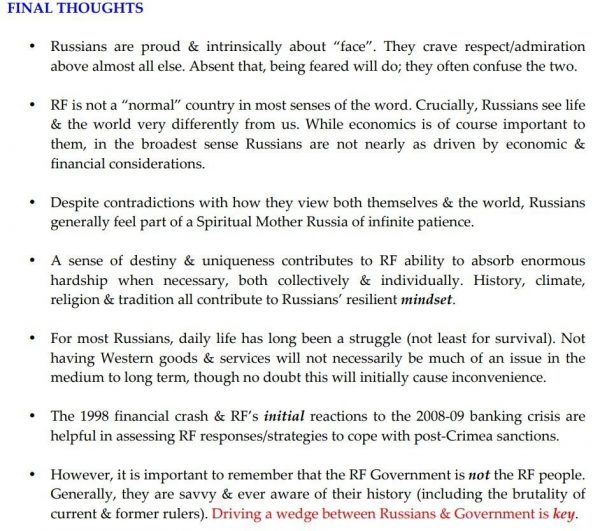
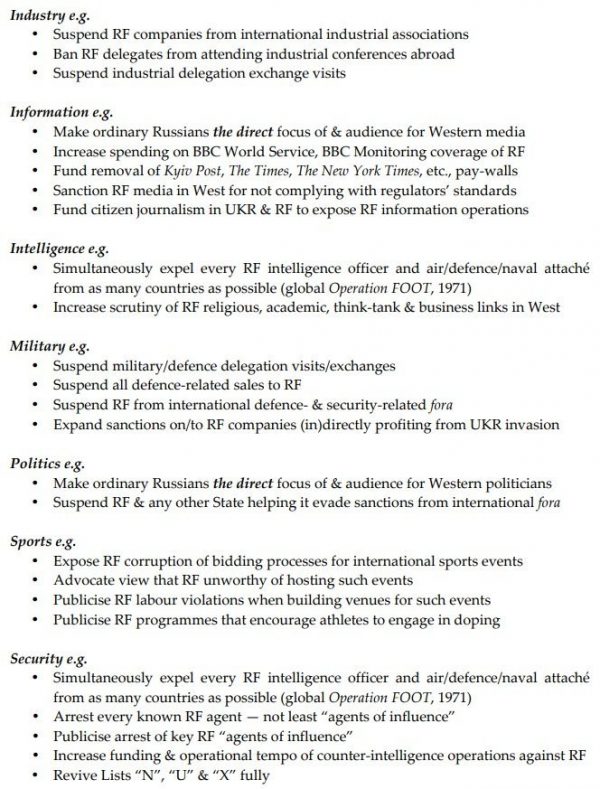
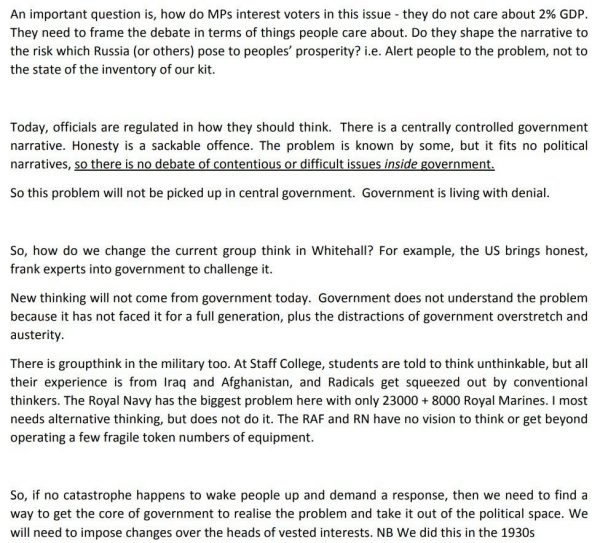

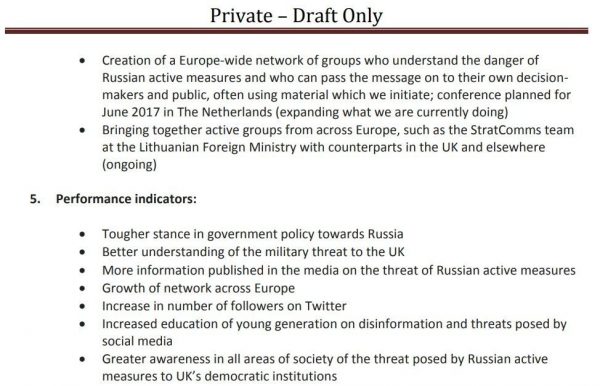
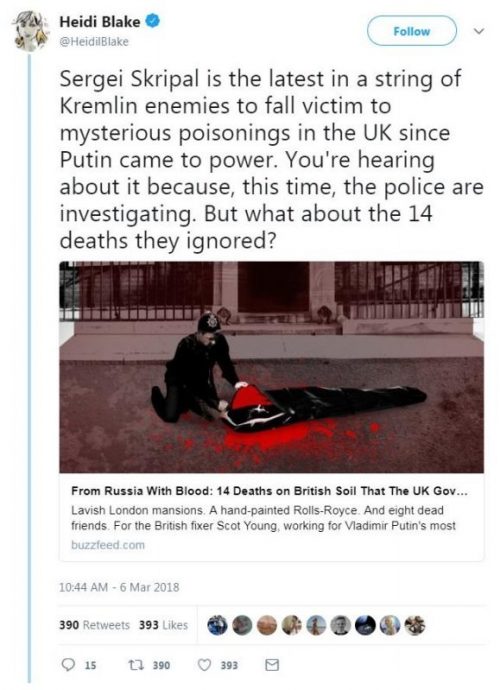
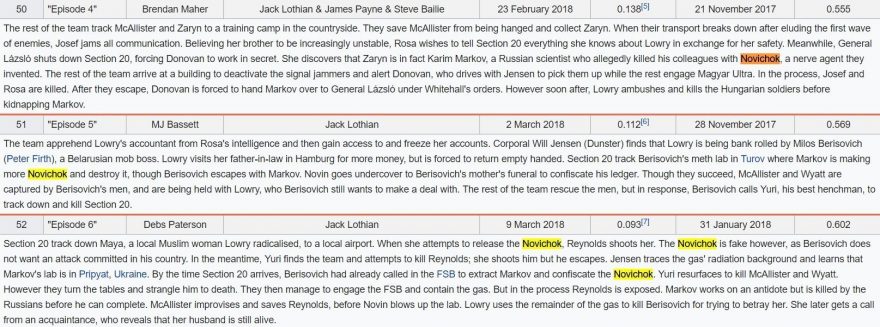
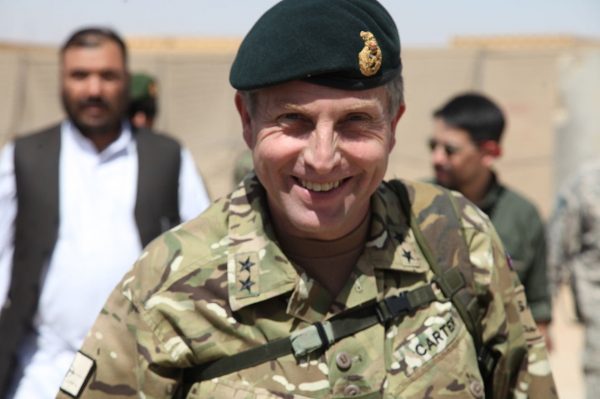
 Aletho News
