Russia’s President Putin is reported to have said in a conversation a while back that he could be in Kiev in two weeks. In our press, this was reported as yet more evidence of aggressive intentions, but, given even a moment’s thought, that is a patently false interpretation. It is also further evidence, as if more were needed, of the level of desperation American propaganda around events in Ukraine has reached. It is almost as though America’s intelligence/news media alliance started mimicking the almost forgotten Soviet apparatchiks of decades ago.
Yes, undoubtedly, the Russian military could be in Kiev in a couple of weeks. The very fact that they are not only shows what nonsense we hear from America and the coup-installed government in Ukraine. Clearly, Putin’s words were to the effect, “I wouldn’t have to tolerate the mess on our borders in Ukraine if I truly had aggressive intentions. For goodness sakes, use your brains, I could be in Kiev in two weeks.”
This deliberate misinterpretation of a casual statement stands out for me as one of the most pathetic of many pathetic things coming from Western politicians and media. And it is deliberate, for if it were the truth that the intelligence service of a superpower could only interpret statements with such feeble understanding, the world would have entered a new era of extreme danger, with idiots advising the commander who has his finger on the launch button. But I know there’s no genuine danger of that. The interpretation is intended only to shape American public opinion, never very well informed at the best of times. It’s a sound bite not intended to provide real information, just a momentary association of something very negative with the name of Russia’s president, indeed one of a stream of sound bites broadcast recently as though they meant something, as though they were news.
It is a classic method of propaganda, closely related to the technique in advertising of repeating a phrase or slogan or jingle over and over, no matter how silly its actual content is on analysis, and like all the best propaganda, it starts with a truth no matter how insignificant, incompletely reported, and removed from context. But there are two deeply concerning aspects to what otherwise would just be garbage. First, it flows from the writers and editors of what is supposed to be a free and open press, not advertising agencies trying to sell personal hygiene products, and thus demonstrates once more how meaningless is the term, “free and open press.” When the American government has a point to make, even a point that is dishonest or silly, in supporting some ill-conceived and dangerous policy, the entire press instantly enlists to echo it across the land, offering saturation access to the public that could not be bought for millions of dollars. At least in matters of foreign affairs, American journalism does not exist outside the childish fantasies of young journalism students thinking they are going to dig for the truth and serve the right to know once they graduate. You know, the bilge about the press being the fourth branch of government, the tribune of the people, and keeping citizens informed.
But more worrying is why the government or the press in America wishes now to cast aspersions on one of the world’s most important leaders? It has been more than three decades since Russia and the United States were commonly understood as enemies, each capable of obliterating the other. Why would anyone want to look backward to that? And why would anyone deliberately attack a man who has proved himself a sophisticated statesman, one whose words and behaviors show more consistency than those of any of our Western leaders, and especially president Obama who has not spent a day of his time in the White House without killing someone somewhere and surely has matched George Bush for lack of character.
Such cheap propaganda is symptomatic of aggressive intent. I believe the United States’ establishment is starting to feel a new sense of its relative decline in the world, and it is desperate to shore things up by hurting new competitors. The so-called pivot towards China is one of its tactics, and the expansion of NATO right against the face of Russia is another. Both are provocative and risky. And I only wish the world could understand that the United States is not that far from being a de facto bankrupt. It has no money for anything except by the unsound and unethical practice of printing more of it, knowing its special position as a world reserve currency allows it to cheat holders of dollars around the entire planet with their devaluation. And devalue it will, sooner or later, effectively leaving most of the bill for its stupid wars to be paid by others.
Geography and many other factors, such as the distribution of energy and other natural resources, say that Russia and Europe are over the long term destined to be strong, natural economic partners. But the United States has been Europe’s partner – indeed, a good deal more than a mere partner since WWII – and it does not like the prospect of Russia in any way displacing it. It is utterly backward thinking, but we are discussing brains driven by hormones here, not by logic or good will. I recall at an energy conference I attended during the Reagan era meeting a representative from the American State Department whose main message was that we had to stop Russian gas pipelines into Europe. As a believer in people freely buying what they need from others freely selling what they have, I didn’t agree with him and said so, and the people of Europe clearly weren’t convinced because many pipelines exist and many billions of cubic feet of gas flow.
The United States has taken every effort to get some return for its costly investment in a half-failed scheme to destabilize Ukraine, and with each deft move of Russia, it has played the old “look out for the commies” theme, just tarted up a bit so it doesn’t seem laughably out of date. The combination of the expansion of NATO plus scare-mongering about Russia buys some time against what I believe is inevitable. And minds driven only by the hormonal impulse of being dominant – full-spectrumdominance is the grotesque Washington insider expression – are incapable of clearly analyzing a situation, regardless of their intelligence and technology and information resources. And they are certainly not capable of acting on behalf of the great basic principles of rights and freedoms with which they sloppily wallpaper their every public statement. They are blind to the chances they take, to the risks they expose all of us to, and to the damage they create for the happiness and prosperity of millions of people.
America’s elaborate dirty tricks in Ukraine were intended to make Russia considerably less secure. You can almost imagine the buzz-cut thugs at Langley having a good laugh over expense-account steaks and martinis when they first thought they had succeeded, the laughter one expects from sociopathic American frat-boys who’ve just played a very dirty joke on someone, as by drugging some poor girl’s drink at a party and raping her. Perhaps the intentions included a plan ultimately to base missiles in Ukraine near Russia’s border, which would be a tremendously provocative act. Certainly it was hoped that gradually Ukraine would become more western-oriented, although the prospect for a poor country like Ukraine, one with shaky democratic credentials and not a good record in human rights, becoming in our lifetime full members of Europe is simply not in the cards. After all, the U.S. keeps pushing for Israel to become part of major European organizations, but that is too much even for some of America’s yes-men in Europe to accept.
Accusing Russia of looking out for what’s happening on her borders isn’t an accusation, it’s what all states do everywhere. Goodness knows the case of Cuba should provide perspective and food for thought. The United States has needlessly hurt that country for half a century with its embargo, many of the chief traditional products of Cuba having been things to satisfy the American markets, such as sugar and tobacco. But an embargo alone was never enough to secure the desired dominance. The United States invaded Cuba with a proxy army of Cuban refugees it trained, supplied, and paid. It tried to assassinate Cuba’s leader, many, many times, and it periodically sent terrorist forces to blow or shoot up things in Cuba. Ships in ports were shot up, hotels were attacked, and an airliner full of people was bombed. When Cuba asked for the return of America’s base at Guantanamo, a base only leased from Cuba originally under duress, the United States simply refused and still illegally occupies the land half a century later.
Of course, America was quite ready to hurl the world into nuclear war when it discovered that the Soviet Union had placed missiles in Cuba as a way both of protecting its ally against new invasions and as increased leverage in dealing with an often inflexible and aggressive United States. The missiles were provocative, but most thinking people felt they were not adequate cause for nuclear war. Fortunately, President Kennedy was able to stand up against the terrible pressures of the military-intelligence establishment and reach a negotiated settlement with Premier Khrushchev, an act which many believe, including this author, later cost him his life in Dallas. Well, all that gives you just some idea of how America responds to what it considers trouble or meddling, even a hundred miles from its border.
We hear the accusation that Russia arms the rebels in Ukraine, as well as the Assad government in Syria. My answer is that America, which spends as much on its military as all others on the planet combined, is also the world’s largest arms dealer as well as a ready covert supplier to groups anywhere it deems as serving its interests, whether extremist groups, including ISIS, set up to destroy Syria or the Nazi-like groups affiliated with Ukraine’s new government and employed in its coup. America runs a virtual conveyor belt of death machines and munitions to Israel to keep it well supplied in upsetting peace throughout the Mideast and suppressing millions of people it took prisoner half a century ago, a situation which has ranked in my view as the world’s most dangerous until now. A great deal of the aggression and repression of Israel have to do with the fact that their best minds recognize the unfavorable situation into which they are locked: no population growth versus high population growth for Arabs, the most highly subsidized national economy in the world affording poorer prospects for most residents than their native places would, an interminable series of wars and repressions and acts which the world sees as atrocities, early dreams all soured by a sense of no way out, and perhaps a sense of having committed a colossal blunder in starting it all.
So in a very real sense, both America and Israel, unwilling or unable to deal with their tremendous problems in a statesmanlike, realistic, and enduring way, dance a hideous danse macabre, with the entire world forced to watch in fear and horror.
When you compare Europe today to, say, Europe of fifty years ago, something more than a little disturbing becomes apparent. Then, despite the height of the Cold War presumably giving reason for greater solidarity with America, there were many independent voices in Europe. France had a consistently strong and decisive voice, and it was determined not to be subservient to NATO. Britain, today perhaps the worst example of subservience to America in all things, also showed independence at critical points, as when it refused to send troops to the holocaust of Vietnam despite great pressure from President Johnson. Today, there are no independent voices, and despite the clear, long-term interests of Europeans in having good relations with Russia, we see country after country acquiesce to America’s demands for destructive sanctions. Even Holland, a country we think of as fair and tough-minded, issued an interim report on the destruction of Malaysian Airlines’ MH17 which told us nothing we already didn’t know. That was clearly at the insistence of the United States, unwilling to see its proxy government in Ukraine revealed for the violent and incompetent operation that it is. NATO, an obsolete organization by any measure, has been expanded, serving primarily the interest of continued American hegemony in Europe, and America pushes the idea of every member spending more on its military. The United States also has Europeans committing to plainly idiotic purchases, as in buying the F-35, a plane one great American fighter jet designer called the worst ever conceived. The plane cannot ever do what it was supposed to do because it was foolishly commissioned to do a bit of almost everything, and the Pentagon wants as many others chipping in to subsidize the immense cost of salvaging something from the wreck. Perhaps the F-35 is emblematic of a conquered Europe, throwing away money on junk because America expects them to do so.
Rahm Emanuel, President Obama’s first Chief of Staff – who also served as Obama’s Israeli Mossad handler – famously said: “You never let a serious crisis go to waste. And what I mean by that it’s an opportunity to do things you think you could not do before.”
Individuals, groups, whole industries, even nations sometimes take advantage of crises and catastrophes. Big bankers, for example, love war because it forces governments to borrow vast sums of money at compound interest. Arms manufacturers also make huge profits. And the big government always gets bigger during wartime as it confiscates people’s wealth and scales back their rights.
The current ISIL crisis is making certain people very rich. According to LiveLeak.com the US government is spending 200 million dollars per week to bomb Iraq and Syria. If the overall cost of the anti-ISIL campaign reaches its $500 billion projection, LiveLeak estimates that the US would be spending $30 million dollars per member of ISIL. It might be cheaper to simply pay them $20 million each to simply go away.
But it isn’t just bankers, military-industrial complexes, and governments that exploit international crises? One group, above all, has proven its mastery at profiting from crisis: The Zionist movement and “Israel.”
The Zionists took advantage of the first great crisis of the 20th century, World War I, to force the 1917 Balfour Declaration on the British government. That Declaration, which committed the British to the bizarre notion of a “Jewish homeland” in Palestine, was presented to the British as a virtual fait accompli by Lord Rothschild, the world’s wealthiest banker.
Why did the British create so much trouble for themselves by signing the Balfour declaration? Some suggest Lord Balfour did it out of the goodness of his heart. Proponents of this theory insist that Balfour and the British power elite simply felt sorry for the world’s poor, persecuted Jews, and wanted to do something nice for them for no particular reason.
A more realistic interpretation holds that Britain handed Palestine over to Lord Rothschild as part of a quid pro quo: In exchange for Palestine, the Rothschilds and their international banking cartel would help Britain win World War I. How? By using their power over the US press and financial sector to drag America into the war. (If Britain had not won World War I, of course, it would not have been able to steal Palestine from the Ottoman Empire and hand it over to the Rothschilds.)
Had World War I not happened, the Zionists would never have overrun Palestine, and the Jewish State (JS) terrorists would never have ethnically cleansed the Palestinians and created their apartheid occupation regime. “Israel” would not exist.
The same, interestingly enough, is also true of World War II. The first World War was not enough. The Zionists needed another crisis to create a pretext for ethnically cleansing the Palestinians.
World War II was exactly what the Zionists needed. Hitler and the Zionists wanted the same thing: To force European Jews out of Europe. To that end the Zionists cooperated with Hitler. They even offered to fight on behalf of Nazi Germany. (Lenni Brenner’s book 51 Documents includes extensive proof of Zionist-Nazi cooperation before and during World War II.)
World War II killed about sixty million people – a holocaust of unprecedented proportions – but like World War I it played out perfectly for the Zionists. Victors’ justice at Nuremburg, and the demonization of the losing side as the winners wrote history, created the myth that Jews had somehow suffered more than the over 50 million non-Jews who were also murdered during the Second World War. This carefully-crafted wave of postwar propaganda created widespread sympathy for Jews, which the Zionists transmuted into support for their Jewish State terrorist project. Had there been no World War II, no ethnic cleansing of the Jews of Europe, and no sacred holocaust narrative glorifying Jewish suffering, there would have been no ethnic cleansing of Palestine and no Israel.
The only real winners of the two World Wars were the Zionists.
Were both World Wars orchestrated by the Rothschilds and their fellow Zionist bankers? Just asking the question will get you ejected from most Western universities. Voltaire’s dictum “To see who rules over you, simply find out who you are not allowed to criticize” suggests that the taboo on asking such questions stems from their likely answers.
Since September 11, 2001, the Zionists have been profiting from a new global crisis: the so-called War on Terror, more accurately termed the War on Islam. In her book The Shock Doctrine, Naomi Klein reveals that in early 2001 the Israeli government, which was in dire financial straits, transferred vast amounts of money into nascent anti-terror “security” industries. They hit the jackpot on 9/11 – as did Larry Silverstein, a close friend of Netanyahu, who bought the condemned-for-asbestos World Trade Center shortly before 9/11, doubled the insurance, claimed double indemnity for “two completely separate terrorist attacks” (the two planes) and walked off with billions of dollars in cash profits.
Today, the Zionists are trying to turn the “ISIL crisis” – the rise of the so-called Islamic State – to their own advantage. The Zionist-dominated mainstream media are using the barbarism of Islamic State to smear Islam as a whole, despite the fact that every significant Islamic entity on earth strongly opposes the IS terrorists. Recent IS beheading videos provide such exquisitely perfect islamophobic propaganda, while carrying marks of dubious authenticity, that even al-Jazeera is insinuating that they were probably filmed at a sound stage in Israel.
Along with anti-Islam propaganda, the “ISIL crisis” provides the Zionists with a sectarian vehicle for their attempt to divide-and-conquer the House of Islam and the people of the Middle East. The crazed sectarians of ISIL are mass-murdering Muslims who do not share their warped views. They are also mass-murdering Christians and Yazidis, and providing the Zionists with an excuse to arm Kurdish separatist groups. By splitting Middle Easterners into ethnic and sectarian camps, and setting them at each others’ throats, the “ISIL crisis” is playing right into the Zionists’ hands… and fulfilling the Oded Yinon plan’s vision of splitting Israel’s neighbors up into a mozaic of powerless, balkanized fiefdoms.
The Zionists also hope that the rise of Islamic State will provide the US with an excuse to bomb Syria… and that American bombs will turn against Islamic State’s (and Jewish State’s) enemy, the government of Syrian President Bashar al-Assad. The Israelis have already shot down a Syrian plane in an apparent effort to provoke the Syrian government into reacting against the American bombers.
Thus far, it seems the Americans are holding to their expressed intention of bombing ISIL and its friends, not the Syrian government. The liberal-Zionist New York Times furiously reacted by editorializing that the US bombing campaign against ISIL is a mistake because it will help Assad.
The Zionists, including Samantha Power, have openly stated that they want to use the US bombing campaign in Syria to overthrow the Syrian government. If they do not get their way, they may be planning even more devious ways to profit from the “ISIL crisis.” The recent breach of the White House by a hostile intruder, like previous breaches (and like the Zionist anti-Obama death threat published a few years ago by Jewish Times editor Andrew Adler) may be a warning to the American President: “Bomb Assad or you will go the way of JFK.”
Worse yet, the Zionists could be planning another shock-and-awe event on the scale of 9/11… or larger. They may imagine that a nuclear explosion in an American city, blamed by Zionist media assets on ISIL, could give them the kind of muscular US action against Israel’s Mideast enemies that they seek.
The people of the world are awakening to the Zionist trick of orchestrating problems – even wars and disasters – to further their agenda. Let us hope and pray that public awareness has risen to the point that the terrorists of Israel will no longer be able to profit from epic-scale destruction.
European Union member states have called on the EU Parliament to adopt legislation on new data protection as soon as next year.
The new regulations proposed by the member states in March 2014 include protecting the data of European citizens from espionage, illegal transfer to intelligence services, and illicit use of their information by business.
The new legislation has been seen as a necessary step in the wake of revelations leaked to media in June 2013 by CIA whistle-blower Edward Snowden about the National Security Agency’s (NSA) global espionage and communication monitoring scheme, known as Prism.
The legislation also appeared to take on greater significance following reports from Austrian media, which published a number of photographs claiming they proved that the Washington-based NSA was operating a secret listening post a short distance from the Vienna International Centre (VIC).
The photos depict a listening post atop a skyscraper in the Austrian capital Vienna, located next door to the VIC which is considered the third United Nations headquarters after New York and Geneva, and regularly hosts meetings.
While not immediately independently verified, the Austrian media reports have alleged that an air-conditioned hut atop the building picks up transmissions from ‘bugs’ installed in the VIC.
Listening posts and their stealth implications have affected relations between US and European allies.
In November last year, the German government called in the British ambassador to explain a story published in The Independent claiming that London had a “top secret listening post” operated from the roof of the British embassy in Berlin.
The story was based on information leaked to the daily by Snowden.
While the newspaper said that the US closed down its spying base atop its embassy in Berlin, the British continued with their covert operation.
A US-led military maneuver has begun in western Ukraine, amid continued fighting between government troops and pro-Russian forces in the country’s east.
The military drill, dubbed “Rapid Trident 14,” started early Monday near Ukraine’s border with Poland and involves 1,300 troops from over a dozen countries.
According to the US army, the troops come from 12 NATO members, including Germany, the UK, Poland, Norway and Canada, as well as non-members Azerbaijan, Georgia and Moldova.
The eleven-day drills will take place near the western city of Yavoriv and will not involve the live firing of weapons.
The US Defense Ministry said the exercise will increase interoperability among Ukraine and the participating nations.
Ukrainian Defense Minister Valeriy Heletey earlier announced that NATO member states have begun supplying weapons to the country’s forces despite a truce between Ukrainian troops and pro-Russians.
Meanwhile, heavy fighting between government troops and pro-Russian forces continues around the eastern city of Donetsk. According to Donetsk city hall officials, six civilians were killed on Sunday in heavy shelling around the city and its airport.
Kiev accused pro-Russians of threatening the truce by intensifying attacks against government positions. This is while, on September 13, the pro-Russia forces defending a checkpoint near the village of Olenivka, south of Donetsk accused the Ukrainian army of violating the truce.
The ceasefire agreement was reached between Kiev and the pro-Russians on September 5, after Russian President Vladimir Putin and Ukrainian President Petro Poroshenko hammered out a compromise deal aimed at ending the heavy fighting.
Bureau of Investigative Journalism | September 15, 2014
The Bureau of Investigative Journalism is asking a European court to rule on whether UK legislation properly protects journalists’ sources and communications from government scrutiny and mass surveillance.
The Bureau’s application was filed with the European Court of Human Rightson Friday. If the court rules in favour of the application it will force the UK government to review regulation around the mass collection of communications data.
The action follows concerns about the implications to journalists of some of the revelations that have come out of material leaked by Edward Snowden.
These have made it clear that by using mass surveillance techniques, government agencies can not only collect, store and scrutinise the content of electronic communications but also analyse masses of metadata – the details about where digital communications such as emails originate and the subject area of those communications.
Gavin Millar QC, who is working on the case with the Bureau, believes UK authorities are routinely carrying out such data collection and analysis and says this enables a sophisticated picture to be developed of a journalist’s or organisation’s network of contacts, sources and lines of enquiry as well as materials, subjects and persons of interest to them.
The Trades Union Congress (TUC) passed a statement on Gaza at its annual congress Wednesday, urging the UK government to impose an Israel arms embargo and calling for the suspension of the EU-Israel Association Agreement.
The statement, overwhelmingly endorsed, condemns the death toll in Gaza that included “many people going about their daily work”, and “deplores attacks on UN facilities”. The TUC recommends that those responsible for breaching international law “should be dealt with in the International Criminal Court”.
The TUC statement also calls for an end to the “blockade of Gaza” and welcomes “the creation of a unity government for the Palestinian Authority” involving both Fatah and Hamas, urging “the UK government and the European Union to support this development”.
In light of Israel’s attacks on Gaza and policies in the Occupied Territories, the TUC statement calls on the UK government and EU to “end immediately arms trading with Israel including all military-industrial collaboration”. The TUC itself, it adds, should work with relevant unions to “press those companies involved in supporting Israel’s military to cease to do so”.
Congress called for “the suspension of the EU-Israel Association Agreement until the rights of the Palestinians are established”, and committed to “rais[ing] the pressure on corporations complicit in arms trading, the settlements, occupation and the wall” through strategies that pressure “complicit companies” – a key part of the Palestinian-led Boycott Divestment Sanctions (BDS) campaign.
The Palestine Solidarity Campaign (PSC) noted that “the statement, and the goals contained within it, are now official TUC policy”, an important boost for Palestine solidarity and BDS activists. The TUC’s statement was condemned by anti-boycott umbrella group Fair Play, who complained that boycotts merely pull “Israeli and Palestinian workers further apart”.
I could not dig: I dared not rob:
Therefore I lied to please the mob.
Now all my lies are proved untrue
And I must face the men I slew.
What tale shall serve me here among
Mine angry and defrauded young?
– Rudyard Kipling, “Epitaphs of the War”
How can a just peace be achieved between the Israelis and the Palestinians? The answer is simply to appoint as peace envoy a war criminal who — like former French President Nicolas Sarkozy — also happens to be an Israeli sayan. Before qualifying as a fully fledged war criminal, Blair started out as a lawyer whose cosy, potentially corrupt, and now war criminal connection with Israel began in earnest in 1994 when he first met Michael Levy — an encounter that was calculated rather than fortuitous — at a dinner party hosted by Israeli diplomat Gideon Meir who, like Blair was friendly with Eldred Tabachnik, a senior barrister and Queens Council at 11 King’s Bench Walk, the chambers founded by Derry Irvine where Blair had been a junior tenant on its foundation in 1981. Tabachnik was also a former president (1994-2000) of the Board of Deputies of British Jews.
Following their initial meeting Blair and Levy became friends, tennis partners, and political cohorts with Levy running the Labour Leader’s Office Fund to finance Blair’s 1997 general election campaign which received substantial contributions from notables such as Alex Bernstein (Granada Group Chairman 1979-1996) and Robert Gavron (publishing). Generally referred to as “Lord Cashpoint” in media and political circles, Levy was the Labour Party’s leading fundraiser with over £100m raised between 1994 to 2007. After becoming Prime Minister, Blair ennobled Bernstein and Gavron and made Levy a life peer whom the Jerusalem Post — owned by the subsequently convicted felon Canadian newspaper publisher Conrad Black — described as “undoubtedly the notional leader of British Jewry.”
In 1998 Blair appointed Levy as his personal envoy to the Middle East and it is perhaps no coincidence that as a consequence of being financed and in effect controlled by Israeli interests, Blair — like the semi-illiterate President Bush in the U.S. — was inveigled into launching an illegal war against Iraq despite widespread opposition to such a conflict. The need for war was then “sold” to the British and American people on the basis of doctored intelligence reports backed by Blair’s now infamous claim to Parliament that Saddam Hussein could deploy weapons of mass destruction within 45 minutes of an order to use them. Everyone now knows that the 45-minute claim was a blatant lie because Iraq had nothing even remotely resembling a weapon of mass destruction. So once again an AIPAC-controlled U.S.-led alliance was conned by Israel to wage war on Israel’s behalf against an “enemy” Arab neighbour. Other Israeli targets for Western alliance death and destruction included Iran and Syria.
“Lord Cashpoint” Levy, who praised Blair for his “solid and committed support of the State of Israel,” maintained close ties with Israel’s political leaders and kept a home in Herzliya, a city in the central coast of Israel. Daniel Levy, his son, was active in Israeli politics, and at one time served as an assistant to former Israeli Prime Minister Ehud Barak and to Knesset member Yossi Beilin. Daniel — amongst other positions — is a senior research fellow of the Middle East Task Force at the New America Foundation and director of MENA (Middle East and North Africa) programme at the European Council on Foreign Relations. It is the calculated placement of such dedicated, eager beaver people in strategic positions that exert influence over Western decision-making on the Middle East that favour Israel’s political purpose.
In March 2006 it was revealed that Tony Blair’s Labour Party had raised £14 million in loans from private individuals of whom some were later nominated for peerages. Levy was later arrested but released on bail pending Scotland Yard’s investigation into what came to be known as the “cash for honours” controversy. In July 2007 — one month after the Jewish Attorney General Lord Peter Goldsmith had stepped down at the same time as Blair — the Crown Prosecution Service announced that Levy would neither be prosecuted in connection with the affair nor face any other charges.
When Tony Blair and his disgraced Zionist “Lord Cashpoint” controller voluntarily decided to step down in June 2007, Gordon Brown, the Chancellor of the Exchequer for the past decade, assumed the office of Prime Minister following the approval of Queen Elizabeth II. Having been for a long time Blair’s bitter competitor for residence at 10 Downing Street, Prime Minister Brown was not to be outdone and was himself bankrolled and influenced by Ronald Cohen who as the Labour Party’s fourth largest supporter was also ennobled. The Egyptian-born Lord Cohen was in 2002 an inaugural inductee into the Private Equity Hall of Fame, at the British Venture Capital Association and Real Deals’ Private Equity Awards. So long as money — corporate, Jewish or otherwise — is permitted by the majority of the people to influence and control the governance of a nation, then there can be no democracy because the people become conditioned subjects rather than citizens.
In June 2007 Blair was appointed Middle East envoy working on behalf of the U.S., Russia, the UN and the EU quartet with his sterling peace efforts resulting in Israel’s 2008 Operation Cast Lead. Being an Israeli stooge, however, has its rewards and in May 2009 Blair received the $1 million Dan David prize at a Tel Aviv university ceremony. Blair’s office stated that 90 percent of the money from the prize — which is named after Dan David, the Jewish-born Romanian international businessman who made his millions by setting up Photo-Me booths in shopping malls around the world — would be donated to the Tony Blair Faith Foundation that promotes religious understanding by bringing together young people (excluding young Palestinian “beasts”) of different faiths.
This was followed up in September 2010 with the National Constitution Center’s Liberty Medal and $100,000 (£65,000) prize being awarded by former President Bill Clinton to Blair. The Center is an independent, non-profit organisation that promotes understanding of the U.S. constitution and its relevance. The $100,000 was to be donated to Blair’s charitable foundations. Officials acknowledged that Blair, who had just been forced to cancel promotional events for a new autobiography amid protests by critics of his role in the U.S.-led Iraq war, was a contentious choice. The Center’s Jewish (surprise, surprise) president David Eisner, said that “There is always an element of controversy when you pick people at the forefront of change. They are usually very controversial figures. We understand … how differently Tony Blair appears to be viewed by many people in the UK as compared with many people in the US.” That is probably because the British people had not forgotten how he deliberately involved Britain in a war on the strength of a barefaced Blair lie.
Following the September 2014 much criticised GQ glossy magazine’s “Philanthropist of the Year” award” to Blair, the Charity Commission has just announced that it will meet representatives of the Tony Blair Faith Foundation (TBFF) over concerns brought to its attention by former senior employee turned whistleblower, Martin Bright. Bright, who as editor of the TBFF website for the charity analysed religious conflict, has complained about Blair’s interference and effectively accused him of abusing his role as patron to use the charity as a think tank for his private office which allegedly spent large sums of money on a sizeable communications team whose priority appeared to be the protection Mr Blair’s image, rather than the promotion of the charity. Bright further maintained that “the Faith Foundation is an independent charity with Tony Blair as its patron. He is not supposed to have any executive role … But it was clear from the outset that … his [Mr Blair’s] reputation was to be protected at all costs.”
Though other Labour Party leaders have since endeavoured to jettison the pernicious legacy of the illegal Iraq war, Blair has steadfastly continued to maintain that he made the right decision . . . “If we hadn’t removed Saddam from power just think, for example, what would be happening if these Arab revolutions were continuing now and Saddam, who’s probably 20 times as bad as Assad in Syria, was trying to suppress an uprising in Iraq? Think of the consequences of leaving that regime in power.” Anyone thinking about it — taking into account how Iraq’s entire infrastructure has since been destroyed, its communities divided, and its people devastated with millions killed — would have to honestly conclude Iraq and its people were much better off under Saddam Hussein who as a war criminal was strictly an amateur compared to leaders like Blair, Bush Jr., and Barack Obama.
Apart from all the blood on his hands, Blair has also been busy stuffing his pockets with filthy lucre to the extent that his approximate earnings of £150,000 as Prime Minister are now dwarfed by varied estimates of tens of millions. Finally, Israeli stooge and war criminal Blair is to be given a knighthood — one of the Catholic church’s top awards — for “services to peace” by a gutless and hypocritical Pope who failed to condemn the recent butchery in Gaza while presiding over a Church that has always condemned the use of contraception so as to protect the the sanctity of human life.
Strangler fig is the generic name given to a class of vines that sprouts high in the canopy of trees in tropical forests. It is deposited by birds that eat its fruit. Its roots envelope the tree and feed off it, weakening the tree. If the process is allowed to continue indefinitely, it sinks its roots into the ground at the base of the tree and destroys it completely but takes its form, creating a hollow shell of living vines where the tree once stood.
On Friday, July 18, 2014, as one of the most powerful military forces in the world laid waste to the besieged and impoverished Gaza Strip, leaving widows and orphans in its wake while nevertheless killing a significant number of them, the United States Senate, without objection and by unanimous consent from all 100 senators, passed a resolution supporting this act of genocide and condemning its victims for provoking the powerful aggressor by trying to resist.
At that point, Israel had killed more than 250 Palestinians, mostly civilians, while the resistance forces in Gaza had killed one Israeli, who had been delivering food to troops at the time. The Senate resolution had been drafted by the AIPAC, the American Israel Public Affairs Committee, one of the pillars of the Israel Lobby. Fifty days later more than 2000 Palestinians, mostly civilians, and 72 Israelis, mostly soldiers, lay dead.
How did the Israel Lobby come to so totally dominate the US Senate and in fact the entire US government?
The story goes back more than a century, to the early years of the Zionist movement to create a Jewish state. Zionism grew out of the 19th and 20th century European racist and nationalist philosophies like Fascism, Nazism and Falangism, which promoted the idea that each race in the world needed a homeland and should seek to fulfill its national destiny there.
The definition of both race and homeland were given much latitude. Despite all genetic evidence to the contrary, Jews were considered a race, and after considering Uganda and Argentina as potential homelands, the Zionists settled on Palestine.
In order to fulfill its “destiny”, however, the Zionists realized that they would need the support of at least one great power in order to force themselves upon an unwilling population in Palestine and ultimately expel or eliminate them, as the Europeans had largely accomplished in the great genocide of indigenous peoples in the western hemisphere. For this purpose, they selected Great Britain as it was about to take control of Palestine, and when the Zionists might be able to argue that their support could be critical to British ambitions, both during and after the Great War.
Indeed, Britain served their purpose well, facilitating the settlement of Palestine with Zionist Europeans. Zionist leaders also assisted Nazi Germany in removing its Jewish population and transferring them to Palestine, arguing that Nazism and Zionism had complementary interests. Before long, however, the relationship with Britain turned adversarial when Zionist terrorist groups began attacking the British in Palestine, with a view toward forcing the creation of an independent Jewish state in a territory where they constituted a minority of the population.
Although the Zionists continued to maintain an important support community in Great Britain, they knew that they would need other sponsors, and found their warmest welcome in the United States, starting in the late 19th century. Following World War II, President Harry Truman considered the Zionists to be important enough to his 1948 election campaign that he showered them with whatever they wanted, and especially immediate recognition of their declaration of statehood on May 14, 1948. This event set a pattern for Zionist influence in the US that would be repeated on a vast scale decades later.
During the Eisenhower and Kennedy administrations, the Israel Lobby, though powerful, could not act with impunity. Eisenhower suspended aid to Israel and forced it to pull back from its invasion of Sinai in 1956. Kennedy supported Senator J. William Fulbright’s hearings to force AIPAC to register as a foreign agent.
Those hearings were cut short in the aftermath of the Kennedy assassination, and Lyndon Johnson proved much more compliant, twice ordering the US sixth fleet to recall its aircraft sent to defend the US naval ship Liberty, which was attacked by Israeli air and naval forces in June, 1967. The Liberty sustained 34 dead and 171 wounded US military personnel, and barely avoided being sunk with all lives lost. However, the entire affair was quashed, with the Johnson administration foisting flimsy excuses upon a compliant American press and public, which accepted them with little question.
Since then, the Israel Lobby has grown with few constraints, fed by its domination of the American Jewish community, extensive control of publishing and the media, the establishment and control of strategic think tanks that provide governmental advisers, and by a well-coordinated and lavishly funded political campaign machine. This machine is now sufficiently influential to assure huge congressional appropriations to Israel that are filled by contractors who in turn show their gratitude by donating to the lobby that feeds them.
This history is well documented in works like The Lobby: Jewish political power and American foreign policy, by Edward Tivnan (1987), The Israel lobby and U.S. foreign policy, by John J. Mearsheimer and Stephen M. Walt (2008), Against Our Better Judgement, by Alison Weir (2014), and other publications and articles. Today, Israel oversees the careers of politicians throughout the US from the city and county level up to state and national races to make sure that no one hostile to Israel achieves significant political office and that its agenda receives overwhelming approval. It prevails upon the gratitude of elected officials to appoint its candidates as staffers throughout Congress as well as state and local offices. It maintains control of news, cinema, television, publishing and other media, so that its narrative will dominate public portrayal of Middle East issues. It even implants both volunteers and paid staff to populate web comment lists.
As a result, Israel is now much more than a lobby. Powerful lobbies may bend a government to their benefit, but their strength and survival ultimately depend upon the health of the country or countries that are their home. In a sense, therefore, they serve the national interest, even if they serve the interests of certain segments of society more than others. This is also why they care little for the health of the countries that they exploit, which are not their home.
It also explains why Israel increasingly treats the US like an exploited colony: the Israeli elite can use the US to their benefit, but it is not their home. Israel now controls US policy in the Middle East much more than it ever did Great Britain, to such an extent that it can often use US resources and power even in defiance of US national interest.
Trillions of dollars and thousands of American lives have been expended to destroy Iraq, Libya, Syria and Lebanon. Did these wars strengthen or weaken the strategic interest of the US and its economy? Would these wars have been fought if not for the Israel lobby in the US? While Israeli policy has been to weaken and destroy its neighbors, it is far from obvious that the same policy is in the US national interest.
To the contrary, until the end of World War II and even until the 1960s, the US was widely regarded in the Arab world as the “good” western power, untainted by colonialism in the region and without Arab blood on its hands. As John Sheehan, SJ said, “Every time anyone saysthat Israel is our only friend in the Middle East, I can’t help but think that before Israel, we had no enemies in the Middle East.”
Of course, some will argue that these and other US government policies and actions are in fact consistent with some definition of national interest. That is necessary, because anything that is obviously destructive to the well-being of the country will encounter too much resistance to implement. Every policy benefits someone. However, there is an important difference between those who benefit more than others from enterprise that in fact strengthens the nation and those who benefit from the sacrifices – and to the detriment – of the rest of the nation.
The Middle East wars of the G.W. Bush and Obama administrations are different from earlier ones, including the first Iraq war, primarily with respect to the degree to which Israel supplied the intelligence on which they were based and the extent to which their lobby influenced Congress to act. The Bush administration, for example, is notable for the Office of Special Plans, which was a veritable Israel liaison office in the heart of the Pentagon with extraordinary access to top secret information and in fact set up by Donald Rumsfeld, the Secretary of Defense.
In fact, the G.W. Bush administration marks the maturation of a program of Israel-nurtured neoconservative influence and control that began at least a decade earlier and coalesced into the Project for a New American Century (PNAC), a Washington think tank that brought together many of the principals that would hold high office in that administration. Although initially derided as fanciful in the Clinton administration and its predecessors, it constituted the first open presentation of plans to orient and ultimately subordinate U.S. policy to the goals and policies of the state of Israel.
The plans took shape as part of what became known as the neoconservative agenda. This was a major departure from the paradigm that began in 1947 with the publication of George Kennan’s seminal work counseling the projection of American power in order to maintain an equilibrium of power, (known as the “containment” principle) in international relations, so as to avoid disastrous and dangerous confrontations of the type that characterized the first half of the twentieth century. One may argue the extent to which such policy was effective, but the neoconservatives in PNAC argued that the end of the Soviet Union and the advent of the unipolar world provided the US with an unprecedented opportunity for domination, if only it would pursue a policy of military intervention and adventurism.
It is no accident that the early movement found favor with Israel. Israel quickly saw that neocon interventionism could be made to use American military might to serve Israel’s agenda of crushing its real, potential and perceived opponents in the Middle East. The Israel lobby therefore invested heavily in university departments and think tanks devoted to strategic studies and promoting the careers of neoconservatives that became advisers and appointed officials throughout government.
Examples of these are the Institute for Advanced Strategic and Political Studies, the Hudson Institute, the Brookings Institution, the Cato Institute, the Council on Foreign Relations, the Jewish Institute for National Security Affairs, the Project for a New American Century, the Hoover Institution, the American Enterprise Institute, the Washington Institute for Near East Policy (founded by AIPAC) and others. Through their doors have passed the likes of Richard Perle, Dick Cheney, Paul Wolfowitz, Donald Rumsfeld, Elliott Abrams, John Bolton, Dennis Ross, Douglas Feith, Robert Kagan, Martin Indyk, David Wurmser, Michael Ledeen and many others that have achieved high government office, especially since the start of the G.W. Bush administration in 2001.
Israel’s investments have paid off in a big way. Today, all officials elected or appointed to national office are either pro-Israel or must say they are. In fact, they cannot deviate or dissent or disagree with the Israel lobby in any way without risk of losing their career, as Cynthia McKinney, Paul Findley, Earl Hilliard, Pete McCloskey, William Fulbright, Roger Jepsen, Adlai Stevenson III and others have discovered to their dismay. Other prominent figures, like Vanessa Redgrave and others in entertainment and the arts, that have dared to criticize Israel, also find themselves pilloried in the press and subject to fewer opportunities for their professional practice. Those aspiring to careers in mainstream film, journalism and even sports or music may find the doors closed to them if speak out in any way against Israel.
Israel has thus constructed a strangler fig network of roots and vines that is feeding itself from the resources of world’s most powerful nation while gradually starving that nation. It is placing itself inside the workings of the US government and society so as to hobble its workings to Israel’s requirements under the carefully crafted illusion that they are serving the US national interest.
An example of this is the US relationship with Iran, and specifically the Iranian nuclear program, as set forth in Gareth Porter’s book, Manufactured Crisis [Just World Books, 2014]. As Porter meticulously shows, although Iran has no nuclear weapons program, never had one and never proposed to have one, and although the US has repeatedly found no evidence of an Iranian nuclear weapons program and only evidence to the contrary, the US continues to impose sanctions against Iran for the sole reason that Israel wants to do as much damage as possible to Iran and to prevent good and productive relations between Iran and the United States.
Porter shows that Israel has brought to bear its skill in creating forged documents, its influence in American intelligence, its threat of Congressional opposition to administration policies and other instruments of deception and coercion in order to prevent a rapprochement between the US and Iran. Israel’s hand can also be seen in US policy toward Syria, the rise of ISIS, the overthrow of Egypt’s very first democratically elected government, the destruction of Libya and many other of the developments in the Middle East. If we ask cui bono, Israel will be at the top of the list, at least from its own definition of objectives. Whether the US benefits from a strategic and economic viewpoint is highly questionable, although Israel’s allies in the US rarely fail to come out ahead.
There are of course limitations to Israel’s power. Even a strangler fig cannot change the shape of the tree. The US has thus far resisted the Israeli attempt to create an actual war with Iran, and it barely skirted direct intervention in Syria, which continues to be on Israel’s wish list. Nevertheless, the power of Israel over the workings of the US government and society is unprecedented in international relations that are otherwise as asymmetrical as those of the US and Israel.
Ordinarily the relation is the reverse: powerful nations are infamous for manipulating their vassals and colonial nations for exploiting their colonies. Yet Israeli prime minister Benjamin Netanyahu infamously bragged that “America is a thing you can move very easily.” What Israel has done is to create the potential for a new type of superpower, a small nation that survives and advances its interests by penetrating the workings of nations that have larger economies and militaries, and harnessing those resources.
In fact, Israel appears to be applying this model to other countries. In England, for example, a majority of the MPs of the three major parties belong to the “Friends of Israel” societies within those parties. Similarly, the BBC coverage of Israel and the Middle East is controlled by appointees that are invariably selected for their bias towards Israel. Canada and India are two formerly nonaligned nations that are now governed by parties and coalitions that have sworn allegiance to Israel. In India’s case, Israel’s promotion of Islamophobia has created an alliance with racist Hindu nationalist parties while making India the world’s largest customer of the Israeli arms industry.
Where will it end? Will Israel exhaust the economic and military resources of the US for its own perceived benefit? To what extent did it already contribute to the economic problems of the last decade? Or will Israel overextend its reach and find that the Zionist experiment to create and perpetuate a nation based on dubious historical, ethnic and religious claims and at the expense of other peoples will precipitate the very reaction that it was ostensibly formed to prevent?
This much we know: that if a strangler fig is allowed to thrive, its host will wither and die, and only its form will remain as an empty shell for as long as the parasite continues to survive.
Paul Larudee is one of the founders of the Free Gaza and Free Palestine Movements and an organizer in the International Solidarity Movement.
A military alliance in search of an identity: For over two decades NATO has had branding issues. To justify its existence, it absolutely needs an enemy. In the wake of the Ukraine crisis, Russia now fits that bill.
CrossTalking with Mark Sleboda, Alexander Mercouris and Brian Becker.
Arms firms that provide core military components for drones deployed by the US to conduct covert strikes in violation of international law allegedly bought access to NATO’s summit in Wales last week, a British human rights charity says.
The defense companies concerned doled out up to £300,000 to ‘exhibit’ their military wares at the conference in Newport. Among the firms present were General Dynamics, Raytheon, Lockheed Martin and MBDA, according to a British government press release.
General Dynamics manufacture Hellfire missiles utilized in most US drone strikes, while Raytheon make the targeting system for the Reaper drone deployed by the CIA and other actors to conduct strikes across the globe. Lockheed Martin operates as a contractor to provide select support services for both the Reaper and Predator, and MBDA is a European company that manufactures the unmanned aerial vehicle (UAV) Brimstone – a variant of the Hellfire missile.
The US drone program has received widespread public criticism both at home and abroad. Critics say attacks carried out in foreign countries, including Yemen and Pakistan, are in violation of both international and US law.
Although US drone strikes have culminated in hundreds of civilian casualties, they are subject to little oversight, according to Reprieve. President Barack Obama has refused to formally acknowledge the program’s existence.
Reprieve’s Legal Director Kat Craig said it’s “deeply worrying” that a group of firms who potentially profit most from this breach of international law were able to buy access into an international global summit like NATO.
“It is unacceptable that the US’ drone campaign, and the UK’s support for it, has been allowed to remain in the shadows for so long”, he added.
“President Obama must be far more open about it – as must his European allies, especially the UK and Germany, about the support they provide.”
Craig suggested the drone manufacturers’ presence at NATO signaled their inherent capacity to buy political influence “behind closed doors,” highlighting the opaque, illicit and legally questionable nature of much of the global arms trade.
The Revolutionary Armed Forces of Colombia (FARC) has accused the United States, the United Kingdom, and Israel of prolonging Colombia’s guerilla war.
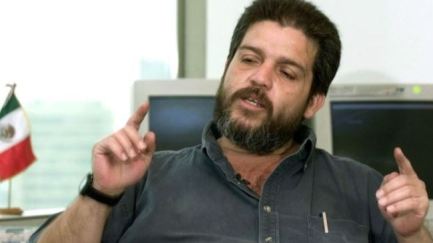
FARC negotiator Marcos Calarca leveled the accusation on Saturday at a news conference ahead of another round of peace talks with a delegation of the Colombian government in the Cuban capital Havana.
He pointed to “the responsibility of the government of the United States, of companies involved in the business of war, various intelligence agencies, especially the British and Israeli, whose involvement throughout the conflict encouraged its continuation, escalation and intensification.”
The latest accusation against Israeli and British agencies is a new twist in the 28th round of peace talks in Havana.
He, however, said, “The FARC will acknowledge its responsibility where it concerns us, on the understanding that our military actions have had essentially political goals, derived from our political project to take power.”
The FARC is Latin America’s oldest insurgent group and has been fighting the government since 1964.
Bogota estimates that 600,000 people have been killed and more than 4.5 million others have been displaced due to the fighting.
The rebel organization is thought to have around 8,000 fighters operating across a large swathe of the eastern jungles of the Andean nation.
NATO has pledged some 15 million euros to Ukraine, with several of the bloc’s member states pledging separate bilateral support and military cooperation, involving medical supplies as well as lethal and nonlethal military equipment.
NATO Secretary General Anders Fogh Rasmussen announced a “comprehensive and tailored package of measures” including the donation of 15 million euros “through NATO” at a joint news conference with the Ukrainian president on Thursday on the first day of the NATO summit in Wales.
He said that this would be in addition to other measures such as advising Ukraine on defense reforms and further bilateral aid.
“This is about improvement of logistics, the improvement of command and control, the improvement of communications, and cyber defense,” Ukrainian President Petro Poroshenko said.
He added that bilateral aid would include the provision of “high precision weapons” as well as medical equipment.
Poroshenko made careful statements regarding Ukraine’s potential induction into NATO, saying that membership criteria need to be met first.
“The new parliamentary election will help us a lot to accelerate the reform process,” Poroshenko said, adding that the most significant reforms to be made would be to the economy, and ensuring the rule of law and anti-corruption.
He said that he had some optimism for Friday’s peace talks in Minsk, Belarus, after which a ceasefire is expected to commence.
Rasmussen expressed caution: “If recent statements from President Putin represent a genuine effort to find a political solution, I would welcome it,” Rasmussen told reporters. He said that recent offers had been a “smokescreen” for further destabilization on the ground.
According to American media, defense news outlets, and independent analysts, the 12-day Israeli military aggression against Iran significantly depleted the US stockpile of THAAD (Terminal High Altitude Area Defense) interceptor missiles.
Citing official sources, American magazine Newsweek reported on Friday that the US transferred a substantial portion of its advanced missile defense capabilities to support the Israeli regime, an effort with questionable results and a critical impact on US strategic reserves.
THAAD, developed by Lockheed Martin arms manufacturing company, is a key component of Israel’s multi-layered air defense architecture. It is designed to intercept medium-range ballistic missiles, including those launched from Iran and Yemen.
The US-made system is capable of targeting short-, medium-, and intermediate-range ballistic missiles during their terminal phase, whether inside or outside Earth’s atmosphere.
THAAD uses a “hit-to-kill” method, relying on kinetic energy rather than explosive warheads to destroy incoming threats, intercepting at altitudes of up to 150 km and ranges between 150-200 km.
Operated exclusively by American personnel, the US military maintains eight THAAD batteries with an estimated 350–400 interceptors in total. The eighth battery was activated during the June 20 Israeli aggression against Iran and is capable of intercepting hypersonic missiles. … continue
This site is provided as a research and reference tool. Although we make every reasonable effort to ensure that the information and data provided at this site are useful, accurate, and current, we cannot guarantee that the information and data provided here will be error-free. By using this site, you assume all responsibility for and risk arising from your use of and reliance upon the contents of this site.
This site and the information available through it do not, and are not intended to constitute legal advice. Should you require legal advice, you should consult your own attorney.
Nothing within this site or linked to by this site constitutes investment advice or medical advice.
Materials accessible from or added to this site by third parties, such as comments posted, are strictly the responsibility of the third party who added such materials or made them accessible and we neither endorse nor undertake to control, monitor, edit or assume responsibility for any such third-party material.
The posting of stories, commentaries, reports, documents and links (embedded or otherwise) on this site does not in any way, shape or form, implied or otherwise, necessarily express or suggest endorsement or support of any of such posted material or parts therein.
The word “alleged” is deemed to occur before the word “fraud.” Since the rule of law still applies. To peasants, at least.
Fair Use
This site contains copyrighted material the use of which has not always been specifically authorized by the copyright owner. We are making such material available in our efforts to advance understanding of environmental, political, human rights, economic, democracy, scientific, and social justice issues, etc. We believe this constitutes a ‘fair use’ of any such copyrighted material as provided for in section 107 of the US Copyright Law. In accordance with Title 17 U.S.C. Section 107, the material on this site is distributed without profit to those who have expressed a prior interest in receiving the included information for research and educational purposes. For more info go to: http://www.law.cornell.edu/uscode/17/107.shtml. If you wish to use copyrighted material from this site for purposes of your own that go beyond ‘fair use’, you must obtain permission from the copyright owner.
DMCA Contact
This is information for anyone that wishes to challenge our “fair use” of copyrighted material.
If you are a legal copyright holder or a designated agent for such and you believe that content residing on or accessible through our website infringes a copyright and falls outside the boundaries of “Fair Use”, please send a notice of infringement by contacting atheonews@gmail.com.
We will respond and take necessary action immediately.
If notice is given of an alleged copyright violation we will act expeditiously to remove or disable access to the material(s) in question.
All 3rd party material posted on this website is copyright the respective owners / authors. Aletho News makes no claim of copyright on such material.
 Aletho News

