London will supply Kiev with £162 million ($213 million) worth of Martlet multirole missiles, with the first shipment set to arrive by the end of the year, the UK Defense Ministry said in a press release on Friday.
This comes after two weeks of Russian strikes on the Ukrainian military industrial and energy sector, as Russia advances in Donbass.
The announcement also comes after a bilateral meeting between UK Defense Secretary John Healey and his Ukrainian counterpart, Rustem Umerov, earlier this week, the press statement said. The UK will begin to deliver £300 million worth of artillery ammunition, as well as 650 Lightweight Multirole Missile (LMM) systems, with the first shipments expected by the end of 2024, according to the press release.
The UK, which is among Ukraine’s biggest war sponsors, has provided Kiev with more than €8.92 billion in military aid since the beginning of the Russia-Ukraine conflict in 2022, according to Germany’s Kiel institute.
Last month, however, Zelensky criticized the UK for its “slowed down” pace in providing weaponry. “We will insist on the need for bold steps, bold decisions,” he said in an address.
The delivery of LMM missiles is meant to boost Kiev’s air defenses against attacks like this week’s Russian strike on Poltava, Healey said.
Moscow struck “the 179th Joint Training Center of the Armed Forces of Ukraine” with two Iskander ballistic missiles in the deadliest attack this year, the Defense Ministry reported on Wednesday. Foreign instructors were preparing Ukrainian communications and electronic warfare specialists, as well as drone operators at the facility, the ministry added. According to Ukrainian officials, the strike killed at least 55 and wounded 328 more.
Kremlin spokesman Dmitry Peskov, speaking on the sidelines of the Eastern Economic Forum in Vladivostok, stressed that the Russian Army only strikes military targets, while Ukraine uses cluster munitions against civilians. Russia is getting better at hitting foreign military instructors and mercenaries in Ukraine, he said, adding that “the direct involvement of foreign states in the conflict is evident.”
Moscow has warned that deliveries of Western weapons to Ukraine, as well as the training of Ukrainian troops by foreign military instructors, makes Kiev’s sponsors direct participants in the conflict. The supplies of weapons, however, will not alter the course of the conflict, but only result in more deaths, Russia has said.
Ukrainian casualties and loss of military hardware are intensifying, which is shifting the attrition rates even further to Russia’s advantage. The rapid increase in losses with the losing side is a very common phenomenon toward the end of a war, with a common example being the spike in German casualties at the final stages of the Second World War.
In a war of attrition, the losses will naturally increase when the war machine has reached its breaking point. Soldiers have weaker strategic positions, there is a lack of resources, supply chains are not sufficiently defended, communications often break down, and there is a collapse in morale. Once the collapse begins, it often has a cascading effect. An early indicator of a cascading effect was when Ukraine began to struggle with air defence systems, which resulted in Russia being able to bring in its air force equipped with powerful glide bombs. Subsequently, holding strategic positions and avoiding high casualty rates became increasingly challenging and new problems began to emerge.
The Collapse has Begun
It appears that we have entered the final stages of the war due to the cascading effect. Ukraine is seeing its logistics break down, and there is a lack of weapons and ammunition that prevents soldiers from performing optimally.
The greatest challenge appears to be the lack of manpower, in which there are no good solutions. More aggressive mobilisation deprives society of important labour, it creates social upheaval as the public observes their family and fellow citizens being dragged off the streets and thrown into vans. Furthermore, the recruits receive less training and are much less motivated than the soldiers who volunteered at the beginning of the war. Simply put, a new army cannot be built in a rush. As a result, Ukraine began using and losing its best soldiers.
The Ukrainian frontline sees a growing lack of military resources, reinforcements do not turn up, and communication with military command becomes less reliable. The increasingly difficult position on the front causes a spike in soldiers who defect and surrender, while even entire military companies have withdrawn from their positions without permission. Predictably, this unpredictability creates less cohesion along the frontline as unreliable soldiers can be a tremendous liability as the front lines do not hold.
With the Ukrainian frontlines breaking, troops find themselves encircled and their option is either to surrender or to pursue a disorganised withdrawal in which the retreating forces are exposed and can be knocked out by the Russian military. Incrementally, the Ukrainians find themselves with fewer strategic positions, supply lines are severed, there is an even greater shortage of military equipment and manpower, and morale continues to collapse. As the situation deteriorates, communication and coordination unavoidably suffer, as for example, Ukraine seemingly shot down its own F-16 with a patriot missile.
The war has been lost, and with the writing on the wall, the Ukrainian army becomes more vulnerable to its officers striking a deal with Russia. Some are likely angered by a sense of betrayal as the US and NATO provoked the war and sabotaged the Istanbul peace agreements with the promise that Ukraine would receive all the weapons and assistance it needed to defeat Russia. While there is no evidence of Ukrainian officers defecting, it seems as if Russia’s intelligence and spy network has improved over the past weeks.
The Last-Ditch Gamble
Another common feature in a losing war is the desperation that encourages great risks in a last-ditch effort to turn everything around. The invasion of the Russian region of Kursk is a great example as most Ukrainian, Russian and Western observers initially seemed to agree that this was a great risk with a low chance of succeeding. However, the propaganda machine was thereafter turned on as journalists began reporting on successes, measured mostly in terms of humiliating Putin or boosting morale among Ukrainian soldiers. Yet, the temporary victory in the information war eventually gives way to losses in the real world. Ukrainian troops and equipment were diverted away from well-prepared defensive lines in Donbas in favour of being exposed in the open on foreign territory.
In Donbas, the front lines are collapsing, and in Kursk there are massive casualties. The problem was exacerbated by the lack of reliable supply lines for weapons and fuel, while engineering equipment could not be sent in to dig in at the new positions within Russian territory. The few remaining air defence systems and HIMARS had to be brought much closer to the border, which could then be detected by Russian surveillance and destroyed by Russian missiles and drones. Huge amounts of military resources were squandered on territory with hardly any strategic value, which Ukraine is not able to hold. The inability to pull out of Kursk compels Ukraine to double down on failure and the situation goes from bad to worse.
As the collapse intensifies, the winning side in a war typically increases its pressure. Russia has increased its deep missile strikes, and its military is pushing through what used to be well-defended front lines. Russia’s more powerful bombing campaign is also motivated by retaliation for the invasion of Kursk and to restore its deterrence by warning NATO against further escalations. Furthermore, Russia has retaliated by further destroying Ukraine’s energy network which reduces the mobility of the military, and reduces the industrial production and the ability to get through the next winter. Millions of Ukrainian civilians who are suffering greatly under these deteriorating conditions will likely leave the country when winter approaches, which will bring further problems to both Ukraine and Europe.
A Proxy War: How Will NATO Respond to Defeat?
What makes the Ukraine War different from many other wars, is that this is a proxy war in which NATO uses Ukrainians to fight Russia. The uncertain and unpredictable variable is therefore how NATO will react as it loses the proxy war in Ukraine. NATO is already providing weapons, ammunition, training, intelligence, target selection, war planning, managing complex weapon systems, and sending Western mercenaries. NATO’s support for strikes inside Russian territory and the invasion of Russian territory has already taken us to the brink of a direct war. The Americans appear to get ready to cut their losses and instead shift focus on confronting China, but the Europeans have bet everything on defeating Russia militarily. In terms of capabilities, it is the US that matters.
There are simply no good solutions anymore. The only two options are to either negotiate or get increasingly involved in direct fighting. NATO has largely rejected diplomacy and placed itself in a rhetorical trap in which victory is the only acceptable outcome, and the EU even punishes member states such as Hungary that attempt to restore diplomacy and negotiations with Russia. However, more direct NATO involvement will likely trigger a direct war with Russia, the world’s largest nuclear power, and it is unclear what a “victory” would look like that would not first trigger a nuclear exchange.
This is the time to restore diplomacy and return to negotiations, although it will take some time to reverse the propaganda of the past decade and prepare the public for a new narrative. Much like in Afghanistan, the political-media elites will assure us that we are winning until we flee with people falling off planes.
I spoke briefly about the rising Ukrainian casualties on WION
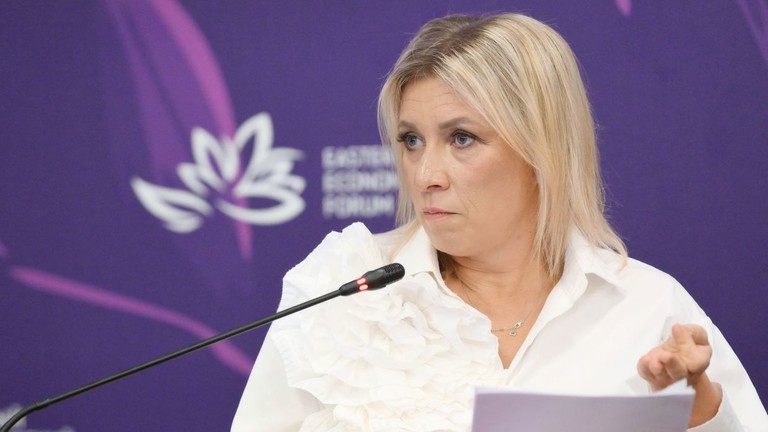
Russia will give an immediate and painful response to further acts of terrorism committed by Kiev, Russian Foreign Ministry spokeswoman Maria Zakharova warned on Wednesday, directing her comments to EU and NATO leaders.
Speaking on the sidelines of the Eastern Economic Forum (EEF) in Vladivostok, Zakharova stressed that Western leaders are “losing touch with reality” and are “absolutely not thinking about the risks of further dangerous escalation of the conflict, even in the context of their own interests.”
“We would like to warn such irresponsible politicians in the EU, NATO and across the ocean, that if the Kiev regime takes corresponding aggressive steps, Russia’s response will follow immediately,” Zakharova said, adding that this response will be “extremely painful” and that “much of this” has already been visible in recent days, apparently referring to Russia’s recent long-range strikes on targets across Ukraine.
Over the past several days the Russian Defense Ministry has reported carrying out a number of massive strikes on Ukrainian energy and defense-industry facilities, and claimed to have destroyed a number of buildings being used for the production and repair of aircraft, missiles, and UAVs, as well as storage sites, and deployment points for “nationalist formations and foreign mercenaries.” It also reported destroying a training facility housing foreign instructors.
During her address, Zakharova also suggested that Western officials have been ignorant of the potential consequences of their continued support of Kiev.
”I think the Europeans don’t fully understand what they are being dragged into,” the spokeswoman said. “They are being dragged in by the US, the Anglo-Saxons. It seems to me they haven’t yet understood what a plague they have created with their own hands in the form of the terrorist Kiev regime.”
Zakharova warned that the battalions that will be created from Ukrainian citizens recruited from Europe will eventually also strike back at Western European countries themselves. “They have fattened up there, sat it out, and recovered. They will strike in the same way as all international terrorist cells previously created by the West did,” she said.
“For the first time in history, Europe itself has given birth to an international terrorist cell,” the spokeswoman said, warning that “this terrorist monster will operate all over the world” and will strike Western Europe because “they always return to those who created them.”
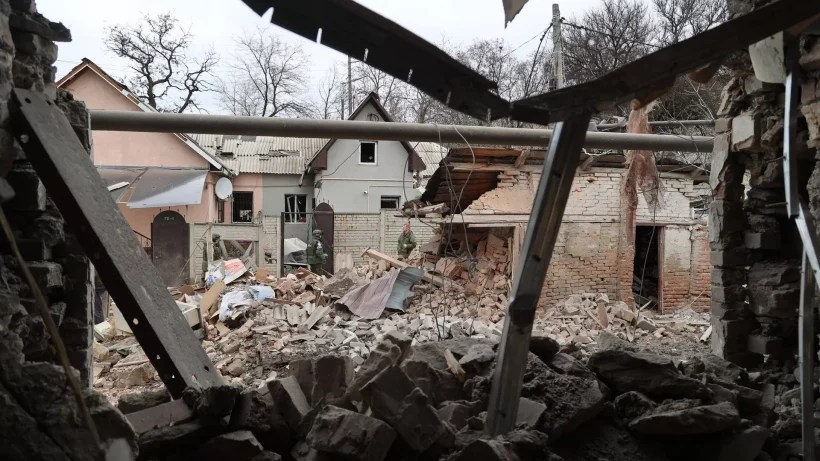
A Ukrainian artillery strike has killed at least three people at a market in the city of Donetsk, the capital of Russia’s Donetsk People’s Republic, Governor Denis Pushilin reported on Wednesday.
Ukrainian forces used 155mm shells to strike the Sokol market in the city’s Kirov neighborhood, the official stated. Two men and one woman were killed, while five other people were injured in the attack, he said, citing preliminary reports.
There were several other incidents in the region, including a drone bombing in a rural area in which a young woman was injured, Pushilin added.
Some media outlets have suggested that the weapon used in the attack was a French Caesar howitzer. Footage from the scene shows trade pavilions and a car apparently riddled with shrapnel.
On Tuesday, the Ukrainian military suffered a significant blow when a Russian missile strike hit a training center in the city of Poltava. Scores of troops were killed and injured in what the country’s leader, Vladimir Zelensky, described as an attack on “an educational facility.” The Russian military claimed that the facility housed foreign instructors who trained Ukrainians in military communications, electronic warfare, and drone operations.
Donetsk has been suffering from Ukrainian attacks since 2014, when its people rejected the government in Kiev that was installed following a US-backed armed coup. The new authorities unsuccessfully tried to quash the rebellion by military force, resulting in a frozen conflict.
The hostilities between Russia and Ukraine started in 2022. Moscow accused Kiev of stonewalling a negotiated roadmap for reintegrating Donbass and preparing a new military assault instead. People in what was at the time the self-proclaimed Donetsk People’s Republic voted in a referendum to join Russia in September of that year, along with the Lugansk People’s Republic.
Over the past several months, Russian forces have been pushing Ukrainian troops from their fortified positions in Donbass.
The Ukrainian anthem has been found embedded in the source code of the voter database in the state of New Hampshire, the development of which had apparently been outsourced to offshore programmers, according to Politico.
Election officials had previously decided to replace the state’s voter registration database before the upcoming 2024 presidential election and reportedly turned to a small Connecticut-based IT firm called WSD Digital to develop the software.
However, upon reviewing the completed project, it was revealed that the firm had offshored some of the work. Given that this posed a risk of unknown coders outside the US having access to the software and potentially being able to manipulate voter lists, New Hampshire officials hired a forensic firm to scour the code for signs of hidden malware.
The probe reportedly revealed a number of “unwelcome surprises,” Politico claimed, citing a person familiar with the investigation. These included the use of open-source code, software which had been misconfigured to connect to servers outside the country, and the lyrics to the Ukrainian national anthem.
“A programmer had hard-coded the Ukrainian national anthem into the database, in an apparent gesture of solidarity with Kiev,” Politico wrote.
State officials, however, have stated that none of these findings have amounted to evidence of wrongdoing and that all the issues had been resolved by the company in charge of the database’s development before it came into use.
“This was a disaster averted,” Politico’s source said, noting that hackers could have potentially exploited the vulnerabilities to edit the state’s voter rolls or use them to stoke election conspiracies.
While the potential catastrophe in New Hampshire has apparently been averted, Politico stated that its own six-month-long investigation into the matter suggests that similar issues could pop up in other states due to a lack of oversight of the development of vote-processing software.
“The technology vendors who build software used on Election Day face razor-thin profit margins” the outlet wrote, noting that this provides little room for crucial investments in security and results in many states lacking a rigorous system to verify what actually goes into election software.
Meanwhile, the FBI reported last month that it was “confident” that Iran has been trying to interfere in the upcoming election in November and had allegedly sought to gain access to the presidential campaigns of both political parties.
Tehran, however, has denied the accusations, calling them “unsubstantiated and devoid of any standing” and insisting that it has no intention in meddling in US elections.
Hungary cannot survive without Russian oil, Foreign Minister Peter Szijjarto has warned, stressing that Ukraine’s decision to suspend transit poses a serious challenge for Budapest.
Kiev halted the transit of crude supplied by Russian energy giant Lukoil via the Druzhba pipeline in June, citing sanctions. The measure has directly hit landlocked Hungary and Slovakia, depriving them of oil previously exported by Lukoil through Ukrainian territory.
In an interview with Russian business daily RBK on Monday, Szijjarto said Hungary will be completely deprived of oil without supplies from Russia.
“We will not be able to feed the country in a broad sense. We simply will not be able to meet the demand for fuel… because we do not have sufficient alternative infrastructure,” the diplomat said.
“You just have to look at the numbers… We do not want to take such risks,” Szijjarto added. “Therefore, the fact that Ukraine has made such a decision is a very serious challenge for us. It affects about a third of our imports from Russia. In Slovakia, the situation is even worse, these supplies account for about 40% there,” he stressed.
Kiev imposed sanctions on Lukoil in 2018, having banned the company from divesting its business in the country, as well as prohibiting trade operations and participation in the privatization or leasing of state property. Lukoil still sent crude via the southern arm of the Druzhba pipeline as EU sanctions did not target these flows.
The EU prohibited transport of Russian crude oil by sea in December 2022 as part of far-reaching sanctions on Moscow over the Ukraine conflict. Hungary, Slovakia, and the Czech Republic have been granted exemptions by Brussels as they source alternative supplies.
Slovakia and Hungary are the only EU member states that have rejected the bloc’s policies on supplying Kiev with military aid amid the conflict with Moscow. Both states have repeatedly called for the crisis to be solved through diplomacy.
Last week, Politico reported that Budapest had proposed a solution for the restoration of halted Russian oil flows by rebranding Lukoil products. That way, the crude shipped via Ukraine could be officially sold to Hungarian energy giant MOL before it crosses the border. The arrangement could reportedly mean paying an additional $1.50 per barrel to secure transit outside of previous agreements.
Szijjarto told RBK that a temporary solution to the crisis situation could be found, stressing that “in the long term, we need to look for another, legally significant solution.”
The Hungarian diplomat traveled to Russia last week to discuss energy security issues. Budapest is “satisfied with Russian energy cooperation, which is one of the guarantees of the country’s food security,” Szijjarto wrote on Facebook after meeting with the head of Russian energy giant Gazprom, Aleksey Miller.
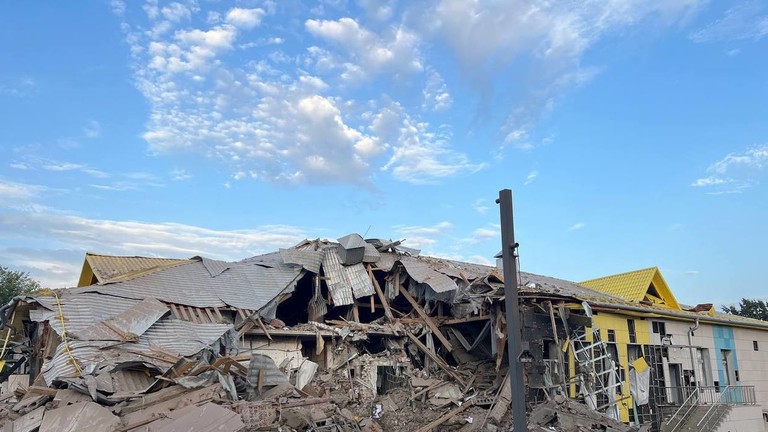
A kindergarten was irreparably destroyed in a large-scale Ukrainian shelling of the Russian city of Belgorod overnight, local governor Vyacheslav Gladkov has said. Following the attack, a decision was made to close dozens of others and transfer some local schools to remote learning, he added.
At least 11 civilians, including two children, were wounded in Ukrainian strikes targeting various parts of the city, Gladkov wrote on Telegram on Monday morning. Nine of the victims required hospitalization, with five of them being in serious condition, he added.
“It is not a good morning here in Belgorod Region. There has been another shelling of Belgorod. The missiles made it through. A kindergarten in Belgorod has been almost completely destroyed,” the governor wrote in a post on Russia’s VK social network.
It is the third educational institution in the city to have suffered significant damage as a result of Ukrainian attacks, following previous hits on another kindergarten and a school, he said.
A decision was made to shut down three dozen kindergartens for a week in the city district of Kharkovskaya Gora, located in the south of Belgorod, closest to the Russian-Ukrainian border, Gladkov announced.
Almost two dozen schools in the area would also switch to remote learning, he added. This Monday, September 2, is the day when the school year begins in Russia. Children typically attend kindergartens for several years, before entering the first grade at about age 7.
The governor acknowledged that working parents might be unhappy about the closure of the preschools, but stressed that protecting the lives of the children was a priority.
Gladkov said that he had already visited the affected kindergarten, adding that if the strike had occurred during the day when the children were inside, “no one would have had a chance to survive.”
Around a dozen communities across Belgorod Region also came under Ukrainian shelling and drone attacks during the night. One person was killed in the village of Shagarovka, with at least six more civilians being wounded in other locations, including the town of Shebekino, according to the governor.
The Russian regions of Belgorod, Kursk and Bryansk, which all border Ukraine, have been a frequent target of cross-border attacks since February 2022. However, the bombardment of Belgorod has intensified over the past few weeks amid the stalling of the Ukrainian offensive in Kursk Region and Russian advances in Donbass.
On Friday, five civilians were killed and 37 were wounded in a Ukrainian missile strike on Belgorod. On August 25, five people lost their lives and 13 more suffered injuries as a result of a Ukrainian attack on the town of Rakitnoe.
I had a discussion with Professor John Mearsheimer and Alexander Mercouris about the political West being on the brink of two major wars. Both Israel and Ukraine are fighting wars they cannot win, both are doubling down through reckless escalation, and neither is pursuing a diplomatic path to a peaceful resolution.
Consequently, both Israel and Ukraine are desperately seeking to drag the US into a wider war as the only solution. With incremental escalation, no diplomacy and the absence of serious discussions about the deep trouble we are now in – both Israel and Ukraine are successfully getting the US increasingly involved.
MOSCOW – The number of civilians wounded in the Ukrainian shelling of the Russian city of Belgorod and the Belgorod Region has risen to 46, Governor Vyacheslav Gladkov said.
On Friday evening, the governor said air defenses worked over Belgorod and the surrounding region, several air targets were shot down near the city. Later, he reported that the shelling had been carried out from the Vampire multiple launch rocket systems (MLRS), five people were killed, 37 were wounded.
“We have again lost civilians as a result of shelling of the city of Belgorod by the Armed Forces of Ukraine. Five civilians were killed… 46 civilians were wounded. There are currently 37 people in hospitals, seven of them are children. One child is in serious condition,” Gladkov said in a video published on Telegram.
Video appearing to be from the attack posted on social media show civilian vehicles being hit and no military targets in the area.
Nothing to see here, just the Ukrainians rocketing a random intersection in Belgorod to kill and terrorize civilians.
If the Russians did this we'd have a week of international condemnation, sob-story news articles and deranged posts on this website.
MOSCOW – The Russian Foreign Ministry called on international organizations on Saturday to condemn the recent shelling of the city of Belgorod and its suburbs by Ukraine, which killed five civilians and injured 46 others.
“We once again urge all responsible governments and relevant international institutions to resolutely condemn this brutal act of terrorism and publicly distance themselves from the Kiev regime and its Western patrons, who commit such crimes,” the statement read.
“Silence in response to the unbridled barbarism of the Ukrainian nationalists and their puppeteers from ‘civilized democracies’ would be tantamount to complicity in their bloody deeds,” the ministry warned.
The Friday shelling was planned in advance and constitutes an act of intimidation of the civilian population, the ministry said. Ukrainian troops fired cluster munitions using Czech-made Vampire multiple launch rocket systems, in what it said was another attempt by the regime in Kiev to “kill as many Russians as possible.”
Ukraine is exerting pressure on staff at the Zaporozhye Nuclear Power Plant in Russia, with threats to kill their family members if they refuse to cooperate with Kiev, senior Russian diplomat Rodion Miroshnik has claimed.
“A lot of families have been separated” during the conflict between Russia and Ukraine, and Kiev is trying to take advantage of this, Miroshnik, who is tasked by the Moscow’s Foreign Ministry with collecting evidence of Ukraine’s war crimes, told RIA Novosti on Saturday.
Kiev’s security agencies are deliberately looking for relatives of staff members at the power plant who remain on Ukrainian territory, Miroshnik said.
They then use threats against family members, “to put pressure [on the nuclear plant employees] or provoke them to commit a terrorist act or to pass on information in the interests of Ukraine,” he claimed.
There have been cases of people “quitting or changing jobs in order to ‘deprive’ themselves of the opportunity to commit a crime and make sure the blackmailers lose interest in them,” the diplomat noted.
“Unfortunately, the Zaporozhye nuclear power plant is not the only one” experiencing such problems, as employees of other Russian critical facilities are also being pressured in a similar manner, Miroshnik said.
According to the diplomat, Russian security agencies are aware of such practices by Kiev and are working to counter them.
The Zaporozhye nuclear plant, which is the largest in Europe, has been under Russian control since March 2022. Throughout the conflict, Moscow and Kiev have repeatedly accused each other of shelling the facility, and the Russian Defense Ministry has said that several attempts by Ukrainian assault units to retake it have been repelled.
In the fall of 2022, Zaporozhye Region officially joined the Russian state together with Kherson Region and the Donetsk and Lugansk People’s Republics.
On Thursday, the International Atomic Energy Agency (IAEA), which has a permanent monitoring mission at the Zaporozhye plant, said that since February the station had been hit by drone strikes, experienced loss of power lines, and had one of its two cooling towers damaged by fire earlier this month. IAEA chief Rafael Grossi, who is expected to visit the facility next week, described the security situation as “extremely challenging.”
UNITED NATIONS – Mali is alarmed that the weapons supplied to Ukraine by the collective West are ultimately fueling terrorism in the Sahel region, Malian Ambassador to the United Nations Oumar Daou said in Friday.
“The government of Mali would like to express its alarm with regard to the supply of weapons to Ukraine, because it’s been clearly established that a good part of the weapons … end up fueling terrorism and crime in the Sahel,” Daou said during a meeting of the UN Security Council.
The Malian ambassador also said that the weapons deliveries carry the risk of further destabilizing countries in Africa and exacerbate the suffering of the Malian people, who have already been “sorely tested by several years of conflict with dramatic consequences.”
French media, citing a Malian military source, reported in early August that terrorists from the Malian armed separatist groups traveled to Ukraine to receive training there.
Five civilians have been killed and 37 wounded, including six children, in a Ukrainian missile attack on Russia’s Belgorod Region, regional governor Vyacheslav Gladkov has said.
Belgorod is north of Kharkov. Russia’s second city. It has endured frequent attacks by long-range Ukrainian artillery, which often fire projectiles supplied by NATO.
“Our air defense system worked over Belgorod and several targets were shot down as they approached the city,” Gladkov said on Telegram on Friday evening. “To our great sorrow, one person died as a result of a direct hit on a passenger car.”
In addition to the vehicle, an apartment building and several commercial buildings were struck, Gladkov said.
The governor later updated the death toll to five.
“One woman and four men died on the spot from their injuries before the ambulances arrived,” he said. Among the injured, seven adults and three children are in serious condition.
According to Gladkov, the attack was carried out with cluster munitions launched by the Vampire multiple-launch rocket system. The same weapon, provided to Ukraine by the Czech Republic, was used in the Christmas market massacre last December, when 25 Russian civilians were killed and 100 more wounded by Ukrainian cluster munitions.
The attack also caused property damage to three apartment buildings in the city, as well as two commercial buildings. Two houses in the nearby village of Dubovoye were set on fire by the incoming missiles, but it was quickly extinguished by emergency services.
The volcanic mineral medicine will not patent — for the toxic burden medicine will not name
Lies are Unbekoming – October 30, 2026
Zeolite is old. It is in Roman concrete that has held for two thousand years. It’s in the water filters of ancient cisterns. It’s in the stomachs of Pacific livestock whose keepers knew, somehow, that this grey crumbling rock made the animals healthier. It’s in Soviet clinical protocols from the 1960s. It’s in the standard emergency response to the Chernobyl explosion.
In 1986, after the Chernobyl reactor failure, the Soviet Union manufactured and distributed natural zeolite at industrial scale — for soil remediation, for livestock feed, for human consumption, for the cleanup itself. Karl Hecht, who had been director of the Institute for Experimental and Clinical Pathophysiology at the Charité of Humboldt University Berlin, spent the six decades after that building the clinical research base — on silicon’s role in human health, on zeolite’s clinical safety, on its applications in ageing. In 2018, Pavelić and colleagues published a comprehensive clinical safety review of natural clinoptilolite in Frontiers in Pharmacology. In 2019, Mastinu analysed its binding affinities. In the Western medical literature, these works sit largely uncited.
What has not been treated at book length, until now, is how a volcanic mineral with six decades of Soviet clinical work behind it, two major peer-reviewed Western reviews, and ongoing clinical use across the former Eastern Bloc, remains almost entirely absent from Western medical practice — and what the toxic burden it’s meant to address actually is.
The Zeolite Book gathers the Soviet clinical record, the Western peer-reviewed studies, three contemporary practitioner voices, and three serious counterviews into one honest treatment. That’s why the book runs to seven appendices. 288 pages, four parts, three practitioner voices, three counterviews, seven appendices. The honest treatment is the argument.
This site is provided as a research and reference tool. Although we make every reasonable effort to ensure that the information and data provided at this site are useful, accurate, and current, we cannot guarantee that the information and data provided here will be error-free. By using this site, you assume all responsibility for and risk arising from your use of and reliance upon the contents of this site.
This site and the information available through it do not, and are not intended to constitute legal advice. Should you require legal advice, you should consult your own attorney.
Nothing within this site or linked to by this site constitutes investment advice or medical advice.
Materials accessible from or added to this site by third parties, such as comments posted, are strictly the responsibility of the third party who added such materials or made them accessible and we neither endorse nor undertake to control, monitor, edit or assume responsibility for any such third-party material.
The posting of stories, commentaries, reports, documents and links (embedded or otherwise) on this site does not in any way, shape or form, implied or otherwise, necessarily express or suggest endorsement or support of any of such posted material or parts therein.
The word “alleged” is deemed to occur before the word “fraud.” Since the rule of law still applies. To peasants, at least.
Fair Use
This site contains copyrighted material the use of which has not always been specifically authorized by the copyright owner. We are making such material available in our efforts to advance understanding of environmental, political, human rights, economic, democracy, scientific, and social justice issues, etc. We believe this constitutes a ‘fair use’ of any such copyrighted material as provided for in section 107 of the US Copyright Law. In accordance with Title 17 U.S.C. Section 107, the material on this site is distributed without profit to those who have expressed a prior interest in receiving the included information for research and educational purposes. For more info go to: http://www.law.cornell.edu/uscode/17/107.shtml. If you wish to use copyrighted material from this site for purposes of your own that go beyond ‘fair use’, you must obtain permission from the copyright owner.
DMCA Contact
This is information for anyone that wishes to challenge our “fair use” of copyrighted material.
If you are a legal copyright holder or a designated agent for such and you believe that content residing on or accessible through our website infringes a copyright and falls outside the boundaries of “Fair Use”, please send a notice of infringement by contacting atheonews@gmail.com.
We will respond and take necessary action immediately.
If notice is given of an alleged copyright violation we will act expeditiously to remove or disable access to the material(s) in question.
All 3rd party material posted on this website is copyright the respective owners / authors. Aletho News makes no claim of copyright on such material.

 Zeolite is old. It is in Roman concrete that has held for two thousand years. It’s in the water filters of ancient cisterns. It’s in the stomachs of Pacific livestock whose keepers knew, somehow, that this grey crumbling rock made the animals healthier. It’s in Soviet clinical protocols from the 1960s. It’s in the standard emergency response to the Chernobyl explosion.


