Mali Cuts Ties with Ukraine Over Kiev’s Support for Al-Qaeda
By Kyle Anzalone | The Libertarian Institute | August 6, 2024
Mali has severed its diplomatic ties with Ukraine following an attack by the local Al-Qaeda affiliate on Malian forces. Kiev called the move short-sighted.
Late last month, opposition forces, including an al Qaeda affiliate in the Sahel, Jama’at Nusrat al-Islam wal-Muslimin (JNIM), killed scores of Malian soldiers and mercenaries from the Russian Wagner Group that is supporting Bamako.
Andriy Yusov, a representative of Ukraine’s Security Service (SBU), said Kiev aided JNIM in its assault. “The rebels received the necessary information, which enabled a successful military operation against Russian war criminals.” An estimated 84 Russian contractors were killed, along with nearly 50 Malian soldiers.
Bakamo expressed “deep shock” over the “subversive remarks” and received the statement as an admission of Kiev’s involvement in the slaughter of its soldiers.
Malian government spokesman Colonel Abdoulaye Maiga denounced Ukraine for supporting JINM. He said Yusov’s remarks confirmed “Ukraine’s involvement in a cowardly, treacherous and barbaric attack by armed terrorist groups.”
“Mali condemns the hostility of the authorities of Ukraine who do not observe that Mali has always called for a peaceful settlement of the crisis between the Russian Federation and Ukraine,” he added.
Kiev responded by claiming Bakamo failed to provide evidence proving Ukraine backed the terrorists. “It is regrettable that … Mali decided to sever … relations … without conducting a thorough study of the facts and circumstances of the incident … and without providing any evidence of Ukraine’s involvement in the said event,” a statement from the Ukrainian Foreign Ministry said.
Kiev added it has the right to take all necessary political and diplomatic retaliations.
Following the 2011 American-backed uprising in Libya that ousted long-time leader Muammar Gaddafi, jihadist groups spread into neighboring countries and throughout the African Sahel. In the following decade, Mali experienced several coups as the jihadists destabilized the region.
During the latest coup in 2021, Assimi Goïta swept into power in Bakamo. Part of the policy of the junta has been to expel France, Mali’s long-time colonial ruler. Under Goïta, Mali has stepped up ties with Moscow including the private military firm Wager.
EU pressured Georgia to send mercenaries to Ukraine – MP
RT | August 6, 2024
Western officials, together with representatives of Georgia’s main opposition party, the National Movement, tried to pressure Tbilisi into adopting sanctions on Russia and sending mercenaries to fight for Kiev, Georgian parliamentary speaker Shalva Papuashvili has said.
The South Caucasus country has maintained a neutral stance on the Ukraine conflict since its outbreak in 2022 and refused to impose sanctions on Moscow, arguing that such a move would harm its national interests. At the same time, Georgia has said it will not allow itself to be used to circumvent Western restrictions placed on Russia.
Speaking to journalists on Tuesday, Papuashvili claimed the National Movement had repeatedly urged the ruling Georgian Dream party to sign up to sanctions on Russia. However, the government refused “because it would have been tantamount to being drawn into a war.”
“Together with the National Movement, foreigners also told us that we should have introduced sanctions, sent mercenaries [to Ukraine], and so on. The Europeans also told us the same,” Papuashvili said.
Back in May, the speaker made similar comments, stating that “certain friends and foes,” as well as non-governmental organizations, had been pestering Tbilisi with demands to “send fighters to Ukraine,” which he said would have risked a direct war with Russia.
While Georgia has officially only provided political and humanitarian support to Ukraine, a large number of Georgian mercenaries have been spotted fighting on Kiev’s side. The Russian Defense Ministry estimated back in March that some 1,042 Georgian fighters had taken part in the conflict, compared to 1,113 fighters from the US and 2,960 from Poland. At least 561 Georgian nationals serving within the Ukrainian military have been killed over the course of the conflict, according to Moscow.
Relations between Tbilisi and the West have deteriorated over the past year, particularly since Georgia passed a controversial ‘foreign agents law’ in May. The rule requires NGOs, media outlets and individuals that receive more than 20% of their funding from abroad to register as entities “promoting the interests of foreign powers.”
Washington has labeled the law an attack on democracy and threatened Georgia with sanctions, while suspending more than $92 million in aid. The EU has suspended talks on Tbilisi’s accession to the bloc, and froze $32.5 million in payments to the Georgian Defense Ministry.
The European Union wants to break Hungary’s will
By Dénes Albert | Remix News | August 5, 2024
Let us not delude ourselves for a moment, because the European Commission’s failure to stand by our country in blocking the transit of Russian oil through Ukraine is just one of the “pieces” of a plan to overthrow the legitimately elected Hungarian government.
The other retaliatory measures taken by Brussels against our country have the same purpose. This is not a new EU idea, supported by Washington.
Charles Gati, a professor at Johns Hopkins University, and not least a member of the advisory board of Action for Democracy, has spoken about this before. It was this organization that was suspected of attempting to interfere in the 2022 Hungarian elections, which Hungarian intelligence services deemed a national security risk. More than a decade ago, Gati said that “there are ways to move the government, democratically if possible, and otherwise if not.” Add to this that Gati is a confidant of the Soros empire.
Gati, in another statement to the Hungarian press, has already fleshed out the idea in five points, including that “in the absence of IMF and EU loans, the economy will continue to deteriorate while hundreds of thousands of people protest in the streets.” Then comes a discussion of the options, which reach the conclusion of civil war.
The plan has not worked. It could be said that those who masterminded the overthrow of the government have completely failed, since a dozen years were not enough to remove the right-wing conservative government in Hungary. However, they are doggedly sticking to the original idea.
The retaliatory measures that Brussels is taking against our country are out of all proportion. Most recently, for example, it imposed a fine of €200 million on us for not letting in illegal migrants.
Despite our country’s arguments that the EU sanctions on Russia do not apply to oil entering the bloc by pipeline, we have finally reached the point where the EC has abandoned the possibility of negotiation. It did not stand by Hungary and Slovakia, both of which protested Ukraine’s decision to unilaterally turn off the tap.
So, the oil transit issue is a tool for the EU, and of course for Ukraine, to use blackmail to force Hungary to change its policy towards the war.
The Eurocrats in Brussels “elegantly” overlooked the fact that it had already been made clear it was technically impossible to build an alternative oil supply for Hungary and Slovakia. “I don’t think the commission would be keen to help Hungary,” said a diplomat, who of course requested anonymity.
West too fearful of escalation with Russia – Zelensky
RT | August 5, 2024
Ukraine is pushing NATO nations to create a coalition that would attempt to intercept Russian missiles, Vladimir Zelensky has said. The US-led military bloc has previously declined to do so.
Kiev has long been pressuring its Western backers to become more involved in the conflict with Moscow and start shooting down Russian drones and missiles over Ukrainian territory. However, its efforts have been rebuffed by foreign powers reluctant to engage in a direct military confrontation with Russia.
“[Western nations] are always concerned about possible escalation. We are fighting against that. We will work on it,” Zelensky told journalists on Sunday. The government in Kiev is considering “technical possibilities for neighboring nations to use military aircraft against missiles that strike Ukraine” after flying in the general direction of NATO countries, he added.
Zelensky has been calling for the establishment of a no-fly zone over Ukraine since the outbreak of hostilities with Russia in February 2022. Military experts pointed out that any realistic enforcement of Kiev’s wish would require NATO members to attack Russian planes in the air and at airfields inside Russia.
The idea of a less ambitious shield over Western Ukraine was floated last month, as Kiev signed a bilateral security deal with Warsaw and ramped up its lobbying efforts ahead of a NATO leaders’ summit in the US.
The Polish government indicated it was willing to answer the Ukrainian call, provided that NATO approved, although other nations, including the US, objected. Washington said it believed that supplying more air defense systems to Ukraine to operate on its own was the best way to counter Russian barrages.
Zelensky spoke to the press after confirming that sponsors had delivered US-designed F-16 fighter jets to Ukraine. Media reports have suggested that the new Ukrainian capability is too small-scale to become a gamechanger on the front line. It would likely be used to intercept cruise missiles delivering long-range strikes instead, defense experts have suggested.
Moscow has been targeting Ukrainian military assets as well as some key infrastructure sites, such as power stations, which it considers crucial for Kiev’s war effort. According to Russian officials, the conflict is a US-led proxy war in which Ukrainian troops serve as “cannon fodder” for Western geostrategic interests.
On Saturday, Zelensky said Kiev wants to attack targets deep inside Russia, a type of operation for which Ukraine is not allowed to use donated Western weapons and relies on domestically produced kamikaze drones instead.
Orban’s Insight Into The Global Systemic Transition & Hungarian Grand Strategy Is Worth Reading
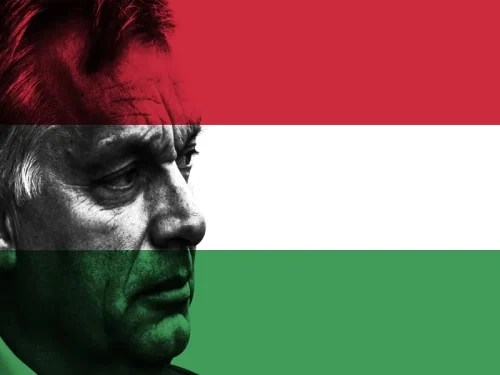
By Andrew Korybko | August 2, 2024
Hungarian Prime Minister Viktor Orban elaborated on the global systemic transition and his country’s grand strategy within it during a lengthy speech at the Balvanyos Free Summer University and Student Camp over the weekend. The over 11,000-word English transcript was published on Monday, which the present piece will summarize for the reader’s convenience. It began with him reaffirming that it’s his Christian duty to promote peace and mocking the EU for its Orwellian “war is peace” mantra.
He then said that the Ukrainian Conflict was a “red pill” for him and proceeded to elaborate on the ten ways in which it opened his eyes to reality. First, there have been enormous casualties on both sides, but each will continue fighting unless external stakeholders diplomatically intervene since they’re convinced that they’ll win. Second, the US went from containing China to waging a proxy war on Russia, which pushed those two together and prompted questions about why the US would do this.
Third, Ukraine’s resilience in spite of its objective economic and demographic weaknesses can be explained by its sense of mission that fills it with a higher purpose, which is to become the West’s eastern military frontier. Fourth, Russia has also proven itself to be impressively resilient, and it’s nowhere near collapsing like Western leaders hubristically predicted. Fifth, the EU has undergone fundamental changes since the latest phase of the Ukrainian Conflict began two and half years ago.
It now follows the US Democrats’ lead instead of retaining its strategic autonomy, and the traditional Franco-German axis is now challenged like never before by Poland, which has allied with the UK, Ukraine, the Baltic States, and Scandinavia to create a new center of power in Europe. This is actually an old Polish plan (Pilsudski’s “Intermarium” from the interwar period) adapted to contemporary conditions brought about by the Ukrainian Conflict and fully assisted by the US.
Sixth, the West’s standards are no longer universal and it’s experiencing “spiritual solitude” after the entire non-West refused to follow its lead in isolating Russia. Seventh, the biggest problem in the world is the weakness and disintegration of the West caused by its lack of leadership and seemingly irrational policies, which is accelerating China’s rise as its global systemic challenger. Eighth, Western Europe’s worldview is now post-national while Central Europe still believes in the sanctity of the nation-state.
This dichotomy explains the West’s seemingly irrational policies since each half of Europe is operating according to a completely different philosophy. The US is also experiencing a similar division between those like Trump who want it to remain a nation-state and his opponents who want it to become a post-national state. According to Orban, this division owes its origins to the sexual revolution and student rebellions from over half a century ago, which sought to free people from any form of collective identity.
Ninth, the West’s post-national trends are convulsing democracy and leading to friction between the elite/elitism and the people/populism. And finally, the tenth red pill is that Western soft power/values aren’t universal but are actually counterproductive since Russia’s strongest international attraction nowadays is its resistance to LGBTQ. Orban then said that these trends are leading to the rise of the non-West, which he believes first began with China’s admission to the WTO in 2001 and might be irreversible.
Trump’s priority is to rebuild and strengthen North America, to which end he’ll squeeze the US’ European and Asian allies while negotiating better deals with China. His end game is to make the US self-sufficient in energy and raw materials so that it can stand a better chance at retaining its declining position in global affairs. The EU has two options: it can either become an “open-air museum” (passive international actor) absorbed by the US or pursue strategic autonomy in order improve its standing in the world.
What’s needed is more connectivity, a European military alliance with its own defense industry (albeit without federalization), energy self-sufficiency, reconciliation with Russia, and admitting that Ukraine won’t join the EU or NATO. It’ll return to its prior role as a buffer zone and will be lucky if it gets security guarantees in a US-Russian agreement. Poland’s power play will fail because it lacks the resources to replace Germany so Orban expects that his “Polish brothers and sisters” will return to Central Europe.
He also considers all of these changes to be an opportunity. Developments in the US favor Hungary, but it must be careful about any deals it might offer due to the Polish precedent. Warsaw bet everything on Washington and received support for its strategic goals, but now it’s “subject to the imposition of a policy of democracy export, LGBTQ, migration and internal social transformation.” Orban ominously notes that this combination risks of the loss of Polish national identity if these trends continue unabated.
Hungary will remain in the EU, but the bloc’s East-West divisions between those that correspondingly respect the nation-state and those that are moving beyond it will widen. The EU must also accept that it’s the loser in the Ukrainian Conflict, the US will abandon this proxy war, and the EU can’t realistically pick up the tab. All the while, Hungary will rely on China for modernizing its economy and boosting its exports, which will lead to mutually beneficial outcomes.
A Hungarian grand strategy is required in order to maximally take advantage of the opportunities brought about by the ten previously described red pills and their abovementioned consequences. What’s already been decided upon since his government began work on this after the 2022 elections isn’t yet digestible and widely comprehensible by the public, and he said that it’ll take around six months for everything to become clearer for them, but he still shared the gist of what this grand strategy entails.
The first part is what he describes as connectivity, which he explained as being plugged in to both the Eastern and Western halves of the global economy. The second is sovereignty, with a focus on the economic dimension by promoting national companies on the world market, reducing debt, becoming a regional creditor, and boosting domestic production. The final part is bolstering his society’s resilience by halting demographic decline, preserving villages, and maintaining Hungary’s distinct culture.
Orban ended by explaining that all Hungarians across the world must help advance this grand strategy. The global systemic transition is expected to last another 20-25 years so the next generation will be tasked with completing its implementation. Their liberal opponents will try to offset this, but such efforts can be counteracted by recruiting young nationalists to the cause. The impression that one gets after reading through his speech in full is that Orban is this generation’s most visionary European leader.
EU rebuffs members’ complaints over Ukraine blocking Russian crude transit
RT | August 1, 2024
The European Commission (EC) has rejected complaints by Hungary and Slovakia over Ukraine’s suspension of Russian energy supply through pipelines on its territory, advising the two EU member states to look for alternative suppliers.
The Hungarian and Slovak governments had earlier asked the EC to intervene in their dispute with Kiev, after the latter placed sanctions on Russian energy company Lukoil, depriving the two landlocked countries of crude supplies via a pipeline through Ukraine. Last month, Budapest and Bratislava sent a letter to the EU executive, urging it to open emergency consultations with Ukraine over the move, which they insist violates Kiev’s 2014 trade agreement with Brussels.
On Thursday, EC spokesperson Balazs Ujvari stated, as quoted by Politico, that urgent consultations “do not appear to be guaranteed.” He argued that in the commission’s preliminary assessment, the sanctions didn’t pose “an immediate risk to [both countries’] security of supply.”
In a letter to Budapest and Bratislava seen by the Financial Times, EU trade commissioner Valdis Dombrovskis said that they could use an existing pipeline bringing shipborne crude from Croatia, adding that “diversification away from Russian fossil fuels should be actively pursued.”
In June, Ukraine blocked the pipeline transit of Russian crude sold by Lukoil to Central Europe. Kiev imposed sanctions on Lukoil in 2018, having banned the company from divesting its business in the country, as well as prohibiting trade operations and participation in the privatization or leasing of state property. Lukoil still sent crude via the southern arm of the Druzhba pipeline as the EU sanctions did not target these flows.
Hungary, Slovakia and the Czech Republic had sanctions exemptions set up by Brussels to give countries reliant on Russian oil extra time to find alternative supplies.
On Tuesday, Hungarian Foreign Minister Peter Szijjarto claimed that the EC may be behind the suspension of the Russian oil supplies through Ukraine. The move could be directly targeted at Budapest and Bratislava, he suggested.
Slovakia and Hungary are the only EU members that have refused to back the bloc’s policy of supplying Kiev with military aid amid the conflict with Russia. Both have repeatedly called for a diplomatic solution to the crisis.
Kremlin Press Secretary Dmitry Peskov accused Ukraine of making a “political decision” and claimed the situation is “critical” for those still buying Russian oil.
Hungary Rejects Croatian Oil Route Over High Fees and EU Call to Stop Russian Oil
Sputnik – 02.08.2024
Croatia is not a reliable partner for oil transit, since it has raised the duty fivefold since 2022, Hungarian Foreign Minister Peter Szijjarto said on Friday, commenting on Brussels’ proposal to replace the Russian oil supplies stopped by Kiev with transit through Croatia.
Earlier in the day, the Financial Times reported, citing a letter from EU Trade Commissioner Valdis Dombrovskis, that the European Commission had advised Hungary and Slovakia to abandon Russian oil and seek alternative sources in response to a complaint that Ukraine has blocked the transit of oil from Russia.
“Croatia is simply not a reliable transit country,” Szijjarto wrote on social media, adding that since the start of the conflict in Ukraine, Croatia has increased the price of oil transit fivefold compared to the average market price.
Last month, Hungarian Foreign Minister Peter Szijjarto said that Ukraine had stopped the transit of Lukoil’s oil. The Slovak Economy Ministry confirmed that the country was no longer receiving oil from the Russian oil giant, which was sanctioned by Ukraine. On July 22, Szijjarto said that Hungary and Slovakia had launched consultations of the European Commission with Ukraine due to a stop in the transit of oil from Russia through the Druzhba pipeline. On Thursday, EU Commission spokesman Balazs Ujvari said that Kiev’s decision shows no energy supply risks for Hungary or Slovakia, so the Commission will not hold urgent consultations on the issue.
Dombrovskis said in the letter to Budapest and Bratislava that “diversification away from Russian fossil fuels should be actively pursued,” the report read on Thursday.
He reportedly added that at a meeting of representatives of all EU member states last week, “a significant number … questioned why Hungary and Slovakia had apparently not yet explored alternatives so far”.
Shooting down Russian missiles is ‘act of war’ – Ritter
RT | July 31, 2024
Vladimir Zelensky’s idea to have Poland shoot down Russian missiles would get NATO directly involved in the conflict with Moscow, former US Marine and UN weapons inspector Scott Ritter has said.
Ukraine’s leader has been asking his Western partners for a “defense shield” for months. He claimed to have finally received a commitment from Warsaw in early July, as part of a security pact. Poland has said it would not target Russian missiles without NATO approval, which the US-led bloc has yet to give.
“Zelensky is operating on the assumption that NATO can have Patriot missiles in Poland that can shoot down Russian missiles that are headed towards militarily sensitive targets in the vicinity of Lviv,” Ritter told YouTube host Danny Haiphong in an interview posted on Tuesday.
“He doesn’t understand: that’s an act of war,” Ritter added. “That’s Russian military equipment, on a Russian military mission, in support of a Russian national security objective.”
Shooting down those missiles, even locking on to them with radar, would make NATO “literally a party to the conflict,” Ritter explained.
The US-led bloc has been trying to maintain a pretense that it’s not directly involved in the Russia-Ukraine conflict, despite donating billions of dollars worth of weapons, equipment and ammunition to Kiev’s armed forces and in some cases literally paying the salary of Ukrainian government employees.
Kiev is trying to have NATO set up a de facto “no fly zone” over western Ukraine, Ritter argued, which he described as “something Russia simply won’t tolerate.”
“Zelensky is just desperate right now, so he’s trying to invent rules of engagement,” Ritter concluded.
Ukrainian forces have been suffering steady setbacks along the front for weeks, with no prospect of replenishing their losses in either men or materiel.
The first handful of F-16 fighters reportedly arrived on Wednesday and will most likely be armed with modern US missiles. Zelensky has already complained that he would need more than 100 jets to actually make a difference, however.
Ritter is a former US Marine Corps major who served as a UN weapons inspector. He famously disagreed with the foreign policy establishment in Washington in the early 2000s, insisting that Saddam Hussein’s Iraq did not have weapons of mass destruction – a pretext the US later used to invade the country. He has been a RT contributor and saw his passport seized by the US government when he tried to attend the St. Petersburg International Security Forum in June.
EU member suspects Brussels of ‘energy blackmail’
RT | July 31, 2024
The European Commission (EC) may be behind the suspension of some Russian oil supplies into the EU through Ukraine, Hungarian Foreign Minister Peter Szijjarto claimed on Tuesday. The move could be directly targeted at Hungary and Slovakia, he suggested.
Kiev halted the transit of crude oil supplied by Russian energy giant Lukoil via the Druzhba pipeline earlier this month, citing sanctions on the company. The measure has directly hit landlocked Hungary and Slovakia, depriving them of crude previously exported by Lukoil.
“Brussels remains silent despite the threat to the energy security of two EU member states and clear violation of EU-Ukraine association agreement,” Szijjarto wrote in a post on Facebook. The diplomat was referring to a deal signed in 2014, after the Western-backed Maidan coup overthrew the then-Ukrainian president, Viktor Yanukovich.
Szijjarto suggested that either the EC is too “weak” to protect the fundamental interests of Slovakia and Hungary, or “it was Brussels, not Kiev,” that orchestrated the move to “blackmail the two states that support peace and refuse to send weapons [to Ukraine].”
Shortly after the halt of oil supplies, Budapest and Bratislava jointly initiated consultations with the bloc and asked EU officials to help resolve the dispute. Brussels has claimed it needs time to “gather evidence and assess the legal situation.”
“The EC, and its President Ursula von der Leyen personally, must come clean immediately: did Brussels ask Kiev to ban oil supplies?” Szijjarto asked. “And if not, why has the EC taken no steps in more than a week?”
Slovakia, Hungary, and the Czech Republic – each of which is reliant on Russian energy supplies – were exempted from a bloc-wide ban on Russian oil deliveries in 2022. Slovakia and Hungary are the only EU members that have refused to back the bloc’s policy of supplying Kiev with military aid amid the conflict with Russia. Both have repeatedly called for a diplomatic solution to the crisis.
Kiev imposed sanctions on Lukoil in 2018, having banned the company from divesting its business in the country, as well as prohibiting trade operations and participation in the privatization or leasing of state property. Lukoil still sent crude via the southern arm of the Druzhba pipeline as the sanctions did not target these flows.
Earlier this week, Slovakian Prime Minister Robert Fico warned that Bratislava would stop diesel exports to Ukraine if Kiev does not restart the transit of Russian oil through, stressing that Slovak shipments account for one-tenth of Ukraine’s consumption of the fuel.
On Tuesday, Russian Foreign Ministry spokeswoman Maria Zakharova said Moscow is unsurprised that the EU has failed to resolve the issue surrounding Russian oil supplies to its members, claiming that Brussels is using energy resources to blackmail Bratislava and Budapest.
Details emerge on Ukrainian plot to assassinate RT boss – media
RT | July 29, 2024
The Russian Investigative Committee has completed an investigation into an assassination plot targeting RT Editor-in-Chief Margarita Simonyan, the Kommersant daily reported on Sunday.
Last July, Russian law enforcement said they had thwarted a Ukrainian plan to kill the journalist, involving a group of Russian neo-Nazis who were offered $16,600 as payment.
“Deepest gratitude to our law enforcement officers for their work from me and my family,” Simonyan wrote, reacting to the Kommersant report on her Telegram channel.
The SBU (Ukrainian security service) reportedly recruited individuals for the job from the Paragraph 88 neo-nazi group, after seeing videos of their beatings of foreign nationals from Central Asia, which they recorded and posted online.
The attackers did not know that their negotiations were monitored by Russian law enforcement, the report says. When several young people arrived at a meeting place to receive an advance payment and an assault rifle, they were detained by special forces.
More than ten people are involved in the criminal case, some of whom have confessed to separate attacks, but deny plotting an attempt on the life of Simonyan, Kommersant reported.
The defendants claimed they had wanted to get paid for the hit in advance, but did not receive any money when they went to retrieve an assault rifle from a cache prepared by the organizers.
The newspaper has named Mikhail Balashov and Yegor Savelyev as suspected organizers of the group. The two men have been charged with an assassination attempt for political reasons, illegal arms trafficking, incitement of hatred, as well as terrorism and extremism.
Back in April, the SBU – Kiev’s successor to the Soviet KGB – announced new criminal charges against Simonyan, accusing her of being a “propagandist” who is furthering “Russian narratives” and endangering Ukrainian sovereignty.
The agency also claims that Simonyan called for “mass killings of Ukrainian children” in December 2023. However, it failed to provide evidence of any such remark.
In an earlier post on social media, she said the Ukrainians would have a hard time justifying the murder of a journalist and a mother of several children – but that falsely accusing her of inciting violence would make an assassination “appear more palatable.”
INTERVIEW: Basil Valentine & Prof. Glenn Diesen – EU Childishly Boycotts Budapest
21Wire | July 26, 2024
TNT Radio guest host Basil Valentine speaks with Professor and political scientist Glenn Diesen, to discuss the EU’s unprecedented efforts to punish Hungary, one of its members, for entertaining diplomatic talks with the Russian Federation. They talk about Western diplomacy and how it is no longer about appeasement but about schooling peers and near-peer enemies on compliance. They touch upon the Prime Minister of Hungary, Viktor Orban’s strong relationship with former U.S. President Trump who if elected, will favour negotiation with the Russians to bring an end to the Russo-Ukrainian conflict to avoid WWIII and a possible nuclear holocaust.
Featured Video

The Truth About the Trump Shootings with Ken Silva
or go to
Aletho News Archives – Video-Images
From the Archives
The Geopolitics behind the War in Yemen (I)
By Mahdi Darius NAZEMROAYA | Strategic Culture Foundation | 30.03.2015
The United States and the Kingdom of Saudi Arabia became very uneasy when the Yemenese or Yemenite movement of the Houthi or Ansarallah (meaning the supporters of God in Arabic) gained control of Yemen’s capital, Sanaa/Sana, in September 2014. The US-supported Yemenite President Abd-Rabbuh Manṣour Al-Hadi was humiliatingly forced to share power with the Houthis and the coalition of northern Yemenese tribes that had helped them enter Sana. Al-Hadi declared that negotiations for a Yemeni national unity government would take place and his allies the US and Saudi Arabia tried to use a new national dialogue and mediated talks to co-opt and pacify the Houthis.
The truth has been turned on its head about the war in Yemen. The war and ousting of President Abd-Rabbuh Manṣour Al-Hadi in Yemen are not the results of «Houthi coup» in Yemen. It is the opposite. Al-Hadi was ousted, because with Saudi and US support he tried to backtrack on the power sharing agreements he had made and return Yemen to authoritarian rule. The ousting of President Al-Hadi by the Houthis and their political allies was an unexpected reaction to the takeover Al-Hadi was planning with Washington and the House of Saudi. … continue
Blog Roll
 Aletho News
- IRGC air defenses destroy another US MQ-1 drone over Strait of Hormuz
- Imran Khan’s entire immediate family detained in Pakistan ahead of mass protest demanding his release
- EU nation detains former presidential frontrunner
- Leaked: Britain’s Sham Conviction Of Hashim Thaci
- Seyed M. Marandi: U.S. Strike Imminent – Toward Total War in the Middle East
- Russia Voted Under Fire. Washington Is Loading the Tankers.
- 12 Things Your Oncologist Was Trained Not to Tell You
- Anthrax Attacks Paved Way for COVID-Era ‘Junk Drugs and Vaccines’
- How Real Is the Impact of Western Sanctions on Israel?
- France, You Are Guilty: How Paris Turned Western Sahara into the Maghreb’s Powder Keg
- If Americans Knew
- Inside Israel’s ‘soft’ ethnic cleansing plan for Gaza through the eyes of its victims
- New online database tracks pro-‘Israel’ political donations in the United States
- Israeli president pardons soldier convicted for killing wounded Palestinian
- Singer Ed Sheeran says his ‘heart broken’ by Gaza devastation, addresses Macklemore controversy
- Israel Has Imprisoned Female Journalist Bushra Al-Tawil Without Trial Or Charge In Solitary Confinement For Past Month
- Israel poised to teach West Bank a lesson after one Israeli killed – Daily Update
- Salah Sarsour’s Legal Team Says DHS Has Not Met Its Burden to Prove He Is Deportable
- An analysis of tax forms by The Intercept show Kraft’s charity and LLC have donated to Friends of the IDF and AIPAC’s super PAC.
- Israeli attacks kill four Palestinians in Gaza – Daily Update
- Inside Gaza’s death trap of collapsing, bombed-out buildings
- No Tricks Zone
- 2025 Nature Paper Claiming Worsening Global Drought Gets RETRACTED …Heavily Flawed
- New Study: ‘Global Drought Shows No Detectable Recent Acceleration Under Climate Warming’
- Economic Masterminds: German Socialists Suggest Taxing Productivity Gains Stemming From Using AI
- The South China Sea Has Not Been Cooperating With The Climate Change Narrative
- Energy Crisis: Germany Enters Heating Season With Historically Low Gas Reserve Fill Levels
- New Study: The Antarctic Ice Sheet Gained Mass From 2020-2024 Due To Staggering Snow And Ice Accumulation
- Study: Ocean Heating Rates From Thousands Of Years Ago ‘Dwarf’ Modern Ocean Heating Rates
- Climate Extremists Target, Attack Large-Scale Power Grid Infrastructure In Germany!
- New Study: Antarctic Ice Melt Has Contributed Less Than 1 Centimeter To Sea Level Rise In The Last 30 Years
- Fear Of Debate: Alarmist German Climate Scientist Calls On Mainstream Media To Discredit Skeptic Voices
 Aletho News