US Creating Logistic Centers in Black Sea to Speed Up Arms Supplies to Ukraine – Kremlin Aide
Sputnik – 25.07.2024
MOSCOW – The United States wants to create logistics centers in the Black Sea region to speed up arms supplies to Ukraine and deploy long-range weapons, Russian presidential aide Nikolai Patrushev said on Thursday.
“In the countries of the Black Sea region, the United States intends to create logistics centers to accelerate the supply of weapons to Ukraine, as well as to deploy modern long-range weapons,” Patrushev said.
At the Washington summit, NATO demonstrated plans to increase its military presence and intensify confrontation in the Black Sea, the official added.
There can be no talk of unhindered passage to the ports of the Sea of Azov by ships of Western countries supporting Kiev, the aide noted.
“Given the aggressive nature of Western countries that directly support the Kiev regime in conducting military and terrorist actions against Russia, currently any unhindered passage of their ships to the ports of Azov is out of the question,” he emphasized.
Last month, the countries that signed a joint communique following the Swiss-hosted summit on Ukraine have called for providing access to sea ports in the Black and Azov seas to ensure global food security.
The number of joint exercises between the Japanese navy and NATO countries and other military allies of Washington in 2024 has already increased 30 times compared to last year, Patrushev added.
EU Refuses Support to Hungary, Slovakia on Russian Oil Transit Dispute With Ukraine
Sputnik – 25.07.2024
The European Union has denied its support to Hungary and Slovakia after they sought to force Ukraine to restore Russian oil transit to the bloc, the Financial Times reported citing sources familiar with the matter.
EU Trade Commissioner Valdis Dombrovskis told the FT that Brussels would need more time to gather evidence and assess the legal situation. Eleven of the EU nations attending a meeting of trade officials on Wednesday backed his stance and none took the side of Budapest and Bratislava, diplomats told the FT.
Hungarian Foreign Minister Peter Szijjarto said on Monday that Hungary and Slovakia had asked the European Commission to launch consultations with Ukraine after it stopped the transit of oil through the Druzhba pipeline. Szijjarto also said that Hungary would not approve the allocation of 6.5 billion euros ($7 billion) for arms sent to Ukraine through the European Peace Facility until the issue was resolved.
Ukraine’s trade agreement reportedly contains a clause that provides for the possibility of suspending oil transit. An EU diplomat was quoted as saying by FT that disruption in Russian oil supplies would have a “huge impact” on the central European nation.
Last week, Szijjarto said that Ukraine stopped the transit of Lukoil’s oil. The Slovak Economy Ministry confirmed that the country was no longer receiving oil from the Russian oil giant, which was sanctioned by Ukraine. Slovakia’s Slovnaft refinery imports Russian crude from another supplier, but the country is discussing the current situation with Ukraine.
UK chief of staff says West should be ready for war in three years
Al Mayadeen | July 23, 2024
The new chief of the British Army General Staff has warned that Britain must be ready to fight a war in three years and double the army’s lethality as threats from Russia, China, Iran, and the DPRK escalate.
General Sir Roly Walker, the head of the general staff, told reporters that the West was facing “an axis of upheaval” with rising military ambitions, warning that a conflict with one nation may lead to another detonation elsewhere.
He argued that the UK and its allies must prepare “to deter or fight a war in three years,” emphasizing the seriousness due to China’s “threat” to Taiwan, Iran’s nuclear goals, and Russia’s military buildup evidenced by the war in Ukraine.
Walker cited US reports claiming that China’s President Xi Jinping had directed military readiness for a potential Taiwan “invasion” by 2027, alongside concerns about Iran potentially violating nuclear agreements and the ongoing conflict in Ukraine.
In a subsequent speech, Walker stated that he had “a bold ambition” for the army to “double our fighting power in three years and triple by the end of the decade,” not with additional resources but by utilizing technology and techniques developed on Ukrainian battlefields, such as drones and AI.
He argued that Russia, China, Iran, and DPRK‘s independence was growing, citing that they are becoming more supportive of each other with weapons and intelligence.
Walker predicted that it would take “five years to grind their way through” to re-capture the eastern Donbass, costing 1.5 million fatalities, arguing that Russia could recover despite this and may emerge with “a sense of wanting retribution for the support that was given to Ukraine,” thus constituting a higher medium-term threat than previously thought.
As the Labour administration has only recently begun a strategic military review following the election, Walker asserted that Britain has an “absolute urgency to restore credible hard power in order to underwrite deterrence.”
Plot to Kill Georgia’s Ruling Party’s Founder Linked to Ukraine – State Security Service
Sputnik – 24.07.2024
TBILISI – Georgia’s State Security Service said on Wednesday it was investigating a plot by former Georgian officials living in Ukraine to assassinate Bidzina Ivanishvili, the founder of the ruling Georgian Dream party.
“The State Security Service is investigating criminal actions, which were funded and organized by former high-ranking Georgian officials and former law enforcement agents living in Ukraine, including the plot to assassinate the honorary chairman of the Georgian Dream party, Bidzina Ivanishvili,” the statement read.
The agency accused the suspects of planning to stage riots and overthrow the elected Georgian government.
Georgian media reported that the security service had summoned a dozen people for questioning. Most of them are said to have experience of fighting Russian troops in Ukraine.
Georgian Prime Minister Irakli Kobakhidze compared the foiled attempt on Ivanishvili to assassination attempts on Slovak Prime Minister Robert Fico and US presidential candidate Donald Trump.
“Two terrorist attacks have happened recently — one in Slovakia and the other in the United States. They bear the telltale marks of global political forces,” Kobakhidze told a news briefing.
Fico was left fighting for his life after a man shot him in the abdomen at close range as he greeted supporters following an off-site cabinet meeting in the town of Handlova on May 15. Trump sustained a gun wound to his right ear in a shooting at his campaign rally in Pennsylvania on July 13 and was briefly hospitalized.
Russia responds to Zelensky proposal for talks
RT | July 24, 2024
Vladimir Zelensky’s signal that Ukraine is ready to resume peace talks with Moscow is not credible, Russian Foreign Ministry spokeswoman Maria Zakharova has said.
In recent weeks, Zelensky has said that Kiev wants to end the conflict “as soon as possible,” preferably “by the end of this year.” He has also insisted on holding a second ‘peace summit’ to achieve that goal.
The previous such event, hosted by Switzerland last month, focused on several points of Kiev’s ‘peace formula’ – which demands that Russia withdraw its troops from all territory claimed by Ukraine. Moscow has dismissed the plan as detached from reality.
Commenting on the possibility of peace with Ukraine, Zakharova told reporters on Wednesday that “nobody trusts [Zelensky].”
“Everyone knows perfectly well that this is a man who can twist anything, who can lie, who can refuse everything,” she said.
She recalled that Ukraine and its Western backers have done nothing to rescind Zelensky’s presidential decree barring Kiev from any talks with the current leadership in Moscow. The Ukrainian leader approved the document in the fall of 2022 after four former Ukrainian regions voted overwhelmingly to join Russia.
Last week, however, Zelensky suggested that he saw “no difference” in whether he had to engage with Russian President Vladimir Putin, or someone else, to end the conflict.
“We hear a lot of words, but we don’t see actions at all,” Zakharova noted, suggesting that Zelensky’s statements are no more than another attempt to promote Kiev’s ‘peace formula’ and dupe countries around the world into supporting the initiative.
The spokeswoman also opined that Zelensky’s unexpected “flexibility” on peace talks could be linked to recent major shifts in the US political landscape. She was referring to a recent assassination attempt on Republican presential nominee Donald Trump and incumbent Joe Biden’s decision to drop out of the race.
The GOP candidate has repeatedly vowed to end the conflict within 24 hours if elected and has criticized US support for Kiev.
Zakharova’s comments come after Ukrainian Foreign Minister Dmitry Kuleba told his Chinese counterpart Wang Yi that Kiev “is willing to engage in dialogue and negotiations with Russia,” which he said must be “rational” and aimed at achieving a just and lasting peace.
Kremlin spokesman Dmitry Peskov described Kuleba’s words as being “in unison” with Russia’s stance. “The Russian side has never refused negotiations, [but] the details that we do not know yet are important here,” he added.
Slovakia Warns Ukraine of Retaliation Over Halt of Russian Oil Transit
Sputnik – 24.07.2024
BRATISLAVA – Slovakia may take retaliatory measures if Ukraine does not resolve the issue of oil transit from Russia, said Slovak President Peter Pellegrini said on Wednesday.
“I consider what Ukraine did in relation to Slovakia to be a very serious matter and a very unpleasant interference in our good relations. I firmly believe that Ukraine will be able to put this in order as soon as possible, because Slovakia, as a sovereign state, will eventually have to take some kind of countermeasures. This would not benefit either Ukraine or its citizens,” Pellegrini said at a press conference on Wednesday.
Hungarian Foreign Minister Peter Szijjarto earlier said that Lukoil’s oil supplies through Ukraine via the Druzhba oil pipeline had been stopped. Slovakia’s economy ministry confirmed that the republic had stopped receiving oil from Lukoil due to Ukraine stopping its transit through its territory. It noted that Lukoil had been sanctioned by Ukraine.
Slovakia’s Slovnaft refinery is supplied with Russian oil from another supplier, but the country is discussing the current situation with the Ukrainian side.
Poland demands Ukraine resolves WWII massacre before joining EU
RT | July 24, 2024
Ukraine should not be allowed to join the EU until Kiev and Warsaw resolve their differences over a World War II massacre in which Ukrainian Nazi collaborators slaughtered tens of thousands of Poles, Defense Minister Wladyslaw Kosiniak-Kamysz has said.
The issue of the Volyn massacre has long been a flashpoint in Ukrainian-Polish relations, despite Warsaw’s support for Kiev in its conflict with Russia. Between 40,000 and 100,000 Poles are estimated to have been murdered by the Ukrainian Insurgent Army (UPA), which collaborated with the Third Reich, in the Volyn and Galicia Regions in 1943 and 1944.
In 2016, the Polish parliament declared the Volyn massacre a “genocide.” While Ukraine’s Vladimir Zelensky and Polish President Andrzej Duda jointly attended an event to honor the memory of Volyn victims in 2023, Kiev has so far been reluctant to call the massacre a genocide, arguing that such a crime can only be perpetrated by a state, while the atrocities were carried out by partisan units.
In an interview with the Polish broadcaster Polsat on Tuesday, Kosiniak-Kamysz said that while Poland intends to support Ukraine as much as possible, “not everything is perfect in our relations due to unresolved historical issues,” particularly when it comes to the atrocities committed by Ukrainian nationalists against Poles. “There will be no Ukrainian accession to the European Union if the Volyn issue is not resolved,” he stressed.
He reiterated that the fulfillment of Ukraine’s EU aspirations depends on whether it exhumes the bodies of the victims of the Volyn massacre. His remarks echoed a statement made by Polish Foreign Ministry Undersecretary of State Pawel Jablonski, who said in the autumn of 2023 that “without a solution to this issue… Ukraine cannot dream of joining the European Union,” while describing it as a condition for “long-term reconciliation with Ukraine.”
Zelensky promised to lift a moratorium on the exhumation effort in 2019, with searches resuming that same year in Ukraine’s western Lviv region after Poland agreed to restore a memorial to UPA guerrillas on its soil that had previously been destroyed by vandals.
Ukraine applied for EU membership in February 2022 after the escalation of the conflict with Russia and was granted EU candidate status in June of the same year. In June 2024, the EU opened official accession talks with Kiev, although its membership remains a distant possibility, with officials in Brussels demanding that Ukraine do more to combat rampant corruption and carry out a slew of other reforms.
Common Surgeries Surprisingly Fail to Outperform Placebo
Esteemed orthopedic surgeon Ian Harris joins the Radically Genuine Podcast!

DR. ROGER MCFILLIN | JULY 23, 2024
Welcome to a landmark episode of the Radically Genuine Podcast! I’m thrilled to present our first full video episode, exclusively available to our valued paid subscribers. Your support has made this exciting new format possible, allowing us to bring you an enhanced, immersive experience of our thought-provoking conversations.
In this shocking episode, I interview Professor Ian Harris, an esteemed orthopedic surgeon and author of the book “Surgery, The Ultimate Placebo”. This conversation unravels the complexities of surgical outcomes, challenging conventional wisdom and highlighting the critical need for evidence-based practice in modern medicine.
Key points explored:
1. The placebo effect in surgery: We dissect how patient expectations and non-specific effects can significantly influence surgical outcomes, emphasizing the importance of distinguishing these from the procedure’s direct physiological impacts.
2. Challenges in surgical research: We discuss the difficulties in conducting placebo-controlled surgical trials, shedding light on the methodological hurdles that complicate efforts to establish definitive evidence of surgical efficacy.
3. Surgeon bias and decision-making: The conversation explores the cognitive biases that can affect surgeons’ judgments, potentially leading to unnecessary procedures or overestimation of benefits.
4. Overuse of surgical interventions: Harris presents compelling arguments about the prevalence of surgeries that may lack solid scientific backing, advocating for a more cautious approach to surgical recommendations.
5. Non-operative alternatives: The discussion highlights the often-overlooked potential of conservative treatments, particularly emphasizing the benefits of weight loss and exercise for conditions like knee arthritis.
6. Financial incentives in healthcare: We touch on the complex interplay between economic motivations and medical decision-making, exploring how these factors can influence treatment recommendations.
7. Placebo and nocebo effects: The conversation examines how both positive (placebo) and negative (nocebo) expectations can impact patient outcomes, underscoring the power of patient beliefs in the healing process.
8. Informed consent and patient education: We stress the importance of providing patients with accurate, evidence-based information to facilitate truly informed decision-making about their care.
This episode serves as a compelling call to action for increased scientific rigor in surgical practice and a more critical evaluation of established medical interventions. It challenges listeners to reconsider their assumptions about surgical efficacy and encourages a more nuanced understanding of the factors contributing to medical outcomes.
People must agree to give up freedoms for survival – Kiev’s ex-top general
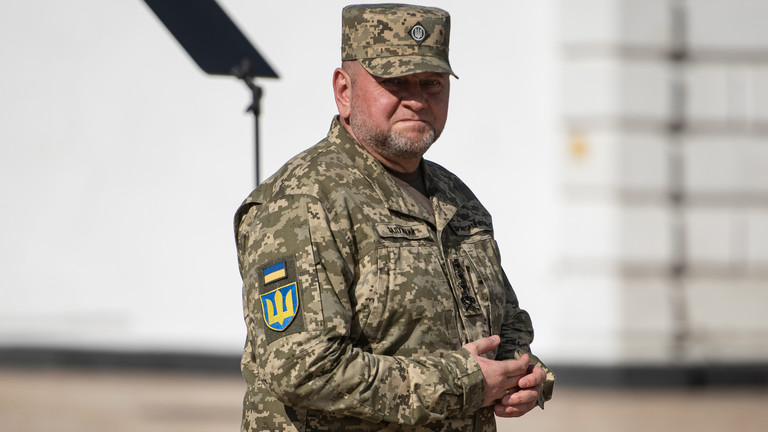
Valery Zaluzhny. © Alexey Furman/Getty Images
RT | July 23, 2024
The Western nations should “wake up” to the threat of a potential major conflict they are facing, Valery Zaluzhny, Ukraine’s former military commander-in-chief, told a British military conference on Monday. The governments should make sure their nations are ready to “mobilize” and sacrifice their liberties in the name of what he called “survival” if such a conflict does break out, said Zaluzhny, who in May became Kiev’s ambassador to London.
Readiness for a war “should be considered as a huge set of measures” that covers all fields of state activity, the former general told the Land Warfare Conference 2024 hosted by the Royal United Services Institute. “Modern wars… are total,” he said, adding that “they require efforts… of society as a whole.”
Waging a war means that a state has to use all its “resources,” including “economics, finance, population and allies,” Zaluzhny stated, in a speech that he published in full on social media. “Society must agree to temporarily give up a range of freedoms for the sake of survival.”
The ex-general also claimed that what he called “the war for freedom in one country” in an apparent reference to Kiev’s standoff against Moscow “should become the policy of survival” for other nations.
In his speech, Zaluzhny claimed that “the very existence of Russia is already a threat.” He also referred to Moscow as an “eternal enemy” engaged in “the primordial struggle” with Kiev.
The military commander-turned-envoy also stated that the ongoing conflict would determine the future of wars for decades to come and called it a “war of the transitional period” that would set new rules of warfare. He also repeatedly spoke about the growing role of technologies on the battlefield but did not mention any specific ones, except for unmanned systems.
According to Zaluzhny, Ukraine had “already invented a way to fight and win against stronger armies in the 21st century.” He still admitted that Kiev cannot “scale up” its supposedly innovative warfare solutions but its backers in the West “have resources but … no applied and practical field to test them.” The former general then called on the West to work “together” with Ukraine to “effectively use the resource.” A failure to do so would mean that “we will all die,” he claimed.
Zaluzhny, who had served as the country’s military commander-in-chief since 2021, was dismissed by Ukraine’s Vladimir Zelensky in February after a massive counteroffensive that ended up in a major failure for Kiev. Some media reported at that time that Zelensky also viewed the veteran general as a political rival. In May, Zaluzhny was relieved from active service and appointed an ambassador to the UK.
Hungary issues €6.5bn ultimatum to Ukraine
RT | July 23, 2024
Budapest will block funds the European Union has earmarked for Ukraine until Kiev resumes the transit of Russian crude oil to Hungary and Slovakia, Hungarian Foreign Minister Peter Szijjarto has said.
Ukraine stopped the flow of oil through the Druzhba pipeline last week, citing its sanctions against Russian energy giant Lukoil, thus depriving the two EU members of an estimated 30-40% of their needs.
“As long as this issue is not resolved by Ukraine, everyone should forget about the payment of the €6.5 billion of the European Peace Facility compensation for arms transfers,” Szijjarto announced on Tuesday.
“Ukraine’s decision to not allow Lukoil to transit oil supplies through Ukraine poses a fundamental threat to the security of energy supplies to Hungary and Slovakia,” Szijjarto said, describing Kiev’s move as “unacceptable and incomprehensible,” as well as incompatible with its aspirations to join the EU.
Szijjarto also reminded the EU foreign policy chief Josep Borrell that Hungary – along with Slovakia and Poland – came to Ukraine’s aid in early July, sending enough electricity to stabilize Kiev’s energy system. Hungary supplied 42% of Ukraine’s electricity in June, Szijjarto noted.
According to unconfirmed reports from Ukrainian local media, Ukraine stopped receiving electricity from Slovakia and Romania as of midnight on Tuesday.
Kiev has had to resort to imports after Russian air and missile strikes disabled most of its domestic generation capabilities. Moscow has described the strikes as reprisal for Ukrainian attacks on Russian civilian infrastructure.
Poland has already protested Hungary’s move, saying that it would deprive Warsaw of €2 billion it needs to modernize its armed forces. “This is a huge disappointment for me,” Polish Foreign Minister Radoslaw Sikorski has said.
Kiev’s official explanation for embargoing oil deliveries was that Lukoil revenue could be used to support the Russian military. One Ukrainian lawmaker, however, suggested to Politico that the blockade has a secondary purpose, to pressure Hungary into changing its policy on arming Kiev.
Hungarian Prime Minister Viktor Orban has long refused to send Ukraine any weapons, train any Ukrainian troops, or allow the use of Hungarian territory for EU or NATO arms shipments, insisting that Kiev should sue for peace with Moscow as soon as possible.
Is Hungary on the verge of an energy crisis? Ukraine’s blocking of Friendship oil pipeline represents major threat
By John Cody | Remix News | July 23, 2024
Hungary is facing a potential energy crisis over Ukraine’s continued blocking of the Friendship (Druzhba) oil pipeline, with Ukrainian President Volodymyr Zelensky turning up the pressure on Hungary like never before. Now, some members of the Hungarian government are openly speculating whether the move is not being pushed by Ukraine alone, but could be backed by “people in Brussels, or even the pro-war American Democrats.”
“They are punishing us for our support for peace, and now they are attacking our energy security. And it is quite possible that this was not initiated by Ukraine alone, but was helped by the people of Brussels, or even by the pro-war American Democrats. They want to destroy those who are pro-peace by all means. This is unfair, unacceptable and illegal. In any case, we will stand by our pro-peace position and defend ourselves against attacks in every possible way, with every possible means,” said Tamás Menczer, the communications director of Fidesz-KDNP, in a video post published on social media.
Currently, Hungary’s diplomats are scrambling to ensure the flow of oil resumes without interruption, but Budapest may find few in Brussels who are willing to press back against Zelensky, despite Hungary’s status as an EU and NATO member. Hungary is now pressuring the EU to take action against Ukraine, as Hungary relies on Russia for between 70 and 80 percent of its oil imports.
After Hungarian Foreign Minister Péter Szijjártó threatened court proceedings, Ukraine has responded that there has been no reduction in supplies, an outright lie as oil flows have been cut off for weeks.
Oleksiy Chernisov, the president of Naftogaz, Ukraine’s energy giant, stated at a business forum: “The tightening of sanctions against Lukoil in June did not affect the volume of oil transit through Ukraine.”
Ukraine’s foreign minister has also made similar claims.
“I spoke with the Ukrainian foreign minister yesterday, and he said they allow every oil transfer through, but it’s not true,” said Hungarian foreign affairs minister, Péter Szijjártó. “The commission has three days to execute our request, after which we will bring the issue to court.”
Also caught up in the energy crisis is neighboring Slovakia, which had its supplies cut as well. Russian Lukoil, which is now under sanctions from Ukraine, accounts for a third of Hungarian crude oil imports and about 45 percent of Slovakian crude oil imports.
The Hungarian government has taken a number of temporary measures to shore up its energy supply, but Szijjártó says these measures will not help in the medium term.
Last year, Szijjártó warned about plans leaked by the Washington Post detailing how the Ukrainian government had planned to blow up the Druzhba pipeline in the past, specifically to sink the Hungarian economy.
The West is Learning the Wrong Lessons about Airpower in Ukraine
By Brian Berletic – New Eastern Outlook – 23.07.2024
A recent article appearing in the US-based Business Insider titled, “Russia’s showing NATO its hand in the air war over Ukraine,” would provide a showcase of the deep deficit in military expertise driving increasingly unsustainable, unachievable foreign policy objectives. The article summarizes a number of interviews conducted with Western “airpower experts,” exhibiting a profound misunderstanding of modern military aviation, air defenses, and their role on and above the battlefield.
The article claims:
Russia botched the initial invasion by failing to establish air superiority from the start, and it has been unable to synchronize its air and ground forces.
This is based on the assumption that Russia could somehow establish air superiority over the battlefield and infers that had the United States and the rest of NATO been in Russia’s place, air superiority would have been established. But this is false.
Fundamental Misconceptions
At the onset of the Russian Special Military Operation (SMO) Ukraine possessed a formidable Soviet-made integrated air defense network consisting of some of the most successful and effective air defense systems in the world. This included long-range air defense systems like the S-300 as well as mobile systems like Buk, Strela, and Osa, as well as a large number of Soviet-made man-portable air defense systems (MANPADS).
The United States and its allies have not operated in airspace as contested as Ukraine’s since the Vietnam War. Over the skies of Vietnam the US would lose over 10,000 fixed-wing aircraft and helicopters to Soviet-made air defenses employed by Vietnam’s armed forces.
In subsequent conflicts, including Afghanistan, Iraq, and Libya, US-led forces would face either no significant air defenses at all, or air defenses consisting of old equipment operated by poorly organized, poorly trained, and poorly motivated troops, as was the case in Iraq.
Amid the US proxy war against Damascus and the US occupation of eastern Syria, US military aviation has been confined by Syria’s relatively modern air defense network, forcing both US and Israeli warplanes to conduct the same types of stand-off strikes Russian military aviation is conducting in Ukraine.
The article would claim:
Russia has demonstrated that it’s unable to suppress or destroy enemy air defenses, fly effective counterair missions, or run complex composite air operations like those the US Air Force pulled off in the opening days of Desert Storm in 1991 and then in the Iraq invasion in 2003.
Beyond the factually incorrect nature of this statement, the obvious differences between Iraq and Ukraine appear entirely lost among the “airpower experts” interviewed by Business Insider.
The Business Insider, citing these same “airpower experts,” also claims:
On the battlefield, effective airpower should aid the advance of armored combat vehicles and infantry by striking an enemy’s strongpoints, as well as the reinforcements and supplies they depend on.
Because of the vast differences between previous US conflicts around the globe and the ongoing conflict in Ukraine now, the type of rapid maneuver warfare utilized by US-led forces in Iraq would not only be inappropriate in Ukraine, it would be disastrous. The 2023 Ukrainian offensive before which NATO trained, armed, and directed Ukrainian forces, ended in catastrophic failure, comprehensively defeated by Russian defenses utilizing land mines, artillery, multiple-launch rocket systems (MLRS), long-range ballistic missiles, a wide variety of drones, and both infantry and attack helicopters utilizing anti-tank guided missiles (ATGMs) – all elements absent among the armed forces of the various nations the US has invaded and occupied since Vietnam.
Because Ukraine also possesses significant defense capabilities, including well-protected fortifications, minefields, artillery, and FPV (first-person-view) drones, NATO-style maneuver warfare would likewise result in catastrophic failure for Russian forces.
Russia has instead adopted a strategy of attrition. Instead of overwhelming Ukrainian positions with rapid maneuver warfare, it is grinding them down with huge amounts of artillery, MLRS, missiles, drones, and military aviation carrying out stand-off strikes using a variety of glide bombs ranging from 250 to 3,000 kilograms. While progress is slower than NATO-style maneuver warfare, it has allowed Russia to avoid the staggering losses Ukraine suffered last year during its offensive.
Ukraine is a different kind of war; thus Russia utilizes a different approach to military aviation.
The conclusion that events unfolding in Ukraine demonstrate the capabilities of Russian military aviation have been “significantly overstated,” as one expert interviewed by Business Insider put it, is a dangerous misconception. US-NATO military aviation would (and already has in Syria) demonstrated it suffers from the same limitations in airspace as contested as Ukraine’s.
Admitted Russian Advantages
Business Insider’s article concedes there are aspects of Russian military aviation that constitute success. It mentions Russia’s extensive use of stand-off weapons – both air-launched cruise missiles as well as glide bombs (just as the US and its allies are using in Syria to avoid Syrian air defenses). The article also acknowledges Russia’s significant air defense and electronic warfare capabilities, constructing an “umbrella” protecting Russian forces, infrastructure, bases, and civilian centers.
There is one significant difference, however, between Russian and Western stand-off capabilities. Russia’s military industrial base allows it to produce missiles and glide bombs in quantities the collective West cannot match. Russia’s air defense capabilities also exist on a scale the collective West is unable to replicate.
After first claiming Russia is, “unable to suppress or destroy enemy air defenses,” Business Insider eventually admits the depleted air defense arsenals of the collective West and the inability to replenish them in any meaningful manner precisely because Russia has been able to not only “suppress” and “destroy enemy air defenses,” but also because of Russia’s ability to saturate and deplete Ukraine’s supply of interceptor missiles.
Claims in the article that Lockheed Martin is expanding Patriot missile production to 550 a year are made without explaining that Russia is firing 4,000+ missiles at targets across Ukraine over the same period of time, meaning that 550, 650, or even 750 interceptors manufactured a year represent an entirely inadequate quantity.
And despite this fact, the article would even claim:
In Ukraine, the world has seen that Western air defenses can shoot down incoming drones and missiles when they have sufficient coverage and enough ammo, and the performance has quelled doubts about the Patriot.
This is doubtful.
The US and its allies transferred Western air defense systems to Ukraine, in part, to protect Ukraine’s power grid. In April 2024, CNN would admit that up to 80% of Ukraine’s non-nuclear power production has been destroyed. This means that Ukraine has either run out of Patriot missile interceptors, or the interceptors they have are failing to protect Ukraine’s power grid. It should be noted that the efficacy of an air defense system lies now only in its ability to intercept incoming targets, but also to be produced in large enough quantities to continue intercepting incoming targets.
The high cost of the Patriot missile system inhibits larger-scale production to meet the requirements of a large-scale and/or protracted conflict, meaning that despite its supposed performance in combat, it is still a fundamentally ineffective means of air defense.
Even before Russia’s SMO began in February 2022, the previous month Saudi Arabia’s Patriot systems had exhausted their supply of interceptors amid its ongoing conflict with neighboring Yemen. The United States’ inability to increase production forced Saudi Arabia to “borrow” missiles from neighboring nations.
The limited number of Patriot systems and interceptors being manufactured represent a metric of the system’s overall “success” and, despite the Business Insider’s conclusion, should continue to drive “doubts” regarding it.
NATO vs. Russia
The Business Insider article admits that in a conflict between NATO and Russia, NATO military aviation would face serious challenges that simply did not exist in Afghanistan, Iraq, Libya, and even Syria.
The article cites US Air Force (USAF) General David Allvin who noted, “in future fights, it may be possible for the US to achieve air superiority only in bursts — small windows in a specific time, place, and location where air defenses are missing, destroyed, or out of ammo.”
USAF General James Hecker would tell Business Insider, “if we can’t get air superiority, we’re going to be doing the fight that’s going on in Russia and Ukraine right now, and we know how many casualties that are coming out of that fight.”
Considering the advantages Russia also enjoys in land warfare capabilities, including the production of up to 3 times more artillery ammunition than the collective West, the outcome of that fight would likely mirror the same incremental defeat Ukraine itself is now suffering.
Western Failures in the Skies of Ukraine, a Microcosm of Wider, Irreversible Decline
The same blind pursuit of profits and power that compelled the collective West to expand NATO up to Russia’s border in the first place, and deliberately create a national security threat forcing Russia’s intervention in Ukraine, has also created the crisis facing the collective West’s military industrial base making it impossible to achieve the geopolitical objectives this proxy war in Ukraine is a part of.
In order for the collective West to “succeed,” it should first reevaluate what it is even trying to achieve.
This blind pursuit of profits and power is not unlike a tropism in nature – like a tree, for example – reaching downward with its roots and upward with its branches and leaves to grow as large and as fast as possible. In the ideal environment, such a tropism can thrive. In times of drought, the means of sustaining the vast proportions that the tree took could jeopardize its own very survival.
Until the 21st century, the global “environment” was ideal for Western hegemony. The disparity in military and economic power between the West and the rest of the world favored the blind pursuit of profits and power, often in the form of empire. The West grew to gargantuan proportions. Today, the environment has changed – this disparity no longer exists – and now the West is collapsing under the unsustainable size of its own overreach.
While Western policymakers search for game-changing strategies and technologies to maintain generations of global primacy, the unsustainable nature of this pursuit becomes more precarious all while Russia, China, and the rest of the world continue to grow stronger relative to the collective West. Only a policy of shifting away from coercion and control over the rest of the world, toward constructive cooperation with the rest of the world, can avert the inevitable collapse all other stubborn empires have faced throughout history.
For the rest of the world, including Russia and its Chinese allies, the goal continues to be defending their individual and collective sovereignty from Western hegemony while carefully avoiding the triggering of a much larger conflict borne of Western desperation.
In the meantime, in the airspace above Ukraine, a microcosm of the wider failure of Western foreign policy continues to play out, not only lacking any possibility of reversing in Ukraine or its Western sponsors’ favor, but almost certainly to continue accelerating to their detriment.
Featured Video

Thomas Fazi: NATO’s Hybrid Warfare – Deception & Permanent War
or go to
Aletho News Archives – Video-Images
Book Review
The Zeolite Book — First Edition, 2026, Paperback
The volcanic mineral medicine will not patent — for the toxic burden medicine will not name
Lies are Unbekoming – October 30, 2026
 Zeolite is old. It is in Roman concrete that has held for two thousand years. It’s in the water filters of ancient cisterns. It’s in the stomachs of Pacific livestock whose keepers knew, somehow, that this grey crumbling rock made the animals healthier. It’s in Soviet clinical protocols from the 1960s. It’s in the standard emergency response to the Chernobyl explosion.
In 1986, after the Chernobyl reactor failure, the Soviet Union manufactured and distributed natural zeolite at industrial scale — for soil remediation, for livestock feed, for human consumption, for the cleanup itself. Karl Hecht, who had been director of the Institute for Experimental and Clinical Pathophysiology at the Charité of Humboldt University Berlin, spent the six decades after that building the clinical research base — on silicon’s role in human health, on zeolite’s clinical safety, on its applications in ageing. In 2018, Pavelić and colleagues published a comprehensive clinical safety review of natural clinoptilolite in Frontiers in Pharmacology. In 2019, Mastinu analysed its binding affinities. In the Western medical literature, these works sit largely uncited.
What has not been treated at book length, until now, is how a volcanic mineral with six decades of Soviet clinical work behind it, two major peer-reviewed Western reviews, and ongoing clinical use across the former Eastern Bloc, remains almost entirely absent from Western medical practice — and what the toxic burden it’s meant to address actually is.
The Zeolite Book gathers the Soviet clinical record, the Western peer-reviewed studies, three contemporary practitioner voices, and three serious counterviews into one honest treatment. That’s why the book runs to seven appendices. 288 pages, four parts, three practitioner voices, three counterviews, seven appendices. The honest treatment is the argument.
Blog Roll
 Aletho News
- UAE security forces tortured, killed journalist for opposing Israel normalization: Report
- They Compared the Spice to the Drug. The Spice Won — Again. (Part 2)
- Thomas Fazi: NATO’s Hybrid Warfare – Deception & Permanent War
- Wrong, AP and NPR: Europe’s 50,000 Heat Deaths Are a Computer-Model Estimate, Not a Real Body Count
- Questioning Your Doctor Is Now Considered A Psychological Problem (Seriously)
- London tourism expo promotes Israeli agency linked to theft of Palestinian land
- Dockworkers launch global strike against Israeli and US military shipments
- Europe facing gas price shock – Gazprom chief
- Ukraine continues recruiting people with disabilities
- Weaponized Journalism: 2021 Sayer Ji Interview with NPR
- If Americans Knew
- An error has occurred; the feed is probably down. Try again later.
- No Tricks Zone
- Germany’s Green Energy Transition Becoming Increasingly Expensive…Another 6 Trillion Euros!
- Sudden Stratospheric Warming, Powerful El Niño Combination May Lead To Extreme Europe Cold, Energy Crisis!
- Two New Studies Find Thwaites Glacier Melt Cannot Be Driven By Human Activity Or A Warming Ocean
- E-Cars Reduce CO2 Emissions By Only 41% Compared To Internal Combustion Engine Vehicles
- Predictions Made By Renowned Climate Professor Over Past Decades Have Been Proven To Be Poor
- New Study Suggests Large Regions Of The Pacific Ocean Have Been Cooling For The Last 80 Years
- Germany’s Green Energy Debacle: High Energy Costs Force Kahla Porzellan to Close After 182 Years!
- New Study: 50 Years Of The Most Aggressive ‘Net Zero’ Policies Can Only Affect The Global Climate By 0.03°C
- US September “Heat” Was No Record…Many Records Set Decades Ago
- Latest European Green Energy Debacle; Portugal’s Largest Flagship Solar Park Insolvent!

