Ukraine Crisis Highlights Concerns About Whether OPCW Still Has Any Global Relevance, Observers Say
Samizdat | July 6, 2022
The executive council of the Organization for the Prohibition of Chemical Weapons (OPCW) kicked off its hundredth session at The Hague on Tuesday. Last month, the global watchdog assured that it was “monitoring the situation” in Ukraine closely as far as the potential use of chemical weapons is concerned.
The OPCW’s lack of a coherent, objective and fair-minded response to recent crises centered around Syria and Russia demonstrates its politicization and domination by Western interests, and the longer the watchdog stays out of Ukraine, the better, former diplomats, geopolitical observers, and international legal experts have told Sputnik.
“In Ukraine the OPCW has fortunately not been pressed into action. This, I suspect, is because the US is satisfied with the situation as it is, with no need for the US itself to be drawn in, as would no doubt be the case if a chemical attack was fabricated,” Peter Ford, Britain’s former ambassador to Syria, said.
The veteran diplomat, who warned the British government against the folly of the 2003 invasion of Iraq, and stressed that Western powers’ campaign to topple the Syrian government in the 2010s could open a “Pandora’s box” of endless crises, said the Syria case demonstrated clearly that the OPCW is no longer an independent, impartial agency.
“The Syria crisis proved without a shadow of a doubt that the Western powers have bent the OPCW to their own will, destroying in the process the organization’s credibility, probably irretrievably. This is a tragedy for world peace,” Ford stressed, referring to documented OPCW efforts to censor and smear agency whistleblowers who revealed that the watchdog’s report on the April 2018 chemical attack in Douma, Syria was doctored to implicate the Assad government.
In Ukraine, Ford fears, the international community can now only depend on “self-interested restraint on the part of the Pentagon in controlling its proxies rather than the deterrent power of a genuinely impartial international watchdog.”
Chemical Weapons Danger in Ukraine
Since the escalation of the crisis in Ukraine in February, Russia has sent the OPCW and its technical secretariat over two dozen notes warning of possible staged provocations by Ukrainian forces or radical nationalists involving chemical weapons. Last month, the agency assured the international community that it was “closely monitoring the situation in Ukraine” for chemical weapons use.
On Wednesday, Russian military indicated that it had information on plans by Kiev to stage a provocation in the Donetsk People’s Republic using chlorine gas to accuse Moscow on indiscriminate attacks targeting chemically hazardous objects.
Alessandro Bruno, a Toronto-based geopolitical analyst and political observer at Lombardi Letter, says that while the OPCW’s official mission and goals are “certainly worth pursuing,” the problem is the watchdog’s control by Western interests seeking to obfuscate the truth and objectivity in favor of politicized objectives.
“They seem to have targeted only specific sides in specific wars to suit specific aims, which typically are those of Western powers. There have been many efforts to manipulate these organizations by the dominant powers, particularly in the West,” Bruno said.
The scholar recalled instances of claims by the US and its allies about Russia’s use of chemical weapons, from the allegation that Russia poisoned pro-Western Ukrainian presidential candidate Viktor Yushchenko in the mid-2000s, to the 2018 Novichok scandal in Britain, which “many thoughtful journalists have debunked,” to the Alexei Navalny “poisoning” saga of 2020, which doctors treating the opposition vlogger have debunked.
“Yet the accusations of chemical weapons that Russia used have persisted, even though they defied all logic. That’s the biggest issue with these organizations. They must be more neutral. Their headquarters must be in more neutral locations, because the fact that many of these organizations operate from Western capitals makes them more prone to Western media misinformation,” Bruno said.
The geopolitical analyst still fears that the West could use the pretext of ‘Russian chemical weapons use’ in Ukraine “to get more directly involved into the conflict and potentially trigger a much wider physical war.”
“So far, I think, some of the powers came to understand that making an accusation like that in this conflict would be riskier than the accusations they made in Syria and Iraq, Navalny and Yushchenko and so on, that this would have much bigger implications, that this would blow back against the West,” Bruno stressed.
Tool of US Interests
Christopher C. Black, an international criminal and human rights lawyer with 20 years of experience covering war crimes and international relations, echoed Bruno’s sentiments about the OPCW’s noble stated aims and their stark contrast with the body’s actual history, which “shows that [the watchdog] acts to serve the interests of the United States and its NATO and other allies.”
“We saw strong evidence of this when the USA tried to get rid of the Director General Jose Bustani of Brazil in 2002, when the United States was preparing its invasion of Iraq and John Bolton went to The Hague and threatened his family if he did not resign,” Black recalled, pointing to Bustani’s 2018 interview with The Intercept in which the former OPCW chief detailed the threats made against his children living in the United States.
“In August 2020, it was revealed through leaks from Austrian government sources that the OPCW and British claims that Novichok had been found in the blood of the Skripals allegedly poisoned in the UK were false, that in fact no such agent had been found in their blood at all. But the findings were suppressed and a false report issued to back the UK claims,” the lawyer added. “Similar results were seen regarding the alleged poisoning of Mr. Navalny. We can quickly understand what goes on behind the scenes at the OPCW,” Black said.
Black finds it unlikely that the chemical weapons watchdog will change “without a change in the balance of power in the world,” which is taking place, but whose effects on international organizations will be slow to appear.
In Ukraine, the lawyer fears, “We cannot expect any objective consideration of Kiev regime or NATO claims of Russia using chemical weapons in Ukraine for the reasons stated above, despite the fact that Russia has not used them, does not use them and will not use them. To the contrary we have a situation in which Kiev and NATO forces keep making false claims while themselves preparing chemical weapons attacks to be staged as false flag attacks to be blamed on Russia and when Russia asks the OPCW to investigate this, Russia is met with silence,” he said.
How OPCW Can Regain Credibility
Dr. Alfred De Zayas, a lawyer, writer and former independent expert on international order with the United Nations, similarly doubts the OPCW’s ability to reform in its current itteration, saying the agency “has long been instrumentalized to pursue the geopolitical interests of Western powers.”
The international legal expert is confident that agencies like the OPCW, the International Criminal Court and the Human Rights Council can regain their credibility by demonstrating impartiality. “This is possible if the BRICS countries become more vocal and more visible on the international scene. There is no reason why African, Asian and Latin American countries should dance to the tune of the ‘Washington consensus’,” De Zayas stressed.
In Ukraine, the OPCW’s assurance about “monitoring the situation” carries only a “purely propagandistic value,” and is “intended to charge and convict Russia even before there is any evidence of violations of the Chemical Weapons Convention,” the observer believes.
“If the OPCW investigates not only potential Russian war crimes, but also expands its investigation to potential chemical weapons violations and war crimes by Ukrainian forces and by foreign mercenaries, including US, UK, French, Georgian and others, then the OPCW might regain some credibility. That, however, would be ‘out of character’. It is not unlike the ICC, which in the eyes of many observers in the US, Canada, UK, France, Germany, Switzerland – has lost its little credibility and will have no authority unless and until it indicts Western politicians and bureaucrats including Tony Blair, George W. Bush, Paul Wolfowitz, Victoria Nuland, Barack Obama (the king of the drones), Donald Trump, Nikolas Sarkozy, etc.,” De Zayas concluded.
Russia responds to reports Turkey detained its ship
Samizdat | July 6, 2022
Moscow has denied reports of Turkish customs seizing or arresting a Russian dry-cargo ship carrying grain near Karasu Port, as Ukrainian officials have claimed.
During a briefing on Wednesday, the deputy director of the Information and Press Department of the Russian Foreign Ministry, Aleksey Zaitsev, stated that the vessel, the Zhibek Zholy, was merely going through all the standard procedures before entering a port.
“According to Russia’s embassy in Turkey, the ship is currently in the roadstead of the port of Karasu and is undergoing standard procedures, including sanitary control,” Zaitsev stated. He further explained that based on the results of these inspections, the Turkish authorities will make a decision on whether or not to let the ship enter the port. Zaitsev noted that no matter the decision, there is absolutely no talk about detention or arrest of the vessel.
The ship’s crew members have also denied being arrested or detained by Turkish officials. Speaking to TASS on Tuesday, one member stated that none of the standard detention procedures have been carried out against the vessel, adding that it is at anchor due to bad weather.
“During a detention procedure, the ship is usually brought into the port under guard, meaning that it should specifically be done under the jurisdiction of Turkey’s guards if something really did happen. No arrest was made. The ship is simply at anchor due to weather conditions. A surveyor arrived on the ship, checked the cargo. This always happens,” the crew member explained.
Ukraine’s ambassador to Turkey, Vasily Bodnar, claimed on July 3 that Turkish customs, at the behest of Kiev, had arrested a Russian cargo ship allegedly carrying “stolen” Ukrainian grain.
According to Reuters, which cited unnamed Ukrainian officials, the Zhibek Zholy, which was traveling to the Turkish port of Karasu from the Russian-held Azov Sea port of Berdiansk, was allegedly loaded with around 4,500 tons of grain.
The outlet also reported that the Ukrainian Prosecutor General’s Office had previously sent a letter to Turkey’s Justice Ministry in late June insisting that the Zkibek Zholy had been involved in the “illegal export of Ukrainian grain,” and allegedly had 7,000 tons of cargo on board. Ukraine reportedly asked Turkey to inspect the vessel and seize samples of grain for forensic examination to determine its origin.
Neither Turkish customs officials nor the authorities in Ankara have given any official comments on the situation regarding the ship so far.
Grain exports by sea from Ukraine, a major producer, were undermined by the ongoing conflict in the country. Kiev has previously accused Russia of “stealing” its grain – which Moscow has denied.
Western nations have accused Russia of blocking the ports. Moscow has repeatedly stated it would guarantee safe passage for the grain shipments if Kiev clears its ports of mines. Ukraine has accused Russian forces of mining the Black Sea ports. Russia suggested exporting the grain through the Russian-controlled ports of Berdiansk and Mariupol.
Ukraine suffers appropriation of Western humanitarian and military aid
Samizdat | July 6, 2022
Ukraine’s Financial Investigations Service says it has uncovered numerous cases where humanitarian and even military aid provided by the West has been appropriated and sold at a profit inside the country.
Appearing on the TV news channel Ukraina 24 on Tuesday, the head of the investigative body, Vadim Melnik, lamented that “even goods destined for the military are being realized for money,” adding that his subordinates had “ascertained such facts.”
The official went on to reveal that the service had launched around ten criminal probes in connection with the sale of humanitarian or military aid.
According to Melnik, the true number of such cases is likely higher, as other Ukrainian law enforcement branches are also uncovering such crimes.
“We need to set clear control algorithms of both arrival, distribution as well as the use of aid, which our international partners are giving us today,” the head of the Financial Investigations Service argued.
Previously, Ukraine’s Prosecutor General’s office had reported multiple cases of misuse of Western humanitarian and military aid.
Last month, RT spoke with an American volunteer, Andy Huynh, who had fought for Ukraine before surrendering to Russian forces.
He claimed, among other things, that the “commanders were very corrupt and troops were very ill-prepared and supplied” in the ‘International Legion’ he had served in.
Another US volunteer told journalists back in May that corruption was rampant in units made up of foreign fighters, “with basic equipment going missing.”
“There’ll be weapons with no ammo, or no body armor or medical kit,” he explained.
Brazilian mercenaries die in Ukraine

By Lucas Leiroz | July 6, 2022
Two Brazilians were killed in Ukraine in the first week of July after a Russian drone operation in Kharkiv. In all, three Brazilian mercenaries have died in Ukraine since the beginning of the Russian special military operation on February 24th. In the South American country, the mainstrem media has a strong pro-Western ideological orientation, which is why it encourages “volunteers” to go to Eastern Europe. In their speech, the media outlets claim that it is “easy” to fight against Russians because Kiev is supposedly “winning” the conflict. However, upon arriving in Ukraine, the foreign mercenaries are faced with a different and much harsher reality.
 Between the night of July 1 and the morning of July 2 Brazilian mercenaries Douglas Rodrigues Búrigo and Thalita do Valle died after a Russian attack in Khakiv. Douglas was a former soldier of the Brazilian Army and had been fighting in Ukraine since May. Thalita was a model, lawyer, and professional sniper, who had previously worked as a military volunteer and propaganda agent for the Kurdish women’s battalions in the Middle East. Apparently, she died of asphyxiation while trying to flee her accommodation in the face of a drone attack, while Douglas was reportedly hit by shrapnel from mortar shells on the outside.
In June, another Brazilian had already died in Ukraine. André Hack Bahi was fatally shot during Russian bombing raids in Severodonetsk. Bahi was a former fighter in the French Legion and had already participated in some missions in Africa, but he was not able to survive the intense reality of the fighting in Ukraine. It is also necessary to mention that not all the dead have been properly identified yet, which leads one to believe that there may be more Brazilians among the dead in Ukraine, since there is ample participation of mercenaries from the South American country in the region.
There is still no official report by the authorities indicating the precise number of Brazilian citizens who are fighting for Kiev’s side in the conflict, but the number is certainly greater than what was expected from a neutral country with good relations with Russia. Even Brazilian parliamentarians fought in favor of Kiev, such as former deputy Artur do Val, who had a quick and scandalous performance in Ukraine, where he committed acts of sexual harassment against Ukrainian women. It is also known that over the last eight years several Brazilians have tried to join the Ukrainian neo-Nazi paramilitary troops to fight in Donbass, having been rejected due to the anti-Latin racism of these groups. Now these same militants are finding their way into the Ukrainian positions due to Kiev’s policy of accepting all foreign volunteers.
But it is absolutely impossible to analyze the situation without criticizing the destabilizing role that the Brazilian local media has played in its coverage of the events in Ukraine. Pro-Western media outlets report the conflict fallaciously, pointing to a non-existent “Ukrainian victory” and “ease” in fighting Moscow’s forces, portraying voluntary combat as a kind of “hunting safari” against Russians. Obviously, when the “volunteers” (almost all of them being paid private soldiers linked to mercenary companies) arrive on the battlefield, they are faced with situations very different from those reported by the journalists who encourage volunteering.
Agencies also have tried to publicize an image of “heroism” when talking about Brazilians fighting in Ukraine, ignoring important issues, such as the fact that they are cooperating with neo-Nazi militants and supporting a government that practices genocidal policies against the Russian population. Since the beginning of the Russian operation, Brazilian media agencies and Brazilian branches of foreign agencies have praised the “heroism” of the mercenaries who would be “helping to fight the invasion”, which also serves as propaganda and incentive for volunteering.
Brazilian media is not acting alone, but following the agenda imposed by the great world media agencies, which have increasingly bet on the narrative of “Ukrainian victory” as a way to raise the morale of the troops and justify the irresponsible military aid that the Western countries are sending to Kiev.
Private security companies hired to help Kiev are the ones that profit most from the propagation of this fallacious narrative among the public opinion, as they manage to convince an increasing number of volunteers to go and fight in Ukraine. In fact, some of these volunteers are not designated for direct combat but remain in safe places taking photos and videos to publish on the internet, reproducing propaganda to encourage more men to go – always trying to convince that combats are “easy” and “safe”, so that more people enlist in the mercenary companies. The result is that of the deluded enlisted men only a few are directed to propaganda, while others die on the battlefield.
Obviously, for Western countries and for private companies, investing in this type of propaganda is strategic and profitable, but not for Brazil. As a member of the BRICS, not participating in anti-Russia sanctions and being Moscow’s partner in several areas, the Brazilian government should act more incisively to monitor the destabilizing role that its media agencies are playing, seeking to prevent foreign narratives from taking Brazilians to die on the battlefield. Furthermore, it is not at all beneficial to Brasilia’s international image that the country is known for having a large number of citizens volunteering to fight alongside neo-Nazi battalions.
It is important to remember that mercenaries and “volunteers are not considered prisoners of war, but common criminals, which means that Brazilian citizens can be tried by courts in the liberated parts of Ukraine if they are captured. This type of situation will certainly generate diplomatic discomfort and, as Brazil and Russia are members of the BRICS, this is not a favorable condition for either side.
The best thing for the Brazilian government to do is to ban its citizens from volunteering in wars that do not concern the national interest of Brazil.
Lucas Leiroz is a researcher in Social Sciences at the Rural Federal University of Rio de Janeiro; geopolitical consultant.
Russia says it destroyed US HIMARS rocket launchers dubbed ‘powerful tools’ by Kiev
Samizdat | July 6, 2022
Russian forces destroyed two US-made rocket launchers in Donbass, the defense ministry said on Wednesday.
The US provided Kiev with eight High Mobility Artillery Rocket Systems (HIMARS) and ammunition since the beginning of the Russian military offensive in Ukraine, according to a Pentagon fact sheet published on Tuesday.
“In the area of the settlement of Malotaranovka in the Donetsk People’s Republic, high-precision air-launched missiles destroyed two US-made HIMARS multiple launch rocket systems and two ammunition depots for them,” the Russian military said in a statement.
At the end of June, the Lugansk People’s Republic (LPR) said that an М142 HIMARS had been used by Ukrainian forces in Donbass, the first time that local authorities reported the US-supplied systems had been used in combat.
Prior to that, the chief of Ukraine’s General Staff, Valery Zaluzhny, posted a video, purporting to show pro-Kiev forces operating the long-range rocket system.
On June 23, Ukrainian Defense Minister Alexey Reznikov welcomed the arrival of HIMARS and expressed gratitude to his “American colleague and friend Lloyd Austin (the Pentagon chief) for these powerful tools.”
“Summer will be hot for Russian occupiers. And the last one for some of them,” he wrote on Twitter.
Russia has constantly warned the US and its allies against providing Ukraine with weapons saying that it would only lead to the prolongation of the conflict and the creation of long-term problems.
Russian Defense Minister Sergey Shoigu said on Tuesday that some of the foreign weapons intended for Ukraine were spreading throughout the Middle East and are turning up on the black market.
Russia says Ukraine ‘tortured’ captured soldiers
Press TV – July 5, 2022
Russia says its soldiers recently released as part of a prisoner swap with Ukraine were “beaten” and “tortured with electricity in captivity.”
The Russian Investigative Committee, which probes major crimes, said in a statement on Tuesday that it was “verifying facts of inhuman treatment of Russia soldier prisoners in Ukraine.”
Moscow and Kiev exchanged 144 prisoners of war each last week.
The investigative committee said the freed Russian soldiers had told investigators about “the violence they had suffered.”
One of the soldiers, according to the Russian statement, said Ukrainian medics had treated him without applying anesthetics and that he was “beaten, tortured with electricity in captivity.” He said he was left without food and water for days.
Another Russian soldier said he was badly beaten and had his wound irritated by Ukrainian medics.
The Russian committee said the testimonies of the freed soldiers were examples of “violations of the Geneva Convention on prisoners of war.”
NATO boss lets the cat out of the bag: US-led bloc has ‘been preparing since 2014’ for proxy conflict with Russia
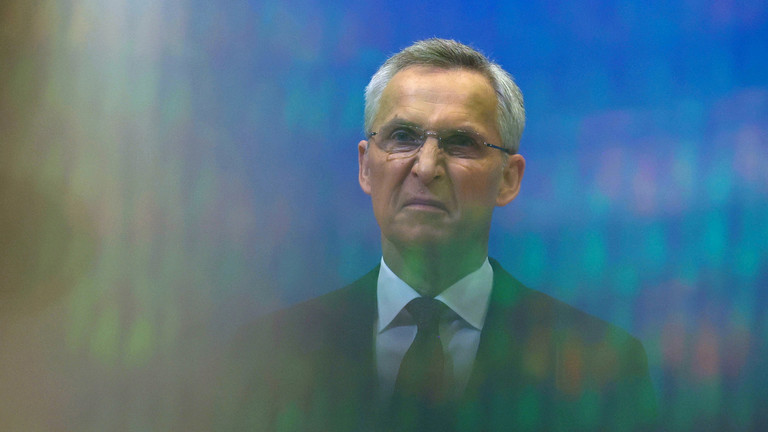
NATO Secretary General Jens Stoltenberg listens to questions during a media conference at NATO headquarters in Brussels on June 15, 2022. © AP Photo/Olivier Matthys
By Robert Bridge | Samizdat | July 3, 2022
NATO Secretary General Jens Stoltenberg may have said the quiet part out loud on Wednesday when he revealed to reporters that NATO’s push into Eastern Europe since 2014 was done specifically with Russia in mind.
“The reality is also that we have been preparing for this since 2014,” he said. “That is the reason that we have increased our presence in the eastern part of the alliance, why NATO allies have started to invest more in defense, and why we have increased [our] readiness.”
The NATO chief went on to insist that Russia has been “using force in the eastern Donbass since 2014.”
What he neglected to mention, though, was the role Western powers played in the outbreak of civil violence in Kiev on February 24, 2013 that led to the Maidan coup and, ultimately, to the current situation. The US and its influence on the ground in Ukraine, channelled through “civil society” groups it bankrolled, was largely responsibile for that mess.
Even Victoria ‘F**k the EU’ Nuland (then-US assistant secretary of state for European and Eurasian affairs) admitted as much in April 2014 when she said Washington had invested $5 billion dollars into “spreading democracy” in Ukraine – apparently because such efforts worked so well before.
Russia’s greatest ‘crime’ at the time was to provide an alternative route to national development for Kiev. The US Diplomatic Forces flew into swift action on November 21, 2013 when the government of then-Ukrainian president Viktor Yanukovych made the sudden decision not to sign the European Union-Ukraine Association Agreement (AA), which the West had been insisting upon, opting for closer ties to Russia and the Eurasian Economic Union. Here is where all the talk about “building democracy” was exposed as the lie it was.
“It would be a huge shame to see five years of work and preparation go to waste if the AA is not signed in the near future,” Nuland said at the December 13, 2013 US-Ukraine Foundation conference. “So it is time to finish the job.”
That sounds more like an implicit threat than any sort of call to democratic principles. As Ukraine would soon discover, Washington considers as ‘democratic’ only those countries that obey its will.
While Nuland was taking multiple trips to Kiev in the midst of the Maidan melee, passing out snacks alongside John McCain and the US Ambassador, very strange things were happening that have never been adequately explained.
To this day no definite result has come from investigations into the infamous ‘Maidan snipers’ that killed dozens of both protesters and police officers. Conflicting reports and claims by various sides name them as working for the embattled government, the protesters, Russia – all in the name of stoking tensions further. According to some of the snipers themselves, they received direct orders from a US officer. Would that be something that NATO (or someone linked to NATO) could have sanctioned? It’s impossible to say with any certainty, but the killings went far towards enraging the masses, which ultimately drove Yanukovych out of the country.
Meanwhile, Reuters, then not yet so sure of Kiev’s innocence, asked (back in 2014) why no one was charged with killing policemen, especially when it is considered that the prosecutors and the minister in charge of the investigation all played a part in fueling the uprising. By way of evidence, the General Prosecutor of Ukraine Vitaly Yarema was videotaped striking a traffic cop in the face during the protests. To what degree was Yarema and numerous other Kiev officials were corrupted and compromised by Western money will never be known, but it’s a question still worthy of asking.
Another thing to question is why the Western media barely reported Kiev’s shelling of the Donbass, home to millions of Russian speakers and passport holders, over the course of the last eight years? At the same time, numerous reports – many of them from Ukrainian citizens caught up in the fighting – describe atrocities and war crimes being committed by Ukrainian forces, many of them outright neo-Nazis, such the Azov Battalion. These forces have been indiscriminately bombing schools, hospitals and residential areas, and, to emphasize, these eyewitness accounts are coming from the Ukrainian people themselves.
Back to NATO and Ukraine. The brutal reality, as summed up by Jens Stoltenberg’s remark, is that Ukraine is already a de facto proxy member of NATO, and has been since at least 2014.
As the scholar John Mearsheimer explained, “The alliance began training the Ukrainian military in 2014, averaging 10,000 trained troops annually over the next eight years.”
The arming of Ukraine happened regardless of who was in the White House. In December 2017, the Trump administration, together with other NATO states, began sending ‘defensive’ weapons to Ukraine, while Kiev took a major role in military exercises held on the Russian border.
The US and Ukraine have been co-hosting Exercise Sea Breeze, yearly naval drills in the Black Sea. The July 2021 iteration was the largest to date, including navies from 32 countries. In September the same year, the Ukrainian army led ‘Rapid Trident 2021’, which the US Army describes as “A US Army Europe and Africa-assisted annual exercise designed to enhance the interoperability among allied and partner nations.”
The key word here is “interoperability,” which would give ‘non-NATO partner’ Ukraine much of what was already being given to regular paying client states. Yet Ukrainian President Volodymyr Zelensky just keeps asking for more, and NATO is happy to oblige.
Some may argue that Ukraine was absolutely right to join forces with NATO, considering that Russia had ‘annexed’ the Crimean Republic and absorbed it into its ‘empire’. That’s the view being sowed across NATO and its partner states. In reality, the Crimean population held a democratic referendum that asked whether they wanted to rejoin Russia as a federal subject, or if they wanted to restore the 1992 Crimean constitution and peninsula’s status as a part of Ukraine.
The result should have silenced the critics, but instead it just infuriated them more: a 97% vote for integration of the region into the Russian Federation with an 83% voter turnout. Consequently, President Putin signed a decree, after its formal ratification in the State Duma, recognizing Crimea as a sovereign state –without so much as a drop of blood being shed.
It would take a dyed-in-the-wool Russophobe to take in all of the above and not, at the very least, understand why Russia launched its special military operation in Ukraine.
Lugansk fully liberated – Russian defense minister
Samizdat | July 3, 2022
The last remnants of Ukrainian forces have been driven out of the Lugansk People’s Republic (LPR), Russian Defense Minister Sergey Shoigu announced on Sunday. He reported the news to President Vladimir Putin, the Defense Ministry said in a statement.
Shoigu said Russian troops and Donbass forces had completely seized Lisichansk, the last major city which had remained under Ukrainian control since 2014, when the LPR declared its independence shortly after a coup in Kiev.
Russia and Ukraine reported heavy fighting around Lisichansk earlier this week, with the most fierce combat occurring at the city’s oil refinery.
News of the capture of Lisichansk comes after Ukrainian troops retreated from Severodonetsk, a nearby city on the opposite side of the Seversky Donets River, last week. The fighting for Severodonetsk had lasted for several months.
Russia sent troops into Ukraine on February 24, citing Kiev’s failure to implement the Minsk agreements, designed to give the regions of Donetsk and Lugansk special status within the Ukrainian state. The protocols, brokered by Germany and France, were first signed in 2014. Former Ukrainian President Petro Poroshenko has since admitted that Kiev’s main goal was to use the ceasefire to buy time and “create powerful armed forces.”
In February 2022, the Kremlin recognized the Donbass republics as independent states and demanded that Ukraine officially declare itself a neutral country that will never join any Western military bloc. Kiev insists the Russian offensive was completely unprovoked.
Turkey detains Russian-flagged vessel carrying grain – media
Samizdat | July 3, 2022
Turkey has seized a Russian-flagged cargo ship after Kiev claimed it was involved in “illegal” transport of Ukrainian grain, Reuters reported on Sunday, citing the Ukrainian Ambassador to Turkey, Vasily Bodnar.
“We have full co-operation. The ship is currently standing at the entrance to the port, it has been detained by the customs authorities of Turkey,” Vasily Bodnar told Ukrainian national television. According to the ambassador, investigators will decide on the vessel’s fate on Monday.
The move comes two days after Ukrainian diplomats called on the Turkish authorities to detain the vessel, the Zhibek Zholy, arguing that it was transporting “stolen” Ukrainian agricultural produce.
The ship departed from the Azov Sea port of Berdyansk, located not far from the city of Mariupol – which is controlled by Russian forces and Donbass militias – and arrived at the Turkish port of Karasu, Bodnar wrote in a series of Twitter posts on Friday, asking Turkey to “take relevant measures.”
The diplomat also said that the mission had “good communication and close cooperation” with the Turkish side on the matter, and he was sure the “agreed decisions” would “prevent attempts to violate the sovereignty of Ukraine.”
The ship allegedly loaded around 4,500 tons of grain in Berdyansk, Reuters reported, citing an unnamed Ukrainian official. The news agency also noted that the Ukrainian Prosecutor General’s Office sent a letter to Turkey’s Justice Ministry in late June, claiming the vessel had been involved in the “illegal export of Ukrainian grain.”
According to the letter, the vessel had 7,000 tons of cargo on board.
Ukraine then asked Turkey to “conduct an inspection of this sea vessel, seize samples of grain for forensic examination” to determine its origin, and expressed its readiness to launch a joint investigation with the Turkish authorities.
The Kazakhstan-based KTZ Express company, which owns the Zhibek Zholy, told Reuters that the ship was leased to a Russian firm called Green Line, which is not subject to any sanctions.
Russian authorities have not yet commented on the development.
Ukraine, a major grain producer, is unable to export its grain by sea due to the ongoing conflict in the country, with an estimated 22-25 million tons of grain currently stuck in the country’s ports. Kiev has previously accused Russia of “stealing” its grain – something Moscow has denied.
The Western nations have blamed Russia for blocking the ports. Moscow has repeatedly stated it would guarantee safe passage for the grain shipments if Kiev clears its ports of mines. Ukraine, in turn, has accused the Russian forces of mining the Black Sea ports. Russia suggested exporting the grain through the Russian-controlled ports of Berdyansk and Mariupol.
US Military Aid to Ukraine Will Only End With ‘Real Political Revolution’ in America, Analyst Warns
Samizdat – 03.07.2022
Since the start of the Russian special military operation in Ukraine, the US has supplied Kiev with unprecedented amounts of aid, chief among them being military. Moscow has repeatedly stated that this will only prolong and aggravate the conflict, which, however, has not affected the ever-increasing scale of support for Ukrainian authorities.
This Friday, Washington unveiled yet another $820 million package of security support for Ukraine, which includes two cutting-edge surface-to-air missile systems and four additional counter-artillery radars.
The Biden administration indicated the new package included extra ammo for High Mobility Artillery Rocket Systems (HIMARS) that were already given to Ukraine, noting US authorities almost weekly coordinate more and more new deliveries of arms and finances to Kiev counterparts amid pledges to give even more.
All this takes place against the backdrop of unprecedented in recent decades domestic inflation and an economic crisis that threatens to plounge the US into a recession comparable to the “Great Recession” of 2008.
Despite all that, US President Joe Biden said earlier this week that Washington plans to support Ukraine for as long as necessary, thus refuting allegations that some day the time would come when the well will dry up.
‘No Escape’ While Situation ‘Going to Get Worse’
US investigative journalist Daniel Lazare told Sputnik that in the current global situation the biggest problem for Washington is that it “is colliding head-on with reality.”
“The Ukraine war is not going well, Russia is advancing steadily, and few more arms shipments are not going to make much of a difference,” he explained. “The economy is in serious trouble, the sanctions that were supposed to bring Russia to its knees are backfiring spectacularly, while [US Treasury Secretary] Janet Yellen’s scheme for putting a cap on Russian oil prices is being met with worldwide derision.”
According to the pundit, the whole foreign policy of the US “seems to be heading for another crisis,” which prompted the journalist to ponder whether that really is “par for the course.”
“If confidence is plummeting, it’s because no one thinks the Biden administration is the least bit competent,” he said of the Biden administration’s recent poll numbers. “Yet all the alternatives are so much worse. Pretty grim, isn’t it?”
Per Lazare, there is “no escape” out of the situation the US is currently in, and all Biden can do is smile uneasily while UK Prime Minister Boris Johnson jokes about showing off his pecs.
“Things are only going to get worse,” he asserted.
‘This Will Only End When There Is Real Political Revolution in US’
Meanwhile, American geopolitical analyst Tom Luongo remarked that the ongoing conflict in the eastern European nation is nothing more than a “war between civilizations,” in US neoconservatives’ efforts to “forestall Russia taking control of Ukraine.”
Touching on Washington officials’ motives behind the ever-increasing aid to Kiev, Luongo told Sputnik that the American president, “as a proxy for the oligarchs in Davos, is acting on their behalf to ultimately weaken the US by sending weapons overseas and destroying US leadership and credibility.”
“This will only end when there is a real political revolution in the US,” he argued.
Asked about why the Biden administration is concentrated so much on the crisis abroad rather than resolving issues at home, the analyst asserted that the president was “put in charge to destroy the US.”
“Biden and his administration are vandals,” he claimed. “They are not acting in the US’s best interests but have subordinated our public policy to the wishes of foreign powers.”
According to Luongo, “too many conservatives want to align the DNC with China, but it’s clear that while China is helping erode the political cohesiveness of the US it is Davos and their Climate Change/technocracy agenda that is pulling all the strings.”
The expert offered that the incumbent administration is not interested in mitigating, for instance, the ongoing energy sector crisis, because it “is being run by traitors.”
More to that, Luongo believes the US economy cannot afford to sponsor Washington’s ambitions for a long period of time. The analyst argued there is sincere and well-organized pushback coming from “the most unlikely place,” which is some of the US biggest banks and the Federal Reserve, which is “aggressively tightening monetary policy to drain the world of dollars and break both the offshore euro, dollar markets and put China’s financial partners, namely Hong Kong, under sincere pressure.”
“If the Fed doesn’t do this now, the odds of a political disintegration of the US by the end of the decade rise dramatically,” the expert suggested.
Speculating about where the United States has again found huge funds to aid Ukraine this week, and how the budget is going to cover the next multi-million spending, he said that for 2022, the money used had already been allocated. However, according to Luongo, Congress eventually will have to sell debt into the market, either for domestic or foreign purchase, or for monetization by the Fed.
“The Fed is raising rates to stop the money spigot in DC by forcing Congress to act more responsibly,” Luongo explained. “Think of these spending allocations and pledges, like the $600 billion for global infrastructure to thwart China’s Belt and Road Initiative as attempts at blackmailing a reluctant Fed to monetize debt the world no longer wants to buy.”
The analyst also weighed in on the recent statement by the Federal Reserve Bank of Atlanta, which forecasted that the second quarter would see a 1% decline in the US GDP, a move that would in turn mark the beginning of recession.
Asked what were the chances of a “large-scale economic collapse” in this course of action, Luongo noted there is a significant difference between the recession and the latter. He emphasized the Fed should continue its current effort in order to compel resolution to numerous unresolved geopolitical challenges and imbalances.
“If it’s going to ‘act globally’ this is how it should do so, by taking away the punchbowl of offshore USD-based credit, Eurodollars, and regain control over its own monetary policy,” he pointed out.
According to Luongo, to balance the books from the last inflationary boom, one must pay a price that may include a severe recession and economic disruption in the US economy for “a year or two.”
“I think the worst of those effects on the US economy will be blunted by the complete collapse of the European economy and sovereign debt markets,” the expert concluded.
“However, it won’t last forever, two maybe three years, but it will be enough time to effect real political change. We’ll know at this year’s midterm elections what the American people really think about these things.”
Let Drivers Pay Price for World Domination, Says Biden
Meanwhile, just this Thursday, Biden told reporters that those behind the wheel in the US will be compelled to pay current record fuel prices for “as long as necessary.”
“As long as it takes so Russia cannot in fact defeat Ukraine and go beyond Ukraine,” Biden said. “This is a critical position for the world.”
A CNN report this week detailed that the US Department of Defense is considering 1,300 ideas from 800 companies to create new weaponry and commercial capabilities they might be able to produce to aid Ukraine in the near future.
The suggestions reportedly address several of the crucial needs that Ukraine has highlighted, including air defense, anti-armor, anti-tank, anti-personnel, coastal defense, drones, secure communications and counter battery.
Additionally, should the ongoing crisis last a long period, the US reportedly plans to increase the capability of its industrial base to serve Ukraine’s demands.
Ever since the conflict began in late February, the US has provided Kiev with over $54 billion in financial and military aid, including $40 billion package for aid to Ukraine that was passed by Congress in May.
According to the estimates, with the newest $820 million tranche, the US has provided Ukraine with $7.6 billion in military aid since the Biden administration took office in January 2021.
Following a request for assistance from the republics of Donetsk and Lugansk to protect themselves against Ukrainian forces’ escalating onslaught, Russia began a special military operation in Ukraine on February 24. According to the Russian Ministry of Defense statements, the civilian populace is not in risk because the operation is only focused on Ukrainian military facilities.
Ukraine fires ballistic missiles at Russian city – MoD
Samizdat | July 3, 2022
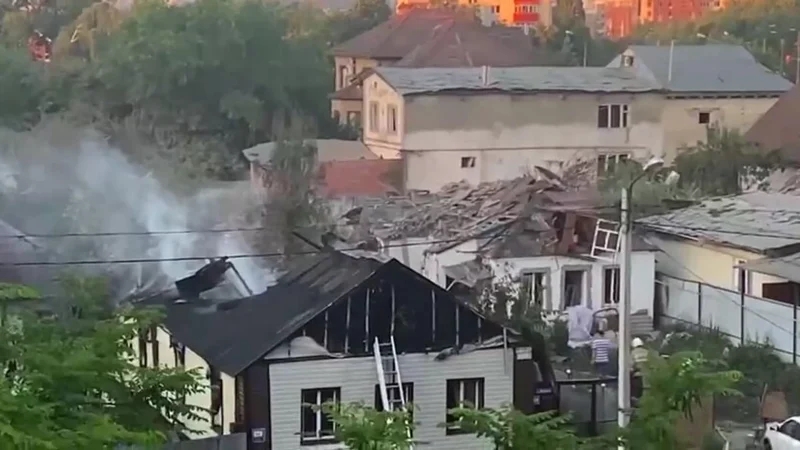
Ukraine launched three Tochka-U ballistic missiles loaded with cluster munitions at the Russian city of Belgorod, the Russian Defense Ministry said on Sunday. It added that all three had been intercepted mid-air, but that parts of one of the missiles had hit a house.
Regional Governor Vyacheslav Gladkov said that three people were killed and four injured overnight. He added that 11 apartment buildings and at least 39 smaller houses were damaged.
Gladkov later said that the death toll had grown to four. Three of the victims are Ukrainian nationals and one is a Russian citizen, he added.
Russian news outlet Baza later reported that two more bodies were recovered from under the rubble, raising the death toll to five. This has not yet been confirmed by officials.
Belgorod is located around 40 kilometers from the Russia-Ukraine border.
Defense Ministry spokesman Lieutenant General Igor Konashenkov said that Ukraine had also sent two Tu-143 Reys drones, “loaded with explosives,” towards Kursk, another Russian city close to the border. He said both drones were destroyed by air defenses before reaching the city.
Konashenkov said that Ukraine targeted residential areas, which had “no military sites.”
The Russian authorities have repeatedly accused Ukraine of shelling cities and villages close to the border. Moscow previously warned that it would hit Ukrainian “decision-making centers, including Kiev” if attacks on Russian territory did not stop.
Kiev accused Russian troops of attacking residential areas and killing civilians throughout Ukraine. Moscow insists its forces are only striking military targets.
Featured Video
New positive ivermectin evidence
or go to
Aletho News Archives – Video-Images
From the Archives
Fanatical Followers of the Covid Regime: A Jim Jones-Style Cult?
By Professor Roger Watson and Dr. Niall McCrae | The Daily Sceptic | November 15, 2021
As scholars at leading British universities over recent decades, we witnessed the replacement of critical thinking and debate by narrative: facts are discrimination and scientific method is imperialism; truth, instead, is derived from ‘progressive’ values. This educational trend may be a major contributory factor to the ease in which society has been inculcated to the Covid ‘new normal’ of masking, testing, and repeated doses of vaccines for a disease of similar risk to severe influenza.
One doesn’t need much critical reasoning to observe the flawed logic of some vaccination enthusiasts, such as people who respond to experiencing any side effects, however debilitating, by saying “at least I know it’s working”, or, after contracting the disease despite their promised inoculation (over 90% effective, according to initial drug company claims), “I’d have been worse off without the jab.” … continue
Blog Roll
 Aletho News
- The Coming GOP Bloodbath?
- Arctic Scare Stories Melt Away
- Wrong, Euronews: Climate Change Has Not Created a Food, Energy, and Economic “Meta-Crisis”
- New positive ivermectin evidence
- Met Office Caught Fabricating Daily Temperature Record Claims
- Merck Virologists Admitted to Falsely Certifying Vaccine Efficacy
- Mandatory Folic Acid for every man, woman & child
- Pro-Palestine protesters arrested outside UK’s ruling Labour Conference in Liverpool
- Mauritius denies landing permit to flight from Israel, forcing cancellation: Tour operator
- Israeli finance minister calls for genocidal war on West Bank, annexation of south Lebanon
- If Americans Knew
- In Gaza, ‘Whoever Survives the Bombing Won’t Survive the Rubble’
- Israel kills more Palestinians, amid push to resettle Gaza – Daily Update
- Israel forces Gazans to live in constant peril – Daily Update
- Deconstructing Netanyahu’s pants-on-fire UN rant – Daily Update
- Trump betrayed voters with his campaign lies and prioritized a foreign country once he took office
- Netanyahu calls Israel’s war in Gaza ‘opposite of genocide’ in UN speech to near-empty hall
- Settler Kidnappings: Torture, Sexual Abuse and Terrorisation of Palestinian Abductees as Israel Deepens Annexation of West Bank
- Gaza winter nears as 162,000 tents become unusable, raising fears of humanitarian crisis
- Netanyahu says, “It’s the opposite of genocide”; UN says Gaza economy is world’s ‘most severe crisis on record’ – Daily Update
- Israel’s US-Backed Assault on Gaza Has Created the ‘World’s Most Severe Economic Crisis on Record’: UN
- No Tricks Zone
- New Study: Earth And Venus Surface Warmth Largely Explained By Convection And Lapse Rate, Not CO2 Or Radiation
- 2025 Nature Paper Claiming Worsening Global Drought Gets RETRACTED …Heavily Flawed
- New Study: ‘Global Drought Shows No Detectable Recent Acceleration Under Climate Warming’
- Economic Masterminds: German Socialists Suggest Taxing Productivity Gains Stemming From Using AI
- The South China Sea Has Not Been Cooperating With The Climate Change Narrative
- Energy Crisis: Germany Enters Heating Season With Historically Low Gas Reserve Fill Levels
- New Study: The Antarctic Ice Sheet Gained Mass From 2020-2024 Due To Staggering Snow And Ice Accumulation
- Study: Ocean Heating Rates From Thousands Of Years Ago ‘Dwarf’ Modern Ocean Heating Rates
- Climate Extremists Target, Attack Large-Scale Power Grid Infrastructure In Germany!
- New Study: Antarctic Ice Melt Has Contributed Less Than 1 Centimeter To Sea Level Rise In The Last 30 Years

