Chicago Students Try to Cancel Professor Who Predicted Ukraine Crisis
By Noah Carl | The Daily Sceptic | March 10, 2022
Professor John Mearsheimer of the University of Chicago is the man who, way back in 2015, said the following:
The West is leading Ukraine down the primrose path and the end result is that Ukraine is going to get wrecked … What we’re doing is encouraging the Ukrainians to play tough with the Russians. We’re encouraging the Ukrainians to think that they ultimately will become part of the West … And of course the Ukrainians are playing along with this, and the Ukrainians are almost completely unwilling to compromise with the Russians and instead want to pursue a hardline policy. Well as I said to you before, if they do that their country is going to get wrecked.
Quite a prophetic remark, you might say. Indeed, predicting that Ukraine would “get wrecked” seven years in advance would seem to suggest that Mearsheimer has a good understanding – that he’s worth listening to. (Note: Mearsheimer did not think Russia would launch a full-scale invasion, so he wasn’t 100% right.)
With the Ukraine crisis still dominating the headlines, Mearsheimer must be the golden boy of his department, right? Actually, no. A group of students recently circulated a letter denouncing him for “propagating Putinism” and claiming his actions are “extremely detrimental for our country”.
The students take issue with several statements from Mearsheimer’s 2015 lecture (which is the source of the quotation above). For example, they characterise his use of the word “coup” to describe the toppling of Viktor Yanukovych as “ideological rather than academic”. (They prefer the more heroic-sounding “revolution”.)
The students end their missive by demanding “public disclosure” of all Russian funding received by Professor Mearsheimer, as well as a “statement from the university community at large that it does not condone anti-Ukraine ideology on campus”. They also claim that, if left unaddressed, the problem could “tarnish the reputation of our beloved University”.
I haven’t been able to find any articles suggesting that the university took action in response to the letter. So the students’ campaign appears to have failed. Good.
And it’s of course absurd to suggest that Mearsheimer holds an “anti-Ukraine ideology”. Indeed, much of his 2015 lecture (which the students probably just skimmed through while searching for ‘incriminating’ statements) is concerned with how to prevent Ukraine from “getting wrecked”.
As I noted in a previous post, Mearsheimer’s proposal comprised three elements: ruling out NATO membership for Ukraine; funding an economic rescue plan, together with Russia and the IMF; and insisting that Ukraine respect minority rights, especially minority language rights.
It seems plausible that if we’d followed this proposal, we wouldn’t be in the situation we are today, with Russian troops advancing on Kiev, and the West powerless to intervene for fear of sparking World War III. From what I see, Mearsheimer is a far better friend to Ukraine than the people who dismissed his warnings.
Do Ukrainian biolabs violate the ban on biological weapons programs?
By Scott Ritter | RT | March 10, 2022
Unless either Ukraine or the US can prove otherwise, the available evidence points to Kiev operating biological laboratories which may have violated the Biological and Toxins Weapons Convention.
Under Secretary of State for Political Affairs Victoria Nuland appeared before the Senate Committee on Foreign Relations on March 8, testifying on the US and international response to Russia’s attack on Ukraine. After delivering her opening remarks, the veteran US diplomat took questions from the committee members. One question, asked by Senator Marco Rubio, a Republican from the state of Florida, stood out. “Does Ukraine have chemical or biological weapons?” he asked.
Nuland answered the question very deliberately. “Ukraine has biological research facilities which, in fact, we’re now quite concerned Russian troops, Russian forces may be seeking to gain control of, so we are working with the Ukrainians on how we can prevent any of those research materials from falling into the hands of Russian forces should they approach,” she said.
Of note was the fact that none of this was mentioned in the entirety of her opening speech. The purpose of Rubio’s question wasn’t to pin Nuland into a corner, but rather set up the follow-on question, designed to deflect a very discomforting issue into a propaganda opportunity for the US government.
“I’m sure you’re aware,” Rubio said, “that the Russian propaganda groups are already putting out there all kinds of information about how they have uncovered a plot by the Ukrainians to unleash biological weapons in the country, and with NATO’s coordination.” The senator paused before asking his question. “If there is a biological or chemical weapon incident or attack inside Ukraine, is there any doubt in your mind that 100% it would be the Russians behind it?”
Nuland answered this question with more authority: “There is no doubt in my mind, Senator. And, in fact, it is a classic Russian technique to blame the other guy for what they are planning to do themselves.”
Rubio was right about one thing – the Russians were having a field day about the “biological research facilities” Nuland was so reticent about discussing. Maria Zakharova, the spokesperson for the Russian Ministry of Foreign Affairs, announced that “We [Russia] confirm that, during the special military operation in Ukraine, the Kiev regime was found to have been concealing traces of a military biological program implemented with funding from the United States Department of Defense.”
According to Zakharova, the Ukrainian Ministry of Health, on February 24 – the first day of the Russian offensive – had ordered all the Ukrainian biological laboratories to “urgently” eradicate the stored reserves of “highly hazardous pathogens of plague, anthrax, rabbit fever, cholera and other lethal diseases.” She said the documentation on the “urgent eradication” of the pathogens was “received from employees of Ukrainian laboratories.”
While noting that more work was being done by the Russian Ministry of Defense to fully assess the documents in question, Zakharova said Russia was able to conclude “that components of biological weapons were being developed in Ukrainian laboratories in direct proximity to Russian territory.”
“The urgent eradication of highly hazardous pathogens on February 24 was ordered to prevent exposing a violation of Article I of the Biological and Toxin Weapons Convention (BTWC) by Ukraine and the United States,” she added.
Article I of the BTWC states that “Each State Party to this Convention undertakes never in any circumstances to develop, produce, stockpile, or otherwise acquire or retain:
- microbial or other biological agents, or toxins whatever their origin or method of production, of types and in quantities that have no justification for prophylactic, protective or other peaceful purposes;
- weapons, equipment or means of delivery designed to use such agents or toxins for hostile purposes or in armed conflict.”
Earlier, the US Embassy in Kiev published information relating to what it described as a “Biological Threat Reduction Program,” a collaboration between the US Department of Defense and the Ukrainian government. According to this data, “The [biological threat reduction] program accomplishes its bio-threat reduction mission through development of a bio-risk management culture; international research partnerships; and partner capacity for enhanced bio-security, bio-safety, and bio-surveillance measures.” According to the US Embassy, “the Biological Threat Reduction Program’s priorities in Ukraine are to consolidate and secure pathogens and toxins of security concern and to continue to ensure Ukraine can detect and report outbreaks caused by dangerous pathogens before they pose security or stability threats.”
This all sounds innocuous enough and, if true, seems to meet the criterion set forth in Article 1 of the BTWC regarding “prophylactic, protective or other peaceful purposes.”
There is suspicion, however, that the Defense Threat Reduction Agency-led biological programs may have a more nefarious purpose. The Bulgarian investigative journalist, Dilyana Gaytandzhieva, has conducted extensive research into this issue. “The US Army regularly produces deadly viruses, bacteria and toxins in direct violation of the UN Convention on the prohibition of Biological Weapons. Hundreds of thousands of unwitting people are systematically exposed to dangerous pathogens and other incurable diseases. Bio-warfare scientists using diplomatic cover test man-made viruses at Pentagon bio laboratories in 25 countries across the world,” she claimed.
Gaytandzhieva’s work has been dismissed by the US as ‘pro-Russian propaganda.’ But the inescapable fact is that the US does not have a clean record when it comes to compliance with the BTWC. So-called “bio-defense” has been used by the US to circumvent, if not outright violate, the provisions of the BTWC in the past. The most flagrant example of this was the CIA-led “Project Clear Vision,” which from 1997 until 2000 sought to reverse-engineer and subsequently test a Soviet-era “bomblet” designed to disperse biological agents, including anthrax. There was a debate within the Clinton administration as to whether “Clear Vision” violated the BTWC, which led to the program being halted in 2000.
There is no need to worry about any such malfeasance at the biolabs in Ukraine, however, the director of the Cooperative Threat Reduction Program, Robert Pope, recently told reporters. “What we have today… are small amounts of various pathogens that by and large are things that are collected out of their environment that they need for research to be able to legitimately surveil disease and develop vaccines against.”
According to Pope, the Ukrainians had “more pathogens in more places than we recommend,” adding that his organization had been helping Ukrainian researchers organize their frozen pathogen collections with an eye on preserving genetic information via sequencing before destroying the live samples. “All of that, obviously, has been derailed here with the recent events,” he said.
Pope’s biggest concern was that if these biolabs lost electrical power for any extended time, then the frozen samples would thaw out. “If the ventilation system is damaged, or the building itself is damaged, and these now ambient-temperature pathogens are able to escape the facility, then they can be potentially infectious in the region around the facility,” he said.
He expressed hope that the facilities would not be deliberately attacked. “I think the Russians know enough about the kinds of pathogens that are stored in biological research laboratories that I don’t think they would deliberately target a laboratory. But what I do have concerns about is that they would… be accidentally damaged during this Russian invasion.”
While Pope had been painting a relatively benign picture of the types of pathogens stored at the facilities he supervised, he left a clue about the potential for something far more worrisome. While noting that many of the biolabs in Ukraine were of new construction, “others date back to the Soviet-era and the country’s bioweapons program.” Some of these older laboratories, Pope said, could hold pathogen strains dating back to the Soviet biowarfare programs. “Scientists being scientists, it wouldn’t surprise me if some of these strain collections in some of these laboratories still have pathogen strains that go all the way back to the origins of that program.”
If this is the case, then the Ukrainian labs could very well be the repository of Anthrax 836, an extremely deadly strain of that disease specifically developed to be delivered in warheads mounted on SS-18 intercontinental ballistic missiles operating from Ukraine.
This, it would seem, would put the labs in direct violation of the Biological and Toxin Weapons Convention, which prohibits the acquisition or retention of pathogens “that have no justification for prophylactic, protective or other peaceful purposes.”
Anthrax 836, and other similar Soviet-era biological weapons, no longer exist. As such, there is no need to conduct research designed to defend from any potential exposure to such agents. The only possible explanation for retention of Soviet-era biological warfare pathogens would be to keep them for some future biological warfare program, or as a source for covert operations seeking to falsely link a target nation, such as Russia, to illegal activity.
If Marco Rubio had been doing his job, instead of promoting anti-Russian propaganda, he could have – indeed, should have – held Victoria Nuland’s feet to the fire regarding what was really going on at the biological labs in Ukraine. There might be an innocuous answer out there. But until it is provided, it appears that Russia did in Ukraine what the US was unable to in Iraq – launched an attack on a nation which was in possession of prohibited biological weapons.
Scott Ritter is a former US Marine Corps intelligence officer and author of ‘SCORPION KING: America’s Suicidal Embrace of Nuclear Weapons from FDR to Trump.’ He served in the Soviet Union as an inspector implementing the INF Treaty, in General Schwarzkopf’s staff during the Gulf War, and from 1991-1998 as a UN weapons inspector.
US Enriches itself at the Expense of the EU Paralized by the Price Shock
By Vladimir Danilov – New Eastern Outlook – 09.03.2022
Europe has been shaken by galloping gas prices in recent months, leading to financial and socio-political instability in the Old World.
There are several reasons for this, one of them being the politics of domestic European speculators, who wanted to get rich quick when, as a result of their blatant Russophobic policies, European officials managed to keep Gazprom and its cheap gas out of the EU internal market. As a result, these speculators sell at a markup of 300, 400 or 500 per cent the cheap gas that Gazprom pumped into their storages back in the summer. In doing so, they squeeze their super-profits out of the European consumer. And until they sell these reserves, they will not let Russian gas into Europe.
In addition to European speculators on Russian gas, the United States has become enormously rich in recent months, profiting from the extraordinarily high prices. Meanwhile, in order to distract public opinion from the true situation on the issue, Joe Biden’s administration officials are trying to falsely accuse Moscow of increasing gas prices, while doing nothing to lower those prices themselves, as their fall is absolutely unprofitable for Washington.
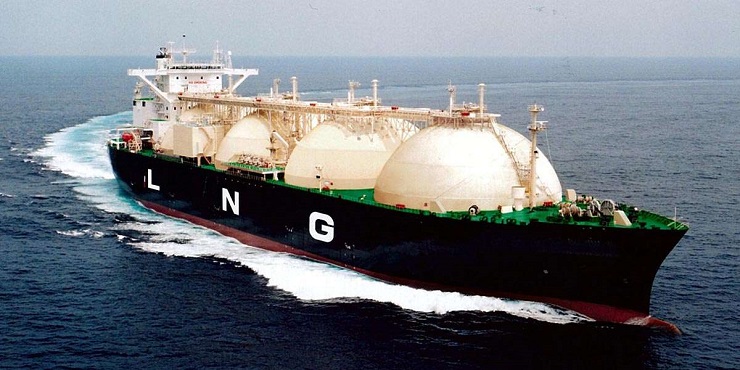
And this is confirmed by data from the Russian Federal Customs Service and the US Bureau of Economic Analysis, which clearly show reports on gas exports to Europe by the US and prove that it is the US that has been making more money than Russia on the super-high gas prices in recent months. Thus, the value of natural gas and LNG exported by Russia in January-August 2021 was $33.197 billion, compared with $42.9 billion worth of LNG exported by the US during the same period!
Most US gas supplies to Europe come under spot contracts (at exchange prices, quick purchase and payment and delivery by a certain date) concluded in December and January, when quotations in Europe were hitting record highs. As a result, traders now supplying American gas to Europe are making super profits. In January, they not only benefited from supplying Europe with gas produced in the US, but they also diverted volumes from the Middle Eastern and even Asian routes as a result of lower gas prices in the Asia-Pacific region (APAC).
As for Gazprom, it delivers, fulfilling its contractual obligations mainly under long-term contracts, i.e. at prices significantly lower than those on the stock exchange.
If LNG supplies result in lower gas prices in Europe, that market will automatically become uninteresting to US exporters, and Europeans themselves will have to go back to buying gas from the traditional suppliers. The panic mood in Europe is therefore now being artificially maintained by allegtions that Russia could cut off gas supplies because of the escalating situation around Ukraine. It is remarkable, however, that all the LNG supplies from the US have never managed to seriously depress gas exchange quotations in Europe, while any news of successful negotiations between Russia and the US or European leaders knocks prices down by $100-150.
As we know, the European gas market is the backyard of the global LNG market, dependent on the conditions in the APAC countries, where the market is physically larger. As soon as prices begin to fall in Asia, they also fall in Europe, and vice versa. In 2021, half of US gas exports went to Asia-Pacific and only a quarter to Europe. However, the diversion of LNG flows from the US to Europe could soon result in higher gas prices in the APAC, with US gas carriers heading back to Asia and European prices again breaking records for the benefit of the same European speculators and US traders, and to the misfortune of Europeans who will pay the price for Washington’s gangster gas policy.
Europe, with its substantial gas consumption and dozens of underutilized LNG import terminals, has long been of great interest to US companies, which have spent a total of $60bn on export infrastructure. There has been a real boom in the construction of LNG terminals in Europe too, under the influence of Washington, and they have even been built in Lithuania and Poland. However, no one can deny that LNG is expensive compared to pipeline gas from Russia. This is why, until recently, Europe was very enthusiastic about buying pipeline gas cheaply from Russia and why 75-80% of Europe’s LNG terminal capacity stood empty. In any case, the main criterion for assessing the prospects of US LNG as a competitor to Gazprom in Europe is price.
However, there have been some significant deteriorations in the gas market in recent weeks. Above all, they followed Russia’s receipt in late February of written confirmation of NATO’s and the United States’ refusal to engage in a dialogue with Moscow on security guarantees. This came against a backdrop where the West had previously blatantly refused to reassure Kiev’s rampant neo-Nazi authorities, who came to power in 2014 through a Washington-inspired coup. But for 8 years, at the instigation of Washington and with the tacit support of the West, the Kiev authorities have consistently pursued a policy of genocide in Donbas, where, according to incomplete information, they have killed more than 13,000 Russian-speaking civilians and pursued a policy of Russophobia. In addition, the Kiev authorities have recently intensified their neo-Nazi activities in the country and have made increasing threats of a potential nuclear weapon capability in Ukraine, in the hope of using which Kiev has already begun to develop far-reaching plans to attack Russia.
Under these conditions and in the absence of a proper Western response to the activities of the Kiev authorities, in late February Moscow was forced to launch a special operation in Ukraine to demilitarize and denazify it for reasons of self-preservation. In response, Washington and its Western allies unleashed an information war against Russia and slapped severe sanctions. Brussels, in a bid to please the Russophobic US political establishment, has refused to certify the already built Nord Stream 2, which could have significantly eased the situation on the European gas market. However, other Russian pipelines continue to operate and pump gas to Europe. Moreover, despite the misleading anti-Russian information warfare unleashed by Washington, Russian gas continues to flow through the Ukrainian gas transmission system without interruption, as reported by the Ukrainian transmission system operator itself. Gas supplies to Europe are not just flowing through the Ukrainian pipeline, they have also increased. The Europeans have increased their requests for supply and Gazprom has begun to pump through the Ukrainian pipe all of 109 million cubic meters of gas per day instead of 50 million cubic meters per day, as it was before the Russian special operation in Ukraine began, which is a doubling of supplies.
However, due to the depletion of European underground storage facilities due to winter weather, there is almost no gas left, forcing the EU to switch to current imports, which are “obligingly” offered by the US, which itself unleashed the crisis in Ukraine to, among other things, raise the price of gas in Europe. As for the Europeans, they are so far trying to move Russia’s hydrocarbon supplies out of the sanctions bracket, although individual European politicians, such as Borel, who openly “eat from Washington’s table”, have started talking about imposing additional sanctions against Russia in the gas sector as well, to please White House policy. At the same time, such European officials know full well that Russia is not going to use its gas as a tool against Europe. The EU has no substitute for that, by the way, and many of the world’s gas exporters have already spoken out about it. And the situation in Europe will only get worse for the population if the anti-Russian policy of the current European officials continues, threatening not only the impoverishment of the population, but also the bankruptcy of many European companies and even entire sectors of the economy.
At the same time, as Europe’s anti-Russian sanctions policy continues to escalate, it cannot be ruled out that Russia may eventually, in order to ensure its own security, use hydrocarbon supplies as a retaliatory measure if it considers Western sanctions to be disastrous for the Russian economy. But such actions will only lead to a clear victory for the United States over Europe, a further increase in its dependence on Washington, including on gas, and an even greater enrichment of the United States through its previously planned increase of gas prices in Europe by exacerbating relations with Russia.
Moscow responds to Ukraine maternity clinic bombing accusation
RT | March 10, 2022
Russian Foreign Minister Sergey Lavrov denied Ukrainian claims that Russian troops had shelled an operating maternity hospital in Ukraine. The building had been used as a base by the far-right Azov Battalion of the Ukrainian National Guard, the top Russian diplomat claimed on Thursday, during a press conference in Turkey.
The hospital in question has been for days under the control of a Ukrainian paramilitary group and Moscow presented evidence of this to the UN Security Council several days ago, Lavrov said.
“The Azov Battalion and other radicals kicked out all the expectant mothers, the nurses and other staff members. It was the base of the Azov ultra-radicals,” he said, speaking after meeting his Ukrainian counterpart Dmytro Kuleba in Turkey’s Antalya.
Lavrov added that reports coming from Ukraine that contradict this were obviously meant to “manipulate global public opinion” about what is happening in the country, and he also chastised Western media for taking part in the propaganda effort.
“I have seen reports … that were really emotional. Unfortunately, the other side of the situation, which would allow one to form an objective opinion, was not given any prominence,” Lavrov said.
The Russian diplomat was commenting on claims raised by Ukraine that Russian troops had deliberately attacked a medical facility in the city of Mariupol on Wednesday. Ukrainian officials claimed that a Russian airstrike had injured at least 17 people but killed nobody.
Footage from the scene showed a heavily damaged building with broken medical equipment scattered inside and Ukrainian troops helping women, some of them carrying infants in their arms, who were implied to be survivors of a bombing.
Ukraine’s President Volodymyr Zelensky said in a video address on Wednesday that the incident proved that Russia was conducting a genocide of the Ukrainian people and called on other nations to stop Russian atrocities.
Zelensky rubbishes Biden’s war on Russia
BY M. K. BHADRAKUMAR | INDIAN PUNCHLINE | MARCH 9, 2022
What was the need for all that happened in the period since mid-December when Russia transmitted to Washington its demands for security guarantee? This question will haunt US president Joe Biden long after he retires from public life. The foreign policy legacy of his presidency and the reputation of this much-vaunted 80-year old politician with a half-century’s record in public life, much of it supposedly in he domain of American foreign policy are in tatters — irreparable.
News has appeared that Ukrainian President Volodymyr Zelensky has conceded that he is willing to concede to the Russian demand that his country will not seek to become a member of the North Atlantic Treaty Organisation! The announcement came in an interview with the ABC News where he revealed that he is no longer pressing for Ukraine’s Nato membership!
In fact, Zelensky lets the cat out of the bag by casually adding, “I have cooled down regarding this question a long time ago after we understood that… Nato is not prepared to accept Ukraine.”
Zelensky explains why: “The alliance is afraid of controversial things, and confrontation with Russia.”
This comes after his earlier revelation that he is “open to compromise” on the sovereignty of the two breakaway republics of Lugansk and Donetsk in the eastern Donbass region and on the status of Crimea.
The ABC News reportedly telecast the interview on Monday night Eastern Time. Since then, the duo in the Biden team who piloted the Ukraine strategy, those apocalyptic “sanctions from hell” and the demonisation of Vladimir Putin through the recent months — Secretary of State Antony Blinken and Undersecretary of State Victoria — are nowhere to be seen.
That duo of East European descent in the driving seat — Blinken driving and Nuland by his side navigating him — ought to offer an explanation for this charade playing out, which is virtually demolishing the American prestige as a superpower.
Questions are galore. Principally, if it is so easy to work out a compromise over Russia’s legitimate security demands, especially regarding Ukraine’s Nato membership and the alliance’s further expansion, why was Biden so very stubborn in his refusal to even discuss it, given the urgency of the matter?
Can it be that Biden was acting smart to create a fait accompli for Moscow by formalising Ukraine’s membership at the forthcoming Nato summit on June 29-30 in Madrid?
What’s the need to destabilise the European economies and rock the world oil market at a juncture when most economies are entering on a path of post-pandemic economic recovery?
What explains this unnatural obsession on the part of Biden over Ukraine’s regime?
Why such visceral hatred on Biden’s part toward Russia, something unworthy of an 80-year old world statesman?
Why is it that the economic war against Russia has become such a very personal affair for Biden, as his White House speech on Tuesday shows?
But such an ignominious end to this entire episode over Ukraine’s Nato membership was entirely to be anticipated. Fundamentally, this is an existential issue for Russia. Whereas, Biden, Blinken and Nuland are dilettantes sitting 10,000 kms away indulging in old neocon pastimes of interfering in other countries’ internal affairs, threatening them, disciplining them or punishing them for defying America’s diktat.
Even after Zelensky spoke, what has been Biden’s reaction? He scheduled a speech to announce that the US shall no longer import oil from Russia. Shouldn’t he have heaved a sigh of relief that this war in Ukraine is petering out?
Instead, he resorted to this strange toothless measure to impress the American audience that he is still on a winning streak promoting democracy in faraway lands. Isn’t such gimmick an insult to the gullible American public?
Biden took this new step after Europeans told him plainly that they are not interested in such a move against Russia, given their heavy reliance on Russian oil.
Second, Biden doesn’t seem to know or has pretended otherwise that America is actually shooting at its own feet. For, Russian prices are highly competitive and American companies will now have to pay much more to source heavy grade oil suitable for their refineries.
Biden already swallowed his pride and sent a team of officials to Venezuela, a country under crippling US sanctions, to beg for oil from President Nicolas Maduro (who was on CIA hit list not too long ago for being a socialist) to replace Russian oil.
Maduro sent them back suggesting a broader mutually beneficial relationship between Venezuela and America. All this drama took place in broad daylight witnessed by the entire Western Hemisphere. Wouldn’t they be laughing that America’s president is a man of straw?
Biden claims he is making sure that Putin won’t have money for his “war machine” if America stops buying oil from Russia. This is laughable, bordering on a lie.
The US was purchasing about 12% of Russia’s total oil exports. Alright, that’s a decent figure. But, it isn’t as if Russia won’t have any other buyers in a world market where oil price has soared to $130 per barrel (thanks to Biden’s “sanctions from hell” against Russia)?
Surely, any number of potential buyers would queue up if Russia were to offer competitive prices (as it had been doing for the US companies) to divert the extra stocks due to Biden’s boycott.
At any rate, Biden can’t be unaware that Russia’s current budget is balanced on the belief that oil prices would be around $40-45 per barrel. With the current level of oil price, Russia is actually making a fortune! And the funny part is, it is a gift from Biden’s sanctions!
Fundamentally, the problem today is that the American elite are delusional. While the rest of the world knows that in a multipolar world, the US’ capacity to force its will on other countries is inexorably in decline, the American elite shut their eyes to that reality. The present ridiculous situation happened only due to this arrogance and self-deception.
The strategic defeat that Washington has suffered will dent the US prestige worldwide, weaken its transatlantic leadership, unravel its Indo-Pacific strategy and accelerate the drain of American influence in the 21st century. Biden presidency will carry this heavy cross.
Moscow calls for strengthening bioweapons treaty
‘Mandatory international inspections could keep US labs in check’
RT | March 9, 2022
An international treaty banning bioweapons needs to be strengthened with a compliance verification mechanism, contrary to the US position on the issue, Moscow said on Wednesday. The call comes in the wake of the reported discovery of evidence that there were lethal pathogens at Pentagon-backed labs in Ukraine.
The Russian military reported this week that Ukrainian authorities had ordered the destruction of highly pathogenic samples that were stored at US-backed biological labs throughout the country.
The purported documents indicate that both Ukraine and the US breached the 1972 Biological Weapons Convention (BWC), which both nations signed and ratified, the Russian foreign ministry alleged on Wednesday. The order to destroy the samples was an attempt to cover up the violations of the treaty, it said.
“We stand for the resumption of the work on a legally binding Protocol to the Convention for an effective verification mechanism, which the US has been stonewalling since 2001,” the ministry said.
The BWC, which came into force in 1975, bans the development, stockpiling and use of biological and toxin weapons. Unlike its counterpart for chemical weapons, the Convention for the Prohibition of Chemical Weapons, the treaty lacks an international watchdog organization to verify compliance.
An attempt to establish such an organization took place in the 1990s. The VEREX ad hoc committee spent a decade formulating proposals for surveillance, inspections, information sharing and other confidence-building measures.
The effort ultimately failed due to objections from the George W Bush administration which, in 2001, rejected a 210-page draft protocol. Washington claimed that it would not have improved the BWC, if implemented, and would have hurt US national security and commercial interests.
John Bolton, then-Undersecretary of State, said at the time that Washington was focusing its anti-germ warfare interest on Iraq. The existence of Saddam Hussein’s bioweapons project was “beyond dispute,” he claimed at the time. Two years later the US invaded Iraq under the pretext that it needed to destroy Iraqi weapons of mass destruction, which was later proven to be false.
Russia has been voicing concerns for years over US military-funded labs hosted by some nations in its proximity, most notably Georgia. Moscow believes that Washington is conducting military research there that may pose a threat to Russia. The foreign ministry statement said activities held on foreign soil should be subjected to reporting under the BWC, just like domestic programs.
The proposed measures “would allow subjecting military-biological activities of the US and its allies … to international control and ensure full verifiable compliance with the BWC by member states,” Moscow said.
Following Russia’s claims about labs in Ukraine, China called on the Pentagon to publicly comment on bio research conducted in foreign nations with its funding. Beijing claimed the US military controlled “336 biological laboratories in 30 countries around the world.”
The US denies that anything nefarious is being done in the labs, claiming they are used to monitor possible emerging infection threats around the world. US Under Secretary of State Victoria Nuland confirmed on Tuesday that her country was involved in Ukraine’s effort to destroy research materials so that Russia would not seize them.
Moscow: US-funded Biolabs in Ukraine Engaged in Development of Biological Weapons
Al-Manar | March 9, 2022
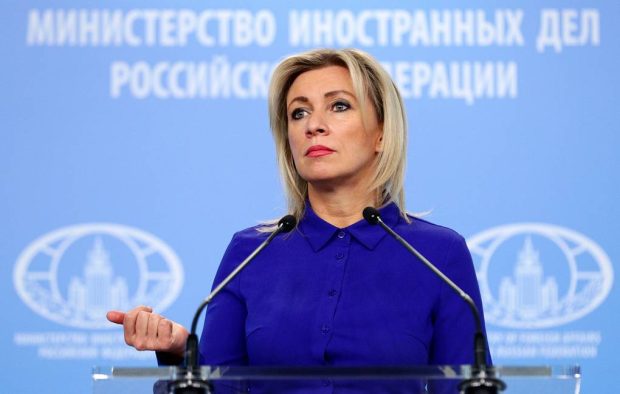
Russian Foreign Ministry spokeswoman Maria Zakharova has said that Ukrainian biolabs near Russia’s borders engaged in the development of components for biological weapons.
“In the past several days, long-standing fears which we have expressed repeatedly for years regarding the development of military biological materials by the United States on the territory of Ukraine under the auspices of the relevant US special services have been confirmed,” Zakharova said in a briefing Wednesday.
“This has been confirmed based not only on those materials and data which were obtained operationally on the territory of Ukraine, not just based on the statements of the relevant agencies in Ukraine, but confirmed directly in Washington during a speech by US Deputy Secretary of State Victoria Nuland,” Zakharova said.
The spokeswoman said the question of whether or not the biological weapons components being researched at these facilities have been destroyed or not remains to be answered, but pointed to the receipt of documents from employees of biolabs ordering the liquidation of dangerous pathogens dated 24 February.
Zakharova emphasized that there is now no doubt about the military nature of the research at these facilities, pointing to the Russian military’s revelations on the labs’ US Department of Defense funding, and the presence of US specialists instructing the Ukrainian side in conducting the relevant research.
The Russian diplomat, meanwhile said that the special operation does not include occupation, destruction of statehood or overthrow of Ukrainian Government.
Separately, in an interview with Radio Sputnik Wednesday, Zakharova suggested that the Russian military’s revelations about US-funded biolabs “completely changes the picture of US involvement in the fate of Ukraine.”
“It is not just an instrument of influence, it’s not just an an instrument of deterrence. Its an instrument of a direct threat to our country,” Zakharova said.
In testimony before the Senate on Tuesday, Victoria Nuland admitted that Ukraine was home to biological research facilities, and told lawmakers that Washington was “quite concerned Russian forces may be seeking to gain control of” these facilities and the “research materials” contained therein.
“So we are working with the Ukrainians on how they can prevent any of those research materials from falling into the hands of Russian forces should they approach,” Nuland said.
US comments on Ukrainian ‘biolabs’

Undersecretary of State Victoria Nuland testifies before a Senate Foreign Relation Committee hearing on Ukraine on March 8, 2022 © Getty Images/Kevin Dietsch
RT | March 8, 2022
US Under Secretary of State Victoria Nuland has confirmed that Washington has been involved in an effort to make sure no “materials” Ukraine keeps in its biolabs end up with the Russian military.
“Ukraine has biological research facilities, which, in fact, we are now quite concerned… Russian troops, Russian forces may be seeking to gain control of,” Nuland said on Tuesday as she testified before the Senate Foreign Relations Committee.
“We’re working with Ukrainians on how they can prevent any of those research materials from falling into the hands of Russian forces should they approach,” she added.
The Russian military previously claimed that the Ukrainian authorities have been hastily destroying dangerous materials, including highly pathogenic bacterial and viral agents they allegedly kept in laboratories linked to the Pentagon.
On Monday, Lieutenant General Igor Kirillov said the documents seen by the Russian military suggest that some of these laboratories worked with anthrax, among other things. Kirillov also claimed that the only reason Kiev reportedly moved to destroy the materials was out of concern that Russian experts “will highly likely prove Ukraine and the US have been in violation of the Biological Weapons Convention,” once they study the samples.
While Moscow has expressed concern over the alleged development of bioweapons in Ukraine, Nuland appeared to preemptively blame Russia for any potential release of hazardous materials amid the ongoing military conflict.
Nuland agreed with Senator Marco Rubio that if a chemical or biological “incident” or “attack” takes place in Ukraine, then Russia would be the culprit.
“There is no doubt in my mind, senator, and it is a classic Russian technique to blame on the other guy what they’re planning to do themselves,” she said.
Kiev has denied it was designing bioweapons. The Pentagon said speculation about its involvement in these programs in former Soviet states is ‘Russian disinformation’.
Ukraine faces defeat
BY M. K. BHADRAKUMAR | INDIAN PUNCHLINE | MARCH 8, 2022
Belying the predictions of western media, Russia’s special operation in Ukraine is entering a successful endgame on the political and diplomatic track much sooner than one would have thought.
A close reading of the outcome of the 3rd round of peace talks in Belarus last night is that the Ukrainian negotiators have sought some more time to come up with a full response to the Russian terms for ceasefire.
Ukraine has signalled willingness to be a neutral country ruling out NATO membership. The main sticking points narrow down to: a) recognition of Crimea as part of Russia; and, b) sovereignty of Lugansk and Donetsk.
They are non-negotiable demands. But they are a bitter pill for the Ukrainian leadership to swallow. The Ukrainian stance is that these demands are “practically” impossible.
But, as Vladimir Medinsky, leader of the Russian team, told RT, “In my opinion, there is a big difference between impossible and ‘practically impossible’… I hope that eventually we will find a solution.”
The Russian side feels encouraged albeit yesterday’s talks produced no tangible results. They are in no hurry to rush into major military offensives.
Indeed, the pattern throughout has been that the Russian generals would apply coercive military power to create synergy to kickstart a parallel political / diplomatic track to attain Moscow’s objective (which is not about territorial conquest.)
The western analysts who expected the Russian generals to behave like Patton or MacArthur with a massive attack on Kiev instead witnessed a confusing Russian strategy — slow, halting operations, without excessive force and with a distinct preference to avoid fighting by encircling and bypassing pockets of resistance, and avoiding set battles.
Putin revealed yesterday that “conscripts aren’t and won’t be taking part in hostilities, and there will be no additional call-up of reservists from the reserve… Missions are carried out only by professional troops.”
The Ukrainian side realises that the Russian strategy is winning, as Russian forces are encircling Kiev from the northwest, west and east, Black Sea ports are no longer accessible, and the forces in the east are entrapped. Yesterday, Zelensky acknowledged the grim situation.
After the third round in Belarus, he hastened to assure that talks will continue until a settlement! In his words,
“Today the third round of negotiations took place in Belarus, and I would like to say ‘the third and final one,’ but we are realists. Therefore, we will talk, we will insist on negotiations until we find a way to tell our people, ‘this is how we will come to peace.’”
Russians are in no tearing hurry. They eschew triumphalism, and instead allow enough space for the Ukrainian side to take some really hard decisions on surrender — while military pressure is kept up on Kiev. Foreign Ministry spokeswoman Maria Zakharova said yesterday, “We keep the door open to diplomatic options. As soon as there are corresponding signals, we will be acting on them.”
Importantly, the two sides have agreed on a roadmap for creating humanitarian corridors and Russian side has announced a ceasefire. Also, these corridors will be operated in close coordination through a hotline.
The Russian statement says that a “continuous communication link shall be established between the Russian and Ukrainian sides for mutual exchange of information about the preparation and implementation of the evacuation of civilians and foreign citizens.”
The Russian side since conveyed all relevant details to foreign embassies, appropriate UN and OSCE agencies, the International Committee of the Red Cross and other concerned international organisations. The humanitarian corridors will be:
- from Kiev and adjacent regions to Gomel (Belarus);
- from Sumy along two routes to Poltava (central Ukraine) and to Russia;
- from Kharkov to Russia or to Lvov, Uzhgorod and Ivano-Frankovsk (all three in western Ukraine); and,
- from Mariupol along two routes to Russia and Zaporozhe (on the Dnieper river in southeastern Ukraine.)
This joint work and the lull in fighting sets the stage for the crucial meeting between Russian Foreign Minister Sergey Lavrov and his Ukrainian counterpart Kuleba in the Turkish resort of Antalya on Thursday. The very fact the talks have been elevated to foreign minister level signals hope that a critical mass may be accruing.
Thoroughly disillusioned with the betrayal by the US and NATO, Zelensky is inching toward an agreement with Moscow. It is futile to pre-judge the outcome, but there is a game changer. The major European countries — UK, France, Germany, Netherlands — have rebuffed Washington’s hawkish proposal to impose sanctions on Russia’s oil exports.
Oil exports are Russia’s principal source of income, therefore, this is a strong rejection of Washington’s efforts to isolate Russia. French President Macron captured the zephyr in his remark yesterday:
“It is impossible to build a lasting peace if Russia doesn’t participate in building a comprehensive security architecture on our continent, because history and geography mandate this. Our responsibility is to preserve all the ties that we can preserve. We must continue to talk with the Russian and Belarusian peoples. We need to do this with help from representatives of the world of culture, the scientific and technical community, non-governmental organisations.”
On Sunday, in an op-ed in the New York Times, UK Prime Minister Boris Johnson also wrote: “We have no hostility toward the Russian people, and we have no desire to impugn a great nation and a world power. Ukraine had no serious prospect of NATO membership in the near future. This is not a NATO conflict, and it will not become one.”
Meanwhile, major European countries, especially Germany, are ruling out EU membership for Ukraine, either — which, ironically, was the issue that had precipitated the US-backed coup in Kiev in 2014 triggering the catastrophic slide toward conflict involving Russia.
Featured Video
New positive ivermectin evidence
or go to
Aletho News Archives – Video-Images
From the Archives
Fanatical Followers of the Covid Regime: A Jim Jones-Style Cult?
By Professor Roger Watson and Dr. Niall McCrae | The Daily Sceptic | November 15, 2021
As scholars at leading British universities over recent decades, we witnessed the replacement of critical thinking and debate by narrative: facts are discrimination and scientific method is imperialism; truth, instead, is derived from ‘progressive’ values. This educational trend may be a major contributory factor to the ease in which society has been inculcated to the Covid ‘new normal’ of masking, testing, and repeated doses of vaccines for a disease of similar risk to severe influenza.
One doesn’t need much critical reasoning to observe the flawed logic of some vaccination enthusiasts, such as people who respond to experiencing any side effects, however debilitating, by saying “at least I know it’s working”, or, after contracting the disease despite their promised inoculation (over 90% effective, according to initial drug company claims), “I’d have been worse off without the jab.” … continue
Blog Roll
 Aletho News
- EU Council Advances Chat Control 2.0 Scanning Proposal
- Ex-Greek MEP files complaint against Israeli spyware firm over alleged Pegasus surveillance
- Troubling ideas throughout the Torah, Talmud, Mishneh Torah and Tanya
- ‘Grave, alarming’: Iran mission on Trump’s UNGA ‘annihilation’ threats
- Najaf airport to reopen to Iranian flights within 24 hours: Ambassador
- From ‘How Will This End For Iran’ to ‘When America Walks Away’: A tale of two Economist covers
- Tehran blasts ‘baseless’ speculation linking Iran to alleged bomb plot at UK air base
- The Rise And… Rise Of ‘Color Revolutions’
- The Coming GOP Bloodbath?
- Arctic Scare Stories Melt Away
- If Americans Knew
- Netanyahu Asked UAE Leader to Deny Report on Oct. 7 Warning in Secret Visit, Sources Say
- CNN Chief Int’l Correspondent Clarissa Ward on Journalists in Gaza
- Democratic Party Consultants Surround Troy Jackson with Pro-Israel Donors
- Christian Leader Responds To Netanyahu’s Claims Regarding Palestinian Christians
- In Gaza, ‘Whoever Survives the Bombing Won’t Survive the Rubble’
- Israel kills more Palestinians, amid push to resettle Gaza – Daily Update
- Israel forces Gazans to live in constant peril – Daily Update
- Deconstructing Netanyahu’s pants-on-fire UN rant – Daily Update
- Trump betrayed voters with his campaign lies and prioritized a foreign country once he took office
- Netanyahu calls Israel’s war in Gaza ‘opposite of genocide’ in UN speech to near-empty hall
- No Tricks Zone
- New Study: Earth And Venus Surface Warmth Largely Explained By Convection And Lapse Rate, Not CO2 Or Radiation
- 2025 Nature Paper Claiming Worsening Global Drought Gets RETRACTED …Heavily Flawed
- New Study: ‘Global Drought Shows No Detectable Recent Acceleration Under Climate Warming’
- Economic Masterminds: German Socialists Suggest Taxing Productivity Gains Stemming From Using AI
- The South China Sea Has Not Been Cooperating With The Climate Change Narrative
- Energy Crisis: Germany Enters Heating Season With Historically Low Gas Reserve Fill Levels
- New Study: The Antarctic Ice Sheet Gained Mass From 2020-2024 Due To Staggering Snow And Ice Accumulation
- Study: Ocean Heating Rates From Thousands Of Years Ago ‘Dwarf’ Modern Ocean Heating Rates
- Climate Extremists Target, Attack Large-Scale Power Grid Infrastructure In Germany!
- New Study: Antarctic Ice Melt Has Contributed Less Than 1 Centimeter To Sea Level Rise In The Last 30 Years

