MH17: The Continuing Charade
By James ONeill – New Eastern Outlook – 31.05.2016
The Sun Herald (Sydney) of 22 May 2016 reported that the Australian families of the MH17 disaster had “served” the European court of Human Rights (ECHR) with a claim seeking compensation of $10 million for each victim.
The report referred to the “proposed respondents” to the claim being the Russian Federation and its President Vladimir Putin. The solicitor acting for the plaintiffs was quoted in a separate report claiming, “we have facts, photographs, memorandums (sic), tonnes of stuff.” He also claimed that the claim document ran to “over 3500 pages in length.”
These reports closely followed the publication of the New South Wales Coroner’s Court report into the deaths of six of the victims who were resident in New South Wales. The Coroner’s findings closely followed those of the Report of the Dutch Safety Board of 13 October 2015, attributing the deaths of those aboard MH17 to a BUK missile detonating close to the aircraft, causing the plane to disintegrate and a consequent immediate loss of life to all aboard.
It was not part of the Coroner’s jurisdiction to attribute blame, that being the subject of a separate criminal investigation (JIT). The results of that investigation are expected to be announced later this year.
The Dutch head of the JIT investigation, Mr Fred Westerbeke wrote to all the Dutch victim’s families in February 2016 giving them an update on the investigation. A query to the Australian Federal Police as to whether the Australian families might receive a similar briefing was effectively ignored.
Something Mr Westerbeke did say that was of particular interest was that the United States had released their satellite data to the Dutch Security Services. Whether that data could be used and if so in what format, was for security reasons an unresolved issue.
Those data are of considerable significance. It is known that there were three US satellites overhead the Donbass region at the material time. They had the undoubted capability of determining exactly what was fired at MH17, from precisely where, and by whom. US Secretary of State John Kerry claimed as much in an interview with NBC shortly after the tragedy.
The American refusal to publically release the data leads to the very strong inference that it is being concealed for the reason that it does not support the “blame Russia” meme so favoured by the western media.
The incuriosity of the Australian media was again on display when they gave extensive coverage to the report of the alleged claim being filed in the ECHR.
There are a number of problems with this purported claim, accepted so uncritically be the Australian media. There was a clue in the use of the phrase “proposed respondents”. If proceedings had been filed in any court, then the respondents are not “proposed”. They either are or they are not.
A check with the ECHR website on 26 May 2016 showed that there was no record of any such claim having been filed. John Helmer, on his website reports a similarly negative result when a query was made with the ECHR’s Registrar.
The problems with the alleged claim do not stop there. As noted above, the plaintiff’s solicitor said that the claim ran to more than 3500 pages. Rule 47 of the ECHR’s Rules state that the application must contain:
(e) a concise and legible statement of the facts;
(f) a concise and legible statement of the alleged violation(s) of the Convention; and
(g) a concise and legible statement confirming the applicant’s compliance with the admissibility criteria laid down in Article 35(1) of the Convention.
Whatever else they may be, a 3500-page claim does not remotely comply with any definition of “concise.”
The ECHR Rules further provide that any additional submissions do not exceed 20 pages (Rule 47 (2) (b)) in length.
The plaintiffs have failed to provide any relevant details from their 3500 page claim (or at all) that would enable an independent observer to assess what “facts, photographs and memoranda” they have that were not available to the Dutch Safety Board Inquiry. Given the combined resources available to the Dutch led inquiry, it would be remarkable that a firm of solicitors would be able to state their claims so categorically when a major government report was not able to do so.
The plaintiff’s difficulties do not end with their lack of credibility.
The ECHR Rules further provide that any application made under Article 34 of the Convention is required to be made (Article 35(1)) within six months of the event giving rise to the application.
As the relevant event occurred on 17 July 2014, the six months expired on 17 January 2015. No explanation has been forthcoming nor any inquiry made by the incurious mainstream media as to how this potentially fatal flaw in the proceedings could be overcome.
That is not the end of the plaintiff’s woes. Rule 10(b) governs Article 34 applications to the Court. That rule requires the plaintiff to demonstrate that “the applicant has complied with the exhaustion of available domestic remedies.”
One of the plaintiffs named in the purported ECHR proceedings is Mr Tim Lauschet, a relative of one of the victims. Mr Lauschet is also the plaintiff in proceeding 2015/210056 filed in the New South Wales Supreme Court. Malaysian Airlines System Berhad is the respondent in those proceedings.
The original pleadings sought various declarations that would facilitate a claim for damages under the relevant provisions of the Civil Aviation (Carriers Liability) Act 1959. That limits liability to a maximum of special drawing rights equivalent to approximately A$215,000. There is a two year time limit for the making of such claims, so that right expires on 17 July 2016, only a few weeks away.
The purported proceedings in the ECHR makes no attempt to reconcile their $10 million claim with the liability of international air carriers which is considerably less by an order of magnitude. Neither did the media bother to ask.
The Judge politely pointed out a number of deficiencies in Mr Lauschet’s pleadings (2015) NSWSC 1365) and adjourned the matter with various timetable orders to enable the plaintiff to remedy the many deficiencies in the pleadings.
The matter has been back before the Court a further four times since that hearing, with the only apparent progress being that the plaintiff has now filed a statement of claim. It is now scheduled for a further Directions Hearing on 30 May 2016.
The conclusion for present purposes must be that Mr Lauschet has not achieved “the exhaustion of available domestic remedies.” Whether any of the other Australian plaintiffs in the purported ECHR proceeding have even started, let alone exhausted, their domestic legal remedies is unknown. But in Mr Lauschet’s case (and possibly all of the others) he therefore faces another fatal flaw.
There is one other element in this case that the mainstream media is either unaware of or has chosen to ignore. In 2012 the then Gillard government made amendments to the Social Security Act 1991 to enable payments of up to $75,000 to victims of terrorism.
Eligibility for those payments (the acronym for which is AVTOP) were backdated to 11 September 2001. A necessary pre-condition for the payment is a declaration by the Prime Minister of the day that the event concerned was a “terrorist act.”
To date there have been nine such declarations, the latest being the 13 November 2015 attacks in Paris, France. The shooting down of MH17 should qualify under most definitions as a “terrorist act.”
The relevant Prime Ministers since 17 July 2014, Tony Abbott and Malcolm Turnbull, have not made such a declaration, which would then entitle victim’s families to claim compensation under the Act.
Requests to the Prime Minister’s office for information as to whether such a declaration was going to be made, and if not, why not, were ignored. A Freedom of Information Act request has therefore been made and is currently pending.
There may be a number of reasons why such a declaration has not been made. The overwhelming weight of evidence is that only the military units of the Ukrainian armed forces had the means, motive and opportunity to shoot down MH17.
As a recently joined member of Ukrainian President Poroshenko’s “advisory council” former Prime Minister Tony Abbott would be in a difficult position if the shoot down was declared to be a terrorist act and the JIT investigation put the blame where it rightly belongs, on the Ukrainian government. It is not surprising that the announcement at the recent ASEAN-Russia meeting that Malaysia and Russia were cooperating in an investigation of the MH17 tragedy caused concern in US and Ukrainian circles.
Although the current Australian Prime Minister Turnbull has been more circumspect than his predecessor in making ill-conceived allegations against Russia and its President, he will not wish to expose himself to a finding by the JIT that does not fit the propaganda meme so assiduously pursued by the western media.
There are a number of losers in this charade, not least the victims of the atrocity and their families who deserve better than to be exploited by both politicians and dubious claims in the ECHR. The public, who might reasonably expect to be better served by their media, are also the losers.
James O’Neill is an Australian-based Barrister at Law.
Unclear if EU will renew sanctions against Russia: German FM
The BRICS Post | May 31, 2016
German Foreign Minister Frank-Walter Steinmeier on Tuesday hinted that the renewal of European Union sanctions against Moscow was not yet certain as many countries in the 28-member bloc have raised questions about its efficacy.
“The sanctions are there to ensure a political solution. I don’t know what the European Council will decide on Russia sanctions,” Steinmeier said.
Steinmeier’s comments came weeks ahead of the EU meet that is expected to renew the sanctions against Russia. For sanctions to be extended beyond July, all 28 EU members would have to be in agreement.
The sanctions were imposed following Crimea, an erstwhile part of Ukraine, voting to join Russia in 2014.
Earlier on May 27, Germany’s Federal Foreign Office spokesperson, speaking on behalf of Foreign Minister Frank? Walter Steinmeier, issued a statement saying that “sanctions are not an end in themselves but need to serve to provide an incentive for the political behaviour we would like to see”.
“In the current situation this means that a demand for all or nothing will not bring us any closer to our goal. If substantial progress is made, the gradual reduction of sanctions must also be an option. This is one point on the agenda of the European debate that is just beginning,” said the statement.
The German Foreign Minister had held talks with Russian President Vladimir Putin at the Kremlin on 23 March this year during which the two sides discussed “bilateral relations, Russia’s relations with the European Union”.
On Monday, Russian Foreign Minister Sergey Lavrov said Russia has no plans of recognising the self-proclaimed republics of Ukraine.
Moscow’s move to recognize the self-proclaimed Donetsk and Lugansk People’s Republics would be counterproductive as this would give the West a pretext to stop pressure on Kiev on implementing the Minsk peace deal, Lavrov said in an interview with Komsomolskaya Pravda website.
“I’m convinced that this will be counterproductive,” Lavrov said, stressing that it is very important that the documents signed in Minsk are implemented.
During a state visit by Russian President Vladimir Putin, Greek Prime Minister Alexis Tsipras has criticised the West’s “vicious circle of militarization, of Cold War rhetoric and of sanctions”.
“We have repeatedly said that the vicious circle of militarisation, of Cold War rhetoric and of sanctions is not productive. The solution is dialogue,” Tsipras said in a press conference following talks with Putin on Saturday.
“Everyone recognises that there cannot exist a future for the European continent with the European Union and Russia at loggerheads,” he added.
Earlier in January this year, French Finance Minister Emmanuel Macron also said that France is not keen on the EU extending sanctions against Russia beyond July.
“The objective we all share is to be able to lift sanctions next summer because the process has been respected,” he told Le Figaro.
Poroshenko appoints former NATO chief Rasmussen ‘non-staff adviser’
RT | May 28, 2016
A former NATO Secretary General has been chosen as a new “non-staff” adviser to Ukrainian President Petro Poroshenko, according to a decree bearing his signature. However, the document implies that the ex-chief is yet to agree to the appointment.
“Appoint Anders Fogh Rasmussen as adviser to the President of Ukraine outside the official staff (subject to his consent),” says the decree also published on the Ukrainian president’s official website.
Rasmussen was the twelfth Secretary General of NATO in the period from August 2009 to September 2014. He was also Danish Prime Minister from 2001 to 2009. In 2014, Poroshenko awarded Rasmussen, who still was NATO Secretary General at that time, with the Order of Freedom – the highest Ukrainian award for foreign citizens – for his “significant personal contribution to the development of cooperation between Ukraine and NATO as well as for considerable support for Ukraine’s sovereignty, independence and territorial integrity.”
Rasmussen is yet to comment and either confirm or deny his appointment. Last year, US Senator John McCain, also appointed by Kiev to a similar position, eventually turned down the proposal claiming that the US constitution prohibited him from getting on board.
The assignment of the role to Rasmussen comes soon after Ukrainian National Security and Defense Council adopted a program for the reorganization of Ukraine’s defense industry as well as military in line with NATO standards on May 20.
“We are beginning real reorganization of the defense and security sector in order to join NATO,” Poroshenko said at the time, commenting on this decision. He stressed that Ukraine had not been directly making steps for immediate accession to the Alliance but called the move “The Rubicon” that Ukrainian armed forces and the defense industry would have to “pass” to adapt to NATO standards, as reported by TASS.
The deputy head of the Russian parliament’s defense committee, Sergey Zhigarev, called Rasmussen’s appointment to the position of the presidential adviser a sign of the Ukrainian president’s mistrust of his own people.
“This is a very bad sign. It shows that he [Poroshenko] does not trust his own citizens that entrusted him with leading their country,” Zhigarev told Sputnik.
In the meantime, Rasmussen is not the first foreign citizen in Ukraine’s Presidential Administration as some foreigners even held ministerial posts in the Ukrainian government. In 2014, Poroshenko appointed Natalie Ann Jaresko, an American-born Ukrainian investment banker, as Ukraine’s Minister of Finance, while former Georgian Health Minister Alexander Kvitashvili took the post of the head of the Ukrainian Health ministry and Aivaras Abromavicius, a Lithuanian businessman, became Ukraine’s Minister of Economy and Trade. They held their posts till the new government was installed in April 2016.
Leszek Balcerowicz, Poland’s former deputy prime minister, now serves as Poroshenko’s representative in the Ukrainian government while former Slovakian Finance Minister Ivan Miklos is now the head of a group of Ukrainian prime minister’s advisers.
Meanwhile, former Georgian President Mikhail Saakashvili, wanted for trial on corruption charges at home, was granted Ukrainian citizenship so that he could take the post of the Ukrainian Odessa region.
Saakashvili was appointed as governor of Ukraine’s Odessa Region in May of 2015, after which he brought in several members of his old Georgian team, including Ukraine’s current national police chief Khatia Dekanoidze, who was Georgia’s education minister; Deputy Interior Minister Eka Zguladze, who held a similar position in the Georgian government; Deputy General Prosecutor David Sakvarelidze, who held a similar position in the Georgian government as well, and was also Saakashvili’s lawyer; and Gizo Uglava, Ukraine’s current Head of the Anticorruption Bureau and Georgia’s former deputy general prosecutor.
UN Body on Prevention of Torture Suspends Visit to Ukraine
Sputnik – 25.05.2016
The UN Subcommittee on Prevention of Torture (SPT) decided to halt its visit to Ukraine as it did not get access to some sites where it suspected infringements of human rights were taking place, the Office of the United Nations High Commissioner for Refugees (UNHCR) said Wednesday.
“The delegation concluded that the integrity of the visit, which began on 19 May and was due to end on 26 May, had been compromised to such an extent that it had to be suspended as the SPT mandate could not be fully carried out,” the UNHCR statement said.
Malcolm Evans, head of the delegation, told the UNHCR that the delegation was denied access to the sites where tortures and ill-treatment allegedly was taking place.
The UNHCR said it is only the second time it was forced to suspend its mission under the Optional Protocol to the Convention against Torture (OPCAT), according to which the SPT has a right to visit all sites of detention without preliminary notification.
Evans called on Ukraine to fulfill its duties under the OPCAT that will enable the SPT to resume its mission.
“The SPT expects Ukraine to abide by its international obligations under the Optional Protocol, which it ratified in 2006. We also hope that the Government of Ukraine will enter into a constructive dialogue with us to enable the SPT to resume its visit in the near future and so work together to establish effective safeguards against the risk of torture and ill-treatment in places where people are deprived of their liberty,” he said.
The Optional Protocol to the Convention against Torture entered into force in 2006 and is ratified by 81 countries including Ukraine.
More Game-Playing on MH-17?
By Robert Parry | Consortium News | May 24, 2016
A newly posted video showing a glimpse of a Buk missile battery rolling down a highway in eastern Ukraine has sparked a flurry of renewed accusations blaming Russia for the July 17, 2014 shoot-down of Malaysia Airlines Flight 17 killing 298 people. But the “dash-cam video” actually adds little to the MH-17 whodunit mystery because it could also support a narrative blaming the Ukrainian military for the disaster.
The fleeting image of the missile battery and its accompanying vehicles, presumably containing an armed escort, seems to have been taken by a car heading west on H-21 highway in the town of Makiivka, as the convoy passed by heading east, according to the private intelligence firm Stratfor and the “citizen journalism” Web site, Bellingcat.
However, even assuming that this Buk battery was the one that fired the missile that destroyed MH-17, its location in the video is to the west of both the site where Almaz-Antey, the Russian Buk manufacturer, calculated the missile was fired, around the village of Zaroshchenskoye (then under Ukrainian government control), and the 320-square-kilometer zone where the Dutch Safety Board speculated the fateful rocket originated (covering an area of mixed government and rebel control).
In other words, the question would be where the battery stopped before firing one of its missiles, assuming that this Buk system was the one that fired the missile. (The map below shows the location of Makiivka in red, Almaz-Antey’s suspected launch site in yellow, and the general vicinity of the Dutch Safety Board’s 320-square-kilometer launch zone in green.)
Another curious aspect of this and the other eight or so Internet images of Buk missiles collected by Bellingcat and supposedly showing a Buk battery rumbling around Ukraine on or about July 17, 2014, is that they are all headed east toward Russia, yet there have been no images of Buks heading west from Russia into Ukraine, a logical necessity if the Russians gave a Buk system to ethnic Russian rebels or dispatched one of their own Buk military units directly into Ukraine, suspicions that Russia and the rebels have denied.
The absence of a westward-traveling Buk battery fits with the assessment from Western intelligence agencies that the several operational Buk systems in eastern Ukraine on July 17, 2014, were under the control of the Ukrainian military, a disclosure contained in a Dutch intelligence report released last October and implicitly confirmed by an earlier U.S. “Government Assessment” that listed weapons systems that Russia had given the rebels but didn’t mention a Buk battery.
The Netherlands’ Military Intelligence and Security Service (MIVD) reported that the only anti-aircraft weapons in eastern Ukraine capable of bringing down MH-17 at 33,000 feet on July 17 belonged to the Ukrainian government. MIVD made that assessment in the context of explaining why commercial aircraft continued to fly over the eastern Ukrainian battle zone in summer 2014.
MIVD said that based on “state secret” information, it was known that Ukraine possessed some older but “powerful anti-aircraft systems” capable of downing a plane at that altitude and “a number of these systems were located in the eastern part of the country,” whereas the MIVD said the ethnic Russian rebels had only MANPADS that could not reach the higher altitudes.
Ukrainian Offensive
On July 17, the Ukrainian military also was mounting a strong offensive against rebel positions to the north and thus the front lines were shifting rapidly, making it hard to know exactly where the borders of government and rebel control were. To the south, where the Buk missile was believed fired, the battle lines were lightly manned and hazy – because of the concentration of forces to the north – meaning that an armed Buk convoy could probably move somewhat freely.
Also, because of the offensive, the Ukrainian government feared a full-scale Russian invasion to prevent the annihilation of the rebels, explaining why Kiev was dispatching its Buk systems toward the Russian border, to defend against potential Russian air strikes.
Just a day earlier, a Ukrainian fighter flying along the border was shot down by an air-to-air missile (presumably fired by a Russian warplane), according to last October’s Dutch Safety Board report. So, tensions were high on July 17, 2014, when MH-17, flying from Amsterdam to Kuala Lumpur, broke apart over eastern Ukraine, believed downed by a surface-to-air missile although there have been other suggestions that the plane might have been hit by an air-to-air missile.
At the time, Ukraine also was the epicenter of an “information war” that had followed a U.S.-backed coup on Feb. 22, 2014, which ousted democratically elected President Viktor Yanukovych and replaced the Russian-friendly leader with a fiercely nationalistic and anti-Russian regime in Kiev. The violent coup, in turn, prompted Crimea to vote 96 percent in a hasty referendum to secede from Ukraine and rejoin Russia. Eastern Ukraine and its large ethnic Russian population also revolted against the new authorities.
The U.S. government and much of the Western media, however, denied there had been a coup in Kiev, hailed the new regime as “legitimate,” and deemed Crimea’s secession a “Russian invasion.” The West also denounced the eastern Ukrainian resistance as “Russian aggression.” So, the propaganda war was almost as hot as the military fighting, a factor that has further distorted the pursuit of truth about the MH-17 tragedy.
Immediately after the MH-17 crash, the U.S. government sought to pin the blame on Russia as part of a propaganda drive to convince the European Union to join in imposing economic sanctions on Russia for its “annexation” of Crimea and its support of eastern Ukrainians resisting the Kiev regime.
However, a source briefed by U.S. intelligence analysts told me that the analysts could find no evidence that the Russians had supplied the rebels with a sophisticated Buk system or that the Russians had introduced a Buk battery under their own command. The source said the initial intelligence suggested that an undisciplined Ukrainian military team was responsible.
Yet, on July 20, 2014, just three days after the tragedy, Secretary of State John Kerry appeared on all Sunday morning talk shows and blamed the Russian-backed rebels and implicitly Moscow. He cited some “social media” comments and – on NBC’s “Meet the Press” – added: “We picked up the imagery of this launch. We know the trajectory. We know where it came from. We know the timing. And it was exactly at the time that this aircraft disappeared from the radar.”
Two days later, on July 22, the Obama administration released a “Government Assessment” that tried to bolster Kerry’s accusations, in part, by listing the various weapons systems that U.S. intelligence believed Russia had provided the rebels, but a Buk battery was not among them. At background briefings for selected mainstream media reporters, U.S. intelligence analysts struggled to back up the administration’s case against Russia.
For instance, the analysts suggested to a Los Angeles Times reporter that Ukrainian government soldiers manning the suspected Buk battery may have switched to the rebel side before firing the missile. The Times wrote: “U.S. intelligence agencies have so far been unable to determine the nationalities or identities of the crew that launched the missile. U.S. officials said it was possible the SA-11 [Buk anti-aircraft missile] was launched by a defector from the Ukrainian military who was trained to use similar missile systems.”
However, after that July 22 briefing — as U.S. intelligence analysts continued to pore over satellite imagery, telephonic intercepts and other data to refine their understanding of the tragedy — the U.S. government went curiously silent, refusing to make any updates or adjustments to its initial rush to judgment, a silence that has continued ever since.
Staying Silent
Meanwhile, the source who continued receiving briefings from the U.S. intelligence analysts told me that the reason for going quiet was that the more detailed evidence pointed toward a rogue element of the Ukrainian military connected to a hardline Ukrainian oligarch, with the possible motive the shooting down of President Vladimir Putin’s plane returning from a state visit to South America.
In that scenario, a Ukrainian fighter jet in the vicinity (as reported by several eyewitnesses on the ground) was there primarily as a spotter, seeking to identify the target. But Putin’s plane, with similar markings to MH-17, took a more northerly route and landed safely in Moscow.

A side-by-side comparison of the Russian presidential jetliner and the Malaysia Airlines plane.
Though I was unable to determine whether the source’s analysts represented a dissenting or consensus opinion inside the U.S. intelligence community, some of the now public evidence could fit with that narrative, including why the suspected Buk system was pushing eastward as close to or even into “rebel” territory on July 17.
If Putin was the target, the attackers would need to spread immediate confusion about who was responsible to avoid massive retaliation by Moscow. A perfect cover story would be that Putin’s plane was shot down accidentally by his ethnic Russian allies or even his own troops, the ultimate case of being hoisted on his own petard.
Such a risky operation also would prepare disinformation for release after the attack to create more of a smokescreen and to gain control of the narrative, including planting material on the Internet to be disseminated by friendly or credulous media outlets.
The Ukrainian government has denied having a fighter jet in the air at the time of the MH-17 shoot-down and has denied that any of its Buk or other anti-aircraft systems were involved.
Yet, whatever the truth, U.S. intelligence clearly knows a great deal more than it has been willing to share with the public or even with the Dutch-led investigations. Last October, more than a year after the shoot-down, the Dutch Safety Board was unable to say who was responsible and could only approximate the location of the missile firing inside a 320-square-kilometer area, whereas Kerry had claimed three days after the crash that the U.S. government knew the launch point.
Earlier this year, Fred Westerbeke, the chief prosecutor of the Dutch-led Joint Investigative Team [JIT], provided a partial update to the Dutch family members of MH-17 victims, explaining that he hoped to have a more precise fix on the firing site by the second half of 2016, i.e., possibly more than two years after the tragedy.
Westerbeke’s letter acknowledged that the investigators lacked “primary raw radar images” which could have revealed a missile or a military aircraft in the vicinity of MH-17. That apparently was because Ukrainian authorities had shut down their primary radar facilities supposedly for maintenance, leaving only secondary radar which would show commercial aircraft but not military planes or rockets.
Russian officials have said their radar data suggest that a Ukrainian warplane might have fired on MH-17 with an air-to-air missile, a possibility that is difficult to rule out without examining primary radar which has so far not been available. Primary radar data also might have picked up a ground-fired missile, Westerbeke wrote.
“Raw primary radar data could provide information on the rocket trajectory,” Westerbeke wrote. “The JIT does not have that information yet. JIT has questioned a member of the Ukrainian air traffic control and a Ukrainian radar specialist. They explained why no primary radar images were saved in Ukraine.” Westerbeke said investigators are also asking Russia about its data.
Westerbeke added that the JIT had “no video or film of the launch or the trajectory of the rocket.” Nor, he said, do the investigators have satellite photos of the rocket launch.
“The clouds on the part of the day of the downing of MH17 prevented usable pictures of the launch site from being available,” he wrote. “There are pictures from just before and just after July 17th and they are an asset in the investigation.”
Though Westerbeke provided no details, the Russian military released a number of satellite images purporting to show Ukrainian government Buk missile systems north of the eastern Ukrainian city of Donetsk before the attack, including two batteries that purportedly were shifted 50 kilometers south of Donetsk on July 17, the day of the crash, and then removed by July 18.
Russian Lt. Gen. Andrey Kartopolov called on the Ukrainian government to explain the movements of its Buk systems and why Kiev’s Kupol-M19S18 radars, which coordinate the flight of Buk missiles, showed increased activity leading up to the July 17 shoot-down.
Necessary Secrets?
Part of the reason that the MH-17 mystery has remained unsolved is that the U.S. government insists that its satellite surveillance, which includes infrared detection of heat sources as well as highly precise photographic imagery, remains a “state secret” that cannot be made public.
However, in similar past incidents, the U.S. government has declassified sensitive information. For instance, after a Soviet pilot accidentally shot down Korean Airlines Flight 007 over Russian territory in 1983, the Reagan administration revealed the U.S. capability to intercept Soviet ground-to-air military communications in order to make the Soviets look even worse by selectively editing the intercepts to present the destruction of the civilian aircraft as willful.
In that case, too, the U.S. government let its propaganda needs overwhelm any commitment to the truth, as Alvin A. Snyder, who in 1983 was director of the U.S. Information Agency’s television and film division, wrote in his 1995 book, Warriors of Disinformation.
After KAL-007 was shot down, “the Reagan administration’s spin machine began cranking up,” Snyder wrote. “The objective, quite simply, was to heap as much abuse on the Soviet Union as possible. … The American media swallowed the U.S. government line without reservation.”
On Sept. 6, 1983, the Reagan administration went so far as to present a doctored transcript of the intercepts to the United Nations Security Council. “The perception we wanted to convey was that the Soviet Union had cold-bloodedly carried out a barbaric act,” Snyder wrote.
Only a decade later, when Snyder saw the complete transcripts — including the portions that the Reagan administration had excised — would he fully realize how many of the central elements of the U.S. presentation were lies.
Snyder concluded, “The moral of the story is that all governments, including our own, lie when it suits their purposes. The key is to lie first.” [For more details on the KAL-007 deception and the history of U.S. trickery, see Consortiumnews.com’s “A Dodgy Dossier on Syrian War.”]
In the MH-17 case, the Obama administration let Kerry present the rush to judgment fingering the Russians and the rebels but then kept all the evidence secret even though the U.S. government’s satellite capabilities are well-known. By refusing to declassify any information for the MH-17 investigation, Washington has succeeded in maintaining the widespread impression that Moscow was responsible for the tragedy without having to prove it.
The source who was briefed by U.S. intelligence analysts told me that the Obama administration considered “coming clean” about the MH-17 case in March, when Thomas Schansman, the Dutch father of the only American victim, was pleading for the U.S. government’s cooperation, but administration officials ultimately decided to keep quiet because to do otherwise would have “reversed the narrative.”
In the meantime, outfits such as Bellingcat have been free to reinforce the impression of Russian guilt, even as some of those claims have proved false. For instance, Bellingcat directed a news crew from Australia’s “60 Minutes” to a location outside Luhansk (near the Russian border) that the group had identified as the site for the “getaway video” showing a Buk battery with one missile missing.
The “60 Minutes” crew went to the spot and pretended to be at the place shown in the video, but none of the landmarks matched up, which became obvious when screen grabs of the video were placed next to the scene of the Australian crew’s stand-upper. [See Consortiumnews.com’s “Fake Evidence Blaming Russia for MH-17.”]
Yet, reflecting the deep-seated mainstream media bias on the MH-17 case, the Australian program reacted angrily to my pointing out the obvious discrepancies. In a follow-up, the show denounced me but could only cite a utility pole in its footage that looked similar to a utility pole in the video.
While it’s true that utility poles tend to look alike, in this case none of the surroundings did, including the placement of the foliage and a house shown in the video that isn’t present in the Australian program’s shot. [For details, see Consortiumnews.com’s “A Reckless Stand-upper on MH-17.”]
But the impact of the nearly two years of one-sided coverage of the MH-17 case in the mainstream Western media has been considerable. In the last few days, a lawyer for the families of Australian victims announced the filing of a lawsuit against Russia and Putin in the European court for human rights seeking compensation of $10 million per passenger. Many of the West’s news articles on the lawsuit assume Russia’s guilt.
In other words, whatever the truth about the MH-17 shoot-down, the tragedy has proven to be worth its weight in propaganda gold against Russia and Putin, even as the U.S. government hides the actual proof that might show exactly who was responsible.
(Research by Assistant Editor Chelsea Gilmour.)
Investigative reporter Robert Parry broke many of the Iran-Contra stories for The Associated Press and Newsweek in the 1980s. You can buy his latest book, America’s Stolen Narrative, either in print here or as an e-book (from Amazon and barnesandnoble.com).
How US Creates Safety Risks for Nuclear Power Plants in Europe
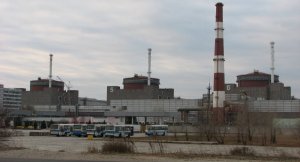
© Wikipedia/ Maxim Gavrilyuk
Sputnik – 21.05.2016
Washington is promoting commercial interests of the energy corporation Westinghouse in Europe, creating risks for European nuclear power plants, an article in Forbes read.
For example, in 2015, two of the Westinghouse-made fuel assemblies at the South Ukraine nuclear power plant (NPP) were found to be leaking. Since 2015, the NPP has been using US-made fuel.
In 2014, Ukraine and Westinghouse reached an agreement to supply nuclear fuel to some Ukrainian NPPs. The alleged reason behind the contract was the need to help Ukraine become energetically independent from Russia. Russia was a long-time supplier of nuclear fuel to Ukraine.
Experts have repeatedly warned that the deal would create serious risks for the safety of Ukrainian NPPs.
They cited the example of an incident which took place several years ago at the Temelin nuclear power plant, in the Czech Republic. The NPP operated on Russian-designed reactors and used fuel supplied by Westinghouse. The fuel was leaking and the rods were bending. All the Westinghouse fuel was removed from the core and replaced with Russian-made fuel.
As for Ukraine, the company announced that its fuel for Ukrainian NPPs had been improved.
Despite experts’ warnings, in March 2015, the first 42 fuel assemblies made by Westinghouse were loaded to the third reactor unit at the South Ukraine NPP.
According to Forbes, the two Westinghouse-made assemblies were found leaking during a scheduled outage at the third unit of the NPP.
The author of the article, Forbes contributor Kenneth Rapoza described how Washington has promoted Westinghouse’s interest in Eastern Europe, neglecting safety recommendations.
“Westinghouse is more than a brand name American power company. It’s a battering ram used by Washington to promote energy security,” the author wrote.
A source who wished to remain anonymous told Forbes that Westinghouse wants a market share in Eastern Europe in a bid to prevent the company from insolvency.
“Their new reactor division is loss-making, the fuel division is their only cash cow and it is not growing and existing margins are getting slimmer and slimmer. We think Westinghouse has spent millions of dollars to include nuclear fuel as part of the energy security narrative, and the current EU sentiment against Russia play into their hand,” the source said.
“But derailing nuclear projects while running into technical difficulties with Westinghouse fuel assemblies in Rosatom reactors is a dangerous way to promote energy security,” Rapoza noted.
According to former Czech Prime Minister Jiri Paroubek, the US has been promoting Westinghouse for years.
In the 1990s, US diplomats supported contribution between the Czech Republic and Westinghouse. The company pledged to improve Russian-designed nuclear plants to Western standards.
“However, the opposite proved to be true. Fuel assemblies delivered by Westinghouse were of inferior quality and higher price compared with than Russian fuel and caused frequent outages of Temelin reactors,” Paroubek told Forbes.
After, Westinghouse’s fuel assemblies were found leaking in the 2000s the Czech company CEZ decided to return to Russian-made nuclear fuel for the Temelin NPP.
“CEZ’s decision serves as a testament to the fact that the Russian fuel assembly was safer and that Washington was selling a product that did not quite work at the time, potentially putting nuclear power plants in danger,” the article read.
US presidential hopeful Hillary Clinton was also involved in promoting Westinghouse in Eastern Europe. In 2012 when she served as US State Secretary Clinton met with then Czech Prime Minister Petr Necas, using the energy security argument to promote the company.
According to the article, Westinghouse can produce fuel for Russia-designed reactors as well as Rosatom can build fuel assemblies for Western-designed power units. However, for third parties working with Westinghouse is less economically efficient.
“Russia is the cheaper producer of the two, so when countries turn to Westinghouse for the fuel assemblies, they have to pay a premium for diversification,” Rapoza wrote.
Nevertheless, the largest initiative by Westinghouse is squeezing Russia from the Ukrainian nuclear fuel market, using again the argument of diversifying supplies.
In 2012, the Ukrainian nuclear regulator banned the use of Westinghouse’s fuel assemblies in the country pending an investigation over the incident at the South Ukraine NPP.
“Two years later, then-Prime Minister, Arseniy Yatsenyuk consulted Westinghouse on picking a new nuclear safety regulator for his new government,” the author wrote citing a source in Ukraine.
In April, the Ukrainian Energy Ministry announced it would buy more nuclear fuel from Westinghouse. The company is planning to deliver five reloads of fuel to South Ukraine and Zaporizhia NPPs.
According to the author, Westinghouse’s commercial interests are closely tied to politics and thus the company neglects safety.
“Regardless, anti-Russia politics trumps technological problems,” Rapoza concluded.
Ukrainian witch-hunt website reopens, responds to criticism by leaking more journalists’ data
RT | May 20, 2016
A controversial Ukrainian website, which was condemned by many international organizations for leaking personal information about more than 4,000 journalists who reported from eastern Ukraine, responded to criticism by expanding the list with some 1,400 new names.
“After our publication, we saw strong public interest in the list. Many journalists demanded apologies and now we finally realize why. Our staff sincerely apologizes because the list we published is quite out of date,” the website said in a taunting statement.
The website, called Mirotvorets (Peacemaker), sparked international outcry last week when it published the personal data of thousands of journalists who have worked in eastern Ukraine in the past two years. The data was said to be obtained by “patriotic hackers” who stole it from computer networks of the de facto Donbass authorities.
People working for dozens of media outlets, including AP, AFP, Reuters, BBC, CNN, CCTV, Al Jazeera, RT, Deutsche Welle, the New York Times, Vice News and others were exposed by the leak. The publication was criticized by media professionals, journalists’ trade unions and political organization, including the OSCE and the EU.
Amid an international outcry, Kiev launched a criminal investigation into alleged violations of privacy. The website was shut down last Friday, only to reopen on Thursday this week. Its patron, Anton Gerashchenko, a Ukrainian MP and aide to the interior minister, commented on the revival by citing a maxim by German philosopher Friedrich Nietzsche. “What does not kill me, makes me stronger,” Gerashchenko wrote in English.
The MP earlier demanded that the criminal investigation against the website be closed and called for the resignation of the Ukrainian human rights ombudswoman, Valeria Lutovskaya, who is playing a key role in the Ukrainian campaign against Mirotvorets.
The website’s purported goal is to fight separatism and terrorism and it publishes personal data of anyone its contributors consider enemies of Ukraine. At least two Ukrainian public figures were killed days after their home addresses were leaked by the website.
Nuland’s Visit to Moscow: Has the US Arch Neocon Lost Her Bearings?
Sputnik – 18.05.2016
US Assistant Secretary for European and Eurasian Affairs Victoria Nuland has wrapped up her visit to Moscow. According to officials, Nuland came to the Russian capital to discuss the situation in east Ukraine. Adding his two cents about the real purpose of the visit, analyst Gevorg Mirzayan suggested that the secretary may have lost her bearings.
On Wednesday, Kremlin spokesman Dmitri Peskov explained the official reason for Nuland’s visit, saying that the two sides discussed the situation in the war-torn eastern Ukrainian region of Donbass, with the US sharing ‘first-hand information’ and looking “to establish a sort of working exchange mechanism” outside the Normandy format, which doesn’t include Washington.
In his own commentary on the visit, Expert Magazine columnist Gevorg Mirzayan clarified, saying that Nuland’s main official goal “is to spur the negotiating process on the Donbass and, in particular, on the holding of local elections in the Donetsk and Lugansk People’s Republics, one of the most important measures of the Minsk peace agreements.”
“At first glance, of course, it seems like Nuland came to the wrong city,” the analyst noted. “After all, it’s not Moscow that’s sabotaging the holding of elections in the Donbass, but Kiev. One of the key challenges for Ukrainian authorities is not to recognize the situation in the Donbass as a civil war. This is why Kiev comes out against the fulfillment of the political articles of the Minsk agreement, and its most important aspect: direct negotiations between Ukrainian authorities and the leaders of the breakaway republics.”
For now, Mirzayan writes, Kiev’s argument that the DPR and LPR leaders Alexander Zakharchenko and Igor Plotnitsky are not democratically elected, and therefore politically illegitimate, carries some weight. “However, after elections take place, Kiev will have to carry deal with the legitimate representatives of the Donbass,” and this is something Ukrainian authorities are desperately looking to avoid.
Speaking to Expert, former Ukrainian lawmaker Oleg Tsaryev emphasized that once elections are held, if the conflict between Kiev and the Donbass continues, “it will fall under the definition of a civil war, and Kiev’s actions will be treated as a war crime.” Therefore, he said, “if the Americans really wanted to ensure the implementation of the agreements, Victoria Nuland would be sitting in Kiev, and speaking in an unyielding tone to its lawmakers, faction heads and oligarchs. Washington has many tools at its disposal: the threat of prohibiting elites from entering the EU, the threat of halting foreign bank lending, the confiscation of property and the seizure of accounts abroad.”
Therefore, Mirzayan notes, “it’s entirely possible that Nuland came to Moscow to offer to exert such pressure on Kiev in exchange for some concessions from the Russian side – on Ukraine, Syria or some other issue. The US is attempting to convince the Kremlin that it must ensure Kiev’s complaisance; after all, the lifting of anti-Russian sanctions depends on the implementation of the Minsk agreements.”
“However, it’s also possible that Nuland will leave Moscow empty-handed, or with a minimum compensation. Because in reality, all she is offering is to ensure a vote in Ukraine’s parliament, while the parties have to not only negotiate on the adoption of the law, but also its contents.”The current bill submitted to the Ukrainian parliament is out of sync with the Minsk agreements, according to the analyst. “But Ukrainian authorities and their Western partners could make it so that further discussions were held about its passing, rather than further changes to the bill. And then, if Kiev gave way and accepted the current version of the bill, it would be perceived as a maximum concession, and the Kremlin would have a difficult time requesting corrections.”
The same thing might happen with the electoral law, the analyst warns. “Those familiar with the document say that it has rather sensible requirements.”
“There are four main positions in this law,” Opposition Bloc lawmaker Yuriy Boyko told Expert. “The election must be in accordance with Ukrainian legislation, Ukrainian media must be given access, electoral commissions must be formed and the elections must take place with the oversight of international observers.”
However, Mirzayan notes, “the real question is how these requirements would be implemented.” For their part, the analyst suggests, Ukrainian officials and analysts have openly said that the law would be deliberately designed to include a whole a series of nuances making it unacceptable to representatives from the breakaway regions.
This, according to Ukrainian political analyst Mikhail Pogrebinsky, “would enable Ukraine, at the Normandy format level, with the participation and support of the United States, to say that we are fulfilling our part of the agreement, but the Donbass is not, and therefore no elections will ever be held.”
For its part, Mirzayan notes, Moscow “does not find this scenario to be acceptable. If the Minsk agreement cannot be implemented in full, the Kremlin may find it advantageous to simply freeze the situation until a new, more pragmatic government emerges in Kiev. Right now, time is on Russia’s side, and the attitudes of the European and even American elites toward Ukraine are changing, and becoming more inclined to seek compromise with Russia.”
Furthermore, “the situation in Ukraine itself is also changing, and not just economically but politically as well. President Petro Poroshenko recently succeeded in consolidating his power, and now controls the cabinet of ministers, the parliament, the prosecutor general and the security forces. The Americans either could not or did not want to interfere, and in the short term this is his victory.””However, in the medium term, such a concentration can be problematic.” After all, “Poroshenko no longer has a lightning rod in the form of [former Prime Minister] Yatsenyuk, who could be blamed for all the country’s economic problems and dismissed. Poroshenko has become personally responsible for everything that happens in the country, while his opponents, removed from power and its privileges, have received a carte blanche to make a name for themselves by criticizing the government and the president.”
“And this is not even mentioning the fact that the population is very tired of the revolutionary enthusiasm of the authorities and the parliament. The majority of Ukrainians have not forgotten about Crimea. However, if they begin to perceive the Donbass as a real civil war, new authorities will be fully capable of resolving the conflict in the spirit of Minsk-2. This is the same thing that Russia seeks, and is something it can achieve without making significant concessions to Victoria Nuland.”
Naturally, Mirzayan emphasizes, “the Kremlin will also have to work very hard to ensure that the conflict remains frozen. The authorities in Donbass have long and persistently sought to hold local elections,” warning that if Brussels and Washington could not force Kiev to fulfill their obligations under the Minsk agreements, they would hold elections independently.
“And while formally such elections would not contradict the Minsk agreements (they simply wouldn’t be recognized), they would create a negative sentiment around the Russian position. This is exactly what Kiev wants, and what Moscow wants to avoid on the eve of a serious dialogue with the EU about the future of the anti-Russian sanctions,” the analyst concludes.
Read more:
Nuland Starts Moscow Visit by Meeting ‘Young Leaders’
Nuland Warns Donbas to Ensure Elections are Held Within Minsk Accord
OSCE: East Ukraine’s Donbass Showing Signs of ‘Frozen Conflict’
As NATO Beckons, Ukraine Signs Military Cooperation Plan With Turkey
Sputnik – 16.05.2016
KIEV – Ukraine and Turkey have signed on Monday a military cooperation plan, Ukrainian General Staff said.
“Taking into account the geopolitical situation in the Black Sea region, we are continuing to develop military cooperation with Turkey as a Ukrainian strategic partner. In recent time the cooperation between Ankara and Kiev gained additional weight. Today Ukrainian and Turkish Armed Forces signed an implementation plan of military cooperation,” the General Staff said in a statement.
The General Staff says the document would determine areas of military cooperation between the states until 2020. It is also said to contain a number of steps aimed at improving operational capabilities of the Ukrainian army.
“Implementation of practical measures in the military sphere will allow, on the one hand, to strengthen the ties with our southern neighbor, and, on the other hand, to focus efforts on the final goal – Ukrainian readiness to join the NATO in 2020,” the General Staff added.
In December 2014, the Ukrainian parliament amended two laws rejecting its neutral status. Ukraine set the goal to be ready for joining NATO in 2020. In mid-December 2015, Ukraine and NATO signed a roadmap on defense-technical cooperation.
Outrage as Ukrainian witch-hunt site leaks personal info of ‘terrorist-collaborating journalists’
RT | May 12, 2016
Governments, NGOs and journalists across the globe have condemned a leak of personal data of more than 4,000 media staff, accused by pro-Kiev activists of “collaborating with terrorists” for their reporting from war-torn eastern Ukraine.
The names on the list include people working for respectable outlets, such as news agencies AFP, AP and Reuters, broadcasters BBC, CNN, CCTV, Deutsche Welle and Al Jazeera, newspapers, including the New York Times, Gazeta Wyborcza and Kyiv Post, news websites Vice News and Daily Beast and many others. RT journalists are on the list too.
“This is a very alarming development which could further endanger the safety of journalists, who report on issues of public interest and they should not be harassed for doing their job,” said OSCE Representative on Freedom of the Media Dunja Mijatović.
Some of the journalists, whose data was leaked, have complained they have started to receive threats.
“After being accused of ‘working for the terrorists’ and having their personal data, phone numbers and emails made public, they started receiving phone calls and emails with threats, and some Ukrainian politicians have called for these journalists to be labeled ‘enemies of Ukraine’ and to prevent them from working in the country completely,” an open letter, from Kiev-based journalists representing local and international media, stated.
“We are aware that details of staff accreditation from a wide range of media organizations – including the BBC – have been hacked. We have taken immediate and appropriate action to protect privacy and security,” said the BBC.
Publication was condemned by a number of governments, international organizations and media organizations. EU envoy to Ukraine Jan Tombinski said that while the leak was published by a privately-run website, he held the Ukrainian authorities accountable for endangering journalists and said the database should be blocked.
The website that leaked the personal data is called Mirotvorets (Peacekeeper). It purports to be fighting separatism and terrorism and publishes personal data of anyone its contributors consider enemies of Ukraine. Mirotvorets was founded in January 2015 by Georgy Tuka, who now serves as a deputy to the minister responsible for dealing with rebel-held areas and refugees. Among its high-ranking supporters is Anton Gerashchenko, an MP and aide to the interior minister. The website’s partners include the Security Service of Ukraine and the country’s Interior Ministry.
The project has caused controversy in the past. At least two Ukrainian public figures, writer Oles Buzina and former lawmaker Oleg Kalashnikov, were killed days after their home addresses were published by Mirotvorets. Last year, Gerashchenko called for leaking the personal data of Russian soldiers and officers taking part in the counter-terrorism mission in Syria, so that Islamic State sympathizers could find and kill them.
The latest leak includes data of journalists and NGO employees, who have been given accreditation by the de facto authorities of the rebellious eastern Ukrainian regions over the past two years. Gerashchenko said the data was obtained as a result of a hack, at least a month before publication.
The Interior Minister’s aid praised “patriot hackers” for exposing “a powerful propaganda machine that has an impact on par with the propaganda by [Nazi Germany’s] Goebbels or Stalin” and demanded more budget money to fight it.
Accompanying the leak, which was first posted on May 7, but widely disseminated this week, was a statement claiming “these journalists are cooperating with the militants of a terrorist organization.”
Derek Monroe, independent reporter and writer, who has received death threats from people unhappy with his reporting on the Ukraine crisis, told RT that serious measures should be undertaken in order to protect journalists, as the information can now “trickle down everywhere” and “once it’s comes out of the box, it’s very hard to put back.”
“What happened in Kiev is not only illegal, but is an outrage,” Monroe said.
Investigative journalist Russ Baker said the fact that journalists might nowadays “by definition” be regarded as enemies points towards a significant growth of extremism.
“The situation in the Ukraine is particularly striking because the fact that these people even think that a journalist going to an area makes them an enemy just indicates how extremism has risen to a rather staggering level. Journalists always go to war-zones, they always go to places where there is conflict, and to think that by definition that makes them unfair or somebody that needs to be threatened is pretty staggering,” Baker told RT.
Read more:
Top Ukraine official backs idea ‘to help ISIS take revenge on Russian soldiers in Syria’
US Ambassador to Hungary: Overthrow Assad, Let in Refugees, and Fight Russia… or Else!

US Ambassador to Hungary, Coleen Bell
By Daniel McAdams | Ron Paul Institute | May 6, 2016
If anyone wants a short course on what’s wrong with US diplomacy look no further than US Ambassador to Hungary Coleen Bell’s speech Friday to the Foreign Affairs Committee of the Hungarian Parliament. In typical diplo-speak there was plenty of flowery language about shared values, fish swimming together in the same water (?), sappy poetics like “together, out of that winter, we would force the spring,” and talk of together being “part of the world’s greatest military and political alliance.”
But make no mistake: Inside Ambassador Bell’s velvet glove is an iron fist, poised to strike should Washington’s annoyingly independent-minded Fidesz-led government step out of line on the big issues. And by “big” issues it should be understood that the US means the issues it considers in the interests of its own foreign policy, not those in Hungary’s interest.
Message to Hungary: do as we say or you will be sorry.
Ambassador Bell’s previous job was as a television soap opera producer, but raising more than two million dollars for the election of Barack Obama “earned” her the position of top US diplomat in Hungary.
The former television producer does know how to deliver her lines, though. She lectured the Hungarians about Syria, explaining to them that ISIS and Assad are both equally evil and both equally to blame for the disaster that is Syria.
ISIS has flourished in Syria, she told the Hungarians, because it “exploits the chaos of civil war in Syria, a conflict that has now claimed more than 250,000 lives.” But she does not mention that it was US backing for “regime change” in Syria — beginning at least in 2006, as we learn from a critical Wikileaks-released US Embassy Damascus memo — that created that very chaos she blames for the rise of ISIS.
In fact it is propaganda to call what is happening in Syria a “civil war,” as the forces battling the Syrian government are all sponsored by foreign powers like Saudi Arabia, Turkey, and the US. It is a proxy war against the Syrian government, not a civil war.
She then tells the Hungarians ISIS will never be defeated in Syria until Assad is overthrown:
[W]e know we won’t be able to defeat Daesh in Syria unless we also deal with the civil war and particularly with Assad. Because as long as Assad is there, he remains the most powerful magnet for foreign fighters and recruits to Daesh.
Does she assume Hungarians are so stupid that they believe that by attacking and beating ISIS back nearly to Raqqa (with Russian assistance), the Syrian government of Assad is actually benefitting ISIS? Attacking ISIS means Assad is on the side of ISIS?
“Since February, the cessation of hostilities reduced the violence in Syria, allowing millions of Syrian civilians to take the first steps toward reclaiming a normal life,” says the Ambassador, without even mentioning what brought the ceasefire about in the first place: Russian participation along with the Syrian army in the decimation of al-Qaeda and ISIS positions in northwest and central Syria. In fact it is absolutely bizarre that in the world of Ambassador Bell (and the State Department hacks who drafted her speech), the Russian intervention against al-Qaeda and ISIS simply never took place or was too inconsequential to mention.
Is any Hungarian so ill-informed that he would believe such nonsense?
Bell used the tragedy in Syria to pressure Hungary on the (largely American-made) refugee crisis. Hungary’s firebrand prime minister, Viktor Orban, has, along with several of his central European counterparts, stood up to Brussels’ (and Washington’s) demands that Hungary take in tens of thousands of migrants who heeded German Chancellor Angela Merkel’s call to come to Europe and enjoy lots of free stuff.
Last month Orban told Hungarian Radio that if he accepts the EU migrant resettlement plan, “it would be determined not in Hungary but in Brussels who we have to live together with, and how the ethnic composition of the country will look in future.” He has rejected such a notion.
“Every sovereign nation has the right and an obligation to protect its borders,” Bell told the Hungarian Parliament, “But every nation, as a part of the international community, also has a fundamental obligation to help refugee populations seeking safety.”
Translation: your sovereignty is not determined by you, but rather by us. It is a practice articulated by Orwell in 1984 whereby a person can think two completely contradictory thoughts at the same time seemingly without any mental conflict.
But here is where the iron fist inside Bell’s velvet glove glints in the sun. She pointedly condemned the Hungarian government position by praising those in Hungary who hold the opposite view, i.e. the Hungarian opposition:
We commend the humanitarian spirit of Hungarian leaders, law enforcement and military personnel, and ordinary citizens who are responding to this crisis with generosity and compassion.
Then she gives Hungary Washington’s marching orders:
We continue to stress that any solution to these migration challenges should focus on saving and protecting lives, ensuring the human rights of all migrants are respected, and promoting orderly and humane migration policies. That includes the support of all Member State governments for the refugee agreement forged between the EU and Turkey.
Translation: Hungary must support the EU agreement with Turkey which would see tens of thousands of migrants settled in EU member countries, including Hungary itself. The problem is that the Hungarian parliament explicitly rejected Brussels’ forced migrant settlement plans for Hungary and plans to hold a nationwide referendum on the subject. Bell is saying here that Hungary’s elected representatives and even the Hungarian voter must be ignored and Brussels’ dictate obeyed.
When it comes to Russia, Ambassador Bell also has some instructions for Budapest: Moscow is your enemy and don’t you forget it.
She told Hungarian parliamentarians:
As many Hungarians have reminded me, you need no introduction to the nature of Russian aggression. Your response has always been to show resolve. Our best weapons, in fact, are resolve and solidarity.
Weapons? Quite a loaded word.
Orban has been seen in Washington as insufficiently enthused about sanctions on Russia, which hurt Hungarian trade and business interests. Ambassador Bell makes it clear that Hungary must adhere to US demands of Russia, even if they are completely incoherent:
As the United States and Hungary have both stated many times, Russia has a simple choice: fully implement Minsk or continue to face sanctions. Russia must withdraw weapons and troops from the Donbas; Russia must ensure that all Ukrainian hostages are returned; Russia must allow full humanitarian access to occupied territories; Russia must support free, fair, and internationally-monitored elections in the Donbas under Ukrainian law; and most important, Russia must restore Ukraine’s sovereignty.
That last point should be taken to mean that Russia must ignore the will of the people of Crimea who voted in overwhelming numbers to re-join Russia after just 25 years as part of independent Ukraine.
Not to worry, Ambassador Bell is confident that Budapest will do everything Washington tells it to do:
More than this, Hungary is equal to the great challenges of our times, and the United States is counting on you.
To stiffen their spine, US Ambassador Bell reminds the Hungarians that they are part of “our global order” and touts the great examples set by the US, including:
Our system of international economic, political, and social norms and institutions have kept the peace and fostered prosperity for decades. Whether it is international law, environmental protection, trade regulations, anticorruption laws, child labor laws, human rights safeguards, the nonproliferation regime, public health systems, international financial institutions, UN peacekeeping, or a robust civil society – these norms and institutions give life and stability to our global order.
In the era of NSA spying on innocent Americans, Guantanamo, CIA torture, weapons sales to the world’s worst dictators (Saudi Arabia for one), destruction of the environment by the US war machine, “regime change” operations that violate the sovereignty of other states, and outright aggression in opposition to US and international law (Libya, etc.), Bell’s suggestion that “our global order” is the pinnacle of civilization should get a laugh out of most Hungarians. In fact, from Libya to Syria to Ukriane to Pakistan and Afghanistan, the US interventionist attempt to forge a global order with blood and bullets will go down in history along with the authoritarianisms of the 20th century as one of humanity’s darkest chapters.
Here is the short version of Ambassador Bell to Budapest: “to be our partner means you do what we say whether or not it is in your interest.”
Funny, that was Moscow’s message to Budapest from 1948 to 1989.
If Russia Had ‘Freed’ Canada
By Joe Lauria | Consortium News | May 5, 2016
As the United States plans to move thousands of NATO troops to Russia’s borders and continues to bolster a fiercely anti-Russian regime in neighboring Ukraine, the official line in Washington and its subservient corporate media is that beneficent America is simply seeking to curtail Moscow’s “aggression.” But the U.S. government and media might look at things quite differently if the shoe were on the other foot.
What, for instance, would the U.S. reaction be if Russia instead had supported the violent overthrow of, say, Canada’s government and assisted the new Ottawa regime’s “anti-terrorist operations” against a few rebellious “pro-American” provinces, including one that voted 96 percent in a referendum to reject the new Russian-backed authorities and attach itself to the U.S.?
If the U.S. government tried to help these embattled “pro-American” Canadians – and protect the breakaway province against the Russian-installed regime – would Washington see itself as the “aggressor” or as simply helping people resist anti-democratic repression? Would it view Russian troop movements to the U.S. border as a way to stop an American “invasion” or rather an act of “aggression” and provocation by Russia against the United States?
The Ukraine Reality
Before playing out this hypothetical scenario, let’s look at the actual scene in Ukraine today as opposed to the gross distortion of reality fed the American people by the U.S. mainstream media the past two years. The reality is not the State Department’s fable of a pro-democracy “revolution” cleaning up corruption and putting Ukrainian people first.
In the real world instead, extreme right-wing nationalists took control of a popular protest by mostly western Ukrainians to spearhead a violent coup that succeeded on Feb. 22, 2014, in overthrowing President Viktor Yanukovych, a man whom I interviewed in 2013 after he had been democratically chosen in an election certified by the Organization for Security and Cooperation in Europe.
Proof of the U.S. role in the coup came in a leaked telephone conversation several weeks earlier between U.S. Assistant Secretary of State for European and Eurasian Affairs Victoria Nuland, and Geoffrey Pyatt, the U.S. ambassador to Ukraine. In the conversation, Nuland and Pyatt discussed how the U.S. could “midwife” the unconstitutional change of government and they rated which Ukrainian politicians should be put in charge, with Nuland declaring “Yats is the guy,” a reference to Arseniy Yatsenyuk.
As for the European Union’s less aggressive approach to the Ukraine situation, Nuland declared: “Fuck the E.U.”
Nevertheless, after the coup, Western governments denied there ever was a coup, peddling the line that Yanukovych simply “ran away,” as though he woke up one morning and decided he didn’t want to be president anymore.
In fact, on Feb. 21, to contain the mounting violence, Yanukovych signed a European-brokered deal to reduce his powers and to hold early elections. But the next day, as right-wing street-fighters overran government buildings, Yanukovych fled for his life – and the West moved quickly to consolidate a new government under anti-Russian politicians, including Nuland’s choice—Yats as prime minister. (Yatsenyuk remained prime minister until last month when he resigned amid complaints that his stewardship had been disastrous for the Ukrainian people.)
A Resistance Emerges
Since the vast majority of Yanukovych’s support came from the ethnically Russian eastern half of the country, some Yanukovych backers rose up to challenge the legitimacy of the coup regime and to defend Ukraine’s democratic process.
Instead the West portrayed this resistance as a Russian-instigated rebellion against the newly minted and U.S.-certified “legitimate” government that then launched a violent repression of eastern Ukrainians who were deemed “terrorists.”
When Russia supported the resisters with weapons, money and some volunteers, the West accused Russia of an “invasion” and “aggression” in the east. But there has never been satellite imagery or other proof of this alleged full-scale Russian “invasion.”
In the midst of the Kiev “anti-terrorist” offensive in the east, on July 17, 2014, a Malaysian commercial airliner, Flight MH-17, was shot out of the sky, killing all 298 people on board. The United States, again offering no proof, immediately blamed Russia.
Over the past year, the fighting has been largely contained after Russian, Ukrainian and European leaders negotiated the Minsk Accords, though they are far from being implemented and widespread violence could break out again at any time.
Throughout the entire crisis the United States has insisted its motives are pure, including its new plans for deploying some 4,000 NATO troops, including about half American, on Russia’s Eastern European borders north of Ukraine.
President Barack Obama told the U.N. General Assembly last year that the U.S. had no economic interests in Ukraine. But former State Department official Natalie Jaresko served as Ukraine’s finance minister until recently and Vice President Joe Biden’s son sits on the board of a major Ukrainian company. U.S. investment also has increased since the coup.
Yanukovych’s overthrow occurred after he chose a Russian economic plan rather than sign an association agreement with the European Union, which Ukrainian economic analysts warned would cost the country $160 billion in lost trade with Russia.
The E.U. plan would also have opened Ukraine to Western neoliberal economic strategies designed to exploit the country for the benefit of Western capital and local oligarchs (one of whom, Petro Poroshenko, emerged as the new president).
Turning the Tables
To help American readers better understand what has transpired in Ukraine, it may be useful to see what it would be like if the tables were turned. What would the story be like if Russia played the role of the U.S. and Canada the role of Ukraine? Most Americans would not be pleased.
In this reverse scenario, the world’s mainstream media would follow Moscow’s line and present the story as a U.S. “invasion” of Canada. The media would explain the movement of Russian troops to the U.S. border as nothing more than a peaceful step to deter U.S. “aggression.”
But Americans might see matters differently, siding with the breakaway Maritime provinces resisting the Moscow-engineered violent coup d’etat in Ottawa. In this scenario, Prince Edwards Islanders would have voted by over 90 percent to secede from the pro-Russian regime in Ottawa and join the United States, as Crimea did in the case of Ukraine. People in Nova Scotia and New Brunswick – stressing their close historic ties to America – also would make clear their desire not to be violently absorbed by the Ottawa coup regime.
In this alternative scenario, Moscow would condemn Prince Edwards Island’s referendum as a “sham” and vow never to accept its “illegal” secession. The popular resistance in Nova Scotia and New Brunswick would be denounced as “terrorism” justifying a brutal military crackdown by Russian-backed Canadian federal troops dispatched to crush the dissent. In this “anti-terrorist operation” against the breakaway region, residential areas would be shelled killing thousands of civilians and devastating towns and cities.
In this endeavor, the Canadian army would be joined by Russian-supported neo-fascist battalions that had played a crucial role in the overthrow of the Canadian government. In the Maritime city of Halifax, these extremists would burn alive at least 40 pro-U.S. civilians who took refugee in a trade union building. The new government in Ottawa would make no effort to protect the victims, nor conduct a serious investigation to punish the perpetrators.
Ignoring a Leak
Meanwhile, proof that Russia was behind the overthrow of the elected Canadian prime minister would be revealed in a leaked conversation between Moscow’s foreign ministry chief of the North America department and the Russian ambassador to Canada.
According to a transcript of the leaked conversation, the Moscow-based official would discuss who the new Canadian leaders should be several weeks before the coup took place. Russia would launch the coup when Canada decided to take a loan package from the U.S.-based International Monetary Fund that had fewer strings attached than a loan from Russia.
Russia’s ally in Beijing would be reluctant to back the coup. But this would seem to be of little concern to Moscow’s man who is heard on the tape saying, “Fuck China.” Although this conversation would be posted on YouTube, its contents and import would be largely ignored by the global mainstream media, which would insist there was no coup in Ottawa.
Yet, weeks before the coup, the Russian foreign ministry official would be filmed visiting protesters camped out in Parliament Square in Ottawa demanding the ouster of the prime minister. The Russian official would give out cakes to the demonstrators.
The foreign ministers of Russian-allied Belarus and Cuba would also march with the protesters through the streets of Ottawa against the government. The world’s mainstream media would portray these demands for an unconstitutional change of government as an act of “democracy” and a desire to end “corruption.”
In a speech, the Russian foreign ministry official would remind Canadian businessmen that Russia had spent $5 billion over the past decade to “bring democracy” to Canada, much of that money spent training “civil society” activists and funding anti-government “journalists.” The use of these non-governmental organizations to overthrow foreign governments that stand in the way of Russia’s economic and geo-strategic interests would have been well documented but largely ignored by the global mainstream media.
But recognizing the danger from these “color revolution” strategies, the United States would move to ban Russian NGOs from operating in the U.S., a tactic that would be denounced by Russia as America’s rejection of “democracy.”
The Coup Succeeds
The Canadian coup would take place as protesters violently clashed with police, breaking through barricades and killing a number of police officers. Snipers would fire on the police and the crowd from a nearby Parliament Square building under the control of hardline pro-Russian extremists. But the Russian government and the mainstream media would blame the killings on the embattled Canadian prime minister.
To stem the violence, the prime minister would offer to call early elections but instead would be driven from office violently by the pro-Russian street gangs. Russia and the global mainstream news media would praise the overthrow as a great step for democracy and would hail the pro-Russian street fighters who had died in the coup as the “Heavenly Hundred.”
Following the coup, Russian lawmakers would compare President Barack Obama to Adolf Hitler for allegedly sending U.S. troops into the breakaway provinces to protect the populations from violent repression, and for accepting the pleas of the people of Prince Edward Island to secede from this new Canada.
Obama would be widely accused of ordering an “American invasion” and committing an act of “American aggression” in violation of international law. But the Maritimes would note that they had long ties to the U.S. dating back to the American Revolution and didn’t want to live under a new regime imposed by a faraway foreign power.
Russia would claim intelligence proving that U.S. tanks crossed the Maine border into New Brunswick, but would fail to make the evidence public. Russia would also refuse to reveal satellite imagery supporting the charge. But the claims would still be widely accepted by the world’s mainstream news media.
For its part, Washington would deny it invaded but say some American volunteers had entered the Canadian province to join the fight, a claim met with widespread media derision. Russia’s puppet prime minister in Ottawa would offer as proof of an American invasion just six passports of U.S. soldiers found in New Brunswick.
Taking Aim at Washington
When – during one of the new regime’s “anti-terrorist” offensives – a passenger jet would be shot down over Nova Scotia killing all on board, Russia would accuse President Obama of being behind the outrage, charging that the U.S. had provided the powerful anti-aircraft missile needed to reach a plane flying at 33,000 feet.
But Moscow would refuse to release any intelligence to support its claim, which would nevertheless be accepted by the world’s mainstream media.
The plane’s shoot-down would enable Russia to rally China and other international allies into imposing a harsh economic boycott of America to punish it for its “aggression.”
To bring “good government” to Canada and to deal with its collapsing economy, a former Russian foreign ministry official would be installed as Canada’s finance minister, receiving Canadian citizenship on her first day on the job.
Of course, Russia would deny that it had economic interests in Canada, simply wanting to help the country free itself from oppressive American domination. But Russian agribusiness companies would take stakes in Albertan wheat fields and the son of Russia’s prime minister as well as other well-connected Russians would join the board of Canada’s largest oil company just weeks after the coup.
Russia’s ultimate aim, beginning with the imposition of the sanctions on the U.S. economy, would appear to be a “color revolution” in Washington, to overthrow the U.S. government and install a Russia-friendly American president.
This goal would become clear from numerous statements by Russian officials and academics. A former Russian national security adviser would say that the United States should be broken up into three countries and write that Canada would be the stepping stone to this U.S. regime change. If the U.S. loses Canada, he would declare, it would fail to control North America.
But the world’s mainstream media would continue to frame the Canadian crisis as a simple case of “American aggression.”
This fictional scenario perhaps lays bare the absurdity of the U.S. version of events in Ukraine.
Joe Lauria is a veteran foreign-affairs journalist based at the U.N. since 1990. He can be reached at joelauria@gmail.com and followed on Twitter at @unjoe.
Featured Video

Dan Dicks with James Corbett on Solutions Watch
or go to
Aletho News Archives – Video-Images
From the Archives
MMR (Measles, Mumps and Rubella) – Vaccine Risk Statement
MMR Vaccine (Measles, Mumps, and Rubella) Is It Safer Than Measles, Mumps and Rubella?
Physicians for Informed Consent | December 2024
… It has not been proven that the MMR vaccine is safer than measles, mumps, and rubella. The vaccine package insert raises questions about safety testing for cancer, genetic mutations, and impaired fertility. Although VAERS tracks some adverse events, it is too inaccurate to measure against the risk of measles, mumps, and rubella. Clinical trials do not have the ability to detect less common adverse reactions, and epidemiological studies are limited by the effects of chance and possible confounders. Safety studies of the MMR vaccine are particularly lacking in statistical power. A review of more than 60 MMR vaccine studies conducted for the Cochrane Library states, “The design and reporting of safety outcomes in MMR vaccine studies, both pre- and post-marketing, are largely inadequate.”19 Because permanent sequelae (aftereffects) from measles, mumps, and rubella are so rare (especially in children with normal levels of vitamin A and infected after birth),6,15-17 the level of accuracy of the research studies available is insufficient to rule out the possibility that the MMR vaccine causes greater death or permanent disability than measles, mumps, and rubella. – Read full article
Blog Roll
 Aletho News
- Iraqi resistance group rejects disarmament, vows to maintain support for Lebanon
- Sheikh al-Asadi warns of Iraqi government compliance with US demands
- How to MAKE THE CONSPIRATORS PAY for their crimes! Dan Dicks with James Corbett on Solutions Watch
- There’s a drought in academia: A drought in honest research on the subject of drought and other weather extremes
- Department of War Awards $20.7 Billion Contract to Raytheon for Air-to-Air Missiles
- ‘Distance yourselves from Israel’: IRGC urges US population to question govt policies
- America’s Greenland deal has a radioactive backstory
- The RAF Fairford ‘terror plot’: Unpacking escalation in the UK echo-chamber
- EU Council Advances Chat Control 2.0 Scanning Proposal
- Ex-Greek MEP files complaint against Israeli spyware firm over alleged Pegasus surveillance
- If Americans Knew
- An error has occurred; the feed is probably down. Try again later.
- No Tricks Zone
- Two More Paleo Reconstructions Affirm Meters-Higher Sea Levels Across Ireland, Brazil 7000-6000 Years Ago
- New Study: Earth And Venus Surface Warmth Largely Explained By Convection And Lapse Rate, Not CO2 Or Radiation
- 2025 Nature Paper Claiming Worsening Global Drought Gets RETRACTED …Heavily Flawed
- New Study: ‘Global Drought Shows No Detectable Recent Acceleration Under Climate Warming’
- Economic Masterminds: German Socialists Suggest Taxing Productivity Gains Stemming From Using AI
- The South China Sea Has Not Been Cooperating With The Climate Change Narrative
- Energy Crisis: Germany Enters Heating Season With Historically Low Gas Reserve Fill Levels
- New Study: The Antarctic Ice Sheet Gained Mass From 2020-2024 Due To Staggering Snow And Ice Accumulation
- Study: Ocean Heating Rates From Thousands Of Years Ago ‘Dwarf’ Modern Ocean Heating Rates
- Climate Extremists Target, Attack Large-Scale Power Grid Infrastructure In Germany!

