NATO to Form Allied Fleet in the Black Sea: Plans Fraught with Great Risks
By Dmitriy SEDOV | Strategic Culture Foundation | 04.05.2016
Finally, it has become clear what the world has been set to expect from the NATO summit to be held in Warsaw on July 8-9. Summing things up, it is clear that the Alliance is moving to the east. It plans to create a Black Sea «allied fleet». It should be done quickly – the standing force should be formed by July.
The idea has been put forward by Romanian President Klaus Iohannis who probably wants to leave a historic legacy. The «allied fleet» is to comprise the warships from Germany, Italy, Turkey and the United States. At present, non-Black Sea NATO vessels visit the Black Sea only during exercises. The ships from Romania, Bulgaria, Ukraine and Georgia may join the force on permanent basis.
The 1936 Montreux Convention regulates the transit of naval warships. The document restricts outside navies’ access to the Turkish Straits and the Black Sea to 21 straight days per warship, and a maximum aggregate tonnage of 45,000 tons, with any one vessel no heavier than 15,000 tons.
Non-Black Sea states must also give Turkey a 15-day notice before sending warships through the straits.
International law is not strictly observed nowadays, so this problem could be solved. But what mission the new NATO standing force in the Black Sea is destined for?
A bit more than a couple of years ago Washington and Brussels had plans to make Sevastopol a NATO naval base. For many centuries the city has served as an outpost to protect the peninsula. After Crimea was reunited with Russia, Sevastopol became a fortified area with integrated command and control, intelligence and reconnaissance, anti-air, anti-surface ship and anti-submarine warfare capabilities.
Sevastopol’s reunification with Russia was a great frustration for NATO planners. Now they start to mull retaliatory measures. The «allied fleet» is an element of broader strategic plans. A few ships cannot tip the balance of forces in the Black Sea. Neither US, nor Romanian surface ships, nor the Ukrainian frigate Hetman Sahaydachniy escorted by rubber boats, or German conventional submarines pose any threat to Sevastopol. But it may change in the future. The Montreux convention can be changed (or violated), public opinion can be influenced and democratic parliaments can be convinced to approve allocations for creating a really strong maritime force in the Black Sea with Odessa as its home base. The port could be upgraded to host a large naval force.
Then the situation will be escalated to the days of the Cold War. The status of Ukraine led by Petro Poroshenko will change, if the president still remains in power and the Hetman Sahaydachniy still keeps afloat. Poroshenko is happy. He is impatiently waiting for the July NATO summit. The event can ultimately do away with whatever is left of «détente», «reset» etc. and bring the world back to the days of uncompromised mutual assured destruction.
Ukraine Bans Eight Reporters From Covering Odessa Massacre Anniversary
Sputnik – 02.05.2016
ODESSA — Eight foreign reporters were prohibited from entering the southern Ukrainian city of Odessa to cover the events commemorating the second anniversary of the massacre in the city, a lawyer representing one of the people accused of involvement in the deadly events said Monday.
“About eight journalists were not allowed to enter [the city],” Kirill Shevchuk told RIA Novosti.
He added that the reporters, including those from Poland, France, the Netherlands and Germany, were turned back at passport control in Odessa’s airport.
On May 2, 2014, pro-Kiev radicals blocked anti-government protesters in Odessa’s House of Trade Unions and set the building on fire by hurling Molotov cocktails inside. According to the official data, 48 people died and more than 250 were injured in the fire. No perpetrators have been brought to justice.
The mourning rally was scheduled for 2 p.m. local time (11:00 GMT), but because of an alleged bomb threat local authorities blocked the access to the tragedy site for people who wanted to commemorate the victims of the massacre.
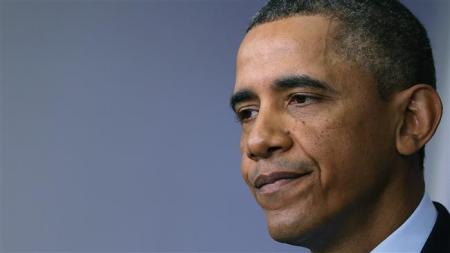
President Obama: The Race for the Imperial Legacy
By James Petras :: 04.29.2016
President Obama is racing forward to establish his imperial legacy throughout Russia, Asia and Latin America. In the last two years he has accelerated the buildup of his military nuclear arsenal on the frontiers of Russia. The Pentagon has designed a high tech anti-missile system to undermine Russian defenses.
In Latin America, Obama has shed his shallow pretense of tolerating the center–left electoral regimes. Instead he is has joined with rabid authoritarian neo-liberals in Argentina; met with the judges and politicians engineering the overthrow of the current Brazilian government; and encouraged the emerging far-rightwing regimes in Peru under Keiko Fujimori and Colombia under President Santos.
In Asia, Obama has clearly escalated a military build-up threatening China’s principle waterways in the South China Sea. Obama encouraged aggressive and violent separatist groupings in Hong Kong, Tibet, Xinjian and Taiwan. Obama invites Beijing billionaires to relocate a trillion dollars in assets to the ‘laundry machines’ of North America, Europe and Asia. Meanwhile he has actively blocked China’s long-planned commercial ’silk route’ across Myanmar and west Asia.
In the Middle East, President Obama joined with Saudi Arabia as Riyadh escalated its brutal war and blockade in Yemen. He directed Kenya and other African predator states to attack Somalia. He has continued to back mercenary armies invading Syria while collaborating with the Turkish dictator, Erdogan, as Turkish troops bomb Kurdish, Syrian and Iraqi fighters who are engaged on the front lines against Islamist terrorism.
President Obama and his minions have consistently groveled before the Jewish State and its US Fifth Column, massively increasing US ‘tribute’ to Tel Aviv. Meanwhile, Israel continues to seize thousands of acres of Palestinian land murdering and arresting thousands of Palestinians, from young children to aged grandparents.
The Obama regime is desperate to overcome the consequences of his political, military and economic failures of the past six years and establish the US as the uncontested global economic and military power.
At this stage, Obama’s supreme goal is to leave an enduring legacy, where he will have: (1) surrounded and weakened Russia and China; (2) re-converted Latin America into an authoritarian free-trade backyard for US plunder; (3) turned the Middle East and North Africa into a bloody playpen for Arab and Jewish dictators bent on brutalizing whole nations and turning millions into refugees to flood Europe and elsewhere.
Once this ‘legacy’ is established, our ‘Historic Black President’ can boast that he has dragged our ‘great nation’ into more wars for longer periods of time, costing more diverse human lives and creating more desperate refugees than any previous US President, all the while polarizing and impoverishing the great mass of working Americans. He will, indeed, set a ‘high bar’ for his incumbent replacement, Madame Hilary Clinton to leap over and even expand.
To examine the promise of an Obama legacy and avoid premature judgements, it is best to briefly recall the failures of his first 6 years and reflect on his current inspired quest for a ‘place in history’.
Fear, Loathing and Retreat
Obama’s shameless bailout of Wall Street contrasted sharply with the desires and sentiments of the vast majority of Americans who had elected him. This was a historic moment of great fear and loathing where scores of millions of Americans demanded the federal government reign in the financial criminals, stop the downward spiral of household bankruptcies and home foreclosures and recover America’s working economy. After a brief honeymoon following his ‘historic election’, the ‘historic’ President Obama turned his back on the wishes of the people and transferred trillions of public money to ‘bailout’ the banks and financial centers on Wall Street.
Not satisfied with betraying the American workers and the beleaguered middle class, Obama reneged on his campaign promises to end the war(s) in the Middle East by increasing the US troop presence and expanding his drone-assassination warfare against Afghanistan, Iraq, Yemen, Libya, Somalia and Syria.
US troops re-invaded Afghanistan, fought and retreated in defeat. The Taliban advanced. The US expanded its training of the puppet Iraqi army, which collapsed on its first encounters with the Islamic State. Washington retreated again. Regime change in Libya, Egypt and Somalia created predator-mercenary states without any semblance of US control and dominance.
Obama had become both a master of military defeats and financial swindles.
In the Western Hemisphere, a continent of independent Latin American governments had emerged to challenge US supremacy. The ‘Historic President’ Obama was dismissed as a clueless hack of the US Empire who lacked any rapport with governments south of the Panama Canal. While trade and investment flourished between Latin America and Asia; Washington fell behind. Regional political and economic agreements expanded, but Obama was left without allies.
Obama’s clumsy attempts at US-backed ‘regime change’ were defeated in Venezuela and elsewhere. Only the small, corrupt narco-state of Honduras fell into Obama’s orbit with the Hillary Clinton-engineered overthrow of its elected populist-nationalist president.
China and Russia expanded and flourished as commodities boomed, wealth expanded and demand for Chinese manufactures exploded.
By 2013 Obama had no legacy.
The Recovery: Obama’s Lost Legacy
Obama began the road to establishing his ‘legacy’ with the US-financed coup in Ukraine, spearheaded by the first bona fide Nazi militia since WWII. After celebrating the violent ‘regime change’ against Ukraine’s elected government, Obama’s new oligarch-puppet regime and its ethno-nationalist army have been a disaster, losing control of the industrialized Donbas region to ethnic Russian rebels and completely losing the strategic Crimea when the population overwhelmingly voted to re-join Russia after 50 years. Meanwhile, the oligarch-’president’ Poroshenko and his fellow puppets have pilfered several billion dollars in ‘aid’ from the EU… all in pursuit of the Obama legacy’.
Obama then slapped devastating economic sanctions against Russia for its role in the Crimean referendum and its support for the millions of Russian speakers in Donbas, and in the process forced the European Union to make major trade sacrifices. For their role in creating a real “American legacy” for Mr. Obama, the Germans, French and the other twenty-eight countries have sacrificed billions of Euros in trade and investments – alienating large sectors of their own agricultural and manufacturing economy.
The Obama regime placed nuclear weapons on the Polish border with Russia, pointed at the Russian heartland. Estonians, Lithuanians and Latvians joined Obama’s military exercises stationing US ships and attack aircraft in the Baltic Sea threatening Russia’s security.
Obama’s Legacy in Latin America
The Obama regime intensified its efforts to re-establish supremacy with the demise of the center-left regimes following elections in late 2013 to the present.
Obama’s ‘legacy’ in Latin America is based on the return to power of neo-liberal elites in the region. Their successful elections were the result of several factors, including: (1) the rise of rightwing economic power in Latin America; (2) the decay and corruption of political power within the Left; 3) incapacity of the Left to develop its own independent mass media to challenge the media monopoly of the right; and (4) the failure of center-left regimes to diversify their economy and develop growth outside the boundaries defined by the dominant capitalist sectors.
The Obama regime worked closely with the political-business elite, organizing the political campaigns and controlling key economic policies even during the center-Left governments. The Left regimes had financed, subsidized and rewarded right-wing business interests in agro-mineral industries, banking, and the media as well as in manufacturing and imports.
As long as worldwide demand for primary materials was strong, the Center-Left governments had plenty of room to adjust their social spending for workers while accommodating business interests. When demand and prices fell, budget deficits forced the Center-Left to cut back on social spending for the masses as well as subsidies for the business elite. In response, the business sector organized a full-scale attack on the government – in defense of elite power. The Center-Left failed to counter the growing power and position of their business elite adversaries.
The business elite launched a full-scale propaganda war via its captive mass media – focusing on real or imagined corruption scandals discrediting Center-Left politicians. The Left lacked its own effective mass media to answer the Right’s accusations, having failed to democratize the corporate media monopolies.
The Center-Left parties adopted the elite’s technique of financing political campaigns – namely, through bribes, contract concessions, patronage other deal making with billionaire private and state contractors. The center-Left imagined it could compete with the free-market rightwing in financing campaigns and candidates via swindlers – and not through class struggle. This was a game they could never master.
The Right, however, mobilized their allies within police, judicial and public institutions to prosecute and disqualify the Center-Left for committing the same crimes the Right had evaded.
The Center-Left did not mobilize the workers and employees to establish even minimal controls over the elite and assume some managerial power. They thought they could compete with the Right on its own terms, through shady business and chicanery.
The Center-Left relied on financing its administration and policies through the commodity boom in demand for its natural resources – overlooking the fundamental instability and volatility of the global commodity market. While the Right openly condemned the ‘weakness of the Center-Left’ – in private, it pursued policies even more dependent on overseas speculators and narrow elites.
In Argentina, as the economy declined, the leadership of the rightwing, led by Mauricio Marci, launched a successful presidential campaign involving the mass media, banks, middle class voters and agro-mining elites. Immediately upon taking power, the Macri regime cut social services for workers and the lower middle class, slashing their living standards and lay off thousands of government employees. Obama saw Macri as his kind of legacy savior and viewed Argentina as the new center of US power in Latin America – with plans for more regime change in Brazil, Venezuela and throughout the region.
In Brazil, the Center-Left Workers’ Party (PT) faced a massive attack on its power base by the extreme rightwing parties. Corruption scandals rocked the entire spectrum of the political class, but the PT was most heavily implicated by massive fraud in Brazil’s huge national oil company, Petrobras. The PT regime’s troubles intensified as the country entered a recession with the drop in demand for its agro-mining exports. Growing fiscal deficits compounded the regime’s problems. The Brazilian hard Right mobilized its entire apparatus of elite power – the courts, judges, police and intelligence agencies – in a bid to overthrow the PT government and impose an authoritarian neo-liberal regime seizing all financial, business and productive assets.
The Center-Left had never been very left, if at all. Under Presidents Lula and Rousseff (2003-2016), the powerful mining and agricultural elites flourished; banking, investment and multi-national enterprises prospered. The Center-Left made some paternalistic concessions to the lowest income classes, and increased wages for labor and farm workers. But the PT relegated labor to the background while it signed business agreements and granted tax concessions to capital. It failed to engage Brazilian workers in class struggle.
The Right was never engaged in any struggle with a genuine leftist government pressing business for structural changes. Nevertheless, the Right sought to eliminate even the most superficial reforms. It would accept nothing short of total control, including: the privatization of the major national oil company, the reduction of wages, pensions and transport subsidies and a slashing of social programs. The Brazilian Rightwing coup – a fake impeachment organized by indicted crooks – is designed to vastly re-concentrate wealth, and re-establish the power of business, while plunging millions into poverty and repressing the principal organized mass movements. In Brazil, the elite-controlled media, courts and politicians act as judge, jury and jailers – against a center-left regime which had never taken control over the major institutions of elite power.
Obama and the Axis of his Legacy
Political rightists join police to control the multitudes and seize power, re-establishing deep ties among Brazil, Washington and Argentina. They will then move toward the neo-liberal re-conquest of all Latin America. Against this new wave, it must be understood that Obama’s Latin American legacy is too recent, too hasty and too disjointed – the new Right exhibits the same or even worse features of the recently deceased Left.
Argentina’s Marci borrows $15 billion at 8% interest, when the economy is fracturing, employment is collapsing, exports and worldwide demand is declining. At the same time, President Mauricio Marci’s cabinet is plagued by major financial scandals ‘a la Panama Papers’. The entire political party-trade union-employed working class is profoundly disenchanted with Marci’s minority rule.
Argentina may not turn out to be Obama’s enduring Latin Legacy: While Macri may open the door for a brief Washington take-over, the results will be catastrophic and the future, given Argentina’s recent history of popular street uprisings, is uncertain.
Likewise in Brazil, the impeachment/coup will result in new and more numerous investigations with trials of post-impeachment politicians and a deepening economic crisis. Brazil’s Vice-President, who turned against Rouseff, now faces corruption charges, as do his supporters. The prolonged confrontation precludes any basic continuity. The rightwing regime’s policy of slashing wages, pensions and poverty ‘baskets’ will detonate large-scale confrontations with the polarized population. Obama’s ‘legacy’ will be a brief episode – celebrating the ouster of the Workers’ Party President followed by a long period of instability and disorder.
Rightist regimes in Venezuela, Colombia and Peru will be part of Obama’s ‘legacy’ but to what lasting end?
The Venezuelan rightwing congress – dubbed the MUD – seeks to overthrow the elected president. It demands the release of several right-wing assassins from prison, the privatization of the oil industry, and a deep cut in social programs (health and education). They would reduce employees’ wages and eliminate food subsidies. The MUD has no competent plan or capacity to grow the oil economy and overcome chronic food shortages. The MUD would merely replace the Left’s subsidized economy with massive price increases for basic commodities — reducing domestic consumption to a fraction of its current level. In other words, the right-wing offensive may defeat the Chavista left but it will not stabilize Venezuela or develop a viable neo-liberal alternative. Any new rightwing regime will deteriorate rapidly and the chronic problem of criminal violence will exceed the current levels. The alliance between Washington and Venezuela’s far right will hardly support Obama’s claim to a historic legacy. More likely, it will serve as another example of a failed right wing state unable to replace a weakening left regime.
Similar circumstances can be found among other ‘emerging’ rightist regimes.
In Colombia, the current rightwing President Santos talks to the FARC guerrillas, but also accommodates the paramilitary death squads. His talks of peace settlements and social reform are linked to the genocidal right, led by the former President Uribe. Meanwhile, the economy stagnates with oil and metal prices collapsing on the world market. Colombian living standards have declined and the promise of a rightwing revival grows dim. The US-Colombian alliance may undercut the FARC but the rightwing does not offer any prospect for modernizing the economy or stabilizing the society.
Similarly in Peru, the rightwing wins votes and embraces free markets, but growth declines, investments and profits dry up and mass disenchantment grows among the poor promising street conflicts.
The Obama ‘legacy’ in Latin America has followed a series of brutal victories, which have no capacity to re-impose a stable ‘new order’ of free markets and free elections. The initial wave of favorable investments and lucrative concessions will fail to revive and recalibrate a new growth dynamics.
More ominously, Obama relied on mass murder to replace an elected leftist-nationalist president in Honduras and imposed a regime of terror against the poor and indigenous population. Meanwhile, illicit offshore handouts reward speculators in Argentina.
Obama’s legacy in Latin America reflects an entire spectrum from illicit-rightwing coups to oust the elected governments in Brazil and Venezuela, to elected authoritarian presidents in Peru and Colombia with historic links to death squads and multi-million dollar overseas accounts.
Obama’s contemporary ‘Latin American legacy’ reeks of gross electoral manipulation preparing the ground for bloody class wars.
Obama’s Legacy in the Ukraine, Yemen and Syria
The Obama regime thought it could manage widespread conflicts, uprisings and wars to advance its global supremacy.
To that end, Obama spent billions of dollars in weapons and propaganda arming Neo-Nazi para-military troops to seize power in Ukraine. A grotesque, brutal gang of oligarchs (and disgraced, foreign fugitives – like the ousted Georgian leader, Mikhail Saakashvili) served Washington in the puppet Kiev regime. Critics, journalists, jurists and citizens are being assassinated. The economy has collapsed; prices skyrocket; incomes declined by half; unemployment tripled and millions have sought refuge abroad. Wars raged between Russian ethnic citizen armies in the Donbas and the puppet Kiev regime. The people of Crimea voted to rejoin Russia. Meanwhile, economic sanctions against trade with Russia have exacerbated shortages for the people of Ukraine.
Under Obama’s stewardship the Ukraine became a world-class… basket case: so much for his European legacy. He can rightly claim credit for imposing a thoroughly retrograde regime of Klepto-capitalism with no redeeming feature.
Obama embraced Saudi Arabia’s war against Yemen – destroying the life and cities of the poorest nation in the Middle East. Obama’s ‘legacy’ in Yemen stands for the systematic obliteration of a sovereign people: Obama performs his tricks for billionaire Saudi despots while savaging the innocent. To the Israelis in Palestine and the Saudis in Yemen, Obama pays homage to the criminals responsible for millions of shattered lives.
What of the Obama ‘legacy’ in Syria and Libya? How many million Africans and Arabs have been murdered or fled on rotten boats in destitution. Only the rankest gang of corrupt media pundits in the US media can pretend this gangster President should evade a war crimes tribunal.
Conclusion
The Obama regime has pursued wars of unremitting destruction. It has forged partnerships with terrorists and death squads as it seeks short-term imperial victories, which end in dismal failures.
The imperial legacy of this ‘historic’ president is a mirage of pillage, squalor and destruction. The effect of his political lies has even begun register here among the American public: Who trusts the US Congress and the President? And in Europe, who trusts Obama’s European partners as they eagerly pushed for wars in the Middle East and North Africa and now fear and loathe the millions of their victims–refugees fleeing to the cities of Europe, with the drowned corpses of uprooted communities spoiling their beaches?
Obama pushed for wars and the Europeans receive the victims – with fear and disgust.
Obama’s victories are temporary, blighted and reversed.
Obama bombed Afghanistan yesterday and now flees renewed resistance.
Obama’s allies are again plundering Latin America but face imminent ouster via popular uprisings.
Obama terrorized and fragmented Syria yesterday but lost elections the day after.
Obama threatens China’s economy while eagerly buying China’s products.
The Obama legacy began as a failed military and economic offensive accompanying a profound social crisis. During his final year in office, Obama tries to forge alliances with the dregs of the hard right to save his legacy. His brief advance into this sordid world of neo-liberals, neo-Nazis and Saudi despots is a prelude to more retreat and chaos.
Obama’s public celebration of the right turn in Asia, Latin America, Europe and the Middle East applauds the most retrograde alignment of forces in modern times: Saudis and Israelis; Egyptian generals and Libyan jihadis; neo-Ottoman Turks with Ukrainian gangster-oligarchs. Regime changes in Argentina and Brazil encourage Obama to claim vindication of his imperial legacy.
His ‘moment’ of imperial truth is brief, all too brief. Everywhere, we witness the rapid rise of imperial success followed by a series of debacles.
Throughout Latin America capitalist profiteers plunge into wild financial adventures, theft and chaos. In the Middle East, the US stands on the crumbling palaces of a moribund Saudi regime. The much-proclaimed imperial advances are based on grand theft everywhere, from Egypt and Turkey to the Ukraine.
Simply stated: the US formula for a successful legacy is failing at the precise moment that it claims success! Obama and the Right have created a world of chaos and disintegration. Obama and his legions, the US and Europe have no future in peace or war, election or defeats.
There is no imperial legacy for the ‘historic’ President Obama!
Ukraine Halts Welfare Payments to 600,000 Pending Their Status Verification
Sputnik — 29.04.2016
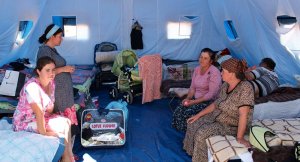 The Ukrainian government has suspended pensions and other social-welfare benefits to more than 500 000 people internally displaced by fighting between government forces and autonomy seekers in the east, UN Assistant Secretary-General Taye-Brook Zerihoun told the Security Council.
Access to urgently needed services is impeded by bureaucratic impediments, Zerihoun said on Thursday.
“This is further compounded by the decision of the Ukrainian government to suspend social payments, including pensions, to an estimated 600,000 displaced people, pending verification of their status.”
The UN official also explained that battles have recently intensified, despite agreements to suspend hostilities that were negotiated in the Belarus capital of Minsk in 2015.
“Fighting is still reported daily, with a sustained period of escalation witnessed over recent weeks and months, at a level not seen since the intense phase of the conflict in August 2014.”
Zerihoun urged all parties to immediately cease hostilities and adhere to the Minsk accords and other commitments made to the so-called Trilateral Contact Group, which consists of Russia, Germany and France.
Photo © RIA Novosti. Yuriy Lashov
NATO pledges to boost military presence in Eastern Europe
Press TV – April 27, 2016
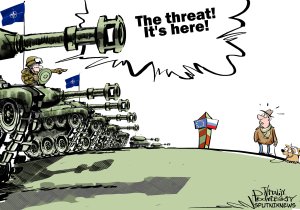 NATO has pledged to expand its military presence in Eastern Europe to protect its partners and allies from potential threats as the US sends two of the world’s most advanced warplanes to Romania.
In a speech at the University of Bucharest in Romania on Tuesday NATO Deputy Secretary-General Alexander Vershbow discussed the main issues the Western alliance is facing.
He said the alliance is struggling with many complex risks apart from the “destabilizing actions” of Russia and “the tide of instability which has swept across the Middle East and North Africa.”
“We are also wrestling with other complex risks and threats to our cyber security, to our energy supplies, and in the case of international terrorism to the safety of the people on our streets,” he said.
Vershbow said NATO is doing everything to respond to these challenges, adding that “the alliance takes a 360 degree approach to deterring threats, to protecting its member nations and if necessary to defending them.”
“That presence will be rotational, multinational, and combat capable. It will thereby send a clear message to any potential aggressor that if they violate NATO’s territory, they will face strong response from the whole alliance; Americans, Europeans and home defense forces,” he said.
The NATO secretary general also said that the organization has “set up a series of small headquarters, including here in Romania, to support planning, training and re-enforcement.”
“We are intensifying our maritime patrols, exploring the need for increased military and exercises, providing support to partners like Ukraine, Georgia and Moldova and encouraging efforts to strengthen energy security,” he said.
US sends F-22 Raptors to Romania
Vershbow’s comments came a day after the US sent two F-22 Raptor fighter jets to Romania as part of the commitment to NATO security.
The fighter jets, which travel at twice the speed of sound, touched down in Romania, close to the Black Sea and Ukraine, the Crimean Peninsula and Russia.
A US statement said the aircraft possess sophisticated sensors which would allow pilots to track, identify, shoot and destroy air-to-air threats without being detected.
The dispatch of the fighter jets, which can also attack surface targets, came two weeks after Russian fighter jets buzzed an American warship in the Baltic Sea.
The Western military alliance has been deploying troops and equipment close to Russia’s borders since it suspended all ties with Moscow in April 2014 after the Crimean Peninsula integrated into the Russian Federation following a referendum.
The United States and its European allies accuse Moscow of destabilizing Ukraine and have imposed a number of sanctions against Russian and pro-Russia figures. Moscow, however, rejects having a hand in the Ukrainian crisis.
This as Moscow has on many occasions slammed the Western military alliance’s expansion near its borders, saying such a move poses a threat to both regional and international peace.
Dutch people are stupid and they shouldn’t be allowed to vote!*
(*What Anne Applebaum really meant but couldn’t say in her Washington Post column.)
By Bryan MacDonald | RT | April 16, 2016
The Washington Post’s foreign affairs columnist seems to believe that Dutch people are stupid and, as a result, they shouldn’t be allowed to vote. Of course, she can’t write it directly. So, instead, she blames RT, and other Russian media, for a democratic choice that delivered a result she doesn’t like.
In the legendary 1976 movie, Network, Peter Finch, as Howard Beale, famously bellowed: “I’m mad as hell and I’m not going to take it anymore.” The film was loaded with preachy rants and self-righteous contempt for ordinary folk watching the television channel in question.
Anne Applebaum is a pro-establishment Howard Beale. Given to similar hubris from her various soapboxes. Yet, her visceral hatred of Russia helps makes her position even more entrenched than the fictional anti-hero. As a result, Applebaum seems incapable of reviewing a situation without seeing Russia’s hand somewhere.
Take last week’s Dutch Referendum on the proposed association agreement between Ukraine and the EU.
Numerous analysts, actual EU officials, the Dutch Prime Minister and voters themselves, have given reasons why the scheme was rejected. They have, most prominently, cited anger with the EU’s lack of transparency, Ukrainian corruption, fear of eventual EU membership for another large, poor eastern state and internal Dutch disillusion with the country’s elite.
Over in Kiev, locals have blamed “their (own) political leaders for not doing enough to tackle corruption and improve the country’s image,” according to Reuters correspondents on the ground. Here’s a sample reaction: “People there in Europe understand the level of corruption, that the authorities are now simply incapable of doing anything better for their own citizens,” said Ilya Zhyzhyyan, a 29-year-old Kiev resident. “So the Dutch probably think – why do they need a country that can’t do any good for its own people?”
The head of the Ukrainian parliament’s own committee on European integration MP, Iryna Herashchenko, blasted the fallout from the Panama Papers. The massive data leak contained information that Ukraine’s President Petro Poroshenko was probably evading taxes while his impoverished country endured a brutal civil war.
As you can see, people directly affected by the Netherlands ballot are capable of offering reasonable explanations for the negative verdict. They make grown up, measured arguments. Yet, Applebaum can only see Russia, Russia, Russia!
Blinkered views
In her latest Washington Post column, her primary argument is that “the Dutch just showed the world how Russia influences Western European elections.” You can translate that to mean that Applebaum refuses to accept any other reason for failure aside from dastardly Russian meddling. This is utterly bizarre.
She takes issue with 59 percent of Dutch ‘no’ voters stating that Ukrainian corruption motivated their unfavorable ballots. Applebaum derides their, quite understandable, worries as “hardly a rational argument.” Yet, two years ago, she wrote: “The West has let Russian corruption destabilize Europe. It’s time to stop it.” It’s beyond reasonable logic that anybody could believe that Russian corruption is a grave threat to Europe, but extortion in Ukraine is totally harmless.
Even Ukrainians admit that bribery in their nation is endemic. In fact, Transparency International reports that it’s the “most corrupt country in Europe.” Indeed, many experts believe that graft has actually worsened since the Maidan coup in 2014. Even the Wall Street Journal has acknowledged the fact. Without question, this situation is depressing, considering that corruption was ostensibly the motivation for the initial, peaceful, marches against Viktor Yanukovich’s government. Nevertheless, remaining in denial about it isn’t going to help matters.
A European Dream
She also argues that Dutch voters are wrong to blame Ukraine for the MH17 disaster. However, families of the victims are suing Kiev for not closing its airspace during a time of war. Even if, as investigators believe, the Donbass rebels were responsible, they didn’t have control of civilian aviation.
Applebaum further rails against the belief “that the treaty would (eventually) guarantee Ukraine’s membership in the European Union.” The problem is that it’s not Russians scaring people with this notion. It’s Ukrainians. President Poroshenko has stated that Ukraine will be “ready to join the EU in five years.” Meanwhile, outgoing Prime Minister Arseny Yatsenyuk recently said that he is “sure that Ukraine will become a European Union member state despite all the challenges and hardships.”
Applebaum has written extensively about her support for democracy. Indeed, she’s warned that we “shouldn’t take it for granted.” Now, because of a verdict she objects to, she backtracks. “A treaty already approved by 27 countries can’t be renegotiated from scratch,” our hero writes.
The problem here is that these countries didn’t vote on the Ukrainian question. Their governments merely nodded through the agreement, as is the norm on EU issues. Yet, when one country actually let the people decide, the verdict was an overwhelming ‘no.’ Now, Applebaum, a self-styled champion of democracy, suggests we ignore that choice. This is amazing hypocrisy.
Applebaum is blinkered by her association with a Eurocrat elite, who are doing their best to suppress suffrage within the EU. Despite platitudes about “liberation” and “freedom,” these people are vigorously anti-populist and are determined to deny people the right to choose their own fate. It’s revealing that Carl Bildt, a close political ally of Applebaum’s husband Radoslaw Sikorski, expressed almost identical sentiments on Twitter after the results became known.
Utterly convinced that their Atlanticist, neoliberal outlook is the only possible future for Europe, they are unwilling to accept their own inadequacies or admit their own failures. Thus, whenever something puts a brake on their plans, they need to blame a third-party. Russia, as the only major European nation outside the EU/NATO blocs, is their favorite whipping boy.
If something doesn’t go the way Brussels/Washington establishments want, the Kremlin is always behind it. This denies ordinary EU citizens any kind of respect for their own concerns and interests.
Nobody, with any grip on reality, could honestly believe that 2.5 million Dutch voters rejected closer cooperation with Ukraine because Russia, and its media services, told them to. So why does the Washington Post’s star foreign affairs columnist, and, presumably, the editorial board who appointed her, think people will swallow this nonsense?
Three More Russian TV Channels Banned in Ukraine
Sputnik – 14.04.2016
KIEV – Ukraine’s National Council of Television and Radio Broadcasting added three Russian cable channels to its list of banned outlets, the regulator said Thursday.
“The national council’s April 14 decision removes Russian television channels RTG TV (Russian Travel Guide), Retro and Kinoclub from the list of foreign programs, whose content meets the standards of the European Convention on Transfrontier Television and Ukrainian laws,” it said.
The ban comes after the Rossiya Segodnya International Information Agency, which includes the Sputnik news agency, has been included in the list of 15 media outlets blacklisted by the regulator on February 18. An additional 14 news services have had their licenses revoked in March.
The Ukrainian national council noted that RTG TV lost its license for a “this film was created before the Republic of Crimea and Sevastopol joined Russia” caption in some of its programming. The other channels have been banned for broadcasting films and programs with the participation of artists blacklisted by the Ukrainian Ministry of Culture.
The ministry unveiled its blacklist of 14 Russian artists in early August 2015 that Kiev perceived as creating a “threat to the national security” of Ukraine. French actor Gerard Depardieu, who holds a Russian passport, was among prominent singers and actors named.
In December that year, Kiev added 43 more people to the blacklist, including Limp Bizkit rap-rock frontman Fred Durst and US boxing great Roy Jones, Jr.
Freedom of the media in Ukraine has been repeatedly violated since the start of the military conflict between the Kiev authorities and Donbas militia in April 2014. Several international journalists have been abducted, tortured and killed during the hostilities, including Rossiya Segodnya photojournalist Andrei Stenin.
Boosting Military Capabilities Top Priority for Ukraine’s New Gov’t
Sputnik — April 14, 2016
Ukraine will never accept secession of Crimea and independence of the eastern Donbass region, new Prime Minister Volodymyr Groysman said Thursday.
The Ukrainian Parliament earlier on Thursday accepted Prime Minister Arseniy Yatsenyuk’s resignation and appointed Parliament Speaker Volodomyr Groysman to the position.
“Another question to which the new government will pay extra attention will be the range of issues related to returning Crimea and the temporarily occupied Donbass regions… I want to outline my position clearly, we shall never accept that a part of our country… non longer belongs to Ukraine,” Groysman said.
Boosting Ukraine’s military capabilities will be a top priority for the country’s new government, according to Groysman.
I wish to underline that increasing our defense capabilities in conditions of Russian aggression remains a top priority for my government. We have a clear plan on implementing our defense capabilities in accordance with NATO standards,” Groysman said.
Former US State Department Official to Buy Ukraine’s Largest Telecom Company
By Robert Wenzel | Economic Policy Journal | April 13, 2016
This is just about as insane and open of an inside look, as to how US empire operators grab the spoils of their interventions that result in turmoil, that you are ever likely to get.
As is clear, the US played an important role in the Ukrainian revolution as revealed by the release of a recording of a phone call between Assistant US Secretary of State Victoria Nuland and U.S. Ambassador to the Ukraine Geoffrey Pyatt (SEE: An Important Second Listen to the “F–k the EU” Ukraine Recording).
But, Nuland isn’t the only US State Department official playing a major role in Ukraine.
A US citizen, the Elmhurst, Illinois-born Natalie Jaresko, obtained a second citizenship (Ukrainian) on December 2, 2014, the day of, get this, her appointment as Minister of Finance of Ukraine.
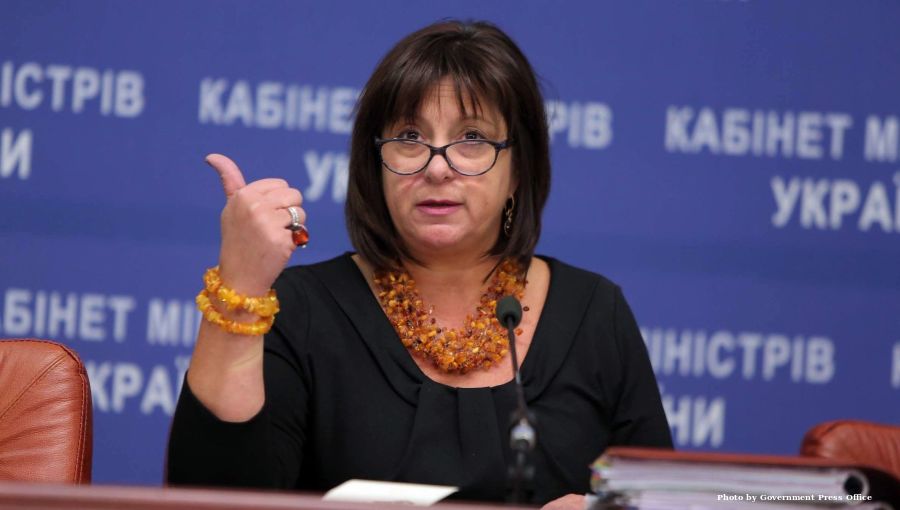 |
| Natalie Jaresko |
Prior to Jaresko becoming Ukraine’s finance minister, she, according to Wikipedia:
…. held several economics-related positions at the US Department of State in Washington, D.C., and eventually coordinated activities of the State Department, the Departments of Commerce, Treasury, the United States Trade Representative, and Overseas Private Investment Corporation (OPIC) in their economic relations with the Soviet Union and its successors. As part of her work she interacted with the International Monetary Fund, World Bank, and the European Bank for Reconstruction and Development. Later from 1992 to 1995, she was the first Chief of the Economic Section of the U.S. Embassy in Ukraine, responsible for strengthening economic cooperation between the two countries.[8] In 2003 she was awarded the Ukrainian Order of Princess Olga for her contributions to the Ukrainian economy.
Between 2005 and 2010 Jaresko was a member of President Viktor Yushchenko’s Foreign Investors Advisory Council and the Advisory Board of the Ukrainian Center for Promotion of Foreign Investment under the auspices of the Cabinet of Ministers of Ukraine.
So what is Jaresko up to as finance minister of Ukraine?
She is about to take control, for herself, of Datagroup, the Ukraine telecom company that controls 85% of the Ukranian telecom market.
Datagroup is owned by Oleksandr Kardakov but his personal empire has collapsed due to foreign currency loan debt.
Foreign loan debt is an old muscle trick of economic hit men (SEE John Perkins, Confessions of an Economic Hit Man). Banksters and international global financial organizations (think the World Bank) load up third-world governments with debt that can’t possibly be repaid and they go in to pick off the juicy meat when the third-world governments can’t make the debt payments.
The loans to Kardakov were a spin-off on the basic maneuver. With Nuland fomenting revolution and turmoil in Ukraine, the Ukranian currency, the hryvnia, has collapsed on foreign exchange markets.

This has made it impossible for Kardakov to pay off his US dollar-denominated loans.
Enter Jaresko.
Ukraine Today reports:
In late February, the company began its liquidation procedure. The company’s other major asset – ‘Datagroup’ telecom operator – may soon be sold out to pay off debts. It may be purchased by its current minority shareholder – investment company ‘Horizon Capital’, co-founded by Ukraine’s current Finance Minister Natalie Jaresko.
Robert Wenzel is Editor & Publisher at EconomicPolicyJournal.com and at Target Liberty. He is also author of The Fed Flunks: My Speech at the New York Federal Reserve Bank. Follow him on twitter:@wenzeleconomics
Switzerland Ready to Mediate Ukraine Crisis – Swiss Foreign Minister
Sputnik – 11.04.2016
Switzerland’s neutrality in the east Ukrainian crisis puts it in a position to mediate the conflict in order to bridge the gap between all parties involved, Swiss Foreign Minister Didier Burkhalter said Monday.
“The vision of Switzerland is not that of the Kremlin or that of Ukraine. It is the vision of the Swiss government. Switzerland believes we can play a role of the bridge, and… we are able to discuss the conflict situation with everyone,” Burkhalter said after a meeting with Russian Foreign Minister Sergei Lavrov.
Burkhalter said it was important to look for a solution instead of playing a blame game. He admitted there were differences between Moscow and Bern on the issue but underscored the importance of finding a way out of the Ukrainian crisis together.
“On Ukraine, I want to say that we do not agree on every issue with Russia, there are differences, but it does not prevent us from cooperation and looking for attempts to find a solution,” Burkhalter said.
The OSCE Special Monitoring Mission to Ukraine (SMM) said last week it had registered a spike in violence in the Donetsk region. It also continued to note the presence and use of proscribed weapons within the agreed security zone in eastern Ukraine.
Ukraine’s Foreign Minister Dismisses Importance of Dutch Referendum
Sputnik – 09.04.2016
Ukrainian Foreign Minister Pavlo Klimkin is certain that the results of the referendum on the EU-Ukraine association agreement held in the Netherlands will not affect the Dutch government’s decision on the treaty.
On Wednesday, 61.1 percent of Dutch voters rejected the EU-Ukraine association deal’s ratification in an advisory referendum, according to preliminary results. A turnout of 32.2 percent passed the 30-percent threshold required for the vote to have legal weight.
“There are clear assurances that the visa-free regime is a completely separate path. And if the European Commission is giving the go-ahead – and a relevant decision within the European Commission has already been prepared, that Ukraine has fulfilled all the requirements on the path to a visa-free regime – then we are moving towards a visa-free regime,” Klimkin told Inter TV, Ukraine’s national broadcaster.
The EU-Ukraine Association Agreement, establishing a political and economic association between Kiev and Brussels, was signed in 2014. It commits Kiev to implementing vast reforms in order to meet the bloc’s high economic, political, social, legal and technical criteria. It also grants Ukraine expanded access to the EU single market.
The Netherlands is the only EU member state that has not yet ratified the agreement. The Dutch government decided to hold a non-binding referendum after over 400,000 people signed a petition to put the matter to a nationwide vote.
Official referendum results are expected on Tuesday, April 12.
Featured Video
Dan Dicks with James Corbett on Solutions Watch
or go to
Aletho News Archives – Video-Images
From the Archives
MMR (Measles, Mumps and Rubella) – Vaccine Risk Statement
MMR Vaccine (Measles, Mumps, and Rubella) Is It Safer Than Measles, Mumps and Rubella?
Physicians for Informed Consent | December 2024
… It has not been proven that the MMR vaccine is safer than measles, mumps, and rubella. The vaccine package insert raises questions about safety testing for cancer, genetic mutations, and impaired fertility. Although VAERS tracks some adverse events, it is too inaccurate to measure against the risk of measles, mumps, and rubella. Clinical trials do not have the ability to detect less common adverse reactions, and epidemiological studies are limited by the effects of chance and possible confounders. Safety studies of the MMR vaccine are particularly lacking in statistical power. A review of more than 60 MMR vaccine studies conducted for the Cochrane Library states, “The design and reporting of safety outcomes in MMR vaccine studies, both pre- and post-marketing, are largely inadequate.”19 Because permanent sequelae (aftereffects) from measles, mumps, and rubella are so rare (especially in children with normal levels of vitamin A and infected after birth),6,15-17 the level of accuracy of the research studies available is insufficient to rule out the possibility that the MMR vaccine causes greater death or permanent disability than measles, mumps, and rubella. – Read full article
Blog Roll
 Aletho News
- The fallacy of US delusions about Iran’s economic collapse
- Hezbollah denies Syria cell link, warns of Israeli plan to sow discord
- The legacy of US sanctions, war, and occupation in Iraq
- Iraqi resistance group rejects disarmament, vows to maintain support for Lebanon
- Sheikh al-Asadi warns of Iraqi government compliance with US demands
- How to MAKE THE CONSPIRATORS PAY for their crimes! Dan Dicks with James Corbett on Solutions Watch
- There’s a drought in academia: A drought in honest research on the subject of drought and other weather extremes
- Department of War Awards $20.7 Billion Contract to Raytheon for Air-to-Air Missiles
- ‘Distance yourselves from Israel’: IRGC urges US population to question govt policies
- America’s Greenland deal has a radioactive backstory
- If Americans Knew
- New Report: “Scholasticide and Genocide in Gaza: Assessment, Testimonies and Legal Analysis”
- Ex-Biden officials are desperate for a Gaza scapegoat
- Israeli “settlers” Invade Al-Aqsa; Pour Boiling Water on 75-Year-Old
- Israel Has Kidnapped Another American Teenager
- US arms sales to Israel worth $21.6 billion in 20 months
- Three Palestinians Killed in Israeli Attacks on Gaza
- Revealed: German “Anti-Semitism Expert” Driving Crackdown on Palestine Solidarity is Former Israeli Spy
- Egypt’s Warning to Israel Before Oct 7
- Israel’s siege signals another cruel winter for 1.8 million Gazans – Daily Update
- Netanyahu Asked UAE Leader to Deny Report on Oct. 7 Warning in Secret Visit, Sources Say
- No Tricks Zone
- Two More Paleo Reconstructions Affirm Meters-Higher Sea Levels Across Ireland, Brazil 7000-6000 Years Ago
- New Study: Earth And Venus Surface Warmth Largely Explained By Convection And Lapse Rate, Not CO2 Or Radiation
- 2025 Nature Paper Claiming Worsening Global Drought Gets RETRACTED …Heavily Flawed
- New Study: ‘Global Drought Shows No Detectable Recent Acceleration Under Climate Warming’
- Economic Masterminds: German Socialists Suggest Taxing Productivity Gains Stemming From Using AI
- The South China Sea Has Not Been Cooperating With The Climate Change Narrative
- Energy Crisis: Germany Enters Heating Season With Historically Low Gas Reserve Fill Levels
- New Study: The Antarctic Ice Sheet Gained Mass From 2020-2024 Due To Staggering Snow And Ice Accumulation
- Study: Ocean Heating Rates From Thousands Of Years Ago ‘Dwarf’ Modern Ocean Heating Rates
- Climate Extremists Target, Attack Large-Scale Power Grid Infrastructure In Germany!

