‘Censorship’: UK freezes bank account of Russian news agency, gives no reason
RT | July 13, 2015
Barclay’s bank froze a Rossiya Segodnya news agency account without explaining its reasons. The news first came to light on Monday. The agency’s head Dmitry Kiselyov has called it “censorship.”
“To close the account of one of the world’s leading news agencies is censorship, the direct obstruction of journalists’ work,” Dmitry Kiselyov said. “What kind of press freedom and democracy can Britain claim to have if it prevents one of the world’s largest news agencies from working in the country?”
No formal notification of the move or justification for it was immediately provided. A source in the banking sector told the agency the Exchequer has put Dmitry Kiselyov on an anti-Russian sanctions list, which could have led to the news agency’s account being frozen.
Kiselyov is one of the people subjected to financial and travel sanctions in the EU. These restrictions have been imposed on a number of Russian officials in connection with Moscow’s stance over Ukraine crisis.
The sanctions list, which includes the head of Rossiya Segodnya news agency, was published on March 21. It characterizes Kiselyov as “central figure of the government propaganda supporting the deployment of Russian forces in Ukraine.”
UNSC Resolution on MH17 Tribunal is Untimely, Irrational – German Lawmaker
By Alexander Mosesov – Sputnik – 11.07.2015
On Friday, a source in the UN Security Council told RIA Novosti that a Malaysian proposal to create a tribunal into the crash eastern Ukraine in 2014 will be discussed next week.
The draft UN Security Council resolution on establishing an international tribunal for those who downed Malaysia Airlines flight MH17 last year in Ukraine is ill-timed, since the Netherlands has not completed its official investigation, a member of the German Bundestag Defense Committee told Sputnik.
Russia’s Permanent Representative to the United Nations Vitaly Churkin said earlier this week that the draft resolution fails to correctly classify the crash, adding that international tribunals have never been created following civilian aircraft crashes.
“I think it makes sense to wait with the tribunal until the investigation is done,” Alexander Neu, the member of the German parliament from the left-wing Die Linke party said.
He stressed that “a parallel process [to the investigation] does not make any sense.”
On July 17, 2014, flight MH17 was en route to Kuala Lumpur from Amsterdam when it crashed in southeastern Ukraine. All 298 people on board the aircraft died.
Independence supporters in southeastern Ukraine and Kiev forces, engaged in fighting in the region, accused each other of causing the tragedy.
According to a September 2014 preliminary report by the Dutch Safety Board, MH17 broke up in the air after being hit by multiple “high-energy” objects from outside the airframe. The final report is due in October.
Ukraine Puts 345 State Firms Up For Sale
Sputnik – 10.07.2015
Ukrainian Economic Development Minister Aivaras Abromavicius clarified exactly how many state companies would be offered up for sale to US and European investors at the upcoming Ukrainian-American investment conference in Washington D.C on Monday, stating that 345 state-run firms would be put on offer to the highest bidder.
Speaking before reporters on Thursday, Abromavicius noted that the 345 firms offered for sale “will be included in the first wave of privatizations,” which he earlier confirmed would begin in the fourth quarter of this year.
Kiev’s effort is ostensibly aimed at raising billions of dollars for the country’s cash-strapped budget, as the economy, hit by a decline in trade with Russia, financial panic, and civil war, lies in tatters and on the verge of default.
Companies on the docket include the electricity generation firm Tsentrenergo and six of its regional distributors, gas transportation companies, the Odessa Port Plant, mining operations and agricultural holdings, which together are projected to bring 17 billion hryvnia (about $790 million) into the country’s coffers.
Earlier this year, Ukrainian officials held similar conferences in Washington, Berlin and Paris. As late as last month, Prime Minister Arseniy Yatsenyuk met with Ukrainian-Americans in Washington, telling them that his government wants “to see American owners on the territory of Ukraine,” stating that “they will bring not only investment, but also new standards, new ways of managing the companies, and a new investment culture.”
But with the IMF (conservatively) projecting a 9 percent decline in Ukraine’s GDP in 2015, with inflation hitting nearly 50 percent and the country approaching debt levels amounting to 100 percent of GDP, analysts warn that the present may be the worst possible time for Kiev to sell off its large, state-owned firms. The country’s economic decline, political instability and the war in the east have hit property values hard, which means that Kiev is unlikely to collect significant sums for the large, valuable, strategic assets offered up for sale.
Analysts also suggest that Western investors will have little appetite for the purchase of the unwieldy, heavily-indebted state firms, many operating at a loss since the collapse of the Soviet Union, noting that the most profitable companies were already bought up in crooked schemes by the country’s oligarchs a long time ago. In this connection, AFP recently reported that Rada MPs connected with the country’s oligarchic clans are likely to use their influence to prevent the sale of the profitable state assets under oligarchs’ influence. Moreover, Frankfurter Allgemeine Zeitung columnist Konrad Schuller recently poured cold water on the entire privatization initiative, noting that in an environment of speedy, murky, clan-dominated privatization, Western investors will have no time to assess whether the state companies offered up for sale are truly lucrative or not.
Furthermore, while Yatsenyuk recently announced that over 150 major investors have already RSVP’d to attend the Washington conference, he has already been hit by dissension from within his own cabinet, with officials from the Energy Ministry and the State Property Fund challenging the pace and scale of privatization.
In April of this year, Ukraine agreed to an International Monetary Fund-monitored austerity program, which called for the shedding of 24,000 government jobs, higher taxes, privatization of state assets and the withdrawal of subsidies on utilities in exchange for a total of about $40 billion in IMF-led foreign assistance over the coming four years.
MH-17 Case Slips into Propaganda Fog
By Robert Parry | Consortium News | July 9, 2015
The Dutch investigation into the shoot-down of Malaysia Airlines Flight 17 over eastern Ukraine last July has failed to uncover conclusive proof of precisely who was responsible for the deaths of the 298 passengers and crew but is expected to point suspicions toward the ethnic Russian rebels, fitting with the West’s long-running anti-Russian propaganda campaign.
A source who has been briefed on the outlines of the investigation said some U.S. intelligence analysts have reached a contrary conclusion and place the blame on “rogue” elements of the Ukrainian government operating out of a circle of hard-liners around one of Ukraine’s oligarchs. Yet, according to this source, the U.S. analysts will demur on the Dutch findings, letting them stand without public challenge.
Throughout the Ukraine crisis, propaganda and “information warfare” have overridden any honest presentation of reality – and the mystery around the MH-17 disaster has now slipped into that haze of charge and counter-charge. Many investigative journalists, including myself, have been rebuffed in repeated efforts to get verifiable proof about the case or even informational briefings.
In that sense, the MH-17 case stands as an outlier to the usual openness that surrounds inquiries into airline disasters. The Obama administration’s behavior has been particularly curious, with its rush to judgment five days after the July 17, 2014 shoot-down, citing sketchy social media posts to implicate the ethnic Russian rebels and indirectly the Russian government but then refusing requests for updates.
But why the later secrecy? If Director of National Intelligence James Clapper decided that unverified information about the shoot-down could be released five days after the event, why would his office then decide to keep the U.S. public in the dark as more definitive data became available?
Over the past 11 months, the DNI’s office has offered no updates on the initial assessment, with a DNI spokeswoman even making the absurd claim that U.S. intelligence had made no refinements of its understanding about the tragedy since July 22, 2014.
I’m told that the reason for the DNI’s reversal from openness to secrecy was that U.S. intelligence analysts found no evidence that the Russian government had given the rebels sophisticated anti-aircraft missiles capable of downing an aircraft at 33,000 feet, the altitude of MH-17, and that an examination of U.S. satellite and electronic intelligence instead implicated extremists linked to Ukraine’s U.S.-backed regime, although not to Kiev’s political leadership.
At that point, admitting to an erroneous rush to judgment would have embarrassed the administration and undermined the “public diplomacy” campaign around the MH-17 case. By blaming Russia and its President Vladimir Putin last summer, the Obama administration whipped Europe into an anti-Russian frenzy and helped win the European Union’s support for economic sanctions against Russia. Keeping Putin on the defensive is a top U.S. priority.
As one senior U.S. government official explained to me, information warfare was the only area in the Ukraine crisis where Washington felt it had an edge over Moscow, which benefited from a host of other advantages, such as geography, economic and cultural ties, and military pressure.
‘False Flags’
It also appears that right-wing Ukrainian political forces, which seized power in the Feb. 22, 2014 coup, have understood the value of propaganda, including “false flag” operations that pin the blame for atrocities on their opponents. One of the most successful may have been the mysterious sniper attacks on Feb. 20, 2014, that slaughtered both police and protesters in Kiev’s Maidan square, with the violence immediately blamed on President Viktor Yanukovych and used to justify his overthrow two days later.
Later independent investigations indicated that extreme right-wing elements seeking Yanukovych’s ouster were more likely responsible. Two European Union officials, Estonia’s Foreign Minister Urmas Paet and European Union foreign affairs chief Catherine Ashton, were revealed discussing in a phone call their suspicions that elements of the protesters were responsible for the shootings.
“So there is a stronger and stronger understanding that behind snipers it was not Yanukovych, it was somebody from the new coalition,” Paet told Ashton, as reported by the UK Guardian. [A worthwhile documentary on this mystery is “Maidan Massacre.”]
Even U.S. officials have faulted the new regime for failing to conduct a diligent investigation to determine who was to blame for the sniper attack. During a rousing anti-Russian speech in Kiev last month, U.S. Ambassador to the United Nations Samantha Power inserted one criticism of the post-coup regime – that “investigations into serious crimes such as the violence in the Maidan and in Odessa [where scores of ethnic Russians were burned alive] have been sluggish, opaque, and marred by serious errors – suggesting not only a lack of competence, but also a lack of will to hold the perpetrators accountable.”
In other words, regarding the Maidan sniper massacre, the Kiev regime wasn’t willing to reveal evidence that might undermine the incident’s use as a valuable propaganda ploy. That attitude has been shared by the mainstream Western media which has sought to glue white hats on the post-coup regime and black hats on the ethnic Russian rebels who supported Yanukovych and have resisted the new power structure.
For instance, since Yanukovych’s ouster nearly 1½ years ago, The New York Times and other mainstream outlets have treated reports about the key role played in the coup regime by neo-Nazis and other far-right nationalists as “Russian propaganda.” However, this week, the Times finally acknowledged the importance of these extremists in Kiev’s military operations. [See Consortiumnews.com’s “Ukraine Merges Nazis and Islamists.”]
A similar propaganda fog has enveloped the MH-17 investigation, with the lead investigators – the Dutch, British, Australians and Ukrainians – all firmly in the pro-Kiev and anti-Moscow camp. (Specialists from the United States, Russia and Malaysia have also been involved in the inquiry.)
Not surprisingly, leaders in Ukraine and Australia, as well, didn’t wait for the investigation to reach a conclusion before placing the blame on Putin. Last October, Australian Prime Minister Tony Abbott used an Australian football term in vowing to “shirtfront” Putin about his supposed guilt in the MH-17 case.
Media Fakery
Keeping the later U.S. intelligence analysis secret also allows for the Putin-did-it propaganda campaigns to go forward in mainstream media outlets and various propaganda fronts. A good example was the Australian “60 Minutes” report in May presenting bogus video evidence supposedly corroborating “Russia-did-it” claims made by British blogger Eliot Higgins.
While the segment appeared to be authoritative – supposedly proving that Putin was responsible for mass murder – a closer examination showed that the program had relied on video fakery to mislead its viewers. The key scene supposedly matching up a video of a getaway Buk anti-aircraft missile battery with landmarks in the rebel-controlled city of Luhansk didn’t match up at all. [See Consortiumnews.com’s “You Be the Judge.”]
After I revealed the fraud by showing how the two scenes were almost entirely different, the Australian show fell back on a claim that one utility pole in the getaway video looked like a utility pole that its reporting team has found in Luhansk. It is perhaps a sign of how crazy the anti-Russian propaganda has gotten that a major news program could feel that it can make such an absurd argument and get away with it.
In a rational world, matching up the two scenes would require all the landmarks to fit, when in this case none of them did. Further, to cite similarities between two utility poles as evidence ignored the fact that most utility poles look alike and there was the additional fact that none of the area around the two utility poles matched at all, including a house behind one that didn’t appear in the scene of the other. [See Consortiumnews.com’s “A Reckless Stand-upper on MH-17.”]
However, as long as the U.S. government’s comprehensive intelligence information on MH-17 is kept secret, such sleights of hand can continue to work. I’m told that the Dutch report is likely to contain similar circumstantial claims, citing such things as the possible angle of the fired missile, to suggest that the ethnic Russian rebels were at fault.
Last October, the Dutch Safety Board’s initial report answered very few questions, beyond confirming that MH-17 apparently was destroyed by “high-velocity objects that penetrated the aircraft from outside.” Other key questions went begging, such as what to make of the Russian military radar purporting to show a Ukrainian SU-25 jetfighter in the area, a claim that the Kiev government denied.
Either the Russian radar showed the presence of a jetfighter “gaining height” as it closed to within three to five kilometers of the passenger plane – as the Russians claimed in a July 21 press conference – or it didn’t. The Kiev authorities insisted that they had no military aircraft in the area at the time.
But the 34-page Dutch report was silent on the jetfighter question, although noting that the investigators had received Air Traffic Control “surveillance data from the Russian Federation.” The report also was silent on the “dog-not-barking” issue of whether the U.S. government had satellite surveillance that revealed exactly where the supposed ground-to-air missile was launched and who may have fired it.
The Obama administration has asserted knowledge about those facts, but the U.S. government has withheld satellite photos and other intelligence information that could presumably corroborate the charge. Curiously, too, the Dutch report said the investigation received “satellite imagery taken in the days after the occurrence.” Obviously, the more relevant images in assessing blame would be aerial photography in the days and hours before the crash.
The Dutch report’s reference to only post-crash satellite photos was also odd because the Russian military released a number of satellite images purporting to show Ukrainian government Buk missile systems north of the eastern Ukrainian city of Donetsk before the attack, including two batteries that purportedly were shifted 50 kilometers south of Donetsk on July 17, the day of the crash, and then removed by July 18.
Russian Lt. Gen. Andrey Kartopolov called on the Ukrainian government to explain the movements of its Buk systems and why Kiev’s Kupol-M19S18 radars, which coordinate the flight of Buk missiles, showed increased activity leading up to the July 17 shoot-down.
The Ukrainian government countered these questions by asserting that it had “evidence that the missile which struck the plane was fired by terrorists, who received arms and specialists from the Russian Federation,” according to Andrey Lysenko, spokesman for Ukraine’s Security Council, using Kiev’s preferred term for the rebels.
Lysenko added: “To disown this tragedy, [Russian officials] are drawing a lot of pictures and maps. We will explore any photos and other plans produced by the Russian side.” But Ukrainian authorities have failed to address the Russian evidence except through broad denials.
Where’s the Intelligence?
On July 29, 2014, amid escalating rhetoric against Russia from U.S. government officials and the Western news media, the Veteran Intelligence Professionals for Sanity called on President Obama to release what evidence the U.S. government had on the shoot-down, including satellite imagery.
“As intelligence professionals we are embarrassed by the unprofessional use of partial intelligence information,” the group wrote. “As Americans, we find ourselves hoping that, if you indeed have more conclusive evidence, you will find a way to make it public without further delay. In charging Russia with being directly or indirectly responsible, Secretary of State John Kerry has been particularly definitive. Not so the evidence. His statements seem premature and bear earmarks of an attempt to ‘poison the jury pool.’”
However, the Obama administration has failed to make public any intelligence information that would back up its earlier suppositions or any new evidence at all. One source told me that U.S. intelligence analysts are afraid to speak out about the information that contradicts the original rush to judgment because of Obama’s aggressive prosecution of whistleblowers.
If the Dutch final report emerges with carefully circumscribed circumstantial evidence implicating the pro-Russian rebels, the nuances will surely be carved away when the report is fed into the existing propaganda machinery. The conventional wisdom about “Russian guilt” will be firmed up.
A sense of how that will go can be seen in a recent New York Times article by David Herszenhorn on June 29:
“Pro-Russian separatist leaders in the eastern Ukrainian region of Luhansk have blocked access to Dutch law enforcement officials pursuing an investigation into the downing of a Malaysian jetliner nearly a year ago, the Netherlands Public Prosecution Office said. …
“The obstruction by separatist officials prompted the investigators, from the Dutch National Police and Ministry of Defense, to cut short their field work in Ukraine without conducting research into cellphone towers and cellular networks in the region, the public prosecution office said. …
“Based on preliminary analysis and intelligence, including from the United States government, the aircraft was widely believed to have been destroyed by a surface-to-air missile fired from territory controlled by Russian-backed separatist forces.”
While the thrust of Herszenhorn’s article made the ethnic Russian rebels look bad – and foreshadows some of the points likely to be featured in the Dutch investigative report – perhaps the most significant word in the story is “preliminary.” While it’s true that the U.S. government’s “preliminary” report on July 22, 2014, implicated the rebels, the more pertinent question – not asked by the Times – is why there has been no refinement of that “preliminary” report.
The Dutch Safety Board issued a brief progress report on July 1 noting that it had submitted a draft of its final report to “accredited representatives of the participating States on … June 2,” giving them 60 days to submit comments before a “definitive final” report is published in October.
Meanwhile, Dutch prosecutors handling the criminal investigation say they have no specific suspects, but lead investigator Fred Westerbeke claims the probe has a number of “persons of interest.” Westerbeke said the criminal probe will likely run through the end of the year or later.
~
Investigative reporter Robert Parry broke many of the Iran-Contra stories for The Associated Press and Newsweek in the 1980s. You can buy his latest book, America’s Stolen Narrative, either in print here or as an e-book (from Amazon and barnesandnoble.com).
Ukraine unrecognized republics demand international tribunal on Kiev actions
RT | July 8, 2015
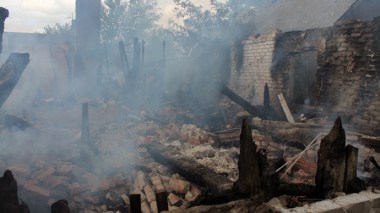
The heads of the Ukrainian unrecognized Donetsk and Lugansk republics have asked the United Nations Security Council to establish an international tribunal to investigate and prosecute those responsible for waging civil war in eastern Ukraine.
“Donetsk People’s Republic [DNR] and Lugansk [LNR] People’s Republic are addressing the UN Security Council with a plea to establish an international tribunal for legal prosecution of those responsible for violation of the International Humanitarian Law and crimes against humanity in Ukraine,” the DNR head, Aleksandr Zakharchenko, and LNR head Igor Plotnitsky said at a joint press conference.
Those found responsible should be brought to trial, they stressed.
The heads of the unrecognized republics are calling for the leaders of Russia, the US, China, Great Britain and France to consider this proposal at the next UNSC session.
“Expecting your soonest reply to the proposal,” Plotnitsky said.
Aleksandr Zakharchenko said Kiev’s operation in Donbass is “a direct violation of the Geneva convention.”
The military operation in eastern Ukraine began in spring last year after residents in the Donetsk and Lugansk regions refused to recognize the coup-imposed government in Kiev.
On February 12, in Minsk, peace negotiations between the two sides resulted in a second ceasefire agreement. The first was signed in summer 2014 and was violated practically immediately. The current ceasefire is also being violated on a frequent basis. Shelling in the self-proclaimed Donetsk and Lugansk People’s Republics happens every other day, with both sides pointing the finger at each other.
Aleksandr Zakharchenko said the prosecutors’ offices of both republics have collected copious evidence of war crimes committed by Kiev troops.
“There is a considerable volume of evidence of the Ukrainian National Guards’ involvement in torture and killing of civilians. Dozens of mass graves have been found on territory that was occupied by Ukrainian troops,” Zakharchenko said.
The DNR and LNR also have evidence of Ukrainian troops using weapons prohibited by the international arms conventions, including cluster and phosphorous bombs.
Since the beginning of 2015 an estimated 1,212 civilians, including 25 children, have died in shelling incidents.
Three Scenarios for the Donbass
By Andrey Ivanov* | Fort Russ | July 5, 2015
The specialists from the Russian International Affairs Council headed by the former foreign minister Igor Ivanov described three scenarios for the Donbass: confrontation, freeze, or continuing the peace process. How likely are they?
Life itself forces one to make forecasts. It’s clear that the unrecognized republics with a population of five million won’t be able to exist for long in the current suspended state. On the one hand there is a ceasefire, but the shelling of cities continues. Kiev continues to view Donbass as its territory, but doesn’t transfer money and fences it off with barbed wire. Poroshenko claims to adhere to the Minsk Agreements, but is against the constitutional reforms they require…
The first scenario is confrontation. The Council experts are of the opinion that full-scale combat operations can’t be ruled out. Kiev might decide to launch a new offensive with US support. Then the Donbass would suffer the fate of Serb Krajina which Croatia reconquered by force in 1995. It’s also possible that we’ll see the repetition of the events of August 2008 in South Ossetia. Russia was then forced to intervene militarily and then recognize the territory’s independence.
The second scenario is a peaceful resolution of the conflict. Analysts believe this is the least likely scenario. It would require the removal of anti-Russian sanctions and West’s recognition of Crimea’s unification with Russia.
The most likely is the third scenario–freezing the conflict. Ukraine doesn’t have the necessary resources to score a military victory, while Russia is not ready to acknowledge their independence. World powers will continue to exchange military warnings but there will be no heavy loss of life…
–Donbass’ return to Ukraine is hardly possible. Especially considering how Kiev views its inhabitants. Kiev wants to “integrate” Donbass using artillery–says the Moscow State University Center for Ukrainian and Belorussian Studies Director Bogdan Bezpalko–Donbass integration with Ukraine would only be possible in the event of its military defeat which might occur should the conflict escalate.
In actuality, the fate of Donbass depends mainly on major world players: US, EU, Russia. They can influence Ukraine’s elite and its relationship with Donbass.
The situation may develop in several ways. The majority of them are unfavorable. Both for Donbass, Ukraine, Russia, and even the West. Modeling the situation depends on the nature of relations between Russia and the West. Therefore the scenarios may change from quarter to quarter. Or even more frequently.
Svobodnaya Pressa (SP): Are DPR and LPR viable?
–Yes, but only as long as Russia helps them. They are of limited viability as independent states. Incidentally, they never aspired to an independent geopolitical role. DPR and LPR are states which depend on Russia’s support. Just as South Ossetia and Abkhazia did earlier, whose official recognition by Moscow was of considerable help.
SP: Can the republics share the fate of Serb Krajina?
–It all depends on Russia’s position. If Russia helps LPR/DPR, including through military assistance, that scenario is out of the question. One has to keep in mind Ukraine would have to expend considerable resources to break Donbass resistance. Moreover, Krajina did not enjoy the support by either Serbia or by Republika Srpska, which was the Serb state in Bosnia. Abandoned to its fate, the Krajina became easy prey for the Croat army which was well trained by the US. But if DPR and LPR have Russia’s support, retain control over the border with Russia, it won’t share Krajina’s fate. Moreover, Donbass republics have their own record of success against the UAF. The Ilovaysk and Debaltsevo “cauldrons” showed how effective LPR and DPR armies are.
SP: How justified are the hopes that the Ukrainian state will soon collapse?
–Ukraine is descending into a state of socio-economic collapse. This is what makes it different from Croatia, a country with a small population which received powerful financial support from the West. Ukraine has a population of 40 million which is rapidly aging. Industry is degrading. Ukraine is a country on the brink of an abyss. It simply won’t have the resources for military operations. I’d like to remind that the Croatian operation Storm against Krajina took only a few days, but after a lengthy preparation. Therefore even though the operation was costly, its effects were perceptible. Ukraine, on the other hand, is conducting its ATO, it’s spending a lot of money, it’s in the midst of the sixth wave of mobilization. Donbass, which has nothing left to lose, may soon turn out the winner. If it establishes cooperation with Russia, restores control over the port of Mariupol, it will be able to restore its economy and social well-being. DPR and LPR would turn out to be more successful as states than Ukraine.
I want to note that Ukraine’s problems are not due to a bad starting position in economy, culture, human resources. Ukraine in 1991 had colossal resources which were squandered in the most incompetent fashion, which were stolen after independence. This shows how Ukraine’s leaders view its sovereignty. Ordinary people haven’t gained anything out of independence other than impoverishment, depopulation, and aggressive nationalism.
–The current peace plan, based on Minsk Agreements, is unviable–says Geopolitical Problems Academy Vice President Konstantin Sokolov–The agreements pertain only to the separate parts of LPR and DPR and only regulate the relationship along the frontline. What is more, Kiev is actively torpedoing the agreements. Therefore the conflict can only be resolved through an armed clash. What form will it take? Kiev planned an offensive for May, but it was thwarted. Ukraine today is the center of attention of US, EU, and Russian foreign policy. It’s clear that the offensive would encounter political resistance by BRICS and Shanghai Organization countries.
Right now Ukraine is in a state of unstable balance. There are large groups of foreign mercenaries in the country. But will Kiev decide on a major attack? I think that will become clear by the end of summer.
In my view, the West is coming around to the idea of blaming all the crimes on Poroshenko’s team. It could be replaced by other people.
The state of balance will continue for some time. But ultimately the situation will resolve itself through a social explosion in Ukraine. The country is almost bankrupt and the inconveniences of the war are growing more acute. A group of senior military officers recently defected to the republics. It means that the Kiev regime is losing control even over its means of violence.
SP: But Ukraine is continuing to exist, in spite of the dire forecasts.
–Up to 2004, up to the first “orange revolution”, Ukraine compared well to other post-Soviet republics. Now its living conditions are falling to a level which for some might be below the threshold of survival. If earlier one could have patience, today it’s impossible.
The default could be used by the West to change the country’s leadership.
SP: How will the situation unfold?
–The most likely outcome is Ukraine’s break-up into parts. There are forces in the West interested in seeing it happen. In general, the West’s strategy revolves around breaking up countries. We’ve seen it in Yugoslavia, Libya, Syria. But I wouldn’t draw analogies between Donbass and Krajina or South Ossetia. Donbass is a big region, therefore it’s of greater significance. One also mustn’t forget Russia cannot stand aside in this conflict. I believe that ultimately the West’s strategy will suffer a defeat. National forces in Russia and Ukraine always rise up when the situation is on the brink. Ukraine is the trigger that will change the global strategic situation.
–In order to make forecasts, one first need to examine the present–says Novorossia State-Building Committee Chairman Vladimir Rogov–Poroshenko introduced legislation proposing not decentralization, but legalizing the unfolding lawlessness. The president would get the authority to fire elected officials, which he currently doesn’t have.
On the other hand, we see growing conflicts within the ruling Ukrainian elite. The US are preparing Lvov mayor Sadovyy and former SBU head Nalivaichenko as Poroshenko’s replacements. If Sadovyy comes to power, Ukraine will get a “soft”, Baltic, version of nationalism. If Nalivaichenko, Ukraine will become a “euro-ISIS.”
The new head of the SBU is Vasiliy Gritsak who’s devoted to Poroshenko but utterly incompetent. It’s enough to recall his contribution to the Ilovaysk disaster! Poroshenko is trying to place loyal individuals in key positions. And those who have nowhere to run.
Nevertheless, the “main rat” of Ukraine’s politics Yuriy Lutsenko submitted his resignation from the Poroshenko Block chairman in the Rada. We remember that Lutsenko changed his party affiliation more than once. He always left this or that part on the event of its loss of influence.
SP: Can the Donbass wait long enough to see Ukraine collapse?
–We must wait until the Kiev elite falls apart. There is no doubt that Odessa, Kharkov, Zaporozhye, Lvov, will see the founding of their own people’s republics. Donbass simply needs to get stronger, restore its economy, and push the front line far enough so that the UAF can’t shell its big cities. Soon the people in Kiev and Lvov will be able to free their lands from the current authorities.
SP: What influence do world powers have on the situation in the Donbass?
–We are entering the phase of direct interaction between the major international players: Russia and US. But the most important thing is that DPR and LPR model is more attractive than Ukraine. People’s republics have far lower utility rates. People in Ukraine will gradually realize that the Donbass has a more just state than they do.
*Translated from Russian by J.Hawk
Constitutional maneuvering in Ukraine to deny recognition of Donetsk and Lugansk republics and sabotage Minsk-2
New Cold War | July 6, 2015
The Donetsk and Lugansk People’s Republics have announced they will hold local elections on October 18 and November 1, respectively. The two dates surround announced local elections to take place in Ukraine on October 25.
Prime Minister of the Donetsk People’s Republic Aleksandr Zakharchenko made his announcement on July 2. According to UNIAN News, heads of cities and districts will be elected. No decision on the election of members of local councils has been made yet.
Lugansk People’s Republic Prime Minister Igor Plotnitsky announced on July 6 that similar local elections will take place there on November 1.
Interfax reports Zakharchenko as explaining, “In today’s situation, which emerged through Kyiv’s fault, the Donetsk People’s Republic has to independently start to implement the Minsk agreements in order to rescue them.
“We will begin acting immediately, without waiting for Kyiv to come to its senses and return to real, not fake, talks, because any further procrastination and delays will benefit only the Ukrainian party of war.”
Plotnitsky’s statement said, “Recently, we concluded that Ukraine doesn’t intend to abide by its commitments. Kiev either breaks or pretends to execute the provisions of the Minsk Agreement. The Verkhovna Rada issues bills not consistent with our draft documents on matters affecting the Donbass. To date, they’ve refused to define the special status of the LPR, nor have they even begun to write the laws embodying that special status. Besides that, with each passing day, Kiev intensifies its blockade of the LPR.”
“From such a perspective, we decided to begin a unilateral implementation of the Minsk Agreement regarding local elections in the LPR.”
The two prime ministers are referring to the failure of the Kyiv government to respect clauses of the Minsk-2 ceasefire agreement of Feb. 12, 2015 requiring dialogue with the rebel regions of Donetsk and Lugansk as well as a decentralization of powers to them.
The announcements by the two people’s republics administrations are in response to an elaborate scheme by the government of Ukrainian President Petro Poroshenko to dodge the key provisions of Minsk-2 requiring talks and constitutional change.
Back in May, at the eighth Kiev Security Forum, Poroshenko and Ukraine’s prime minister made it clear they will not engage in talks. “We will hold a dialogue with Donbass, but with the other Donbass, a Ukrainian one,” Poroshenko said. He went on, “We must ensure fair elections.”
Prime Minister Arseniy Yatsenyuk said his government would never talk to the current representatives in Donbas. “We will communicate only with the legitimate representatives of this region, we want to hold legitimate elections there.”
Yatsenyuk provocatively said his government would talk to leaders of the Donetsk and Lugansk republics “only when they are behind bars”. He added, “By the way, we have got enough empty prison cells.”
Instead of talks, the Ukraine government convened a Constitutional Commission in April. That body is set to deliver its draft report to the Verkhovna Rada this week. It will propose some cosmetic decentralization changes, but crucially, the changes will deny any present or future recognition of the Donetsk and Lugansk republics. The constitutional changes will be sold to international public opinion as proof of compliance with Minsk-2.
Poroshenko earlier announced local elections for October 25 as part of the scheme. Donetsk and Lugansk republics will, of course, refuse to allow a government in Kyiv waging war on them to conduct elections on their territories. This will be sold as proof of their intransigence and impossibility of dialogue with them.
TASS reports Zakharchenko saying in his July 2 announcement that Kiev’s unilateral actions on adopting amendments to Ukraine’s constitution serve as evidence that “the Kiev regime has de facto exited the Minsk peace process”.
“Under the circumstances,” he said, “the Donetsk People’s Republic has to start implementing the Minsk agreements itself in order to save them.”
The following day, the DPR head responded to an orchestrated statement by U.S. Vice-President Joseph Biden criticizing the Oct. 18 election decision. Zakharchenko said, reports TASS, “The U.S. Vice President has most likely not studied the issue thoroughly. I doubt that he has even read the Minsk package of measures. And Poroshenko is distorting facts as usual.”
He continued, “If Biden is really concerned about the future of the Minsk accords, than he should make Poroshenko and Groysman [Speaker of the Verkhovna Rada] implement them.”
Russian Foreign Minister Sergei Lavrov issued a statement on July 3 saying his government is deeply disappointed with what it calls the failure of the Ukrainian government to respect provisions of Minsk-2. He said, “Russia is deeply concerned about Kiev’s inability and unwillingness to fulfill its commitments to coordinate with Donetsk and Lugansk modalities of conducting local elections and its inability to attract representatives of the self-proclaimed republics to drawing up a new constitution.”
Lavrov said that Poroshenko’s and Yatsenyuk’s government has written a new, draft constitution without participation of Donetsk and Lugansk representatives. This “does not fulfill any of the requirements of the Minsk agreements with regard to this document.”
The draft “does not reflect the tasks of ensuring a special status for these territories on a permanent basis and does not reflect the tasks of decentralization of power,” as envisaged in the peace deal reached in the Belorussian capital in February.
US to pay salaries of Governor Saakashvili’s team in Odessa, Ukraine
RT | July 6, 2015
The US government will pay the salaries to the staff of Georgia’s former President Mikhail Saakashvili, who is now serving as a new governor of Odessa Region, Ukraine, Saakashvili said, adding that California police will also train Odessa’s officers.
“Within the framework of Odessa’s anti-corruption pressure, the US government agreed to provide funds for the salaries of the new team of [Mikhail] Saakashvili,” Saakashvili wrote on his Facebook page after the meeting with Geoffrey Pyatt, the US Ambassador to Ukraine.
He added that American police officers from California “will train new Odessa police.”
Pyatt has repeatedly voiced his support for Saakashvili. Earlier in July he said that Washington “fully supports Mikheil Saakashvili and his team, and we will do everything so that they can succeed.”
US authorities have recently been sending other instructors to train local forces in Ukraine. In April, paratroopers of the US 173rd Airborne Brigade, based in Vicenza, Italy, arrived in the western Ukrainian city of Lvov to provide training for Ukrainian government troops. Pyatt then posted on Twitter several pictures of the US paratroopers marching through the airport in the city.
Saakashvili became governor of Odessa Region back in May. He was personally appointed by President Petro Poroshenko.
He was also given Ukrainian citizenship under Poroshenko’s personal decree, published on his website, as the Ukrainian constitution says that only a citizen can become an official at governor level.
Saakashvili left Georgia in autumn 2013, days before his presidential term expired. He has been living abroad ever since.
In spring 2014, Georgia’s new ruling coalition accused Saakashvili of embezzling hundreds of thousands of dollars from the state budget. Georgia’s prosecutors have started an investigation into the case. However, Saakashvili denies the charges against him, saying the funds went towards attracting foreign investors to the country.
Apart from embezzlement, Saakashvili has several other cases ongoing against him. He is accused of abuse of power during the crackdown on anti-government protests in the Georgian capital, Tbilisi, on November 7, 2007. He was also allegedly involved in the attack on the opposition TV station Imedi, which was seized by Georgian special forces on the same day, and the appropriation of the founder’s assets.
Austrian Institute Clarifies True Costs of the EU’s Anti-Russian Sanctions
Sputnik – 03.07.2015
The Austrian Institute of Economic Research (WIFO) published a monograph clarifying the projected short and long-term costs of anti-Russian sanctions to the EU 28 plus Switzerland. A summary of the report published Friday has confirmed that Europe as a whole expects €92.34 billion in long-term losses, along with over 2.2 million lost jobs.
While the report attempts to downplay somewhat the losses attributed to sanctions, noting that politicized export restrictions must be considered together with the ongoing Russian recession and other factors, the figures speak for themselves.
The report projects an “observed decline in exports and tourism expenditures of €34 billion value added in the short run, with employment effects on up to 0.9 million people.” Switching to a longer-term perspective, the report estimates “the economic effects increas[ing] to up to 2.2 million jobs (around 1 percent of total employment) and €92 billion (0.8 percent of total value added), respectively.”
Commenting on the geographical disbursement of the economic and jobs losses, WIFO’s report shows that “geographical closeness highly correlates with the relative size of the effects at the national level, with the Baltic countries, Finland and the Eastern European countries being hit above the EU average of 0.3 percent of GDP in the short and 0.8 percent in the long run.” The report also notes that Germany, which accounts for nearly 30 percent of all EU 27 exports to Russia, has been hit the hardest in absolute terms, and is projected to lose €23.38 billion in losses in the long term. Italy is second, with €10.93 billion in projected losses. France rounds out the top three with €7.92 billion in losses.
The study’s figures also show that Estonia is the single most heavily affected country in both the short and the long term, with the country suffering a €800 million (4.91 percent) and €2.1 billion (13.24 percent) decline, respectively. Estonia is followed by Lithuania (-6.37 percent long term), Cyprus (-3.25 percent), Latvia (-1.87 percent), and the Czech Republic (-1.53 percent).
In employment terms, Estonia, Lithuania and Cyprus are also the hardest hit in percentage terms, and are projected to suffer 16.3 percent, 10.84 percent and 4.21 percent losses, respectively. In absolute terms, Germany (losing 395,000 jobs) Poland (300,000), and Italy (200,000) have been the hardest hit; Spain, Lithuania and Estonia are projected to lose between 100,000 and 190,000 jobs.
As for the economic sectors most heavily impacted, the WIFO study found that agriculture and food products, metal products, machine-building, vehicles, and manufacturing-related services are hardest hit in the short term, with construction, business services, and wholesale and retail trade services also projected to suffer disproportionately in the long-term.
Speaking to Radio Sputnik about the report, WIFO economist Oliver Fritz noted that while EU politicians still hope that the sanctions will have some effect on Russian policy, pressure is building on them to change their policy, since the economic consequences are rapidly beginning to add up.
While the economist noted that he does not see the sanctions being lifted in the short term, with German Chancellor Angela Merkel successfully keeping other EU nations in line, Fritz noted that as losses mount, EU politicians may eventually decide to consider rethinking their decisions.
Last month, WIFO conducted research for Europe’s ‘Leading European Newspaper Alliance’, estimating up to €100 billion in losses if anti-Russian sanctions remain in place.
Since March 2014, the United States, European Union, and other Western countries have placed sanctions on Russia’s banking, defense and energy sectors over Moscow’s alleged role in the Ukrainian crisis. In August, Moscow imposed a year-long food embargo on the countries that had sanctioned it. Last month, the EU’s foreign ministers agreed to extend sanctions against Russia until January 31, 2016.
Samantha Power Lies to Congress About Civilian Shelling in Ukraine, Commits Felony
Russia Insider | July 3, 2015
- The US Ambassador to the UN, she claims she believes majority of civilian shelling casualties are victims of the separatists.
- The penalty for lying to Congress is up to 8 years of imprisonment.
 Ambassador Power’s testimony was the subject of a story we ran on Monday of this week, and a helpful reader got back to us and pointed out that we had missed the most important part of it.
Apparently, Ambassador Power lied to the committee she was testifying before, thereby committing a felony.
Congressman Rohrabacher, one of the loudest critics of Obama’s Russia policy, asked her if she thought it might be possible that the majority of the civilian casualties killed in Ukraine were victims of the Ukrainian army.
It was a “gotcha” question, because this is a universally acknowledged fact.
Here is what the ambassador answered:
“I think it is highly unlikely on the basis of reports we have received from the United Nations and the OSCE.”
See 1.50 in the video:
This statement is demonstrably not true. Reports from the UN and the OSCE conclusively demonstrate what it obvious to everyone even halfway paying attention – that the victims are almost universally victims of Ukrainian army shelling.
It is starkly preposterous to suggest otherwise, because even a dimwit could grasp that the separatists are unlikely to bomb their own people.
It is simply not plausible that the ambassador believes this, and is not aware of the facts.
Ironically, Power is the author of a book which studies US foreign policy responses to genocide, so she has more than a passing interest in these issues. The book’s title is A Problem from Hell: America and the Age of Genocide,
She has made protection of human rights a hallmark of her career, yet she is one of the most energetic and committed boosters of the aggressive Ukrainian military campaigns in the East, which have featured the most barbaric human rights violations imaginable – shelling defenseless civilians – children and elderly, with horrific, blood-curdling casualties, visible for all to see in gory detail on Youtube.
The shelling serves no military purpose and is done only to terrorize the local population in the hopes of triggering a Russian response.
Here is what the law says:

Kiev in violation of heavy weaponry clause in E. Ukraine – OSCE
RT | July 4, 2015
The OSCE has warned that a growing presence of heavy weaponry on the government controlled side of Donbass territory has put Ukrainian security forces in violation of the terms of the demarcation line, according to OSCE Deputy Chief Monitor Alexander Hug.
“We can highlight that the security situation has gotten worse in the Donbass over the past few weeks,” Hug said at a briefing in Mariupol.
The Organization for Security and Co-operation in Europe’s Special Monitoring Mission (OSCE SMM) stressed the growing presence of heavy weaponry, and the increased movement and use of military equipment along the demarcation line in the area controlled by Kiev forces.
“In the last few weeks, our observers as well as drones recorded the presence of heavy weapons in areas controlled by the government, which is a violation of the demarcation line terms regarding the withdrawal of heavy weaponry,” Hug said.
At the same time, he noted that there has been an uptick in military equipment around Komsomolskoe, which is controlled by the self-proclaimed People’s Republic of Donetsk (DNR).
Hug added that one of the remaining challenges is the difficulty observers face when moving around Ukraine on their monitoring mission. “Our observers are still having trouble with freedom of movement, which makes it difficult to monitor certain areas, in particular the border between Ukraine and Russia.”
OSCE has also documented shelling of the buffer-zone areas in eastern Ukraine. The organization’s latest report, published on Friday, said artillery was coming from the west, which is government controlled territory.
“In the south-eastern part of the village [of Shyrokyne], the SMM saw a crater of 12m (over 39 feet) diameter and 4m (over 13 meters) deep, many 82mm mortar shells, the remnants of ammunition crates and numerous impacts of 152mm artillery strikes, which based on their location, the SMM assessed to have been fired from the west,” the report said.
The report added that “SMM did not observe any DPR [Donetsk People’s Republic] presence in Shyrokino,” referring to the village that DPR demilitarized on July 1. OSCE observers visited the area to confirm that claim, which was part of the Minsk withdrawal terms.
The OSCE monitoring mission’s goal is to observe the implementation of the Minsk peace agreements reached by Kiev and pro-independence forces of Donbass in September 2014 and February 2015. The February ceasefire deal called for the creation of a buffer zone and the withdrawal of heavy artillery from the line of contact.
The Ukrainian conflict began last April, when Kiev deployed military and volunteer battalions to the Donetsk and Lugansk regions in eastern Ukraine to crackdown on local militia, who refused to recognize the country’s coup-imposed authorities.
Over 6,400 people have been killed since the start of Kiev’s “anti-terror operation.” A total of 1.35 million Ukrainians are now designated as internally displaced persons, according to UN estimates.
Eastern Ukraine: Look Beyond Mainstream Propaganda
Captain Fifteen | June 17, 2015
It’s always interesting for me to observe the reaction of Americans and Western Europeans when they learn where I’m from. Many just don’t say anything. Many regurgitate something incoherent about Putin’s “imperial” ambitions, “the Boeing” that was shot down over Eastern Ukraine last year, and “that politician guy that got killed in Moscow.” Finally, there are those (unfortunately, a minority) who tell me that things must be more complicated than they are portrayed in the news and genuinely want to know what I think.
Things are definitely much more complicated than they’re portrayed in the news. I’ve had a chance to observe mainstream American, Canadian, and British media for quite some time now, and I’m amazed that so few people are appalled by the crudeness of propaganda that is fed to them, no matter whether the source is Fox News, CNN, or the BBC. Just like that Wal-Mart truck driver that stopped to help a stranded motorist doesn’t make Wal-Mart a great place to shop, the Pentagon Papers don’t make The New York Times a progressive newspaper. Neither does covering the Snowden case make The Guardian a source you should now trust and worship.
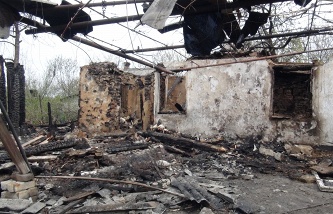
When I can hear explosions in the background in the middle of a phone conversation with my relatives who are hunkering down with their young children in the hallway of their apartment (“safe” because it’s away from the windows) while being shelled by Ukrainian artillery, and the “progressive” sources mentioned above pontificate about Russia’s “aggression” in Ukraine, call for more sanctions, and do not say a word about the massive devastation and suffering the US- and Europe-backed regime in Kiev has caused in just one year in one of the most urbanized parts of Europe, I feel disappointment and helplessness. Do these talking heads have no shame? Do those who listen to them have no brain? Opportunities to question, explore, and learn are all around you. Why not use them?
How many of you know that the cities of Donetsk (once home to over one million people) and Gorlovka (Horlivka; once home to more than 300 thousand people) have been shelled by the Ukrainian military pretty much daily throughout the month of May and in the first half of June – despite the so-called ceasefire?
How many of you know that American soldiers are actually in Ukraine training the Ukrainian National Guard – the troops that are then deployed to the East of the country? (Do a quick search, and even your “trustworthy” mainstream sources will confirm that – in a non-intrusive sort of way, of course.)
How many of you remember the context of Victoria Nuland’s “Fuck the EU” comment in her conversation with the US ambassador to Ukraine Geoffrey Pyatt?
How many of you know that John Brennan, director of the CIA, visited Ukraine in April of last year, immediately after which Ukraine’s “counter-terrorist operation” began in the rebellious East of the country? (Do another quick search, and your “trustworthy” mainstream sources will again confirm that – also in a non-intrusive sort of way.)
How many of you can imagine Russia putting its navy ships in the Gulf of Mexico, installing an anti-American regime in Canada, and holding military exercises just south of the US-Mexican border? How many of you can imagine what the American reaction to that would be? How ridiculous would the EU look if it imposed sanctions on the US? (Well, the EU looks just as ridiculous with all its current posturing and double standards.)
How many of you can imagine US and European sanctions against Saudi Arabia for its actions in Yemen? How many of your “trustworthy” sources use the word “aggression” when describing Saudi Arabia’s actions?
It took crash investigators a few days to learn what was going on in and around the cockpit of Germanwings Flight 9525, which crashed over the Alps less than three months ago. How many of you wonder what ever happened to the black boxes of the Malasia Airlines Flight 17 now that almost a year has passed since the plane was shot down over Ukraine? (It seemed so clear whom to blame back then, didn’t it?)
You most definitely heard about “that politician guy that got killed in Moscow.” How many of you know about a whole number of “politician guys” that have “committed suicide” in Ukraine? Other than stumbling on an occasional blurb, you’d really have to look to see what’s going on.
How many of you know about Oles Buzina, a pro-Russian journalist, who got murdered in Kiev just two months ago?
Finally, have you ever wondered who actually benefits from this war in Ukraine? Do you really think it’s Russia, now stuck with hundreds of thousands of refugees from Ukraine, a rabidly russophobic regime next door, and NATO bristling with all its fancy glory literally on Russia’s borders? Is it the “separatists” (or Ukrainians alike), whose most industrialized region is now in ruins? Or is there perhaps another party that’s meddling in all this? Use your imagination. May curiosity be your friend.
Featured Video
Dan Dicks with James Corbett on Solutions Watch
or go to
Aletho News Archives – Video-Images
From the Archives
$1.5bn up in smoke: US THAAD missile stockpile dries up defending Israel against Iran
By Ivan Kesic | Press TV | July 2, 2025
According to American media, defense news outlets, and independent analysts, the 12-day Israeli military aggression against Iran significantly depleted the US stockpile of THAAD (Terminal High Altitude Area Defense) interceptor missiles.
Citing official sources, American magazine Newsweek reported on Friday that the US transferred a substantial portion of its advanced missile defense capabilities to support the Israeli regime, an effort with questionable results and a critical impact on US strategic reserves.
THAAD, developed by Lockheed Martin arms manufacturing company, is a key component of Israel’s multi-layered air defense architecture. It is designed to intercept medium-range ballistic missiles, including those launched from Iran and Yemen.
The US-made system is capable of targeting short-, medium-, and intermediate-range ballistic missiles during their terminal phase, whether inside or outside Earth’s atmosphere.
THAAD uses a “hit-to-kill” method, relying on kinetic energy rather than explosive warheads to destroy incoming threats, intercepting at altitudes of up to 150 km and ranges between 150-200 km.
Operated exclusively by American personnel, the US military maintains eight THAAD batteries with an estimated 350–400 interceptors in total. The eighth battery was activated during the June 20 Israeli aggression against Iran and is capable of intercepting hypersonic missiles. … continue
Blog Roll
 Aletho News
- While Gaza dominates the UN, these are the people keeping it alive
- New Report: “Scholasticide and Genocide in Gaza: Assessment, Testimonies and Legal Analysis”
- ‘THAAD Delusion’: Iran war exposes US missile shield limits – The Atlantic
- Moscow issues warning to NATO over Russian exclave
- Yes, the Iran war has destroyed Trump’s presidency
- The fallacy of US delusions about Iran’s economic collapse
- Hezbollah denies Syria cell link, warns of Israeli plan to sow discord
- The legacy of US sanctions, war, and occupation in Iraq
- Iraqi resistance group rejects disarmament, vows to maintain support for Lebanon
- Sheikh al-Asadi warns of Iraqi government compliance with US demands
- If Americans Knew
- Mamdani releases plan to combat antisemitism and hate crimes in New York City
- Iran’s Revolutionary Guards Publish Letter to the American People
- DMFI launches $1 million ad campaign supporting Virginia’s Elaine Luria
- US Senate blocks resolution seeking report on Americans killed by Israel
- Israeli Attacks Kill Ten Palestinians in Gaza
- Massacre at Minab: The School That Became a Grave
- Israeli media: The IDF Shows It Doesn’t Turn a Blind Eye; It Actively Emboldens Settler Havoc
- As settlers ravage West Bank, Israeli forces kill 10 in Gaza – Daily Update
- New Report: “Scholasticide and Genocide in Gaza: Assessment, Testimonies and Legal Analysis”
- Ex-Biden officials are desperate for a Gaza scapegoat
- No Tricks Zone
- Green Energy Debacle: German Expert Professor Fritz Vahrenholt Warns Of Severe Economic And Social Consequences
- Two More Paleo Reconstructions Affirm Meters-Higher Sea Levels Across Ireland, Brazil 7000-6000 Years Ago
- New Study: Earth And Venus Surface Warmth Largely Explained By Convection And Lapse Rate, Not CO2 Or Radiation
- 2025 Nature Paper Claiming Worsening Global Drought Gets RETRACTED …Heavily Flawed
- New Study: ‘Global Drought Shows No Detectable Recent Acceleration Under Climate Warming’
- Economic Masterminds: German Socialists Suggest Taxing Productivity Gains Stemming From Using AI
- The South China Sea Has Not Been Cooperating With The Climate Change Narrative
- Energy Crisis: Germany Enters Heating Season With Historically Low Gas Reserve Fill Levels
- New Study: The Antarctic Ice Sheet Gained Mass From 2020-2024 Due To Staggering Snow And Ice Accumulation
- Study: Ocean Heating Rates From Thousands Of Years Ago ‘Dwarf’ Modern Ocean Heating Rates

