“Imagine all the people, living life in peace.” Maybe John Lennon’s famous musical lyric can be called naive, but it’s a hopeful vision all the same. Antiwar protests, mass soldier desertions, refusal to serve and fight in defiance of government orders and repression—these have stopped many wars once people decide there is nothing righteous in killing their fellow humans.
The current war situation in eastern Ukraine and the decision of the government in Kyiv to begin a new, fourth wave of military conscription and mobilization is unleashing a firestorm of mass opposition and refusal to fight. Protest is rising in all the regions of the country. For sure, there are still nationalist fanatics and far-right militarists exercising violence and intimidation against antiwar protests, but their capacity to stamp out protest is diminishing.
Ukraineis historically a peaceful nation. For some time now, it has avoided military conflicts like those that have flaredelsewhere in eastern Europe—Yugoslavia, Georgia, etc. That came to a crashing end last year when the Kyiv government launched its ‘anti-terrorist operation’ against the people in the east of the country. But from the beginning of the conflict, Ukraine has seen refusals by soldiers to fire on their fellow citizens, desertions from the army and refusals to show up for conscription. Women—the mothers, wives, sisters and daughters of military conscripts—have held protests and even riots against the war or against force military service.
The protests have been sparked, first of all, by the fact that many Ukrainians do not accept theinterpretation of the war as offered by the government. They don’t necessarily see foreign (ie Russian) aggression. They only know that when a Ukrainian soldier lifts his gun or artillery barrel, it is a compatriot, a fellow Ukrainian, who appears in the gunsight.
Secondly,many people don’t want to die for the current government which they view as composed of extreme nationalists and neoliberals. They are unwilling to be cannon fodder dying for the interests of Ukrainian oligarchs whose only apparent interest is to pursue a civil war, siphon Western financial aid and suppress opposition to their rule. A young woman recently voiced this sentiment searingly at a rally held in her village in south-central Ukraine.
Last but not least, many ordinary workers and farmers, (contrary to middle-class, urban dwellers), preserve entrenched, regional identities. They consider their homeland to be a region such as Donbas, Bukovyna, Transkarpathia or Volhynia as much as, or perhaps even more importantly, it is the entity called ‘Ukraine’. It is harder to sell to such people the war’s patriotic, pro-Ukraine and anti-Russia message.
The astonishing fact that almost no one is coming voluntarily to the military recruitment offices in this fourth, latest round of conscription is causing panic in the government and top army command of Ukraine. They are appealing, as always, to patriotic and nationalist sentiments, but this is falling increasingly on deaf ears.
Men of conscription age are fleeing in the thousands, crossing Ukraine’s borders in all directions, or taking cover internally, to escape the clutches of the military recruiters. President Poroshenko has been obliged to order that, henceforth, only those men of military age with papers confirming they are duly registered with their military registration office will be permitted to leave the country.
“Each day, new facts about mass, draft evasion are emerging” reports the Ukrainian dailyKorrespondent. It writes, “In the first wave of military mobilization in 2014, 20 per cent of those who showed up for the conscription call did so voluntarily. In the second wave the same year, it was ten per cent.
“This year, only six per cent of thoseconscripts showing up for the call to service have done so voluntarily“.
In the Trancarpathia region in western Ukraine, entire villages have scattered across various borders to escape conscription of their menfolk. The head of the village council of Kosiv district in Ivano-Frankivsk region reports that the entire population of the village booked buses and have moved to Russia to wait out the war.
In the village of Colchino, authorities could find only three of the 105 eligible males to whom to serve papers.
Chief Recruitment Officerfor Trancarpathia, O.Boyko, toldKorrespondent, “It may seem a paradox, but fromthe western Ukrainian region of Ternopyl, people have fled to Russia in order to escape army conscription.”
Many people are selectingeast European countries as temporary refuges. Yuri Biryukov,an adviser to the Ukrainian president, has admitted, “In the last 30 days, 17 per cent of the total number of reservists of the entire regionof Chernivtsy(western Ukraine) have crossed borders into other countries”.
“According to unofficial sources, the hostels and motels in the border area of neighboring Romania are overcrowdedwith Ukrainian draft evaders.”
In the Volhynya region of western Ukraine, villagers have blocked the attempts by authorities to distribute call-up papers. A news report by 112.ua explained, “On January 24, the residents of the villages of Melniki, Zatishye and Pishcha in Shatsky district of Volhynya region blocked cars of the district administration as they arrived. Inside the vehicles were representatives of the local administration andthe military recruitment office, arriving to deliver call-up papers for the military mobilization.
“Protesters forced the authorities to tear up the papers. They were then allowed to leave and the people went at home.“
Authorities in that case struck back. “Three criminal proceedings have been opened under Article 336 of the Criminal Code (evasion of conscription)”, reported a local police official.
The Odessa publication Timer reports that on January 23 in the village of Kulevchi in Saratsky district of Odessa region, the local population revolted against the military mobilization and kicked representatives out of the local recruitment office.
The population learned that 240 call-up papers were en route to be served in their village. Within minutes,Timer explained, some 500 people gathered on the village square. Six officers of the recruitment office arrived with the papers but they found a less than welcome reception among the local people. When officials declared that refusalof conscription is punishable by criminal prosecution, the people began to shout “No war” and “We want peace”. They reminded the officers that Ukraine has not declared martial law and that the Minsk ceasefire agreement of last September has not been formally renouncedby the Ukraine government. They called the new wave of military mobilization illegal and the recruiting officers were forced to leave the village.
O1.ua news outlet in Odessa city reports, “In the village of Limansky (Reni district), a representative of the military recruitment office arrived with call-up papers accompaniedby two armed gunmen. It nearly cost them their lives. The peasant villagers almost lynched the three.“
Before the trip to the village, the military commissar of the district, Igor Skrypnik, was aware of the hostile attitude of the civilian population toward the mobilisation process. So he asked for protection while distributing mobilization papers. Two policemen armed with weapons were assigned. But it produced the opposite result.
“When two gunmen in camouflage appeared in the village, it immediately attracted people’s attention and caused a spontaneous riot,” said the acting chairman of the local state administration, Sergey Barinov. “About 200 residents of Limansky village surrounded the representative of the military and the armed police officers and threatenedto punish them.“ “Deputy Chairman Ivan Stadnikov of the Reni district state administration and Military Commissar Igor Skrypnik immediately went to the village. After difficult negotiations, a compromisewas reached. But then the local residents seized the call-up papers, defiantly poured gasoline on them and set them alight – right before theeyes of the officials who had brought the papers to the village.”
In some villages in Ternopil region, the heads of local councils did not even participate in the distribution of call-up papers. Even more, when representatives of military recruitment officeswere due to arrive, some local authorities in the region tipped off residents in order to give them the opportunity to avoid conscription.
The Russian news agency ITAR-TASS reports on January 27, “Ukraine’s male population has massively started leaving abroad in search of jobs to dodge the current mobilization campaign.
“Entire villages are booking buses to dispatch their men as far as possible. Military committees are handing over the lists of fugitives to law enforcers to try and restrict the movement of men subject to conscription outside their native districts and areas”, TASS says.
Citing the Ukrainian Vesti news agency, TASS reported, “Natalya from Zaporizhia (south-eastern Ukraine) dispatched her son to Russia several months ago. The woman told Vesti on condition of anonymity that she had also sent her husband away (also to Russia) one week earlier. Men from western regions are leaving for Poland and Hungary. The city military committee in Ukraine’s capital Kiev is also complaining about draft dodgers.”
Anti-war protests are continuing in the areas of the Donbas region that arecontrolled by Ukrainian troops. In the city of Kramatorsk in Donetsk region, women staged a spontaneous rally in late January chanting “No war!” In avideo of the protest,at the 1’45” mark, we get a glimpse at how desperate the recruitment tactics of the authorities have become. A woman asks the military officer present, “Why are they beating on our doors at night and taking our men away to the army?”
In recent weeks, the neighbouring,small city of Debaltsevo has become the epicenter of the military clash between Donbas self-defense forces and the Ukraine army and militias. Thousands of Ukrainian troops are at risk of encirclement and capture. Most of the town’s residents have fled. There are only some 6,000-8,000 residents who are left,and they are living without electricity, heating and water supply. They are reduced to cooking their food over open fires.
The online Ukrainian media outletExpres.ua reports that the mayor of Debaltseve was recently arrested by the Ukrainian Secret Service, accused of having sympathies with the pro-autonomy forces of Donbas. In the face of all this, the people rallied at the end of January, blaming the Ukrainian troops for their plight and demanding that they leave.
A protest of mothers and wives of conscripts was recently held in the village of Belovodsk in a government-controlled part of Luhansk region. The authorities arrived under the protection of machine guns to explain the conscription policy. The villagers answered that they did not vote for President Petro Poroshenko and they had no interest in sacrificing themselves for the interests of the oligarch Igor Kolomoisky (a well-know Ukrainian billionaire and advocate of war).
Social networks are responding to the mobilization by creating memes with titles such as the “Elusive Battalion”. The message is that it’s only in make-believe worlds that the children of high-ranking officials, parliamentary deputies, politicians and businessmen are serving in the military.
Writing in the Ukrainian web journal Liva, journalist Roman Lyubar explains, “Due to conscription, Ukrainian authorities have managed to unite the citizens of the country who are everywhere joining to boycott the military draft and increasingly protest against it. This despite the threat of criminal prosecution and militarist propaganda…
“Now Ukrainians see more clearly than ever that the poorest citizens face being cannon fodder and dying in a war while government officials and rich capitalists escape such a fate.”
Yevgeny Kopatko, a Ukrainian analyst and founder of the Research and Branding Group, told TASS,“More and more statements are heard in Ukrainian society about a readiness [by ordinary people] to sit in prison instead of going to fight. In this situation, the decision on more military mobilizationsis another test for the Ukrainian authorities“.
Sergei Kirichuk, a leader of Ukrainian left organization Borotba,writes in a January 29 commentary, “Even pro-government politicians and analysts are saying that the current mobilization has failed. Some people will not come to the draft board, and others desert after they are signed up. Thus are ever more drops added to the cauldron of popular discontent.”
Under such circumstances, the Kiev government may resort to the policy of mass terror (with the help of Ukrainian far-right paramilitary organizations), forcing people to go to war at the point of a gun and murdering antiwar activists. But based on the experience of revolts and revolutions in Europe in 1917-18 during World War One, we know where such policy can lead. When people are armed and forced to fight against their will, when they are indignant, facing dire economic circumstances and demanding peace and yet their will is ignored, then the prospects of governments and private capitalist interests deemed responsible for the mess are not very bright.
Dmitry Kolesnik is a Ukrainianjournalist, left-wing activist and editor of the webjournal Liva.com (‘The Left’). The journal has an English-language page where it translates and publishes some of its original articles from Ukrainian and Russian languages.
The U.S. government and mainstream media are swaggering toward a possible nuclear confrontation with Russia over Ukraine without any of the seriousness that has informed this sort of decision-making throughout the nuclear age. Instead, Official Washington seems possessed by a self-righteous goofiness that could be the prelude to the end of life on this planet.
Nearly across the U.S. political spectrum, there is a pugnacious “group think” which has transformed what should have been a manageable political dispute in Ukraine into some morality play where U.S. politicians and pundits blather on about how the nearly year-old coup regime in Kiev “shares our values” and how America must be prepared to defend this regime militarily.
Jaanika Merilo, an Estonian brought into the Ukrainian government to oversee foreign investments. (A photo released on the Internet by Merilo via DanceswithBears)
Though I’m told that President Barack Obama personally recognizes how foolhardy this attitude is, he has made no significant move to head off the craziness and, indeed, has tolerated provocative actions by his underlings, such as neocon Assistant Secretary of State Victoria Nuland’s scheming with coup plotters to overthrow Ukraine’s elected President Viktor Yanukovych last February.
Obama also has withheld from the American people intelligence information that undercuts some of the more extreme claims that his administration has made. For instance, I’m told that he has detailed intelligence reporting on both the mysterious sniper attack that preceded the putsch nearly a year ago and the shoot-down of the Malaysia Airlines Flights 17 that deepened the crisis last summer. But he won’t release the findings.
More broadly over the last year, Obama’s behavior – ranging from his initial neglect of the Ukraine issue, as Nuland’s coup plotting unfolded, to his own participation in the tough talk, such as boasting during his State of the Union address that he had helped put the Russian economy “in tatters” – ranks as one of the most irresponsible performances by a U.S. president.
Given the potential stakes of nuclear war, none of the post-World War II presidents behaved as recklessly as Obama has, which now includes allowing his administration officials to talk loosely about sending military support to an unstable regime in Kiev that includes neo-Nazis who have undertaken death-squad operations against ethnic Russians in eastern Ukraine.
U.S. Gen. Philip Breedlove, who is commander of NATO, declared last November that – regarding supplying military support for the Kiev government – “nothing at this time is off the table.” Breedlove is now pushing actively to send lethal U.S. military equipment to fend off an offensive by ethnic Russian rebels in the east.
I’m told that the Russians fear that U.S. officials are contemplating placing Cruise missiles in Ukraine or otherwise introducing advanced weaponry that Moscow regards as a direct threat to its national security. Whether or not the Russians are being alarmist, these fears are affecting their own decision-making.
None of the nuclear-age presidents – not Harry Truman, Dwight Eisenhower, John F. Kennedy, Lyndon Johnson, Richard Nixon, Gerald Ford, Jimmy Carter, Ronald Reagan, George H.W. Bush, Bill Clinton or even George W. Bush – would have engaged in such provocative actions on Russia’s borders, though some surely behaved aggressively in overthrowing governments and starting wars farther away.
Even Ronald Reagan, an aggressive Cold Warrior, kept his challenges to the Soviet Union in areas that were far less sensitive to its national security than Ukraine. He may have supported the slaughter of leftists in Central America and Africa or armed Islamic fundamentalists fighting a Soviet-backed government in Afghanistan, but he recognized the insanity of a military showdown with Moscow in Eastern Europe.
After the Soviet Union’s collapse in 1991, U.S. presidents became more assertive, pushing NATO into the former Warsaw Pact nations and, under President Clinton, bombing a Russian ally in Serbia, but that came at a time when Russia was essentially flat on its back geopolitically.
Perhaps the triumphalism of that period is still alive especially among neocons who reject President Vladimir Putin’s reassertion of Russia’s national pride. These Washington hardliners still feel that they can treat Moscow with disdain, ignoring the fact that Russia maintains a formidable nuclear arsenal and is not willing to return to the supine position of the 1990s.
In 2008, President George W. Bush – arguably one of the most reckless presidents of the era – backed away from a confrontation with Russia when Georgian President Mikheil Saakashvili, a neocon favorite, drew the Russians into a border conflict over South Ossetia. Despite some war talk from the likes of Vice President Dick Cheney and Sen. John McCain, President Bush showed relative restraint.
Imbalanced Narrative
But Obama has failed to rein in his administration’s war hawks and has done nothing to correct the biased narrative that his State Department has fed to the equally irresponsible mainstream U.S. news media. Since the Ukraine crisis began in fall of 2013, the New York Times and other major U.S. news outlets have provided only one side of the story, openly supporting the interests of the pro-European western Ukrainians over the ethnic Russian eastern Ukrainians.
The bias is so strong that the mainstream media has largely ignored the remarkable story of the Kiev regime willfully dispatching Nazi storm troopers to kill ethnic Russians in the east, something that hasn’t happened in Europe since World War II.
For Western news organizations that are quick to note the slightest uptick in neo-Nazism in Europe, there has been a willful blindness to Kiev’s premeditated use of what amount to Nazi death squads undertaking house-to-house killings in eastern Ukraine. [See Consortiumnews.com’s “Seeing No Neo-Nazi Militias in Ukraine.”]
The Russian government has repeatedly protested these death-squad operations and other crimes committed by the Kiev regime, but the U.S. mainstream media is so in the tank for the western Ukrainians that it has suppressed this aspect of the crisis, typically burying references to the neo-Nazi militias at the end of stories or dismissing these accounts as “Russian propaganda.”
With this ugly reality hidden from the U.S. public, Obama’s State Department has been able to present a white-hat-vs.-black-hat narrative to the crisis. So, while Russians saw a constitutionally elected government on their border overthrown by a U.S.-backed coup last February – and then human rights atrocities inflicted on ethnic Russians in eastern Ukraine – the American people heard only about wonderful pro-American “reformers” in Kiev and the evil pro-Russian “minions” trying to destroy “democracy” at Putin’s bidding.
This distorted American narrative has represented one of the most unprofessional and dangerous performances in the history of modern U.S. journalism, rivaling the false conventional wisdom about Iraq’s WMD except in this case the media propaganda is aimed at a country that really does have weapons of mass destruction.
The Russians also have noted the arrival of financially self-interested Americans, including Vice President Joe Biden’s son Hunter Biden and Ukraine’s new Finance Minister Natalie Jaresko, reminding the Russians of the American financial experts who descended on Moscow with their “shock therapy” in the 1990s, “reforms” that enriched a few well-connected oligarchs but impoverished millions of average Russians.
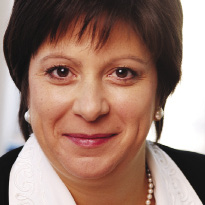
Ukraine’s Finance Minister Natalie Jaresko.
Jaresko, a former U.S. diplomat who took Ukrainian citizenship in December 2014 to become Finance Minister, had been in charge of a U.S.-taxpayer-financed $150 million Ukrainian investment fund which involved substantial insider dealings, including paying a management firm that Jaresko created more than $1 million a year in fees, even as the $150 million apparently dwindled to less than $100 million.
Jaresko also has been involved in a two-year-long legal battle with her ex-husband to gag him from releasing information about apparent irregularities in the handling of the U.S. money. Jaresko went into Chancery Court in Delaware to enforce a non-disclosure clause against her ex-husband, Ihor Figlus, and got a court order to silence him.
This week, when I contacted George Pazuniak, Figlus’s lawyer about Jaresko’s aggressive enforcement of the non-disclosure agreement, he told me that “at this point, it’s very difficult for me to say very much without having a detrimental effect on my client.”
With Jaresko now being hailed as a Ukrainian “reformer” who – in the words of New York Times’ columnist Thomas L. Friedman – “shares our values,” one has to wonder why she has fought so hard to shut up her ex-husband regarding possible revelations about improper handling of U.S. taxpayer money. [See Consortiumnews.com’s “Ukraine’s Made-in-USA Finance Minister.”]
More Interested Parties
The Russians also looked askance at the appointment of Estonian Jaanika Merilo as the latest foreigner to be brought inside the Ukrainian government as a “reformer.” Merilo, a Jaresko associate, is being put in charge of attracting foreign investments but her photo spreads look more like someone interested in some rather kinky partying.
Jaanika Merilo, the Estonian being put in charge of arranging foreign investments in Ukraine. (A photo released by Merilo on the Internet via DanceswithBears)
The Russians are aware, too, of prominent Americans circling around the potential plunder of Ukraine. For instance, Hunter Biden was named to the board of directors of Burisma Holdings, which is a shadowy Cyprus-based company linked to Privat Bank.
Privat Bank is controlled by the thuggish billionaire oligarch Ihor Kolomoysky, who was appointed by the Kiev regime to be governor of Dnipropetrovsk Oblast, a south-central province of Ukraine. Kolomoysky has helped finance the paramilitary forces killing ethnic Russians in eastern Ukraine.
And, Burisma has been lining up well-connected lobbyists, some with ties to Secretary of State John Kerry, including Kerry’s former Senate chief of staff David Leiter, according to lobbying disclosures. As Time magazine reported, “Leiter’s involvement in the firm rounds out a power-packed team of politically-connected Americans that also includes a second new board member, Devon Archer, a Democratic bundler and former adviser to John Kerry’s 2004 presidential campaign. Both Archer and Hunter Biden have worked as business partners with Kerry’s son-in-law, Christopher Heinz, the founding partner of Rosemont Capital, a private-equity company.” [See Consortiumnews.com’s “The Whys Behind the Ukraine Crisis.”]
So, the Russians have a decidedly different view of the Ukrainian “reforms” than much of the U.S. media does. But I’m told that the Russians would be willing to tolerate these well-connected Americans enriching themselves in Ukraine and even having Ukraine expand its economic relations with the European Union.
But the Russians have drawn a red line at the prospect for the expansion of NATO forces into Ukraine and the continued killing of ethnic Russians at the hands of neo-Nazi death squads. Putin is demanding that those paramilitary forces be disarmed.
Besides unleashing these right-wing militias on the ethnic Russians, the Kiev government has moved to punish the people living in the eastern sectors by cutting off access to banks and other financial services. It also has become harder and more dangerous for ethnic Russians to cross into territory controlled by the Kiev authorities. Many are turned back and those who do get through face the risk of being taken and killed by the neo-Nazi militias.
These conditions have left the people in the Donetsk and Luhansk areas – the so-called Donbass region on Russia’s border – dependent on relief supplies from Russia. Meanwhile, the Kiev regime — pumped up by prospects of weapons from Washington as well as more money — has toughened its tone with vows to crush the eastern rebellion once and for all.
Russia’s Hardening Line
The worsening situation in the east and the fear of U.S. military weapons arriving in the west have prompted a shift in Moscow’s view of the Ukraine crisis, including a readiness to resupply the ethnic Russian forces in eastern Ukraine and even provide military advisers.
These developments have alarmed European leaders who find themselves caught in the middle of a possible conflict between the United States and Russia. German Chancellor Angela Merkel and French President Francois Hollande rushed to Kiev and then Moscow this week to discuss possible ways to defuse the crisis.
The hardening Russian position now seeks, in effect, a division of Ukraine into two autonomous zones, the east and the west with a central government that maintains the currency and handles other national concerns. But I’m told that Moscow might still accept the earlier idea of a federated Ukraine with greater self-governance by the different regions.
Putin also does not object to Ukraine building closer economic ties to Europe and he offered a new referendum in Crimea on whether the voters still want to secede from Ukraine and join Russia, said a source familiar with the Kremlin’s thinking. But Putin’s red lines include no NATO expansion into Ukraine and protection for ethnic Russians by disarming the neo-Nazi militias, the source said.
If such an arrangement or something similar isn’t acceptable and if the killing of ethnic Russians continues, the Kremlin would support a large-scale military offensive from the east that would involve “taking Kiev,” according to the source.
A Russian escalation of that magnitude would likely invite a vigorous U.S. response, with leading American politicians and pundits sure to ratchet up demands for a military counterstrike against Russia. If Obama were to acquiesce to such bellicosity – to avoid being called “weak” – the world could be pushed to the brink of nuclear war.
Who’s to Blame?
Though the State Department and the mainstream U.S. media continue to put all the blame on Russia, the fact that the Ukraine crisis has reach such a dangerous crossroads reveals how reckless the behavior of Official Washington has been over the past year.
Nuland and other U.S. officials took an internal Ukrainian disagreement over how quickly it should expand ties to Europe – while seeking to retain its historic relations with Russia – and turned that fairly pedestrian political dispute into a possible flashpoint for a nuclear war.
At no time, as this crisis has evolved over the past year, did anyone of significance in Official Washington, whether in government or media, stop and contemplate whether this issue was worth risking the end of life on the planet. Instead, all the American people have been given is a steady diet of anti-Yanukovych and anti-Putin propaganda.
Though constitutionally elected, Yanukovych was depicted as a corrupt tyrant who had a pricy sauna in his official mansion. Though Putin had just staged the Winter Olympics in Sochi, signaling his desire for Russia to integrate more with the West, he was portrayed as either a new-age imperial czar or the second coming of Hitler – if not worse because he occasionally would ride on a horse while not wearing a shirt.
Further, the U.S. news media refused to conduct a serious investigation into the evidence that Nuland and other U.S. officials had helped destabilize Yanukovych’s government with the goal of achieving another neocon “regime change.”
Nuland, who personally urged on anti-Yanukovych protests in Kiev, discussed with U.S. Ambassador to Ukraine Geoffrey Pyatt in early February 2014 who should lead the new government – “Yats is the guy,” she said, referring to Arseniy Yatsenyuk – and how to “glue this thing.”
After weeks of mounting tensions and worsening violence, the coup occurred on Feb. 22, 2014, when well-organized neo-Nazi and other right-wing militias from western Ukraine overran presidential buildings forcing officials to flee for their lives. With Yanukovych ousted, Yatsenyuk soon became Prime Minister. [See Consortiumnews.com’s “When Is a Putsch a Putsch.” ]
Many ethnic Russians in southern and eastern Ukraine, who had strongly supported Yanukovych, refused to accept the new U.S.-backed order in Kiev. Crimean officials and voters moved to secede from Ukraine and rejoin Russia, a move that Putin accepted because of Crimea’s historic ties to Russia and his fear that the Russian naval base at Sevastopol might be handed to NATO.
The resistance spread to eastern Ukraine where other ethnic Russians took up arms against the coup regime in Kiev, which responded with that it called an “anti-terrorist operation” against the east. To bolster the weak Ukrainian army, Internal Affairs Minister Arsen Avakov dispatched neo-Nazi and other “volunteer” militias to spearhead the attacks.
After the deaths of more than 5,000 people, a shaky cease-fire was announced in September, but — amid complaints about neo-Nazi death squads operating in government-controlled areas and with life deteriorating in rebel-controlled towns and cities — the ethnic Russians launched an offensive in January, using Russian-supplied weapons to expand their control of territory.
In reaction, U.S. pundits, including columnists and editors of the New York Times and the Washington Post, called for dispatching U.S. aid to the Kiev forces, including proposals for lethal weaponry to deter Putin’s “aggression.” Members of Congress and members of the Obama administration have joined the chorus.
On Feb. 2, the New York Timesreported “With Russian-backed separatists pressing their attacks in Ukraine, NATO’s military commander, Gen. Philip M. Breedlove, now supports providing defensive weapons and equipment to Kiev’s beleaguered forces, and an array of administration and military officials appear to be edging toward that position, American officials said. … President Obama has made no decisions on providing such lethal assistance.”
That same day, the lead Times editorial was entitled “Mr. Putin Resumes His War” and continued with the theme about “Russian aggression” and the need “to increase the cost” if Russia demands “a permanent rebel-held enclave.”
On Feb. 3, the Washington Post ran an editorial entitled “Help for Ukraine. Defensive weapons could deter Russia in a way sanctions won’t.” The editorial concluded that Putin “will stop only if the cost to his regime is sharply raised – and quickly.”
A new war fever gripped Washington and no one wanted to be viewed as “soft” or to be denounced as a “Putin apologist.” Amid this combination of propaganda, confusion and tough-guy-ism – and lacking the tempering wisdom about war and nuclear weapons that restrained earlier U.S. presidents – a momentum lurched toward a nuclear showdown over Ukraine that could put all life on earth in jeopardy.
~
Investigative reporter Robert Parry broke many of the Iran-Contra stories for The Associated Press and Newsweek in the 1980s. You can buy his latest book, America’s Stolen Narrative, either in print here or as an e-book (from Amazon and barnesandnoble.com). You also can order Robert Parry’s trilogy on the Bush Family and its connections to various right-wing operatives for only $34. The trilogy includes America’s Stolen Narrative. For details on this offer, click here.
At every stage of the Ukrainian crisis Washington has been taking steps that “only promoted further aggravation of the situation,” Russian FM Sergey Lavrov said at the Munich Security Conference.
The West connives to justify Kiev’s military operation in eastern Ukraine, which involves the use of internationally prohibited munitions, such as cluster weapons, the head of the Russian delegation in Munich pointed out.
“We cannot understand why in Afghanistan, Yemen and Mali the West is calling on the governments to hold talks with the opposition, in some cases even with extremists, whereas in regard to the Ukrainian crisis, the West is indulging Kiev in its military operation,” Lavrov said.
However, there is every chance the peace talks in Moscow could unravel the conflict in Ukraine, he added, saying that Russia will persist in pursuing the peace process.
“Russia is set to promote the peace process in Ukraine.We consistently stand against further warring, we advocate withdrawal of heavy weapons and initiating direct talks between Kiev and the militia in the Donetsk and Lugansk regions,” Russia’s Foreign Minister stressed.
Russia, Germany and France are ready to become guarantors of the agreements that could be achieved between the protagonists in the Ukraine crisis, Sergey Lavrov believes.
“If the main participants of the Minsk peace process, the Ukrainian authorities and the representatives of the Donetsk and Lugansk People’s Republics, come to an understanding on every article of the Minsk agreements, I’m absolutely sure that Russia will be there to secure the guarantees of these agreements,” he said.
“No matter where: in the OSCE or the UN Security Council, I’m certain that both Germany and France are also ready to provide such guarantees, too.”
The Russian Foreign Minister once again stressed there is no military solution to the Ukrainian crisis.
“This was proved last summer when the situation on the battlefield forced [Kiev] to sign the Minsk agreement. It is being proved now that another attempt to gain a military victory is withering away.”
Moscow needs a normal relationship with the EU and the US, yet the strategic partnership with EU has “failed the test of durability,” Lavrov stated. In turn, the US is “always trying to shoulder the blame on Russia in complicated situations created by themselves.”
Sergey Lavrov told the 51st Munich Security Conference on Saturday that Moscow is well aware of the US’s real role in the Ukrainian crisis.
“The US made it public it brokered the transit of power in Ukraine. But we know perfectly well what exactly happened, who discussed candidates for the future Ukrainian government on the phone, who was at Maidan, and what is going on (in Ukraine) right now,” Lavrov said.
No Russian military or other experts participated in those events, Lavrov said, noting that Moscow would like to see “the people of Ukraine restoring unity on the basis of national dialogue.”
As for the re-unification of the Crimea Peninsula with Russia, Lavrov pointed out that this happened through the self-determination of the Crimean population.
“In Crimea what happened complies with the UN Charter on self-determination,” the minister said. “The UN Charter has several principles, and the right of a nation for self-determination has a key position.”
The structure of European security has been undermined by the actions of the US and its allies, the head of Russian diplomacy said.
“European security is based on the UN Charter and Helsinki Declaration principles, long sabotaged by the actions of the US and its allies.”
He added that the US and Europe should answer a question whether they are they going to maintain European security with Russia or without it.
Even as the US moves towards arming the Ukrainian military, Moscow on Saturday said Germany, Russia and France are working on the draft of a likely joint document for the implementation of the Minsk Accords to resolve the Ukraine conflict that has killed more than 5,000 people.
A tripartite meeting on the Ukraine crisis involving Russian President Vladimir Putin, French President Francois Hollande and German Chancellor Angela Merkel ended in Moscow early Saturday with a commitment to work towards a joint document.
“Joint work is underway to prepare a text for a possible joint document on implementing the Minsk Agreements based on the suggestions formulated by the President of France and the Chancellor of Germany. The document will include proposals from the President of Ukraine, as well as suggestions drawn up during today’s meeting and added by the President of Russia,” said a Kremlin statement.
The Minsk agreements were aimed at committing the Kiev government and the pro-independence militants to an immediate ceasefire in eastern Ukraine, but failed when the two sides broke the five-month truce in January.
On Sunday the troika and Ukraine’s President Petro Poroshenko would summarize the results of discussions through a telephone conversation.
Kremlin press-secretary Dmitry Peskov said this was being done “for presenting this text and these proposals for approval to all parties to the conflict.”
“The work will go on and its preliminary results will be summarized next Sunday, in a Normandy format telephone conversation at the summit level,” added the statement.
He described the just-ended talks as “meaningful and substantive”.
Putin, Hollande and Merkel held closed-door talks for about five hours on Friday night to try and find a way out of the crisis.
Earlier, Merkel and Hollande paid a brief visit to Kiev for a meeting with Ukrainian President Petro Poroshenko.
Meanwhile Washington has begun openly hinting it could arm Ukraine’s military.
US General Philip Breedlove, the top military commander in NATO, implied that he favored sending weapons, telling a security conference in Munich that the West should use “all the tools in the toolbag”.
Ukraine’s parliament has passed a law which authorizes commanding officers to use physical force against army defectors. It comes as the latest military draft has seen a lack of enthusiasm on the part of potential soldiers.
Ukraine’s parliament voted on Thursday with 260 MPs in favor – only 226 votes were needed to pass the law. The new article 22(1) added to the charter regulating service in the armed forces of Ukraine states that commanders “have the right to personally use physical force, special means, and weapons when in combat” against soldiers who commit “criminal acts.”
Under criminal acts the law lists “disobedience, resistance or threat to use force against the commander, voluntary abandonment of military positions and certain locations of military units in areas of combat missions.”
An explanatory note to the document says that currently there are mass violations of military discipline, in particular, desertion from units and drinking alcohol, as well failure to execute commanders’ orders.
In late January, a new Ukrainian military draft for 2015 came into effect. This one is the fourth wave of mobilization since Kiev launched a military operation against militias in eastern Ukraine in April 2014.
It was expected to see 100,000 people joining the army in three stages throughout the year. However, the country’s Defense Ministry said on January 31 that nearly 7,500 Ukrainians are already facing criminal charges for evading military service.
The Ukrainian president’s adviser, Yury Biryukov, cited statistics, showing that desertion surprisingly was primarily a problem in western Ukraine, traditionally seen as a hotbed of anti-Russian sentiment.
The Ukrainian president went as far as signing a decree on additional measures to ensure a successful draft in 2015. A major provision is temporary restriction on leaving the country for men eligible for military service.
“The Verkhovna Rada [Ukraine parliament] has authorized the shooting of army deserters. By doing so they are risking shooting the whole army: people don’t want to participate in a bloody venture,” said the head of Russia’s Lower House of Parliament Committee for relations with the CIS bloc, Leonid Slutsky, on his Twitter.
Kiev began a military assault on eastern Ukraine’s Donetsk and Lugansk regions in April 2014, after they refused to recognize the country’s new, coup-imposed authorities. Following a period of calm and hopes that the Minsk negotiations conducted in September 2014 were bearing fruit, Kiev launched a new assault on the militia-held areas on January 18. Since then, eastern Ukraine has suffered constant shelling. Among the latest incidents, a hospital in Donetsk was hit on Wednesday. Local authorities said more than 15 people were feared dead in the attack. According to UN estimates, over 5,000 people have died since the conflict started.
DONETSK — The Donetsk People’s Republic (DPR) forces have found ammunition used exclusively in NATO countries that the Ukrainian Army is not usually equipped with, Deputy Donetsk Militia Commander Eduard Basurin said Tuesday.
“These types of ammunition are designed for NATO countries. One of them [devices] is equipped with a base fuse. For instance, when this type of ammunition hits the wall, it blasts and destroys it [wall]. The Ukrainian forces do not have this type of ammunition,” Basurin said, demonstrating the ammunition to journalists.
DPR authorities have repeatedly claimed finding US-made weapons in the Donetsk Airport, previously occupied by the Ukrainian military. On January 19, Basurin said that DPR forces had found large quantities of US-made weapons, including M16-A5 assault rifles, grenades and communication devices. Prior to Basurin’s remarks, DPR leader Alexander Zakharchenko said that US-made weapons had been found in the airport.
On January 21, 2015 Russian Foreign Minister Sergei Lavrov harshly criticized the deliveries of weapons by a number of NATO members and European Union countries, saying this move went against EU and Organization for Security and Co-operation in Europe (OSCE) norms.
On Thursday, Ukrainian Prime Minister Arseniy Yatsenyuk said that no lethal weapons had been delivered to Kiev by the West, despite an announcement made by Ukrainian President Petro Poroshenko in September that a number of NATO countries had agreed to supply the country with modern weapons. Presidential adviser Yuri Lutsenko later claimed that an agreement on the supply of weapons from the United States, France, Poland, Norway and Italy had been reached at the NATO summit in Wales. However these countries denied the statement.
The Ukraine army’s chief of staff has admitted that Kiev troops are not engaged in combat with Russian units, thereby thwarting all Western allegations of Moscow’s “military invasion,” said Russian Defense Ministry spokesman Igor Konashenkov.
“Yesterday afternoon the Chief of the General Staff – Chief of the Armed Forces of Ukraine – Viktor Muzhenko officially acknowledged during a briefing for foreign military attachées that Russian troops are not involved in the fighting in the country’s southeast,” Konashenkov said on Friday.
Given the fact that Muzhenko directly supervises military operations in the southeast, “his statement is a legal fact, which thwarts numerous accusations made by NATO and Western states” concerning Russia’s alleged “military invasion” in Ukraine, the spokesman added.
The Russian Defense Ministry, however, was puzzled by a statement from Muzhenko’s subordinate, Sergey Galushko, made several hours later. According to Galushko – an employee of the Department of Information Technology – Russian troops are located in the so-called “second echelon.”
On Thursday, Muzhenko said “the Ukrainian army is not engaged in combat operations against Russian units.” He added, however, that he had information about Russian individuals fighting in the country’s east. He also said the Ukrainian army has everything it needs to drive off armed units in Donbass. His speech was aired by Ukraine’s Channel 5 television, owned by President Petro Poroshenko.
Commenting on Muzhenko’s statement, Galushko said that reporters were only allowed at the open part of the meeting. He said that later, during the closed part, the chief of general staff said that Russian units are “in the second tier.”
Muzhenko himself did not elaborate on the initial statement.
Kiev began a military assault on eastern Ukraine’s Donetsk and Lugansk regions in April 2014, after they refused to recognize the country’s new, coup-imposed authorities. According to UN estimates, more than 5,000 people have died as a result of the conflict.
Since the start of Kiev’s military operation, Ukraine and Western states have repeatedly alleged that Russia has a military presence in the country’s east. Moscow has refuted those claims on multiple occasions.
Russian Foreign Minister Sergey Lavrov reiterated Moscow’s arguments on Wednesday, calling on those who believe the opposite to prove their point. “I say it every time: if you are so sure in stating that, confirm it with facts. But no one can or wants to provide them,” he said.
The Organization for Security and Co-operation in Europe (OSCE) said it has not registered any movement of military vehicles at the Russia-Ukraine border checkpoints it observes, according to a statement made on January 22.
If you wonder how the lethal “group think” on Iraq took shape in 2002, you might want to study what’s happening today with Ukraine. A misguided consensus has grabbed hold of Official Washington and has pulled in everyone who “matters” and tossed out almost anyone who disagrees.
Part of the problem, in both cases, has been that neocon propagandists understand that in the modern American media the personal is the political, that is, you don’t deal with the larger context of a dispute, you make it about some easily demonized figure. So, instead of understanding the complexities of Iraq, you focus on the unsavory Saddam Hussein.
This approach has been part of the neocon playbook at least since the 1980s when many of today’s leading neocons – such as Elliott Abrams and Robert Kagan – were entering government and cut their teeth as propagandists for the Reagan administration. Back then, the game was to put, say, Nicaragua’s President Daniel Ortega into the demon suit, with accusations about him wearing “designer glasses.” Later, it was Panamanian dictator Manuel Noriega and then, of course, Saddam Hussein.
Instead of Americans coming to grips with the painful history of Central America, where the U.S. government has caused much of the violence and dysfunction, or in Iraq, where Western nations don’t have clean hands either, the story was made personal – about the demonized leader – and anyone who provided a fuller context was denounced as an “Ortega apologist” or a “Noriega apologist” or a “Saddam apologist.”
So, American skeptics were silenced and the U.S. government got to do what it wanted without serious debate. In Iraq, for instance, the American people would have benefited from a thorough airing of the complexities of Iraqi society and the potential risks of invading under the dubious rationale of WMD.
But there was no thorough debate about anything: not about international law that held “aggressive war” to be “the supreme international crime”; not about the difficulty of putting a shattered Iraq back together after an invasion; not even about the doubts within the U.S. intelligence community about whether Iraq possessed usable WMD and whether Hussein had any ties to al-Qaeda.
All the American people heard was that Saddam Hussein was “a bad guy” and it was America’s right and duty to get rid of “bad guys” who supposedly had dangerous WMDs that they might share with other “bad guys.” To say that this simplistic argument was an insult to a modern democracy would be an understatement, but the propaganda worked because almost no one in the mainstream press or in academia or in politics dared speak out.
Those who could have made a difference feared for their careers – and they were “right” to have those fears, at least in the sense that it was much safer, career-wise, to run with the herd than to stand in the way. Even after the Iraq War had turned into an unmitigated disaster with horrific repercussions reaching to the present, the U.S. political/media establishment undertook no serious effort to impose accountability.
Almost no one who joined in the Iraq “group think” was punished. It turns out that there truly is safety in numbers. Many of those exact same people are still around holding down the same powerful jobs as if nothing horrible had happened in Iraq. Their pontifications still are featured on the most influential opinion pages in American journalism, with the New York Times’ Thomas L. Friedman a perfect example.
Though Friedman has been wrong again and again, he is still regarded as perhaps the preeminent foreign policy pundit in the U.S. media. Which brings us to the issue of Ukraine and Russia.
A New Cold War
From the start of the Ukraine crisis in fall 2013, the New York Times, the Washington Post and virtually every mainstream U.S. news outlet have behaved as dishonestly as they did during the run-up to war with Iraq. Objectivity and other principles of journalism have been thrown out the window. The larger context of both Ukrainian politics and Russia’s role has been ignored.
Again, it’s all been about demonized “bad guys” – in this case, Ukraine’s elected President Viktor Yanukovych and Russia’s elected President Vladimir Putin – versus the “pro-Western good guys” who are deemed model democrats even as they collaborated with neo-Nazis to overthrow a constitutional order.
Again, the political is made personal: Yanukovych had a pricy sauna in his mansion; Putin rides a horse shirtless and doesn’t favor gay rights. So, if you raise questions about U.S. support for last year’s coup in Ukraine, you somehow must favor pricy saunas, riding shirtless and holding bigoted opinions about gays.
Anyone who dares protest the unrelentingly one-sided coverage is deemed a “Putin apologist” or a “stooge of Moscow.” So, most Americans – in a position to influence public knowledge but who want to stay employable – stay silent, just as they did during the Iraq War stampede.
One of the ugly but sadly typical cases relates to Russia scholar Stephen F. Cohen, who has been denounced by some of the usual neocon suspects for deviating from the “group think” that blames the entire Ukraine crisis on Putin. The New Republic, which has gotten pretty much every major issue wrong during my 37 years in Washington, smeared Cohen as “Putin’s American toady.”
And, if you think that Cohen’s fellow scholars are more tolerant of a well-argued dissent, the Association for Slavic, East European and Eurasian Studies further proved that deviation from the “group think” on Ukraine is not to be tolerated.
The academic group spurned a fellowship program, which it had solicited from Cohen’s wife, Katrina vanden Heuvel, because the program’s title included Cohen’s name. “It’s no secret that there were swirling controversies surrounding Professor Cohen,” Stephen Hanson, the group’s president, told the New York Times.
In a protest letter to the group, Cohen called this action “a political decision that creates serious doubts about the organization’s commitment to First Amendment rights and academic freedom.” He also noted that young scholars in the field have expressed fear for their professional futures if they break from the herd.
He mentioned the story of one young woman scholar who dropped off a panel to avoid risking her career in case she said something that could be deemed sympathetic to Russia.
Cohen noted, too, that even established foreign policy figures, ex-National Security Advisor Zbigniew Brzezinski and former Secretary of State Henry Kissinger, have been accused in the Washington Post of “advocating that the West appease Russia,” with the notion of “appeasement” meant “to be disqualifying, chilling, censorious.” (Kissinger had objected to the comparison of Putin to Hitler as unfounded.)
In other words, as the United States rushes into a new Cold War with Russia, we are seeing the makings of a new McCarthyism, challenging the patriotism of anyone who doesn’t get into line. But this conformity of thought presents a serious threat to U.S. national security and even the future of the planet.
It may seem clever for some New Republic blogger or a Washington Post writer to insult anyone who doesn’t accept the over-the-top propaganda on Russia and Ukraine – much as they did to people who objected to the rush to war in Iraq – but a military clash with nuclear-armed Russia is a crisis of a much greater magnitude.
Botching Russia
Professor Cohen has been one of the few scholars who was right in criticizing Official Washington’s earlier “group think” about post-Soviet Russia, a reckless and mindless approach that laid the groundwork for today’s confrontation.
To understand why Russians are so alarmed by U.S. and NATO meddling in Ukraine, you have to go back to those days after the Soviet Union collapsed in 1991. Instead of working with the Russians to transition carefully from a communist system to a pluralistic, capitalist one, the U.S. prescription was “shock therapy.”
As American “free market” experts descended on Moscow during the pliant regime of Boris Yeltsin, well-connected Russian thieves and their U.S. compatriots plundered the country’s wealth, creating a handful of billionaire “oligarchs” and leaving millions upon millions of Russians in a state of near starvation, with a collapse in life expectancy rarely seen in a country not at war.
Yet, despite the desperation of the masses, American journalists and pundits hailed the “democratic reform” underway in Russia with glowing accounts of how glittering life could be in the shiny new hotels, restaurants and bars of Moscow. Complaints about the suffering of average Russians were dismissed as the grumblings of losers who failed to appreciate the economic wonders that lay ahead.
As recounted in his 2001 book, Failed Crusade, Cohen correctly describes this fantastical reporting as journalistic “malpractice” that left the American people misinformed about the on-the-ground reality in Russia. The widespread suffering led Vladimir Putin, who succeeded Yeltsin, to pull back on the wholesale privatization, to punish some oligarchs and to restore some of the social safety net.
Though the U.S. mainstream media portrays Putin as essentially a tyrant, his elections and approval numbers indicate that he commands broad popular support, in part, because he stood up to some oligarchs (though he still worked with others). Yet, Official Washington continues to portray oligarchs whom Putin jailed as innocent victims of a tyrant’s revenge.
Last October, after Putin pardoned one jailed oligarch Mikhail Khodorkovsky, neocon Freedom House sponsored a Washington dinner in his honor, hailing him as one of Russia’s political heroes. “I have to say I’m impressed by him,” declared Freedom House President David Kramer. “But he’s still figuring out how he can make a difference.”
New York Times writer Peter Baker fairly swooned at Khodorkovsky’s presence. “If anything, he seemed stronger and deeper than before” prison, Baker wrote. “The notion of prison as cleansing the soul and ennobling the spirit is a powerful motif in Russian literature.”
Yet, even Khodorkovsky, who is now in his early 50s, acknowledged that he “grew up in Russia’s emerging Wild West capitalism to take advantage of what he now says was a corrupt privatization system,” Baker reported.
In other words, Khodorkovsky was admitting that he obtained his vast wealth through a corrupt process, though by referring to it as the “Wild West” Baker made the adventure seem quite dashing and even admirable when, in reality, Khodorkovsky was a key figure in the plunder of Russia that impoverished millions of his countrymen and sent many to early graves.
In the 1990s, Professor Cohen was one of the few scholars with the courage to challenge the prevailing boosterism for Russia’s “shock therapy.” He noted even then the danger of mistaken “conventional wisdom” and how it strangles original thought and necessary skepticism.
“Much as Russia scholars prefer consensus, even orthodoxy, to dissent, most journalists, one of them tells us, are ‘devoted to group-think’ and ‘see the world through a set of standard templates,’” wrote Cohen. “For them to break with ‘standard templates’ requires not only introspection but retrospection, which also is not a characteristic of either profession.”
A Plodding Pundit
Arguably, no one in journalism proves that point better than New York Times columnist Friedman, who is at best a pedestrian thinker plodding somewhere near the front of the herd. But Friedman’s access to millions of readers on the New York Times op-ed page makes him an important figure in consolidating the “group think” no matter how askew it is from reality.
Friedman played a key role in lining up many Americans behind the invasion of Iraq and is doing the same in the current march of folly into a new Cold War with Russia, including now a hot war on Russia’s Ukrainian border. In one typically mindless but inflammatory column, entitled “Czar Putin’s Next Moves,” Friedman decided it was time to buy into the trendy analogy of likening Putin to Hitler.
“Last March, former Secretary of State Hillary Clinton was quoted as saying that Russian President Vladimir Putin’s attack on Ukraine, supposedly in defense of Russian-speakers there, was just like ‘what Hitler did back in the ‘30s’ — using ethnic Germans to justify his invasion of neighboring lands. At the time, I thought such a comparison was over the top. I don’t think so anymore.”
Though Friedman was writing from Zurich apparently without direct knowledge of what is happening in Ukraine, he wrote as if he were on the front lines:
“Putin’s use of Russian troops wearing uniforms without insignia to invade Ukraine and to covertly buttress Ukrainian rebels bought and paid for by Moscow — all disguised by a web of lies that would have made Nazi propagandist Joseph Goebbels blush and all for the purpose of destroying Ukraine’s reform movement before it can create a democratic model that might appeal to Russians more than Putin’s kleptocracy — is the ugliest geopolitical mugging happening in the world today.
“Ukraine matters — more than the war in Iraq against the Islamic State, a.k.a., ISIS. It is still not clear that most of our allies in the war against ISIS share our values. That conflict has a big tribal and sectarian element. It is unmistakably clear, though, that Ukraine’s reformers in its newly elected government and Parliament — who are struggling to get free of Russia’s orbit and become part of the European Union’s market and democratic community — do share our values. If Putin the Thug gets away with crushing Ukraine’s new democratic experiment and unilaterally redrawing the borders of Europe, every pro-Western country around Russia will be in danger.”
If Friedman wished to show any balance – which he clearly didn’t – he might have noted that Goebbels would actually be quite proud of the fact that some of Hitler’s modern-day followers are at the forefront of the fight for Ukrainian “reform,” dispatched by those Kiev “reformers” to spearhead the nasty slaughter of ethnic Russians in eastern Ukraine.
But references to those inconvenient neo-Nazis, who also spearheaded the coup last February ousting President Yanukovych, are essentially verboten in the U.S. mainstream media. So, is any reference to the fact that eastern Ukrainians have legitimate grievances with the Kiev authorities who ousted Yanukovych who had been elected with strong support from eastern Ukraine.
But in the mainstream American “group think,” the people of eastern Ukraine are simply “bought and paid for by Moscow” – all the better to feel good about slaughtering them. [See Consortiumnews.com’s “Seeing No Neo-Nazi Militias in Ukraine.”]
We’re also not supposed to mention that there was a coup in Ukraine, as the New York Times told us earlier this month. It was just white-hat “reformers” bringing more U.S.-sponsored good government to Ukraine. [See Consortiumnews.com’s “NYT Still Pretends No Coup in Ukraine.”]
In his column, without any sense of irony or awareness, Friedman glowingly quotes Natalie Jaresko, Ukraine’s new finance minister (leaving out that Jaresko is a newly minted Ukrainian citizen, an ex-American diplomat and investment banker with her own history of “kleptocracy.”)
Friedman quotes Jaresko’s stirring words: “Putin fears a Ukraine that demands to live and wants to live and insists on living on European values — with a robust civil society and freedom of speech and religion [and] with a system of values the Ukrainian people have chosen and laid down their lives for.”
However, as I noted in December, Jaresko headed a U.S. government-funded investment project for Ukraine that involved substantial insider dealings, including $1 million-plus fees to a management company that she also controlled.
Jaresko served as president and chief executive officer of Western NIS Enterprise Fund (WNISEF), which was created by the U.S. Agency for International Development with $150 million to spur business activity in Ukraine. She also was cofounder and managing partner of Horizon Capital which managed WNISEF’s investments at a rate of 2 to 2.5 percent of committed capital, fees exceeding $1 million in recent years, according to WNISEF’s 2012 annual report.
In the 2012 report, the section on “related party transactions” covered some two pages and included not only the management fees to Jaresko’s Horizon Capital ($1,037,603 in 2011 and $1,023,689 in 2012) but also WNISEF’s co-investments in projects with the Emerging Europe Growth Fund [EEGF], where Jaresko was founding partner and chief executive officer. Jaresko’s Horizon Capital also managed EEGF.
From 2007 to 2011, WNISEF co-invested $4.25 million with EEGF in Kerameya LLC, a Ukrainian brick manufacturer, and WNISEF sold EEGF 15.63 percent of Moldova’s Fincombank for $5 million, the report said. It also listed extensive exchanges of personnel and equipment between WNISEF and Horizon Capital.
Though it’s difficult for an outsider to ascertain the relative merits of these insider deals, they involved potential conflicts of interest between a U.S.-taxpayer-funded entity and a private company that Jaresko controlled.
Based on the data from WNISEF’s 2012 annual report, it also appeared that the U.S. taxpayers had lost about one-third of their investment in WNISEF, with the fund’s balance at $98,074,030, compared to the initial U.S. government grant of $150 million.
In other words, there is another side of the Ukraine story, a darker reality that Friedman and the rest of the mainstream media don’t want you to know. They want to shut out alternative information and lead you into another conflict, much as they did in Iraq.
But Friedman is right about one thing: “Ukraine matters.” And he’s even right that Ukraine matters more than the butchery that’s continuing in Iraq.
But Friedman is wrong about why. Ukraine matters more because he and the other “group thinkers,” who turned Iraq into today’s slaughterhouse, are just as blind to the reality of the U.S. military confronting Russia over Ukraine, except in the Ukraine case, both sides have nuclear weapons.
~
Investigative reporter Robert Parry broke many of the Iran-Contra stories for The Associated Press and Newsweek in the 1980s. You can buy his latest book, America’s Stolen Narrative, either in print here or as an e-book (from Amazon and barnesandnoble.com).
Anti-Russian sanctions are imposed as a hard neo-conservative lobby in America puts pressure on some European countries to go along with these sanctions, and to persuade other countries to do the same, journalist Neil Clark, told RT.
RT:The EU has extended individual sanctions but refrained from new economic restrictions. Why haven’t they gone further do you think?
Neil Clark: Well, it’s interesting, isn’t it? I think this reveals to us the split that there is within the EU. Because what we’ve got really, we’ve got the hard-line countries led unfortunately by Britain, countries like Poland, Lithuania and some others who really want an extension of sanctions. And then we’ve got the more realistic members, the countries that actually want to see these sanctions lifted. Of course, we remember just three weeks ago Francois Hollande, the French President, said that the EU hoped that sanctions would soon be lifted. And of course that would have caused a lot of horror among the anti-Russian camp. So I think what we saw [on Thursday] is the evidence of a real split. We haven’t had these measures that some people wanted, for example some of the more anti-Russian elements have been calling for Russia to be banned from the SWIFT banking system. And what we’ve seen is an extension of the existing sanctions so I think that this reflects the split within the EU at the moment.
RT:Russia’s been under American and European sanctions since last March. How much has it helped resolve the Ukrainian crisis?
NC: Well I think it’s very important to realize…Ukraine is really a pretext for these sanctions. What we’ve got is an anti-Russian lobby, a neo-conservative lobby in America which has for years wanted to sanction Russia. You go back to 2003 and you got neocons calling for Russia to be sanctioned. …This campaign for Russia to be sanctioned stepped up after the events in Syria in 2013 when Russia blocked a war against Syria…And then the Ukrainian situation kicked off as it were.
So I think it’s very important to realize it really that it has really nothing to do with the situation in Ukraine. These sanctions are being imposed, I’m afraid, because of a hard anti-Russian lobby in America and pressure’s been put on certain European countries that are very close to America to go along with these sanctions and to persuade other countries to go along with these sanctions.
It’s interesting, isn’t it, that when we talk about Ukraine the offenses launched by the Ukrainian government forces coincided with visits of high-ranking US officials. And I think that there would have been quite a lot of concern among this anti-Russian lobby in Washington when Francois Hollande did say three weeks ago that he would like to see sanctions lifted.And then what happens? American officials go to Ukraine and we get another offensive against the people in the East. Then the fighting there is used as a pretext for continuing on with the sanctions.
RT:There have been calls for the West to arm the Ukrainian army. Is that on the cards?
NC: It all really depends on what happens in Europe. It is actually crucial at the moment. We saw last night that vote at the Council of Europe – just how divided it was: 35 to 34. So I think there are certain countries in Europe… Poland has been called the 51st state of America, Poland is following the American line, and Britain unfortunately is. But there are other countries, Austria for example, who don’t really want to go down this road, who want to have a return to proper working relations with Russia, because Europe needs Russia. Europe needs a good working economic relationship with Russia. So it’s all a battle going on within the European Union now as to which fraction will actually prevail… So I think the hawks would love to see hard weaponry going to Ukraine, would love to see this conflict continue. But the more sensible countries in Europe want to see an end to it and get back to normal relations with Russia which is in Europe’s interest.
RT:On Wednesday two Russian bombers were detected flying over the Channel which provoked an outcry in the British media as they supposedly ‘disrupted UK aviation’, though these bombers didn’t violate other countries’ borders. What do you think about this situation?
NC: Well I think it’s very interesting, isn’t it, that this big news story happened when the EU was discussing the issue of sanctions with Russia. And I think it happened before, when we had…this debate about whether to extent or deepen sanctions, increase sanctions on Russia…And headlines that come up, you know “Russian bombers over the Channel”, but then we found out that it wasn’t exactly as it was first reported. So I think that in this anti-Russian climate we‘ve got to be careful when we look at the news headlines. There is an agenda going on, there is anti-Russian lobby in the West unfortunately which wants to keep this going and to keep more excuses and pretexts for the sanctions on Russia. So I think we have got to keep cool heads and you know look at bigger context of the stories and it seems quite interesting that every time we are getting these discussions about sanctions on Russia, that this sort of incidents seem to occur.
Galey Tzahal (Army Radio) reported today that Israel welcomed with open arms two Ukrainian oligarchs wanted by Interpol for serious crimes. The suspects, Yuri Borisov and Eduard Stavitsky, are suspected of embezzlement and money-laundering in Ukraine. They flew into Ben Gurion airport and received Israeli entry visas. Borisov’s visa was approved for the purposes of medical treatment, though it’s not clear what, if anything ails him except his criminal predicament. Borisov fled Israel immediately after the arrest of Yisrael Beitenu MK Faina Kirschenbaum, but stayed long enough (about a month) to get citizenship and passports for him and his entire family.
They were granted citizenship despite the fact that one of them isn’t Jewish and both are wanted fugitives and suspected criminals. These matters should make them automatically ineligible for citizenship.
The United States had asked Interpol to apprehend Borisov, former CEO of a Ukrainian oil company, on suspicion that he embezzled at least $40-million (the article uses the word “billion” but that seems an error) in U.S. foreign aid intended for Ukraine. An Israeli private investigator believes Borisov’s visa was granted so quickly because a cash bribe was offered to an Interior Ministry official.
It should be mentioned that Gideon Saar was the minister at the time this happened. Coincidentally, he resigned within the past few months under a pall. Some said he was about to be charged with an unspecified crime. That still has not happened.
The second Ukrainian oligarch, Edward Stavitsky, arrived a few months ago and is still residing in Herzliya. He is a former Ukrainian energy minister. As he was fleeing, Ukrainian police raided his home, where they allegedly found $4.5-million in cash, millions in luxury watches, and kilograms of gold bullion. Stavitsky earned Israeli citizenship even though he is Christian, not Jewish.
The Israeli private investigator told Galey Tzahal that Israel has become the destination of choice for fugitive oligarchs.
Honourable Colleagues
Honourable Vladimir Vasiljevitch
In my role as a representative of the Ukrainian people…
…activists of the public organisation “Volya” turned to me…
…providing clear evidence…
…that within our territory…
…with support and direct participation
…of the US Embassy in Kiev…
…the “TechCamp” project is realised…
…under which preparations are being made for a civil war in Ukraine.
The “TechCamp” project prepares specialists for information warfare…
…and the discrediting of state institutions using modern media…
…potential revolutionaries…
…for organising protests…
… and the toppling of the State Order.
The project is currently overseen and under the responsibility…
…of the US ambassador to Ukraine…
…Geoffrey R. Pyatt.
After the conversation with the organisation “Volya“…
… I have learned…
…that they succeeded to access Facilities in the project “TechCamp“…
…disguising as a team of IT specialists.
To their surprise, briefings on peculiarities of modern media were held.
American instructors explained how social networks and Internet technologies…
…can be used for targeted manipulation of public opinion…
…as well as to activate protest potential…
…to provoke violent unrest on the territory of Ukraine…
…Radicalisation of the population and triggering of infighting.
American instructors show examples of successful use of social networks…
…used to organise protests
…in Egypt, Tunisia and Libya.
“TechCamp” representatives currently hold conferences throughout Ukraine.
A total of five events have been held so far.
About 300 people were trained as operatives, which are now active throughout Ukraine.
The last conference “TechCamp” took place on 14 and 15 November 2013…
…in the Heart of Kiev on the territory of the US Embassy!
You tell me which country in the world would allow…
…a NGO to operate out of the US Embassy?
This is disrespectful to the Ukrainian government, and against the Ukrainian People!
I appeal to the Constitutional Authorities of Ukraine with the following question:
Is it conceivable that representatives of the US Embassy…
…which organise the “TechCamp” Conferences…
…misuse their diplomatic mission?
–– Let him speak ––
Carry On
UN Resolution of 21 December 1965 regulates…
…inadmissibility of interference in the internal affairs of a state…
…to protect its independence and its sovereignty…
…in accordance with paragraphs one, two and five.
I ask you to consider this as an official beseech…
…to pursue an investigation of this case
Thank You!
The new Greek government has spoken out against the EU partners over the statement that lays the blame for Saturday’s fatal attack on the Ukrainian city of Mariupol on Russia. Hungary, Slovakia, and Austria voiced similar objections earlier.
The government, headed by Prime Minister Alexis Tripras, said in a press release on Tuesday that “the aforementioned statement was released without the prescribed procedure to obtain consent by the member states, and particularly without ensuring the consent of Greece.”
“In this context, it is underlined that Greece does not consent to this statement,” Tsipras added.
He voiced his “discontent” in a phone call to EU foreign relations chief Federica Mogherini.
The EU statement was published on Tuesday morning, saying that all 28 EU leaders had agreed that Russia bears “responsibility” for a rocket attack on the city of Mariupol that left 30 people dead on Saturday.
Brussels objected that the Greek government had been informed about the statement on Russia and Ukraine, but no one had contradicted it until Tuesday.
European Council President Donald Tusk initiated the EU statement, and claimed he had called Tsipras and the “sherpas” – top officials taking care of EU issues in each leader’s office.
One EU diplomat reportedly said that Greece had attempted to remove the line blaming Russia for the Mariupol killing. Also, Austria, Hungary, and Slovakia tried, and failed, to “water down” the communiqué, the EU Observer website stated.
It’s the first time that such a situation – a retroactive abjuration of an EU line – has happened, EU Council official stressed.
Foreign affairs analyst Serja Trifkovich told RT that other countries might follow suit and oppose Brussels’ policies on the Ukrainian crisis.
“It’s very difficult in the EU to break the ranks. Now that Greece has made a move, I confidently expect that the Hungarians in particular, but perhaps also Slovakia and Cyprus, will [find] the courage to say no to the dictate from Brussels.”
The EU statement on Russia and Ukraine also urged for more sanctions, for considering “any appropriate action” against Moscow.
One of the measures being mulled is to block Russia from the global interbank SWIFT payment system.
Economist Max Fraad Wolff told RT that this would be a drastic measure.
“Let’s be fair and honest here: if you’re cut off from SWIFT, your ability to have any kind of normal business flow with the global commerce community is hampered.”
However, what he envisages is that “cooler heads will prevail” and that “we won’t see Russia cut off from the SWIFT system,” as it is “in very few parties’ long-term interests.”
It is now nearly three decades since the Unites States adopted the policy of dual containment of Iran and Iraq. While much has been written about the containment of Iraq, there has been very little in-depth analysis of this policy when it comes to Iran. In a book that is going to be released on March 31, 2008, entitled The United States and Iran: Sanctions, Wars and the Policy of Dual Containment (Routledge), I attempt to address this shortcoming by investigating when and why the US policy of containment of Iran came about, how it evolved, and where it stands today.[1] To the extent that Israel has been involved in US policy making, the study will also include the role that Israel has played in the containment of Iran. Also, since the fate of Iran has been inextricably linked to that of Iraq, occasionally the investigation will overlap with the containment of Iraq.
The policy of dual containment of Iran and Iraq originated during the Carter Administration, but it was not until the Clinton Administration that the expression “dual containment” became popular. … continue
This site is provided as a research and reference tool. Although we make every reasonable effort to ensure that the information and data provided at this site are useful, accurate, and current, we cannot guarantee that the information and data provided here will be error-free. By using this site, you assume all responsibility for and risk arising from your use of and reliance upon the contents of this site.
This site and the information available through it do not, and are not intended to constitute legal advice. Should you require legal advice, you should consult your own attorney.
Nothing within this site or linked to by this site constitutes investment advice or medical advice.
Materials accessible from or added to this site by third parties, such as comments posted, are strictly the responsibility of the third party who added such materials or made them accessible and we neither endorse nor undertake to control, monitor, edit or assume responsibility for any such third-party material.
The posting of stories, commentaries, reports, documents and links (embedded or otherwise) on this site does not in any way, shape or form, implied or otherwise, necessarily express or suggest endorsement or support of any of such posted material or parts therein.
The word “alleged” is deemed to occur before the word “fraud.” Since the rule of law still applies. To peasants, at least.
Fair Use
This site contains copyrighted material the use of which has not always been specifically authorized by the copyright owner. We are making such material available in our efforts to advance understanding of environmental, political, human rights, economic, democracy, scientific, and social justice issues, etc. We believe this constitutes a ‘fair use’ of any such copyrighted material as provided for in section 107 of the US Copyright Law. In accordance with Title 17 U.S.C. Section 107, the material on this site is distributed without profit to those who have expressed a prior interest in receiving the included information for research and educational purposes. For more info go to: http://www.law.cornell.edu/uscode/17/107.shtml. If you wish to use copyrighted material from this site for purposes of your own that go beyond ‘fair use’, you must obtain permission from the copyright owner.
DMCA Contact
This is information for anyone that wishes to challenge our “fair use” of copyrighted material.
If you are a legal copyright holder or a designated agent for such and you believe that content residing on or accessible through our website infringes a copyright and falls outside the boundaries of “Fair Use”, please send a notice of infringement by contacting atheonews@gmail.com.
We will respond and take necessary action immediately.
If notice is given of an alleged copyright violation we will act expeditiously to remove or disable access to the material(s) in question.
All 3rd party material posted on this website is copyright the respective owners / authors. Aletho News makes no claim of copyright on such material.