Russian missiles ‘fool’ US-made Patriots – Ukrainian military
RT | May 26, 2025
US-designed Patriot air defense systems are struggling to keep pace with Russia’s missile technology, particularly the Iskander missiles, Ukrainian Air Force spokesman Igor Ignat admitted on Monday.
Kiev has long praised the MIM-104 Patriot as a vital part of its arsenal following the deployment of the first battery in April 2023. But the American system is showing critical limitations in the face of Russia’s weaponry, Ignat told Le Monde in an interview.
“The Iskander missiles perform evasive maneuvers in the final phase, thwarting the Patriot’s trajectory calculations,” he said. “In addition, the Iskander can drop decoys capable of fooling Patriot missiles.”
While Ukrainian officials previously lauded the Patriot system for its ability to intercept Russian hypersonic Kinzhal missiles, Moscow has questioned such claims. Russian officials also argue that Kiev often overstates the number of missiles it downs compared to the number actually launched.
As of May, Ukraine is reported to have six active Patriot systems, primarily donated by the US and Germany, with additional components provided by the Netherlands and Romania.
Ukraine’s Vladimir Zelensky has called the Patriot system the only viable defense against Russian strikes, and has stated an aim to acquire a total of 25 units. He recently proposed that Kiev’s European backers fund the purchase of an additional ten systems for Ukraine at a cost of $15 billion. However, the administration of US President Donald Trump has dismissed the proposal as unrealistic.
Ukraine also faces dwindling supplies of interceptor missiles for its Western-donated platforms, even as Russian forces adapt their drone tactics to circumvent existing countermeasures.
Ukrainian forces have escalated their own drone offensives against Russia, moving from overnight attacks to continuous launches throughout the day. The shift comes amid increased pressure from Washington for continued direct peace negotiations. On Sunday, Trump expressed frustration with the lack of progress, blaming both Moscow and Kiev.
US de facto financing persecution of Christians in Ukraine – Tucker Carlson
RT | May 25, 2025
The US is essentially facilitating the persecution of Christians in Ukraine by supporting the Kiev government, which has been waging a purge campaign against the nation’s canonical Orthodox church, American journalist Tucker Carlson has said.
Carlson made the statement during an interview with a former Ukrainian MP, Vadim Novinsky, released on Friday.
“Every day, churches and temples are seized by soldiers with machine guns who come in, throw out priests, beat believers, children, old people, women…” the former lawmaker stated, adding that “it is happening all over Ukraine.”
“I think very few Americans understand the degree to which the Ukrainian government under [Vladimir] Zelensky has persecuted the Ukrainian Orthodox Church,” Carlson said.
The former Fox News host then asked Novinsky what he would like to say to the American lawmakers who have nevertheless approved financial aid to Kiev. “The Speaker of the House of the United States Congress is a man who describes himself as a Christian and he has been paying for this,” the journalist said, referring to Mike Johnson, a Louisiana Republican.
The former Ukrainian MP replied that he would like to see the US aid going directly to ordinary Ukrainians and not the authorities, who “live in parallel realities.”
US government agencies appropriated a total of $182.8 billion on various forms of assistance to Kiev between 2022 and the end of 2024, according to Ukraine Oversight, an official portal that tracks such expenditures.
Last week, US President Donald Trump stated he was concerned that billions of dollars were being wasted on aid to Ukraine. He said Congress was “very upset about it” and that lawmakers were asking where all the money was going.
Kiev has accused the Ukrainian Orthodox Church (UOC) of maintaining ties to Russia even though it declared independence from the Moscow Patriarchate in May 2022. The crackdown has included numerous arrests of clergymen and church raids, one of the most notorious of which took place in the catacombs of the Kiev-Pechersk Lavra, where holy relics are kept.
Last year, Zelensky signed legislation allowing the state to ban religious organizations affiliated with governments that Kiev deems “aggressors,” effectively targeting the UOC.
Earlier this week, Russian Foreign Minister Sergey Lavrov said that Moscow would not abandon the Orthodox believers in Ukraine and vowed to make sure that “their lawful rights are respected.”
Scott Ritter: Will Trump Own the Ukraine War or Walk Away?
Glenn Diesen | May 23, 2025
Scott Ritter is a former intelligence officer in the US Marine Corps and a former UN Weapons Inspector. He expects that the negotiations will fail, and Trump will distance himself from the war. Thus, the failure of negotiations will hurt Ukraine and Europe the most.
Follow Prof. Glenn Diesen:
Substack: https://glenndiesen.substack.com/
X/Twitter: https://x.com/Glenn_DiesenPatreon:  / glenndiesen
Support the channel: PayPal: https://www.paypal.com/paypalme/glenn…
Buy me a Coffee: buymeacoffee.com/gdieseng
Go Fund Me: https://gofund.me/09ea012f
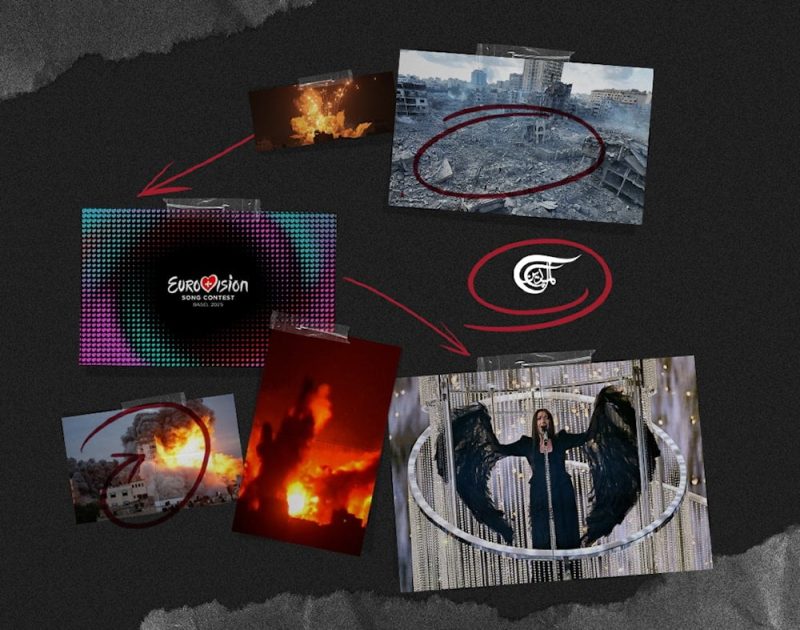
Eurovision: NATO Psychological Warfare Tool
By Kit Klarenberg | Al Mayadeen | May 24, 2025
The 2025 Eurovision Song Contest ended May 17th mired in controversy. The Zionist entity’s entrant, Yuval Raphael, finished second. Her performance, “New Day Will Rise”, received 297 points via public televote – the highest garnered by any act in the competition’s Grand Final, with 13 countries giving Raphael the maximum score of 12 points. This helped “Israel” almost clinch victory, despite coming last among participants in national jury votes. Immediately, state broadcasters across Europe demanded an investigation into flagrant, industrial scale rigging in “Israel’s” favour.
The Zionist entity’s participation in the Contest was the subject of much controversy in its leadup. On May 5th, 72 former Eurovision contestants – including previous winners – cosigned a letter to the European Broadcasting Union (EBU) demanding “Israel” and its national broadcaster be banned from the contest, over the country’s “genocide against the Palestinians in Gaza and the decades-long regime of apartheid and military occupation against the entire Palestinian people”. Their call was echoed by Spanish premier Pedro Sanchez.
Then, on May 19th, an EBU probe revealed the Israeli Government Advertising Agency conducted a vast, cross-platform online campaign to encourage support for Raphael’s entry. Detailed instructions on how to vote for her via text and phone in countries as far afield as Australia were widely circulated, along with a reminder that individuals could vote up to 20 times each. A dedicated YouTube channel – @Vote4NewDayWillRise – was launched to support the effort, garnering over 8.3 million views. Its videos were widely amplified across social media.
Separate investigations suggest Zionists could’ve further connived to fudge the Contest’s results via “VPNs, automated scripts (bot farms), and bulk SIM card purchases”. It is not the first time Tel Aviv has engaged in brazen fraud to skew Eurovision’s results in its favour. When “Israel” triumphed in the 2018 Contest, speculation widely abounded their victory resulted from meddling by now-defunct online Zionist astroturf effort Act.IL. On top of unambiguous voting irregularities, winning meant the 2019 Contest would be convened in “Israel”.
A June 2018 Knesset hearing spelled out this windfall’s strategic significance. Multiple Zionist entity lawmakers and ministers spoke of how “holding the Eurovision song contest in “Israel” is a gift” that could be exploited to boost and improve “Israel’s” international image, and counteract the burgeoning Boycott, Divestment and Sanctions movement’s successes. BDS had recently compelled Argentina to cancel a World Cup ‘friendly’ match with the entity, after Tel Aviv attempted to host the bout in illegally occupied al-Quds.
‘Opinion Leaders’
Similar Zionist entity-orchestrated social media and televote chicanery boosted “Israel” to fifth place in the 2024 Contest, which was likewise prefaced by widespread calls to bar Tel Aviv’s participation, and for other participating countries to boycott the event. While falling far short of victory, the public relations utility of “Israel’s” performance was abundantly clear. Entity officials, Western news outlets and pundits eagerly leaped upon the results as proof that despite the ongoing 21st century Holocaust in Gaza, a “silent majority” of Europeans still supported “Israel”.
At the time, journeyman Israeli government “public diplomacy” apparatchik David Saranga gushed to Ynet, “we knew that the situation was less serious than it is reflected in the demonstrations on the streets of Europe, but we did not expect such overwhelming support”. He added, “the fact that even countries where public opinion is critical of “Israel”, such as Sweden or Ireland, gave “Israel” a high score” indicated there were “underground currents” of pro-Zionist sentiment throughout the West.
However, Saranga also admitted the entity’s Foreign Ministry “acted among friendly audiences to increase voting”. Ynet subsequently detailed this effort, which included Tel Aviv’s entrant that year, Eden Golan, recording personal video addresses to foreign audiences in their own languages, referencing a supposed “wave of hatred” being whipped up against “Israel” by “Muslims”. Extensive analysis was conducted to ensure her message reached “Eurovision-loving audiences such as the LGBT community in Europe, members of fan clubs, journalists covering the contest and opinion leaders in the field.”
Following Yuval Raphael coming second this year, a familiar chorus erupted, with numerous prominent figures claiming her televoting preeminence was indicative of concealed Zionist sentiment the world over, and that ever-growing Palestine solidarity actions were not representative of wider public opinion. This is despite her performances being met with such intense booing, some European broadcasters resorted to piping in pre-recorded cheers and applause to drown out the mass jeering. Meanwhile, polls amply indicate the overwhelming majority of Europeans hold “unfavourable” views of Tel Aviv.
That the Zionist entity has so consistently invested enormous time, energy, and money into attempting to ‘game’ Eurovision over so many years is a testament to its redoubtable international propaganda potency. Up to 200 million people worldwide routinely tune in to the tournament every year, and Tel Aviv is not alone in seeking to weaponise the tournament for political reasons. In fact, Eurovision was secretly created as a psychological warfare tool by NATO to manipulate and control public opinion for this explicit purpose.
‘Psychological Action’
In January 2015, an extraordinary, hitherto secret document drawn up by NATO’s Committee on Information and Cultural Relations in March 1955 was published for the first time. It outlined the practical and ideological foundations of Eurovision, which was first convened next year, with just seven participants. A section of “aims” of the Contest states NATO’s objective was to “make the most” of TV, which “gives mankind at long last, the possibility, through the visual image, of conquering time and distance”, reaching vast global audiences simultaneously:
“Television has enabled sight to triumph over time and space, and this is the aspect which struck us most forcibly and led us to believe that it was our duty to break through the narrow boundaries which confined our programmes to spectators clustered around our respective capital cities, and to travel the world. There is no point in having a wonderful instrument in our hands if all we are going to do…is show the suburbs of Paris, London or Milan in France, England or Italy.”
The document went on to state “the thrill” of TV “lies in ranging as far afield as possible… [using] this marvellous instrument’s capacity for the instantaneous transmission of an event taking place elsewhere.” NATO contended “television transcends the frontiers of our European countries,” and thus the military alliance “held within [its] grasp a unique instrument for social and psychological action”. In sum, a “nervous system” of Europe could be constructed, “far more powerful than the telephone” or radio, to “animate the…general public.”
The document concludes with its author, Jean d’Arcy, then-senior director of French state broadcaster Radiodiffusion Française, expressing his sincere hope that the “social significance of Eurovision will become ever more apparent as it progresses along the lines which… it is destined to follow”. The file was a summary of remarks he made at a dedicated NATO conference “of senior information officials” in Paris two months earlier. His talk was described in a subsequent alliance newsletter as “most interesting”.
At that conference, Hastings Ismay, NATO’s first secretary general – who notoriously declared the alliance’s purpose was “to keep the Russians out, the Americans in, and the Germans down” across Europe – “reiterated his steadfast conviction of the importance of a profounder and more widespread understanding of NATO’s aims and achievements”. Eurovision provided an ideal opportunity to insidiously achieve those goals in a non-military context, propounding European unity and cultural superiority over the Soviet Union while the Cold War was in its infancy.
The collapse of Communism in Central and Eastern Europe, and the Soviet Union’s subsequent dissolution, vastly increased Eurovision’s pool of contestants. It was not until 1994 that Russia first appeared at the Contest. On February 25th 2022, one day after the Ukraine proxy war erupted, Moscow was banned from participating, which has remained in place ever since. In that year’s competition, Kiev prevailed, with The Kalush Orchestra’s song “Stefania” – interpreted in some quarters as an ode to Ukrainian ultranationalist mass-murderer Stepan Bandera – securing first place.
NATO deputy secretary general Mircea Geoana praised Ukraine’s victory and its “beautiful song”, linking Kiev’s triumph “to its bravery in fighting Russia”, and “immense public support all over Europe and Australia” for the proxy war. A Reuters report on Geoana’s comments commenced by declaring, “Eurovision and NATO might not usually be associated” – the international newswire’s writers apparently unaware that the military alliance was from inception, and remains, absolutely fundamental to the international tournament’s operation.
Former Yanukovich presidential adviser visited Kiev days before assassination – media
RT | May 23, 2025
Former Ukrainian lawmaker and presidential adviser Andrey Portnov, who was fatally shot in Madrid on Wednesday, had secretly visited Ukraine just days before his assassination, according to a report by Ukrainskaya Pravda which cites sources close to law enforcement and government circles.
The newspaper said that three sources have confirmed that Portnov was in Kiev on May 17–18 for a series of high-level meetings, including with “top officials responsible for law enforcement.” However, the exact nature of the meetings, and whether the visit was connected to his subsequent murder, remains unclear.
Portnov, a lawyer and once a powerful figure in the administration of former President Viktor Yanukovich, was gunned down in the upscale Madrid suburb of Pozuelo de Alarcon three days later, on May 21. Spanish media reported that he was shot multiple times, including in the head, shortly after dropping his children off at school. Witnesses say a lone gunman approached him near his Mercedes before fleeing with the help of accomplices.
No arrests have been made, and a Madrid court has reportedly classified the investigation. Ukrainian Foreign Minister Andrey Sibiga said on Friday that Madrid had shared “official information” about the murder due to Portnov’s citizenship, adding that relevant agencies in Kiev would determine the next steps.
“We possess information about the fact of the murder,” Sibiga told reporters in Kiev, while stressing that official procedures take time to unfold.
Spanish police have not ruled out any motives, with reports suggesting both organized crime and a political vendetta could be behind the killing due to Portnov’s complex and controversial political trajectory.
After serving as a legal architect of Ukraine’s judicial reform during Yanukovich’s presidency, Portnov fled the country during the 2014 Western-backed Maidan coup, returning only after Vladimir Zelensky’s 2019 election victory.
Since then, Portnov had filed a series of legal complaints against former President Pyotr Poroshenko, and was seen as having significant influence over Ukraine’s judiciary. In 2021, the United States sanctioned Portnov over alleged corruption.
While he initially supported Zelensky, he quickly became a vocal critic of the new administration, accusing it of authoritarian overreach amid a crackdown on opposition figures and media it labeled “pro-Russian.” Ukrainian media later accused him of ties to Russian elites, prompting him to flee again in 2022. He reportedly transferred assets to his children in Spain and settled in Madrid with his family.
Rodion Miroshnik, Russia’s ambassador-at-large overseeing a special mission on alleged Ukrainian war crimes, has suggested that Portnov’s career gave him access to legal documents that could be damaging to people in Zelensky’s inner circle — and that he may have been targeted to prevent the possible disclosure of such materials.
Russian military strikes drone-making plant in Kiev – MOD
RT | May 24, 2025
The Russian military has carried out a successful strike against a drone and missile production plant in the Ukrainian capital, Kiev, the Defense Ministry in Moscow has said.
The statement, issued by the ministry on Saturday, confirms earlier reports of a large-scale Russian drone and missile strike on Kiev overnight. Witnesses said they heard multiple blasts, with photos uploaded on social media capturing a huge explosion in the city.
“The Russian military performed a group strike with high-precision ground-based weapons and unmanned aerial vehicles against a Ukrainian military-industrial complex enterprise that produces missile weapons and unmanned aerial attack vehicles,” the statement read.
The other targets of the attack were a radar surveillance center and a US-made Patriot air defense system, it added.
“All of the goals of the strike were achieved. All designated targets were hit,” the ministry said.
According to media reports, the Russian strike targeted the Antonov aircraft manufacturing plant in the western part of the capital.
The Russian bombardment came after an intensification of Ukrainian drone attacks on Moscow and other Russian regions this week.
According to the Defense Ministry, 788 drones and 12 missiles were intercepted inside Russia between Tuesday and Friday. Another 104 UAVs were intercepted overnight, the ministry said on Saturday morning.
The Russian Foreign Ministry said on Friday that one person had been killed and 20 others injured, including four children, in Ukrainian drone strikes throughout the week. Four more civilians, including two kids, were wounded after the city of Lgov in Kursk Region was hit by a US-supplied HIMARS multiple rocket launcher, according to the ministry.
The Russian military said it would respond appropriately to the intensified drone raids by Kiev, but “unlike the Ukrainian side, our targets will be strictly limited to military facilities and defense industry plants,” it said.
Madrid court classifies probe into former Ukrainian MP’s murder – media
RT | May 23, 2025
A top court in the Madrid region has placed a secrecy order on an investigation into the killing of former Ukrainian lawmaker Andrey Portnov, according to local news reports.
No suspects have been arrested in connection with Wednesday’s shooting. Portnov, a seasoned politician who had fled Ukraine following allegations of treason, was gunned down in a suburb of the Spanish capital in what local media have speculated was a professional killing.
The Madrid Superior Court of Justice (TSJM), the highest judicial authority in the autonomous region, issued an order to restrict public access to case details on Thursday, EFE news agency and the newspaper 20 Minutos reported.
According to the latest media updates, Portnov was ambushed from behind by a lone gunman who fired at least nine rounds. Based on the circumstances, news outlets suggest the attacker had intended to ensure Portnov’s death.
Two accomplices reportedly assisted the assailant’s escape in a getaway vehicle. The attack occurred next to Portnov’s Mercedes shortly after he had dropped off his children at an elite school in Pozuelo de Alarcon, a suburb of Madrid which ranks as one of the wealthiest municipalities in Spain.
Portnov was a lawyer and long-time political figure who served as an MP in the late 2000s and as a legal adviser to Ukrainian President Viktor Yanukovich, before he was ousted in a Western-backed armed coup in 2014. Portnov fled his country along with other officials, but returned in 2019 after Vladimir Zelensky’s election.
Known for offering legal defense to individuals he claimed were politically persecuted, Portnov appeared frequently on Ukraine’s opposition media. While he initially supported Zelensky’s presidential bid, he later became a vocal critic as the new administration cracked down on opposition figures and media it labeled “pro-Russian.”
Portnov reportedly left Ukraine again in July 2022 and the next year transferred some assets to his children via a notary in Madrid, signaling that he had settled in Spain.
Rodion Miroshnik, Russia’s ambassador-at-large overseeing a special mission on alleged Ukrainian war crimes, has suggested that Portnov’s career gave him access to legal documents that could be damaging to people in Zelensky’s inner circle and that he may have been targeted to prevent the possible disclosure of such materials.
EU sanctions Ukraine’s elected opposition leader
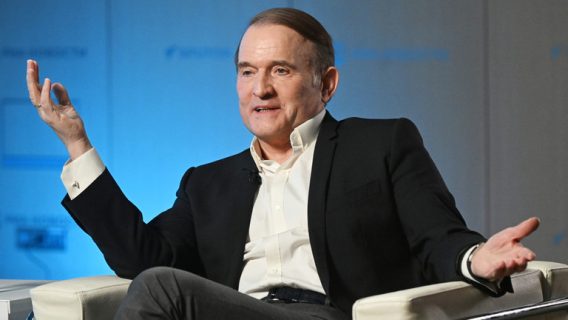
Exiled Ukrainian opposition leader Viktor Medvedchuk © Sputnik / Kristina Kormilitsyna
RT | May 21, 2025
The EU has sanctioned exiled Ukrainian opposition leader Viktor Medvedchuk as well as 20 other individuals and six entities on accusations of being involved in what it described as “Russia’s destabilizing actions abroad.” Moscow has repeatedly rejected claims of meddling in internal affairs of the bloc’s member-states.
Medvedchuk, who has been blacklisted by the EU since May 2024, was slapped with additional curbs on Tuesday when the European Council announced its 17th round of sanctions against Russia over the Ukraine conflict.
The restrictions against the former leader of Ukraine’s banned Opposition Platform – For Life party and the others included an assets freeze in the EU and a ban on entering the bloc or transiting its territory, the council said in a statement.
The EU claims that Medvedchuk and his associates Artyom Marchevsky and Oleg Voloshin, who have also been sanctioned, “controlled Ukrainian media outlets and used them to disseminate pro-Russian propaganda in Ukraine and beyond.”
“Through secret financing of the Voice of Europe media channel – also listed today – and his political platform Another Ukraine, Medvedchuk has promoted policies and actions intended to erode the legitimacy and credibility of the government of Ukraine, in direct support of the foreign policy interests of the Russian Federation and disseminating pro-Russian propaganda,” the statement read.
German bloggers Thomas Roeper and Alina Lipp, as well as Turkish journalist Huseyin Dogru, the founder of AFA Medya company, are also among those added to the sanctions list.
Medvedchuk used to be the head of the largest opposition faction in the Ukrainian parliament. But after the escalation between Moscow and Kiev, he was branded a traitor and arrested. The 70-year-old businessman and politician spent months in detention before being handed over to Moscow in a prisoner swap in September last year. He has remained in exile in Russia since then, with his Ukrainian citizenship revoked and his party branded illegal, along with a dozen groups that opposed the government of Vladimir Zelensky.
Moscow has on many occasions denied accusations of interfering in the electoral processes and internal affairs of EU nations. Russian Foreign Ministry spokeswoman Maria Zakharova previously accused the bloc of “switching from propaganda to direct persecution of media outlets and journalists based on political, ethnic and cultural grounds.”
Ex-Adviser to Yanukovych Shot Dead in Madrid Suburbs
Sputnik – 21.05.2025
Spanish police confirmed to RIA Novosti that Andriy Portnov, ex-adviser to former Ukrainian President Viktor Yanukovych, was shot dead on Wednesday morning outside a school in the city of Pozuelo de Alarcon near Madrid.
“We did receive a report about his death. We have no information about the perpetrators yet,” the police said.
Earlier in the day, the Cadena Ser radio station reported, citing police and emergency services, that Portnov was shot dead at the entrance to a school in Pozuelo de Alarcon.
Portnov was included in the Ukrainian database Myrotvorets (Peacemaker) as a “traitor to the motherland” in April 2015, according to the information on the Peacemaker website. He is accused of allegedly calling for murdering Ukrainian citizens and encroaching on the sovereignty and territorial integrity of Ukraine.
The Ukrainian website Peacemaker is known for its scandalous posts, in which it reveals personal data of journalists and other citizens, labeling them “traitors to their homelands.”
Later in the day, Russian Foreign Ministry Ambassador-at-Large on the Kiev Regime’s War Crimes Rodion Miroshnik assumed that Portnov could have some information that was dangerous for Volodymyr Zelensky or someone from his entourage.
“Portnov was an influential official in the Yanukovych era. He could well have had information from the ‘forgotten past’ that could ruin the ‘impeccable reputation’ of certain individuals in the current government. Or he could have had other information that was dangerous for someone from Zelenskyy’s circle or for himself,” Miroshnik said on Telegram.
The assassination looks very much like an “extrajudicial execution,” he added.
“It is hard to believe in the random nature of a murder with a control shot to the head, as well as the lack of connection with the Zelensky regime,” Miroshnik added.
Meanwhile, Spanish newspaper 20minutos reported that Spanish investigators did not rule out a connection between Portnov’s murder and the conflict in Ukraine. There is, however, another line of enquiry, which links the murder to organized crime, the report said.
Trump should not threaten new sanctions when he talks to President Putin
By Ian Proud | Strategic Culture Foundation | May 19, 2025
The U.S. side has made various signals that it might impose massive new sanctions on Russia unless the war ends soon. This would be a huge mistake that would lock in the fighting for the rest of the year and leave Europe on the hook for a massive bill and political disruption that it cannot afford. Trump should not threaten Putin with sanctions when they talk on Monday 19 May.
In the run up to the Russia-Ukraine bilateral peace talks which finally took place in Istanbul last week, both the EU and the UK imposed new sanctions on Russia. On 9 May, as Russian commemorated victory Day, Britain imposed sanctions on Russia’s shadow fleet and the EU followed suit with its 17th package of Russia sanctions on 14 May, the day before the Istanbul talks were due to start. Both the UK and EU have threatened further sanctions should Russia not agree a full and unconditional ceasefire in Ukraine and, with Zelensky, have actively urged the U.S. to follow suit, which it has not done, so far. However, the Americans have spoken increasingly about the possibility of massive new sanctions against Russia: this would be a huge mistake.
Sanctioning a country before peace talks have already started, or while they are still going on, is already a bad look. Very clearly, the Ukrainians, Europeans and British hope that new sanctions will apply such pressure on Russia that it agrees to terms that are more favourable to the Ukrainian side. I.e. that Ukraine does not have to go back to the Istanbul 1 commitment to adopt permanently neutral status. The western mainstream press has been carpet bombing their intellectually degraded readers with the latest press line that Ukraine should not have to go back to the Istanbul 1 text as a starting point for talks.
But there’s a problem. For this strategy to be effective, the sanctions have to work.
As I’ve pointed out before, sanctions against Russian energy have had limited impact, not just since 2022, but since 2014. Nothing about the glidepath of sanctions since February 2014 suggests that new sanctions will work now.
This latest round of UK and EU sanctions aimed to apply more pressure on enforcement of the G7 oil price cap of $60 which was first imposed in December 2022. Since the war started, that policy has failed.
Between 2021 and 2024, total volumes of Russian oil exported fell by just 0.2 million barrels per day, or 2.6%. After a bumper year for tax receipts in 2022 caused by Russian tumbling rouble and skyrocketing energy prices, Russia pulled in current account surpluses of $49.4bn and $62.3bn in 2023 and 2024. This was on the back of still strong goods exports of $425bn and $433bn respectively.
There are several reasons why the oil price cap didn’t work, the biggest being that Russia diverted 3 million barrels per day, around 39.5% of total oil exports to India (1.9 mbd), Türkiye (0.6 mbd) and China (0.5 mbd). Türkiye and India boosted exports of refined fuels to Europe providing a backdoor route for Russian oil to Europe. The second reason the oil price cap didn’t work is the near ten month time lag between war starting and the limit being imposed, which gave Russia space to readjust before punitive measure had been imposed. During this period, oil prices also dropped sharply from the high of $120 in the summer of 2022, to around $80 when the measure was imposed: the G7 missed the boat to impose maximum damage; this reinforces the point I make all the time that coalitions cannot act with speed and decisiveness.
Today, the Russian Urals oil price is below the $60 G7 cap meaning that any registered shipping company can transport it without penalty, which renders the British and European sanctions as pointless in any case.
Let’s be clear, western nations imposing sanctions against Russia that don’t work is not a new phenomena. As I have pointed out many times before, the vast majority (92%) of people that the UK has imposed assets freezes and travel bans upon have never held assets in the UK nor travelled here. For companies, the figure is just 23. The same, I am sure, is true of EU and U.S. sanctions, which cover largely the same cast list of characters and companies, as we all share and compare the same lists of possible designations. Financial sector sanctions prompted a massive readjustment of Russia’s financial sector. Energy and dual use sanctions drove self-sufficiency in technology production, through Rosnet, Gazprom and RosTec: i.e. these companies invested more in R&D on component production while sourcing components from alternative markets, in particular China.
At well over 20,000 sanctions imposed so far, Russia’s economy has proved remarkably robust and its key export sectors still find ways to deliver similar volumes across the world. At some point, I hope policy makers in London, Brussels and Washington will start to ask whether this policy is working. We long ago passed the point of diminishing marginal returns. I fear, however, they have their heads in the sand or, possibly another, darker, place.
So, coming back to Trump’s phone call with Putin on Monday 19 May you might ask yourself, ‘so what if he imposes a few more sanctions if they won’t work anyway?’
Putin would see the imposition of new U.S. sanctions as a complete 180, destroying any emerging trust he had in Trump or any belief in America’s stated intentions to end the war in Ukraine.
It is clear to me that further U.S. sanctions on Russia would kill stone dead any chance of a ceasefire in Ukraine at a time when Russia still has the upper hand. Russia has increased the pace of its advance since the Victory Day ceasefire and seems to be adding new blocks of red to the battle map each day. At the current rate of advance, even without a catastrophic Ukrainian collapse, it seems realistic to expect that Russia would paint out the remaining territory in Donetsk and Luhansk during the remainder of this year. In the process they would need to overcome the heavily fortified towns of Pokrovsk, Kramatorsk and Sloviansk, in what would likely be brutal and attritional battles killing many thousands more on both sides.
Moreover, dragging out the war for longer would simply add to Europe’s liability to fund Ukraine’s war effort at a time when it is only ever going to lose. Ukraine is spending over 26% of GDP on defence in 2025 and 67.5% of its budget expenditure is on defence and security, leaving a budget black hole of $42bn that has to be filled. America under Trump isn’t going to fill this hole. And, as Ukraine is cut off from international lending markets, that black hole is being filled by Europe.
There is no money for this.
Europe has neither the political capital nor the funds to maintain a losing war in Ukraine at enormous expense without massive domestic political blowback in their own countries.
Notwithstanding the possibly understandable fear among European leaders of failing and being seen to fail in Ukraine, keeping the war going is at best, a gesture in cynical self-preservation, pushing their eventual political demise further down the track.
Unfortunately, we have been here so many times before. Right back to the Minsk II agreement, Ukraine has been pushing for ever more sanctions against Russia that only ever served to ramp up resentment and exacerbate the conflict. European leaders have invested too much in Zelensky and his self-serving demands aimed primarily at staying in power. He is quickly becoming the gun that shoots European elites in the head.
If Trump really wants to be seen as a peacemaker, he should avoid doing what every other western leader before him including Sleepy Joe did and resist the temptation to impose more sanctions. Instead, he should continue to press President Putin to continue to engage with bilateral peace talks that finally recommenced in Istanbul last week. He must also tell the Eurocrats and Zelensky that they must make compromises rather than plugging the same old failed prescriptions.
Diplomatic Chess, Ukraine the Pawn
By Patrick Lawrence | Consortium News | May 16, 2025
As was universally expected, little came out of Istanbul this week, where Ukrainian and Russian delegations met with the ostensible purpose of exploring a negotiated settlement of the proxy war the U.S. provoked three years ago.
It is an odd state of affairs when even the people doing the talking did not anticipate anything useful to emerge from their talking.
After less than two hours of negotiation, the two sides agreed only to future talks on subsidiary questions: a prisoner exchange and a 30–day ceasefire — a ceasefire Kiev and its Western backers refused for years but are now desperate to implement.
There was no discussion of an accord to end the war and no final agreements other than one to continue negotiations. And the encounter was not without its acrimonious moments.
Talks to negotiate more talks are not much but not nothing. The two sides have met for the first time since March 2022, when, a month into the war, they previously convened in Istanbul and negotiated a draft document that would have ended the fighting — this until Boris Johnson, then the British prime minister, arrived to scuttle the accord so as to keep the war going.
There is no feigning surprise or disappointment. It was evident during a week of incessant posturing that the Kiev regime and the European powers that have lately assumed the task of manipulating it, have no desire to begin substantive negotiations with the Russian Federation.
No, for the British, the French, the Germans, and their client in Kiev, the imperative in the run-up to the Istanbul encounter on Friday was to appear earnestly dedicated to talks across a mahogany table while preventing even nascent progress toward a diplomatic settlement.
In this effort the Europeans have failed, at least for now.
Trump Takes Over
President Donald Trump effectively overruled them when, earlier this week, he responded, positively and vigorously, to President Vladimir Putin’s unexpected offer to open talks. Trump insisted, in all caps as is his wont, that Volodymyr Zelensky, Ukraine’s president, should forget the ceasefire and open negotiations “IMMEDIATELY!”
This appears to have pushed to the margins the British, French, and Germans, who have taken over as Zelensky’s hands-on minders since Trump assumed office in January. But I see little chance Friday’s talks will mark the end of their effort to keep the war going and a settlement at bay — even as they pretend to stand for precisely the opposite.
U.K. Prime Minister Keir Starmer, French President Emmanuel Macron and German Friedrich Merz set things in motion last weekend when they flew to Kiev for a hastily arranged summit with Zelensky. On their arrival, the British, French and German leaders grandly issued an ultimatum: Moscow must accept a 30–day ceasefire by Monday, May 12, or the Europeans would impose a punishing set of new sanctions on the Russians.
So did the curtain rise on a lot of poor theater. As John Whitbeck, the international attorney resident in Paris, remarked on his privately circulated blog, this appeared to be an offer Moscow was bound to refuse in order to convey the impression the Europeans were doing their best for peace — but the Russians remained committed to war.
The fun began then, too. Putin, in a late-night nearly immediate response from the Kremlin, gave the Starmer–Macron–Merz ultimatum all the attention it merited — none — and wrong-footed the Europeans and Kiev by proposing Kiev and Moscow open negotiations in Istanbul on Thursday.
At this point — the chronology has been well-reported — Zelensky began several days of carrying on. The Russian proposal was mere theater: This was his opener. (See what I mean by fun?) O.K., I agree to talks in Istanbul, but I insist on a summit with Putin himself. Putin ignored this, too — as Zelensky and his sponsors knew he would. There must be a ceasefire first — another idea that Kiev and its sponsors dropped.
It was Trump’s intervention that brought the European follies to an end. After the U.S. president’s statements to the press and on social media, the Ukrainian TV–actor-turned-president finally agreed to send a team of Kiev officials, led by Defense Minister Rustem Umerov, to meet with a Russian delegation headed by Vladimir Medinsky, a prominent adviser to the Russian president.
Late Friday afternoon the Russian and Ukrainian delegations both announced that they had agreed to resume talks, but for now only on the ceasefire question. “We are ready to continue contacts,” Medinsky said at a post-session news conference.
There was a little more to this encounter than that. In a report Friday evening The Telegraph quoted Medinsky telling the Ukrainians across the U–shaped negotiation table, “We don’t want war, but we’re ready to fight for a year, two, three, however long it takes. We fought Sweden for 21 years. How long are you ready to fight?”
Medinsky’s reference was to what Russians call the Great Northern War, which Russia waged against the Swedish Empire during the reign of Peter the Great, from 1700 to 1721.
And that is it, a door pried open after a soap opera’s worth of chicanery in London, Paris, Berlin, and Kiev.
Remember the Minsk Protocols
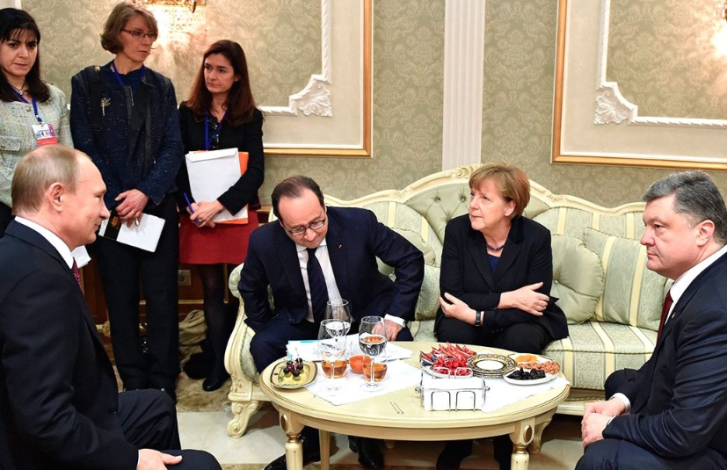
Putin, French President Francois Hollande, German Chancellor Angela Merkel, Ukrainian President Petro Poroshenko at the Normandy format talks in Minsk, Belarus, Feb. 12, 2015. (Kremlin)
My take on the week’s events takes me back to the Minsk Protocols, which Moscow negotiated a decade ago with Kiev, Paris and Berlin.
Signed in September 2014 and February 2015, these committed Ukraine to a new constitution whereby the Russian-speaking provinces in the nation’s east would be granted a considerable degree of autonomy. Kiev and Moscow signed, France and Germany serving as co-signatories backing the former.
Kiev ignored the Minsk accords from Day 1. And, as well-reported at the time, the French and Germans later acknowledged they co-signed only to allow Ukraine time enough to rearm so as to continue attacking the eastern provinces and prepare for the war that eventually broke out three years ago.
This pencil-sketched history is useful to understanding this week’s events and what preceded them. Putin got his fingers burned in Minsk, having personally negotiated the two protocols. I do not know when the Russian president decided the European powers could not be trusted, but he has certainly not trusted them since the Minsk debacle.
Last week’s events proved this a sound judgment. In an improvised game of diplomatic chess, Moscow got the Europeans in check this time, making dexterous use of Kiev as its pawn.
Post–Istanbul, it appears now that the best chance of a settlement of the Ukraine conflict resides in the prospect of a Trump–Putin summit. This, if it comes to pass, would define the Ukraine crisis — altogether properly — as a subset of Trump’s project to restore relations with Moscow.
And it would disarm, not to say humiliate the Europeans who have been leading the Continent to continue its support for the Kiev regime and the war.
A couple of caveats are in order here. One, as earlier suggested, it is not at all clear we have heard the last of the European triumvirate who took center stage for a few days this week. Starmer, Macron and Merz, the last just appointed Germany’s new chancellor, are heavily invested in the Ukraine project and the Russophobia that propels it.
Two, as Putin and other Russian officials have made plain numerous times, and very pointedly this past week, substantive negotiations of a settlement of the Ukraine crisis must begin with mutual recognition of “root causes,” to take the phrase the Kremlin now favors.
This is why Moscow nominated Istanbul as the venue for these new talks. In the draft Boris Johnson disrupted three years ago, these concerns were addressed.
“We view these talks as a continuation of the peace process in Istanbul, which was unfortunately interrupted by the Ukrainian side three years ago,” Medinsky said at a press conference as he set out of Istanbul Thursday. “The aim of direct negotiations with the Ukrainian side is ultimately to secure lasting peace by addressing the fundamental root causes of the conflict.”
The phrase is too ubiquitous in the Russian discourse to ignore. The question now is whether Donald Trump, in any summit he may have with Vladimir Putin, will be at all equipped to address Russia’s concerns.
If he does, he will fundamentally alter relations between the Western powers and Russia for the good — a diplomatic triumph. If he does not, he is unlikely to get anything more done than negotiators accomplished in Istanbul this week.
Putin outlines results Moscow seeks in Ukraine
RT | May 18, 2025
Russia is seeking to achieve “lasting and sustainable peace” by eliminating the root causes of the Ukraine conflict, President Vladimir Putin has said, in an extract of an interview released by Russia 1 TV on Sunday.
In a clip posted by journalist Pavel Zarubin on Telegram, Putin stated that Russia has “enough strength and resources to bring what was started in 2022 to its logical conclusion” while accomplishing Moscow’s key goals.
Russia wants to “eliminate the causes that caused this crisis, create conditions for long-term sustainable peace and ensure the security of the Russian state and the interests of our people in those territories that we always talk about,” he added.
The president was apparently referring to Crimea, the Donetsk and Lugansk People’s Republics, and the regions of Kherson and Zaporozhye, which overwhelmingly voted in favor of joining Russia in referendums in 2014 and 2022.
People in these former Ukrainian territories “consider Russian to be their native language” and see Russia as their homeland, he said.
Commenting on the ongoing diplomatic engagement with the US to settle the conflict, Putin acknowledged that “the American people, including their president [Donald Trump] have their own national interests.”
“We respect that, and expect to be treated the same way,” he added.
Putin’s remarks come on the heels of the first direct Russia-Ukraine talks since 2022. As a result of Turkish-mediated negotiations in Istanbul, both sides agreed to exchange lists of conditions for a potential ceasefire, conduct a major prisoner swap, and discuss a follow-up meeting. The Kremlin has not ruled out direct talks between Putin and Ukraine’s Vladimir Zelensky if the ongoing peace efforts result in progress and firm agreements.
Following the talks, US President Donald Trump announced he would hold a phone call with his Russian counterpart on Monday, which would focus on trade and resolving the Russia-Ukraine conflict. Meanwhile, Russian Foreign Minister Sergey Lavrov discussed the Istanbul negotiations with US Secretary of State Marco Rubio, who welcomed the results of the talks.
Featured Video

Macgregor: We Haven’t Seen the Worst of the Iran War Yet
or go to
Aletho News Archives – Video-Images
From the Archives
15 Saudi ‘hijackers’ were CIA agents working for US: Scholar
Press TV – April 13, 2016
Fifteen of the 9/11 “hijackers” from Saudi Arabia were CIA agents working for the United States government, which was seeking to destroy the Middle East for Israel and to double the American military budget, says Dr. Kevin Barrett, an American academic who has been studying the events of 9/11 since late 2003…. continue
Blog Roll
 Aletho News
- Breast Cancer: Before You Consent
- Iran’s Plan to Shut Down AI in the Persian Gulf
- Israel seeks ‘compensation’ from Washington over Saudi F-35 sale
- Saudi crown prince seeks dialogue with Ansarullah after Yemeni blows: Report
- Damascus rejects Saudi request for Syrian fighters to counter Yemen: Report
- South Korea says will not send troops to join terrorist US war on Iran
- Russia Just Struck the Eyes of NATO’s War Machine in Ukraine
- Russia summons UK charge d’affaires over Kiev drone support
- NATO member warns bloc seeking pretext for war with Russia
- Macgregor: We Haven’t Seen the Worst of the Iran War Yet
- If Americans Knew
- Debunking The Claim That Macklemore Has A “History Of Antisemitism”
- CPJ demands release of arrested Palestinian-US journalist near Bethlehem
- Robert Kraft: The Billionaire Friend of Netanyahu Pulling The Strings Behind the Macklemore/Ed Sheeran Blow Up
- Columbia Administered Fund Gives Big Money to Pro-Israel Groups
- Deportation Case of Palestinian Activist Salah Sarsour Tests First Amendment
- ‘We Will Not Forget’: Palestinians Mark 44 Years since Sabra and Shatila
- Why do we let Zionists decide what we can and can’t say?
- US welcomes Israeli, Iranian delegations to UN, but not Palestinians – Daily Update
- Biden’s Genocide Accomplices Targeted by New Accountability Campaign
- AIPAC’s Network Has Already Spent $67.2 Million to Shape the Midterm Elections
- No Tricks Zone
- New Study: ‘Global Drought Shows No Detectable Recent Acceleration Under Climate Warming’
- Economic Masterminds: German Socialists Suggest Taxing Productivity Gains Stemming From Using AI
- The South China Sea Has Not Been Cooperating With The Climate Change Narrative
- Energy Crisis: Germany Enters Heating Season With Historically Low Gas Reserve Fill Levels
- New Study: The Antarctic Ice Sheet Gained Mass From 2020-2024 Due To Staggering Snow And Ice Accumulation
- Study: Ocean Heating Rates From Thousands Of Years Ago ‘Dwarf’ Modern Ocean Heating Rates
- Climate Extremists Target, Attack Large-Scale Power Grid Infrastructure In Germany!
- New Study: Antarctic Ice Melt Has Contributed Less Than 1 Centimeter To Sea Level Rise In The Last 30 Years
- Fear Of Debate: Alarmist German Climate Scientist Calls On Mainstream Media To Discredit Skeptic Voices
- End-Of-August Arctic Sea Ice Extent Hasn’t Fallen In 20 Years, Official Data Show!
 Aletho News
