Unit 8200 taps Microsoft to spy on millions in Palestine

Al Mayadeen | August 6, 2025
In late 2021, Microsoft CEO Satya Nadella met with Yossi Sariel, the commander of “Israel’s” military surveillance agency Unit 8200, at Microsoft’s Seattle headquarters. Sariel sought support for a plan to move vast amounts of classified intelligence data into Microsoft’s Azure cloud platform. This arrangement would provide Unit 8200 with a dedicated, customized space within Azure, offering nearly unlimited storage capacity.
Equipped with Azure’s immense storage capabilities, Unit 8200 developed a sweeping surveillance system that records and stores millions of mobile phone calls made daily by Palestinians in Gaza and the occupied West Bank. This cloud-based system, operational since 2022, allows the agency to retain a vast archive of calls over extended periods.
Microsoft has claimed that Nadella was unaware of the specific nature of the data being stored. However, leaked documents and interviews with 11 sources from Microsoft and Israeli military intelligence reveal that Azure has been central to storing this expansive trove of Palestinian communications.
According to three Unit 8200 insiders, the Azure cloud platform has been instrumental in preparing deadly airstrikes and shaping military operations in both Gaza and the West Bank. While “Israel” has long intercepted calls in the occupied territories thanks to its control over Palestinian telecommunications, the new system indiscriminately records calls from a far larger group of ordinary civilians.
‘A million call an hour’
One intelligence source explained that Unit 8200 turned to Microsoft after realizing its own servers lacked the storage capacity and computing power needed to handle the sheer volume of phone calls, a volume captured by the unit’s internal mantra: “A million calls an hour.”
The surveillance system was designed to run on Microsoft’s servers, protected by enhanced security layers developed jointly by Microsoft engineers and Unit 8200 according to the unit’s specifications. Leaked Microsoft files indicate that much of this sensitive Israeli military data now resides in company data centers located in the Netherlands and Ireland.
Employees, investors concerned about ties to ‘Israel’s’ military
This revelation about Microsoft’s Azure platform’s role in the surveillance effort emerges amid increasing pressure on the tech giant from employees and investors concerned about its ties to “Israel’s” military and how its technology has been deployed during the 22-month genocide in Gaza.
In May, a Microsoft employee protested during CEO Satya Nadella’s keynote speech by shouting, “How about you show how Israeli war crimes are powered by Azure?” This public outcry followed earlier revelations in January by The Guardian and others about “Israel’s” reliance on Microsoft technology during the Gaza genocide.
In response, Microsoft commissioned an external review of its relationship with the Israeli military. The company stated the review “found no evidence to date” that Azure or its AI tools were “used to target or harm people” in the territory.
A senior Microsoft source said the company had discussions with Israeli security officials, specifying how its technology should be used in Gaza, emphasizing that Microsoft systems must not be involved in identifying “targets” for lethal strikes.
Despite Microsoft’s assurances, sources from Unit 8200 revealed that intelligence gathered from the vast archive of phone calls stored in Azure has been used to identify bombing “targets” in Gaza. One source explained that when planning an airstrike in densely populated areas, officers would use the cloud system to review calls made by people nearby.
Use of the system reportedly increased during the ongoing genocide in Gaza, which has resulted in the killing of over 60,000 Palestinians, including more than 18,000 children.
Arrests without excuse made feasible
Originally, the system focused on the West Bank, home to about 3 million Palestinians under Israeli military occupation. According to Unit 8200 sources, the information held in Azure formed a rich intelligence repository used to blackmail individuals, justify detention, or even killings after the fact.
“When they need to arrest someone and there isn’t a good enough reason to do so, that’s where they find the excuse,” said one source, referring to the cloud-stored data.
Microsoft claimed it had “no information” regarding the specific data Unit 8200 stored in its cloud. The company alleged that its “engagement with Unit 8200 has been based on strengthening cybersecurity and protecting Israel from nation-state and terrorist cyber-attacks.”
They added, “At no time during this engagement has Microsoft been aware of the surveillance of civilians or collection of their cellphone conversations using Microsoft’s services, including through the external review it commissioned.”
‘Tracking everyone, all the time’
The driving force behind this cloud surveillance initiative was Yossi Sariel, the commander of Unit 8200 from early 2021 to late 2024. Described by one insider as a “revolution” within the unit, Sariel was a career intelligence officer who strongly championed large-scale projects like this.
Sariel expanded the scope of communications interception by Unit 8200. His strategy was to begin “tracking everyone, all the time,” said an officer who worked under him.
‘The entire public was our enemy’
Moving beyond targeted surveillance, Sariel’s approach employed mass surveillance across the occupied West Bank, combined with innovative AI tools to extract actionable insights. One source said, “Suddenly the entire public was our enemy,” reflecting how the project aimed to predict which individuals posed security threats.
Among the tools developed during this time was a system that scanned all text messages between Palestinians in the West Bank, automatically assigning risk scores based on suspicious keywords. Known as “noisy message”, it remains in use and can detect texts discussing weapons or expressing a desire to die.
When Sariel became Unit 8200 commander in early 2021, he prioritized building a partnership with Microsoft that would allow the unit to extend its capabilities and capture the content of millions of phone calls daily.
Storing Palestinian phone calls dubbed ‘sensitive workloads’
At his meeting with Satya Nadella later that year, Sariel didn’t explicitly mention plans to store Palestinian phone calls in the cloud, instead referring to “sensitive workloads” containing secret data, according to internal meeting records.
However, documents indicate that Microsoft engineers understood the data would include raw intelligence like audio files. Some Microsoft staff based in “Israel”, including former Unit 8200 members, seemed aware of the project’s goals. As one source said, “You don’t have to be a genius to figure it out. You tell [Microsoft] we don’t have any more space on the servers, that it’s audio files. It’s pretty clear what it is.”
Microsoft’s spokesperson maintained, “We are not aware of Azure being used for the storage of such data,” stressing that Unit 8200 was a customer of cloud services and that Microsoft “did not build or consult with Unit 8200” on a surveillance system.
Still, in early 2022, Microsoft and Unit 8200 engineers collaborated closely to develop advanced security measures in Azure to meet the unit’s standards. One document described the collaboration’s “rhythm of interaction” as “daily, top down and bottom up.”
Secrecy, scale of data storage
Within Microsoft, the project was highly secretive, with engineers instructed not to mention Unit 8200 by name. Under the plan, vast amounts of raw intelligence material would be stored in Microsoft data centers overseas.
Files indicate that by July 2025, approximately 11,500 terabytes of Israeli military data, equivalent to around 200 million hours of audio, will be held on Microsoft’s Azure servers in the Netherlands, with a smaller portion stored in Ireland. It’s unclear whether all this data belonged to Unit 8200, as some might belong to other Israeli military units.
According to the documents, Unit 8200 informed Microsoft that it intended to eventually migrate over 70% of its data, including secret and top-secret information, to Azure. The unit was “willing to ‘push the envelope’ with the kind of sensitive and classified information that intelligence agencies normally held on their own servers.” As one executive noted, “They’re always trying to challenge the status quo.”
When asked about Sariel’s meeting with Nadella, Microsoft’s spokesperson said it “is not accurate” to claim that the CEO personally supported the project. They said Nadella “attended for 10 minutes at the end of the meeting” and that there was “no discussion” of the specific data planned for Azure.
However, internal Microsoft records viewed by The Guardian show Nadella expressed support for Sariel’s ambition to transfer a large portion of Unit 8200’s data to the cloud, described earlier in the meeting as “sensitive intelligence material.”
One record states, “Satya suggested that we identify certain workloads to begin with and then gradually move towards the 70% mark.” It adds that Nadella said, “building the partnership is so critical” and “Microsoft is committed to providing resources to support.”
Sariel’s vision, AI advocacy
Several months before his meeting with Microsoft CEO Satya Nadella in 2021, Yossi Sariel published a book on artificial intelligence under a pen name, later revealed by The Guardian to be his own, in which he urged militaries and intelligence agencies to “migrate to the cloud.”
Known within Israeli intelligence as a technology evangelist, Sariel prized what he described to colleagues as a friendly relationship with Nadella. A senior intelligence source said, “Yossi bragged a lot, even to me, about his connection with Satya.” (Microsoft has denied that Nadella and Sariel had a close relationship.)
Another former intelligence colleague added, “He sold [the partnership] internally and got a huge budget. He claimed it was the solution to our problems in the Palestinian arena.”
Sariel declined to comment and referred questions about the project to the Israeli occupation forces (IOF). An IOF spokesperson claimed that their cooperation with companies like Microsoft was based on “legally supervised agreements.” The spokesperson alleged, “The IDF operates in accordance with international law, with the aim of countering terrorism and ensuring the security of the state and its citizens.”
Microsoft’s commercial interests, protests
For Microsoft, the multi-year collaboration with Unit 8200 represented a significant commercial opportunity. Executives anticipated earning hundreds of millions of dollars in revenue and described the partnership as “an incredibly powerful brand moment” for their Azure cloud platform, according to leaked files.
One executive noted that Unit 8200’s “leadership hopes to expand the mission-critical work tenfold in the coming years.”
As Unit 8200 began utilizing Azure’s storage capabilities in 2022, intelligence officers quickly realized the scale of the new tool’s potential. One source familiar with the system described it simply: “The cloud is infinite storage.”
Calls stored in the system, including those made by Palestinians to Israeli and international numbers, are generally kept for about one month, although the storage capacity can be extended to hold calls for longer periods when necessary. Several intelligence sources explained that this allows officers to retrieve past phone conversations of persons who later become of interest. Previously, surveillance targets had to be pre-selected for their calls to be intercepted and stored.
However, the system notably failed to stop Operation Al-Aqsa Flood.
Following October 7, Sariel faced criticism for prioritizing “addictive and exciting” technology over traditional intelligence methods. Critics argued this focus contributed to the intelligence failure. Sariel resigned the following year, acknowledging “8200’s part in the intelligence and operational failure.”
Use of AI tools and Gaza genocide impact
During the subsequent genocide war, the cloud system Sariel developed has been frequently used alongside new AI-driven target recommendation tools that were also introduced under his leadership. These technologies have played a key role in military operations that have caused widespread devastation and a severe humanitarian crisis for civilians.
While “Israel’s” destruction of Gaza’s telecommunications infrastructure has decreased the volume of phone calls, sources say the data stored in the cloud remains valuable. One source noted that intelligence officers working on Gaza have become increasingly enthusiastic about the system as the conflict continues, believing the military is “heading towards long-term control there.”
Broader implications
The expansive surveillance program reveals how technology firms like Microsoft can become deeply entangled in complex geopolitical conflicts. Despite Microsoft’s claims that its technology is not used to target Palestinians or support lethal strikes, internal sources and leaked documents paint a different picture of extensive intelligence gathering on Palestinians.
As protests grow and employees voice concerns, with one shouting during a keynote, “How about you show how Israeli war crimes are powered by Azure?,” the debate intensifies over the ethical responsibilities of tech companies working with military and intelligence agencies.
The case of Unit 8200 and Microsoft illustrates the immense power and risks of cloud technology, raising urgent questions about privacy, accountability, and the future of surveillance in war zones.
The verdict of history: How political calculations betrayed Gaza
By Ramzy Baroud | MEMO | August 6, 2025
The Israeli human rights organization B’Tselem released a comprehensive report on 27 July describing the Israeli war on Gaza as genocide. However, the delay in publishing such an indictment is troubling and adds to an existing problem of politically motivated decision-making processes that have, in their own right, prolonged the ongoing Israeli war crimes.
The report accused Israel of committing genocide, a conclusion reached after a detailed analysis of the military campaign’s intent, the systematic destruction of civilian life, and the government-engineered famine. This finding is significant because it adds to the massive body of legal and testimonial evidence affirming the Palestinian position that Israel’s actions in Gaza constitute a genocide.
Moreover, the fact that B’Tselem is an Israeli organization is doubly important. It represents an insider’s indictment of the horrific massacres and the government-engineered famine in the Strip, directly challenging the baseless argument that accusing Israel of genocide is an act of antisemitism.
Western media were particularly interested in this report, despite the fact that numerous first-hand Palestinian reports and investigations are often ignored or downplayed. This double standard continues to feed into a chronic media problem in its perception of Palestine and Israel.
Claims by Palestinians of Israeli war crimes have historically been ignored by mainstream media or academia. Whether the Zionist militia’s massacre of Tantura in 1948, the actual number of Palestinians and Lebanese killed in the massacres of Sabra and Shatila in Lebanon in 1982, or the events resulting in the Jenin massacre in the West Bank in 2002, the media has frequently ignored the Palestinian account. It often gains a degree of validation only if it is backed by Israeli or Western voices.
The latest B’Tselem report is no exception. But another question must be asked: why did it take nearly two years for B’Tselem to reach such an obvious conclusion? Israeli rights groups, in particular, have far greater access to the conduct of the Israeli army, the statements of politicians, and Hebrew media coverage than any other entity. Such a conclusion, therefore, should have been reached in a matter of two months, not two years.
This kind of intentional delay has so far defined the position of many international institutions, organisations, and individuals whose moral authority would have helped Palestinians establish the facts of the genocide globally much earlier.
For example, despite the ICJ’s historic ruling on 26 January 2024, that determined that there are plausible grounds for South Africa’s accusation of Israel of committing genocide, the court is still unable, or unwilling, to produce a conclusive ruling. A definitive ruling would have been a significant pressure card on Israel to end its mass killing in Gaza.
Instead, for now, the ICJ expects Israel to investigate itself, a most unrealistic expectation at a time when Israeli Prime Minister Benjamin Netanyahu promises his extremist ministers that Israel will encourage the ethnic cleansing of Gaza.
The same indictment of intentional and politicised delays can be attributed to the International Criminal Court. While it issued arrest warrants for Netanyahu and his former defense minister on November 21, 2024, no concrete action has been taken. Instead, it is the Chief Prosecutor of the court, Karim Khan, who finds himself attacked by the US government and media for having the courage to follow through on the investigation.
Individuals, too, especially those who have been associated with ‘revolutionary’ politics, the likes of Congresswoman Alexandria Ocasio-Cortez and Senator Bernie Sanders, among others, have been reluctant to act. On 22 March 2024, Ocasio-Cortez refused to use the term genocide in Gaza, going as far as claiming that, while she saw an “unfolding genocide,” she was not yet ready to use the term herself.
Sanders, on the other hand, who has spoken out repeatedly and strongly against Netanyahu, describing him in an interview with CNN on 31 July as a “disgusting liar,” has had repeated moral lapses since the start of the war. When the term genocide was used by many, far less ‘radical’ politicians, Sanders doubled down during a lecture at a university in Ireland. He said that the word genocide “makes him queasy,” and he urged people to be “careful about it”.
These are not simply lost opportunities or instances of moral equivocation. They have had a profound and direct impact on Israel’s behavior. The timely intervention of governments, international institutions, high courts, media, and human rights groups would have fundamentally changed the dynamics of the war. Such collective pressure could have forced Israel and its allies to end the war, potentially saving thousands of lives.
Delays born of political calculation and fear of retribution have given Israel the critical space it needed to carry out its genocide. Israel is actively exploiting this lack of legal and moral clarity to persist in its mass slaughter of Palestinians.
This must change. The Palestinian perspective, their suffering, and their truths must be respected and honored without needing validation from Israeli or other sources. The Palestinian voice and their rights must be truly centered, not as an academic cliché or political jargon, but as an undeniable, everyday reality.
As for those who have delayed their verdict regarding the Israeli genocide, no rationale can possibly absolve them. They will be judged by history and by the desperate pleas of Gaza’s mothers and fathers, who tried and failed to save their children from the Israeli killing machine and the world’s collective silence or inaction.
‘Strategy of surrender’: Hezbollah condemns Lebanese cabinet decision on disarmament
The Cradle | August 6, 2025
Hezbollah released a statement on 6 August strongly rejecting a decision taken by the Lebanese cabinet a day earlier regarding state monopoly over all weapons in the country.
The Lebanese resistance group vowed to “treat this decision as if it does not exist,” calling it a “grave sin.”
“The government of [Lebanese] Prime Minister Nawaf Salam has committed a grave sin by adopting a decision that strips Lebanon of the weapons of resistance against the Israeli enemy. This weakens Lebanon’s strength and position in the face of the ongoing American-Israeli aggression and grants Israel what it failed to achieve during its assault on Lebanon,” Hezbollah said.
“This decision clearly violates the national pact and contradicts the government’s ministerial statement,” which calls for taking “all necessary measures” to liberate all Israeli-occupied Lebanese territories, Hezbollah went on to say.
“Preserving Lebanon’s strength – and that includes the Resistance’s arms – is part of these necessary measures. Likewise, working to enhance Lebanon’s strength by arming and empowering the Lebanese army to expel the Israeli enemy and liberate and protect Lebanese land is also one of these essential measures,” it added.
“This decision undermines Lebanon’s sovereignty and gives Israel free rein to tamper with its security, geography, politics, and very future. Therefore, we will treat this decision as if it does not exist. At the same time, we remain open to dialogue, to ending the Israeli aggression on Lebanon, liberating its land, freeing its captives, rebuilding what was destroyed by the brutal assault, and engaging in discussions over a national defense strategy – but not under the weight of aggression,” the resistance group said.
“What the government has now decided is part of a strategy of surrender and a direct undermining of Lebanon’s sovereignty.”
“To our honorable people, we say: This is just a passing summer cloud, God willing. We are used to being patient—and to emerging victorious.”
Hezbollah also confirmed the withdrawal of its ministers from the session on Tuesday in rejection of the decision.
The cabinet session on 5 August lasted several hours. While the continuation of discussions on the issue of weapons was postponed until Thursday, the cabinet adopted a decision calling for state monopoly on weapons, without prioritizing the need for Israel to withdraw its forces and end attacks against Lebanon.
“The Lebanese army is tasked with developing an implementation plan regarding the weapons before the end of the year and presenting it to the Council of Ministers for discussion before the 31st of this month,” Prime Minister Nawaf Salam said on Tuesday night after the session, reaffirming Lebanon’s commitment to UN Resolution 1701 and the state’s monopoly on weapons by the end of the year.
Lebanese journalist Khalil Nasrallah referred to the decision as an attempt to set a trap … and impose the resistance’s disarmament as a fait accompli.”
“The Council of Ministers did not task the army with drafting a plan to defend Lebanon against the Israeli aggression; instead, it tasked it with drafting a plan to restrict weapons (Hezbollah’s weapons) to be presented to the Council of Ministers at the end of August, to be implemented before the end of the year. This is the level of ‘defensive’ thinking in Lebanon, and about Lebanon, among a group that embraced cowardice and made it their path,” he added.
Hezbollah Secretary-General Naim Qassem delivered a speech as the cabinet session took place, reaffirming the Lebanese resistance’s refusal to surrender its weapons.
Hezbollah says it is prepared to discuss incorporating its weapons into the state for a defensive strategy in which they could be used to defend the country from Israel.
The group also stresses that this is purely an internal matter, and that no such discussions can begin until Israel ends its attacks and withdraws from the five points it occupied in south Lebanon since last year’s ceasefire.
The Lebanese government has drafted a response to a recent US roadmap demanding, among other things, Hezbollah’s disarmament. The response prioritizes the need for Israel to withdraw its forces and end its near-daily attacks on Lebanon as a first step.
Washington and Tel Aviv have reportedly rejected Beirut’s terms, raising concerns over a potential military escalation.
Meanwhile, Israel has threatened to continue attacking Lebanon until the resistance is disarmed.
An 11-year-old boy was killed by an Israeli drone strike on Wednesday morning in the southern Lebanese town of Tulin.
Japanese Prime Minister Fails to Mention US as Country Responsible for Hiroshima Bombing
Sputnik – 06.08.2025
Japanese Prime Minister Shigeru Ishiba did not name the United States as the country that dropped nuclear bombs on the Japanese cities of Hiroshima and Nagasaki in August 1945 during the commemorative ceremony in Hiroshima on Wednesday.
In August 1945, during WWII, US pilots dropped atomic bombs on Hiroshima and Nagasaki. The Hiroshima blast killed up to 140,000 of the city’s 350,000 population on August 6 that year, with Nagasaki losing approximately 74,000 on August 9.
“Eighty years ago on this day, an atomic bomb exploded, and it is believed that more than 100,000 precious lives were lost,” Shigeru Ishiba said during the commemorative ceremony on Wednesday, without mentioning the United States as the country responsible for the bombing.
Hiroshima Mayor Kazumi Matsui mentioned the US only in the context of being one of the countries that possess nuclear weapons.
In his address dedicated to the 80th anniversary of the US bombing of Hiroshima, UN Secretary-General Antonio Guterres made no mention of the country responsible. The address was read out in Japanese by UN Under-Secretary-General and High Representative for Disarmament Affairs Izumi Nakamitsu and only mentioned that “the lives of tens of thousands of people were taken” in the Hiroshima tragedy.
Over 120 representatives of foreign nations, as well as Japanese politicians, participated in the Wednesday commemorative ceremony in Hiroshima marking 80 years since the atomic bombing.
Trump hits India with additional tariffs as Modi prepares to visit China for first time in seven years
The Cradle | August 6, 2025
US President Donald Trump signed an executive order imposing an additional 25 percent tariff on India over its purchase of Russian energy, the White House said on 6 August.
The additional tariffs will stack on top of 25 percent country-specific tariffs due to take effect overnight, and will come into force within 21 days, according to the executive order signed by Trump.
“They’re fueling the war machine. And if they’re going to do that, then I’m not going to be happy,” Trump said Tuesday in an interview with CNBC.
Despite a warm public reception during Indian Prime Minister Narendra Modi’s White House visit in February, Indian diplomats were “stunned” by what one journalist briefed on the meeting described as a “lack of respect” shown to the prime minister behind closed doors.
Amid these economic tensions, Prime Minister Modi is scheduled to travel to China on 31 August to attend the Shanghai Cooperation Organisation (SCO) summit in Tianjin.
The visit will mark his first to China since the 2020 Galwan Valley clash, and is being widely seen by Indian media as a step toward repairing ties with Beijing amid growing economic strain from the US.
Modi’s last visit to China was in June 2018, also for a summit of SCO leaders in Qingdao.
That was followed by Chinese President Xi Jinping traveling to India in October 2019, just months before the Chinese army’s incursions in eastern Ladakh.
Indian officials have linked the Tianjin summit to earlier visits by India’s External Affairs Minister S. Jaishankar and Defense Minister Rajnath Singh, describing them as part of a slow move to reset ties with Beijing.
Separately, the Times of India reported that Indian National Security Advisor Ajit Doval is expected in Moscow this week for talks on defense cooperation, including a possible expansion of India’s S-400 missile system deal.
Doval’s trip, while previously planned, has reportedly gained renewed importance in light of US pressure over India’s energy relationship with Moscow.
Trump Admin DENYING DISASTER RELIEF to Americans Over Israel Stance?
Glenn Greenwald | August 5, 2025
 / ggreenwald
  / glenn.11.greenwald / systemupdate_ / systemupdate__
  / systemupdate__
 California Hospital Concealed Evidence Linking ‘Catastrophic Surge’ in Stillbirths to COVID Vaccine, Lawsuit Alleges
By Brenda Baletti, Ph.D. | The Defender | August 4, 2025
A California hospital concealed data linking a “catastrophic surge” in stillbirths among women who received COVID-19 vaccines, according to a lawsuit filed last week in the Superior Court of California, Fresno County.
Michelle Spencer, a nurse at Community Medical Centers’ (CMC) Community Regional Medical Center, said the hospital “deliberately and selectively” concealed from staff, patients and regulators a spike in unborn baby deaths that began in spring 2021, and retaliated against her when she publicized the information.
The lawsuit also says the hospital concealed medical data related to the fetal deaths that showed a link to COVID-19 vaccination of pregnant mothers.
The data include hospital-wide medical records documenting the number of stillbirths and the vaccination histories of those babies’ mothers. One managing nurse at the hospital told a staff member that nearly all of the stillbirths occurred among vaccinated mothers.
According to the complaint, Spencer “witnessed firsthand the exponential increase in unborn baby deaths directly correlating with pregnant women who received a Covid vaccine and then would deliver a dead baby a close number of days or weeks following their injection.”
Spencer’s attorney, Greg Glaser, said:
“The essence of this case is that the truth shall set you free. The hospital possessed vaccinated versus unvaccinated comparison data. The numbers proved the vaccines were causing miscarriages and more in the vaccinated group.
“We know hospital management analyzed the data because they said so, and we see they concealed it from regulators because that file [requested by regulators] is empty.”
Children’s Health Defense is funding the lawsuit, which accuses the hospital of fraud, retaliation and unethical business practices.
Graphic email describes spike in ‘demise patients,’ or stillbirths
Spencer, who has been employed with the hospital since 2017, works in the antepartum, postpartum and labor and delivery units, all located on the hospital’s third floor. Before the COVID-19 vaccination rollouts, the hospital averaged one fetal death per month, she said in the lawsuit.
However, beginning in spring 2021, the number of stillbirths skyrocketed to about 20 per month, and remains at that level today, Spencer said. The number is an estimate because Spencer can’t access the hospital’s full medical records.
In September 2022, Julie Christopherson, a nurse manager specializing in perinatal care and bereavement, sent an email to the nursing and technical staff at the hospital describing the ongoing spike in stillborn babies, which she called “demise patients.”
“Well, it seems as though the increase of demise patients that we are seeing is going to continue,” Christopherson wrote. “There were 22 demises in August, which ties the record number of demises in July 2021, and so far in September there have been 7 and it’s only the 8th day of the month.”
She said the nurses hadn’t seen all of the deaths because the statistics included other units within the hospital, “but there have still been so many in our department.”
Christopherson said:
“It’s a lot of work for you as the bedside RN’s and it’s also a lot of work for me. Demises have taken a lot of my time away from the other groups of patients that I serve, so I hope this trend doesn’t continue indefinitely.
“I know of a few more that are scheduled to deliver in the week ahead, so unfortunately the process is going to be very familiar with all of you.”
According to the email, many parents requested autopsies of their babies. It also provided graphic details of the mishandling of a dead fetus, and reminded the staff of proper procedures for handling the babies’ remains and other associated biological material.
Hospital ‘aggressively’ promoted vaccines despite signs of risk, lawsuit alleges
The lawsuit alleges the spike in baby deaths began in spring 2021, as the hospital “was aggressively promoting Covid-19 vaccines to pregnant women, including requiring OBGYNs with hospital privileges (and their staff) to administer vaccines without knowing or disclosing risks or benefits.”
According to the lawsuit, Christopherson “expressed bias against unvaccinated children and their parents” and helped the hospital conceal data linking vaccines to the record-high number of stillbirths.
Nearly all of the deceased babies were born to mothers who received the COVID-19 vaccine, while the number of fetal deaths in mothers who didn’t get the vaccine remained at the pre-vaccine rollout level, averaging one per month, according to the lawsuit.
The hospital management ignored “multiple safety signals” for COVID-19 vaccine injuries among mothers and babies, according to the complaint, which states:
“Not only did the increase in unborn baby deaths occur, but mothers suddenly … began having more frequent and more significant health problems (i.e., vascular, clotting, hemorrhaging) that did not occur prior to Spring 2021 based on Plaintiff’s direct observations and conversations with colleagues. ….
“ … At the same time … the neonatal intensive care unit (NICU) on the fourth floor also experienced such dramatic spikes in injuries that the patient population nearly doubled. … From direct observation and conversations with colleagues after March 2021, Plaintiff learned of increasing numbers of babies being born at CMC with conditions such as missing fingers and toes, heart murmurs, and jaundice.”
The hospital benefited financially from promoting the vaccines, the lawsuit says, while pushing the cost of that policy on patients and healthcare professionals by refusing to investigate the COVID-19 shot as the possible cause of its increasing injury and death rates.
Hospital retaliated by withholding her bonus, Spencer said
Spencer kept a copy of Christopherson’s email, which she shared with multiple independent news sources. She also appealed to clinical supervisors to investigate whether the vaccines were linked to fetal deaths.
In response, Spencer “was gaslit by management who continued to make unsubstantiated excuses such as ‘pesticides’ as a more likely cause of the record high dead babies at CMC,” according to the lawsuit.
Spencer said she followed the standards of ethical whistleblowing and did not violate hospital rules. However, when the hospital learned she had shared the email with the media, it opened what Spencer called a “biased investigation” into her, in an attempt to silence her and other concerned colleagues.
Spencer said the hospital wasted its resources investigating her, instead of investigating the cause of the stillbirths.
She appealed to the California Department of Public Health to investigate the deaths. However, the hospital used its influence to prevent any investigation, provided false medical information to the agency regarding the number of fetal deaths, and stated COVID-19 vaccines played no role in the stillbirths, according to the lawsuit.
In December 2022, the hospital declined to pay Spencer a $5,000 retention bonus, claiming she was no longer in good standing because she was under investigation.
This sent a message to staff that “whistleblowers will be punished,” she said.
By intentionally concealing the vaccine-correlated data regarding baby deaths, the hospital prevented her from fulfilling her responsibility as a nurse to properly inform her patients of their health risks, Spencer said.
She continues working at the hospital and informs patients of the risks associated with vaccines, including the Hep B vaccine. However, she has been reprimanded for those actions.
Spencer is asking the court to compel the hospital to have a qualified third party investigate the deaths. She also seeks lost wages and punitive damages.
Spencer said she hopes her lawsuit will “expose the evil that’s going on in the hospital system,” and will “wake up parents and educate nurses.”
Glaser said:
“The hospital chose financial gain over people’s lives, and the hospital retaliated against Ms. Spencer as the nurse who blew the whistle on all of this. Our goal with the case is to give the evidence to a jury to set the truth free. Only then can we really begin to heal. And God knows we need it.”
Related articles in The Defender
- Study of 1.3 Million Women Links COVID Vaccines to Pregnancy Risk
- Study Finds 37 Safety Signals for COVID Vaccines During Pregnancy, CDC Still Urges Women to Get the Shots
- COVID Shots During Pregnancy Linked With Rise in Fetal Deaths, Leaked Emails Suggest
- Hep B Vaccines Come With High Risk, Little Benefit — Why Does CDC Recommend Them for Every Newborn?
This article was originally published by The Defender — Children’s Health Defense’s News & Views Website under Creative Commons license CC BY-NC-ND 4.0. Please consider subscribing to The Defender or donating to Children’s Health Defense.
Whistleblower exposes real 2016 US election meddling
By Kit Klarenberg | Al Mayadeen | August 5, 2025
On July 30th, the ODNI declassified damning evidence from a US intelligence community whistleblower. They attest to being aggressively – but unsuccessfully – pressured by superiors into signing off on the infamous 2017 Intelligence Community Assessment, which expressed “high confidence” Russia interfered in the previous year’s Presidential election to ensure Donald Trump’s victory. Their testimony indicates senior US spy agency officials not only well-knew the ICA’s findings were bogus, but consciously ignored and suppressed far more compelling evidence of widespread, non-Russian meddling in the vote.
The whistleblower is a US intelligence veteran who from 2015 to 2020 served as Deputy National Intelligence Officer, at the ODNI-overseen National Intelligence Council. They specialised in “cyber issues”, including “cyber-enabled information operations”. Prior to the 2016 vote, they led the production of an ICA on “cyber threats” to US elections, at the order of Director of National Intelligence James Clapper, for which they were “commended”. They were then tasked by the outgoing Obama administration to assist in the 2017 ICA’s production.
That assessment purported to expose “Russian activities and intentions” in the Presidential election. The whistleblower’s role was to investigate alleged attempts by Moscow “to access US election-related infrastructure”, as “reporting suggested many Russia-attributed IP addresses were making connection attempts that the [US intelligence community] could not explain the purpose of.” However, an official – name redacted – subsequently “directed us to abandon any further study of the subject,” on the basis it was “something else.”
For the whistleblower, the “abrupt dismissal of the study effort” raised significant concerns about the true nature and source of the “Russia-attributed cyber activity.” They suspected their superiors were attempting to conceal how state or non-state actors closer to home may have been engaged in “Domain Name Service (DNS) record manipulation”, to falsely ascribe cyber meddling efforts to Moscow. Their anxieties only multiplied when superiors rebuffed their attempts to include references to “other nations’ efforts to influence the 2016 Presidential election” in the 2017 ICA.
The whistleblower’s “professional judgment… was multiple nations were seeking to shape the views of the US electorate,” and therefore influence their voting preferences. This assessment was based not only on relentless negative media coverage of Trump in allied countries, including Britain and other “NATO partners”, but the “interception of electronic communications from members of [Trump’s] incoming Presidential administration.” The source of this interception is redacted. So too is the identity of an official who repeatedly demanded the whistleblower conceal this from the National Security Council.
‘Tradecraft Standards’
The ICA’s release on January 6th 2017, 11 days prior to Trump’s inauguration, ignited a media frenzy over the President-elect’s potential ties to Russia, and the Kremlin’s purported role in installing him in the White House. The New York Times dubbed the document a “damning and surprisingly detailed account” of Moscow’s “efforts to undermine the American electoral system.” The Washington Post boldly described it as “a remarkably blunt assessment”, and “extraordinary postmortem of a Russian assault on a pillar of American democracy.”
In reality, the ICA offered zero evidence to support its bombastic headline conclusions. It was claimed “full supporting information on key elements of [Russia’s] influence campaign” was “highly classified”. Bizarrely, much of the Assessment’s content focused instead on the output of Russian media – both for domestic and international audiences – with no relevance whatsoever to the 2016 election. This included RT America coverage of topics including police brutality, fracking, and “alleged Wall Street greed.”
The whistleblower records how when they learned the ICA was so heavily dependent on a “simplistic treatment” of “English language Russian media articles”, they expressed “substantial concern” over the “legitimacy” of the Assessment’s “analytic tradecraft”. They moreover “could not concur in good conscience based on information available,” and their “professional analytic judgement,” of a “decisive Russian preference” for Trump’s victory, as concluded by the ICA. The whistleblower thus refused to sign off on its findings.
This was not well-received by a senior US intelligence official, name redacted. Leading up to the ICA’s release, they sought to harass and suborn the whistleblower into endorsing the Assessment. After multiple failed attempts to bully the whistleblower to “abandon” their “tradecraft standards” and simply “trust” there was “reporting you are not allowed to see,” which “if you saw it, you would agree,” the official strongly implied the whistleblower’s subsequent promotion was contingent on their agreement.
When this approach didn’t work, the “visibly frustrated” official fulminated, “I need you to agree with these judgments, so that DIA [Defense Intelligence Agency] will go along with them.” This prompted discussion between the pair about the DIA’s “supposed trust” in the whistleblower, and “the necessity” of them proving their “bona fides” as an intelligence community officer “by doing what it took to bring DIA on board as an additional [intelligence] Agency signing on to the 2017 ICA.”
Refusing to compromise on “standards, tradecraft, and ethics”, the whistleblower defied his superior’s direct order “to misrepresent my views to DIA.” While unexplored in the declassified file, the official’s desperation for the DIA to endorse the ICA is understandable. In September 2020, it was revealed the entire US intelligence community had no “confidence” in the Assessment. In fact, then-CIA director John Brennan personally wrote the report’s incendiary conclusions, before selecting a coterie of his close Agency confidantes to sign off.
Many US intelligence analysts conversely assessed Russia favoured Hillary Clinton’s victory, and viewed Trump as a potentially dangerous “wild card”. As such, creating the false impression of US intelligence community unanimity over Brennan’s concocted conclusion was of paramount importance to the CIA chief. In the end, only the Agency, FBI, and NSA publicly endorsed the ICA’s findings. Even then, the NSA – which closely monitors communications of Russian officials, and could therefore detect any high-level discussions about the 2016 election in Moscow – merely expressed “moderate confidence”.
‘Something Else’
The whistleblower’s testimony indicates they were surprised the FBI expressed “high confidence” in the 2017 ICA. They were aware “as recently as September 2016,” the Bureau had “pushed back” against suggestions “of Russian intent to influence” the Presidential election, believing “such a judgement would be misleading.” The whistleblower notes the FBI “altered its positions… without any new data other than the election’s unexpected result [emphasis added] and public speculation Russia had ‘hacked’ the vote – a scenario [the US intelligence community] judged simply did not occur.”
They were furthermore shocked to learn years later disgraced former MI6 spy Christopher Steele’s ‘Trump-Russia’ dossier was a core component of the “highly classified” material, upon which the ICA’s dynamite conclusions heavily relied. It was their understanding the ODNI viewed the dossier at the time “as non-credible sensationalism”, the Office’s chief, James Clapper, considered it “untrustworthy”, and Steele’s ludicrous claims “had never been taken seriously” by US intelligence more widely.
The whistleblower’s grave, myriad anxieties about the Assessment’s construction led them to approach a variety of US government oversight agencies, including the Intelligence Community Inspector General, with what they knew. Despite receiving acknowledgement they “had witnessed malfeasance”, the whistleblower was stonewalled, and their evidence never appears to have reached any relevant authority, let alone been acted upon. Given the explosive nature of the whistleblower’s insider testimony, ominous questions abound over why they encountered such resistance – and where the non-Russian interference they identified truly emanated from.
The whistleblower’s account of being tasked to investigate alleged Russian hacking of “election-related infrastructure” the US intelligence community found inexplicable, only to be told to leave it alone as it was “something else”, is particularly striking. There are several explanations for this activity, all of which point to concerted attempts to falsely concoct the narrative of Russian election interference for malign purposes. For example, in September 2016, Hillary Clinton-connected lawyer Michael Sussmann approached the FBI, claiming to possess explosive evidence of Trump’s collusion with Moscow.
The material comprised DNS logs, supposedly indicating the Trump Organization used a secret server belonging to Russia’s Alfa Bank for back-channel communications with the Kremlin. This was fed to the media, and excitedly reported by certain liberal outlets prior to the election. However, The Intercept rubbished the trove, given the DNS records supplied couldn’t “prove anything at all, and certainly not ‘communication’ between Trump and Alfa,” meaning “no one… can show that a single message was exchanged between Trump and Alfa.”
An alternative may be the Department of Homeland Security was responsible for targeting election infrastructure. In December 2016, The Wall Street Journal reported an attempted hack into the state of Georgia’s voter registration database traced back to a DHS IP address. The incursion came at a time the Department was lobbying for election systems to be regarded as “critical infrastructure”, therefore making their protection part of the agency’s formal purview.
On January 6th 2017, the same day the ICA dropped, DHS Secretary Jeh Johnson jubilantly announced he had designated “election infrastructure” part of the agency’s already vast domestic spying remit. He acknowledged “many state and local election officials… are opposed to this designation.” It was certainly a good day to bury bad news – and assist the CIA and Clinton campaign in furthering nonsense conspiracy theories about Russian attempts to “hack” the 2016 Presidential election, therefore hopefully invalidating its “unexpected result”.
HHS Cancels mRNA Vaccine Development – ‘poses more risk than benefit’ says RFK Jr
By Jefferey Jaxen | August 5, 2025
A stunning announcement from HHS Secretary RFK Jr. has set the media ablaze.
“After reviewing the science and consulting top experts at NIH and FDA, HHS has determined that mRNA technology poses more risk than benefits than these respiratory viruses.”
The official HHS press release states:
“BARDA is terminating 22 mRNA vaccine development investments because the data show these vaccines fail to protect effectively against upper respiratory infections like COVID and flu. We’re shifting that funding toward safer, broader vaccine platforms that remain effective even as viruses mutate.”
The announcement wipes out nearly $500 million worth of Covid mRNA vaccine development projects, “we’re moving beyond the limitations of mRNA and investing in better solutions” stated Kennedy in the HHS press release.
Kennedy’s announcement comes after months of outside pressure to wind down the Covid mRNA vaccine platform in the U.S.
In May 2025, RFK Jr. removed COVID-19 vaccines from the list of routine immunizations for healthy pregnant women and children.
HHS and America now have pressing work at hand to undue the damage of the rushed and forced mRNA vaccine platform.
World-leading cancer researcher Dr. Patrick Soon-Shiong recently stated in an interview: “This non-infectious pandemic of cancer is sadly upon us” referring to how both the virus and the vaccine can awaken sleeping cancer cells in the body. A topic mainstream science is just now, after years of alternative researchers and journalists banging the drum, beginning to admit and study. The new study in the journal Nature chronicles how it is actually the immune system’s response to the lab created gain-of-function bioweapon (and the mRNA shot as we have pointed out) that down-regulates and allows for accelerated cancer progression.
Kennedy has signaled over the last month that he is now taking aim at the broken vaccine injury compensation in the United States.
America, and other countries that align with our mission, must now develop a Manhattan Project-level effort to reverse the many harms brought about by the lab-constructed virus and the shot we were falsely told would save us from it.
US House Speaker claims West Bank “rightful property of Jewish People”
MEMO | August 5, 2025
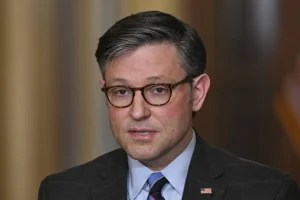 US House Speaker Mike Johnson visited on Monday the illegal settlement of Ariel, built in the occupied West Bank, marking the first visit of its kind by a US official in this position.
During the visit, Johnson said “Judea and Samaria” was the “rightful property of the Jewish people”, using the Israeli term for the occupied West Bank, Israel’s Channel 7 reported.
According to the channel, the high-level US delegation led by Johnson made the visit with the aim of “strengthening strategic relations between the two countries and deepening knowledge of the Judea and Samaria region”.
During the visit, Johnson, along with 15 other members of Congress, participated in a tree-planting event in the settlement.
The Hebrew channel claimed that the visit affirms US “support for Israel’s right to sovereignty over its lands.”
Ariel Mayor Yair Chetboun described the visit as “historic” and embodies the shared values, deep friendship, and strong partnership between the United States and Israel.
In response, the Palestinian foreign ministry condemned Johnson’s visit and described it as a “blatant violation of international law and international legitimacy resolutions, and an encouragement of settlement crimes and the confiscation of Palestinian lands”.
The ministry considered Johnson’s statements “provocative” and a “clear contradiction of the declared U.S. position on settlements and settler attacks.”
The ministry stressed that “all settlements are invalid and illegal and undermine the chances of implementing the two-state solution and achieving peace.”
Under international law, all territories occupied by Israel in 1967 including the West Bank and Syria’s Golan Heights and all settlements built there are considered illegal.
Marked for Death by a Reckless America?
By Ron Unz • Unz Review • August 4, 2025
A few weeks ago I published an article noting that the State of Israel and the Zionist movement that gave rise to it have probably employed assassination as a tool of statecraft more heavily than any other political entity in recorded history. Indeed, their deadly activities had easily eclipsed those of the notorious Muslim sect that had terrorized the Middle East a thousand years ago and gave rise to that term.
The piece had been prompted by Israel’s sudden strike against Iran, capping its reputation as the greatest band of assassins known to history. Even as the Iranian government was intensely focused on the negotiations with America over its nuclear program, a sudden Israeli surprise attack successfully assassinated most of Iran’s highest military commanders, some of its political leaders, and nearly all of its most prominent nuclear scientists. I cannot recall any previous case in which a major country had ever had so large a fraction of its top military, political, and scientific leadership eliminated in that sort of illegal sneak attack.
Less than one year earlier, a series of missile exchanges between Israel and Iran had soon been followed by the death of hardline Iranian President Ebrahim Raisi and his foreign minister in a highly-suspicious and never explained helicopter crash. Given subsequent events, I think we can safely assume that he, too, had died at the hands of the Israelis.
- Zionist Israel as the Assassination Nation
Ron Unz • The Unz Review • June 23, 2025 • 11,800 Words
Earlier this year, the declassification of a large batch of JFK Assassination files had prompted me to recapitulate and summarize many of my articles of the last half-dozen years on that landmark twentieth century event. I gathered together some of the very considerable evidence that the Israeli Mossad played the central role in the assassination of President John F. Kennedy in 1963 as well as the death of his younger brother Robert a few years later, probably the highest-profile political assassinations of the last one hundred years or more.
- How Israel Killed the Kennedys
Ron Unz and Mike Whitney • The Unz Review • March 24, 2025 • 11,500 Words
The most weighty and authoritative work on the long history of Israeli assassinations is surely Ronen Bergman’s 2018 volume Rise and Kill First, running 750 pages and including a thousand-odd source references, with many of the latter citing official documents never previously made available to journalists. By some estimates, this book documented nearly 3,000 such foreign political killings, a remarkable total for a small country then less than three generations old.
Although the Bergman book was certainly very comprehensive, it was produced under strict Israeli censorship, so the text quite understandably omitted almost any coverage of some of the highest-profile Zionist attacks on Western targets. For example, there was no mention of the unsuccessful but well-documented attempts to kill President Harry Truman, nor the assassination efforts aimed at British Prime Minister Winston Churchill and the top members of his Cabinet.
Some of this latter coverage may be found in Thomas Suarez’s 2016 book State of Terror which I would recommend as a very useful supplementary work, though its focus is almost entirely limited to the activities of Zionist groups just prior to the establishment of Israel.
For a broader discussion of the history of Israeli assassinations and closely-related terrorist attacks, especially those targeting Westerners, one of the most useful compilations might be my own very long January 2020 article, providing extensive references to the underlying primary and secondary sources.
- American Pravda: Mossad Assassinations
Ron Unz • The Unz Review • January 27, 2020 • 27,300 Words
That 2020 article had actually been prompted by America’s own sudden assassination of Iranian Gen. Qassem Soleimani, a shocking development that drew a great deal of media coverage at the time.
I had opened my long discussion by noting that over the last several centuries Western governments had almost totally abandoned the use of political assassinations against the leadership of major rival nations, regarding such actions as immoral and illegal.
For example, historian David Irving revealed that when one of Adolf Hitler’s aides suggested to him that an attempt be made to assassinate the Soviet military leadership during the bitter combat on the Eastern Front of World War II, the German Fuhrer immediately forbade any such practices as obvious violations of the laws of civilized warfare.
For most of American history, a similar attitude had prevailed, but I explained that this began to change over the last couple of decades, mostly in the wake of the 9/11 Attacks.
The 1914 terrorist assassination of Archduke Franz Ferdinand, heir to the throne of Austria-Hungary, was certainly organized by fanatical elements of Serbian Intelligence, but the Serbian government fiercely denied its own complicity, and no major European power was ever directly implicated in the plot. The aftermath of the killing soon led to the outbreak of World War I, and although many millions died in the trenches over the next few years, it would have been completely unthinkable for one of the major belligerents to consider assassinating the leadership of another.
A century earlier, the Napoleonic Wars had raged across the entire continent of Europe for most of a generation, but I don’t recall reading of any governmental assassination plots during that era, let alone in the quite gentlemanly wars of the preceding 18th century when Frederick the Great and Maria Theresa disputed ownership of the wealthy province of Silesia by military means. I am hardly a specialist in modern European history, but after the 1648 Peace of Westphalia ended the Thirty Years War and regularized the rules of warfare, no assassination as high-profile as that of Gen. Soleimani comes to mind…
During our Revolutionary War, George Washington, Thomas Jefferson, and our other Founding Fathers fully recognized that if their effort failed, they would all be hanged as rebels by the British. However, I have never heard that they feared falling to an assassin’s blade, nor that King George III ever considered using such an underhanded means of attack. During the first century and more of our nation’s history, nearly all our presidents and other top political leaders traced their ancestry back to the British Isles, and political assassinations were exceptionally rare, with Abraham Lincoln’s death being one of the very few that comes to mind.
At the height of the Cold War, our CIA did involve itself in various secret assassination plots against Cuba’s Communist dictator Fidel Castro and other foreign leaders considered hostile to US interests. But when these facts later came out in the 1970s, they evoked such enormous outrage from the public and the media, that three consecutive American presidents—Gerald R. Ford, Jimmy Carter, and Ronald Reagan—all issued successive Executive Orders absolutely prohibiting assassinations by the CIA or any other agent of the US government.
Although some cynics might claim that these public declarations represented mere window-dressing, a March 2018 book review in the New York Times strongly suggests otherwise. Kenneth M. Pollack spent years as a CIA analyst and National Security Council staffer, then went on to publish a number of influential books on foreign policy and military strategy over the last two decades. He had originally joined the CIA in 1988, and opens his review by declaring:
One of the very first things I was taught when I joined the CIA was that we do not conduct assassinations. It was drilled into new recruits over and over again.
Yet Pollack notes with dismay that over the last quarter-century, these once solid prohibitions have been steadily eaten away, with the process rapidly accelerating after the 9/11 attacks of 2001. The laws on our books may not have changed, but
Today, it seems that all that is left of this policy is a euphemism.
We don’t call them assassinations anymore. Now, they are “targeted killings,” most often performed by drone strike, and they have become America’s go-to weapon in the war on terror.
The Bush Administration had conducted 47 of these assassinations-by-another-name, while his successor Barack Obama, a constitutional scholar and Nobel Peace Prize winner, had raised his own total to 542. Not without justification, Pollack wonders whether assassination has become “a very effective drug, but [one that] treats only the symptom and so offers no cure.”
Thus over the last couple of decades the American government has followed a disturbing trajectory in its use of assassination as a tool of foreign policy, first restricting its application only to the most extreme circumstances, next targeting small numbers of high-profile “terrorists” hiding in rough terrain, then escalating those same killings to the many hundreds. And now under President Trump, the fateful step has been taken of America claiming the right to assassinate any world leader not to our liking whom we unilaterally declare worthy of death.
Pollack had made his career as a Clinton Democrat, and is best known for his 2002 book The Threatening Storm that strongly endorsed President Bush’s proposed invasion of Iraq and was enormously influential in producing bipartisan support for that ill-fated policy. I have no doubt that he is a committed supporter of Israel, and he probably falls into a category that I would loosely describe as “Left Neocon.”
But while reviewing a history of Israel’s own long use of assassination as a mainstay of its national security policy, he seems deeply disturbed that America might now be following along that same terrible path.
Pollock’s discussion of these facts came in his lengthy 2018 New York Times review of the Bergman book entitled “Learning From Israel’s Political Assassination Program,” and he greatly decried what many have called the “Israelization” of the American government and its military doctrine. President Donald Trump’s sudden public assassination of so high-profile a foreign leader as Gen. Soleimani came less than two years later and demonstrated that Pollock’s concerns were fully warranted and indeed even understated.
As my January 2020 article explained, nothing like this had ever previously happened in peacetime American history, and only very rarely even during wars.
The January 2nd American assassination of Gen. Qassem Soleimani of Iran was an event of enormous moment.
Gen. Soleimani had been the highest-ranking military figure in his nation of 80 million, and with a storied career of 30 years, one of the most universally popular and highly regarded. Most analysts ranked him second in influence only to Ayatollah Ali Khamenei, Iran’s elderly Supreme Leader, and there were widespread reports that he was being urged to run for the presidency in the 2021 elections.
The circumstances of his peacetime death were also quite remarkable. His vehicle was incinerated by the missile of an American Reaper drone near Iraq’s Baghdad international airport just after he had arrived there on a regular commercial flight for peace negotiations originally suggested by the American government.
Our major media hardly ignored the gravity of this sudden, unexpected killing of so high-ranking a political and military figure, and gave it enormous attention. A day or so later, the front page of my morning New York Times was almost entirely filled with coverage of the event and its implications, along with several inside pages devoted to the same topic. Later that same week, America’s national newspaper of record allocated more than one-third of all the pages of its front section to the same shocking story.
But even such copious coverage by teams of veteran journalists failed to provide the incident with its proper context and implications. Last year, the Trump Administration had declared the Iranian Revolutionary Guard “a terrorist organization,” drawing widespread criticism and even ridicule from national security experts appalled at the notion of classifying a major branch of Iran’s armed forces as “terrorists.” Gen. Soleimani was a top commander in that body, and this apparently provided the legal fig-leaf for his assassination in broad daylight while on a diplomatic peace mission.
- American Pravda: Mossad Assassinations
From the Peace of Westphalia to the Law of the Jungle
Ron Unz • The Unz Review • January 27, 2020 • 27,300 Words
Although Pollock provided some explanations for this shocking transformation in American doctrine, he failed to note what was arguably the most obvious factor. Over the last generation or two, the American government and American political life have been almost entirely captured by what scholars John J. Mearsheimer and Stephen M. Walt called “The Israel Lobby” in their best-selling 2008 book of that title, and this political and ideological transformation has only further accelerated in the last couple of years, most recently reaching ridiculous, almost cartoonishly extreme levels.
For example, nearly every other country on earth regards Israeli Prime Minister Benjamin Netanyahu as one of the worst war criminals in modern history, now under indictment by the International Criminal Court for his ongoing genocidal massacre of Gaza’s helpless two million civilians, with an international warrant issued for his arrest. But the American political system is almost entirely under the control of pro-Israel partisans so he was invited in 2024 to give an unprecedented fourth public address to a joint session of Congress, receiving an endless series of standing ovations by the trained barking seals of our national legislative body.
Over the last couple of generations, successful American politicians have increasingly been selected for their unswerving loyalty to the State of Israel and their admiration for all things Israeli, often describing themselves as committed Zionists, followers of a foreign nationalist movement.
As a notable example of this strange pattern, a Republican Gentile such as Rep. Brian Mast had not only volunteered for service in the Israeli military, but then proudly wore his foreign uniform while serving as an elected member of Congress. Perhaps partly as a consequence of this demonstration of his overriding loyalty to a foreign nation, in January he was named chairman of our powerful House Foreign Relations Committee.
In another bizarre twist, foreign students attending American universities have never been punished for denouncing or condemning America or the behavior of the American government, but under the Trump Administration they have been rounded up and deported if they criticized the foreign government of Israel.
So if Israel and the Zionist movement have spent the last one hundred years heavily relying upon political assassinations as a primary geopolitical tool, it is hardly surprising if American political leaders have now increasingly adopted the practice of their Israeli mentors and exemplars and done the same.
This trend was further accelerated by the complete capture of the foreign policy establishment of both of our major political parties by the militantly pro-Israel Neocons. Indeed, as I have noted, the term “Neocon” has largely dropped from usage during the last decade or so because the views and beliefs of almost everyone in DC establishment circles would now fall into that category, a tendency that extends across our entire political ecosphere of elected officials, staffers, think-tanks, and media outlets.
I believe that this new American emphasis on political assassinations has extremely dangerous consequences for the world, consequences that perhaps most analysts have failed to properly appreciate. Israel’s tendency to assassinate the political leaders of those countries it views as rivals or threats has naturally focused upon its own region. But when American leaders have adopted that same mind-set, their targets have obviously been different ones.
Israel’s sudden and largely successful decapitation strike against Iran had heavily relied upon the innovative use of drones. But just a couple of weeks earlier, a somewhat different but equally bold use of drones had been used to hit all of Russia’s interior airbases housing its strategic bomber fleet, successfully destroying quite a number of those nuclear-capable aircraft, one of the important legs of the country’s nuclear deterrent triad. Just before that, there was an attempt to assassinate Russian President Vladimir Putin with a swarm of drones when he visited the Kursk area on a helicopter tour of that region.
Although the Ukrainian government took full credit for these latter two attacks against Russia, it seems extremely unlikely that they would have undertaken such action without the full support and approval of their American and NATO paymasters, and indeed the Russians claimed to have hard evidence of such involvement. As I noted in an article, the Ukrainian government explained that the planning for the project had begun roughly eighteen months earlier, and that had been exactly the time when New Jersey and parts of the East Coast had reported a mysterious wave of very heavy drone activity, which our government later admitted was testing for a highly classified military project. I think that the very close match of timing was hardly likely to have been coincidental.
The size of Russia’s nuclear arsenal surpasses our own and its large suite of unstoppable hypersonic delivery systems has given it a measure of strategic superiority over America and our NATO allies on both the nuclear and conventional escalation ladders. So the very strong likelihood that America was intimately involved in an attack on Russia’s nuclear triad and an attempt to assassinate Russia’s president seems exceptionally reckless and dangerous behavior. In a recent article, I suggested that Russia should take prompt and forceful action to deter any such future attacks, but this has not yet happened:
- A Forceful Russian Response to NATO Recklessness
How a Deft Strategic Blow Could Shatter the Western Alliance
Ron Unz • The Unz Review • June 30, 2025 • 5,300 Words
A couple of years earlier, I published an article focusing on indications of earlier American attempts to kill President Putin. This came after our bipartisan political and media elites had begun vilifying the Russian leader as “another Hitler,” with leading media figures and top U.S. Senators loudly calling for his assassination. I noted that the Russians seemed concerned that such assassination efforts might even employ novel, biological means:
We should also recognize the reality that during the last seventy years America has maintained the world’s largest and best-funded biological warfare program, with our government spending many tens of billions of dollars on biowarfare/biodefense across those decades. And as I’ve discussed in a long article, there is even considerable evidence that we actually used those illegal weapons during the very difficult first year of the Korean War…
Soon after their invasion, the Russians publicly claimed that the U.S. had established a series of biolabs in Ukraine, which were preparing biological warfare attacks against their country. Last year one of their top generals declared that the global Covid epidemic was probably the result of a deliberate American biowarfare attack against China and Iran, echoing the accusations previously made by those countries.
Russian security concerns over our advanced biowarfare capabilities and the extreme recklessness with which we might employ them may explain the rather strange behavior of President Putin when he met in Moscow for talks with French President Emmanuel Macron and German Chancellor Olaf Scholz shortly before the outbreak of the Ukraine war.
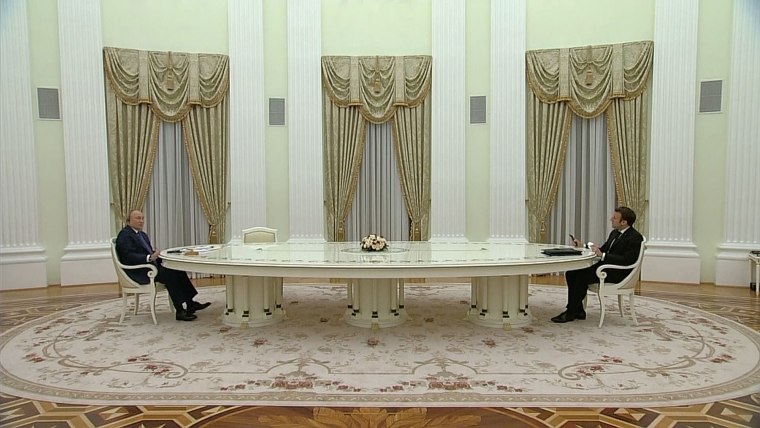
At the time many observers were puzzled why in each case the two national leaders were seated at opposite ends of a very long table, with Putin blandly suggesting that the placement was meant to symbolize the vast distance separating Russia and NATO’s Western leaders. Perhaps that innocuous explanation was correct. But I think it far more likely that the Russians were actually concerned that the Western leaders meeting him might be the immunized carriers of a dangerous biological agent intended to infect their president.
- Assassinating Vladimir Putin?
Ron Unz • The Unz Review • May 15, 2023 • 3,800 Words
On the face of it, American attempts to assassinate Russia’s president would make little logical sense and these would obviously be extremely reckless and dangerous. But much the same could be said of American-orchestrated efforts to destroy Russia’s strategic nuclear bomber fleet, yet there seems very strong evidence that both these actions occurred. So we should seek to understand the logical framework, however irrational and unrealistic, under which such American decisions would be made.
I think an important insight may have been recently provided by Alistair Crooke, a former senior MI6 officer and Middle East peace negotiator, with a great deal of expertise and excellent sources in that latter region.
In an interview a couple of weeks ago, he claimed that America had been directly involved in the wave of Israeli assassinations against Iran’s leaders, taking such action despite the fact that we were currently in the midst of crucial nuclear negotiations with that country. Launching a massive assassination attack against the entire leadership of a country with whom you are currently negotiating is obviously an extremely destabilizing action, one that will hardly inspire confidence among other prospective negotiating partners and will surely long be remembered.
But according to Crooke, the logic behind such American action was the widespread belief that the hold of the Islamic Republic upon the 90 million people of that country was quite fragile, and that the successful assassination of most of the Iranian leaders would cause the collapse of the regime, much like the government of Syria had collapsed earlier this year after attacks by armed Islamicist forces based in Idlib. The American government was greatly disappointed when that wave of assassinations failed to trigger such a political collapse and instead redoubled popular support for the ruling regime.
Crooke suggested that Iranian President Masoud Pezeshkian and Supreme Leader Ayatollah Ali Khamenei had been targeted for death as well, but unlike so many other senior Iranian officials they had been fortunate enough to survive. Indeed, not long afterward, President Trump repeatedly threatened to assassinate Ayatollah Khamenei unless he completely acceded to America’s demands regarding Iran’s nuclear program. Offhand, I can’t remember the last time a world leader has publicly threatened to assassinate one of his foreign counterparts in such fashion.
If Crooke’s analysis is correct, similarly mistaken reasoning might help to explain the likely American involvement in the attempt to assassinate Putin a few weeks earlier. Most of America’s political decisionmakers may have convinced themselves that the Russian regime was discredited, unpopular, and fragile, and that the sudden elimination of Russia’s president perhaps combined with a heavy blow to Russia’s nuclear retaliatory arsenal would cause its collapse.
Such an analysis might seem extremely implausible to most observers, but much of America’s leadership seems to exist in an unrealistic propaganda-bubble in which these notions have become widespread.
Consider, for example, estimates of Russian casualties in Ukraine. The Western-funded anti-Putin media outlet Mediazona has used its considerable resources to continually sweep the Russian Internet in order to compile a running total of verified Russian losses in the Ukraine war, and as of July 2025 had confirmed a total of over 120,000 Russian soldiers killed. This is likely somewhat of an underestimate given that at least some such deaths have escaped public notice, and such totals certainly represent heavy losses in a Russian population of around 140 million.
But our Neocon-dominated American government and its intelligence services have instead accepted without question totally outrageous figures apparently based upon the dishonest claims of Ukrainian propagandists. Back in February, Trump told reporters that Russia had already suffered 1.5 million casualties, an astonishing figure, and just a few days ago, he claimed that almost 20,000 additional Russians had been killed in the month of July alone.
As former CIA officer Larry Johnson noted, journalist Seymour Hersh reported that an intelligence official described for him a destroyed Russian military that had already suffered two million casualties:
“The total now is two million. Most importantly,” the official stressed, “was how this number was described. All the best trained regular Army troops, to be replaced by ignorant peasants. All the best mid-grade officers and NCOs dead. All modern armor and fighting vehicles. Junk. This is unsustainable.”
Two million Russian casualties would probably amount to more than 5% of that country’s entire population of military-age males, and such enormous losses could not possibly be kept concealed. Those figures are obviously delusional.
But if America’s political leaders and many of their military advisors accept such fantasies, they could easily convince themselves that a defeated Russia is now ripe for regime-change triggered by Putin’s assassination. They would obviously hope that the replacement might be a new government closely aligned with the West and subservient to its demands, much as had been the case during the 1990s.
Other Neocon analysts have proposed Russia’s dismemberment into several different much smaller states, none of which would be able to resist American pressure and domination, with various such proposed maps floating around.

Thus, America’s likely involvement in assassination efforts against the top leadership of both Iran and Russia was based upon our unrealistic assumptions regarding the weakness of the two regimes, and the belief that elimination of their top leaders would lead to a collapse. Moreover, in each case these attacks rather treacherously occurred in the midst of ongoing negotiations, over Iran’s nuclear program in one case and over Russian willingness to end the Ukraine war in the other. We should also remember that Trump’s earlier assassination of Gen. Soleimani occurred when that latter leader had been treacherously lured to Iraq for peace negotiations.
Unfortunately, countries that are totally delusional on some national security matters are much more likely to be equally delusional on others as well. I have recently discovered that important elements of the American foreign policy establishment have convinced themselves that the government of China is also fragile and weak, and possibly ripe for collapse if it were hit by one or more sharp shocks. A blogpost brought these strange and surprising notions to my attention a couple of weeks ago.
The blogger highlighted a major article in the New Yorker focusing on aspects of a likely future war between America and China, and suggesting that in some respects it might be analogous to the ongoing conflict between Israel and Gaza. Indeed, the subtitle even described Israel’s invasion of Gaza as “a dress rehearsal” for a future American war with China.
China has an enormous military, equipped with some of the world’s most highly-advanced weapons, and these include a full suite of the unstoppable hypersonic missiles that America has so far failed to successfully produce. So the belief that Israel’s ongoing slaughter of Gaza’s helpless, unarmed civilians holds any serious lessons for the course of a future American war with China seems rather strange reasoning indeed.
- What’s Legally Allowed in War
How U.S. military lawyers see Israel’s invasion of Gaza—and the public’s reaction to it—as a dress rehearsal for a potential conflict with a foreign power like China.
Colin Jones • The New Yorker • April 25, 2025 • 3,300 Words
The rather peculiar tone of that article may have been influenced by a very lengthy report published several months earlier by the Rand Corporation, whose title appeared to raise strong doubts about the military effectiveness of China’s armed forces.
- The Chinese Military’s Doubtful Combat Readiness
The People’s Liberation Army Remains Focused on Upholding Chinese Communist Party Rule, Not Preparing for War
Timothy R. Heath • The Rand Corporation • January 27, 2025 • 15,000 Words
However, after carefully reading that Rand study, I concluded that the title was somewhat misleading. The researcher correctly noted that China gave no indications of preparing to wage war against Taiwan, America, or any other country, and much unlike the U.S. had avoided involvement any military conflicts for the last half-century. But lack of interest in starting wars is quite different than lack of military effectiveness if attacked or sufficiently provoked, and conflating the two probably reflected the ideological climate found at most American think-tanks based upon the influence of their funders.
Finally, the lengthiest and most astonishing think-tank report of all was published just a couple of weeks ago by the Hudson Institute, one of our most unswervingly Neocon research organizations. This book-length study argued that China’s Communist government might be ripe for collapse and casually suggested that American military forces should be prepared for deployment inside China in order to seize crucial military and technological facilities and then reconstruct the government of that enormous country after the downfall of its current regime.
- China After Communism
Preparing for a Post-CCP China
Miles Yu et al. • The Hudson Institute • July 16, 2025 • 65,000 Words
The blogger quoted a couple of the paragraphs from the executive summary of this remarkable document:
While the People’s Republic of China (PRC) has weathered crises before, a sudden regime collapse in China is not entirely unthinkable. Policymakers need to consider what might happen and what steps they would have to take if the world’s longest-ruling Communist dictatorship and second-largest economy collapses due to its domestic and international troubles.
With chapters written by experts in military affairs, intelligence, economics, human rights, transitional justice, and constitutional governance, this report examines the initial steps that should be taken in the immediate aftermath of the CCP regime’s collapse and the long-term trajectory China might take after a stabilization period. Drawing on historical analysis, strategic foresight, and domain-specific expertise, this anthology describes these challenges as an exercise in possibilities. The different chapters explore how a single-party system collapses in key sectors of the country and how political institutions transform, as well as China’s unique political, economic, and social situation. Taken together, they assess the daunting tasks of stabilizing a long-repressed country after it has collapsed, in addition to the forces shaping China’s future. In so doing, the authors hope to offer policy recommendations for managing the risks and opportunities of a transition.
Having carefully read the entire report, I found it just as astonishing as was suggested by those paragraphs.
Over the last half-century, China has certainly been the world’s most successful major country, experiencing perhaps the highest sustained rate of economic growth in all of human history and now possessing a real economy far larger than that of the U.S.
Indeed, if we exclude the service sector, whose statistics are easily subject to manipulation, China’s real productive economy is now actually larger than the combined total for America, the EU, and Japan, while certainly growing much more rapidly. Meanwhile, America has experienced decades of stagnation, with heavy financialization replacing our once enormous real industrial strength. Moreover, in many technological sectors, China has now become the world leader, and it is near the very top in most of the others.
Earlier this year I published a lengthy comparative analysis of China and America, whose conclusions were hardly favorable to the latter:
- American Pravda: China vs. America
A Comprehensive Review of the Economic, Technological, and Military Factors
Ron Unz • The Unz Review • January 13, 2025 • 14,100 Words
The following month I summarized much of this same material in a lengthy interview with Mike Whitney:
- Confucius, DeepSeek, and Why China Would Win a War with the United States
Mike Whitney Interview with Ron Unz
Ron Unz and Mike Whitney • The Unz Review • February 2, 2025 • 9,900 Words
One of the main authors of that Hudson Institute report was lawyer and conservative columnist Gordon G. Chang, probably best known as the author of the 2001 book The Coming Collapse of China, and a quarter-century of absolutely contrary real-life trends seems to have hardly changed any of his views.
The Hudson Institute is a leading DC think-tank, quite influential in mainstream political circles, and a report with five co-authors that runs 128 pages must surely carry considerable weight in establishment circles. So when it suggests that the Chinese government is fragile and might soon collapse, those policy makers hostile to China are likely to take such views quite seriously.
Suppose that a leading Chinese think-tank with close ties to the PRC government published a weighty report predicting that America might soon collapse, then went on to argue that Chinese military forces would need to be deployed in our own country to seize our key military and technological assets and also establish a new government organized along Chinese lines. I doubt that most American political leaders or ordinary citizens would view such Chinese proposals with total equanimity, and indeed the blogger quoted a shocked Western pro-China business executive who succinctly summarized some of the striking elements in that Hudson Institute research study:
… which provides detailed operational plans for inducing Chinese regime collapse through systematic information operations, financial warfare, and covert influence campaigns, followed by detailed protocols for U.S. post-collapse management including military occupation, territorial reorganization, and the installation of a political and cultural system vassalized to the U.S.
Rand and Hudson are two of our leading mainstream think-tanks and the New Yorker is one of our most prestigious media outlets. Taken together those major articles and reports could easily convince the ignorant and suggestible ideologues in our government that the Chinese military was weak and the Chinese government fragile and ripe for collapse.
If delusional beliefs regarding the fragility of the Iranian and Russian governments had already led to American assassination attempts against their top leadership, similar reasoning might easily result in targeting those of China as well, especially President Xi Jinping, widely regarded as the strongest Chinese leader in decades. And given all of the recent American assassination projects, the Chinese government might certainly have itself reached such conclusions.
China and Russia are the two leading members of the BRICS movement, which held its 17th summit last month in Brazil. The media noted that neither Russian President Putin nor Chinese President Xi attended in person, with the latter missing his first BRICS summit since he came to power 13 years ago.
Xi’s surprising absence caused some discussion in the media. I initially paid little attention to this issue, but then some commenter suggested an obvious explanation: Both Xi and Putin were concerned about the possible risk of American assassination.
Brazil is located within the Western Hemisphere, a region under full American military domination. Given the extremely reckless and unpredictable behavior of the American government, with President Trump having publicly threatened to assassinate Iran’s top leader just a couple of weeks earlier, both China and Russia may have believed that some risks should best be avoided.
Suppose an errant missile struck down an incoming presidential plane, with no conclusive means of proving the source, or an aircraft were destroyed by some more sophisticated methods. Over the years, Xi and Putin had both met on numerous occasions with Iranian President Raisi, with whom they had developed an excellent working relationship, and surely his 2024 death in a mysterious helicopter crash while returning from a foreign trip would have concentrated their minds.
Any such “conspiratorial” explanation has naturally been entirely avoided by the media. For example, a lengthy article late last month in the Wall Street Journal described how Xi had drastically reduced his foreign travel over the last year or so, noting that a China-EU summit originally set for Brussels was moved to Beijing after the Chinese explained that Xi had no plans to visit Europe. Since the end of 2024, Xi’s only foreign travels have been to Russia and to several countries in South-East Asia. Unlike Europe or Latin America, none of these countries nor the travel routes to reach them would be likely venues for serious American attempts at assassination.
When major countries develop a well-deserved reputation for assassinating the leaders of other major countries, often even doing so in the midst of international negotiations, such behavior may obviously have serious consequences. Back in 2017, President Xi was quite willing to visit Mar-a-Lago for face-to-face negotiations with President Trump, but I very much doubt the Chinese leader will be taking any trips to our own country in the foreseeable future.
Related Reading:
Featured Video

Death Spikes & Rising Cancer In Our Youth Explained
or go to
Aletho News Archives – Video-Images
From the Archives
Politicians lie
By Mazin Qumsiyeh | Popular Resistance | August 18, 2013
There is no way to say this truth nicely: Politicians lie. That includes Japanese, American, Egyptian, Israeli, and Palestinian politicians! Is there something more common sense than that? Yet, so many citizens around the world believe their own politicians or wistfully acknowledge lies but think it is part of the job needed to run things. They believe even when politicians contradict themselves blatantly. This phenomenon is rather remarkable. It is a dissonance and disconnect from reality that many seem oblivious to. It is very dangerous because it can lead to accepting rationales for going to war. These can be deadly wars that lead to millions of lives lost as happened in what was called World War 1 and WW2. Even when incredible and declassified evidence abound, politicians continue to lie and old mythologies refuse to die. Here are just a few of the countless lies told to us over the past few decades… continue
Blog Roll
 Aletho News
- RSF military group defects, joins Sudanese army: State media
- Ireland goalkeeper refuses to play ‘Israel’ as squad weighs boycott
- China pushes back against US on Cuba, Iran
- Ukrainian Soldiers, Potential Mercenaries: Have Gun, Will Travel!
- Burnham’s UN debut… A masterclass in British disinformation
- Iran flights continue despite US aviation sanctions
- Global Tipping Points Lead the World Into a State of Entropy
- The day-after at the White House: USA and Xi Jinping
- The Geopolitical Balance in the Red Sea: The UAE Being Displaced by New Players
- Iraqi resistance group vows to stage airport sit-ins over Iran aerial blockade
- If Americans Knew
- Deconstructing Netanyahu’s pants-on-fire UN rant – Daily Update
- Trump betrayed voters with his campaign lies and prioritized a foreign country once he took office
- Netanyahu calls Israel’s war in Gaza ‘opposite of genocide’ in UN speech to near-empty hall
- Settler Kidnappings: Torture, Sexual Abuse and Terrorisation of Palestinian Abductees as Israel Deepens Annexation of West Bank
- Gaza winter nears as 162,000 tents become unusable, raising fears of humanitarian crisis
- Netanyahu says, “It’s the opposite of genocide”; UN says Gaza economy is world’s ‘most severe crisis on record’ – Daily Update
- Israel’s US-Backed Assault on Gaza Has Created the ‘World’s Most Severe Economic Crisis on Record’: UN
- ‘Protecting U.S. Citizens’… From Israel
- ‘This is where I live now, the back of a truck’: a day in the life of a grandmother in Gaza
- In UN Speech, Iran’s President Displays Pictures of Children Killed by US, Brings Attention to Israel’s Nuclear Arsenal
- No Tricks Zone
- New Study: Earth And Venus Surface Warmth Largely Explained By Convection And Lapse Rate, Not CO2 Or Radiation
- 2025 Nature Paper Claiming Worsening Global Drought Gets RETRACTED …Heavily Flawed
- New Study: ‘Global Drought Shows No Detectable Recent Acceleration Under Climate Warming’
- Economic Masterminds: German Socialists Suggest Taxing Productivity Gains Stemming From Using AI
- The South China Sea Has Not Been Cooperating With The Climate Change Narrative
- Energy Crisis: Germany Enters Heating Season With Historically Low Gas Reserve Fill Levels
- New Study: The Antarctic Ice Sheet Gained Mass From 2020-2024 Due To Staggering Snow And Ice Accumulation
- Study: Ocean Heating Rates From Thousands Of Years Ago ‘Dwarf’ Modern Ocean Heating Rates
- Climate Extremists Target, Attack Large-Scale Power Grid Infrastructure In Germany!
- New Study: Antarctic Ice Melt Has Contributed Less Than 1 Centimeter To Sea Level Rise In The Last 30 Years

