Tucker escalates war with neocons over Iran
By Jack Hunter | Responsible Statecraft | June 6, 2025
Five months into President Donald Trump’s second term, spring is looking like winter for the neoconservatives.
This might be best gauged right now looking at the back and forth war between conservative media giants, Tucker Carlson and Mark Levin.
When Trump’s special envoy to the Middle East Steve Witkoff said in an interview in May that, “the neocon element believes that war is the only way to solve things,” Levin took offense. The reliably neoconservative talk host blasted Witkoff and added, “By the way, neocon is a pejorative for Jew. Unbelievable.”
Carlson was perplexed by this statement. In an interview with comedian and libertarian activist Dave Smith, Carlson said, “So you have Mark Levin calling Steve Witkoff an anti-Semite. We’ve reached peak crazy, I mean, I think Witkoff is Jewish, right?”
That made Levin even more mad. On Thursday, Carlson shared a lengthy post on X that read, “Mark Levin was at the White House today, lobbying for war with Iran. To be clear, Levin has no plans to fight in this or any other war. He’s demanding that American troops do it. We need to stop Iran from building nuclear weapons, he and likeminded ideologues in Washington are now arguing. They’re just weeks away.”
Carlson reminded his audience what a farce this was.
“If this sounds familiar, it’s because the same people have been making the same claim since at least the 1990s. It’s a lie,” Carlson wrote. “In fact, there is zero credible intelligence that suggests Iran is anywhere near building a bomb, or has plans to. None. Anyone who claims otherwise is ignorant or dishonest.”
A ten paragraph essay followed, dismantling some of the usual arguments neoconservatives make to push for war with Iran, with Carlson using Levin in particular to make his points.
On enrichment, Carlson observed, “[M]any Americans would die during a war with Iran. People like Mark Levin don’t seem to care about this. It’s not relevant to them. Instead they insist that Iran give up all uranium enrichment, regardless of its purpose. They know perfectly well that Iran will never accept that demand. They’ll fight first. And of course that’s the whole point of pushing for it: to box the Trump administration into a regime change war in Iran.”
The Quincy Institute’s Executive Vice President Trita Parsi shared Carlson’s post and echoed the importance of his enrichment comments.
“The most crucial part of Tucker’s tweet is on enrichment,” Parsi noted. “He doesn’t just issue a generic warning against war. He addresses the impasse of the talks: The neocon red line of zero enrichment.”
Parsi added, “At a crucial moment, Tucker wisely advises Trump to drop this deal-killing demand. Huge!”
Democratic Congressman Ro Khanna (Calif.) also shared Carlson’s X post, writing, “No war with Iran. The war in Iraq was the biggest foreign policy blunder of the 21st century. Americans — right and left — do not want more dumb wars.”
Former Republican congressman Matt Gaetz (Fla.) shared Carlson’s post, adding a 100 percent emoji.
Senior Editor of The American Conservative Andrew Day shared and highlighted the dangerousness of having Levin around Trump at this moment. Carlson said from the beginning of his post that he believed Levin was at the White House to agitate for war.
“Mark Levin is the last person who should be whispering in Trump’s ear at this stage of negotiations,” Day wrote. “I hope Vance and Gabbard are actively exerting a counter-influence.”
Vice President JD Vance and Director of National Intelligence Tulsi Gabbard have been against a U.S. war with Iran.
Carlson finished his post, writing, “The one thing that people like Mark Levin don’t want is a peaceful solution to the problem of Iran, despite the obvious benefits to the United States. They denounce anyone who advocates for a deal as a traitor and a bigot. They tell us with a straight face that Long Island native Steve Witkoff is a secret tool of Islamic monarchies. They’ll say or do whatever it takes. They have no limits”
“These are scary people,” he concluded. “Pray that Donald Trump ignores them.”
I noted in an essay in late May that established neoconservative media voices on the right were beginning to be outshined by new conservative, libertarian and independent influencers, almost all of them antiwar.
Carlson is the largest figure on the American right this side of Donald Trump right now and he has been consistently against America’s involvement in any new wars, the mirror opposite of Levin.
As of this writing, Carlson’s Levin-Iran X post has over 5.4 million views.
Mark Levin has used his large platforms on talk radio and Fox News to promote neoconservative foreign policy for many years. Now Tucker Carlson appears to be using his arguably even larger platform on social media to shut that down.
Good.
War With Russia? Macron Wants Cash and Clout
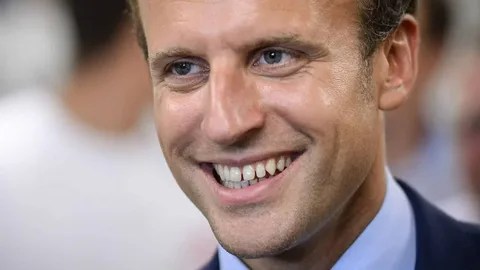
By Ekaterina Blinova – Sputnik – 15.07.2025
France’s Strategic National Review predicts a large-scale military conflict with Russia in Europe by 2030, despite Russia repeatedly rubbishing the scenario.
Why It’s a Non-Starter
“When talking about war in Europe, the key question is: war between Russia and whom? NATO countries? France directly?” Alexander Mikhailov, head of the Bureau of Military-Political Analysis, tells Sputnik.
Both scenarios don’t hold water:
- Russia won’t unleash a war on NATO—it would mean nuclear war
- France is currently a major buyer of Russian gas in Europe
What’s Really Behind the Claim?
“This is a completely false and deliberately crafted narrative, aimed specifically at justifying the expansion of France’s military budget,” explains the pundit.
- French President Emmanuel Macron needs a pretext to ramp up military spending
- He acts as a lobbyist for the French defense industry: doubling the military budget could benefit both defense contractors and the French president. Kickbacks, anyone?
- Macron also wants to be the top European power broker and have direct influence over NATO’s multibillion-dollar cash flows
- “The Americans will take the biggest share of that NATO budget for themselves. But France wants to be, at the very least, the second country spending not just its own money—but NATO’s as well,” the pundit explains.
- Macron’s presidential term ends in 2027. He’s eyeing a top post — either NATO Secretary General or a new EU power seat — to keep his geopolitical clout.
The Redheaded Stepsister Goes to the Ball

Kerch Strait Bridge
By William Schryver – imetatronink – July 14, 2025
Against the AGM-158 JASSM missile, has Russia’s Kerch Strait Bridge finally met its match?
Talk of sending Joint Air-to-Surface Standoff Missiles to Ukraine commenced last year, during the later months of the Biden administration. It was reported at the time that it would take “months” to adapt the missiles to operate with the rag-tag Ukrainian air fleet consisting of a few surviving Soviet Su-27s and MiG-29s and whatever 1980s-era boneyard F-16s NATO could cobble together and render airworthy (not many).
Of the two dozen or so F-16s shipped to Ukraine, the evidence suggests few (if any) are currently airworthy, and it is likely several have already been destroyed on the ground, in addition to the handful that are confirmed to have crashed or been shot down.

JASSM Cruise Missile
The JASSM is an air-launched cruise missile, with reputed (but dubious) stealthy properties and a 450 kg warhead. The majority of production consists of the relatively short-ranged (~350 km) AGM-158A.
The later-model AGM-158B (JASSM-ER) claims a range of 1000 km, but that has never been demonstrated in a live scenario. Although at least several dozen JASSM strikes were made against Syria and Yemen during Trump’s first term, none were of the extended range variety.
The JASSM was actually considered a bust during its many years of development (1998-2009). On multiple occasions, it appeared the entire program was going to be canceled.
What was the problem? It was notoriously inaccurate!
But eventually Lockheed was able to formulate a testing regimen more likely to indicate success, and the missile finally went into production.
The US Air Force contracted to buy ~5000 units.
The US Navy declined to buy any of them.
Foreign sales have been unimpressive.
It is almost certain that the Pentagon will not throw away many (if any) of the long-range AGM-158Bs on the irreversibly lost Ukraine War. That means all that can be hoped for is a few hundred AGM-158As, with their ~350 km range.
And, in my considered opinion, the only way “Ukraine” will be able to deploy these short-range air-launched cruise missiles is if “volunteer” NATO pilots fly front-line NATO planes to deliver them.
NATO F-16s and F-15s can carry two JASSM missiles, one under each wing.
In a mission (for example) to strike the Kerch Strait Bridge, NATO aircraft (likely flying from Romania) would have to penetrate deeply into Russian air defense coverage areas extending around Crimea.
It would almost certainly require at least a dozen JASSM 450 kg warheads to make a meaningful dent in the Kerch Strait Bridge. That translates into half a dozen strike aircraft.
And, unless the NATO generals are just utterly clueless and indifferent (which they probably are), it would be a dereliction of duty to not provide a half-dozen fighters for combat air patrol.
So a dozen NATO aircraft in total — not counting any refueling tankers and ISR platforms that would be required.
I assess as VERY LOW the likelihood of success for a JASSM attack against the Kerch Strait Bridge.
I assess the risks for the attacking force to be VERY HIGH.
But I reckon they’re stupid enough to give it a try all the same.
Patriot Systems Delivery to Ukraine Will Take Months – German Defense Ministry
Sputnik – 15.07.2025
German Defense Minister Boris Pistorius stated that the delivery of Patriot systems to Ukraine, following an agreement with the United States on their purchase in the coming days or weeks, will take months. This came after his meeting with Pentagon chief Pete Hegseth.
“It is clear that Ukraine really needs them [Patriot systems], and we have seen this. But do not have any illusions — the Patriot system, which we are talking about today that it should be sent to Ukraine, will take months to deliver. And it will take more days or weeks until a decision is made. But after that, everything will go quickly,” Pistorius told reporters.
The minister noted that the parties had decided not to report the number of systems being supplied, as discussions were ongoing on what exactly would be included in one unit of the system in terms of technical characteristics and the number of missiles. He estimated the cost of one battery at approximately $1 billion.
Earlier, Pistorius said that the issue of a roadmap for ensuring the security of Europe by the United States would be discussed during the meeting. According to Pistorius, the ministers would also discuss the sale of two Patriot systems by the United States to Germany, intended for Ukraine.
Russian Foreign Minister Sergei Lavrov stated that any cargo containing weapons for Ukraine would be a legitimate target for Russia. The Kremlin emphasized that pumping Kiev with weapons by the West would not contribute to the success of Russian-Ukrainian negotiations and would have a negative effect.
Boris Pistorius said that he had discussed with his US counterpart, Pete Hegseth, the need to coordinate the possible reduction of US troops in Europe.
“We have discussed what to do if this happens … We are speaking about how we step by step can coordinate the implementation of such decisions if they are made – but they have not been made yet – so that we together guarantee that there will be no dangerous gaps in the European security. So that we can avoid the situation when the United States withdraws something which we cannot replace in time,” Pistorius told reporters after the meeting with Hegseth.
On June 5, Hegseth said that the United States intended to review the deployment of its troops around the world and restore deterrence in the Indo-Pacific region.
‘Russia doesn’t respond to pressure’: How Moscow sees Trump’s ultimatum
From skepticism to strategic recalculations, Russian analysts interpret Washington’s new pressure campaign – and its limits
By Georgiy Berezovsky | RT | July 15, 2025
On Monday, July 14, US President Donald Trump issued a stark ultimatum: Russia has 50 days to reach a peace agreement, or face “very severe” tariffs on its exports – potentially as high as 100%. The move signals a shift from rhetorical posturing to a time-bound strategy aimed at forcing negotiations.
While Trump’s statement made waves in Washington and Europe, it is the reaction from Moscow that may prove most consequential. In this roundup, RT presents a cross-section of views from Russian political analysts, foreign policy scholars, and institutional insiders – voices that provide a window into how the American ultimatum is being interpreted in Russia.
Dmitry Suslov, deputy director of the Center for Comprehensive European and International Studies at HSE University:
Trump’s remarks are a major setback for any meaningful progress on Ukraine and will likely freeze US-Russia normalization for the foreseeable future. Zelensky now has no incentive to engage in serious negotiations with Moscow or consider the terms outlined in the Russian ceasefire memorandum.
Meanwhile, the European ‘party of war’ will seize on Trump’s statements as cover to promise Ukraine an endless stream of military aid – further escalating the conflict. The result? No truce, no talks, just a deepening of hostilities. Kiev may even walk away from the Istanbul peace process in the coming months – unless the battlefield situation shifts dramatically in Ukraine’s favor.
As for US-Russia relations, they were already at a standstill. Washington had effectively put dialogue on hold. Now, that pause could drag on indefinitely. When Trump issues ultimatums, sets arbitrary deadlines, and threatens Russia’s key trading partners with 100% tariffs, it’s clear there’s no space for normalization – or cooperation.
That said, unlike the Biden administration, Trump’s team appears committed to keeping diplomatic channels open with Moscow, regardless of whether there’s progress on Ukraine. But this isn’t an opening for a settlement on Russia’s terms. Trump’s goal is to pressure Moscow into compromise – something that simply isn’t going to happen.
His statement also signals that he has no intention of letting Congress dictate US foreign policy. He wants full control over tariffs – their size, timing, and structure. That’s why it’s entirely possible he’ll tweak or delay his self-imposed deadline.
Ivan Timofeev, program director of the Valdai Club:
1. Trump is frustrated with Moscow’s position on Ukraine.
Russia has refused to freeze the conflict on terms favorable to the US and Kiev – a signal that Trump sees dialogue as having hit a dead end.
2. The Lindsey Graham sanctions bill is now much more likely to pass.
Among other things, it would authorize secondary tariffs of up to 500% on countries that import Russian oil and other raw materials. While the US president already has the power to impose these measures unilaterally under IEEPA, the bill would bring Congress into alignment and add yet another layer to the already sprawling legal web of sanctions on Russia.
3. Trump would have full discretion over these secondary tariffs.
That could mean 100%, 500%, or anything in between – and he could calibrate them differently depending on bilateral relations. For example, India might face lower tariffs, China higher ones – or he might apply them uniformly. The Iran sanctions precedent shows that countries which reduced oil purchases were granted exemptions as a reward for ‘good behavior’.
4. A coordinated pushback from the Global South is unlikely.
Trump has already been pressuring both allies and neutral countries with new tariffs since April – and most are caving. Even China is treading carefully. So in the short term, we may see reduced purchases of Russian commodities simply out of a desire to avoid Trump’s wrath. Alternatively, countries may demand a higher risk premium. While there’s a lot of rhetorical support for Russia in the Global South, few are willing to stick their necks out when it comes to action.
5. Trump’s 50-day deadline amounts to an ultimatum.
Moscow will almost certainly ignore it, making the imposition of secondary tariffs a highly probable – perhaps even default – scenario. That said, Russia isn’t without leverage, limited though it may be. And it’s clearly preparing for a hardline path. Tight global commodity markets and well-established export channels work in Russia’s favor.
6. This may mark the end of backchannel diplomacy on Ukraine.
Sanctions will be ramped up, and arms deliveries to Kiev are likely to intensify. Russia, for its part, will maintain military pressure. We’re back to a familiar standoff: The West betting on economic collapse in Russia, while Moscow counts on Ukraine’s military defeat and the West’s internal turmoil. But after three years, it’s clear neither side’s assumptions have panned out. Sanctions haven’t broken Russia’s resolve, and the war effort is now on a new long-term footing.
7. The optimism in Russian markets is puzzling.
Yes, sanctions haven’t been imposed just yet – which some investors may have hoped for – but the risk landscape has only worsened. The current rally looks short-lived. Those banking on a quick end to sanctions may be in for a long wait.
Timofey Bordachev, professor at the Higher School of Economics:
In theater or film, ‘playing a scene’ means performing a role convincingly – conveying emotions, building a character, advancing the plot. Donald Trump does that rather well. He seems to grasp a fundamental truth: Bold moves between nuclear superpowers are dangerous precisely because they are impossible. They risk the irreversible – and Trump clearly wants no part of that. On some level, he understands that the diplomatic chess match will drag on indefinitely, and that there are no clean resolutions. Still, the show must go on – and the audience must be entertained.
That’s why Trump substitutes real strategy with theatrics: Shifting arms deliveries to NATO, proposing a new financing scheme for Kiev, tossing around tariff threats against Russia and its trading partners. It’s about constantly filling the political space with action – or at least the illusion of it – to avoid the impression of paralysis or failure. If no progress is made on Ukraine within 50 days, he’ll unveil a new plan that overwrites the old one.
None of these announcements should be treated as final or irreversible – and in that, Trump is perfectly in tune with the nature of today’s international politics. His behavior isn’t a deviation – it’s a reflection of the system.
Maxim Suchkov, director of the Institute for International Studies at MGIMO University:
Trump’s statement brings both good and bad news for Moscow. The good news is that the final decision was largely predictable – no surprises, no sudden turns. As is often the case with Trump, the ‘teaser’ for his policy was more dramatic than the main act. Europe wants to continue the war – and Trump is happy to let it pay the price. For now, he’s held back from embracing the more radical measures proposed by the hawks in his circle, which means dialogue with Washington is still on the table.
The bad news: After six months in office, Trump still hasn’t grasped Russia’s position or understood President Putin’s logic. It’s as if the repeated visits to Moscow by Steve Witkoff never even registered with him. More broadly, Trump seems to have learned very little about this conflict. And that’s a problem – because without some form of resolution and a working relationship with Moscow, key elements of Trump’s domestic agenda simply aren’t achievable.
Either he genuinely believes the Ukraine conflict can be settled by setting a deadline and hoping for the best – or he just doesn’t care. Maybe this is just his way of playing global peacemaker: Making noise, tossing out promises to fix everything, knowing full well there will be no political consequences if he fails. American voters won’t judge him on Ukraine.
Which scenario is worse is anyone’s guess. But one thing is clear: If anyone still had hopes for this administration to play a serious role in ending the conflict, those hopes look misplaced. Whether they were premature – or already outdated – we’ll find out in 50 days.
Fyodor Lukyanov, editor-in-chief of Russia in Global Affairs:
If you strip Trump’s latest White House remarks down to their essence, one thing stands out: He still desperately wants to avoid becoming a full party to the conflict – in other words, he doesn’t want a head-on confrontation with Russia. That’s why he keeps repeating that this is “Biden’s war,” not his. From Trump’s perspective, what he announced is a cautious, compromise-driven approach.
First, the tariffs he’s threatening on Russian commodities – and let’s be clear, these aren’t ‘sanctions’ in his lexicon – have been postponed until the fall. Just like in other cases, the offer of negotiations remains open.
Second, the US won’t be sending weapons to Ukraine directly. Deliveries will go through Europe, and only on a full-cost basis – meaning the Europeans will foot the bill. To Trump, that’s not direct confrontation with Moscow – it’s a way to nudge the parties toward talks.
We can set aside the usual flood of self-congratulation and NATO Secretary-General Mark Rutte’s over-the-top flattery – that’s all part of the ritual now.
Russia is unlikely to see this as a genuine invitation to dialogue. It’s pressure – and the Russian leadership doesn’t respond to pressure. It’s also a worsening, though perhaps not a dramatic one, of the military situation for Russian forces, which naturally elicits a response. But Moscow won’t engage in verbal sparring. There’s no point. The conversation is now happening on the battlefield.
Most likely, we’ve reached the end of the first phase of US-Russia relations under Trump – a six-month stretch now drawing to a close. When the next phase begins, and what it looks like, remains anyone’s guess.
Dmitry Novikov, associate professor at the Higher School of Economics:
Trump’s bombastic statement – supplemented by his Q&A with reporters – boils down to three core messages.
First, the objective hasn’t changed: Washington still wants a deal on Ukraine, but only on terms acceptable to the US.
Second, the carrot for Moscow remains the same: Promises of good political relations (‘talking to Putin is always pleasant’) and vague suggestions of future economic cooperation (‘Russia has enormous potential’).
Third, the stick – for now – isn’t particularly impressive. The announcement of Patriot systems for Ukraine is just the latest iteration of something Trump and his team have floated before: Boosting Kiev’s air defenses to protect against Russian strikes. And that, it seems, bothers Trump more than the frontline situation itself. He’s criticized Russia before for deep strikes into Ukrainian territory, and he did it again this time – presumably after being shown some grim images.
As for other weapons, there were no specifics – just the familiar ‘billions of dollars in military aid’ line.
The introduction of 100% secondary tariffs, delayed by 50 days, appears to be Trump’s main instrument of coercion. As an economic determinist, he likely believes this is his most powerful and effective threat. But whether it will actually be implemented is unclear. Previous efforts to squeeze Russian energy exports – price caps, import bans – didn’t exactly shut the flow. Russia adapted.
In essence, the message is more psychological than strategic: You’ve got 50 days. After that, I’ll ‘get serious’.
But Trump left one key question unanswered: How far is the US actually willing to go if there’s no progress after 50 days? If tariffs are the endgame, and Washington backs off after that, that’s one scenario. But if those tariffs are just the prelude to broader military or political escalation, that’s something else entirely.
Trump deliberately keeps things murky, leaning on the old idea that ‘a threat is more powerful than an attack’. He seems to be counting on Moscow to imagine the worst.
Nikolai Topornin, director of the Center for European Information:
With his latest statement, Trump didn’t just leave a crack open for Russia – he threw the window wide. He made clear he expects a practical response from Moscow within the next 50 days. As things stand, nothing prevents Russia from acting on the terms previously discussed with Trump: Initiating a 30-day ceasefire and entering talks with Kiev to start hashing out a concrete peace agreement.
Of course, the problem remains that many of Russia’s proposals are fundamentally at odds with Ukraine’s position. Still, from a diplomatic standpoint, the ball is now in Moscow’s court. And Kiev, in the meantime, comes out as the clear short-term beneficiary of Trump’s announcement.
We can expect the usual statements from Moscow rejecting the pressure – that sanctions don’t scare Russia. And it’s true that US-Russia trade is already near zero. There are no billion-dollar contracts left to speak of. Most economic ties were severed back in the Biden era. Washington has already imposed sweeping sanctions on Russian businesses and the financial sector.
So if nothing changes over the next 50 days, the US will likely continue expanding military aid to Ukraine – but on a pragmatic basis. In doing so, Washington can channel European funding to keep its own defense industry running at full speed.
Sergey Oznobishchev, head of the Military-Political Analysis and Research Projects Section at IMEMO RAS:
Trump needs to save face. He once vowed to end the conflict in a single day – but that hasn’t happened. Russia isn’t backing down, isn’t agreeing to a ceasefire with Ukraine, and isn’t halting its offensive. There’s nothing Trump can point to and sell as even a partial fulfillment of that campaign promise. So now he’s under pressure to act.
He’s signaling to Moscow that he expects some kind of reciprocal move – and he’s trying to extract it through a mix of diplomatic pressure and economic threats.
What exactly Trump discussed with the Russian president remains unclear. But it’s likely that Russia’s core position was laid out: Full control over the territories now enshrined in its constitution. Russia simply cannot walk away from those claims. It’s even possible that Trump’s 50-day deadline is meant as a tacit acknowledgment of that reality – a window for Russia to consolidate its hold before talks resume. That would be his version of compromise.
Trump often opens negotiations with bold, hardline offers – the kind you ‘can’t refuse’, as American political lore puts it – only to walk them back later and land somewhere in the middle. That’s his style, drawn straight from the world of business deals: Apply pressure first, then strike a bargain.
Of course, these latest announcements – especially the pledge to send weapons – will only increase criticism of Trump within Russia. Still, this isn’t the harshest stance he could have taken. It’s a tough message, but one that still leaves room for maneuver.
Nikolai Silayev, senior research fellow at the Institute for International Studies, MGIMO University:
I wouldn’t say we’re standing at the brink of a new escalation. Trump hasn’t endorsed the sanctions bill currently under discussion in Congress. Instead, he’s talking about imposing 100% tariffs by executive order – just as he’s done in the past. In doing so, he’s clearly distancing himself from that legislation.
There are no immediate sanctions coming. The 50-day timeline he mentioned is just the latest in a series of deadlines he’s floated before.
On the one hand, Trump wants to avoid sliding back into the kind of confrontation with Russia that defined the Biden era. On the other, he doesn’t want to see Ukraine defeated – nor is he willing to accept a Russian ceasefire on Moscow’s terms, since that could be spun as a US loss, and by extension, a personal failure. He keeps repeating that this is “Biden’s war” – but the longer it drags on, the more it becomes his own.
As for the Patriots, it’s Europe that will be footing the bill. Trump didn’t promise any new funding from the US budget. What remains to be seen is how many systems and missiles the US defense industry can actually produce – and how many European countries are willing to buy.
From Moscow’s perspective, this is still the US arming Ukraine. Washington is also continuing to share intelligence and support logistics. No one in the Kremlin is going to say, ‘Thank you, Grandpa Trump – now you’re just a vendor’. That’s not how this will be seen.
Sergey Poletaev, political commentator:
The scale of this conflict is such that no single move – not by the US, not by Russia, not by anyone – can produce a sudden breakthrough. The only person who could do that is Vladimir Zelensky – by surrendering. There’s no weapon system that could fundamentally change the course of this war, short of nuclear arms. And the only other game-changer would be direct involvement by the US or NATO – but if they’d wanted that, they would’ve intervened long ago.
As for Trump’s tariff threats against Russia and its trading partners – that’s really just kicking the can down the road for another 50 days. Classic Trump.
From Russia’s standpoint, we’re not shipping anything to the US anyway. As for our trading partners – yes, we’re talking about China and India. But this move would only add to the contradictions in Trump’s chaotic tariff diplomacy, where every issue is approached through economic threats. I don’t think it’s going to work.
I don’t see how Trump thinks he can pressure India. China – maybe. But Beijing is already staring down a whole slew of tariff threats. One more won’t make things easier – just worse. If anything, it will reinforce the idea that the US sees China as vulnerable to pressure. And that’s not a message China will take lightly.
Konstantin Kosachev, Russian senator and foreign affairs specialist:
If this is all Trump had to say about Ukraine today, then the hype was definitely overblown. Most of Lindsey Graham’s alarmist fantasies remain just that – fantasies. A 500% sanctions package makes little practical sense.
As for Europe, it looks like they’ll keep picking up the tab – again and again. What they thought was free cheese turned out to be a trap. The only true beneficiary here is the US defense industry.
Ukraine, meanwhile, is left to fight until the last Ukrainian – a fate they seem to have chosen for themselves.
But 50 days is a long time. A lot can change – on the battlefield, in Washington, and in NATO capitals. What matters most, though, is that none of this has any real impact on our own determination. At least, that’s how I see it.
Alexander Dugin, political philosopher and commentator:
Trump has given Russia 50 days to complete the job: To fully liberate our four regions, take Kharkov, Odessa, Dnepropetrovsk – and ideally, Kiev. After that, he’s promised to get truly angry and hit back with 100% tariffs on our key oil buyers – India and China. That’s a serious threat.
So now we have 50 days to finish what we’ve left unfinished over the past 25 years.
This is precisely the kind of moment captured in the old Russian saying: ‘We take a long time to harness the horses, but we ride fast’. Given the circumstances, I believe any weapons can be used, against any targets. We have 50 days to win.
US pundit challenges ex-Israeli PM over Epstein files
Press TV – July 15, 2025
US commentator Tucker Carlson has called out former Israeli prime minister Naftali Bennett, urging him to address claims linking disgraced financier Jeffrey Epstein to the Israeli regime in a formal interview, rather than dismissing them as conspiracy theories.
In a post on X on Thursday, Carlson invited Bennett to discuss Epstein’s ties to Israel, promising to contact his office to arrange the interview.
This followed Bennett’s Monday statement on X, where he denied accusations, including from Carlson, that Epstein was an intelligence asset for Israel’s Mossad.
“As a former Israeli Prime Minister, with the Mossad having reported directly to me, I say to you with 100% certainty: The accusation that Jeffrey Epstein somehow worked for Israel or the Mossad running a blackmail ring is categorically and totally false,” Bennett wrote, addressing persistent reports that Epstein worked for the Israeli regime.
Epstein’s 2020 death in US federal custody, recently ruled a suicide by the Trump administration, has reignited speculation of a cover-up.
Reports have long suggested Epstein, a wealthy New York socialite, operated a blackmail ring targeting influential figures and was murdered in jail, with many saying he acted on Israel’s behalf.
Bennett dismissed these claims, stating, “Epstein’s criminal and despicable actions had no connection to the Mossad or Israel.”
He accused high-profile figures like Carlson of spreading falsehoods, adding, “There’s a vicious wave of slander against [Israel], and we won’t stand for it.”
Carlson fired back on X, challenging Bennett’s response: “Instead of issuing threats on social media, why not sit for a rational interview about Epstein’s ties to the Israeli government? We’ll reach out to your office today.”
On Friday, speaking at the Turning Point USA conference, Carlson doubled down, asserting it was “obvious” Epstein had ties to a foreign regime, implying Israel.
His remarks were met with enthusiasm from the pro-Trump audience.
Trump’s DOJ Says EPA Will Appeal Landmark Fluoride Ruling
By Brenda Baletti, Ph.D. | The Defender | July 14, 2025
The U.S. Environmental Protection Agency (EPA) plans to appeal a decision last year by a federal court ordering the agency to address the risks of water fluoridation, according to Michael Connett, lead attorney for plaintiffs in the lawsuit.
“Rather than use the court’s decision as an opportunity to finally end water fluoridation (as most of Europe has already done), the EPA will spend its time legally challenging the court’s order,” Connett wrote in a post on X.
The American Chemistry Council, a trade organization representing the chemical industry, and the American Fluoridation Society, a fluoridation advocacy organization that touts its work undermining local efforts to oppose water fluoridation, filed motions seeking to submit amicus briefs supporting the EPA appeal, he said.
Connett told The Defender that the American Dental Association also plans to file a brief.
The EPA said it will file the appeal on July 18, after which the case will go to a three-judge panel in the 9th Circuit U.S. Court of Appeals. The appeals court will receive briefs from both sides, along with any amicus briefs, and hear oral arguments before issuing its decision.
The Fluoride Action Network (FAN), one of the plaintiffs in the lawsuit against the EPA, said on X that the appeal was “a very disappointing move by EPA.” “A few months ago, @epaleezeldin went on a public speaking tour with @SecKennedy to address why fluoride needs to come OUT of the water. Now the EPA will appeal to keep fluoride IN drinking water.”
Connett noted that the decision to appeal came from the solicitor general at the U.S. Department of Justice (DOJ), who reports to Pam Bondi and the White House, not by the U.S. Department of Health and Human Services (HHS) or by Health Secretary Robert F. Kennedy Jr., who has vocally opposed water fluoridation, but lacks the authority to end it.
“Only the EPA has this power, and it has decided, for now, to forego its historic opportunity (as provided by the court’s decision) to exercise it,” Connett said.
The Centers for Disease Control and Prevention publishes recommendations from the U.S. Public Health Service on whether communities should add fluoride to their drinking water and at what levels. However, the EPA sets the maximum levels allowed in water under the Safe Drinking Water Act.
The current maximum allowable levels of fluoride in drinking water are 4.0 milligrams per liter (mg/L), which is many orders of magnitude higher than the currently recommended dosage of 0.7 mg/L.
Even the lower recommended dosage has demonstrated a risk to children’s health in numerous studies, and according to the federal ruling that the EPA plans to challenge.
EPA continues to treat fluoride as a ‘protected pollutant’
In September 2024, U.S. District Judge Edward Chen issued the historic decision in the lawsuit against the EPA, ruling that water fluoridation at current U.S. levels poses an “unreasonable risk” of reduced IQ in children and that the EPA must take regulatory action to address that risk.
At the time of the ruling, more than 200 million Americans were drinking water treated with fluoride at the “optimal” level of 0.7 mg/L.
Chen ruled that a preponderance of scientific evidence showed this level of fluoride exposure may damage human health, particularly that of pregnant mothers and young children.
Environmental and consumer advocacy organizations, including FAN, Moms Against Fluoridation and Food & Water Watch, along with individual parents and children, filed the lawsuit against the EPA in 2017 under the Toxic Substances Control Act (TSCA) after the EPA denied their citizens’ petition to reexamine water fluoridation.
During the trial that followed, Chen reviewed existing regulations, regulatory frameworks and current science on fluoride’s risks to children and pregnant women presented through peer-reviewed papers and experts on both sides.
The case dragged on for seven years, after numerous delays by the EPA, and attempts by HHS officials to block the release of the key piece of evidence in the case, a government report on fluoride’s toxicity.
Chen’s 80-page ruling, issued seven months after closing arguments in February 2024, offered a careful and detailed articulation of the EPA’s review process for hazardous chemicals and summarized the extensive scientific data on fluoride’s toxicity.
Chen concluded that the risk to health at current levels of exposure demanded a regulatory response by the agency.
Evidence against fluoride keeps piling up
Since the end of the trial, the body of scientific evidence showing fluoride’s adverse impacts on children’s health has grown. Scientists at the National Toxicology Program in January published a meta-analysis in JAMA Pediatrics linking fluoridated water and IQ loss in children.
The program also published a monograph in August 2024 that found a link between higher fluoride exposure and lower IQ in children.
In May 2024, a study in JAMA Open Network found children born to Los Angeles mothers exposed during pregnancy to fluoridated drinking water were more likely to have neurobehavioural problems.
FAN’s executive director, Stuart Cooper, said the group has long sought to end the “unnecessary life-long and life-altering brain impairment in children specifically due to artificial fluoridation schemes” and the many other side effects to people’s liver, kidneys, thyroid and bones.
For nine years, he said, the EPA has been working against them. “From day one of our interactions with them, they’ve treated fluoridation chemicals as a protected pollutant, likely due to the government’s role in promoting their use and guaranteeing their ‘safety’ for over 80 years.”
Cooper added:
“While the science is clear and the lower court’s ruling was very strong and comprehensive, it’s not necessarily a surprise that the appeal has occurred. Our case is precedent-setting. We were the first to sue the EPA under TSCA. I suspect that corporate polluters who have learned how to manage and influence the EPA to their benefit don’t want citizens groups to use TSCA to force the EPA to regulate harmful chemicals.”
Another plaintiff in the lawsuit, Moms Against Fluoridation, told The Defender it was“deeply disappointed” that the EPA plans to appeal the ruling.
“The science is clear, and our lawsuit’s findings are undeniable: fluoridation is a toxic legacy that must end, like asbestos, DDT, and lead,” it said. “The agency’s plan to appeal only underscores their prioritization of industry interests over the well-being of our children and vulnerable populations. Moms Against Fluoridation will not back down — we will continue to fight tirelessly for the health and safety of all Americans.”
60+ towns and counties and two states vote to end fluoridation
Since the federal ruling last year, more than 60 U.S. towns, counties and two states — Utah and Florida — have voted to stop fluoridating their water, according to FAN.
During that time, there has been an ongoing campaign by the American Dental Association, the American Fluoridation Society and mainstream media to discredit the court’s ruling.
Typically, they assert that water fluoridation is an important, safe and effective way to prevent tooth decay — and that without it, rates of cavities will soar, costing billions. They cite a study published by researchers funded by pro-fluoridation groups.
Yet, overwhelming scientific research shows that fluoride’s benefits to teeth are topical, not the result of ingesting fluoride, and a 2024 Cochrane Review found adding fluoride to drinking water provides very limited dental benefits, especially compared with 50 years ago.
Most media reports also highlight the fact that fluoride is a “naturally occurring mineral.” However, they don’t mention that the fluoride added to water supplies is not.
The fluoride most commonly added to U.S. drinking water supplies is hydrofluorosilicic acid, the byproduct of phosphate fertilizer production. Chemical companies sell the byproduct to local water departments across the country.
Communities that have recently ended fluoridation have found themselves saddled with a chemical that they must dispose of as hazardous waste, per EPA regulations — an expensive and time-consuming process.
This article was originally published by The Defender — Children’s Health Defense’s News & Views Website under Creative Commons license CC BY-NC-ND 4.0. Please consider subscribing to The Defender or donating to Children’s Health Defense.
Iranian FM: Netanyahu ‘openly dictating’ US in talks with Iran
Press TV – July 13, 2025
The Iranian foreign minister has stated that Israel’s prime minister has failed to achieve any of his objectives through the regime’s latest war of aggression against Iran.
Abbas Araghchi commented that Benjamin Netanyahu is “openly dictating” what the US should or should not say or do in discussions with Iran, despite his failures during the recent aggression against the Islamic Republic.
He made these remarks in a social media post in response to Netanyahu’s assertion that Iran must limit the range of its missiles to 480 kilometers.
Araghchi described it as absurd to expect Iran to accept advice from “a war criminal.”
He emphasized that Netanyahu’s aspirations to undermine more than 40 years of peaceful nuclear advancements were unrealistic.
He noted that every one of the dozen Iranian scientists killed by mercenaries trained over 100 capable successors, who will demonstrate their capabilities to Netanyahu.
“But his arrogance doesn’t end there. Having miserably failed to achieve any of his war objectives in Iran and compelled to turn to ‘Daddy’ when our powerful missiles targeted secret Israeli sites—which Netanyahu is still censoring—he is now openly dictating what the US should or shouldn’t say or do in talks with Iran,” he stated.
On June 13, Israel launched a blatant and unprovoked act of aggression against Iran, assassinating many high-ranking military commanders, nuclear scientists, and ordinary civilians.
More than a week later, the United States also entered the war by bombing three Iranian nuclear sites in a grave violation of the United Nations Charter, international law, and the NPT.
In response, the Iranian Armed Forces targeted strategic sites across the occupied territories as well as the al-Udeid air base in Qatar, the largest American military base in West Asia.
On June 24, Iran, through its successful retaliatory operations against both the Israeli regime and the US, managed to impose a halt to the illegal assault.
Trump issues threat to Russia over Ukraine conflict
RT | July 14, 2025
US President Donald Trump has threatened to impose “severe” tariffs of up to 100% on Russia’s trading partners unless a deal is reached to end the Ukraine conflict within 50 days.
Trump issued the warning on Monday during a meeting with NATO Secretary General Mark Rutte in the Oval Office.
“We’re very, very unhappy – I am – with [Russia], and we’re going to be doing very severe tariffs if we don’t have a deal in about 50 days,” he stated.
Trump blamed his predecessor Joe Biden for dragging Washington into the conflict, saying the US had spent approximately $350 billion on aid for Ukraine.
The US president also mentioned a congressional bill that would impose tougher sanctions on Russia, saying, “I’m not sure we need it, but it’s good they’re doing it… could be very useful.” A Senate vote is expected next week.
He noted that, if there was no progress on Ukraine, slapping Russia with secondary US tariffs would not require congressional approval.
Secondary tariffs are sometimes introduced on countries that do business with a sanctioned country.
Trump also announced that the US will send weapons to Ukraine through NATO, which would handle both payment and distribution.
“We’ve made a deal today where we are going to be sending them weapons, and they’re going to be paying for them,” he said.
Russia has repeatedly denounced the West for supplying Ukraine with weapons, warning that this only serves to prolong the conflict and makes no impact on its outcome.
The Russian stock market soared on Trump’s remarks, with the main index jumping nearly 3%, according to data from the Moscow Exchange.
Who profits when nations bleed: Pentagon, Trump or the arms lobby?
By Nazmelis Zengin | Daily Sabah | July 3, 2025
In recent months, the drums of war have started beating once again in Washington. This time, however, the noise comes not from the front lines, but from boardrooms, lobbying corridors and the heart of an invisible yet relentless power struggle.
A critical conflict is unfolding not between the U.S. and Iran, but between two rival power blocs within the U.S. itself. On one side stands the Pentagon, advocating strategic caution and increasingly aligning with President Donald Trump. On the other side is a powerful alliance of defense industry lobbies, pro-Israel actors and rising private sector forces.
The arms lobby and private capital feed not only on increased defense spending but also on the economic opportunities that war presents. Senator Lindsey Graham has long been one of the most loyal champions of this lobby. Since the Iraq War, he has served as a political emissary for defense giants like Raytheon and Lockheed Martin. His rhetoric today mirrors the past: “U.S. deterrence is only possible through resolve.” But behind this call for resolve lies a multi-billion-dollar procurement pipeline.
Following the U.S. airstrikes on Iran’s Fordow, Natanz and Isfahan facilities on June 22, 2025, the Pentagon attempted to frame the narrative. Department of Defense spokesperson Pete Hegseth stated, “This mission is not about regime change … It was a precision strike aimed at the nuclear program.” Gen. Dan Caine, chair of the Joint Chiefs, added, “Our B2 mission inflicted severe damage, but it is too early to fully assess the impact.” These statements reflect the Pentagon’s cautious public posture, even as more aggressive steps unfold behind the scenes. The repeated emphasis on “retaliation risk” signals that the military is reluctant to be drawn into full-scale war.
Trump, in contrast, portrayed the strike as a victory: “Iran’s nuclear infrastructure has been destroyed.” He soon posted on social media: “If the current Iranian regime can’t ‘Make Iran Great Again,’ why not consider regime change?” This starkly contradicted Pentagon messaging and suggested Trump was leveraging the war narrative for domestic political gain ahead of the elections. Early June 2025 polls showed Trump’s approval among Republican voters rose slightly post-strike, while independents remained skeptical.
Iran responded swiftly with missile strikes on U.S. bases in Iraq and cyber operations targeting American infrastructure, signaling it would not remain passive. The United Nations Security Council convened an emergency session, where European and Chinese representatives warned that escalation could destabilize the entire region. Meanwhile, oil prices surged 18% in the week following the strikes, adding global economic pressure.
Trump’s decision won enthusiastic support from Senator Graham and Tom Cotton. However, Democrats responded sharply. Alexandria Ocasio-Cortez declared, “This strike was carried out without Congressional approval and is unconstitutional,” reviving impeachment discussions. Within the Republican Party, Vice President JD Vance and commentator Tucker Carlson distanced themselves from Trump’s hawkish faction, while the arms lobby viewed the intervention as a strategic opportunity. Lockheed Martin and Raytheon Technologies shares rose by 11% and 9% respectively in the week after the strikes.
Washington Post columnist Jason Willick warned, “Trump’s actions risk repeating the mistakes made in Iraq, this time in Iran.” The Guardian’s Stephen Wertheim echoed this concern: “The U.S. is on the verge of repeating its Iraq error in Iran.” A RAND Corporation report noted that regime change efforts typically produce protracted conflicts with unforeseen consequences.
Private sector actors in the U.S. no longer settle for market share; they now seek to shape strategic direction. Companies like Starlink and SpaceX are embedded within the Pentagon, gaining technological footholds and influence over decision-making. SpaceX’s new 2.1 billion contract for missile tracking satellites exemplifies how tech giants are reshaping national security priorities. The alliance between defense contractors and tech giants is redefining the very notion of national interest.
This evolution weakens traditional state institutions and circumvents democratic oversight, not just a shift in strategy, but what could be described as a modern civilian cloaked coup. This recalls political scientist C. Wright Mills’ 1956 concept of the “power elite.” Mills warned that when state, military, and economic actors form a mutually reinforcing triangle, democratic accountability gives way to elite consensus. Similarly, Benjamin Page and Martin Gilens’ Democracy in America? demonstrated that economic elites and large corporations exert more influence on U.S. policy than average voters. RAND and Stockholm International Peace Research Institution (SIPRI) data confirm that this nexus intensifies during military interventions. For example, RAND’s 2024 report found that military spending increased by up to 30% directly due to private sector lobbying, while SIPRI’s 2023 data showed that 65% of major defense contracts during crises were awarded without competitive bidding. These findings illustrate how ties between lobbyist capital and the state tighten during war and crisis periods.
In this context, the boundaries of free market intervention in public policy are no longer theoretical; they are existential. Nobel laureate Joseph Stiglitz has emphasized, “Market failures produce not only economic consequences but political ones as well.” When inequality concentrates not just wealth but decision-making power, democracy begins to erode. Public authority must retain its regulatory and directional role for markets to function properly.
Moreover, economist Mariana Mazzucato’s theory of the “entrepreneurial state” offers a necessary counterpoint. She argues that the public sector should not merely correct market failures but also take on a proactive investment role. Yet today we witness the opposite: public policy is shaped by private sector logic, endangering the state’s protective and innovative capacities. The transformation of the state from a guiding force into one that is guided reflects a sacrifice of long-term public good for short-term private profit.
Protests have erupted across major U.S. cities, with demonstrators denouncing the war as “a war for corporate gain.” Brookings public opinion research shows a sharp rise in distrust of the government’s motives behind foreign interventions.
Today, private actors born under the guise of the free market no longer settle for profit alone; they seek to steer foreign policy. As the U.S. returns to the Middle East after two decades, it does so not out of moral necessity or strategic urgency but under the pressure of corporatist interests eager for enrichment.
The real question is: Who inside the United States wants this war most, and perhaps more crucially, who has the power to stop it?
Lasha Kasradze: Azerbaijan as the Next Frontline Against Russia & Iran?
Glenn Diesen | July 13, 2025
As Azerbaijan takes an increasingly hostile approach to both Russia and Iran, it risks becoming a proxy in a wider regional war. Azerbaijan’s Zangezur corridor connects Azerbaijan closer to Turkey, and thus NATO. Many uncertainties emerge in terms of what happens to Armenia, to what extent Turkey and NATO can project power that deep into the South Caucasus, and how Russia and Iran will react. Lasha Kasradze is an international affairs analyst from Georgia, and an expert on the wider region.
Decline of the Great North American Decarbonization Charade
By Vijay Jayaraj | RealClear Markets | June 27, 2025
Through ESG – Environmental, Social and Governance – mandates, the titans of global finance positioned themselves as the arbiters of corporate virtue. They pressured companies to divest from fossil fuels. They built an entire moral and financial architecture around the concept of decarbonization.
But this June, two major events confirmed the slow demise of the great North American decarbonization experiment.
First, Nippon Steel finalized its historic acquisition of U.S. Steel, signaling a massive resurgence of energy-intensive manufacturing on American soil. Up North, the government of Saskatchewan announced its plan to keep coal-fired plants alive beyond 2030, openly defying federal regulations and international climate agreements.
They are not minor setbacks to the climate agenda but fundamental course corrections, powerful acknowledgments that the prosperity and security of nations depend on energy-dense resources and the industries they power.
Steel Deal That Shattered Green Illusions
On June 18, Nippon Steel acquired the legendary Pittsburgh-based company to reshape the global steel industry. The $14.9 billion transaction, one of the largest in recent industrial history, creates a powerhouse with a crude steel capacity of 86 million metric tons.
“Together, Nippon Steel and U. S. Steel are moving forward as the ‘Best Steelmaker with World-Leading Capabilities,’” says the press release. Massive capital will be unleashed across steelmaking facilities in Pennsylvania, Indiana, Arkansas, Minnesota and Alabama. The overall investment package is expected to protect 10,000 jobs and create 10,000 more in construction trades through the addition of a new electric arc furnace.
Steel production consumes enormous quantities of energy – primarily from coal and natural gas. The blast furnaces, coke ovens and electric arc furnaces that make up the lifeblood of steel mills are not powered by solar panels or wind turbines. They are powered by carbon-based fuels. Period.
This acquisition alone smashes multiple climate illusions in one blow. One, that emissions-intensive sectors would be phased out in rich countries. Another, that ESG-aligned finance would avoid “dirty” industries. And a third, that international treaties would keep governments and corporations aligned toward decarbonization.
Look who helped push this deal through. Citibank served as the financial advisor to Nippon Steel. Barclays, Goldman Sachs and Evercore were among the advisors for U.S. Steel. These are the same firms that plaster their websites with ESG statements and Net Zero commitments.
The same firms that swore to “align their lending portfolios with climate goals” and pressure companies to reduce carbon footprints. Yet here they are, actively greasing the wheels of a carbon-heavy industrial renaissance.
Saskatchewan Calls the Bluff on Coal Phaseouts
Then the same week, came another announcement, this time from the political frontier of Western Canada. The government of Saskatchewan made clear that it would extend the life of its coal plants beyond 2030, despite federal mandates to the contrary.
Energy Minister Dustin Duncan was unapologetic. “We’re not going to let federal politicians in Ottawa tell us to turn off the lights,” he said. Citing energy security and cost stability for residents, the province says it will keep coal-fired plants past the 2030 deadline imposed by Canada’s federal Clean Electricity Regulations,
This open rebellion is framed as a strategic return to realism with no use of euphemisms such as “transition” or “temporary extension.”
Collapse of the Climate Narrative
The Net Zero facade has collapsed massively, undeniably, irreversibly – because no policy survives violations of the laws of physics and market demand. Despite trillions spent on “renewables,” their contribution to energy production has barely budged in two decades.
What we’re witnessing in North America is not an anomaly but rather the beginning of a new phase. In 2023, fossil fuels still accounted for over 80% of global primary energy use. Globally, energy-intensive industries are thriving. China, the world’s largest coal consumer, approved 106 gigawatts of new coal power in 2024 alone.
The thud you hear is the sound of the decarbonization fantasy crashing to Earth. The sigh is one of relief as common sense returns to the public square.
There is no post-carbon future on the horizon, only a post-illusion present. And fossil fuels remain the lifeblood of progress.
Featured Video

Death Spikes & Rising Cancer In Our Youth Explained
or go to
Aletho News Archives – Video-Images
From the Archives
Politicians lie
By Mazin Qumsiyeh | Popular Resistance | August 18, 2013
There is no way to say this truth nicely: Politicians lie. That includes Japanese, American, Egyptian, Israeli, and Palestinian politicians! Is there something more common sense than that? Yet, so many citizens around the world believe their own politicians or wistfully acknowledge lies but think it is part of the job needed to run things. They believe even when politicians contradict themselves blatantly. This phenomenon is rather remarkable. It is a dissonance and disconnect from reality that many seem oblivious to. It is very dangerous because it can lead to accepting rationales for going to war. These can be deadly wars that lead to millions of lives lost as happened in what was called World War 1 and WW2. Even when incredible and declassified evidence abound, politicians continue to lie and old mythologies refuse to die. Here are just a few of the countless lies told to us over the past few decades… continue
Blog Roll
 Aletho News
- From Unipolar Universalism to Multipolar Civilizational Distinctiveness
- RSF military group defects, joins Sudanese army: State media
- Ireland goalkeeper refuses to play ‘Israel’ as squad weighs boycott
- China pushes back against US on Cuba, Iran
- Ukrainian Soldiers, Potential Mercenaries: Have Gun, Will Travel!
- Burnham’s UN debut… A masterclass in British disinformation
- Iran flights continue despite US aviation sanctions
- Global Tipping Points Lead the World Into a State of Entropy
- The day-after at the White House: USA and Xi Jinping
- The Geopolitical Balance in the Red Sea: The UAE Being Displaced by New Players
- If Americans Knew
- Deconstructing Netanyahu’s pants-on-fire UN rant – Daily Update
- Trump betrayed voters with his campaign lies and prioritized a foreign country once he took office
- Netanyahu calls Israel’s war in Gaza ‘opposite of genocide’ in UN speech to near-empty hall
- Settler Kidnappings: Torture, Sexual Abuse and Terrorisation of Palestinian Abductees as Israel Deepens Annexation of West Bank
- Gaza winter nears as 162,000 tents become unusable, raising fears of humanitarian crisis
- Netanyahu says, “It’s the opposite of genocide”; UN says Gaza economy is world’s ‘most severe crisis on record’ – Daily Update
- Israel’s US-Backed Assault on Gaza Has Created the ‘World’s Most Severe Economic Crisis on Record’: UN
- ‘Protecting U.S. Citizens’… From Israel
- ‘This is where I live now, the back of a truck’: a day in the life of a grandmother in Gaza
- In UN Speech, Iran’s President Displays Pictures of Children Killed by US, Brings Attention to Israel’s Nuclear Arsenal
- No Tricks Zone
- New Study: Earth And Venus Surface Warmth Largely Explained By Convection And Lapse Rate, Not CO2 Or Radiation
- 2025 Nature Paper Claiming Worsening Global Drought Gets RETRACTED …Heavily Flawed
- New Study: ‘Global Drought Shows No Detectable Recent Acceleration Under Climate Warming’
- Economic Masterminds: German Socialists Suggest Taxing Productivity Gains Stemming From Using AI
- The South China Sea Has Not Been Cooperating With The Climate Change Narrative
- Energy Crisis: Germany Enters Heating Season With Historically Low Gas Reserve Fill Levels
- New Study: The Antarctic Ice Sheet Gained Mass From 2020-2024 Due To Staggering Snow And Ice Accumulation
- Study: Ocean Heating Rates From Thousands Of Years Ago ‘Dwarf’ Modern Ocean Heating Rates
- Climate Extremists Target, Attack Large-Scale Power Grid Infrastructure In Germany!
- New Study: Antarctic Ice Melt Has Contributed Less Than 1 Centimeter To Sea Level Rise In The Last 30 Years

