The questions they didn’t ask Marty Makary at his confirmation hearing

By Maryanne Demasi, PhD | March 9, 2025
By all accounts, Marty Makary’s confirmation hearing to lead the FDA went smoothly. As an experienced surgeon at Johns Hopkins with impeccable credentials, he handled questions with ease.
But the real issue was not what the senators asked Makary—it was what they didn’t ask him that was most concerning. They sidestepped the FDA’s recent, glaring failures, leaving critical issues unaddressed.
Much of the hearing consisted of senators pressing Makary for commitments on data he had not yet reviewed, such as mifepristone, vaping, and food additives. They also questioned him about recent FDA job cuts—decisions in which he had no involvement. As a result, there were no substantive revelations.
Makary promised greater transparency at the FDA and vowed to restore public trust. But why did no one press him on the agency’s most egregious missteps?
Speedy drug approvals
One of the most troubling trends at the FDA is its increasing reliance on expedited drug approval pathways.
Today, 65% of new drugs are pushed through these faster routes, despite clear evidence linking them to greater safety risks and a higher likelihood of requiring black box warnings.
The case of Aducanumab, the controversial Alzheimer’s drug, exemplifies this problem. It was approved in 2021 based on surrogate markers rather than meaningful clinical outcomes.
Despite an almost unanimous vote against its approval by the FDA’s advisory committee, the agency proceeded regardless, leading three committee members to resign in protest.
Harvard professor of medicine Aaron Kesselheim called it “probably the worst drug approval decision in recent US history.” Yet not a single senator questioned Makary on how he planned to reform this broken system.
When drugs are rushed through accelerated pathways, companies are required to conduct confirmatory trials to confirm efficacy and safety. But these confirmatory trials are frequently delayed, never completed, or ignored when results are unfavourable.
The FDA rarely penalises companies for non-compliance, allowing unsafe or ineffective drugs to remain on the market. Yet, the senators failed to ask Makary whether he would commit to stricter enforcement of these requirements.
A culture of secrecy
The FDA is the only major drug regulator in the world that receives individual participant data from clinical trials—yet it refuses to routinely release these data for independent scrutiny. If the agency stands by its approvals, why not allow external verification?
During the Covid-19 pandemic, the FDA granted Emergency Use Authorisation (EUA) for Pfizer’s mRNA vaccine trial in just 22 days—an unrealistic timeframe for proper analysis.

Worse still, it failed to conduct trial site inspections, despite knowing billions of doses would be administered, with experts calling the FDA’s oversight “grossly inadequate.”
When whistleblower Brook Jackson provided documented evidence of scientific misconduct in Pfizer’s pivotal clinical trial, the FDA ignored her.
The agency’s own Office of Criminal Investigations, whose job it is to conduct criminal investigations into illegal activities involving FDA-regulated products, turned a blind eye.
How can the agency expect public trust when it turns ignores such evidence?
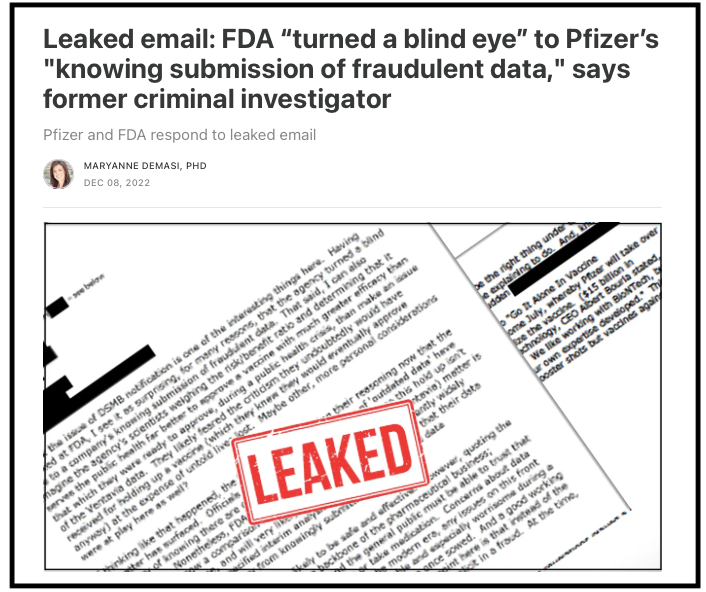
Adding to its opacity, the FDA attempted to withhold Pfizer’s vaccine trial data for 75 years, only relenting after a legal battle. The Judge in this case said the court order would “pierce the veil of administrative secrecy.”
This should have been a major topic at the hearing. I personally have had an FOIA request pending with the FDA for over three years, and the last time I checked, the agency claimed it was still “in triage.”
Concealing data
The FDA knew early on that the immunity conferred by Pfizer’s mRNA vaccine waned rapidly, yet it withheld these findings for months, during which time millions of people queued to get vaccinated under the assumption they offered lasting protection.
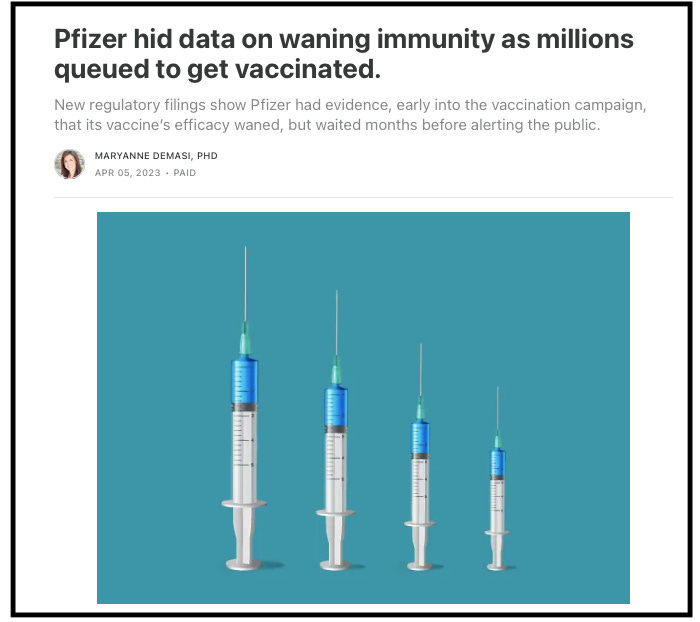
The agency, despite promising transparency early in the pandemic, consistently delayed releasing safety data, preventing doctors and the public from making informed decisions. None of this was brought up by Senators at the hearing.
FDA’s drug promotion
The FDA is a regulatory body, not a marketing agency—yet it actively promoted Covid-19 vaccines, claiming they prevented long Covid despite no supporting evidence.
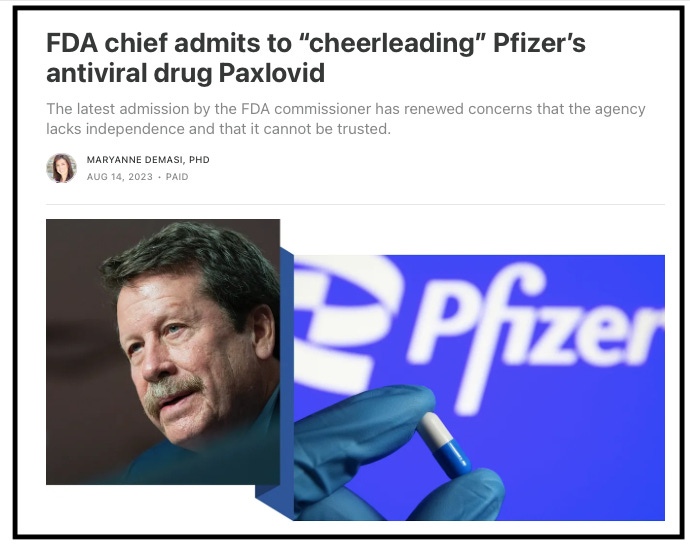
Former FDA Commissioner Robert Califf falsely stated that the Pfizer’s antiviral Paxlovid could prevent long Covid and even admitted to deliberately “cheerleading” the drug.
Meanwhile, the agency mocked alternative treatments like ivermectin, infamously tweeting: “You are not a horse, you are not a cow, seriously, y’all. Stop it.” It later removed the tweet after being sued. The FDA has no business dictating treatment choices or engaging in pharmaceutical advertising.
The agency also capitulated to political pressure.
The Biden administration pushed for universal Covid-19 booster approval despite weak data, prompting the resignation of two top vaccine officials, Marion Gruber and Phillip Krause. Senators should have demanded to know exactly how Makary would prevent future political interference.
False advertising
Pfizer CEO Albert Bourla publicly claimed that the company’s Covid-19 vaccine prevented transmission, even though the FDA’s own EUA documents stated this was never assessed.
The agency did nothing to correct this false advertising, yet no senator questioned Makary about how he would address misleading pharmaceutical advertising going forward.
Nor did they raise the issue of banning direct-to-consumer advertising—a policy Robert F. Kennedy Jr. has pledged to end.

Unanswered safety questions
Despite the pandemic ending, Moderna and Pfizer vaccines for young children remain under EUA. Why? There is no emergency justifying this continued authorisation.
Moreover, independent researchers have repeatedly raised concerns about excessive residual DNA in Covid-19 mRNA vaccines. The FDA has refused to investigate these findings, even as scientists continue to warn of potential risks.
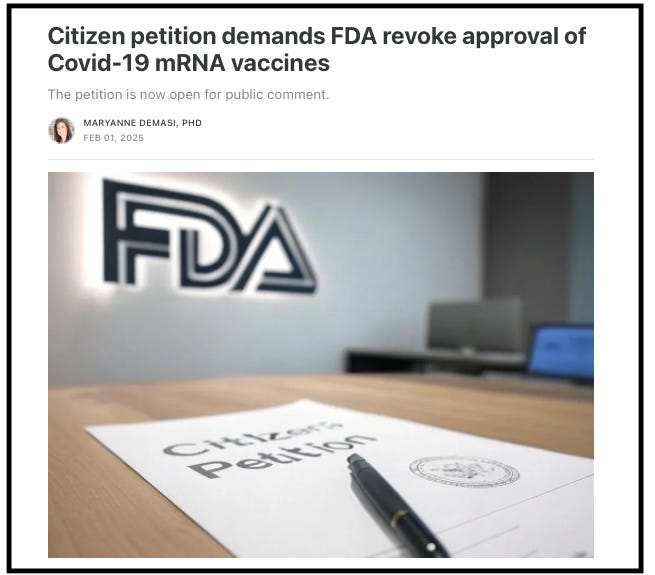
Now, legal and medical experts have petitioned the FDA, citing regulatory violations and concluding the vaccines were “unlawfully approved.” Why was this not discussed at the hearing?
Beyond vaccines, the FDA has persistently ignored citizen petitions on other drug safety issues.
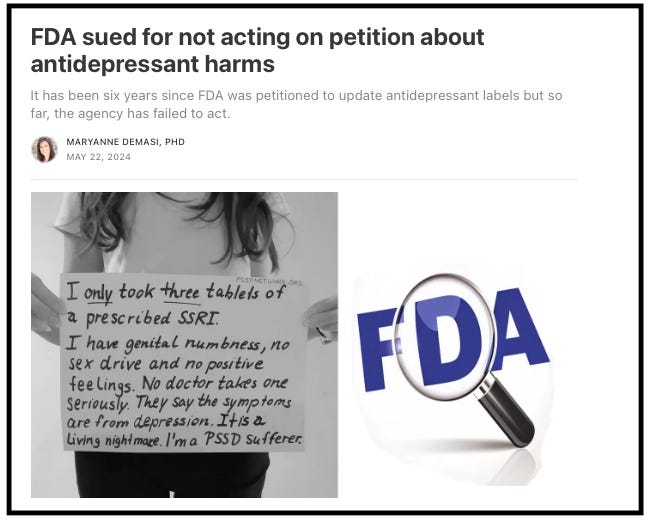
One example is its failure to update SSRI labelling to include warnings about post-SSRI sexual dysfunction (PSSD), despite overwhelming evidence. This inaction has led to legal action against the agency. Why did no senator demand accountability?
The task ahead
Makary was not responsible for the FDA’s past transgressions, but when confirmed, he inherits an agency in crisis.
To his credit, he was one of the few who publicly challenged flawed Covid policies during the pandemic.
Many hope he will now use his surgical precision to excise the rot within the FDA.
CHD, Doctors Ask Supreme Court to Hear Medical Free Speech Case
By Michael Nevradakis, Ph.D. | The Defender |March 6, 2025
Children’s Health Defense (CHD), Physicians for Informed Consent and a group of doctors who sued the Medical Board of California after it disciplined them for allegedly spreading COVID-19 “misinformation” have asked the U.S. Supreme Court to review their case.
The plaintiffs in Kory v. Bonta submitted their petition on March 1, following the November 2024 dismissal of their case by the 9th U.S. Circuit Court of Appeals.
California Attorney General Rob Bonta is named in the suit, along with the state’s medical board.
The lawsuit, filed in January 2024, is a follow-up to a previous complaint filed in 2022 and an amended suit filed in 2023, which challenged California’s Assembly Bill (AB) 2098 — a law allowing the medical board to discipline doctors who give “false” information about COVID-19 for engaging in unprofessional conduct.
A federal judge blocked AB 2098 in January 2023, and the law was later repealed. However, according to the lawsuit, the Medical Board of California is still targeting “COVID misinformation” and is threatening physicians with disciplinary action.
Three medical professionals — Dr. Brian Tyson, a board-certified family practitioner who owns an urgent care facility; Dr. LeTrinh Hoang, a pediatric osteopathic physician; and Dr. Pierre Kory, president emeritus of the Independent Medical Alliance, launched the lawsuit.
According to the petition to the Supreme Court, the Medical Board of California and the Osteopathic Medical Board of California, “with the assistance of the California Legislature,” have threatened disciplinary actions against the plaintiffs and other physicians for offering information to patients that departs from official COVID-19 narratives.
In April 2024, a federal district court rejected the plaintiffs’ request for an injunction against the medical board. The 9th Circuit upheld the ruling in November 2024. In January, the Supreme Court rejected the plaintiffs’ emergency application for an injunction.
Lawsuit hopes to set precedent that ‘informed consent is free speech’
The case seeks to resolve contradictory precedents from two federal appeals courts on whether the First Amendment protects physicians’ communications to patients — “a question that is particularly significant in a field like medicine, where scientific understanding is continually advancing and rarely settled.”
In a Physicians for Informed Consent press release, Rick Jaffe, who represents the plaintiffs, said the lawsuit “touches on the foundational rights of professionals to share knowledge and opinions essential for patient autonomy and informed consent.”
Tyson said patients cannot provide informed consent if their physicians are denied the opportunity to speak freely.
“We want doctors and all providers to be able to discuss risks and benefits with our patients, be able to speak out against things that are wrong, and be heard when breakthroughs are made,” Tyson said. “The hope is the Supreme Court will set the precedent that informed consent is free speech.”
Supreme Court asked to decide between competing legal precedents
According to the petition, federal courts have established competing legal precedents relating to medical free speech.
In a 2022 decision in Tingley v. Ferguson, the 9th Circuit upheld the ability of professional boards in Washington to restrict members’ speech, arguing this is similar to the boards’ enforcement of “other restrictions on unprofessional conduct.”
But in a 2020 decision in Otto v. City of Boca Raton, the 11th Circuit struck down local ordinances that limited the speech of therapists and counselors, finding that such content-based and viewpoint-based restrictions violate the First Amendment, which has no carveout for controversial speech.
Tyson said the California Medical Board’s disciplinary proceedings against him jeopardized his career. “I had to defend my position against the [board] and almost lost my license … That would have been devastating to the community I serve and to all those I employ.”
Jaffe said Kory v. Bonta is similar to another First Amendment case relating to medical speech, Stockton v. Ferguson. Filed in March 2024, the lawsuit seeks “to protect the right of physicians to speak” and the public’s right to hear such speech.
CHD is a plaintiff in the lawsuit, as are several doctors facing disciplinary proceedings by the Washington Medical Commission for their public statements criticizing mainstream COVID-19 narratives. Basketball legend John Stockton is also a plaintiff, advocating for the public’s right to access and listen to “soapbox speech.”
In January, the Supreme Court denied the plaintiffs’ emergency appeal in Stockton v. Ferguson. The case remains active before the 9th Circuit. Oral arguments are scheduled for May 14, Jaffe said.
“The two cases represent the entire spectrum of cases involving what physicians say and would allow the court to give a definitive and comprehensive answer to whether and how much the First Amendment protects professionals when they communicate to patients and the public,” Jaffe said.
According to Physicians for Informed Consent, four justices must agree before the full court can hear Kory v. Bonta. If the Supreme Court decides to take the case, it will hear Kory v. Bonta in October.
Jaffe said the Supreme Court may ultimately jointly consider Kory v. Bonta and Stockton v. Ferguson. He credited CHD with its role in supporting both cases.
“We hope to establish the constitutional right of healthcare providers to speak out against the prevailing medical and scientific consensus about COVID-19, as well as whatever public health challenges face the country in the future,” Jaffe said.
This article was originally published by The Defender — Children’s Health Defense’s News & Views Website under Creative Commons license CC BY-NC-ND 4.0. Please consider subscribing to The Defender or donating to Children’s Health Defense.
US envoy confident captive deal with Hamas possible ‘within weeks’
Al Mayadeen | March 9, 2025
Adam Boehler, the US envoy who engaged in direct talks with Hamas, described the meeting as “very helpful” and expressed confidence that a deal to release Israeli captives held in Gaza could be reached “within weeks”.
In an interview for CNN, Boehler acknowledged the unusual nature of the talks, considering that Hamas has been designated a “terrorist” organization by the US since 1997. However, he did not rule out future meetings with the Palestinian group.
Boehler recognized “Israel’s” concerns over the US meeting with Hamas but emphasized his intent to revive “fragile” negotiations.
“In the end, I think it was a very helpful meeting,” he said, adding, “I think something could come together within weeks… I think there is a deal where they can get all of the prisoners out, not just the Americans.”
He hinted at the possibility of further talks, stating, “You never know. You know, sometimes, you’re in the area and you drop by.”
The first phase of a ceasefire concerning the release of some Israeli captives ended earlier this month, but the Palestinian Resistance and “Israel” are now in disagreement over when to transition into the second phase, which aims for a complete end to the war on the Gaza Strip.
While “Israel” wants to extend the first phase until mid-April, Hamas has insisted on moving to the second phase, which is aimed at achieving a permanent end to the war.
During this phase, the Resistance released 25 living captives and the bodies of eight others in exchange for approximately 1,800 Palestinian detainees and prisoners held in Israeli occupation prisons.
Of the 251 individuals taken captive on October 7, 2023, 58 remain in Gaza, including 34 whom the Israeli military has confirmed as dead.
Last week, US President Donald Trump issued a “last warning” to Hamas, threatening additional destruction in Gaza if all remaining captives were not released.
Boehler acknowledged the “consternation” “Israel” felt over the US’ engagement with Hamas, saying, “We’re the United States. We’re not an agent of Israel.”
He also pledged to travel to Syria to secure the release of Austin Tice, an American journalist abducted in 2012.
Tice, a freelance journalist working for outlets such as Agence France-Presse and The Washington Post, was detained at a checkpoint in Syria.
With hopes reignited after the fall of Syrian president Bashar al-Assad, Boehler vowed to locate Tice, stating, “If he’s there, I’m going to bring him home. If he’s dead, I’m going to dig up his remains with the FBI… and we’ll bring them home to his mom.”
US-Hamas talks focused on release of American-Israeli captive: Al-Nono
In the same context, senior Hamas official Taher al-Nono told Reuters on Sunday that recent meetings between Hamas leaders and US captives negotiator Adam Boehler have primarily focused on the release of an American-Israeli dual national held by the group in Gaza.
Al-Nono, political advisor to the leader of Hamas, confirmed the direct talks with the US, noting that they had occurred over the past week in the Qatari capital, Doha.
“Several meetings have already taken place in Doha, focusing on releasing one of the dual-nationality prisoners. We have dealt positively and flexibly, in a way that serves the interests of the Palestinian people,” al-Nono pointed out.
He further explained that both sides had also addressed how to implement the phased agreement aimed at ending the war on Gaza.
“We informed the American delegation that we don’t oppose the release of the prisoner within the framework of these talks,” the Palestinian official noted.
Trump’s special envoy, Steve Witkoff, emphasized last week that securing the release of Edan Alexander, a 21-year-old from New Jersey believed to be the last remaining American captive held by Hamas in Gaza, was a “top priority”.
Alexander, who served as a soldier in the Israeli occupation military, has been in captivity since the outbreak of the war.
On Saturday, “Israel” and Hamas indicated they were preparing for the next phase of ceasefire talks, with mediators working to extend the fragile 42-day truce that began in January.
A Hamas delegation met over the past two days with Egyptian mediators, reaffirming its commitment to negotiating the second phase of the deal. “Israel” also announced it would send negotiators to Doha on Monday for further discussions on the ceasefire.
On Sunday, “Israel’s” Energy Minister, Eli Cohen, announced that he had instructed the Israel Electric Corporation (IEC) to cease electricity sales to Gaza, a move he claimed was aimed at pressuring Hamas to release captives.
However, the measure is unlikely to have an immediate impact, as “Israel” had already cut off the power supply to Gaza at the start of the war. It could, however, affect a wastewater treatment plant currently relying on the supply.
Al-Nono praised Witkoff for his significant role in securing the ceasefire agreement on January 19 that brought an end to the war on Gaza.
“We hope that he (Witkoff) will work to succeed in the negotiation of the second phase,” he concluded.
UK eyes intelligence alliance to share data with Ukraine
Al Mayadeen | March 9, 2025
The UK government is considering forming a new intelligence-sharing subgroup within the Five Eyes alliance in reaction to US President Donald Trump’s actions toward Ukraine, the Daily Mail reported on Sunday, citing anonymous defense officials.
The requests for the effort apparently arose after the US suspended information collaboration with Kiev and prevented the UK and other allies from sending American intelligence to Ukraine.
A new proposed subgroup would greenlight intelligence cooperation without a US veto, according to the British daily.
According to the Daily Mail, the new project is not about abandoning Five Eyes but rather about establishing a new Four Eyes suborganization within it.
Simultaneously, US allies are mulling lowering the intelligence they share with Washington, citing worries about the administration’s conciliatory attitude to Russia, according to NBC News.
These include “Israel” and Saudi Arabia, as well as Australia, the United Kingdom, Canada, and New Zealand, with the latter four being members of the US-led Five Eyes intelligence cooperation.
Officials in New Zealand, Australia, and Saudi Arabia declined to comment, while authorities in the United Kingdom, Canada, and “Israel” refuted the accusations.
The United States has temporarily suspended intelligence sharing with Ukraine following a notable rift between President Donald Trump and Ukrainian leader Volodymyr Zelensky, CIA Director John Ratcliffe confirmed on Wednesday.
The decision follows a public row between the two leaders during a meeting in the Oval Office last week, which also led to the suspension of critical US military aid to Ukraine.
Speaking to Fox Business, Ratcliffe stated that the pause in intelligence cooperation is linked to Trump’s concerns about Zelensky’s dedication to the peace process with Russia.
“President Trump had a real question about whether President Zelensky was committed to the peace process,” Ratcliffe said. He noted that the suspension is temporary and expressed confidence that the US would soon resume its close partnership with Ukraine.
For Ukraine, which is engaged in a war with Russia, US intelligence support is as vital as military supplies. The sudden halt in assistance has shocked many Ukrainians, who rely heavily on American backing in their war with Russia.
White House envoy to travel to Doha to push for new Gaza deal: Axios
Al Mayadeen | March 9, 2025
An Axios report on Sunday revealed that White House envoy Steve Witkoff is set to travel to Doha on Tuesday evening to mediate a new deal for the release of captives and a ceasefire between the Israeli occupation and Hamas movement, according to two US officials.
According to the report, this will be the first round of talks since Trump took office, and the first since the original agreement— which secured a 42-day ceasefire in exchange for releasing 33 captives— concluded a week ago.
Witkoff will join Qatari and Egyptian mediators, along with negotiators from both “Israel” and Hamas, to begin discussions on Monday. That said, the Trump administration is seeking a deal that ensures the release of all remaining captives, extends the ceasefire through Ramadan and Passover, and aims for a “long-lasting solution.”
On that note, 59 Israeli captives remain in Gaza, with 35 confirmed dead by the Israeli occupation.
Witkoff is scheduled to travel to Doha after attending a US-Ukraine meeting in Saudi Arabia on Tuesday. However, according to the report, it’s uncertain whether he’ll meet with Hamas directly or only with Israeli and Qatari officials, as well as Egyptian mediators.
A senior Israeli official mentioned that Witkoff intends to bring all parties together for intense negotiations over several days in hopes of reaching a deal. Meanwhile, a Hamas delegation held talks with Egyptian officials in Cairo on Saturday regarding the Gaza ceasefire and prisoner negotiations.
Hamas has urged the parties to stick to the original deal and begin discussions on its second phase, which Israel has yet to seriously engage with.
The Resistance group also conveyed its readiness to form a committee of “national independent personalities” to govern Gaza until elections are held, a move that would relinquish its control over the area’s civilian governance.
Israeli Prime Minister Benjamin Netanyahu convened senior ministers and security chiefs on Saturday to strategize the next steps for the Gaza deal. His office confirmed that “Israel” accepted the mediators’ invitation and will send a delegation to Doha on Monday to advance the negotiations.
Hamas approves Gaza governance plan
On Saturday, Hamas’ negotiating team finalized its trip to Egypt, where the delegation discussed pathways for the implementation of the clauses of the ceasefire agreement with mediators.
The delegation, headed by Mohammad Darwish, head of Hamas’ Shura Council and Chairman of its Leadership Council, held talks with the head of Egypt’s General Intelligence Service, Major General Hassan Rashad. The two sides discussed several crucial issues, including the ceasefire agreement and the prisoner exchange deal.
A statement released by the Hamas Media Office described the talks as “positive and responsible.”
“The Hamas delegation expressed its gratitude and appreciation for Egypt’s efforts, especially in countering displacement plans,” the Palestinian Resistance movement said, referring to United States President Donald Trump’s plot to “take over” the Gaza Strip.
Welcoming the outcomes of the most recent Arab summit, Hamas highlighted Egypt’s Gaza reconstruction plan and the Palestinian people’s inalienable right to statehood.
In further detail, Hamas’ negotiating team emphasized the need to uphold the terms of the multi-phase ceasefire agreement between the Palestinian Resistance and “Israel”.
The Israeli regime continues to blatantly violate the agreement, which includes the delivery of large amounts of humanitarian aid to the Gaza Strip, as well as multiple acts of aggression against civilians.
Most importantly, the Israeli government ignored a time limit to enter negotiations for the second phase of the agreement, which would have secured the release of the remaining Israeli captives and a lasting ceasefire in the Gaza Strip.
“The delegation emphasized the need to uphold all terms of the agreement, immediately commence negotiations for the second phase, reopen border crossings, and allow the unrestricted entry of humanitarian aid into Gaza,” the statement underlined.
Starlink is ‘backbone’ of Ukrainian military – Musk
RT | March 9, 2025
The Ukrainian military is fully dependent on the Starlink internet system, and turning it off would result in the collapse of the “entire frontline,” Tesla and SpaceX CEO Elon Musk has claimed.
The system “is the backbone of the Ukrainian army,” Musk said on Sunday in a post on X.
“Their entire front line would collapse if I turned it off,” he wrote, claiming that the Russia-Ukraine conflict has become a stalemate and that peace must be achieved now. “What I am sickened by is years of slaughter in a stalemate that Ukraine will inevitably lose. Anyone who really cares, really thinks and really understands wants the meat grinder to stop.”
In late February, Reuters reported that Musk had been considering cutting off Ukraine’s Starlink internet access in order to provide Washington with leverage in bargaining over a deal for natural resources. At the time, Musk denied the claims, accusing the news agency of “lying” and fabricating the entire report.
SpaceX has provided the Ukrainian military with Starlink internet since the escalation of the conflict with Russia in 2022. More than 40,000 terminals have been delivered over the years, with the system becoming a crucial component in the command and control architecture of the Ukrainian military.
Apart from providing comms, the terminals have seen direct combat use. Starlink dishes have been repeatedly seen rigged to Ukrainian sea and aerial drones, providing the unmanned systems with difficult-to-jam, reliable control access.
Space X has been providing Kiev with access to Starshield, a more secure and militarized version of the system. According to a Bloomberg report, Musk’s company secured a new contract with the Pentagon late last year, with an additional 3,000 Starlink terminals in Ukraine granted access to Starshield.
Yemen gives Israel four-day ultimatum to stop blocking Gaza aid
The Cradle | March 8, 2025
The leader of Yemen’s Ansarallah resistance movement, Abdul Malik al-Houthi, announced on 7 March a four-day grace period for Israel to resume ceasefire talks and lift its blockade on humanitarian aid for Gaza, threatening to resume Sanaa’s naval operations against Israeli-linked ships.
“We meet the siege with a siege,” Houthi emphasized, adding that Yemen “cannot stand by and watch the Israeli enemy’s aggressive approach in starving the Palestinian people in Gaza.”
“We do not just issue statements, but we can support the Palestinians in several areas,” the Ansarallah leader said, pointing out that “in the course of implementing the ceasefire in Gaza, it was clear that the Israeli enemy was procrastinating in fulfilling its obligations, especially those related to the humanitarian file.
The Ansarallah-led Yemeni Armed Forces (YAF) ceased military operations in support of Palestine following the start of a US-sponsored ceasefire in Gaza earlier this year. Since November 2023, the YAF repeatedly targeted US, UK, and Israeli-linked commercial ships and western warships in the Red Sea, the Indian Ocean, and the Mediterranean Sea.
Sanaa’s efforts to stop the US-Israeli genocide in Gaza prompted an illegal war initiated by Washington and London, resulting in hundreds of airstrikes in the Arab world’s poorest nation.
Despite the western onslaught, the YAF were undeterred in their military campaign and forced several US aircraft carriers and European warships out of the Red Sea. The country has also downed 15 US MQ-9 Reaper drones and recently fired its air defenses on a US F-16 jet.
A year ago, the former US Special Envoy for Yemen, Timothy Lenderking, admitted that “there is no military solution” for Yemen.
“I don’t think people really understand just kind of how deadly serious it is what we’re doing and how under threat the ships continue to be,” Commander Eric Blomberg with the USS Laboon told US media last year.
Houthi’s warning comes almost a week after Israel reimposed a total blockade on humanitarian aid shipments for Gaza after obstructing the ceasefire agreement from moving forward by demanding an extension of the first phase.
Hamas has rejected any extension of phase one and is demanding strict adherence to the agreement and international pressure on Israel.
“The resumption of war on Gaza will be met with the entire [Israeli] enemy entity coming under fire … If the war returns to Gaza, we will intervene with support through various military means,” Houthi warned on Sunday.
Trump cuts $400 million to Columbia Uni. over pro-Palestine protests
Al Mayadeen | March 8, 2025
US Federal Authorities announced on Friday a cut in grants and contracts with Columbia University in New York, citing pro-Palestine protests, which the Trump administration labels as “anti-semitic”.
The US Departments of Justice, Health and Human Services, Education, and the General Services Administration— all part of the Trump Administration’s Joint Task Force to Combat Anti-Semitism— announced the cuts in a statement, citing Columbia’s ongoing failure to stop pro-Palestine protests.
The statement adds that the cuts are the “first round of action” against the Ivy League university, emphasizing that more cancellations are anticipated as Columbia has more than $5 billion in federal grant commitments.
The agencies stated that they would issue stop-work orders for the grants and contracts, which will immediately freeze Columbia’s access to the funding without divulging details about the specific programs that will be affected.
Columbia under fire for alleged ‘anti-semitism’
Columbia University has been the battleground for threats and measures targeting pro-Palestine students who organized and shared in protests against “Israel’s” genocide in Gaza, which “Israel” supporters have labelled as anti-semitic.
The US House Committee on Education and the Workforce demanded in February that Columbia University submit disciplinary records by the end of this month for students involved in anti-“Israel” protests between April and January 2024, criticizing the Ivy League institution’s handling of the matter.
The House panel sent a six-page letter to Columbia University’s leadership on February 13, stating that the institution had failed to fulfill its promise to students, faculty, and Congress to address “anti-Semitism,” asserting that “Columbia’s ongoing failure to confront the widespread anti-Semitism on campus is unacceptable, especially given the university receives billions in federal funding.”
The university’s newly established Office of Institutional Equity launched multiple investigations to track down students who voiced their opposition to “Israel”, according to the Associated Press.
Columbia sent notices to dozens of students for activities ranging from sharing pro-Palestinian social media posts to taking part in protests that the school considers “unauthorized,” while the creation of the “disciplinary office” sparked concerns among students, faculty members, and free speech advocates who said Columbia caved in to Trump’s pressure.
New Mexico Health Officials Mum on Whether Adult Died From — or With — Measles
By Brenda Baletti, Ph.D. | The Defender | March 7, 2025
An adult who died in Lea County, New Mexico, tested positive for measles, state health officials said on Thursday, but officials did not confirm that measles caused the death.
David Morgan, public information officer for the New Mexico Department of Health (NMDOH), told The Defender today that the state’s medical examiner is still investigating the official cause of death.
However, given the presence of the measles virus, the health department was counting the death as a “measles-related death,” Morgan said.
He said no additional information about the patient would be released, including comorbidities or other information about the patient’s health status.
The NMDOH said in a press release that a laboratory confirmed the presence of the measles virus and that the person was unvaccinated. The health department also said the person did not seek medical attention before dying, suggesting the measles test was performed post-mortem.
New Mexico health authorities said people should get vaccinated. “We don’t want to see New Mexicans getting sick or dying from measles,” said Dr. Chad Smelser, NMDOH deputy state epidemiologist. “The measles-mumps-rubella (MMR) vaccine is the best protection against this serious disease.”
The health department scheduled two free MMR vaccination clinics for next week.
The New Mexico Office of the Medical Examiner and the Centers for Disease Control and Prevention (CDC) did not respond to The Defender’s request for comment.
The NMDOH announcement followed news last week that a hospitalized 6-year-old child in Texas who died also reportedly tested positive for measles — it was the first measles-related death reported in the U.S. in 10 years. Texas health authorities did not release additional information about the child’s health.
‘Why do they keep so much information hidden?’
Internist Dr. Meryl Nass, who has been covering the measles outbreaks on her Substack, said, “The big question in my mind is, why do they keep so much information hidden?”
Karl Jablonowski, Ph.D., senior research scientist for Children’s Health Defense (CHD), voiced a similar concern. “This is the second death reported from a state health department where the minimum amount of information was released.” He accused health authorities of inciting fear and promoting vaccination as the “solution to that fear.”
In an email to The Defender, Jablonowski wrote:
“Lea County [New Mexico]: adult, unvaccinated, measles, dead. Lubbock [Texas]: school-aged child, unvaccinated, measles, dead. Without cause of death, comorbidities, circumstances, or any other details, it is akin to screaming fire in a crowded theater.”
CHD Chief Scientific Officer Brian Hooker said the adult who died was not tested for measles until after death — presumably an autopsy — showing that the person “most likely died with the measles but not necessarily from the measles.”
Hooker added:
“This is similar to the death of a young adult woman in 2015 in Washington state whose autopsy testing revealed she died with the measles virus. The woman had multiple comorbidities, including pneumonia, which was the cause of death.
“To tell the reader that they died from the measles is quite a quantum leap for a deceased person who wasn’t tested for measles until their autopsy, which yielded a positive test.
“Also, was it a RT-PCR test? Do we know the reliability of the test? There are so many questions that need to be answered rather than ‘rubber stamping’ this a ‘measles death.’
“It seems all too convenient for the narrative of ‘vaccinate, vaccinate, vaccinate.’”
Mainstream media were quick to report that the adult death in New Mexico was from measles, even though the NMDOH did not confirm that:
- “Second measles death reported as outbreak grows in Southwest” — The Hill
- “Second death reported in growing measles outbreak — The Washington Post
- “Unvaccinated New Mexico Resident Dies of Suspected Measles — The New York Times
Public health strategy: ‘increase vaccination rates at all costs’
Six adults and four children have tested positive for measles in Lea County, which borders West Texas, where a larger outbreak is ongoing. However, health authorities have not confirmed a link between the two outbreaks.
The outbreak in West Texas — particularly in Gaines County — garnered mainstream media attention after the Texas Department of State Health Services last week reported what it called “the first death from measles in the ongoing outbreak in the South Plains and Panhandle regions.”
Media reports highlighted the fact that many of the cases were among a Mennonite community.
Many members of that community said they feel “frustrated” and “targeted” by mainstream media coverage of the outbreak, said Mennonite community member Tina Siemens in an interview with The Defender.
“The media is portraying the unvaccinated as uneducated” and reporting that because they decline the vaccine, “they are the ones that are carrying all of the measles outbreak,” Siemens said.
Jablonowski said this type of coverage is part of a public health strategy:
“If you are over 12 months old and unvaccinated, you are unvaccinated for a reason. And there are many good reasons: religious convictions, personal philosophy, a different view of medicine, a different interpretation of the science, a different balance of risk, the beneficial effects of actually getting wild-type measles, and — frankly — distrust in the widely and wildly conflicted zealots.
“The posturing of so-called public health is to increase vaccination rates at all costs. It is a value-free enterprise, meaning it doesn’t matter what your values are — they still want you to vaccinate. When we accept achieving a goal as value-free is when we lose our humanity, let alone our freedoms.”
41 deaths reported to VAERS following MMR or MMRV vaccines in past 10 years
Evidence exists of serious health risks associated with the MMR vaccine. Researchers in 2004 found that boys vaccinated with their first MMR vaccine on time were 67% more likely to get diagnosed with autism compared to boys who got their first vaccine after their 3rd birthday.
The CDC recommends that children receive their first dose of the MMR vaccine between 12 and 15 months old.
Research also shows that the MMR vaccine causes febrile seizures, anaphylaxis, meningitis, encephalitis, thrombocytopenia, arthralgia and vasculitis.
Over the past 10 years, there have been 41 deaths following MMR or MMRV vaccination reported in the Vaccine Adverse Event Reporting System (VAERS).
There is also evidence that contracting measles provides more comprehensive and long-term immunity to the illness, although the illness can also be serious.
“There are risks from measles and risks from the vaccine,” Nass wrote. “There are apparent benefits from both. … And everyone should have the right to balance their own risks and benefits and make this decision for themselves.”
Mainstream media smears treatments
Health and Human Services Secretary Robert F. Kennedy Jr. last week recommended vaccination against measles. However, he also endorsed treatments for the disease — which mainstream media used to discredit Kennedy and the treatments he recommended.
The Times wrote:
“This outbreak has been a trial by fire of the new secretary of health and human services, Robert F. Kennedy Jr., a prominent vaccine skeptic. His equivocal response has drawn harsh criticism from scientists, who say he has offered muted support for vaccination and has emphasized untested treatments for measles like cod liver oil.”
However, according to doctors who treat patients with measles, the treatments Kennedy recommended — cod liver oil (a food-based source of vitamin A and vitamin D), budesonide (a steroid used to relieve inflammation affecting the airways), and clarithromycin (an antibiotic) — can be effective.
Nass noted that the World Health Organization also recommends vitamin A supplements to treat measles.
Dr. Ben Edwards, an integrative medicine family practitioner in Lubbock who has been treating measles patients there, told The Defender earlier this week that he was having a lot of success with what the Times called “untested treatments” for measles.
He also said that the hospital treating the child who died refused to give the child “breathing treatments,” as the family requested.
Reports also indicate that children exposed to the measles in Texas are being given the MMR vaccine, which is contraindicated for anyone who is pregnant, immunocompromised or sick with a fever — a common measles symptom — according to its package insert.
This article was originally published by The Defender — Children’s Health Defense’s News & Views Website under Creative Commons license CC BY-NC-ND 4.0. Please consider subscribing to The Defender or donating to Children’s Health Defense.
HHS is Opposing Experimental Bird Flu ‘Vaccines’ for Poultry. USDA Seems Supportive.
By Adam Dick | Peace and Prosperity Blog | March 8, 2025
Last week, I wrote about experimental “vaccines” that the United States government has been working with pharmaceutical companies to develop — different ones for poultry and people. I asked if Department of Health and Human Services (HHS) Secretary Robert F. Kennedy, Jr. and Department of Agriculture (USDA) Secretary Brooke Rollins, both new to their jobs in February, would stand up against this and other aspects of “the US government’s bird flu scheme ramped up during the previous presidential administration.” Here is an update.
In a new interview at Fox Nation, Kennedy indicated that HHS opposes giving chickens the bird flu “vaccine.” Kennedy stated: “There’s no indication that those vaccines actually provide sterilizing immunity, and all three of my health agencies at NIH, CDC, and FDA — the acting heads of those agencies — have all recommended against the use of the bird flu vaccine.” This conclusion is supported, Kennedy stated, by the fact that “the vaccine could actually promote antigenic shift, which means your turning those birds into mutant factories, and that could actually accelerate the jump [of the bird flu] to human beings.”
The catch, though, is that the authority over this in regard to poultry raised in America largely resides in the USDA. Therefore, it is important what Rollins decides. So far, she seems to be “on the vaccine train” as was her predecessor in the Joe Biden administration. On February 26, Rollin released the USDA’s Five-Pronged Approach to Address Avian Flu that includes substantial boosting of giving a bird flu “vaccine” to poultry in its fourth of five sections. Here is that section:
Explore Pathways toward Vaccines, Therapeutics, and Other Strategies for Protecting Egg Laying Chickens to Reduce Instances of Depopulation
- USDA will be hyper-focused on a targeted and thoughtful strategy for potential new generation vaccines, therapeutics, and other innovative solutions to minimize depopulation of egg laying chickens along with increased bio-surveillance and other innovative solutions targeted at egg laying chickens in and around outbreaks. Up to a $100 million investment will be available for innovation in this area.
- Importantly, USDA will work with trading partners to limit impacts to export trade markets from potential vaccination. Additionally, USDA will work alongside the U.S. Department of Health and Human Services to ensure the public health and safety of any such approaches include considerations of tradeoffs between public health and infectious disease strategy.
- USDA will solicit public input on solutions, and will involve Governors, State Departments of Agriculture, state veterinarians, and poultry and dairy farmers on vaccine and therapeutics strategy, logistics, and surveillance. USDA will immediately begin holding biweekly discussions on this and will also brief the public on its progress biweekly until further notice.
Will President Donald Trump step in to settle any disagreement between HHS and USDA on the matter?
Notably, the USDA report also indicated that USDA will continue to back the mass slaughter of poultry in the name of countering bird flu, stating that the Animal and Plant Health Inspection Service “will continue to indemnify producers whose flocks must be depopulated to control the further spread of HPAI.” HPAI is short for highly pathogenic avian influenza — bird flu.
As I wrote last week, Kennedy has in his early actions provided reason to expect that he would support ending US involvement in developing and promoting bird flu shots for people, something under the control of his department. He has yet to implement such a change.
White House COVID Task Force Coordinator Deborah Birx Came Directly from USAID
By Debbie Lerman | February 12, 2025
This article adds to the evidence presented in the COVID Dossier to support the following claim:
COVID was not a public health event, although it was presented as such to the world’s population. It was a global operation, coordinated through public-private intelligence and military alliances and invoking laws designed for CBRN (chemical, biological, radiological, nuclear) weapons attacks.
USAID-COVID CONNECTION
Deborah Birx, who became the White House Coronavirus Task Force Coordinator on February 27, 2020, came directly from USAID – the department everyone now knows to be a front for CIA propaganda and regime change operations. [ref]
She served as U.S. Special Representative for Global Health Diplomacy, a joint USAID and State Department office that had ” developed a strategic approach to accomplish their shared mission that focuses on robust diplomacy and development as central to solving global problems.” [ref]
Almost exactly five years ago, the public was told that Deborah Birx was appointed by Vice President Mike Pence who, on February 26, 2020, took over coordination of the U.S. government’s response to the novel coronavirus. [ref]
The announcement said:
Ambassador Birx is a world-renowned global health official and physician. She will be detailed to the Office of the Vice President and will report to Vice President Mike Pence. She will also join the Task Force led by Health and Human Services Secretary Alex Azar. She will be supported by the National Security Council staff. [ref]
This announcement contains hints that Birx was not chosen by public health agencies or officials. Rather, she appears to be coming from the national security apparatus, and “will be supported by the National Security Council staff.”
Further supporting this supposition, on March 11, 2020, at a Heritage Foundation Talk, Trump’s National Security Advisor, Robert O’Brien, when discussing what the White House and NSC were doing about the virus, said:
We brought into the White House Debi Birx, a fantastic physician and ambassador from the State Department. We appreciate Secretary Pompeo immediately moving her over to the White House at our, well at the President’s, request. [min. 21:43 – 21:56]
In other words, Birx was “moved over to the White House” by the Secretary of State, at the request of the National Security Council.
The National Security Council Was in Charge of the U.S. Government’s Covid Response
These facts about Deborah Birx’s appointment to the Task Force are consistent with the government pandemic planning documents that show the NSC – not the HHS, CDC, NIAID, or any other public health agency – was in charge of the U.S. government’s Covid response policy.
Investigating Deborah Birx’s Role in the Covid Response
In August 2022 I published a series of articles investigating how Deborah Birx got the job on the Task Force, the bogus science she promoted, and her relationship with the public health officials on the Task Force.
Here are excerpts from, and links to, those articles:
How Did Deborah Birx Get the Job?
Deborah Birx, an immunologist and Army Colonel who worked for the Department of Defense and US Military on AIDS research, served as Directory of the CDC’s Division of Global HIV/AIDS and as the US Global AIDS Coordinator [ref], was appointed White House Coronavirus Response Coordinator on February 27th, 2020.
She had no training or experience in epidemiology, novel pathogen pandemic response, or airborne respiratory viruses like the coronavirus.
She was offered the position by Matt Pottinger, Deputy National Security Advisor for China, who told Birx that if she did not take the job American lives could be lost.
In her “excruciating story” of the pandemic, Silent Invasion, Deborah Birx does not even try to make coherent scientific or public health policy arguments in favor of the Chinese-style totalitarian measures she advocated. Instead, she provides self-contradictory assertions – some downright false and others long disproven in the scientific literature.
We know Birx was not working with President Trump, although she was on a task force ostensibly representing the White House. Trump did not appoint her, nor did the leaders of the Task Force, as Scott Atlas recounts in his revelatory book on White House pandemic activity, A Plague Upon Our House. When Atlas asked Task Force members how Birx was appointed, he was surprised to find that “no one seemed to know.” (Atlas, p. 82)
Yet, somehow, Deborah Birx – a former military AIDS researcher and government AIDS ambassador with no training, experience, or publications in epidemiology or public health policy – found herself leading a White House Task Force on which she had the power to literally subvert the policy prescriptions of the President of the United States.
It is my (as yet unproven) theory that the lab-leak cabal, for which Birx was a primary agent in the US government, wanted to impose strict lockdowns all over the world.
Whatever their motives, the goal seems very clear: Get as many countries as possible to lock down for as long as possible, at least until vaccines become available.
But locking down entire countries full of healthy populations was never an accepted or ethically/medically/scientifically supported pandemic response, and people might object to such draconian measures. So Birx+cabal had to create enough panic to make it happen.
Given this connection between the U.S. government’s Covid response, the CIA-adjacent USAID, and the National Security Council, maybe those who say they are interested in full transparency can answer the questions presented here:
Hey, Jim Jordan: Ask Fauci Who His Bosses Were!
And the crucial questions raised by the Covid Dossier.
Featured Video

New positive ivermectin evidence
or go to
Aletho News Archives – Video-Images
From the Archives
Fanatical Followers of the Covid Regime: A Jim Jones-Style Cult?
By Professor Roger Watson and Dr. Niall McCrae | The Daily Sceptic | November 15, 2021
As scholars at leading British universities over recent decades, we witnessed the replacement of critical thinking and debate by narrative: facts are discrimination and scientific method is imperialism; truth, instead, is derived from ‘progressive’ values. This educational trend may be a major contributory factor to the ease in which society has been inculcated to the Covid ‘new normal’ of masking, testing, and repeated doses of vaccines for a disease of similar risk to severe influenza.
One doesn’t need much critical reasoning to observe the flawed logic of some vaccination enthusiasts, such as people who respond to experiencing any side effects, however debilitating, by saying “at least I know it’s working”, or, after contracting the disease despite their promised inoculation (over 90% effective, according to initial drug company claims), “I’d have been worse off without the jab.” … continue
Blog Roll
 Aletho News
- EU Council Advances Chat Control 2.0 Scanning Proposal
- Ex-Greek MEP files complaint against Israeli spyware firm over alleged Pegasus surveillance
- Troubling ideas throughout the Torah, Talmud, Mishneh Torah and Tanya
- ‘Grave, alarming’: Iran mission on Trump’s UNGA ‘annihilation’ threats
- Najaf airport to reopen to Iranian flights within 24 hours: Ambassador
- From ‘How Will This End For Iran’ to ‘When America Walks Away’: A tale of two Economist covers
- Tehran blasts ‘baseless’ speculation linking Iran to alleged bomb plot at UK air base
- The Rise And… Rise Of ‘Color Revolutions’
- The Coming GOP Bloodbath?
- Arctic Scare Stories Melt Away
- If Americans Knew
- Netanyahu Asked UAE Leader to Deny Report on Oct. 7 Warning in Secret Visit, Sources Say
- CNN Chief Int’l Correspondent Clarissa Ward on Journalists in Gaza
- Democratic Party Consultants Surround Troy Jackson with Pro-Israel Donors
- Christian Leader Responds To Netanyahu’s Claims Regarding Palestinian Christians
- In Gaza, ‘Whoever Survives the Bombing Won’t Survive the Rubble’
- Israel kills more Palestinians, amid push to resettle Gaza – Daily Update
- Israel forces Gazans to live in constant peril – Daily Update
- Deconstructing Netanyahu’s pants-on-fire UN rant – Daily Update
- Trump betrayed voters with his campaign lies and prioritized a foreign country once he took office
- Netanyahu calls Israel’s war in Gaza ‘opposite of genocide’ in UN speech to near-empty hall
- No Tricks Zone
- New Study: Earth And Venus Surface Warmth Largely Explained By Convection And Lapse Rate, Not CO2 Or Radiation
- 2025 Nature Paper Claiming Worsening Global Drought Gets RETRACTED …Heavily Flawed
- New Study: ‘Global Drought Shows No Detectable Recent Acceleration Under Climate Warming’
- Economic Masterminds: German Socialists Suggest Taxing Productivity Gains Stemming From Using AI
- The South China Sea Has Not Been Cooperating With The Climate Change Narrative
- Energy Crisis: Germany Enters Heating Season With Historically Low Gas Reserve Fill Levels
- New Study: The Antarctic Ice Sheet Gained Mass From 2020-2024 Due To Staggering Snow And Ice Accumulation
- Study: Ocean Heating Rates From Thousands Of Years Ago ‘Dwarf’ Modern Ocean Heating Rates
- Climate Extremists Target, Attack Large-Scale Power Grid Infrastructure In Germany!
- New Study: Antarctic Ice Melt Has Contributed Less Than 1 Centimeter To Sea Level Rise In The Last 30 Years

