
Colorado State University (CSU) is proceeding with controversial plans to construct a new research facility to study bat diseases with funding from the National Institutes of Health (NIH). Construction is slated to be completed sometime in 2024 or 2025.
University officials and proponents of the new facility argue the laboratory is necessary to enhance research capabilities looking into emerging diseases and viruses resulting from zoonotic — animal-to-human — transfer.
While CSU denies that gain-of-function research will occur at the laboratory, some researchers connected with the new facility previously were associated with actors involved with such research, including experiments conducted in Wuhan, China.
Francis Boyle, J.D., Ph.D., a bioweapons expert and professor of international law at the University of Illinois, is concerned about the facility.
Boyle told The Defender :
“It is well known that Colorado State University has a long and ongoing history of specialization in weaponizing insects with biowarfare agents for delivery to human beings.
“This new lab will magnitudinally increase CSU’s offensive biowarfare capabilities, in gross violation of the Biological Weapons Convention of 1972 and my Biological Weapons Anti-Terrorism Act of 1989 that provides for life in prison.”
Area residents, including a local grassroots group, and bioweapons experts, also have raised concerns over the potentially risky research, involving deadly viruses, that will be conducted at the facility and the risk of a lab leak akin to that which may have occurred at the Wuhan Institute of Virology in China, and may have led to escape of the SARS-CoV-2 virus.
Christine Bowman leads a group of local citizens who formed the Covid Bat Research Moratorium of Colorado (CBRMC), a grassroots initiative opposing the new facility. The group has launched efforts such as a yard sign campaign to raise local awareness.
In an interview with The Defender, Bowman described being “stonewalled” by state and local officials and by CSU.
“We need answers as to how COVID-19 was modified to transfer from human to human before I will be satisfied that it’s okay to raise diseased bats to study in my neighborhood,” Bowman said.
“Now that we know that the COVID pandemic likely started from a lab leak in Wuhan, China, we are questioning the safety of continuing such research,” she added.
CSU receives ‘tens of millions of dollars’ in NIH research grants annually
According to The Colorodoan, the Chiropteran Research Facility, as it will be known, “would serve as a breeding facility to raise and care for bats of various species that can be used as research models in studies on a wide range of human viruses that are believed to have originated with bats.”
The laboratory will be constructed on the south end of CSU’s Foothills Campus near Fort Collins, at 3105 Rampart Road, within the Justin Harper Research Complex and adjacent to the university’s existing Center for Vector-Borne Infectious Diseases (CVID). It will consist of a 14,000-square-foot stand-alone bat vivarium.
According to CSU, the university “is a world leader in research on zoonotic infections. The University’s scientists have been studying bats and other vectors that transmit dengue fever, Zika and West Nile viruses for more than 30 years.”
Construction is scheduled to begin by this summer. The Colorodoan reported the facility is expected to open in fall 2024, while CSU said it will be completed by 2025.
CVID, formerly known as the Arthropod-born and Infectious Diseases Laboratory, was founded in 1984. According to The Colorodoan, it “currently houses the only captive breeding colonies of two species of bats used in its research.”
CVID’s website describes the facility as “a longstanding multi-disciplinary research and training center” whose researchers “have been successful in defining mechanisms of pathogen persistence and transmission, and developing new surveillance, control, and prevention strategies for vector-borne and emerging zoonotic diseases.”
“World-class facilities, including BSL-3 [biosafety level 3] laboratories and large insectary complexes, provide an outstanding scientific environment for researchers inside and outside CSU wanting to manipulate pathogens in vertebrate hosts and arthropod vectors,” the CVID website states.
The BSL3 laboratory in question is CSU’s Regional Biocontainment Laboratory, which operates with the support of the National Institute for Allergy and Infectious Diseases (NIAID) and is part of the university’s 120,000-square-foot Infectious Disease Research Center. It houses bats and samples of numerous deadly bacteria and viruses.
In October 2021, the NIH awarded a $6.7 million grant to CSU’s microbiology, immunology and pathology department at the College of Veterinary Medicine and Biomedical Sciences to construct the new bat vivarium.
Alan Rudolph, CSU’s vice president for research, told The Coloradoan the university will provide the remaining funds for the facility’s construction, the cost of which is expected to range between $8-9 million.
Rudolph said CSU receives “tens of millions of dollars” in NIH research grants annually.
‘Highly pathogenic’ agents will be housed at new facility
The CVID already conducts research involving viruses related to “chikungunya, dengue, malaria, Rift Valley fever, Zika virus, COVID-19, MERS, influenza [and] hantavirus disease.” The new facility will expand those capabilities.
According to the minutes of the Feb. 3, 2022, meeting of CSU’s Board of Governors, the new facility is justified due to the capacity it will have to study “emerging zoonotic viruses that originate in bats and cause high mortality in humans: SARS-CoV, MERS-CoV and SARS-CoV-2, Ebola virus, Marburg virus, Nipah virus and Hendra virus.”
It is unclear under what biosafety level the new facility will operate, but Bowman told The Defender :
“From what I understand, this facility is slated to be a BSL2. But what’s to keep that from increasing in the future without approval or informing the general public? What guarantee do the residents of Fort Collins have that the lab won’t increase from a BSL2 to BSL4, where even more dangerous viruses will be studied?”
CSU claims it “has no plans to conduct gain-of-function research of concern” there.
“Who decides what criteria we use for ‘concern’?” Bowman asked.
Rebecca Moritz, CSU’s biosafety director, said, “This will be the only facility like it in the United States,” and it will give students “the opportunity to learn directly from the researchers conducting this research in their classes.”
She added:
“CSU researchers have safely studied and worked with bats and other vectors for over 30 years. … Due to global warming and population growth, humans and animals are coming into contact more frequently and in ways not previously seen. This could result in an increased number of outbreaks and possibly pandemics.
“The main purpose of this facility will be to house bat breeding colonies for CSU researchers and researchers around the United States and the world. This facility will allow an expansion of CSU’s current work, including projects focusing on the role that bats play in disease transmission and the development of vaccines and therapeutics.”
“Personnel who will work in this facility will be highly trained and be required [to] adhere to strict biosafety and biosecurity practices,” Moritz claimed.
Moritz has spoken publicly about her involvement with gain-of-function research, including at the 2014 Gain of Function Symposium. At the time, Moritz was part of the Biosecurity Task Force at the University of Wisconsin-Madison.
Bowman said gain-of-function experiments are already being conducted at CSU and that the university is open about it.
“We are only aware that CSU is conducting gain-of-function on plants and mosquitoes because it is mentioned in the link they send to anyone who emails them or questions their research.”
Rudolph told The Colorodoan, “Bat research is not new to our campus; bat-research facilities are not new to our campus. It’s an expansion of existing work in existing facilities that have already made great impacts.”
Such research “helped us to develop vaccines, helped us to develop diagnostics to better determine who’s getting sick, why are they getting sick, when are they getting sick, and vaccines that help treat those people when they do get sick,” he added.
Some of the viruses for which research will be conducted at the new facility, including Hendra and Nipah, are considered “highly pathogenic BSL-4 agents,” classified “in the same biosecurity category as Ebola.”
The Nipah virus, for instance, has a high human mortality rate ranging between 40 and 75%. It “causes a rapidly progressive disease, which includes acute respiratory infection and encephalitis that can lead to coma or death.”
Earlier this month, the NIH reinstated a controversial federal grant, originally issued in 2014 under Dr. Anthony Fauci, then-director of NIAID, which operates under the NIH, to EcoHealth Alliance to study the risk of bat coronavirus spillover.
This involved gain-of-function research for the genetic manipulation of coronaviruses to make them more infectious to humans. Some of the NIH funds went to the Wuhan Institute of Virology, which collaborated with EcoHealth Alliance on this research.
EcoHealth is a New York-based nonprofit that says its mission is to develop “science-based solutions to prevent pandemics and promote conservation.”
Documents revealed by U.S. Right to Know (USRTK) indicate that some CSU researchers have previously collaborated with the EcoHealth Alliance.
Local activists ‘stonewalled’ by university, state, local officials
According to The Colorodoan, CSU’s campus planner, Gargi Duttgupta, told local authorities that the new facility would be approximately 316 feet north of the fence that marks the campus’ boundary with adjacent residential communities.
This may be too close for comfort for some area residents, who have attempted to engage with CSU and with local planning authorities to express opposition to the new facility and to obtain further information about its construction.
Their opposition led to the establishment of CBRMC, “a nonpartisan grassroots organization run on a budget of $0 by a group of concerned citizens from across the political spectrum.”
CBRMC says its mission is to put a moratorium on the construction of the new facility “until we first know what happened with the possible COVID bat lab leak and gain-of-function research in Wuhan, China.”
Some CBRMC members spoke at a Dec. 21, 2022, meeting of the Larimer County Planning Commission, expressing fears of a potential leak from the new facility, drawing comparisons with the suspected Wuhan lab leak.
But the planning commission unanimously approved the project. Lesli Ellis, Larimer County’s community development director, told The Colorodoan that no further approvals are needed before construction can commence.
According to The Colorodoan, “CSU officials insist that the new facility is merely an extension of work that has been done on its Foothills Campus for more than 30 years by the university and others, including the U.S. Centers for Disease Control and U.S. Department of Agriculture.”
The CSU Foothills Campus houses labs operated by the U.S. Department of Agriculture National Wildlife Research Center and the Rocky Mountain Prevention Research Center — described as the “second-largest CDC lab outside of Atlanta.”
“Strict safety protocols will be in place to prevent the escape of a virus or infected bat,” The Colorodoan also reported.
Rudolph told The Colorodoan the facility will need only dozens to hundreds — not thousands — of bats, which will be acquired by the U.S. government, “quarantined well outside the United States and deemed safe and not sick before they come to us.”
CSU does ‘not have a good track record’ on safety
A Jan. 11 CSU “Q&A on why CSU labs are safe” denies that illegal bioweapons research will take place at the institution and quotes Moritz, who said, “We do everything possible to decrease the risks of our research.” However, she acknowledged “there is no such thing as zero risk in research.”
Bowman said CSU alone will oversee safety at the new facility, and she questioned the lab’s safety record.
Bowman told The Defender :
“After letting chronic wasting disease [CWD] leak from their labs at CSU, hundreds of thousands of the deer population were killed from the disease. They do not have a good track record of ensuring the safety or containment of diseases.
“I personally do not have the data for this claim, but I have heard many people cite this as fact and no one at CSU is refuting the claim.”
CWD, “a contagious neurological disease that affects members of the deer family, causing erratic behavior and weight loss that eventually results in death,” was identified in 1967. It is described as “a mysterious malady intricately tied to Fort Collins.” The federal government declared a CWD state of emergency in 2001.
The Colorodoan reported that CWD “was related to scrapie in sheep and goats, mad cow disease in cattle and the fatal variant Creutzfeldt-Jakob disease in humans.”
As reported by Northern Colorado NPR affiliate KUNC, “Chronic wasting disease is not your garden variety infectious disease. It’s not bacterial, viral or even fungal. It’s caused by something we all have inside our bodies — something called prions.”
CSU is home to the Prion Research Center, which “studies the biochemistry, genetics, and pathogenesis of prions, the causative agent of incurable and often fatal diseases in humans and animals,” including bovine spongiform encephalopathy, classic Creutzfeldt-Jakob disease, variant Creutzfeldt-Jakob disease, CWD and scrapie.
According to the Prion Research Center, “Growing evidence also links the prion mechanism to proteins involved in the pathogenesis of other common neurodegenerative diseases, including Alzheimer’s and Parkinson’s, and forms an emerging area of the center’s studies.”
And in 2019, CSU reported that Prion Research Center scientists “have developed a new gene-targeted approach” to study CWS in mice. Described as a “real breakthrough,” the scientists “replaced the gene that encodes the prion protein in the mouse and replaced it with an exact replica of the code from either deer or elk.”
Researchers who spoke to The Colorodoan said that while it’s unclear if CWD originated in Fort Collins, it is hypothesized that it crossed species and spread there.
A U.S. Geological Survey map shows a significant cluster of CWD near Fort Collins and that cases identified elsewhere have been connected to the region.
A 2021 paper, “Text mining to identify the origin of chronic wasting disease,” published in the Issues in Information Systems journal, states:
“For the 16 [CWD] clusters in the first 40 years, the text mining process generated evidence supporting the trace back to Fort Collins for the first six clusters, five more clusters could be traced back to infected area linked to Fort Collins, and in 5 clusters the evidence supported an explanation for tracing the disease back to an area linked to Fort Collins.
“The evidence does not definitively exclude other theories for the disease origin. At minimum, Fort Collins was a primary catalyst in the widespread distribution of the disease.”
The paper noted, “As with COVID-19, government agencies can be reluctant to acknowledge potential culpability for releasing a devastating disease,” adding that “Ignoring the likely origin of this disease discounts the lax management of captive animals that has been the driving force for this biological disaster.”
Locals getting mixed messages from CSU officials
Local activists are concerned about a lack of communication between CSU officials, local authorities and the community, and contradictory statements they have received from CSU.
According to the CBRMC, CSU “gave citizens short notice on Nov. 30, 2022” about the public hearing, which was “held on the inconvenient date of Dec. 21, 2022 — snuck into holiday break.”
Since then, CSU has “not conducted any informational meetings with the public regarding their proposed research lab,” the CBRMC says on its website.
Bowman said a fact sheet about the facility was distributed at the meeting, stating that “SARS-CoV, SARS-CoV-2, MERS-CoV, Ebola virus, Marburg, Nipah virus and Hedra virus” would be studied at the lab, confirming information included in the February 2022 CSU Board of Governors report.
However, according to Bowman, Moritz said at the public hearing, “At this facility, we will not be able to study MERS, SARS-CoV-2 [or] Ebola viruses.”
“So, which is it, are they proposing to study these diseases in our backyard or not?” Bowman asked.
Bowman noted that the same fact sheet contains “a photo displayed prominently on the front with a person’s gloveless hand holding a bat.” She remarked:
“When you are touting the strength of your ability to do dangerous bat research with safety first and foremost, maybe you shouldn’t incorporate a photo of an irresponsible way to handle a bat.
“Couldn’t this be one way bat diseases transmit to humans and is proving our point that bats and humans shouldn’t mix, especially in a lab setting?”
An April 5 email from Greg Harrison, CSU associate vice president of Strategic Communications, to Bowman, said, “We do not have any public meeting about the facility scheduled at this time.”
This was despite a Jan. 24 email from Moritz to Bowman saying CSU was “working on a process to engage the public this spring to discuss the project and lab safety and security, as well as our commitment to the wellbeing of people in Colorado and around the world.”
Both emails are posted in CBRMC’s Facebook group. In the same group, Bowman referenced a March 15 Town Hall meeting with Sen. John Hickenlooper (D-Colo.) where the issue was to be raised. According to Bowman, “Sen. Hickenlooper chose not to answer any [questions] re: concern over CSU’s COVID bat lab.”
Bowman said this was not the only instance where elected officials ignored the concerns of local residents. She told The Defender :
“The community has been sending this information to our elected officials, who have also stonewalled us. I got no response from Sen. Hickenlooper.
“The response I got from Sen. Michael Bennet [D-Colo.] spoke about diversity, equity and inclusion and did not address the subject of bat research at all. The mayor of Fort Collins [Jeni Arndt] says that it is not in her jurisdiction and was uninterested.”
Bowman said that local residents deserve answers. She told The Defender :
“I believe that the residents of this county, state, and this country deserve answers to our questions regarding any potential danger to the public from this type of research considering the mayhem and destruction that the COVID virus unleashed on mankind.
“We do not want a repeat, and I think we should be allowed to have some say in what happens in our backyard. The fact that CSU is stonewalling their neighbors speaks volumes.”
Collaboration between CSU scientists, NIH, EcoHealth Alliance on bat viruses
Documents obtained by USRTK following several Freedom of Information Act requests indicate that plans for the new facility date back prior to receipt of the NIH grant in 2021, while key figures involved with the laboratory are connected to the EcoHealth Alliance and prior research involving SARS-CoV-2.
According to USRTK, the documents reveal that in February 2017, personnel of the U.S. Department of Defense’s Cooperative Biological Engagement Program “announced a new global bat alliance,” which would “build and leverage country and regional capabilities to generate an enhanced understanding of bats and their ecology within the context of pathogens of security concern.”
This new alliance was a collaboration between CSU, EcoHealth Alliance and the NIH’s Rocky Mountain Laboratories with the goal of building a bat research facility at CSU.
USRTK’s documents reveal that this original alliance grew into a group which became known as Bat One Health Research Network, whose scientists, including CSU and Rocky Mountain Laboratories researchers, were developing “scalable vectored” and “self-disseminating” vaccines to spread contagiously between bats.
These vaccines are purportedly aimed at preventing “emergence and spillover” of potential pandemic viruses from bats to humans. However, at least as far back as 2020, concerns were raised about the unintended consequences of releasing genetically engineered self-spreading “vaccines” into the wild.
Bat One Health also harkens to the “One Health” concept, which purports to serve as “an integrated, unifying approach that aims to sustainably balance and optimize the health of people, animals and ecosystems,” but which some experts have argued lowers human health to the level of animals and aims to surveil and control all life on Earth.
Notably, the term “One Health” is said to have first been coined by the EcoHealth Alliance, which today is a strong proponent of this concept.
A March 30, 2020, email obtained by USRTK, from Tony Schountz, Ph.D., associate professor in CSU’s Department of Microbiology, Immunology and Pathology, to Jonathan Epstein, vice president for Science and Outreach at EcoHealth Alliance, discusses the importation of bats and rats infected with dangerous pathogens such as the Lassa virus.
In another set of emails from 2018, Schountz communicated with scientists from the Wuhan Institute of Virology. In an Oct. 30, 2018, email, Schountz proposed a “loose association” between CSU and the Wuhan lab, involving “collaboration on relevant projects” involving bat-borne viruses and arboviruses.
Indicating the connection between the research planned to take place at the new facility, and COVID-19, Rebekah Kading, Ph.D., assistant professor in CSU’s Department of Microbiology, Immunology and Pathology, said, “This facility is especially timely considering the current COVID-19 pandemic, since some groups of bats have an evolutionary association with coronaviruses.”
According to CSU, the university has a partnership with Zoetis, which it describes as “the world’s leading animal health company,” “for the construction in 2020 of an incubator research lab in the Research Innovation Center on the Foothills campus.”
Zoetis was previously Pfizer Animal Health, before separating from Pfizer in June 2013.
Big Pharma, NIH interested in developing vaccines related to viruses to be researched at new CSU facility
Big Pharma has shown interest in developing mRNA vaccines targeting many of the same deadly pathogens that will be researched at CSU’s new facility.
For instance, in July 2022, Moderna announced the launch of its Phase 1 clinical trial of the mRNA-1215 vaccine candidate, “designed to fight the Nipah virus.” The vaccine was developed in collaboration with NIAID’s Vaccine Research Center.
In an NIH statement, Fauci said “Nipah virus poses a considerable pandemic threat because it mutates relatively easily, causes disease in a wide range of mammals, can transmit from person-to-person, and kills a large percentage of the people it infects,” adding that “The need for a preventive Nipah virus vaccine is significant.”
Efforts to develop a Nipah virus vaccine date back to at least January 2017, when CEPI (Coalition for Epidemic Preparedness Innovations) issued a call for proposals for the development of vaccines for the Nipah and Lassa viruses and MERS, soon after its official launch at that year’s meeting of the World Economic Forum.
EcoHealth Alliance researchers have long shown interest in viruses such as Nipah. A 2006 article in the Current Infectious Disease Reports journal titled “Nipah virus: impact, origins, and causes of emergence” was co-authored by Epstein, for instance.
At the time, Epstein was affiliated with the Consortium for Conservation Medicine, which later merged with the Wildlife Trust to become the EcoHealth Alliance.
Michael Nevradakis, Ph.D., based in Athens, Greece, is a senior reporter for The Defender and part of the rotation of hosts for CHD.TV’s “Good Morning CHD.”
This article was originally published by The Defender — Children’s Health Defense’s News & Views Website under Creative Commons license CC BY-NC-ND 4.0. Please consider subscribing to The Defender or donating to Children’s Health Defense.
May 20, 2023
Posted by aletho |
Deception, Environmentalism, Militarism, Timeless or most popular, War Crimes | Chronic Wasting Disease, EcoHealth Alliance, Hendra, MERS, NIH, Nipah, United States |
Leave a comment
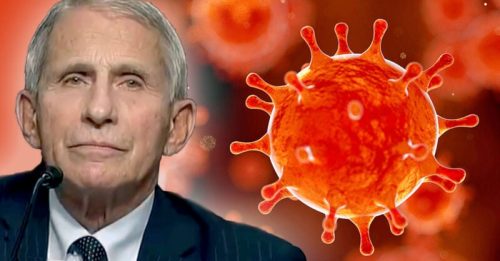
Scientists with connections to the Wuhan Institute of Virology — including Anthony Fauci — steered the U.S. national security state away from hypotheses about the origins of COVID-19 that could implicate their research, emails obtained through the Freedom of Information Act show.
Their sphere of influence spanned the intelligence community and the White House.
On February 3, 2020, scientists tied to high risk coronavirus research in Wuhan joined a call with national security officials about how to uncover how an exceptionally infectious virus had emerged from that city.
The call included officials with the Federal Bureau of Investigation, the Office of the Director of National Intelligence and the White House’s Office of Science and Technology Policy, an email obtained by U.S. Right to Know shows.
The intelligence community’s premature assessment that COVID-19 was a natural virus has in turn been wielded by Fauci and by other virologists to minimize the lab leak theory.
The call shows the apparent power of a small clique of scientists to cloud the public’s understanding of the pandemic.
The Wuhan Institute of Virology’s two closest collaborators, EcoHealth Alliance President Peter Daszak and University of North Carolina virologist Ralph Baric, were on the call.
Daszak runs the intermediary organization that shepherded funds from the National Institutes of Health to the Wuhan lab complex.
Baric is a coronavirologist who innovated engineering techniques and applied them to viruses prospected in the wild by the Wuhan lab. Baric — despite developing undetectable genetic engineering methods nicknamed “no see ‘um” after the barely perceptible flies found in the Southeast — apparently helped persuade the intelligence community that the novel virus betrayed no signs of engineering.
Facilitated by the National Academies of Sciences, Engineering, and Medicine, the purpose of the Feb. 3 call was to respond to “misinformation.”
“Thank you for participating in today’s meeting of experts to discuss and identify what data, information and samples are needed to understand the evolutionary origins of 2019-nCoV and more effectively respond to the outbreak and resulting misinformation,” wrote Andrew Pope, director of the board on health sciences policy for the National Academies.
Fauci briefed the group on “NIAID’s perspective,” the agenda shows. Fauci’s National Institute of Allergy and Infectious Diseases, or NIAID, had underwritten Daszak and Baric’s work.
The agenda shows that the Feb. 3 call was prompted in part by a flawed and ultimately withdrawn preprint alleging similarities between the genome of SARS-CoV-2 and HIV, which had set off alarm bells in the infectious diseases community.
It’s also clear that rumors about the Wuhan Institute of Virology had already begun swirling on Chinese social media.
The discussion was co-led by Fauci, director of the White House’s Office of Science and Technology Policy Kelvin Droegemeier, and Chris Hassell, who in addition to serving as senior science advisor to the Department of Health and Human Services also serves as the chair of the secret committee that oversees gain-of-function research with pandemic potential.
Contemporaneous emails show that Fauci was discussing the apparent connections between NIAID and gain-of-function research in Wuhan with his boss, NIH Director Francis Collins. Fauci was routinely meeting with top national security officials at that time, including in the White House Situation Room, his schedule shows.
Two days prior, Fauci and Collins had discussed the matter with a small group of virologists in a confidential call. Those virologists went on to write a highly influential letter which prompted news organizations around the world to prematurely dismiss the lab leak hypothesis as a conspiracy theory.
One of those virologists, Kristian Andersen with Scripps Research Institute, also participated in the Feb. 3 call.
Emails previously reported by U.S. Right to Know show that Andersen dismissed the idea of an engineered virus to the National Academies group as “crackpot.” Yet days later he insisted in a separate email that the scientific evidence was not conclusive enough to have high confidence in either the natural or lab hypotheses.
Congress is investigating the matter.
Despite the complexity of the question at hand, the National Academies group had wrapped up its work within a few days.
The letter that resulted from the Feb. 3 call from the National Academies to the White House’s Office of Science and Technology Policy assumed a natural origin.
The possibility of the virus emanating from research — which scientific organizations and U.S. intelligence elements now believe to be possible — was subsequently dismissed, according to Daszak.
Daszak seemed to think that this National Academies letter – together with the letter coauthored by Andersen – were enough to dissuade the White House from exploring a possible lab origin.
“I don’t think this [National Academies] committee will be getting into the lab release or bioengineering hypothesis again any time soon — White House seems to be satisfied with the earlier meeting, paper in Nature and general comments within [the] scientific community,” Daszak told Baric.
State Department intelligence unit
A few weeks later, Baric may have briefed the State Department’s analysts, another email shows.
Baric’s gain-of-function research was at the center of speculation about a possible lab origin.
Baric’s research had privately alarmed Fauci and Andersen. Fauci met with Baric nine days after the Feb. 3 call, Fauci’s schedule shows. They discussed “chimeras,” or engineered viruses, according to virologists close to Baric.
Yet emails obtained from the State Department appear to show that Baric was asked to brief the State Department’s Bureau of Intelligence and Research about the pandemic’s possible origins.
The briefing coincided with the premature letter “debunking” the idea that SARS-CoV-2 was engineered coauthored by Andersen, which published on March 17.
Baric apparently received several emails inviting him to participate in an “analytic exchange” between March 23 and March 25.
The Bureau of Intelligence and Research briefing occurred on March 26.
“U.S. scientists say available genomic evidence shows that the SARS-CoV-2 virus probably emerged naturally in an animal before crossing to humans and was not engineered in a lab,” the write-up of the briefing read.
Baric’s apparent inclusion on the call is remarkable because he innovated viral engineering techniques that do not reveal any scars or signs of engineering.
David Feith, former U.S. Deputy Assistant Secretary of State for East Asian and Pacific Affairs, said in sworn testimony to Congress last month that concerns about conflicts of interest skewing the briefing were valid, but that he was precluded from naming which virologists participated.
Feith said that the experts on the call stressed the “good quality” and “robust biosafety and biosecurity programs” of China’s virology labs.
Baric would later express concerns about coronavirus gain-of-function research occurring in BSL-2 conditions at the Wuhan Institute of Virology, lower than the BSL-4 conditions required for the most dangerous pathogens.
Feith described the State Department call as “diversionary” in his Congressional testimony.
“Officials and experts who could have helped equip their colleagues (and the public) with the appropriate background to understand a novel and grave situation and weigh probabilities accordingly instead overwhelmingly deflected and denied,” Feith said.
Red Dawn
Baric prematurely assured leading infectious diseases experts that COVID could not have been engineered through more informal channels as well.
The “Red Dawn” email chain in early 2020 consisted of speculation about the unfolding pandemic and included active and former officials from across several departments and agencies, including HHS, CDC, the Department of Homeland Security, the Veterans Affairs Department and the Pentagon.
Someone on the email chain asked whether restriction sites along the viral genome suggested the pathogen was artificial.
“There is absolutely no evidence that this virus is bioengineered,” Baric responded.
IC assessment
In late April 2020, the Office of the Director of National Intelligence released an unusual statement that the intelligence community concurred with the “wide scientific consensus” that the virus was not engineered, a statement that appeared to echo the conclusions of the Feb. 3 and March 26 briefings.
“A majority of the views now is that it was natural, it was organic,” said Defense Secretary Mark Esper.
In fact, a scientific consensus on this matter did not exist then and does not exist now.
Even so, the idea that SARS-CoV-2 could not be engineered also found its way into the 90-day review that the intelligence community concluded in August 2021.
“Most agencies also assess with low confidence that SARS-CoV-2 probably was not genetically engineered; however, two agencies believe there was not sufficient evidence to make an assessment either way,” the declassified assessment reads.
U.S. Right to Know obtained documents reported in this article through Freedom of Information Act requests to the Department of Health and Human Services and the State Department. All of the documents obtained in the course of our investigation into the origins of Covid-19 can be reviewed here.
With reporting by Hana Mensendiek
May 20, 2023
Posted by aletho |
Deception, Science and Pseudo-Science, Timeless or most popular, War Crimes | Anthony Fauci, Covid-19, United States |
Leave a comment
U.S. lawmakers are considering a bill that would grant the U.S. government vast new powers to surveil and censor U.S. citizens.
The RESTRICT Act — the Restricting the Emergence of Security Threats that Risk Information and Communications Technology Act, or Senate Bill 686 — would give the federal government new powers ostensibly to mitigate national security threats posed by technology products from countries that the U.S. deems adversarial.
The bill would grant the U.S. secretary of commerce the authority to “identify, deter, disrupt, prevent, prohibit, investigate, or otherwise mitigate” national security risks associated with technology linked to a foreign adversary.
There are only six countries on the foreign adversary list — China, Iran, North Korea, Venezuela, Russia and Cuba — but the bill allows the secretary and Congress to add any other country “if it became necessary.”
The bill does not stipulate the criteria for adding a country.
Additionally, the bill would give the commerce secretary the power to negotiate, enter into, impose and enforce “any mitigation measure” in response to national security risks.
The bill’s “broad” and “vague” language puts a great deal of power into the hands of the executive branch, according to critics, including the Electronic Frontier Foundation (EFF), a “leading nonprofit organization defending civil liberties in the digital world.”
The EFF called the bill a “dangerous substitute for comprehensive data privacy legislation.”
Meanwhile, the White House “applauded” the bill, stating that it would “empower the United States government to prevent certain foreign governments from exploiting technology services operating in the United States in a way that poses risks to Americans’ sensitive data and our national security.”
The bill — which has yet to be scheduled for a vote — would create a legal framework through which the U.S. government could ban TikTok.
TikTok is regarded as a national security risk by some U.S. lawmakers who fear that its Chinese parent company, ByteDance, might share sensitive information from the more than 150 million U.S. TikTok users with the Chinese Communist Party.
U.S. Big Tech companies including Facebook’s parent company, Meta, and Google’s parent, Alphabet, are expected to benefit from an expanded market share if the U.S. government bans the Chinese-owned TikTok.
‘Mechanism for a massive, sweeping surveillance and censorship overhaul’
However, according to investigative reporter Jordan Schachtel, “This bill is no mere ‘TikTok ban,’ it is a mechanism for a massive, sweeping surveillance and censorship overhaul.”
Michael Rectenwald, Ph.D., author of “Google Archipelago: The Digital Gulag and the Simulation of Freedom,” agreed. He told The Defender :
“The RESTRICT Act is not only aimed at the activities and expression of companies and individuals from nations deemed inimical to U.S. interests; it is a backdoor means through which the federal government can oversee the opinions and activities of all U.S. citizens, increasing the state’s powers of surveillance and abrogating citizen’s first amendment rights.”
Sen. Rand Paul (R-Ky.) also had harsh words for the proposed legislation:
Many on both the Left and Right have criticized the bill, calling it the “Patriot Act on steroids” or the “Patriot Act 2.0.”
Weeks after the September 11 attacks, the U.S. government passed the USA PATRIOT Act, which the American Civil Liberties Union said was “an overnight revision of the nation’s surveillance laws that vastly expanded the government’s authority to spy on its own citizens, while simultaneously reducing checks and balances on those powers like judicial oversight, public accountability, and the ability to challenge government searches in court.”
Critics fear the RESTRICT Act would expand those powers even further.
EFF condemned the bill’s potential threats to free speech, noting that the bill doesn’t require the executive branch to justify its restrictions on expressive technologies like TikTok and that it limits lawsuit challenges to the restrictions it sets.
“Due to undefined mitigation measures coupled with a vague enforcement provision, the bill could also criminalize common practices like using a VPN or side-loading to install a prohibited app,” EFF said. “There are legitimate data privacy concerns about social media platforms, but this bill is a distraction from real progress on privacy.”
Sen. John Thune (R-S.D.), who co-sponsored the bill, said in remarks on the Senate floor that the bill would not allow the government to “surveil Americans’ online content” or “access any American’s personal communications device.”
However, the RESTRICT Act’s broad language could potentially be interpreted to address satellite and mobile networks, cloud services and storage, internet infrastructure providers, home internet gear, commercial and personal drones, video games and payment apps, CNN said.
“Instead of passing this broad and overreaching bill, Congress should limit the opportunities for any company to collect massive amounts of our detailed personal data, which is then made available to data brokers, U.S. government agencies, and even foreign adversaries, China included,” EFF concluded.
Suzanne Burdick, Ph.D., is a reporter and researcher for The Defender based in Fairfield, Iowa. She holds a Ph.D. in Communication Studies from the University of Texas at Austin (2021), and a master’s degree in communication and leadership from Gonzaga University (2015). Her scholarship has been published in Health Communication. She has taught at various academic institutions in the United States and is fluent in Spanish.
This article was originally published by The Defender — Children’s Health Defense’s News & Views Website under Creative Commons license CC BY-NC-ND 4.0. Please consider subscribing to The Defender or donating to Children’s Health Defense.
May 20, 2023
Posted by aletho |
Civil Liberties, Full Spectrum Dominance | Human rights, United States |
Leave a comment
Less than a year after successfully winning the fight to force Pfizer to release their COVID-19 vaccine trial data that the FDA was attempting to block for 75 years, ICAN’s Lead Counsel, Aaron Siri, Esq., joins Del with a new, updated ruling, and great news about what this ruling means for Pfizer and Moderna’s COVID vaccine trial data.
Biden’s new pick for Head of the NIH, Monica Bertagnolli, received more than 290 million in grants from Pfizer. This appointment comes more than a year after former director, Francis Collins, left the beleaguered agency. With deep ties to Pfizer and the cancer industry, she joins a roster of agency heads with questionable conflicts of interest, contributing to a growing distrust of our health agencies now seemingly beyond repair.
May 20, 2023
Posted by aletho |
Corruption, Deception, Video | COVID-19 Vaccine, FDA, NIH, United States |
Leave a comment
The ‘crimes’ of Anthony Fauci are legion. From involvement in and denial of that involvement in funding gain-of-function research in Wuhan, whence the ‘deadly’ Covid-19 virus came, to exaggerating the lethality of the virus, through Covid-19 vaccine mandates involving widespread rollout of an experimental gene therapy to complicity in the almost ubiquitous and dangerous early use of ventilators for the treatment of Covid-19 patients.
The danger of ventilators and their likely involvement in the unnecessary deaths of Covid-19 patients has already been raised in these pages. That article was unconvincingly ‘fact checked’ with the customary ‘conspiracy theory’ trope being levelled at the authors. However, while ventilators may not have been fully responsible, for example, for the unusually high deaths of Covid-19 patients on ventilators in New York, they were associated with a higher level of mortality.
Ventilation, a procedure exclusively carried out in intensive-care environments, involves the introduction of an endotracheal tube into the lungs by which air is then pumped in. Despite the sterile conditions under which the tube is introduced into the lungs, bacterial infection referred to as ventilator associated pneumonia (VAP) is common within 24 hours. This is especially dangerous because the patient will already be medically compromised, and the immune system will be less able to combat the infection. VAP has a mortality rate of between 20 and 50 per cent.
An article published earlier this month by the News Center of Northwest Medicine, which is a non-profit healthcare system associated with Northwestern University Feinberg School of Medicine, published an article titled: ‘Secondary Bacterial Pneumonia Drove Many COVID-19 Deaths.’ The article featured Professor Benjamin Stinger of Northwest Medicine, who led a study linking secondary pneumonia caused by being on a ventilator to mortality which was published in a recent issue of the Journal of Clinical Investigation. JCI is a leading medical journal with an impressive impact factor, a measure of how much it is cited, of 19.
The new study involved 585 ventilated patients including 190 diagnosed with Covid-19 and used a computerised machine-learning procedure called CarpeDiem to analyse the patients’ clinical data over the course of the study. The link between the deaths of Covid-19 patients was made because longer periods on ventilation are associated with VAP which, if unsuccessfully treated, leads to death. Covid-19 patients tended to spend longer than other patients on ventilators.
But, in addition to providing further evidence of the dangers inherent in ventilating Covid-19 patients, the article inadvertently uncovers that Anthony Fauci was aware of the dangers of VAP. He led a study in 2018 published in the Journal of Infectious Diseases, cited in the JCI article, which ‘suggested an unexpectedly important contribution of secondary bacterial infection to mortality after severe viral pneumonia’. VAP is a secondary bacterial infection and, given the high use of ventilators in the early days of Covid-19, based on their study, the JCI authors concluded that:
‘Mortality in patients with severe SARS-CoV-2 pneumonia results from a low mortality attributable to the primary viral pneumonia that is offset by an increased risk of mortality from unresolving VAP or other ICU complications.’
Despite the knowledge, based on his own work, of the potential dangers of using ventilators, Fauci’s enthusiasm for them was not dampened, and he did not discourage their use when he was managing Covid-19 in the U.S. In fact, he warned that they may not have enough, saying that despite having 12,700 ventilators stockpiled they might be insufficient if the virus spreads quickly. He said: ‘If you don’t have enough ventilators, it’s obvious people who need it will not be able to get it. That’s when you’re going to have to make some very tough decisions.’ Asked if he was, perhaps, overreacting to the situation, he responded: ‘We’ll be thankful that we’re overreacting.’ Try telling that to the families of deceased Covid-19 patients who were unnecessarily artificially ventilated.
May 19, 2023
Posted by aletho |
Timeless or most popular, War Crimes | Anthony Fauci, Covid-19, United States |
Leave a comment
A New York State assembly member has introduced a legislation to stop charities from sending millions of dollars to Israel to stop its settlement expansion activities across the occupied Palestinian territories which are being advanced in flagrant violation of the international law.
The legislation, dubbed “Not on our dime!: Ending New York Funding of Israeli Settler Violence Act,” was introduced by state assembly member Zohran Mamdani, the third Muslim in the New York State assembly, earlier this week.
It would give the state attorney general authority to sue and dissolve not-for-profit organizations that are found to be using their tax-deductible donations to support organizations funding illegal Israeli settlements in the occupied West Bank.
The legislation would also give Palestinians harmed by settler organizations funded by New York-based charities the right to seek damages in American courts.
“Charities registered in New York State currently send more than $60 million dollars a year in tax-deductible donations to aid and abet Israeli settlements. This is done on our dime as New Yorkers,” Mamdani said, the Middle East Eye reported on Thursday.
He added, “This legislation puts an end to that and makes explicit that subsidizing violence and activities outlawed by the Geneva Convention is not, and should not be considered, charitable giving. It’s past time for New York to catch up to international law.”
Mamdani noted that while this issue is important to him as a Muslim, as his faith informs his fight to ensure justice for all people, this is not a bill motivated by religion.
“It is a bill motivated by a desire that New York State stop subsidizing human rights violations through the conferring of charitable status to organizations such as these,” he said.
“Too often, we see an exception drawn when it comes to Palestine – whether it be in our policies or the application of them. This makes it clear that our belief in human rights is universal, without exception,” he added.
The legislation has already received some backlash. Mamdani highlighted that his office has received a call saying all Muslims should die and all Muslim lovers should be killed as well.
“This is the reality when you dare speak up about Palestine and Palestinians,” he said.
Additionally, 66 lawmakers signed an open letter condemning the legislation, saying it “attacks” Jewish organizations.
Emboldened by former US president Donald Trump’s all-out support, Israel has stepped up its illegal settlement construction activities in defiance of United Nations Security Council Resolution 2334, which pronounced settlements in the West Bank and East al-Quds “a flagrant violation under international law.”
More than 600,000 Israelis live in over 230 settlements built since the 1967 Israeli occupation of the West Bank and East al-Quds.
All Israeli settlements are illegal under international law. The UN Security Council has condemned Israel’s settlement activities in the occupied territories in several resolutions.
Palestinians want the West Bank as part of a future independent state with East al-Quds as its capital.
The last round of Israeli-Palestinian talks collapsed in 2014. Among the major sticking points in those negotiations was Israel’s continued illegal settlement expansion.
Many Palestinians believe the Israeli plans to annex one-third of the already occupied West Bank, including parts of the strategic Jordan Valley, is only a formality and that a de facto Israeli occupation of their land has been underway for many years.
May 19, 2023
Posted by aletho |
Ethnic Cleansing, Racism, Zionism, Illegal Occupation | Israel, Palestine, United States, Zionism |
Leave a comment
Syria’s triumphant return to the Arab League fold after almost 12 years shows not just that Arab countries now recognize the failure of the “regime change” project in Damascus but also that they can defy the United States, according to a former British diplomat.
In an exclusive interview with the Press TV website, Peter Ford, a former UK diplomat who served as ambassador in Syria between 2003 and 2006 and before that in Bahrain from 1999 to 2003, said the importance of the recent turn of events in the Arab world “goes beyond Syria”.
“It is a symptom of the development of a new multipolar world order where not just Russia, China and Iran refuse to accept US hegemony but also countries like Saudi Arabia, UAE, Brazil and South Africa. This is the Global South manifesting itself,” Ford asserted, referring to Arab normalizations.
Syria has restored diplomatic ties with many Arab countries recently after years of hostility, including Saudi Arabia, and is set to formally return to the Arab League, a 22-member body of Arab states.
This wave of normalization comes more than a decade after Syria’s Arab neighbors severed their diplomatic ties with the Bashar al-Assad government in Damascus and demanded his ouster.
On Thursday, Assad touched down in the Saudi port city of Jeddah to attend the Arab League summit, marking another step toward the full restoration of ties between Syria and its Arab neighbors.
Ford said Syria’s return to the Arab League, in defiance of US warnings, has raised expectations that the Arab world will now “show more support for Palestine and less concern for their ties with Israel”.
“The Abraham Accords was founded on hostility to Iran and fear of the US. These conditions no longer apply,” the former British diplomat told the Press TV website.
On whether these developments will bring regional countries closer in fighting the menace of terrorism, Ford said he expects “much more intra-Arab security cooperation” now, adding that Syria has “more experience with this phenomenon than any country in the world”.
The veteran diplomat noted the US interference in the Arab country hasn’t ended but that it has “got tired” and is going through the motions “with no real hope of achieving anything”.
“It keeps up the economic war, the propaganda war and legal war, and it maintains a military presence to control Syria’s oil, but it’s all to no purpose,” he said about the US.
The restoration of diplomatic ties between Iran and Saudi Arabia, Ford said, augurs well for the region, as both countries have “a shared interest in modernization and the peaceful Persian Gulf”.
“The only beneficiaries from hostility (between Tehran and Riyadh) have been the US and Israel. The new perspectives for cooperation (between them) are exciting. No wonder the US think tanks are bitter in their commentaries,” he remarked.
Iran and Saudi Arabia restored diplomatic ties in March following two years of negotiations brokered by Baghdad. The breakthrough, however, came courtesy of Beijing.
Ford stated that while Western countries “stubbornly persist in economic warfare against Syria, Iran’s role in Syria’s post-war reconstruction and rebuilding “remains crucial”.
On President Ebrahim Raeisi’s recent historic visit to the Arab country, the former American ambassador in Damascus said it “set the seal on the success of Syria and Iran in standing firm against Western-directed attempts to overturn the Syrian government and weaken Iran.”
“It also signaled that the normalization of Syria’s relations with Saudi Arabia came not at Iran’s expense but because of what’s now triangular Syrian-Saudi-Iranian cooperation,” Ford stressed.
While warning that the US power to do harm “should never be underestimated”, he said the US “is now beating a retreat from the Middle East and is focused more and more on China”.
May 19, 2023
Posted by aletho |
Wars for Israel | Middle East, Syria, United States |
Leave a comment

Lotfi Hassan Misto, who was killed on 3 May 2023 by a US drone strike in Syria. (Photo courtesy of the Misto family)
After US military officials claimed to kill an important Al-Qaeda figure in Syria in an airstrike earlier this month, evidence from the dead man’s family indicates he was instead an impoverished shepherd and father of 10 children, The Washington Post reported on 19 May.
According to interviews with his brother, son, and six others who knew him, the slain man was Lotfi Hassan Misto, 56, a former bricklayer who they described as a kind, hard-working man whose “whole life was spent poor.”
Misto was killed by a Predator Drone strike using a Hellfire missile on 3 May. Hours later, without evidence or providing a name of the person targeted, US Central Command claimed that they had killed a “senior Al Qaeda leader.”
The interviews with Misto’s family members have caused US officials to backtrack from their original claims.
“We are no longer confident we killed a senior AQ official,” one US official told The Washington Post. Another said that “though we believe the strike did not kill the original target, we believe the person to be al-Qaeda.” Both spoke on the condition of anonymity.
The Post notes further that, “In the weeks since the attack, US military officials have refused to identify publicly who their target was, how the apparent error occurred, whether a legitimate terrorist leader escaped and why some in the Pentagon maintain Misto was a member of al-Qaeda despite his family’s denials.”
In a statement, Michael Lawhorn, a spokesman for Central Command, said that “Centcom takes all such allegations seriously and is investigating to determine whether or not the action may have unintentionally resulted in harm to civilians.”
The US military has faced accusations it has covered up past instances of airstrikes that killed innocent people as a result of what The Post described as “flawed intelligence” and “confirmation bias,” including in the case of a 2021 strike in Afghanistan that officials claimed targeted a suicide bomber but instead killed 10 Afghan civilians, including seven children.
In perhaps the most famous case, the US military carried out an airstrike in Mosul in 2017 during the battle against ISIS that killed 240 civilians sheltering in a large home.
The US military has carried out airstrikes in Syria intermittently in recent years in areas controlled by Al-Qaeda affiliated groups, including Hayat Tahrir al-Sham, previously known as the Nusra Front.
This is despite the fact that US planners played a key role in helping the Nusra Front capture Syria’s northwest Idlib governate in 2015 by supplying TOW anti-tank missiles to Free Syrian Army (FSA) groups fighting as Nusra proxies.
Supplying the weapons was part of the CIA’s Timber Sycamore Program, which sought to arm and fund extremist Salafist armed groups fighting the Syrian government under the FSA banner.
US, British, Turkish, and Gulf efforts to effect regime change in Syria failed, however, and President Donald Trump ended the CIA program, which enjoyed a budget of over $1 billion per year, in 2017.
The extremist groups occupying Idlib have enjoyed continued Turkish support since that time, while Turkish troops have also occupied areas in northern Syria directly.
But the status of Turkish-backed and Al-Qaeda-linked extremist groups in Syria is now in doubt as Turkish President Recip Tayyip Erdogan has in recent months participated in Russian-backed talks to normalize relations with Damascus.
Syrian President Bashar al-Assad has demanded that Turkiye end its occupation of northern Syria and cease support for extremist groups as a condition of any normalization of ties with Ankara.
May 19, 2023
Posted by aletho |
Illegal Occupation, War Crimes | CIA, Syria, Turkiye, United States |
Leave a comment
The most high-profile Ukrainian “terrorist acts” in Russia were carried out with the assistance of Washington, the Secretary of the Russian Security Council, Nikolay Patrushev, has claimed.
Speaking at a government meeting on Friday, Patrushev said that Russia has information that “the murders of Darya Dugina and Vladlen Tatarsky, the bombing of Zakhar Prilepin’s car, the explosion at the Crimean Bridge,” the Nord Stream pipelines sabotage, and other “terrorists acts” were “planned and carried out under the coordination of US special services”.
Those attacks were “accompanied by an information campaign prepared in advance in Washington and London, designed to destabilize the social and political situation, [and to] undermine the constitutional foundations and sovereignty of Russia,” the security chief stressed.
“The intensity of terrorist attacks has vastly increased” since Russia launched its military operation in Ukraine over a year ago, he added.
According to Patrushev, Ukrainian saboteur groups, who are trained by NATO instructors, have been actively trying to target important infrastructure inside Russia, including with drones.
In view of those events additional measures should be implemented to protect key facilities and places where people gather in large numbers, he said.
Earlier this week, the chief of Ukrainian military intelligence (GUR) General Kirill Budanov was asked about attacks on prominent Russian public figures and replied that his agency has “already gotten many” of them. However, he declined to mention any names. In an earlier interview, Budanov vowed to “keep killing Russians anywhere on the face of this world until the complete victory of Ukraine.”
Journalist and activist Darya Dugina, the daughter of Russian philosopher Aleksandr Dugin, died after her car exploded on a highway outside Moscow last summer. Russia’s Security Service (FSB) said the murder of the 29-year-old was carried out by Ukrainian nationals, who managed to flee the country.
In late April, Russian military blogger Vladlen Tatarsky was killed in St Petersburg after a statue that had been handed to him during an event with his followers exploded. A dozen people were also wounded. The FSB has blamed the blast on “Ukrainian special services and their agents, including fugitive members of the Russian opposition.”
Earlier this month, prominent Russian author and political activist Zakhar Prilepin was severely injured in a car bomb near the city of Nizhny Novgorod. His driver was killed. A suspect has admitted to Russian law enforcement that he’d been hired by an unspecified Ukrainian intelligence service.
May 19, 2023
Posted by aletho |
Full Spectrum Dominance, War Crimes | NATO, Russia, Ukraine, United States |
Leave a comment
By Uriel Araujo | May 19, 2023
On May 16, Ukraine claimed its air defenses intercepted six Russian Kinzhal hypersonic missiles and shot them down amid an “exceptionally dense” barrage fired – supposedly thanks to the arrival of Patriots, among other Western combat systems. Kinzhals are supposed to be able to overcome all existing air defense systems, and Moscow denies its Kinzhals were intercepted.
Kiev also claims to have shot down 29 of 30 Russian rockets on May 18, an obviously inflated number. However, a Ukrainian infrastructure facility in Khmelnytskyi has been hit by a missile, with no casualties reported. The barrage came as a response to Kiev’s advancements in Bakhmut. Ukrainian forces are reportedly preparing to launch a counteroffensive. Ukraine’s defense systems, however, should not be overestimated.
While Western powers are finally coming to realize that Kiev simply does not possess the necessary means to win the ongoing conflict, much is being written about Western air defenses supposedly being key for Western victory in its proxy war in Eastern Europe against Moscow. Despite Ukrainian denials, American officials have confirmed US-made Patriot was indeed damaged by Russian strikes. According to the Russian defense ministry, on 16 May Kinzhal destroyed a Patriot missile defense system (five launchers and a multifunctional radar). This is one of the most advanced US air defense systems. Albeit trying to minimize the damage, US authorities speaking to Reuters on the condition of anonymity said that they would have a better understanding of the situation “in the coming days” and that “information could change”.
In the past days, Ukrainian President Volodymyr Zelensky has been busy touring different European countries and so far he has been promised billions of dollars in military equipment by allies such as the United Kingdom (UK) and France. How much different can those make?
The hard truth is that Kiev remains unable to create a single control system or an interface for the various Western air defense systems and their different components, as these possess a large range of functional features and thus are poorly integrated into the already existing systems. This means that they would operate ineffectively if included in a single circuit. NATO’s anti-aircraft systems can fully control one defined sector of airspace at a time, but cannot intercept operational-tactical missiles that move along an aeroballistic trajectory, such as the Russian hypersonic Kinzhais. For Ukraine, it would therefore be necessary to construct a whole new system, which is no simple task during a confrontation – not to mention doing so quickly enough.
Moreover, according to defense and IR journalist S. Tiwari of the EurAsian Times, the Patriot, IRIS-T and NASAMS systems cannot protect Ukrainian troops from guided bombs, such as the ones massively used by Russian forces. Ukrainian Lieutenant Colonel Denis Smazhny, an aerial defense specialist, in turn has confirmed the low effectiveness of the US-sent NASAMS and IRIS-T complexes (supplied by Germany) to face Russian ballistic missiles such as the Iskanders and Kinzhals. The Russian weapons, unlike cruise missiles, are capable of rising to very high altitudes to fall almost vertically onto the target at great speeds. Thus, targeting them in flight is very difficult. How can one make them fall when they are in fact “already falling”?
Thus, in Colonel Smazhny’s words, “Western air defense systems will not be able to protect us.” Even with the Western systems, quickly creating an integrated and effective system for airspace defense is a challenge for Ukraine, to say the least. This is why Kiev has been eyeing an Israeli system called Iron Dome, which could suit its needs better. However, military and technical issues are often entangled with political and diplomatic matters.
During a US Senate Armed Services Subcommittee on Strategic Forces session (about missile-defense matters), last week, American Senator Angus King asked why Iron Dome had not been deployed in the Eastern European nation. The answer is quite simple: the main producer of such systems is Israel and thus it would have to grant Washington permission to send it to any other country, such as Ukraine. Despite several requests, this has not happened.
Tel Aviv sees Russia as a regional great power with which it must engage in a number of issues in the Middle East. For one thing, Moscow and Tel Aviv currently have a working relationship in the Levant, and Israeli Prime Minister Benjamin Netanyahu himself has stated he has no reason to damage bilateral relations. Moreover, even if Israeli approval were to happen, which remains unlikely, this would still not necessarily make a great difference other than a symbolic one: Russian weapons are indeed more sophisticated than the Palestinian rockets the Iron Dome routinely shoots down. To have a huge impact, Ukraine would need dozens of Iron Domes, which do not currently exist.
Besides these military issues, Ukraine is struggling with a domestic political crisis amid several corruption scandals. This week, for instance, the chair of its Supreme Court, chief justice Vsevolod Knyazev was removed from his post over bribery accusations amounting to $2.7 million. In addition, former US President Donald Trump stated last week he will not commit to backing Kiev, should he win the Republican presidential nomination and the upcoming elections. Despite legal controversies, Trump remains a clear Republican favorite, while Republican senators are increasingly opposing advancing aid for Ukraine and some, like Senator JD Vance, are calling for investigating a possible Democrat money laundering scheme in Ukraine.
May 19, 2023
Posted by aletho |
Militarism | France, Russia, UK, Ukraine, United States |
Leave a comment
One of two Israeli-manufactured Iron Dome batteries owned by the Pentagon is ready to be deployed to Ukraine, a US general told the Senate on Thursday. Tel Aviv has so far refused to supply the anti-missile system to Kiev, for fear of provoking Russia and risking its ability to freely bomb Moscow’s ally Syria.
During a Senate Strategic Forces subcommittee hearing on Thursday, Senator Angus King pressed a senior Pentagon official on why Ukraine has not yet received the Iron Dome, noting the US role in creating the air defense system.
“We sent something like $3 billion to Israel to develop it… Wouldn’t this be a very important resource for the Ukrainians since their principal problem right now is missile defense?” the lawmaker asked.
Army Space and Missile Defense Command chief General Daniel Karbler replied that there are currently two Iron Dome batteries in US inventories, one of which is now ready for transfer to Kiev.
“Once completed new equipment training, new equipment fielding. It is prepared for deployment. The other one is wrapping up its new equipment training right now. So the army does have one available for deployment if we get a request,” he said.
While the US has spent some $2.6 billion to fund the Iron Dome since 2011, it is produced in Israel, and Washington must seek Tel Aviv’s approval before any transfer to a third country. Ukrainian officials have repeatedly urged Israel to supply the system since Russia’s invasion commenced last year, but Tel Aviv has been reluctant to fulfill the requests, which could jeopardize its delicate relations with Moscow.
For years, Israel has dropped bombs on Syria – a key Russian ally in the Middle East – on a near-weekly basis. Tel Aviv claims its constant airstrikes are needed to counter Iranian proxies in the country, though they routinely kill Syrian soldiers and civilians and have damaged civil infrastructure such as airports.
Russia still maintains a significant military presence in Syria, having intervened at the request of President Bashar al-Assad in 2015 to help beat back al-Qaeda affiliated militants and Islamic State fighters waging a dirty war on Damascus. The terrorist forces that carried out the failed regime change attempt were supported often by the CIA and its allies, including Israel.
Moscow has provided air defense systems to Syria but still permits Tel Aviv’s weekly attacks. The Israelis have launched hundreds of air raids in the country since its civil war began, and would prefer to maintain its “freedom of action” in the region rather than risk provoking the Kremlin with military aid to Ukraine.
Last year, Kiev attempted to appeal to Israel’s hawkishness to obtain the Iron Dome and other military hardware. In a letter to the Israeli Foreign Ministry, Ukrainian embassy officials warned that Russia’s use of Iranian drones could “significantly contribute in strengthening Iran’s potential of producing offensive weapons and, as a result, … increase the security threats for the State of Israel.”
Tel Aviv refused to bite, however, seeing little benefit in providing the Iron Dome to Ukraine while also fearing that Russia could retaliate by providing Iran with advanced weaponry. Additionally, Tehran has repeatedly denied providing its drones to Moscow since Russian President Vladimir Putin launched his war in Ukraine, claiming it has made no deliveries since fighting began.
The transfer proposed by General Karbler also makes little strategic sense, particularly given Ukraine’s vast territory. The Israelis typically use the Iron Dome to shoot down low-tech rockets fired by Palestinian resistance factions in the besieged Gaza Strip, an open-air concentration camp which has been blockaded by the air, land and sea for more than 15 years. A single Iron Dome battery would be of scant use in defending against Russia’s long-range missiles.
According to a Jerusalem Post analysis published this week, “If Israel needs 10 or more Iron Domes to properly defend itself, Ukraine would need dozens or more, which simply do not exist. ” The outlet added that ”One or two Iron Domes from the US would make no difference tactically, and at this point, probably would not even make much of a symbolic difference. And even then, the Iron Dome might fail to shoot down Putin’s more sophisticated missiles.”
Assistant US Defense Secretary for Space Policy John Plumb has said Washington is “not aware” of any Israeli offer to make the transfer anyway. His statements came as Kiev blasted Israel for carrying on “business as usual with the Russian war criminals.” Tel Aviv recently sent senior diplomats to Moscow for meetings with Russian officials.
Sources told Israel Hayom that Ukrainian troops have almost finished training on an Israeli early alert system used to predict missile trajectories, ”although it is unclear if this is related to a possible deployment of the interceptor.” The sources refused to respond to Karbler’s remarks on Thursday, but noted that Israel ”will not get into a fight with the US over the Iron Dome, and stressed that the general’s comments did not specifically say that the system will be delivered to Ukraine.”
May 19, 2023
Posted by aletho |
Militarism | Israel, Russia, Syria, Ukraine, United States |
Leave a comment
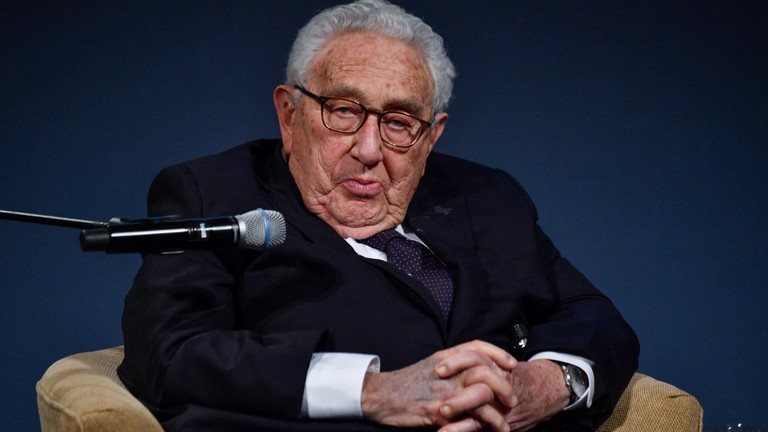
China has urged against Ukraine joining NATO, saying it would not improve security in the European region, after veteran US diplomat Henry Kissinger claimed membership would serve the interests of both Kiev and Moscow.
Asked about Kissinger’s comments during a Thursday press briefing, Chinese Foreign Ministry spokesman Wang Wenbin argued that Ukrainian NATO membership would only further inflame tensions.
“Ukraine should not become the frontier in a major power confrontation,” he said, adding that “to strengthen or even expand military groups is not a viable way to ensure the security of a region. One country’s security should not be achieved at the expense of the security of other countries.”
In an interview with the Economist published on Wednesday, Kissinger said European powers were pursuing a “madly dangerous” strategy by keeping Kiev out of the US-led military bloc, insisting Ukraine must not “become a solitary state just looking out for itself.” He claimed NATO membership would not only benefit Ukraine, but Russia as well.
“If I talked to [Russian President Vladimir] Putin, I would tell him that he, too, is safer with Ukraine in NATO,” the 99-year-old added, saying the move would prevent Kiev from making rash “national decisions on territorial claims.”
The Chinese spokesman went on to state that a “durable European security architecture” could only be created through dialogue. During a visit to Ukraine this week, special envoy Li Hui met with Ukrainian President Vladimir Zelensky, Foreign Minister Dmitry Kuleba and other senior officials to discuss Beijing’s views on a diplomatic resolution to the conflict.
Beijing unveiled a 12-point roadmap for peace in February which urged both Moscow and Kiev to resume direct negotiations. President Putin later said the Chinese plan was “in tune” with Russia’s position and hoped the proposal could serve as the basis for a future political settlement.
Western powers have dismissed the 12-point plan, with the European Union’s foreign policy chief Josep Borrell dubbing it “wishful thinking,” while the top advisor to Ukrainian President Vladimir Zelensky argued that it heavily favors Russia.
Direct Turkish-brokered talks between the two sides broke down in the spring of 2022. Since then, President Zelensky has ruled out any direct talks with Russia as long as Putin remains in power, and Moscow has rejected the terms for negotiations put forward by Kiev. Among other things, Ukraine’s proposal calls for Russia to withdraw its forces from all territories within Ukraine’s 1991 borders, to pay reparations, and to submit to war crime tribunals. Moscow has rejected the plan as “unacceptable,” pointing out that it ignores the reality on the ground and merely shows Kiev’s unwillingness to resolve the crisis through talks.
May 19, 2023
Posted by aletho |
Militarism | China, NATO, Ukraine, United States |
Leave a comment