Iraq, Pakistan ink Hormuz safe passage deals with Iran: Report
The Cradle | May 13, 2026
Iraq and Pakistan have reached separate arrangements with Iran to move crude oil and liquefied natural gas (LNG) through the Strait of Hormuz under Tehran’s new system for controlled passage through the strategic waterway, Reuters reported on 12 May.
The deals come as the US-Israeli war on Iran has sharply reduced energy exports from the Gulf, a region that normally supplies 20 percent of the world’s crude oil and LNG.
Claudio Steuer of the Oxford Institute for Energy Studies told Reuters that “Iran has shifted from blocking Hormuz to controlling access to it … Hormuz is no longer a neutral transit route, it is a controlled corridor.”
Under this new framework, Iraq secured safe passage for two very large crude carriers, each carrying about 2 million barrels of crude, through the strait on Sunday.
An Iraqi oil ministry official said Baghdad is now seeking Iranian approval for additional shipments, as oil revenue makes up 95 percent of the Iraqi budget.
“Iraq is a close ally of Iran, and any deterioration in Iraq’s economy would also damage Iran’s economic interests in the country,” the official said.
In a separate arrangement, two tankers carrying Qatari LNG are heading to Pakistan after Islamabad reached an agreement with Tehran, according to two industry sources cited by Reuters.
The sources said neither Iraq nor Pakistan made direct payments to Iran or the Islamic Revolutionary Guard Corps (IRGC) for the transits.
Industry sources said Tehran is formalizing control over the strait by asking Baghdad to submit documents for each tanker, including destination, shipping details, ownership, and cargo specifications.
A Pakistani source told Reuters that the process has not been smooth, saying, “The IRGC sometimes changes the goalposts, so it is hard to keep things on track, but we are working through it.”
Amid the chokehold of the US–Iran double blockade, maritime activity through the vital Strait of Hormuz has withered to a mere five percent of its normal capacity, staggering global economies and energy markets.
The blockade has pushed Pakistan to open six overland routes for Iran-bound cargo, giving Tehran an alternative land corridor as the US blockade disrupts maritime trade through the Gulf.
A military correspondent for The Cradle reported that Pakistan issued the “Transit of Goods through Territory of Pakistan Order 2026” on 25 April, designating Karachi Port, Port Qasim, and Gwadar Deep-Sea Port to receive cargo bound for Iran and Central Asia through the Taftan border crossing.
The move could help clear around 3,000 Iranian containers stranded in Karachi after restrictions on ships traveling to and from Iran left food and consumer goods stuck at Pakistani ports.
Former Pakistani information minister Mushahid Hussain Syed said the new corridor gained importance after “the US Navy’s blockade of the Strait of Hormuz since 13 April,” but stressed that Islamabad sees the arrangement as a commercial decision rather than a direct escalation with Washington.
“The unfair blockade has left thousands of Iranian containers stuck at Karachi ports, which has made it harder for people in Iran to get consumer goods,” Syed told The Cradle.
CIA Waging Covert War Against Drug Cartels in Mexico – Reports
Sputnik – 13.05.2026
The US Central Intelligence Agency (CIA) is waging a covert war against drug cartels in Mexico and is now directly involved in the assassinations of their members, media reported, citing sources.
The previously unreported CIA campaign in Mexico, overseen by the elite and top-secret Ground Branch, is aimed at the complete dismantling of drug cartels, the report said on Tuesday. Since last year, CIA officers have been personally involved in assassination attempts against cartel members, primarily mid-level ones, the report added.
One of the US intelligence operations in the country was the car bombing of Francisco Beltran, a suspected member of the Sinaloa Cartel, on a highway near Mexico City in March, the report read. According to the report, CIA officers planted a bomb directly in Beltran’s car.
Such operations may be illegal in Mexico, the broadcaster reported, adding that not all missions were coordinated with the Mexican government, creating the risk of retaliatory action by cartels in the United States.
In March, US President Donald Trump announced that the US and Latin American countries were creating a military coalition to combat drug cartels in the region.
Hidden deep in an NPR story about a man who threatened to kill Jews at Cornell… He admits he did it to benefit Israel
The North Star with Shaun King | May 9, 2026
In the Fall of 2023, local, national, and even international news reported that a New York man made a series of threats against Jewish students and staff at Cornell University. A year later he was actually convicted and sentenced to nearly two years in prison for it.
It happened. Students there were actually afraid. I don’t want to pretend that they weren’t.
But there is one detail in this story that pretty much changes EVERYTHING.
According to NPR’s own reporting, the lawyer for Patrick Dai — the former Cornell student sentenced to 21 months in prison for making violent threats against Jewish students — said Dai made those threats as a “misguided attempt” to generate support for Israel and that he was a devout supporter of Israel. It was a false flag attack.
Patrick Dai, a former Cornell student from Pittsford, New York, pleaded guilty to one felony count of posting threats to kill or injure another person using interstate communications. According to the Department of Justice, Dai admitted that on October 28th and 29th, 2023, he posted anonymous threats to the Cornell section of an online discussion forum, including threats to shoot up 104 West, a Cornell dining hall that serves kosher meals and is located next to the Cornell Jewish Center.
The posts were vile.
They were criminal.
They terrorized Jewish students.
And Dai deserved serious consequences.
But that is not the whole story.
The part that should have been in the headline — or at least in the first few paragraphs — is that Dai’s own attorney said he was not acting out of hatred for Israel, but out of a desire to defend it. Except I had to literally scroll down TWELVE PARAGRAPHS to learn that the student was a Zionist who did it all to make people feel more sympathy for Israel.
NPR reported that Dai’s lawyer, Lisa Peebles, described his actions in a court filing as a “misguided attempt to highlight Hamas’ genocidal beliefs and garner support for Israel.” She said he believed the posts would create “blowback” against what he perceived as anti-Israel media coverage and pro-Hamas sentiment on campus.
Read that again.
According to his lawyer, he made threats against Jewish students to create sympathy for Israel.
That is not a small detail.
That is not a footnote.
That is the story.
Because if that defense claim is true, even partly true, then this was not just a case of antisemitic threats in the simple way NPR framed it. It was a false-flag-style propaganda act: a man allegedly posing as the very hatred he claimed to oppose in order to manipulate public opinion.
And NPR buried that fact deep inside the story.
That matters because media framing shapes public consciousness. Most people never read to paragraph 10 or 12 or 15. They read the headline. They skim the first few paragraphs. They absorb the frame. And the frame here was simple: a former Cornell student made antisemitic threats during a period of rising campus tension after October 7th.
But the buried fact makes the story more complicated and more politically explosive.
The threats were real. The fear was real. The crime was real. But according to the defense, the motive was not what the public would naturally assume.
That is the tension NPR should have centered.
To be fair, prosecutors rejected Dai’s explanation. NPR reported that federal prosecutors described his claims as “self-serving” and said they were contradicted by the threats themselves and by his later apology. The court also found that his conduct qualified as a hate crime under federal sentencing guidelines because he targeted Jewish students and substantially disrupted Cornell’s educational function. The Justice Department said the threats “terrorized the Cornell campus community for days and shattered the community’s sense of safety.”
That must be included.
But including the prosecution’s view does not erase the media problem.
The public deserved to know, from the start, that the defendant’s lawyer said this was an attempt to manufacture sympathy for Israel. Arab News, citing AFP, stated it much more directly:
Peebles told the court Dai was “pro-Israel” and made posts “in the guise of an anti-Semite Hamas extremist.”
That phrase should stop everybody cold.
“In the guise.”
Meaning, according to the defense, he was pretending.
If a Muslim student had posted fake Islamophobic threats against Muslims and later claimed he did it to generate sympathy for Palestine, do we honestly believe NPR would have buried that detail deep in the story?
No.
It would have been the headline.
It would have been the lead.
It would have been the entire frame.
We would have heard about hoaxes, manipulation, propaganda, radical activism, and fake victimhood. Every cable news panel would ask what this says about pro-Palestinian movements. Every politician who wanted to criminalize Palestine solidarity would use it as evidence.
But when the alleged motive points in the other direction — toward manufacturing support for Israel — suddenly the detail is handled delicately, carefully, quietly.
That is the double standard.
And it is not harmless.
Since October 2023, American media has repeatedly helped create an atmosphere where Palestinian, Arab, Muslim, and anti-war students are treated as presumed threats. Their protests are scrutinized. Their chants are criminalized. Their grief is pathologized. Their politics are framed as danger before they are understood as dissent.
Meanwhile, this case involved a man who admitted to making horrific threats against Jewish students — and whose own lawyer said he did so to create backlash against anti-Israel sentiment.
That should have forced a deeper media conversation about how fear is manufactured, how propaganda works, and how quickly institutions accept narratives that benefit Israel.
Instead, the story was mostly folded back into the same familiar frame.
“Rising antisemitism.”
“Campus tensions.”
“Threats against Jewish students.”
Again, the threats were real. Jewish students were harmed. Nothing about Dai’s claimed motive changes the terror they experienced.
But motive matters.
Political context matters.
Media framing matters.
Because when a threat is allegedly staged to create sympathy for Israel, the public deserves to understand that clearly. Not as an afterthought. Not buried beneath official statements. Not softened into a detail most readers will miss.
The same media institutions that demand endless nuance when Israel bombs hospitals, schools, refugee camps, journalists, doctors, and children somehow lose their curiosity when a story might reveal pro-Israel manipulation.
That curiosity returns only when it can be aimed at Palestinians, Muslims, Arabs, immigrants, protesters, or anyone demanding an end to genocide.
This is why independent media matters.
Because the question here is not whether Dai should have been punished. He should have been.
The question is why one of the most important facts in the story was buried.
The question is why a case that may involve false-flag-style threats designed to “garner support for Israel” was still framed mainly as a straightforward example of antisemitic danger on campus.
The question is why American media is so much more comfortable telling stories that benefit Israel than interrogating stories that expose how support for Israel is manufactured.
That is the real story.
And NPR had it.
They just buried the lead.
Love and appreciate each of you.
Your friend and brother,
Shaun
Trump admits US sent weapons to fuel riots, terrorism inside Iran
Press TV – May 12, 2026
US President Donald Trump has again admitted to Washington’s support for armed riots and terrorist activities inside Iran amid continued aggressive American measures targeting the nation.
Speaking to reporters at the Oval Office on Monday, Trump said elements were willing to take such seditious actions inside Iran.
He, however, referred to such actors as “the Iranian people” and pointed to the measures they could take as simply “going out on the streets.”
“They have no weapons. They have no guns,” he claimed.
Earlier this year, too, Trump had unequivocally admitted to the United States’ intentions to arm such elements, saying, “We sent guns, a lot of guns.” “You know what happened? The people that they sent them to kept them,” he had added at the time.
Adding to his Monday remarks, the US president said the weapons had been transferred to “Kurds,” who, according to him, stopped short of relaying the arms. “The Kurds disappointed us. The Kurds take, take, take… I’m very disappointed in the Kurds.”
The comments came as Iran faced widespread riots and terror activities across the country in late December and early January, during which elements primed and trained by American and Israeli spy agencies roamed the streets and opened fire against civilians and security forces.
Thousands, including women and children, were martyred throughout the episode that sought to take advantage of peaceful economic protests.
The Islamic Republic has denounced such “long-standing” policy on the part of the United States “of creating, financing, and arming terrorist groups in West Asia and beyond,” saying, it “constitutes a flagrant violation of the UN Charter and the fundamental principles and rules of international law.”
Tehran has also urged the United Nations to condemn and confront such measures.
Trump’s remarks also follow unprovoked American-Israeli aggression against the Islamic Republic, which was launched in late February.
The US president announced a ceasefire on April 8 amid decisive Iranian retaliation, but continues to target the country with an illegal naval blockade.
Iran sues US at Hague tribunal, demands war reparations for June 2025 aggression
Press TV – May 12, 2026
Iran has filed a complaint against the United States at the Permanent Court of Arbitration (PCA), demanding compensation for damage inflicted on the country during the June 2025 war of aggression.
The semi-official Tasnim news agency said in a Tuesday report that the Iranian complaint at the Hague-based PCA was filed in February.
The report said the complaint accuses the US of violating the 1981 Algiers Accords, in which Washington committed to refraining from interfering in Iran’s internal affairs, whether directly or indirectly, politically or militarily.
It said Iran has demanded reparation from the United States over its imposition of sanctions, its attacks on Iran’s nuclear facilities, and its use of threats.
The complaint also calls on the PCA to force the US to immediately cease its direct and indirect interventions in Iran, provide guarantees that it will not repeat those actions, and pay full compensation for the damage caused to the country by its military and non-military actions, Tasnim said.
It said the complaint only demands compensation for the damage caused to Iran during the 12-day Israeli war of aggression in June 2025, in which the US participated.
The United States contributed to the Israeli attacks on Iran by providing intelligence and military support to the regime.
Washington also carried out a midnight attack on Iran’s nuclear installations on June 22, 2025, causing considerable damage to underground facilities in central parts of the country.
The report did not mention whether Iran may take a separate legal action against the US for the damage inflicted during the recent war of aggression that began in late February and was halted as part of a ceasefire on April 8.
In letter to UN, Yemen calls for end to blockade, sabotage by US, allies
Press TV – May 12, 2026
Yemen has written to the United Nations, calling for an end to over 10 years of blockade of the country and urging cessation of aggressive measures targeting the nation by the US and its allies.
Deputy Foreign Minister Abdulwahid Abu Ras denounced continuation of the “unjust blockade” in a letter addressed to the UN secretary general and the world body’s Security Council, Yemen’s official Saba news agency reported on Monday.
Continuation of the blockade, he added, “does not serve international peace and security.”
Saudi Arabia and its Arab allies launched the blockade as part of a full-scale war on March 26, 2015, with military, political, and logistical support from the United States and other Western states.
The war went on to claim the lives of tens of thousands of Yemenis, while consistently falling short of its main objective of restoring power to Yemen’s former Riyadh-friendly government.
The government had fled the country amid a power struggle, prompting Yemen’s popular resistance Ansarullah movement to start running state affairs.
Following a fragile UN-brokered ceasefire that was clinched in 2022, the United States, the United Kingdom, and the Israeli regime waged many rounds of wholesale aggression against Yemen.
The attacks would seek to cripple Sana’a’s capability to stage solidarity strikes against Israeli targets in response to Tel Aviv’s war of genocide on the Gaza Strip.
According to the Yemeni official, “The continued hostile activities of the United States and its proxies will inflict greater damage on the region, and their consequences will be catastrophic.”
“The state of ‘neither war nor peace’ is no longer acceptable under any circumstances.”
China rejects Israel’s ‘groundless’ allegation of missile support for Iran
Press TV – May 12, 2026
China has rejected Israel’s claims that Beijing provided support to Iran in manufacturing missiles.
Chinese Foreign Ministry spokesman Guo Jiakun told reporters on Tuesday that the accusations “are not grounded in facts.”
Beijing, he said, is “committed to promoting de-escalation and peace talks to bring about an end to the conflict” between Iran and the United States.
“We have made China’s position clear on multiple occasions. As a responsible major country, China always fulfills its due international obligations,” he added.
In an interview with CBS, Israeli prime minister Benjamin Netanyahu claimed that during the joint US-Israeli aggression against Iran, China “gave a certain amount of support and particular components for missile manufacturing.”
Asked whether such support was continuing, he said, “Could be. Could be,” without providing further information.
Netanyahu’s controversial remarks came ahead of a planned visit to Beijing by US President Donald Trump.
The Chinese foreign ministry spokesman also condemned recent US sanctions on 12 individuals and entities over their alleged links to Iran, saying Beijing firmly opposes “unilateral sanctions.”
Guo said that the current “pressing priority” in West Asia is to “prevent, by all means, a relapse in fighting, rather than exploit the situation to throw mud at China.”
The US Treasury Department has imposed sanctions on 12 individuals and companies, several of them based in China and Hong Kong, for their alleged involvement in helping Iran “obtain weapons and the raw materials” necessary for its Shahed drones and ballistic missiles.
The department also threatened to take action against any foreign entities supporting what it called “illicit Iranian commerce,” including airlines, and to implement secondary sanctions on foreign financial institutions that assist Iran, even those connected to China’s independent oil refineries.
China, however, pushed back against the sanctions on Chinese refiners buying Iranian crude, invoking a “blocking rule” for the first time last week, directing companies not to comply with US sanctions.
Why did Washington impose sanctions on China before the Trump-Xi summit?
By Salman Rafi Sheikh – New Eastern Outlook – May 12, 2026
New U.S. sanctions against Chinese companies just before Donald Trump’s visit to Beijing highlight the growing tendency to use economic pressure as a primary instrument of American diplomacy.
Donald Trump plans to visit China from May 13 to 15. His baggage includes a load of sanctions instead of concessions. Days before his visit to China, Washington imposed fresh sanctions on mainland Chinese and Hong Kong-linked firms accused of helping Iran procure drone and missile-related components. The message is unmistakable: the United States wants to negotiate from a position of pressure. But coercion before diplomacy often produces the opposite effect. Rather than strengthening Washington’s leverage over Beijing, the move risks hardening Chinese resistance, deepening China-Iran ties, and accelerating the erosion of America’s sanctions power in an increasingly multipolar world.
Coercion as Diplomacy
The timing tells the story. On May 8, the US Treasury announced sanctions on 10 individuals and companies — several based in China and Hong Kong — accused of facilitating Iran’s acquisition of materials used in Shahed drones and ballistic missile programmes. According to the Treasury Department, some firms allegedly supplied insulation materials and procurement services linked to Iran’s military-industrial network. Reuters reported that the sanctions came just days before Trump’s scheduled meeting with Chinese President Xi Jinping in Beijing. And, just as Trump flew to China, the US imposed further sanctions on entities involved in shipping Iranian oil to China, hitting China’s energy demands.
The logic behind the move is relatively straightforward. Trump appears determined to avoid entering Beijing looking conciliatory or desperate for stabilization in US-China relations. He wants to completely dodge the impression that the US has lost in Iran. By imposing sanctions beforehand, Washington is signaling that dialogue with China will not come at the expense of American pressure campaigns against Iran or broader national security concerns. The sanctions also serve a domestic political purpose. Trump can portray himself as simultaneously engaging China diplomatically while remaining “tough” on both Beijing and Tehran.
This reflects a broader pattern in Trump-era diplomacy: negotiation through escalation. Whether on tariffs, NATO burden-sharing, or Iran, Trump has frequently relied on pressure tactics to create bargaining leverage before high-level meetings. The assumption is that economic coercion raises the costs of resistance and therefore increases the incentives for compromise. But this strategy works only if the other side believes accommodation is less costly than defiance. That assumption is becoming increasingly questionable in the case of China.
Beijing’s reaction was immediate and predictable. China’s Foreign Ministry condemned the sanctions as “illegal unilateral measures” and pledged to defend the legitimate interests of Chinese companies. Rather than creating diplomatic flexibility, the sanctions may have narrowed Xi Jinping’s room for maneuver by making concessions appear politically submissive.
This is an important point often overlooked in Washington. Chinese leaders do not interpret pre-summmit sanctions merely as tactical bargaining instruments; they typically view them as public demonstrations of coercion designed to humiliate China before negotiations even begin. In such circumstances, compromise becomes politically costly because it risks reinforcing perceptions of weakness both domestically and internationally. That dynamic is particularly significant today because US-China relations are no longer defined by strategic ambiguity or selective competition. They are increasingly viewed in both capitals as a systemic rivalry involving trade, technology, finance, security, and ideology simultaneously. In that environment, sanctions cease to look like isolated policy tools and instead become part of a broader containment strategy.
The Limits of Economic Pressure
The deeper problem for Washington is that sanctions may no longer carry the same coercive power they once supposedly did.
For decades, the United States relied on its dominance over the global financial system to compel compliance from adversaries and third parties alike. Access to the dollar system, Western banking networks, and US markets gave Washington enormous leverage. Secondary sanctions became, at least from Washington’s perspective, one of the most effective tools of American statecraft. But the geopolitical environment has changed significantly.
China today possesses far greater economic resilience than most previous sanctions targets. It also has stronger incentives to resist American pressure because compliance increasingly carries strategic costs of its own. Beijing sees Iran not merely as an isolated Middle Eastern partner but as part of a broader network of states capable of constraining US influence across multiple regions.
China remains Iran’s largest oil customer despite years of American sanctions. Under these conditions, China is unlikely to fully cooperate with Washington’s “maximum pressure” campaign against Tehran. Indeed, repeated sanctions may actually be accelerating China’s determination to build sanctions-resistant economic structures. Beijing has already expanded the use of alternative payment systems, encouraged yuan-denominated trade, and adopted legal mechanisms allowing Chinese firms to challenge or ignore certain foreign sanctions regimes. Each new round of American penalties reinforces the Chinese perception that dependence on US-controlled financial systems constitutes a strategic vulnerability.
There is also growing evidence that sanctions enforcement is producing diminishing returns. The United States has repeatedly sanctioned Chinese and Hong Kong-linked firms accused of helping Iran procure drone components over the past several years. Yet the procurement networks continue adapting through shell companies, intermediaries, and rerouted supply chains.
A 2025 report in the South China Morning Post described the process as a “whack-a-mole exercise,” noting how Iranian procurement networks rapidly reorganized after earlier sanctions targeted Hong Kong-based front companies. The persistence of these networks suggests that sanctions may disrupt transactions temporarily without fundamentally changing the underlying strategic calculations of either China or Iran.
This matters because coercive tools derive much of their effectiveness from credibility. If the targeted state concludes that sanctions are manageable, adaptable, or largely symbolic, then the deterrent value of future sanctions declines substantially.
A More Fragmented Geopolitical Order
The sanctions also reveal a broader contradiction in contemporary American foreign policy. Washington increasingly wants two incompatible outcomes at the same time: strategic competition with China and selective cooperation with China. The Trump administration appears to believe that it can compartmentalize the relationship — sanctioning Chinese entities over Iran while simultaneously seeking Chinese cooperation on trade, regional stability, or maritime security. But the relationship has become too securitized for neat compartmentalization.
From Beijing’s perspective, sanctions on Chinese firms are not disconnected technical measures. They are part of a larger American strategy aimed at constraining China’s economic and geopolitical rise. Under those conditions, even limited cooperation with Washington becomes politically sensitive inside China.
Ironically, the sanctions may therefore deepen exactly the alignment Washington seeks to weaken. China, Iran, and Russia increasingly share a common interest in reducing exposure to US-led financial and strategic pressure. They do not constitute a formal alliance, but they are moving toward greater coordination because American coercive policies create shared incentives for resistance.
This does not mean sanctions are entirely ineffective. They can still raise transaction costs, complicate procurement networks, and signal political resolve. But the era in which sanctions alone could fundamentally reshape the behavior of major powers may be fading.
The more important question now is whether Washington is adapting quickly enough to that reality. If the United States continues relying on sanctions as its primary instrument of geopolitical leverage, it may unintentionally accelerate the fragmentation of the very international order that once made those sanctions so powerful.
Trump may arrive in Beijing believing he has strengthened his negotiating hand. Yet Xi Jinping is likely to interpret the sanctions differently: not as leverage for compromise, but as evidence that Washington increasingly views pressure itself as diplomacy, and that coercion is likely to remain a key feature of US ties with China. And when coercion becomes the default language of international politics, major powers rarely move toward accommodation. They prepare instead for a world in which confrontation is permanent.
Salman Rafi Sheikh is aresearch analyst of international relations and Pakistan’s foreign and domestic affairs.
Follow new articles on our Telegram channel
A $1.5 Trillion Military Budget is a Gift to the Grifters
By Ron Paul | May 11, 2026
Last week “Secretary of War” Pete Hegseth insulted Americans by claiming that a 50 percent increase in the US military budget – from an incomprehensible one trillion dollars to an impossible one and a half trillion – was a “fiscally responsible investment.”
“Thanks to President Trump’s $1.5 trillion defense budget, this War Department has moved from bureaucracy to business,” he said last Thursday.
In a way he was right, though. The huge increase is much more about “business” than what is needed to protect the United States from potential invasion.
But it isn’t the kind of “business” that most supporters of free markets would applaud. On the contrary, this is the business of transferring massive amounts of wealth from the struggling middle and working classes to the well-connected Beltway elite based on lies and scare tactics.
The US mainstream media is crucial in manufacturing the fairy tale that if we don’t mortgage our children’s and grandchildren’s future to finance this obscene military budget, we will be attacked or invaded by some evil foreign power.
It’s not difficult to do a little research and see why the mainstream – and even some “independent” – media outlets push these scare tactics: they are owned or funded by giant corporations with close ties to military contractors.
This unhealthy relationship is known as “corporatism” – the intermingling of pseudo-private companies with the government. It is the precursor to actual fascism, where the government takes a stake in such companies.
We’re getting there faster than most Americans understand.
The whole scam is not about protecting the citizens of the United States. It’s about protecting the US empire overseas, which actually harms the citizens of the United States.
Yes, they rob us to fund their empire and lie to us that it keeps us safe. Nothing could be further from the truth. Our constant military interventions on virtually every continent of the globe only build resentment among the rest of the world’s population. Anyone who thinks people overseas welcome US bombs has been watching too much Fox News or reading too much Washington Post.
And what do we get for the most expensive military on earth – larger than the combined militaries of the next dozen or so countries? Not much. Iran’s military budget is less than one percent of ours, yet Iran destroyed or disabled every US military base in the Middle East.
It turns out that Iran has destroyed dozens of multi-million dollar US spy drones – and several near-billion dollar spy radar stations – with their own drones costing mere thousands of dollars each.
The US surprise attack was supposed to make Iran cower and beg for mercy, but it did the opposite: it showed that despite the trillions extorted from Americans for the most expensive military on earth, the US military can no longer win the wars that US presidents illegally force them into fighting.
The US military continues to fight World War II – with massively expensive aircraft carriers that do not dare get close to combat – while warfighting has evolved into something entirely different.
The only good thing about the Iran war is that it demonstrates how much the special interests have lied to us about the need to continue our suicidal military spending increases.
It was never about protecting the United States. It is about protecting the ever-growing bank accounts of the special interests at the expense of the rest of us. It needs to stop. Now.
The Battle for Zaporizhzhia – Part 34 of the Anglo-American War on Russia
Tales of the American Empire | May 7, 2026
Springtime in Ukraine melted snow turning farmland and dirt roads into deep slush that vehicles could not cross. The ground has dried and Russian forces quicken their advance and will reach the big Dnieper River this summer. The most likely crossing point is the city of Zaporizhzhia with a population of 700,000.
It is unclear if Ukraine will fight to defend Zaporizhzhia or fall back behind the Dnieper River. If Ukraine evacuates this city, its big buildings could provide a great fortress. But Ukraine has nowhere for its 700,000 people to live and not enough transport to move them anyway. In addition, as Russian forces soon approach, their drones will patrol Zaporizhzhia bridges and attack any transport, effectively blockading the city. Ukrainian forces could become trapped on the east side of the river.
It will be interesting to see if NATO can destroy all the Dnieper bridges despite opposition from many Ukrainians, who may disrupt plans with police and military units. The Russians want them to support major forces once they cross the river. The Ukrainians know these bridges are vital national assets and not easily replaced. If all bridges are destroyed, this can delay the Russian advance for months.
_________________________________
“Military Summary” channel; YouTube; daily war updates;  / @militarysummary
Related Tales:
“The Anglo-American War on Russia”; • The Anglo-American War on Russia
The Next Indictment Should Be Against Greg Folkers
Brownstone Institute | April 30, 2026
The Department of Justice does not need to wait for Dr. David Morens to turn on his colleagues; the evidence to charge the next key advisor to Dr. Anthony Fauci is already in the public record.
Greg Folkers was critical to the censorship operation at the heart of the Covid response. As Chief of Staff at the National Institute of Allergy and Infectious Diseases (NIAID), Folkers oversaw operations for the agency’s $6 billion budget and later sought to evade FOIA requests by conspiring with Dr. Morens and intentionally misspelling key phrases such as “g#in-of-function.”
In January 2020, he sent the first email to Anthony Fauci warning that the NIAID had funded gain-of-function research on coronaviruses at the Wuhan Institute of Virology through grants it made to EcoHealth Alliance, Peter Daszak’s organization. That research, Folkers cautioned, could be the source of Covid-19.
But instead of warning the public of the “lab leak” as it would come to be known, Folkers, Fauci, and Morens initiated the coverup.
Hours after Folkers’ initial warning, Fauci recruited virologists Kristian Andersen and Eddie Holmes to plant a cover story. This conspiracy prompted “Proximal Origin,” the infamous Nature article that stated that it was “implausible” that the virus was “laboratory-based,” even though Andersen and his colleagues made over 50 direct statements that expressed their belief that a lab leak was the likely origin of the virus.
While that article became the basis to censor any dissidents who questioned the origins of the virus, Folkers, Morens, and Fauci conspired to keep their role in the affair secret. “Tony doesn’t want his fingerprints on origin stories… Don’t worry… I will delete anything I don’t want to see in the New York Times,” Morens wrote to Peter Daszak.
Morens then coached his colleagues on how to avoid Freedom of Information Act (FOIA) requests (in defiance of federal law) by misspelling key phrases, using code words, deleting emails, and sending sensitive information to non-government accounts. “I learned from our foia lady here how to make emails disappear after i am foia’d but before the search starts, so i think we are all safe,” he wrote in February 2021.
This is the crime that led to Tuesday’s charges against Dr. Morens, which include “conspiracy against the United States; destruction, alteration, or falsification of records in federal investigations; concealment, removal, or mutilation of records; and aiding and abetting.” FBI Director Kash Patel spoke out against the “illegal obfuscation of…communications” and vowed that “if you have engaged in activity conspiring against the United States, we will not stop until you face justice.”
The US Government already has concrete proof that Folkers conspired to evade FOIA requests on at least three occasions in June 2021 alone.
On June 4, 2021, in an email exchange discussing Peter Daszak’s gain-of-function research, he intentionally misspelled “EcoHealth” as “Ec~Health.” Three days later, in an email to Dr. Morens, Folkers attempted to hide his reference to Kristian Andersen by typing his last name as “anders$n.” Dr. Morens forwarded the message to his personal email account.
Three weeks later, Folkers intentionally misspelled “gain-of-function” to be “g#in-of-function” in another email to Dr. Morens.
While President Joe Biden (or his autopen) granted a startlingly broad pardon to Anthony Fauci in the final days of his administration, there is still ample opportunity to bring his co-conspirators to justice. Greg Folkers was a central figure in the Covid operation. He knew of NIAID’s culpability, he served as Dr. Fauci’s liaison, and he helped orchestrate a massive coverup. In the process, he partook in the same crimes that now support the indictment against Dr. Morens.
There are many more besides, among whom the heads of the Cybersecurity Inflation Security Agency, which divided the population between essential and nonessential and masterminded the censorship regime, the employees of the Department of Health and Human Services who worked to close medical services to non-Covid-related diagnostics, and the people at the Centers for Disease Control and Prevention who used the crisis to push for mail-in ballots.
May all this come in time. We’ve got a good start. Much more needs to be done.
Featured Video
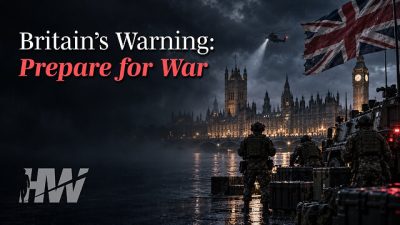
BRITAIN’S WARNING: PREPARE FOR WAR
or go to
Aletho News Archives – Video-Images
From the Archives
British weapons and personnel doing much of the killing in Yemen
Press TV – June 18, 2019
A detailed report published by the Guardian newspaper has shown how Britain is massively contributing to Saudi Arabia’s devastating war on Yemen as it suggests that London is not only supplying the bombs that fall on Yemenis, but it provides the personnel and expertise that keep the war going.
The comprehensive report by Arron Merat published on Tuesday showed that Britain was doing much of the killing in Yemen as the country continues to provide Saudi Arabia with everything it needs to turn its southern impoverished neighbor into a graveyard.
“Every day Yemen is hit by British bombs – dropped by British planes that are flown by British-trained pilots and maintained and prepared inside Saudi Arabia by thousands of British contractors,” said Merat in the report. … continue
Blog Roll
 Aletho News
- Pentagon designates Chinese cultural centers national security threat
- Israel Demolishes Home Of Lebanese Journalist Whose Viral Film Exposed Pager Attack
- Record Oil, Empty Tanks: The UAE’s Miracle Recovery
- Burnham tackles Britain’s poverty with aggression in Yemen
- Peace in Ukraine: the easy way – or the hard way
- Trump & the Rrrrussians
- US taxpayer money laundered back through Ukraine – Musk
- Before COVID, an NIH lab chief proposed making a SARS-like bat virus more infectious
- Gates, Bourla on Trial in Netherlands Accused of ‘Great Reset’ Scheme at Vaccine Injury Hearing
- BRITAIN’S WARNING: PREPARE FOR WAR
- If Americans Knew
- An error has occurred; the feed is probably down. Try again later.
- No Tricks Zone
- Two New Studies Find Thwaites Glacier Melt Cannot Be Driven By Human Activity Or A Warming Ocean
- E-Cars Reduce CO2 Emissions By Only 41% Compared To Internal Combustion Engine Vehicles
- Predictions Made By Renowned Climate Professor Over Past Decades Have Been Proven To Be Poor
- New Study Suggests Large Regions Of The Pacific Ocean Have Been Cooling For The Last 80 Years
- Germany’s Green Energy Debacle: High Energy Costs Force Kahla Porzellan to Close After 182 Years!
- New Study: 50 Years Of The Most Aggressive ‘Net Zero’ Policies Can Only Affect The Global Climate By 0.03°C
- US September “Heat” Was No Record…Many Records Set Decades Ago
- Latest European Green Energy Debacle; Portugal’s Largest Flagship Solar Park Insolvent!
- Green Energy Debacle: German Expert Professor Fritz Vahrenholt Warns Of Severe Economic And Social Consequences
- Two More Paleo Reconstructions Affirm Meters-Higher Sea Levels Across Ireland, Brazil 7000-6000 Years Ago

