April 30 was the anniversary date when North Vietnamese forces forced U.S. officials to exit Vietnam, much to their chagrin. That was after some 58,000 American men had died for nothing, not to mention the tens of thousands of injured American soldiers and the millions of Vietnamese who were killed or injured as a result of U.S. intervention in Vietnam’s civil war.
To this day, there are those who claim that those 58,000 men died for their country and in defense of our freedoms here at home. Almost 50 years after the end of that sordid intervention, such people continue to operate under severe self-delusion.
North Vietnam never attacked, invaded, or occupied the United States or even had any interest in doing so. Moreover, North Vietnam lacked the military, money, transport ships, planes, and supply lines that would have been necessary to cross the Pacific and invade the United States. If they had been successful in landing a few thousand troops on the West Coast, they would have been quickly massacred by the U.S. military or by well-armed private Americans. All that North Vietnam wanted to do was reunite North Vietnam and South Vietnam and make it one country again — Vietnam.
In other words, North Vietnam never posed a danger to our rights and freedoms here in the United States. At the risk of belaboring the obvious, despite the fact that North Vietnam defeated the United States and won the war, the defeat did not result in North Vietnam’s taking away any of our rights and freedoms. In fact, the irony is that it is the U.S. government — our government — that has destroyed our rights and freedoms.
By the same token, those 58,000 U.S. soldiers who were sacrificed in Vietnam did not die for their country. They died for their government. There is a difference. The government is one entity and the country is another entity. This difference is reflected by the Bill of Rights, which expressly protects the country from the government. Dying for one’s government is not the same as dying for one’s country.
During the war, the U.S. government resorted to conscription, which is also known as the draft. It’s impossible to reconcile conscription with freedom. When a government has to force people to fight in a war, that’s a pretty good sign that that is a no-good, rotten war. If the war were really about protecting our freedom and our country, people wouldn’t have to be forced to fight. They’d be willing to fight voluntarily.
The rotten nature of the war was reflected by the disparate treatment between rich and poor and blacks and whites. The rich white kids were given college and post-graduate school deferments, which would enable them to delay being forced into the military and sent to Vietnam. Another way for rich white kids to get out of being sent to Vietnam was to use political influence to get into a National Guard unit or a Reserve unit. During the Vietnam War, those units were not being activated to be sent to Vietnam. Thus, anyone who was lucky enough or privileged enough to get into those units knew that there was no risk of being sent to Vietnam. The poor were not so lucky. They couldn’t afford college and so they were drafted immediately on graduation from high school. They became the U.S. government’s cannon fodder in Vietnam.
Of course, from the day he was forced into the army, every soldier was indoctrinated into believing that he was being sent to Vietnam to protect our “freedoms” here at home. One irony of this indoctrination was that if black conscripts were lucky enough to make it back alive, the “free” society to which they were returning was a segregated one.
Those who had the audacity to challenge or criticize the war were immediately branded traitors, cowards, or communist lovers or appeasers. That included civil-rights leader Martin Luther King and championship boxer Mohammad Ali. U.S. officials destroyed Ali’s boxing career by ensuring that he was prohibited from fighting at the height of his career. But at least they let him live. They snuffed out King’s life given that they were convinced that he and the civil-rights movement were advance, Fifth Column troops of a communist invasion of the United States.
Unfortunately, North Vietnam’s victory over the United States didn’t result in any fundamental changes here at home. Today, Americans continue to live under a national-security state form of government, an interventionist foreign policy, and an empire of foreign military bases. The Cold War is still being waged against Cuba, North Korea, Russia, and China; ironically, North Vietnam is, at least for now, considered an official friend. The war on communism has been replaced by the war on terrorism and Islam. State-sponsored assassinations, torture, indefinite detention, and military tribunals are still part and parcel of America’s legal system. And so are unconstitutional undeclared wars that sacrifice American soldiers for nothing, like with the wars against Iraq and Afghanistan.
The Vietnam War tormented and tore the societies who saw fit to participate in it. It defined a generation culturally and politically in terms creative and fractious. And it showed up the rulers to be ignorant rather than bright; blundering fools rather than sages secure in their preaching. Five decades on, the political classes in the United States and Australia are still seeking to find reasons for intervening in a country they scant understood, with a fanatic’s persuasion, and ideologue’s conviction, a moralist’s certainty. Old errors die hard.
Leaders are left the legacy of having to re-scent the candle, hoping that no one notices the malodorous stench left by history. Errors can be ignored in the aromatic haze. Broadcasters and producers of celluloid scutter about to provide softening programs explaining why soldiers who had no valid reason fighting a conflict, could find themselves in it. The ABC in Australia, for instance, released their series called Our Vietnam War, narrated by Kate Mulvany, whose bridge to the war was via her father. The very title is personal, exclusive, and seemingly excludes the Vietnamese who found themselves pawns, rebels, collaborators and insurgents.
The production also received the approval of the Australian Department of Veterans’ Affairs. “The series provides a unique opportunity for viewers to gain insights into the personal stories of veterans and the broader impact of conflict on Australia’s history and identity.”
The Australian Prime Minister, Anthony Albanese, has made 2023 a calendar year for reminding Australians about the Vietnam experience, albeit in a most slanted way. On March 29, he acknowledged veterans visiting Canberra in an address to parliament. The words “courage”, “sacrifice” and “bonds of camaraderie forged under fire, and cruel realities of loss”, were noted. Adversaries are not mentioned, nor was, curiously enough, opposition to the war that was expressed at the time from a number of brave Labor Party stalwarts, Arthur Calwell being foremost among them.
The speech continued in a more plangent tone.
“Let us stand in this place, in this Parliament, and speak – loudly and clearly – about those who were sent to war in our name, who did their duty in our name, but whose names we did not hold up as proudly as we should have.”
On Vietnam Veterans’ Day (August 18), Albanese gave another speech, this time in Ipswich, Queensland, where he again apologised to the veterans. “We should have acknowledged you better as a nation then. But the truth is, as a nation we didn’t.” The platitudes are piled up, and merely serve to blunt the nature of Australia’s involvement in a brutal, rapacious conflict. “You upheld Australia’s name. You showed the Australian character at its finest.”
This distraction serves to cover the tracks of those who erred and bungled, not merely in committing the troops, but in ignoring the consequences of that deployment. The mistreatment dished out to the returnees was as much a product of civilian protest as it was a conscious effort on the part of veterans from previous conflicts to ignore it. It was a war never formally declared, conducted in conditions of gross deception.
A half-century on, it is striking to see the apologetics gather at the podium. The New South Wales branch of the Returned and Services League of Australia (RSL), for instance, went out of its way to issue one for the way thousands of defence personnel were treated in the aftermath of the conflict. “RSL NSW acknowledges a generation of veterans who are still healing and we publicly recognise our charity’s past mistakes this Vietnam Veterans Day,” came the statement the organisation’s president Ray James.
In the making of war, those behind the policies for waging it tend to escape culpability. The Australians in this affair were, to put it politely, compliant, featherbrained creatures upset by the Yellow Peril north of Papua New Guinea and easily won over through invocations of the “Red Under the Bed”.
Canberra went out of its way to send material and aid to South Vietnam not merely to fight Asiatic atheists of a red hue, but to impress their increasingly bogged-down US allies. To aid the enterprise, the Menzies government introduced national service conscription in November 1964, a policy that became the source of much parliamentary acrimony, notably from the Labor Party.
In July 1966, on an official visit to Washington, Australian Prime Minister Harold Holt emetically appropriated the Democratic Party’s own campaign slogan by declaring that Australia was “All the way with LBJ”. At the National Press Gallery that same month, Holt declared that, “When it comes to American participation and resolution to see the war in south Vietnam through, Australia is undoubtedly all the way”. Spinelessness and crawling in a military alliance became political virtues, or what Albanese might like to call “values”.
Australia’s commitment was marred by problems of strategic worth, something which officials were well aware of as early as April 1967. As a government paper titled “Australia’s military commitment to Vietnam” documents, requests for a larger Australian commitment by US military sources in Saigon and Washington were made despite the open-ended nature of the conflict. The planners lacked certitude on basic objectives, not least on the issue of victory itself. The views of US Defence Secretary Robert S. McNamara, as expressed in meetings with his Australian counterparts, are expressly mentioned in all their obliqueness. The secretary “had no doubt that America could no longer lose the war, but they still had the problem of winning and that could be long and hard and there was no easy way which could point directly to victory.”
Add to this the fantastic delusion that the Vietnamese communist movement was a Peking-directed affair rather than an indigenous movement keen to remove foreign influence, and we have a conflict not merely futile on the part of Canberra and Washington, but wasteful and criminal. Fifty years later, and officials from both countries have the chance to make another round of potentially graver, more calamitous decisions.
Dr. Binoy Kampmark was a Commonwealth Scholar at Selwyn College, Cambridge. He currently lectures at RMIT University. He is a regular contributor to Global Research and Asia-Pacific Research. Email: bkampmark@gmail.com
Frank Snepp arrived in Vietnam in 1969 and stayed on until he was evacuated as Saigon fell in 1975.
He spent a good deal of time working with the press while there and developed the ability to plant stories in major media outlets like the New York Times, the New Yorker, the LA Times, Chicago Daily News and others that supported the Agency’s goals.
The younger reporters like the Associated Press’s Peter Arnett wouldn’t take the bait.
After he left the CIA he wrote a book, Decent Interval, that talked about his time in Vietnam. The CIA made his life hell and took a case all the way to the Supreme Court where they won a verdict that required Snepp to turn over all the money the book had made. That was $300,000.
To Snepp, that decision and the Pentagon Papers case, where the Supreme Court decided in some instances the government could impose prior restraint on the media meant the only victory the US could show for its war in Vietnam was undoing the first amendment.
Witness to War
Clete Roberts, correspondent
Ian Masters, Producer, Director
Michael Rose, Producer
Haskell Wexler, Camera (along with others)
Susan Cope, Sound
Eric Vollmer, Coordinator
Anne Vermillion, Coordinator
Snepp went on to be a journalist working for some of the same outlets he’d once duped into printing fake news. But as a reformed spy he earned a Peabody award and an Emmy for his investigative reports.
Collusion by the White House, the Pentagon, and the mainstream media resulted in disparagement, denial, and suppression of eyewitness testimony confirming that most POWs were actually well-treated by their North Vietnamese captors (in contrast to the brutal torture and death often meted out to North Vietnamese POWs by U.S. forces).
When numerous U.S. POWs began to understand the truth about the war they had been fighting, they spoke out against it—voluntarily—as an act of conscience. But they were cynically portrayed as traitors, turncoats and “camp rats,” their reputations and lives destroyed, driving many to despair and even suicide.
Among the few memories that most Americans still retain of the Vietnam War—now nearly 60 years in the past—one of the most vivid centers around the torture suffered by Senator John McCain at the hands of his brutal Vietnamese captors while a prisoner of war in Hanoi’s Hoa Lo prison (AKA The Hanoi Hilton).
This story has been told, retold, and continually burnished countless times by admiring media interviews and a flood of books and memoirs, including several by McCain himself.
Another memory of the war, still believed by millions of Americans, is that hundreds or even thousands of American soldiers classified as MIA (Missing in Action) are actually being held and tortured in secret North Vietnamese POW camps, callously abandoned by our government and desperately praying to be rescued—preferably in a Hollywood-style rescue by Chuck Norris or Sylvester Stallone, who starred in the spate of Commie-hating blockbuster movies inspired by their plight.
This belief is continually reinforced by POW/MIA flags which fly at every post office, and a ready supply of new books and movies, such as the 2018 release of the film M.I.A. A Greater Evil.
But both memories of the Vietnam War are false memories. However passionately believed, they were cynically manufactured fantasies implanted in all-too-willing American minds for political purposes.
How and why these counter-factual beliefs were so successfully foisted on the American public is the subject of the new myth-shattering book by Tom Wilber and Jerry Lembcke, Dissenting POWs: From Vietnam’s Hoa Lo Prison to America Today (New York: Monthly Review Press, 2021).
Wilber is the son of a dissenting POW, Walter “Gene” Wilber, who is featured in the book, and has contributed to the award-winning documentary film The Flower Pot Story by Ngọc Dũng. Lembcke is a distinguished sociologist from College of the Holy Cross who has written a number of books debunking popular myths about the Vietnam War.
The two start their book by noting that the dominant war hero image of the POW—who endured torture and resisted service to enemy propaganda—was to a large extent created by high-ranking men like McCain who were captured early in the conflict.
John McCain embodied the war hero image of someone who endured torture at the hands of his North Vietnamese captors while retaining loyalty to the United States. [Source: nymag.com]
McCain’s oft-told story of ill-treatment and torture is contradicted by Nguyen Tien Tran, the chief prison guard of the jail in which McCain was held. In a report by The Guardian, “[Tran] acknowledged that conditions in the prison were ‘tough, though not inhuman’. But, he added: ‘We never tortured McCain. On the contrary, we saved his life, curing him with extremely valuable medicines that at times were not available to our own wounded’. . . . [H]e denied torturing him, saying it was his mission to ensure that McCain survived. As the son of the US naval commander in Vietnam, he offered a potential valuable propaganda weapon.”
John McCain fit well with this group because he was also academically privileged and his family included high-ranking military officers like his father, Jack, who was an admiral and the Commander of the U.S. Pacific Command.
James Stockdale while in captivity. [Source: military.com]
Jeremiah Denton featured in famous film footage from his captivity. [Source: washingtontimes.com]
Robinson Risner, right, is celebrated in a parade in San Francisco in 1973 after his return following seven years in a North Vietnamese POW camp. [Source: nytimes.com]
With post-war military careers at stake, these high-ranking officers played up the alleged barbarity of the North Vietnamese, demanded resistance to interrogations from other captives, and threatened so-called deviants with disciplinary charges after release to the U.S.
The Nixon administration advanced their credibility and status in a desperate ploy to stir up support at home for an unpopular conflict abroad; and further concocted a story—announced in a press conference by Defense Secretary Melvin Laird on May 19, 1969—that 1,300 American soldiers deemed “missing in action” were believed to be prisoners of war.
Secretary of Defense Melvin Laird gives the opening statement of a press conference on May 19, 1969, to publicize the plight of U.S. POWs and MIAs in North Vietnam. [Source: courant.com]
The unaccounted for would now publicly be described as “POW/MIA,” implying that any serviceperson missing in Vietnam could also be a prisoner of war. This transformed the war from a political issue into a humanitarian one, trading public support for sympathy. It didn’t matter why we were there in the first place: Our boys were there, and by God were we going to do anything to get them home.
Suddenly, the public image of Vietnam looked very different. The very real footage of brutalized Vietnamese bodies, wailing children, and napalmed villages was traded for a fantasy—all of the violence that had been done in Uncle Sam’s name was now being done to him.
Images like this famous one of a Vietnamese girl, Phan Thi Kim Phúc, running from a U.S. napalm strike, were supplanted by the fixation with the plight of American POW/MIAs. This was a brilliant public relations maneuver by the Nixon administration in collusion with the media. [Source: irishtimes.com]
The POW issue soon became a cause célèbre. In the early 1970s, millions of “POW bracelets” were sold by a student group called VIVA (Voices in Vital America), each branded with the name of a missing American serviceman.
These shiny nickel bracelets were spotted on the wrists of celebrities like Sonny and Cher—who had often before dressed like hippies—and Sammy Davis, Jr, and allegedly Princess Grace of Monaco put in an order for two bracelets.
Sonny and Cher with returned POW John “Spike” Nasmyth on their CBS comedy hour program in March 1973 in which they announced that they wore POW bracelets with his name. [Source: cherscholar.com]
The silver bracelets could even be spotted on the fashion runway, where models with an interest in political activism took to wearing them. A New York Times profile from the day quotes a model named Astrida Woods, who said she was “dissatisfied” with her life as a model and felt the urge to give back. “I began to do some work with Ralph Nader, and now [wearing the bracelets]. It’s a way to contribute something.”
Pretty young women showcasing POW bracelets as part of PR campaign to unify the nation around support for POW/MIAs, if not the Vietnam War itself. [Source: audacy.com]
Wilber and Lembcke conclude that “instances of brutal treatment” were “less common than [has been] purported” and that evidence of systematic torture drawn from visitor reports, POW statements, and oral histories was scant.
Those POWs who questioned the war were dismissed by the military for their supposedly “weak personal character” and “lack of education and backgrounds in broken and poor families,” a typical case of “psychologizing the political.”
These men were in turn stigmatized and then forgotten by the public amidst the manufactured concern about POW/MIAs who were supposedly brutalized and then kept in captivity and abandoned by their government.
The ranks of the POW dissenters included Lt. Col. Edison Miller, a recipient of the Distinguished Flying Cross and Purple Heart from California who spent six years in captivity after his fighter plane was shot down over North Vietnamese skies on October 13, 1967.
A contemporary described Miller, a Californian who flew previously over Korea, as a “first-rate pilot with a zeal for combat but an independent sort.”
John McCain falsely accused Miller of being a turncoat because he appeared in North Vietnamese propaganda.
McCain said both “had lost their faith completely.”
“They not only stopped resisting but apparently crossed a line no other prisoner I knew had even approached,” McCain wrote. “They were collaborators, actively aiding the enemy.”
Miller’s anti-war views had been sharpened in conversation with Navy Commander Robert Schweitzer, a captive from 1968 to 1973 who died a year after his release while still on active duty in San Francisco.
Schweitzer felt that, because the U.S. had never declared war, there could not legally be any North Vietnamese prisoners of war, only “Americans detained by a foreign power,” Miller said.
A tape of a conversation between Miller and Schweitzer was played for other prisoners, who heard not only an anti-war message but a challenge to the legality of the U.S. military action in Vietnam.
In 1970, when Miller and Gene Wilber were interviewed on national television, Wilber called for an immediate U.S. troop withdrawal “so that the Vietnamese can solve their own problems.”
U.S. journalists at the time, however, did not take their interview seriously, regarding it rather as a North Vietnamese propaganda show.
The two men along with Schweitzer continued to write protest statements and together with fellow dissenters met with American peace activists visiting North Vietnam, including actress Jane Fonda and former U.S. Attorney General Ramsey Clark.
Jane Fonda (center) during trip to North Vietnam in 1972. [Source: flickr.com]
Ramsey Clark (left) in North Vietnam in 1972. [Source: nytimes.com]
Most dissenting POWs came from a working-class background.
James A. Daly, an African-American infantryman from the Bedford-Stuyvesant section of Brooklyn, for example, was raised in poverty by a single mother.
His 1975 book, Black Prisoner of War, describes his three years of jungle confinement after his capture by North Vietnamese soldiers and the South Vietnam-based National Liberation Front (NLF), followed by a two-month trek north to Hanoi on the Ho Chi Minh trail where he experienced what it was like to be on the receiving end of U.S. ordnance.
Bob Chenoweth, from a white working-class family in Oregon, similarly developed an empathy for the Vietnamese people and a distaste for the racist views of most Americans toward the Vietnamese.
A helicopter crew member, before he was shot down and captured, Chenoweth said he “couldn’t see how U.S. forces could possibly be helping the Vietnamese given the attitude that GIs had, viewing them as ‘subhuman’ and disparaging them as ‘gooks and dinks.’”
Chenoweth and other of his contemporaries authored anti-war statements, wrote messages to GIs asking them to follow their consciences, sent letters to politicians, and recorded tapes to be aired via Radio Hanoi.
Bob Chenoweth speaking at Veterans for Peace conference in Spokane, Washington, in 2019. He was active in the Vietnam era anti-war movement upon his return from the war. [Source: wagingpeaceinvietnam.com]
Higher ranking POWs responded by trying to isolate the dissenters from other American prisoners while charging them with participating in a conspiracy against the United States.
One of the dissidents, Abel Kavanaugh, committed suicide as a result of the intense pressure and prospective stigma of a dishonorable discharge only a few months after coming home from Vietnam.
Charges against the POW dissidents were eventually dropped, Wilber and Lembcke believe, so as to not jeopardize the hero-prisoner story with too much attention on dissent and through a possible exposure of inconsistencies in the accusers’ own prison biographies.
Fear of Communist Infiltration
A critical trope in Cold War America was the fear of communist infiltration and internal subversion through brainwashing and mind control.
This trope was fortified by a CIA propaganda effort that depicted Korean War POWs who defected to the North Korean and Chinese side as having been brainwashed in interrogation.
CIA propaganda tract accusing Communist China of brainwashing U.S. POWs. The stereotype of cunning and evil Oriental communists endured through the Vietnam War and beyond and impacted how Americans viewed the dissenting POWs in Vietnam. [Source: goodreads.com]
Most of these defectors were in fact African-Americans who did not want to return to the Jim Crow South, while others were attracted by communist ideals or saw the U.S. war as immoral.[1]
Clarence Adams with Korean POWs and Communist captors in 1954. Adams lived in China for 12 years. He said he was well treated in captivity and stayed on in China because he was offered the chance at education there. Later he made propaganda broadcasts for Radio Hanoi, eventually returning to his hometown of Memphis, Tennessee, where he ran a chain of successful Chinese restaurants. [Source: u.osu.edu]
The stereotype of the brainwashed POW of the Korean War turned collaborator and traitor because of his weak character would become the backdrop for the discrediting of the dissident POWs of the Vietnam War.
POW defectors in the Korean War who stood for peace. [Source: newyorker.com]
In an appearance on CBS’s 60 Minutes, Gene Wilber was grilled on whether he had given in to the enemy to make antiwar statements. That he had acted on his own “conscience and morality” was drowned out by host Mike Wallace’s implications of collaboration and opportunism.
When he was subsequently invited to the White House POW reception, Wilber found his hotel room broken into and marked with accusations of treason when he returned from the reception.
In the summer of 1973, James Stockdale charged Wilber and Edison Miller with collaborating with the enemy, mutiny, and inciting personnel to insubordination. However, military judges found insufficient evidence to prosecute the case, and Wilber and Miller instead received letters of censure for their failure to meet the standard expected of officers.
Hollywood Revisionism
POW films starting from this time focused on returnees’ estrangement with their families and society and were told as stories of spousal infidelity, representing both individual drama as well as a sense of “home-front betrayal.”
These films were part of a post-war revisionism, which included a spate of films that contributed to the legend of American servicemen left behind in Vietnam.
In the 1980s, a new subgenre emerged focused on Vietnam veterans heroically taking on the task of returning to Indochina and liberating the left-behind POWs, who had been betrayed on the home front and abandoned by the U.S. government.
The POWs were depicted as victimized and emasculated captives who needed to be rescued by individualist heroes and whose honor as Americans was to be restored.
This image, Wilber and Lembcke argue, fits the post-war efforts to psychologize the once political conflicts of the Vietnam War and to depict the veteran as a victim and loser.
More of a heroized image and the POWs’ endurance of torture was revived with the 1987 film, The Hanoi Hilton, which starred Michael Moriarty, Ken Wright and Paul Le Mat as U.S. POWs who defy their captors while enduring brutal treatment at Hanoi’s Hoa Lo prison (aka The Hanoi Hilton).
This film meshed particularly well President’s Ronald Reagan’s characterization of the Vietnam War as a “noble cause,” fought by noble men, with the POW dissenters by implication being ignoble.
Persistence of the Hero-Prisoner Story
In their quest to comprehend the persistence of the hero-prisoner story, Wilber and Lembcke take their readers back to American colonial history and the captivity narratives emerging during that time.
These stories are about a complex mix of violence against captives, temptations to stay with their captors, the ideal to remain loyal with their fellow colonists, and their Christian beliefs.
Such tensions and correlations between the Self and the Other were critical in the making of an American identity. The wars in Korea and Vietnam and the POW experiences there can be understood as a new chapter of this identity-making process. Here, too, Americans must prove their will and ability to endure the brutality of a racialized Other.
A wrench in the story, however, is revealed in the autobiographical accounts of POW-heroes like Stockdale, Denton, and Risner. They wrote about fasting as a way of enforcing self-discipline and self-assurance, sometimes with a religious subtext.
More bizarrely, they also wrote about self-mutilation—the deliberate infliction of physical wounds on themselves that would be visible during filmed interviews.
The aim was to make it appear to other POWs (and to the U.S. public) that they had been tortured. One officer wrote of how he purposely damaged his vocal apparatus so he could not be forced to make propaganda statements.
In addition to some high-ranking officers attempting to portray themselves as heroes by means of self-mutilation, Wilber and Lembcke also noted that they tried to keep political literature and news of dissent back home away from other POWs, fearing that these would enhance critical positions on the war and against their authority within the prison population.
Moreover, these ranking officers often despised the more humane view of the Vietnamese displayed by other prisoners, including an interest in their language and culture, and an understanding of why they were fighting back against an invasion of their country by the most powerful military force in the world.
Bringing Back Forgotten Dissenters
Wilber and Lembcke’s book helps restore these forgotten POW dissenters to their rightful—and honored—place among the large and diverse Vietnam generation of dissidents, draft resisters, oppositional GIs, veteran activists, deserters, and all those who supported them.
The book also shows that, despite all destruction and death brought by the invaders from the sky, North Vietnam maintained a moral superiority through oftentimes fair treatment of the captured Americans. This was in stark contrast to the more systematic adoption of torture methods by USAID and CIA-trained police under the Operation Phoenix and like-minded programs.
Vietnam War protesters create mock Tiger Cage, replicating one in the USAID-run Con Son prison where Vietnamese inmates were tortured in a way American POWs claimed they had been tortured. [Source: easyyolktoofiles.wordpress.com]
The POW/MIA flag that flies today over the White House is intended to honor the men who endured captivity; however, it continues to perpetuate a distorted understanding of a war that was as abominable as it was unjust, and helps to advance a dangerous nationalist ideology that will lead to future Vietnams.
See Clarence Adams, An American Dream: The Life of an African American Soldier and POW Who Spent Twelve Years in Communist China (Amherst, MA: University of Massachusetts Press, 2007). ↑
The first major battle between the United States Army and the People’s Army of Vietnam occurred in 1965 in the Ia Drang Valley. The US Army’s 7th Cavalry helicoptered into Central Vietnam to search for enemy forces. This led to a major battle that was hailed as a great victory because far more Vietnamese were killed. This was the first in a series of Pyrrhic victories for the United States. A Pyrrhic Victory is term from Roman times that refers to battles that inflict such a devastating toll on the victor that it is tantamount to defeat.
During the Vietnam War, 766 Americans were confirmed Prisoners Of War. Of them, 114 are known to have died in captivity , but the actual number is higher because many of those listed as missing in action probably died after capture. The status of American POWs was never clear. Vietnam never attacked the United States and the United States never declared war on Vietnam. One day American warplanes began bombing Vietnam and the Vietnamese declared these criminal attacks. When American pilots were shot down many were killed by vengeful farmers and were lucky not be executed by the Vietnamese government since they had no legal status as a Prisoner Of War. They were kept alive to collect military information and as political bargaining chips.
“Traitors or patriots? Eight Vietnam POWs were charged with collaborating with the enemy”; Michael Ruane; Washington Post; September 22, 2017; https://www.washingtonpost.com/news/r…
In the very long list of shocking and abominable atrocities committed by the US, there is one that stands out as especially obscene for the appalling and hypocritical inhumanity of US Government leaders. This was “Project 100,000”, a US military program enacted by then Secretary of Defense Robert McNamara to recruit 100,000 new soldiers per year during a time of great public opposition to the Vietnam war, and which was promoted as part of President Johnson’s ‘War on Poverty’. In McNamara’s own words, it was “a program to salvage the poverty-scarred youth of our society”, to give them two years of military service, then insert them into “a lifetime of productive activity in American civilian society”.
He further stated,
“Poverty in America pockmarks its victims inwardly. If unchecked and unreversed, that inner ghetto of the poverty-scarred personality of these men can fester into explosive frustrations of bitterness and violence. Chronic failures in school throughout their childhood, they are destined to a downward spiral of defeat and decay … If nothing were done to give them a strong sense of their own worth and potential, they, their wives and their children would almost inevitably be the unproductive recipients of some form of the dole ten years from now. Hundreds of thousands of men can be salvaged from the blight of poverty, and the Defense Department – with no detriment whatever to its primary role – is particularly well equipped to salvage them.” (1) (2)
That sounds good, except that this program was initiated during a time when the US was realising extremely high casualties in Vietnam, had already admitted the war was “unwinnable”, with most suitable recruits either taking student deferments or evading the draft by fleeing to Canada. McNamara’s solution was to run a sieve through the ghettos of America, an ingenious and diabolical solution to “rid the nation” of its surplus black and poor, in a program he may have hatched with the advice of Margaret Sanger, she of Planned Parenthood. In executing this program, McNamara lowered the standards to the point where these recruits were in the bottom quartile of intelligence and ability, a great many of them with an IQ of 60 or 65, and none above 80.
These new “soldiers” were functionally illiterate, able to read only at a Grade 3 level or lower. They were so severely (educationally) deficient that the military had to create little comic books to replace the training manuals, and many had to be taught even how to tie the laces on their boots. As other authors have noted, these men often failed their much-simplified basic training several times, with most being repeatedly “recycled” until they finally reached a deplorable minimum standard of readiness. None had the mental ability to appreciate what was happening to them.
The program ran for five years and recruited in total about 500,000 mentally retarded young men and gave them a one-way ticket to Vietnam, these helpless young men dying at many times the rate of regular soldiers. Many researchers have claimed that an overwhelming majority of these men, especially blacks, received combat assignments, and “comprised an overwhelming majority of … battle deaths”, and were also generally posted to “what were considered dangerous military occupations”. These men were provided with special ‘dog tags’ that began with “US67…” so they could be quickly identified by other soldiers. By all accounts, the regular troops did not want to be associated with these men, certainly not in a battle situation, believing their lack of intelligence and training simply jeopardised the lives of all around them. Many have reported that when battlefield decisions were being made, given that these men were unable to learn anything much more complicated than pulling a trigger, they were just sent to their deaths, “ending up on the Vietnam Memorial Wall at an alarming rate much higher than the average”. One young Vietnam veteran reported that a common order issued to these young men ‘salvaged from the blight of poverty’ was to “Go over there and see if there’s a sniper in that tree”.
US casualty figures mushroomed after the introduction of this program, the victims of which were simply cannon-fodder and, for this and other reasons, I remain convinced there is a high probability American deaths in Vietnam were grossly under-reported and that a great many of these nearly 500,000 simply never returned and whose records no longer exist. It is not only possible, but probable, that American deaths in Vietnam were in fact ten times the stated 50,000. Several organisations in the US have attempted to produce accurate Vietnam casualty statistics, but with little apparent success.
As one such organisation states,
“The Vietnam War presents multiple challenges to historians due to official discrepancies with draft numbers, contention over official number of soldiers deployed, and a general lack of transparency from the US government during the war leading to possible misinformation in historical records.”
In other words, the official sources of basic statistics as to the actual number of men recruited, the number sent to Vietnam and the number who died there, are often missing, sometimes contradictory, and sometimes wildly inaccurate, and the US military exercises only obstruction to those interested in remedying the situation. Moreover, without an Internet or mobile phones, and no social networking capability, the parents of these men would have no way of knowing the huge number of casualties from within their group.
On May 30, 2002, Salon Magazine published an article by Myra MacPherson on the HBO movie “Path to War” in which she discusses Hollywood’s attempt to “humanise” McNamara “while entirely overlooking … one of his most heinous acts” and ignoring his “arrogance and duplicity”. She notes that the HBO movie omits “some of the most shameful brainstorms of the Vietnam War’s masterminds – including a little-known recruitment program that turned the mentally and physically deficient into cannon fodder.”
She details how military recruiters “swept through urban ghettos and Southern rural back roads”, offering hundreds of thousands of the retarded poor – with IQs as low as the 60s – “a one-way ticket to Vietnam”, and that “McNamara’s Moron Corps, as they were pathetically nicknamed by other soldiers, entered combat in disproportionate numbers”, noting that they received combat assignments at 250% of the rate of general servicemen. MacPherson tells us that few today are aware of what she calls “this particularly shameful chapter” of American history, and that her stories of this episode were “generally met with disbelief”. This entire project had been so well buried by the government that almost no one was aware of its existence and few could believe it would be possible for the American government to perpetrate such an obvious genocidal travesty against its own population, especially after the military had already admitted the war “could not be won”.
In a 2006 article in the New York Times (3), this Project was dismissed as “a failed experiment” that was “of little benefit to the men it was created to help”, but my research leads me to conclude that, contrary to being a failed experiment, this program was a “success”, a truly ingenious and criminal method of applying eugenics to eliminate poverty (especially black poverty) and idiocy in America by using the mentally-deficient as cannon fodder in a trumped-up war, far from the first time a nation’s surplus poor discovered themselves in similar conditions. In recognition of his success, McNamara was rewarded by being given the post of President of the World Bank.
Monsters exist, but they are too few in number to be truly dangerous. More dangerous are the common men, the functionaries ready to believe and to act without asking questions.
— Primo Levy
On March 17th, 1968, The New York Times ran a brief front page lede headed, “G.I.s’ in Pincer Movement Kill 128 in Daylong Battle;” the action took place the previous day roughly eight miles from Quang Ngai City, a provincial capital in the northern coastal quadrant of South Vietnam. Heavy artillery and helicopter gunships had been “called in to pound the North Vietnamese soldiers.” By three in the afternoon the battle had ceased, and “the remaining North Vietnamese had slipped out and fled.” The American side lost only two killed and several wounded. The article, datelined Saigon, had no byline. Its source was an “American military command’s communique,” a virtual press release hurried into print and unfiltered by additional digging.
Several days later a more superficially factual telling of this seemingly crushing blow to the enemy was featured in Southern Cross, the weekly newsletter of the Americal Division in whose ‘area of operation’ the ‘day long battle’ had been fought. It was described by Army reporter Jay Roberts, who had been there, as “an attack on a Vietcong stronghold,” not an encounter with North Vietnamese regulars as the Times had misconstrued it. However, Roberts’ article tallied the same high number of enemy dead. When leaned on by Lt. Colonel Frank Barker, who commanded the operation, to downplay the lopsided outcome, Roberts complied, noting blandly that “the assault went off like clockwork.” But certain after action particulars could not be fudged. Roberts was obliged to report that the GIs recovered only “three [enemy] weapons,” a paradox that surely warranted clarification. None was given. It was to be assumed that, either the enemy was poorly armed, or that he had removed the weapons of his fallen comrades – leaving their bodies to be counted – when he retired from the field. Neither of the news outlets cited here, nor Stars and Stripes, the semi-official newspaper of the U. S. Armed Forces which ran with Robert’s account, makes reference to any civilian casualties.
It would be nearly eighteen months later when, on September 6, 1969, a front page article in the Ledger-Enquire in Columbus, Georgia reported that the military prosecutor at nearby Ft. Benning – home of the U. S. Army Infantry – was investigating charges against a junior officer, Lieutenant William L. Calley, of “multiple murders” of civilians during “an operation at a place called Pinkville,” GI patois for the color denoting man-made features on their topographical maps in a string of coastal hamlets near Quang Ngai.
With the story now leaked, if only in the regional papers – it would migrate as well to a daily in Montgomery, Alabama – the Ft. Benning public information officer moved to “keep the story low profile,” and “released a brief statement that The New York Times ran deep inside its September 7, 1969 issue,” limited to three terse paragraphs on a page cluttered with retail advertising. The press announcement from the Army flack had referred only to “the deaths of more than one civilian.” In the nation’s newspaper of record, which also mentioned Calley by name, this delicate ambiguity was multiplied to “an unspecified number of civilians.” Yet, once again, the Times was enlisted to serve the agenda of a military publicist, and failed to approach the story independently.
An Army recon commando named Rod Ridenhour had taken it upon himself to do just that. While still serving with the Americal Division’s 11th Light Infantry Brigade from which Task Force Barker – named for its commander – was assembled for the attack on Pinkville, Ridenhour documented accounts of those who had witnessed or participated in a mass killing. A year later in March 1969, now stateside and a civilian, Ridenhour sent “a five page registered letter” summarizing his findings to President Richard Nixon, the Joint Chiefs of Staff, and select members of the U.S. Congress urging “a widespread and public investigation.” General William Westmoreland, who had commanded U.S. forces in Vietnam until June 1968, reacted to Ridenhour’s allegations with “disbelief.” The accusations were, he told a Congressional committee, “so out of character with American forces in Vietnam that I was quite skeptical.” Nonetheless an inquiry was launched.
The Times, although forewarned, had once again squandered a chance to scoop for its global readership what was arguably the most sensational news story of the entire Vietnam War. The two regional reporters had done their legwork, then, bereft of big city resources had nowhere else to go. But in late October, a seasoned freelance journalist in Washington named Seymour Hersh, acting on a colleague’s anonymous tip from inside the military, immediately “stopped all other work and began to chase down the story,” which by mid-November 1969 would be revealed to the American public and the world at large as the My Lai massacre.
This outline of the massacre’s initial falsification and suppression, followed by its eventual disclosure, is cobbled from My Lai: Vietnam, 1968, and the Descent into Darkness (Oxford, 2017), a thorough retreatment of the infamous Vietnam War atrocity by Howard Jones, a professor of history at the University of Alabama. The question is, to what end? Has the voluminous, careful study in the literature devoted to the My Lai massacre left something out? It’s not a matter of omissions, the historian argues, but that the record is replete with conflicting interpretations. To tell the “full story” required Jones to reorder events in their “proper sequence,” he says. His other reasons for taking us back to Pinkville are equally vague, and casually embedded among several floating asides in the author’s Acknowledgments. His debts are many, but foremost among them Jones recognizes his Vietnamese-American graduate assistant who “emphasized the importance of incorporating the Vietnamese side into the narrative and remaining objective in telling the story.”
I took this profession of objectivity as a signal to be on the alert for its potential subjective or editorial opposite. Jones insists that “everyone who has written… about My Lai has had an agenda.” The suspicion that a subtle revisionist agenda, nurtured perhaps by the resentments of a partisan of the losing side [his assistant], might underlie Jones’ intentions for revisiting this much examined massacre was heightened by the anecdote he tells about his wife’s emotionally fraught response when listening to his grim descriptions of the slaughter. However revolting, the atrocities must be detailed she insists. To do otherwise, the author agrees “would leave the mistaken impression that nothing extraordinary took place at My Lai.”
That My Lai was extraordinary I hold beyond dispute. But the privileged attention given to the massacre by historians and other commentators – not to mention its impact on the general public – which by far prefers vivid superlatives to cloudy comparisons – hangs like a curtain and obscures the broader and far grizzlier picture of the U.S. driven horrors of the Vietnam War that were commonplace and quotidian. Would the historian tell that story too, I wondered, as I plunged into his text? Or was the only purpose to take up this subject again five decades on to ensure that the censorious curtain remained firmly in place?
Quang Ngai was a hot bed of resistance under the Viet Minh independence movement during French colonial rule. With the transition to the American War, resistance fighters – now reconstituted as the National Liberation Front, or Viet Cong – remained capable of striking at will throughout the province, which, until 1967, was under the jurisdiction of the South Vietnamese Army. But the American command found its native allies unreliable, without ever asking if perhaps their reluctance to challenge the local resistance rested, not on fear or cowardice, but familiarity or even kinship. U.S. soldiers possessed no such scruples.
After “intelligence sources” targeted the area around My Lai as “an enemy bastion for mounting attacks” on Quang Ngai City and its surroundings, American forces were concentrated under Task Force Barker, “a contingent of five hundred soldiers” to bring the troublesome province under control of the government of South Vietnam.[i]
On the evening before the assault, Captain Earnest Medina – like Calley a principal target of the Army’s subsequent investigation – briefed the hundred men of Charlie Company under his command. “We’re going to Pinkville tomorrow… after the 48th Battalion,” he told them. “The landing zone will be hot. And they outnumber us two to one… expect heavy casualties.” Charlie Company had already taken “heavy casualties” in the two months they’d been humping the boonies of Quang Ngai. The local guerrilla unit, the lethal, elusive 48th, was all the more feared since the GIs had never seen the face of a single combatant behind the sniper bullets or booby traps that bloodied and killed their comrades. “By the last week of February,” Harold Jones reckons, “resentment and hostility had spread among the GI’s, aimed primarily at the villagers.”
Pinkville had been declared a free fire zone. The mission for the assault was to search and destroy. If the soldiers encountered non-combatant villagers the text book regulations dictated they be detained and interrogated as to the whereabouts of the enemy, and then moved to safety in the rear. But the various strands of intelligence-gathering that guided Task Force Barker were interpreted to suggest there would be no non-combatants, because the villagers had been warned to evacuate, or, given that the assault was on a Saturday, those residents who’d defied evacuation would be off to the market in Quang Ngai City. This was all Intel double talk. The true military objective was that the residents have no village to return to because the GIs were primed to slay all livestock, lay waste to every dwelling and defensive bunker, destroy the crops and foul the wells, that is, to ensure that My Lai and its contiguous hamlets were left uninhabitable, and thus utterly untenable as bases to support the guerrillas.
Beginning just before 8 a.m. on March 16th, the three platoons of Charlie Company were airlifted to the fringes of the Vietnamese hamlets where they expected to encounter fierce enemy resistance. The hail of bullets from helicopter gunships that churned up the earth around them and aimed at suppressing potential enemy fire, created for many of these soldiers who had never experienced combat the impression that they’d been dropped in the midst of the “hot landing zone” Captain Medina had promised them. But as Army photographer Ron Haeberle, assigned to document the assault, would later testify, there was “no hostile fire.” The headquarters of the 48th and what remained of its fighters had taken refuge west into the mountains after being decimated during the Tet Offensive a month before. And the few VC who had been visiting their families around My Lai, hardly ignorant of American movements, had gotten out by dawn on the 16th.
In a state of confusion as to exactly what they were facing, Charlie Company’s platoons stepped off from opposing positions to sweep through the village, already partially damaged by artillery, intending to squeeze the enemy between them. Instead they soon confronted, not the guerrilla fighters they were sent to dislodge, but scores of inhabitants who weren’t supposed to be there. GIs immediately shot several villagers who panicked and attempted to flee. In this war such trigger happy killings were not far from the norm. But Lieutenant Calley “had interpreted Medina’s briefing to mean that they were to kill everyone in the village… Since it was impossible to distinguish between friend and foe, the only conclusion was to presume all Vietnamese were Viet Cong and to kill them all.” Calley, moreover, was being relentlessly spurred by Medina over the radio to quicken the pace of the 1st platoon’s forward sweep, and therefore, would later claim, he could neither evacuate the non-combatants, nor, for reasons of security, leave them to his rear.
Jones offers from the record a facsimile of the field radio transmission between Calley and his commander:
“What are you doing now?” Medina asked.
“I’m getting ready to go.”
“Now damn it! I told you now. Get your men in position now.”
“And these people, they aren’t moving too swiftly.”
“I don’t want that crap. Now damn it, waste all those goddamn people! And get in the damn position.”
“Roger.”
The idea of questioning orders, comments Jones dryly, never crossed Calley’s mind, particularly during combat.
One brief panel of the horror show will suffice to roil the imagination toward grasping what Jones styles a ‘descent into darkness,” which, given the scale of the ensuing carnage that morning, has elevated the My Lai massacre to the extraordinary status in the Vietnam War that history has bestowed upon it.
Calley, in the grip of all his embedded demons – his mental and moral mediocrity, his cracker barrel knee jerk racism, his incompetence as a leader, his slavish kowtowing to authority which clearly disgusted his commander and his troops, everything that conspired to create the monster that was him – returned from his latest whipping by Medina to where one group of villagers sat on the ground, and demanded of two members of his platoon, “How come you ain’t killed them yet?” The men explained they understood only that they were to guard them. “No,” Calley said, “I want them dead… When I say fire… fire at them.” Calley and, Paul Meadlo – whose name would become almost as closely associated with the massacre as Calley’s – “a bare ten feet from their terrified targets… set their M-16s on automatic… and sprayed clip after clip of deadly fire into their screaming and defenseless victims… At this point, a few children who had somehow escaped the torrent of gunfire struggled to their feet… Calley methodically picked off the children one by one… He looks like he’s enjoying it,” one soldier remarked, who moments before had been prevented by Calley from forcing a young woman’s face into his crotch, but who now refused to shoot.
The mass killing, which Harold Jones parades scene by scene with exhaustive precision, was repeated throughout the morning until the bodies of hundreds of villagers lay scattered across the landscape. Not just those killed by Calley’s platoon, but by others throughout the rest of Charlie Company. And not just at My Lai 4, but also at My Khe 4 several miles distant by members of Bravo Company. “In not a few cases, women and girls were raped before they were killed.” Jones dutifully chronicles the accounts of the few who resolutely refused to shoot, and of one man who blasted his own foot with a .45 to escape the depravity. “Everyone except a few of us was shooting,” Pfc. Dennis Bunning of the second platoon would later testify.
But there was another man that morning who didn’t just seek to avoid the killing, he attempted to stop it.
Warrant Officer Hugh Thompson piloted his observation helicopter, a three seater with a crewmember on each flank armed with a machine gun, several hundred feet above My Lai. Thompson’s mission was to fly low and mark with smoke grenades any source of enemy fire, which would prompt the helicopter gunships tiered above him – known as Sharks – to swoop down and dispense their massive fire power on the target. Spotting a large number of civilian bodies in a ditch, Thompson at first suspected they’d been killed by the incoming artillery. Hovering near the ground for a closer look Thompson and his crew, Gary Andreotta and Larry Colburn, were stunned to witness Captain Medina shoot a wounded woman who was lying at his feet. Banking closer to the ditch, Thompson “estimated he saw 150 dead and dying Vietnamese babies, women and children and old men… and watched in disbelief as soldiers shot survivors trying to crawl out.”
Against regulations, Thompson landed and confronted Lieutenant Calley, asking him to help the wounded and radio for their evacuation. Calley made it clear he resented the pilot’s interference and would do no such thing. Thompson stormed away furiously warning Calley “he hadn’t heard the last of this.” With Medina again at his heels, Calley ordered his sergeant “to finish off the wounded,” and just as Thompson was taking off the killing resumed.
Aloft again Thompson saw “a small group… of women and children scurrying toward a bunker just outside My Lai 4… and about ten soldiers in pursuit,” and felt “compelled… to take immediate action.” He again put his craft down, jumped out between the civilians and the oncoming members of the second platoon led by Lieutenant Stephen Brooks. When Thompson asked Brooks to help evacuate the Vietnamese from the bunker, Brooks told him he would do so with a grenade. The two men screamed at each other. Like Calley, Brooks was unyielding, and Thompson warned his two gunners, now standing outside the chopper, “to prepare for a confrontation.”
“I’m going to go over to the bunker myself and get those people out. If they [the soldiers] fire on those people or fire on me while I’m doing that. Shoot ‘em.” That moment has been cast in the My Lai literature as a classic armed standoff. But Thompson’s two gunners had not aimed their weapons at Brooks and his men who stood fifty yards away, a bit of manufactured drama several chroniclers of that confrontation, among them Sy Hersh, have chiseled into the record. Harold Jones in this instance had gone beyond the dogged task of compilation. While researching his book, he had spent many hours with Larry Colburn, and befriended him. And it was Larry who told Jones that he and Andreotta did not aim their weapons directly at the soldiers who faced them. They tried to stare then down, “while carefully pointing their weapons to the ground in case one of them accidentally went off.” This verisimilitude restores a dimension of realism to a scene imagined by those who’d never been soldiers.
Checking Brooks, but failing to get his cooperation, Thompson took another extraordinary step. He radioed Warrant Officer Danny Millians, one of the pilots of the gunships, and convinced him to also defy the protocols against landing in a free fire zone. Then, in two trips, Millians used the Shark to transport the nine rescued Vietnamese, including five children, to safety. Making one final pass over the ditch where he’d locked horns with Calley, Thompson “hovered low… searching for signs of life while flinching at the sight of headless children.” Thompson landed a third time, remaining at the controls. He watched as Colburn, from the side of the ditch, grabbed hold of a boy that Andreotta, blood spilling from his boots, had pulled from among a pile of corpses. Do Hoa, a boy of eight, had survived.
Livid and in great distress at what he had witnessed, Thompson, on returning to base, and in the company of the two gunship pilots, made their superior, Major Frederic Watke, immediately aware of “the mass murder going on out there.” From that moment, every step taken to probe and verify “the substance of Thompson’s charges almost instantly came into dispute.” Although Watke would later tell investigators he believed Thompson was “over-portraying” the killings” owing to his “limited combat experience,” the major had realized that the mere charge of war crimes obliged him “to seek an impartial inquiry at the highest level.” The Military Assistance Command, Vietnam (MACV) required that field commanders investigate “all known, suspected or alleged war crimes or atrocities… Failure to [do so] was a punishable offense.” Having reported Thompson’s allegations to Task Force commander Barker, Watke had fulfilled this duty. But there was a Catch-22 permitting command authority to ignore the MACV directive if they “thought” a war crime had not been committed.
The trick here was for Barker and several other ranking officer in the division and brigade chain of command to assess if civilians had been killed during the assault, and if so, how many. Captain Medina – in addition to contributing to the fictional enemy body count – would supply a figure of “thirty civilians killed by artillery.” The division chaplain would characterize these deaths as “tragic… an operational mistake… in a combat operation.” For this line of argument to carry, however, it had been necessary for the commander of the Americal Division, Major General Samuel Koster, the “field commander” who alone possessed the authority to prevent the accusations from going higher, to put his own head deep into the sand.
When Colonel Orin Henderson, who commanded the 11th Infantry Brigade from which Medina’s Charlie Company had been detailed to the Task Force, ordered LTC Barker in the late afternoon of March 16th to send Charlie Company back to My Lai 4 to “make a detailed report of the number of men, women and children killed and how they died, along with another search for weapons… Medina strongly objected.” It would be too dangerous, he said, to move his men “in the dark through a heavily mined and booby trapped area… where the Vietcong could launch a surprise attack.” Monitoring the transmission between Barker and Medina, General Koster countermanded Henderson’s order. Later claiming he was “concerned for the safety of the troops,” Koster saw “no reason to go look at that mess.” Medina’s estimate of the number of civilian deaths, Koster ruled, was “about right.”
Not only had Koster’s snap judgement given Barker license to cook up the initial battlefield fantasy of 128 enemy dead, it ensured that the internal investigations into the charges of “mass murder,” notably by Henderson and other high ranking members of Koster’s staff, would not deviate from the conclusion voiced by the division commander. By navigating each twisting curve along a well camouflaged path toward the fictive end those in command were seeking, Harold Jones lays bare a virtual text book case of conspiracy, which must be read in its entirety to capture the intricate web of fabrication and self-deception the conspirators constructed to assure themselves the crypt of the cover-up had been sealed.[ii]
When discussing the massacre later at an inquiry, the Americal Division chaplain, faithful to the Army but not his higher calling, claimed that, had a massacre been common knowledge, it would have come out. That the massacre was “common knowledge” to the Vietnamese throughout Quang Ngai Province on both sides of the conflict (not to mention among their respective leadership on up to Hanoi and Saigon) goes without saying. Indeed low ranking local South Vietnamese officials attempted to stir public outrage about the massacre (not to mention negotiate the urgent remedy of compensation for the victims), and were suppressed by the Quang Ngai Province Chief, a creature of the Saigon government who fed at the trough of U.S. materiel and did not wish to risk the good will of his American sponsors. My Lai was quickly recast as communist propaganda, pure and simple.
While this proved a viable method of suppression for South Vietnamese authorities, it could not still tales of the massacre in the scuttlebutt of the soldiers who had been there, who had carried it out. From motives said to be high minded, but not fueled by an anti-military agenda, and in the piecemeal fact-gathering manner typical of any investigation, the whistleblower Ron Ridenhour had thus resurrected the buried massacre, and bestowed on Sy Hersh the journalistic coup of a lifetime.
As the articles and newscasts about what took place at My Lai were cascaded before the public in November 1969, efforts to manage the political fallout by various levels of government were accelerated with corresponding intensity. Pushing back at the center of that storm were Richard Nixon and other members of the Executive; congressional committees in both the House and Senate; and not least, and in some cases with considerably more integrity than their civilian political masters, members of the professional military.
Not surprisingly, if one understands anything about American society, a substantial portion of the public, in fact its majority, expressed far greater sympathy for William Calley than for his victims. One could cite endemic American racism as a contributing factor for this unseemly lack of human decency. More broadly speaking, an explanation less charged by aggression would point to a level of provincialism that apparently can only afflict a nation as relatively pampered as my own. In such an arrangement, turning a blind eye for expedience sake toward the pursuit of global power, consequences be damned, is as good as a national pastime.
Despite the spontaneous public sympathy for Calley, Nixon, fretted that news of My Lai would strengthen the antiwar movement and “increase the opposition to America’s involvement in Vietnam.” Nixon, true to form, lashed out with venom at the otherness of his liberal enemies. “It’s those dirty rotten Jews in New York who are behind this,” Nixon ranted, learning that Hersh’s investigation had been subsidized by the Edgar B. Stern Family Fund, “clearly left-wing and anti-Administration.” Nixon was strongly pressed to “attack those who attack him… by dirty tricks… discredit one witness [Thompson] and highlight the atrocities committed by the Viet Cong.” Only Secretary of Defense Melvin Laird seemed to grasp that manipulation of public opinion would not perfume the stink of My Lai. The public might tolerate “a little of this,” Laird mused, “but you shouldn’t kill that many.” There was apprehension in the White House because calls for a civilian commission had begun to escalate. Habituated to work the dark side, and unbeknownst to his Secretary of Defense, Nixon formed a secret task force “that would seek to sabotage the investigative process by undermining the credibility of all those making massacre charges.”
Nixon found a staunch ally for this strategy in Mendel Rivers, the “hawkish” Mississippi Democrat who chaired the House Armed Services Committee. As evidence from the military’s internal inquiries mounted to prove the contrary, members of River’s committee sought to establish that no massacre had occurred, and that the only legitimate targets of interest were Hugh Thompson and Larry Colburn (Gary Andreotta having been killed in an air crash soon after the massacre), who were pilloried at a closed hearing, virtually accused of treason for turning their guns on fellow Americans.
During a televised news conference on December 8th – with Calley’s court martial already under way for three weeks – Nixon announced that he had rejected calls for an independent commission to investigate what he now admitted for the first time “appears to have been a massacre.” The President would rely instead on the military’s judicial process to bring “this incident completely before the public.” The message the Administration and its pro-war allies would thenceforth steam shovel into the media mainstream wherever the topic was raised, was that My Lai was “an isolated incident,” and by no means a reflection of our “national policy” in Vietnam.
As maneuvers to re-consign the massacre to oblivion faltered, the Army was just then launching a commission of its own under a three-star general, William Peers, whose initial charge was to disentangle the elaborate cover-up within the Americal Division that had kept the massacre from exposure for almost two years. In order to reconcile the divergent testimonies among its witnesses, the scope of the Peers Commission soon necessarily expanded to gather a complete picture of the event the cover-up sought to erase. The Army’s criminal investigation by the CID, on which charges could be based, and which would guide any eventual legal proceedings, continued on a separate track and beyond the public eye as a matter of due process.
After Lieutenant General Peers had submitted the commission’s preliminary report, Secretary of the Army, Stanley Resor moved to soften the “abrupt and brutal” language. He requested that Peers not refer “to the victims as elderly men, women, children and babies,” but as “noncombatant casualties.” And might Peers “also be less graphic in describing the rapes?” Resor further edited the word “massacre” from the report, and when presenting it to the press, had the chair of his commission describe My Lai rather as “a tragedy of major proportions.” Peers was reportedly indignant, but complied. It required no such compulsion to ensure that Peers toe the line on a far more central theme. Responding to questions from the media, Peers insisted there had been no cover-up at higher levels of command beyond the Americal Division, and echoed his Commander in Chief’s mantra that My Lai was an isolated incident. When Peers was questioned about what took place at My Khe that same day, he insisted it was inseparable from what occurred at My Lai. No reporter followed up with a challenge to that assertion.
Investigators had a long list of suspects deployed at My Lai and My Khe in Task Force Barker, as well as those throughout the Americal chain of command, who they believed should be charged and tried. Some forty enlisted men were named, along with more than a dozen commissioned officers. [iii] Only six among them, two sergeants and four officers would ultimately stand trial. There would be no opportunity to enlarge the scope of the massacre through the spectacle of a mass trial that would, moreover, conjure images of Nuremburg and Tokyo where America dispensed harsh justice on its defeated enemies only two decades earlier. It was agreed upon by both Nixon and the Pentagon Chiefs that defendants would be tried separately and at a spread of different Army bases.
If the elaborate subterfuge employed to cover-up the massacre had been the work of individuals desperate to protect their professional military careers, the court martial proceedings reveal how an entire institution operates to protect itself. George Clemenceau, French Prime Minister during the First World War, is credited with the droll observation that ‘military music is to music what military justice is to justice.” Harold Jones, using the idiom of the historian, demonstrates in his summaries of the trials the disturbing reality behind Clemenseau’s quip.
First before the bar at Fort Hood, Texas in November 1969 was Calley’s platoon sergeant David Mitchell, that witnesses described as someone who carried out the lieutenant’s orders with a particular gusto. Then in January it was Sergeant Charles Hutto’s turn at Fort McPhearson, Georgia. Hutto had admitted turning his machine gun on a group of unarmed civilians. These two men were so patently guilty in the eyes of their own comrades that theirs were among the strongest cases the investigators had constructed for the prosecution. Both men were acquitted in trials that can only be described as judicial parodies.
At Mitchell’s trial the judge, ruling on a technicality, did not allow the prosecution to call witnesses with the most damning testimony, like Hugh Thompson. Hutto had declared in court that “it was murder,” but claimed “we were doing it because we had been told.” When the jury refused to convict him because Hutto had not known that some orders could be illegal, Harold Jones nails how the court was sanctioning “the major argument that had failed to win acquittal at Nuremburg.”
Shortly after Hutto’s trial, the Army dropped all charges against the remaining soldiers, fearing their claims to have been following orders would likewise find merit in the prevailing temper of the military juries. Heeding the judicial trend, Lieutenant General Jonathan Seaman, a regional commander exercising jurisdiction over officers above the rank of captain, dropped all charges against Major General Koster. By some opaque calculation which convinced no one, Seaman had concluded that Koster was not guilty of “intentional abrogation of responsibilities.” A hue and cry followed in the press and on Capitol Hill denouncing Seaman for “a white wash of the top man.” The outcry did prod the Pentagon to take punitive action against Koster. The general had already been dismissed as the commandant of West Point, and he was now demoted to brigadier general and stripped of his highest commendation.
Seaman informed Koster through internal channels that he held him “personally responsible” for My Lai, a kind of symbolic snub among gentlemen. But in exonerating the Americal commander, Seaman had, by design it can be argued, inoculated the higher reaches of command straight up to General Westmoreland from being held responsible for the actions of their subordinates, a blatant act of duplicity in light of the ruling at the Tokyo trials following World War II where lack of knowledge of atrocities committed by his troops had not prevented General Yamaschita from being hanged.
With Calley’s court martial already in progress, only three other officers, Medina and the Task Force Barker intelligence officer, Captain Eugene Kotouc, for war crimes, and 11th Brigade commander Henderson, for the cover-up, remained to be tried. Harold Jones deftly unspools how the flawed and self-protective system of military justice enabled trial judges in each case to provide improvised instructions to their juries which had all but dictated the acquittal of all three men. Kotouc had been charged with murdering a prisoner, whom, given the available evidence, he almost certainly had; still the jury found him not guilty in less than an hour. Asked if he would stay in the military, Kotouc gushed, “Who would get out of a system like this… it’s the best damn army in the world.”[iv]
Henderson’s and Medina’s trials were media spectacles in their own right, but mere side shows compared with the main event at Fort Benning, Georgia. The Calley trial opened in November, soon after the My Lai revelation. By the middle of March when the talented young prosecutor, Captain Aubrey Daniel, began his closing argument, a great majority of Americans had been glued to the courtroom drama for four months. Calley had a courtly elderly gent, George Latimer, a former Chief Justice of the Utah Supreme Court, and later an original member of the U.S. Court of Military Appeals, to lead his defense. Clearly Latimer knew his way around the arcana of military justice; moreover as a veteran of World War II who had achieved the rank of colonel, he was of the very caste. Latimer was confident he’d prevail. As the trial progressed, the testimony of nearly one hundred witnesses so prejudiced his client that Latimer desperately veered the defense toward an insanity plea, a strategy which foundered after three Army psychiatrists judged the accused to possess “the mental capacity to premeditate.” Finally Calley took the witness stand and quickly blundered. Under a rigorous cross-examination, Captain Daniel marched Calley back across the killing fields of Pinkville, at each step recapping eyewitness accounts, including the testimony of Hugh Thompson. Before he grasped the significance of his misstep, Calley had confessed to shooting into the ditch filled with Vietnamese victims. The verdict seemed ordained.
Yet, it was no slam dunk for the prosecution. The jury took eighty hours to deliberate, in the end finding Calley guilty of murder by a vote of four to two, one ballot shy of a mistrial, if not an outright acquittal. As a capital felony, Calley might have received the death penalty, but Daniel argued only for life imprisonment. On March 29, 1970 the judge agreed and passed sentence. Calley appeared shaken as he faced the court. Surely the shrinks had gotten it wrong in not certifying a case of mental dissociation as acutely obvious as Calley’s? He seemed the perfect robotic tool of the Cold War. Hadn’t he been madly insisting all along that he had not been killing humans, but only communists, including babes at the breast who would grow up one day to be communists themselves? Then again, maybe Calley wasn’t as clueless and out of touch as he came across. In addressing the judge at sentencing, one could read in Calley’s plea, “I beg you… do not strip future soldiers of their honor” as he had been stripped of his, a message defending the common man and shrewdly aimed at a wider audience beyond the courtroom that the defendant must have known was substantially in his corner.
The polls quickly confirmed this. 79% of the public opposed the conviction. Across an ideological divide embracing both the war’s supporters and opponents, a large majority saw Calley as a scapegoat, one man custom-made to bear the blame for the entire Vietnam fiasco. Nixon played this public frustration to his advantage. There was little opposition when the President saw fit to have the prisoner removed from the stockade, where he’d spent just one night, and returned to his own Ft. Benning apartment. Calley would serve only three and a half years under house arrest before going free, but, after the trial, he quickly faded into anonymity.
At the White House, only a week after the verdict, National Security Advisor Henry Kissinger reassured Nixon that “the public furor… [had] quieted down… Let the judicial process… take its normal course,” counselled Kissinger. Liberal efforts to stir “a feeling of revulsion against the deed,” and turn the trial into a referendum against the war, had failed. “In fact the deed itself didn’t bother anybody,” Kissinger added. “No,” Nixon agreed, picking up eagerly on his advisor’s cynical drift. “The public said, ‘Sure he was guilty but, by God, why not?’ ” Both laughed.[v]
The “deed” these two twisted political misanthropes found so amusing is memorialized at a shrine today in the My Lai township listing the names of the massacre’s 504 victims, more than half of whom were under the age of twenty, to include “forty-nine teenagers, 160 aged four to twelve, and fifty who were three years old or younger.”
In reflecting on the sordid tale he has chosen to historicize anew, and on its reduction by the U.S. political and military establishments to a judicial farce, Harold Jones explains how, “My Lai made it imperative nonetheless that the army institute major changes in training.” And further that “to understand the importance of restraint in combat, soldiers and officers must learn to disobey illegal orders… and the importance of distinguishing between ‘unarmed civilians… and the people who are shooting at us.’” Jones documents the extensive effort undertaken to incorporate this thinking by updating the rules of war, to “make them more specific, then teach, follow and enforce them.”
But in examining the next most infamous atrocity of modern memory committed by U.S. forces at Abu Ghraib during the recent Iraq War, Jones concludes that “the central problem… lies less in writing new laws and regulations than in having officers who enforce those already in effect.” That officers may not be inclined to such enforcement underscores the apparently insoluble dilemma of an autocratic institution, the military, at the heart of a civilian democracy to which it is, in principle, subordinate. But we have already been shown over a panoply of legal proceedings that, at least in its capacity to dispense justice, the military is a power unto itself.[vi] Jones does not follow that thought directly, but rather indulges in a philosophical aside which dilutes the unhappy subject of his history in the horrors that attend all wars, concluding darkly that, in the right situation, we are all “one step away from My Lai.”
It’s not that the historian entirely buys Nixon’s aberration line; Jones does refer to other reported atrocities in VN. But he does buy Peers’ “right situation” explanation for why My Lai stands out, quoting the Peers Commission report that “none of the other [investigated] crimes even remotely approached the magnitude… of My Lai.” That would depend on how one defines “magnitude.” Peers had failed to do the math, and so has Jones. The American invasion, and occupation for over a decade, left a trail of bloodshed and destruction throughout Vietnam that led elements of the antiwar movement worldwide to level the charge of genocide against the U.S.
What one pro-war historian lamented as a veritable “war crimes industry,” had sprung up within the U.S., not from the campuses of the middle class protestors, but among the ranks of returning veterans, who for roughly two years after My Lai was exposed, brought accounts of atrocities they had participated in or witnessed before the American public. Harold Jones, to demonstrate historical balance, provides a cursory account of this effort, referring to a “sizeable segment of Vietnam veterans who considered… that My Lai was not an isolated incident and that Calley had become a scapegoat for the high ranking civilian and military officials who drew up the policies responsible for the atrocities.”
Having already established that Nixon denied the link between My Lai and “national policy,” Jones does not engage the argument further. But the war veterans (including the present writer) were not suggesting that the policy of genocide was etched in a secret covenant buried in a Pentagon vault. We were saying, in effect, don’t just look at the record body count attached to the slaughter at Pinkville, and imagine you have a true picture of American crimes in that war. Count the day to day toll of Vietnamese civilian deaths that resulted from premeditated frames like “mass population transfers” – the Strategic Hamlet program, or “chemical warfare” – the saturation of the countryside with phenoxy herbicides like Agent Orange, that were already prohibited by the conventions of war to which the U.S. was a signatory.
Other strategic tools, the Air War, and the relentless, not atypically indiscriminate, bombardment by artillery and naval guns, were employed by American forces against the “unpacified” countryside with unprecedented savagery.[vii] While these displays of massive fire power are thought to have created the highest proportion of civilian casualties during the war, the battlefield tactics – search and destroy operations in free fire zones, systematic torture and murder of prisoners, the “mere gook rule,” that turned every dead Vietnamese into an enemy body count, were a close second. These are facts available to anyone who cares to know them.[viii]
In both detail and presentation Harold Jones, with My Lai: Vietnam, 1968, and the Descent into Darkness, has produced a work of considerable value, and it is fair to acknowledge that the work, as recently characterized in a brief note by the New York Times Book Review, must now be considered the standard reference for the massacre. As for the scale and volume of terrors inflicted on the Vietnamese people during the American War, Jones, hewing close to official doctrine in the U.S., fails to acknowledge that My Lai was just the tip of the iceberg.[ix]
Michael Uhl served with the 11th Light Infantry Brigade as leader of a combat intelligence team eight months after the My Lai massacre. On return from Vietnam he joined the antiwar movement, and organized fellow veterans to make public their personal accounts of American atrocities in Vietnam. He presents this history in the war memoir, Vietnam Awakening (McFarland, 2007).
Notes.
[i]. Heonik Kwon, in his study, After the Massacre: Commemoration and Consolation in Ha My and My Lai (University of California Press, 2006), attributed to allied forces operating in Quang Ngai Province, notably units of the ROK (Republic of Korea) Marines (p.44), “at least six large scale civilian massacres during the first three months of 1968… Two secret reports made by the district communist cells to the provincial authority recorded nineteen incidents of mass killings during this short period. The tragedy of mass killings had already been witnessed in Quang Ngai in 1966.”
In their recent documentary film series on the Vietnam War, Ken Burns and Lynn Novick reported that no province suffered more than Quang Ngai during the war, and no place was more dangerous for operating militarily.
[ii]. The author’s account of the cover-up reads as definitive; Harold Jones here follows closely Seymour M. Hersh in Cover Up (Random House, 1972).
[iii]. This would not include Barker, himself, who had died a month after the massacre when his helicopter crashed during a combat mission.
[iv]. This quote (p. 347) is from Four Hours in My Lai, by Michael Bilton and Kevin Sim, (Penguin, 1993), the standard work on the massacre for the past twenty-five years.
[v]. Harold Jones is reporting here from what he heard on the Nixon tapes recorded on April 8, 1971.
[vi] . One portrait of what has been called the West Point Protective Association embodying the Army’s Spartan ethic, can be found in a highly charged expose, co-authored by a former academy graduate, West Point: America’s Power Fraternity, by Bruce Calloway and Robert Bowie Johnson (Simon and Schuster, 1973).
[vii]. An extensive account of the Air War in Quang Ngai Province is found in The Real War by Jonathan Schell (Da Capo Press, 1988).
[viii]. The Vietnam Memorial Wall in Washington, D.C. with the names of the 58,282 American war dead is 475 feet long; a wall inscribed with the names of the Vietnamese war dead would go on for miles.
[ix]. Herbicide poisoning and unexploded ordnance are legacy issues of the war that continue to take their toll on Vietnamese victims to this day.
It was the eve of battle. Ngo Van Giang, known as Captain Ba Den to the Viet Cong troops he led, had spent weeks smuggling arms and ammunition into Saigon under boxes of tomatoes. Ba Den was about to lead 15 sappers, a section of the J-9 Special Action Unit, against an unknown target. Only eight of the unit were actually trained experts in explosives. The other seven were clerks and cooks who signed up for the dangerous mission mainly to escape the rigors of life in their jungle camp near Dau Tieng, 30 miles northwest of Saigon.
On the morning of January 30, 1968, Ba Den secretly met with U.S. Ambassador Ellsworth Bunker’s chauffeur, Nguyen Van De, an embassy driver who was in fact an agent for the Viet Cong. De drove Ba Den in circles around the Embassy compound in an American station wagon. De revealed that Ba Den’s mission was to attack the heavily fortified Embassy. Learning the identity of his target, Ba Den was overwhelmed by the realization that he would probably not survive the attack. Pondering his likely death, and since it was the eve of Tet, Ba Den wandered into the Saigon market, had a few Ba Muoi Ba beers and bought a string of firecrackers to light as he had done for every Tet celebration since he was a child.
Ba Den and his team were about to play a small but critical role in what we now call the Tet Offensive, the coordinated attack by North Vietnamese and Viet Cong troops against dozens of cities, towns and military bases across South Vietnam. When the bloody fighting ended after 24 days, the Communist troops had been driven from every target and the U.S. declared a military victory. However, the attackers scored a significant political and psychological victory by demonstrating an ability to launch devastating and coordinated attacks seemingly everywhere at once, and by showing that a U.S.-South Vietnamese victory was nowhere in sight. The attack on the U.S. Embassy was a potent symbol of that success.
I’ve thought a good deal about that attack on the Embassy over the last 50 years. I was there as a television journalist – lying in the gutter outside the Embassy as automatic fire buzzed above my head. Here is what I knew then and what I know now.
Later that night of January 30, Ba Den joined the other members of the assault team at 59 Phan Than Gian Street, the home of Mrs. Nguyen Thi Phe, a veteran Communist agent who ran an auto repair shop next to her home, just four blocks from the Embassy. The 15 sappers unpacked their weapons and dressed in black pajamas with a red sash around one arm. They had trained to breach the Embassy’s outer perimeter with explosives and attack with rifle fire, satchel charges and rocket propelled grenades. They were ordered to kill anyone who resisted but to take prisoner anyone who surrendered.
The Embassy attack was to be the centerpiece of a larger Saigon offensive, backed up by 11 battalions totalling 4,000 Viet Cong troops. The operation’s other five objectives were the Presidential Palace, the national broadcasting studios, South Vietnamese Naval Headquarters, Vietnamese General Staff Headquarters at Ton Son Nut Airbase, and the Philippine Embassy. The goal was to hold these objectives for 48 hours until other Viet Cong battalions could enter the city and relieve them. North Vietnamese and National Liberation Front leaders expected (or hoped) that a nationwide uprising to overthrow the government of South Vietnamese President Nguyen Van Thieu would take place.
Of all the targets, the U.S. Embassy was perhaps the most important. The $2.6 million compound had been completed just three months earlier. The six-story Chancery building loomed over Saigon like an impregnable fortress. It was a constant reminder of the American presence, prestige and power. Other key military and political targets were slated for attack in South Vietnam, like Nha Trang, Buon Ma Thout and Bien Hoa, but most Americans couldn’t even pronounce their names, let alone understand their importance. A successful attack on the U.S. Embassy in Saigon, however, would instantly convey shock and horror on an American public already weary of the war, and could turn many of them against the war.
Public Relations Blitz
President Lyndon B. Johnson conducted a massive public relations blitz at the end of 1967 to convince Americans that the Vietnam War was nearing a conclusion. General William Westmoreland, the U.S. military commander in Vietnam, was ordered to support the President’s progress campaign. In November 1967, Westmoreland told NBC’s Meet the Press that the U.S. could win the war within two years. He then told the National Press Club, “We are making progress, the end begins to come into view.” In his most memorable phrase, Westmoreland (derisively known as “Westy” to many members of the press corps) claimed to see “some light at the end of the tunnel.”
The massive public relations campaign overwhelmed voices of other experienced American observers who foresaw disaster. General Edward Landsdale had been a senior American advisor to the South Vietnamese government starting in the mid-1950s; he was an expert on unconventional warfare and still senior advisor to the U.S. Embassy in Saigon. In October 1967, Landsdale wrote to U.S. Ambassador Ellsworth Bunker, “Hanoi policy makers saw the defeat of French forces in Vietnam as having reached its decisive point through anti-war sentiment in France than on the field of battle in Vietnam. [The battle of] Dien Bien Phu was fought to shape opinion in Paris, a bit of drama rather than sound military strategy.”
Landsdale warned that Hanoi was about to follow a similar plan to “bleed Americans” because it believed the American public was vulnerable to psychological manipulation in 1968. It was an accurate prediction; despite Landsdale’s inability to exert influence on policy at that time, he had a better grasp on what was happening in Vietnam than Westmoreland or Bunker – or President Johnson.
Detoured to Khe Sanh
As an ABC News TV correspondent I was sent to the U.S. base at Khe Sanh, located in the northwest corner of South Vietnam, in the weeks before Tet. The base had been under siege by Communist forces and General Westmoreland was predicting a major offensive there, where the Communists would seek to repeat the French military loss at Dien Bien Phu in 1954. Since 1968, a majority of U.S. military analysts have suggested the enemy attacks at Khe Sanh were part of a ruse to draw American military forces away from South Vietnam’s population centers, leaving them open to successful attacks at Tet. Khe Sanh became a metaphor for Westmoreland’s mismanagement of the war.
My cameraman and I were covering the ongoing battle at Khe Sanh. A massive attack on January 30 sent us diving into a trench for protection from incoming mortars and rockets; the effort saved our lives but broke the lens of our camera. We were forced to return to Saigon for a replacement. I thought we would miss the expected military push on Khe Sanh but flying back to Saigon on the C-130 milk run, it seemed like all of South Vietnam was under attack. As we took off from Da Nang, enemy rockets fell on the runway. Flying south along the coast, we could see almost all the seaside enclaves under attack – Hoi An, Nha Trang and Cam Ranh Bay. It was a clear night, and as we passed over the besieged cities, we could see fires burning and hear on the military radio frequencies the calls of besieged U.S. troops.
The Viet Cong and North Vietnamese Army battle plan for the Tet Offensive called for coordinated surprise attacks throughout the country, but their plans were seriously compromised by a misunderstanding concerning the attack date. The Communist forces in the Northern provinces mistakenly planned the attack for January 30, whereas zero hour in the Southern provinces was understood to be January 31. As a result, I was in the unique position of watching the Tet Offensive unfold from the North to the South.
Convoy to the Embassy
At 2:30 AM, the Ba Den’s sapper unit loaded into a taxi cab, a Peugeot truck and an Embassy car. Guiding them to the target was Nguyen Van De, the Embassy driver, a long-time employee who Embassy staff had nicknamed “Satchmo.” Several of the sappers hid in his trunk. Driving with their lights out, the convoy approached the Embassy night gate on Mac Dinh Chi Street and fired their AK-47 assault rifles at two American sentries guarding the gate. Specialist 4 (SP4) Charles Daniel and Private First Class (PFC) William Sebast returned fire with their M-16 assault rifles, then ran through the steel gate and locked it. At 2:47 AM they transmitted “Signal 300” over the MP radio net to alert everyone that the Embassy was under attack. The sappers placed a 15 pound satchel charge against the eight foot high embassy wall, and the explosion created a hole three feet wide. The first two sappers crawled through the breach but were immediately killed by Daniel and Sebast’s rifle fire.
Daniel shouted into his radio, “They’re coming in! They’re coming in! Help me! Help me!” as more sappers came through the hole. In an exchange of gunfire, both Daniel and Sebast were killed, the first two Americans killed in the battle for the Embassy.
The sappers made a concerted effort to break into the Chancery firing rocket propelled grenades through the heavy wooden doors and following up with hand grenades. Several U.S. Marines were wounded by shrapnel and fell behind the Chancery door. Few of the Marine or MP guards were armed with M-16’s or other automatic weapons. One Marine fired a shotgun from the roof at the next wave of sappers entering through the hole in the wall. When the shotgun jammed, he continued to fire his .38 caliber revolver. Other American troops began to take up positions on nearby rooftops, giving them some control of the streets and the sappers inside the compound. Now trapped in the compound and being shot at from multiple directions, the attackers hunkered down behind large concrete flower pots on the Embassy lawn.
At about 3 AM, chief U.S. Embassy spokesman Barry Zorthian, at home a few blocks from the attack, started calling news bureaus; he had few details but told them the Embassy was under attack and there was heavy fire. ABC News bureau chief Dick Rosenbaum then called me around 3:30 and told me – just back from Khe Sanh – to find out what was happening. The ABC bureau, located at the Caravel Hotel, was only four blocks from the Embassy. We headed there in the ABC News jeep but did not get far. Just off Tu Do (now renamed Dong Khoi) Street, three blocks from the embassy somebody opened up on us with automatic weapons. It was impossible to tell who it was – Viet Cong, South Vietnamese Army, Saigon police, or U.S. MP’s. A couple of rounds pinged off the hood of the jeep. I killed the jeep’s lights and reversed out of range. We returned to the ABC News bureau to await dawn.
At 4:20 AM, Military Assistance Command-Vietnam (MACV) issued an order instructing the 716th Military Police Battalion to retake the compound. When the MP officer in charge arrived at the scene, he concluded that U.S. forces had the Embassy surrounded and the sappers trapped inside its walls. He was unwilling to risk lives of his men in a dangerous night assault against an enemy he knew could not escape, so he ordered his men to settle in and wait for morning.
At about 5:00 AM, a U.S. Army helicopter carrying reinforcements from the 101st Airborne Division attempted to land on the Chancery roof. As the chopper hovered before touching down, the surviving sappers opened fire. Afraid of being shot down, the helicopter chief aborted the mission and flew quickly away from the building. Lieutenant General Frederick Weyand, the Commander of III Corps (one of the four major military sectors designated by MACV), was monitoring the Embassy fight and agreed there was nothing to be gained by risking another night helicopter landing into a hot landing zone. He ordered a halt to air operations until daylight.
At first light, my cameraman and I walked to the Embassy. As we approached, I heard heavy firing and saw green and red tracer bullets cut into the pink sky. Near the Embassy, we joined a group of U.S. MPs moving toward the Embassy front gate. I started my tape recorder for ABC Radio as the MPs loudly cursed the South Vietnamese troops for running away after the first shots. Lying flat in the gutter that morning with the MPs, we didn’t know where the Viet Cong attackers were holed up or where the fire was coming from, but we knew it was the “big story.”
Several MPs rushed past, one of them carrying a Viet Cong sapper piggy-back style. The sapper was wounded and bleeding. He wore black pajamas and, strangely, had an enormous red ruby ring on his finger. I interviewed the MPs and recorded their radio conversation with colleagues inside the Embassy gates. There was no doubt they believed the Viet Cong were in the Chancery building itself. Associated Press reporter Peter Arnett crawled off to find a phone and report the MPs’ conversation to his office.
Just One Mag
Sporadic gunfire continued around the Embassy and one by one the sappers were either wounded or killed. I lay flat on the sidewalk in front of the Embassy as bullets ricocheted around. I found I was lying next to a seriously wounded sapper wearing black pajamas and a red arm band and bleeding from multiple wounds. Years later after reading declassified interrogation reports of the three prisoners, I discovered the wounded sapper lying next to me was Captain Nguyen Van Giang, alias Ba Den, who had lit firecrackers in the Saigon market the night before his mission and was one of the first through the hole blasted in the wall. Giang spent the remainder of the war as one of three prisoners of the Embassy attack in the infamous French-built prison on Con Dao Island just off the Southeast coast of South Vietnam.
Around 7:00 AM, Army assault helicopters land thirty-six heavily armed paratroopers from the 101st Airborne on the Embassy roof. The troopers quickly started to clear the building from top floor down searching each office for possible Viet Cong infiltrators. On the ground, MPs from the 716th stormed the front gate. My cameraman and I followed them onto the lawn which was littered with the bodies of dead and dying Viet Cong. I stepped over the Great Seal of the United States which had been blasted off the Embassy wall. We rushed into the once elegant Embassy garden where the battle had raged. It was, as UPI’s Kate Webb later described, “like a butcher shop in Eden.”
We paused to assess our film supply. “Okay, Peter how much film have we got left,” I shouted to my cameraman. “I’ve got one mag,” he replied. “How many do you have?” I had no mags left. “We’re on the biggest story of the war with only one can of film,” I groaned. “So it’s one take of everything including my stand-upper” – a TV reporter’s closing remarks.
VC green tracer bullets still stitched the night sky as red tracers from the U.S. weapons arced down from the Embassy roof and from across the street. The MPs took three wounded sappers prisoner and marched them off for interrogation. Nguyen Van De, the Embassy driver who had aided the sappers, lay dead on the lawn along with another armed Embassy driver. Two other Embassy drivers died as well. Orders crackled over a field radio from an officer inside the Chancery. “This is Waco, roger. Can you get in the gate now? Take a force in there and clean out the Embassy, like now. There will be choppers on the roof and troops working down. Be careful not to hit our own people. Over.”
Colonel “Jake” Jacobson, the CIA chief-of-station assigned to the Embassy occupied a small villa adjacent to the Embassy. He suddenly appeared at a window on the second floor. An MP threw him a gas mask and a .45 caliber Army pistol. Surviving sappers were believed to be on the first floor and would likely be driven upstairs by tear gas. The last VC still in action rushed up the stairs, firing blindly at Jacobson but missed. The colonel later told me, “We both saw each other at the same time. He missed me and I fired one shot at him point blank with the .45, taking him down.” The battle was over.
At 9:15 AM, the U.S. officially declared the Embassy grounds secure. Scattered about the grounds were the bodies of 12 of the original 15 sappers, two armed Embassy drivers who were considered double agents and two drivers killed by accident. Five Americans were dead, including four Army soldiers: Charles Daniel, Owen Mebust, William Sebast, Jonnie Thomas; and one U.S. Marine, James Marshall.
Westmoreland Briefs
At 9:20 AM, General Westmoreland strode through the gate in his carefully starched fatigues, flanked by MPs and Marines who had been fighting since 3 AM. Standing in the rubble, Westmoreland held a briefing for the press. “No enemy got in the Embassy building. It’s a relatively small incident. A group of sappers blew a hole in the wall and crawled in. They were all killed.” He cautioned us, “Don’t be deceived by this incident.” Westmoreland’s relentless optimism struck most of us reporters as surreal, even delusional. Most of us there had seen much of the fighting. The General was still spinning that everything was just fine. In the meantime, thousands of U.S. and South Vietnamese troops were fighting hard to take back the four other Saigon targets the VC had occupied – as well as the City of Hue and other targets of the offensive around the country.
Also, contrary to Westmoreland’s briefing, it was not correct that all of the 15 sappers were killed. Three were wounded but survived. Army photographers Don Hirst and Edgar Price, and Life Magazine’s Dick Swanson took dramatic photos of the wounded sappers being led away by 716th Battalion MPs, before being turned over to the South Vietnamese – and never heard from again during the war. No one admitted that some sappers survived, and it was a closely guarded secret that at least two of the dead Embassy drivers were Viet Cong agents.
The Embassy siege showed the effectiveness of U.S. Marines and Military Police, non-tactical troops fighting as infantry without benefit of heavy weapons or communication to overcome an enemy.
A TV Report Stand-Upper
Using our last 30 feet of film, I recorded my “stand-upper.”
“Since the Lunar New Year, the Viet Cong and North Vietnamese have proved they are capable of bold and impressive military moves that Americans here never dreamed could be achieved,” I said. “But whatever turn the war now takes, the capture of the U.S. Embassy here for almost seven hours is a psychological victory that will rally and inspire the Viet Cong.”
A rush to judgement? Perhaps, but I was on an hourly deadline and ABC expected the story as well as some perspective, even in the early hours of the offensive – a first rough draft of history. Still my instant analysis never made it onto ABC News. Worried about editorializing on a sensitive story, a senior producer in New York killed the on-camera close. Ironically, my closer ended up in the Simon Grinberg library of ABC out-takes and was later discovered by director Peter Davis and used in his film “Hearts and Minds.”
The rest of our story package fared better. The film from all three networks arrived on the same plane in Tokyo for processing and editing, causing a mad scramble to be the first film on the satellite for the evening newscasts in the U.S. Because we only had 400 feet to process and cut, ABC News made the satellite in time and the story led the evening news. NBC and CBS missed the satellite deadline and had to run catch-up specials later in the evening.
An Information Curtain Falls
Our group of 50 journalists in the Embassy compound were then escorted out and the gates were locked. An information curtain descended around the Embassy for the following weeks. No interviews were allowed with Marines or MP’s who had fought the Embassy battle and won. Journalists were told the only comment on the Embassy battle would come from the State Department or White House, and that an investigation was under way and would be released in due course. That report – if there was ever such a report – has yet to be declassified. Without access to the stories of the American defenders of the Embassy, their heroism went largely unreported, thus increasing the public perception that the Tet Offensive had been a U.S. defeat instead of the military victory it actually was.
In March 1968, just two months after Tet, a Harris poll showed that the majority of Americans, 60 percent, regarded the Tet Offensive as a defeat for U.S. objectives in Vietnam. The news media was widely blamed for creating the antiwar sentiment. Research by a senior U.S. officer in Vietnam, General Douglas Kinnard, found 91 percent of U.S. Army generals expressed negative feelings about TV news coverage. However, General Kinnard concluded that the importance of the media in swaying public opinion was largely a myth. That myth was important to the U.S. Government to perpetuate, so officials could insist it was not the real war situation to which Americans reacted, but rather the media portrayal of that situation.
Embassy Demolished, Memorials Remain
The imposing U.S. Embassy that withstood the attack fifty years ago was demolished in 1998 and replaced with a modest one story Consulate. In a garden closed to the public is a small plaque in honor of the five American soldiers who died defending the Embassy that day: Charles Daniel, James Marshall, Owen Mebust, William Sebast, and Jonnie Thomas. A few steps away, on the sidewalk outside the Consulate, is a gray and red marble monument engraved with the names of Viet Cong soldiers and agents who died there on January 31, 1968.
Three Surviving Sappers Imprisoned on Con Dao Island
The fate of the three surviving Viet Cong sappers was a closely held secret by the U.S. Embassy. Following a hot dispute between U.S. Army MPs and the South Vietnamese military as to who should have custody, the POWs were turned over to the South Vietnamese and imprisoned in the infamous old French prison on Con Dao island. U.S. Army interrogators questioned them and in 2002, the reports were declassified. If the three POWs were a fair indication of the 15 sappers who conducted the siege, it would seem they were not a highly trained elite force, but rather older soldiers of low rank, some holding down clerical and cooking duties for their units.
Ba Den, 43, was the senior survivor of the attack and among the first through the hole blown in the Embassy wall. He had been born in North Vietnam and migrated south to join a Viet Cong cadre in Tay Ninh.
A second sapper prisoner was Nguyen Van Sau, alias “Chuck,” the third man through the wall hole. Shot in the face and buttocks, the 31 year-old Buddhist was captured by MPs at first light. Sau was born on a small farm near Cu Chi and was forced to join the VC when a recruiting raid entered his village in 1964 and seized 20 men. Sau’s main complaint was that he didn’t get enough to eat but remained with the VC as most of the young men from his village were also members and had endured the same hardships. With information divulged by Sau, Saigon police raided the garage where the sappers mounted their attack and arrested the owner and ten others linked to the group.
The third sapper, 44 year-old Sergeant Dang Van Son, alias “Tot,” joined the Viet Minh in North Vietnam in 1947 and was sent down the Ho Chi Minh trail. He became cook for an infantry company in Tay Ninh. During the attack, Son was wounded in the head and leg, captured by the South Vietnamese and woke up in a Saigon hospital several days later.
Ba Den was released from prison in 1975 and returned to his village North of Saigon. There was no word of Dang Van Son or Nguyen Van Sau, who are believed to have died in Con Dao prison and are buried in the vast cemetery there.
Biet Dong Committee of Ho Chi Minh City
Now that the 50th anniversary of the Tet Offensive and the Embassy attack is here, Vietnamese who honor the dead according to traditional custom will remember the estimated one hundred thousand Communist soldiers who died and renew their efforts to identify the burial grounds of their comrades. So it’s surprising that even top North Vietnamese field commanders had little praise for the 15 sapper martyrs of the Embassy attack.
North Vietnamese General Tran Do, in communication with the Saigon command a few days after Tet, asked, “Why did those who planned the attack on the Embassy fail to consider the ease with which helicopters and troops could be landed on the roof?” However, their boldness and bravery against such overwhelming odds has made them heroes to be remembered in Vietnam. Although in recent years there has been U.S. cooperation in identifying burial grounds of North Vietnamese and Viet Cong troops, there has been no recognition of a possible mass grave for the sappers killed at the Embassy.
Something Truly Stupid
Washington military analyst Anthony Cordesman has often observed, “One way to achieve decisive surprise in warfare is to do something truly stupid.” As revealed in the interrogation reports of the sapper POWs, the planning and execution of the Embassy attack was “truly stupid” and carried out by poorly trained Viet Cong, but its effects marked a turning point of the war and earned a curious entry in the annals of military history.
Another Washington military analyst, Steven Metz, explains “counterinsurgency” and why Tet became a dramatic turning point in the war. “The essence of insurgency is the psychological. It is armed theatre. You have protagonists on the stage, but they are sending messages to a wider audience. Insurgency is not won killing insurgents, not won by seizing territory; it is won by altering the psychological factors that are most relevant.”
In Vietnam, this “truly stupid” attack on the U.S. Embassy changed the course of the war. It may have been “a small incident” as General William Westmoreland claimed, but seen through the political and psychological prism of insurgency warfare, it may have indeed been the biggest incident of the war.
Both Ken Burns and Anthony Bourdain have recently recycled the myth of National Liberation Front massacres in Hué during the Vietnam War. The real story, however, was quite different, as revealed at the time by one of the great correspondents of the era Wilfred Burchett. In order to set the record straight, we are reprinting his piece on Hué for The Guardian in 1970.
The recent attempt to equate the Son My (My Lai) massacre and scores of other similar atrocities with the so-called “Vietcong massacre at Hué” is a vain attempt to cover up what have been genocidal methods by the United States in South Vietnam since the war started.
The bodies in the mass graves of Hué — said to have been killed by the National Liberation Front — are victims of the same military machine and the same genocidal policies in operation at Son My. They are not the victims of the NLF but of American bombs, bullets and napalm.
Any discriminating reading of press reports published at the time will show what really happened in Hué. What follows is a true account of the Hue massacre.
The NLF attack on Hué was co-ordinated with an internal uprising on January 31, 1968. The main part of the city was in the hands of liberation forces within hours, practically without a shot fired.
Among the vanguard forces re-entering the city was Nguyen Chi Chanh, Hué’s former police chief who had sided with the people in the Buddhist uprising of 1966. He was a member of the Revolutionary Committee established as soon as Hué was liberated. If ever there was an example of what the South Vietnamese people really wanted, it was the manner in which the NLF took over the city of Hué.
Saigon Army Dissolved Overnight
Saigon’s power dissolved overnight. The Saigon army was incapable of even attempting its recapture. The population of Hué voted with its fists, feet and weapons — when it had them — for the NLF. No power in South Vietnam, except the American invaders, was capable of physically overthrowing the new people’s power.
The South Vietnamese army simply refused to fight. All its positions in Hue, except the headquarters of its 3rd Division, were overrun or surrendered in the first minutes. US Marines were called in to do the job the South Vietnamese refused to do — recapture Hué even at the price of its destruction. And destroyed it was.
Here is an account from the British ultraconservative Keesing’s Contemporary Archives, which prides itself on digging up the facts from the most responsible press for the historical record:
A large part of Hue was reduced to ruins by fighting and bombing. Le Monde reported ‘no large town in the Far East has been so devastated since the fighting in Seoul during the Korean war… Vast areas of the beautiful city were demolished.’
Of 145,000 inhabitants, 113,000 were homeless refugees. Bodies lay rotting in the streets for days and sanitary facilities broke down.
Artillery
This implied the city was 80 per cent destroyed. Reuters reported that more than 90 per cent was destroyed. By the NLF? No — by US planes and artillery, including the guns of the Seventh Fleet.
The Keesing’s account continued:
After the assault on the southern ramparts was hurled back on February 14, the United States fighter bombers dropped bombs, rockets, napalm and nausea gas on the Citadel and the following day warships of the Seventh Fleet shelled its walls, in addition to fresh United States air strikes.
In the old part of the city, South Vietnamese air craft had carried out heavy air attacks on February 3, wherein many houses were destroyed.
The city which the NLF and the Hue population liberated in a few hours took US Marines 26 days to recapture, at the price of Hue’s almost total destruction.
At a certain stage, helicopter gunships, hovering over the roofs, joined dive bombers and naval guns in shooting everything that moved in a total war against the entire population while Marine artillery tanks systematically destroyed the city block by block.
All public facilities broke down including sewage, water supply and garbage disposal. In many areas the streets were choked with bodies — limbless, headless, napalm-charred and cut into pieces by bombshell fragments. NLF sanitary services were forced to bury victims in mass graves nightly under constant air and artillery bombardment.
On April 23, two months after the destruction and reoccupation of Hue, the Saigon army — after their psychological warfare teams had done certain rearranging of the bodies — invented the “Vietcong massacre” myth, presenting the evidence of mass graves.
The US embassy in Saigon solemnly weighed the evidence and added “confirmation” later in the week. The US’s own atrocious massacre in Hue thus was attributed to the “Vietcong” and has been revived to offset the massacre at Song My.
A Western news agency estimates the civilian casualties in Hue as between 2000 and 3000, about the figure attributed to the NLF.
This fakery is totally consistent with the US “body count” fabrications, where every baby and grandfather killed by the US is listed as another “Vietcong casualty.”
Every time US propaganda services need a new diversion from increasing revelations of American atrocities, a new “Vietcong atrocity” is discovered. If the graves in Hue did not exist, US propaganda would have been forced to invent them. But they do exist — courtesy of the Pentagon.
Perhaps the Song My massacre and other instances of US atrocities will help to open the eyes of the American people as to exactly who it is which is resorting to terror in Vietnam.
An Entire People Fighting Invaders
If the American people could only understand why their soldiers are losing in Vietnam they might also understand why all the stories about “Vietcong atrocities” are not true.
This is people’s war. An entire people is fighting against American, invaders.
For the NLF and the liberation army to commit acts of terror against the people would be the same as committing an act of terror against itself.
Of course it is true that the liberation army executes some political officials of the Saigon regime and village chiefs controlled by the Saigon regime.
They consider these people traitors to Vietnam. And of course some civilians have died as an accidental result of liberation army firepower.
But anyone who understands in the slightest the meaning of people’s war also understands that the liberation armies take every conceivable precaution against harming the civilian population.
There is so much to love about this series. The uncompromising scenes of combat, the voices of both Americans and Vietnamese, the historical context, the exposure of the utter incompetence of our military leaders, the terrific music that is frequently exactly where it should be, the slowly revealed powerful still images and Peter Coyote’s wonderful narrative voice. Its tragic failure is its inability to hold anyone responsible for their actions.
Burns and Novick tell us that the war was begun “in good faith by decent people out of fateful misunderstandings, American overconfidence and …” whatever the current threat. That’s probably true of most wars. However, as we used to teach our children, you have to be accountable for your actions. If you kill someone speeding the wrong way down a one way street you’ll get charged with manslaughter even if you’re rushing someone to the hospital.
It’s the lack of accountability, the failure to prosecute those who lied to get us into the war, who encouraged battlefield tactics that resulted in the massacre of women and children, who authorized the indiscriminate bombing of civilian targets, who drenched Vietnam in chemical poisons that will cause birth defects and death for generations.
In order to maintain this central lie, Burns and Novick must establish a false balance between good and evil on both sides. Every time the United States is shown doing something bad, Burns and Novick show us how the Vietnamese also did bad things. In one absurd example, Coyote intones something like, “we called them ‘Dinks,’ ‘Gooks,’ ‘Mamasans;’ they called us ‘invaders’ and ‘imperialists.’” The GI terms are dehumanizing, but the Vietnamese terms are accurate. People who cross 3,000 miles of ocean to attack a country that has done them no harm, are accurately called ‘invaders.’ I suppose you could argue about the ‘imperialist’ charge.
Vietnamese soldiers killed some 58,000 Americans and wounded a couple of hundred thousand more. Burns and Novick put the number of Vietnamese we killed at 3 million, but most experts say it was more like 4 million and Vietnam says its 6 million, with more people continuing to die from unexploded ordinance and Agent Orange. We destroyed 60% of their villages, sprayed 21 million gallons of lethal poisons, imposed free fire zones (a euphemism for genocide) on 75% of South Vietnam. They attacked US military bases in their country and never killed an American on American soil. There are no equivalences here.
Burns and Novick do a good job of explaining that the United States worked with Ho Chi Minh during World War II and that Ho hoped to get our support after the war. They do not mention that having friendly relations with Communist countries was a successful strategy we used with Yugoslavia, because although it was Communist, Yugoslavia was also independent and a thorn in the Soviet Union’s side. Any minimal understanding of Vietnam’s history would have identified Vietnam’s fiercely independent streak. Intelligent leaders (anyone with half a brain) would have adopted the Yugoslav strategy in Vietnam.
This brings us to another central problem of the Burns and Novick series, Leslie Gelb’s smiling recollection (he looks so smug) that nobody knew anything about Vietnam and didn’t for several years. In fact, throughout the series, many people say “we should have known better.” Is ignorance really a good excuse for launching a brutal war and the war crimes that followed? Unmentioned is how easy it was to gather information on Vietnam. French historians and journalists had studied every aspect of the country and its culture during and after their defeat in the French Indo China war. Much of this material had been translated into English. That’s how I figured out in 1965 that we were going to lose the war in Vietnam.
Burns and Novick fail to mention my trip to North Vietnam in 1965 nor any of the other trips to North Vietnam by members of the American peace movement such as Tom Hayden, Staughton Lynd and Herbert Aptheker who went in January 1966 and members of Women’s Strike for Peace who went later. They only show us Jane Fonda’s trip in 1972, when she broadcast to US troops asking them to stop the bombing and was photographed sitting on an anti-aircraft gun. No one else who went to North Vietnam did either of these things.
Our earlier trips to North Vietnam were important, because we were the only Americans to witness the destruction being rained down on North Vietnam. Burns’ documentary shows lots of aerial shots of bombs and napalm going off (Mussolini’s son called them rosebuds blooming in the desert when he attack Ethiopia) but very few shots of the bomb’s effects on the ground in North Vietnam. We hear talk of precision bombing, but those of us who traveled to North Vietnam observed hospitals, schools, churches, markets, and working class neighborhoods utterly destroyed. And this was ten years before the war ended!
The Burns’ documentary doesn’t show us the makeshift hospitals with children and old people without arms and legs or suffering from horrendous burns, all victims of American bombing attacks. The documentary focuses our compassion on the American pilots who dropped the bombs.
In fact, the only heroes in Ken Burns’ Vietnam are American GI’s. Almost everyone else is their enemy: the Vietnamese they fought, the officers whose absurd strategy sent them to their deaths, and the American peace movement that struggled to end the war and bring them home. Burns and Novick portray the peace movement in the worst possible terms. In at least three places, they have moving sound bites about how returning soldiers were spit on or in other ways disrespected. It’s a false memory, at least in any general sense. They couldn’t find any visual support, no signs about baby killers, because it didn’t happen, or happened extremely rarely.
To me, this is the central flaw of Burns and Novick’s film, their failure to deal truthfully and equally with the peace movement. Six million Americans took part in the anti-war effort (only 2.7 million Americans served as soldiers). Everyone I knew in the peace movement honored the veterans and wanted justice for them. They studied books, took part in teach-ins, and watched newsreels. But Burns and Novick, with a couple of notable exceptions, characterize the peace movement as uninformed, chaotic, disrespectful, self absorbed and violent. At one point, they intercut 1969 pictures of kids at Woodstock wallowing in great music with soldiers fighting in Vietnam. What was that supposed to mean?
The kids who refused to go (many out of righteous opposition), who fled into exile in Canada or Sweden, or who, like boxer Muhammad Ali lost his right to fight for three years, or the Fort Hood 3 who went to prison, or the professors and journalists who lost their jobs, the protestors beaten by riled up construction workers, Martin Luther King who went public with his opposition in 1967, the priests who raided draft offices and burned their records, Alice Hertz and two other Americans who burned themselves to death in honor of the Buddhist monks who did the same in South Vietnam protesting our puppet regime — these are not worth profiling, all tinged by the same brush, they are the bad guys who disrespected our troops and went violent. What a wonderful authoritarian message that gives to viewers. Don’t protest an evil war or your country’s war crimes.
The only heroes in Burns and Novick’s Vietnam are American servicemen and I am thrilled to see them finally recognized for what they went through. We have moving back stories of their homes, their motives for joining, their families waiting for them.
None of the six million participants in the American peace movement gets similar treatment. The same is true, incidentally, of the Vietnamese. While the sound bites are great, there are no Vietnamese back stories either.
Without the peace movement, there is no moral center to this series. The lack of accountability is fatal. That an American general can watch from a helicopter the massacre at Mai Lai (as the films tells us) and suffer no consequences is sickening. If military courts had aggressively prosecuted violators of human rights, or even if we only had held detailed and accurate reconciliations where the truth came out, there would have been a chance that our reckless invasions of Iraq with its policy of torture and the invasion of Afghanistan would not have followed so easily. When people are held accountable for their actions, perpetrators of questionable violent acts think twice.
Last week on NPR an American general in Afghanistan announced that we are not trying to occupy territory in Afghanistan, we are simply trying to kill terrorists. Here, again, is the same rationale of the body count that led to disaster in Vietnam. We are reliving the Vietnam War because no one was ever really held responsible for its horrors.
The moral center of the Vietnam War was held by those who opposed it. Several people I’ve talked to say the series is depressing. I had the same feeling of despair at the end. Burns and Novick suggest Vietnam’s a tragedy. It’s not. In tragedy a powerful human makes a terrible mistake and suffers the consequences. No one suffered any consequences for Vietnam. Burns and Novick assure us that even if people did wrong, they didn’t mean to. America is still the shining city on the hill and we can do no wrong.
Christopher Koch, in 1965, became the first American reporter to visit North Vietnam.
I have hesitated to comment on the instructive discussion on VFP’s Full Disclosure page about the Burns-Novick Vietnam PBS series because I am not watching it. I have enjoyed reading many of the comments, and have communicated with people who have seen advance screenings.
In 2014, I heard Burns’ publicly discuss his pending PBS Vietnam series. He responded to a question about Agent Orange with a “safe” position that damage to human beings from the chemical herbicide was scientifically inconclusive. This was not surprising given that Burns is a popular, established film maker of various aspects of history from jazz, to baseball, to the Civil War. However, any deep threat to the US American basic “good guy” self-image would likely curtail his continued popularity, not likely to lend itself to corporate funding on PBS, whether from Bank of America, the Rockefeller or Koch Brothers.
Any treatment of the US War against the Vietnamese, Cambodians, and Laotians that does not establish the historic foundation of the US criminal invasion, occupation, and destruction of an innocent country, murdering and maiming millions – profound moral issues – flunks authentic history. And, equally, if the presentation ignores the US creation of a fictional puppet government in the South that was so unpopular that the US was forced to deploy 3 million troops and massive airpower to protect it from the Vietnamese people themselves, it will fail miserably to do justice to genuine history.
Despite this history, Viet Nam is still commonly called a “Civil War” of relative “equivalencies”, a preposterous representation suggesting an “enemy” of basically poor people 8-10,000 miles distant on their own ground who for some unknown reason might threaten the wealthy US with bombs or naval and ground invasions, or….. ? And to represent that the war was “begun in good faith by decent people”, ignores the revelations of the Pentagon Papers.
Thus, Burns’s and Novick’s 18-hour “The Vietnam War” series severely obfuscates the most significant great truths of the US war – that “The Vietnam War” was and remains a Great Lie. Provoking national discussion about the war is important, but for it to be acceptable to a national PBS audience, the producers had to assure that in the framing the US remains basically the good guy against evil.
The honest portrayal of a people who wanted authentic autonomy from a stream of colonial intervenors seems outside our capacity to embrace, and certainly we were not able to comprehend the deep Vietnamese commitment to do whatever they believed necessary to rid itself of its latest occupier. Instead, the US created and funded a fictitious government with a corresponding enemy to justify our intervention against the shadowy, deceitful, evil, though tenacious “communists”. This US policy was intended to prevent a successful “Third World” post-WWII revolutionary movement that possessed the potential to spread to other restive peoples.
Without establishing this fundamental immoral foundation to the history of the US intervention, this Burns-Novick documentary history safely avoids provoking the US American people into an overdue, painful self-examination of its cultural “DNA”. Our geltanshauung was cast as a divinely guided “predestination” for goodness in 1630 when Puritan John Winthrop of the Massachusetts Bay Colony declared “that we shall be as a city upon a hill” and “the eyes of all people are upon us”.
We are reminded of such arrogance in “Founding Father” Thomas Jefferson’s hypocritical words penned in the 1776 Declaration of Independence that claimed “all men are created equal”, yet a few words later declared the King of England using the “merciless Indian savages” to attack with “known rule of warfare” the new settlors with “undistinguished destruction of all ages, sexes and conditions”.
Let’s see…. those words describe well our behavior in Viet Nam, genocidal behavior then, as in Viet Nam, off limits for US to consider.
*The US destroyed more than 60 percent of Viet Nam’s 21,000 inhabited, undefended villages, including use of unprecedented 8 million tons of bombs and 370,000 tons of napalm, murdering 4 to 5 million, leaving a decimated landscape with 26 million bomb craters and as many as 300,000 tons of unexploded ordnance that continue to kill and injure thousands every year;
*USAF manuals instructed the intentional bombings of the “psycho-social structure” of Viet Nam such as pagodas and churches (950 of them), schools (over 3,000) and hospitals and maternity wards (1,850, many with large red crosses painted on their roofs);
*US and South Vietnamese pilots were trained to “cut people down like little cloth dummies” during daytime raids;
*US employed the most intensive use of chemical warfare in human history, spraying 21 million gallons of lethal poison leaving millions deformed, sick and dead, now with third generation birth deformities;
*The US used torture in every southern province to extract confessions;
*The US imposed free fire (genocide) zones over 75 percent of the South, mass murdering villagers on the ground, etc.
In fact, our behavior was unspeakable, but similar to what our forebears did against our Indigenous inhabitants. Viet Nam was no aberration.
Yes, the PBS series will present much important history for the viewers through its artful selection of dramatic war footage and wide-ranging interviews with Vietnamese and US Americans. It will indeed educate and raise questions….as long as the storyline essentially preserves the US as the better of two basically equivalent fighting forces. It admits making terrible mistakes, but not crimes, implying or expressing justification for our intervention against evil – here the convenient Cold War Pavlovian “communist” bogeyman.
This PBS series is being aired as the US deepens its atrocious pattern of perpetual war around the globe since Viet Nam, the chess pieces continually moving from Viet Nam to almost everywhere else under a philosophy of “full spectrum dominance”. This includes use of the ultimate wholesale terror from the sky using missile-laden drones.
The nature of US behavior in Viet Nam, and in the little understood tragic Korean war more than a decade earlier, and in virtually all countries in which it intervenes, covertly or overtly, is virtually ungraspable to the majority of US Americans. In 1967, Martin Luther King, Jr delivered his anti-Vietnam War speech, declaring that “the greatest purveyor of violence in the world today is my own government”. Hmm!
Without a willingness to honestly address our long pattern of immoral and criminal military and covert interventions to preserve essentially selfish, narcissistic values, utilizing deceit and grotesque barbaric techniques, when and how might the US people be awakened to discover a political consciousness of mutual respect? The Burns-Novick series will produce healthy debates about the US War in Southeast Asia, but it will tragically steer clear of revealing, while obscuring, the Grand Lie of the war itself, even as the documentary is touted by observers and viewers as monumental history. What a lost opportunity!
So, as people are glued to this intriguing PBS series, they will nonetheless continue to shop, their government will continue to bomb, and the warmakers will continue to get richer. Nothing changes.
S. Brian Willson, USAF Combat Security Police Officer, Viet Nam, 1969.
S. Brian Willson, as a 1st lieutenant, served as commander of a US Air Force combat security police unit in Viet Nam’s Mekong Delta in 1969. He is a trained lawyer who has been an anti-war, peace and justice activist for more than forty years. His psychohistorical memoir, “Blood On The Tracks: The Life and Times of S. Brian Willson” was published in 2011 by PM Press. A long time member of Veterans For Peace, he currently resides in Portland, Oregon
For years Israel and its lobby around the world have been trying to normalise their relations with Arabs and Muslims without solving the Palestine Question.
One of the methods they resorted to in the last few years is using human rights and community organizations such as interfaith dialogue and Multiculturalism to achieve this objective and to: isolate the Palestinians, marginalise the Palestine question, end Israel’s isolation, and prevent criticism of Israel, knowing that these organisations will be the first to stand against Israel’s violations, racial and religious discrimination.
The group responsible for this task in Australia is The Australia/Israel & Jewish Affairs Council (AIJAC); its Director of International & Community Affairs, Jeremy Jones is in charge of lobbying religious community organizations, specifically Muslims and Christians. Consequently he convened the Faith Communities for Reconciliation, founding participant in the Australian Partnership of Religious Organisations and the Australian National Dialogue of Christians, Muslims & Jews.
AIJAC is a private political propaganda group. It is recognised as the main Israeli lobby in Australia. It coordinates its activities and works intimately with the Israeli embassy in Canberra and different institutions in Israel. It is privately funded by some Jewish businessmen. It monitors closely Australian politicians, the media, ethnic and religious groups, (especially Arabs and Muslims), unions and academics on their stands towards Israel and the Palestine question. … continue
This site is provided as a research and reference tool. Although we make every reasonable effort to ensure that the information and data provided at this site are useful, accurate, and current, we cannot guarantee that the information and data provided here will be error-free. By using this site, you assume all responsibility for and risk arising from your use of and reliance upon the contents of this site.
This site and the information available through it do not, and are not intended to constitute legal advice. Should you require legal advice, you should consult your own attorney.
Nothing within this site or linked to by this site constitutes investment advice or medical advice.
Materials accessible from or added to this site by third parties, such as comments posted, are strictly the responsibility of the third party who added such materials or made them accessible and we neither endorse nor undertake to control, monitor, edit or assume responsibility for any such third-party material.
The posting of stories, commentaries, reports, documents and links (embedded or otherwise) on this site does not in any way, shape or form, implied or otherwise, necessarily express or suggest endorsement or support of any of such posted material or parts therein.
The word “alleged” is deemed to occur before the word “fraud.” Since the rule of law still applies. To peasants, at least.
Fair Use
This site contains copyrighted material the use of which has not always been specifically authorized by the copyright owner. We are making such material available in our efforts to advance understanding of environmental, political, human rights, economic, democracy, scientific, and social justice issues, etc. We believe this constitutes a ‘fair use’ of any such copyrighted material as provided for in section 107 of the US Copyright Law. In accordance with Title 17 U.S.C. Section 107, the material on this site is distributed without profit to those who have expressed a prior interest in receiving the included information for research and educational purposes. For more info go to: http://www.law.cornell.edu/uscode/17/107.shtml. If you wish to use copyrighted material from this site for purposes of your own that go beyond ‘fair use’, you must obtain permission from the copyright owner.
DMCA Contact
This is information for anyone that wishes to challenge our “fair use” of copyrighted material.
If you are a legal copyright holder or a designated agent for such and you believe that content residing on or accessible through our website infringes a copyright and falls outside the boundaries of “Fair Use”, please send a notice of infringement by contacting atheonews@gmail.com.
We will respond and take necessary action immediately.
If notice is given of an alleged copyright violation we will act expeditiously to remove or disable access to the material(s) in question.
All 3rd party material posted on this website is copyright the respective owners / authors. Aletho News makes no claim of copyright on such material.
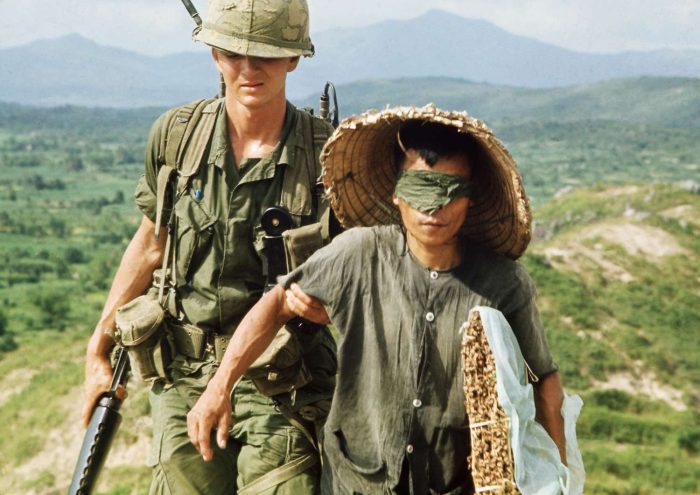


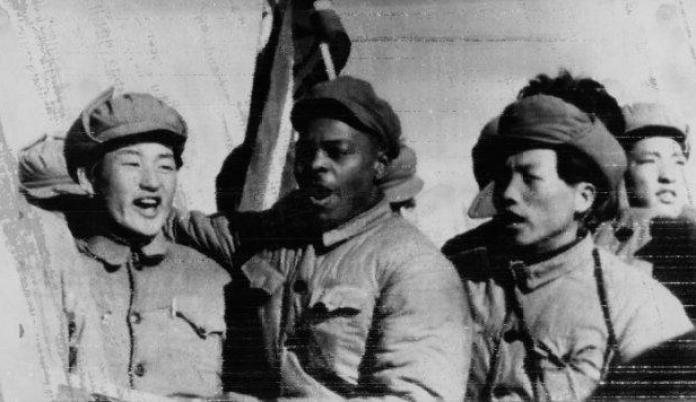


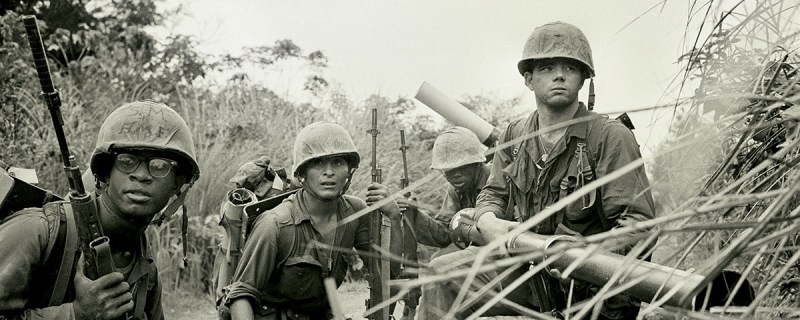
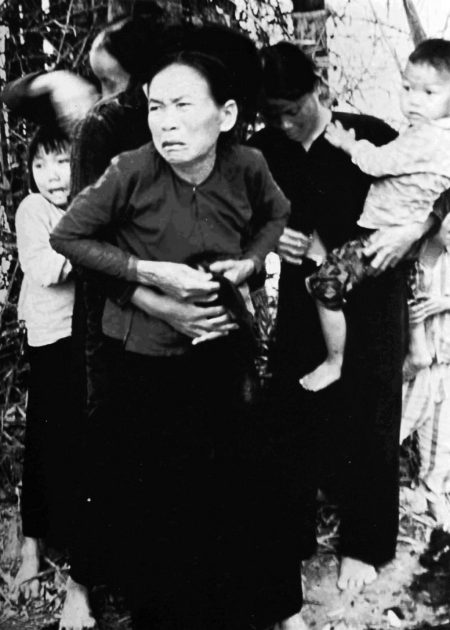
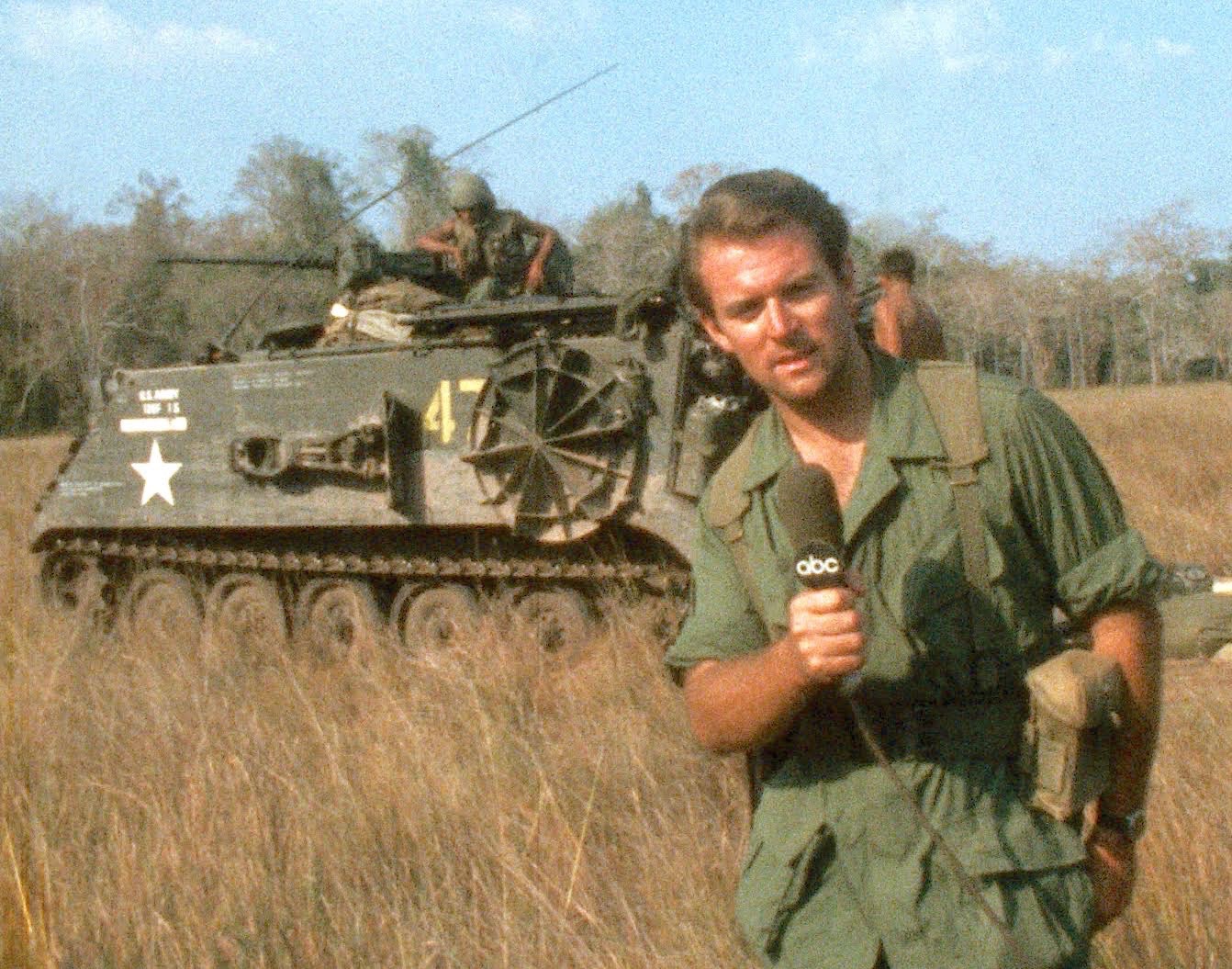



 Aletho News

#/media/File:Missing_in_action_(film_poster).jpg)
