18 year old shepherd shot by Israeli soldiers in Jordan Valley
29 April 2012 | International Solidarity Movement, West Bank
Last Thursday 18 year old shepherd Yasir Sulaiman Sal man Najadah was shot in the chest by Israeli soldiers taking part in military training exercises near the Tyraseer training zone.
If one walks towards the Bedouin community of Wadi al-Maleh in the Jordan Valley, they will see one of the 67 blocks of concrete placed by Israeli military in the area, the words “Danger – Firing Zone – Entrance Forbidden” audaciously inscribed.
The village is only a few hundred meters away from an Israeli military base, and the villagers of Wadi al-Maleh are frequently endangered as Israeli soldiers carry out military training. In the past year, the village has lost two young men, both killed whilst shepherding as they inadvertently triggered unexploded ordnance.
“I was standing in the field with 19 camels,” said Yasir. According to Yasir, army jeeps typically comb the area to alert herders before shooting exercises begin however on April 19th, no warnings were issued before the firing of live ammunition began. Yasir was shot at a distance of approximately 1 to 1.5 kilometers, and he believes that the soldiers saw him before shooting.
He did not see the soldiers and only became aware of their presence after the shooting began; he believes they were behind a nearby hill. After the bullet entered his chest, Yasir walked to his home where he was then driven to the training base by his father for medical attention.
Israeli soldiers refused to treat him and denied fault in the shooting. It was nearly two hours before Yasir received medical treatment in Rafadia Hospital in Nablus. Yasir spent 1 day in Rafadia Hospital and was then transferred to a hospital in Ramallah.
According to his doctor, Yasir is in stable condition but remains in the Palestinian Authority hospital ICU after the shooting.
Yasir is the eldest of eight children and left school after the 10th grade to tend to the family’s heard of camels and sheep which is the main source of income for his family. He says his father is too old to take care of the animals and is concerned that no one is tending to them while he is in the hospital. Despite being shot, Yasir says he must return to the area surrounding the Tyraseer training zone for grazing because it is the only spring-time grazing near his village.
Aref Dyragma chief of council in Wadi al-Maleh, was one of the first persons to be informed about the attack. As Dyragma shows us around al-Maleh, he described how the Bedouins are exposed to systematic violence.
“Life is like hell here”, he said. “We have no running water, no electricity and we are prohibited from building anything. Israel has taken control of all the natural water resources, which forces us to walk 15 kilometers to the city of Tamoun, where we can buy expensive water.”
The violence used against Palestinians in the Jordan Valley is part of process of ethnic cleansing. 130 families from the area have received demolition and evacuation orders – but Dyragma ensures that they will stay.
“We have no other choice – this our land and we cannot leave.”
Related articles
- Palestinian teen shot during Israeli military training (alethonews.wordpress.com)
- Israeli soldiers assault cycling group in Jordan Valley (alethonews.wordpress.com)
- Jordan Valley Resident Forcibly Removed from Home (altahrir.wordpress.com)
- IOF planning eviction of Palestinian inhabitants in Jordan Valley (occupiedpalestine.wordpress.com)
Until Freedom or Martyrdom: Thaer Halahleh on 60 Days of Hunger Strike
By Dylan Collins | Palestine Monitor | April 28, 2012
Kharas, occupied West Bank—Two year old Lamar Halahleh has never met her father outside of a prison cell. In fact, she wasn’t able to lay eyes upon him until she was nearly half a year old.
Thaer Halahleh, Lamar’s father, has not only spent the last two years in the Israeli prison system, the 33 year-old has actually been detained for the majority of the past nine years due to Israel’s exploitive practice of administrative detention.

“The only way she [Lamar] knows her father is through pictures,” says Lamar’s mother and Thaer’s wife, Shireen. “She has hundreds of pictures of Thaer. When she goes to sleep at night, she tucks his picture into bed with her.”
Always held without charge or trial, Thaer’s only officially stated wrongdoing has been his affiliation to Islamic Jihad, a political party officially outlawed by Israel.
Thaer’s most recent arrest came on 26 June 2010 during a midnight raid on his home in the small village of Kharras, near Hebron in the occupied West Bank. Nearly 50 Israeli soldiers stormed the Halahleh’s home. Without knocking, the armed forces kicked down the door, made the women and children go outside in their bedclothes, and proceeded to search the house with two dogs for nearly an hour.
After a thorough search of the house, the troops then told the family they had an order to arrest Thaer. When asked why, the officer in charge responded that Thaer was a “threat to the public.”
Thaer had only just recently ended a year long stretch in administrative detention. He was home for all of about 14 days before being re-arrested and presented, yet again, with a three- month administrative detention order.
Like all other administrative detainees, Thaer is being held on ‘secret evidence’ and has never been officially charged nor convicted of anything.
Cyclical and ambiguous arrests have plagued the lives of Thaer and his family. Every one of his four brothers, and even his father, has been held in administrative detention at some point. Thaer himself has been arrested 8 times and spent a collective six and half years total in administrative detention.
Thaer’s most recent administrative detention order has been renewed every three-months. The uncertainty of his detention’s length has been nerve racking to say the least. Thaer’s wife, Shireen, argues neither she nor Thaer, nor Thaer’s lawyer know whether the order will be renewed until the day it concludes. Shireen reveals that several times, Thaer has been directed to collect his belongings and prepare to go home only to be turned back at the gates of the prison with a renewed three-month detention order.
How to Fight Ambiguous Detentions
Thaer’s detention was most recently extended in January for a period of six-months. Left with few other options and encouraged by Sheikh Khader Adnan’s recent 66-day feat in protest of administrative detention, the exact same directive that has controlled Thaer’s life for the past nine years, he too entered into his own open-ended hunger strike on 28 February while in Al-Naqab prison.
Saturday 27 April 2012, Thaer entered into his 60th day with out food.
“He is determined,” said Thaer’s older brother Mohammed. “He will either be set free or become a martyr.”
When asked if they thought Thaer would be willing to accept an exile deal similar to the one Israel reached with hunger striker Hana Shalabi, through which she had been exiled to Gaza for the following three years, his family responded with a resounding no. “It was good for Hana,” says Thaer’s Uncle Wahib, “but Thaer would never agree to anything of the sort.”
On 28 March, Thaer was transferred to Israel’s Ramleh medical prison along with another hunger striking prisoner, Bilal Diab. According to Addameer, both men have been held in isolated cells in the general prison section. Despite numerous requests, Addameer lawyers have been denied access to Thaer and Bilal since their transfer.
Despite his rapidly deteriorating condition, Thaer Halaleh’s appeal against his administrative detention was rejected by an Israeli military judge at the Ofer military court on Monday 23 April.
Thaer’s wife Shireen has little faith in receiving justice from the Israeli military court system. “How can we have any faith in the court hearings. How can we believe that a just verdict will be reached when we are barred from even attending the trial, when the entire trial is conducted in Hebrew, and when the only people present are the Israeli judge, the Israeli translator, the Israeli prosecutor, and the mukhabarat [Israeli secret service]?”
Power in Numbers
Approximately 1,200 Palestinian prisoners from all political factions began a unified open-ended hunger strike on 17 April 2012 in commemoration of Palestinian Prisoners’ Day and in protest of Israel’s exploitative use of administrative detention as well as its poor treatment of Palestinian prisoners.
Since its beginning, the movement has only been getting stronger.
In an April 25th update published by Addameer the estimated total number of prisoners on hunger strike had risen to nearly 2,000, a number which has most certainly risen since and has plans to increase in the coming days.
In Hasharon prison, six female prisoners have announced they will enter into the open-ended hunger strike on 1 May 2012. An additional 120 prisoners in Ofer prison are expected to join the hunger strike on 29 April.
The movement—“The War of Empty Stomachs”—has been effectively launched. It is, perhaps, a last resort by Palestinian prisoners to finally obtain just and fair treatment.
Thaer Halahleh, having reached his 60th day without food along with his compatriot Bilal Diab, is at the movement’s forefront.
Their demands, as well as those of the other active “Empty Stomach Warriors,” are neither absurd nor inappropriate. They are simply demanding a fair judicial process and improved living conditions but are risking their lives in the process.
Photo by Dylan Collins
Related articles
- Why Palestinian prisoners are on hunger strike (alethonews.wordpress.com)
Yitzhar settlers attack school children in Urif
29 April 2012 | International Solidarity Movement, West Bank
Urif is a Palestinian town in the Nablus Governorate of the northern occupied West Bank, located thirteen kilometres South of Nablus. The town has a population of just under 3000 inhabitants and is overlooked by the illegal Israeli colony of Yitzhar. Last week on Sunday, April 22, Urif’s boys school was attacked by mask-wearing settlers supported by four Israeli Occupation Force (IOF) soldiers who used tear-gas, sound bombs, and live ammunition against unarmed Palestinian children.

The training of armed, illegal settlers (Photo courtesy of IMEMC)
The settlers were led by the head of security for the Yitzhar colony, a man suspected in the murder of a resident of Urif in 2004, a murder that nobody has yet been charged with. He continues to lead brutal assaults against the civilian population of six Palestinian towns in the lands surrounding Yitzhar: Burin, Huwara, Madma, Assria Al-Kalibya, Ein Nabous, and Urif.
The attack began when the Yitzhar head of security and a number of masked settlers approached the school from an overlooking hill. “The children were sitting their mock exams,” said Arif, a member of the local popular committee, “the settlers used foul language and began throwing stones at the windows of the school.”
The settlers were soon joined by four uniformed IOF soldiers who did nothing to stop the abuse and stones hurled towards the school.
“When the army came they were supposed to stop the settlers coming to the school, in fact the opposite happened, there was chaos,” said Arif. A number of Palestinian youth approached the armed Israeli settlers and soldiers on the hill, using stones to resist the attack. The IOF soldiers then threw tear gas canisters down towards them and the school. One canister landed on the roof where a member of the Israeli human rights group B’tselem, Adil Safadi, was filming the attack.
Following the attack teachers from the school collected sixty tear gas canisters, a number of sound grenades, and at least thirty rounds of live ammunition fired directly over their heads.
In the video of the incident wherein International Solidarity Movement (ISM) volunteers are shown, the screams of the children and the loud report of an assault rifle being fired in fully automatic mode can clearly be heard. At one point an IOF soldier took aim with his M16 directly at a Palestinian youth out of camera shot. The sustained assault lasted for around an hour before the settlers decided to leave with their IOF minders in tow.
Whilst some children hid in their classrooms during the attack under the watchful eye of their teachers, many rushed to their homes and were exposed to large amounts of tear-gas and required medical attention. The children of Urif’s boys school, aged between 13 and 18, have been subjected to this kind of brutality on a regular basis since the founding of the school which sits on the outskirts of the village and is thus vulnerable to these kind of attacks. Many of the older kids that attend the school were in the process of studying for their year final examinations which take place in early May.
“You can’t imagine the loss we have suffered as a result of this settlement,” says Arif, “we would like to live in peace and prosperity, but that is something we cannot gain. The settlers are very aggressive, there is no word in the dictionary to describe them.”
This is not the first time the settlers, supported by the military, have attacked the school. Roughly one year ago they attempted and failed to burn it down. ISM was shown pictures depicting the charred remains of one classroom that was severely damaged during the attack.
Incursions from Yitzhar into Urif and Surrounding Villages
Arif and members of Urif municipality informed ISM of the following.
The illegal colony of Yitzhar was founded in 1984. It was not until the beginning of 2000 that it began to aggressively expand into the surrounding Palestinian lands. Yitzhar illegally annexed vast swaths of land and barred access to the Palestinian farmers, shepherds, and villagers that have lived and worked the land for countless generations.
The village of Urif is a mere 1500 meters away from the Israeli colony, and since 2000, over 2200 dunams have been stolen by the nearby settlement. In addition, four thousand olive trees cultivated by the village have been uprooted or burnt by settlers in the past four years.
The villagers of Urif have no access to running water, instead they rely on a small number of ancient wells. Two years ago, members of the village were dismayed to find tear gas canisters had been dropped into one of the wells by unknown settlers, poisoning the water supply.
Any attempt to expand infrastructure in the village is also met with settler attacks. ISM volunteers were shown the remains of a house that had been under construction before it was attacked and completely dismantled.
“Late at night they launch attacks on the residents in this area,” said Arif, pointing to the rubble strewn skeleton of the destroyed house. A tractor and a number of cars belonging to residents of the village had also been destroyed in a series of recent arson attacks.
Settlers have shot through the windows of a number of the homes. Graffiti reading ‘revenge’ in Hebrew was scrawled across one residents house. The widespread attacks of agricultural land has lead to a vast “wasteland” between the outskirts of Urif and Yitzhar. Hundreds of goats, sheep, and a few horses have been stolen.
This is not to mention the violence towards the villagers themselves. Arif reports that hundreds of villagers have been injured since 2000, with as many as 40 serious injuries (many of which were gunshot wounds) and one murder.
The combined effects of this systematic assault on Urif residents’ way of life, economy, and civil society is akin to a form of ethnic cleansing. One of the most stark indicators of the impact of the measures taken against the village of Urif by Yitzhar settlement is that unemployment is as high as 40%. Many people simply cannot survive under these conditions and are thus forced to abandon the village of their birth, leaving behind their friends, family, and identity.
Related articles
- Jewish settlers attack village, block Nablus road (alethonews.wordpress.com)
- Impunity Under the Law: Settler attack in Jabari neighborhood (alethonews.wordpress.com)
- Israeli settlers injure three Palestinians, uproot dozens of olive trees in two separate incidents (alethonews.wordpress.com)
- Palestinian man Fadi Zaitoun killed in a chase by extremist settlers (altahrir.wordpress.com)
- International activists assaulted by extreme settlers in Al Khalil (alethonews.wordpress.com)
Palestinian Injured After Being Attacked By Boars Released By Settlers
By Saed Bannoura | IMEMC | April 29, 2012
Palestinian medical sources reported that a Palestinian man was seriously injured after being attacked by a pack of boars that belong to extremist Israeli settlers near Kufur Thuluth Palestinian village, near the northern West Bank city of Qalqilia.

File – Palinfo
The resident was moved to a local hospital suffering serious injuries to various parts of his body; he was in his land, located south of the village.
This is not the first attack of its type as extremist settlers repeatedly released boars to ruin Palestinian farmlands in different parts of the West Bank, and in many cases the settlers also flooded Palestinian lands with sewage.
In September of last year, settlers of the Beitar Illit illegal settlement, south west of Bethlehem, flooded with sewage water Palestinian olive orchards that belong to residents of Nahhalin village, near Bethlehem.
Osama Shakarna, head of the Nahhalin Village Council, stated that the settlers flooded more than 40 Dunams (9.88 Acres) planted with more than 2500 Olive. The sewage water reached Ein Fares natural spring used by the shepherd as the source of water for their herds.
In May of last year, settlers of the Ariel settlement, the largest Israeli settlement in the occupied West Bank, flooded with sewage and waste-water Palestinians farmlands that belong to residents of Bruqin village near the northern West Bank city of Nablus.
The sewage was directed from Ariel settlement directly toward the land of Bruqin village, and has contaminated farmland and groundwater in an area of several kilometers around the village.
In April of last year, the Palestinian town of Beit Ummar, near the southern West Bank city of Hebron, was flooded with sewage from a nearby settlement.
A local farmer said that he was farming his field near Kfar Etzion settlement, and there was no contamination when he left his field to go home for the night.
But sometime during the night, a sewage pipe from Kfar Etzion settlement was opened, flooding the land of a number of Beit Ummar farmers and destroying their crops.
Another resident, whose land was also flooded, told the Maan News Agency, “This is not a coincidence; this is not the first time this has happened”.
The flooding of the village land with sewage comes one year after a similar sewage flood in the same area, when sewage from Gush Etzion settlement flooded all over Sabarneh’s land.
Related articles
- Israeli settlers injure three Palestinians, uproot dozens of olive trees in two separate incidents (alethonews.wordpress.com)
- Jewish settlers attack village, block Nablus road (alethonews.wordpress.com)
- Settlers Install New Outpost Near Hebron (alethonews.wordpress.com)
- Settlers Raise Israel’s Flag On Top Of Ibrahimi Mosque (alethonews.wordpress.com)
- Knesset to discuss bill authorising settlers’ seizure of Palestinian land (alethonews.wordpress.com)
- Kufr ad-Dik and Burqin march against boars, pollution, and violence by Israelis (alethonews.wordpress.com)
Why Palestinian prisoners are on hunger strike
MEMO | 26 April 2012
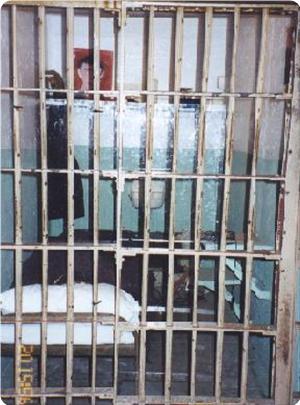 1.1 – The issue of Palestinian prisoners is one of the worst consequences of the Israeli occupation. Since 1967, over 700,000 Palestinians, 20% of the population of the occupied West Bank and Gaza Strip have been detained. This number represents approximately 40% of the total male Palestinian population in the occupied territories.
1.2 – Today, there are about 6,000 prisoners in 17 Israeli jails and detention centres. They include six women and more than 200 minors.
1.3 – 330 Palestinians are being held in administrative detention with no formal charges having been brought against them in a court of law. 28 elected members of the parliament, and three former ministers fall within this category.
1.4 – Israel is currently holding all these Palestinian prisoners far away from their homes, and outside of the occupied territory. This constitutes a clear violation of the Fourth Geneva Convention relative to the Protection of Civilian Persons in Time of War. Article 76 of the Convention states:
“Protected persons accused of offences shall be detained in the occupied country, and if convicted they shall serve their sentences therein.”
Article 49 also states:
“Individual or mass forcible transfers, as well as deportations of protected persons from occupied territory to the territory of the Occupying Power or to that of any other country, occupied or not, are prohibited, regardless of their motive.”
1.5 – Article 32 specifically prohibits “murder, torture, corporal punishments, mutilation and … any other measures of brutality whether applied by civilian or military agents”. Since 1967, 202 Palestinians prisoners have died while being tortured in Israeli jails.
1.6 – Israel routinely tries Palestinians before military courts, none of which meet the most basic standards of international law; particularly the laws relating to the treatment of prisoners of war and people under occupation.
1.7 – In light of the above, there are now calls for the prosecution of Israeli officials at an international tribunal.
Related articles
- 1,600 Palestinian prisoners begin open-ended hunger strike in Israeli jails (alethonews.wordpress.com)
- Ex-Palestinian prisoner: captivity in Israel, living in graves (alethonews.wordpress.com)
- Detention of Palestinian political prisoners (alethonews.wordpress.com)
- 4 hurt in Ramallah protest to support detainees (altahrir.wordpress.com)
- Scottish TUC delegates join Palestine freedom struggle – unanimously! | #PalHunger (occupiedpalestine.wordpress.com)
Settlers Raise Israel’s Flag On Top Of Ibrahimi Mosque
By Saed Bannoura | IMEMC & Agencies | April 26, 2012
A group of Israeli settlers raised Israeli flags on top of the fourth holiest site in Islam, the Ibrahimi Mosque in the southern West Bank city of Hebron. This is the first time ever since Hebron fell under Israeli occupation in 1967.

Image – Milad News Agency
The Milad News Agency reported that head of the Waqf and Endowment Department in Hebron, Zeid al-Ja’bary, slammed the provocative move and stated that “this is an attack against the religious and historic stature of this site to millions of Muslims around the world”.
He added that this is a “seriously dangerous provocative act” targeting the holy site.
The Israeli Prime Minister and his coalition partners have declared the Ibrahimi Mosque, also referred to as the “Cave of Patriarchs”, to be part of the Jewish Heritage sites; a move designed to preclude the Palestinian attempt to have UNESCO officially include the Old City of Hebron on its list of historic and archeological cities.
Hebron Governor, Kamel Hameed, held the Israeli government responsible for provocative acts and attacks carried out by settlers in Hebron.
Hameed told the Milad News Agency that “writing street names in Hebrew, renaming the mosque, and placing iron and electronic gates on its entrances are provocative acts that are meant to prevent the Muslims from entering it”.
He added that the Ibrahimi Mosque “is in the hearts and minds of millions of Muslims around the world”, and added that Israeli settlers are pushing the region into instability.
Hebron Mayor, Khaled al-Aseely, stated that this act is part of Israel’s violations against Islamic Holy sites and the historic heritage of the region, and falls under Israel’s ongoing violations, including the Israeli decision to consider the mosque as part of the “Jewish heritage sites”, a decision that was rejected by numerous human rights and cultural institutions around the world.
Related articles
- Israeli Soldiers Invade Homes In Hebron, Jewish Settlers Attack Young Man (alethonews.wordpress.com)
- Voices from the Occupation: Settler/soldier violence/detention of 16-year-old (alethonews.wordpress.com)
- Hebron teen ‘shot by Israeli settler’ (alethonews.wordpress.com)
- Israeli settlers storm into Palestinian home, occupy residence (alethonews.wordpress.com)
- Settlers Install New Outpost Near Hebron (alethonews.wordpress.com)
- Hebron Home Caged Due To Settlements (alethonews.wordpress.com)
- Settlers Attack Two Towns Near Hebron (alethonews.wordpress.com)
- The massacre of 1929 and the War of Narratives (alethonews.wordpress.com)
- The right to water: Water cistern demolitions in Hebron area (alethonews.wordpress.com)
Jewish settlers attack village, block Nablus road
Ma’an – 26/04/2012

Settler attacks are common and rarely prosecuted
NABLUS – Settlers in the northern West Bank set up a roadblock and attacked a Nablus village on Thursday, a PA official said.
Ghassan Daghlas, who monitors settler activity in the northern West Bank, said that settlers blocked a main road that links the West Bank town of Huwwara to Tulkarem and Qalqiliya.
Settlers prevented Palestinian vehicles from passing through, causing a large traffic jam. Around 12 settlers also attacked the village of Urif in Nablus, clashing with local villagers.
Witnesses said the Israeli army was present during the incident but fired tear gas at the villagers.
In 2011, the UN Office for the Coordination of Humanitarian Affairs reported that settler attacks had increased by 50 percent on the previous year.
The Nablus district experienced the majority of settler violence in 2011.

Source: When Settlers Attack, The Palestine Center, 2012
Related articles
- Settlers ‘block entrance’ to Nablus village (alethonews.wordpress.com)
- Israeli settlers injure three Palestinians, uproot dozens of olive trees in two separate incidents (alethonews.wordpress.com)
- Impunity Under the Law: Settler attack in Jabari neighborhood (alethonews.wordpress.com)
- Fadi Abu Zeitoun, killed as settlers attacked farmers (alethonews.wordpress.com)
- Soldier, 2 Female Settlers, Arrested For Writing Racist Graffiti (alethonews.wordpress.com)
Israel Censors Bob Simon’s Report on Palestinian Christians
Al-Manar | April 26, 2012
During Sunday night’s episode of “60 Minutes,” reporter Bob Simon’s story on Arab Christians included a heated confrontation between himself and the Zionist ambassador to the United States Michael Oren.
The “60 Minutes” story tackled the displacement of Palestinian Christians by the Zionist Occupation of the West Bank and East Jerusalem.
Oren also called Simon’s report “outrageous” and “incomprehensible,” and reportedly called Jeff Fager, the chairman of CBS News, before the broadcast and said he had information the “60 Minutes” story was “a hatchet job.” He was concerned that the piece was critical of the Zionist entity and could harm its reputation among American Christians.
In its report, Simon told Americans that there are Palestinian Christians, and the Right wing Zionists have attempted to displace, expropriate and erase the Palestinian nation, and to convince them that Palestinians don’t exist or if they do are enemies of the U.S.
According to the report, when the foe of the US was the Soviet Union, they made the Palestinians Communists. When the foe became al-Qaeda, they made the Palestinians violent fundamentalists. But if some percentage of Palestinians is Christians, then that fact disrupts the propaganda. In fact, millions of Palestinians are descended from the 700,000 or so Palestinians ethnically cleansed by the Israelis from what is now Israel in 1948, of whom about 10 percent were Christian.
The report also mentioned that some Palestinians are Lutherans, Catholics and Episcopalians, establishing a link of commonality between them and Americans, which raised the ire of the entity of occupation because it wants Americans identifying only with the so-called ‘Israelis’, not with Palestinians.
It also told Americans that ‘Israel’ is occupying and colonizing Palestinian land, and it let it slip that Palestinians in the West Bank need a permit to travel to Arab East Jerusalem and are subjected within the West Bank to humiliating check points that turn a 7 mile journey into an all-day ordeal.
Simon’s story allowed Palestinians to speak for themselves as well, and to refute Oren’s anti-Palestinian talking points, where it mentioned a prominent Palestinian businessman and Coca Cola distributor saying that he knew of no Palestinian Christians who were leaving the West Bank and Jerusalem because of Muslims but that rather they were leaving because of the “Israeli Oppression.”
The report allowed the Palestinians to point out that the West Bank now looks like Swiss cheese, with Zionist colonies grabbing the good land and water, and the stateless Palestinians pushed into the holes; and that the way the Israelis built the Separation Wall isolated Bethlehem, Jesus’s birthplace and a city that still is 18% Christian, had made it “an open-air prison.”
It also described the Palestinian Kairos Document, calling for nonviolence, as a peaceful struggle by Palestinians against the Zionist Occupation and land grabs, particularly when it quoted a Zionist scholar putting “Political Judaism” on par with “Political Islam.”
According to sources, news of Simon’s “60 Minutes” report reached the highest governmental levels of the Zionist entity, where a main daily Haaretz reported Tuesday that PM Benjamin Netanyahu and his political adviser Ron Dermer were “fully informed on the affair almost since its start.”
A source told Haaretz that Israel’s unsuccessful attempts to kill the “60 Minutes” report backfired as Oren’s call to Fager became a central part of the story. “We awakened the dead,” the source said.
However, officials in the Prime Minister’s Office disagreed and insisted that their efforts delayed the broadcast and made the final version “softer.”
Related articles
- A Palestinian Christian response to Michael Oren (alethonews.wordpress.com)
The right to water: Water cistern demolitions in Hebron area
23 April 2012 | International Solidarity Movement, West Bank

On Monday April 23, 2012, the Israeli occupation forces destroyed four water cisterns outside of the city of al-Khalil (Hebron). Two of the destroyed cisterns were located in the Abweire area, a small agricultural neighborhood of 400-500 residents northeast of al-Khalil. The other two cisterns destroyed were located in Hal-Houl, south of al-Khalil. The demolitions came just one week after another four cisterns were destroyed in the Meshroona area south of al-Khalil.
Palestinians in these areas, who are located in Area C, are forced to depend on rain water cisterns for their crops and livestock because of unequal distribution of water resources to surrounding illegal, Zionist settlements. The destruction of such cisterns is part of a calculated strategy of forced displacement and ethnic cleansing in occupied Palestine. According to the Israeli organization Diakonia, water cistern demolitions over the past two years have directly affected almost 14,000 Palestinians, among whom several hundred have been forced to leave their homes because of lack of water. International law forbids the targeting of structures essential for the survival of the civilian population.
The day after their water cistern was demolished, activists with ISM visited members of the Ashfour family in Abweire in order to talk and survey the damage. The occupation forces did not stop with removing the top of the cistern, but actually smashed the sidewalls, rendering the structure totally useless. The occupation forces came without warning in four jeeps, an armored personnel carrier, an armored bulldozer, and another armored earth-wrecking machine, along with personnel from the Israeli permits and construction offices. They claimed that the cistern was constructed illegally, without the necessary permits, and began to destroy the cistern.

Within an hour the Ashfour family’s hopes for irrigating their crops lay in ruins. According to Hisham Ashfour, the cistern had been built almost ten years ago and served not only his family but about fifty people in his neighborhood. The other cistern destroyed in Abweire was also rendered completely unusable, having been filled in with dirt by an Israeli bulldozer.
Related articles
- International activists assaulted by extreme settlers in Al Khalil (alethonews.wordpress.com)
- Israeli occupation authority destroys Spanish-financed power station in Al-Khalil village (alethonews.wordpress.com)
- Israeli Brutality: Violent arrests of Palestinians in Hebron and disappearance of Dutch volunteer (alethonews.wordpress.com)
- Settler Violence: Broken Glass on Shuhada Street (alethonews.wordpress.com)
- Israeli demolition ‘displaces 120′ in Hebron village (alethonews.wordpress.com)
- Impunity Under the Law: Settler attack in Jabari neighborhood (alethonews.wordpress.com)
- Under Attack – the Golani Brigade’s war on the Palestinian population of Al-Khalil/Hebron (alethonews.wordpress.com)
Hebron Home Caged Due To Settlements
By Hamza Al-Hattab – WAFA News – April 23, 2012
Steel bars surround the home, not only sliding down the windows, but all over the place, covering it from every side and corner, covering its doors, covering its external yard and topping its walls, making it look like a box, at first you might think it is a big cage for birds, and maybe some animals, but if you look closer, you will find 15 members of Abu Aisha family living there, in their home, that was transformed into a prison due to illegal settlement activities, and extremist, fundamentalist Israeli settlers.

Still From WAFA Video

The home of Mohammad Hamed Abu Asiha, is there, and has always been there, but now, it is surrounded by illegal Israeli settlements in the heart of the Old City of Hebron, surrounded by Beit Hadassah settlement, Beit Romano and above that by an Israeli military base, wall-to-wall with their home.
Heading home or leaving it requires a permit, a permit from an army that occupies the city, an army that is not there to protect, but to oppress you.
The owner, Hajj Abu Aisha, said that he has owned the land for fifty years, but now, he is imprisoned in his own home.
“I own this land, I built my home on my own land, I live there, and I also rent part of the building out, but in 1984, Israel constructed the illegal Ramat Yishai settlement, and that was when the first of the ongoing attacks against us, started, “Abu Aisha said, “They want us to leave, not only our property, they want us out of the whole area, this is exactly what happened with the family of Zackariah Al-Bakry, when the settlers took his two-story home, and expanded their illegal colony”.
The seventyish old man is there, and will remain there, Israel’s violations, attacks and arbitrary searches are still part of his life, but he turned his home into a “heaven on earth”, simply because it is his home, because, unlike those invaders, he is the owner of his property, while they are the occupiers.
Hajj Abu Aisha has many stories to tell, one of them happened when he was watering and tending to his small garden, a few olive trees, and a number of different plants; the settlers asked him to sell them his home, and his land, and he rejected their “offer”.
He told them he is willing to pay them so that they leave the illegal outpost. When the settlers realized how determined and steadfast he is, they stepped-up the series of endless attacks.
“Every member of my family has been harassed, verbally abused, and physically attacked by them”, the Hajj said, “Children, adults, women… you name it, all of them have been attacked and beaten by the settlers, they even have been hospitalized due to these attacks”.
The attacks have different types, ranging from beating, hurling stones, eggs and trash, to spraying them with waste-water, and ongoing death threats. The family cannot even open its windows, cannot communicate with Palestinian neighbors; their home became their prison.
Reema Abu Asiha said that nobody is able to visit them, her parents, brothers, sisters, relatives, nobody is allowed to visit them; nobody can.
“When my sons and daughters got married, nobody was allowed to come, we had to move the wedding reception to the houses of their uncles”, Reema added, “Even when we need to fix our home, we have to apply for a special permit from the military, yet, we are not allowed to bring construction materials in”.
She continues, with tears flowing down her cheeks; her eyes glossing and her lips moving in pain, “I lost two fetuses in the past, one in 1988, when the ambulance could not enter the area, and I had to walk to hospital while in labor.
A year later I became pregnant again, twins this time, we filed all needed documents, coordinated with the Red Cross one month before my due date, yet, when I was in labor, my husband called the ambulance, but due to Israeli restrictions it took them more than two and a half hours to arrive, by then, my twins were dead”.
The father complained that officials and journalists do not pay attention to their hardships, their misery and suffering.
“Last time we saw any official was in 2007, when the governor of Hebron, Areef Al-Ja’bary visited us”, he said, “The Press does not pay attention to us, even local Palestinian press agencies do not visit us, nobody cares about what is happening to us, nobody helps us”.
The Israeli Information Center for Human Rights in the occupied territory, B’Tselem, and the youth coalition against settlement, equipped the property with surveillance equipment to document the Israeli violations.
The family filed dozens of complaints, provided the Israeli police with videos and pictures of these attacks, but to no avail.
Hajj Abu Aisha said that every time he and his family were attacked, they filed complaints to the Israeli Police, adding that he keeps count for these attacks, and complaints, but nothing happened; the violations, or at least some of them were exposed, but the Police did nothing. B’Tselem even published the pictures and videos on their webpage exposing these violations, but the Police would not do a thing about it.
But the videos managed to expose these violations, and even led to the release of Abu Aisha and some members of his family when they were arrested by the army and the police; the settlers have their own claims and their own share of fabrications, but the camera reflected the truth, what really happened, and exposed the lies of the settlers.
In one instance the Israeli Authorities even apologized to the family after a settler woman, the wife of extremist settler, Shalom A L Cobi, attacked the children of the family, cursed at them and terrified them, the video reached international media, and Abu Asiha said that “what was shown on TV stations, is only a small part of the real nature of the attacks”.
“What we’ve seen on TV is just a very small part, a small report on the bigger picture”, Abu Aisha said, “The violations we face are constant, we live through these attacks, day by day”.
In 2002, settler Shalom A L Cobi invaded the home of the family after breaking its main door, family members resisted his attack, and caught it on tape.
The family then filed a complaint, and the police admitted the video as evidence, the family was “victorious” this time, but it is still surrounded, imprisoned in its home, and repeatedly attacked.
The family is still there, living under constant harassment and attacks, physical and verbal abuse, but determined to stay.
“This is our home”, they say, “We will not leave it, and we will not abandon it, this is out home, and this is where we will stay”.
Related articles
- Impunity Under the Law: Settler attack in Jabari neighborhood (alethonews.wordpress.com)
- Israeli Soldiers Invade Homes In Hebron, Jewish Settlers Attack Young Man (alethonews.wordpress.com)
- Israeli settlers injure three Palestinians, uproot dozens of olive trees in two separate incidents (alethonews.wordpress.com)
- Settler Violence: Broken Glass on Shuhada Street (alethonews.wordpress.com)
- The massacre of 1929 and the War of Narratives (alethonews.wordpress.com)
- Israeli settlers storm into Palestinian home, occupy residence (alethonews.wordpress.com)
- Settlers Install New Outpost Near Hebron (alethonews.wordpress.com)
- Hebron teen ‘shot by Israeli settler’ (alethonews.wordpress.com)
- Knesset to discuss bill authorising settlers’ seizure of Palestinian land (alethonews.wordpress.com)
Impunity Under the Law: Settler attack in Jabari neighborhood
22 April 2012 | International Solidarity Movement, West Bank
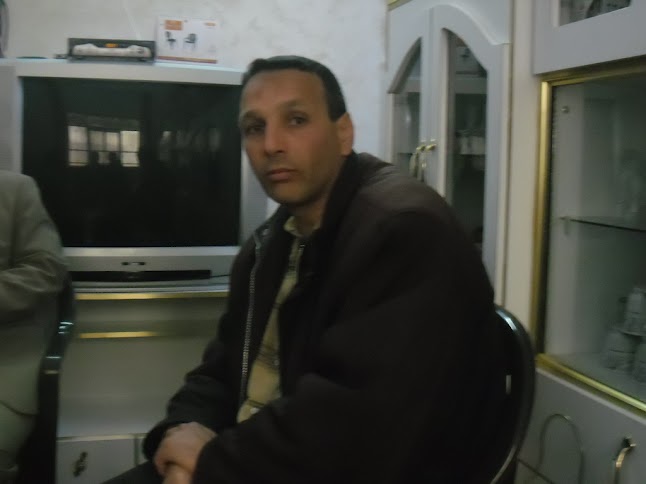 Marwan Borqan always locks the main door to his house at night. Late at night, soldiers will often knock at his door, ‘checking,’ they say, although Marwan has never known what they are checking for.
That is why he did not find it unusual when he heard a loud banging at his front door at 10:30pm on Wednesday night. However, this time it was not the Israeli army but an Israeli settler from the nearby illegal settlement of Givat Ha’avot. As soon as Marwan opened the door he was violently punched and kicked by the settler, who then dragged him out the door.
Outside the beating continued, causing Marwan to fall down a flight of stairs as other settlers, the settlement security guard, and Marwan’s shocked children looked on.
Finally, two police cars arrived and with the help of Marwan’s brothers, detained the attacker.
At this point, Marwan’s father arrived to find that Marwan had lost consciousness. He called an ambulance and was forced to wait forty-five minutes as the ambulance was detained at the metal gate restricting Palestinian vehicular access to their own street.
Marwan’s father demanded that the Israeli army commander arrest the settler who had attacked his son, only to have soldiers threateningly point their guns at his head and tell him to ‘shut up’. At a point during the night, the army released the settler who was responsible for the attack. They later claimed they did not arrest him because they could not find him.
While awaiting the ambulance’s arrival, the Israeli army evacuated the entire building where Marwan lived. Forty-five people, including many children,were forced to wait on the street while the army searched the victim’s house.
An Israeli police jeep then arrived carrying a settler who claimed rocks were thrown at her by a Palestinian earlier that day. The girl scanned the families lined up on the street and admitted that none of them had thrown rocks at her.
After Marwan was taken to the hospital, settlers attempted to occupy his apartment but were later escorted from the building by the Israeli army.
Commonly, following an accusation by a settler, all Palestinians are perceived as guilty by both the illegal settler communities and the Israeli army. Revenge may have been the reason behind the Israeli army raiding a house or the savage beating of a Palestinian by an Israeli settler.
Nonetheless, raids and attacks also take place in lieu of any accusations. Above all, the violence is arbitrary and systematic. The reason is always the same: to make life for Palestinians so difficult that they will be forced to leave. Those who refuse will continue to pay the price.
For Marwan Borqan the price for him and his family has been very high. He suffers from a concussion, and many bodily injuries, and was forced to wait while Israeli soldiers detained the ambulance attempting to reach him.
Marwan explained that he was “shocked” by the beating. His family regularly suffers from settler and soldier harassment, but it was “the first time the settlers actually tried to enter the house.”
His children were up late watching a football match with him when the attacker arrived, and to their horror witnessed his brutal beating. Marwan’s eight year old daughter, Afnan, is still traumatized by what she saw. Marwan explains that she shakes and has difficulty eating. He intends to find psychological help for her.
The Borqan house lies near to the illegal Israeli settlements of Qiryat Arba and Givat Ha’avot in Western Hebron, an area which experiences repeated torment from extremist settlers. Qiryat Arba was one of the first settlements established in the West Bank by members of the far right Kach party and Givat Ha’vot began as a police station which was occupied by settlers in 1990. Both settlements are in violation of Article 49 of the Fourth Geneva convention, prohibiting the transfer of the occupying power’s civilians into the occupied territory. The illegality has been repeatedly confirmed by the International Court of Justice, the High Contracting Parties to the Fourth Geneva Convention and the United Nations Security Council.
Related articles
- Israeli Soldiers Invade Homes In Hebron, Jewish Settlers Attack Young Man (alethonews.wordpress.com)
- Israeli settlers injure three Palestinians, uproot dozens of olive trees in two separate incidents (alethonews.wordpress.com)
- Israeli settlers storm into Palestinian home, occupy residence (alethonews.wordpress.com)
- Knesset to discuss bill authorising settlers’ seizure of Palestinian land (alethonews.wordpress.com)
- Hebron teen ‘shot by Israeli settler’ (alethonews.wordpress.com)
- Kufr ad-Dik and Burqin march against boars, pollution, and violence by Israelis (alethonews.wordpress.com)
Israel’s Mental Illness
They Can’t Stop Building Walls
By FRANKLIN LAMB | CounterPunch | April 20, 2012
 Beirut – It may be that researchers would want to examine as long ago as the period from the 3rd century BC until the beginning of the 17th century in order to find a regime so frenetically building walls and barriers in a hopeless quest to hold onto stolen lands as we in Lebanon may soon witness in the south of the country. It was back in 221 BC that in order to protect China from the land claims of the Xiongnu people from Mongolia, the Xiongnu tribe being China’s main enemy at that time who sought the return of lands they claimed the Chinese had stolen, that the emperor Qin Shi Huang ordered the construction of a wall to guard China’s territorial gains.
Lots of walls have been built throughout history to preserve occupied lands. The Romans built Hadrian’s Wall in England to keeep the Picts out and the East Germans built the Berlin wall to keep the people in. But no regime in history has built, in the span of six decades, the number of walls as the paranoid regime in Tel Aviv has erected. And it plans at least five more “anti-terrorist protective walls” including one slated to begin soon along the Lebanese-Palestine border at the Lebanese village of Kfar Kila. And that one may present a problem.
The decision to build a wall “to replace the existing Israeli technical fence” along the Blue Line near the town of Kfar Kila was announced last month by Tel Aviv. The announcement followed a meeting between the Israel military and UNIFIL and both are keeping fairly mum about what it knows about this latest wall but UNIFIL spokesman Neeraj Singh hinted to this observer that the first section will be about half a mile long and approximately 16 feet high.
Some south Lebanon residents are strongly objecting for among other reasons that the high wall will block the scenic views into Palestine. Others are ridiculing the reasons for the wall expressed by the US-Israeli lobby that will ask the American taxpayer to pay for it.
Israel firster, David Schenker, from the Washington Institute for Near East Policy, set up by AIPAC, told a Congressional hearing recently: “South Lebanon is obviously a very sensitive area [for Israel], being so close to Metula and the possibility of infiltration by Hezbollah and Palestinians is a legitimate concern. The Israeli government believes that this wall will prevent terrorists from launching direct line-of-sight firing of things like RPGs and mortars. Even the throwing of stones which some tourists visiting the area are in the habit of doing.”
Local observers, UNIFIL officials and experts like Timor Goksel, who worked as UNIFIL’s spokesman for 24 years along the blue line, expressed surprise at why Israel is claiming that Kfar Kila is a particularly dangerous area that needs a wall.
In point of fact the area has not been a particularly hazardous or “sensitive” one historically, even when the PLO controlled the area in the 1970’s. Goksel explained; “In my 24 years’ experience, there were never any attacks there because it’s adjacent to a Lebanese village, so any attack there will make life for the Lebanese difficult. I don’t think anybody has ever thought of doing anything there. Moreover, even if you cross into Israel at Kifa Kula there, you’re not going to come across an Israeli position for a long time, so it doesn’t make sense for anyone to attack from there. What are you going to attack? There’s no target.”
Some local observers are speculating that the real reason Israel wants the barrier in Kfar Kila might be to stop its troops from bargaining for drugs in exchange for weapons and classified military information, as the IDF’s drug problem among its “northern command” soldiers has escalated since the battering it took in the July 2006 war.
Israel’s newest frontier wall will follow the one being erected along the 150-mile boundary between the Sinai and Negev deserts. That wall building project is due to be completed by the end of this year of 2012. Once the Kfar Kila wall is finished, Israel will be almost completely enclosed by steel, barbed wire and concrete, leaving only the southern border with Jordan between the Dead and Red Seas without a physical barrier. But that too, may be walled in the future according to Shenker. He testified that the reason was due to the uncertainty in Jordan and its increasingly wobbly government.
Yet another wall, approximately seven miles from the Mediterranean along the southern border will meet the fence Israel has already been built around Gaza. This wall runs for 32 miles, with a buffer zone, which Palestinians are forbidden from entering, and extends close to 1,000 meters inside the narrow Gaza Strip, walling off more prime Palestinian agricultural land. This “security war” has caged Palestinians inside Gaza but did not prevent the cross-border capture of IDF soldier Gilad Shalit in 2006.
Along the Palestine-Lebanon border, a barrier built by Israel in the 1970s along the boundary was reconstructed, after Israel was forced out of Lebanon in 2000 following a 22-year occupation. This barrier did not prevent Hezbollah in a cross-border ambush in 2006, capturing two Israeli soldiers in order to negotiate a prisoner exchange. Nor did it prevent Hezbollah from firing of thousands of rockets during the ensuing 33-day war in retaliation for Israel bombing much of south Lebanon.
And the “protective walls” rise like mushrooms after a summer rain.
Further east from Lebanon, an Israeli barrier has been constructed on the ceasefire line drawn at the end of the 1973 Yom Kippur war, running between the Golan Heights, which Israel has illegally occupied for nearly 45 years, and Syria. It was here that hundreds of pro-Palestinian demonstrators entered occupied Palestine last May, in the Golan and along the Lebanese border. More than a dozen people were killed and scores injured when Zionist forces opened fire on the unarmed civilians.
A crossing at Quneitra, now operated by the UN, does allow some movement of UN personnel, truckloads of apples, a few Druze students and the occasional Syrian bride in white.
A few miles north of Quneitra is Shouting Hill, where Druze families in the Golan yell greetings across the barrier to relatives in Syria.
Moving south through heavily mined fields and hills, the 1973 ceasefire line is bordered by Israeli military bases and closed military zones, and shells of tanks from past battles, until it connects with the border with Jordan. It then joins with one of Israel’s first walls, constructed in the late 1960s, which now stretches almost from the Sea of Galilee down the Jordan Valley to the Dead Sea. Most of this line is not Israel’s border, but rather a barrier separating Jordan from the Israeli-occupied West Bank.
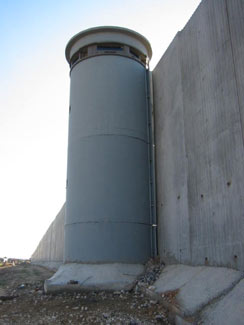
Around a third of the way down this stretch, the barrier joins the infamous huge steel-and-concrete West Bank wall. This runs along or inside the 1949 armistice line, swallowing up tracts of Palestinian agricultural land, slicing through communities and separating farmers from their fields and olive trees. As with its other 18 walls and barriers, the Zionist regime claims it is simply a security measure, but many believe it marks the boundaries of a future Palestinian state, consuming an additional 12 per cent of the West Bank. Approximately two-thirds of its 465-mile length is complete, mostly as a steel fence with wide exclusion zones on either side. According to the current route, 8.5 per cent of the West Bank territory and 27,520 Palestinians are on the “Israeli” side of the barrier. Another 3.4 percent of the area (with 247,800 inhabitants) is completely or partially surrounded by the barrier.
Two similar barriers, the Israeli Gaza Strip barrier and the Israeli-built 7-9 meter (23 – 30 ft) wall separating Gaza from Egypt (temporarily breached on January 23, 2008), which is currently under Egyptian control, are also widely condemned by the international community.
Returning to the subject of the latest wall project, increasingly the Zionist regime opposes discussions, hearings, visits, expressions of solidarity with Palestinians, and even the viewing its garrison state from south Lebanon. Cutting off a view that people throughout history have marveled at represents a continuation of its isolation and xenophobia.
Following the joint meeting at Kkar Kila noted above, UNIFIL Major-General Serra said: “The meeting was called to assist Israel in putting in place additional security measures along the Blue Line in the Kafr Kila area in order to minimize the scope for sporadic tensions or any misunderstandings that could lead to escalation of the situation.”
In fact, the opposite with likely happen. In a recent visit to Ahmad Jibril’s Palestinian camp in the Bekaa Valley, and in discussion with salafist groups in Saida, it’s plain the wall will likely become an object of target practice and further strain UNIFIL and Hezbollah efforts to keep the border calm.
In a scathing commentary in Yedioth Ahronoth, Israel’s biggest-selling newspaper, defense analyst Alex Fishman recently wrote: “We have become a nation that imprisons itself behind fences, which huddles terrified behind defensive shields.” It has become, he said, a “national mental illness”.
Franklin Lamb is doing research in Lebanon and is reachable c/o fplamb@gmail.com
Featured Video

The Truth About the Trump Shootings with Ken Silva
or go to
Aletho News Archives – Video-Images
From the Archives
The Geopolitics behind the War in Yemen (I)
By Mahdi Darius NAZEMROAYA | Strategic Culture Foundation | 30.03.2015
The United States and the Kingdom of Saudi Arabia became very uneasy when the Yemenese or Yemenite movement of the Houthi or Ansarallah (meaning the supporters of God in Arabic) gained control of Yemen’s capital, Sanaa/Sana, in September 2014. The US-supported Yemenite President Abd-Rabbuh Manṣour Al-Hadi was humiliatingly forced to share power with the Houthis and the coalition of northern Yemenese tribes that had helped them enter Sana. Al-Hadi declared that negotiations for a Yemeni national unity government would take place and his allies the US and Saudi Arabia tried to use a new national dialogue and mediated talks to co-opt and pacify the Houthis.
The truth has been turned on its head about the war in Yemen. The war and ousting of President Abd-Rabbuh Manṣour Al-Hadi in Yemen are not the results of «Houthi coup» in Yemen. It is the opposite. Al-Hadi was ousted, because with Saudi and US support he tried to backtrack on the power sharing agreements he had made and return Yemen to authoritarian rule. The ousting of President Al-Hadi by the Houthis and their political allies was an unexpected reaction to the takeover Al-Hadi was planning with Washington and the House of Saudi. … continue
Blog Roll
 Aletho News
- IRGC air defenses destroy another US MQ-1 drone over Strait of Hormuz
- Imran Khan’s entire immediate family detained in Pakistan ahead of mass protest demanding his release
- EU nation detains former presidential frontrunner
- Leaked: Britain’s Sham Conviction Of Hashim Thaci
- Seyed M. Marandi: U.S. Strike Imminent – Toward Total War in the Middle East
- Russia Voted Under Fire. Washington Is Loading the Tankers.
- 12 Things Your Oncologist Was Trained Not to Tell You
- Anthrax Attacks Paved Way for COVID-Era ‘Junk Drugs and Vaccines’
- How Real Is the Impact of Western Sanctions on Israel?
- France, You Are Guilty: How Paris Turned Western Sahara into the Maghreb’s Powder Keg
- If Americans Knew
- Inside Israel’s ‘soft’ ethnic cleansing plan for Gaza through the eyes of its victims
- New online database tracks pro-‘Israel’ political donations in the United States
- Israeli president pardons soldier convicted for killing wounded Palestinian
- Singer Ed Sheeran says his ‘heart broken’ by Gaza devastation, addresses Macklemore controversy
- Israel Has Imprisoned Female Journalist Bushra Al-Tawil Without Trial Or Charge In Solitary Confinement For Past Month
- Israel poised to teach West Bank a lesson after one Israeli killed – Daily Update
- Salah Sarsour’s Legal Team Says DHS Has Not Met Its Burden to Prove He Is Deportable
- An analysis of tax forms by The Intercept show Kraft’s charity and LLC have donated to Friends of the IDF and AIPAC’s super PAC.
- Israeli attacks kill four Palestinians in Gaza – Daily Update
- Inside Gaza’s death trap of collapsing, bombed-out buildings
- No Tricks Zone
- 2025 Nature Paper Claiming Worsening Global Drought Gets RETRACTED …Heavily Flawed
- New Study: ‘Global Drought Shows No Detectable Recent Acceleration Under Climate Warming’
- Economic Masterminds: German Socialists Suggest Taxing Productivity Gains Stemming From Using AI
- The South China Sea Has Not Been Cooperating With The Climate Change Narrative
- Energy Crisis: Germany Enters Heating Season With Historically Low Gas Reserve Fill Levels
- New Study: The Antarctic Ice Sheet Gained Mass From 2020-2024 Due To Staggering Snow And Ice Accumulation
- Study: Ocean Heating Rates From Thousands Of Years Ago ‘Dwarf’ Modern Ocean Heating Rates
- Climate Extremists Target, Attack Large-Scale Power Grid Infrastructure In Germany!
- New Study: Antarctic Ice Melt Has Contributed Less Than 1 Centimeter To Sea Level Rise In The Last 30 Years
- Fear Of Debate: Alarmist German Climate Scientist Calls On Mainstream Media To Discredit Skeptic Voices
 Aletho News