Night raid in Beit Ummar: arrests, violence and property destruction
International Solidarity Movement | January 18, 2015
Beit Ummar, Occupied Palestine – Early Wednesday morning, January 14, 2015, a massive deployment of 400 Israeli occupation forces invaded the village of Beit Ummar, north of Hebron. From 2:00 – 5:00 am, the occupation forces invaded approximately 100 Palestinian homes, arresting 25 males and leaving notices for 15 additional males to meet with the Israeli intelligence.

Occupation soldiers invaded the private homes with violent force, blowing open the front doors with explosions, ransacking the rooms, breaking the furniture inside, smashing windows, and attacking the residents. One of the victims of this brutal invasion was the family of 25-year-old Nidal Abu Maria.
Nidal is the oldest son of Ahmed Abu Maria, who has been imprisoned for the last four months. According to the family, the occupation soldiers forcibly entered their home with large aggressive dogs, blowing the door open with explosives. Nidal’s mother, sister, and two brothers ages 6 and 7 were inside, and awoke shocked to find soldiers inside their home. The occupation forces locked Nidal’s mother in a separate room, away from her children, and took her phone, noting the family members phone numbers from it. The pregnant sister attempted to speak to the young boys, who were scared of the military invasion and their dogs, when the occupation forces violently hit her in the face and told her to keep quiet. In addition to physical violence against the family, the soldiers also ransacked the home, destroying the windows, the furniture, and the entire kitchen. Nearly 99 other houses were also invaded this same night, and experienced the same destruction.

During this brutal night invasion, 25 males were taken from their homes and arrested without any official charges or explanations. According to Ma’an News, those detained were as young as sixteen years old. The youths were not known activists nor had there been any protests in Beit Ummar since the massacre in Gaza for them to take part in. Five were released the next morning, while the rest still remain in custody. Additionally, the invading soldiers left official request notices for 15 residents of Beit Ummar to report to the Israeli Intelligence at the Kfar Etzion prison in the nearby Kfar Etzion settlement the following day. Nidal Abu Maria, along with his brother and cousin, were among those that were requested to report to Kfar Etzion.
Nidal decided to not comply with the occupying army’s request, and did not report to the prison at9:00 AM on Wednesday as the soldiers demanded. However, after the occupation forces called him and his mother on the phone, threatening the lives of the family, he felt he had no choice. When Nidal answered one of the many phone calls from the military and questioned why he should follow orders from an occupying military, the Secret Service member told him, “I am the state of Israel, I am the one who has power, I am the law”.
Nidal and his brother reported to the Kfar Etzion prison on Thursday morning and were interrogated for several hours by the Israeli intelligence. During the interrogation when the brothers were being questioned, they were told, “We want to make sure you guys are ok, and that you are doing the right things and not the wrong things.” Additionally, the interrogator told Nidal, “If you miss your uncle (the martyr), I will send you to him.” Nidal interprets this as a direct threat against his life.
Nidal’s family is no stranger to such violence at the hands of the Israeli occupation. Nidal’s father has been detained and imprisoned eight times for a total length of five years – once on charges of organizing peaceful protests in Beit Ummar, while the other seven times were without official charges. Additionally, Nidal’s uncle Hashem Abu Maria was executed on July 25, 2014 during a peaceful protest against the 2014 massacre in Gaza. Hashem was shot in the heart by an Israeli sniper on the main street, while encouraging the children to go home rather than risk being hurt in the demonstration. Hashem worked for the Defence For Children International documenting child-rights violation in Hebron and according to Haaretz, this was the role that Hashem played in many protests. Nidal’s aunt, the wife of Hashem, has suffered greatly since his death, and even months later she is still afraid to sleep in the house without him.
Ten days after Hashem’s assassination, the occupation forces invaded Beit Ummar and arrested Ahmed, Nidal’s father. He is currently still imprisoned and has not been officially charged with any crime. Despite not facing official charges, Nidal’s family is told that he faces three years in prison.
In the year of 2014, over 400 residents of Beit Ummar were arrested and over 120 residents are still currently imprisoned, some without official charges. Additionally, 3 residents were killed during this time. When asked why Beit Ummar experiences such frequent violence at the hands of the occupation army, Nidal explains it has a lot to do with its location. “Beit Ummar is surrounded by three settlements: Migdal Oz, Kfar Etzion and Karmei Zur. The village is located close to the main road that connects the settlements from Bethlehem to Hebron. The official explanation from the occupation forces are that these actions are taken against Beit Ummar for ‘security reasons’.” These nearby settlements have confiscated nearly one third of the village’s land which is located in Area C. Additionally, much of the military violence against Beit Ummar can be attributed to their strong commitment to resistance against the occupation. Beit Ummar was the site of nearly two protests every week during the 2014 attack on Gaza.
For residents of Beit Ummar the recent violence happens whenever there is a new commander in the area. Nidal explains that the commanders like to introduce themselves by sending a strong message to the local Palestinian population. The new commander in the Beit Ummar area goes under the name Abu Abed and is a former member of the Israeli Intelligence.
Losses continue to pile up for Abu Haikel family on Tel Rumeida
CPT | January 17, 2015
The family’s cherished almond and cherry orchards are a thing of the past; only a few straggling trees survived the bulldozers of the Israeli Antiquities Authorities (IAA) in the last year. On 31 December 2014, the Abu Haikel family had their case protesting Israel’s takeover of the land on which they held a protected tenancy contract for more than sixty years heard in the Israeli High Court, only to find that the State of Israel, in a secret deal, had given the land to Hebron settlers in 2012. And this week, a section of the family’s retaining walls collapsed yet again because of the digging beneath them; the footpath to one of their front doors is also danger of collapse.
In the High Court hearing, the three judges glossed over why Israel took over the tenancy from the Abu Haikels in the first place and said they had done nothing to establish tenancy despite the fact they have faithfully paid rent on it for decades (See link to timeline below). However one judge still expressed her shock over the behavior of the State. She asked what criteria Israel had used for giving the land to the Jewish settlers of Hebron instead of putting the land on the market.
Nevertheless, the attitude of the court does not seem likely to produce an outcome favorable to the Abu Haikels. On their side is one lawyer supplied by the Hebron municipality; against them are three lawyers representing the State of Israel, the Jewish settlers of Hebron and the Israeli Antiquities Authority.
And in the meantime, despite the fact that no reputable archeological enterprise accomplishes its work with bulldozers, the family watches as the IAA continues to destroy its property and the property of its neighbors.
A member of the family visited Christian Peacemaker Teams on 14 January to update them on the family’s legal situation and next steps. He said a meeting was in the process of coming together with the Hebron Rehabilitation Committee, the PA Ministry of Tourism and some Israeli solidarity groups, but the prospects for improvement in the family’s fortunes look bleak.
“It’s very depressing to be in a situation where you never really win,” he said. “When the walls come down, you know they’re never going to be replaced…People ask us now, ‘Why are you bothering to put up a fight to save the land?’ What’s the point?’”
When asked why the family continues to resist, he replied, “Well if you don’t stop them at every point, the whole thing keeps on shrinking. The family has a huge fear that they will lose not just their land but their houses as well. Emmanuel Eisenburg, the so called ‘archaeologist’ in charge of the excavation has said he wants to dig under their houses because that’s where the Canaanite city was.”
A timeline of settlement expansion on the Abu Haikel’s land through 2014 is available here.
~
Background:
ICC Opens Preliminary Inquiry into Gaza War Crimes
Al-Akhbar | January 16, 2015
Prosecutors at the International Criminal Court said on Friday they had opened a preliminary inquiry into possible war crimes in Gaza and the West Bank, the first formal step that could lead to charges against Israelis or Palestinians.
On January 1, a day before requesting ICC membership, the Palestinian Authority asked the prosecutors to investigate alleged crimes committed on territories under Palestinian control since June 13, 2014, the date on which Israel began its latest offensive in the Gaza Strip.
The 51-day Israeli assault on Gaza left at least 2,300 Palestinians dead, at least 70 percent of them civilians, and 96,000 houses destroyed. Reconstruction hasn’t started in the besieged enclave, leaving thousands vulnerable to elecricity cuts, water shortages and harsh winter weather.
“The office will conduct its analysis in full independence and impartiality,” the prosecution office said in a statement, adding that it was a matter of “policy and practice” to open a preliminary examination after receiving such a referral.
“The case is now in the hands of the court,” said Nabil Abuznaid, head of the Palestinian delegation in The Hague. “It is a legal matter now and we have faith in the court system.”
Israel denounced the ICC’s “scandalous” decision.
The sole purpose of the preliminary examination is to “try to harm Israel’s right to defend itself from terror,” Foreign Minister Avigdor Lieberman said in a statement.
He said the decision was “solely motivated by political anti-Israel considerations,” adding that he would recommend against cooperating with the probe.
On January 3, Israel froze the transfer of $127 million in tax funds it collects on behalf of the Palestinian Authority in retaliation for its application to join the ICC.
Israel has repeatedly delayed payments to the Palestinians to signal its displeasure with measures to achieve statehood and get accountability for Israeli war crimes.
It did so in 2012, after they won a UN vote recognizing Palestine as a non-member state. And it employed the tactic twice in 2011 – after PA President Mahmoud Abbas announced reconciliation with Hamas and after the Palestinians won admission to UNESCO.
A preliminary examination, which could take many years, involves prosecutors assessing the strength of evidence of alleged crimes, whether the court has jurisdiction and how the “interests of justice” would best be served.
Only if that led to a full investigation could charges be brought against officials on either the Israeli or Palestinian side of the conflict.
An initial inquiry could lead to war crimes charges against Israel, whether relating to last conflict in Gaza or Israel’s 47-year-long occupation of the West Bank and Gaza Strip.
It also exposes the Palestinians to prosecution, possibly for rocket attacks by resistance groups operating out of Gaza.
(Reuters, Al-Akhbar)
Live ammunition used at Nabi Saleh demonstration
International Solidarity Movement | January 16, 2015
Nabi Saleh, Occupied Palestine – For five years now, residents of Nabi Saleh have been denied access to their spring. A source of irrigation for their crops, as well as a place for recreation: al-Qaws spring was the heart of this farming community.
The illegal settlement of Halamish was established on the land of Nabi Saleh, and the neighbouring village of Deir Nidham in 1977; since then, and particularly in recent years, the settlement has been growing, stealing more land, and finally denying the villagers access to their spring.

For five years, every Friday, residents of Nabi Saleh gather with local supporters, Israeli and international activists, to protest against the theft of their land and the denial of access to the spring. Sometimes, with bravery and determination alone, these villagers have managed to reach the spring, stealing a few precious moments before the arrests and reprisals reach their climax. Most of the time, the repression from the Israeli Occupation Forces is too great to get anywhere close.
Today in Nabi Saleh the villagers gathered at the petrol station on the edge of the village; undeterred by the rain, they were ready for the weekly demonstration. The weekly show of strength and determination to fight for what is rightfully theirs.
We walked down the road, men, women, and children chanting in Arabic and English, voicing our common determination to end this occupation. The Israeli military were waiting at the bottom of the road, blockading the access to the village. As soon as we were in range the tear gas started. A peaceful march met with poisonous tear gas from the very beginning. Many attempted to throw and kick the smoking toxic canisters away, but the sheer quantity meant we had to retreat quickly.
As the smoke cleared, we tried to walk forwards once more. But then the unmistakable crack of live ammunition. We ran back. Without provocation, live ammunition was aimed at a group of peaceful protestors. Fortunately this time the bullet didn’t find a body, but the Israeli Occupation Forces lack of respect for human life is truly frightening.
Two months ago four protestors were injured at this peaceful demonstration, adding to a long list of villagers who have been hurt or killed by Israeli military bullets whilst trying to fight for their rights. The army have been using live ammunition at this group of families and demonstrators more and more frequently during the last year. So the villagers’ weekly demonstration to struggle for their most basic rights – land and water – has been reduced to a short walk to become the target of bullets. Each week villagers risk their lives because they will never accept the theft of their land. Each week they are shot at because they want access to the spring which has been the source of life for their community for generations.
Israeli Settlement Expansion Plan To Assimilate French Immigrants
IMEMC News & Agencies | January 14, 2015
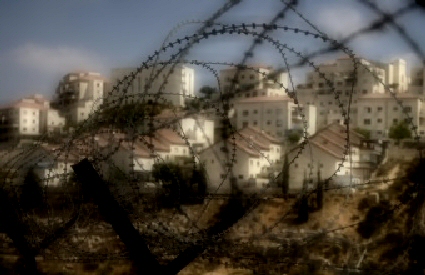
An Israeli plan to expand Israeli settlements for Zionist Jewish immigrants coming from France was revealed on Tuesday, according to the PNN.
The plan aims at expanding Israeli occupation settlements in the West Bank and East Jerusalem, in order to have about 10,000 additional Zionist immigrants live in Israeli-occupied Palestine.
Israeli prime minister Benjamin Netanyahu exploited the French national rally, on Monday, to invite European Jews to move into Israel and flee “European antisemitism”, saying that Israel was their home, despite French leadership and Jewish objections at the French synagogue.
Israel’s Channel 2 TV said, on Tuesday, that Israeli minister of housing, Uri Ariel, sent a message to the settlement committee, saying that Israel was getting ready to receive huge numbers of French immigrants, and that there must be a collective plan to settle them all.
Ariel, in his letter, said there was no doubt that French Jews sympathize with the settlement project, and that the settlement ministry will work on absorbing them all.
PNN further notes that the number of the French immigrants into Israel has been on the increase for years. For 2014, the number hit more than 6,000 — double the amount in 2013. In 2015, about 10,000 French Jews are expected to land in Israeli-occupied Palestine.
Abbas’ Big Bluff on War Crimes Bid against Israel
Palestinians at the Hague
By Jonathan Cook | Dissident Voice | January 8, 2015
Intense pressure from Israel and the US last week on members of the United Nations Security Council narrowly averted Washington’s embarrassment at being forced to veto a Palestinian resolution to end the occupation.
The Palestinians’ failure to get the necessary votes saved the White House’s blushes but at a cost: the claim that the US can oversee a peace process promising as its outcome a Palestinian state is simply no longer credible.
Looming is the post-peace process era. Its advent appears to have been marked by Palestinian leader Mahmoud Abbas’ decision in the immediate wake of the Security Council vote to join the International Criminal Court (ICC) in the Hague.
Israel furiously opposes the move, justifiably fearful that its politicians, military commanders and settler-leaders may now be put on trial for war crimes.
But the Palestinian leadership has long been apprehensive about such a move too. Abbas has spent years postponing the decision to sign the Rome Statute, which paves the way to the ICC.
Israeli statements at the weekend implied that Abbas’ reticence signalled a concern that he might expose himself to war crimes charges as well. Israel had “quite a bit of ammunition” against him and his Palestinian Authority, said one official menacingly.
In truth, the Palestinian president has other, more pressing concerns that delayed a decision to move to the legal battlefield of the Hague.
The first is the severe retaliation the Palestinians can now expect from the US and, even more so, from Israel. Israeli prime minister Benjamin Netanyahu began by halting the transfer of tax revenues Israel collects on the Palestinians’ behalf. Israel is also preparing to lobby the US Congress to enforce legislation that would halt aid to the PA in the event of it launching an ICC action. More punishments are due to be announced.
In selecting the “nuclear option”, as Israeli analysts characterised it, Abbas has also left himself empty-handed in future diplomatic confrontations – and for no obvious immediate gain. War crimes allegations may take years to reach the court and, even then, be stymied by pressures the US will bring to bear in the Hague, just as it currently does in the Security Council.
But most problematic of all, as Abbas knows well, a decision to pursue war crimes trials against Israel threatens the PA’s very existence.
The PA was the offspring of the two-decade-old Oslo accords, which invested it with two temporary functions. It was supposed to maintain stability in the parts of the occupied territories it governed while serving as Israel’s interlocutor for the five years of negotiations that were supposed to lead towards Palestinian statehood.
It has excelled in both roles. Under Abbas, the PA has been doggedly faithful to the idea of the peace process, even as Netanyahu spurned meaningful talks at every turn.
Meanwhile, the PA’s security forces – in coordination with Israel’s – have kept the West Bank remarkably quiet even as Israel expanded and accelerated its settlement programme.
But as Avigdor Lieberman, Israel’s foreign minister, argued on Sunday, the Palestinians’ move to the Hague court is further proof that the Oslo accords have expired.
Without a peace process, or any Israeli commitment to Palestinian statehood, why would the PA continue to cooperate on security matters with Israel, let alone consider such coordination “sacred”, as Abbas termed it last year? If the accords are seen to be dead, the impression can only grow that the PA is nothing more than Israel’s security contractor, assisting in its own people’s oppression.
Until now, that reality had been partially obscured by Abbas’ image as the Palestinian peace-maker. But if the process is indeed over, the contradictions in the PA’s role will be dramatically on show.
Right now, Palestinian security forces are committed to coordinating with the very people the PA is intending to indict as war criminals. And by maintaining calm in the West Bank, the PA is furthering the building of the very settlements the Rome Statute defines as a war crime.
Abbas is in a bind. If he ends coordination and goes on the offensive, why would Israel allow the PA to continue functioning? But if his security forces continue to collaborate with Israel, how can he retain credibility with his people?
This leaves the Palestinian leader with only two credible strategic options – aside from dissolving the PA himself.
The first is to adopt a sophisticated model of armed resistance, though the PA has specifically rejected this in the past and is poorly equipped for it compared with militant factions like Hamas.
The other is to accept that Palestinian statehood is a lost cause and adopt a new kind of struggle, one for equal civil rights in a single state. But the PA’s rationale and bureaucratic structure preclude that. It is in no position to lead a popular struggle.
That is why Abbas will continue pursuing a Palestinian state through the UN, as he promised again at the weekend, undeterred by the realisation that it is unlikely ever to come to fruition.
The door to the Hague may be open, but Abbas is in no hurry to venture through it.
Report: Israeli Occupation Forces killed six Palestinians last month
Palestine Information Center – January 8, 2015
 GAZA – Israeli occupation forces (IOF) killed six Palestinians and kidnapped hundreds in the West Bank and the Gaza Strip last December, according to a report released by the Hamas Movement on Wednesday.
According to the report, the IOF shot dead one Palestinian last month in Gaza while another died of wounds he had sustained during the last war.
Four Palestinians were killed by IOF gunfire in the West Bank.
The IOF also detained 327 Palestinians, including 58 children and four women, mostly from the West Bank.
During the reporting month, the IOF demolished 40 Palestinian homes, 10 commercial stores, 31 structures as well as one restaurant and one forge, and issued demolition orders against other homes.
The Israeli occupation authority, in turn, approved plans for the construction of 316 housing units in Jerusalem and annexed 321 dunums of Palestinian land last month.
The report also touched on some of the violations committed by the Palestinian Authority’s security forces during the month, stating that they detained 235 cadres and supporters of the Palestinian resistance, mostly from Hamas, summoned 151 others for interrogation, and extended the detention of 32 others.
Jewish settlers attack Palestinians south of Jenin
Palestine Information Center – January 2, 2015
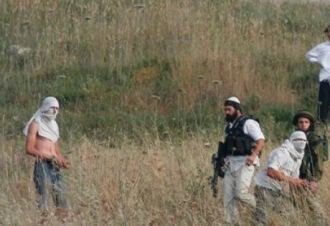 JENIN – A group of Jewish settlers attacked Palestinian vehicles traveling on Jenin-Nablus road near the junction of Jaba village south of Jenin at dawn Friday.
Around 12 vehicles carrying settlers stormed the evacuated settlement of Tarsleh and blocked Jenin-Nablus road today under military protection.
The settlers spread among nearby olive trees and began attacking and stoning passing Palestinian cars in the presence of Israeli soldiers, eyewitnesses said.
During the attack, the settlers chanted racist slurs against the Palestinians.
Meanwhile, Israeli media sources claimed that three Molotov cocktails were thrown at a home appropriated by settlers in Ras Amoud neighborhood in occupied Jerusalem overnight. The sources said that Palestinian young men threw three Molotov cocktails at the house, with no reported injuries.
The Israeli police launched a wide manhunt following the incident.
Extremist Israeli Settlers Burn Palestinian Home Near Hebron
By Saed Bannoura | IMEMC & Agencies | December 31, 2014
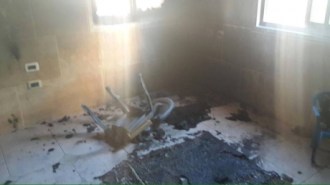 A Palestinian family from a village east of the town of Yatta, near the southern West Bank city of Hebron, narrowly escaped death on Wednesday at dawn, when a number of fanatic Israeli settlers hurled Molotov cocktails into their home as they slept.
The head of the Yatta City Council Mousa Makhamra told the Maan News Agency that the attack is a very serious and dangerous escalation, adding that it is an attempt to annihilate a family of seven; five children and their parents.
Makhamra added that the fanatic settlers, from Karmiel illegal settlement, infiltrated into ad-Deerat village, east of Yatta, at approximately 3 am, and throw the Molotov cocktails into the Palestinian home after writing racist graffiti on its outer walls.
Makhamra further stated that the family woke up in time, and their neighbors rushed in when they saw the house on fire, and rescued the family.
The fires consumed the furniture in the living room, but was controlled before it spread.
The settlers wrote racist anti-Arab graffiti, including the infamous statement “Death To Arabs”, and other graffiti.
Image Shehab News
PLO: Israel has detained 1266 Palestinian children in 2014
Al-Akhbar | December 30, 2014
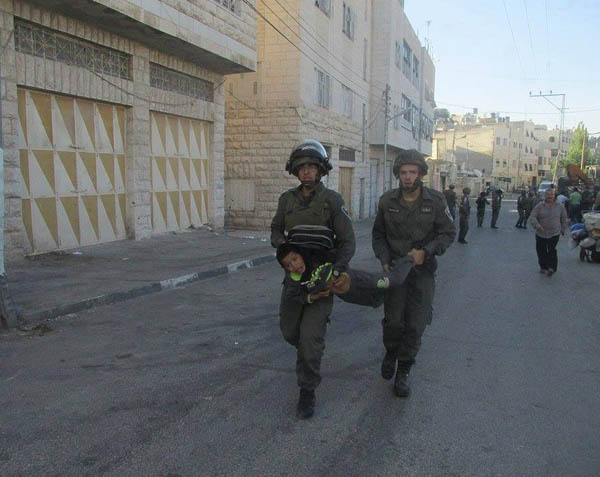
Israeli forces detained over 1,000 Palestinian children in the occupied West Bank and annexed Jerusalem in 2014, the Palestine Liberation Organization (PLO) said Tuesday.
Abdul-Nasser Farawna, head of Authority of Prisoners’ Affairs, a PLO body, said that Israel detained 1,266 Palestinian children, below the age of 15, in the West Bank and Jerusalem in 2014.
“The vast majority of the arrests happened in the second half of the year,” Farawna said in a statement, adding that at least 200 children are still detained in Israeli jails on various charges.
Israeli forces routinely conduct arrest campaigns targeting Palestinians in the occupied West Bank and annexed Jerusalem on claims they are “wanted” by Israeli authorities.
According to the PLO, more than 10,000 Palestinian minors in the occupied West Bank and annexed Jerusalem have been held by the Israeli army for varying periods since 2000.
“The number of Palestinian children arrested by Israeli forces, especially in annexed East Jerusalem, has sharply risen,” Farawna declared, saying that the number of children detainees had increased by 87 percent over the past three years.
“The majority of the detained children were subjected to beatings and torture by Israeli security personnel while in detention,” he asserted.
Farawna’s statements echoed similar comments last month by another PLO official, Issa Qaraqe, who said that around 95 percent of children detainees were subjected to beatings and torture by Israeli security personnel while in detention, while many were forced to make confessions under duress and undergo unfair trials.
Violent practices by Israeli soldiers as well as settlers against Palestinian children is endemic and often abetted by the authorities.
“Israel does not provide any immunity for children and regularly violates international agreements on children’s rights by humiliating and torturing them and denying them fair trials,” Qaraqe explained.
A report by Defense for Children International (DCI) published in May 2014 revealed that Israel jails 20 percent of Palestinian children it detains in solitary confinement.
DCI said that minors held in solitary confinement spent an average of 10 days in isolation. The longest period of confinement documented in a single case was 29 days in 2012, and 28 days in 2013.
A report by The Euro-Mid Observer for Human Rights Israeli forces arrested nearly 3,000 Palestinian children from the beginning of 2010 to mid-2014, the majority of them between the ages of 12 and 15 years old.
The report also documented dozens of video recorded testimonies of children arrested during the first months of 2014, pointing out that 75 percent of the detained children are subjected to physical torture and 25 percent faced military trials.
The most excruciating violations are seen in the psycho-physical torture methods, including the act of forcing children to sit on the investigation chair chained hand and foot and covering their entire heads with foul-smelling bags, in addition to depriving them of sleep.
In 2013, the UN children’s fund (UNICEF) reported that Israel was the only country in the world where children were “systematically tried” in military courts and gave evidence of practices it said were “cruel, inhuman and degrading treatment or punishment.”
The UNICEF report said in a 22-page report that over the past decade, Israeli forces have arrested, interrogated and prosecuted around 7,000 children between 12 and 17, mostly boys, noting the rate was equivalent to “an average of two children each day.”
Palestinian children as young as five years old have also been detained in the past.
In 2013, Israeli forces in the West Bank detained four Palestinian children aged five to nine years.
Palestinian activist Murad Ashtiye told AFP at the time that “Israeli soldiers arrest the children and tie their hands behind their backs using plastic strips.”
Meanwhile in Gaza, a 51-day Israeli aggression last August left at least 505 children dead, 20 percent of the total civilian death toll.
The UN agency for Palestinian refugees UNRWA said 138 of its students were killed during the assault. The organization’s spokesperson Christopher Gunness said an additional 814 UNRWA students were injured and 560 have become orphans due to the Israeli onslaught.
The worst massacre took place in the Abu Hussein School of the Jabaliya refugee camp in the north killing and injuring dozens even after the agency said that it gave the school’s coordinates to the Israelis more than 17 times so they won’t hit it.
(Anadolu, Al-Akhbar)
Chronicle of impunity for unprovoked shooting by ‘security’ forces
Yesh Din | December 29, 2014
 Someone shot a bullet at Ashraf Muhammad Jamal Tufiq’s foot in Bil’in in 2009. The IDF’s investigatory bodies did their best to make sure they will never find the shooter.
On Friday, January 16 2009, someone – a member of the Israeli security forces – fired a bullet into the foot of Ashraf Muhammad Jamal Tufiq from the West Bank village Bil’in. According to Tufiq, the shooting occurred without any provocation and came after the weekly demonstration ended. As a result of his injury, Tufiq had to undergo an operation and had to give up on being a professional a soccer player. On November 4, 2013, the Operational Affairs Prosecution closed the case, reaching the conclusion that it contains no evidence whatsoever.
Hold on, you say, you’ve made an error. You’re saying the shooting took place on January 2009, but the case closed in November 2013. That’s more than four years between one event and another. You must have made a mistake.
No mistake. This is the heart of the issue. I’ll present the chronology of events based on the work of Adv. Emily Schaeffer Omer-Man. But before we start, we should note that Tufiq’s testimony is not bereft of problems, and that at certain points he even contradicts himself. The fact, however, is that he was shot and became a cripple. A quick investigation might have found out what actually took place. But, as we can see from the flow of events below, that did not exactly happen.
January 16, 2009 – A Friday demonstration in Bil’in, and it’s more violent than usual. The soldier in question will later remember the events because, unusually, another soldier was wounded. After the demonstration, a member of the security forces shoots Tufiq. He is taken to a hospital and, with our aid, submits a notice (the equivalent of a complaint to the police) to the Military Police Criminal Investigation Division (MPCID).
May 24, 2009 – More than four months after the incident, the Jerusalem branch of the MPCID confirm they have received the notice.
July 7, 2009 – The Operational Affairs’ prosecution informs us that it is dealing with the case.
August 4, 2009 – The Operational Affairs’ prosecution informs us that it has frozen the investigation in order to “clarify the issue with military officials.” This, in effect, means the investigation is delayed while the case is referred to an operation debriefing.
February 14, 2010 – Thirteen months after the incident: the Operational Affairs’ prosecution says the case is under consideration.
October 14, 2010 – Twenty-one months after the incident: the Operational Affairs’ prosecution says the case is under consideration.
April 14, 2011 – Two years and three months (!) after the incident: the Operational Affairs’ prosecution says the case is under consideration.
November 29, 2011 – Two years and 10 months after the incident: reports that Atlantis has risen from the sea, fish are climbing trees, cats and dogs have foresworn their ancient enmity, and MPCID has re-opened its investigation.
Which is nice, but there are two main problems with opening an investigation so late in the game:
1. The chances of finding evidence is nil. There is no crime scene to speak of, particularly since the incident took place before the IDF has deigned to obey the ruling of the High Court of Justice and moved the separation fence in Bil’in. Also, human memory blurs rapidly.
2. Even if there was evidence, once a soldier has been discharged from the army for six months (or a year, in extreme cases) he or she is no longer under the jurisdiction of military law. Given that mandatory military service in the IDF lasts for three years for men, even if the MPCID had found the culprit on the day in which it began its investigation (which, naturally, did not happen) chances are that they would not have been able to bring him to trial. Only the Attorney General can decide to do so – which hardly ever happens in practice.
And after this methodical break, back to our chronicle:
December 8, 2011 – MPCID Jerusalem contacts us and wants to set up an interview with the victim. After a series of delays – including one case in which Tufiq comes to a meeting set up by MPCID and finds no one who can take his statement – MPCID finally takes a statement from him on December 30, 2012, i.e. two months after the resurrection of the investigation.
February 9, 2012 – The MPCID interviews the operations officer of the battalion involved in the incident. He says he doesn’t remember anything, which sounds perfectly plausible. After all, this was a negligent incident from a military point of view, not to mention the fact that more than three years have passed since it happened.
February 20, 2012 – The MPCID receives the translation of the medical reports regarding Tufiq’s wound, which the Operational Affairs’ prosecution could easily have obtained some three years earlier. But let’s not be petty.
March 11, 2012 – Three weeks later, the MPCID interviews the operations officer once again. He says he doesn’t even remember which forces were involved in the incident. Since, well, three years have passed, and it wasn’t exactly the Battle of the Bulge.
8.3.12 – The MPCID interviews the battalion commander. He claims there was no shooting during the incident, much less live shooting. He adds that it is inconceivable his patrol troops would lie on this issue.
March 11, 2012 – The MPCID interviews the battalion commander again, who says that given the time that has gone by, his outfit no longer has any documents relating to the incident.
March 13, 2012 – The MPCID tries, without success, to gain access to the operational logs. Given the passage of time, they were not kept.
July 25, 2012 – More than four months after the last investigative action took place, the MPCID interviews another officer – this time a major. He does not think there was live fire.
July 31, 2012 – The MPCID investigators interview another officer, a Lt. Colonel. He does not even remember over whom he presided at the time. After all, this was more than three years since the incident.
August 1, 2012 – After a delay of three years and seven months, the MPCID decides to interrogate the platoon commander under legal warning. He remembers the soldier who was wounded, thinks there may have been a Ruger bullet fired but is not certain and remembers that there was a report about a wounded Palestinian when he got back to base. The officers interviewed earlier did not remember this detail. One should note that his testimony, where he says a live bullet may have been fired, contradicts the testimony of his battalion commander. And since he was closer to the incident, we should give more weight to his testimony.
October 28, 2012 – Nearly three months after the latest investigation, the MPCID interrogates the wounded soldier. He us convinced there was no live fire, not by him at any rate. He claims that he kept asking for permission to use live fire. His request was denied and he used rubber bullets instead.
November 11, 2012 – The MPCID interrogates another soldier in the section under warning. The soldier also remembers that they fired rubber bullets – not live ones.
November 16, 2012 – The MPCID interrogates the sergeant major of the force under warning. He denies any sort of shooting, saying the forces used only tear gas grenades. This testimony is contradicted by all the other testimonies.
December 18, 2012 – The MPCID interrogates yet another soldier, who says they fired rubber bullets and believes there was no live fire.
December 18, 2012 – The MPCID interviews a medical officer, a Lt. Colonel, who says there is no point in interviewing Border Policemen, since their outfit carries out such actions on a weekly basis, and thus they won’t remember a thing. He seems to be right; there is no evidence of MPCID trying to interview Border Policemen.
November 4, 2013 – We’ve come to the end of this comedy of errors: nearly a year after the last investigation, and four years and 10 months after Tufiq was shot, the Operational Affairs’ prosecution closes case, citing lack of evidence.
So what had we here? A failure from beginning to end. The investigation began almost three years after the incident, and from the start it was doubtful whether it ever stood a chance. Too much time had passed.
But there is an even more important point to make here. Almost all the witnesses contradict each other. The battalion commander says only rubber bullets were fired – but the platoon commander thinks there may have been a Ruger bullet fired. The sergeant major thinks only gas was used, while all other witnesses report the use of rubber bullets. The medical documents speak clearly of a live bullet. Did someone pull the Beitunia trick by firing a live bullet and masquerading as if it were a rubber bullet? We’ll never know.
The IDF keeps telling us it needs to hold an operational debriefing – that it needs its soldiers to tell the truth during the debriefing. Therefore, it claims, the debriefing must not be turned over to MPCID as evidence. But note what happened: after almost three years wasted by the Operational Affairs’ prosecution, nobody has a clue as to what happened. The officers cannot even remember their order of battle. No one is sure about what kind of ammunition was actually used. There is a vague Border Police force in the area of operations, but no one knows what it did. The operational logs no longer exist.
If this the situation, what is the purpose of the operational debriefing? Ostensibly it is supposed to provide the forces with insight into the events so they can improve their tactics. But if no one remembers what was said in it, what is it really good for? And why can’t the MPCID investigation run parallel to it, rather than months afterward?
The Turkel Commission, which dealt with the behavior of the military investigative bodies, recommended that an investigation ought to be swift. Two years before Turkel’s recommendations, the JAG decided to hold MPCID investigations (after an appeal by B’Tselem and ICRI) – in cases of death only – in parallel to the operational debriefing. We have some indications that MPCID is beginning to internalize and implement the Turkel Commission recommendations, with an emphasis on speedier investigations. But in the meantime, the investigation of the shooting of Ashraf Muhammad Jamal Tufiq stands as Exhibit A that the IDF doesn’t know how and perhaps doesn’t want to investigate itself.
Photo: Israeli border police officers shooting tear gas canisters during the weekly protest against the Wall in the West Bank village of Bil’in, November 1, 2013
Photo by Activestills
Israeli Forces Train with Live Ammo in West Bank Civilian Areas

IMEMC News & Agencies | December 30, 2014
Israeli occupation forces, since the early hours on Monday, have been holding military training sessions with live ammunition, in the Khirbet Taweel area, South Nablus.
Member of the Popular Struggle Coordination Committee of Aqraba, Yousef Deriyyah, said that Israeli occupation forces, Sunday evening, bulldozed and damaged several dunams of wheat fields in preparation for the training.
The PNN further reports that military training has often targeted Palestinians, including children, causing injuries and home evictions.
Back in August, Israeli authorities evicted 1,300 Palestinians from their homes in the south Hebron hills, of the occupied West Bank, claiming that they are located in a military training zone.
In October, Israeli forces stormed Aida refugee camp without any provocation and began firing tear gas canisters, sound bombs and rubber-coated steel bullets at children in the streets.
Eyewitness said that soldiers were training by using families, children and homes as military practice.
Also in October, Israeli authorities distributed eviction notices to 19 Palestinian families in the Northern Jordan Valley area, in order to use the area for military purposes.
Featured Video

ARE PATIENTS BEING PROPERLY INFORMED ABOUT OZEMPIC?
or go to
Aletho News Archives – Video-Images
From the Archives
Trans ‘milk’ as good as the real thing – NHS
RT | February 18, 2024
The drug-induced nipple secretions of trans women are as good as mothers’ breast milk for babies, the University of Sussex Hospitals NHS Trust claimed in a letter to campaigners made public in a report by British think tank the Policy Exchange on Sunday.
The healthcare trust’s medical director, Rachel James, argued that the off-label prescription drug cocktail men transitioning to female take in order to produce milk was “similar to the natural hormones which encourage lactation to develop when the baby is newly born.”
“The evidence which is available demonstrates that the milk is comparable to that produced following the birth of a baby,” James wrote in the letter, sent to Children of Transitioners last August.
Biological men who wish to lactate must first take hormones to grow milk glands and then take high doses of either domperidone or metoclopramide to stimulate milk production. Neither drug is approved for this use, though they are occasionally prescribed off-label to biological women who have trouble lactating.
However, domperidone’s own manufacturer, Janssen, warns patients the drug “may cause unwanted side effects affecting the heart in a breastfed baby” and “should be used during breastfeeding only if your physician considers this clearly necessary.” … continue
Blog Roll
 Aletho News
- 2025 Nature Paper Claiming Worsening Global Drought Gets RETRACTED …Heavily Flawed
- Your Milk Is Not the Problem
- The Truth About the Trump Shootings with Ken Silva
- ARE PATIENTS BEING PROPERLY INFORMED ABOUT OZEMPIC?
- US lawmaker blocks $2.8 billion weapons sale to Israel: Report
- Yemeni army claims responsibility for strikes on sensitive sites in Saudi capital, Aramco facilities in Yanbu
- Iran Judiciary issues indictments against 159 US, Israeli officials for assassination of Leader, commanders
- Turkiye revokes Iranian bank license under US sanctions campaign
- US-Denmark Agreement on Greenland Is ‘PR Stunt’ Ahead of Midterms
- Araghchi: Military intervention cannot create security; coercion cannot bring peace
- If Americans Knew
- Inside Gaza’s death trap of collapsing, bombed-out buildings
- The everyday items Israel bans from Gaza every day
- Inside the siege, the ruined buildings of Gaza – Daily Update
- Debunking The Claim That Macklemore Has A “History Of Antisemitism”
- CPJ demands release of arrested Palestinian-US journalist near Bethlehem
- Robert Kraft: The Billionaire Friend of Netanyahu Pulling The Strings Behind the Macklemore/Ed Sheeran Blow Up
- Columbia Administered Fund Gives Big Money to Pro-Israel Groups
- Deportation Case of Palestinian Activist Salah Sarsour Tests First Amendment
- ‘We Will Not Forget’: Palestinians Mark 44 Years since Sabra and Shatila
- Why do we let Zionists decide what we can and can’t say?
- No Tricks Zone
- 2025 Nature Paper Claiming Worsening Global Drought Gets RETRACTED …Heavily Flawed
- New Study: ‘Global Drought Shows No Detectable Recent Acceleration Under Climate Warming’
- Economic Masterminds: German Socialists Suggest Taxing Productivity Gains Stemming From Using AI
- The South China Sea Has Not Been Cooperating With The Climate Change Narrative
- Energy Crisis: Germany Enters Heating Season With Historically Low Gas Reserve Fill Levels
- New Study: The Antarctic Ice Sheet Gained Mass From 2020-2024 Due To Staggering Snow And Ice Accumulation
- Study: Ocean Heating Rates From Thousands Of Years Ago ‘Dwarf’ Modern Ocean Heating Rates
- Climate Extremists Target, Attack Large-Scale Power Grid Infrastructure In Germany!
- New Study: Antarctic Ice Melt Has Contributed Less Than 1 Centimeter To Sea Level Rise In The Last 30 Years
- Fear Of Debate: Alarmist German Climate Scientist Calls On Mainstream Media To Discredit Skeptic Voices
 Aletho News