Israel says army to stay ‘for next year’ in Palestinian refugee camp in occupied West Bank
MEMO | February 23, 2025
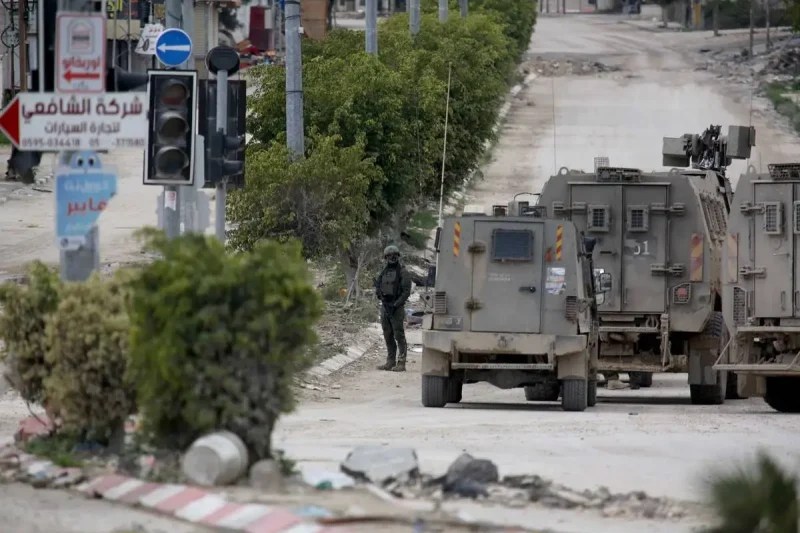
Israeli Defense Minister Israel Katz said Sunday that the army will remain in Palestinian refugee camps in the northern West Bank for the next year to prevent Palestinian residents from returning, Anadolu reports.
The Israeli army deployed tanks in the northern West Bank early Sunday, marking the first time since 2002 amid military escalation in the occupied territory.
“The Israeli army is expanding its operations in the northern West Bank, and starting tonight, it will also operate in the town of Qabatiya,” Katz said in a statement.
The defense minister said 40,000 Palestinians have been evacuated from Jenin, Tulkarem, and Nur Shams refugee camps.
“UNRWA activity in the camps has also been stopped,” he said. “I instructed the IDF (army) to prepare for a long stay in the camps that were cleared, for the coming year, and not allow residents to return.”
The army has been conducting military operations in the northern West Bank since last month, killing at least 60 people and displacing thousands.
The raids were the latest in Israel’s ongoing military escalation in the West Bank where at least 923 Palestinians have been killed and nearly 7,000 injured in attacks by the Israeli army and illegal settlers since the start of the onslaught against the Gaza Strip on Oct. 7, 2023, according to the Palestinian Health Ministry.
The International Court of Justice declared in July that Israel’s long-standing occupation of Palestinian territories is illegal, demanding the evacuation of all settlements in the West Bank and East Jerusalem.
What Does Israel Want in The West Bank?
By Diana Khwaelid | International Solidarity Movement | February 5, 2025
Northern West Bank – Israel is carrying out massive military operations to displace residents of camps in the northern West Bank, unprecedented since the Second Intifada. Since the seventh of October, Israeli attacks on West Bank cities, especially in the north, have not stopped. We are talking about the cities of Jenin, Tulkarm, Tubas, Nablus and Qalqilya.
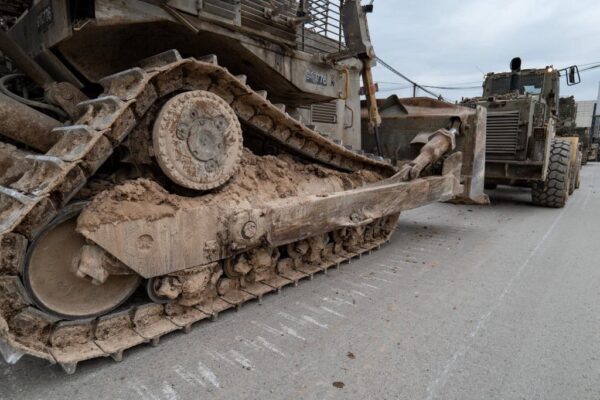
Destruction of Palestinian refugee camps
At the end of January, Israel carried out a large scale military operation in the northern West Bank city of Jenin, which has lasted for ten days so far.
Its military operations are based in the Jenin refugee camp, in various city areas, and in some nearby villages. The Jenin camp has become an unfit place for human habitation, dozens of Palestinian houses have been destroyed and bombed, and the neighborhoods and streets of the camp have already been destroyed. Electricity,water pipes and infrastructure have been destroyed.
A residential block and an entire neighbourhood have been completely destroyed due to aerial bombardment.
Did you succeed in transforming the Jenin camp like Jabalia camp in Gaza?
This is what senior Israeli officials promised before the start of the recent military operation in the West Bank, especially in the Northern West Bank. The Israeli occupation continues its aggression on Jenin, Tulkarm, and Tubas, murdering 29 martyrs, dozens of injuries, arrests, demolition of houses and forced displacement. Amid widespread destruction of property and infrastructure.
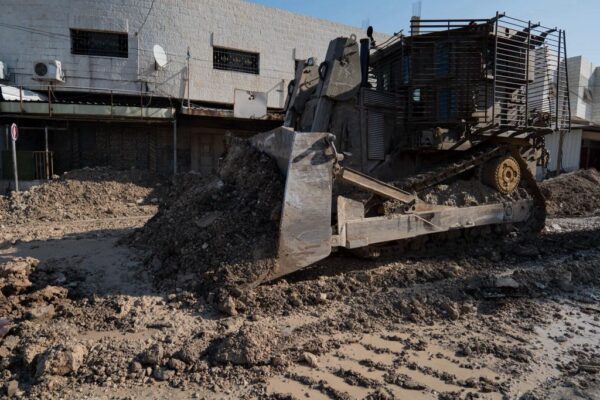
Entrance to Tulkarem
JENIN
Jenin, for the fifteenth day in a row, the occupation continues its aggression against the Jenin city and its camp, which has so far resulted in 25 martyrs, dozens of injuries, arrests, and the demolition of dozens of houses, amid a large displacement process that affected 15 thousand citizens.
Yesterday morning, the occupation army forced residents of the buildings supervising the Jenin camp to evacuate, as several military vehicles were stationed near the buildings demanding evacuation.
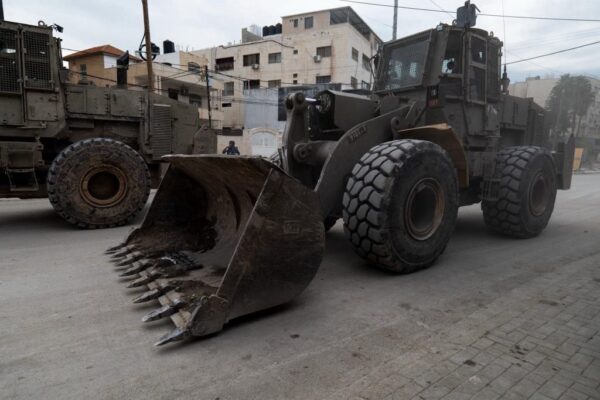
Street in Jenin
Residential buildings and apartments are being emptied, forcibly displacing citizens.
The occupation forces in the Jenin camp simultaneously blew up about 20 buildings in the eastern side of the camp, after booby trapping them, which caused damage to some sections of the Jenin government hospital, without injuries being recorded. The occupation continues to push reinforcements to the city of Jenin camp from the Jalama military checkpoint, while its bulldozers continue to destroy houses in the merge lane, with approximately 15 thousand people now displaced from the Jenin camp the target neighborhood, distributed throughout 39 local community bodies in the Jenin governorate and its towns.
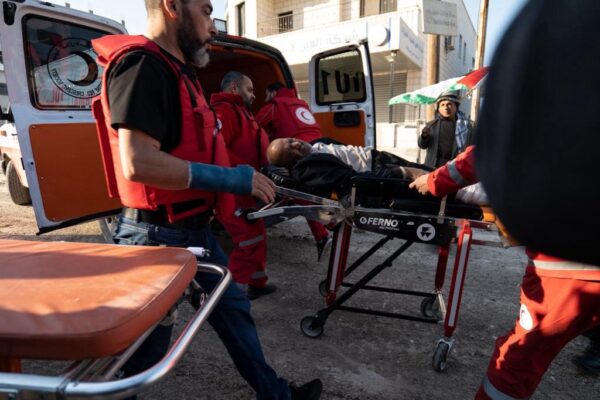
Transfer of an injured person in Tulkarem
TULKAREM
For the ninth day in a row, the occupation continues its aggression against the city of Tulkarm and its camp, resulting in the martyrdom of four citizens, amidst extremely difficult humanitarian conditions.
The occupation forces are still pushing more of their vehicles into the city and its camp from the “tasnouz” military camp west of Tulkarm, and deploying infantry patrols in large numbers in the streets, neighborhoods, and the center of the vegetable market, combing and searching between houses and alleys and harassing citizens.
These forces also continue to besiege the martyr Thabit Thabit government and specialized hospitals, obstruct the work of ambulances and their medical crews, and subject them to inspection and field investigation, while they have taken military barracks and places for snipers from the buildings surrounding them.
The occupation forces escalated their violations against citizens in the city and its camp through a series of attacks, which included raiding houses, forcing their owners to flee, vandalizing and stealing their contents, blowing up and destroying a number of them, in addition to restricting movement, while seizing commercial and residential buildings and turning them into military barracks and places for snipers.
In Tulkarem camp, the occupation forces continue to deploy large numbers of infantry soldiers in all its neighborhoods and alleys, raid houses, force residents to leave them, seize high buildings and turn them into sniper platforms and shoot at Citizens, which led to the injury of a citizen (40 years old), shot by an occupation soldier sniper stationed inside one of these buildings.
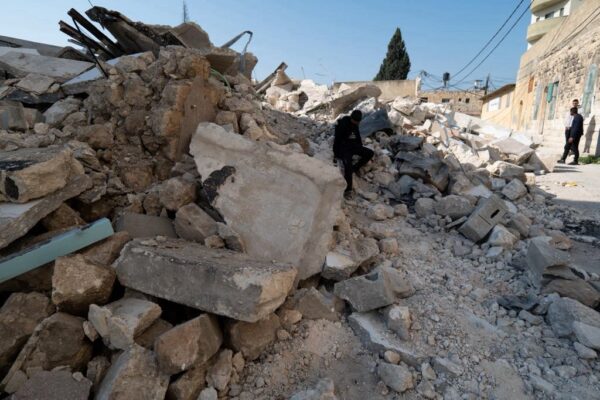
House of the martyr Tamer Fugha
Tulkarem camp is living amid this unprecedented continuous escalation, amid difficult humanitarian conditions, after the occupation bulldozers completely and partially destroyed houses and shops, blowing up a number of them and burning others, coinciding with the destruction of infrastructure, which led to the interruption of water, electricity, communications and the internet, making it difficult for specialized crews from the municipality, and others, to repair them because the occupation prevented them from entering the camp. The situation of citizens who are still in their homes ~ the elderly, the sick, women and children has also been aggravated by the acute shortage of food, medical, drinking water, and infant formula.
TUBAS
For the third day in a row, the occupation is besieging AL- FARA’ camp and the town of Tamoun south of Tubas, amid arrests, bulldozing of infrastructure and forcing citizens to flee.
Since the beginning of the storming, Israeli Occupation Forces forces have bulldozed the roads and infrastructure leading to the AL-FARA’ camp, in addition to closing all entrances to it with earthen berms and raiding houses in the vicinity of the camp, forcing its residents to be displaced, and turning them into military barracks.
Israeli Occupation Forces also raided the homes of citizens on the outskirts of the town of Tamun, forcibly displacing residents, giving them orders not to return within ten days.
Water pipelines have been destroyed between the Town of Tamun and the village of Atouf, in addition to closing of the road connecting the two areas with earthen berms.
The occupation continues to push military reinforcements to Tamun and the AL-FARA’ camp, while the Israeli reconnaissance aircraft continues to fly intensively in the skies of the governorate.

Military reconnaissance aircraft
According to the Palestinian Ministry of Health: the number of Palestinian martyrs in the West Bank since the beginning of this year 2025 has reached 70 martyrs.
38 martyrs in Jenin
15 martyrs in Tubas
5 martyrs in Tulkarem
3 martyrs in Hebron
2 martyrs in Bethlehem
6 martyrs in Nablus
1 martyr in Jerusalem
10 of them are children, 2 are women, 2 are elderly people.
10-year-old Palestinian boy in critical condition after Israeli soldier shoots him in Tulkarem
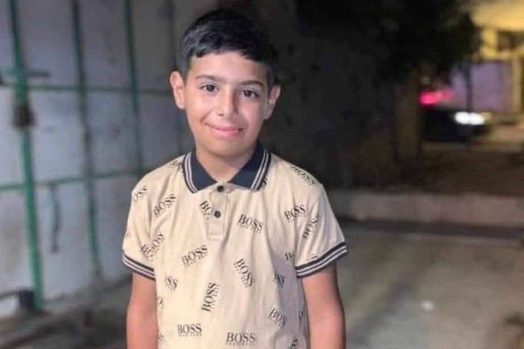
Saddam Hussein Iyad Mohammad Rajab, 10, was shot by an Israeli soldier in front of his home in Tulkarem on January 28 and is now in critical condition. (Photo: Rajab family)
Defense for Children International – Palestine | January 31, 2025
Ramallah — A 10-year-old Palestinian child is in critical condition after an Israeli soldier shot him in the northern occupied West Bank on Tuesday.
Saddam Hussein Iyad Mohammad Rajab, 10, was shot in the abdomen by an Israeli soldier around 6:10 p.m. on January 28 during an Israeli military incursion into Tulkarem in the northern occupied West Bank, according to documentation collected by Defense for Children International – Palestine. Israeli forces attacked Saddam’s father as he attempted to carry him to receive medical aid, and after paramedics placed him in an ambulance, soldiers detained his father for about an hour. After three hours of surgery at Thabet Thabet Governmental Hospital, doctors referred Saddam to Rafidia Hospital in Nablus, and during the transfer Israeli forces detained the ambulance transporting Saddam. While Israeli soldiers held up the ambulance, one soldier told Saddam’s father, “I am the one who shot your son. God willing, he will die.” Saddam remains in the intensive care unit at Rafidia Hospital.
“Israeli forces have utter contempt for Palestinian children’s lives as they deliberately target children with live ammunition with no accountability,” said Ayed Abu Eqtaish, accountability program director at DCIP. “This deliberate obstruction of medical aid reflects the Israeli military’s routine disregard for the protections afforded to medical personnel and infrastructure under international law, often intentionally targeting these entities and rendering essential health resources for Palestinian children ineffective.”
Saddam sustained a gunshot wound to his waist that exited from his chest, according to information collected by DCIP. The bullet tore through his intestines and injured the pancreas and other vital organs in the abdomen.
The attack was captured on camera and has gone viral on social media.
Saddam and his family had been trapped at home for two days as the Israeli military carried out an incursion into the city of Tulkarem. Saddam’s father said he was going to go downstairs for a minute and took a mobile phone with him.
“After about a minute, I heard the sound of only one bullet with my son Saddam’s scream,” Saddam’s father, Iyad, told DCIP. “He called out in a loud voice that still echoes in my ears, as he said “Dad!” and his voice disappeared.”
“I carried him in my arms, wanting to take him to the nearest vehicle or hospital or something to save his life,” Iyad continued. “When I carried him in my arms, I found that more than 20 Israeli soldiers surrounded me within moments, as some of them assaulted me with severe beatings, punches, and blows using their hands, feet, and rifle butts. I was carrying my son in my arms, and I was telling them to hit me and do whatever you want, but let me take my son for treatment.”
Saddam’s medical care was obstructed by Israeli forces several times, including immediately after the shooting and during the transfer from Thabet Thabet Governmental Hospital in Tulkarem to Rafidia Hospital in Nablus.
Under international law, children are entitled to special protections, which necessitate that they receive the care and aid that they need during times of armed conflict. Palestinian children like Saddam are systematically denied that right, as Israeli forces simultaneously continue to indiscriminately and fatally target children throughout occupied Palestinian territory. These ongoing assaults on children’s lives are perpetuated by Israel’s entrenched culture of impunity, which continues to claim the lives of Palestinian children nearly every day.
Prisoner thanks Gazans after release, says Israel tortures Palestinians
Press TV – January 31, 2025
One of the high-profile Palestinians released as part of the third batch of an agreement between Hamas and Israel on the exchange of Palestinian prisoners with Israeli captives under a Gaza ceasefire agreement was Zakaria Zubeidi.
Zubeidi, a senior leader of the Fatah movement and commander of its armed wing the al-Aqsa Martyrs’ Brigades in the West Bank, was freed on Thursday alongside 109 other Palestinian prisoners in the West Bank city of Ramallah.
Their release came after Hamas and its ally Palestinian Islamic Jihad released three Israeli captives along with the five Thai nationals. They were handed over to the Red Cross.
“Today I say thank you to Gaza, which liberated me and brought me back to my family. I was isolated, tortured and beaten, and repeatedly humiliated, and the situation of all prisoners is the same,” Zubeidi said in his first remarks after the release.
He went on to describe Israeli prisons as centers of killing and daily torture.
“Gaza now needs reconstruction, and all levels of the Palestinian people must come together to accomplish this, and return our people to their homes safely,” the former Palestinian prisoner pointed out.
Zubeidi was born in 1976 at Jenin refugee camp in the northern part of the occupied West Bank. He became a military commander for the al-Aqsa Martyrs’ Brigades during the Second Intifada (2000–2005), leading armed resistance.
He lost his mother Samira and his brother Taha in 2002, as Israeli occupation forces stormed the camp.
Zubeidi was constantly pursued by the occupying Tel Aviv regime.
On July 15, 2007, Israel granted amnesty to several al-Aqsa Martyrs’ Brigade members, including him, in exchange for their surrender to the Palestinian Authority.
Following the amnesty, Zubeidi got married and had two children – a son and a daughter. He shifted his focus to theater arts, and became a prominent advocate for Palestinian arts with the Freedom Theater in Jenin.
He met with many international activists and supporters of Palestinian rights.
But four years later, on December 29, 2011, Israel revoked his amnesty, despite Zubeidi’s insistence that he had not violated its terms.
He was detained without charge by the Palestinian Authority (PA) for six months, and then later held in a PA jail in “protective custody.”
In 2018, he pursued a master’s degree at Birzeit University.
He and his lawyer, Tariq Barghout, were arrested in January 2019 and charged with engaging in “new incitement activities” and armed resistance against the Israeli regime.
Zubeidi finally obtained his master’s degree behind prison bars.
On September 6, 2021, he escaped from the Gilboa maximum security prison in the northern sector of the Israeli-occupied territories alongside 5 other Palestinian inmates by digging a tunnel from their cell.
Israeli forces recaptured all six Palestinian inmates days later, but the daring escape, known as Operation Freedom Tunnel, was widely praised as legendary among Palestinians and Muslim nations.
Last May, Zubeidi’s son Dawoud succumbed to injuries sustained in an armed confrontation with Israeli forces in Jenin.
Last September, his other son Mohammad was killed in an Israeli airstrike on the West Bank city of Tubas along with several other Palestinians.
Israel releases 110 Palestinian prisoners in exchange for eight captives
Press TV – January 30, 2025
Israel has released 110 Palestinian prisoners after a temporary delay ordered by Israeli prime minister Benjamin Netanyahu even as Hamas had released eight captives in the third phase of the prisoner swap.
The prisoners released on Thursday evening included 30 minors, 32 Palestinian who had received life sentences, and 48 others who were serving prison terms of different duration.
Most of them reunited with their families in the occupied West Bank, while 23 of them were sent to Egypt. The prisoners released on Thursday were all men, aged 15 to 69.
The released inmates transported by Red Cross buses to both Palestinian territories were greeted with cheers by thousands of joyful Palestinians.
Zakaria Zubeidi, Mohammed Abu Warda and Mohammed Aradeh were among the high-profile Palestinians released on Thursday.
Israeli drones dropped leaflets on the Gaza Strip warning Palestinians not to hold flags or banners or celebrate the release of prisoners in any way, Al Jazeera reported.
Israeli soldiers often attack crowds that gather near prisons to celebrate the release of Palestinian prisoners.
Earlier Thursday, 12 Palestinians were wounded by Israeli soldiers in Beitunia, near the prison in the West Bank where Palestinian prisoners were due to be released.
Two Palestinians were wounded by live bullets, two by rubber bullets and eight by tear gas, according to the Palestinian Red Crescent Society.
Earlier in the day, Hamas released three Israeli captives, a female soldier and two settlers, plus five Thai nationals, fulfilling its part of the third phase of the prisoner swap, paving the way for Israel to to release 110 Palestinian prisoners, as scheduled.
However, Netanyahu said in a statement that he had ordered a halt to the release of Palestinians until further notice, claiming that the handover of eight captives had been conducted in a “chaotic” condition.
The Israeli premier said the exchange would be delayed until mediators secured guarantees from Hamas of “the safe exit of our hostages in the next rounds.”
Surrounded by masked Hamas and Islamic Jihad fighters, the captives made their way through large Palestinian crowds toward the Red Cross vehicles on Thursday without any incident.
Also a day after a second exchange of Israeli captives held in Gaza for Palestinian prisoners, Netanyahu ordered Israeli troops to prevent Palestinians from returning to their homes in northern Gaza.
Israel said then Hamas had failed to free a captive who it claimed should have been released, but Hamas denied such an arrangement had ever been agreed.
The holdup left hundreds of thousands of Palestinians stranded behind an Israeli military barrier for two days before being allowed to head to their homes.
Israeli forces fired on the crowds on three occasions, killing two people and wounding nine, including a child, according to al-Awda Hospital, which received the casualties.
Israel has pulled back from several areas of Gaza as part of the ceasefire, which came into effect last Sunday.
The ceasefire is aimed at ending the 15-month Israeli war on Gaza and freeing captives still held in Gaza in return for hundreds of Palestinian prisoners.
Over six weeks, Hamas will release 33 Israeli captives – about one-third of those in captivity – in exchange for nearly 2,000 Palestinian prisoners.
In the last two exchanges, Hamas released seven Israeli captives in return for 290 prisoners, nearly all of whom were Palestinians, except for one Jordanian.
A fourth exchange scheduled for Saturday will involve the release of three Israeli men, according to Netanyahu’s office.
Israeli forces fatally shoot 2-year-old Palestinian girl in the head near Jenin

Laila Mohammad Ayman Khatib, two, was shot and killed by Israeli forces while she ate dinner with her family near Jenin on January 25. (Photo: Courtesy of the Khatib family)
Defense for Children Palestine | January 26, 2025
Ramallah — Israeli forces shot and killed a Palestinian toddler near Jenin last night.
Laila Mohammad Ayman Khatib, two, was shot and killed by Israeli forces around 8:30 p.m. on January 25 while she was in the living room in her family’s home in the Palestinian town of Muthallath Al-Shuhada, south of Jenin in the northern occupied West Bank, according to documentation collected by Defense for Children International – Palestine. Laila was having dinner with her mother, grandparents, and aunts when sudden Israeli gunfire erupted without warning. Israeli forces fired four bullets through the living room window, one of which struck Laila in the back of the head. Laila’s grandfather carried her out of the house and brought her to Al-Razi Hospital in Jenin, where she received emergency surgery. Laila was pronounced dead around 10 p.m.
“Israeli forces regularly and routinely carry out military operations with complete contempt for Palestinian life,” said Ayed Abu Eqtaish, accountability program director at DCIP. “Little Laila was having dinner with her family when Israeli forces, unprompted, fired live ammunition into their living room, killing her. It is outrageous that the Israeli military has been permitted by world leaders to kill Palestinian children with impunity in flagrant violations of international law.”
Laila’s mother and aunt sustained injuries from shrapnel during the attack, according to information collected by DCIP.
When Laila’s grandfather exited the house carrying her, he saw Israeli snipers stationed in a Palestinian home across the street from their house. No residents of Muthallath Al-Shuhada were aware of an Israeli military presence at the time of the attack, and later learned that Israeli special forces had infiltrated the Palestinian home. Israeli forces remained in the town until about 11 p.m.
Jenin, its refugee camp, and the surrounding villages have been under an ongoing Israeli military attack dubbed “Operation Iron Wall” since January 21, 2025.
Since the beginning of Operation Iron Wall, 16 Palestinians have been killed, including Laila and 16-year-old Motaz Abu Tabeekh. This operation has also been accompanied by Israeli drone strikes, widespread destruction of infrastructure and homes in the Jenin refugee camp, and the bulldozing of roads. Additionally, hundreds of Palestinians families have been forcibly displaced from their homes due to the continued military assault.
Israeli forces have killed eight Palestinian children in the occupied West Bank in 2025, according to documentation collected by DCIP. Five children were killed by Israeli drone strikes and three children were shot and killed with live ammunition.
How likely is a ceasefire In Gaza?
By Robert Inlakesh | Al Mayadeen | January 2, 2025
As the Gaza ceasefire talks stall yet again, some analysts argue that Donald Trump’s inauguration could be the key. However, the prospects for ending the war are dependent upon a variety of other factors that are making an Israeli victory impossible.
Despite the recent progress towards securing a ceasefire in the Gaza Strip, the Zionist regime has again employed its delaying tactics in order to find the opportune moment. While the Resistance in Gaza has proven flexible on the fine details of a prisoner exchange and cessation of hostilities, it has also proven steadfast on the battlefield, making an Israeli victory declaration implausible.
The popularly accepted analysis at this stage is that with the start of Donald Trump’s second term in office, the possibility of a Gaza ceasefire will increase greatly. It is believed that Israeli Prime Minister Benjamin Netanyahu could even present the implementation of such a deal as a gift to Trump; kick-starting his Presidency with a diplomatic breakthrough.
It is also true that the Zionist Entity’s richest billionaire, Miriam Adelson, had pledged 100 million dollars to the Trump campaign, with the quid pro quo that in return for bankrolling his presidential bid, he would permit an Israeli annexation of the occupied West Bank.
What Could Make or Break A Gaza Ceasefire
The reality that must be accepted when it comes to the Israeli approach to a Gaza ceasefire/prisoner exchange agreement is that the United States will not use its leverage to secure one and instead only seeks to support the Zionist entity towards securing the best possible deal. Therefore, arguments presented about the possibility of the Trump administration actually using Washington’s leverage are ludicrous and should be discarded as fanciful.
The reason why Donald Trump could make a difference in this case comes down to two major factors: His support within the Zionist regime and his willingness to permit them to completely crush the idea of a so-called “Two-State solution”.
There is no one that commands quite as much public support amongst Israelis as Donald Trump, in fact, he is more loved by them than his own population in the United States. This means that his word carries weight and him throwing his support behind the Netanyahu-led coalition could force the more fundamentalist elements of his government to fall into line. In addition to this, there will be no hesitancy when it comes to permitting an Israeli annexation of the occupied West Bank.
These two components are essential for ensuring that a Gaza deal will not collapse the current Israeli coalition. If the Israeli PM is going to secure the support he needs for such a ceasefire, he needs the extremists on his side and can only do this by fulfilling the pledge to annex the West Bank.
Another major issue, besides the domestic Israeli political divisions is the activity and risk of battle across a variety of fronts. In order to annex the West Bank, the Israeli military will need to deploy enormous numbers of soldiers, private security forces and occupation police into the territory. In the event of mass civil unrest, or even a worse scenario for them like the collapse of the Palestinian Authority, they will need to send a force that could amount to hundreds of thousands of fighters, into the territory in order to control the situation.
Already the Zionist military is in a State of exhaustion, with many of its soldiers refusing to show back up when called upon to redeploy into the Gaza Strip. They have tens of thousands of wounded fighters and countless others suffering from psychological disorders, all of which place a burden on the regime alone. There’s also a deficit that has to be filled in the rank and file that the Israelis need in order for their military to function at proper capacity, which has led to desperate attempts to draw in new reserve soldiers and force the Ultra-Orthodox population to draft their young.
In the best case scenario for the Israelis – when carrying out their annexation – they will still need to dedicate a tremendous amount of resources and manpower to fulfilling the task properly. This is essential to understanding why the annexation will prove extremely difficult in the event that one of the various war fronts expands, particularly the Lebanon or Syria fronts.
While the future of resistance inside Syrian territory is unclear and not certain, if such a force does manage to rise and challenge the occupation of their territory in the south, it will require major investments to combat it and will be greatly draining for the Zionist armed forces. Although this appears to be the least likely of the fronts to again deteriorate into war, it is certainly still a question mark.
Then we have Lebanon. The Israelis have not respected the ceasefire for a single day since its announcement, committing hundreds of violations. The Zionist regime is not only continuing to maintain its presence in southern Lebanon, but has even penetrated further into the country during this period, forcing their way into territories that they couldn’t reach due to the fierce resistance against them.
The Israelis now discuss re-occupying southern Lebanon, blow up homes, mosques and other infrastructure daily, murder civilians, bomb targets deeper into the country and provocatively fly their flags in the south. Such a situation has not occurred since Hezbollah kicked the Zionist regime out of their nation in 2000, battering the Israelis again in 2006 and liberating their land. There is no conceivable way that the situation in Lebanon can remain like this, either the Israelis decide to leave the country altogether, or they will eventually face a response from Hezbollah.
If these fronts ignite, or tensions escalate with Iran, annexation will prove a difficult task for the decision makers in “Tel Aviv”, as they will be faced with a potentially dangerous predicament. Again, without the annexation of the West Bank, it is hard to imagine the Zionist regime being able to conclude a Gaza ceasefire.
On top of this, the Palestinian Resistance in Gaza has shocked everyone and is not only continuing to fight, it still possesses the rocket capabilities to strike occupied Jerusalem and Tel Aviv. In fact, the last burst of long-range rockets from the Gaza Strip towards occupied Jerusalem were fired from Beit Hanoun, an area in the besieged enclave that the Israelis have been stationed in throughout almost the entirety of the war.
Palestinian Resistance fighters continue to kill and injure Israeli soldiers, destroy and damage their military vehicles, while also firing rockets and drones. This is happening almost 15 months into the fighting and with no known supply lines to Gaza. Yet, the people continue to remain steadfast, while the resistance continues to recruit more fighters and manufacture new weapons.
Because of the refusal of the people of Gaza to lessen their cause, they have thwarted several attempts to impose a new rule upon them. Despite suffering through a Genocide and losing everything around them, they have not allowed for a foreign regime and fighters to be imposed. Also, the Zionists have not come up with any valid strategy to allow for a takeover of the Palestinian territory, having failed to destroy Hamas.
This is another issue that rears its head, what will the day after look like? There is no clear answer to this question yet and none of the proposals on the table will give the Zionists the image of a full victory that they have proposed from the start.
Female Palestinian journalist shot dead as PA forces raid Jenin refugee camp

Deceased Palestinian journalist Shaza al-Sabbagh
Press TV – December 29, 2024
A female Palestinian journalist has been killed after she was shot in the head during a raid by the Palestinian Authority (PA) forces at the Jenin refugee camp in the northern occupied West Bank.
The family of Shaza al-Sabbagh said their daughter was on the way to a grocery store when she was directly shot from a PA forces military point located near their house.
A spokesman for the PA’s so-called security forces, Colonel Anwar Rajab, claimed in a statement that the troops were not present in the area at the time of the shooting.
The Palestinian Journalists Syndicate says the death of Shaza al-Sabbagh, who was reportedly studying journalism at al-Quds Open University, has to be investigated.
The group called for an independent committee to be formed “to uncover the truth, hold the killers accountable, and ensure they do not escape punishment.”
Sabbagh is the eleventh person to be killed since PA forces started an offensive in the Jenin refugee camp three weeks ago to root out what it calls “lawless elements.”
Earlier this month, the Hamas resistance movement condemned PA forces for killing a commander of the fellow Islamic Jihad group during a raid in the occupied West Bank, warning that such actions will aggravate the years-long rift among Palestinian factions.
The Gaza-based movement, in a statement released on December 14, expressed its condolences over the shooting death of Yazid Jaya’isa, a leader of the Jenin Brigade, in the Jenin refugee camp.
It said that PA forces’ targeting of resistance figures falls within the framework of the crimes of the occupying Israeli regime.
Hamas called the attack “a disgraceful act” that will deepen internal divisions at a critical moment in the Palestinian struggle.
Hamas also warned that the ongoing pursuit of resistance fighters would only fuel internal conflict at a time when unity is most needed.
The future of the West Bank hangs in the balance
Despite concentrated efforts to eliminate resistance strongholds, ethnic cleansing, mass displacement, and escalation of violence, will the West Bank witness a Third Intifada?
By Robert Inlakesh | Al Mayadeen | December 25, 2024
On the cusp of West Bank annexation and a settler-militia war on Palestinian civilians, the future of the territory will ultimately be determined by the course of grassroots resistance to Israeli conspiracies. While the Zionist Entity will likely soon see a territorial gain, its project could tremendously backfire.
As the Genocide in Gaza, the war on Lebanon, and regime change in Syria have stolen the headlines over the course of the past 14 months, the West Bank has also experienced a period of hardship that may soon land it top news story status.
Since October 7, 2023, the Israeli occupation army and its allied settler militants have murdered over 720 Palestinians across the West Bank, making it the deadliest period there since the Second Intifada (2000-2005). In addition, hundreds of thousands of jobs have disappeared in the territory, as the local economy has continued to decline.
Making things even worse is the fact that Israeli settlers have established over 60 new settlement outposts on Palestinian lands, while they also worked alongside the occupation army to ethnically cleanse at least 26 villages and communities. Settler violence is at a historic high, as the Israeli regime continues to arm their extremist militias, has set up the Desert Frontier settler extremist military unit as part of their army, and allowed for continual assaults against Palestinian property, farmlands, and lives.
Meanwhile, the Israeli military has installed hundreds of new roadblocks, walls, and gates, while maintaining a more imposing presence throughout the territory and adopting a very aggressive posture towards West Bank civilians. This has meant that traversing even small pockets of the territory has become more dangerous and challenging for Palestinians.
Palestinians now must act with great caution at checkpoints and makeshift roadblocks that are set up for them, where they could be randomly robbed of various items, deprived of the ability to travel to work, or worse, face arbitrary detainment, humiliation, beatings, and execution. Civilians have grown increasingly cautious about traveling at night due to the high likelihood of random settler attacks, against which they receive no protection.
Palestinians living in the West Bank endure financial, physical, and psychological torment, compounded by a heightened sense of horror over the events unfolding nearby in the Gaza Strip.
Many West Bank residents have remained relatively quiet during the Genocide in Gaza, driven by a sense of hopelessness and fear – a situation influenced by various factors that are poised to change dramatically.
So far, the refugee camps in the northern West Bank have proven to be the real centers of resistance and revolutionary action. The Jenin Camp, Nour al-Shams Camp in Tulkarem, and refugee camps like Balata and al-Ain in Nablus, have been isolated islands of armed resistance. However, without popular action, their capabilities remain confined to defensive maneuvers within their camps.
With US support, the Palestinian Authority (PA) is intensifying its crackdown on the Jenin Brigades resistance groups, signaling a concerted effort to eliminate resistance strongholds in the West Bank. This crackdown coincides with a critical moment for the PA, as it faces an existential threat from “Israel’s” looming pledge to annex the territory.
The Zionist regime seeks to conquer areas C and parts of area B, inside the West Bank, aiming to establish de jure governing control over these regions, placing around 70% of the territory under their civil control.
If this scenario unfolds, the Palestinian Authority will be confronted with three viable options: dissolve itself entirely, transform into a resistance movement, or attempt to strike some sort of deal that would keep it afloat as a mere contractor that manages the major Palestinian enclaves.
As the PA currently enjoys recognition at the United Nations as the representative of the State of Palestine and is poised to play a role in any post-war Gaza scenario, it still retains some relevance. Yet, without the ability to pave the way to a Palestinian State in the West Bank, East Jerusalem, and Gaza through negotiations, it will face the inevitable challenge of pursuing armed resistance as its only option, which the PA has denounced for now.
Israeli annexation will inevitably destabilize the West Bank and the PA’s President Mahmoud Abbas has already named a transitional-phase successor, indicating that his old age will soon prevent him from fulfilling his duties. If Hamas succeeds – through a prisoner exchange – at liberating senior figures of the Fatah movement, which rules the Ramallah-based PA, it is possible that they could play a constructive role in unifying the Palestinian movement from abroad and pave an alternative path forward.
Another factor could be the potential unrest that could occur within Jordan, along with the unpredictable emergence of Palestinian resistance groups from the volatile climate inside Syria.
However, the Israelis understand well all of these elements and will seek to prevent any regional developments from working in the favor of the Palestinian people. Therefore, these possibilities should be acknowledged, but the primary focus here must be placed upon the inevitable response of the West Bank’s population at large.
With a severely weakened PA, escalation of violence, ethnic cleansing of villages, and inevitable mass displacement of civilians, amidst Israeli annexation, the people of the West Bank could be forced into a predicament that necessitates a Third Intifada. If the PA collapses altogether, this will force the Israeli army to deploy into the major Palestinian cities, which will lead to daily conflicts on a much larger scale than has been witnessed for decades.
A mass popular revolt from the West Bank will be needed to thwart Israeli plans at further land confiscation and ethnic cleansing, which will then plunge the entire territory into chaos. The main question is whether the Zionist Entity is capable of dealing with such a situation for a long period of time if a full-scale revolt occurs. Dealing with this scenario could require the deployment of army personnel, private security, border and police officers, totaling in the hundreds of thousands.
Not only would this be a massive financial burden, but it would also pose a potential security risk in the event that other fronts again activate in the future. As an example, at various points in the war against Gaza, the Israeli military had actually deployed more soldiers to the West Bank than it had been operating in the Gaza Strip.
The Zionist regime has never declared its borders for a reason, as it has always sought to further occupy territory at the expense of neighboring nations, a goal it is currently achieving at a rapid pace. While it is succeeding in the short term, the ultimate fate of this usurper project will be determined by the will of the masses.
Palestinian child killed by Israeli landmine in West Bank
Palestinian Information Center – December 21, 2024
WEST BANK – A Palestinian child was killed on Saturday morning when a landmine left behind by the Israeli occupation army exploded in al-Rashayda area, east of Bethlehem in the West Bank.
The Palestinian health ministry said that seven-year-old Mohamed Rashayda was martyred when he stepped on a landmine left by the Israeli army in al-Rashayda area.
Unexploded ordnance left behind by the Israeli army is particularly concentrated in the southern West Bank areas and the northern Jordan Valley, where its military exercises take place.
The Israeli army routinely uses Palestinian land in the West Bank for training and live fire exercises, leaving behind unexploded shells and bombs, which pose a deadly threat to local residents.
In this regard, senior Hamas official Mahmoud Mardawi mourned the seven-year-old boy from the family of al-Rashayda who was martyred in a landmine explosion in the West Bank.
In a statement, Mardawi accused the Israeli army of deliberately leaving landmines and explosive objects in certain West Bank areas as part of its efforts to displace the local populations and take over their lands.
Mardawi also stated that the West Bank people and youths would remain a thorn in the side of the Israeli occupation and its agents until the liberation of the Palestinian land.
The Hamas official described the repeated Israeli raids and acts of rampage and destruction in the West Bank as “barbaric practices reflecting the nature of the fascist and criminal occupation state.”
He expressed his belief that the systematic attacks that are carried out by government-backed settler groups in the West Bank would not succeed in displacing Palestinians from their land and rather would increase their determination to remain steadfast in the face of Israeli plans.
Israel to deploy remotely operated machine guns against Palestinians in occupied West Bank
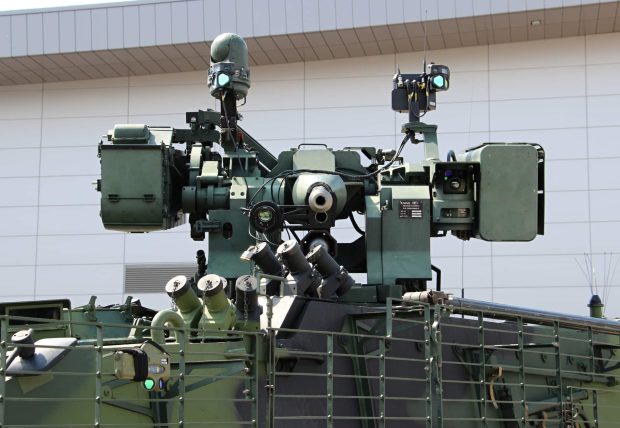
The Cradle | December 15, 2024
The Israeli army is preparing to deploy automated, remotely monitored machine guns to protect illegal Jewish settlements in the occupied West Bank, Israeli Army Radio reported on 15 December.
The automated weapons, developed by Rafael Combat Systems, will be installed on watch towers around dozens of settlements and near their entrances. They will be controlled remotely from command centers “to prevent armed attacks and infiltration operations.”
The same system was installed on the Gaza border in 2008 and operated by spotters in bases. However, it failed to prevent fighters from the Islamic Resistance movement, Hamas, from approaching and breaching the barrier fence to attack settlements and Israeli military bases on 7 October 2023.
During Operation Al-Aqsa Flood, Qassam Brigades fighters reportedly used attack drones to disable the automated weapons during the first hours of the operation.
The army will first deploy the weapons in locations it defines as ‘high-risk,’ and expand their deployment over time to include additional locations.
According to the report, the 636th Reconnaissance Unit of the Army’s West Bank Division will operate the systems.
Israeli soldiers and settlers have escalated their attacks on Palestinians in the West Bank since the start of Israel’s genocidal war on Gaza last year.
The Israeli army and settlers have killed 812 Palestinians and injured 6,500 in the West Bank since that time.
National Security Minister Itamar Ben Gvir has provided over 120,000 firearms to Jewish settlers in the West Bank since the outbreak of the Gaza War.
“Over 120,000 weapons were distributed to eligible citizens, while tens of thousands more received conditional approvals,” Ben-Gvir, leader of the far-right Jewish Power Party, said on his X account in October.
“We intend to continue arming Israel. That’s what we did, and that’s what we’ll continue to do!”
Ben Gvir and fellow Jewish supremacist politician and minister have announced their desire to use the Jewish settlers to expel the indigenous Palestinian population from the occupied West Bank and annex it to Israel.
After Donald Trump’s election to the US presidency in November, Ben Gvir, himself a resident of the Kiryat Arba settlement, declared that “this is the time for sovereignty” over the West Bank.
On 9 December, following the fall of Bashar al-Assad’s government in Syra, Bezalel Smotrich called for increased Jewish settlement and establishing “facts on the ground” to ensure a Palestinian state would never be established.
Featured Video

Racist Seinfeld Dances for Joy as Bibi Unveils His New Map
or go to
Aletho News Archives – Video-Images
TV Drama Review
Japanese drama projects Japan’s wartime atrocities onto Chinese characters

Global Times | October 25, 2026
By portraying Chinese characters as perpetrators of ruthless violence while casting Japanese Self-Defense Forces (SDF) intelligence operatives as defenders, the season 2 of the Japanese drama Vivant has recently drawn criticism from Chinese netizens, who argue that its depiction turns historical reality on its head while ignoring Japan’s wartime atrocities.
The TBS drama series – a spy suspense story in which an alleged unofficial intelligence unit of the SDF operates across the globe — has attracted a passionate fanbase. Its currently airing season 2 opened with a household rating of 18.8 percent, the highest for a TV drama this year, according toa commentary article by Japanese media Toyo Keizai.
What draws attention is the portrayal of the enemies in the series, the article noted. Scenes in which the Chinese organization subjects kidnapped members of the SDF unit to brutal torture are repeated with unrelenting intensity.
It is rare for Japanese TV dramas to explicitly portray a real-life country as the enemy, the article noted.
Japanese Prime Minister Sanae Takaichi also made a reference to the drama, saying that she has been recording Vivant and hopes to binge-watch it over the year-end and New Year holidays, according to Japanese media outlets.
China’s CCTV News report on Sunday revealed that the drama features scenes in which Chinese personnel cut off the fingers of and stab Japanese intelligence operatives in the abdomen. Such acts bear striking similarities to the torture inflicted on Chinese nationals by invading Japanese troops during the World War II.
The drama distorts the truth by attributing these atrocities to modern Chinese characters. Beneath the surface, it subtly glorifies Japan’s cross-border overseas operations, blurs the functional boundaries of the SDF and implicitly promotes an expansionist narrative, per CCTV News. … continue
Blog Roll
 Aletho News
- EU facing trillion-euro debt hole while seeking more cash for Kiev
- How US, Europe, Persian Gulf states exhausted missile stockpiles, splurged billions to defend Israel
- Up in arms… Koreans reject U.S. empire’s plan to make South Korea the next Ukraine
- Iran, Turkey, Pakistan, Saudi Arabia could advance region-led security framework in Tehran: FM spox
- Netizens condemn Japanese drama for projecting Japan’s wartime atrocities onto Chinese characters
- Racist Seinfeld Dances for Joy as Bibi Unveils His New Map
- A West Bank War for Netanyahu’s Election Campaign, Could It Backfire?
- Yemen denounces European Parliament’s ‘hypocritical’ push to blacklist Ansarullah
- Qalibaf: UAE’s UN bid aims to ‘clear the runway’ for ‘Greater Israel’, whitewash genocide
- Pakistan reopens Iran border after boosting security: Report
- If Americans Knew
- Why Israel’s latest assault on Hebron is so significant for the West Bank
- Israel Used “Where’s Daddy?” AI to Relentlessly Murder Palestinian Journalists and Their Families in Their Homes from October to December 2023
- DAILY UPDATE: Latest essential news on Palestine, Israel, & region
- Netanyahu Says Israel Must Prepare for Banking Sanctions, Floats Crypto as a Possible Bypass
- Latest updates from Israeli assault on West Bank
- Tourism Ministry launches free food truck tour in US
- “So Much Worse Than People Realize”: Never-Before-Seen Images Reveal Damage at U.S. Bases as Troops Describe Being Abandoned
- UK Bell Review Confirms Only Anti-Israel Attitudes Are Rising, Not Antisemitism
- DAILY UPDATE: Latest essential news on Palestine, Israel, & region
- DAILY UPDATE: Latest essential news on Palestine, Israel, & region
- No Tricks Zone
- Sudden Stratospheric Warming, Powerful El Niño Combination May Lead To Extreme Europe Cold, Energy Crisis!
- Two New Studies Find Thwaites Glacier Melt Cannot Be Driven By Human Activity Or A Warming Ocean
- E-Cars Reduce CO2 Emissions By Only 41% Compared To Internal Combustion Engine Vehicles
- Predictions Made By Renowned Climate Professor Over Past Decades Have Been Proven To Be Poor
- New Study Suggests Large Regions Of The Pacific Ocean Have Been Cooling For The Last 80 Years
- Germany’s Green Energy Debacle: High Energy Costs Force Kahla Porzellan to Close After 182 Years!
- New Study: 50 Years Of The Most Aggressive ‘Net Zero’ Policies Can Only Affect The Global Climate By 0.03°C
- US September “Heat” Was No Record…Many Records Set Decades Ago
- Latest European Green Energy Debacle; Portugal’s Largest Flagship Solar Park Insolvent!
- Green Energy Debacle: German Expert Professor Fritz Vahrenholt Warns Of Severe Economic And Social Consequences

