US mulls expanding military intervention in Yemen: Report
Press TV – June 4, 2018
The United States is considering a request from the UAE to provide direct support for an attack to seize the Houthi-held port of Hudaydah, a major lifeline for Yemen, officials say.
US officials said Secretary of State Mike Pompeo has asked for a prompt assessment of the UAE’s appeal for assistance such as surveillance drone flights to help a Saudi-led coalition capture Hudaydah.
The debate over increasing US support to the UAE and Saudi Arabia comes amid escalating military operations around the Yemeni port despite UN warnings of catastrophic effects on the impoverished country.
Eighty percent of commercial and humanitarian supplies flow through Hudaydah, a central gateway. Since May 27, forces supported by Saudi Arabia have been closing in on the port, claiming that Yemen’s Ansarullah movement uses it for weapons delivery.
American officials say the UAE and Saudi Arabia have assured Washington that they won’t attempt to take the Red Sea port until they get support from the US.
“We continue to have a lot of concerns about a Hudaydah operation,” said one senior US official, quoted by The Wall Street Journal.
“We are not 100% comfortable that, even if the coalition did launch an attack, that they would be able to do it cleanly and avoid a catastrophic incident,” the official added.
Senior Yemen specialists in the US administration were expected to meet on Monday to discuss what to do, the newspaper said.
According to the Journal, Riyadh and Abu Dhabi have long sought to get backing from the US.
Last year, the Saudi-led coalition unsuccessfully sought to secure American intelligence, surveillance and direct support from elite US military forces for an attack on Hudaydah, former US administration officials said.
For now, prominent administration officials involved in the debate harbor reservations about expanding the American military role in Yemen, but some back providing assistance to the UAE, officials said.
“We have folks who are frustrated and ready to say: ‘Let’s do this. We’ve been flirting with this for a long time. Something needs to change the dynamic, and if we help the Emiratis do it better, this could be good,’” the senior US official said.
Some administration officials are also increasingly disappointed that both military and diplomatic efforts have bogged down, which is fueling efforts to cut US support for the fighting, the report said.
The US has been lavishing sophisticated weaponry upon Saudi Arabia since March 2015, when the latter attacked Yemen to restore its Riyadh-allied former government. Washington also helps to refuel Saudi and UAE warplanes that conduct airstrikes on Yemen.
According to figures released by the Yemeni Ministry of Human Rights, more than 600,000 people have been killed or injured in the Saudi war since 2015. Yemen has also turned into the scene of the world’s worst humanitarian crisis.
The Red Cross and the United Nations have warned against the dangers of the Saudi-led operations in Hudaydah.
“The push for Hudaydah is likely to exacerbate an already catastrophic security situation in Yemen,” said François Moreillon, head of the International Committee of the Red Cross delegation in Yemen.
United Nations’ new special envoy on Yemen, Martin Griffiths, is to present his proposal for reviving peace talks to the UN Security Council in the next two weeks. He has publicly warned that an assault on Hudaydah “would take peace off the table.”
“We are all very concerned about the possible humanitarian consequences of a battle for Hudaydah,” he said.
WaPo Editors: We Have to Help Destroy Yemen to Save It
By Adam Johnson | FAIR | May 31, 2018
Over the past year, the Washington Post editorial board has routinely ignored the US’s involvement in the siege of Yemen—a bombing and starvation campaign that has killed over 15,000 civilians and left roughly a million with cholera. As FAIR noted last November (11/20/17), the Washington Post ran a major editorial (11/8/17) and an explainer (11/19/17) detailing the carnage in Yemen without once mentioning the US’s role in the conflict—instead pinning it on the seemingly rogue Saudis and the dastardly Iranians.
This was in addition to an op-ed that summer by editorial page editor Jackson Diehl (6/26/17), which not only ignored the US’s support of Saudi bombing but actually spun the US as the savior of Yemenis, holding up Saudi Arabia’s biggest backer in the Senate, Lindsey Graham, as a champion of human rights.
In recent months, however, the Post has charted a new course: vaguely acknowledging Washington’s role in the bloody siege, but insisting that the US should remain involved in the bombing of Yemen for the sake of humanitarianism.
In two recent editorials, “Can Congress Push the Saudi Prince Toward an Exit From Yemen?” (3/24/18) and “The World’s Worst Humanitarian Crisis Could Get Even Worse” (5/28/18), the Washington Post board has cooked up a new, tortured position that the US should not stop supporting the Saudis––a move 30-year CIA veteran and Brookings fellow Bruce Riedel argued in 2016 would “end the war overnight”—but mildly chide the Saudis into committing slightly fewer war crimes while moving towards some vague exit strategy.
In the March editorial, the Post insisted “the United States… should use its leverage to stop this reckless venture,” and that Trump “condition further American military aid on humanitarian relief measures.” A step in the right direction, right? Quite the opposite. When one reads closer, it’s clear that while the Post wanted Trump to moderately roll back the most egregious war crimes, it still lobbied against the Lee/Sanders bill that would have actually ended the war.
Monday’s editorial took this faux-humanitarian half-measure one step further with this bit of revisionist history:
Both the Obama and Trump administrations have offered limited support to the Saudi coalition, while trying to restrain reckless bombing and the exacerbation of the humanitarian crisis.
The idea that Obama and Trump offered the Saudis “limited” support is a glaring lie. The US’s support—from logistical support, to refueling, to selling $110 billion in arms, to political cover at the UN, to literally choosing targets on a map—has been crucial to carrying out the three-and-a-half-year campaign. Again, according to one of the most white-bread, establishment commentators, US support isn’t ancillary, it’s essential. Without it, there is no bombing campaign.
The problem is the Washington Post is charged with a contradictory task: to act as a Very Concerned champion of human rights while propping up the core tenets of America’s imperial foreign policy. It’s an extremely difficult sleight-of-hand when the US is backing a bombing campaign targeting some of the poorest people on Earth, so their support of this slaughter is actually spun as an attempt to rein it in. The US is going to bring down the system from the inside!
The most logical way the US can stop the slaughter of Yemen is to stop engaging it in it. But to the Washington Post, this runs against the US policy of bombing and/or sanctioning anything that has the most remote connection to Iran, so this simple course is just not on the table. Instead, the Post’s propaganda objective—after years of simply ignoring the US role altogether—is to paint its participation in war crimes as a way of preventing slightly worse war crimes; a good cop to Saudi’s bad cop. This permits business as usual while maintaining the pretense the US cares about human rights—in other words, the Post’s basic ideological purpose.
Drones, Murder and the Universal Declaration of Human Rights at 70: the Cases of Reyaad Khan and Abdul Raqib Amin
By T.J. Coles | CounterPunch | May 30, 2018
The Universal Declaration of Human Rights (UDHR) is 70 this year. But you wouldn’t know it from the impact it’s had on human lives. For example, Donald Trump has sharply increased drone attacks, especially in Yemen and Somalia, with virtual silence from Western media. Article 11 of the UDHR states: “(1) Everyone charged with a penal offence has the right to be presumed innocent until proved guilty according to law in a public trial at which he has had all the guarantees necessary for his defence.”
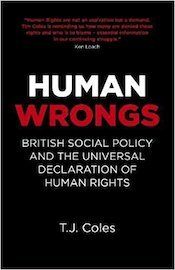 As I document in my new book Human Wrongs (Iff Books), the alleged terror suspects blown apart by drone operators are not even charged let alone given the chance to plead their innocence in a national or international court: and that’s quite apart from the women, children and babies (“collateral damage”) that happen to be nearby when the Hellfire missiles are launched.
In Britain, the age-old common law, presumption of innocence, faced a slight setback in the so-called “war on terror.” Since US drone operators murdered Afghan civilians in the first-ever lethal drone strike in 2002 (followed by Yemenis in the same year), the US has murdered about 2,500 people with drones alone. Providing targeting information and communications links, the UK plays a significant role, all in violation of the principles of the UDHR.
The UN Special Rapporteur on Extrajudicial Execution, Philip Alston, writes: “A State killing is legal only if it is required to protect life (making lethal force proportionate) and there is no other means, such as capture or nonlethal incapacitation, of preventing that threat to life (making lethal force necessary).” So, a person in Afghanistan, for example, cannot be lawfully slain by a British drone operator on the pretence that the person is about to pose an imminent threat to the UK, unless for instance the person is about to give an order over the phone let’s say to, for instance, a terror cell in Briton, instructing it to detonate a bomb. Needless to say, this is a ludicrous scenario in the real-world.
Murdering Its Own
The British state murdering “its own people” is nothing new. In the 1970s, the Ministry of Defence waged a dirty war in Northern Ireland. Units from the Military Reaction Force (MRF) murdered Protestants and Catholics as a part of strategy of tension. Northern Irish persons murdered and/or shot by MRF operatives include:Patrick McVeigh (shot in the back), John and Gerry Conway (travelling to a fruit stall), Aiden McAloon and Eugene Devlin (travelling in a taxi), Joe Smith, Hugh Kenny, Patrick Murray and Tommy Shaw (drive-by shootings) and Daniel Rooney and Brendan Brennan (walking on a road).
The British government does in fact possess the proverbial license to kill. It is a “license” granted to itself and one not grounded in international law. Targeted killings (murder) hitherto depended on the authorization of the Secretary of State. The Intelligence Services Act 1994, Section 7(1), frees intelligence operatives from liability in acts of killing abroad, “if the act is one which is authorised to be done by virtue of an authorisation given by the Secretary of State.”
In the case of Reyaad Khan and Abdul Raqib Amin, the killings were not carried out by MI6 (which is covered by the Intelligence Services Act 1994), but by the Royal Air Force. In 2015, the government started murdering Britons allegedly suspected of involvement in terrorism, making no attempt to apprehend them and put them on trial, as international law requires.
In August 2015, Reyaad Khan and Abdul Raqib Amin, were travelling in a vehicle in Raqqa, Syria. RAF drone operators ended their lives. Then-PM David Cameron told Parliament that Khan was the target (murdered) and Amin was killed alongside him (manslaughter). A third unidentified, alleged Islamic State fighter was killed with them, though the third person was not “identified as a UK national.” By implication, the third person’s life is not important, hence no details emerged.
Cameron claimed the killings were “an act of self-defence,” because Khan was: “involved in actively recruiting ISIL sympathisers and seeking to orchestrate specific and barbaric attacks against the west, including directing a number of planned terrorist attacks right here in Britain, such as plots to attack high profile public commemorations.”
But Cameron also revealed that Khan was not a threat to the UK: “there was nothing to suggest that Reyaad Khan would ever leave Syria.” If Cameron is to be believed, Khan was issuing instructions to terror cells in the UK. But if this is the case, it therefore becomes a matter for the British police.
Changing Stories
The pretext for the murder was later changed by the UK’s Permanent Representative to the UN, Matthew Rycroft, who wrote that the killings were somehow justified in the “collective self-defence” of Iraq, where Britain is supposedly helping the government to defeat ISIS. The trouble is that Khan was not in Iraq when he was killed. Inverting international legal norms, Secretary of State for Defence, Michael Fallon, “who authorised the lethal drone strike” (Press and Journal ), appealed to Article 51 of the UN Charter, the right of collective and/or individual self-defence. Attorney General Jeremy Wright’s advice has not been published, indicating that the killings are violations of domestic and international law.
It later transpired that the RAF is working its way through a “kill list” of alleged British terror suspects fighting with ISIS in Iraq and Syria. Both jets and drones are used; the latter are controlled by operators in RAF Waddington, Lincolnshire. “When we know where they are we kill them,” said a Ministry of Defence spokesperson. The “kill list” revelations prompted Lord Macdonald, former Director of Public Prosecutions, to co-sign a letter to PM May, calling for the release of the government’s Intelligence and Security Committee report into the murder of Reyaad Khan and names of other targeted suspects.
Lucy Powell MP and Kirsten Oswald MP, both co-chairs of the informal All-Party Parliamentary Group, called for a debate on Britain’s use of targeted murder. Defence Secretary Fallon who authorized the murder of Khan claimed that by February 2017, 85 Britons had been killed in Syria, but it wasn’t clear if this meant as part of the RAF’s kill list.
T. J. Coles is a postdoctoral researcher at Plymouth University’s Cognition Institute and the author of several books, including Fire and Fury (Clairview Books ) and Human Wrongs (Iff Books ).
UAE Deploys Forces on Yemeni Socotra Island
By Peter KORZUN | Strategic Culture Foundation | 07.05.2018
The United Arab Emirates (UAE) has landed its forces on the Yemeni island of Socotra, situated some 240 km. (150 mi.) from the Horn of Africa and roughly 350 kilometres (220 mi) off the Arabian Peninsula.
The surprise operation was launched on May 2. The troops are accompanied by armored vehicles. This military presence is growing. The soldiers have taken control of key elements of the island’s infrastructure, including the sea and airports.
The landing was conducted without the approval of either the Yemeni government or the local authorities. The move is clearly an affront to Yemeni President Abed Hadi, who is officially a UAE ally in the ongoing war against Yemen’s Houthi rebels. Abu Dhabi is a key partner in the Saudi Arabia-led coalition that has been fighting Houthi rebels since 2015. Hadi’s government, which officially controls Socotra, views the landing as an act of aggression. The deployment could mark the end of Yemen’s alliance with the Arab Emirates.
The UAE has established a zone of influence in southern Yemen, which includes the port of Aden, known as the southern gate of the Red Sea. There have been reports that Abu Dhabi is building a military airstrip on Yemen’s Mayun (Perim) island, which is also located near the strait. It controls Aden’s airport as well. The UAE is forming militias that will operate under its control on Yemeni territory.
Uncorroborated reports have surfaced claiming that Abu Dhabi plans to force Socotra to secede from Yemen and join the UAE. Recently the federation has been investing heavily in southern Yemen in order to garner popular support.
No Houthi military units have ever been sighted on the island that would justify this deployment by the Emirates. One must surmise that expansion is the real goal of the operation. Once it has annexed Socotra and southern Yemen, the UAE will become much bigger and more important, thus boosting its regional and global clout. Yemen is rich in oil and gas reserves and the reason for Abu Dhabi’s interest is obvious. Previously the federation had made attempts to gain control of oil and gas fields in the provinces of Shabwah, Ma’rib, and Hadhramaut.
This military presence in Socotra will make it possible to establish control over the shipping lanes that connect the Mediterranean Sea and the Indian Ocean. It brings to mind the famous phrase of Alfred Thayer Mahan “Whoever attains maritime supremacy in the Indian Ocean would be a prominent player on the international scene.” Socotra is crucial for controlling the shipping to and from Iran, the sworn enemy of Washington and Abu Dhabi. And war appears to be on the horizon.
A year ago, Washington and Abu Dhabi signed a landmark defense cooperation agreement to expand their military partnership. The deal includes provisions for moving US forces to Emirati territory and patrolling vital sea lanes in the Arabian Gulf and along the African coast. The UAE is the second-largest buyer of American weapons in the world and lately has been getting more frequent green lights to purchase the most sophisticated systems the US has to offer.
Both nations have a long history of participating in joint military operations. It will be no surprise if one day the news of a US military presence on Socotra were to hit the media’s headlines. In March 2017, the commander of the UAE navy visited the US to discuss a range of issues, including the creation of the Emirati shipbuilding industry. It’s hard to imagine that the impending landing operation on Socotra was not an issue on that agenda.
Evidently the deployment is part of a broader plan to force the rollback of Iran and reshape the region. And that’s not limited to Yemen. A military base is being constructed in Berbera, Somaliland by the UAE, to the chagrin of Somalia’s government in Mogadishu. Somaliland is a self-proclaimed state that has separated from Somalia. It is not recognized internationally, but the UAE provides training for its military. The federation has also been increasing its naval presence in Eritrea.
The Socotra operation coincides with other signs of a wider looming conflict. For instance, the USS Harry S. Truman carrier strike group commenced combat operations in Syria on May 3. Fighting the Islamic State? Not at all. It doesn’t take an aircraft carrier to get rid of the jihadists’ token presence that still remains in Syria. The military operations are being combined with diplomatic efforts to diminish Russia’s influence in Syria and the Middle East.
Hadi’s government in Yemen is recognized internationally. This deployment of military forces took place without Yemen’s approval, which means that the UAE has flagrantly violated international law. And the US will be flouting it too, if it sends troops. Yemen is going to complain to the United Nations about the occupation of Socotra. Washington has slammed Crimea’s unification with Russia despite the fact that a referendum was held there in which the people were allowed to express their own will. Will it likewise strongly condemn the UAE for occupying Yemeni territory and attempting to annex it to the Emirates without any legal grounds to do so? Hopefully it won’t be long before this issue makes it onto the agenda of the UN Security Council.
Pompeo Rocks the Middle East: Lessons from a Former CIA Officer for the Secretary of State

By Philip Giraldi | American Herald Tribune | May 7, 2018
Former Central Intelligence Agency Director Mike Pompeo has recently completed his first trip to the Middle East as U.S. Secretary of State. Perhaps not surprisingly as President Donald Trump appears prepared to decertify the Joint Comprehensive Plan of Action (JCPOA) limiting Iran’s nuclear program creating a possible casus belli, much of what Pompeo said was focused on what was alleged to be the growing regional threat posed by Iran both in conventional terms and due to its claimed desire to develop a nuclear weapon.
The Secretary of State met with heads of state or government as well as foreign ministers in Saudi Arabia, Israel and Jordan during his trip. He did not meet with the Palestinians, who have cut off contact with the Trump Administration because they have “nothing to discuss” with it in the wake of the decision to recognize Jerusalem as Israel’s capital.
During his first stop in Riyadh, Pompeo told a beaming Foreign Minister Adel Jubeir that Iran has been supporting the “murderous” Bashar al-Assad government in Damascus while also arming Houthi rebels in Yemen. He noted that “Iran destabilizes the entire region. It is indeed the greatest sponsor of terrorism in the world…”
In Israel, Pompeo stood side by side with a smiling Prime Minister Benjamin Netanyahu and said “We remain deeply concerned about Iran’s dangerous escalation of threats to Israel and the region, and Iran’s ambition to dominate the Middle East remains. The United States is with Israel in this fight. And we strongly support Israel’s sovereign right to defend itself.”
At the last stop in Jordan, Pompeo returned to the “defend itself” theme, saying regarding Gaza that “We do believe the Israelis have a right to defend themselves and we are fully supportive of that.”
One hopes that discussions between Pompeo and his foreign interlocutors were more substantive than his somewhat laconic published comments. But given the comments themselves, it is depressing to consider that he was until recently Director of the CIA and was considered an intellectually brilliant congressman who graduated first in his class at West Point. One would hope to find him better informed.
Very little that surfaced in the admittedly whirlwind tour of the Middle East is fact-based. Starting with depicting Iran as a regional and even global threat, one can challenge the view that its moves in Yemen and Syria constitute any fundamental change in the balance of power in the region. Iranian support of Syria actually restores the balance by returning to the status quo ante where Syria had a united and stable government before the United States and others decided to intervene.
Israeli claims repeated by Washington that Iran is somehow building a “land bridge” to link it to the Mediterranean Sea are wildly overstated as they imply that somehow Iraq, Syria, and Lebanon are willing to cede their sovereignty to an ally, an unlikely prospect to put it mildly. Likewise, the claim that Iran is seeking to “dominate the region” rings hollow as it does not have the wherewithal to do so either financially or militarily and many of its government’s actions are largely defensive in nature. The reality is that Israel and Saudi Arabia are the ones seeking regional dominance and are threatened because a locally powerful Iran is in their way.
Support by Tehran for Yemen’s Houthis is more fantasized than real with little actual evidence that Iran has been able to provide anything substantial in the way of arms. The Saudi massacre of 10,000 mostly Yemeni civilians and displacement of 3 million more being carried out from the air has been universally condemned with the sole exceptions of the U.S. and Israel, which seem to share with Riyadh a unique interpretation of developments in that long-suffering land. The U.S. has supplied the Saudis with weapons and intelligence to make their bombing attacks more effective, i.e. lethal.
Pompeo did not exactly endorse the ludicrous Israeli claim made by Benjamin Netanyahu last week that Iran has a secret weapons of mass destruction program currently in place, but he did come down against the JCPOA, echoing Trump in calling it a terrible agreement that will guarantee an Iranian nuclear weapon. The reality is quite different, with the pact basically eliminating a possible Iranian nuke for the foreseeable future through degradation of the country’s nuclear research, reduction of its existing nuclear stocks and repeated intrusive inspections. Israel meanwhile has a secret nuclear arsenal and is a non-signatory of the Nuclear Non-Proliferation Treaty without any demur from the White House.
The Israeli-Pompeo construct assumes that Iran is singularly untrustworthy, an odd assertion coming from either Washington, Riyadh or Tel Aviv. It also basically rejects any kind of agreement with the Mullahs and is a path to war. It is interesting to note that the Pentagon together with all of America’s closest allies believe that the JCPOA should stay in place.
And then there is the claim that Iran is the world’s greatest sponsor of terrorism. In reality that honor belongs to the United States and Israel with Iran often being the victim, most notably with the assassination of its scientists and technicians by Mossad agents. Israel has also been targeting and bombing Iranians in Syria, as has the United States, even though neither is at war with Iran and the Iranian militias in the country are cooperating with the Syrians and Russians to fight terrorist groups including ISIS as well as those affiliated with al-Qaeda. The U.S. is actually empowering terrorists in Syria and along the Iraqi border while killing hundreds of thousands in its never-ending war on terror. Israel meanwhile has agreements with several extremist groups so they will not attack its occupied Golan Heights and also seeks to continue to destabilize the Syrians.
Pompeo also endorsed Israel’s “fight” against the Gazan demonstrators and pledged that America would stand beside its best friend. As of this point, Israel has used trained army snipers to kill forty-three unarmed protesting Palestinians. Another 5,000 have been injured, mostly by gunfire. No “threatened” Israelis have suffered so much as a broken fingernail and the border fence is both intact and has never been breached. Israel is committing what is very clearly a war crime and the United States Secretary of State is endorsing the slaughter of a defenseless people who are imprisoned in the world’s largest open-air concentration camp.
Donald Trump entered into office with great expectations, but if Mike Pompeo is truly outlining American foreign policy, then I and many other citizens don’t get it and we most definitely don’t want it.
*(Mike Pompeo meets with Israeli Minister Benjamin Netanyahu in Tel Aviv, April 2018. Image credit: U.S. Embassy Tel Aviv/ flickr)
Yemen conflict: Secret documents suggest 7,000 UK personnel may be complicit in Saudi slaughter

House destroyed in airstrikes in Sanaa, Yemen, on April 19, 2018. © Mohammed Dhari / Global Look Press
RT | May 2, 2018
To what extent is the UK aiding the Saudi intervention in Yemen? A new report suggests help is more hands-on than just defense deals.
Never seen before documents published as part of a new paper titled ‘UK Personnel Supporting the Saudi Armed Forces – Risk, Knowledge and Accountability’, suggest that some of the functions carried out by British personnel and arms companies in the Gulf kingdom may be more than what the Government is willing to admit.
According to the report, British arms deals to Saudi Arabia dating back to to 1985 have contained secret support clauses for British-made aircraft which tie British contractor and government personnel to Saudi military action, even if the UK is not itself involved directly.
These aircraft, namely Panavia Tornado and Eurofighter Typhoon fighters, have been conducting continuous airstrikes against targets in Yemen since the country erupted into civil war in 2015, with strong claims made by human rights organizations that war crimes are being conducted, including the use of cluster munitions.
A recent strike, on April 23, hit a wedding party where 20 civilians were killed. Since the Saudi-led intervention began and the end of 2017, some 5,500 civilians have been killed with over 9,000 injured, according to the UN. The country’s infrastructure has completely collapsed.
In December last year, the European Parliament adopted a resolution to suspend arms sales to the country on the back of these alleged charges.
Based on two years of interviews with former staff by Mike Lewis and Karen Templar, with support from the Joseph Rowntree Charitable Trust, the paper is part of a wider ‘Brits Abroad’ project which examines the role of UK nationals operating outside the UK to contribute military and security services in armed conflicts.
While Whitehall has maintained that UK personnel currently stationed in Saudi Arabia have been away from any frontline roles including the targeting or weaponizing of British-made aircraft used in Yemen, terms contained in secret government-to-government contracts dating from 1986 still dictate British help to the Royal Saudi Air Force when the kingdom is at war.
The report puts the UK’s human ‘footprint’ at approximately 7,000 UK contractors, UK civil servants and seconded UK military personnel.
Al-Yamamah & Al-Salam
Attached to 1985’s infamous Al-Yamamah arms deal, which included the purchase of 72 Tornado fighter aircraft, a Memorandum of Understanding (MoU) signed by both nations contains assurances that London’s support of the aircraft would continue “as long as the program lasts.”
Another 48 Tornado were added in 1993, and support was extended again under the Saudi British Defence Cooperation Programme (SBDCP) from 2006 onwards.
In 2005, the Al-Salam arms deal covered the delivery of 72 Typhoon fighter aircraft – built by the Eurofighter consortium which includes British firm BAE Systems – and came with a full support package.
From the Gulf War to Yemen
During the first Gulf War in 1990, BAE employees in Dhahran – now King Abdulaziz Air Base – directly maintained and loaded weapons for both RAF and RSAF Tornado aircraft. One former BAE Crew Chief at Dhahran, quoted in the report, claimed to the UK Ministry of Defence that “it was left up to literally a handful of us experienced ex-RAF personnel to direct combat ground operations” during the conflict.
Since then, BAE have been more reluctant to give such support to Saudi military excursions that does not directly involve the British military. In 2008 it issued a “pullback” from direct handling of cluster munitions in 2008, followed in 2009/10 with resigning from directly operational roles in squadrons engaged in active combat upon the start of Riyadh’s offensive in Yemen.
However, this “pullback”, British expats who worked as armorers and technicians claim, remained incomplete and British staff were still expected to carry out armoring tasks of aircraft and support ground activities.
Others took on maintenance and weapons management functions during night-shifts and back-shifts, furthering the blurring of advisory and operational roles, while others, there to train Saudi maintenance crew, took on deep maintenance of warplanes involved in strikes against Houthi rebels when Saudi staff were too few or off shift.
As recent as February 2017, job specifications released by BAE show that its employees “continue to be responsible for coordinating maintenance for the weapons systems of all RSAF’s Tornados, both in training and operational squadrons, and including those deployed to Forward Operating Bases.”
Israel, UK engaged in secret arms deals: Report
Press TV – April 24, 2018
A recent report has revealed that the United Kingdom has licensed the sale of arms to Israel worth $445 million since the 2014 war in occupied Palestinian territories.
The Middle East Eye online news service reported on Tuesday that figures compiled by the Campaign Against Arms Trade (CAAT) indicate that the arms included components for drones, combat aircraft and helicopters along with spare parts for sniper rifles.
The report has raised fresh concerns that the weapons made by Britain are being used by the Israeli military in the occupied West Bank, amid fears that components in sniper rifles used to kill scores of Palestinian civilians in recent weeks could have been made in the UK.
New Department for International Trade figures show that Arms export licenses to Israel increased to £216 million or $300 million at current exchange rates, last year from £20 million ($28 million) in the wake of the Gaza war.
They include a major £183 million ($255 million ) license covering “technology for military radars.” Ministers have also approved the sale for export of grenades, bombs, missiles, armored vehicles, assault rifles, small arms ammunition, sniper rifles and components for sniper rifles, arguing that Israel has a right to defend itself from military assault and “terrorist attacks.”
“The appalling scenes we have seen over recent weeks are yet another stark reminder of the repression and abuse that Palestinians are living under every day. The response to protests hasn’t just been heavy handed, it has been a massacre,” Andrew Smith, a spokesman for CAAT said.
“By continuing to arm Israeli forces the UK isn’t just making itself complicit in future attacks, it is sending a message of support for the collective punishment that has been inflicted,” Smith added.
In March another report revealed that the United Kingdom is using secretive licenses to hide the scale of its arms exports to countries with dire human rights records in the Middle East.
Saudi Arabia is by far the largest buyer of UK arms under the opaque open licensing system.
In February, the online news portal revealed an increase of 75 percent in the use of approvals for arms exports, including vital parts for warplanes used in the Saudi aggression on Yemen.
Media suspiciously quiet on US & UK-backed Saudi atrocities in Yemen
By Danielle Ryan | RT | April 24, 2018
On Sunday night, the Saudi-led coalition in Yemen hit a wedding party in Hajja province, killing up to 50 people. Strangely, no one in the Western media is calling for sanctions or regime change in Riyadh.
In fact, it seems they’re not that concerned at all. This is despite the fact that Saudi Arabia has been repeatedly accused of indiscriminate bombing in Yemen during a military campaign which has brought 8 million civilians to the brink of famine.
By early evening on Monday, BBC News was displaying not one, not two, but five stories about the birth of Prince William and Kate Middleton’s new baby boy. At the time of checking, there was no story at all about Yemen featured on the BBC’s front page.
Cynical minds might suspect this is because the British government is party to the slaughter in Yemen through its selling of massive amounts of weapons to the Saudi government. In the BBC’s piece on the attack, hidden seven stories down on the World News page, there was no mention at all of this relationship between London and Riyadh.
The Guardian and the Independent gave more prominence to the Yemen story than the BBC, both displaying reports on the front pages of their websites – but the levels of outrage were seriously muted in comparison with the reaction to alleged attacks on civilians by the Syrian government.
Journalists in the United States seem to be suffering from the same kind of selective outrage. A CNN story on the deaths in Yemen initially did not mention the words ‘Saudi Arabia’ until the seventh paragraph. The story was later updated to include news of the death of top Houthi leader Saleh al-Sammad, while the news about the deaths of up to 50 people at the wedding was knocked down to the fourth paragraph. This strange reluctance to be harsh on Riyadh or to give the Yemen war the prominence it deserves in the media, is clearly an effort to downplay atrocities which won’t play as well in front of a Western audience. It’s harder to play the role of the outraged anchor when you have to explain that the US signed an arms deal worth $110 billion with Saudi Arabia last year – a deal which included $7 billion worth of “precision weapons” from Raytheon and Boeing.
Perhaps if the White Helmets had shown up with a video camera and accusations of chemical weapons use, the story would have gotten more traction. Alas, it appears a gentler kind of bomb was used to kill the civilian victims. Reading the Western reports on Yemen, you get the sense that it is being reported out of duty, only to be buried somewhere and forgotten about the next day.
In a joint communiqué issued following a visit by Saudi Crown Prince Mohammed bin Salman to Britain, the UK government wrote that it welcomed Riyadh’s “continuing commitment” to ensuring that its military campaign in Yemen “is conducted in accordance with international humanitarian law.”
It remains to be seen whether UK Prime Minister Theresa May and the British press corps will issue a tough rebuke to Saudi Arabia following the most recent atrocity. Op-ed pieces about how the Saudi regime ‘must go’ are surely in the works as we speak.
Iran rejects ‘baseless’ UK, US accusations on Yemen missiles
Press TV – April 18, 2018
Iran has firmly rejected fresh US and British allegations of Tehran sending missiles to Yemen, saying the two are seeking to whitewash their “shameful” complicity in the crisis gripping the war-torn country by leveling “false” charges against others.
“The US and UK complicity in Yemen crisis is shameful,” Iran’s Permanent Mission to the United Nations said in a press release on Tuesday.
The Iranian mission was reacting to remarks by the American and British ambassadors to the UN, Nikki Haley and Karen Pierce during a Security Council meeting on Yemen earlier in the day.
Haley claimed that Iran was interfering in the Yemeni affairs and violating the arms embargo on the impoverished state. Pierce also accused Tehran of “non-compliance with Security Council Resolution 2216.”
The Iranian mission, however, said the American and British officials had “repeated their derogatory allegations about Iran to cover up their own role in the disastrous situation created in Yemen. Iran categorically rejects those allegations as baseless propaganda.”
“The fact is that the war of aggression of Saudi Arabia in Yemen is the main underlying reason for the escalation of the crisis. It is regrettable that Saudi Arabia and its warmonger supporters, as the main party responsible for such a catastrophic humanitarian situation, are trying to cover up their shameful crimes by introducing false charges against others or trying to spread the crisis beyond Yemen’s borders,” it added.
“The US and UK are enjoying a blood business in Yemen now” by providing bombs to the Saudi warplanes that are targeting Yemeni civilians, the Iranian mission added.
Saudi Arabia and its allies launched the war in March 2015 in support of Yemen’s former Riyadh-friendly government and against the Houthi Ansarullah movement, which is currently running state affairs.
The military campaign has killed and injured over 600,000 civilians, according to the latest figures released by the Yemeni Ministry of Human Rights.
Several Western countries, the US and the UK in particular, are accused of being complicit in the aggression as they supply the Riyadh regime with advanced weapons and military equipment.
‘UK makes light sabers, Russia makes Novichok,’ Johnson brags – but what about Saudi weapons sales?
RT | March 29, 2018
Foreign Secretary Boris Johnson bragged about the UK’s cultural influence, claiming its “arsenals” carried the “power of imagination.” The bold statement came from a principle facilitator of civilian deaths in Yemen.
Speaking at the Lord Mayor’s Easter Banquet in London, Johnson had a message to deliver: despite withdrawing from the EU, Britain remains a global team player and a stalwart defender of the ideals-based rule of law. Unlike Russia, which he described as a bad actor in all too many regards, Britain is apparently a bastion of commerce, science and culture.
“We have the most vibrant and dynamic cultural scene, with one venue – the British Museum – attracting more visitors than 10 whole European countries that it would not be tactful to name tonight,” Johnson said.
The jibe’s targets were quite apparent, since earlier in his speech Johnson had named every nation that backed the UK in its drive to expel Russian diplomats over the Skripal poisoning affair – “the full roll of honor,” he called it. He didn’t mention that the absentees in the list probably didn’t have the opportunities to plunder their foreign colonies for decades to fill their museums, unlike Britain.
The poisoning of Sergei Skripal and his daughter Yulia is seen by the UK government as a closed case, with Russia the undisputed culprit – despite the police probe being in the early stages. London pushed for an unprecedentedly large expulsion of Russian diplomats, with the US accounting for the biggest chunk of people kicked out.
Johnson’s cultural superiority bragging continued, when he cited “an astonishing fact that both of the two highest grossing movies in the world last year was either shot or produced in this country: ‘Beauty and the Beast’ and ‘Star Wars.’”
“And that tells you all you need to know about the difference between modern Britain and the government of Vladimir Putin. They make Novichok, we make light sabers,” the foreign secretary said, referring to the nerve agent reportedly used in the poisoning.
“I tell you that the arsenals of this country and of our friends are not stocked with poison but with something vastly more powerful: the power of imagination and creativity and innovation that comes with living in a free society, of a kind you see all around you today,” Johnson added.
There are many countries that have experienced firsthand the power of British “imagination and creativity,” including Iraq, Libya, Syria and Yemen in this century alone. But not the kind Johnson spoke about. Just last month, the foreign secretary and the cabinet he is part of were welcoming Saudi Arabia’s crown prince and de facto ruler Mohammad bin Salman as he visited the country.
READ MORE: 3 years of Yemen bloodbath marked by US & UK arms deals with Saudis
Riyadh is among the biggest buyers of British arms, including bombs, which it uses to hit all sorts of targets in Yemen. The strikes include civilian factories, marketplaces and funeral ceremonies, which has been harschly condemned by rights groups. While brushing off responsibility for some of the cases entirely, the Saudis tend to write off others as errors or unavoidable collateral damage, so the British government doesn’t seem to be particularly bothered that UK weapons kill civilians in Yemen.
Johnson praised the UK-manufactured light sabers, which make a “mysterious buzz” to inspire children and help the country stand against Russia in a company of “admirers and friends.” Somehow the arsenals it sells to Saudi Arabia, fueling the kingdom’s three-year bloodbath in Yemen, didn’t make their way into the speech.
Featured Video
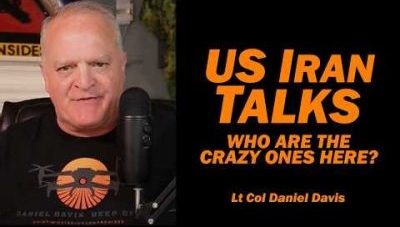
US IRAN TALKS: Who Are the Crazy Ones Here? /Lt Col Daniel Davis
or go to
Aletho News Archives – Video-Images
From the Archives
Wartime internment camps in Australia
National Archives of Australia
World War I
During World War I, for security reasons the Australian Government pursued a comprehensive internment policy against enemy aliens living in Australia.
Initially only those born in countries at war with Australia were classed as enemy aliens, but later this was expanded to include people of enemy nations who were naturalised British subjects, Australian-born descendants of migrants born in enemy nations and others who were thought to pose a threat to Australia’s security.
Australia interned almost 7,000 people during World War I, of whom about 4,500 were enemy aliens and British nationals of German ancestry already resident in Australia.
Records of World War I internment camps
World War II
During World War II, Australian authorities established internment camps for three reasons – to prevent residents from assisting Australia’s enemies, to appease public opinion and to house overseas internees sent to Australia for the duration of the war.
Unlike World War I, the initial aim of internment during the later conflict was to identify and intern those who posed a particular threat to the safety or defence of the country. As the war progressed, however, this policy changed and Japanese residents were interned en masse. In the later years of the war, Germans and Italians were also interned on the basis of nationality, particularly those living in the north of Australia. In all, just over 20 per cent of all Italians resident in Australia were interned. … continue
Blog Roll
 Aletho News
- Diplomats slam US negotiators’ performance in Iran talks
- Trump Refuses Exit Ramp, War with Iran will Continue
- Trump Says US Naval Blockade in Strait of Hormuz Will Begin Shortly
- US, Iran end 21-hour talks without agreement
- US IRAN TALKS: Who Are the Crazy Ones Here? /Lt Col Daniel Davis
- Talks with the US end without a deal over excessive US demands: Iran
- Feeling Better, Getting Worse: How Psychiatric Drugs Create the Illusion They Cure
- ‘Nobody Told Me’: Former Mental Health Patient Calls Out Dangerous Side Effects of Psychiatric Drugs
- Dr. Abu-Sitta: Beirut ‘felt like a day in Shifa Hospital’
- Iran Has Won the War, It Will Be Up to the US to Secure the Peace: Mohammad Marandi
- If Americans Knew
- US-Iran ceasefire negotiations make zero progress – Daily Update
- Pro-Israel ‘Thinktanks’ and Individuals who Influence U.S. Foreign Policy
- Mearsheimer reveals how Israel dictates US policies on Iran, Gaza – video
- After killing 350+, Israel still has a “score to settle” with Lebanon before ceasefire – Daily Update
- Military aid to Israel emerges as the latest political litmus test for Democrats
- The only Palestinian children’s rights organization closes following years-long Israeli campaign against it
- ‘I Can’t Forget the Smell’: Lebanese Reel After Israel Kills Over 300 in Single Day
- DNC Shoots Down Resolutions Calling Out AIPAC and Limiting Arms to Israel
- TCN: Is Israel Blackmailing President Trump?
- Israel killed at least 303 Lebanese yesterday – who were they? Daily Update
- No Tricks Zone
- German Expert: Heat Dome Led To Record Temps In Western USA…Warmer In 1934, 1936
- New Study: No Linear Warming Or Glacier Retreat Along Northern Antarctic Peninsula Since 1980s
- An Inconvenient Tree: Uncovered In Alps… Europe Much Warmer Than Today 6000 Years Ago
- New Study Reports A 60% Slowdown In Greenland’s Ice Loss Rate In The Last Decade
- Low Intensity Tornado Wrecks Major Solar Farm, Creating A Potential Toxic Dump
- New Study Finds Warming Saves Lives…Cold Temperatures 12 Times More Deadly Than Excess Heat
- German Science Blog Accuses PIK Climate Institute Of Hallucinating Climate Tipping Points
- Devastating Assessment Of Comirnaty Vaccine By Former Senior Pfizer Europe Toxicologist
- New Study: CO2 Is ‘Effectively Negligible’ As An Explanatory Climate Change Factor Since 2000
- Former Pfizer Toxicologist Dr. Helmut Sterz Tells Bundestag Hearing Pfizer Vaccine Should Have Never Been Approved
 Aletho News