Why Saudi Public Relations Are So Disastrous
By Finian CUNNINGHAM | Strategic Culture Foundation | 27.11.2017
What a disastrous past week it’s been for Saudi Arabia’s international public relations. It’s hard to imagine how it could possibly become more ignominious or cringe making for the House of Saud.
But of course, how could it be otherwise? When the oil-rich kingdom is run by a father-and-son clique, cosseted by venal super-wealth, and ruled by patronage, pampered by cowering flunkies. In addition, obsessed with an obscurantist Wahhabi sectarian hatred, and to cap it all, indulged by an ignorant American president who himself shares dynastic family ambitions.
Last week’s roll call of PR disasters included the Syrian peace process getting underway in earnest, in spite of Saudi efforts to derail. Secondly, Lebanon appears to have stabilized politically with the return of its Prime Minister Saad Hariri, again in spite of Saudi attempts to sabotage the government in Beirut. And thirdly, most shamefully, the shocking images of emaciated children in Yemen have shown the world the sickening reality of the Saudi-led blockade on that war-stricken country.
Let’s start with the tale of two summits. While Russian President Vladimir Putin was last week hosting his Syrian, Iranian and Turkish counterparts in the Black Sea city of Sochi in a major diplomatic boost for a peaceful end to the Syrian war, at the same time the Saudi rulers were convening something lackluster and frankly, irrelevant, by comparison.
The Saudis held a summit in Riyadh for the so-called Syrian “opposition” comprising the discredited political talking heads of sundry terror groups that have ravaged Syria for the past nearly seven years. Disgracefully, the UN envoy Staffan de Mistura was present in a vain bid to lend some ersatz credibility to the terrorist apologists.
Putin, and Iran’s Hassan Rouhani and Turkey’s Recep Tayyip Erdogan joined political forces to push for a comprehensive peace settlement in Syria “determined by the Syrian people alone without external interference”. Whereas at the Saudi conference of has-been Syrian opposition figures, who have been living a charmed life in exile in Saudi Arabia, there were the tired-old, futile calls for Syrian President Bashar al-Assad to quit as leader.
With the Syrian War near over and with Assad’s state forces dominant over the foreign-backed insurgents, no-one can take the demand for Assad to stand down as serious. It’s a pipe-dream that the Saudis still keep puffing on. Not even Washington and its NATO allies bother to make this demand seriously any more.
In a nutshell, the Saudi rulers are seen to be left holding the putrid remnants of their defeated regime-change intrigue in Syria.
Moving on to the debacle over Lebanon. Again, Saudi machinations were seen here to have turned pear-shaped. After nearly two weeks of trying to arm-twist Lebanese premier Saad Hariri to resign and thereby collapse the coalition government in Beirut with Shia group Hezbollah, Hariri returned last week to his country.
In the meantime, Lebanon has rallied across sectarian lines to unite against Saudi interference – the exact opposite of what the Saudi rulers were agitating for. The whole Saudi-inspired attempt to sabotage Lebanese politics and even incite a sectarian war in the country has ended up only strengthening the country and in particular elevating Hezbollah as a defender of the nation’s sovereignty.
The Saudi paymaster had wanted Sunni politician Saad Hariri to resign as prime minister. His resignation was broadcast on Saudi television on November 4 after Hariri had been summoned to Riyadh and where he inexplicably stayed for the next two weeks. According to the Saudi-inspired script, Hariri said his life was in danger from an assassination plot by Hezbollah and its Shia ally Iran. Hezbollah and Iran scoffed at that claim as ridiculous. Lebanese President Michel Aoun, from the Christian constituency, also dismissed Hariri’s sensational claims.
Last week when Hariri returned to Lebanon, he abruptly reversed his resignation decision, saying now that he would remain in the prime minister’s post. The bizarre images of Hariri looking relaxed at a military parade in Beirut marking Lebanon’s independence day last Wednesday were a stupendous rebuttal of Saudi-orchestrated fear-mongering that this was a man whose life was purportedly under threat.
The Saudi reckless attempts at destabilizing Lebanon not only spectacularly backfired. Their interference in the sovereign affairs of Lebanon has earned the Saudis the scorn of Lebanese and Arab people across the entire region.
As if those PR cock-ups weren’t bad enough, then the world was shocked by images out of Yemen showing skeletal children starving to death from the Saudi blockade on the country. Also, caught on the hook of Saudi barbarity were the US and Britain which have been supplying the Saudi regime with weapons and logistics in its nearly three-year war on the poorest nation of the Arab region.
The Saudis imposed a total sea, air and land blockade on Yemen on November 6 following a ballistic missile attack near the Saudi capital by Houthi rebels from Yemeni territory. The Houthis say they are taking the war to Saudi Arabia because of the latter’s aerial bombing campaign which has targeted civilians. For the Saudis to respond by imposing collective punishment through a blockade on vital aid entering into Yemen is a gross violation of humanitarian law – a war crime.
Nearly two weeks of this total blockade provoked the UN and other international aid agencies to issue dire warnings that millions of Yemenis are facing starvation. So bad is the international image of the Saudis that the US State Department was motivated to urge its client regime to relent on the suffering it was inflicting. At the end of last week, the Saudi rulers claimed that they were lifting the blockade on Yemen’s airports and sea ports. The UN and aid agencies still said the dubious Saudi lifting of blockade would not alleviate the suffering.
How could any country preside over such a week of horrible public relations? What is it about the Saudi rulers that make them so incorrigibly incompetent, so barbaric and so self-defeating?
Several factors combine to make the Saudi rulers a perfect shit-storm.
The House of Saud is a family-run crony dynasty. That’s not new. But over the past year or so, the present rulers have consolidated absolute power to a father-and-son clique, headed by ailing King Salman (82) and the precocious 32-year-old Crown Prince Mohammad bin Salman. These scions of intoxicating hyper-wealth live in an ivory tower within an ivory tower.
The Saudi system of governance never had accountability except within its own arcane crony inner-circle. Now it has even less accountability. It’s therefore not hard to imagine how the Saudi rulers are prone to making ever-more foolish foreign policy calculations. The war on Yemen was “masterminded” by the ambitious, insecure Crown Prince trying to prove his mettle, when he probably never had any competence to begin with. The guy probably reads intricate regional politics through the prism of one of his puerile computer games.
Secondly, the Saudi rulers, present and past, are guided by an obsessive sectarian Wahhabi hatred towards Shia Islam. All policy decisions are made out of an irrational abhorrence towards Shia Iran, and any ally of Iran, from Hezbollah to Syria. The reasons for this obsessive hatred are rooted in an obscurantist religious belief that Shia Islam is “heretical”. That antipathy is also fueled by an insecure sense of envy and nemesis that Iran’s relatively progressive politics are more legitimate and appealing to the masses in the Middle East than the feudalist monarchy of the Saudis. In any case, to construct foreign policy relations on the basis of a Medieval-like worldview is inevitably problematic, to say the least, in the 21st Century.
A third reason why the Saudis are so incorrigibly inept is because the rulers are indulged by American and European governments and the Western media. Admittedly, some Western media outlets have belatedly given some coverage to the horror inflicted on Yemen.
Nevertheless, the media coverage is still shamefully muted considering the scale of suffering and crimes perpetrated. We are talking about a genocide unfolding in Yemen imposed by the Saudi rulers with the support of their American and British patrons. Yet in spite of this utter barbarity, Western media remain relatively mute. Contrast the Western media reporting on Yemen with the hysterical coverage they were giving to the Syrian city of Aleppo last year when the Syrian army and Russian forces were moving in to liberate that city from a siege by foreign-backed militants.
Western indulgence of the Saudis – in the form of low-key hypocritical media coverage – emboldens these despots to embark on their reckless and ruinous schemes.
None is more to blame for Western indulgence than the British and American governments who have plied the Saudi regime with billions of dollars-worth of warplanes and bombs over the past three years in the war on Yemen. Despite the evidence of war crimes against civilians, Washington and London maintain the despicable, risible fiction that all is ethical and legal.
Topping the Western indulgence of the Saudi despots is US President Donald Trump and his businessman son-in-law Jared Kushner, who is his unelected “top aide” on Middle Eastern affairs. Every recent PR disaster by the Saudis has been encouraged and approved by Trump who seems to run the White House as if it were a family business dynasty. Both Trump and Kushner are regarded as having very limited knowledge about history and geopolitics. Dumb and Dumber, in short.
Trump’s dispatch of 36-year-old gormless Kushner to delve into Middle East affairs and to pander to the whims of Saudi Crown Prince Mohammad bin Salman is certainly a major factor in why the House of Saud keeps making foreign policy like operating a wrecking ball.
When House of Trump pairs up with House of Saud, no wonder then that it’s a super-sized PR fiasco.
The US-Saudi Starvation Blockade
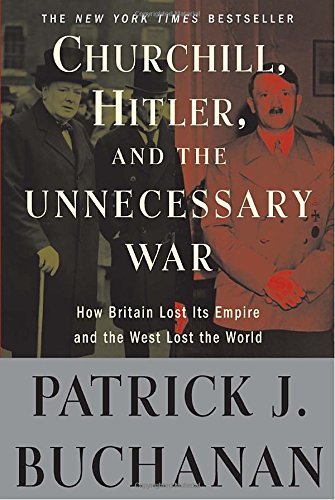
By Pat Buchanan • Unz Review • November 24, 2017
Our aim is to “starve the whole population — men, women, and children, old and young, wounded and sound — into submission,” said First Lord of the Admiralty Winston Churchill.
He was speaking of Germany at the outset of the Great War of 1914-1918. Americans denounced as inhumane this starvation blockade that would eventually take the lives of a million German civilians.
Yet when we went to war in 1917, a U.S. admiral told British Prime Minister Lloyd George, “You will find that it will take us only two months to become as great criminals as you are.”
After the Armistice of Nov. 11, 1918, however, the starvation blockade was not lifted until Germany capitulated to all Allied demands in the Treaty of Versailles.
As late as March 1919, four months after the Germans laid down their arms, Churchill arose in Parliament to exult, “We are enforcing the blockade with rigor, and Germany is very near starvation.”
So grave were conditions in Germany that Gen. Sir Herbert Plumer protested to Lloyd George in Paris that morale among his troops on the Rhine was sinking from seeing “hordes of skinny and bloated children pawing over the offal from British cantonments.”
The starvation blockade was a war crime and a crime against humanity. But the horrors of the Second World War made people forget this milestone on the Western road to barbarism.
A comparable crime is being committed today against the poorest people in the Arab world — and with the complicity of the United States.
Saudi Arabia, which attacked and invaded Yemen in 2015 after Houthi rebels dumped over a pro-Saudi regime in Sanaa and overran much of the country, has imposed a land, sea and air blockade, after the Houthis fired a missile at Riyadh this month that was shot down.
The Saudis say it was an Iranian missile, fired with the aid of Hezbollah, and an “act of war” against the kingdom. The Houthis admit to firing the missile, but all three deny Iran and Hezbollah had any role.
Whatever the facts of the attack, what the Saudis, with U.S. support, are doing today with this total blockade of that impoverished country appears to be both inhumane and indefensible.
Almost 90 percent of Yemen’s food, fuel and medicine is imported, and these imports are being cut off. The largest cities under Houthi control, the port of Hodaida and Sanaa, the capital, have lost access to drinking water because the fuel needed to purify the water is not there.
Thousands have died of cholera. Hundreds of thousands are at risk. Children are in danger from a diphtheria epidemic. Critical drugs and medicines have stopped coming in, a death sentence for diabetics and cancer patients.
If airfields and ports under Houthi control are not allowed to open and the necessities of life and humanitarian aid are not allowed to flow in, the Yemenis face famine and starvation.
What did these people do to deserve this? What did they do to us that we would assist the Saudis in doing this to them?
The Houthis are not al-Qaida or ISIS. Those are Sunni terrorist groups, and the Houthis detest them.
Is this now the American way of war? Are we Americans, this Thanksgiving and Christmas, prepared to collude in a human rights catastrophe that will engender a hatred of us among generations of Yemeni and stain the name of our country?
Saudis argue that the specter of starvation will turn the Yemeni people against the rebels and force the Houthi to submit. But what if the policy fails. What if the Houthis, who have held the northern half of the country for more than two years, do not yield? What then?
Are we willing to play passive observer as thousands and then tens of thousands of innocent civilians — the old, sick, weak, and infants and toddlers first — die from a starvation blockade supported by the mighty United States of America?
Without U.S. targeting and refueling, Saudi planes could not attack the Houthis effectively and Riyadh could not win this war. But when did Congress authorize this war on a nation that never attacked us?
President Obama first approved U.S. support for the Saudi war effort. President Trump has continued the Obama policy, and the war in Yemen has now become his war, and his human rights catastrophe.
Yemen today is arguably the worst humanitarian crisis on earth, and America’s role in it is undeniable and indispensable.
If the United States were to tell Crown Prince Mohammed bin Salman that we were no longer going to support his war in Yemen, the Saudis would have to accept the reality that they have lost this war.
Indeed, given Riyadh’s failure in the Syria civil war, its failure to discipline rebellious Qatar, its stalemated war and human rights disaster in Yemen, Trump might take a hard second look at the Sunni monarchy that is the pillar of U.S. policy in the Persian Gulf.
Copyright 2017 Creators.com
Ignoring Washington’s Role in Yemen Carnage, 60 Minutes Paints US as Savior

By Adam Johnson | FAIR | November 20, 2017
In one of the most glaring, power-serving omissions in some time, CBS News’ 60 Minutes (11/19/17) took a deep dive into the humanitarian crisis in Yemen, and did not once mention the direct role the United States played in creating, perpetuating and prolonging a crisis that’s left over 10,000 civilians dead, 2 million displaced, and an estimated 1 million with cholera.
Correspondent Scott Pelley’s segment, “When Food Is Used as a Weapon,” employed excellent on-the-ground reporting to highlight the famine and bombing victims of Saudi Arabia’s brutal two-and-a-half year siege of Yemen. But its editors betrayed this reporting—and their viewers—by stripping the conflict of any geopolitical context, and letting one of its largest backers, the United States government, entirely off the hook.
As FAIR has previously noted (10/14/16, 2/27/17), US media frequently ignore the Pentagon’s role in the conflict altogether. Pelly did not once note that the US assists Saudi Arabia’s bombing campaign with logistical support, refueling and the selling of arms to the tune of $400 billion. The US also routinely protects Saudi Arabia at the UN from condemnation—a shield that may have vastly prolonged the war, given that it signals the support of the most powerful country on Earth.
Meanwhile, Iran’s involvement in the conflict—which, even by the most paranoid estimates, is far less than the United States’—is placed front and center as one side of the “war.” The conflict is framed in hackneyed “Sunni vs Shia” terms, with Saudi Arabia unironically called the “leader of the Sunni world” and Iran the “leader of the Shia world.” A reductionist narrative that omits that Sunnis have fought alongside the Houthis, and the fact that Saudi bombs kill members of the marginalized, mostly Sunni Muhamasheen caste, who are neither “led” by Saudi Arabia nor part of the “Shia world.”
This cartoon dichotomy is the extent of the context. Saudi Arabia is rightly singled out as the primary aggressor (though a dubious comparative body count of 3,000 killed by Saudis vs. 1,000 by Houthis is proffered that is far lower than the UN’s January 2017 estimates of 10,000 total civilians killed), but who the Saudis’ primary patrons are—the United States and Britain (and Canada, too)—is simply not mentioned. One would think, watching Pelley’s report, it was a purely regional conflict, and not one sanctioned and armed by major Western superpowers to counter “Iranian aggression.”
To compound the obfuscation, 60 Minutes doesn’t just omit the US role in the war, it paints the US as a savior rescuing its victims. The hero of the piece is American David Beasley, the director of the UN’s World Food Programme, the organization coordinating humanitarian aid. “The US is [the World Food Programme]’s biggest donor, so the director is most often an American. Beasley was once governor of South Carolina,” Pelly narrates over B-roll hero shots of Beasley overseeing food distribution.
Beasley, in his sit-down interview, bends over backwards to downplay Saudi responsibility, insisting at every turn that “all parties” are to blame:
You see it’s chaos, it’s starvation, it’s hunger, and it’s unnecessary conflict, strictly man-made. All parties involved in this conflict have their hands guilty, the hands are dirty. All parties.
The spin that the crisis is the fault of “all parties” is understandable from a US-funded de facto diplomat, charged with providing some cover for a major regional ally. But the premise that “all parties” are causing the famine is never challenged by Pelley. It’s taken as fact, and the piece moves on.
It’s part of a broader trend of erasing American responsibility for the conflict and resulting humanitarian disaster. The Washington Post ran an editorial last week (11/8/17) and an explainer piece Saturday (11/19/17) detailing the carnage in Yemen, neither one of which bothered to mention US involvement. American complicity in the war is so broad in scope, it merited a warning last year from the US’s own State Department they could be liable for war crimes—yet it hardly merits a mention in major media accounts. The war just is, a collective moral failing on the part of “all parties”—irrational sectarian Muslims lost in a pat “cycle of violence” caricature.
As momentum builds in Congress, animated by grassroots anti-war activists, to push back against the war and hold US lawmakers accountable, how the US contributes to the death and disease in the Arabian peninsula is of urgent political import. By erasing the US role in the war, CBS producers obscure for viewers the most effective way they can end the war: by pressuring their own lawmakers to stop supporting it. Instead, viewers are left with what filmmaker Adam Curtis calls “Oh, dearism”: the act of feeling distressed but ultimately helpless in the face of mindless cruelty—perpetrated, conveniently, by everyone but us.
You can send a message to 60 Minutes at 60M@CBSNews.com (or via Twitter: @60Minutes).
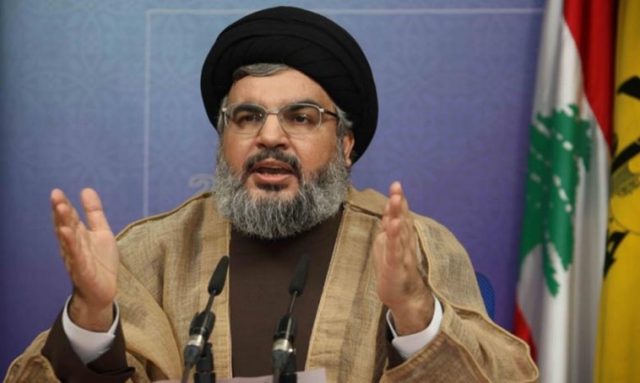
Nasrallah: US did what it could to help Daesh in Syria’s Bukamal
Press TV – November 20, 2017
The secretary general of the Lebanese Hezbollah resistance movement says despite the US claims about fighting terrorism, it spared no effort to help Daesh forces in the Syrian town of al-Bukamal.
Sayyed Hassan Nasrallah made the remarks in a televised address to the Lebanese nation in capital city of Beirut on Monday.
Nasrallah noted that recapturing Bukamal was a major victory over Daesh, because Bukamal was the last Syrian city occupied by Daesh.
“The US helped Daesh as much as it could in Bukamal short of directly engaging forces that fought to liberate the town from Daesh,” the Hezbollah leader noted.
Nasrallah went on to note that the US provided Daesh terrorists with full air cover in Bukamal.
The US sent its drones to Bukamal and provided Daesh with accurate information about what was going on, Nasrallah said, adding that American forces also waged electronic warfare against forces that were fighting to liberate Bukamal.
American forces also provided air transfer for Daesh commanders and facilitated their escape to eastern shores of the Euphrates, he said. The Hezbollah leader stated that even Turkey’s President Recep Tayyip Erdogan slammed the US for helping Daesh.
Nasrallah emphasized that recapturing Bukamal led to unity of Syria and ended Daesh’s self-proclaimed state in the country.
Following recent victories in Iraq and Syria, he added, the military structure of Daesh collapsed in the two countries and Iraqi forces have reached the Syrian border.
Hezbollah leader noted that the victory over Daesh was victory of Islamic values over terrorists’ savagery.
Nasrallah also highlighted the role played by Commander of the Islamic Revolution Guards Corps’ Quds Force Major General Qassem Soleimani in anti-terror operations in both Iraq and Syria.
He noted that Soleimani was commanding anti-Daesh operations in the two countries at the frontline and was never a commander to issue orders from behind the lines.
Elsewhere in his remarks, Nasrallah referred to the latest meeting of the Arab League foreign ministers in Cairo, who designated the Lebanese Hezbollah as a terrorist group, saying that this was not the first time that such accusations were leveled against Hezbollah.
Arab League Secretary General Ahmad Aboul Gheit announced at a press conference in the Egyptian capital of Cairo on Sunday that Arab states had agreed to designate Lebanon’s Hezbollah resistance movement a “terrorist organization.”
The Arab League’s extraordinary general meeting on Sunday was held at the request of Saudi Arabia, which has assumed an aggressive stance against Hezbollah for its alleged links to Iran, Riyadh’s powerful rival in the region. Riyadh associates Hezbollah with Iran and has been trying to weaken the resistance movement, which is Lebanon’s de facto deterrent force against Tel Aviv.
In its concluding resolution, the Arab League announced that Arab foreign ministers, excluding those of Lebanon and Iraq, would hold Hezbollah responsible for supporting “terrorist groups” across the region.
Nasrallah said the Arab League statement has labeled Hezbollah’s council, which is part of the Lebanon’s government, as a terrorist outfit, alleging that it provides missiles to terrorist groups in the region.
He added that accusations about Hezbollah sending missiles to regional countries were false and undocumented, emphasizing that the group has never sent any missiles or even light weapons to Kuwait, Yemen, Iraq or Bahrain or any other country in the region.
The leader of Hezbollah went on to say that the Arab League has warned Lebanon that if Hezbollah is not disarmed, security of the country would be in jeopardy.
Hezbollah rejected the accusation, noting that the main threat to security of Lebanon was the Zionist regime of Israel.
He added that the resistance front’s weapons were the main factor restoring security and stability to Lebanon, because they were used for defensive purposes in the face of the Israeli aggression.
Nasrallah emphasized that Hezbollah’s weapons were used only against terrorist groups such as Daesh and posed no threat to security of Lebanon.
A United Nations Security Council-appointed panel says it has seen no evidence to support Saudi Arabia’s claims that missiles have been transferred to Yemen’s Houthis by external sources.
Nasrallah stated that the main reason behind the recent Arab League meeting was not to discuss the issue of Palestine or other problems facing the Islamic world, but its main reason was the recent missile attack against a Saudi airport near the country’s capital, Riyadh.
Refusing Saudi Arabia and Arab League claims that the missile was provided to Yemeni Ansarullah fighters by Iran or the Lebanese Hezbollah, Nasrallah said Iran or Hezbollah had not sent any missiles to Yemen and Yemeni forces made their own missiles in the country.
He categorically rejected Arab League’s claims in this regard, noting that Saudi Arabia and its allies must admit that they have been defeated by Yemeni forces in their war of aggression against the country.
Nasrallah emphasized that Arab countries must put an immediate end to their support for terror groups, and do not fill the Middle East region with such outfits.
He reiterated that no member of Hezbollah was involved in the November 5 Yemeni missile strike against King Khalid International Airport of Riyadh.
The Hezbollah leader then took the Arab League to task for failing to address Saudi Arabia’s devastating aerial bombardment of the “Arab country of Yemen,” saying, “Saudi Arabia is bombing Yemeni people day and night.”
Strongly denouncing the Riyadh regime over perpetrating outrageous atrocities against millions of “Arab Muslims” in Yemen, Nasrallah lashed out at the Arab world’s “deafening silence” over the grim situation in Yemen.
“The turmoil we are witnessing in the Arab world is a cover for the announcement of normalization of relations with Israel,” he commented.
Nasrallah then called on Arabs to do their best to maintain their national unity in the face of all divisive efforts.
The Hezbollah secretary general also praised Lebanese officials and politicians for their firm stance regarding Prime Minister Saad Hariri’s shock resignation, calling on him to return to Lebanon as soon as possible.
Guardian, NYT Paint Power-Grabbing Saudi Dictator as Roguish, Visionary ‘Reformer’
By Adam Johnson | FAIR | November 17, 2017

The Guardian (11/5/17)
Two weeks ago, Saudi Crown Prince Mohammed bin Salman carried out a brutal crackdown on his political opponents, arresting dozens of high-ranking relatives, kidnapping the prime minister of Lebanon, and seeing eight of his political rivals die in a convenient helicopter crash. The “consolidation of power” by the de facto Saudi ruler comes as his government ramps up its siege of Yemen and gets even closer to its US sponsor, thanks to a Trump’s dopey love affair with—and direct assistance of—the regime.
The cynical plan has been met, in some media quarters, with condemnation, but for many in the Western press, Mohammed’s self-serving power grab is the action of a bold “reformer,” a roguish bad boy doing the messy but essential work of “reforming” the kingdom—the “anti-corruption” pretext of the purge largely repeated without qualification. The most prominent sources for this spin were two major newspapers, the New York Times and Guardian:
- Guardian (11/5/17): “Royal Purge Sends Shockwaves Through Saudi Arabia’s Elites: Move Consolidates Power of Prince Mohammed Bin Salman as He Attempts to Reform Kingdom’s Economy and Society”
- Guardian (11/5/17) : “Saudi Arrests Show Crown Prince Is a Risk-Taker With a Zeal for Reform: Mohammed Bin Salman Is Confronting Some of the Kingdom’s Richest and Most Powerful Men in His Anti-Corruption Drive—but Is He Taking on Too Much Too Fast?”
- Guardian (11/6/17): “Oil Price Rises to Two-Year High After Saudi Arabia Purge: Markets Push Price Up to $62 a Barrel After Anti-Corruption Purge by Billionaire Crown Prince Who Backs Prolonging Oil Production Curbs”
- Guardian (11/7/17): “‘This Is a Revolution’: Saudis Absorb Crown Prince’s Rush to Reform: Consolidation of Power in Mohammed Bin Salman’s Hands Has Upended All Aspects of Society, Including Previously Untouchable Ultra-Elite”
- New York Times (11/5/17): “Saudi Crown Prince’s Mass Purge Upends a Longstanding System”
- New York Times (11/14/17): “The Upstart Saudi Prince Who’s Throwing Caution to the Wind”
While the text of the Times articles was far more skeptical about Mohammed’s motives, the Guardian’s (11/5/17) initial coverage of the bloody purge—not just the headlines—was written in breathless press release tones:
Saudi Arabia’s leadership has pulled off its boldest move yet to consolidate power around its young crown prince, Mohammed bin Salman, arresting 11 senior princes, one of the country’s richest men and scores of former ministers in what it billed as a corruption purge.
The move sidelined at least 20 senior figures, among them outspoken billionaire, Prince Alwaleed bin Talal, sending shockwaves through the ranks of the kingdom’s elites, who had long viewed senior royals as immune.
Lots of glowing prose to unpack here. Longtime Mideast correspondent Martin Chulov began by referring to “Saudi Arabia’s leadership,” which is a nice, sterile way of referencing the country’s unelected hereditary king and crown prince. Then he pivoted into marketing pablum about “bold moves” and “consolidating power,” before unironically framing the purge as an “anti-corruption” gesture designed to stick it to the “kingdom’s elites.” One could come away from reading this lead with the impression that the billionaire aristocrat was a populist folk hero in the vein of Robin Hood or John Dillinger. The thrilling profile continued:
Prince Mohammed will oversee the corruption commission, adding to his already formidable list of responsibilities, including his role as Defense minister and champion of the economic transformation, dubbed Vision 2030, that aims to revolutionize most aspects of Saudi life within 12 years.
Prince Mohammed told the Guardian last month that the kingdom had been “not normal” for the past 30 years and pledged to return Saudi Arabia to moderate Islam.
While the author had a “to be sure” paragraph, citing “others” calling it a “naked attempt to weed out dissent,” the overall thrust of the article was that a roguish billionaire Boy King was earnestly seeking “reform” and opposing “elites.”
A follow-up piece (11/7/17) took flattering coverage to new extremes. The dispatch, again by Chulov, cited nothing but anonymous Saudi court hanger-ons and a Gulf-funded talking head from the NATO-aligned Atlantic Council think tank. The article, “‘This Is a Revolution’: Saudis Absorb Crown Prince’s Rush to Reform,” was populated with blind quotes from such adversarial voices as a “senior minister,” “a senior Saudi official,” a “senior figure,” a “senior Saudi businessman” and “veteran business leaders.” (Evidently no junior officials or rookie business leaders were available for comment.)
The article painted the “consolidation of power” by Mohammed as an inevitability with broad support—using the dubious “reform” narrative without irony. With Guardian editors again painting Mohammed as a populist hero by insisting he “upended” “previously untouchable ultra-elite,” one is left to wonder why they don’t consider the absolute-monarch-in-waiting—who just bought a $590 million yacht—part of the “ultra elite.” It’s a curious framing that reeks more of PR than journalism.

The New York Times (6/23/17)
This was a trope one could see emerging over the past few months. Similar “bold reformer” frames were used in New York Times editorials (“The Young and Brash Saudi Crown Prince,” 6/23/17) and straight reporting (“Saudi Arabia’s Grand Plan to Move Beyond Oil: Big Goals, Bigger Hurdles,” 10/24/17). Everything’s new and exciting. The brutal, routine functions of the Saudi state are seen as laws of nature—and those in charge of it are the reformers of the very oppression they initially authored.
A Guardian editorial on November 7 was critical of the government, calling it “regressive” and Mohammed “belligerent,” but ultimately rested on “both sides” framing of recent events. The only meaningfully critical coverage of Saudi Arabia coming from the Guardian since the purge has been in two articles (11/12/17, 11/16/17), both in the context of Saudi Arabia’s war on Yemen. Neither mentioned bin Salman, and both stressed how the Saudis are responding in earnest to international pleas to stop their mass-murdering blockade of the Arab world’s poorest country.
Per usual, the Guardian reserves the label “regime” for Official Enemies like Syria and North Korea; Saudi Arabia doesn’t have a regime, it has “leadership.” Unlike adversary governments, often seen in need of “regime change,” the Saudi government merely requires “reform”—and a bold new “reformer,” of the sort championed by the likes of the Guardian and New York Times.
You can send a message to the New York Times at letters@nytimes.com , and to the Guardian at guardian.letters@theguardian.com (Twitter: @NYTimes, @Guardian). Please remember that respectful communication is the most effective.
Security Council-appointed panel says no missiles sent to Houthis, refuting Saudi Arabia claim
Press TV – November 18, 2017
A United Nations Security Council-appointed panel has said in a confidential memo that it has seen no evidence to support Saudi Arabia’s claims that missiles have been transferred to Yemen’s Houthis fighters by external sources.
The panel made the conclusion in a confidential assessment sent to Security Council diplomats on November 10, The Intercept, a US-based investigative website, reported on Friday.
On November 4, a missile attack from Yemen targeted the King Khalid International Airport (KKIA) near the Saudi capital, Riyadh. It was the first missile from Yemen to have reached deep inside Saudi territory.
The Houthi movement, which has been fighting back a Saudi-led coalition with allied Yemeni army troops and tribal fighters, said it had fired the missile, which the Saudis said they had intercepted mid-air.
However, the Riyadh regime quickly blamed the Islamic Republic for the incident.
Heating up rhetoric against Iran, and then being proven wrong
In a November 7 letter to the Security Council, Saudi UN Ambassador Abdallah al-Mouallimi claimed that the debris of the missiles fired by the Houthis on July 22 and November 4 confirmed Iran’s role “in manufacturing these missiles.”
Following the attack, the Saudi-led coalition tightened a blockade that had already been imposed on Yemen in a bid to prevent “the smuggling of weapons, ammunitions, missile parts and cash that are regularly being supplied by Iran” to the Houthis.
It invoked Paragraph 14 of Security Council Resolution 2216, which was passed in April 2015, calling for measures to prevent the supply, sale, or transfer of military goods to Houthi fighters.
The coalition said the missile’s firing was “a blatant act of military aggression” by the Iranian government.
Crown Prince Mohammad bin Salman said it had been “a direct military aggression” by Iran against Saudi Arabia, while Foreign Minister Adel al-Jubeir stressed that his country reserved the right to “respond in the appropriate manner at the appropriate time.”
The belligerent Saudi posture toward Iran worked to significantly raise tensions.
Iran rejected the allegations as “provocative and baseless,” saying Yemenis had shown an “independent” reaction to the Saudi bombing campaign on their country.
Iran also said that it could not transfer any weapons to Yemen because of the Saudi-led blockade.
The Security Council-appointed panel said in its confidential assessment that it had seen no evidence to back up the Saudi claims that short-range ballistic missiles (SRBMs) had been transferred to Yemeni fighters in violation of the Resolution 2216.
It said the tightening of the blockade by the Saudi-led coalition and its invoking of Resolution 2216 had been an attempt to merely “obstruct” the delivery of civilian aid.
“The panel finds that imposition of access restrictions is another attempt by the Saudi Arabia-led coalition to use paragraph 14 of resolution 2216 as justification for obstructing the delivery of commodities that are essentially civilian in nature,” the assessment read.
Touching on the July 22 attack, it said, “The supporting evidence provided… is far below that required to attribute this attack to a Qiam-1 SRBM.”
Yemen has witnessed a deadly Saudi-led war since March 2015. The protracted Saudi offensive, which has been accompanied by the, land, naval, and aerial blockade on Yemen, has so far killed over 12,000 people and led to a humanitarian crisis.
The UN has listed Yemen as the world’s number one humanitarian crisis, with 17 million Yemenis in need of food and a cholera epidemic causing over 2,200 deaths so far.
Iran’s UN envoy slams Canada’s double standards on human rights

Canadians protest in support of indigenous women
Press TV – November 15, 2017
A senior Iranian diplomat has blasted Canada for proposing a “politically-motivated” UN resolution on the situation of human rights in Iran, while Ottawa, itself, has long been involved in a broad range of human rights abuses at home and elsewhere.
Iran’s Deputy Permanent Representative to the UN Es’haq Al-e Habib was reacting to a Canada-drafted human rights resolution, which was adopted Tuesday against Iran by the Third Committee of UN General Assembly with 83 votes in favor, 30 against and 68 abstentions.
Speaking during the session, Al-e Habib rejected the document as “politically-motivated” and said “double standards are an integral part of Canada’s foreign policy.”
“We regret that few unscrupulous Governments continue challenging integrity and credibility of the United Nations through pushing for this politically-motivated resolution that only underscores how selective, irrelevant and subjective UN decisions could sometimes become,” he added.
He pointed to some examples of Canada’s non-compliance by its international human rights obligations, including Ottawa’s discriminatory policies against indigenous people and its support for the Israeli regime.
“Ottawa along with very few others in the whole world have consistently and unconditionally supported Israel despite all the gross, abhorrent and systematic violations of human rights committed by that regime. This level of hypocrisy and double standard is mind-boggling,” the Iranian envoy pointed out.
Al-e Habib also referred to Canada’s discriminatory policies against its own indigenous people, adding, “While police brutality, forced disappearances and murder of the indigenous people are well documented, indigenous women and girls continue to suffer from the institutionalized discrimination and violence.”
“Canada should have realized thus far that such a pointless and futile exercise is a disservice to the human rights cause, a harmful measure against the UN human rights mechanisms and a disrespect to the wisdom of the people who closely monitor Canada’s selective stances on human rights situations,” the Iranian envoy said.
Saudi Arabia rights violations
During the session, Al-e Habib also lashed out at Saudi Arabia for supporting the Canada-drafted resolution against Iran, while Riyadh itself has been blatantly violating human rights both at home and in different parts of the world.
The Iranian envoy noted that Saudi Arabia kills more children in Yemen than al-Qaeda, Daesh and al-Nusra put together around the globe, adding, “Saudi regime being a partner in the global fight against terrorism and intolerance is blatant mockery of humanity, human rights, justice and peace.”
“Spending billions of dollars buying beautiful arms and Western public relation corporations cannot hide the real face of Saudi, whose money also fuels sectarianism in the Persian Gulf, Middle East and the world,” he said.
Al-e Habib went on to enumerate some instances of rights violations by Saudi Arabia, including Riyadh’s crackdown on all forms of dissent across the country, particularly in the eastern city of Awamiyah, mainly populated by minority Shia Muslims.
He highlighted the slavery of hundreds of thousands of female migrant workers inside Saudi Arabia, the systemic violation of human rights of minorities there.
The Iranian official also drew attention to the Saudi massacre of thousands of Yemeni civilians during its military campaign against the impoverished country as well as the number of the kingdom’s nationals, who have joined Takfiri terror outfits such as al-Qaeda, Daesh and al-Nusra Front.
Saudi-led coalition air raid puts Yemen’s Sana’a airport out of service
MEMO | November 14, 2017
An air raid by the Saudi-led military coalition put the Ansarullah-controlled Yemeni airport in the capital Sana’a out of service today, jeopardising relief shipments to a country on the brink of famine, the state news agency SABA reported.
The Saudi-led coalition fighting Yemen’s Ansarullah movement said last week it had closed all air, land and seaports in Yemen to stem what it said was the flow of arms to the Ansarullah from Iran.
Air raids destroyed radio navigation station for aircraft, civil aviation authorities told SABA, which is controlled by Ansarullah.
Air traffic in Sana’a’s airport is currently restricted to flights carrying humanitarian aid sent by the United Nations and other international organisations.
The Ansarullah control most of the north, including Sana’a and its international airport, while the Saudi-led coalition dominates the airspace. Any reopening would need an agreement between the two sides, which blame each other for Yemen’s humanitarian disaster.
The top UN aid official in Yemen called on the Saudi-led coalition today to open all Yemen’s sea ports urgently, saying it risked damaging the fight against cholera and hunger, with seven million already in “famine-like conditions”.
Millions of lives were at risk because of the blockade, UN humanitarian coordinator for Yemen, Jamie McGoldrick, said to reporters in Geneva by telephone from Amman. The Saudi-led coalition was not immediately available for comment.
UAE buys new weapons worth $684 million from US firm
Press TV – November 14, 2017
The United Arab Emirates (UAE) has signed a new deal with an American arms manufacturer under which the firm would supply the small Persian Gulf country with laser-guided bombs, authorities say.
The deal, announced Tuesday at the Dubai Airshow and worth 2.5 billion dirhams ($684.4 million), would see the American missile maker Raytheon Co. sell GBU-10 and GBU-12 Paveway laser-guided bomb kits to Abu Dhabi, among other weapons.
UAE authorities also signed arms deals with Germany’s Rheinmetall to buy artillery from the company. The contract will also enable Rheinmetall to support Etihad Airways with transportation equipment.
The purchase of weapons comes amid the UAE’s involvement in a deadly campaign, led by Saudi Arabia, against Yemen. More than 10,000 people have been killed and over two million have been displaced since March 2015, when the regime in Riyadh began the campaign.
Abu Dhabi has also announced plans for buying 75 Mirage 2000-9 aircraft from the French multinational company Dassault and Thales to upgrade its air force fleet. That comes despite increasing calls for a halt to the UAE’s contribution to the devastating Saudi-led airstrikes on civilian areas in Yemen.
Saudi Arabia and the UAE are two major recipients in the Persian Gulf of weapons from the United States and other Western countries. Other countries in the region have accused the two of sparking an arms race by their excessive purchase of modern weaponry from the West.
Reports over the past few years have indicated that much of the UAE’s modern weaponry have found their way into the hands of militants in Libya, where Abu Dhabi supports an administration opposed to Tripoli’s internationally-recognized government.
Arab states spent $130bn to destroy Syria, Libya, Yemen: Algerian PM
Press TV – November 12, 2017
Algerian Prime Minister Ahmed Ouyahia says some regional Arab states have spent $130 billion to obliterate Syria, Libya and Yemen.
Ouyahia made the remarks on Saturday at a time when much of the Middle East and North Africa is in turmoil, grappling with different crises, ranging from terrorism and insecurity to political uncertainty and foreign interference.
Algeria maintains that regional states should settle their differences through dialog and that foreign meddling is to their detriment.
Syria has been gripped by foreign-sponsored militancy since 2011. Takfirism, which is a trademark of many terrorist groups operating in Syria, is largely influenced by Wahhabism, the radical ideology dominating Saudi Arabia.
Libya has further been struggling with violence and political uncertainty since the country’s former ruler Muammar Gaddafi was deposed in 2011 and later killed in the wake of a US-led NATO military intervention. Daesh has been taking advantage of the chaos in Libya to increase its presence there.
Yemen has also witnessed a deadly Saudi war since March 2015 which has led to a humanitarian crisis.
Last Month, Qatar’s former deputy prime minister Abdullah bin Hamad al-Attiyah said the United Arab Emirates had planned a military invasion of Qatar with thousands of US-trained mercenaries.
The UAE plan for the military action was prepared before the ongoing Qatar rift, but it was never carried out as Washington did not give the green light to it, he noted.
In late April, reports said the UAE was quietly expanding its military presence into Africa and the Middle East, namely in Eritrea and Yemen.
Featured Video
Max Blumenthal: ‘Israel First’ in Iran War Sparks MAGA Civil War
or go to
Aletho News Archives – Video-Images
From the Archives
Wartime internment camps in Australia
National Archives of Australia
World War I
During World War I, for security reasons the Australian Government pursued a comprehensive internment policy against enemy aliens living in Australia.
Initially only those born in countries at war with Australia were classed as enemy aliens, but later this was expanded to include people of enemy nations who were naturalised British subjects, Australian-born descendants of migrants born in enemy nations and others who were thought to pose a threat to Australia’s security.
Australia interned almost 7,000 people during World War I, of whom about 4,500 were enemy aliens and British nationals of German ancestry already resident in Australia.
Records of World War I internment camps
World War II
During World War II, Australian authorities established internment camps for three reasons – to prevent residents from assisting Australia’s enemies, to appease public opinion and to house overseas internees sent to Australia for the duration of the war.
Unlike World War I, the initial aim of internment during the later conflict was to identify and intern those who posed a particular threat to the safety or defence of the country. As the war progressed, however, this policy changed and Japanese residents were interned en masse. In the later years of the war, Germans and Italians were also interned on the basis of nationality, particularly those living in the north of Australia. In all, just over 20 per cent of all Italians resident in Australia were interned. … continue
Blog Roll
 Aletho News
- Tomorrow’s naval blockade showdown
- ‘Israel’ attacks civilians to hide its embarrassing military failures & out of pure sadism
- Any Foreign Military Vessel Approaching Hormuz Under Any Pretext ‘Will Be Dealt With Severely’: IRGC
- Diplomats slam US negotiators’ performance in Iran talks
- Trump Refuses Exit Ramp, War with Iran will Continue
- Trump Says US Naval Blockade in Strait of Hormuz Will Begin Shortly
- US, Iran end 21-hour talks without agreement
- US IRAN TALKS: Who Are the Crazy Ones Here? /Lt Col Daniel Davis
- Talks with the US end without a deal over excessive US demands: Iran
- Feeling Better, Getting Worse: How Psychiatric Drugs Create the Illusion They Cure
- If Americans Knew
- US-Iran ceasefire negotiations make zero progress – Daily Update
- Pro-Israel ‘Thinktanks’ and Individuals who Influence U.S. Foreign Policy
- Mearsheimer reveals how Israel dictates US policies on Iran, Gaza – video
- After killing 350+, Israel still has a “score to settle” with Lebanon before ceasefire – Daily Update
- Military aid to Israel emerges as the latest political litmus test for Democrats
- The only Palestinian children’s rights organization closes following years-long Israeli campaign against it
- ‘I Can’t Forget the Smell’: Lebanese Reel After Israel Kills Over 300 in Single Day
- DNC Shoots Down Resolutions Calling Out AIPAC and Limiting Arms to Israel
- TCN: Is Israel Blackmailing President Trump?
- Israel killed at least 303 Lebanese yesterday – who were they? Daily Update
- No Tricks Zone
- German Expert: Heat Dome Led To Record Temps In Western USA…Warmer In 1934, 1936
- New Study: No Linear Warming Or Glacier Retreat Along Northern Antarctic Peninsula Since 1980s
- An Inconvenient Tree: Uncovered In Alps… Europe Much Warmer Than Today 6000 Years Ago
- New Study Reports A 60% Slowdown In Greenland’s Ice Loss Rate In The Last Decade
- Low Intensity Tornado Wrecks Major Solar Farm, Creating A Potential Toxic Dump
- New Study Finds Warming Saves Lives…Cold Temperatures 12 Times More Deadly Than Excess Heat
- German Science Blog Accuses PIK Climate Institute Of Hallucinating Climate Tipping Points
- Devastating Assessment Of Comirnaty Vaccine By Former Senior Pfizer Europe Toxicologist
- New Study: CO2 Is ‘Effectively Negligible’ As An Explanatory Climate Change Factor Since 2000
- Former Pfizer Toxicologist Dr. Helmut Sterz Tells Bundestag Hearing Pfizer Vaccine Should Have Never Been Approved
 Aletho News