US Impunity Erodes World Justice
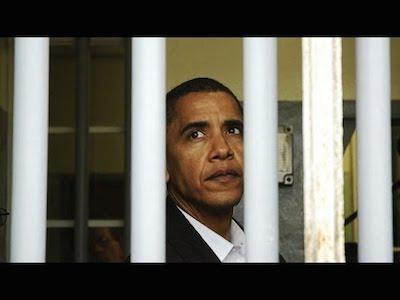
By Nicolas J S Davies | Consortium news | October 25, 2016
In the past week, Burundi and South Africa have joined Namibia in declaring their intention to withdraw from the jurisdiction of the International Criminal Court (ICC). They are likely to be followed by a parade of other African countries, jeopardizing the future of an international court that has prosecuted 39 officials from eight African countries but has failed to indict a single person who is not African.
Ironically, African countries were among the first to embrace the ICC, so it is a striking turnaround that they are now the first to give up on it.
But it is the United States that has played the leading role in preventing the ICC from fulfilling the universal mandate for which it was formed, to hold officials of all countries accountable for the worst crimes in the world: genocide; crimes against humanity; and war crimes – not least the crime of international aggression, which the judges at Nuremberg defined as “the supreme international crime” from which all other war crimes follow.
As the ICC’s founding father, former Nuremberg prosecutor Benjamin Ferencz, lamented in 2011, “You don’t have to be a criminologist to realize that if you want to deter a crime, you must persuade potential criminals that, if they commit crimes, they will be hauled into court and be held accountable. It is the policy of the United States to do just the opposite as far as the crime of aggression is concerned. Our government has gone to great pains to be sure that no American will be tried by any international criminal court for the supreme crime of illegal war-making.”
The U.S. has not only refused to accept the jurisdiction of the ICC over its own citizens. It has gone further, pressuring other countries to sign Bilateral Immunity Agreements (BIA), in which they renounce the right to refer U.S. citizens to the ICC for war crimes committed on their territory.
The U.S. has also threatened to cut off U.S. aid to countries that refuse to sign them. The BIAs violate those countries’ own commitments under the ICC statute, and the U.S. pressure to sign them has been rightly condemned as an outrageous effort to ensure impunity for U.S. war crimes.
Resistance to U.S. Impunity
To the credit of our international neighbors, this U.S. strategy has met with substantial resistance. The European Parliament overwhelmingly passed a resolution stating that BIAs are incompatible with E.U. membership, and urged E.U.- member states and countries seeking E.U. membership not to sign them.
Fifty-four countries have publicly refused to sign BIAs, and 24 have accepted cut-offs of U.S. aid as a consequence of their refusal. Of 102 countries that have signed a BIA, only 48 are members of the ICC in any case, and only 15 of those countries are on record as having ratified the BIAs in their own parliaments.
Thirty-two other ICC members have apparently allowed BIAs to take effect without parliamentary ratification, but this has been challenged by their own country’s legal experts in many cases.
The U.S. campaign to undermine the ICC is part of a much broader effort by the U.S. government to evade all forms of accountability under the laws that are supposed to govern international behavior in the modern world, even as it continues to masquerade as a global champion of the rule of law.
The treaties that U.S. policy systematically violates today were crafted by American statesmen and diplomats, working with their foreign colleagues, to build a world where all people would enjoy some basic protections from the worst atrocities, instead of being subject only to the law of the jungle or “might makes right.”
So current U.S. policy is a cynical betrayal of the work and wisdom of past generations of Americans, as well as of countless victims all over the world to whom we are effectively denying the protections of the U.N. Charter, the Geneva Conventions, the U.N. Convention on the Rights of the Child and other multilateral treaties that our country ignores, violates or refuses to ratify.
Avoiding the jurisdiction of international courts is only one of the ways that the U.S. evades international accountability for its criminal behavior. Another involves an elaborate and well-disguised public relations campaign that exploit the powerful position of U.S. corporations in the world of commercial media.
Major Propaganda Funding
The U.S. government spends a billion dollars per year on public relations or, more bluntly, propaganda, including $600 million from the Pentagon budget. The work of its P.R. teams and contractors is laundered by U.S. newspapers and repeated and analyzed ad nauseam by monolithic, flag-waving TV networks.
These profitable corporate operations monopolize the public airwaves in the U.S., and also use their financial clout, slick marketing and the support of the U.S. State Department to maintain a powerful presence in foreign and international media markets.
Foreign media in allied countries provide further legitimacy and credibility to U.S. talking-points and narratives as they echo around the world. Meanwhile, Hollywood fills cinema and TV screens across the world with an idealized, glamorized, inspirational version of America that still mesmerizes many people.
This whole elaborate “information warfare” machine presents the United States as a global leader for democracy, human rights and the rule of law, even as it systematically and catastrophically undermines those same principles. It enables our leaders to loudly and persuasively demonize other countries and their leaders as dangerous violators of international law, even as the U.S. and its allies commit far worse crimes.
Double Standards in Syria/Iraq
Today, for instance, the U.S. and its allies are accusing Syria and Russia of war crimes in east Aleppo, even as America’s own and allied forces launch a similar assault on Mosul. Both attacks are killing civilians and reducing much of a city to rubble; the rationale is the same, counterterrorism; and there are many more people in the line of fire in Mosul than in east Aleppo.
But the U.S. propaganda machine ensures that most Americans see one, in Mosul, as a legitimate counterterrorism operation (with Islamic State accused of using the civilians as “human shields”) and the other, in east Aleppo, as a massacre (with the presence of Al Qaeda’s Syrian affiliate, the former Nusra Front, virtually whited out of the West’s coverage, which focuses almost entirely on the children and makes no mention of “human shields”).
The phrase “aggressive war” is also a no-no in the Western media when the U.S. government launches attacks across international borders. In the past 20 years, the U.S. has violated the U.N. Charter to attack at least eight countries (Yugoslavia, Afghanistan, Iraq, Pakistan, Yemen, Somalia, Libya and Syria), and the resulting wars have killed about two million people.
A complex whirlwind of conflict and chaos rages on in all the countries where the U.S. and its allies have lit the flames of war since 2001, but U.S. leaders still debate new interventions and escalations as if we are the fire brigade not the arsonists. (By contrast, the U.S. government and the Western media are quick to accuse Russia or other countries of “aggression” even in legally murky situations, such as after the U.S.-backed coup in 2014 that ousted the elected president of Ukraine.)
Systematic violations of the Geneva Conventions are an integral part of U.S. war-making. Most are shrouded in secrecy, and the propaganda machine spins the atrocities that slip through into the public record as a disconnected series of aberrations, accidents and “bad apples,” instead of as the result of illegal rules of engagement and unlawful orders from higher-ups.
The senior officers and civilian officials who are criminally responsible for these crimes under U.S. and international law systematically abuse their powerful positions to subvert investigations, cover up their crimes and avoid any accountability whatsoever.
Pinter’s Complaint
When British playwright Harold Pinter was awarded the Nobel Prize for Literature in 2005, he bravely and brilliantly used his Nobel lecture to speak about the real role that the U.S. plays in the world and how it whitewashes its crimes. Pinter recounted a meeting at the U.S. Embassy in London in the 1980s in which a senior embassy official, Raymond Seitz, flatly denied U.S. war crimes against Nicaragua for which the U.S. was in fact convicted of aggression by the International Court of Justice (ICJ). Seitz went on to serve as Assistant Secretary of State, U.S. Ambassador to the U.K., and then Vice-Chairman of Lehman Brothers.
As Pinter explained: “this ‘policy’ was by no means restricted to Central America. It was conducted throughout the world. It was never-ending. And it is as if it never happened.
“The United States supported and in many cases engendered every right wing military dictatorship in the world after the end of the Second World War. I refer to Indonesia, Greece, Uruguay, Brazil, Paraguay, Haiti, Turkey, the Philippines, Guatemala, El Salvador, and, of course, Chile. The horror the United States inflicted upon Chile in 1973 can never be purged and can never be forgiven.
“Hundreds of thousands of deaths took place throughout these countries. Did they take place? And are they in all cases attributable to US foreign policy? The answer is yes they did take place and they are attributable to American foreign policy. But you wouldn’t know it.
“It never happened. Nothing ever happened. Even while it was happening it wasn’t happening. It didn’t matter. It was of no interest. The crimes of the United States have been systematic, constant, vicious, remorseless, but very few people have actually talked about them. You have to hand it to America. It has exercised a quite clinical manipulation of power worldwide while masquerading as a force for universal good. It’s a brilliant, even witty, highly successful act of hypnosis.”
If in 2016 the world seems to be more violent and chaotic than ever, it is not because the United States lacks the will to use force or project power, as both major party candidates for President and their military advisers appear to believe, but because our leaders have placed too much stock in the illegal threat and use of force and have lost faith in the rule of law, international cooperation and diplomacy.
After a century of commercial dominance, and 75 years of investing disproportionately in weapons, military forces and geopolitical schemes, perhaps it is understandable that U.S. leaders have forgotten how to deal fairly and respectfully with our international neighbors. But it is no longer an option to muddle along, leaving a trail of death, ruin and chaos in our wake, counting on an elaborate propaganda machine to minimize the blowback on our country and our lives.
Sooner rather than later, Americans and our leaders must knuckle down and master the very different attitudes and skills we will need to become law-abiding global citizens in a peaceful, sustainable, multipolar world.
Nicolas J S Davies is the author of Blood On Our Hands: the American Invasion and Destruction of Iraq. He also wrote the chapters on “Obama at War” in Grading the 44th President: a Report Card on Barack Obama’s First Term as a Progressive Leader.
The Tragedy in Yemen
By Derek Royden | CounterPunch | October 25, 2016
Imagine if the Islamic Republic of Iran, complaining that its regional rival Saudi Arabia was meddling in a neighbor’s politics for sectarian reasons, led a coalition to invade that country. As a result, after 18 months, at least 10,000 civilians had been killed or wounded, more than half the country’s people needed food aid and three million people had been displaced.
Sanctions would be leveled. Pundits would write agonized essays comparing the country to Nazi Germany. Sabers would be rattled. War would likely follow. However, when these roles are reversed and the Saudis and their Gulf allies are the aggressors, it’s a different story.
Why the double standard? Because the US is allied to the Saudi royals and the US was evicted from Iran. When a friend commits a war crime, excuses are made.
The numbers above are estimates made by the UN for the ongoing conflict in Yemen, led by Saudi Arabia with significant help from the United States and Great Britain. The stated purpose of the intervention in the country is to fight Houthi forces from the north who are allied with former President Saleh.
The Houthis, most of whom are followers of the Zaidi branch of Shia Islam, took the country’s capital Sanaa on September 21st, 2014, forcing then-President Mansur Al-Hadi to flee, first to Aden and then on to Saudi Arabia. The argument made by the Saudis and their coalition partners, that the Houthis are Iranian proxies, is dubious at best but it’s being spread in western media as flat-out fact, allowing governments to turn a blind eye to the tragedy unfolding in the country.
Besides intelligence and targeting assistance provided to the Saudis in Yemen, since 2010 the US has sold $60 billion in arms to the country, an absolute monarchy with one of the worst human rights records in the world. Human rights groups have concluded that these weapons, including cluster munitions banned in most countries, have been used indiscriminately against civilian targets including markets, schools and hospitals.
Finally, after a year and a half of this, some in the US Congress found the political will to take a stand on this carnage. A bipartisan resolution in the US Senate co-sponsored by Chris Murphy (D-Connecticut) and Rand Paul (R-Kentucky) was crafted to block a new deal supplying the Kingdom with a further $1.15 billion in arms. Although having the vote at all showed some progress on this issue, it was defeated by a vote of 71-27 on September 21st.
The American people have a moral responsibility to contact their representatives and demand they vote to end their government’s support of the illegal intervention in the poorest country in the Middle East. Those who don’t care about the country’s suffering need to remember it’s also an issue of national security as both Al Qaeda in the Arabian Peninsula (AQAP) and Yemen’s newly established ISIS affiliate are growing in the chaos, something that should worry the whole world.
United States Must Answer for War Crimes in the Middle East
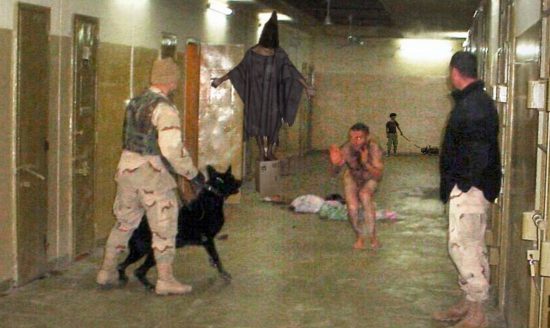
By Alexander KUZNETSOV | Strategic Culture Foundation | 15.10.2016
The West is feverishly seeking someone to blame for the catastrophic situation in the Middle East. Following on from John Kerry, French Foreign Minister Jean-Marc Ayrault has announced his intention to request that the International Criminal Court investigate Russian «war crimes» in Syria. Hillary Clinton, a contender for the post of US president, is also known for her attempts to put Russia in the dock. During the second presidential TV debate with Donald Trump on 9 October, she stated she supported efforts to probe «war crimes committed by the Syrians and the Russians and try to hold them accountable».
So do we need to clarify, once again, who is to blame? Let’s try.
America’s ‘Greater Middle East’ strategy, which involves violently redrawing the political map of a vast region, has destroyed the states of Syria, Libya, Iraq and Yemen, and has led to an unprecedented surge in terrorism, a tremendous loss of human life, and a large influx of refugees to Europe.
But America does not want to take the blame for what it has done.
Ahead of the change of administration in America, US legislators have been trying to make Saudi Arabia primarily responsible for the spread of terrorism. On 28 September, the US Senate and the House of Representatives passed the Justice Against Sponsors of Terrorism Act (JASTA), which entitles the relatives of US citizens killed in the 9/11 attacks to file lawsuits against Saudi Arabia and receive compensation.
Five days later, on 3 October, an article appeared in the Arab language newspaper Rai Al-Youm (published in London), written by its editor-in-chief Abdel Bari Atwan, that sheds light on which way the Arab world is leaning on the issue of who’s to blame.
A few words about the article’s author. Abdel Bari Atwan is the most prominent of today’s Arab journalists. The son of a refugee from Gaza, he was involved in the struggles of the Palestine Liberation Organisation (PLO) for a long time and was close to Yasser Arafat until they parted ways in 1993, when he disagreed with the hasty conclusion of peace with Israel. In the 1990s, he opposed UN sanctions against Iraq; not in defence of Saddam Hussein, however, but in defence of the rights and interests of the Iraqi people. In recent years, Atwan has written a great deal on the importance of establishing friendly relations between Sunni Arab states and Shi’ite Iran.
In his article, entitled «US law firms sharpening their knives for Saudi Arabia», Abdel Bari Atwan suggests how the Saudi authorities can oppose American blackmail. Here are his recommendations to Riyadh.
– Stop the senseless and bloody war in Yemen.
– Wind down its support of jihadist organisations in Syria.
– Take steps to normalise relations with Iran and Iraq.
– Seriously address the creation of an Arab lobby in the US (a pressing issue, since the Israel lobby in America is multilayered, works closely with the media and funds major research centres, while the Saudi lobbying effort is limited to banal bribery).
– Withdraw most of Saudi Arabia’s assets and investments from the US as soon as possible.
– Suspend all negotiations with Washington on an oil price agreement.
– Adopt measures allowing oil from the Persian gulf to be quoted in currencies other than US dollars (i.e. euro, yuan and roubles).
– File countersuits against the US through Muslim human rights organisations for war crimes committed in the Middle East between 2003 and the present day.
Abdel Bari Atwan says it is unlikely that the Saudi authorities will listen to him, but it seems as if the initiative has already struck a chord in other Arab countries. A group of Iraqi parliamentarians headed by Najeh al-Mizan has put forward a bill allowing Iraqi citizens to demand compensation from the US government for war crimes committed during the years of occupation (2003-2011) not just by the regular American army, but also contract soldiers from private military companies and ‘death squads’ set up using CIA money.
The outcome of America’s ‘presence’ in Iraq (or rather ‘the American genocide’) is truly horrifying. Even according to official (underestimated) data from the John Hopkins Institute, Americans and their accomplices killed 250,000 people (civilians) in Iraq during the occupation. According to Professor Juan Cole from the University of Michigan, this figure (direct losses) is as much as 450,000 people. Added to the victims of US sanctions in the 1990s, the number of deaths is close to one million. Most of these were children. Nobody can accuse US academic Juan Cole of incompetence or lobbying – he is a world-renowned expert on the modern Middle East and South Asia, a specialist in the history of Iran and Arab countries, and the author of 14 academic monographs.
But that is only the direct losses. There is also the destruction of Iraq’s state institutions and its law enforcement, health and education systems as a result of the American occupation, and the disintegration of relations between ethnicities and faiths.
The repercussions of the ‘Iraqi holocaust’ carried out by the Americans will be felt for many years to come. Here are some figures from the Australian scientist Dr. Gideon Polya. During the years of the crisis, there were 7.7 million refugees in Iraq. Of these, 5 million were internally displaced persons and 2.7 million fled the country. These included the cream of Iraqi society: doctors, teachers, engineers, university professors and businessmen. During the first few years of the occupation, 2,200 doctors and nursers were killed in Iraq. As a consequence of America’s use of bombs with low-enriched uranium, the number of cancer patients in the country increased from 40 per 100,000 people (1990) to 1,500 per 100,000 people (2005). And as a result of the actions of the occupation forces and sectarian fighting, there are currently three million widows and five million orphans in the country. 1.5 million Iraqi children are undernourished.
The world has not forgotten about the war crimes committed by America in the Middle East. Sooner or later, the US will have to answer for these crimes, no matter what Hillary Clinton says.
Yemen: The Anguish, Bloodshed and Forgotten Heroes in a Forgotten War
By Vanessa Beeley | 21st Century Wire | October 13, 2016
It should be personal to all of us. Yemen, regularly portrayed as the poorest nation in the Arab world, is proving itself to be the richest in courage, resourcefulness and resilience.
Ever since March 2015, some of you may have noticed how oil-rich Saudi Arabia, with the United States at its side, have been waging genocidal war against the Yemeni people.
Yemen are a people under attack by an undeclared super-power coalition comprised of the Kingdom of Saudi Arabia, US, UK, EU, UAE and Israel. As in Iraq, while the Yemeni people are under attack from super-powers, they are simultaneously being collectively punished by the illegal sanctions imposed by a corrupt United Nations body.
Sanctions imposed by resolution 2216, against 5 named individuals, on the pretext of legitimizing an illegitimate fugitive ex-president, Saudi Arabia and Washington’s hand-picked puppet leader, Mansour Hadi, who demanded that neighbouring Saudi Arabia bomb his own people – even after Hadi had resigned twice from an already over-extended presidential term, before fleeing to his alma mater in Riyadh.
UN sanctions imposed upon 5 named individuals yet being exploited by the US/UK/EU backed Saudi coalition to collectively starve and punish 27 million Yemeni people.
This fact has been consistently omitted and waxed over by western political appeasers and ethically challenged mainstream media apologists – and their ignorant and conceded omission is one of the primary reasons why this conflict has been allowed to go from bad to worse.

To compare Saudi Arabia’s belligerent actions in Yemen to Nazi Germany’s undeclared wars of aggression prior to WWII is no exaggeration. In fact, one could make the argument that this Saudi-US joint venture is much worse, and a far more dangerous precedent. Likewise, the failure of a corrupt UN (who effectively sold Saudi Arabia its seat on at the head of the UN Human Rights Council ), led by an impotent Secretary General in Ban-ki Moon, to censure Saudi Arabia for its flagrant violation of international law, the Nuremberg Principles and the entire Geneva Convention content and implied framework – leaves the UN in the exact same position as the League of Nations in 1938.
This is most certainly the case on paper, and with each passing moment we are nudging ever closer to geopolitical déjà vu.
The Anguish
This is one of the most egregious war crimes we’ve seen so far in Yemen, and considering what Saudi Arabia has already done to date, this is off the scale. On the 9th October 2016, the Saudi ‘coalition’ targeted one of the biggest public halls in Yemen’s capital Sanaa.
Officials said two air strikes hit the grand hall of ceremonies, where a post funeral gathering was held to receive condolences for the late Ali bin Ali al-Ruwaishan, the father of Interior Minister, Jalal al-Ruwaishan.
A total of 4 missiles were launched into crowds of civilians. The first strike, two missiles tore into the hall and surrounding areas leaving dozens dead and dying. Then, as funeral-goers clambered over the smouldering rubble to rescue the injured, Saudi coalition planes returned for the double tap air-strike, targeting the civilian rescuers.
Yesterday, the under secretary of the Public Health Ministry in Yemen told journalist and Middle East commentator, Marwa Osman, the death toll had risen to 458 and hundreds more injured. In an interview with RT, Osman went on to describe, 213 bodies were reported as charred, burned beyond recognition, 67 bodies were completely dismembered and 187 bodies torn apart by shrapnel. The brutality of this attack is evident from the horrific photos that appeared on social media very quickly after the event, as Yemenis were reeling from the scale of the massacre.
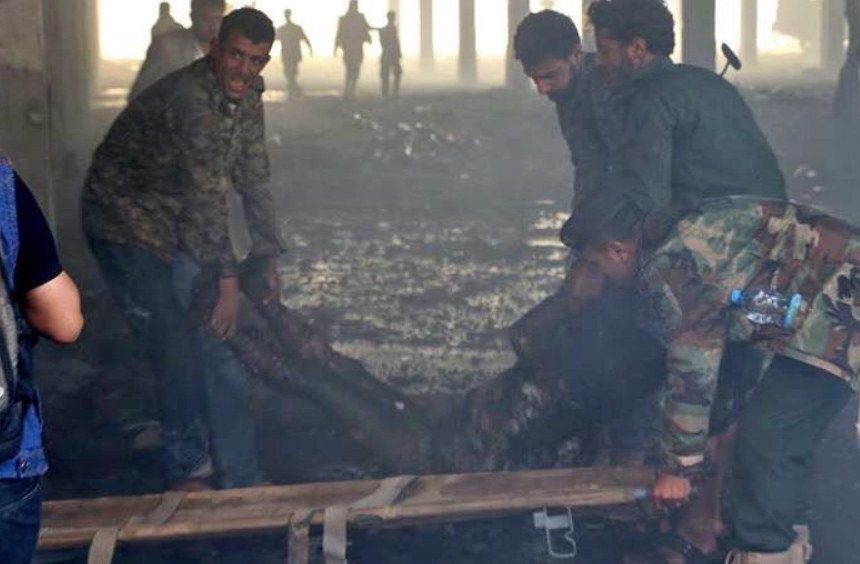
Yemen civil defence and army recovering bodies from the Saudi coalition bombed ceremony hall in Sanaa (Photo: Yemen the Forgotten War)
The hundreds more injured have been described as “bleeding to death in the streets“. The following report came in from Sanaa hours after the attack:
“Saudi-American airstrikes targeted the biggest hall in Sanaa. The hall was hit by 4 missiles, 2 air-strikes. When rescuers went to the aid of the dying and injured Saudi jets attacked for the second time in their double tap operation. It’s impossible to count the deaths. Officially they are saying less than 500 but many more are dying because they can’t be treated due to the absence of medical supplies and hospital facilities. This is entirely due to the UN sanctions and effective land, air and sea blockades. The hall is 2km from our home and 150m from my university but luckily, today I was not there.
Yesterday we killed several mercenary leaders in Mareb and Saudi commanders so today they are taking their revenge on the innocent people” ~ information supplied to Vanessa Beeley of 21st Century Wire.
[…]
According to Hassan Al Haifi, writer, academic and political commentator, living in Sanaa, the Saudi attack was deliberate:
“The mourners were paying tribute to General Jalal Al-Rouishan, Min of Int, who hails from a leading family of Khowlan Al-Tayyal Tribe, a leading and powerful Yemeni tribe.”
Al Haifi commented that this was a cynical and brutal attack by the Saudi coalition, intending to kill as many Ansarullah and Ali Abdullah Saleh officials and supporters as possible. A number of Saleh’s closest friends and allies were killed by the strikes along with a smaller number of Ansarullah members. Al Haifi, himself should have been at the ceremony but had been delayed and fortunately was not there when the Saudi jets launched their missiles into the throngs of mourners.
The Bloodshed
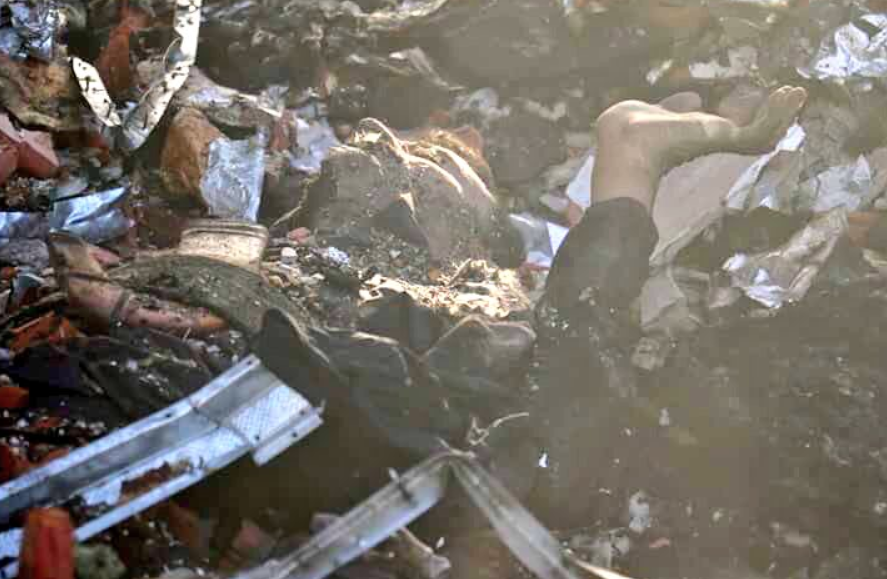
Saudi air-strike on Sanaa (Photo supplied to 21st Century Wire from Yemen)
The US State Department immediately swung into damage limitation mode and cranked up their hypocrisy to protect their Saudi coalition military industrial complex clients. John Kirby even deployed the “self-defence” terminology usually reserved for their other regional, arms guzzling ally with close links to Al Qaeda, Israel.
The bloodshed and suffering of the Yemeni people was reduced to an obscene game of semantics by a cold and calculating US State Department, as their multi billion dollar arms industry registered obscene trading levels with the Saudi coalition in 2015. In the first 21 months of Saudi-US illegal war on Yemen, US arms sales worth $33 Billion were closed Saudi and Gulf Cooperation Council (GCC) entities according to Defense News. In total, America’s Nobel Peace Chief Barack Hussein Obama has offered to sell $115 billion in weapons to Saudi Arabia since taking office in 2009 – more than any previous US administration, according to a recent report.
Not to be left out of the party, Britain has also sold more than £3.7 billion in arms to Saudi Arabia since Saudi’s illegal war of aggression began.
In truth, many of these estimates are conservative and do not include many more hundreds of millions in ancillary costs, staffing, support contracting and engineering.
Forgotten Heroes
Even though they’ve been completely redacted by the western media, and also by the myriad of Gulf monarchy media outlets, the real heroes of this conflict are the Yemeni people.
In their reductionist way of thinking and categorizing the world outside of their shores, Americans refer to Middle East populations in sectarian terms – because this is they way they would like to see the world, but it couldn’t be any further from reality. To Americans, the Yemeni war is all because of “Iranian-backed Shia Houthi Rebels.” The first US Congressman ever to say that in public probably read it directly off an AIPAC policy briefing sheet. That’s the sad reality still in Washington – information-poor (and lobby cash-rich) elected representatives are only able to see the world through the Israeli lens.
The reality is much more complex than just “the Houthis.” A genuine Arab Spring has taken place in Yemen and the US and Saudi response was simply to try and crush the people. But the people have resisted fiercely, and together. Unlike other neo-colonial ventures like Iraq and Afghanistan – the people of Yemen have united to a large degree and are determined to realize their own vision of self government. This is something that has been written off by everyone in the US establishment – from the President all the way down the political food chain.
Damning Indictment
The UK/US built, House of Saud, is waging a genocidal war of aggression that has already destroyed entire swathes of Yemeni cultural heritage and decimated entire communities, particularly in the northern, traditionally Ansarullah (Houthi) held areas such as Saada and Hajjah. This was by design. By now, we can see clearly how this was yet another ethnic cleansing programme being endorsed, fuelled and defended by the United States and her allies in the UK, EU, Israel, and of course the neighbouring Gulf States, the majority of whom participated in this dirty war. Oman, a lone, moderate, and independent thinking gulf state, has remained neutral, providing a degree of support to the Yemeni people. […]
The height of US hypocrisy was on full display during a US State Department press briefing where the already discredited US spokesman John Kirby shameless danced around a mass-murder by Saudi Arabia – whose airstrikes are supported logistically by the United States. This is the definition of criminality unchecked. Watch:
Author Vanessa Beeley is a special contributor to 21WIRE, and since 2011, she has spent most of her time in the Middle East reporting on events there – as a independent researcher, writer, photographer and peace activist. She is also a volunteer with the Global Campaign to Return to Palestine. See more of her work at her blog The Wall Will Fall.
For further background on Saudi ‘s war of aggression please read 21WIRE article: UN Whitewashing Saudi Coalition War Crimes and International Human Rights Violations
“Allegations of Targeting US Warship Aimed at Covering Up Aggression against Yemen”
Al-Manar – October 13, 2016
A Yemeni military source denied on Thursday targeting US warship earlier this week, stressing that Washington uses such allegations as a pretext to escalate the aggression against Yemen.
Earlier on Thursday, the Pentagon announced that the US had bombed three radar sites controlled by Houthi revolutionaries in Yemen after the destroyer USS Mason was targeted by missile fire for the second time in four days.
“Those claims are baseless,” Saba news agency quoted the military source as saying.
“The army and the Popular Committees have nothing to do with this action,” according to the source.
“Such claims aim to create false justifications to step up attacks and to cover up for the continuous crimes committed by the (coalition) aggression against the Yemeni people,” Saba quoted the source as saying.
US seeks to partition Syria to serve Israel: Nasrallah

Sayyed Hassan Nasrallah, the secretary general of the Lebanese resistance movement, Hezbollah, addresses a ceremony on October 11, 2016 on the occasion of Tasu’a.
Press TV – October 11, 2016
Sayyed Hassan Nasrallah, the secretary general of the Lebanese resistance movement, Hezbollah, has warned of plots by the US, Saudi Arabia and their regional allies to partition Syria in order to serve the Israeli regime’s interests in the Middle East.
The “real goal” of the countries that have neither democracy nor elections was not democracy or elections in Syria, Nasrallah said on Tuesday.
“The goal was for Syria to fall and be fragmented and be ripped apart” in line with Israel’s interests, he added.
Nasrallah made the remarks at the Sayyed al-Shohada Complex in the Lebanese capital, Beirut, on the ninth day of the lunar month of Muharram, Tasu’a, the eve of the martyrdom anniversary of Imam Hussein, the third Shia Imam, and his 72 companions.
He said the Daesh Takfiri militants and al-Qaeda affiliated terrorists of Jabhat Fateh al-Sham, formerly known as al-Nusra, “are being used to serve and achieve US and Israeli goals.”
Nasrallah further noted that the US seeks to concentrate Daesh terrorists in eastern Syria, adding that Washington is allowing and “opening the roads for” Daesh militants to flee from Iraq into Syria.
He cited the recent “deliberate action” by the US to launch airstrikes against Syrian army positions in eastern Syria as an example of Washington’s attempts to boost Daesh in the region, adding, “US raids on Dayr al-Zawr were targeting the Syrian army positions so that the whole area would fall to Daesh.”
The Hezbollah leader said, “All those who are defending Syria defend the Resistance and look forward to a political solution and not to more bloodshed,” but “US, Saudi Arabia and some regional states are demanding crippling conditions to neutralize the political solutions.”
Pointing to a recent abortive truce deal between the US and Russia on Syria, the Hezbollah chief said Washington withdrew from the agreement because it called for the separation of Jabhat Fateh al-Sham from other militant groups and the identification and targeting of Daesh and Jabhat Fateh al-Sham positions.
Nasrallah said the US, Saudi Arabia and their regional allies are obstructing a diplomatic solution to the crisis in Syria and the easing of the sufferings of the Syrian people.
He expressed regret that “more escalation and tensions” is on the horizon in Syria, but called for “perseverance and firm stance” in order to counter the plots of the country’s enemies.
The Hezbollah chief said Syria’s foes sought “a decisive victory within a few weeks” but have faced stiff resistance from the Syrian government and nation and their allies for over five years.
Sana’a carnage major scandal for Saudi Arabia
In another part of his speech, Nasrallah pointed to the recent bloody air raid by Saudi Arabia on a funeral hall in the Yemeni capital of Sana’a and said the strike was a major scandal for Al Saud regime.
Hezbollah leader said some media circles had noted that his remarks on Saudi attack in Sana’a would affect chances of Michel Aoun becoming Lebanon’s next president, which could end a political crisis in the country.
Noting that the demand was tantamount to political blackmail, Nasrallah added, “Even [UN Secretary General] Ban Ki-moon has condemned this strike, although he has always been silent, so how do you want me to remain silent?”
Nasrallah added that the Saudi regime committed a “historic mistake” in Yemen by thinking that it could emerge victorious from the battle within weeks.
The Hezbollah chief condemned the international community’s silence on the bombardment of Yemen by Saudi warplanes and said the world must convince Riyadh that it cannot win this war.
He emphasized that the Sana’a massacre must provide a motive for ending the war in Yemen and added that the Saudi regime has no option but to accept the political solution.
“Saudi Arabia’s insistence on carrying on with the war will not only make it lose Yemen, but will also make it lose itself. The current Saudi leadership is pushing the kingdom to the brink of the abyss,” Nasrallah pointed out, recommending the Saudi rulers to come to their senses.
All parties must preserve Lebanon’s peace and security
The Hezbollah secretary general further stressed the importance of preserving security, stability and civil in Lebanon, describing them as the “pillars of everything,” and adding, “Despite their differences, the Lebanese have managed to preserve security, stability and peace.”
Nasrallah stated that Lebanon has entered a positive political phase during the past few weeks with regard to the presidential election.
“We support and welcome any positive political developments regarding the presidency and we will acknowledge the efforts and courage of anyone who makes efforts in this regard,” Nasrallah pointed out.
He noted that Hezbollah has always pursued a clear stance on Lebanon’s presidential election, adding, “We support every positive political change, which may solve the presidency challenge.”
Hezbollah leader concluded his remarks by stressing the importance of supporting the Lebanese army without any political reservations.
Iran denies US claim over Houthi missile

Iranian Foreign Ministry spokesman Bahram Qassemi
Press TV – October 5, 2016
The Iranian Foreign Ministry’s spokesman has denied claims made by a US official that a missile used by Yemen’s Houthi Ansarullah fighters to destroy an Emirati military vessel was made by Iran.
Bahram Qassemi added on Tuesday that the US should take a look at its own heavy dossier concerning the supply of arms and weapons to those attacking civilians in Yemen instead of projecting the blame on others.
Qassemi noted that the accusation has been made as US planes and weapons have been used and are still being used to kill thousands of Yemeni women and children, and destroy hospitals and schools in Yemen.
On Saturday, Yemeni forces targeted and destroyed the Emirati military vessel in a rocket attack near the Red Sea port city of Mokha.
Yemen has been under Saudi military strikes since late March 2015. The war was launched in a bid to reinstate Abd Rabbuh Mansur Hadi, who has stepped down as president but is now seeking to grab power by force. The United Nations puts the death toll from the military aggression at about 10,000.
Houthi Ansarullah fighters, allied with Yemeni army factions, and forces loyal to Yemen’s former president Ali Abdullah Saleh have united and are fighting back the Saudi invaders.
Saudi Arabia: Investigations into War Crimes in Yemen “Prohibited”
Al-Manar – October 5, 2016
Saudi Arabia rejected a request by the United Nations High Commissioner for Human Rights Zeid Ra’ad Bin Al-Hussein to form an international commission of inquiry into war crimes committed in Yemen.
“Riyadh does not support the call of the High Commissioner to form an international investigation committee,” Saudi Minister of Culture and Information of Adel Tarifi said in a statement, stressing that “the work of the Yemeni National Commission of Inquiry is generally agreed”, according to reports by German Press Agency.
The Human Rights Council of the United Nations had refused on Thursday to open an independent investigation into war crimes in Yemen, and demanded instead a national commission of inquiry to investigate attacks on hospitals and killing of civilians.
Featured Video
“Historic Russia”: The Land Putin Will Not Give Back
or go to
Aletho News Archives – Video-Images
From the Archive
How Ukraine Tortured and Slaughtered Donbass
By Kit Klarenberg | Al Mayadeen | July 11, 2024
Almost immediately after the proxy war erupted, ISIS-tier footage of the torture and murder of Russians in Ukrainian custody emerged.
On July 6th, the New York Times published an astonishing investigation: In Ukraine, Killings of Surrendering Russians Divide an American-Led Unit. The article documents in grim detail how Chosen Company, an international volunteer battalion for Kiev, routinely executes Russian prisoners of war. It is the very first mainstream admission that this practice – a brazen breach of the Geneva Conventions, and a grave war crime – is widespread among Ukraine’s fighters, both foreign and homegrown. … continue
Blog Roll
 Aletho News
- US taxpayer money laundered back through Ukraine – Musk
- Before COVID, an NIH lab chief proposed making a SARS-like bat virus more infectious
- Gates, Bourla on Trial in Netherlands Accused of ‘Great Reset’ Scheme at Vaccine Injury Hearing
- BRITAIN’S WARNING: PREPARE FOR WAR
- “Historic Russia”: The Land Putin Will Not Give Back
- How the Cambridge Analytica scandal still haunts Mark Zuckerberg
- The Ongoing Cancellation Campaign Against a Dissenting Academic in Norway
- Yemen and ‘the Houthis’: Challenging Sami Hamdi’s Narrative
- No, Christians did not invent Zionism
- AIPAC-led lobbying network opens branches in Cypriot, Greek parliaments
- If Americans Knew
- Damning report shows the media must confront its failures on Gaza
- BBC senior broadcaster speaks out on Gaza coverage
- Netanyahu vows vast West Bank invasion in response to 20-minute skirmish that left 2 Israeli soldiers and 2 Palestinian fighters dead
- Tied up and tortured: Israel using US-made electroshock weapons on Palestinian detainees
- The outsourced risk: how newsrooms rely on Gaza’s freelancers without protecting them
- Gaza bakeries forced to shut as Israel blocks flour shipments
- Gaza’s breast cancer patients face a deadly wait for treatment amid Israel’s genocide
- DAILY UPDATE: Latest essential news on Palestine, Israel, & region
- The Israel Lobby’s Changing Fortunes
- AIPAC has become such a political liability that it’s shifting to a more “nimble” approach to buying politicians
- No Tricks Zone
- Two New Studies Find Thwaites Glacier Melt Cannot Be Driven By Human Activity Or A Warming Ocean
- E-Cars Reduce CO2 Emissions By Only 41% Compared To Internal Combustion Engine Vehicles
- Predictions Made By Renowned Climate Professor Over Past Decades Have Been Proven To Be Poor
- New Study Suggests Large Regions Of The Pacific Ocean Have Been Cooling For The Last 80 Years
- Germany’s Green Energy Debacle: High Energy Costs Force Kahla Porzellan to Close After 182 Years!
- New Study: 50 Years Of The Most Aggressive ‘Net Zero’ Policies Can Only Affect The Global Climate By 0.03°C
- US September “Heat” Was No Record…Many Records Set Decades Ago
- Latest European Green Energy Debacle; Portugal’s Largest Flagship Solar Park Insolvent!
- Green Energy Debacle: German Expert Professor Fritz Vahrenholt Warns Of Severe Economic And Social Consequences
- Two More Paleo Reconstructions Affirm Meters-Higher Sea Levels Across Ireland, Brazil 7000-6000 Years Ago

