Nuland-Pyatt Tape Removed From YouTube After 8 Years
A popular version, with subtitles, suddenly was made unavailable on Wednesday. The tape provides evidence of US involvement in 2014 Kiev coup.
By Joe Lauria | Consortium News | May 25, 2022
The smoking gun proving U.S. involvement in the 2014 coup in Kiev has been removed from YouTube after eight years.
It was one of the most watched versions of the intercepted and leaked conversation between then Assistant Secretary of State Victoria Nuland and Geoffrey Pyatt, the then U.S. ambassador to Ukraine, in which the two discuss who will make up the new government weeks before democratically-elected Ukrainian President Viktor Yanukovych was overthrown in a violent coup on Feb. 21, 2014.
The two talk about “midwifing” the unconstitutional change of government and “gluing it together” and of the role then Vice President Joe Biden should play and what meetings to set up with Ukrainian politicians.
The U.S. State Department never denied the authenticity of the video, and even issued an apology to the European Union after Nuland is heard on the tape saying, “Fuck the E.U.” Mainstream media at the time focused almost exclusively on that off-color remark, ignoring the greater significance of U.S. interference in Ukraine’s internal affairs.
Consortium News has numerous times embedded the YouTube video in articles about the overthrow of Yanukovych.
The video was posted on April 29, 2014 and had 181,533 views before it was taken down, was among the most viewed versions of the conversation on YouTube. Eight years worth of comments on the video have also been removed.
The same video can be viewed on Rumble here.
A version from a Russian YouTube channel with Russian subtitles, still available, has garnered 1.4 million views.
Timing of Removal
The removal of a video that had existed online for eight years raises major questions as it comes during the war in Ukraine. Corporate media has studiously avoided mentioning the causes of the current conflict, including NATO eastward expansion, the rejected Moscow treaty proposals in December, the civil war in Donbass and the 2014 coup in Kiev that led to the Donbass uprising and violent repression by the coup government.
The coup in 2014 is the starting point that led to all these events culminating in Russia’s invasion in February. Removing the video would be consistent with the suppression of any information that falls outside the enforced narrative of events in Ukraine, including whitewashing any mention of the U.S.-backed coup.
Transcript Still Online
The BBC on Feb. 7, 2014 — 14 days before Yanukovych was toppled — published a transcript of the Nuland-Pyatt conversation. Consortium News is republishing the transcript here, lest it be removed from the internet as well:
Warning: This transcript contains swearing.
Voice thought to be Nuland’s: What do you think?
Voice thought to be Pyatt’s: I think we’re in play. The Klitschko [Vitaly Klitschko, one of three main opposition leaders] piece is obviously the complicated electron here. Especially the announcement of him as deputy prime minister and you’ve seen some of my notes on the troubles in the marriage right now so we’re trying to get a read really fast on where he is on this stuff. But I think your argument to him, which you’ll need to make, I think that’s the next phone call you want to set up, is exactly the one you made to Yats [Arseniy Yatseniuk, another opposition leader]. And I’m glad you sort of put him on the spot on where he fits in this scenario. And I’m very glad that he said what he said in response.
Nuland: Good. I don’t think Klitsch should go into the government. I don’t think it’s necessary, I don’t think it’s a good idea.
Pyatt: Yeah. I guess… in terms of him not going into the government, just let him stay out and do his political homework and stuff. I’m just thinking in terms of sort of the process moving ahead we want to keep the moderate democrats together. The problem is going to be Tyahnybok [Oleh Tyahnybok, the other opposition leader] and his guys and I’m sure that’s part of what [President Viktor] Yanukovych is calculating on all this.
Nuland: [Breaks in] I think Yats is the guy who’s got the economic experience, the governing experience. He’s the… what he needs is Klitsch and Tyahnybok on the outside. He needs to be talking to them four times a week, you know. I just think Klitsch going in… he’s going to be at that level working for Yatseniuk, it’s just not going to work.
Pyatt: Yeah, no, I think that’s right. OK. Good. Do you want us to set up a call with him as the next step?
Nuland: My understanding from that call – but you tell me – was that the big three were going into their own meeting and that Yats was going to offer in that context a… three-plus-one conversation or three-plus-two with you. Is that not how you understood it?
Pyatt: No. I think… I mean that’s what he proposed but I think, just knowing the dynamic that’s been with them where Klitschko has been the top dog, he’s going to take a while to show up for whatever meeting they’ve got and he’s probably talking to his guys at this point, so I think you reaching out directly to him helps with the personality management among the three and it gives you also a chance to move fast on all this stuff and put us behind it before they all sit down and he explains why he doesn’t like it.
Nuland: OK, good. I’m happy. Why don’t you reach out to him and see if he wants to talk before or after.
Pyatt: OK, will do. Thanks.
Nuland: OK… one more wrinkle for you Geoff. [A click can be heard] I can’t remember if I told you this, or if I only told Washington this, that when I talked to Jeff Feltman [United Nations Under-Secretary-General for Political Affairs] this morning, he had a new name for the UN guy Robert Serry did I write you that this morning?
Pyatt: Yeah I saw that.
Nuland: OK. He’s now gotten both Serry and [UN Secretary General] Ban Ki-moon to agree that Serry could come in Monday or Tuesday. So that would be great, I think, to help glue this thing and to have the UN help glue it and, you know, Fuck the EU.
Pyatt: No, exactly. And I think we’ve got to do something to make it stick together because you can be pretty sure that if it does start to gain altitude, that the Russians will be working behind the scenes to try to torpedo it. And again the fact that this is out there right now, I’m still trying to figure out in my mind why Yanukovych (garbled) that. In the meantime there’s a Party of Regions faction meeting going on right now and I’m sure there’s a lively argument going on in that group at this point. But anyway we could land jelly side up on this one if we move fast. So let me work on Klitschko and if you can just keep… we want to try to get somebody with an international personality to come out here and help to midwife this thing. The other issue is some kind of outreach to Yanukovych but we probably regroup on that tomorrow as we see how things start to fall into place.
Nuland: So on that piece Geoff, when I wrote the note [US vice-president’s national security adviser Jake] Sullivan’s come back to me VFR [direct to me], saying you need [US Vice-President Joe] Biden and I said probably tomorrow for an atta-boy and to get the deets [details] to stick. So Biden’s willing.
Pyatt: OK. Great. Thanks.
###
Missouri and Louisiana Attorneys General sue Biden over Big Tech ‘collusion’
Samizdat | May 6, 2022
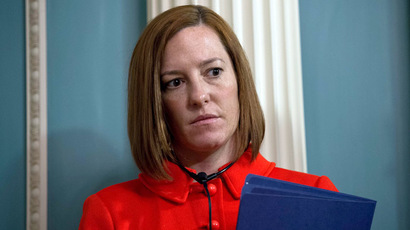
Attorneys General from two Republican-led US states, Missouri and Louisiana, have filed a lawsuit against the Biden administration, Fox News reported on Thursday. The states are accusing high-ranking officials, including President Joe Biden, of having “pressured and colluded” with social media companies to censor and suppress information on a number of big stories over the past two years.
Among the officials named as defendants are White House Press Secretary Jen Psaki and the President’s Chief Medical Advisor Dr. Anthony Fauci. They, and others, are accused of exerting undue pressure on, or working together, with a number of Big Tech companies such as Meta, Twitter and YouTube to suppress information regarding the Hunter Biden laptop controversy, the origins of Covid-19, and security concerns associated with mail-in voting during the pandemic.
Missouri Attorney General Eric Schmitt and Louisiana Attorney General Jeff Landry claim the Biden Administration has been doing so “under the guise of combating misinformation.”
The lawsuit, filed on Thursday in the U.S. District Court for the Western District of Louisiana, describes the administration’s supposed efforts to hush up certain information as “one of its greatest assaults by federal government officials in the Nation’s history” on Americans’ constitutional right to free speech.
The filing goes on to claim that “Having threatened and cajoled social-media platforms for years to censor viewpoints and speakers disfavored by the Left, senior government officials in the Executive Branch have moved into a phase of open collusion with social-media companies to suppress disfavored speakers, viewpoints, and content on social-media platforms under the Orwellian guise of halting so-called ‘disinformation,’ ‘misinformation,’ and ‘malinformation’.”
In an exclusive statement to Fox News Digital, Missouri Attorney General Eric Schmitt explained the decision to file the lawsuit by saying that he would “not stand idly by while the Biden Administration attempts to trample on the First Amendment rights of Missourians and Americans.”
His colleague from the state of Louisiana, Jeff Landry, went so far as to characterize Big Tech as an “extension of Biden’s Big Government,” which is busy “suppressing truth and demonizing those who think differently.” Landry compared Joe Biden to Joseph Stalin over the president’s policies that allegedly aim to “censor free speech and propagandize the masses.” The Attorney General said the lawsuit was seeking to “ensure the rule of law and prevent the government from unconstitutional banning, chilling, and stifling of speech.”
Among the cases brought up in the filing are Twitter’s decision to disable the sharing of a 2020 New York Post story revolving around the contents of Hunter Biden’s laptop that was recovered from a repair shop in Delaware. The report was later found to be accurate by the Washington Post and the New York Times, the two Attorneys General pointed out.
In a separate instance, Facebook supposedly censored posts suggesting that Covid-19 may have accidentally leaked from a laboratory in Wuhan, China. The Attorneys General claim that it was Anthony Fauci who orchestrated an effort to “discredit” the narrative while “exchanging emails with Mark Zuckerberg, the CEO of Facebook, regarding the control and dissemination of Covid-19 information.” The campaign only began to wind down after more media outlets started reporting on the viability of the theory, the lawsuit alleges.
In addition, according to the filing, YouTube effectively censored Republican Senator Rand Paul and Florida Governor Ron DeSantis for calling into question the effectiveness of wearing cloth masks during the Covid pandemic.
Another major case where “social-media platforms aggressively censored” speech, as Schmitt and Landry allege, was the run-up to the November 2020 presidential race. The Attorneys General claim that Donald Trump’s concerns regarding the security of mail-in voting were stifled by Big Tech at the time. Trump’s tweets were flagged, with a notice directing users to the facts surrounding the practice.
As further proof that the Biden administration has been exerting undue pressure on social media platforms to suppress free speech, the filing mentions Surgeon General Vivek Murthy’s statement back in June 2021, where he said “we expect more from our technology companies… We’re asking them to monitor misinformation more closely.” Moreover, the latest launch of the new DHS disinformation board just goes to show that the current US political leadership is intent on ramping up its “campaign of censorship,” the Attorneys General warn.
Fox News, which covered the lawsuit filing, reached out to Meta, Twitter, YouTube as well as the White House for comment, but apparently none of them have replied so far.
Dr. Drew relies on Rumble after YouTube censorship
By Cindy Harper | Reclaim The Net | April 30, 2022
Celebrity physician Dr. Drew Pinsky streamed on Rumble on Friday after getting slapped with a 7-day suspension on YouTube.
“Despite my vocal support of vaccines and science, YouTube deleted my #2 most-viewed show, put a strike on my channel & locked it for a week… again,” he wrote on Twitter. “Thankfully @RumbleVideo supports free speech. Watch @AskDrDrew LIVE at 4 pm PT.”
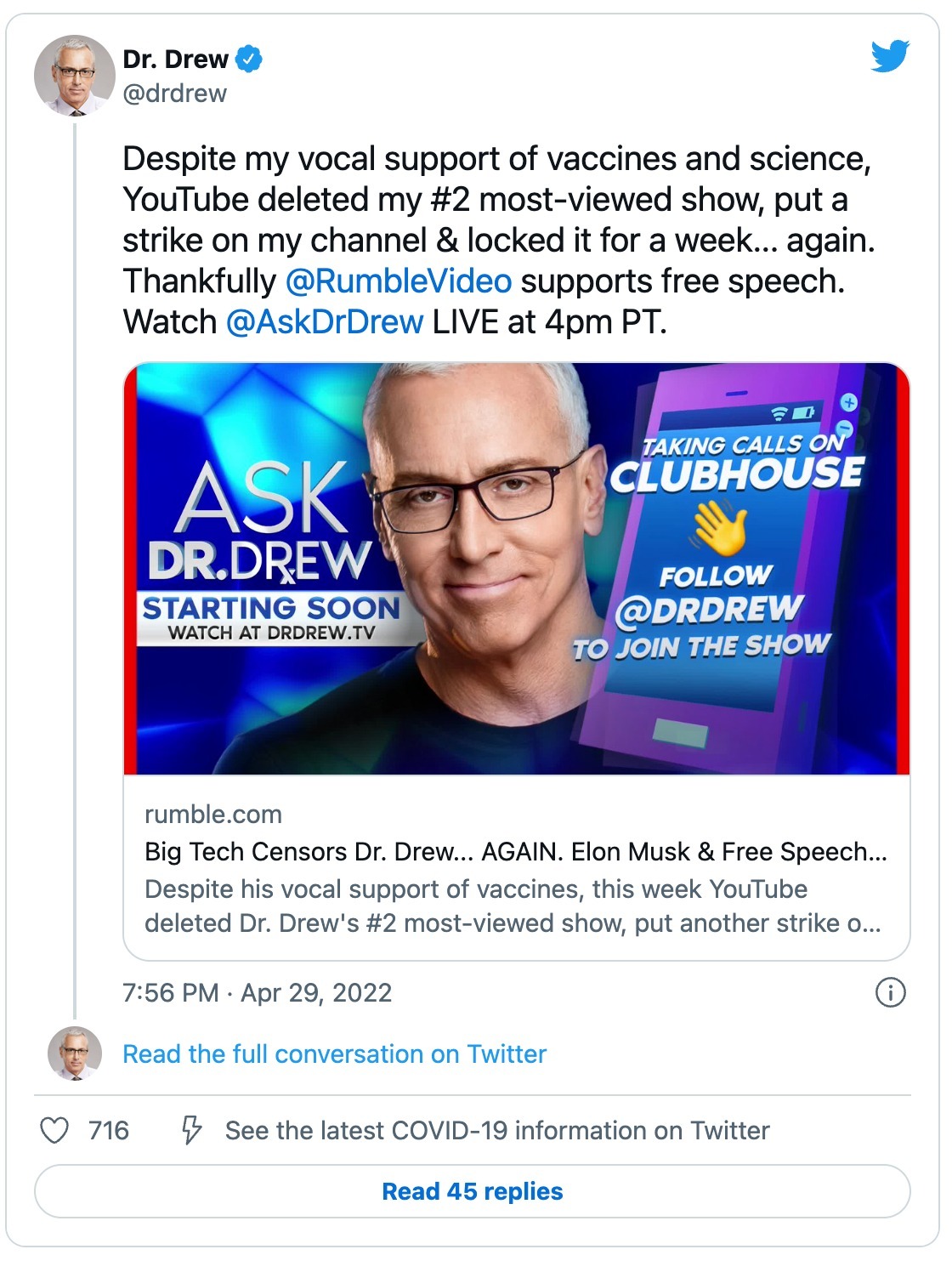
The video that led to the suspension featured the doctor talking about the effects of Covid vaccines. In the episode that streamed on Rumble, Dr. Drew’s wife Susan said their kids aged over 20 experienced side effects after receiving booster shots.
The video on Rumble was captioned: “Should ‘Big Tech’ have the power to censor debates between doctors … and how can social platform moderators correctly identify ‘medical misinformation’ unless they are doctors themselves?”
Dr. Drew’s YouTube channel has over 58,000 subscribers. On Rumble, his channel has already attracted over 113,000 subscribers.
Western Dissent from US/NATO Policy on Ukraine is Small, Yet the Censorship Campaign is Extreme
Preventing us from asking who benefits from a protracted proxy war, and who pays the price, is paramount. A closed propaganda system achieves that.
By Glenn Greenwald | April 13, 2022
If one wishes to be exposed to news, information or perspective that contravenes the prevailing US/NATO view on the war in Ukraine, a rigorous search is required. And there is no guarantee that search will succeed. That is because the state/corporate censorship regime that has been imposed in the West with regard to this war is stunningly aggressive, rapid and comprehensive.
On a virtually daily basis, any off-key news agency, independent platform or individual citizen is liable to be banished from the internet. In early March, barely a week after Russia’s invasion of Ukraine, the twenty-seven nation European Union — citing “disinformation” and “public order and security” — officially banned the Russian state-news outlets RT and Sputnik from being heard anywhere in Europe. In what Reuters called “an unprecedented move,” all television and online platforms were barred by force of law from airing content from those two outlets. Even prior to that censorship order from the state, Facebook and Google were already banning those outlets, and Twitter immediately announced they would as well, in compliance with the new EU law.
But what was “unprecedented” just six weeks ago has now become commonplace, even normalized. Any platform devoted to offering inconvenient-to-NATO news or alternative perspectives is guaranteed a very short lifespan. Less than two weeks after the EU’s decree, Google announced that it was voluntarily banning all Russian-affiliated media worldwide, meaning Americans and all other non-Europeans were now blocked from viewing those channels on YouTube if they wished to. As so often happens with Big Tech censorship, much of the pressure on Google to more aggressively censor content about the war in Ukraine came from its own workforce: “Workers across Google had been urging YouTube to take additional punitive measures against Russian channels.”
So prolific and fast-moving is this censorship regime that it is virtually impossible to count how many platforms, agencies and individuals have been banished for the crime of expressing views deemed “pro-Russian.” On Tuesday, Twitter, with no explanation as usual, suddenly banned one of the most informative, reliable and careful dissident accounts, named “Russians With Attitude.” Created in late 2020 by two English-speaking Russians, the account exploded in popularity since the start of the war, from roughly 20,000 followers before the invasion to more than 125,000 followers at the time Twitter banned it. An accompanying podcast with the same name also exploded in popularity and, at least as of now, can still be heard on Patreon.
What makes this outburst of Western censorship so notable — and what is at least partially driving it — is that there is a clear, demonstrable hunger in the West for news and information that is banished by Western news sources, ones which loyally and unquestioningly mimic claims from the U.S. government, NATO, and Ukrainian officials. As The Washington Post acknowledged when reporting Big Tech’s “unprecedented” banning of RT, Sputnik and other Russian sources of news: “In the first four days of Russia’s invasion of Ukraine, viewership of more than a dozen Russian state-backed propaganda channels on YouTube spiked to unusually high levels.”
Note that this censorship regime is completely one-sided and, as usual, entirely aligned with U.S. foreign policy. Western news outlets and social media platforms have been flooded with pro-Ukrainian propaganda and outright lies from the start of the war. A New York Times article from early March put it very delicately in its headline: “Fact and Mythmaking Blend in Ukraine’s Information War.” Axios was similarly understated in recognizing this fact: “Ukraine misinformation is spreading — and not just from Russia.” Members of the U.S. Congress have gleefully spread fabrications that went viral to millions of people, with no action from censorship-happy Silicon Valley corporations. That is not a surprise: all participants in war use disinformation and propaganda to manipulate public opinion in their favor, and that certainly includes all direct and proxy-war belligerents in the war in Ukraine.
Yet there is little to no censorship — either by Western states or by Silicon Valley monopolies — of pro-Ukrainian disinformation, propaganda and lies. The censorship goes only in one direction: to silence any voices deemed “pro-Russian,” regardless of whether they spread disinformation. The “Russians With Attitude” Twitter account became popular in part because they sometimes criticized Russia, in part because they were more careful with facts and viral claims that most U.S. corporate media outlets, and in part because there is such a paucity of outlets that are willing to offer any information that undercuts what the U.S. Government and NATO want you to believe about the war.
Their crime, like the crime of so many other banished accounts, was not disinformation but skepticism about the US/NATO propaganda campaign. Put another way, it is not “disinformation” but rather viewpoint-error that is targeted for silencing. One can spread as many lies and as much disinformation as one wants provided that it is designed to advance the NATO agenda in Ukraine (just as one is free to spread disinformation provided that its purpose is to strengthen the Democratic Party, which wields its majoritarian power in Washington to demand greater censorship and commands the support of most of Silicon Valley). But what one cannot do is question the NATO/Ukrainian propaganda framework without running a very substantial risk of banishment.
It is unsurprising that Silicon Valley monopolies exercise their censorship power in full alignment with the foreign policy interests of the U.S. Government. Many of the key tech monopolies — such as Google and Amazon — routinely seek and obtain highly lucrative contracts with the U.S. security state, including both the CIA and NSA. Their top executives enjoy very close relationships with top Democratic Party officials. And Congressional Democrats have repeatedly hauled tech executives before their various Committees to explicitly threaten them with legal and regulatory reprisals if they do not censor more in accordance with the policy goals and political interests of that party.
But one question lingers: why is there so much urgency about silencing the small pockets of dissenting voices about the war in Ukraine? This war has united the establishment wings of both parties and virtually the entire corporate media with a lockstep consensus not seen since the days and weeks after the 9/11 attack. One can count on both hands the number of prominent political and media figures who have been willing to dissent even minimally from that bipartisan Washington consensus — dissent that instantly provokes vilification in the form of attacks on one’s patriotism and loyalties. Why is there such fear of allowing these isolated and demonized voices to be heard at all?
The answer seems clear. The benefits from this war for multiple key Washington power centers cannot be overstated. The billions of dollars in aid and weapons being sent by the U.S. to Ukraine are flying so fast and with such seeming randomness that it is difficult to track. “Biden approves $350 million in military aid for Ukraine,” Reuters said on February 26; “Biden announces $800 million in military aid for Ukraine,” announced The New York Times on March 16; on March 30, NBC’s headline read: “Ukraine to receive additional $500 million in aid from U.S., Biden announces”; on Tuesday, Reuters announced: “U.S. to announce $750 million more in weapons for Ukraine, officials say.” By design, these gigantic numbers have long ago lost any meaning and provoke barely a peep of questioning let alone objection.
It is not a mystery who is benefiting from this orgy of military spending. On Tuesday, Reuters reported that “the Pentagon will host leaders from the top eight U.S. weapons manufacturers on Wednesday to discuss the industry’s capacity to meet Ukraine’s weapons needs if the war with Russia lasts years.” Among those participating in this meeting about the need to increase weapons manufacturing to feed the proxy war in Ukraine is Raytheon, which is fortunate to have retired General Lloyd Austin as Defense Secretary, a position to which he ascended from the Raytheon Board of Directors. It is virtually impossible to imagine an event more favorable to the weapons manufacturer industry than this war in Ukraine:
Demand for weapons has shot up after Russia’s invasion on Feb. 24 spurred U.S. and allied weapons transfers to Ukraine. Resupplying as well as planning for a longer war is expected to be discussed at the meeting, the sources told Reuters on condition of anonymity. . .
Resupplying as well as planning for a longer war is expected to be discussed at the meeting. . . The White House said last week that it has provided more than $1.7 billion in security assistance to Ukraine since the invasion, including over 5,000 Javelins and more than 1,400 Stingers.
This permanent power faction is far from the only one to be reaping benefits from the war in Ukraine and to have its fortunes depend upon prolonging the war as long as possible. The union of the U.S. security state, Democratic Party neocons, and their media allies has not been riding this high since the glory days of 2002. One of MSNBC’s most vocal DNC boosters, Chris Hayes, gushed that the war in Ukraine has revitalized faith and trust in the CIA and intelligence community more than any event in recent memory — deservedly so, he said: “The last few weeks have been like the Iraq War in reverse for US intelligence.” One can barely read a mainstream newspaper or watch a corporate news outlet without seeing the nation’s most bloodthirsty warmongering band of neocons — David Frum, Bill Kristol, Liz Cheney, Wesley Clark, Anne Applebaum, Adam Kinzinger — being celebrated as wise experts and heroic warriors for freedom.
This war has been very good indeed for the permanent Washington political and media class. And although it was taboo for weeks to say so, it is now beyond clear that the only goal that the U.S. and its allies have when it comes to the war in Ukraine is to keep it dragging on for as long as possible. Not only are there no serious American diplomatic efforts to end the war, but the goal is to ensure that does not happen. They are now saying that explicitly, and it is not hard to understand why.
The benefits from endless quagmire in Ukraine are as immense as they are obvious. The military budget skyrockets. Punishment is imposed on the arch-nemesis of the Democratic Party — Russia and Putin — while they are bogged down in a war from which Ukrainians suffer most. The citizenry unites behind their leaders and is distracted.
Google to demonetize sites that “dismiss” the Russia-Ukraine war
By Cindy Harper | Reclaim The Net | April 3, 2022
On YouTube channels, apps, and websites, Google will no longer run ads on content that condones or dismisses the ongoing Russian invasion of Ukraine.
The move is in line with Google’s policy that says it wants to prevent the monetization of content that denies tragic events and incites violence.
“We can confirm that we’re taking additional steps to clarify, and in some instances expand our monetization guidelines as they relate to the war in Ukraine,” a Google spokesperson said.
In an email to publishers, obtained by Reclaim The Net, Google said it would not run ads alongside content with “claims that imply victims are responsible for their own tragedy or similar instances of victim blaming, such as claims that Ukraine is committing genocide or deliberately attacking its own citizens.”
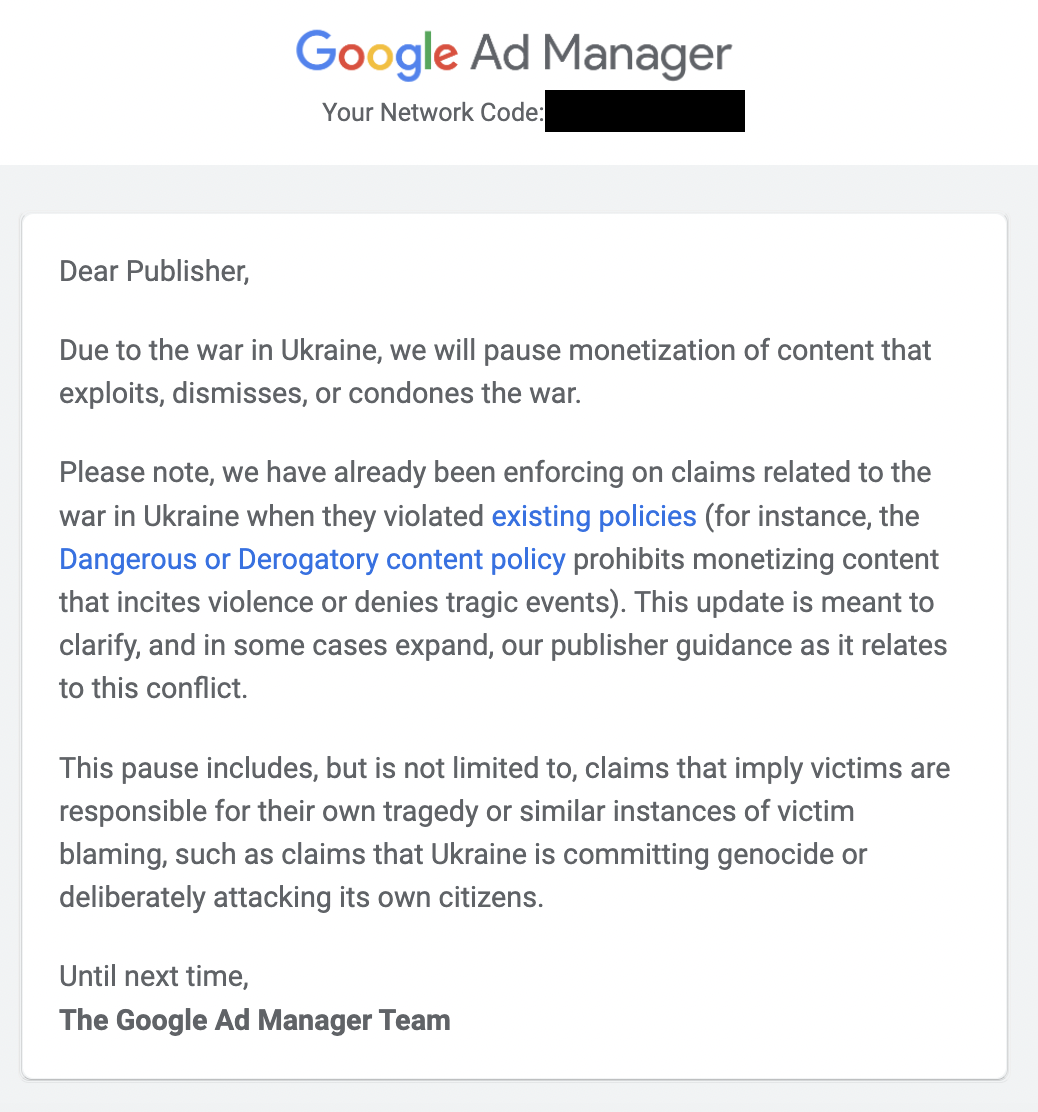
Russia has been accusing western media and online platforms of spreading fake news about the war, which it calls a “special military operation.”
On Wednesday, Russian media reported that internet watchdog Roskomnadzor had blocked Google News, for spreading fake news.
In early March, Google said it had stopped the sale of online ads in Russia.
YouTube flags Tulsi Gabbard’s criticism of “military industrial complex” as “inappropriate,” “offensive”
By Christina Maas | Reclaim The Net | March 15, 2022
An interview for Fox News’ “Ingraham Angle,” featuring former Congresswoman Tulsi Gabbard, was censored for being potentially “offensive” and “inappropriate” to some audiences.
In the interview, Ingraham asked Gabbard, “Congresswoman, why are we talking about no-fly zones instead of the fact that for the first time we have President Zelensky stepping back from his earlier NATO wishes and even demands?”
Gabbard expressed her frustration with the fact that allegedly no one was discussing a statement Ukraine’s President Zelensky made, about being “… open to the fact of saying, ‘Hey, yeah, maybe we’ll set this NATO membership thing aside,’ and he’s willing to talk with Putin directly to negotiate.”
Gabbard suggested that the West was interfering with attempts to settle the conflict because, “it’s good for the military industrial complex” and it allowed Western leaders to “have this proxy war with Russia, something that Hillary Clinton laid out just recently.”
Gabbard strongly condemned the war, saying: “This war machine, this power elite in Washington, want to turn Ukraine into another Afghanistan, turn into killing fields where this long-term insurgency is supported. And they bleed out and cripple, kill as many Russians as possible for who knows how long, and they’re really showing their real aim in the fact that they’re not taking action right now to end this conflict.”
YouTube flagged the video, putting up a filter that said, “the following content has been identified by the YouTube community as inappropriate or offensive to some audiences.”
YouTube to demonetize all Russian users, ban ‘state media’
Google-owned video platform expanding its bans from Europe to worldwide
RT | March 11, 2022
YouTube, owned by Google’s parent company Alphabet, announced on Friday it would block access to “Russian state media” channels across the globe and block all monetization on its platform inside Russia, citing the conflict in Ukraine.
The video-sharing platform wants to remove content “denying, minimizing or trivializing well-documented violent events,” as it goes against its Community Guidelines, YouTube said in a statement on Friday, specifically referring to content “about Russia’s invasion in Ukraine that violates this policy.”
Having blocked RT and Sputnik in the European Union – at the request of EU governments – on March 1, YouTube announced on Friday it was expanding this censorship to the entire planet, and including all channels “associated with Russian state-funded media.”
The change is “effective immediately,” YouTube said, adding that its systems may take a little while to process it.
YouTube ads have already been “paused” in Russia, but the platform is now extending this to “all of the ways to monetize on our platform” in the country, presumably affecting super-chats and sponsorships as well.
The ‘free speech’ West shouldn’t hail Big Tech for gagging Russia
By Frederick Edward | TCW Defending Freedom | March 3, 2022
WHEN I was in China, it was a faff going on some of my favourite websites. Although the censors of Beijing have not yet, to the best of my knowledge, blocked TCW Defending Freedom, anyone sitting in the Middle Kingdom and hoping to get on YouTube, Facebook or Google will be disappointed.
Not long after my departure from that sprawling metropolis, the sneezing bats of Wuhan gave the world a nasty case of the sniffles. But at that time, it was still just about possible to confidently tell your average Chinese interlocutor of the relative freedom of the West.
Yes, we could state, the internet there is free. We do not ban foreign news sources: We believe in the free exchange of information and the battle of ideas. The disinfectant of broad daylight will worm out the idiotic and the unworthy – that kind of stuff.
Of course, it’s getting harder to say with a straight face (years of Trump Derangement Syndrome and Brexit-related hysteria having done so much to destroy residual faith in the media), but it was just about doable.
But as Dr David Starkey so presciently observed, with the arrival of the Chinese virus, we have adopted a Chinese society. An acquaintance sent to me a screenshot of what happened when they tried to access Russia Today’s YouTube channel from within the UK. Instead of getting the usual assortment of Kremlin-approved views, visitors are greeted with the words: ‘This channel is not available in your country’.
Google has taken it upon itself to block Russian state media on YouTube. As ever, this decision has been met with seeming widespread adulation, with everyone keen as mustard for the unchecked juggernaut of Big Tech censorship to thunder on.
As the central nexus of the internet in the modern day, Big Tech firms have all-encompassing power, even able to silence the President of the United States. Yet Google et al are not our elected government and they are accountable to nobody; the outsourcing of political power to Silicon Valley continues uninterrupted.
Many are happy that the channel is banned. These are, perhaps, the same kinds who greeted Big Tech suppression of alternative narratives over the last two years with open arms, combating Covid ‘disinformation’. And, just as the spectre of global pestilence has miraculously disappeared, they find themselves firmly on the bandwagon of war.
Elites across the West have done so much to discredit themselves in recent years. I can no longer see a meaningful difference between the censoriousness of Beijing and the constant efforts of our governments and their rulers in Big Tech to silence dissenting opinion. As I sat in Beijing trying to look at the BBC, circumventing the Great Firewall with a VPN, little did I know I would soon have to do the same in Europe.
‘Democracy dies in darkness’, they like to tell us. Yet, by cutting off access to information that goes against the politically acceptable narrative in the West, our institutions continue to do their best in snuffing out any contrary opinions. Don’t think this is the only example: everything you read and hear from official sources is vetted and filtered.
There is nothing good to see in Putin’s invasion of Ukraine. Yet, as self-purported guardians of liberalism and freedom, I can see only double standards in our actions. How can the West claim to be protectors of intellectual and spiritual freedom after what has happened over the last two years? Does everyone, in their manic rush for war, not see what we have become?
YouTube to censor “new misinformation” preemptively
By Tom Parker | Reclaim The Net | February 17, 2022
YouTube, the world’s dominant video sharing platform, has already removed over one million videos for violating its strict and controversial “misinformation” rules. But in a new announcement, the tech giant has revealed that it’s going to be getting even stricter and suppressing “new misinformation” preemptively before it has the chance to gain traction.
YouTube’s Chief Product Officer Neal Mohan described how the video-sharing platform will start “catching new misinformation before it goes viral” in a blog post. The process will involve continuously training YouTube’s machine learning systems with “an even more targeted mix of classifiers, keywords in additional languages, and information from regional analysts” to identify “narratives” that YouTube’s main classifier doesn’t catch.
Mohan added: “Over time, this will make us faster and more accurate at catching these viral misinfo narratives.”
When YouTube does catch what it calls “viral misinfo narratives,” it will reduce the reach of some videos and push viewers towards “authoritative” videos (videos from brands, mainstream media outlets, and health authorities that YouTube has deemed to be authoritative) in search and recommendations.
For topics where there’s no authoritative content, YouTube is considering using news panels being developed (which direct viewers to text articles for major news events), “fact check” boxes (which direct viewers to content from fact-checkers), and new types of labels that add “a disclaimer warning viewers there’s a lack of high quality information.”
However, YouTube has yet to finalize how these labels will work because “surfacing a label could unintentionally put a spotlight on a topic that might not otherwise gain traction.”
Mohan justified these new censorship measures by claiming that “the fresher the misinfo, the fewer examples we have to train our systems” and noted that new narratives often “quickly crop up and gain views.” He added: “Narratives can slide from one topic to another—for example, some general wellness content can lead to vaccine hesitancy.”
YouTube has been proactively targeting “emerging” misinformation since at least 2020 via its “Intelligence Desk.” The Intelligence Desk initiative launched in 2018 to proactively police “inappropriate or offensive content” and in a 2020 interview, Mohan revealed that it was also being used to look “over the horizon” and “stay ahead of” emerging “conspiracy” and misinformation content before it “becomes a challenge” on YouTube.
YouTube puts bogus age restriction on Andrew Napolitano and James Bovard discussion challenging ‘insurrection’ narrative
By Adam Dick | Ron Paul Institute | January 20, 2022
YouTube or its owner Google sure seems keen on preventing people from learning about holes in the “insurrection” narrative being pushed by big money media and many politicians from President Joe Biden on down regarding protest and riot activity at the United States Capitol on January 6, 2021.
Legal commentator Andrew Napolitano, who is an Advisory Board member for the Ron Paul Institute, posted Tuesday at YouTube an episode of his show Judging Freedom titled “The FBI’s possible role in the Jan. 6 Capitol riot.” In the episode, Napolitano and journalist James Bovard discuss many apparent problems with the heavily pushed January 6 insurrection narrative. But, when you try on Thursday to watch the video at YouTube, you cannot just push play and watch as you can with most videos at YouTube. Instead, you are presented with a warning.
Where normally an image from the video with a play video button in the center would appear, the video screen is all black with over it at its center a circled exclamation point followed by this message:
Sign in to confirm your age
This video may be inappropriate for some users.
Click on the “SIGN IN” button below that message and you are taken to a page to sign in to your Google account, or to create a Google account if you do not have one, in order to watch the discussion.
Once you have done all this and YouTube seemingly has been satisfied that you are old enough, you are still not presented with the video ready to play. Instead, you encounter another all black video screen with a warning on it — again the circled exclamation point followed by “This video may be inappropriate for some users.” Below the warning is a button labeled “I UNDERSTAND AND WISH TO PROCEED.” Only after clicking on this button can you finally watch the video of Napolitano and Bovard’s discussion.
Of course, all the warnings, button clicks, age verification, and account sign in or creation requirements create a major impediment to people watching the video. Google and YouTube can say that they did not censor the video (at least for adults), but their imposing of special hurdles people must jump over to watch can be expected to much reduce viewership. Many adults will not trudge through all this. Children are barred from watching the video.
Should you go through all this and finally watch the video, you will see that the warnings and the action requirements that precede the video are without any justification, especially considering YouTube’s rather lenient approach generally to placing age restrictions on videos. So why all the effort to discourage people from watching? It sure looks like YouTube, or its owner Google, instead of trying to protect children from harm, is trying to protect the January 6 insurrection narrative from criticism.
Copyright © 2022 by RonPaul Institute.
YouTube reveals mass problem of false copyright claims
Millions of videos falsely flagged
By Didi Rankovic | Reclaim The Net | December 7, 2021
YouTube has published its latest transparency report – this being the first detailing the way the giant deals with copyright claims.
The big takeaway is that the copyright claims system is abused on a mass scale, as many observers believe it to be – 2.2 million videos have been targeted with fraudulent, or “incorrect” as YouTube put it, claims in the first half of this year alone, the report reveals.
Still, this is only a small fraction – under 1 percent – of overall copyright claims filed from January to June 2021, which amounted to a whopping 729 million. And 99 percent of those came from the automated and controversial Content ID system.
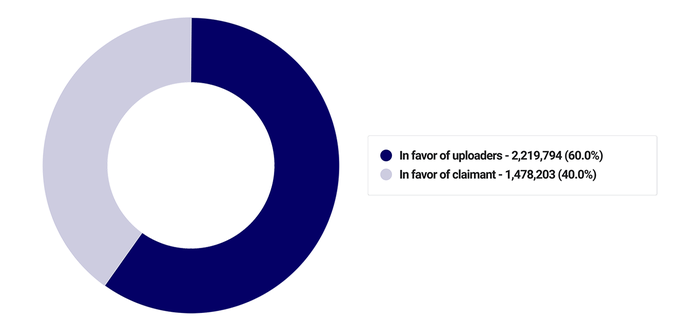
When creators decided to contest these bogus claims, their appeals were accepted in 60 percent of cases, YouTube claims, interpreting this number to mean that its copyright enforcement and appeals system represents “real recourse” and brushing off the long-standing, serious shortcomings as “no system being perfect.”
But creators who lose income thanks to false copyright strikes – when their content is blocked, muted, or stripped of ad revenue – are unlikely to be appeased by YouTube admitting to its faults and providing a glimpse into the numbers with the first of its kind copyright transparency report.
Despite being a massive platform and a financial juggernaut, YouTube is still failing to meet the goal set by CEO Susan Wojcicki all the way back in 2019, when she said the Google company was “exploring” how it might find “the right balance” between creators and copyright holders.
In the report, YouTube says that they have worked hard to assist the latter with even better tools to protect what they claimed as copyrighted content, while creators are being given tools and resources to help them “manage” their content.
YouTube also explains that there are three avenues they provide to copyright owners: the webform, which can be used by anyone and rarely results in takedown requests; the Copyright Match Tool available to more than 2 million channels hunting down reposted content; and finally, what YouTube calls its “award-winning” Content ID, which is responsible for 99% of all takedown requests – 722 million in the first six months of this year.
Content ID is geared towards serving “the most complicated rights management environments, like movie studios and music labels,” said YouTube.
Featured Video

Trita Parsi: Israel Set a Trap for Total War in the Region
or go to
Aletho News Archives – Video-Images
Book Review
Why the War on Conspiracy Theories Is Bad Public Policy
By Kevin Barrett • Unz Review • February 1, 2019
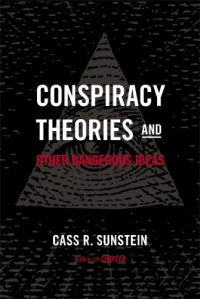 A Review of Conspiracy Theories and Other Dangerous Ideas by Cass Sunstein (based on an earlier paper co-authored with Adrian Vermeule); In Defense of Troublemakers: The Power of Dissent in Life and Business by Charlan Nemeth; and Conspiracy Theories and the People Who Believe Them, edited by Joseph E. Uscinski
On January 25 2018 YouTube unleashed the latest salvo in the war on conspiracy theories, saying “we’ll begin reducing recommendations of borderline content and content that could misinform users in harmful ways—such as videos promoting a phony miracle cure for a serious illness, claiming the earth is flat, or making blatantly false claims about historic events like 9/11.”
At first glance that sounds reasonable. Nobody wants YouTube or anyone else to recommend bad information. And almost everyone agrees that phony miracle cures, flat earthism, and blatantly false claims about 9/11 and other historical events are undesirable.
But if we stop and seriously consider those words, we notice a couple of problems. First, the word “recommend” is not just misleading but mendacious. YouTube obviously doesn’t really recommend anything. When it says it does, it is lying. … continue
Blog Roll
 Aletho News
- Putin’s key remarks on peace talks and Europe’s ‘schizophrenia’
- Trita Parsi: Israel Set a Trap for Total War in the Region
- Trump’s Iran war is on an Israeli leash
- Saudi oil boss issues global supply warning
- Riyadh Says Its Oil System Is Intact. The Numbers Say Otherwise.
- Trump and Netanyahu Want to “Finish the Job” on Iran
- US ‘one-sided dictation’ not Iran’s beliefs makes rational talks impossible: Baghaei
- Iran’s Next Strike May Not Explode. It Could Shut You Down /Col Doug Macgregor
- Iran: US political targets legitimate if assassinations return
- Iraq shuts key border crossing with Iran under US pressure: Report
- If Americans Knew
- DAILY UPDATE: Latest essential news on Palestine, Israel, & region
- The Israel Lobby’s Changing Fortunes
- AIPAC has become such a political liability that it’s shifting to a more “nimble” approach to buying politicians
- At least 160 Israeli settler attacks in 2 weeks
- Will Gaza’s Ancient Christian Community Disappear Forever?
- Israel’s vision of regional security rests on keeping Arab states weak
- Heidi Levine recounts how Palestinian youths helped save her in settler attack
- DAILY UPDATE: Latest essential news on Palestine, Israel, & region
- Trump’s Intensifying Sabotage of the ICC, for Israel’s Sake
- Israeli military detain US and UK volunteers in West Bank including Democratic NY politician Brad Lander
- No Tricks Zone
- E-Cars Reduce CO2 Emissions By Only 41% Compared To Internal Combustion Engine Vehicles
- Predictions Made By Renowned Climate Professor Over Past Decades Have Been Proven To Be Poor
- New Study Suggests Large Regions Of The Pacific Ocean Have Been Cooling For The Last 80 Years
- Germany’s Green Energy Debacle: High Energy Costs Force Kahla Porzellan to Close After 182 Years!
- New Study: 50 Years Of The Most Aggressive ‘Net Zero’ Policies Can Only Affect The Global Climate By 0.03°C
- US September “Heat” Was No Record…Many Records Set Decades Ago
- Latest European Green Energy Debacle; Portugal’s Largest Flagship Solar Park Insolvent!
- Green Energy Debacle: German Expert Professor Fritz Vahrenholt Warns Of Severe Economic And Social Consequences
- Two More Paleo Reconstructions Affirm Meters-Higher Sea Levels Across Ireland, Brazil 7000-6000 Years Ago
- New Study: Earth And Venus Surface Warmth Largely Explained By Convection And Lapse Rate, Not CO2 Or Radiation

