Israel Has a History of Killing Hamas Leaders Who Are Trying To Secure Ceasefires
Benjamin Netanyahu’s reckless assassination of Ismail Haniyeh undermines the prospects for a peace deal and the release of the hostages
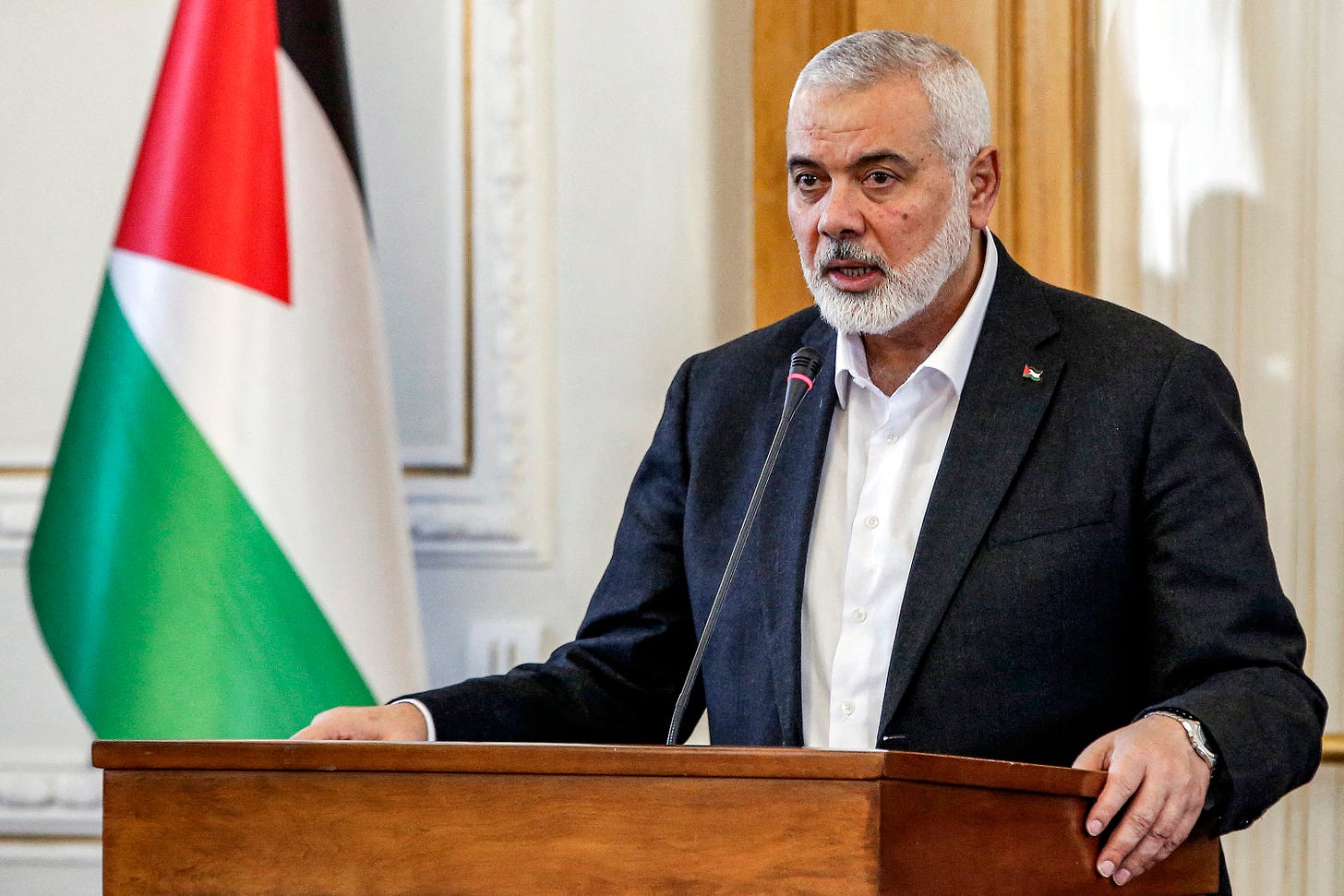
Ismail Haniyeh in Doha, Qatar, on March 26, 2024. Photo by AFP via Getty Images
By Mehdi Hasan – zeteo – July 31, 2024
“Israel’s leaders killed three birds with one stone,” wrote Reuven Pedatzur, a senior military affairs analyst for the Israeli newspaper Haaretz. “They assassinated the man who had the power to make a deal with Israel; they took revenge on someone who had caused more than a few Israeli casualties; and they signaled to Hamas that communications with it will be conducted only through military force.”
Was Pedatzur referring to the Israeli assassination of senior Hamas leader Ismail Haniyeh, the head of the group’s political bureau, in Tehran in the early hours of Wednesday morning?
No. Pedatzur died in a road traffic accident in 2014. His quote from Haaretz, above, was in response to the Israeli assassination of another senior Hamas commander, Ahmed Jabari, in November 2012, which kicked off the 2012 Gaza war.
As my former colleague at The Intercept, Jon Schwarz, documented in great detail last year, “Jabari had come to believe that it was in the best interest of Palestinians for Hamas to negotiate a long-term truce” and had been in communication with the respected Israeli peace activist Gershon Baskin. “Just before the assassination, [Baskin] gave Jabari a draft proposal for such a truce to review and approve. The draft was agreed to by Baskin and Hamas’s deputy foreign minister, and Baskin also said he had previously shown it to Ehud Barak, then the Israeli minister of defense.”
Would Jabari have signed off on a ‘hudna,’ or long-term truce, between Hamas and Israel? We’ll never know.
Israel, in fact, has a long and cynical history of killing Hamas leaders who are in the midst of ceasefire negotiations or, even, proposing long-term truces with the Jewish state.
Remember Sheikh Ahmed Yassin, the quadriplegic co-founder and spiritual leader of Hamas? He was assassinated less than three months after he proposed a long-term truce with Israel “if a Palestinian state is established in the West Bank and Gaza Strip.”
His successor, Abdel Aziz al-Rantisi, was assassinated less than three months after he made a similar truce offer to Israel.
Then there was the Netanyahu government’s 2012 assassination of Jabari, who, as mentioned, was reviewing a “long-term mutual cease-fire” deal just “hours before he was killed,” according to Baskin.
The parallels between 2012 and 2024, between the killings of Jabari and Haniyeh, are eery.
“He was in line to die, not an angel and not a righteous man of peace,” Baskin said of Jabari shortly after his killing, “but his assassination also killed the possibility of achieving a truce and also the Egyptian mediators’ ability to function.”
The same could be said of Haniyeh. Mainstream Western media outlets agree that the Hamas leader was – by Hamas standards – a “pragmatist”; a key figure in the ongoing negotiations to secure a ceasefire in Gaza and free the Israeli hostages.
From Reuters:
“For all the tough language in public, Arab diplomats and officials had viewed [Haniyeh] as relatively pragmatic compared with more hardline voices inside Gaza, where the military wing of Hamas planned the October 7 attack. While telling Israel’s military they would find themselves ‘drowning in the sands of Gaza,’ he and his predecessor as Hamas leader, Khaled Meshaal, had shuttled around the region for talks over a Qatari-brokered cease-fire deal with Israel that would include exchanging hostages for Palestinians in Israeli jails as well as more aid for Gaza.”
From Sky News:
“Haniyeh was the pragmatic face of Hamas. He was less hard-line and militaristic than Yahya Sinwar, who is the head of Hamas inside Gaza and is leading the battle. Haniyeh was the public face of Hamas’s diplomacy in Arab capitals. He was leading efforts to negotiate a ceasefire in Gaza.”
This was the person that the far-right Israeli government of Benjamin Netanyahu chose to assassinate on Iranian soil on Wednesday.
Why?
Put simply, Netanyahu and his coalition of fascists and bigots do not want a deal to release the hostages. They prefer to continue the war, no matter the cost to Gaza’s civilians or to their own citizens still held inside of the enclave. Despite Joe Biden’s ludicrous claims to the contrary, it is Netanyahu who has been the biggest obstacle to a deal to free Israel’s hostages in Gaza. The former spokesperson for the hostages’ families says Netanyahu rejected a deal. Benny Gantz, a former member of Israel’s war cabinet, says Netanyahu blocked a deal. Israeli defense officials tell Haaretz that “Netanyahu systematically foiled the negotiations to free the hostages.”
There is nothing new here. To misquote Winston Churchill, Israel has always preferred “war-war” over “jaw-jaw.” Israeli governments – especially those led by Netanyahu – have preferred having Hamas as the permanent enemy – or as an “asset,” to quote the current Israeli Finance Minister Bezalel Smotrich – rather than trying to do a permanent deal with Hamas.
As the late Israeli journalist Pedatzur wrote, in his analysis of the disastrous Jabari assassination in 2012:
“Our decision makers, including the defense minister and perhaps also Prime Minister Benjamin Netanyahu, knew about Jabari’s role in advancing a permanent cease-fire agreement. … Thus the decision to kill Jabari shows that our decision makers decided a cease-fire would be undesirable for Israel at this time, and that attacking Hamas would be preferable.”
Change the name ‘Jabari’ to ‘Haniyeh’ above, and those words could have been written today.
Plus ça change, plus c’est la même chose.

The Israeli Terrorist State
By Craig Murray | July 31, 2024
It is no longer possible to categorise the nihilistic violence of the Israeli state. It appears to have no objective other than violence and an urge for desolation.
In 24 hours Israel has murdered the man with whom it would need to negotiate hostage release in the short term and political settlement in the long term, and a key figure in its most dangerous potential military enemy which has refrained from full-on war.
In doing so it has violated the territory, indeed the capitals, of two crucial regional states.
Israel has also taken a policy decision that the mass rape of detainees by soldiers – and, somewhat strangely, homosexual rape in particular – is acceptable in war and not to be punished.
Ironically Israel has also underlined its genocidal intent in Gaza by proving that it has the technical ability to carry out targeted attacks, and that the flattening of entire cities with 2,000lb bombs and the massacre of tens of thousands of innocents has been a policy choice.
The western media appears paralysed by this. I have seen virtually no serious comment or analysis. Nor has anybody pointed out the contrast between Israel’s lies about mass rape on October 7 and Israel’s now-admitted policy of tolerating rape of detainees.
The political class seems even more paralysed than the media class. Caught in their commitment to Zionism – basically bought and paid for – they have nothing to say about these incredible events more sensible than Kamala Harris’s zombie-like incantation of “Israel’s right to self-defence”.
The British Foreign Office has failed to produce its promised considered reaction to the ICJ Opinion on the illegality of Israeli occupation, let alone responded sensibly to Israel’s crazed paroxysm of destruction this week.
For me it is now axiomatic that there is no two state solution and that apartheid Israel must be completely dismantled as an entity. I believe that more and more people around the entire globe believe that now.
And if we have to dismantle our own political and media classes to get there, so be it.
Israel’s allies block Security Council statement condemning Tehran attack

The Cradle | August 1, 2024
The US, UK, and France blocked a Russian-proposed statement at the UN Security Council (UNSC) condemning the assassination of Hamas politburo chief Ismail Haniyeh in Tehran, Iran’s envoy to the UN Amir Saeid Iravani said on 1 August.
“Russia’s proposed statement condemning Israel’s heinous act was blocked by the US, UK, and France,” Iravani told Russian media following an emergency UNSC meeting on Wednesday night.
“It is now absolutely necessary to hold the occupying [Israeli] regime accountable for the atrocities it committed,” the Iranian diplomat added. “This regime cannot be allowed to escape accountability and consequences for the violations it has committed.”
During the session, Iravani stressed that Tehran “reserves its inherent right to self-defense in accordance with international law” and said that “the responsibility of the United States as a strategic ally and main supporter of the Israeli regime in the region cannot be overlooked in this horrific crime. This act could not [have] occurred without the authorization and intelligence support of the US.”
Permanent UNSC members Russia and China strongly condemned Israel’s attacks on the Iranian and Lebanese capitals, blasting Tel Aviv for once more sabotaging Gaza ceasefire talks and pushing the region to the brink of all-out war.
“China is deeply concerned about the potential for this incident to further destabilize the region,” Fu Cong, China’s permanent representative to the UN, emphasized during the meeting. “China strongly opposes and condemns recent irresponsible actions, including Israel’s attacks on southern Beirut,” he added.
Fu also called on Tel Aviv to cease all military actions in Gaza and appealed to “influential countries” to “put more pressure and work more vigorously … to put out the flames of war in Gaza.”
Russia’s first deputy envoy to the UN, Dmitry Polyansky, also condemned Haniyeh’s killing, calling it an “attempt” to drag Iran into war.
“This provocative attack was carried out while the Hamas leader was in Iran on an official invitation to attend the inauguration ceremony of the President-elect of the Islamic Republic of Iran, Masoud Pezeshkian. Those behind this political assassination had to realize how dangerous the consequences could have been for the entire region,” Polyansky said.
“The misguided practice of targeted liquidations of prominent political and military figures is bringing the Middle East to the brink of a region-wide war,” the Russian diplomat added.
Feda Abdelhady Nasser, the deputy permanent observer of the State of Palestine to the UN, told the gathered diplomats that the global community “has a choice to make” between “peace and security” or letting “Israel drag us all to the abyss.”
“Israel has been the oppressor, tormentor, and murderer of Palestinians for decades, and it is the longstanding destabilizer of our region,” Nasser highlighted.
Lebanon’s Acting Permanent Representative to the UN, Hadi Hashem, contested Israel’s claims that the attack on the Beirut suburb of Dahye this week was an act of “self-defense.”
“Israel’s claim that it seeks to protect the population it occupies is a display of hypocrisy,” Hachem said, adding, “The real goal of Israel is to prolong and escalate the hostilities. And it is ironic that the killer of tens of thousands of children in Gaza sheds tears for the children of the occupied Syrian Golan.”
Similarly, Syria’s UN ambassador, Qusai al-Dahhak, stressed that “Israel is responsible for the crime in Majdal Shams” and noted that the territory is Syrian, accusing Israel of “weaponizing” the attack on the Druze community “to continue its aggression on the states of the region.”
Robert Wood, deputy US ambassador to the UN, called on UNSC members with influence over Iran “to increase pressure on it to stop escalating its proxy conflict against Israel and other actors.”
France and the UK took a similar line, reiterating a call for an “immediate ceasefire” in Gaza and condemning what they said was Iranian support for “destabilizing actors in the region.”
More dead children. More BBC ‘news’ channelling Israeli propaganda as its own
By Jonathan Cook | July 28, 2024
BBC coverage of the attack on a football pitch in the Golan Heights on Saturday has been intentionally misleading.
The BBC’s evening news entirely ignored the fact that those killed by the blast are a dozen Syrians, not Israeli citizens, and that for decades the surviving Syrian population in the Golan, most of them Druze, has been forced to live unwillingly under an Israeli military occupation.
I suppose mention of this context might complicate the story Israel and the BBC wish to tell – and risk reminding viewers that Israel is a belligerent state occupying not just Palestinian territory but Syrian territory too (not to mention nearby Lebanese territory).
It might suggest to audiences that these various permanent Israeli occupations have been contributing not only to large-scale human rights abuses but to regional tensions as well. That Israel’s acts of aggression against its neighbours might be the cause of “conflict”, rather than, as Israel and the BBC would have us believe, some kind of unusual, pre-emptive form of self-defence.
The BBC, of course, chose to uncritically air comments from a military spokesman for Israel, who blamed Hizbullah for the blast in the Golan.
Daniel Hagari tried to milk the incident for maximum propaganda value, arguing: “This attack shows the true face of Hizbullah, a terrorist organisation that targets and murders children playing soccer.”
Except, as the BBC failed to mention in its report, Israel infamously targeted and murdered four young children from the Bakr family playing football on a beach in Gaza in 2014.
Much more recently, video footage showed Israel striking yet more children playing football at a school in Gaza that was serving as a shelter for families whose homes were destroyed by earlier Israeli bombs.
Doubtless other strikes in Gaza over the past 10 months, so many of them targeting school-shelters, have killed Palestinian children playing football – especially as it is one of the very few ways they can take their mind off the horror all around.
So, should we – and the BBC – not conclude that all these attacks on children playing football make the Israeli military even more of a terrorist organisation than Hizbullah?
Note too the way the western media are so ready to accept unquestioningly Israel’s claim that Hizbullah was responsible for the blast – and dismiss Hizbullah’s denials.
Viewers are discouraged from exercising their memories. Any who do may recall that those same media outlets were only too willing to take on faith Israeli disinformation suggesting that Hamas had hit Gaza’s al-Ahli hospital back in October, even when all the evidence showed it was an Israeli air strike.
(Israel soon went on to destroy all Gaza’s hospitals, effectively eradicating the enclave’s health sector, on the pretext that medical facilities there served as Hamas bases – another patently preposterous claim the western media treated with wide-eyed credulity.)
The BBC next went to Jerusalem to hear from diplomatic editor Paul Adams. He intoned gravely: “This is precisely what we have been worrying about for the past 10 months – that something of this magnitude would occur on the northern border, that would turn what has been a simmering conflict for all of these months into an all-out war.”
So there you have it. Paul Adams and the BBC concede they haven’t been worrying for the past 10 months about the genocide unfolding under their very noses in Gaza, or its consequences.
A genocide of Palestinians, apparently, is not something of significant “magnitude”.
Only now, when Israel can exploit the deaths of Syrians forced to live under its military rule as a pretext to expand its “war”, are we supposed to sit up and take notice. Or so the BBC tells us.
Update:
Facebook instantly removed a post linking to this article – and for reasons that are entirely opaque to me (apart from the fact that it is critical of the BBC and Israel).
Facebook’s warning, threatening that my account may face “more account restrictions”, suggests that I was misleading followers by taking them to a “landing page that impersonates another website”. That is patent nonsense. The link took them to my Substack page.
As I have been warning for some time, social media platforms have been tightening the noose around the necks of independent journalists like me, making our work all but impossible to find. It is only a matter of time before we are disappeared completely.
Substack has been a lifeline, because it connects readers to my work directly – either through email or via Substack’s app – bypassing, at least for the moment, the grip of the social-media billionaires.
If you wish to keep reading my articles, and haven’t already, please sign up to my Substack page.
Israel Used Dogs, Waterboarding to Torture Palestinian Prisoners – UN
Sputnik – 31.07.2024
Palestinians in Israeli captivity have been subjected to torture, including electrocution, waterboarding and being attacked by dogs, with at least 53 detainees dying in custody since October 7, the UN human rights watchdog said in a report out Wednesday.
The Office of the United Nations High Commissioner for Human Rights (OHCHR)’s report on the “Detention in the context of the escalation of hostilities in Gaza” looked into testimonies of torture and other ill-treatment committed by Israelis and Palestinian armed groups from October 2023 to June 2024.
“Many of those detained and subsequently released have reported being subject to forms of torture or other ill-treatment, including severe beatings, electrocution, being forced to remain in stress positions for prolonged periods, or waterboarding,” the report read.
Palestinians who spoke with the OHCHR said they had been subjected to violence and humiliation in a systematic manner, “including through repeated serious physical assaults, setting dogs on the detainees, in some cases resulting in attacks and bites, and widespread threats and insults.”
Israel detained large numbers of Palestinians – men, women, children, doctors, journalists, human rights defenders, and patients – in the days after Hamas’ October 7 attack. Of more than 10,000 workers and patients from Gaza who were taken into custody in October, around 1,000 remain unaccounted for. Dozens others have died.
“At least 53 detainees from Gaza and the West Bank have died in Israeli detention since 7 October,” the report said.
UN High Commissioner for Human Rights Volker Turk said the testimonies gathered by his office and other entities indicated “a range of appalling acts, such as waterboarding and the release of dogs on detainees,” which he described as a “flagrant violation” of international humanitarian law.
Khamenei vows to avenge blood of ‘dear guest’ Haniyeh, warns Israel of ‘harsh punishment’
Press TV – July 31, 2024
Leader of the Islamic Revolution Ayatollah Seyyed Ali Khamenei has warned the Israeli regime of a “harsh response” for the the assassination of Hamas’s Political Bureau Chief Ismail Haniyeh, saying it is the Islamic Republic’s duty to avenge the blood of the Palestinian resistance leader.
Ayatollah Khamenei made the remarks on Wednesday, hours after Haniyeh, who had traveled to Tehran to attend the swearing-in ceremony of Iran’s new president, was killed in a dawn attack in the capital.
“The criminal and terrorist Zionist regime martyred our dear guest in our homeland and left us bereaved, but it also set the ground for a harsh punishment for itself,” the Leader said.
Ayatollah Khamenei commended Haniyeh’s years-long sacrifices in his fight against the Israeli occupation and said he was ready for martyrdom and sacrificed his children and households on this path.
“He was not afraid of embracing martyrdom in the way of God and saving God’s servants, but we consider it our duty to avenge his blood in this bitter and horrific incident that came to pass in the Islamic Republic’s territory,” the Leader asserted.
The Leader also extended his condolences to the Islamic Ummah, the resistance front, the proud nation of Palestine as well as Haniyeh’s family and one of his companions, who was martyred with him.
Haniyeh was in Tehran to attend the inauguration ceremony of new Iranian President Masoud Pezeshkian on Tuesday.
Iranian authorities announced that rigorous investigations have been launched into the targeted killing of Haniyeh in the capital and the results will subsequently be released.
The Islamic Republic has declared three days of national mourning for the loss of the Palestinian resistance leader.
Palestinian groups have already condemned his assassination in the strongest terms, vowing to make those behind the assassination pay the price of the heinous act.
Haniyeh, 62, was born in a refugee camp near Gaza City and joined Hamas in the late 1980s during the First Intifada or uprising.
As Hamas grew in power, Haniyeh rose through the ranks and was appointed part of a “collective leadership” in 2004 and reached the Hamas top job in 2017.
Three of his sons were killed in an Israeli airstrike on Gaza in April.
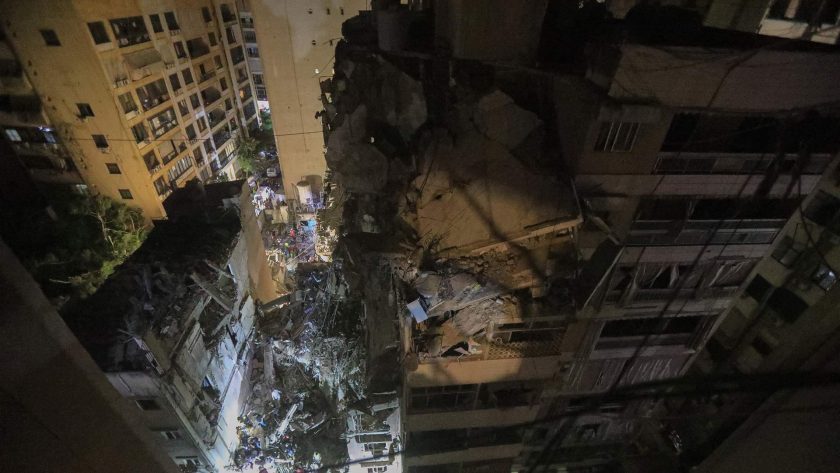
Israeli aggression targets residential building in Beirut Southern Suburb
Al Mayadeen | July 30, 2024
An Israeli strike targeted a residential building in the Southern Suburb of Beirut on Tuesday evening, destroying a substantial section of the structure.
The strike comes after continuous threats by Israeli occupation officials of a substantial aggression on Lebanon, since Saturday.
Al Mayadeen’s correspondent reported that the strike targeted the Southern Suburb of Beirut, where at least one explosion was heard.
In detail, our correspondent said that the strike targeted a residential building in Haret Hreik, resulting in the collapse of a substantial section of the structure.
“Israel” has been threatening a strike against Lebanon, after falsely accusing the Islamic Resistance in Lebanon – Hezbollah, of launching an attack on the Israeli-occupied Syrian town of Majdal Shams.
IOF says it targeted Hezbollah commander
The Israeli occupation forces spokesperson said the military targeted a commander responsible for the alleged Majdal Shams strike. He added that there is “no change in the directives of the Home Front Command,” which are a set of directives issued to settlers in times of war.
Strikes on the Southern Suburb of Beirut have been largely avoided by Israeli authorities, due to the warnings of the Resistance against such an escalation.
The last time an Israeli strike targeted the Suburb was on January 2, 2024, which killed the top Hamas official in Lebanon, martyr Saleh al-Arouri, and others.
Hezbollah responded to the aggression with wide-ranging strikes on Israeli military targets, attacking the Meron Air Traffic Control Base for the first time.
Palestinian prisoner raped by Israeli guards at notorious facility
Press TV – July 30 2024
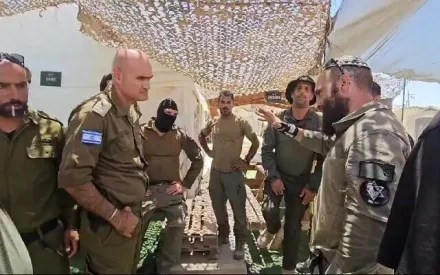
A Palestinian prisoner has reportedly been subjected to rape by Israeli guards at a notorious facility set up to hold Palestinians after the launch of the regime’s ongoing genocidal war against the Gaza Strip.
The Palestinian Prisoners Club (PPC), a watchdog, and several Israeli media outlets reported the development on Monday.
“This is a new rape crime committed against a detainee at the Sde Teiman camp (in the Negev Desert) by a group of prison guards,” Abdullah Al-Zaghari, head of the PPC, told AFP.
The victim has suffered serious injury as a result of the abuse and is unable to walk, Israeli newspaper Ha’aretz and public broadcaster KAN reported.
Israeli facilities hold an estimated 9,700 Palestinian prisoners.
Inmates have consistently reported being subjected to torture and sexual abuse.
The regime, however, has significantly ramped up its detention spree in Gaza and the occupied West Bank since October 7, when it brought the coastal sliver under the war.
Ever since, human rights statements and prisoner accounts have been rife with reports of intensified acts of torture by the regime’s forces, including food and water deprivation, intimidation, electrical shocks, mock executions, and violent sexual abuse.
Subsequent to the Monday reports, the Israeli military police allegedly raided the Sde Teiman center as part of an investigation into the case, rounding up 10 troops stationed at the facility.
The police forces were met with resistance on the part of the troops, who barricaded themselves in and used pepper spray to avoid arrest.
The regime’s extremist finance minister Bezalel Smotrich, however, described the suspects as “heroic warriors.”
Itamar Ben-Gvir, a similarly hard-right official, who oversees the prisons where Palestinians are detained, also called the Israeli troops the “best heroes” and described the arrests as “shameful.”
Veteran War Correspondent: Blast In Golan Heights Not From Hezbollah Rocket
By Ian DeMartino – Sputnik – 29.07.2024
On Saturday, an explosive fell onto a sports field in Majdal Shams in Israeli-occupied Golan Heights, killing 12 children. Israel blamed the Lebanese Shia movement Hezbollah. The group has denied the accusation.
Veteran war correspondent Elijah Magnier told Sputnik on Monday that what little information is available on the Golan Heights explosion that killed 12 Arab Druze Muslim children contradicts the official story offered by the Israeli government.
“First, [Israel has] refused any Western investigation by Israeli allies. So they don’t want anyone to investigate the type of rockets and/or the debris,” Magnier explained. “And the technical details of the explosions are very telling. The Falaq rocket that Hezbollah fires is a 50 kilogram explosive. Now, a warhead with such a quantity of explosive doesn’t leave the damage that was left by the explosion that happened in Golan Heights, [it would be] much bigger.”
Magnier, who has over 35 years of experience covering conflicts in Iran, Lebanon, Syria, Iraq, Libya, Sudan, Afghanistan and Yugoslavia, says that the evidence the Israelis have provided has been unconvincing.
“We have not seen any picture… of the guidance system, or any component that [we] need to understand what kind of rocket [or missile] that exploded in this place,” Magnier began. “They showed us two pieces with serial numbers that match the Falaq, but not on the same scene of the explosion. They’re completely different on a white plank. So, we don’t know where these pieces were taken from.”
“Normally, when the forensic team is on the scene, [they] take hundreds of photographs with every single piece before they touch anything. We haven’t seen all that, but we’ve seen a rush of accusing Hezbollah,” Magnier added.
“The diameter of the crater [from a Hezbollah Falaq rocket] can [be] between four to six meters and the depth can be… between 1.5 to 3 meters, which is not the case at all of the explosion we’ve seen,” Magnier described. “We’ve seen in this explosion only a small part of the fence [was] damaged and the other part of the fence is still intact. So, even the fragment of the explosion is different. The shrapnel is different.”
On Sunday, Israel bombed 12 settlements in Lebanon after saying that Hezbollah had crossed a “red line” in the attack. Hezbollah has vehemently denied it was involved. Magnier pointed out that they do not have a reason to attack Druze Muslims in Golan Heights, which is illegally occupied by Israel but still contains a large Muslim population.
“Hezbollah has thousands of civilian objectives [it could hit] that are close to the borders of Lebanon, and it can really destroy any village or any Israeli occupied city without the need to go to another village that is occupied by Druze Muslims who have [influence] in Syria and Lebanon and want to declare their support to the Palestinians,” argued Magnier, who added that Hezbollah has not been hitting civilian targets since it started shelling Israel in solidarity with the Palestinians in Gaza.
Magnier argued that a faulty Israeli air defense missile was a more likely culprit in the Golan Heights explosion.
“I can say that there are malfunctioning missiles and there are malfunctioning rockets that can fall anywhere and these incidents are very frequent, in particular with the Israeli interception missiles, where they say that only 60 to 65% reach their target and the others miss,” he said. “A strong possibility… an Israeli interception missile of the type Tamir… they carry around 10 to 15 kilograms of explosive and they have a very similar impact to what we’ve seen in the pictures provided on the ground by the people of Majdal Shams in the Golan Heights.”
Magnier noted that the size of the crater matched what the Tamir could create and that there was still grass from the field around the crater, which would not happen with a larger Falaq rocket.
“Everything there indicates that we’re talking about a small-sized missile [and] not a big sized rocket of 50 kilograms.”
On Monday, US and Israeli media reported that an Israeli official said its response was still coming and that it would be “limited but significant” in order to avoid an all-out war.
“So, we understand that Netanyahu is really trying to avoid being involved in a war that he doesn’t know what the consequences would be. He can start, but he can’t end it,” concluded Magnier. “What is the ultimate objective [in attacking Hezbollah]? Destroy Lebanon? Destroy the airport? He will have his airport destroyed. Attack the Capital? He will have Tel Aviv destroyed. So this is where we see that things are not as smooth as the Israelis are trying to show.”
Featured Video

Dan Dicks with James Corbett on Solutions Watch
or go to
Aletho News Archives – Video-Images
From the Archives
$1.5bn up in smoke: US THAAD missile stockpile dries up defending Israel against Iran
By Ivan Kesic | Press TV | July 2, 2025
According to American media, defense news outlets, and independent analysts, the 12-day Israeli military aggression against Iran significantly depleted the US stockpile of THAAD (Terminal High Altitude Area Defense) interceptor missiles.
Citing official sources, American magazine Newsweek reported on Friday that the US transferred a substantial portion of its advanced missile defense capabilities to support the Israeli regime, an effort with questionable results and a critical impact on US strategic reserves.
THAAD, developed by Lockheed Martin arms manufacturing company, is a key component of Israel’s multi-layered air defense architecture. It is designed to intercept medium-range ballistic missiles, including those launched from Iran and Yemen.
The US-made system is capable of targeting short-, medium-, and intermediate-range ballistic missiles during their terminal phase, whether inside or outside Earth’s atmosphere.
THAAD uses a “hit-to-kill” method, relying on kinetic energy rather than explosive warheads to destroy incoming threats, intercepting at altitudes of up to 150 km and ranges between 150-200 km.
Operated exclusively by American personnel, the US military maintains eight THAAD batteries with an estimated 350–400 interceptors in total. The eighth battery was activated during the June 20 Israeli aggression against Iran and is capable of intercepting hypersonic missiles. … continue
Blog Roll
 Aletho News
- Zionist Bought Senate Blocks Information About American Citizens Killed By Israel
- While Gaza dominates the UN, these are the people keeping it alive
- New Report: “Scholasticide and Genocide in Gaza: Assessment, Testimonies and Legal Analysis”
- ‘THAAD Delusion’: Iran war exposes US missile shield limits – The Atlantic
- Moscow issues warning to NATO over Russian exclave
- Yes, the Iran war has destroyed Trump’s presidency
- The fallacy of US delusions about Iran’s economic collapse
- Hezbollah denies Syria cell link, warns of Israeli plan to sow discord
- The legacy of US sanctions, war, and occupation in Iraq
- Iraqi resistance group rejects disarmament, vows to maintain support for Lebanon
- If Americans Knew
- Mamdani releases plan to combat antisemitism and hate crimes in New York City
- Iran’s Revolutionary Guards Publish Letter to the American People
- DMFI launches $1 million ad campaign supporting Virginia’s Elaine Luria
- US Senate blocks resolution seeking report on Americans killed by Israel
- Israeli Attacks Kill Ten Palestinians in Gaza
- Massacre at Minab: The School That Became a Grave
- Israeli media: The IDF Shows It Doesn’t Turn a Blind Eye; It Actively Emboldens Settler Havoc
- As settlers ravage West Bank, Israeli forces kill 10 in Gaza – Daily Update
- New Report: “Scholasticide and Genocide in Gaza: Assessment, Testimonies and Legal Analysis”
- Ex-Biden officials are desperate for a Gaza scapegoat
- No Tricks Zone
- Green Energy Debacle: German Expert Professor Fritz Vahrenholt Warns Of Severe Economic And Social Consequences
- Two More Paleo Reconstructions Affirm Meters-Higher Sea Levels Across Ireland, Brazil 7000-6000 Years Ago
- New Study: Earth And Venus Surface Warmth Largely Explained By Convection And Lapse Rate, Not CO2 Or Radiation
- 2025 Nature Paper Claiming Worsening Global Drought Gets RETRACTED …Heavily Flawed
- New Study: ‘Global Drought Shows No Detectable Recent Acceleration Under Climate Warming’
- Economic Masterminds: German Socialists Suggest Taxing Productivity Gains Stemming From Using AI
- The South China Sea Has Not Been Cooperating With The Climate Change Narrative
- Energy Crisis: Germany Enters Heating Season With Historically Low Gas Reserve Fill Levels
- New Study: The Antarctic Ice Sheet Gained Mass From 2020-2024 Due To Staggering Snow And Ice Accumulation
- Study: Ocean Heating Rates From Thousands Of Years Ago ‘Dwarf’ Modern Ocean Heating Rates

