At least 135 cases of Israeli crimes against journalists in Palestine were recorded in January – Journalists Syndicate
WAFA | February 5, 2024
RAMALLAH – At least 135 crimes, assaults and violations committed by the Israeli occupation against journalism in Palestine were recorded in January, the foremost of which was the killing of 14 journalists, including eight who were killed by direct missile and bullet attacks against their homes and four others who were killed while on the job, according to the monthly report issued by the Freedom Committee at the Palestinian Journalists Syndicate.
The report stressed that the Israeli attacks on journalists, including the intentional targeting of their homes and the killing of their families, continued unabated. According to the report, 12 inhabited houses were targeted, which led to the killing of dozens of journalists’ family members.
The report affirmed the Israeli occupation soldiers’ lawless measures against journalists in the West Bank, adding that 50 cases of attacks against journalists were recorded, including detaining press crews, preventing them from doing their job and targeting them with live bullets.
The report stressed that journalists are faced with violence and intimidation, recording at least 26 incidents in which four journalists were brutally injured by bullets and missile shrapnel, in addition to four others who sustained cuts and bruises in Israeli attacks.
The report recorded four cases of beatings, eight injuries by tear gas and sound bombs and seven cases of destruction and seizure of equipment. In addition, the Israeli occupation detained two journalists and stormed press institutions and the homes of three journalists. One journalist was also subjected to prosecution.
The report also cited the complete interruption of communication and internet services for 14 days last month as a result of the Israeli direct targeting of telecommunications towers in Gaza. Several technical staff were killed by the Israeli occupation while attempting to fix the damage, it added.
The commission said that 116 journalists and media workers have been killed in the Gaza Strip since the beginning of the Israeli aggression on October 7.
At least 35 journalists remain behind Israeli bars under harsh conditions that deny them the most basic rights of prisoners enshrined in international laws and conventions, according to the report.
The report added that the fate of several journalists remains unknown after losing all contact with them on October 7.
Lebanon rejects demands to push Hezbollah away from southern border
The Cradle | February 6, 2024
Lebanese caretaker Foreign Minister, Abdallah Bou Habib, voiced on 6 February the nation’s rejection of recent Israeli and international demands seeking to push Lebanese resistance group, Hezbollah, north of the Litani River, saying Beirut will not accept ‘partial solutions’ to resolving the cross-border conflict.
“Western countries demand the retreat of Hezbollah for about eight to ten kilometers north of Litani,” Bou Habib said in an interview with Nida al-Watan. “This is a formula that Lebanon rejects. [Beirut] will not accept ‘partial solutions’ that do not bring the desired peace and do not secure stability but will lead to the renewal of the war again and again.”
Instead, the foreign minister called for a “comprehensive implementation of UN Resolution 1701.”
UN Resolution 1701 was issued following the 2006 Israel–Hezbollah war, which called for, among other things, respect for the Blue Line, a border drawn up by the UN in 2000.
Bou Habib expressed Lebanon’s demands in relation to the liberation of Shebaa Farms and the Kfarchouba hills, saying, “What we hear from some foreign ministers of the Western countries is that Israel is not in the question of this withdrawal, and our answer was that Lebanon will only accept a complete solution to all border issues with Israel, and half solutions do not work and will not [be accepted].”
He also demanded that part of a potential deal be for Israel to “stop the air, land and sea violations that have exceeded 30,000 violations since 2006.”
On 5 February, Israeli Foreign Minister Israel Katz said that “time is running out” in relation to a diplomatic solution with Lebanon, adding to his French counterpart Stephane Sejourne during her visit to Israel that “if we do not reach a diplomatic solution on Lebanon, we will move militarily to return the residents of Israeli towns on Lebanon’s borders,”
Hezbollah has recently released statistics showing that over 230,000 settlers had evacuated because of their operations since 8 October.
US special envoy Amos Hochstein paid a visit to Israel to speak with Defense Minister Yoav Gallant in an attempt to develop a plan to de-escalate the crossfire between Lebanon and Israel.
Gallant requested for Hezbollah to be pushed back 8–10 kilometers from the border, an increase of UN forces and Lebanese army in the area, and the means to return settlers to the northern settlements.
Hezbollah’s Secretary General Hassan Nasrallah said during a recent speech in reference to Israeli threats and negotiation talks, “we don’t fear war, and there are no talks before the war on Gaza ends.”
CNN Staffers Say Network Has ‘Systemic and Institutional Bias Toward Israel’
By Kyle Anzalone | The Libertarian Institute | February 5, 2024
Several employees of CNN spoke out against the outlet’s bias towards Israel in its reporting on the war on Gaza. Other US corporate media outlets have shown significant favoritism toward Tel Aviv.
The Guardian reports speaking with six staffers from different newsrooms who said that there is growing backlash against the leadership’s pro-Israel slant. “The majority of news since the war began, regardless of how accurate the initial reporting, has been skewed by a systemic and institutional bias within the network toward Israel,” said one CNN staffer. “Ultimately, CNN’s coverage of the Israel-Gaza war amounts to journalistic malpractice.”
“There’s a lot of internal strife and dissent. Some people are looking to get out,” the CNN staffer explained. “Senior staffers who disagree with the status quo are butting heads with the executives giving orders, questioning how we can effectively tell the story with such restrictive directives in place.”
A staffer speaking with the Guardian explained how systemic censorship occurs. “Many have been pushing for more content from Gaza to be alerted and aired.” The source continued, “By the time these reports go through Jerusalem and make it to TV or the homepage, critical changes – from the introduction of imprecise language to an ignorance of crucial stories – ensure that nearly every report, no matter how damning, relieves Israel of wrongdoing.”
The CNN employees say the bias starts at the top, with CEO Mark Thompson. The Guardian obtained emails and members that backed up the accusations made by the CNN staff members. The employees say the slant is causing a backlash.
In one memo obtained by the Guardian, Thompson gave orders that all stories mentioning the atrocities committed by the Israelis in Gaza must mention the war is only occurring because of the Hamas attack on October 7.
The memo reads, “We must continue always to remind our audiences of the immediate cause of this current conflict, namely the Hamas attack and mass murder and kidnap of civilians.” One staffer confirmed that the memo was interpreted “as an instruction that no matter what the Israelis do, Hamas is ultimately to blame.”
CNN’s bias towards Tel Aviv is matched by the Washington Post and New York Times. Writing at FAIR, Julie Hollar explains,” At the New York Times and Washington Post, opinion editors have skewed the Gaza debate toward an Israel-centered perspective, dominated by men and, among guest writers, government officials.”
“While both papers did include a few strong pro-Palestinian voices—their pages leaned heavily toward a conversation dominated by Israeli interests and concerns.” She continued, “That was due in large part due to their stables of regular columnists, who tend to write from a perspective aligned with Israel. As a result, the viewpoints readers were most likely to encounter on the opinion pages of the two papers were sympathetic to, but not necessarily uncritical of, Israel.”
University professor sacked for anti-Zionist views wins discrimination case
Press TV – February 5, 2024
A sociology professor sacked by the University of Bristol over his anti-Zionist comments has won a landmark decision by an employment tribunal, which decided that he was discriminated against because of his beliefs.
In its judgment on Monday, the Bristol employment tribunal ruled that Professor David Miller’s anti-Zionist beliefs qualified as a philosophical belief, which are protected under the Equality Act 2010.
It added that Miller was subject to direct discrimination because of his anti-Zionist beliefs.
Rahman Lowe Solicitors, who represented Miller at court, called the judgement a significant triumph, establishing that anti-Zionist beliefs are legally protected in the workplace.
“Prof. Miller successfully claimed discrimination based on his philosophical belief that Zionism is inherently racist, imperialist, and colonial, [which is] a protected characteristic under the Equality Act 2010, alongside a finding of unfair dismissal,” a statement issued by the solicitors said.
“This judgement establishes for the first time ever that anti-Zionist beliefs are protected in the workplace,” they added.
“I am extremely pleased that the tribunal has concluded that I was unfairly and wrongfully dismissed by the University of Bristol. I am also very proud that we have managed to establish that anti-Zionist views qualify as a protected belief under the UK Equality Act,” Miller said.
Professor Miller was fired by the University of Bristol in October 2021 after he made statements about the role of the Zionist movement in promoting Islamophobia.
Following his dismissal, Miller asserted that he was subject to an organized campaign by groups and individuals opposed to his anti-Zionist views, which was aimed at getting him sacked.
He took the University of Bristol to the Employment Tribunal on the basis of unlawful discrimination for his beliefs in breach of the Equality Act 2010.
In a post on X social media platform after winning the case, Miller said, “This is not just a victory for me, but also a victory for pro-Palestine campaigners across Britain.”
“Over many years, anti-Zionists have faced harassment and censorship in Britain due to the efforts of the Israel lobby. Many people have faced disciplinary procedures and lost their jobs for manifesting their anti-Zionist beliefs,” he added.
Miller expressed hope that “this case will become a touchstone precedent in all the future battles that we face with the racist and genocidal ideology of Zionism and the movement to which it is attached.”
“This verdict is also a vindication of the approach I have taken throughout this period, which is to say that a genocidal and maximalist Zionism can only be effectively confronted by a maximalist anti-Zionism,” he noted.
FOR WESTERN MEDIA, ISRAEL’S BOMBING OF GAZA IS NOT ‘DEADLY’
Right across the Anglo-American mainstream media, the killing of Palestinians is seen as normal. It’s only Israeli lives that matter.
BY DES FREEDMAN | DECLASSIFIED UK | JANUARY 30, 2024
Twenty-four Israeli soldiers were killed in two separate incidents in Gaza on 22 January. Mainstream media outlets around the world reacted in unison: that this was the “deadliest day” for Israel since 7 October.
This exact phrase was used in headlines on 23 January carried by news agencies such as Reuters and AFP, and major broadcasters including the BBC, CBS, NBC, CNN, ABC and ITV News.
The exact same phrase was also used by leading news titles including the New York Times, Washington Post, Wall Street Journal, Time magazine, Daily Telegraph, the Sun, Jerusalem Post, Guardian, London’s Evening Standard, Financial Times, Independent and Yahoo News.
On the same day, Israeli forces killed almost 200 Palestinians in Gaza including at least 65 people in Khan Younis alone.
These deaths received no headlines in the above outlets. Where they were reported, they were listed as part of the regular daily round-up of events in an unfolding genocide that has now seen more than 26,000 people killed in Gaza.
How is it possible that the world’s media could embrace exactly the same phrase in relation to Israeli victims but largely ignore the identities of the much higher number of Palestinians killed?
Why would 22 January be described as “deadly” for one group of people but not for another?
Unequal value
You might expect that editors took the “deadliest day” phrase from press statements from the Israeli government or military.
Yet Israel Defense Forces (IDF) spokesperson Daniel Hagari did not use this phrase in his statement and neither did the IDF Chief of the General Staff, Herzi Halevi, who instead simply called it a “difficult day”.
Prime minister Benjamin Netanhayu also described it as “one of the most difficult days” while Israel’s President, Isaac Herzog, spoke of “an unbearably difficult morning”.
He used the same language as both Knesset speaker Amir Ohana and minister Benny Gantz, both of whom referred to a “painful morning”.
Of course, it is possible the phrase was used in private and informal briefings to the press on the morning of 23 January. It is, however, equally conceivable that this was a trope that came “naturally” from a deep-rooted idea in the western media that the lives of Israelis and Palestinians are not of equal value.
And, therefore, that measuring the “deadliness” of a particular day should only be done for Israelis (where every life matters) and not for Palestinians (whose individual lives clearly appear to count for less).
‘Deadliest day’
Indeed, a search of the Nexis database of UK national and local news (including BBC broadcast bulletins) reveals that there were 856 uses of the phrase “deadliest day” from 7 October 2023 until 25 January 2024, none of which directly referred to evidence of Palestinian deaths in Gaza.
The only exception to this were some BBC bulletins on 25 October which mentioned “Palestinians reporting the deadliest day in Gaza” (emphasis added).
Otherwise, there was not a single reference during this period across the British media to “the deadliest day for Palestinians” or “for the people of Gaza”.
The other approximately 850 references directly related only to Israeli casualties. Some 28 per cent of them focused on the killing of IDF soldiers on 22 January.
The vast majority referred to the events of 7 October, described either as “the deadliest day for Jews” or “the deadliest day for the Jewish people” which accounted for some 25% of all references.
Many of these stories were focused on the words of US president Joe Biden who, in a much publicised speech to Jewish leaders at the White House, described the Hamas attack on 7 October as the “deadliest day for Jews since the Holocaust”.
Biden’s words alone make up 20% of all references to the “deadliest day” trope.
Perhaps Biden’s words were on the minds of editors across the world as they listened to Israeli spokespeople on the morning of 23 January and that the deaths of 24 IDF soldiers merited such a phrase when talking about Israeli lives.
Framing the war
But why has the phrase not been used in relation to Palestinians and, indeed, why is there so little preoccupation with days when particularly large number of Gazans are killed?
Precisely because the war is not framed in a way which recognises the equal worth of all those affected – in other words, a situation where every instance of significant Palestinian casualties would deserve a headline – it’s hard to be certain of which have been the very deadliest days for the residents of Gaza.
However, it’s clear that the period immediately after the temporary ceasefire in the last week of November saw particularly intense airstrikes and there were, according to Al Jazeera, at least 700 Palestinians killed on 2 December alone.
Yet there was no mention in the UK media about this being the “deadliest day” for Palestinians. Instead, the Guardian simply ran with a headline of “‘Israel says its ground forces are operating across ‘all of Gaza’” while the Sunday Times wrote that “Fears for hostages as Gazans say bombardment is worse than ever”.
According to the Mail Online, “Israel says it is expanding its ground operations against Hamas’ strongholds across the whole of the Gaza Strip as IDF continues to bomb territory after terrorists broke fragile truce”.
The BBC’s TV news bulletins on 3 December carried distressing footage of casualties but also featured a quote from an adviser to Netanyahu saying that “Israel was making the ‘maximum effort’ to avoid killing civilians” without carrying an immediate rebuttal of this outrageous claim.
In other words, despite the fact that 30 times more Palestinians were killed on 2 December than when the 24 IDF soldiers were killed, there was no recognition of the “deadliness” of that day.
Instead, the framing was all about the strategic plans of the Israeli military rather than the mass slaughter of Palestinians.
‘Intensive strike’
On 26 December, a further 241 people were killed by Israeli bombs. Britain’s “newspaper of record”, The Times, responded with the headline: “Israel-Gaza war: Palestinians hit by ‘most savage bombing’” with a sub heading that “Israel launches most intensive strike since Hamas attack on October 7”.
You could be forgiven for thinking that there was nothing deadly about this episode because, after all, Palestinians were only being “struck” as opposed to brutally killed.
But this was hardly an exceptional day given that Oxfam reported earlier this year that Israel’s military was killing Palestinians at an average rate of 250 people a day, a figure it said exceeded the daily death toll of any other major conflict of recent years.
There is clearly a brutal politics to counting the dead. The New York Times ran an article on 22 January headlined “The Decline of Deaths in Gaza” arguing that average daily deaths across a 30-day period have now fallen below 150.
For the NYT, it is “plausible that a lower percentage of deaths are among civilians now that Israel’s attacks have become more targeted and the [average] daily toll has declined”.
Not only, however, is there little evidence that the IDF is in any way opposed to killing civilians but the idea that casualties are declining at a time when we are soon likely to see a total of 30,000 Palestinian deaths is profoundly shocking.
Any slowdown in the rate of killing is hardly a consolation to the millions who still live in fear of IDF raids and rockets.
Media consensus
The media consensus that only Israelis are the victims of the “deadliest days” in the region and not Palestinians, despite the latter accounting for 95% of deaths since 7 October, is one of the many illustrations of the unequal and profoundly distorted coverage of this war.
Until the South African government submitted its partially successful claim to the International Court of Justice, news organisations were unwilling even to investigate the genocidal language of Israeli political and military leaders.
The media also routinely uses dehumanising and differential language where Israelis are “massacred” while Palestinians simply “die”. This illustrates the awful role of the mainstream media in paving the way for the ethnic cleansing we are currently seeing.
The real reason you don’t see or hear the media talk about a “deadly day” for Palestinians is that every day is deadly when you live in Gaza.
New wave of US, UK strikes target Yemen
The Cradle – February 4, 2024
US and UK warships and fighter jets bombed Yemen on 4 February, in a wave of missile strikes US officials claim hit 36 targets.
The US said in a CENTCOM statement that it hit “36 targets at 13 locations,” striking “underground storage facilities, command and control, missile systems, UAV storage and operations sites, radars, and helicopters.”
According to the statement, the US, UK, Australia, Bahrain, Canada, Denmark, the Netherlands, and New Zealand took part in the attacks.
The strikes were in response to Yemeni efforts to target Israeli-linked commercial ships passing through the narrow Bab al-Mandab Strait in the Red Sea. The Yemeni attacks are in response to Israel’s genocidal bombing campaign in Gaza.
Rather than press its ally Israel to stop its military campaign, which has killed over 27,000 Palestinians, the majority women and children, the US has joined forces with the UK to bomb Yemen.
Saturday’s strikes were launched by US F/A-18 fighter jets from the USS Dwight D. Eisenhower aircraft carrier, British Typhoon FGR4 fighter aircraft, and the Navy destroyers USS Gravely and the USS Carney firing Tomahawk missiles from the Red Sea, according to US officials and the UK Defense Ministry.
The Yemen Armed Forces issued a statement detailing where the attacks took place, reporting 13 raids on Sanaa, 9 on Hodeidah, 11 on Taiz, 7 on Al-Bayda, 7 on Hajjah, and one on Saada.
“These attacks will not deter us from our moral, religious, and humanitarian stance in support of the steadfast Palestinian people in the Gaza Strip, and will not go unanswered and punished,” read the statement.
The strikes come one day after the US sent B-1 bombers to target 85 locations affiliated with the Islamic Resistance of Iraq in eastern Syria and western Iraq, killing at least 16. This was in response to an operation by the Islamic Resistance in Iraq that targeted US military outpost Tower 22 in Jordan last week, killing three US soldiers.
US officials reportedly told Al-Jazeera that the strikes on Yemen are “considered a next round of retaliation for the killing of the [US] soldiers in Jordan.”
Like Ansarallah, the Islamic Resistance in Iraq coalition, formed after 7 October, has also targeted Israel, as well as US bases in Syria and Iraq. The groups say their attacks are in response to Israel’s genocide in Gaza, which the US has supported militarily and diplomatically.
Ansarallah leaders in Yemen say they have no intention of scaling back their campaign despite pressure from the US and UK bombing.
Mohammed al-Bukhaiti, an Ansarallah official, said, “military operations against Israel will continue until the crimes of genocide in Gaza are stopped and the siege on its residents is lifted, no matter the sacrifices it costs us.” He wrote on social media that the “American-British aggression against Yemen will not go unanswered, and we will meet escalation with escalation.”
Israel Wants All of Palestine, and Denies the Existence of the Palestinian People
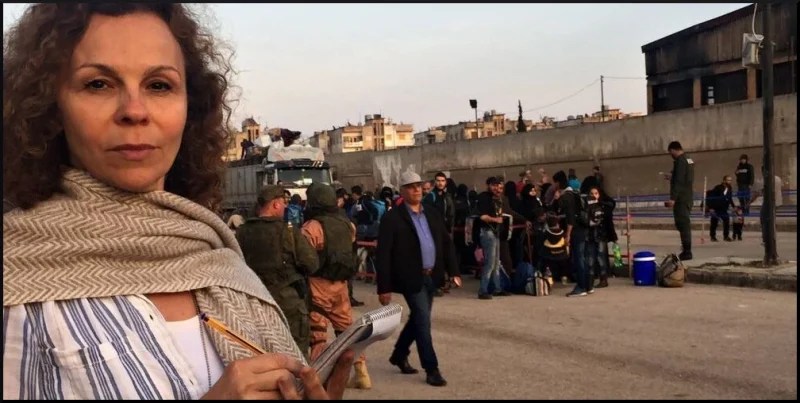
Steven Sahiounie interviews Kari Jaquesson | Mideast Discourse | January 28, 2024
“There was no such thing as Palestinians,” said Israeli Prime Minister Golda Meir, in an interview with The Sunday Times on June 15, 1969.
In March 2023, Israeli Finance Minister Bezalel Smotrich, denied the existence of a Palestinian people or nationhood just weeks after calling for a Palestinian town to be “erased.”
137 countries worldwide (70%) have recognized Palestine. In 2014 the EU voted to ‘Recognize Palestine in principle’. Within Europe as a whole, only the Czech Republic, Iceland, Malta, Poland, Romania, Serbia, Slovakia, Sweden, and Ukraine have recognized Palestine.
We know that the US supports the genocide in Gaza, but what do the Europeans think? In an effort to answer that question, Steven Sahiounie of MidEastDiscourse interviewed the Norwegian expert on the Middle East, Kari Jaquesson.
#1. Steven Sahiounie (SS): EU foreign affairs council held a Peace Summit in Brussels on January 22, chaired by EU foreign affairs chief Josep Borrell. The EU presented a proposal, which some have called bizarre, to create a framework for a Peace Plan, with the ultimate goal of a two-state solution by 2025. It ignores the genocide being committed in Gaza today, and fails to call for a ceasefire.
How is this proposal being viewed in Europe?
Kari Jaquesson (KJ): Before we start, I just want to let your readers know who I am, Steven, and also that we know each other from when I first visited Syria in 2017 as an independent journalist and I did an interview with you on my stop-over in Beirut. It is a great pleasure to follow your work.
So, I am a Norwegian national, and Norway is not a member of EU, though much of our legislation is being dictated by EU-mandates. Much of our political cast is very pro-EU, even though Norwegians have twice voted not to become members.
I am a private citizen, do not belong to any political party, and participate in public discourse representing only myself. As more or less a household name in Norway, both because of a 20+ year-long TV career as a fitness and health expert, later as a presenter in different TV shows, and a debater and op-ed author of so-called controversial issues, I have been able to lift non-mainstream perspectives into the public eye. My profession is still in fitness and health, and in addition I work as a researcher, translator and occasional writer for steigan.no, the only truly independent major Norwegian non mainstream news portal, so I process daily a lot of news, discussion and commentaries from European, American, African and Arabic sources, as well as historical files. I just want to make it clear that I only speak for myself, I do not represent any organization or company.
The distance between the non-elected officials in the EU-administration and the peoples of Europe could hardly be greater. This has been ongoing for years, and the heads of state in West European countries have hardly any popular support at all. The people in Western Europe, and let me include Norway are in great numbers demoralized and struggling to make ends meet. The NATO proxy war against Russia is draining the state coffers, and even in a should-be wealthy country like Norway, we have long lines in the food banks, energy costs have gone through the roof, and the general cost of living is not sustainable for an increasing part of the population. The state is extremely wealthy, but people’s wallets are getting slimmer by the day. Most people have little or no time or interest in politics, and most people get their so-called news from the state-subsidized media, which includes not only the big newspapers and TV-channels, but also former so-called independent outlets.
So, quite frankly, most people do not know about nor care about, nor have the energy or will to reach out to more in depth coverage of such events as the announcement of EU’s proposal. But, on the other hand, there is an impressing engagement against both the genocide going on as we speak, and the occupation of Palestine as such.
“From now on I will not talk about the peace process, but I want a two-state-solution process,” Borell said to journalists ahead of a EU foreign ministers’ meeting.
This concept of two states has been dangled in front of the Palestinian people for decades, but I can’t see how anyone who has followed the history of the occupation for one minute can take such a stand seriously. The Zionist entity has made it perfectly clear, not only now, but through their actions since 1948 that they want all of Palestine, and more. Furthermore, the occupiers deny the mere existence of Palestine, and even of a Palestinian people.
The EU do not use the correct terminology, which is a sure give-away on the partiality. They keep saying conflict, but avoid at all cost the true description. The true description is occupation.
#2. SS: The Israeli foreign minister, Israel Katz, showed EU foreign ministers a video about creating an artificial island next to Gaza to house Palestinians. Various Israeli plans to deport Gazans to the Sinai desert in Egypt, and the Palestinians in the occupied West Bank to Jordan, have been openly discussed.
How do Europeans view the ethnic-cleansing of Gaza?
KJ: In all European cities there have been, and are still huge demonstrations against the ongoing genocide. I am not sure all are aware of all the indecent remarks and proposals for “final solution” the occupiers are announcing. The news coverage is biased, and a notable part of the public are easy targets for the type of shock and awe reporting that dominated the news right after the October 7th incident. Their mind is still fixed on what has long since been debunked as flat out lies.
But even so, an engagement not seen since the Gilets Jaunes (Yellow Vests) in France is keeping its momentum, and some admissions are being made by some Western-European leaders.
According to a poll in Norway’s biggest newspaper earlier this month, almost every second Norwegian thinks it would be right to boycott Israel, but the government has no such plans.
Minister of foreign affairs Espen Barth Eide has previously called Gaza “hell on earth”, but has been adamant that Norway cannot implement its own national sanctions. We have no tradition in Norway of unilateral sanctions, he said, adding that Norway would do it if the Security Council agrees. Norway has since 2011 been practicing the same sanctions against Syria as the EU, although we are not a member.
#3. SS: The EU is planning to impose visa bans on 12 or so of the most violent Israeli settlers soon, according to French foreign minister Stéphane Séjourné. However, many of the 700,000 illegal settlers in the West Bank are US citizens, so the ban would likely be meaningless.
Why would the EU propose something so insignificant, instead of calling for the end of occupation in the West Bank?
KJ: First of all, what difference would this make? What is the purpose? And what is this other than a pathetic symbolic suggestion? As you point out, they have dual citizenship, and though the numbers vary, it is reason to believe that hundreds of thousands of dual citizenship-holders have returned to their country of origin. Which is a harsh contrast to the situation of the Palestinians who have no citizenship at all, and who know that if they leave, they will never be able to return.
After this week’s ruling there is a legal ground to accuse Europeans who have been fighting with the IDF to be prosecuted and punished for having participated in a genocide. And there are many who are doing this.
#4. SS: The US Biden administration refuses to call for a ceasefire in Gaza. They are prevented in doing so, even though the majority of Americans are in favor of a ceasefire, because of the Israel lobby, AIPAC, which exerts overwhelming pressure on the politics in the US.
Does Europe have a similar Israel lobby which prevents EU leaders from demanding a ceasefire in Gaza?
KJ: It is almost impossible to understand to what extent France and Britain is controlled by Jewish Zionist groups, but you may get an impression if you try to make count of who is allowed on the TV-debates and the biased perspective from the TV-presenters and who they invite for interviews and for commenting. However, this is a complete taboo and you will not find any serious discussion about this in any major news outlet. No mainstream politician will touch the issue, well knowing it would be political suicide.
Years ago, the former Israeli Minister Shulamit Aloni was a guest on the American channel Democracy Now, and she explained the inability for the Zionists to accept criticism without resorting to false accusations of antisemitism and the second world war. She called it “a trick that we always use”.
Most of the Western European countries, including Norway may be described as ‘vallas’, in other words, satellite states of the United States of America. We have no independent foreign policy.
#5. SS: The German government has been supporting the revenge killing of 25,000 Palestinians in Gaza at the hands of the Israeli government. They keep reiterating the mantra, “Israel has the right to defend itself.” Many experts have characterized Germany as a country held hostage to the holocaust, as they have refused to call for a ceasefire.
Isn’t it time that Germany divorce itself from the crimes of Adolf Hitler, and be allowed to treat Israel like any other country?
KJ: First of all, Israel is not a country, let me make that clear. It is an occupation. Secondly, the occupation is expanding with an insatiable appetite for more land, therefore this supposed country has no borders. Also, it has no constitution.
Is it really the alleged guilt from the second world war that is making Germany so docile vis-a-vis the genocidal Zionist? Maybe there is another reason, less noble. Unfortunately, this is verboten territory.
Germany and many other countries have made research and revisions of that period illegal, even for historians, and even if the number of alleged victims have been significantly reduced, yes, officially, it is forbidden to say so. Even the plaque at the most infamous concentration camp has been drastically revised, something few are aware of.
If the German leadership truly believed in their country’s history and crimes, wouldn’t they be the first to recognize and oppose new genocides? Yes, but they don’t.
Steven Sahiounie is a two-time award-winning journalist.
Biden’s Justification For Hitting Iran ‘Would Justify Russian Attacks on NATO’
By Ian DeMartino – Sputnik – 03.02.2024
On Friday, US President Joe Biden fulfilled his promise to strike Iranian targets in Syria and Iraq, further escalating the region even as the White House insists that it does not seek war with Iran.
Michael Maloof, a former senior security policy analyst for the Office of the Secretary of Defense with nearly 30 years of experience, told Sputnik’s Fault Lines that the justification used by the White House could easily be applied by Russia to NATO countries supporting Ukraine.
“You’re hearing from congressmen and senators saying ‘but we need to hit Iran for supplying the Houthis and Hamas and Hezbollah,” Maloof explained. “Well, does Russia then have a right to hit US and NATO allies, as a result of supplying weapons to Ukraine to battle Russians?”
The United States has placed the blame on Iran for the Sunday drone attack that killed three US service members and injured dozens more on the border of Syria and Jordan. While the US admits that it has no evidence Iran helped plan the attack, the Biden administration has been clear it blames Iran because the country allegedly funds those groups and other militants.
“This afternoon, at my direction, U.S. military forces struck targets at facilities in Iraq and Syria that the IRGC and affiliated militia use to attack U.S. forces,” US President Joe Biden said in a statement released Friday by the White House.
“I think that if Biden were to follow through, then that raises a whole new specter of opening up NATO countries to potential attack,” Maloof continued, adding that the US is simply hoping Russian President Vladimir Putin “doesn’t follow through” with that justification.
Maloof argued that the US should reevaluate the situation in the Middle East but it’s difficult because the US looks “at the Middle East through the prism of Israel all the time.”
“We’ve got to somehow figure a way out of it. Instead, we’re digging that hole deeper and even though there might be some attempts to try and persuade [Israeli Prime Minister Benjamin] Netanyahu to calm down and have a ceasefire and try to resolve things, it’s doing just the opposite.
“The problem is that Biden has left the conduct of the war up to Netanyahu, and Netanyahu knows this and he’s basically dragging us along – we’re captives of Netanyahu,” Maloof explained.
“You don’t have any, there’s no leadership [the US] left it up to Netanyahu. He’s the tail wagging the dog,” he added later.
Maloof further argued that Israel has been getting the United States to do its dirty work for decades. “We always hear Netanyahu wanting the United States involved, or us to bomb the sites… This is the way we’ve been conducting ourselves since… 2003 when we invaded Iraq.”
Asked by Co-host Melik Abdul how the US should have responded to the attack, Maloof argued that the US should leave the region.
“I think we shouldn’t even be in those locations. And I think we should have gotten out some time ago.”
Otherwise, Maloof warns “This thing has unlimited possibilities of escalation very rapidly.”
ADL defines genocide and civil disobedience within the FBI
The looming threat to Middle East peace activism

By Grant F. Smith | IRmep | February 2, 2024
As politicians and the Anti-Defamation League call for crackdowns on Middle East peace protesters, the ADL’s undue influence within the FBI as a trainer is finally exposed.
 Basic Field Training Course
The Department of Justice released the Anti-Defamation League’s Basic Field Training Course (PDF). The course is mandatory for all FBI New Agent Trainees (NATs) and New Intelligence Analyst Trainees (NIATs). This release follows a decade of Freedom of Information Act requests and denials by the Department of Justice (PDF) and evasion by publicly funded content contributors.
The ADL course is developed and conducted by Anti-Defamation League (ADL) instructors. It selects materials from the United States Holocaust Memorial Museum (USHMM) and Martin Luther King, Jr. Memorial. Marcus Appelbaum, Museum Director of Law, Justice and Society Initiatives in 2014 resisted any public review of the curriculum, stating, “Unfortunately we do not randomly send out the curriculum.” Appelbaum also denied that any of the large amounts of U.S. taxpayer funding supporting the museum paid for the curriculum.
 Museum Director of Law, Justice and Society Initiatives Marcus Appelbaum denied curriculum release in 2014.
The ADL course facilitates a discussion of the USHMM video The Path to Nazi Genocide by asking trainees to watch and then consider “the challenges that police officers faced, and decisions they made in Germany during the Nazi era.” The video depicts the rise of Nazi Germany from WWI to the final WWII liberation of concentration camps replete with emaciated images of the dead and barely living.
The final question the video puts to agents in training is why the word “genocide” had to be coined in the aftermath. “As the world struggled to understand what had happened, a new word, genocide, was needed for these crimes — crimes committed by ordinary people from a society not unlike our own.”
The ADL training also requires viewing the civil rights documentary Eyes on the Prize: No Easy Walk. Supplemental reading exposes new FBI agents to the bureau’s past role undermining Martin Luther King Jr. and documents Bull Connor’s relentless fire hosing and mass arrests of black protesters engaged in civil disobedience. The video ends with the triumphant 1963 March on Washington and JFK’s proposal for a Civil Rights Act.
Taken in context, the entirety of the Basic Field Training Course makes it clear that FBI trainees are ADL subordinates who must strive to meet with its approval. Page 9 of the guide even states, “as a new hire, we would like you….”
The unstated purpose of the course is positioning Israeli activities in the US and the ADL itself outside the purview of law enforcement and especially FBI counterintelligence. The ADL today is framed as trusted trainers and civil rights partners. That was not always the case. The ADL’s current privileged insider role training all new FBI special agents is the result of a secretive influence campaign that began more than eight decades ago. Internal FBI files about that campaign reveal the ADL’s true reasons for infiltrating the FBI.
In 1940 the ADL launched an intense effort to liaise with the FBI by offering a list of undercover ADL investigators to FBI Director J. Edgar Hoover. The FBI was reluctant to accept the ADL list. One FBI special agent told Hoover he found a proposed investigator resource to be “mentally unbalanced.” Others offered up by ADL, such as longtime political campaign donation bundler Abraham Feinberg, was known to the FBI as a WWII surplus conventional weapons smuggler for Israel and alleged unregistered foreign agent. Feinberg later financed Israel’s clandestine nuclear weapons program.
The ADL offered to investigate persons of interest to the FBI. FBI Assistant Director P. E. Foxworth nixed that idea, telling Hoover the ADL was engaged in “shakedowns” of “loyal and innocent” Americans and “interested only in their own material benefit…”
This did not keep the ADL from announcing in 1942 it had conducted “373 investigations” on behalf of the FBI. This prompted Hoover to respond that private investigative agencies had “no excuse for existence” and that the FBI “had never asked the ADL to conduct an investigation.” On June 30, 1943, Luigi S. Crisculo, an American investment banker involved in Italian American causes, reported being baited by Anti-Defamation League operatives who claimed to be “unofficial auxiliaries of the Department of Justice” and were attempting to link him to Nazism.
The ADL also wanted to directly seed its operatives into the FBI. Arnold Forster (AKA Fastenberg) began developing ADL’s legal team in 1938 while simultaneously applying to become an FBI special agent in 1937 and 1939. Forster was formally rejected because in the view of the FBI he “dressed poorly, did not appear resourceful and would probably not develop.” Forster then became ADL’s chief investigator in 1940 and held formal and informal positions until 2003. Another longtime ADL investigator and operative named Frank Prince even campaigned to replace Hoover as FBI director. When caught out in 1942, the ADL offered to “disband within 24 hours.” The FBI did not take the ADL up on this offer since “we [the FBI] are not running the Anti-Defamation League.”
Throughout the 1940s the ADL continuously lobbied FBI field offices for meetings and joint events which befuddled some bureau insiders. One special agent in command reported to Hoover he could not “understand the insistence of the ADL that a representative of this Bureau address this group.” He felt, “there is some ulterior motive that causes them to be so insistent.”
One ADL motive was gaining privileged access to FBI files. In 1944 ADL’s Nissan Gross asked to periodically check FBI files to avoid “duplication of investigation.” Special Agent in Command Drayton rebuffed the ADL because “under the procedure…ADL would have an opportunity to learn of the informants being utilized…and those under investigation.”
In 1968 FBI Director J Edgar Hoover finally dropped his longstanding opposition and ordered field offices “to immediately make certain that you have established liaison with the head of the ADL regional office in your territory…” Such liaisons continue to this day. Since then, joint public events, training sessions and even FBI director “love letters” to the ADL have been ongoing.
Given its insider status at the FBI, growing piles of Palestinian corpses in Gaza and resultant mass protests and civil disobedience in the U.S. may not be a challenge for the ADL which, along with other nodes of the Israel affinity ecosystem, works to censor open debate and protests of concern to Israel. As an FBI trainer, the ADL has finally transcended scrutiny. The FBI previously, acting on credible evidence, investigated ADL for domestic spying before political pressure on former Attorney General Janet Reno quashed the investigation. Such investigations of the ADL today would be unthinkable.
Even before the October 7, 2023 Hamas attacks on Israel and Israel’s attack on Gaza and settler rampages in the West Bank, the ADL was seeding the FBI with false threat reports conflating peaceful US based Palestinian rights groups with white nationalist movements.
ADL statistics and reports also attempt to reframe pro-Palestinian protests and civil disobedience in the United States as Antisemitism and “hate crimes” rather than anything resembling legitimate Civil Rights era nonviolent action. Under its forced “liaison” with the ADL, the FBI must pay close attention to and respond to all the ADL’s false and misleading allegations lest other nodes of the Israel affinity ecosystem work in concert to threaten its funding, political appointees or mundane issues such as a new headquarters.
The ADL and Israel lobby ecosystem acted quickly to compel Congressional “genocide threat” hearings—focused not on the reality of tens of thousands of dead in Gaza, but rather the discomfort felt by American Zionist students at elite Ivy league universities encountering campus cease fire rallies.
Following the ADL worldview, former Speaker of the House Nancy Pelosi recently alleged that pro-Palestinian protesters picketing her home were acting on behalf of Russia and China and demanded that the FBI investigate them as foreign agents.
It is ironic that Pelosi, who has benefited all her career from support from AIPAC, an Israeli foreign influence operation set up with $60 million in foreign funds laundered into the US in the 1950s and 1960s, hurls foreign agent accusations at peaceful protesters.
 Former Speaker of the House Nancy Pelosi speaking at Israel’s Knesset in 2022
However, the threat of looming FBI crackdowns, covert or overt, on protesters calling for Middle East peace should not be discounted given the ADL’s success infiltrating its worldview into the bureau. Although FBI Director Christopher Wray has promised the FBI will not investigate or surveil peaceful pro-Palestine protests, his promise leaves out entrapment operations. The pressure for the bureau to “get results” by seeding plots, weapons and entrap mentally unbalanced individuals in “Palestinian terror plots” may soon become overwhelming. Such “successes” would instantly gain uncritical, widespread mainstream media diffusion and touch off more congressional hearings for further operations and funds to Israel.
One certainty is that even as the International Court of Justice demands Israel refrain from violations of the Genocide Convention, the ADL will certainly not teach such relevant current day lessons to new generations of special agents.
Review primary sources referenced in this article at the Israel Lobby Archive.
Nearly two million at risk as Israel threatens assault on Rafah
The Cradle | February 2, 2024
Nearly two million Palestinians stranded in south Gaza’s Rafah were struck with panic after the Israeli defense minister said the southern city – previously described as a safe zone to which the displaced can flee – will be the next target of Israel’s brutal offensive on the strip.
Around 1.9 million Palestinians live in increased fear following the Israeli threats, Al-Jazeera reported on 2 February.
Israeli Defense Minister Yoav Gallant claimed on 1 February that the presence of Hamas would be dealt with in Rafah as it is being dealt with in Khan Yunis.
“Hamas’s Khan Yunis Brigade boasted that it would stand against the IDF, now it’s falling apart,” Gallant said, despite the fact that the Israeli army continues to face fierce resistance from the Qassam Brigades in the southern city.
“I am telling you here, we are completing the mission in Khan Yunis and we will also reach Rafah and eliminate everyone there who is a terrorist who is trying to harm us,” the defense minister added.
“They don’t have weapons, they don’t have ammunition,” Gallant said about Hamas fighters across Gaza, as RPG attacks continued to target Israeli tanks and troop carriers in Khan Yunis on 2 February.
In the first months of the war, hundreds of thousands of residents in north and central Gaza were forced to flee to Rafah – where Tel Aviv repeatedly said civilians would be safe from harm.
Despite this, Israeli warplanes bombarded Rafah several times.
As the army began pushing into Khan Yunis in early December, hundreds of thousands more were forced deeper south into Rafah. Israel continues to order more forced evacuations – despite Rafah being severely overcrowded with the displaced.
Last month, the Wall Street Journal (WSJ) reported, citing Israeli and Egyptian officials, that Israel is planning a risky military operation to take control of the Philadelphi Corridor.
The Philadelphi Corridor is the border area of the southern Gaza Strip, which includes the Rafah border crossing with Egypt.
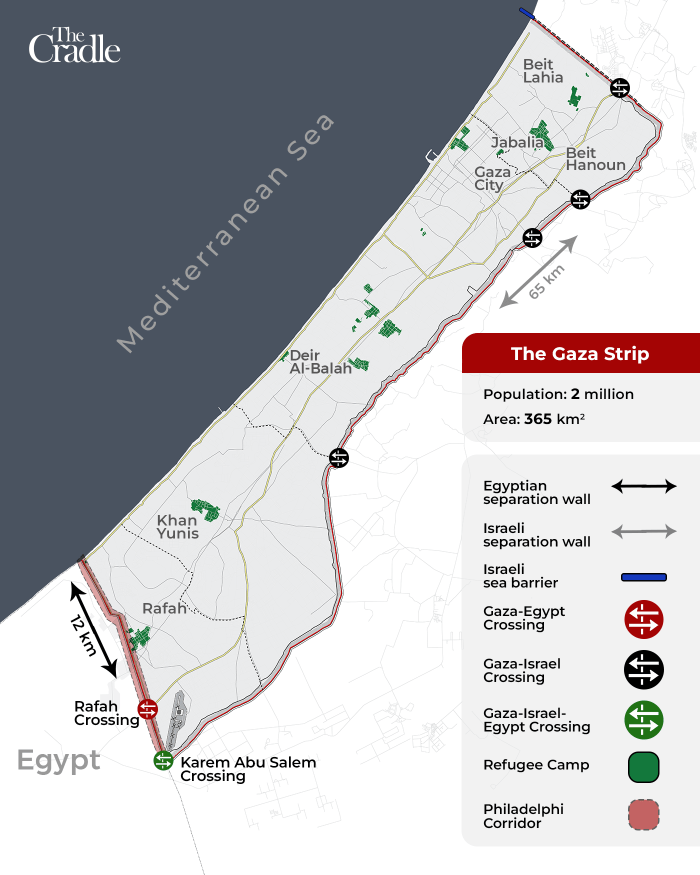
An Israeli operation in this area – and in the city of Rafah in general – would have catastrophic effects on the civilian population currently stranded there
Gallant’s threats came in the wake of new truce discussions. A Palestinian source told Al-Mayadeen on Thursday evening that Hamas has yet to agree to the proposal, and dispelled rumors that it sent a delegation to Cairo for negotiations.
Featured Video
10K More U.S. Troops Deploy as Trump Weighs New Iran Strikes
or go to
Aletho News Archives – Video-Images
From the Archives
Genetic baloney in thick slices
MAYBE COULD BE INC.
By Jon Rappoport | No More Fake News | July 8, 2021
Gene research companies tend to come and go. They start out banging and popping like fireworks in the sky, and then they fade out—selling themselves to larger outfits who’ve hired better liars…
Once upon a time, it sounded easy. Start with a disease, find the gene responsible for the disease, and correct the problem.
Then, researchers wondered, was disease the result of one gene or a group of genes acting together?
Either way, the proof would be in devising cures for diseases using gene therapy. “Not yet, but soon…”
And regardless, the major need was: money. Lots and lots of money.
This need required good PR people. “We have to pump up the idea that we’re on the edge of tremendous breakthroughs. We’re always on that edge…”
This hype also needed to obscure the fact that there wasn’t (and isn’t) ANY gene cure for ANY disease. … continue
Blog Roll
 Aletho News
- Von der Leyen gifts her spin doctor a job for life
- 10K More U.S. Troops Deploy as Trump Weighs New Iran Strikes /Suliaman Ahmed
- Iranian crew declared Dena training vessel ‘unarmed’ to US warship before deadly torpedo strike: Report
- Iran’s NPT debate moves beyond parliament
- Houthis condemn Saudi claims of attack on Medina
- Fatuous False Flags
- Are Europe’s Smallest Nations Dragging the Continent into War?
- EU draws up contingency plans for possible Merz exit
- G7 caves to US blackmail, announces ‘massive’ release of diesel reserves
- Reporting of the RAF Fairford arrests blows the idea of a ‘free press’ out of the water
- If Americans Knew
- The Israeli Right Portrays Islam as Murderous. It Serves a Political Purpose
- Jordan Has Had Enough: King Abdullah’s Scathing Warning to Israel
- Israeli Colonizers (i.e. Settlers) Kill Palestinian Man Near Salfit
- New Google Maps images reveal massive scale of devastation in Gaza
- Jewish supremacy, anti-Palestinian bigotry on display in Israel – Daily Update
- Israeli Soldiers Abduct At Least 22 Across Occupied West Bank
- Eight Palestinians Killed in Israeli Attacks on Gaza
- Israeli former leaders and security chiefs threaten legal action over ‘Jewish terrorism’
- Israel map in LA Times ad includes all land from the river to the sea
- Inside Lebanon’s 200-page dossier on Israeli war crimes
- No Tricks Zone
- Green Energy Debacle: German Expert Professor Fritz Vahrenholt Warns Of Severe Economic And Social Consequences
- Two More Paleo Reconstructions Affirm Meters-Higher Sea Levels Across Ireland, Brazil 7000-6000 Years Ago
- New Study: Earth And Venus Surface Warmth Largely Explained By Convection And Lapse Rate, Not CO2 Or Radiation
- 2025 Nature Paper Claiming Worsening Global Drought Gets RETRACTED …Heavily Flawed
- New Study: ‘Global Drought Shows No Detectable Recent Acceleration Under Climate Warming’
- Economic Masterminds: German Socialists Suggest Taxing Productivity Gains Stemming From Using AI
- The South China Sea Has Not Been Cooperating With The Climate Change Narrative
- Energy Crisis: Germany Enters Heating Season With Historically Low Gas Reserve Fill Levels
- New Study: The Antarctic Ice Sheet Gained Mass From 2020-2024 Due To Staggering Snow And Ice Accumulation
- Study: Ocean Heating Rates From Thousands Of Years Ago ‘Dwarf’ Modern Ocean Heating Rates

