Colonial Partners in Israel’s Crimes
By Vacy Vlazna | Intifada-Palestine | January 25, 2014
“Imperialism after all is an act of geographical violence” Edward Said
Is it just me, or do you also see a thread of colonial superiority and racism binding US, Australia, Canada to Israel?
Think about it. All are ex-British colonies and like Israel, have a shameful history of genocide committed against their respective Indigenous Peoples and all continue to treat their First Peoples as third class citizens.
I can’t speak for the US and Canada, but, apart from realpolitik and arms trade, an underlying colonial arrogance goes a long way to explain why my ‘civilised’ ‘democratic’ Australian government is complicit in granting Israel impunity to daily perpetrate war crimes and crimes against humanity against generations of Palestinian families.
The tragic past and near narratives of the suffering of unspeakable colonial atrocities against Indigenous Palestinians and Indigenous Australians bear close resemblance and are written in blood and great injustice.
Just as Israel’s Independence Day and the Palestinian Nakba Day (in remembrance of deportation and dispossession) have a bloody symbiosis, Australia Day or Invasion Day, on the 26th January, is celebrated or mourned according to the victors or the vanquished.
Both Israeli and British colonists took the ‘terra nullius’ doctrine – empty land’ approach to justify their brutal occupations and wholesale land theft of Palestine and Australia. Israel boasts it made the desert bloom though for centuries Palestine traded in olives, oil, quinces, pinenuts, figs, carob, cotton, dates, indigo, artichokes, citrus fruit, almonds, mint sumach and much more. In Australia the Aborigines maintained their food supply with a sophisticated management of the land with fire.
The island, named Australia by British invaders and colonists, was home to almost a million peoples of, at least, 200 nations that traced their ancestry back 60 millennia along spiritual songlines of the land to the Dreaming – to Creation.
The imperial genocidal wars and massacres (guns vs spears) such as those at Hawksbury, Nepean Richmond Hill, Risdon Cove, Appin, Bathurst, Port Phillip, Swan River (Battle of Pinjarra), Gravesend, Vinegar Hill, Myall Creek, Kinroy, Rufus R, Long lagoon, Dawson River, Kalkadoon, Cape Grim, The Black war, McKinley River, West Kimberely resisted by Aboriginal warriors like Pemulwuy, Winradyne, Multuggerah, Yagan, Jandamarra as well as starvation and western diseases decimated the dispossessed Aboriginal population to about 70,000 by 1920.
By then violent genocide was replaced by the more covert cultural genocide, or the genocide of indigeneity, through the government policy of assimilation intended to eradicate indigenous identity by cruelly and systematically destroying connections to family, the tribe and ancestral lands.
Australia’s First Peoples were marginalised onto reservations and missions, restricted entry into white towns, exploited as unpaid slave labour, their indigenous languages and sacred rituals forbidden, and mixed blood children (The Stolen Generations) were forcibly kidnapped from their parents for resocialisation – ie to be made ‘white’.
Assimilation is where Australia, USA and Canada differ with Israel. The assimilation of Palestinians for Israel is an anathema. The Zionist goal is a pure Jewish state, rid of all Palestinians from the river to the sea. The whole of historic Palestine, home to the Chosen People is a goal pursued with, ironically, an ideological fervour akin to Hitler’s Herrenrasse and Germanisation aspirations. Ergo, Israel perpetrates a slow motion brutal genocide and a relentless push of Palestinians over the exile cliff.
Until the 1967 Referendum, Aborigines were government property: “The right to choose a marriage partner, to be legally responsible for one’s own children, to move about the state and to socialise with non-Aboriginal Australians, were just some of the rights which Aboriginal people did not have.”
Sound familiar? Israel’s apartheid policies similarly impact on Palestinians. Israel has passed racist laws that impose severe movement restrictions dividing families, preventing family reunification and obstructing the marriage of couples who come from different zones. At least a third of Gazans have relatives in Israel and the West Bank. The personal pain of such enforced separations which deny Palestinians the shared and cherished moments we enjoy freely is immeasurable…grandparents have never seen their grandchildren who may live 5 kilometres away… adult children are denied the right to be with a dying parent…births…weddings…funerals ..are overshadowed by painful absences.
The Native Title Act, 1993, finally acknowledged that some Indigenous Australians ‘have rights and interests to their land that come from their traditional laws and customs.’ But, as mining boomed on resource rich indigenous lands, corporate colonialism reared its greedy head undermining this landmark act with the Northern Territory Intervention.
It was initiated by the Howard government in 2007 and maintained by successive governments including that of Kevin Rudd who made the historic apology to the Stolen Generations even though indigenous communities were suffering the humiliation of quarantined welfare payments and struggled to survive in third world conditions.
The Intervention was imposed “on the pretext that paedophile gangs were operating in Indigenous settlements. Troops were sent in; townships were compulsorily acquired and native title legislation ignored. Yet no prosecution for child abuse resulted, and studies concluded that there was no evidence of any systematic child abuse.” Marcus Waters, Review: Pilger’s Utopia shows us Aboriginal Australia in 2014
As the Prawer Plan was debated in the Israeli Knesset, the sound of the Australian government salivating with envy must have been deafening while imagining the power to evict, from their ancestral lands, 40,000 pesky Bedouins hindering Israel’s land expansion or the power to simply bulldoze Palestinian villages to build settlements for Zionist colonists.
Notorious for her death stare, Julie ‘Medusa’ Bishop, the Australian Foreign Minister, on January 15, speaking for her government, with colonial panache dismissed Israeli settlements as war crimes with this vacuous statement,
“I would like to see which international law has declared them illegal.”
Not a good look coming from the FM of a nation privileged to have a seat on the UN Security Council, when even the gardener at Parliament House has heard of the Geneva Conventions.
Like its mate, the rogue state of Israel, Australia doesn’t give a toss for honouring its obligations under international law.
It tossed aside its obligations to the Refugee Conventions with its inhumane offshore asylum seeker policy, forcing asylum seeker boats back to Indonesia, refusal to compensate people who have been held for prolonged periods in mandatory detention, ‘breached its international anti-race discrimination obligations by continuing for almost three years it’s intervention policies with indigenous communities of the Northern Territory.’ the high instance of Aboriginal deaths in custody, the breaching of the International Covenant on Civil and Political Rights in the matter of Guantanamo inmate, David Hicks, the unresolved allegations that Australian intelligence officers were complicit in the torture of Mamdouh Habib when he was held in Pakistan Egypt and Guantanamo Bay, the Queensland bikie laws that fail to meet international fair trial standards.
Then there is the present case in the International Court of Justice against Australia spying on Timor Leste during the oil and gas treaty negotiations in an alleged attempt to rip off the poorest nation in Asia.
Colonial terrorism, disguised as civilised democracy, is not only perpetrated by the hollow men and women in authority. They are the monsters for whom you and I vote and without us they are powerless.Until our moral conscience, intelligence and compassion determines how we vote, we too are their accomplices.
____________________________
– Dr. Vacy Vlazna is Coordinator of Justice for Palestine Matters. She was Human Rights Advisor to the GAM team in the second round of the Acheh peace talks, Helsinki, February 2005 then withdrew on principle. Vacy was coordinator of the East Timor Justice Lobby as well as serving in East Timor with UNAMET and UNTAET from 1999-2001.
Related articles

PLO official reveals full details of Kerry’s plan
MEMO | January 26, 2014
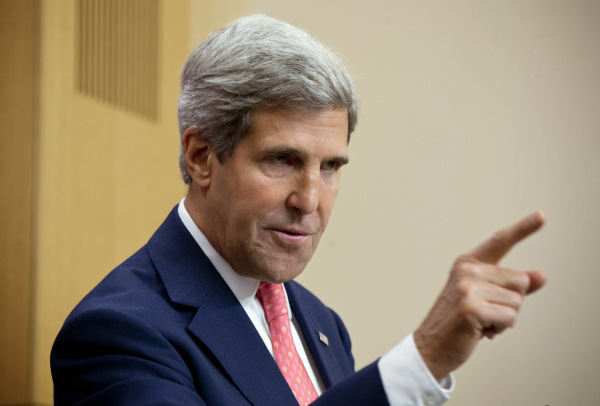
The secretary of the PLO Executive Committee has revealed the details of John Kerry’s plan for the Israel-Palestine negotiations. Yasser Abed Rabbo spoke to London’s Al-Hayat newspaper.
According to Abed Rabbo, the US Secretary of State’s proposal includes Palestinian recognition of Israel as a Jewish state; establishing part of East Jerusalem as the capital of Palestine; resolving the refugee problem in accordance with the vision of former US President Bill Clinton; maintaining Israeli control of major settlement blocs and leasing the others back to Israel; Israel’s control over border crossings and air space; and the presence of US-Israel-Jordan-Palestinian security forces on the border. “The Israelis would also have the right of ‘hot pursuit’ of fugitives or suspected criminals in the Palestinian state,” he revealed. “Israeli Prime Minister Benjamin Netanyahu rejected these ideas because he wants to carve out the land he wants and refuses to discuss the Jerusalem issue. He also refuses the intervention of any other party in security matters, even America.”
The PLO official pointed out that this way of thinking was essentially unacceptable. “We Palestinians have been more than clear when it comes to this matter. We have stated many times that we reject the concept of a so-called national homeland for Jews in historic Palestine or the concept of a ‘Greater Israel’. Netanyahu has expressed that he not only wants to legitimise the Zionist national narrative and the expulsion of Palestinians in 1948 but also Israel’s ongoing settlement projects, which aim to achieve the Zionist dream of a Greater Israel.”
Security arrangements
As for security arrangements, Abed Rabbo said that there is talk of potential security arrangements and the standards by which these arrangements will be run. “They will last for many years and are supposedly subject to improved Palestinian security performance. However, this will ultimately still be controlled by Israel, which will maintain control even though America has pledged that it will remain involved as these arrangements are made and see to it that Israel withdraws from certain areas including the Jordan Valley.”
Such security arrangements, he claimed, will maintain Israel’s security strongholds on mountain tops and in Palestinian airspace. Israel will maintain the right to fly over Palestinian land should it feel an impending security threat. “At this point, any semblance of Palestinian sovereignty or geographic unity has been completely torn apart”, warned Abed Rabbo.
Settlements, Jerusalem and refugees
He pointed out that there have been numerous discussions about Israel’s vast settlement blocs in the occupied West Bank. Rumours suggest that Israel wants to rent out settlement units to settlers in the event that a Palestinian state is established. What this means, he claims, is that the settlements will remain as they are and settlers will continue to live there as Israeli citizens with special status in the Palestinian state.
“According to Israel, Jerusalem is not up for negotiation and will remain under full Israeli control as its undivided capital,” he explained. “There is rather mysterious general talk about Palestinians establishing their future capital in Jerusalem but, from Israel’s point of view, Jerusalem extends from Ramallah to Bethlehem to the Jordan Valley border. Thus, it could easily be argued that Abu Dis or Kufr Aqab could be named as the future Palestinian capital.”
As far as Palestinian refugees are concerned, said the PLO official, there are four possible outcomes, as envisioned by President Clinton; one of them suggests the return of a limited number of refugees, as stated in Israel law.
The Palestinian Authority’s position
According to Abed Rabbo, the Palestinian Authority cannot accept any of these potential solutions, especially given that Netanyahu is believed to insist on there being no Arab presence in Jerusalem and rejects outright the refugees’ right of return.
“Netanyahu does not want the involvement of any third party, American or non-American, in any of his security arrangements in the Jordan Valley even if it remains under Israeli control. He wants all decisions to be Israeli decisions and judging by our previous attempts in the past, any of our attempts to abide by a plan or time table will be disrupted completely by Israel”, he noted. Israel and America claim that the Palestinian people will be able to get territory equivalent to the West Bank’s 1967 borders through land swaps. “I do not understand how this is possible with settlement blocs, Israeli security zones and the apartheid wall, which divides the eastern and western regions of the West Bank completely. We are supposed to believe that we can gain territory through land swaps? This is impossible.”
Population exchanges
The PLO veteran described those Israelis who suggest “people swaps” to accompany land swaps as “racist”, pointing out that the organisation would not accept any population exchanges.
“Palestinian Arabs living inside Israel are not settlers,” he stressed. “They did [not] come to Israel through an invasion or by migration. They are the owners of that land and no one can uproot them from their homes. Swapping settlers for Israeli-Arabs would mean swapping Israeli citizens for Israeli citizens; how is this possible?” For Abed Rabbo, this shows that the Israeli government does not consider Arabs to be true citizens of the state. “They regard them as second or third class citizens with no rights, which is absolutely racist. They seek to ethnically cleanse that territory more than they want to swap land.”
That is the framework under which most ideas were discussed, said Abed Rabbo. “We do not have any official documentation to prove it but the information gets leaked from Israel in one way or another.”
Reasons for Israeli refusal
He is not surprised that Israel rejects most proposals for the simple reason that it wants to carve out as much land as possible from the occupied West Bank and maintain absolute control, especially in security zones. This would give Israel the “right” to intervene to protect settlements, which would also mean that it has control of the road networks leading to them.
“We are being confronted with an ultimatum,” he added. “We are not standing in front of two different options with various formulas that we can accept or reject. However, any attempt to sweeten the language of these agreements instead of criticising their prejudices will lead us to disaster.”
He ruled out any blame being attached to the Palestinians should Kerry’s plan fail. “The blame game does not concern us and we do not take it in our political consideration. Who will blame us for wanting to have our country based on 1967 borders, and to have East Jerusalem as our capital, and to have a fair and agreeable resolution for the refugee issue?”
Although John Kerry has “done his best” to make proposals acceptable to both sides, argues Abed Rabbo, it seems that he has read the Israeli position at the beginning and accepted the verbal, generic, vague and ambiguous assurances that Netanyahu usually offers to whoever he meets. “He must have interpreted them in some form and when he looked at the fine print realised that there are two different Israeli positions.”
As such, he believes, Netanyahu lured Kerry to discuss the issue of security first and Kerry fell for it, thinking that it will lead to a big breakthrough for the negotiations and will open the way for discussion of other issues. “To his surprise, he discovered that the Israelis want to use security as an excuse to justify their ambitions for expansion,” concluded Abed Rabbo. “This explains how and why we have reached the current impasse.”
Source: Safa
Related articles


Fatah official: Negotiations will fail, it’s time to resume resistance
Ma’an – 26/01/2014
BETHLEHEM – A Palestinian state in the West Bank and the Gaza Strip will not be established within the coming 20 years, a member of the Central Committee of the Palestinian Authority’s ruling party Fatah said on Saturday.
Tawfiq Tirawi told Beirut-based al-Mayadeen satellite channel on Friday that “It is not possible under any circumstances that a Palestinian state will be established in the West Bank and the Gaza Strip 20 years from now.”
“Those who believe a state can be established are misled, as negotiations will bring nothing,” he added.
Tirawi urged the Palestinians to resume resistance in all aspects as a result.
“We have to resume action, as action can change many things. I mean resistance in all its aspects, but under a united Palestinian plan agreed by all factions including PLO factions and factions outside the PLO.”
The Fatah official highlighted that his movement had not dropped resistance as a choice including armed resistance. “That was reiterated in the movement’s sixth congress held in Bethlehem.”
The framework agreement which US secretary of state John Kerry is promoting will be refused by the Palestinians, added Tirawi.
Peace talks between Israelis and Palestinians were relaunched in July under the auspices of the US after nearly three years of impasse.
Israel’s government has announced the construction of thousands of housing units in illegal settlements since peace talks began.
Official: PLO committee agrees on steps for joining UN bodies
Ma’an – 26/01/2014
BETHLEHEM – A political committee of 12 members representing the Palestine Liberation Organization’s various factions convened in Ramallah and agreed on recommendations to take the Palestinian plight to the UN and its various bodies, a PLO official said on Saturday.
Hanna Amirah, a member of the Executive Committee of the PLO, told Ma’an on Saturday that the committee recommended addressing the United Nations regardless of whether the ongoing peace talks make any progress or not, although he added that a date had not been set.
The goal of these recommendations, he said, is to enhance the Palestinian position. However, Palestinian Authority president Mahmoud Abbas and the PLO Executive Committee need to approve them before they can be put into effect.
The Palestinian Authority is currently trying to counter demands made by the United States and Israel, added Amirah.
He asserted that the recent suggestions made by the US Secretary of State John Kerry were completely unacceptable to the Palestinians.
He highlighted that the proposals made related to Jerusalem, to Israeli settlements, and to Palestinian refugees were unacceptable in particular as well as the proposed Israeli military and civilian presence in the Jordan Valley.
Earlier this week, PLO official Wasil Abu Yousif, who is a member of the PLO’s political committee, said the committee agreed on prerequisites the PA needs to fulfill before signing international conventions and joining UN agencies and different bodies.
It is of great importance, he added, that the PA joins the International Criminal Court because that will enable the PA to sue the Israeli occupation over war crimes and crimes against humanity.
Related articles
Who Profits report: Corporations profit from Israeli prisons
Samidoun: Palestinian Prisoner Solidarity Network | January 26, 2014
 Who Profits released the following report on the involvement of Israeli and multinational corporations in the Israeli prison system:
On December 2013, the Israel Prison Service (IPS) responded to a freedom of information request by Who Profits, which was submitted three months earlier, regarding twenty-two corporations that provide services to Israeli prisons.
These companies mainly provide security equipment and services to incarceration facilities that hold Palestinian prisoners and detainees inside Israel and in the occupied West Bank. These incarceration facilities hold Palestinian political prisoners in violation of international law, and torture and systematic violations of human rights take place within their walls. According to Addameer’s latest monthly detention report (December 2013), there are 5033 Palestinian political prisoners in the Israeli prisons, 173 of whom are minors and 145 are administrative detainees.
The following table is an English translation of information provided by the Israel Prison Service to Who Profits, regarding twenty-two corporations that provide services to Israeli prisons and detention facilities.
| Company Name | Characteristics of Contract | End of Contract | Comments | Financial Scope |
| G4S | Maintaining supporting management systems, magnetometer gates, scanning machines and ankle monitors | During the fiscal year 2015 | According to an IPS tender | Tens of millions of shekels |
| 3M | Based on occasional bids | |||
| MOTOROLA SOLUTIONS ISRAEL | Maintaining wireless systems and lighting bridgesRepairing wireless devices | During the fiscal year 2016 | According to an IPS tender | Tens of millions of shekels |
| HEWLETT- PACKARD (HP) | PrintersMaintaining HP systems and central servers | During the fiscal year 2016 | Tenders by the Accountant General + tenders by the IPS | Tens of millions of shekels |
| MERKAVIM TRANSPORTATION TECHNOLOGIES | Based on occasional bids | |||
| MAYER’S CARS AND TRUCKS | Based on occasional bids | |||
| VOLVO GROUP | Based on occasional bids | |||
| Biosense | Supplying and maintaining a dog-bark identification system | During the fiscal year 2014 | According to an IPS tender | Hundreds of thousands of shekels |
| Myform | Based on occasional bids | |||
| MIRS COMMUNICATIONS | Purchase of battery servicesProviding wireless services | During the fiscal year 2016 | Tenders by the Accountant General + Tenders by the IPS | Hundreds of thousands of shekels |
| AFCON HOLDINGS | Installing, providing year-round service and maintaining fire detection systems | During the fiscal year 2015 | According to an IPS tender | Tens of millions of shekels |
| Contact | Based on occasional bids | |||
| SHAMRAD ELECTRONICS | Relocating communication infrastructureSupplying electronic equipmentRepairing sound system | During the fiscal year 2015 | According to an IPS tender | Tens of millions of shekels |
| B.G. ILANIT GATES AND URBAN ELEMENTS | Based on occasional bids | |||
| Dadash Hadarom Distribution | Purchase of canteen products | 31/07/14 | According to a tender | |
| Shekem | Based on occasional bids | |||
| Shiran | Based on occasional bids | |||
| S.I.R.N. | Based on occasional bids | |||
| Shekel | Based on occasional bids | |||
| ASHTROM GROUP | Based on occasional bids | |||
| Lymtech | Based on occasional bids |
Who Profits also provides documentation and research on several of these companies at the links below:
Related article
U.S. “Dismantling” Rhetoric Ignores Iran’s Nuclear Proposals
By Gareth Porter | IPS | January 25, 2014
Iran’s pushback against statements by Secretary of State John Kerry and the White House that Tehran must “dismantle” some of its nuclear programme, and the resulting political uproar over it, indicates that tough U.S. rhetoric may be adding new obstacles to the search for a comprehensive nuclear agreement.
Iranian Foreign Minister Mohammad Javad Zarif said in an interview with CNN’s Jim Sciutto Wednesday, “We are not dismantling any centrifuges, we’re not dismantling any equipment, we’re simply not producing, not enriching over five percent.”
When CNN’s Fareed Zakaria asked President Hassan Rouhani, “So there would be no destruction of centrifuges?” Rouhani responded, “Not under any circumstances. Not under any circumstances.”
Those statements have been interpreted by U.S. news media, unaware of the basic technical issues in the negotiations, as indicating that Iran is refusing to negotiate seriously. In fact, Zarif has put on the table proposals for resolving the remaining enrichment issues that the Barack Obama administration has recognised as serious and realistic.
The Obama administration evidently views the rhetorical demand for “dismantling” as a minimum necessary response to Israel’s position that the Iranian nuclear programme should be shut down. But such rhetoric represents a serious provocation to a Tehran government facing accusations of surrender by its own domestic critics.
Zarif complained that the White House had been portraying the agreement “as basically a dismantling of Iran’s nuclear programme. That is the word they use time and again.” Zarif observed that the actual agreement said nothing about “dismantling” any equipment.
The White House issued a “Fact Sheet” November 23 with the title, “First Step Understandings Regarding the Islamic Republic of Iran’s Nuclear Program” that asserted that Iran had agreed to “dismantle the technical connections required to enrich above 5%.”
That wording was not merely a slight overstatement of the text of the “Joint Plan of Action”. At the Fordow facility, which had been used exclusively for enrichment above five percent, Iran had operated four centrifuge cascades to enrich at above five percent alongside 12 cascades that had never been operational because they had never been connected after being installed, as the International Atomic Energy Agency (IAEA) had reported.
The text of the agreement was quite precise about what Iran would do: “At Fordow, no further enrichment over 5% at 4 cascades now enriching uranium, and not increase enrichment capacity. Not feed UF6 into the other 12 cascades, which would remain in a non-operative state. No interconnections between cascades.”
So Iran was not required by the interim agreement to “dismantle” anything. What Zarif and Rouhani were even more upset about, however, is the fact that Kerry and Obama administration spokespersons have repeated that Iran will be required to “dismantle” parts of its nuclear programme in the comprehensive agreement to be negotiated beginning next month.
The use of the word “dismantle” in those statements appears to be largely rhetorical and aimed at fending off attacks by pro-Israel political figures characterising the administration’s negotiating posture as soft. But the consequence is almost certain to be a narrowing of diplomatic flexibility in the coming negotiations.
Kerry appears to have concluded that the administration had to use the “dismantle” language after a November 24 encounter with George Stephanopoulos of NBC News.
Stephanopoulos pushed Kerry hard on the Congressional Israeli loyalist criticisms of the interim agreement. “Lindsey Graham says unless the deal requires dismantling centrifuges, we haven’t gained anything,” he said.
When Kerry boasted, “centrifuges will not be able to be installed in places that could otherwise be installed,” Stephanopoulos interjected, “But not dismantled.” Kerry responded, “That’s the next step.”
A moment later, Kerry declared, “And while we go through these next six months, we will be negotiating the dismantling, we will be negotiating the limitations.”
After that, Kerry made “dismantle” the objective in his prepared statement. In testimony before the House Foreign Affairs Committee December 11, Kerry said the U.S. had been imposing sanctions on Iran “because we knew that [the sanctions] would hopefully help Iran dismantle its nuclear programme.”
White House spokesman Jay Carney dismissed Zarif’s comment as “spin” on Iran’s commitments under the Joint Plan of Action “for their domestic political purposes”.
He refused to say whether that agreement involved any “dismantling” by Iran, but confirmed that, “as part of that comprehensive agreement, should it be reached, Iran will be required to agree to strict limits and constraints on all aspects of its nuclear programme to include the dismantlement of significant portions of its nuclear infrastructure in order to prevent Iran from developing a nuclear weapon in the future.”
But the State Department spokesperson, Marie Harf, was much less categorical in a press briefing January 13: “We’ve said that in a comprehensive agreement, there will likely have to be some dismantling of some things.”
That remark suggests that the Kerry and Carney rhetoric of “dismantlement” serves to neutralise the Israel loyalists and secondarily to maximise U.S. leverage in the approaching negotiations.
Kerry and other U.S. officials involved in the negotiations know that Iran does not need to destroy any centrifuges in order to resolve the problem of “breakout” to weapons grade enrichment once the stockpile of 20- percent enriched uranium disappears under the terms of the interim agreement.
Zarif had proposed in his initial power point presentation in October a scheme under which Iran would convert its entire stockpile of 20-percent enriched uranium into an oxide form that could only be used for fuel plates for the Tehran Research Reactor.
U.S. officials who had previously been insistent that Iran would have to ship the stockpile out of the country were apparently convinced that there was another way to render it “unusable” for the higher-level enrichment necessary for nuclear weapons. That Iranian proposal became the central element in the interim agreement.
But there was another part of Zarif’s power point that is relevant to the remaining problem of Iran’s stockpile of low-enriched uranium: Iran’s planned conversion of that stockpile into the same oxide form for fuel rods for nuclear power plants as was used to solve the 20-percent stockpile problem.
And that plan was accepted by the United States as a way of dealing with additional low-enriched uranium that would be produced during the six-month period.
An element included in the Joint Plan of Action which has been ignored thus far states:
Beginning when the line for conversion of UF6 enriched up to 5% to UO2 is ready, Iran has decided to convert to oxide UF6 newly enriched up to 5% during the 6 month period, as provided in the operational schedule of the conversion plant declared to the IAEA.
The same mechanism – the conversion of all enriched uranium to oxide on an agreed time frame — could also be used to ensure that the entire stockpile of low-enriched uranium could no longer be used for “breakout” to weapons-grade enrichment without the need to destroy a single centrifuge. In fact, it would allow Iran to enrich uranium at a low level for a nuclear power programme.
The Obama administration’s rhetoric of “dismantlement”, however, has created a new political reality: the U.S. news media has accepted the idea that Iran must “dismantle” at least some of its nuclear programme to prove that it is not seeking nuclear weapons.
CNN Anchor Chris Cuomo was shocked by the effrontery of Zarif and Rouhani. “That’s supposed to be the whole underpinning of moving forward from the United States perspective,” Cuomo declared, “is that they scale back, they dismantle, all this stuff we’ve been hearing.”
Yet another CNN anchor, Wolf Blitzer, who was an official of the American-Israel Public Affairs Committee before becoming a network journalist, called Zarif’s statements “stunning and truly provocative,” adding that they would “give ammunition” to those in Congress pushing for a new sanctions bill that is clearly aimed at sabotaging the negotiations.
The Obama administration may be planning to exercise more diplomatic flexibility to agree to solutions other than demanding that Iran “dismantle” large parts of its “nuclear infrastructure”.
But using such rhetoric, rather than acknowledging the technical and diplomatic realities surrounding the talks, threatens to create a political dynamic that discourages reaching a reasonable agreement and leaves them unresolved.
Iranian Officials Respond to John Kerry’s “Military Option” Threat
By Nima Shirazi | | Wide Asleep in America | January 24, 2014
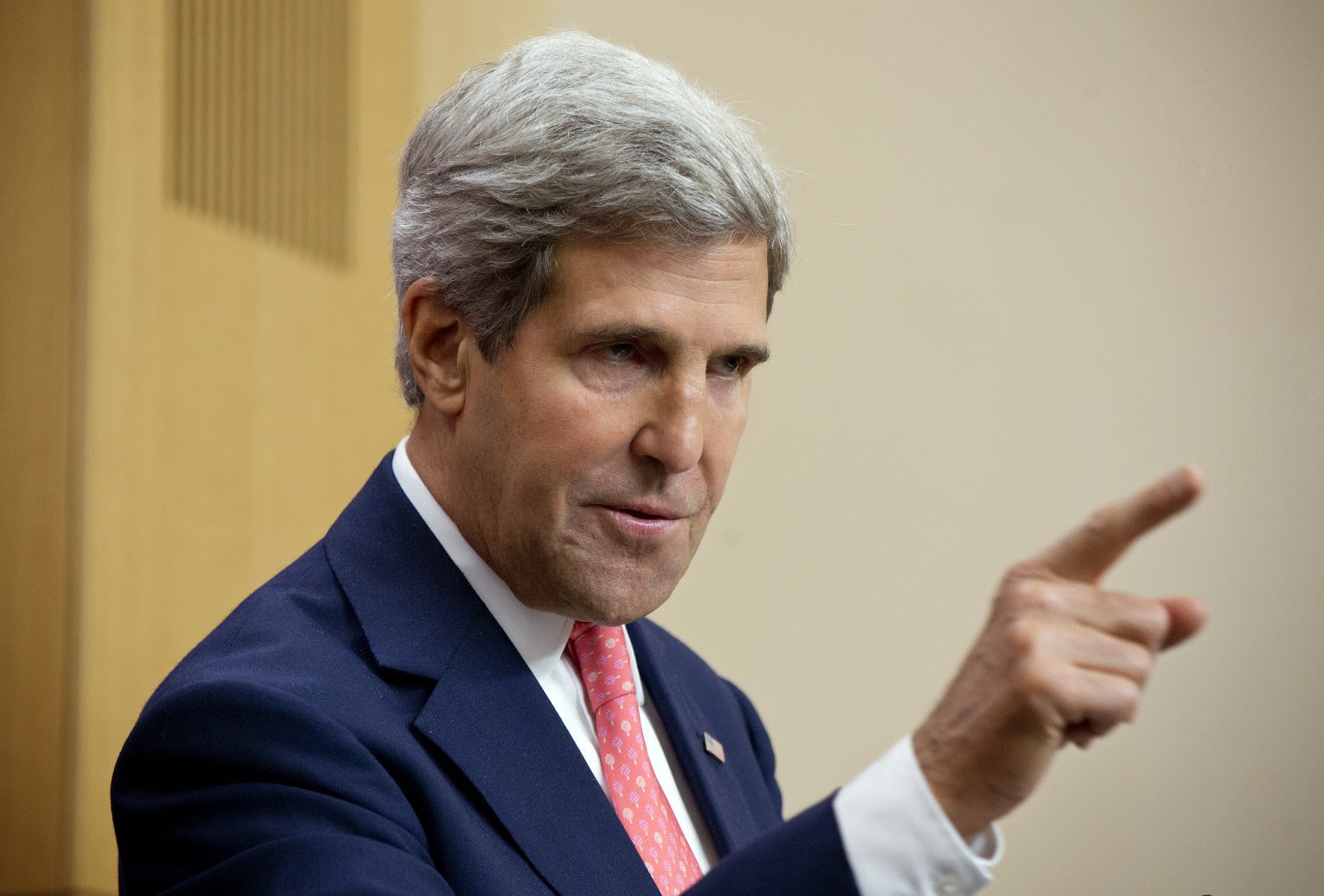
In response to recent comments by U.S. Secretary of State John Kerry regarding a potential military strike on Iran, Brigadier General Seyyed Masoud Jazayeri – Iran’s deputy chief of staff – said in an interview that, in the event of an attack, American interests in the region would be “completely destroyed.”
Speaking to Al Arabiya this week, Kerry defended the interim international deal over Iran’s nuclear program and the alleviating of some sanctions, but declared that if Iran were to back out of its commitments, “the military option of the United States is ready and prepared to do what it would have to do.”
Such rhetoric is par for the course for American officials focused on diplomacy, but still eager to appear bellicose and aggressive to certain influential communities and audiences.
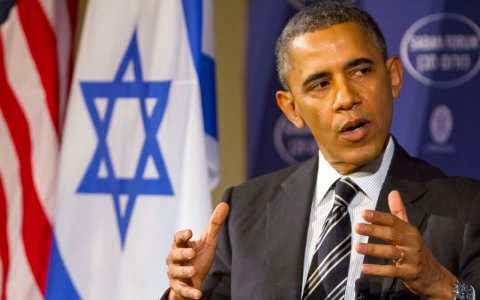 |
| President Barack Obama |
Last month, in a conversation at the Brookings Institution’s Saban Center, a pro-Israel think tank in Washington, DC, President Barack Obama said much of the same. “What I’ve consistently said is even as I don’t take any options off the table,” Obama told Haim Saban, the organization’s Israel-obsessed billionaire benefactor, “what we do have to test is the possibility that we can resolve this issue diplomatically.”
The president repeated this a number of times during the conversation. “The best way for us to prevent Iran from getting a nuclear weapons is for a comprehensive, verifiable, diplomatic resolution, without taking any other options off the table if we fail to achieve that,” he said, adding later that “when the President of the United States says that he doesn’t take any options off the table, that should be taken seriously.”
Following Obama’s own appearance, Secretary Kerry also addressed the Saban conference in December. He assured the attendees that “as we negotiate, we will continue to be perfectly clear that, for Iran, the price of noncompliance, of failing to satisfy international concerns about the nuclear program, will be that we immediately ratchet up new sanctions, along with whatever further steps are needed to prevent Iran from acquiring a nuclear weapon, including – as President Obama just made clear – a military option, if that were necessary.”
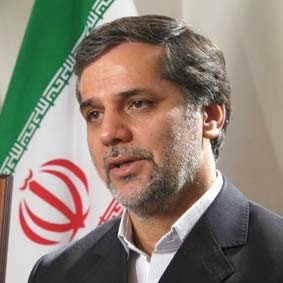 |
| MP Hossein Naqavi Hosseini |
In his own recent comments, General Jazayeri emphasized that the U.S. government is well aware that “the military option against Iran is not practical.”
Hossein Naqavi Hosseini, an Iranian parliamentarian and spokesman for the Majlis’ National Security and Foreign Policy Committee, reacted to Kerry’s new comments by saying, “These statements are indicative of the U.S. double standards and will bring about nothing but tarnishing the US image,” adding, “Definitely, we also announce that if the P5+1 (five permanent members of the UN Security Council plus Germany) commit the least breach of the Geneva agreement, we will also have all the options on our table.”
“Under pressures by the Zionist lobby, the U.S. adopts dual policies; on the one hand, they talk about agreement and positive relations with Iran, but on the other hand, they use an intimidating tone,” Hosseini said.
Related article

How Israel kills at will and in total impunity while the world asks the Palestinians for non-violent resistance
April 20, 2009
Frank Barat writes of the life and death of Bassem Abu Rahme, shot by an IOF soldier with “the rocket”, a new kind of weapon also used on critically injured US citizen Tristan Anderson some weeks ago.
On April the 17th, like any Friday afternoon for the last 4 years, the small village of Bil’in, north of Ramallah, was preparing for the usual demonstration against Israel’s annexation wall … The village of Bil’in has, since the mid eighties, lost more than 60% of its land for the purpose of Israeli growing settlements and the construction of the wall. The inhabitants of the village used to live mainly from agriculture and olive trees plantations but more and more, the people of Bil’in have to rely on the women to survive. Embroidery has become one of the main resource of the place, located a few kilometres away from Tel Aviv (on a nice day, you can see the “inaccessible”–for the Palestinians– beach from the roof tops of Bil’in).
In January 2005, a village committee (led by Mohamed Khatib, Iyad Burnat and Abdullah Abu Rahme) was created and a month later non-violent demonstrations started, first taking part every day, then once a week, on Yum Al Juma’a (Friday, day of prayer).
The village won a huge battle in August 2008 (1) when the Israeli High Court of Justice ruled that the new route of the barrier in Bil’in was in violation of the Court ruling released on September 2007 (2) (which ruled that the Wall path was prejudicial to Bil’in and must be altered) and ordered the State to present within 45 days a new route, which will uphold the principles of the ruling.
On Friday the 17th of April 2009, the wall still had not moved one inch and while the inhabitants of the village were praying at the village mosque, many internationals (coming from all around the world) and the strong Israeli contingent (including people from the Alternative Information Centre (3) and Anarchists Against the Wall (4)) were looking for some shade (to hide from the baking sun) and chatting about the day’s event. As soon as prayer was over with, the demonstration started to move forward in direction of the wall, a few kilometres away.
You can be sure that Bassem (aka Phil) was right at the front of the march. He always was. I had met Bassem a few times while visiting Bil’in. He was a strong looking man, singing the loudest, joking all the time, jumping around and leading the way, accompanied by the rest of the village committee and the Israeli contingent.
As it usually happens, as soon as the march reached the corner where the Israeli soldiers can be seen, the tear gas started. A few brave ones, always continue anyway and reach the beginning of the wall, after a few minutes. Bassem, as usual, was one of those. The Israelis present at the front of the demonstration started talking with the nearby soldiers in Hebrew and Bassem too, screamed “We are in a non violent protest, there are kids and internationals…”. He was shot in the chest and never managed to finished his sentence. He fell on the floor, moved a little bit, fell again, and died. ( http://www.bilin-village.org/english/articles/testimonies/Basem-Abu-Rahme-killed-in-Bilin-weekly-protest , scroll down for stills and videos)
Bassem was shot by a new kind of Tear Gas, called “the rocket”. The soldier who shot was a mere 40 meters away. This is the same type of tear gas that critically injured US citizen Tristan Anderson a few weeks ago. Those tear gas canisters are as fast and lethal as live ammunition. Very hard to get away from. Normally, tear gas canisters fly in the air for a long time, then fall and bounce a few times. Those ones fly like a bullet and go straight, not up and down.
Once more, Israel using the West Bank as its testing ground, the Palestinians as guinea pigs.
The soldier who fired, knew what he was doing and who he was targeting. The shame is that he probably knew Bassem. Bassem was always at the front, and had been for a few years now. The soldiers often come back more than once in Bil’in and start to get to know the ones facing them. Bassem did not get a chance to say hi, or bye.
On April the 17th , Bil’in and Palestine lost one of their heroes.
What is going to happen next?
Israel has already said that it will investigate the incident (out of every single investigation into such crimes, only 6% of the soldiers were ever prosecuted, often let off with a few weeks suspension), but before it did, started the usual propaganda, saying that the protest had been really violent and that the soldiers had to react (the video of the demonstration clearly shows otherwise).
We might even hear in a few days that it was actually the Palestinians who fired the tear gas and killed their beloved friend.
The P.A, instead of issuing the strongest statement against this act, stopping once and for all the negotiations with the Israeli government and joining the demonstrators every Friday to be hand in hand with its people, said next to nothing, and is looking forward to the upcoming White House meeting between Mahmoud Abbas and Obama (this is being planned while I write).
The media hardly reported this. The Palestinians do not count. Even more shocking when a video of the event is available to all and could have been used to great effect.
The international community (for what it means) will not mention this “incident” (it is for them) and continue issuing calls for the Palestinians to renounce violence and resist peacefully while saying nothing about Israel’s killings (since the start of the second intifada, 87% of the dead have been Palestinians), violations of international law and oppression of the Palestinians.
It is therefore down to us, the citizens of this world, to act, join solidarity groups, write articles, make films and talk, constantly, about the plight of the Palestinian people. Palestine has to become the number one issue.
This is a must.
For Bassem, his family, Bil’in and Palestine.
Frank Barat is in the organizing committee of the Russell Tribunal on Palestine and a member of Palestine Solidarity Campaign UK.
1. http://www.bilin-village.org/english/articles/testimonies/The-Supreme-Court-The-new-barrier-in-Bilin-violates-the-Court-ruling
2. http://www.bilin-village.org/english/articles/press-and-independent-media/Palestinians-celebrate-rare-victory-over-hated-barrier
3. http://www.alternativenews.org/
4. http://www.awalls.org/
Related article

Israeli gunfire blocks sowing of Palestinian farmland in Gaza
Resistenza Quotidiana | January 22, 2014
 Gaza, Occupied Palestine – Since the Zionist occupation forces’ bulldozers had destroyed part of Khaled Qudaih’s field in Khuza’a, east of Khan Younis, he and his family went out to sow it again. The military responded with about half an hour of gunfire, threatening to strike Qudaih directly if he had not moved away.
Qudaih had sown wheat a little less than a month ago. It was growing, it was green and in May would be ripe. On 19th January, he went to his lands with his family to spray fertilizer. Samiha, his twelve year old daughter, wanted to get closer to the separation barrier, but she knew that it was forbidden: mamnua in Arabic.
She came as close as she could, until she reached foreign activists with yellow jackets. She approached and, with the voice of a twelve-year-old child, with the slightly clumsy behavior of those approaching foreigners for the first time, explained that the land is forbidden to her.
“I am forbidden to approach the barrier more than this,” she said. “Over there, there are the Israelis and they shoot. That land is prohibited (mamnua). It is my family’s land and is prohibited. Sometimes the Israelis shoot even when we are away from the barrier, but today it is quiet. Will you come back when we will harvest? For the harvesting, the whole family will come. There will also be my grandfather, uncles … a few days ago the bulldozers came and destroyed this plot of land that we had sown. Now it is destroyed.”
 It gives a certain feeling to hear that horrible word mamnua from a young girl referring to her family’s land, “prohibited.”
In any case, on the 19th, fertilizer was sprayed fertilizer and there was no Zionist aggression.
Qudaih, however, was not entirely satisfied.
There was the land he had planted at the edge of the field, beside the barrier, which had been destroyed by occupation bulldozers. Even that was his land. The Zionists had no right to prevent him from cultivating it, to prevent him from reaping its benefits. He would be back the next day to reclaim it. That land could not be mamnua, “forbidden,” because it was his land, because he had also sown there, because the grain was used to make bread for his family, because the stems and bran are used to feed the sheep in his backyard , and they produce milk to drink and wool for warmth. No, not even the extreme limit of his land, 50 meters from the barrier, could be mamnua land.
So Qudaih promised that the next day he would return. He would come back with hoes to clear the ground , and with the donkey and plow for after sowing. If it was not under Zionist threat he would do it all with the tractor. But not here. This area is too close to the separation barrier. The Zionists would not let him use a tractor.
Qudaih’s case is not an isolated one. Indeed, one can almost say that he is lucky, because usually, it is impossible to approach the less than 300 meters from the separation barrier. This is not only to attack the freedom of movement of Palestinians in their own land, but also their right to work, and , even worse, their food self-sufficiency. The Gaza Strip’s population density is among the highest in the world and, with its demographic explosion in progress, the enclave is becoming increasingly dependent on external aid, unable to meet its own needs.
 Qudaih reaches his land with his wife, his wife’s sister, and three of his sons. Wael, no older than ten years, is also among them. Some foreign activists accompany them. A donkey cart carries the seeds, hoes and plow; Qudaih leaves the cart at the edge of the field, farthest from the barrier, and carries everything by hand. The Zionists cannot claim they could not see what was on the cart, and nothing, neither the donkey nor the material it brought could pose a threat to Israel’s security or the safety of the soldiers of the occupation forces.
Qudaih and his sons aggressively work the ground with hoes. After about ten minutes a Jeep arrives. A few seconds after it stops, the Zionists shoot a few rounds of gunfire, without any warning, without any provocation toward them. Qudaih and his sons, including Wael, are not intimidated and continue to work. Their land cannot be mamnua just because a racist and unjust occupation force has decided so. Who is stronger, the occupation forces with all their weapons and armor, or these farmers armed with hoes? The older children continue to pave the way. Khaled holds the plow in the right position while Wael drives the donkey. It takes a long time to plow the land with the donkey, because it cannot pull a heavy plow, only a small plow, which must go back and forth several times.
While the farmers continue to work, several Jeeps pass on the other side of the barrier. They continue to shoot every now and then, just to remind that they are not gone, and that the land is mamnua. But Qudaih and his family do not move away until a soldier exits a Jeep. He remains a few minutes hidden behind a mound of earth, created to hide the occupation forces, and then comes out shouting, in Arabic with a strong Hebrew accent, that they have to leave otherwise he will shoot to hit them.
While it is nice to think that the presence of internationals helped ensure the soldier got the first shot in the air, and that it has discouraged them from directly targeting Qudaih, on the other hand, it is frustrating to realize that if this happens it is only because the world is fundamentally racist, and a witness from the West is more inconvenient than a Palestinian witness.
Meanwhile, the soldier continues to shoot. Not only single shots, but also bursts of gunfire. At first Qudaih continues to plow the land. Then he must desist: He has a family, he can not afford to get hurt, he needs be able to continue working. Then, half an hour after the first rounds of gunfire, all of us return to where the donkey had been left, with the cart, in safer territory. A few grains of wheat remain on a spot that Qudaih has not been able to plow, in a Palestinian land where a violent occupying force said mamnua.
Related articles


The Strange but ‘Stable’ Alliance: US Senate Await Israeli Instructions
By Ramzy Baroud | Palestine Chronicle | January 23, 2014
Israel is often viewed by Washington politicians as the most ‘stable’ ally in the Middle East. But stability from the American perspective can mean many things. Lead amongst them is that the ‘ally’ must be unconditionally loyal to the diktats of the US administration. This rule has proven to be true since the United States claimed a position of ascendency, if not complete hegemony over many regions of the world since World War II. Israel, however, remained an exception.
The rules by which US-Israeli relations are governed are perhaps the most bewildering of all foreign policies of any two countries.
An illustration of this would be to consider these comments by Israeli Defense Minister Moshe Ya’alon quoted in the Israeli news portal Ynetnews. “The American security plan presented to us is not worth the paper it’s written on,” he said, referring to efforts underway since July by American Secretary of State John Kerry, “who turned up here determined and acting out of misplaced obsession and messianic fervor.” Kerry “cannot teach me anything about the conflict with the Palestinians,” said Ya’alon.
So far, Kerry has made ten trips to the Middle East with the intention of hammering out an agreement between Israel and the Palestinian Authority (PA). Based on media reports, it seems that the potential agreement is composed in such a way that it mostly accommodates Israel’s ‘security’ whims and obsessions, including a proposal to keep eastern West Bank regions and the Jordan Valley under Israeli military control. In fact, there is growing interest in the idea of ‘land swaps” which was floated by Israel’s notorious Foreign Minister Avigdor Lieberman ten years ago.
“When Mr. Lieberman first proposed moving Arab-populated Israeli towns near the present border into Palestine in exchange for Jewish settlement blocs in the Palestinians’ West Bank being incorporated into Israel, he was branded a racist firebrand,” wrote the Economist on Jan. 18. “Liberals accused him of promoting the forcible ‘transfer’ plan, akin to ethnic cleansing, proclaimed by a rabbi, Meir Kahane, who vilified Arabs while calling for a pure Jewish state.”
Those days are long gone, as Israeli society drifted rightward. “Even some dovish Israeli left-wingers find such ideas reasonable.” Back then, the Americans themselves were irked, even if just publically, whenever such ideas of ‘population transfers’ and ethnic cleansing were presented by Israel’s ultra-right politicians. Now, the Americans find them malleable and a departure point for discussion. And it’s Kerry himself who is leading the American efforts to accommodate Israel’s endless list of demands – of security and racial exclusiveness even if at the expense of Palestinians. So why is Ya’alon unhappy?
The Defense Minister, who sat immediately next to Prime Minister Benjamin Netanyahu during talks with Kerry, was unapologetic about his reasoning: “Only our continued presence in Judea and Samaria and the River Jordan will endure.” It means unrelenting Israeli military occupation of the West Bank and East Jerusalem.
Netanyahu is hardly an innocent bystander in all of this, although for diplomatic reasons he often entrusts his government minions to deliver such messages. The Prime Minister is busy issuing more orders to populate the occupied West Bank with Jewish settlements, and berating every government that rejects such insidious behavior as being anti-Israel, ‘pro-Palestinian’ or worse, anti-Semitic. This was the case again in recent days following another announcement of settlement expansion.
On Jan. 17, Netanyahu called on Europe to stop its “hypocrisy”. On the same day, Israel’s foreign ministry summoned the ambassadors of Britain, France, Italy and Spain, “accusing their countries of pro-Palestinian bias,” reported the BBC online. According to the ministry, the “perpetual one-sided stance” of these countries is unacceptable.
Yet, considering that Europe has supported Israel’s illegal occupation of Palestinian territories for decades, economically sustained the ‘Jewish state’ and its over 100 illegal Jewish settlements, and continue with its often unconditional military support of Israel, the accusations may appear strange and equally bewildering to that of Ya’alon against John Kerry.
How could a country the size of Israel have so much sway over the world’s greatest powers, where it gets what it wants and more, hurls regular insults against its sustainers, and still asks for more?
European countries found themselves in Israel’s firing line because a day earlier, the four EU countries took the rare step of summoning Israeli ambassadors to object to the Netanyahu government’s latest announcement of illegal settlement expansion (that of an additional 1,400 new homes). EU foreign policy Chief Catherine Ashton even went to the extent of calling the settlements “an obstacle to peace”, although hardly an advanced position considering that Israel’s colonial project in Palestine has been in motion for 46 years.
But even that is too much from the Israeli point of view. “The EU calls our ambassadors in because of the construction of a few houses?” Netanyahu asked as if baffled by a seemingly foreboding act, in a Jan 16 press conference. He even had the audacity to say this: “This imbalance and this bias against Israel doesn’t advance peace,” and also this, “I think it pushes peace further away because it tells the Palestinians: ‘Basically you can do anything you want, say anything you want and you won’t be held accountable.”
There is no sense in arguing with Netanyahu’s strange logic, but the question regarding Israel’s stronghold over the US and EU remains more pressing than ever, especially when one considers the ruckus in US Congress. No, the congress is not revolting because of the unmitigated power of the Zionist lobby, but for something far more interesting.
There seems to be a level of confusion in US Congress because members of the Senate are yet to feel serious pressure by the American Israel Public Affairs Committee (AIPAC) over a bill that proposes more sanctions on Iran.
“The powerful pro-Israel lobby has not engaged in a shoe-leather lobbying campaign to woo wayward senators and push Senate Majority Leader Harry Reid (D-Nev.) to schedule a vote on the bill. While the group supports the bill — authored by Sens. Mark Kirk (R-Ill.) and Robert Menendez (D-N.J.) — it is not yet putting its political muscle behind a push for an immediate vote,” reported Politico, citing key senators and their aides.
To say the least, it is disturbing that the US Senate is completely bewildered that AIPAC, which lobbies for the interest of a foreign power, is yet to provide its guidelines regarding the behavior of America’s supposedly most respected political representatives.
“I don’t know where AIPAC is. I haven’t talked to anybody,” said Senate Armed Services Chairman Carl Levin (D-Mich.). “I don’t know what they’re doing,” said Sen. John McCain (R-Ariz.).
This alone should shed some light on the seemingly bewildering question of the ‘strong bond’ and ‘stable’ alliance of Israel and the US – and to a lesser degree EU countries. This is not to suggest that Israel has complete dominance over US foreign policy in the Middle East, but to ignore Israel’s indispensable role in shaping the outlook of US foreign policy is dishonest and inconsistent with the facts, to put it mildly.
– Ramzy Baroud is an internationally-syndicated columnist, a media consultant and the editor of PalestineChronicle.com. His latest book is “My Father Was a Freedom Fighter: Gaza’s Untold Story” (Pluto Press, London).
So when will international justice save Palestine?
By Stuart Littlewood | Intifada Palestine | January 21, 2014
Eighteen months ago UK foreign secretary William Hague delivered an important speech at the Hague, home of the International Criminal Court . He was saying all the right things, for example:
“The rule of law is critical to the preservation of the rights of individuals and the protection of the interests of all states.”
“You cannot have lasting peace without justice and accountability.”
“International laws and agreements are the only durable framework to address problems without borders.”
“Such agreements – if they are upheld – are a unifying force in a divided world.”
He spoke of a growing reliance on a rules-based international system. “We depend more and more on other countries abiding by international laws…. We need to strengthen the international awareness and observance of laws and rules….”
Some emerging powers, he said, didn’t agree with us about how to act when human rights are violated on a colossal scale, while others didn’t subscribe to the basic values and principles of human rights in the first place. He was talking about Syria although many in the audience must have had Israel in mind.
“The international community came together in an unprecedented way to address the crisis in Libya last year,” said Hague. “The Arab League, the UN Security Council, the UN Human Rights Council, the European Union, NATO and the International Criminal Court all stepped forward and played their part to protect a civilian population.”
Yeah. Funny how they have never come together for crisis-torn Palestine these last 65 years.
‘We pledge to fight impunity for grave international crimes wherever they occur’
Hague, positively overflowing with fine words and sentiments, chuntered on.
“We have to ensure that when we are trying to build peace, we don’t overlook the need for justice…. Our coalition Government is firmly of the view that leaders who are responsible for atrocities should be held to account…. Institutions of international justice are not foreign policy tools to be switched on and off at will.”
He said referring leaders in Libya and Sudan to the ICC showed that not signing up to the Rome Statute was no guarantee for escaping accountability. “If you commit war crimes, crimes against humanity or genocide you will not be able to rest easily in your bed: the reach of international justice is long and patient…. There is no expiry date for these crimes….”
Woweee! Had he told Netanyahu this? Was this tough talking really from the man who watered down Britain’s laws of Universal Jurisdiction to protect Israel’s war criminals from arrest while shopping in London’s Bond Street? Israel and the US, after signing up to the Rome Statute, had second thoughts and ‘unsigned’ in order to escape the long reach of international justice. At last it was beginning to sound like bad news for TelAviv’s and Washington’s thugs.
At the time of the Libya fiasco Hague announced he had signed a directive revoking Gaddafi’s diplomatic immunity and also that of his sons, his family and entire household. He bragged how the UK “drove” through a Security Council resolution referring what was happening in Libya to the ICC Prosecutor, saying it “sends a clear message to all involved, in the regime and any other groups that if they commit crimes and atrocities there will be a day of reckoning for them.”
Bravo! What a splendidly high-principled chap Hague suddenly seemed to be. And how swiftly he managed to get the International Criminal Court’s attention when he wanted to. But we didn’t hear Hague and his friends call for a reckoning with the psychopaths of the Israeli regime when they committed mega-atrocities against Gaza’s civilians just two years earlier. Instead they tinkered with our laws of universal jurisdiction to enable suspected war criminals to walk free. Gaddafi wasn’t welcome in London but the Foreign Office happily rolled out the red carpet for Livni, Lieberman, Barak and Netanyahu, while Hague conducted the brass band.
Our foreign secretary rounded off his speech by saying:
“There is no doubt where Britain stands: we are with those who say that international law is universal and that all nations are accountable to it…. We are a country that believes in and upholds the Responsibility to Protect, and that is prepared to act to save lives – including through military action as a last resort. We actively support a rules-based international system…. We pledge to recommit to the importance of fighting impunity for grave international crimes wherever they occur…. We will be a robust supporter of the International Criminal Court in its investigations.”
Trampled Palestinians dispossessed by a brutal military occupier and sitting among the smoking ruins of their homes, or eking out a squalid existence in their refugee camp, must have been impressed.

Related article

Drawing the Kafr Qasem Massacre: An Introduction to the Ongoing Project

[Samia Halaby, “The Kafr Qasem Massacre of 1956, the Third Wave of Killing, the Child Fathi” (2012).]
By Samia Halaby | Jadaliyya* | January 19, 2014
When I first accepted the challenge of drawing the Kafr Qasem massacre, I wanted to represent its events as though I were a camera on site. Documentary drawings, I thought, could recreate what photography might have given us if done on a historical basis. I would learn all I could and present the specific individuals and the documented events. I worked on the project in three major periods, each occupying most of a year or several years. I began work in 1999 and continued into 2000. In 2006, on the occasion of the fiftieth memorial of the massacre, I created both a web page and an exhibition of the drawings. In 2012, I returned to the project with the intention of finalizing it by making large-scale drawings and developing a book.
The story of the Kafr Qasem massacre is compelling. At first hidden from the world, it was members of the Communist Party who broke the military and information blockade in order to call attention to the horrific massacre; a detailed press release was finally published by party member Tawfiq Toubi twenty-six days after the massacre on 23 November, 1956 in Arabic, English, and Hebrew. His comrade, the distinguished Palestinian writer, Emile Habibi covered the massacre in issues of the CP organ, Al Ittihad, and in 1976 published a booklet on the subject. In one chapter, Habibi recounted the events and provided a structure whereby the chronology of events were numbered and termed “waves” of killing.
Israel’s military campaign against Egypt and the Suez started at 3pm on 29 October, 1956. One and a half hours later, at 4:30pm, the mukhtar (mayor) of Kafr Qasem was informed of an imminent curfew to begin at 5pm. Twenty-five minutes after this sudden warning, at 4:55, soldiers of the Israeli Border Police began killing anyone they found outside their home—be they man or woman, child or elder. Many were workers unaware of the curfew, as they were just then returning home. At the end of the night, forty-nine civilians lay dead on the roadways. Although each event of the massacre was nightmarish, the last one seemed to shock the villagers most of all, as fourteen women who had been olive picking were forced off a truck and shot at continuously from close range until they all fell dead over each other. The sole survivor of this wave of killing was a fifteen-year-old girl, who, when heavily wounded, lost consciousness, and lay under the corpses of the other women for most of the night. To add terror to brutal injury, the Israelis buried their bodies while their relatives were imprisoned in their homes on pain of death through the use of a twenty-four hour curfew.
A massacre is like a hammer blow that shatters a hard mass to smithereens. At first the pieces, the individuals who suffer this blow, do not all see who wields the hammer nor are they able to attack it. Anger and blame are bottled up. Painful energy flies in all directions. The town receiving the blow is shattered, broken to pieces, and as the pieces settle, loss, recrimination, shock, disbelief, and desperation emerge. Added to all this, as in the case of the Kafr Qasem massacre, is the poverty and depression resulting from a brutal military occupation.
What does a father tell his wife when he returns home alive but their eight-year old child whom she sent to warn him dies in the massacre? Why is a small girl unable to tell her mother that her father lies dead or wounded in the street except to say that dinner need not be prepared for him? Why do men and women, unable to believe their own experience, return to the scenes of the massacre to confirm its reality with those who shared it only to find death instead of fellowship? Why was the only survivor of one of the events of the massacre insensitively asked why she was the only one to survive? Why does a wounded man who had escaped, return on seeing the Israeli soldiers killing fourteen women only to be shot dead himself? Why did some whisper that the pregnant woman in her final month dropped the baby in the agony of her death?
When I first met Aishy Amer of Kafr Qasem, the beautiful scent of revolution permeated her words and manners. We had met through the internet and from her first visit to my loft she began to persuade me that, as an artist, I must do drawings of the massacre. Aishy and I eventually visited Kafr Qasem together, where she introduced me to her large family and friends and opened the way for me into a tightly knit village society made up of only five extended families. Following this first visit, she would assign her friends to help me. After interviewing some individuals several times over a period of thirteen years, they came to trust me as a friend. In fact in 2012, during my last visit to attend the annual memorial march, I found myself receiving extended interviews while members of the press were disregarded.
Along with my interviews, I conducted extensive research for historical materials and found a gold mine in the locally published magazine, Al-Shorok, each October issue of which is dedicated to the massacre. In it are countless long interviews conducted by Majd Sarsour, editor and principal of one of the town’s high schools. In general, the outside press did not match this valuable source of detailed information. It was rare to find newspaper articles that contained more than small bits of quoted information. Yet Al-Shorok allowed each individual to fully tell his or her story. Al-Shorok also insisted on detailing not only the names of victims and their ages, but also those of their children, the gender of the children, and their ages at the time of the parents’ death. In one particular article, the magazine detailed the ages of over four thousand offspring of the victims who had already given birth. An intense need to replenish the village overtook the survivors.
I came to truly respect the village, now grown into a town, regardless of its various types and admire the combination of earthy nobility, innocence, and wisdom they possessed. I learnt of the depth of pain they experienced, causing many to be unwilling to tell their stories. I learnt to value their trust and grew to understand that documentation should respectfully memorialize, avoiding sensation and spectacle.
I began drawing immediately after the first visit and continued to do so in separate periods of intense focus. As I worked and my knowledge grew, many of my initial aesthetic decisions matured. I determined that I would avoid simply showing piles of dead bodies. I would show people in their dignity at the last moments of their life. There would be no blood. I determined that the individual victims should face out towards the viewer, be in control of the aesthetic situation if not the original situation, which brought their violent end.
I began drawing in an illusionist way in the traditions of Renaissance art, but as the project progressed, I often questioned whether I perhaps should use an expressionist method. I admired Diego Rivera and thought that working in that manner, which many of the Palestinian artists of the Intifada were influenced by, might be a more modern path. However, after a lot of thought, I decided that the expressionism and semi-cubist style of Rivera did not suite the ambition of presenting people as specific individuals in documented events.
There is a paucity of visual information on the massacre, leaving written material as the basic source. Transforming verbal description and researched information into visual images presented serious problems. Words can focus on one subject and describe it accurately but not wholly. Pictures describe a scene wholly (from one point of view) but cannot show what happened just before or after. Pictures lack the specificity of time while words lack the specificity of space.
Truthful witness statements can hold up in a court of law but they lack the type of information pictures need regarding the appearance of a whole scene, information about color, light, background, relative positions of parts, and a host of other scenic details. This forced me into a certain amount of invention, which seriously conditioned my ambition to be a camera.
One of my initial inquiries was how to represent the killers, the soldiers of the Israeli Border Police who had executed the massacre. Based on things that I have seen in Palestine combined with my loathing, I made several horrifying renditions. In the end, I decided that the story was not about them and eliminated them from the drawings. However, in the final set done in 2012, I included fragments of them in outlined silhouette although I rendered their weapons carefully. By then I had researched the weapons and noted that they were semi-automatic weapons and that some of them were British made, reminding me of the part British colonialism had in arming and organizing the Zionist terrorists.
I asked for a great deal of criticism from residents of Kafr Qasem and from friends, and their opinions helped me greatly. I was not on a research mission to discover new formal languages but rather on a mission to tell a piece of Palestinian history in comprehensible visual form. I received a rating of seventy over one hundred on my drawing of the sixth wave of killing. I was flattered to have such a high grade for the man grading me, Omar Ahmad Hamdan Amer, known as Abu Naser, was the town’s historian, a man who lived his entire life immersed in the history of the massacre.
Did I meet my own challenge? An inner voice says: do it all over again and do it better. But another voice says: another way to fail is to disregard time. For now, I will be happy when my planned publication of drawings on the subject of the massacre is complete. The book will be called “Drawing the Kafr Qasem Massacre.” It will include a detailed history, a timeline, numerous witness statements, the drawings with my commentary, a roster of victims, and essays by scholars.
Below is a selection of drawings from the series with the artist’s captions:

[The Kafr Qasem Massacre of 1956, Killing Inside the Village, the Easa Family (1999).]
During less than two hours on 29 October, 1956, Israeli Border Police killed forty-nine people in the Palestinian village of Kafr Qasem. They were mostly workers and children returning home in the evening. Most were killed on the western entrance, while inside the village it began when eight-year-old Talal Easa went out to retrieve a goat after the suddenly announced curfew. Talal’s father, Shaker, heard the shots and dashed out to his son. He was also shot. Talal’s mother, Rasmiyya, and, right after, Talal’s teenage sister, Noor, ran to their bleeding family and suffered the same fate. They remained where they fell, bleeding until morning when they were hauled off by truck to a hospital. Talal died. The grandfather, Abdallah Isaa, then ninety years old, was left alone and saw the massacre of his family. The following morning, Abdallah was found dead.

[The Kafr Qasem Massacre of 1956, Killing in the Northern Fields (2012).]
In the northern fields of the village, three shepherd boys were out watering the family’s flock of sheep not knowing that Israel had launched a surprise attack on Egypt just hours before, nor did they know of the curfew imposed on their village. The oldest boy, Abdallah Easa was sixteen and the youngest, Abed Easa, was nine years old. Ibraheem Easa, their uncle who was thirty-five years of age, had learnt of the curfew and left the safety of his home to bring them back. They returned immediately with Ibraheem leading. Abed and Abdallah were just behind him while the third boy, Sami Mustafa, was watching the rear of the herd. The boys were met by Israeli soldiers of the Border Police, who immediately shot and killed Ibraheem, Abed, and Abdallah. Sami saw them being shot and fell to the ground, played dead and survived.

[The Kafr Qasem Massacre, the First Wave of Killing (2012).]
Five minutes before the curfew, and unaware of it, four quarry workers were returning home to Kafr Qasem on bicycles. When confronted by Israeli soldiers, with whose harassment they were familiar, they reached for their identity cards. Instead, an order to “harvest them” was given. Two, Ahmad Freij, age thirty-five, and Ali Tah, age thirty, died. Both were fathers of young children. Two others, Mahmoud Freij and Abdallah Badair, managed to escape. Mahmoud was wounded in the thigh and managed to crawl to an olive tree and hide until morning.

[The Kafr Qasem Massacre of 1956, the Third Wave of Killing, Child Fathi (2012).]
The twelve-year-old shepherd boy, Fathi Easa, was leading his family’s herd of black goats home after pasture. His father was driving the herd from the rear having heard of the curfew and had come to hurry his son home. There were three weapons in the hands of the Israeli Border Police all aimed at the boy, an Uzi, a Bren, and a rifle. All were fired, and the boy collapsed and died.

[The Kafr Qasem Massacre of 1956, the Sixth Wave of Killing (2012).]
Evening was darkening as the Israeli Border Police ordered thirteen or more workers to lineup on one side of the road. They had arrived on bicycles and a mule wagon. One of the workers, seventeen-year old Saleh Easa, had arrived with his two cousins. They had heard about the curfew and only feared a beating. When the execution style shooting began six fell dead. Saleh, wounded, playing dead, was dragged to the pile of bodies. He remained quiet, gritting his teeth in spite of extreme pain. He witnessed the rest of the massacre and later crawled to safety.

[The Kafr Qasem Massacre of 1956, the Ninth Wave of Killing, Implosion (2012).]
Night had fallen when the truck arrived at the location of the massacre. Among the victims of the ninth wave were two men in the cab of the truck and fourteen women with two boys in the back. The driver, seeing the scattered dead, tried to escape at high speed. This interrupted the singing women, who unwittingly began to scream, thus alerting the recumbent soldiers resting at the school’s well. The soldiers ran after the truck, shot its tires and gas tank, and stopped it. Safa Sarsour, having just seen her sixteen-year-old son, Jum’a, dead on the side of the road, now witnessed her second son, fourteen-year-old Abdallah, being killed with the men. The women, some pregnant, elders and girls, pleaded for their lives. The only survivor was Hana’ Amer, fifteen years of age, who said that the women clung to each other for protection, even the two girls who had managed to escape returned to the circle. As they were being shot, they turned in a big group and one by one they fell. The soldiers continued shooting into their heads to insure their death. How does it measure western civilization when soldiers of the Israeli border police line up defenseless women—some pregnant, tired, returning home from work—and kill them with cold deliberation?
*All images copyright the artist.
Related articles


Featured Video

Weaponized Journalism: 2021 Sayer Ji Interview with NPR
or go to
Aletho News Archives – Video-Images
From the Archives
How Rothschild Banking Clan Uses Its Vast Wealth to Influence World Events and Control Governments

By Ilya Tsukanov – Sputnik – 15.09.2024
How powerful is the Rothschild banking family? How did they amass their fortune? Just how rich are they? Do they secretly control the world? Sputnik explores. … continue
Blog Roll
 Aletho News
- Dockworkers launch global strike against Israeli and US military shipments
- Europe facing gas price shock – Gazprom chief
- Ukraine continues recruiting people with disabilities
- Weaponized Journalism: 2021 Sayer Ji Interview with NPR
- Beyond Netanyahu: what Israel’s election means for Palestinians
- Lithuania plans universal conscription
- Lies, Damn Lies, and Ukraine News
- Financial Times rejects Nordic demands to correct Putin call story – media
- The Case for Less Unity in Europe
- Ukraine expands minority rights under EU pressure – but Russians remain excluded
- If Americans Knew
- An error has occurred; the feed is probably down. Try again later.
- No Tricks Zone
- Germany’s Green Energy Transition Becoming Increasingly Expensive…Another 6 Trillion Euros!
- Sudden Stratospheric Warming, Powerful El Niño Combination May Lead To Extreme Europe Cold, Energy Crisis!
- Two New Studies Find Thwaites Glacier Melt Cannot Be Driven By Human Activity Or A Warming Ocean
- E-Cars Reduce CO2 Emissions By Only 41% Compared To Internal Combustion Engine Vehicles
- Predictions Made By Renowned Climate Professor Over Past Decades Have Been Proven To Be Poor
- New Study Suggests Large Regions Of The Pacific Ocean Have Been Cooling For The Last 80 Years
- Germany’s Green Energy Debacle: High Energy Costs Force Kahla Porzellan to Close After 182 Years!
- New Study: 50 Years Of The Most Aggressive ‘Net Zero’ Policies Can Only Affect The Global Climate By 0.03°C
- US September “Heat” Was No Record…Many Records Set Decades Ago
- Latest European Green Energy Debacle; Portugal’s Largest Flagship Solar Park Insolvent!

