West Bank: Aid agencies tread gingerly in Area C
IRIN | January 11, 2013
As night descends in the Jordan Valley in the occupied Palestinian territory (oPt), a family in the village of Ras Al-Ahmar lights a small paraffin lamp in the tent they call home.
There is no electricity here and the nearby Palestinian villages are enveloped in darkness. The only visible cluster of light is from a nearby Israeli settlement.
Humanitarian agencies are well aware of the needs in this part of the West Bank but they face a challenge: play by the rules established by Israel or face the risk of having projects demolished.
Despite being outside the state of Israel, 90 percent of the Jordan Valley is under full Israeli civil and military control as part of Area C, a zone that covers 60 percent of the West Bank.
Palestinian communities here, among the poorest and most vulnerable in oPt, desperately need access to water, electricity, sanitation and other basic infrastructure.
But despite the needs, development organizations that try to improve living conditions in Area C say they find their ability to make any lasting impact hampered by Israeli restrictions and bureaucracy.
Like Palestinians, organizations that want to build basic service infrastructure such as houses, schools or water systems are required to submit an application for a permit to the Israeli authorities.
Often, these permits are not granted. According to the UN Office for the Coordination of Humanitarian Affairs (OCHA), between January 2000 and September 2007, over 94 percent of applications submitted by Palestinians to the Israeli authorities for building permits in Area C were denied.
“The permit regime is very confusing. There is no clarity about the status of an application, whether paperwork has been received, if it is complete,” Willow Heske, media lead for Oxfam in oPt, told IRIN. “Agencies have sometimes waited for two years only to get a rejection that comes without any explanation.”
“A few years ago we put in plans to build a water reservoir in Al-Jiftlik, to provide half of Al-Jiftlik with running water,” said Heske.
“The reservoir was considered a `building’ and we didn’t get the permit. So we moved to a plan B which still involved setting up a reservoir and piping system but above rather than below ground. This too was not accepted. So as a last resort we had to go back to distributing water tanks. And of course people were frustrated and disappointed.”
Challenging the Occupation
Some NGOs, among them Palestinian organizations like Ma’an Development Centre (MDC), believe that adhering to the permit regime helps legitimize the occupation, and choose to ignore the rules altogether.
“If you’re playing within the rules of the occupation then you are legitimizing it. We don’t seek permits from the Israelis. If we put in a permit request we would likely get denied,” MDC project manager Chris Keeler told IRIN. “And also because of a moral stance. We don’t think that a Palestinian NGO should be seeking permission from Israel to be building on Palestinian lands.”
For international organizations, it’s not only the possibility of having a permit denied that affects their work, but also the multiple ways in which the Israeli state bureaucracy hinders their work by issuing “stop work” orders to existing projects, refusing to issue work visas, or refusing to renew existing work permits for foreign staff.
Even MDC finds that it must sometimes work within existing framework restrictions.
“There are houses all over the Jordan Valley that need renovations,” said Keeler. “If we do a project in some of the communities in the north, it would likely get destroyed. So we work a lot in Al-Jiftlik and Al-Fasayil. We need permits in those places too, but because they are more established communities, there is less risk that they will get destroyed. A lot of donors want reassurance that structures we build will not be torn down.”
IRIN was unable to get a response from the Israeli government despite repeated attempts, but in the past the Israeli government spokesperson has said Israeli policy is shaped by security concerns.
EU Move
In May 2012, the European Union (EU) Council of Foreign Affairs called on Israel to meet its obligations to communities in Area C, “including by accelerated approval of Palestinian master plans, halting forced transfer of population and demolition of Palestinian housing and infrastructure… and addressing humanitarian needs.”
The Council stated that the “social and economic developments in Area C are of critical importance for the viability of a future Palestinian state.”
The Israeli Ministry of Foreign Affairs criticized the recommendations, saying they were “based on a partial, biased and one-sided depiction of realities on the ground” and that they “do not contribute to advancing the peace process”.
The Ministry said 119 projects were authorized in Area C in 2011 and that they ensured that “planned projects” were “coordinated and in conformity… with the law”.
Oxfam’s Heske believes the recent EU recommendations are bold and courageous, even though it is still not clear how they will play out on the ground. “These conclusions mean that there is now a full political commitment to work on development in Area C,” she said. “How it will play out, we don’t know, if it happens with or without permits. But we don’t want to see just one token water network here and there.”
Since 2011, the Palestinian Authority’s ministry for local government and local Palestinian councils have submitted 32 master plans for development in Area C to the Israeli Civil Administration (ICA). Each master plan includes infrastructure development, health care, primary education, water provision, electricity and the development of agricultural land, and requires approval by the ICA through a lengthy process of negotiation.
However, according to Azzam Hjouj, acting general director for urban and regional planning in the Palestinian ministry of local government, even if master plans are approved by the ICA, it is expected that the Israeli authorities may issue demolition and “stop work” orders for some plans, particularly in areas like Al-Jiftlik in the Jordan Valley, and that political pressure will be required to ensure implementation.
Bedouin Villages
As for the more isolated Bedouin villages in the valley, the new master plans will not cover their areas.
“It’s difficult to make a master plan for these herding communities, because they are dispersed over large areas. They move around a lot and we don’t want to urbanize these areas, it’s their way of life,” Hjouj said. “And even if we made master plans, it would just give the ICA an excuse to congregate the herding communities into one area and take the remaining land.”
The Israeli Coordination of Government Activity in the Territories (COGAT – a unit in the Israeli Ministry of Defense that engages in coordinating civilian issues between the government of Israel, the Israel Defense Forces, international organizations, diplomats, and the Palestinian Authority) said that many of the construction projects in Area C are “illegal and poorly planned”.
A report compiled by COGAT relating to projects in Area C states that “illegal construction projects that ignore master plans undermine the possibility for future expansions and create problems for electrical, sewage and water systems.”
More Advocacy?
As with the wider crisis, there are no easy solutions for humanitarian agencies seeking to provide aid in Area C, and finding the line between purely humanitarian work, and political engagement is tough.
For economist Shir Hever, author of The Political Economy of Israel’s Occupation, Western governments and NGOs need to be more active in opposing the occupation of West Bank areas.
“Instead, donors put 99 percent of their work in doing what is allowed and 1 percent in protesting conditions,” he said.
Related articles
- Israeli occupation authorities halt entry of West Bankers to 1948 occupied Palestine (alethonews.wordpress.com)
- More evictions for Israeli army training in the Jordan Valley (alethonews.wordpress.com)
- Israeli forces evict West Bank Palestinian outpost despite court ruling (rt.com)
Israeli occupation authorities halt entry of West Bankers to 1948 occupied Palestine
Palestine Information Center – 13/01/2013
AL-KHALIL — The Israeli occupation authorities have stopped issuing permits for Palestinian West Bankers to enter occupied Jerusalem or 1948 occupied Palestine, sources in the Palestinian liaison office said Saturday.
They noted that no permits were issued for more than a month except for patients, adding that the ban started after the UN accepted Palestine as a non-member observer state.
An official at the chamber of commerce and industry in Al-Khalil affirmed the news saying that 1800 permits were tabled with the Israeli civil administration but no response was made to any of them.
He said that the arbitrary measure obstructed economic and commercial life for the Palestinians, adding that officials at the Israeli administration told them that the reason was the admission of Palestine at the UN.
Related article
- IOF arrests 320 Palestinian workers within ten days (occupiedpalestine.wordpress.com)
Israeli soldiers violently break into five homes in the Al Ayn Camp
International Solidarity Movement | January 9th, 2013
 Al Ayn Refugee Camp, Occupied Palestine – Hundreds of Israeli soldiers in 27 military jeeps violently broke in and ransacked five homes in the Al Ayn refugee camp, Nablus. They caused widespread destruction in the houses involved in the raid. No arrests were made.
Weam Reda Khaled, a woman whose house was ransacked, recounted how forty soldiers with dogs broke open the door of her home at three this morning. They came into the living-room and bedroom, shouting and intimidating her and her children. The family was forced to stay in the doorway while soldiers searched the house and broke everything that came to their hands. One of her sons was blindfolded, handcuffed and interrogated for two hours under the staircase. In the meantime, the army smashed furniture and electronic appliances in the kitchen, living-room and bedroom. They threw the television and some furniture on the roof, under the rain. Weam described how her four year old son was terrorised by the scene of the military violently breaking in and searching their house. Initially, soldiers even refused to let him go to the bathroom. This is the second time in the last eight months that Weam received such a visit. In May, soldiers broke into her home and arrested her husband, who is still being held in administrative detention without any charge brought against him.
Four other families in the Al Ayn camp suffered the same fate of Weam. In one case, a family of eight was forced to stay outside in shivering cold and heavy rain for four hours. Here, soldiers raided the store of the family and ruined the food kept there by throwing bread and flour on the ground and spilling oil all over the floor. Most of the furniture and appliances of the home were damaged or completely broken. In another case a man and his son were tied and locked in one room while soldiers ransacked the house, damaged the sofa, broke the TV and washing machine. A 70-year old man with a heart condition had to be hospitalised because of the shock suffered from the army’s invasion of his house.
The Al Ayn Camp, home to 5,000 refugees from the 1948 Zionist massacres, is known for its fierce resistance to Israeli occupation and for its resilience during the second intifada. During this raid the Israeli army told the families that they were searching for weapons. However, none were found in Al Ayn Camp during yesterday night’s ransacking.
Related articles
- 500 Israeli soldiers ransack homes in Burqa (palsolidarity.org)
- Israeli soldiers vandalise Hebron home and arrest a student (alethonews.wordpress.com)
- Soldiers Kidnap Four Palestinians (imemc.org)
- Ransacking and arrests in Sarra and Tell (palsolidarity.org)
Mleeta, Khiam, Sabra, Shatila and Resistance In General
By Gilad Atzmon | January 8, 2013
Lebanon is incredible – an intoxicating blend of natural beauty, rebellious spirit, pious clarity, tolerance, wild night life and unbelievable hummus. I landed in Beirut four days ago. The purpose of my visit wasn’t all that clear. I knew that a talk and a musical performance were scheduled by Almayadeen TV, but I never expected such a spiritually transforming experience.
It was my second visit to the country. 30 years ago I crossed the Lebanese border along with an IDF convoy escorted by tanks and armed vehicles. Then I was an occupier, this time I came with only my saxophone and a desire to share my thoughts and deliver some beauty.
But it didn’t take me a couple of hours to realise that Lebanon is much more than just humus, shisha, the sea and some captivating rural scenery. Early on Friday we left Beirut for the south. Our first stop was Mleeta – a Hezbollah front line outpost and a symbol of Lebanese defiance. Mleeta is located on top of a mountain, surrounded by the South Lebanese Massif which, until 2000, was controlled by the Israelis. From Mleeta, the Lebanese Mujahedeen launched daily attacks against the Israeli invader and gave the Israelis a true taste of their own medicine. Now Mleeta is a Jihadi tourist resort, there to tell the story of the heroic Hezbollah, those brave paramilitaries that confounded the ‘best army in the world’. The truth is, though armed only with light weapons, they were well supplied with Shia, spiritual ammunition.

Mleeta provides an overview of three decades of Islamic resistance in Lebanon and, in exhibiting all that the fleeing IDF soldiers have left behind, it proudly demonstrates the reality of Israeli cowardice. Mleeta is a symbol of confidence – confidence that the IDF is gone, never to return. Because when, in the summer of 2006 Hezbollah routed the IDF, it also demolished their confidence forever. The Jewish state was taught a lesson it would never forget – their phantasmic expansionist dream had come to an end.
But Mleeta was just a beginning. South Lebanon is dripping with defiance – every village, house and person is an emblem of Shia’s heroic resistance with the villages bedecked with Hezbollah posters featuring Leader Hasan Nasrallah and the many martyrs who taught the IDF those very necessary lessons.
Like Mleeta, Khiam the notorious Detention Centre is also a monument to Israeli brutality. Khiam is where Israel detained and tortured its political opponents, in some cases, for as long as 14 years. My visit there reminded me of a devastating memory, which on occasion, I share with my audience. It concerns Ansar, an Israeli concentration camp located in South Lebanon. It was back in 1984, on a piece of flat land in the middle of the camp, I noticed a dozen concrete boxes with small metal doors, they looked like dog kennels being only about 80 cm high, 100 cm long and probably about 80cm wide. When I pointed out to the commanding officer that these concrete construction weren’t suitable for dogs, he told me not to worry: no one would even think of putting dogs in them. “Put a Palestinian in one of those for 24 hours,” he laughed, “And he’ll come out singing the Hatikvah.” They were solitary confinement units for Palestinian prisoners. That was it. Then and there, I realised that Israel was not my country.
In Khiam this week I saw the exact same Israeli torture facility where the Israelis would shove their political opponents into tiny metal boxes, lock them in for days and then occasionally hit the top with a heavy stone. This time I took a picture.

But someone in Israel must have felt some shame at what Israel was leaving behind in Lebanon. In 2006 the IDF attempted to erase all trace of the detention centre at Khiam. In a desperate attempt to hide Israeli brutality, Israel sent in its engineering squads to blow up the cells and all remaining evidence of torture. But that clumsy effort to conceal the true reality of Israeli inhumanity achieved only the complete opposite. It now only affirms that Israel has, indeed, a lot to conceal.
The journey to occupied Palestine’s Border is over the most beautiful, wild and rural terrain. But then, suddenly, we were there, faced with the Jewish ghetto walls, guarded by cameras, army posts and barbed wire. Israel clearly doesn’t even try to convince its neighbours that it belongs in the region. It looks different, it smells different, it sounds different – it is in fact, just one extended Jewish European shtetl that has matured into a neurotic, psychotic and murderous collective fuelled by PRE traumatic stress. In that regard, the Israelis indeed have great deal to keep under wraps.
Inspired by Lyotard’s “Heidegger and the Jews” and my visit to the south, I decided, in my talk in Beirut, to speak about ‘History as a form of concealment.’ Instead of telling us ‘what really happened’, I argued that history is there to hide our shame, to repress that which we cannot even utter. It is, in effect, there to make us forget. Jewish history, for instance, is there to suppress Jewish shame, to disguise that which Jews prefer to hide from themselves. Jewish history is an attempt to talk about the past while avoiding the horrendous and embarrassing fact that Jews, throughout their history, have been bringing on themselves one Shoa after the other.
But concealment wasn’t invented by the Jews. The Brits also find it hard to cope with their past chain of murderous imperial genocides. This may explain why they entrusted the writing of Churchill’s biography to Jewish Zionist Sir Martin Gilbert, and why their historians have dedicated a whole floor of the Imperial War Museum to the Nazi Holocaust. As if Brits do not have enough shoas and suffering inflicted on others to remember. One of those British-inflicted shoas is obviously the Palestinian Nakba. Britain should own up to this disaster and perhaps find a little room for it also in its Imperial Museums. And like Britain, the Israelis have yet to acknowledge their own role in the original sin of 1948.
Looking at the state of the refugee camps in Lebanon, it became very clear to me that the Lebanese also might engage in some soul searching. For 65 years Palestinian refugees have lived in Lebanon and in other Arab countries in unbearable conditions and have suffered terrible discrimination. Palestinian refuge camps in Lebanon are nothing short of hell on earth. Palestinians cannot be naturalized. They are banned from certain professions and jobs such as medicine and law. In some ways, their situation is worse even than their brothers’ in Gaza or The West Bank, because for them there is not even any prospect of hope or change.
Those endless solidarity discussions about ‘One State’, ‘Two States’ or ‘BDS’ have zero significance or impact on their lives or their livelihoods. These displaced and dispossessed people need immediate change in their political status, but, being excluded from the political process, they lack the wherewithal to bring such change about. Not able to travel, their voice is hardly heard within the Western solidarity discourse and the International Palestinian solidarity movement is hardly engaged, or even concerned with their tragedy. Even that most absolute of rights, the right to return to their land has been compromised by the BDS in Ramallah and other prominent Palestinian leaders.
On my last day in Beirut I visited Sabra and Shatilla. I saw the mass graveyards, I saw the poverty, I saw the piles of rubbish in the streets, the outcome of the complete absence of even the most elementary municipal services. I have been traveling around the world for many years but this is, without doubt, one of the saddest sights I have seen. But, in those camps, I also saw some of the kindest people on this planet. People who against all odds, in spite of being crushed, humiliated and tortured for more than six decades, still look forward, still live their lives. They raise their kids and care about their education. They greet you in the warmest possible manner and, no sooner have you approached their shop, they have invited you for coffee. Surely, their suffering must be our primary concern.
Related articles
- Shifting responsibility: the propaganda of The Jewish Chronicle (alethonews.wordpress.com)
- Gazans fall victim to Israel’s experimental wars (windowintopalestine.blogspot.com)
Israeli soldiers vandalise Hebron home and arrest a student
International Solidarity Movement | January 6, 2013
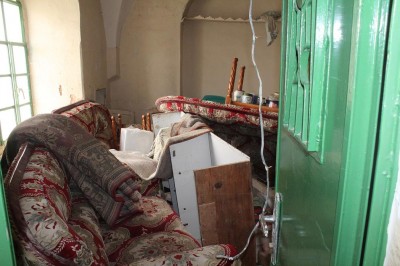
West Bank – Israeli occupation forces in Hebron raided a home, arrested a Palestinian and smashed his family’s belongings in the early hours of the morning.
Thirteen soldiers who came with two dogs broke down the door, arrested Ahmed Sharabati, 22, and vandalised the property without giving an explanation. As of this moment, Sharabati’s whereabouts are currently unknown.
The soldiers were present in the home for an hour and a half, during which time the terrified family was harassed, furniture was turned upside down and a window was smashed. The family spent six hours cleaning up after the raid.
 The soldiers took Sharabati, a student at Hebron university, without telling the family why or where he was being taken.
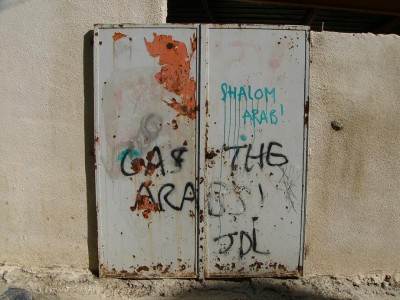
The family’s home is located in H2, the Israeli controlled part of Hebron. The close proximity of soldiers and illegal settlers means that Palestinians are always under threat from violence and harassment. Palestinians returning home from the city centre are subjected to humiliating checkpoints and the area is infamous for its “Gas the Arabs” graffiti.
The Israeli occupation forces soldiers in H2 are soon due to be replaced by other soldiers and the locals believe they are intentionally being more aggressive to leave a lasting impression.
Related articles
- Local activist detained in Hebron (alethonews.wordpress.com)
- Security video of killing of Hebron circus student shows claim of ‘toy gun’ fraudulent (alethonews.wordpress.com)
- Israeli forces kill teenager on his 17th birthday in Hebron (alethonews.wordpress.com)
- Second group of journalists beaten in Hebron (alethonews.wordpress.com)
Qusra settler attack, two hospitalised
International Solidarity Movement | January 7, 2013
 Qusra, Occupied Palestine – At around 2 p.m. seven settlers attacked a farm on the outskirts of Qusra. The farm belongs to Abu Nasser and his wife Nedda who are both in their sixties.
Nedda confronted the settlers after seeing them on their property cutting olive trees, warning them off with a solid wooden walking stick and a firm voice. At around 4 p.m. twelve settlers returned accompanied by around 12 jeeps and 60 Israeli Occupation Soldiers.
A small group from the local village confronted the settlers and soldiers to defend the farm and a conflict erupted. Consecutive rounds of tear gas were then shot onto the farm land and the settlers and the local youth (shabab) confronted each other. During the skirmish two shabab were shot at close range with rubber bullets: one in the shin and the other in the upper thigh. Both required hospital treatment, with the shabab who was shot in the upper thigh remaining in hospital for further treatment as the rubber coated bullet passed into the front of his thigh and out the side. One of the stones thrown by a shabab hit a settler in the head. In addition to this the Israeli Army fired several rounds of live ammunition. The village Mayor rang the DCO to report the incident and the DCO warned him that the settlers would return for ‘‘revenge’’.
As four volunteers from the ISM, we arrived at the village around 7p.m. and were welcomed to stay overnight at the small farm house of Abu Nasser and Nedda. The following day the settlers were seen gathering across the valley with Israeli soldiers. We were driven to the hilltop across from them and made our presence known, shortly after which they left. During our time in the village we learnt of other attacks on the village that occurred as frequently as 3-4 times a week. We were shown several olive fields where the olive trees had either been broken or cut. The villages estimate that in the previous 3-4 days around 400 olive trees had been killed in their surroundings by settlers from the illegal settlements Esh Kodish and Kida.
During a similar settler attack on the village on the 23/09/2011, the local villages went to stop settlers from cutting the trees and the Israeli Army arrived and shot dead a 32-years old father of 5, Islam Badram.
Related articles
- Red Crescent attacked during settler raids in Qusra (palsolidarity.org)
- Israeli army dogs attack elderly Palestinian, two-year-old child injured in the head in Jewish settlers’ attack (alethonews.wordpress.com)
- Settlers raid Nablus village homes and a tractor. Uproot 190 olive trees and burn Hebron car (occupiedpalestine.wordpress.com)
- Settlers raid Nablus village, fire live ammo (altahrir.wordpress.com)
US Court Rules Syrian Government Responsible for Kidnapping of American in Turkey
By Noel Brinkerhoff | AllGov | January 5, 2013
The government of Syria has been ordered by a U.S. federal court to pay $338 million in damages for supporting a terrorist group that kidnapped Americans two decades ago.
One of those kidnapped, Marvin Wilson, sued the Syrian government along with the family of Ronald Wyatt, who died of cancer several years after their release from the Kurdish Workers Party (PKK), a Kurdish nationalist group in Turkey that has been designated a terrorist organization by the U.S. State Department since 1997.
The two men were part of an archeology expedition searching for remains of Noah’s Ark in Turkey when, in August 1991, members of the PKK captured and held them for three weeks.
The plaintiffs sued the Damascus government claiming it had allowed the PKK to operate from Syrian territory, and provided financial support and training to the terrorist group.
District Court Judge Royce Lamberth ruled that Syria was “vicariously liable” for the kidnapping, and ordered the government to pay $38 million in compensatory damages to the plaintiffs and another $300 million in punitive damages.
“The brutal character of the kidnapping in this case, the significant harm it caused both the hostage plaintiffs and their families, along with Syria’s demonstrated and well known policy to encourage terrorism all merit an award of punitive damages,” Lamberth wrote.
During their ordeal, Wilson and Wyatt were force-marched for 18 hours and repeatedly beaten by their captors, according to the plaintiffs.
Related articles
- Judge Orders Syria to Pay $338M in Terrorism Case (legaltimes.typepad.com)
- Israeli group wins $338 million judgment against Syria over kidnapping of Americans (righttruth.typepad.com)
Haneen Zoabi and Her Mission

By Lawrence Davidson | Opinion Maker | January 4, 2012
Haneen Zoabi is an Arab Israeli member of Israel’s parliament, the Knesset. She was elected in 2009 as a member from the Balad Party. Balad is an Arab party that was formed in 1995 with the aim of “struggling to transform the state of Israel into a democracy for all its citizens.” In the West, this is a perfectly normal goal. But Israel’s Zionist ideology disqualifies it as a “Western” nation. Thus Balad’s aim is in direct opposition to the Zionist idea of Israel as a “Jewish state,” a concept that Ms Zoabi labels “inherently racist.”
Apparently, Haneen Zoabi is fearless. She actually lives her principles. She has been campaigning loudly and very publicly for full citizenship rights for Israel’s Palestinians. She has also actively opposed Israel’s settlement movement, occupation policies, and its siege of Gaza. That last effort led her to participate in the international flotilla that sought to break the Gaza siege in May of 2010. That was the time Israeli commandos attacked the Mavi Marmara in international waters, killing 9 Turkish activists who tried to resist the assault on their ship.
In an outright dictatorship, Ms Zoabi would be in jail or worse. And, given the direction of Israel’s political evolution, that still might be her fate.
However, as of now she is just the worst nightmare of an ethnocentric state, and a government pushing racist policies while trying to pretend it is a democracy. It is a nightmare for the Israel’s Zionist leadership because Zoabi, as a member of the Knesset, insists that if the Israeli Jews won’t allow full citizenship for non-Jews, as a real democracy must, then she is not going to let them pretend anymore. Yet pretense is all that is left of Israel’s international persona. If the “Jewish state” loses the ability to posture as “the only democracy in the Middle East,” the country’s reputation in the world is, as the saying goes, fit for the dust hole.
Think of it this way. Israel is the nation-state equivalent of Oscar Wilde’s fictional character Dorian Gray. Gray is a man who never seems to be anything but young, good-looking, and successful. However, hidden away in some closet there is an extraordinarily ugly and frightening portrait of him, and it is this portrait that ages and reflects the meanness and brutality of Gray’s true character. Haneen Zoabi has uncovered such a portrait of Israel and insists on going about showing everyone the state’s real characteristics. She wants the world to see the true picture. That is why the Israeli government is trying to destroy Haneen Zoabi.
The Persecution
The catalyst for the campaign against Zoabi was her presence on the Mavi Marmara in 2010. Not only was she on a ship attempting to bring humanitarian assistance to over 1.6 million Gazans living under an illegal Israeli embargo, but she was also an eyewitness to nine official Israeli acts of murder.
To the acts of collective punishment, the shelling and bombing of civilian neighborhoods, and the seemingly random murder of civilians by Israeli border snipers, can now be added a deadly attack on a civilian vessel in international waters. All of these actions are criminal under international law and they all easily fall into the category of state terrorism. However, in the Kafkaesque world of Zionism, it is Ms Zoabi who became the “terrorist.”
When, on 2 June 2010, she returned to the Knesset following the the Mavi Marmara incident and insisted on bearing witness to Israeli offenses, she was shouted down by her “outraged” fellow members of the Knesset, most of whom saw Zoabi as a traitor. Her efforts to describe what she had seen reduced the Knesset session to “pandemonium.” From that point Ms Zoabi received “hundreds of threats, by letters, by email, by phone call.” In July of 2011, while contesting statements being made by Prime Minister Netanyahu, she was ejected from the Knesset by the chamber’s Speaker who then suspended her from further participation based on a grossly exaggerated charge that she had assaulted one of the chamber’s ushers.
Meanwhile, members of the Prime Minister’s party, Likud, conspired to ban Ms Zoabi from running in the upcoming Israeli elections (scheduled for 22 January 2013). The Knesset’s Ethics Committee voted that Zoabi had violated Article 7A of Israel’s “Basic Law” which states that a candidate for or member of the Knesset, “cannot reject Israel as a Jewish and democratic state…or support armed combat by an enemy state or terror organization against the State of Israel.” Some Israelis claim that the group organizing the flotilla efforts to break the Gaza siege is a terrorist organization, but that is clearly nonsense. On the other hand, there can be little doubt that Ms Zoabi is shouting from the rooftops the blatant fact that “Israel as Jewish and democratic state” reflects a deep and tragic contradiction.
According to such luminaries of the Israeli right as MK Danny Danon, Ms Zoabi has “spit on the state.” She does not belong in the Knesset, according to Danon, “she belongs in Jail.” (Danon is also the politician who had the clever idea of inviting Glenn Beck, an incendiary right-wing American TV talk show personality, to address the Israeli parliament.)
Subsequently, Israel’s supreme court declared the banning of Haneen Zoabi was unconstitutional, but Danon has replied that he and his allies are ready with “plan B.” They will simply have the Knesset change the law so as to prevent future electoral campaigns by anyone like Zoabi.
Conclusion
Politicians with dictatorial leanings instinctively avoid their own reflection. They cannot admit the consequences of their own actions and policies and they cannot tolerate others who publicly expose those consequences. Like Dorian Gray, they restrict the ugly truth to some hidden closet. Yet, eventually, someone like Ms Zoabi comes along and takes up the role of truth-teller.
There is another issue that her efforts bring to light. It is that the interests of the state (understood here as a government) and the interests of the nation (the collective occupants of a country) may not always be the same. Governments most often represent cliques or classes or elites or ideologues, etc. Those in power, ruling in the interest of these smaller constituencies, simply assume that their own parochial interests stand for the “national interest.”
Ms Zoabi is insisting that the Israeli State cease identifying itself with the interest of a single constituency and start representing the interests of the nation as a whole. What this is all about, she says, are “the values, the humanistic, universalistic values of freedom, of equality, of justice.” But there is nothing “universalistic” about Zionism and so, for her efforts, she is castigated and threatened. Such is the state that Zionism has built.
Related articles
Netanyahu: Iran Has Not Yet Crossed the Red Line
Al-Manar | January 4, 2012
Zionist Prime Minister Benjamin Netanyahu said Iran has not yet crossed the red line Tel Aviv set on its nuclear program.
“Iran remains the number one threat,” Netanyahu said Thursday at the last session of the annual year-end meeting in the Foreign Ministry for the Israeli ambassadors serving abroad.
“There is a chance for positive change in the region if that country was prevented from getting a nuclear weapon,” he said referring to the Islamic Republic.
The prime minister added that in the short term he expected regional tribulations to continue.
During a speech at the UN in September, Netanyahu drew a red line on a picture of a bomb signifying when Tehran would be 90% on the way to development of a bomb. He said Iran would not likely pass that line until the spring or summer.
“And this will give more time for sanctions and diplomacy to convince Iran to dismantle its nuclear weapons program altogether,” Netanyahu added on Thursday.
The Israeli PM also addressed the Palestinian issue, saying Hamas could take control of the Palestinian Authority “any day,” and therefore “concrete security arrangements” must be included in any peace agreement, as well as recognition of the Zionist entity as the “state of the Jewish nation,” an end to the “right of return” and a sincere declaration on the end of the conflict.
Related articles
- Netanyahu was wrong about Iraq having nuclear weapons
- NYT and Professor Netanyahu
- Context of ‘July 8-10, 1996: Israeli Prime Minister Netanyahu Tells Congress US Must Join Israel in ‘Democratizing’ Middle East’
- Sanctions not slowing Iran N-program by ‘one millimeter’: Netanyahu
- Netanyahu’s Role in Crafting the “Strategic Asset” Myth
- When Netanyahu Crossed the Line
Israeli army dogs attack elderly Palestinian, two-year-old child injured in the head in Jewish settlers’ attack
Al Akhbar | January 3, 2013
Israeli army dogs attacked a 93-year-old Palestinian woman as an undercover unit raided the West Bank city of Jenin on Thursday morning, according to Ma’an news agency.
The agents were dressed as Palestinians and backed up by the army when they staged an incursion into the city’s industrial zone.
The raid is the latest in a string of Israeli attacks on Palestinian towns in the West Bank. On Tuesday, Israeli soldiers disguised as vegetable vendors invaded the northern West Bank town of Tamoun and fired ammunition at residents.
Amneh Hisnawi was alone in her house when soldiers stormed her home and dogs belonging to security personnel attacked her. She was sent to an Israeli hospital for treatment.
An army spokesman said the raid on Jenin was conducted to arrest a Palestinian suspected of ‘terror activity’, but that the suspect was not at home.
Around 500 Palestinians hurled rocks, firebombs, and burned tires, according to the spokesman.
Fadi Ijawi, 23, was wounded in the leg by a a live bullet and taken to a Palestinian hospital, a Ma’an reporter said. Dozens also suffered from tear gas inhalation, the reporter added.
Israeli settlers hit two-year-old Palestinian on the head
Several Palestinians, including one toddler, were injured when dozens of illegal Israeli settlers attacked a northern West Bank village on Wednesday, according to Palestine’s Ma’an news agency.
Two-year-old Farah Nanseem was hit on the head during the assault on Jalud village, south of Nablus. Israelis from the Esh Kodesh settlement had staged a sit-in in Jalud earlier in the day to prevent Palestinians from working in the fields.
Several villagers were sent to hospitals to treat light to moderate wounds; houses and a car were also damaged, settlement monitoring official Ghassan Daghlas said.
Another Nablus village, Qusra, was attacked by settlers two days ago. More than 150 olive trees were uprooted.
The assailants were only briefly detained by village security guards.
Israeli settlers, who are considered illegal by international law, routinely assault Palestinians in the West Bank, damaging property and livelihoods, and often targeting the elderly and children.
They face little to no punishment from Israeli authorities for their crimes.
(Ma’an, Al-Akhbar)
Related articles
- Settlers raid Nablus village homes and a tractor. Uproot 190 olive trees and burn Hebron car (occupiedpalestine.wordpress.com)
- Israeli settler attacks on the rise in West Bank (bikyamasr.com)
- Three Palestinians Injured By Israeli Settlers Near Nablus (imemc.org)
Israeli Offer to Palestinian Families: Take $500,000 and Leave West Bank
Al-Manar | January 2, 2013
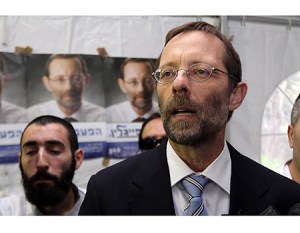 A Zionist Likud hardliner suggested paying Palestinian families $500,000 each to emigrate from the West Bank to the West.
Moshe Feiglin, who earlier on Tuesday was detained by Israeli police after trying to pray at the so-called Temple Mount, proposed paying Palestinians to leave West Bank.
“The State of Israel is paying 10% of its GNP every year for the two-state solution and the Oslo Accords. It’s paying for separation fences, Iron Domes and a guard at every café. Soon we’ll have to place Iron Domes in every school in Tel Aviv.
“With this budget we can give every Arab family in Judea and Samaria $500,000 to encourage it to immigrate to a place with a better future.
“You may say, ‘But no one will have them.’ That’s not true because the Western nations are shrinking due to low birth rates. The question is whether the world will have Sudanese migrants who can’t build or migrants from Judea and Samaria who do know how to build.”
Related articles
- Israel forces Jordan Valley Palestinians from homes ahead of war drill (alethonews.wordpress.com)
Featured Video

Thomas Fazi: NATO’s Hybrid Warfare – Deception & Permanent War
or go to
Aletho News Archives – Video-Images
Book Review
The Zeolite Book — First Edition, 2026, Paperback
The volcanic mineral medicine will not patent — for the toxic burden medicine will not name
Lies are Unbekoming – October 30, 2026
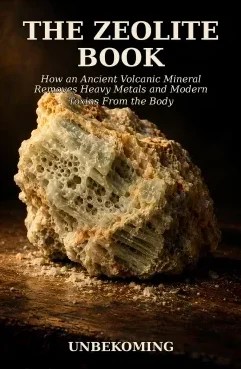 Zeolite is old. It is in Roman concrete that has held for two thousand years. It’s in the water filters of ancient cisterns. It’s in the stomachs of Pacific livestock whose keepers knew, somehow, that this grey crumbling rock made the animals healthier. It’s in Soviet clinical protocols from the 1960s. It’s in the standard emergency response to the Chernobyl explosion.
In 1986, after the Chernobyl reactor failure, the Soviet Union manufactured and distributed natural zeolite at industrial scale — for soil remediation, for livestock feed, for human consumption, for the cleanup itself. Karl Hecht, who had been director of the Institute for Experimental and Clinical Pathophysiology at the Charité of Humboldt University Berlin, spent the six decades after that building the clinical research base — on silicon’s role in human health, on zeolite’s clinical safety, on its applications in ageing. In 2018, Pavelić and colleagues published a comprehensive clinical safety review of natural clinoptilolite in Frontiers in Pharmacology. In 2019, Mastinu analysed its binding affinities. In the Western medical literature, these works sit largely uncited.
What has not been treated at book length, until now, is how a volcanic mineral with six decades of Soviet clinical work behind it, two major peer-reviewed Western reviews, and ongoing clinical use across the former Eastern Bloc, remains almost entirely absent from Western medical practice — and what the toxic burden it’s meant to address actually is.
The Zeolite Book gathers the Soviet clinical record, the Western peer-reviewed studies, three contemporary practitioner voices, and three serious counterviews into one honest treatment. That’s why the book runs to seven appendices. 288 pages, four parts, three practitioner voices, three counterviews, seven appendices. The honest treatment is the argument.
Blog Roll
 Aletho News
- UAE security forces tortured, killed journalist for opposing Israel normalization: Report
- They Compared the Spice to the Drug. The Spice Won — Again. (Part 2)
- Thomas Fazi: NATO’s Hybrid Warfare – Deception & Permanent War
- Wrong, AP and NPR: Europe’s 50,000 Heat Deaths Are a Computer-Model Estimate, Not a Real Body Count
- Questioning Your Doctor Is Now Considered A Psychological Problem (Seriously)
- London tourism expo promotes Israeli agency linked to theft of Palestinian land
- Dockworkers launch global strike against Israeli and US military shipments
- Europe facing gas price shock – Gazprom chief
- Ukraine continues recruiting people with disabilities
- Weaponized Journalism: 2021 Sayer Ji Interview with NPR
- If Americans Knew
- An error has occurred; the feed is probably down. Try again later.
- No Tricks Zone
- Germany’s Green Energy Transition Becoming Increasingly Expensive…Another 6 Trillion Euros!
- Sudden Stratospheric Warming, Powerful El Niño Combination May Lead To Extreme Europe Cold, Energy Crisis!
- Two New Studies Find Thwaites Glacier Melt Cannot Be Driven By Human Activity Or A Warming Ocean
- E-Cars Reduce CO2 Emissions By Only 41% Compared To Internal Combustion Engine Vehicles
- Predictions Made By Renowned Climate Professor Over Past Decades Have Been Proven To Be Poor
- New Study Suggests Large Regions Of The Pacific Ocean Have Been Cooling For The Last 80 Years
- Germany’s Green Energy Debacle: High Energy Costs Force Kahla Porzellan to Close After 182 Years!
- New Study: 50 Years Of The Most Aggressive ‘Net Zero’ Policies Can Only Affect The Global Climate By 0.03°C
- US September “Heat” Was No Record…Many Records Set Decades Ago
- Latest European Green Energy Debacle; Portugal’s Largest Flagship Solar Park Insolvent!

