US Intel Vets Oppose Brennan’s CIA Plan
Consortium News | March 9, 2015
The original idea of the CIA was to have independent-minded experts assessing both short- and longer-term threats to U.S. national security. Mixing with operations and politics was always a danger, which is now highlighted by CIA Director Brennan’s reorganization, opposed by a group of U.S. intelligence veterans.
MEMORANDUM FOR: The President
FROM: Veteran Intelligence Professionals for Sanity
SUBJECT: John Brennan’s Restructuring Plan for CIA
Mr. President, the CIA reorganization plan announced by Director John Brennan on Friday is a potentially deadly blow to the objective, fact-based intelligence needed to support fully informed decisions on foreign policy. We suggest turning this danger into an opportunity to create an independent entity for CIA intelligence analysis immune from the operational demands of the “war on terror.”
On Feb. 5, 2003, immediately after Colin Powell’s address to the UN, members of VIPS sent our first VIPS memorandum, urging President George W. Bush to widen the policy debate “beyond the circle of those advisers clearly bent on a war for which we see no compelling reason and from which we believe the unintended consequences are likely to be catastrophic.”
The “former senior officers” whom Brennan asked for input on the restructuring plan are a similar closed, blinkered circle, as is the “outstanding group of officers from across the Agency” picked by Brennan to look at the Agency’s mission and future. He did not include any of the intelligence community dissidents and alumni who fought against the disastrous politicization of intelligence before the attack on Iraq. Nor does Brennan’s plan reflect the lessons learned from that debacle.
You have continued to express confidence in Brennan despite the CIA’s mediocre record under his leadership. We urge you to weigh Brennan’s plan against the backdrop of Harry Truman’s prophetic vision for the CIA. We need to stop wasting time and energy trying to prevent the baby Truman never wanted from being thrown out with the bathwater. Let the bathwater run off, with the baby high and dry.
An independent group for intelligence analysis would be free to produce for you and your National Security Council the medium- and long-term strategic intelligence analysis that can help our country steer clear of future strategic disasters. And we offer ourselves as advisers as to how this might be accomplished.
Our concern over what we see as the likely consequences stemming from what Brennan intends, together with our many years of experience in intelligence work, have prompted this memo, which we believe can profit from some historical perspective.
—
President Harry Truman wanted an agency structure able to meet a president’s need for “the most accurate … information on what’s going on everywhere in the world, and particularly of the trends and developments in all the danger spots.” In an op-ed appearing in the Washington Post exactly one month after the assassination of President John F. Kennedy, Truman added, “I have been disturbed by … the way CIA has been diverted from its original assignment … and has become an operational and at times policy-making arm of the Government.”
Truman added that the “most important thing” was to guard against the chance of intelligence being used to influence or lead the President into unwise decisions. His warning is equally relevant now – 52 years later.
Bay of Pigs
Truman was referring to how CIA Director Allen Dulles tried to mousetrap President Kennedy into committing U.S. armed forces to finish what a rag-tag band of CIA-trained invaders of Cuba began by landing at the Bay of Pigs in April 1961, a few months before you were born. Kennedy had repeatedly warned the CIA brass and covert action planners that under no circumstances would he commit U.S. forces. But they were old hands; they knew better; they thought the young President could be had.
Allen Dulles’s handwritten notes discovered after his death show how he drew Kennedy into a plan that was virtually certain to require the support of U.S. forces. Dulles wrote that Kennedy would be compelled by “the realities of the situation” to give whatever military support was necessary “rather than permit the enterprise to fail.”
Kennedy fired Dulles, a quintessential Washington Establishment figure – something one does only at one’s own peril. As young CIA officers at the time, some of us experienced first-hand the deep reservoir of hate in which many a CIA covert action operator swam. Many could not resist venting their spleen, calling Kennedy a “coward” and even “traitor.”
Analysis Also Corrupted
You are fully aware, we trust, that our analysts’ vaunted ethos of speaking unvarnished truth to power was corrupted by Director George Tenet and Deputy Director John McLaughlin, who outdid themselves in carrying out the instructions of President Bush and Vice President Dick Cheney. The new ethos boiled down to this: If the President wants to paint Iraq as a strategic threat, it is our job to come up with the “evidence” – even if it needs to be manufactured out of whole cloth (or forged, as in “yellowcake uranium from Africa” caper).
Honest analysts were admonished not to rock the boat. A concrete example might help to show this in all its ugliness. When the only U.S. intelligence officer to interview “Curve Ball” before the war saw a draft of Powell’s Feb. 5, 2003 speech citing “first-hand descriptions” by an Iraqi defector of a fleet of mobile bioweapons laboratories, he strongly questioned the “validity of the information.” The interviewer had, from the outset, expressed deep reservations about Curveball’s reliability.
Here’s what the interviewer’s supervisor, the Deputy Chief of the CIA’s Iraqi Task Force, wrote in an email responding to his misgivings:
“Let’s keep in mind the fact that this war’s going to happen regardless of what Curve Ball said or didn’t say, and that the Powers That Be probably aren’t terribly interested in whether Curve Ball knows what he’s talking about. However, in the interest of Truth, we owe somebody a sentence or two of warning, if you honestly have reservations.”
This was not an isolated occurrence. Commenting on the results of a bipartisan Senate Intelligence Committee five-year study of pre-Iraq-war intelligence, Chairman Jay Rockefeller described it as “unsubstantiated, contradicted, or even nonexistent.” He was alluding to information (in)famously described as a “slam dunk” by then-CIA Director George Tenet who was singularly responsible for advancing the career of John Brennan.
In a departure from customary diplomatic parlance, then-Assistant Secretary of State for Intelligence Carl Ford, speaking to the authors of Hubris: The Inside Story of Spin, Scandal, and the Selling of the Iraq War, had harsh words for Tenet and his deputy John McLaughlin. Ford said that the evidence and analysis they gave policy makers was “not just wrong, they lied … they should have been shot.”
It is unfortunately true that – short of quitting and blowing the whistle – there is little one can do to prevent the skewing of “intelligence” when it is directed from the top – whether by the Bush-Tenet-McLaughlin consequential deceit on the threat from Iraq, or the ideological/careerist conceit of William Casey-Robert Gates in insisting up until the very end of the Soviet regime that the Soviet Communist Party would never relinquish power and that Soviet leader Mikhail Gorbachev was merely cleverer than his predecessors.
Thankfully, Not All Gave Up
There is hope to be drawn from those occasions where senior intelligence officials with integrity can step in, show courageous example, and – despite multiple indignities and pitfalls in the system – can force the truth to the surface. We hope that you have been made aware that, after the no-WMD-anywhere debacle on Iraq, Assistant Secretary of State for Intelligence Thomas Fingar did precisely that during 2007, supervising a watershed National Intelligence Estimate on Iran that concluded unanimously, “with high confidence,” that Iran had stopped working on a nuclear weapon in 2003.
President Bush concedes in his memoir that this put the kibosh on his and Dick Cheney’s earlier plan to attack Iran during their last year in office. So, character (as in Fingar) counts, and people of integrity can make a difference – and even help thwart plans for war – even in the most politicized of circumstances.
Restructuring
Accordingly, the primary objective in any restructuring should be to make it easier for people of integrity, like Thomas Fingar, to create an atmosphere in which analysts feel free to tell it like it is without worry about possible harm to their careers, should they come up with a politically “incorrect” conclusion – as the one on Iran clearly was.
The problem is that the Brennan restructuring effort does just the opposite. It puts the politicization on steroids. Placing intelligence analysts and operations officers together fosters a quite different kind of atmosphere – the kind that increases the likelihood of what Truman called the “most important thing” to guard against – leading “the President into unwise decisions.”
Truman saw the general problem and went even further, saying he “would like to see the CIA restored to its original assignment as the intelligence arm of the President … and its operational duties terminated or properly used elsewhere.” We think Truman was right then; and he is right now.
Decades of experience show that Truman’s fears were well founded. Indeed, from the outset, putting analysis and covert action operations together in the same agency was the first structural fault, so to speak, when it was created in 1947.
It was occasioned primarily by insistence that WWII OSS operatives who could match the KGB in what is now called “regime change” remain in government, and then a myopic choice to place them with the analysts in the newly created CIA. As Melvin Goodman points out in his The Failure of Intelligence: the Decline and Fall of the CIA, the early “CIA leadership itself was opposed to having responsibility for covert action, believing that the clandestine function would ultimately taint the intelligence product, a prescient observation.”
During the 1980s, President Reagan’s Secretary of State, George Shultz, correctly accused CIA Director William Casey and his deputy, Robert Gates, of slanting intelligence, charging that their operational involvement “colored” the Agency’s analysis. Shultz openly charged William Casey with giving President Reagan “faulty intelligence” to bolster Casey’s own policy preferences, including the ill-conceived arms-for-hostages-swap with Iran.
Shultz added that, because he had a sense of this analysis-operations toxic mix, he harbored “grave doubts about the objectivity and reliability of some of the intelligence I was getting.” Shultz was a strong advocate of separating the analysis from operations, likening the need to that of separating investment from commercial banking.
“War on Terrorism” as Business Model
The business model chosen by Brennan is fashioned to the “War on Terrorism,” and he holds up the Counterterrorism Center (CTC) as a model to emulate. There the analysts and operations officers sit side by side charged primarily with hunting, targeting, and killing in that war.
But truth, it has been pointed out, is the first casualty of war. This can be seen right off the bat in the exaggerated way the supposed “successes” of the Center are advertised. Some of us have worked in or closely with these CIA Centers, after which ten new “Mission Centers” are patterned. And we are taken aback by the hyperbolic plaudits being given them – and especially to the CTC.
That a quintessential politicizer, and big Curve Ball promoter, like former CIA Deputy Director John McLaughlin is reported to have advised Brennan on the restructuring, and lauds the benefits of “putting analysts and operators together” adds to our concern.
Very much in step, former CIA Deputy Director Michael Morell, for instance, claims that existing Centers have “proven to be a very powerful combination” and that the Counterterrorism Center is “the most successful agency component over the last decade.”
Morell remains focused on the business model of war. Just days ago he conceded that he did not think he would live to see the end of al-Qaeda: “My children’s generation and my grandchildren’s generation will still be fighting this fight,” said Morell.
Does it occur to Morell or others who have played senior intelligence roles that there ought to be a different kind of center, like what used to exist in parts of the Directorate of Intelligence, where analyst talent might be used not simply for targeting terrorists, but for figuring out what their grievances are, and whether there may be more promising ways to address them?
Do we really believe that terrorists slip out of the womb screaming “I hate America”? And is there a cost to drone-killing them as the preferred method of eliminating terrorists (together with others who may be in the wrong place at the wrong time)?
Brennan has announced that the new Centers will “bring the full range of operational, analytic, support, technical, and digital personnel and capabilities to bear on the nation’s most pressing security issues and interests.”
We need to learn more of the specifics, but the integrated Mission Centers sound very much like fertile field for politicization and centralized control under which subordinates will feel pressure to fall in line with prosecuting the war de jour and to sign on to politically correct solutions dictated from the 7th floor under guidance from your staff in the White House.
Is this the kind of CIA we need — everyone marching in step, as major parts of the Agency are transformed into a private army at your disposal, with virtually no Congressional oversight? We don’t think so.
A Watershed
With the present restructuring plan we see little promise for the kind of agenda-free, substantive intelligence that you and other senior policy makers need. But the train seems to have left the station headed toward Brennan’s restructuring plan. The sweeping reorganization scheme is of such importance that it should be the subject of hearings in the intelligence committees of House and Senate, but there is no indication that either committee intends to do so.
Let the analysts inclined toward targeting terrorists and providing other direct operational support to war sign up for these war-on-terror and like Centers. You and your successors will still need an agency devoted to unfettered intelligence analysis able to critique honestly the likely medium- and long-term consequences of the methods used to wage the “war on terror” and other wars.
We can assure you it is far better for those analysts doing this demanding substantive work NOT to be simultaneously “part of the team” implementing that policy.
It is time to revert to what Truman envisaged for the CIA. We are ready to make ourselves available to assist you and your staff in thinking through how this might be done. That it needs to be done is clear to us, and this would seem an opportune time.
In our view, we need to stop wasting time and energy trying to prevent the baby from being thrown out with the bathwater. Let the bathwater run off. Save the baby, even if that means a separate institution in which analysts of the kind that completed that NIE on Iran in 2007 can flourish. This just might help stop a new unnecessary war, as the combat support officers try to bring an end to old ones.
In sum, we are convinced that a separate entity for intelligence analysis – the kind of agency Truman envisaged for his CIA – would be an invaluable asset to you and your successors as president.
For the Steering Group, Veteran Intelligence Professionals for Sanity (VIPS)
Fulton Armstrong, National Intelligence Officer for Latin America (ret.)
Larry Johnson, CIA analyst & State Department/counterterrorism, (ret.)
John Kiriakou, Former CIA Counterterrorism Officer
David MacMichael, USMC & National Intelligence Council (ret.)
Ray McGovern, Army Infantry/Intelligence officer & CIA presidential briefer (ret.)
Elizabeth Murray, Deputy National Intelligence Officer for the Near East, National Intelligence Council (ret.)
Torin Nelson, former HUMINT Officer, Department of the Army
Coleen Rowley, retired FBI Agent and former Minneapolis Division Legal Counsel
Peter Van Buren, former diplomat, Department of State (associate VIPS)
Kirk Wiebe, Senior Analyst, SIGINT Automation Research Center, NSA (ret.)
Lawrence Wilkerson, Colonel (USA, ret.), Distinguished Visiting Professor, College of William and Mary
Ann Wright, retired U.S. Army reserve colonel and former US diplomat (resigned in March 2003 in opposition to the Iraq War)
The CIA Against Latin America, the Special Case of Ecuador
teleSUR | March 6, 2015
Imprisoned on various occasions and subjected to numerous interrogations, Dr. Jaime Galarza Zavala is one of the estimated 120 direct victims of the CIA’s record in Ecuador.
Persecuted by the CIA for his political organizing, Galarza described to teleSUR English that “they told me that I was working as a guerrilla in the Dominican Republic. I, to this day, have never visited the Dominican Republic. But they accused me of being a guerrilla leader in the Dominican Republic. And this was a common theme with various interrogations.”
He added that, “while they interrogated me, there was somebody that called every now and then from another room. Afterward, they told me that this person they were talking with was a gringo, a North American, who never presented himself to me. But he gave them instructions as to how to continue the interrogation,” said Galarza.
A fierce critic of U.S foreign policy in the region, Galarza recently published a book titled, “The CIA Against Latin America, the Special Case of Ecuador,” co-authored by Francisco Herrera Arauz.
In an interview with teleSUR English on CIA actions in Ecuador, Herrera said,“First, they destroyed our democracy. Second, they worked with undivided attention against our citizens. They persecuted our citizens for thinking differently. People were killed, injured, there are victims of this violence, there are families that were harmed, there are exiles, the honor of some people has been ruined, there are destroyed families, and all of this was caused by the CIA’s actions.”
Both authors have previously interviewed Philip Agee, the ex-CIA operations officer whose name became internationally known when he wrote the book “Inside the Company: CIA Diary” in 1975, detailing his time working in Ecuador, Uruguay, and Mexico from 1960 to 1968 and denouncing actions undertaken by the CIA during this period.
In his testimonies of that period, Agee said that when he operated in Ecuador from 1960 to 1963, the CIA oversaw: the overthrow of two presidents; the infiltration of various political parties and organizations; and the planting of bombs in front of churches and other emblematic sites to frame leftist groups; among other actions.
At an event celebrating the new book, Ecuador’s Foreign Minister Ricardo Patiño said, “These secret policies continue in Latin America today. Nothing that Philip Agee denounced as CIA actions in the past have been discarded by the espionage seen in the present.”
To raise public awareness of the atrocities committed within Ecuador and the long-term damage caused by CIA interventions throughout Latin America, Ecuador’s Foreign Ministry has printed and widely distributed copies of the book in Spanish and English.
‘Close, aggressive surveillance’: UK Special Forces back in Northern Ireland
RT | March 9, 2015
British Special Forces soldiers are once again operating in Northern Ireland, allegedly, to counter violent Republican groups including the Real IRA, according to intelligence sources.
Quoted in the Daily Star newspaper, they said up to 60 members of the Special Reconnaissance Regiment (SRR) are in the region.
One source told the paper that heightened dissident activity and the increased terror threat were linked to the approaching 100-year anniversary of the 1916 Easter Rising – a period of Irish history which remains highly emotive.
Another described the unit’s role as “close, aggressive surveillance.”
The SRR replaced an earlier unit known as 14 Intelligence Company. Its creation in 2005 saw the specialist close surveillance role developed during the Troubles expanded for the War on Terror.
The same year it was reported the SRR had been involved in the counter-terrorist operation which eventually led to the gunning down in Stockwell tube station of Jean Charles De Menezes, an innocent Brazilian worker.
The regiment, the only British Special Forces unit to recruit women and estimated to be composed of between 500 and 600 personnel, has been deployed in Iraq and Afghanistan.
In August 2014, the SRR was reported to be hunting Islamic State militants, including Jihadi John, later identified as West Londoner Mohammed Emwazi.
Its forerunner – known colloquially as “14 Int” – was limited to operating in Northern Ireland.
Recently, there have been a number of damaging revelations and legal cases about covert British operations during the period of the Troubles.
In 2013, a BBC documentary uncovered claims that a secret army unit called the MRF was hunting and killing IRA members, and in the course of doing so may also have killed a number of innocent civilians.
Alongside their combat role, the hand-picked members of the MRF also carried out surveillance. In some cases while disguised as meths-drinking vagrants, at other times while pretending to be garbage collectors.
In February this year, the case of the Hooded Men made headlines again when human rights lawyer Amal Clooney – who is the spouse of actor George Clooney and has represented WikiLeaks editor Julian Assange – joined the legal team of 11 individuals who claim to have suffered torture while in the custody of British security forces.
Of over 300 people rounded up in June 1971, twelve were selected for further interrogation. They were then subjected to stress positions, hooding, white noise and food, drink and sleep deprivation.
These methods were known as the Five Techniques and would later form the practical basis for the treatment of captives by the United States military and intelligence services during the War on Terror. They have become synonymous with the process known as extraordinary rendition.
In 1976, the men took their case to the European Court of Human Rights and won. The ruling was later overturned and it was subsequently ruled that while they had been subject to inhumane and degrading treatment, it did not constitute torture.
Libya, ISIS and the Unaffordable Luxury of Hindsight
By AHMAD BARQAWI | CounterPunch | March 9, 2015
Who are you?” the late Muammar Gaddafi once rhetorically asked in a famous speech of his towards the end of his reign; (rightly) questioning the legitimacy of those seeking to over-throw his government at the time, calling them extremists, foreign agents, rats and drug-addicts. He was laughed at, unfairly caricatured, ridiculed and incessantly demonized; a distasteful parody video poking fun at the late Libyan leader even went viral on social media; evidently the maker of the video, an Israeli, thought the Libyan colloquial Arabic word “Zenga” (which means an Alleyway) sounded funny enough that he extracted it from one of Gaddafi’s speeches, looped it on top of a hip-hop backing track and voila… he got himself a hit video which was widely (and shamefully) circulated with a “revolutionary” zeal in the Arab world. We shared, we laughed, he died.
But the bloody joke is on all of us; Gaddafi knew what he was talking about; right from the get-go, he accused the so-called Libyan rebels of being influenced by Al-Qaeda ideology and Ben Laden’s school of thought; no one had taken his word for it of course, not even a little bit. I mean why should we have? After all, wasn’t he a vile, sex-centric dictator hell-bent on massacring half of the Libyan population while subjecting the other half to manic raping sprees with the aid of his trusted army of Viagra-gobbling, sub-Saharan mercenaries? At least that’s what we got from the visual cancer that is Al Jazeera channel and its even more acrid Saudi counterpart Al-Arabiya in their heavily skewed coverage of NATO’s vicious conquest of Libya. Plus Gaddafi did dress funny; why would anyone trust a haggard, weird-looking despot dressed in colorful rags when you have well-groomed Zionists like Bernard Henry Levy, John McCain and Hillary Clinton at your side, smiling and flashing the victory sign in group photo-ops, right?
Gaddafi called them drug-addicted, Islamic fundamentalists; we know them as ISIS… it doesn’t seem much of a joke now, does it? And ISIS is what had been in store for us all along; the “revolutionary” lynching and sodomization of Muammar Gaddafi amid manic chants of “Allahu Akbar”, lauded by many at the time as some sort of a warped triumph of the good of popular will (read: NATO-sponsored mob rule) over the evil of dictatorship (sovereign state), was nothing but a gory precursor for the future of the country and the region; mass lynching of entire populations in Libya, Syria and Iraq and the breakup of key Arab states into feuding mini-statelets. The gruesome video of Colonel Gaddafi’s murder, which puts to shame the majority of ISIS videos in terms of unhinged brutality and gore, did not invoke the merest of condemnations back then, on the contrary; everyone seemed perfectly fine with the grotesque end of the Libyan “tyrant”… except that it was only the beginning of a new and unprecedented reign of terror courtesy of NATO’s foot-soldiers and GCC-backed Islamic insurgents.
The rapid proliferation of trigger-happy terrorist groups and Jihadi factions drenched in petrodollars in Libya was not some sort of an intelligence failure on the part of western governments or a mere by-product of the power vacuum left by a slain Gaddafi; it was a deliberate, calculated policy sought after and implemented by NATO and its allies in the Gulf under the cringe-inducing moniker “Friends of Libya” (currently known as the International Coalition against ISIS) to turn the north-African country into the world’s largest ungovernable dumpster of weapons, al-Qaida militants and illegal oil trading.
So it is safe to say that UNSC resolution 1973, which practically gave free rein for NATO to bomb Libya into smithereens, has finally borne fruit… and it’s rotten to its nucleus, you can call the latest gruesome murder of 21 Egyptian fishermen and workers by the Libyan branch of the Islamic State exhibit “A”, not to mention of course the myriad of daily killings, bombings and mini-civil wars that are now dotting the entire country which, ever since the West engineered its coup-d’etat against the Gaddafi government, have become synonymous with the bleak landscape of lawlessness and death that is “Libya” today. And the gift of NATO liberation is sure to keep on giving for years of instability and chaos to come.
In an interview with the western media misinformation collective that is the BBC, ABC and the Sunday Times in February 2011; the late Muammar Gaddafi told his condescending interviewers; “have you seen the Al Qaeda operatives? Have you heard all these Jihadi broadcasts? It is Al Qaeda that is controlling the cities of Al Baida and Darnah, former Guantanamo inmates and extremists unleashed by America to terrorize the Libyan people…”. Darnah is now the main stronghold for ISIS in Libya.
In a bizarre coincidence (or some sort of cosmic irony); the date on which ISIS chose to release its video of the beheading of Egyptian captives, thereby officially declaring its presence in the war-torn country with three oil fields under its control, (appropriately) marked the 4th anniversary of the start of the so-called Libyan revolution on February 15th, 2011; a more apt “tribute” to commemorate the Western instigated regime-change debacle in Libya could not have been made.
But even long before ISIS became the buzzword, the acrid nature of a “revolutionary” Libya showed in full, sickening splendor almost instantly right after the old regime fell, everything the late Gaddafi was falsely accused of doing was literally perfected to a chilling degree by the so-called rebels; massacres, indiscriminate shelling of residential areas, car-bombings, mass arrests, torture, theft of oil and national resources… the whole lot. In 2013; two British pro-Palestine activists, on their way to Gaza with an aid convoy, got to experience first-hand the rotten fruits of the Libyan chapter of the so-called Arab Spring when they were abducted by a motely crew of Libyan revolutionaries-turned-warlords in the city of Benghazi and gang raped in front of their father.
Proponents of Humanitarian Interventions must be patting themselves on the back these days; now that Libya has completed its democratic makeover from a country with the highest standard of living in Africa under Gaddafi’s rule into a textbook definition of a failed state; a godless wasteland of religious fanaticism, internal bloodletting and wholesale head-chopping, in fact Libya became so “democratic” that there are now two parliaments and two (warring) governments; each with its own (criminal) army and supported with money and caches of weapons from competing foreign powers, not to mention the myriad of secessionist movements and militias which the illegal coup against Gaddafi has spawned all over the country while free health care, education and electricity, which the Libyans took for granted under Gaddafi’s regime, are all now but relics of the past; that’s the “Odyssey Dawn” the Libyans were promised; a sanitized version of Iraq sans the public outrage, neatly re-packaged in a “responsibility to protect” caveat and delivered via aerial bombing campaigns where even the West’s overzealous Gulf Co-conspirators Club (GCC), driven by nothing beyond petty personal vendettas against Gaddafi, got to test the lethality of its rusted, American-made military aircrafts alongside NATO on the people of Tripoli and Sirte.
This is what Gaddafi had predicted right from the get-go and then some; the ephemeral euphoria of the Tunisian and Egyptian revolutions was just too potent and too exhilarating for us to read the fine print; was it a conspiracy or a true revolutionary spirit gone awry? It doesn’t really matter now that ISIS has become the true legacy of Tahrir Square; “they will turn Libya into another Afghanistan, another Somalia, another Iraq… your women won’t be allowed out, they will transform Libya into an Islamic Emirate and America will bomb the country under the pretext of fighting terrorism”, the late Libyan leader had said in a televised speech on February 22nd, 2011, and more prophetic words were never spoken.
America’s “clean war” Libyan prototype proved to be such a success that it was replicated with a wanton abandon in Syria; Paul Bremer’s “Blackwater” death squads of old, which reigned terror all over Iraq, are back… with an Islamic twist; bearded, clad in black and explosives from head to toe and mounting convoys of Toyota Land Cruiser trucks with an ever-expanding, seemingly borderless Islamic Caliphate (that somehow leaves the Zionist regime unencumbered in its occupation of Palestine) set in their sights.
Everyday the Arab World is awakened to a new-videotaped atrocity; steeped in gore and maniacal terror courtesy of ISIS (or IS or ISIL), and countless of other “youtubeless”, albeit more heinous crimes courtesy of America’s very own ever-grinding, one-sided drone warfare; the entire region seesaws between machete beheadings and hellfire missile incinerations. Death from above… as well as below; the War on Terror rears its ugly head once again; to bring in line those nasty terrorists that the West itself funded and sponsored in the name of democracy to destabilize “unsavory” regimes; an unrelenting Groundhog Day that starts with the Responsibility to Protect and ends with the War on Terror, with thousands of innocent lives, typically chalked up to collateral damage, crushed in the process.
This is exactly what Gaddafi foresaw; a Libya mired in utter chaos, civil conflict and western diktats; a breeding ground for Jihadi fundamentalism and extremists… too bad we just laughed his warnings off to an Israeli-made parody tune.
Ahmad Barqawi, freelance columnist and writer.
Norway holds massive drills near Russia border
Press TV – March 9, 2015
Norway has started massive military exercises, involving 5,000 servicemen, in the northern parts of the country near the border with Russia, the largest such drills in nearly 50 years.
The country’s military launched drills dubbed “Joint Viking” on Monday in the northern regions of Lakselv and Alta in the Finnmark County, which border Russia’s Murmansk region.
The exercises will include the Norwegian army, navy, air force and civil defense troops (Heimevernet).
Aleksander Jankov, a spokesman for the Norwegian Armed Forces, said 400 military vehicles and all types of weapons will be used in the drills, which are the largest to take place in the region since 1967.
According to Norwegian media, the massive exercise is to show that Norway has the ability to defend Finnmark.
Prior to the kickoff army spokesman Vegar Gystad said, “If we’re to have a credible defense that can defend the entire country, we also have to train in the entire country.”
The war games come amid tensions between the West and Russia over the crisis in Ukraine.
Norway, a member of the Western military alliance NATO, suspended all military cooperation with Russia after the Black Sea Peninsula Crimea voted to break away from Ukraine and rejoin the Russian Federation in March, 2014.
Meanwhile, NATO plans to expand its military presence in Eastern Europe amid the crisis in Ukraine and has held numerous war games over the past year. In 2014, NATO forces held some 200 military exercises, with the alliance’s General Secretary Jens Stoltenberg having promised that such drills would continue.
In addition, the defense ministers of NATO’s 28 member states agreed on February 5 to establish six new command and control posts in the Eastern European nations of Estonia, Latvia, Lithuania, Poland, Bulgaria and Romania.
Moscow has repeatedly condemned NATO’s exercises and military buildup toward its borders.
Government deems security risks too low to ‘exempt defense from austerity,’ says think tank
RT | March 9, 2015
The government believes strategic threats posed to Britain are not serious enough to merit insulating military spending from budget cuts, according to a report by a top defense think-tank.
The paper by the Royal United Services Institute (RUSI) centers on the economics of defense under austerity.
It concludes: “The government is not yet convinced that strategic security risks are high enough to justify an exemption for defense from austerity.”
The findings jar with recent statements by politicians and leading generals on the dangers faced by the UK.
In February, the top British officer in NATO – General Sir Adrian Bradshaw – referred to Russia as an “obvious existential threat to our whole being,” while Prime Minister David Cameron has called the rise of the Islamic State a “mortal threat.”
The investigation also indicates Britain is unlikely to meet the symbolic spending of 2 percent of GDP on defense, expected by NATO in coming years, and that thousands of soldiers could be cut irrespective of who wins the general election this year.
It warns that up to 30,000 service personnel could be axed. Given the Royal Navy may be largely exempt from redundancies, to ensure it can crew Britain’s aircraft carriers, the army could be forced to handle 80 percent of the intended reductions.
The report comes at a difficult time for David Cameron who this week faces a rebellion by a number of Tory MP’s over defense cuts.
Last week Bob Stewart, an army colonel turned Tory MP, argued defense is in a “parlous state” and that service chiefs should resign over cuts. He suggested he might step down himself, either as an MP or from the influential Defence Select Committee.
UK allies are also worried. General Raymond Odierno, chief of staff of the US Army, recently told the Telegraph he was “very concerned” at the cuts being made to the UK’s armed forces.
He criticized Chancellor George Osborne’s refusal to confirm whether the UK will meet NATO member states’ spending target of 2 percent of respective national GDP.
“What has changed, though, is the level of capability. In the past we would have a British Army division working alongside an American army division,” he added. Cuts mean the US Army now expects Britain to provide only half its previous commitment.
Supreme Court spurns two Guantanamo appeals
RT | March 9, 2015
The US Supreme Court declined to hear two Guantanamo Bay appeals cases on Monday, upholding the decision of lower courts to reject a damages claim by a wrongfully detained Syrian, and block the release of alleged torture photographs of a Saudi national.
In the case of Janko v. Gates (14-650), the Supreme Court let stand a January 2014 ruling by the DC Circuit Court that rejected a claim by a Syrian national for damages after being wrongfully held in Guantanamo Bay for seven years.
US forces in Afghanistan captured Abd al-Rahim Abdul Razak al-Janko, a Syrian Kurd, at a Taliban prison in 2002, and held him as an “enemy combatant” at Guantanamo for years. He was released in 2009 after a federal court judge ruled his continued detention “defied common sense.”
Even though al-Janko had a formal federal adjudication that his detention had been unlawful, the DC Circuit Court rejected his claim for damages in January 2014, relying on a precedent in the 2012 Al-Zahrani v. Rodriguez case that “enemy combatants” could not sue the US government.
Steve Vladeck, a professor at the American University Washington College of Law, wrote at the time that such a ruling might mean that Congress could “foreclose federal jurisdiction” even on meritorious claims, and that this would have “obvious salience far beyond Guantanamo and the specific context of counterterrorism litigation.”
In the second case, Center for Constitutional Rights v. CIA (14-658), a human rights group was suing the government for release of documents pertaining to the “enhanced interrogation” of Saudi national Mohammed al-Qahtani.
Also known as “Detainee 063,” al-Qahtani was captured in Afghanistan in 2001, and held at Guantanamo Bay ever since. Documents describing his interrogations as torture were leaked to the press in 2006. All charges against him have been dismissed, but he remains imprisoned.
A federal court in New York had ruled in September 2014 that releasing the photos and videos of al-Qahtani’s interrogations would “harm national security,” because the images were “uniquely susceptible to use by anti-American extremists as propaganda to incite violence against United States interests domestically and abroad.”
Following the Supreme Court’s refusal to hear the appeal, evidence of al-Qahtani’s treatment will remain secret from the public.
Cops across the U.S. are being disciplined, not for brutality, but for not writing enough tickets
By Matt Agorist | The Free Thought Project | March 9, 2015
As more and more officers across the country expose quota systems within their departments the mission of the American police officer is becoming quite clear; revenue generator.
As there is no money in solving murders or preventing rapes, police departments in America have focused their duties on traffic citations and the drug war. Both of these venues are highly profitable for departments.
City and state governments have become so addicted to these revenue streams that we are now seeing full-on military raids on people in fruitless attempts to find drugs and money. Along with the drug raids, we are seeing police officers forced to collect a certain amount of revenue through traffic enforcement, or risk losing their jobs.
Over the weekend, 4 more state troopers from Tennessee exposed their department for enforcing a quota system. There would be many more according to the troopers, but their fellow cops are afraid to speak up for fear of retaliation.
Last week, six cops in Whittier, CA filed a lawsuit against the city after they were retaliated against for refusing to act as revenue collectors by following ticket and arrest quotas.
Last month, a former Bellefontaine Neighbors cop, ten-year veteran of the force, officer Joe St. Clair was ordered to carry out a policy that he says required cops to issue a certain number of traffic tickets, and even traffic arrests. If the cops failed to do it, they could be fired.
“I believe the chief put an illegal mandate on his officers. I think it’s unfair to the community,” St. Clair told KMOV.
Also, in November of last year. The Free Thought Project reported the story of police in Normal, IL. Several cops from the Normal police department sued the city claiming that the department’s policy forced them to make arrests without probable cause.
These are just a few of the many revenue collection schemes implemented in this “land of the free.”
Earlier this month, the Free Thought Project was leaked video that shows a Newaygo County Sheriff’s deputy admitting that their department breaks federal and state laws.
This cop admitted, on camera, that he routinely breaks federal and state law. He wasn’t blowing the whistle either. He was proposing a grant allocation to the Board of Commissioners and using the fact that he enforces quotas as a sales pitch!
When local news departments caught wind of our story, they interviewed the sheriff, who predictably denied the existence of quotas and assured the public that the deputy in the video has faced proper disciplinary action. However, if that deputy wasn’t immediately fired and arrested for breaking the law, then there was nothing “proper” about it.
The skewed reality here is that you can mandate that officers enforce illegal ticket quotas, and nothing happens to you. Only when officers refuse to take part in these illegal quota systems, do they become the ones who face any discipline.
In America, police can murder unarmed people while being videotaped and face little to no consequences. However, if they point out corruption within their departments, they not only face being fired, but their lives are threatened too.
Mandating that officers issue citations and make arrests is nothing close to “protecting and serving.” In fact, it’s quite the opposite.
Requiring a minimum number of citations forces conflict and potentially hostile interactions.
It truly forces police officers to create criminals out of otherwise innocent people in order to generate revenue, or they face losing their jobs.
Despite police departments across the country denying the existence of quota systems, the Free Though Project continues to expose them.
If you are a police officer or know one who wants to expose department corruption, send us an email at contact@thefreethoughtproject.com. Shining light on the darkness is the only way to prevent this corrupt leviathan from reaching unstoppable proportions.
Know the Enemy
By Jon Taylor | Dissident Voice | March 8, 2015
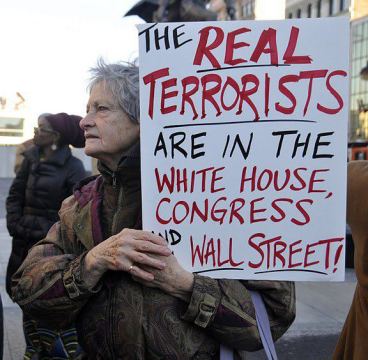 A terrorist is someone
who opposes the dictates of imperialism;
an extremist is someone who defends
his country against foreign invasion.
A radical is someone
who takes democracy seriously;
an anarchist is someone who gets beaten
and arrested at a street rally.
An Islamofascist is someone
who gets the goat of a Christofascist;
An anti-Semite is someone who condemns
the genocide of the Palestinian people.
A political fanatic is someone
who challenges the mainstream consensus;
a traitor is someone who refuses to fight
in wars of criminal aggression.
Danish companies warned about settlement investments
By Henriette Johansen | MEMO | March 9, 2015
A new report from the investigative journalism team at DanWatch gives more disturbing evidence of Danish businesses helping to keep the wheels of Israel’s military occupation of Palestine turning.
Danish investment funds invest 689 million Danish Krone (around £67 million) in companies with activities in illegal Israeli settlements on the West Bank, it claims. These funds, therefore, contribute to the maintenance of the apparatus of the Israeli occupation, including the Separation (“Apartheid”) Wall and the settlements.
In addition, say DanWatch, more than 1 billion krone is invested by Danish pension funds in companies either building or operating military checkpoints, the Wall or settlements. Such investments have been exposed in a previous DanWatch report. See, for example. Businesses such as G4S and ISS have reduced their activities in the occupied territories following global publicity about their support for the occupation, but have no plans to end it altogether. Investment in companies profiting from the occupation is illegal under Danish law.
The investment funds named by DanWatch are: Danske Invest, Nykredit Invest, Bank Invest, Nordea Invest, Sydinvest, Jyske Invest, Sparinvest and SEB Invest, all of which are subject to the UN’s Guiding Principles on Business and Human Rights. Indeed, the UN, EU and the Danish government have warned companies repeatedly against investing in the Israeli occupation. The settlements, Separation Wall and checkpoints in the West Bank breach international law as they violate the human rights of the Palestinian people.
Despite this, the new report identifies huge Danish investment in companies that deliver surveillance equipment to checkpoints, cement and building materials to the maintenance of the Separation Wall and bulldozers to the Israeli army. They risk accusations of complicity in human rights violations in the occupied territories.
The DanWatch report reveals the contradictions inherent in investments by the companies mentioned therein. All, for example, claim that they stick to the UN guidelines upon which they base their “ethical investments”. Bank Invest, Jyske Invest and Sydinvest support Cemex, which owns a supplier of cement to Israeli settlements, checkpoints and the Wall. Cemex is blacklisted by Nordea Invest, which has holdings in the Israeli Hapoalim Bank which, in turn, provides loans to construction projects in settlements and is, as a result, blacklisted by Danske Invest.
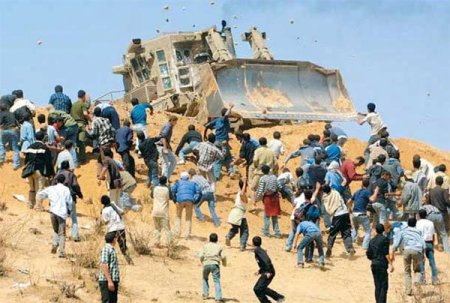
According to DanWatch all of the funds, bar one, have investments in the US firm Caterpillar. This supplies the D9 bulldozers used by the Israeli army for its devastating and sometimes lethal house demolitions. According to Human Rights Watch, it was these bulldozers that were used in 2010 to destroy buildings while civilians were still inside.
The investments continue despite Danish government appeals for companies to avoid engaging with business involved in, or benefiting from, the Israeli settlements. “The government,” said Trade and Development Minister Mogens Jensen last September, “has on several occasions reminded the public that Danish citizens and businesses should not participate in activity and business that can benefit the Israeli settlements. I will say this yet again.”
Interestingly, Copenhagen Municipality has a total of 2.21 million Dkr invested in seven companies which contribute to the construction or operation of checkpoints, the Wall or settlements in the occupied West Bank.
The coverage given to illegal investment in Israeli settlements has had the effect of Ahava beauty products being taken off the shelves by Danish retailers. A number of supermarkets sell fruit bought from Israeli exporter Mehadrin, which has produce grown in Israel and in the settlements. The Coop supermarket chain now insists on Israeli exporters signing a formal agreement that they will only supply produce from the exporter’s sources in Israel, not the settlements.
Another example of a settlement-based company affected by a boycott is Sodastream, which has had to move production to Israel this year following negative publicity in 2014. A number of Danish companies still stock Sodastream products.
Featured Video
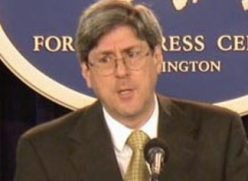
Pentagon insider says high US official Douglas Feith reported to Netanyahu
or go to
Aletho News Archives – Video-Images
Frlom the Archives
The Fiction of the Jewish History in Palestine
By Hasan Afif El-Hasan | The Palestine Chronicle | April 8, 2011
Prime Minister Benjamin Netanyahu told NNC Pierce Morgan on March 18, 2011 that he might agree to a Palestinian state through negotiations. And he added, “We will make territorial concessions although it is very painful to do that in our ancestral land.” Netanyahu was not talking about Poland where his ancestors lived. He was talking about Palestine where generations of its indigenous population ancestors lived, cultivated the land and are buried.
By the end of the nineteenth century, Zionism created a new Jewish identity of blood and soil. To mobilize their followers and supporters and appeal to their emotions, the Zionists created myths. Zionism started as a tribal religion without god, but in order to fulfill its function as a unifying force, Zionism required external religious and race symbols, not inner content. Its leaders regarded metaphysical religious belief and purity of race as having value in itself. They created a divine paradisiacal state of merger with the gods. Despite his non-religious ideology, Herzl’s writings were replete with religious references. The Jews should settle in Palestine because, in his words, “the Temple will be visible from long distance, for it is only our ancient faith that has kept us together”.
The Zionists and their supporters have invested tremendous financial and scholarly resources to work within the Hebrew Bible historical narratives to affirm the links between the intrusive Zionist population and the ancient Israelite past, and by doing so assert the right of that population to the land. The political end-game shaped the investigation and the outcome. Tracing the roots of Israel’s ethnic state in biblical antiquity is effectively to silence the indigenous Palestinian claim to the past and therefore to the land. The Biblical scholarship employs a bewildering array of terms for the region: “the Holy Land”, “the Land of the Bible”, “Eretz Israel”, “the Land of Israel”, or “Judah and Samaria.” To the casual reader these names appear interchangeable, but they all imply connection to ancient Israel.
Biblical narratives or poems that cannot be supported by archeology and common sense are treated by the Zionists and their supporters as historical language. … continue
Blog Roll
 Aletho News
- Pentagon insider says high US official Douglas Feith reported to Netanyahu
- The Sludging of Rural America
- Lawyers’ groups demand end to British military bases in Cyprus
- CIA Assessment: The Resistance Cannot Be Crushed
- Hezbollah Returns: It Didn’t Start a War, It Is Ending One
- EU states seek ‘talks’ with Iran for access to Strait of Hormuz: Report
- Trump on Hormuz: “Others must take care of it” after US falters
- Who Is closer to collapse?
- A War that Backfired: Why the US-Israeli Campaign Is Strengthening Iran
- How Zionist Control Is Hurting US Interests
- If Americans Knew
- As US-Israel war on Iran rages, Gaza faces massive dust storm – Not a ceasefire Day 156
- No let-up in attacks on Gaza as Israel takes on Iran, Lebanon – Not a ceasefire Day 155
- ‘Of Course’: IDF Drops Case Against Soldiers Accused of Raping Palestinian Prisoner
- Don’t Fall for the Regime Change Talk. Israel Is ‘Mowing the Lawn’ in Iran
- Will Israel and the US wreck the Gulf States along with Iran?
- US so far burned through ‘years’ of munitions in Iran war: Report
- How the Israeli Tail Wags the American Dog
- Outdated intel likely led to deadly U.S. strike on Iranian elementary school, sources say
- Pentagon insider says high U.S official Douglas Feith reported to Netanyahu
- In fond memory of Walid Khalidi, the historian of Palestine
- No Tricks Zone
- Storing Green Energy To Last Germany 10 Days Would Require A 60-Million Tonne Battery
- New Studies: UK Sea Levels Were 4 Meters Higher Than Today During The Mid-Holocene
- Destructive Green New Deal: German Energy And Metal Group Warns Of Drastic Crisis
- New Study Documents A 20-Year Pause In Arctic Sea Ice Decline – Driven By Internal Variability
- Wake-up Call: Survey Shows Majority Of Germans Now Favor Postponing Climate Targets!
- Televised! Leading German Political Candidate Tells Schoolchildren CO2 Makes Sun Hotter!
- New Study: A Century Warming Of 1.1°C Is ‘Commonplace’ And ‘Not Unusual’ During This Interglacial
- New Study: ‘Internal Noise’ And Volcanic Forcing Can Trigger 10-15°C Warming Within Decades
- Glaciers Worldwide Are Suddendly Surging, Experts Blame Warming!
- Surprising Discovery: Sahara Is Greening…Billions Of Trees Where Once Thought To Be Barren
 Aletho News