US Democrats reject restrictions on military aid to Israel
MEMO | July 29, 2020
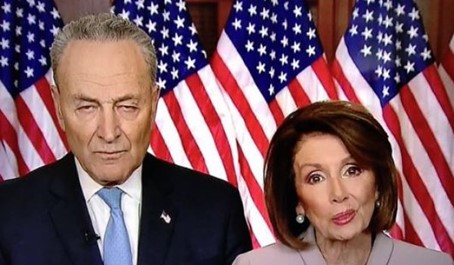
American Democrats voted overwhelmingly against a draft resolution which would restrict US military aid to Israel, reports revealed yesterday.
The draft resolution also condemned Israeli settlements, which have been labelled illegal by the UN Security Council.
The committee rejected the addition of the term “occupation” and refused to condition aid to Israel should the occupation state move forward with annexation efforts.
The amendment was introduced by Clem Balanoff, the Illinois director of the pro-Bernie Sanders non-profit “Our Revolution”.
Although 34 members voted in favour of the motion, 117 opposed it and five abstained.
Funding the PA strengthens Israel’s colonial framework
By Ramona Wadi | MEMO | July 29, 2020
Unsurprisingly, Israel’s decision to halt its annexation plans temporarily has been met with a resounding silence from the international community, rather than utilising the interlude to come up with a unified approach that holds Israel accountable for its open colonisation of Palestine.
Meanwhile, the Palestinian Authority persists with its absurd yet dangerous spectacle, professing a purportedly defiant stance while capitulating to international demands regarding the two-state compromise. The EU’s funding of this charade and its willing political actors has simplified the process for two-state diplomacy. Conversely, the Palestinian people will bear the brunt of the consequences of decades-long political failure.
Speaking about the PA’s financial crisis and in turn illustrating its dependence on external financial support, Prime Minister Mohammad Shtayyeh insisted that a complete dissolution of ties with Israel was still on the agenda. “We are continuing with a total halt to ties with the occupation,” he declared, “and we will not allow it to blackmail us, and therefore we will not receive the clearance funds from this month.”
With security coordination, once deemed “sacred” by PA leader Mahmoud Abbas, regulating every aspect of Palestinian politics and society, the tax revenues collected on the PA’s behalf by Israel are no exception. Israel is insisting on it delivering the funds through such coordination which the PA has halted in retaliation for the forthcoming annexation.
Stepping in to alleviate the PA’s financial deficit, the EU announced a €23 million contribution, allowing Ramallah the ability to pay reduced wages for Palestinian public employees working mostly in the health and education sectors.
If the EU and the PA refrain from misrepresenting the current political crisis as a financial setback, a different picture emerges of a decades-long compromise in which the international community funds the PA to play a role in maintaining the two-state compromise, while protecting Israel in the process. The EU has excelled in this strategy. By distancing Palestinian narratives from politics – the former solely serving the humanitarian enterprise – the EU is under no pressure to alter its stance, even when annexation, or the formalisation of colonial land grab, is imminent. Funding the PA does not create obstacles for Israel’s colonisation process, it actually strengthens Israel’s colonial framework. Furthermore, it creates the illusion of peacebuilding and Palestinian rights within the two-state framework.
The PA, meanwhile, seeks to frame its refusal to accept the tax revenues as an anti-colonial stance, even when its structure is heavily dependent upon the colonial framework. So far, it has not offered a coherent strategy that prioritises Palestinian rights and autonomy; EU funding is precisely about preventing such politics from emerging and the PA is an accommodating puppet. At a time when Palestinians are facing another visible round of internationally-forced displacement, the EU’s priority is to safeguard the PA’s existence. The blind acceptance of the EU’s financial aid for the PA as a pro-Palestinian endeavour needs to be challenged. Any trickle of benefits for Palestinians from EU funding is destroyed swiftly by Israel, while the peacebuilding illusion and the two-state framework provide Israel with the impunity to continue to colonise Palestine. As long as peacebuilding rhetoric exists, Israel remains safe from punitive measures.
What happened —and didn’t happen— at the Israel-Lebanon border?
By Sayed Hasan for The Saker blog | July 29, 2020
On the night of Sunday, July 19th, airstrikes hit Damascus International Airport. Though Israel didn’t claim responsibility for them, sticking to their longtime “zone of denial” policy, no one doubts they were the perpetrators. On Monday, the Syrian Army announced 7 soldiers were injured. It could have been one strike among hundreds of others, soon forgotten because of the lack of Syrian retaliatory measure. But the day after, Hezbollah announced the martyrdom of one of its combatants, Ali Kamel Mohsen, killed during the Israeli raid. As an Israeli commentator on Arab affairs put it in a tweet, this announcement “certainly changes the picture”. In fact, it is an understatement: it turned a tactical success into a PR disaster for the Netanyahu government, and a nightmare for the Israeli’s Army Northern Command and settlers living close to the Lebanese border. Because as everyone knew, a Hezbollah retaliation was inevitable.
We cannot understand what is happening now if we don’t put it in its larger context. Hezbollah’s rules of engagement against Israel in Syria were spelled out in January 2015, after Israel targeted two of their vehicles in Syria’s Quneitra region, killing 6 Hezbollah fighters (including Jihad Moghniyeh, son of Hezbollah’s martyred commander Imad Moghniyeh), along with an Iranian IRGC General. Back then, Nasrallah didn’t make any speech until the retaliation, which came out 10 days later, on January 28, when Hezbollah destroyed 3 vehicles in an Israeli convoy patrolling the occupied Shebaa farms, killing 2 to 5 soldiers —the sources differ— and wounding seven others (Israel retaliated by killing a Spanish UN soldier). Here is what Nasrallah stated in a speech two days later:
“The Resistance operation happened in broad daylight (just before noon), at the highest state of alert of the Israeli enemy, who until now is incapable of understanding how it happened. […] Because they are cowards and not (real) men, and because “They will not fight you (even) together, except in fortified townships, or from behind walls” (Quran, 59, 14), they struck us treacherously and didn’t dare to claim responsibility for the attack. As for Hezbollah fighters, because they are (real) men who don’t fear death, they attacked them frontally, face to face, and we claimed responsibility for the attack immediately after it happened. […] My message today is the following: from now on, any Hezbollah cadre or commander, any young Hezbollah (combatant) who will be assassinated (in Lebanon or in Syria), we will blame Israel for it, and we will consider it our right to retaliate anywhere, anytime and in any way we see fit.”
This equation was put in practice and even broadened in August 2019, after Yasser Dhaher and Hassan Zbib, two Hezbollah combatants, were killed in an Israeli airstrike in Damascus suburbs, and an Israeli drone attack against Beirut’s southern suburb, a Hezbollah stronghold, was foiled. Here is what Nasrallah stated in an August 25th speech:
“We will retaliate from Lebanon, and not (necessarily) from the Shebaa farms! I declare to the Israeli soldiers at the border tonight: wait for us against the (separation) wall (standing) on one foot and a half (be ready to flee for your lives)! Wait for us on one foot and a half! Wait for us (because we’ll certainly come at you)! In one day, two days, three days, four days… Just wait for us!”
While Hezbollah used to attack Israel exclusively in the Shebaa farms, a Lebanese territory occupied by Israel, they now vowed to strike anywhere, a dramatic development which put tremendous pressure on the Israeli side. Drastic & unprecedented measures were taken to foil Hezbollah’s retaliation: Israeli forces didn’t “hole up” in their bases as Nasrallah had advised them to, but went as far as evacuating all their positions close to Lebanon, in a width of 5 to 7 kilometers, and along the whole length of the border line. All Israeli defenses were activated. Strict security measures were taken to evacuate some settlements and forbid the remaining settlers to perform most daily activities —video footage showed empty streets & closed shops, most people being holed up in their house all day long.
For 8 days, the mighty Israeli army appeared as the “spider web” it was, frightened and terrorized, its border barracks and outposts left deserted —as was shown by an RT crew who got inside—, its vehicles abandoned with dummy soldiers inside, with tanks scattered everywhere for days hoping to lure Hezbollah to attack an empty target (see all security measures Israel took detailed in Nasrallah’s speech back then).
The psychological warfare is a key element to understand what is happening —and not happening— right now, even before we speak of the retaliation itself. As Nasrallah put it in his September 2nd speech,
“We warned the enemy that he had to expect us (any time) from now on. This is a strength point of the Resistance. We could have remained silent, refrained from threatening (Israel of an imminent retaliation), not revealing our intentions, keeping quiet as we say, for 1, 2 or 3 days, then hit them by surprise. The military know that one of the most important aspects of a military operation is the element of surprise. But we have not done so, because our fight against the Zionist entity has a major psychological component, affecting the morale and soul of the enemy (which we strive to undermine). So we told them from the beginning to wait for us, because we were coming. In itself, it is an enormous challenge issued by the Resistance.[…] [This high alert of the enemy and the evacuation of the border outposts] are part of the punishment (we inflicted on Israel). Before we retaliated with our military operation, some people were (ironically) asking: where is your response? But (this terror situation on the Israeli side) was already a punishment and a retaliation. […] [The whole world saw the staggering difference between] our good Lebanese people (who) was normally moving in border areas, whether in villages or fields, and led a completely normal life, [while Israeli settlers were forbidden to approach “their” fields in occupied Palestine and where holed up in their houses].”
Thus, Israel seemed humiliated and defeated even before the retaliation came. It did happen on September 1st, when a moving Israeli military vehicle was destroyed in broad daylight by three anti-tank missiles near Avivim barracks, killing or wounding its occupants. While Israel had promised to hit Lebanon hard and return it to the Stone Age via all channels (diplomatic, media, etc.) in case of retaliation, the IDF didn’t hit back at all, merely firing “defensive phosphorous strikes aimed at building a smokescreen to protect themselves from further strikes”, as Nasrallah put it. Israeli TV channels showed the evacuation of a seemingly badly wounded soldier by helicopter, and his arrival at a Haifa hospital.

But Netanyahu claimed there was not as much as a scratch in the Israeli side, and that everything had been staged in order to convince Hezbollah they had avenged their martyr and avoid any further escalation. While this seems like a PR stunt aimed at damage control (especially when we consider that on September 4th, Israeli media reported that a soldier stationed in the North was severely injured by a bizarre game of stone-throwing, suggesting a ludicrous cover-up only made possible by the strict military censorship), Nasrallah didn’t rule it out, and stated in a September 10th speech:
“Everything that was done by the Israelis in recent days, for example the Israeli dummy soldiers (in their vehicles), this shows the weakness of the Israeli army. And when things have come to what they called “the deception operation”, in which they allegedly staged the evacuation of soldiers with fake injuries that they carried on stretchers, covered in fake blood, and would thus have deceived Hezbollah (into believing that his goal was reached, to prevent him from launching new strikes). Let us imagine that you really tricked us: all that would prove is, in few words, that your renowned legendary and invincible army has turned into a Hollywood army, which makes movies for the cinema, because it became helpless on the ground, incapable, weak, fearful and cowardly, withdrawing from the border to a width of 5 to 7 kilometers (for fear of the promised response by Hezbollah.”
It would be difficult to conclude that this 2019 round ended in anything but a crushing defeat for Israel, be it on the military, psychological or PR level. Though all of this is little known to the Western public, where the media is but an echo chamber of the Israeli Army’s propaganda (even RT, Sputnik and most alternative media often take their claims at face value), there is no doubt that it was strongly present in the mind of Israel’s political & military leaders when they heard of a Hezbollah operative killed in their latest strike on Syria ten days ago. Israeli media reported the high alert status of the Army in the North, where military drills were canceled, reinforcements sent and units & defenses put in high alert in the expectation of an imminent Hezbollah attack. The usual huff and puff about Israel’s forceful response in case of an attack was heard from Netanyahu & Gantz. But as Israel is in the eye of the storm because of the coronavirus crisis & current civil unrest and daily & violent protests against Netanyahu, another round against Hezbollah, Israel’s most dreaded enemy, is the last thing they’d want. That’s why Israel took the unprecedented step of sending an apology letter to Hezbollah via the UN representative in Lebanon, as was reported by Lebanese & Israeli media, and confirmed by Hezbollah’s Deputy Secretary General Naim Qassem, though the latter wouldn’t speak of its contents, and only stated that Hezbollah didn’t and wouldn’t reply to it.
Commenting on this development, Senior Lebanese political analyst Anis Naqqash, closely linked to Hezbollah, stated the following in an interview to Al-Mayadeen on July 26:
Anis Naqqash: This letter is the greatest proof of Israel’s weakness and fear of Hezbollah’s response. (Recall that in the past) Israel slaughtered (civilians) by the hundreds, and did not apologize or send (explanatory) letters. Israel committed aggressions and occupied territories, and did not apologize or send (explanatory) letters. (But) today, fearing Hezbollah’s reaction, Israel sends an urgent letter via the UN as an apology, because they are afraid of the reaction.
First, the fact that Hezbollah did not make the contents of the letter public helps to make it irrelevant. If they had published it, they would have given the impression of wanting to make public what Israel said. Second, the fact that Hezbollah did not respond to the letter confuses Israel. Despite their apologies and asking for forgiveness, what is Hezbollah’s response? Absolute silence. This leaves Israel in a state of great disarray. (Hezbollah) has also confirmed (via its Deputy Secretary General) that Hezbollah will do what they have to do when the time comes, which also leaves more to fear (in Israel).
Therefore, today Israel is clearly in a state of continued confusion and fear, and the statements of Sheikh Naim (Qassem) today will not allow them to sleep peacefully, on the contrary, they are even more worried (after hearing him).
Journalist: Israel therefore stands on one foot and a half (Nasrallah’s formula to designate the fear and terror of Israeli soldiers, ready to flee at full speed at the slightest alarm) without even the Hezbollah Secretary General needing to speak (and warn them of an imminent response)?
Anis Naqqash: The last time he warned them, but this time they (already) know what to expect. It’s like an unruly pupil standing up and facing the wall on his own every time he does something silly. Today Israel stands up and faces the wall, and does so on one foot and a half, taking (drastic) precautions. No one can say if the response will come before the Eid-el-Kebir (on July 31st) or after, or even if the response will take the Eid festival into account or not. Everything is possible on the part of the Resistance.
Journalist: But isn’t the fact that Hezbollah has not made public the contents of the letter a sign of seriousness, respect and responsibility given that it is an official letter that has been delivered via the United Nations? Isn’t that an important sign (of maturity)?
Anis Naqqash: This can only be understood by comparison with what the Arab leaders and Presidents, and even the former leaders of the Palestinian resistance factions, used to do when they received such marks of attention from the (Israeli) enemy, or from the United States or Europe. The mere fact that one of these countries paid attention to them, made a mere gesture of consideration towards them, they were quick to show it to everyone (as a sign of pride), (boasting) that they had received a glance, a letter from such or such country, an apology, etc. Their opponents saw them as eager for any sign of recognition from the enemy.
As far as Hezbollah is concerned, it is quite the opposite. Hezbollah does not attach any importance to the enemy and its stances. Of course, they study them closely (one has to know its enemy very well), but they do not give them this importance; they don’t manifest this avidity (towards any sign of respect from the enemy). Hezbollah doesn’t rush to their people telling them, “Look, look, they’ve apologized to us!” The confidence of Hezbollah’s grassroots in the Resistance is much higher than that, and they know Israel is afraid of it regardless of what they can say in any letter. This is why Hezbollah does not attach importance to it and does not bother to respond to it, making it clear that for them, whether Israel sent the letter or not, it is the same thing and it will not change anything (about the inevitable response). We have to analyze this from the point of view of psychological warfare, of politics, in order to correctly assess the strategic capacities of the Resistance with regard to political, security and media battles. […]
While Israel’s “apologies” to Hezbollah are pathetic and can prevent in no way the inevitable retaliation, it must be emphasized that Israel certainly does everything it can to avoid hitting Hezbollah operatives when it strikes Syria —and therefore tries hard not to kill anyone at all—, going so far as warning them before hitting one of their vehicles, as we can see in this video from last April.
Israel was therefore left with the crushing pressure of the unknown, especially that Hezbollah didn’t comment on what it would do or not do, Naim Qassem merely stating that the rules of engagement previously stated where still in force, and that the coming days would answer everyone’s questions. There were no doubts in Israel & Lebanon that an imminent Hezbollah retaliation was coming. The pressure & nervousness —and downright panic— at the border are probably the cause of the death of an Israeli soldier on July 22 when his car crashed in the Shebaa farms, near the Lebanese border. As a Koweiti put it on Twitter, “Hezbollah’s silence is sometimes more powerful and painful to the Zionist enemy than their missiles, because they live hours, days and weeks in a state of fear, terror and high nervousness. Silence is a destructive weapon of psychological warfare against the Israeli entity, both at the political and psychological levels.” Avigdor Lieberman, former Israeli Defense Minister, stated that “I am still worried because the North is paralyzed by the killing of one single Hezbollah member in Damascus. Unfortunately, Nasrallah proved that he does what he says, an eye for an eye, a tooth for a tooth.”
On July 27th, the Israeli Army, parroted by the Western media (both mainstream and alternative), stated that the Israeli Army had foiled a Hezbollah attempt to infiltrate the Israeli-occupied Shebaa Farms, killing and wounding the operatives in the following skirmish while suffering no death or injuries itself. Later reports made no mention of Hezbollah casualties, alleging that their lives were willfully spared as a de-escalation measure. Here is the account of the “battle” by Haaretz’s military correspondent Amos Harel:
“While some of the details are still shrouded in fog, it’s clear that the IDF forces – soldiers from the Nahal Brigade, the elite Egoz unit and a tank crew – weren’t taken by surprise and were well prepared for their mission. An IDF lookout spotted the Hezbollah cell while it was still moving toward Har Dov (Shebaa Farms). When the cell had made it about 20 meters into Israel, in a hilly, wooded area where there’s no border fence, tanks and machine guns opened fire at it from a few hundred meters away.The Shi’ite militiamen quickly left the area.
There have been no reports of them taking casualties.
They entered Israel not that far from an IDF outpost and a road that serves troops in the area. (Har Dov is always closed to civilian traffic.) Their goal was presumably to carry out an attack – via sniper fire or bombs – on the IDF forces posted there. But given what has been reported about how the cell operated, the attempt does not seem to have been particularly sophisticated.
Thick vegetation makes it hard to hit an enemy moving cautiously even in broad daylight. The IDF has refused to say whether the soldiers were ordered to shoot to kill, or whether the plan was always to drive off the Hezbollah cell without causing casualties.
Nevertheless, there are fairly solid grounds for assuming that Israel deliberately decided on the latter course of action. Any such decision would have had to be made at the highest levels.
Had Hezbollah suffered losses in the incident, it might have felt compelled to mount an additional retaliation, and that could have escalated the situation along the border. Thus what looks like a tie with no casualties appears to be very convenient for both sides.”
This scenario makes Israel look good: according to this report, not only did they successfully foil an attack, but they did it with a concern for enemy human lives in order to avoid an escalation. Hezbollah’s “unsophisticated” attack, for a change, is supposed to make its outcome more plausible, and more acceptable to the Party of God, who can go along with it, claim he retaliated somewhat and climb down the ladder. Thus, this alleged round gives a military & PR victory for Israel, while allowing Hezbollah to save face, and Netanyahu & Gantz wasted no time in collecting their medal and warning Nasrallah that he was “playing with fire”, and that any further Hezbollah operations against Israel “would be a mistake and would be followed by a harsh military response”. Interestingly, both Netanyahu and Gantz left directly after reading their short statement, without taking any questions from the journalists. One wonders why they wouldn’t enjoy their victory.
This story is very unlikely, as the Israeli media themselves were quick to point out. In an article titled ‘Was Mount Dov incident another Hollywood show for Hezbollah?’, the Jerusalem Post recalled the Avivim mascarade and asked:
“In this day and age, everything is filmed. So where is the footage of the infiltrators crossing into Israel? Where is the drone footage of the area at the time of the incident?”
The IDF stated that they had footage of the incident and were considering releasing it, but haven’t done so far, which adds to the skepticism. Even Naftali Bennett, former Defense Minister, seemed to indirectly deny that any skirmish happenned, stating to Israel’s Channel 13 that in the region of the incident, one can get the impression that something is moving while there is nothing at all.
As for Hezbollah, they denied that anything at all had taken place in the following statement:
“It appears that the state of terror in which the Zionist occupation army and its settlers on the Lebanese border find themselves, the high alert status and the extreme concern over the Resistance’s reaction to the enemy crime which led to the martyrdom of our mujahid brother Ali Kamel Mohsen, as well as the enemy’s complete inability to know the intentions of the Resistance, all these factors made the enemy extremely nervous on the ground and in the media, and he behaves as someone afraid of his own shadow.
Everything that the enemy media claim about Israel thwarting an infiltration operation from Lebanese territory into occupied Palestine, as well as their claims that there were martyrs and wounded on the Resistance side as a result of the bombardments which took place near the occupation sites in the Shebaa farms, is absolutely not true. This is just a futile attempt to forge illusory & bogus victories.
The Islamic Resistance affirms that there has been no clash or shooting on its part in the events of the day so far. Rather, it was one single part, meaning the frightened, anxious and nervous (Israeli) enemy, who fired all the shots (against imaginary targets).
Our response to the martyrdom of our mujahedin brother Ali Kamel Mohsen, who found martyrdom in the Zionist aggression on the outskirts of Damascus International Airport, will inevitably come, and the Zionists have only to await punishment for their crimes.
Moreover, the strikes which took place today on the (Lebanese) village of Al-Habaria and hit a civilian’s house will not go unpunished.
The next few days will soon deliver their verdict (our response to all of this is imminent).
Victory comes only from Almighty God.
Islamic Resistance in Lebanon”
Even if it was a matter of Hezbollah’s word against Israel’s, given their respective PR record, it would be safe to trust Hezbollah’s account. In fact, the Israelis themselves believe Nasrallah more than their own leaders, as was shown by polls held in Israel, Hezbollah’s huge credibility being one of its great achievements. Anyway, Israel has gained nothing from what is most likely a new PR stunt. Whether the incident started as a mistake of Israeli troops firing at inexistent Hezbollah combatants conjured by their panicked imagination (IDF soldiers are world-class cowards), or whether it was all staged from the beginning in order to claim a fake victory before the inevitable, real retaliation, it is safe to believe that no Hezbollah attack happened.
However, it would be a mistake to think that all this show was futile. First, Hezbollah stated for the first time that the retaliation was coming indeed, though it was pretty much a given anyway. Second, they now have two reasons to strike back: their combatant killed in Damascus, and the attack against a civilian house, which puts all the Israeli settlers in the line of fire. Thus, Israel went from a bad situation to an even worse one. Back in August 2019, Nasrallah had already stated that the failed drone attack against Beirut’s southern suburb meant that from now on, the settlers would be seen as fair game:
« I declare to all the inhabitants of northern Israel and everywhere in occupied Palestine: do not live (normally), do not be in peace, do not feel safe, and do not think for one second that Hezbollah will accept such a scenario (where he would suffer such attacks in his neighborhoods without retaliating against settlers). »
Hezbollah still refrained from attacking settlements back then, focusing on military targets, but the latest escalation, even if it was likely accidental, could very well change their mind.
The only remaining question is when and where Hezbollah’s retaliation will come, and how will it unfold? As surprise is a major component of Hezbollah’s strategy, it would be vain to speculate, but Nasrallah gave us an interesting hint in his ‘Hollywood Army’ Speech:
“O Hollywood army, the lesson we draw from this experience, if indeed it is real (it remains to be proven true that you tricked us), is that the next time, you invite us not be content to hit one vehicle or one place, but several vehicles and several positions, so as not to be fooled by new Hollywood movies. (This comedy simulating injuries so that we’d stop hitting you) is a demonstration of weakness and helplessness (and not a sign of strength or intelligence).”
Also, many wonder if Hezbollah’s inevitable retaliation can lead to a war? It is most unlikely, and this idea has been dismissed by Hezbollah Deputy Secretary General, though he stated that they were always ready for war. But the daily threats heard from Netanyahu or Gantz should fool no one: Israel’s bite has never been a match for its bark, and their threats towards Hezbollah always turned out to be a damp squib. Netanyahu boasted of having won an imaginary round only because he knew that he had already lost the real one at all levels —military, psychological, PR—, and that when the deterrence & rules of engagement between Hezbollah and Israel change, it is only at the latter’s expense.
US switches to obstruction of air transit in the Middle East
By Lucas Leiroz | July 29, 2020
Last Thursday, July 23, two American fighters carried out hostile maneuvers against an Iranian civil aircraft at an extremely short distance on the stretch between Beirut and Tehran, in Syrian airspace. Several people were injured. Much more than a mere “mistake”, the American attitude reveals a real military strategy.
The pilot of the Iranian aircraft – flight 1152 of the company Mahan Air – said that, while traveling through Syrian airspace, he had to perform sudden maneuvers to avoid collision with the fighters that approached violently, consequently injuring several passengers. The Iranian pilot claims to have then contacted the American pilots to warn them and ask to keep a safe distance. However, the fighter pilots only reported that they were American military personnel and ignored him, continuing with the maneuvers. The travelers reported that the American fighter was “literally glued” to the Iranian aircraft and the maneuver was so abrupt that they were “thrown” from their seats.
The case generated strong national indignation in Iran, acquiring great repercussion throughout the country. Iranian Foreign Ministry spokesman Seyed Abbas Mousavi said the United States would be responsible for any incident with the plane. In addition, he said that Iran’s ambassador to the United Nations, Majid Takht-Ravanchi, informed the UN’s secretary general, Antonio Guterres, about what had happened. In the same vein, spokesman for the Guardians of the Iranian Constitution, Abbas Ali Kadkhodaei, classified the American action as terrorist and announced that the Iranian government will take appropriate action.
Bill Urban, a spokesman for the US Central Command, commented on the case, saying that American fighters only performed a standard visual inspection from a “safe distance”, which does not seem to match the incident data. The purpose of the inspection, according to Urban, is to ensure the safety of Americans in the coalition forces in the Al Tanf garrison, an American military base near Syria’s borders with Iraq and Jordan, whose aim, according to the Americans, is to train local anti-ISIS fighters – however, some national security experts argue that the base is aimed at spying on Iran and curbing Iranian influence on the region.
In fact, American aircraft, especially the F-15E Strike Eagles (the same one involved in the incident), based in Jordan, routinely patrol the area for the strategic purpose of keeping away or fighting enemy foreign aircraft and require all planes, even commercials, to identify themselves as they pass. What happened with the Iranian aircraft, however, does not correspond to a simple “visual inspection”, since at no time did American fighters contact the civil aircraft to request identification, on the contrary, the communication came from the Iranian aircraft itself, precisely because it was under violent interception.
Iran therefore dismissed the United States’ explanation and classified it as unjustified and unconvincing. “The harassment of a passenger plane on the territory of a third country is a clear violation of aviation security and freedom of civilian aircraft,” said Laya Joneydi, vice president of the Iranian government for legal affairs, according to Iranian media.
At no time did the US government apologize or formally lament the victims who were injured in the incident, showing that American forces in the Middle East must continue carrying out hostile maneuvers without any restrictions. We can relate this increase in aerial violence to the American naval military decay. Recently, maritime tensions between Americans and Iranians have been rising in the Persian Gulf, with an increased Iranian presence in the region through military incursions against American vessels.
Violence through the air can be understood as a strategic choice in view of the impossibility of facing Iran by sea or by land. However, it is not strategic for American interests to face Iranian forces head-on for aerial combat – instead, they invest in piracy tactics in conflict areas. The choice of the location for the maneuvers seems meticulously planned: an area where Washington will always claim “jurisdiction” because of its right to protect the military base. This will probably not be the only incident and soon new episodes will be reported.
Iran has acted correctly in submitting the case to the UN and international law must be applied promptly to punish the American attitude. The fact that American fighters did not contact the Iranian plane previously constitutes a serious violation of international aviation standards and international humanitarian law itself, since it has put the lives of innocent civilians at risk. As long as the UN response is not announced, it is up to Iran to strengthen a defense system against American air piracy, in order to avoid new incidents.
Lucas Leiroz is a research fellow in international at the Federal University of Rio de Janeiro.
More Explosive Leaks From OPCW Show Trump Bombed Syria On False Grounds
By Tyler Durden | ZeroHedge | July 27, 2020
As the ongoing increased sanctions regimen on Syria demonstrates, Washington’s pursuit of regime change against Assad is not over, despite Damascus clearly having won the war, and with the US having wisely ditched talk of some kind of overt major Iraq-style military intervention (as was the case under Obama in August 2013).
While mainstream media has largely “moved on” from coverage of Syria (so much for feigned humanitarian “concern” for millions of Syrians suffering under severe American-led sanctions!), some analysts like independent journalist Aaron Maté have been detailing damning leaks from the chemical weapons watchdog Organization for the Prohibition of Chemical Weapons (OPCW).
“A series of leaked documents from the OPCW raise the possibility that the Trump administration bombed Syria on false grounds and pressured officials at the world’s top chemical weapons watchdog to cover it up,” Maté’s latest report in The Nation begins.
“Two OPCW officials, highly regarded scientists with more than 25 years of combined experience at the organization, challenged the whitewash from inside. Yet unlike many whistle-blowers of the Trump era, they have found no champion, or even an audience, within establishment circles in the United States,” the report continues.
Recall that President Trump bombed Syria on two occasions. On the last occasion, in April 2018, Damascus was pummeled with a series of major tomahawk missile strikes ostensibly in response to claims by the primarily Saudi-backed jihadist group Jaysh al-Islam that the Syrian Army had carried out a chemical weapons attack on civilians. It was the all too familiar pattern which went back to 2013: “rebels” on the brink of being wiped out make a last ditch unverified claim in order to draw Western military support, then the mainstream media runs with it because it already fits the narrative of the “monster” Assad, and then right away it’s American and allied “bombs away” with no questions asked.
But Maté now documents an avalanche of leaks and internal dissent within the global chemical weapons watchdog group OPCW to say the US once again attacked a Middle East country based on lies (and just like in neighboring Iraq, don’t forget that some 1,000 or more American troops occupy the oil-rich northeast section of Syria).
My bad: Western state-funded Bellingcat “gathered evidence… long before the OPCW.”
Ignore then those “truthers/and or propagandists” who for some silly reason listen to actual OPCW scientists w/ actual credentials & who actually conducted the OPCW’s investigation in Syria. https://t.co/zjtDShQ2eL
— Aaron Maté (@aaronjmate) July 25, 2020
Maté’s report finds that “Since May 2019, internal OPCW documents, including a trove published by WikiLeaks, reveal that the Douma investigators’ initial report reached different conclusions than their organization’s published version. They were overruled by senior officials who kept evidence from the public.”
The Nation report outlines leaks’ key revelations as follows:
Senior OPCW officials reedited the Douma investigators’ initial report to produce a version that sharply deviated from the original. Key facts were removed or misrepresented and conclusions were rewritten to support the allegation that a chlorine gas attack had occurred in Douma. Yet the team’s initial report did not conclude that a chemical attack occurred, and left open the possibility that victims were killed in a “non-chemical related” incident.
Four experts from a OPCW and NATO-member state conducted a toxicology review at the OPCW team’s request. They concluded that observed symptoms of the civilians in Douma, particularly the rapid onset of excessive frothing, as well as the concentration of victims filmed in the apartment building so close to fresh air, “were inconsistent with exposure to chlorine, and no other obvious candidate chemical causing the symptoms could be identified.”
Chemical tests of the samples collected in Douma showed that chlorine compounds were, in most cases, detected at what amounted to trace quantities in the parts-per-billion range. Yet this finding was not disclosed publicly. Furthermore, it later emerged that the chemicals themselves did not stand out as unique: According to the author of the initial report, the OPCW’s top expert in chemical weapons chemistry, they could have resulted from contact with household products such as bleach or come from chlorinated water or wood preservatives.
The author of the initial report protested the revisions in an e-mail expressing his “gravest concern.” The altered version “misrepresents the facts,” he wrote, thereby “undermining its credibility.”
Following the e-mail of protest over the manipulation of the team’s findings, the OPCW published a watered-down interim report in July 2018. Around that time, OPCW executives decreed that the probe would be handled by a so-called “core team,” which excluded all of the Douma investigators who had traveled to Syria, except for one paramedic. It was this core team—not the inspectors who had been deployed to Douma and signed off on the original document—that produced the final report of March 2019.
After the e-mail of protest, and just days before the interim report was published on July 6, a US government delegation met with members of the investigation team to try to convince them that the Syrian government had committed a chemical attack with chlorine. According to veteran reporter Jonathan Steele, who interviewed one of the whistle-blowers, the Douma team saw the meeting as “unacceptable pressure and a violation of the OPCW’s declared principles of independence and impartiality.” Interference by state parties is explicitly prohibited under the Chemical Weapons Convention.
The inference drawn from the OPCW’s final report—widely disseminated, including by the Trump administration—was that gas cylinders found in Douma likely came from Syrian military aircraft. An unpublished engineering study reached the opposite conclusion. The study evaluated competing hypotheses: Either the cylinders were dropped from the sky or they were manually placed. There is “a higher probability,” it concluded, “that both cylinders were manually placed… rather than being delivered from aircraft.” At “Location 4,” where a cylinder was found on a bed, the study determined that the cylinder was too large to have penetrated the hole in the roof above; at the other site, “Location 2,” the observed damage to the cylinder and to the roof it allegedly penetrated were incompatible with an aircraft bombing. Ballistics experts also said it was more likely that the crater had been made by an explosion, probably from an artillery round, a rocket, or a mortar. With both cylinders, the study concluded, “the alternative hypothesis”—that the cylinders were manually placed and that the craters were caused by other means—”produced the only plausible explanation for observations at the scene.”
Of course, the media is seeking for these revelations to be memory-holed right way.
They are being conveniently ignored, and not just ignored, but covered up.
New WikiLeaks Bombshell: 20 Inspectors Dissent From Syria Chemical Attack Narrative https://t.co/vrQaBZIT7T
— zerohedge (@zerohedge) December 15, 2019
* * *
Read the full in-depth investigative report at The Nation.
Commemorating US occupation of Haiti

rebel leader Charlemagne Peralte
By Yves Engler · July 28, 2020
While remembering their past has not prevented history from repeating itself, it is not possible for the descendants of the world’s first successful large-scale slave revolt to forget the trauma inflicted by their northern neighbours.
One hundred and five years ago today a brutal US occupation of Haiti began. To commemorate an intervention that continues to shape that country Solidarity Québec Haiti is organizing a sit in in front of the US Consulate in Montreal.
On July 28, 1915 the USS Washington, with 900-men and 20 canons, docked in Port-au-Prince. US troops withdrew in 1934 but Washington largely controlled the country’s finances until 1941 and the Banque de la République d’Haïti remained under US supervision until 1947.
The occupation wasn’t Washington’s first instance of interference in Haiti but rather consolidated its grip over the country. Six months beforehand US Marines marched on the treasury in Port-au-Prince and took the nation’s entire gold reserve.
At the height, 5,000 US Marines were stationed in the country of less than 3 million. US-led forces brutally suppressed a largely peasant resistance movement, killing 15,000 Haitians.
In one of many instances of overt US racism, a top commander in the occupation, Colonel Littleton (Tony) Waller, descendent of a prominent family of slaveowners, said, “I know the nigger and how to handle him.”
To suppress the anti-occupation movement the US employed the nascent technique of aerial bombardment. Most of the fighting ended when rebel leader Charlemagne Peralte was killed, pinned to a door and left on a street to rot for days at the end of 1919. The US military described Peralte as the “supreme bandit of Haiti”.
In a famous mea culpa, an architect of the occupation confessed he was in fact the true “gangster”. Describing himself as a “high class muscle man for Big Business” and “gangster for capitalism”, Marine Corps General Smedley Butler wrote in an article years later, “I helped make Haiti … a decent place for the National City Bank Boys to collect revenues in.”
Opposition to the occupation was fed by conscription. US authorities captured civilians and compelled them to work on public roadway, buildings and other infrastructure. One reason the Marines wanted new roads was to help them bypass rugged terrain to suppress the resistance.
During the occupation the US established a new military. Created to crush resistance to the foreign presence, the National Guard “never fought anyone but Haitians.” For the next 70 years it would be used by Washington and the elite against Haiti’s poor. Haiti’s current government is seeking to revive that force.
In general, the occupation devastated the peasantry. Wealth extracted from the countryside was overwhelmingly channeled to infrastructure in the capital and foreign banks. The occupation spurred migration to Port-au-Prince and out of the country.
The US instigated other major changes to rural ways. In 1918 they rewrote the constitution to allow foreigners to purchase land, which had been outlawed since independence. A number of US corporations took advantage of the changes. The US controlled North Haytian Sugar Company and Haytian Pineapple Company both acquired hundreds of acres of land while the Haitian American Development Corporation, Haytian Corporation of America and Haytian Agricultural Corporation acquired tens of thousands of acres.
Toronto-based Sun Life Assurance Company initiated its operations in Haiti during this period. Canada’s largest bank also benefited from the US occupation. In 1919 the Royal Bank of Canada became the second bank in Haiti. RBC hired former finance minister Louis Borno as a legal advisor and officials of the Canadian firm subsequently financed his successful presidential bid during the US occupation.
Unfortunately, Solidarity Québec Haiti’s sit in is not only about drawing attention to a dark chapter in Haitian history. Washington retains significant influence over the country. In fact, the only reason the corrupt, repressive and illegitimate Jovenel Moïse is currently president of Haiti is due to US (and Canadian) support.
Quincy Rides Again
New think tank needs an Israel reality check
By Philip Giraldi • Unz Review • July 28, 2020
The Quincy Institute for Responsible Statecraft think tank launched last November. It has recently issued a roughly 15,000 word manifesto entitled “Ending America’s Misguided Policy of Middle East Domination.” For those who would find ten thousand words plus intimidating, the paper includes a more digestible 1,221 word executive summary which fairly accurately summarizes the document’s conclusions.
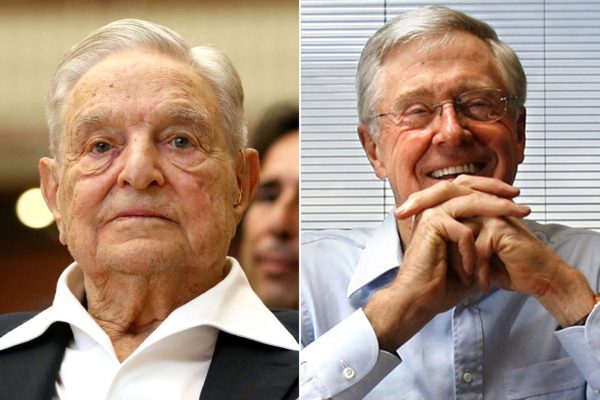
I have written about Quincy before, here and here and here. In short, while I would applaud a restrained foreign policy, particularly for the Middle East, I find Quincy unconvincing. It claims to promote “ideas that move U.S. foreign policy away from endless war and toward vigorous diplomacy in the pursuit of international peace” and further takes some pride in being non-partisan, though bipartisan might be a better description. To be sure, Quincy’s two major donors have been reported to be the highly controversial George Soros on the globalist left and the equally notorious Koch Foundation on the libertarian-lite right.
Soros in particular has been much in the news of late given his alleged propensity to fund and otherwise support groups and organizations that many would regard as conspiratorial or even violently radical, to include black lives matter and Antifa. Soros, a Hungarian Jew who is now a U.S. citizen, has been especially engaged in interventions to bring about “regime change” through “democracy movements” in Eastern Europe and he has exhibited a particular animosity towards Russia, making one suspect that his cash will influence what Quincy is allowed to say about the Kremlin.
The new Quincy report was co-authored by Paul Pillar, Andrew Bacevich, Trita Parsi and Annelle Sheline. I am not familiar with Sheline’s work, but Pillar, Bacevich and Parsi are all highly respectable and very knowledgeable about both national security and developments in the Middle East. To be sure, the paper includes a lot of useful information and insights into how various policies have evolved plus some very positive suggestions for extricating the U.S. from the Asian quagmire. But one should also accept that what is included in its agenda and how it is framed might be shaped by outside considerations, to include how Quincy is funded. It is not so much a matter of what the contributors write, but rather how it is spun and what is either minimized or not even addressed at all.
The ability to write about the Middle East in an even-handed “realistic” fashion, which is what the new article seeks to do, is based on the premise that there is equivalency among all of the players involved. That is, of course, nonsense. Many observers would note that the United States currently is in the Middle East and playing the role that it does mostly due to the immense power of Israel and its domestic lobby operating largely out of Washington and New York City.
Israel’s ability to make American presidents and the U.S. Congress do what it wishes is clearly visible wherever one chooses to look. The American people have gained nothing from giving Israel hundreds of billions of dollars and an endless supply of weapons while also looking the other way as Israel stole nuclear secrets and spied on the U.S. more than any other “friendly” country. What did the U.S. gain in recently moving the American Embassy to Jerusalem, in allowing Benjamin Netanyahu to annex the Golan Heights, in approving the bombing of Syria and Iran, or in permitting the systematic Israeli dehumanizing of the Palestinians?
A recent article by Professor Bacevich entitled “President Trump, Please End the American Era in the Middle East” appears to a precursor study to the current longer Quincy report. It is a good example of how self-censorship over Israel by authors works. The article particularly focused on the foreign policy pronouncements of Bret Stephens, the resident neocon who writes for The New York Times. Stephens, per Bacevich, has been urging constant war in the Middle East and worrying lest “we may be witnessing the beginning of the end of the American era in the Middle East.” Bacevich correctly described how “in the Middle East, the military power of the United States has played a large part in exacerbating problems rather than contributing to their solution.”
The overall message is sound, but in this case, it is interesting to note what Bacevich left out rather than what he included. He cited Iran seven times as well as Saudi Arabia, but, strangely enough, he never mentioned Israel at all, which a number of commenters on the piece noted. It rather suggests that there is a line that Bacevich is reluctant to cross. The omission is particularly odd as Israel is absolutely central to and might even be described as driving American policy in the Middle East and Bret Stephens, whom Bacevich excoriates, is a notable Israel-firster who once worked as the editor of the Jerusalem Post.
Bacevich also has produced an op-ed entitled “Foreign governments are messing with our elections the old-fashioned way” in the Boston Globe. It again fails to mention Israel at all in spite of that country’s enormous influence over the U.S. electoral process through the political donations provided by dual loyalty billionaires Sheldon Adelson and Haim Saban to Republicans and Democrats respectively. In fact, Bacevich has clearly indicated that there will be red lines, that the Quincy Institute won’t focus on “highlighting pro-Israel organizations or donors.” In other words, it will not criticize Israel’s Lobby as a key driving element in America’s interventionist foreign policy.
Bacevich is a smart man who knows perfectly well what Israel and its lobby represents but he also knows that anyone who wants to be a player in Washington DC has to avoid the Israel hot wire. The Quincy report includes, for example, lengthy separate sections on Iraq, Syria, Iran and Yemen but nothing similar on Israel. I have, however, excerpted all the citations of Israel in the full text. They are:
“U.S. military assistance—most prominently to Israel, Egypt, and Jordan, but also to armed proxy groups in Syria, Iraq, Afghanistan, and Libya—exacerbates abuses that contribute to instability… Unconditional U.S. military support for Israel has facilitated its continued occupation of Palestinian territory (potentially culminating in the annexation of the West Bank) and reduced incentives to pursue a peaceful resolution to the conflict.”
The bombing of the U.S. “embassy in Beirut, [was] a direct response to U.S. military intervention in Lebanon, which, in turn, was an attempt to deal with the consequences of the Israeli invasion of Lebanon a year earlier.”
“The Israel–Palestine conflict has been an especially salient example of such an issue, as underscored by how Palestinians opposing the Israeli occupation were in the forefront of the wave of international terrorism that began in the late 1960s. International terrorism sponsored by Palestinian organizations abated once the U.S. and Israel began engaging the Palestinians in the late 1980s.”
“In other cases, U.S. support for a militarily superior partner has tended to reduce that country’s incentives to resolve conflicts and instead opt to safeguard a status quo favorable to its interests but not to regional stability and U.S. interests. As the only state in the region with nuclear weapons and as a highly effective conventional military power in its own right—and with a qualitative edge conferred over many years by the U.S. and effective weapons development and manufacturing capacities—Israel no longer needs the U.S. to guarantee its security. Yet the U.S. sends Israel $3.8 billion in military aid annually. As of 2019, Israel had received $142.3 billion from the U.S. since 1949 —significantly more than any other nation.40 American military aid is sent regardless of whether Israel tries to resolve the conflict with the Palestinians. By persistently bolstering Israel’s qualitative military edge no matter what direction Israeli policy takes, U.S. assistance as currently structured does not incentivize Israel to pursue compromise, whether with the Palestinians or other neighbors.”
“… persistent U.S. antipathy creates a security dilemma for Iran. U.S. military support for Israel, Saudi Arabia, and the UAE causes Iran to perceive itself as under threat and to respond by trying to enhance its own security, partly by investing in paramilitary groups beyond its borders.”
“In Israel, where the well-reinforced assumption that unquestioning U.S. support will continue no matter what Israel does, it has long been evident that this has encouraged destructive Israeli practices such as the continued building of Israeli settlements in the Occupied Territories.”
“Such a rights-respecting policy would include making military assistance to Israel—for decades (and still) the largest recipient of such assistance—conditional on Israel ending its routine violation of human rights in the Occupied Palestinian Territories. These offenses include ongoing settlement expansion in the West Bank and East Jerusalem and attacks in Gaza that have failed to fulfill obligations to protect civilians. Israel is a nuclear and military superpower in the region that does not need American military aid to defend itself. As such, it should arguably not be a candidate for military aid in the first place. To the extent military aid should be provided to Middle Eastern states, priority should be given to those at risk of becoming failed states. If Washington decides to continue aid to Israel, it should be conditioned on changes to Israeli policies that advance stability and U.S. interests.”
“A consistent rights-respecting policy embedded in a broader approach to the region, one that emphasizes core U.S. interests, problem-solving diplomacy, and engagement with all relevant regional actors, would have consequences for how the U.S. has traditionally managed the Israel–Palestine conflict. The shortcomings of the U.S.–led peace process have become increasingly evident, all the more so as the Trump administration has abandoned any pretense of serving as an honest broker. It is a process that ill-serves U.S. interests as well as Israel’s long-term well-being, let alone its failure to help the Palestinians.”
“… there would be greater space for advancing negotiated and diplomatic solutions to various conflicts in the region, notably in the Saudi–Iran and Israel–Palestine cases.”
“For the United States, this means a significant reduction of arms sales, primarily to Saudi Arabia, Israel, and the UAE.”
Some of the citations regarding Israel are bundled with other countries, most particularly as related to arms sales and regional conflicts. Other excerpts correctly note that the status quo with Israel serves no American interests and is not even good for Israel, but the problem is that the solution is lame, or to describe it more properly, irrelevant. Distancing the U.S. from the region’s quarrels depends solely on disengaging with Israel first as American hostility towards an unthreatening Iran, Lebanon and Syria is a result of successful advocacy by the Jewish state. And serving as an “honest broker” vis-à-vis the Palestinians is sheer fantasy as it has never been the case for any U.S. administration due to effective Israeli pressure. If the Quincies were being honest, they would concede up front that the so-called peace plan currently being floated is a complete sell out to Israel. Any kind of shift in policy also assumes that Israelis want peace with the Palestinians, but opinion polls suggest otherwise, with many Israelis routinely referring to the Arabs as “terrorists.”
The only suggestion with any teeth to it is making military assistance to Israel conditional on its human rights record towards the Palestinians, but that in turn exposes the fundamental flaw in the arguments being made. The problem for the U.S. is not Israel per se but rather the enormously powerful domestic Israel Lobby which will make sure that nothing will be done to alter the status quo. The American government and media are completely dominated by Jewish billionaire-funded organizations that have repeatedly demonstrated that they have sufficient clout to stop any defections, witness the recent affirmation of the U.S./Israel relationship in the Democratic Party electoral platform and Joe Biden’s proud declaration that he is a “Zionist.” Quincy is delusional if it thinks that it can reorder the Middle East based on “realism and restraint” without the cooperation of Congress and the White House, which are bought and paid for and totally resistant to change.
So, Quincy has a lot of interesting ideas and the basic premise of non-interventionism is sound. But regarding the real fly in the ointment, Israel, it is pointless to urge “realism” in a situation that has not been realistic since 1947. Unfortunately, in America everything has a price and Jewish groups have been canny enough to buy Congress, the White House and much of the media at bargain prices to make sure that Israel stays protected. If you are not addressing that issue out in the open you are wasting your time. Not surprisingly, it would seem that any concerns over the reorganization of the Middle East as proposed by Quincy are most definitely not going to keep Benjamin Netanyahu awake at night.
Philip M. Giraldi, Ph.D., is Executive Director of the Council for the National Interest, a 501(c)3 tax deductible educational foundation (Federal ID Number #52-1739023) that seeks a more interests-based U.S. foreign policy in the Middle East. Website is https://councilforthenationalinterest.org, address is P.O. Box 2157, Purcellville VA 20134 and its email is inform@cnionline.org.
Cybereason Announces New Plans to “Accelerate” Access to US Govt Networks Ahead of 2020 Election
By Whitney Webb | The Last American Vagabond | July 27, 2020
A cybersecurity firm tied to Israeli intelligence’s Unit 8200 that simulated a series of terrorist attacks occurring on the U.S. 2020 election has announced a new hire with deep ties to the U.S. intelligence and defense communities with the goal of gaining greater access to U.S. government networks.
A cybersecurity company tied to Israeli intelligence and a series of unnerving simulations regarding cyber-terrorist attacks on the upcoming U.S. elections has recently announced a new hire who plans to aid the company in further penetrating the U.S. public sector. Last Wednesday, the company Cybereason announced that it had hired Andrew Borene as its Managing Director for its recently launched U.S. public sector business. Borene, who boasts longstanding ties to the U.S. intelligence community and the Pentagon, “will accelerate Cybereason’s partner and customer presence in the U.S. public sector,” according to a Cybereason press release.
“My goal is to build a strong business for Cybereason within the U.S. public sector and I am planning to recruit a group of direct support executives, veterans and alumni of the elite [U.S.] military units and agencies that have defended our nation in the information age. I’ll also work to establish a network of the best channel and delivery partners for federal, state and local governments,” Borene said per the press release.
Eric Appel, Cybereason’s General Manager for North American Sales, stated that “We’re excited about Andrew joining Cybereason and the opportunity in the U.S. public sector for Cybereason to make a profound impact on helping the nation’s federal civilian, military, state and local government agencies…”
Borene will likely be successful in his ability to recruit a sales team of prominent alumni from the U.S. intelligence and defense communities to market Cybereason’s products throughout the U.S. government. Prior to joining Cybereason, Borene was a senior advisor to the Intelligence Advanced Research Projects Activity (IARPA), the intelligence community’s “DARPA” equivalent that is housed within the Office of the Director of National Intelligence (ODNI). He served in that capacity on behalf of intelligence contractor Booz Allen Hamilton. Prior to that, Borene served as Associate Deputy General Counsel to the Pentagon and was previously a military intelligence officer for the U.S. Marine Corps.
Borene’s private sector experience is also significant, as he was a senior executive at IBM. Notably, the current Chief Information Officer for the CIA, Juliane Gallina, had served alongside Borene as a top IBM executive prior to taking her current position at the agency. In addition, Borene also boasts ties to Wall Street as a veteran of Wells Fargo’s investment banking division.
In addition, Borene has deep ties to Washington’s foreign policy establishment as a “life member” of the Council on Foreign Relations (CFR) and to the national security-think tank nexus through his senior fellowship at the National Security Institute (NSI). NSI’s board includes former NSA directors, Keith Alexander and Michael Hayden (also a former CIA director); former Deputy Defense Secretary and “architect” of the Iraq War, Paul Wolfowitz; former director of the Defense Intelligence Agency, David Shedd; and a variety of other former top intelligence and defense officials as well as Silicon Valley executives and venture capitalists.
Notably, Borene is the latest addition to Cybereason with ties to the U.S. intelligence and defense communities as the company’s advisors include Robert Bigman, former Chief Information Security Officer for the CIA as well as Peter Sherlock, the former Chief Operating Officer of MITRE corporation, a major intelligence and defense contractor connected to the Ptech-9/11 controversy.
Cybereason: a front for Israeli Military Intelligence
Cybereason’s announcement of its hire of Andrew Borene coincided with its launch of its new “U.S. public sector business,” meaning that Cybereason now seeks to have its cybersecurity software running on even more of the U.S. government’s most classified networks. Cybereason, for years, has already been running on several sensitive U.S. government networks through its partnerships with IT contractors for intelligence and defense, such as Lockheed Martin (also a Cybereason investor), WWT and Leidos. However, Borene’s hire and this new publicly announced pivot towards the U.S. public sector clearly demonstrates the company’s interest in further deepening its presence on U.S. government networks.
Cybereason’s pivot is concerning for several reasons. First, its co-founders are alumni of Israel’s Unit 8200, an elite unit of the Israeli Intelligence corps that is part of the IDF’s Directorate of Military Intelligence and is involved mainly in signal intelligence, surveillance, cyberwarfare and code decryption. It is also well-known for its surveillance of Palestinian civilians and for using intercepted communications as blackmail in order to procure informants among Palestinians living under occupation in the West Bank.
In addition, all three Cybereason co-founders, after leaving Unit 8200, went on to work for two private Israel-based tech/telecom companies with a notorious history of aggressive espionage against the U.S. government: Amdocs and Comverse Infosys (the latter is now known as Verint Systems Inc.). This raises the possibility that Cybereason software could potentially be used as a backdoor by unauthorized actors, given that the company’s co-founders all previously worked for firms that have a history of placing backdoors into U.S. telecommunications and electronic infrastructure as well as aggressively spying on U.S. federal agencies.
Also notable is the fact that the company’s current CEO and co-founder Lior Div was much more than the average Unit 8200 officer during his time in the unit, as he “served as a commander [in Unit 8200] and carried out some of the world’s largest cyber offensive campaigns against nations and cybercrime groups. For his achievements, he received the Medal of Honor, the highest honor bestowed upon Unit 8200 members,” according to his biography. Troublingly, in an interview that Div gave to TechCrunch last year, Div stated that his work at Cybereason is “the continuation of the six years of training and service he spent working with the Israeli army’s 8200 Unit.”
This is particularly noteworthy given that Israel’s government has openly admitted that an on-going intelligence operation, first initiated in 2012 – the year Cybereason was founded, involves Israeli military intelligence and intelligence operations that had previously done “in house” (i.e. as part of Unit 8200, Mossad, etc.) being spun off into private companies, specifically start-ups in the “cyber” realm.
This operation is part of Israeli Prime Minister Benjamin Netanyahu’s “deliberate policy” to have former members of Israel’s “military and intelligence units … merge into companies with local partners and foreign partners” in order to make it all but impossible for major corporations and foreign governments to boycott Israel and to also to ensure that Israel becomes the world’s dominant “cyber power.”
One notable report on this policy, published by Israeli outlet Calcalist Tech, interviewed dozens of Israeli military, intelligence and government officials and noted that “since 2012, cyber-related and intelligence projects that were previously carried out in-house in the Israeli military and Israel’s main intelligence arms are transferred to companies that in some cases were built for this exact purpose.” The article also states that beginning in 2012, Israel’s intelligence and military intelligence agencies began to outsource “activities that were previously managed in-house, with a focus on software and cyber technologies.”
“Simulating” the Cancellation of the 2020 Election
In light of Cybereason’s background and the “acceleration” of their presence on U.S. government networks, the timing of their redoubled efforts to court the U.S. public sector add additional layers of concern given that it precedes the U.S. 2020 election by a matter of months. Since last year, Cybereason has conducted multiple simulations focused on the 2020 election, which were attended by federal officials from the FBI, DHS and the U.S. Secret Service and all of which ended in disaster. In those simulations, the 2020 election was ultimately canceled and martial law was then declared due to the chaos created by a group of hackers led by Cybereason employees.
Notably, Cybereason stood to gain nothing financially from the simulations given that their software could not have prevented the attacks waged against the U.S.’ electoral infrastructure in the exercise and the company framed their hosting of the simulations as merely “altruistic” because of their professed desire to help “protect” U.S. election infrastructure. The attacks conducted in the simulations by Cybereason employees included creating power grid blackouts, the use of deep fakes to sow confusion, creating havoc with municipal sewage systems and crashing self-driving cars into voters waiting in line to cast their ballots, killing 32 and injuring over a hundred people.
In the months since I first wrote about Cybereason and their 2020 “doomsday” simulations back in January, U.S. government officials and mass media alike have been warning that these same types of attacks that Cybereason simulated are likely to come to pass on this upcoming election day, scheduled for November 3rd of this year. More recently, in less than a week, headlines like “Election Security Experts Expect ‘Chaos’ Unless Action Taken,” “New York’s Pandemic Voting ‘Chaos’ Set to Go Nationwide in November,” and “Foreign adversaries ‘seeking to compromise’ presidential campaigns, intel warns,” among others, have been published in major U.S. media outlets.
While these narratives have asserted that China, Russia and/or Iran will be to blame for such attacks, it is worth noting that a tight-knit web of Israeli state-owned and private companies tied to Israeli military intelligence now run the software controlling key parts of the power grid in New York, California and elsewhere in the U.S.; are the main global producers of deep fakes; and the main providers of “security” software for self-driving and semi-self-driving cars, the quantity of which on U.S. streets has grown dramatically as a result of the coronavirus crisis.
With Cybereason’s newly announced push to run its software on critical U.S. government networks at both the federal and state levels, the company’s history of simulating terror attacks on critical U.S. infrastructure and their openly admitted and on-going ties to Israeli military intelligence deserve more scrutiny than ever as the U.S. election draws closer.
Ebb and flow of Iran’s influence in Iraq
By M. K. BHADRAKUMAR | Indian Punchline | July 27, 2020
Getting caught between a rock and a hard place is an unenviable situation for a politician. A tragic case in modern times was that of Hafizullah Amin, the Cold War era Afghan communist politician who tried to reduce his country’s dependence on the former Soviet Union. The predicament of the present Iraqi Prime Minister Mustafa al-Kadhimi has some similarities. Kadhimi’s political dexterity lies in his ability to find his limits and his prudence from going too far.
Kadhimi has strong affiliations with the US and British intelligence dating back to his years in exile, which continued to be nurtured during his 4-year stint as spy chief in Baghdad, which ended in May when the pro-US Iraqi president Barham Salih, a Kurdish politician, nominated him as prime minister.
Kadhimi continues to receive political, security, intelligence, and logistical support from Washington. Kadhimi also enjoys personal rapport with the Saudi Crown Prince Mohammed bin Salman.
The strong American backing did help Kadhimi to secure the job of prime minister in May, but essentially, he emerged as a compromise candidate of warring Iraqi political blocs who settled for him as interim arrangement until parliamentary elections take place in coming months.
Through last year, Washington shrewdly fuelled chaotic street protests in Iraq by exploiting the people’s disenchantment with the corruption and venalities of the established political blocs and widespread social and economic discontent. This put the Shi’ite political blocs and Tehran on the back foot and in turn created conditions for Kadhimi’s transition as prime minister.
The big question is how Kadhimi figured as chief of Iraqi intelligence when the US assassinated the head of Iran’s Quds Force Qassem Soleimani and the deputy chief of Tehran-backed deputy chief of Popular Mobilisation Committee at Baghdad airport on 3rd January in drone attacks ordered by President Trump.
Beyond doubt, the US had prior tip-off about Soleimani’s arrival in Baghdad. The Iraqi militia factions have accused Kadhimi of complicity and claim to have compelling evidence. At any rate, the US expects Kadhimi to crack the whip on the Iran-backed militia forces in Iraq. Equally, Washington encourages Kadhimi to reduce Iraq’s economic dependency on Iran and instead seek help and investments from the GCC countries.
Kadhimi is moving in this direction. On June 26, Kadhimi ordered a raid on the headquarters of one of the prominent Iran-backed militia factions south of Baghdad — Kata’ib Hezbollah, whom US officials have accused of firing rockets at bases hosting US troops. Thereby, he displayed his intention to be ‘tough’ on the Iran-backed militia groups.
On July 19, an Iraqi ministerial delegation arrived in Riyadh headed by Finance Minister Ali Allawi and comprising the ministers of oil, planning, electricity, agriculture, and culture, amongst others. Saudi Arabia has expressed willingness to help Kadhimi’s government.
The bottom line is that the US hopes to consolidate a long-term military presence in Iraq and counts on Kadhimi to overcome the resistance to the American occupation from the Iraqi political blocs, popular opinion and, of course the Iran-backed militia groups. But the paradox here is that Washington bets on Kadhimi who lacks a political base to perform as a ‘strongman’.
Why did Tehran acquiesce to Kadhimi’s elevation as Iraq’s prime minister? The US analysts’ narrative is that Iran’s influence in Iraq is on the wane in the recent months after the murder of Soleimani who used to handle Tehran’s security dossier in Iraq. The Iraqi parliament’s confirmation of Kadhimi’s appointment has been touted as a sign of Tehran’s loss of clout in Baghdad.
However, this narrative reflects a self-serving American mindset — ‘You are either with us, or against us’. Whereas, Iran’s regional strategies in Iraq are not one-dimensional. True, Kadhimi couldn’t possibly have been an ideal Iranian candidate for Iraqi prime ministership. Tehran apparently had no intimate history with him. Possibly, Tehran also knew about Kadhimi’s well-established connections with the American and British intelligence.
But having said that, the fact of the matter is that Tehran never really worked to install a proxy in power in Baghdad in all these years since the overthrow of Saddam Hussein. Iran’s focus is on Iraq’s stability and security, as evident from the alacrity with which it rushed to act as a provider of security when the Islamic State of Iraq and Syria (ISIS) launched its stunning offensive on Mosul and Tikrit in June 2014. Iran worked in tandem with the US in its anti-ISIS campaign.
The point is, Tehran views Iraq through the prism of its own national security. Tehran had the means to block Kadhimi’s appointment on the floor of the parliament but it chose not to. For, Kadhimi kept lines of communication open to Tehran too, and Iran drew appropriate conclusions from the American experience in Iraq that creating a puppet in Baghdad is an exercise in futility and can only be counterproductive.
Tehran preferred to cast its net wide in the Iraqi society and create organic relationships — not only among the Shia majority but also among Sunnis and Kurds — which explains the spread of its influence, ensuring that no security threats emanate from Iraqi soil as in the Saddam era.
Second, make no mistake, Iraq all along served as a buffer for Iran — a turf where the Americans would get a better understanding of Tehran’s motivations and potentials to be a factor of regional stability.
Third, Tehran sees interesting potentials in Kadhimi being a ‘balancer’ in Iran-Saudi relations.
Indeed, below the radar, the regional security situation is radically transforming. Iran’s Foreign Minister Javad Zarif visited Moscow last week during which he “delivered an important message (from President Rouhani) to President Putin,” and held “extensive talks” with Russian Foreign Minister Sergei Lavrov on bilateral cooperation as well as regional and global coordination.
Two days later, Putin discussed Iran’s nuclear program in a phone conversation with President Trump. The influential Tehran Times newspaper since estimated in a lengthy resume that “Putin hasn’t said how he intends to save the Iran nuclear deal. But his nascent efforts highlight a possible revival of diplomatic initiatives between Iran and the U.S., ahead of the expiration of the UN arms embargo on Iran in October.”
Against this backdrop, Kadhimi’s visit to Iran last week, his first as prime minister, marks a defining moment. Kadhimi’s refrain while in Tehran has been that “Iraq would not allow any threat to Iran coming from its territory.” Iran’s Supreme Leader Ali Khamenei was rather explicit when he told Kadhimi that the Popular Mobilisation Units (which Iran supports) are a “great blessing for Iraq, and they should be safeguarded.”
Khamenei’s lengthy discourse against the US’ regional policies all but signalled to Kadhimi that Tehran’s support for his government is predicated on the belief that he will not act as a surrogate of Washington. To be sure, Kadhimi has come under pressure to reshape Iraq’s strategic partnership with the US.
Kadhimi has two choices — seek a complete withdrawal of US troops from Iraq (or at least significant drawdown), or alternatively, expect the wrath of the Iraqi political system. The choice that Kadhimi makes will determine his own political future. The recent killing of an expert of the Iraqi security establishment suggests that the tide that brought him to power is turning.
Featured Video
Laith Marouf: Hezbollah’s position on US-Iran ceasefire
or go to
Aletho News Archives – Video-Images
From the Archives
The Dirty Little Secret behind the “Global Terrorism Index”
The Omission of Israeli Terrorism in the Occupied Palestinian Territories
By Karin Brothers | Global Research | December 6, 2014
… The Israeli settlements — all of which are illegal – have been identified as a major impediment to peace. The refusal of a major “global” terrorism report to name the Israeli settlers as one of the groups most responsible for terrorism not only misrepresents a major source of regional violence but exposes the Global Terrorism Index as a propaganda tool that supports a U.S. agenda.
In recent years, governments have been attempting to thwart terrorism by blocking supportive fund-raising. When it comes to Israeli settlements, however, the US and Canada actually encourage fund-raising by giving organizations (such as Christian Friends of Israeli Communities (CFOIC) and the Jewish National Fund) financial support in the form of donor tax-deductions.
Charities which provide funds for the Israeli settlements should be regarded as terror-financing organizations. They should not only lose their tax-deductible status, but they should be banned because they support the violation of international humanitarian law. The terror-financing laws that are being strictly enforced for Muslim charities should be applied to Christian and Jewish charities as well. … Read full article
Blog Roll
 Aletho News
- Trump Administration Moves To Automate U.S. Military Draft Registration
- Spain orders reopening of Tehran embassy, condemns Israel’s carpet bombing of Lebanon
- Israel faces ‘unsustainable’ strategic crisis following 40-day war against Iran: Analyst
- Iran restricts Hormuz access to 15 vessels per day under ceasefire terms: Report
- The ‘Opposition Party’ Has Done Nothing to Stop the Iran War and Much to Goad Trump Into Continuing It
- Moscow backs Tehran on status of Lebanon in US-Iran deal
- How UK Regulator Ofcom Quietly Bypassed International Law to Police American Speech
- The Black Cube Files: How Former Mossad Operatives Flipped a Nation
- Laith Marouf: Hezbollah’s position on US-Iran ceasefire: What you’re not being told
- Israel’s priority lies in destroying chances of peace between Iran, US: Ex-UN nuclear chief
- If Americans Knew
- The gallows law: Israel moves toward executing Palestinian children
- Tucker Carlson: The Path to Peace requires ending ‘special alliance’ with Israel
- This is ceasefire? Israel’s biggest massacre yet in Lebanon, another journalist killed in Gaza – Daily Update
- Tucker Carlson on Israel: This Is the Behavior of an Ally? Really?
- Gazans face a triple crisis: severe shortages of water and bread, healthcare in tatters
- NY Times reports how Netanyahu took the US into Iran War
- A sigh of relief over Iran, but Gaza and Lebanon in dire straits – Daily Update
- Thousands dead and neighborhoods razed to the ground: Aid agencies fear southern Lebanon is becoming the new Gaza
- The war the US is fighting for Israel could cost trillions
- ‘Cigarette Burns, Nail Wounds’: Toddler Tortured in Gaza to Coerce Father
- No Tricks Zone
- An Inconvenient Tree: Uncovered In Alps… Europe Much Warmer Than Today 6000 Years Ago
- New Study Reports A 60% Slowdown In Greenland’s Ice Loss Rate In The Last Decade
- Low Intensity Tornado Wrecks Major Solar Farm, Creating A Potential Toxic Dump
- New Study Finds Warming Saves Lives…Cold Temperatures 12 Times More Deadly Than Excess Heat
- German Science Blog Accuses PIK Climate Institute Of Hallucinating Climate Tipping Points
- Devastating Assessment Of Comirnaty Vaccine By Former Senior Pfizer Europe Toxicologist
- New Study: CO2 Is ‘Effectively Negligible’ As An Explanatory Climate Change Factor Since 2000
- Former Pfizer Toxicologist Dr. Helmut Sterz Tells Bundestag Hearing Pfizer Vaccine Should Have Never Been Approved
- Energy Expert: Germany’s Nuclear Phaseout Was A “500 Billion Euro Mistake”
- New Research: South Australia’s Mid-Holocene Sea Surface Temperatures Were 4°C Warmer Than Today
 Aletho News