The Manual Behind the Mandates
An Essay on Paul Offit’s Bad Faith
Lies are Unbekoming | July 14, 2026
In June and October 1998, Paul Offit sat on the CDC’s Advisory Committee on Immunization Practices and voted twice in favor of Wyeth-Lederle’s RotaShield rotavirus vaccine: on June 25 to recommend it for routine childhood use, and on October 22 to add it to the federal Vaccines for Children Program.¹ Offit’s own rotavirus vaccine, developed at the Children’s Hospital of Philadelphia in partnership with Merck, was under development at the time. On October 22, 1999, exactly a year after his second vote, ACIP rescinded the RotaShield recommendation after CDC identified an elevated rate of intussusception in vaccinated infants. Intussusception is a bowel condition in which one segment of intestine telescopes into another and cuts off its own blood supply; without emergency intervention, it kills. The surveillance data at the point of withdrawal included hospitalizations and infant deaths. Offit abstained from the withdrawal vote.² Seven years later, Merck’s RotaTeq, which Offit co-invented, received ACIP recommendation for the same schedule slot. The patent sale netted him at least six million dollars by his own account, with other public estimates running higher.³
In June 2000, the United States House Committee on Government Reform published Conflicts of Interest in Vaccine Policy Making. The report named Offit specifically. It concluded that “conflict of interest rules employed by the FDA and the CDC have been weak, enforcement has been lax, and committee members with substantial ties to pharmaceutical companies have been given waivers to participate in committee proceedings.”⁴
In March 2015, Basic Books published Offit’s Bad Faith: When Religious Belief Undermines Modern Medicine. The book accuses religious parents of moral failure. It calls for the elimination of religious exemption from vaccination law. It endorses criminal prosecution of parents who withhold pharmaceutical products from their children on religious grounds, including, under the Oregon sentencing guidelines Offit presents as a model, terms of up to twenty-five years in prison.⁵
Offit is the Maurice R. Hilleman Professor of Vaccinology at the University of Pennsylvania and directs the Vaccine Education Center at the Children’s Hospital of Philadelphia. He has written five previous books along the same lines, including Deadly Choices: How the Anti-Vaccine Movement Threatens Us All and Autism’s False Prophets: Bad Science, Risky Medicine, and the Search for a Cure. His public role for two decades has been to defend the schedule and to condemn parents who decline it. Book after book, he plays the doctor calmly explaining what the parents are getting wrong.
Bad Faith extends the position into religion. It was published five years before COVID. Its recommendations were substantially enacted between 2015 and 2022. Read now, it functions less as ethical inquiry than as a legislative operations manual whose program was executed.
The Method
The book opens with cases designed to overwhelm objection. A Wisconsin pastor performs an exorcism on an eight-year-old boy with autism and asphyxiates him under his own body weight.⁶ An ultra-Orthodox mohel in Brooklyn performs metzitzah b’peh, sucking blood from a circumcision wound with his mouth; eleven infants develop what medicine identifies as neonatal herpes, two die, and two suffer permanent brain damage.⁷ At a Texas ministry associated with televangelist Kenneth Copeland, sixteen people including a four-month-old become ill in what Offit calls a measles outbreak connected to a daycare center on church property.⁸ In Ireland, a Hindu woman named Savita Halappanavar dies after a Catholic hospital refuses to remove her miscarrying fetus while a heartbeat is still detectable; the coroner attributes her death to septicemia.⁹
None of these cases involves ordinary religious exemption from vaccination. What they share, at the level Offit uses them, is that religious belief was present at the scene of a death. What they do not share is the specific practice the book has been marshalled to condemn.
That is the book’s central rhetorical move. It builds a moral gradient from ritual mutilation and life-refusal to any parental decision that rejects a pharmaceutical recommendation on religious grounds. The gradient does not require the cases to be comparable. It requires only that the reader carry the emotional freight of the extreme cases into the ordinary one.
The move is announced on page xiii. Offit writes, in his own voice, that he began the book expecting to arrive where Dawkins and Hitchens arrived, at the conclusion that religion is illogical and potentially harmful, but instead found himself moved by the Old and New Testaments. “The reader will be surprised to learn that the hero of this book isn’t science or medicine or doctors; it’s religion.”¹⁰
The concession does specific work. It reassures the religious reader that the book is not hostile to their tradition, and it disarms the skeptical reader who has watched vaccine industry figures dismiss religious objections as backward. Once both are quieted, the book proceeds to recommendations that religious readers, warned properly, would reject on sight.
Rita Swan is the emotional engine of the book. Offit opens with her and closes with her. To understand what he does with her, it helps to see her before he found her.
She was raised in Christian Science. In 1977, her fifteen-month-old son Matthew died after his parents, following church teaching, refused medical care for what was diagnosed as bacterial meningitis.¹¹ A year after his death, still a Christian Scientist, she went to the medical library at Wayne State University in Detroit. She had heard about another Christian Science child, a boy named Danny, whose meningitis had reportedly resolved without medical treatment; she wanted to understand why God had saved Danny and not Matthew. She read the textbooks. Danny had one kind of meningitis, viral, which typically resolves on its own. Matthew had another, bacterial, which does not. Antibiotics would have saved him. She sat on the floor of the library stacks and read the paragraph over and over. In her own words: “I did not have to be afraid that Matthew had died because we were not right with God. I knew that I wasn’t giving up a magical, supernatural protection or any kind of protection from evil because Christian Science had no power. It hadn’t healed anything.”¹²
That is the moment before Rita Swan became a public figure. She left the church, founded an organization called Children’s Healthcare Is a Legal Duty, and dedicated her life to eliminating religious exemption from child abuse and neglect law. Everything after sits downstream of that library floor. What Offit builds on top of it in Bad Faith is a criminal-law regime under which the state prosecutes not only parents like Rita Swan’s former self, but parents who bear no resemblance to Rita Swan’s former self at all.
Swan’s grief is real. Her son died. Her devotion to what she now believes is real. None of that is at issue. What is at issue is the strategic use to which her narrative has been put. Offit takes a mother whose child died in 1977 after her family refused emergency medical treatment for a present, acute illness, and uses her story to justify the elimination, in the 2010s, of the religious right to decline pharmaceutical injection of a healthy child. The two positions are not the same. Nothing in Matthew Swan’s death establishes what the parents of a healthy two-month-old should be permitted to decide about a hepatitis B injection.
The emotional weight travels regardless. That is the point of putting Rita Swan on the first page and the last page of the book.
Once the extreme cases have done their work, the ordinary case follows. Offit writes: “On any given day in America, tens of thousands of children whose parents have chosen not to vaccinate them for religious reasons can be found in daycare centers, schools, playgrounds, and churches across the country.”¹³ The sentence sits between the paragraphs about the Copeland church and the paragraphs about the woman dying at St. Joseph’s in Phoenix. By the time the reader arrives at unvaccinated children in daycare centers, the frame is set. They are on a moral continuum with mohels who kill babies and hospitals that let mothers die.
The frame does specific violence to the categories. A parent who declines a rubella vaccine on religious grounds is not the parent who prays over a bowel-obstructed child until he dies. Collapsing the two into one policy target requires an argument. Offit does not make the argument. He performs the collapse rhetorically and moves on.
Standing Up
Chapter 12 is called “Standing Up.” It is the book’s operations manual.
The model case is Oregon. Between 1999 and 2011, Rita Swan and Oregon prosecutor Terry Gustafson worked to strip religious exemption from Oregon’s criminal code. In 1999, Representative Bruce Starr introduced a bill repealing all religious exemptions to child abuse and neglect statutes. The Christian Science Church lobbied against it. The legislature compromised, repealing five of the exemptions.¹⁴ Twelve years later, after further deaths among children in the Followers of Christ church, Swan and her husband moved from Iowa to Oregon and lived in Salem for four months lobbying for full repeal. This time the Christian Science Church withdrew opposition. Governor Kitzhaber signed the bill. Religious exemption in Oregon was eliminated.¹⁵
Offit reports these events approvingly. He notes that under Oregon’s mandatory sentencing guidelines, parents convicted of religiously motivated child abuse or neglect could face up to twenty-five years in prison.¹⁶ He offers this as a template.
The Schaible case is the chapter’s central prosecution. Herbert and Catherine Schaible, members of the First-Century Gospel Church in northeast Philadelphia, lost their two-year-old son Kent in 2009 after choosing prayer instead of medical care; the coroner ruled the death due to bacterial pneumonia. The Schaibles were convicted of manslaughter and sentenced to ten years’ probation, with an order to seek medical care for their remaining seven children. In 2013, while under probation, their seven-month-old son Brandon died of the same condition. The Schaibles were charged with third-degree murder and sentenced to three and a half to seven years in prison. Their remaining children were removed to foster care.¹⁷
Offit reports the case as vindication of the prosecutorial approach. What the chapter does not report is the distinction between the Schaible position and the position of the parent who declines a hepatitis B or MMR injection for a healthy child. The Schaibles refused antibiotics for their acutely ill children. The parent refusing MMR is refusing pharmaceutical injection of a well child in the absence of any acute illness. One is refusal of treatment for present illness; the other is refusal of a product administered to a healthy body. Arguing for equivalent prosecution requires arguing for equivalence between the two positions. The chapter does not attempt the argument. It stacks the cases.
The children whose deaths Offit catalogues are real. Kent and Brandon Schaible are dead; more than eighty children lie in the Followers of Christ cemetery in Oregon; Matthew Swan was fifteen months old when he died in 1977. None of that is at issue here. What is at issue is the argumentative bridge: whether the deaths of children whose parents refused treatment for acute illness license the criminalization of parents who decline pharmaceutical products intended for a healthy body. Offit says yes. The book’s structural task is to make that inferential leap feel intuitive rather than argued.
In 2012, the American Academy of Pediatrics awarded Rita Swan the President’s Certificate for Outstanding Service. Robert W. Block, then AAP president, presented her with a plaque at the national meeting.¹⁸ The award marks a specific institutional turn. The largest pediatric medical body in the United States awarded its highest honor to a lay activist whose organizational mission is the elimination of religious exemption. Since then, the AAP has campaigned publicly for the removal of non-medical exemptions from state vaccine mandates.
The concession on page xiii is at this point difficult to sustain. The book that opens with “the hero of this book isn’t science or medicine or doctors; it’s religion” also contains, one hundred and eighty pages later, the sentence: “the American public’s instinctive tolerance for religion often exceeds reason.”¹⁹ Both sentences are Offit. Both are Bad Faith. The hero of page xiii and the tolerance-that-exceeds-reason of page 193 are the same subject in the same book. The concession was a hospitality. Chapter 12 is what waits behind it.
Offit’s resolution is to distinguish between religion properly understood, which is charity, and religion improperly performed, which is medical neglect. Charity is what he defends. Anything else is subject to statute. The distinction is convenient. It is also a claim no religious tradition would recognize as an outside authority’s to draw. Offit is not a theologian. He is a pediatrician with a financial stake in vaccine uptake and an institutional platform at the largest children’s hospital in the country. The book adjudicates which religious practices are protected and which are prosecutable. Parents disagree at their statutory peril.
From Print to Statute
Bad Faith was published in March 2015. Three months later, on June 30, 2015, California Governor Jerry Brown signed SB277, eliminating both religious and personal-belief exemptions from the state’s school vaccination requirements. California became the third state, after Mississippi and West Virginia, to permit only medical exemption.²⁰ The bill had been introduced in February 2015, roughly the same month Basic Books shipped Offit’s manuscript. Public advocacy for the bill drew heavily on the framing Offit had spent the previous decade establishing. Four years later, in 2019, California passed SB276, restricting the medical exemptions that had replaced the eliminated religious ones. What began as a policy conversation about religious refusal ended as a near-total mandate.
In June 2019, New York eliminated religious exemption by legislative vote. The bill passed in response to what the state described as measles outbreaks in Rockland County and Brooklyn, communities with large Orthodox Jewish populations. Governor Andrew Cuomo signed the bill the same day it passed both chambers.²¹ Maine passed LD 798 in May 2019, eliminating religious and philosophical exemption; the law survived a March 2020 ballot referendum challenge.²² Connecticut eliminated religious exemption in April 2021.²³ Mississippi, which had never permitted religious exemption to school vaccination, was ordered by a federal court in 2023 to allow one under Bosarge v. Edney.²⁴
The COVID-era mandates of 2021 and 2022 extended the framework beyond state school law. Federal contractors, healthcare workers at facilities receiving federal funding, and workers at companies with more than one hundred employees faced injection requirements as conditions of employment. Military personnel faced separate mandates. Religious exemption processes existed on paper. Employers rejected them at scale, and litigation over denied exemptions moved through the federal courts for the next several years.²⁵
Family court applied the framework to custody. In October 2017, Oakland County Judge Karen McDonald sentenced Rebecca Bredow of Ferndale, Michigan to seven days in jail for contempt of court after she refused to vaccinate her nine-year-old son under a court-approved parenting agreement. Her ex-husband was granted temporary custody. Bredow’s son received four vaccinations while she was behind bars. She then lost primary custody permanently. Three months later, in a separate Michigan custody dispute, attorney Aaron Siri deposed Stanley Plotkin, Offit’s mentor and vaccine industry co-strategist. Plotkin had been recruited as expert witness for the father seeking to vaccinate his ten-year-old daughter over the mother’s religious objection. The nine-hour deposition on January 11, 2018 ended with Plotkin recusing himself the following day. The father nevertheless prevailed at trial.²⁶ Similar custody rulings have moved through American family courts since. The framework Offit established in Bad Faith, that religious or personal objection to vaccination is a category on which the state may act against the parent, is the framework these courts now apply.
Under the Siri deposition, Plotkin stated the position openly. Asked whether he believed anyone could have a valid religious objection to vaccination, Plotkin answered no. Asked whether he took issue with religious beliefs, yes. Asked whether he stood by his written statement that “vaccination is always under attack by religious zealots who believe that the will of God includes death and disease,” he answered “I absolutely do.”²⁷ The deposition is the sworn version of what Bad Faith had put in more polished prose three years earlier.
In 2014, forty-eight American states recognized either religious or philosophical exemption to school vaccination. Between 2015 and 2022, four eliminated non-medical exemption: California, New York, Maine, and Connecticut. They joined Mississippi and West Virginia as the states permitting only medical exemption. The injection mandate regime extended in parallel into employment, healthcare, military service, and family law. Whether the reader considers this a public health achievement or a civil liberties collapse, the trajectory is documented. The book’s program was substantially enacted.
The framework has not gone unopposed. Aaron Siri and the firm of Siri & Glimstad have led the litigation counterattack, exposing Stanley Plotkin under deposition in 2018 and pressing federal court challenges to the COVID-era mandates. Robert F. Kennedy Jr.’s Children’s Health Defense has funded much of the legal and public education work. Bosarge v. Edney, the April 2023 federal ruling that ordered Mississippi to allow religious exemption to childhood vaccination, is one visible product of that pushback. In January 2025, West Virginia Governor Patrick Morrisey issued an executive order directing state health officials to implement a religious exemption process; the resulting conflict between the governor’s office, the state Board of Education, and the state courts is now before the West Virginia Supreme Court. The framework Bad Faith helped establish is now being tested in the same courts that first applied it.
The Document Exists
The record is a public one. In 1998, Paul Offit voted twice at ACIP to add a rotavirus vaccine to the childhood schedule. That vaccine was withdrawn a year later after CDC identified elevated intussusception risk and infant deaths. In 2006, his own rotavirus vaccine was added to the schedule under a subsequent ACIP recommendation. Merck paid him at least six million dollars for the patent, by his own admission, with other public estimates running higher. In 2000, the House Committee on Government Reform named him in a report on conflicts of interest at the CDC. In 2015, he published a book that opens by calling religion “the hero” and closes by endorsing prison terms of up to twenty-five years for parents who cite religion in declining pharmaceutical products for their children.
Between 2015 and 2022, states passed the laws the book recommended. California, New York, Maine, and Connecticut eliminated religious exemption from school vaccination. Federal COVID-era mandates conditioned employment, healthcare, and military service on injection. Family courts began ordering vaccination over parental objection and jailing mothers who refused. In 2014, forty-eight American states recognized non-medical exemption to childhood vaccination. By the end of 2022, forty-four did. Litigation and executive action since have partly reversed the direction of travel, and the story is not settled.
There is a version of this story a defender of the book would tell. In that version, the American vaccine mandate regime built between 2015 and 2022 is a public health triumph, and Bad Faith is the ethical volume that helped make it possible. In that version, Rita Swan on the floor of the Wayne State library reading about her son’s death is the founder of a movement to protect children, and Kent Schaible, Brandon Schaible, and the eighty-plus children in the Followers of Christ cemetery are the reason the state was right to act. That version exists. It is the version Bad Faith itself tells.
The other version is that the author of Bad Faith is a pediatrician who voted rotavirus vaccines onto the CDC schedule while his own rotavirus vaccine was in development at Merck, abstained from the vote to withdraw the failed predecessor after infants died, and sold his own version to Merck for at least six million dollars. In that version, the book that calls religion “the hero” is written by a man the House of Representatives named in a conflict-of-interest report fifteen years earlier, and its policy recommendations, enacted in state after state and then extended into COVID-era employment law, functioned to remove the last legal ground from which parents could decline the products his own industry manufactures. In that version, the mother on the library floor was leveraged into a criminal-law regime she never asked for.
The reader can pick the version. Both start from the same documents. The book calls itself an inquiry into religious belief. The record of what it did calls it something else. Everything is documented: Chapter 12 in the book, Offit’s financial history in the 2000 House committee report, the Schaible convictions in Pennsylvania court records, the state exemption repeals in state statute, the Plotkin deposition in sworn testimony. The elements exist for anyone to verify.
The document exists and says what it says.
How to Explain It to a Six-Year-Old
Imagine there is a kid at school named Paul who sells cookies at lunch. He has been selling them for a long time and he is rich now.
One day Paul writes a big book. In the book he says that any kid who doesn’t buy his cookies at lunch is being mean, and that the teachers should send those kids to the principal, and that the principal should punish their parents.
The teachers read Paul’s book. Some of them agree. Soon there is a new rule at school: if you don’t buy Paul’s cookies at lunch, you get sent to the principal’s office.
But some kids have real reasons for not buying cookies. Some are allergic. Some don’t have any money. Some of their families believe cookies are wrong. Some kids just don’t want cookies today. The rule doesn’t care. If you don’t buy them, you are in trouble.
Meanwhile, Paul is still selling cookies. He is still getting rich. He never mentioned in his book that he was the one selling them.
That is the story of Bad Faith. Paul Offit is a doctor who made millions of dollars from a vaccine he invented. He wrote a book saying that religious parents who don’t want vaccines for their children should go to prison. Between 2015 and 2022, several American states passed laws matching what his book said. The vaccines his industry sells are now required in more places than they used to be. The parents who don’t want them have fewer places left to say no.
Paul’s book called religion “the hero.” It wasn’t.
References
¹ Offit’s ACIP tenure (October 1998 to June 2003) and the specific rotavirus votes (June 25, 1998; October 22, 1998; October 22, 1999) are documented in United States House of Representatives, Committee on Government Reform, Conflicts of Interest in Vaccine Policy Making, Majority Staff Report, June 15, 2000 (Section V, Advisory Committee on Immunization Practices, Exhibits 38-41 pertaining to Dr. Offit specifically). See also Handley, J.B., How to End the Autism Epidemic (Chelsea Green Publishing, 2018), Chapter 4, “The Reward Is Never Financial”; and Olmsted, Dan, and Mark Blaxill, “Voting Himself Rich,” Age of Autism, December 2009.
² Centers for Disease Control and Prevention, “Withdrawal of Rotavirus Vaccine Recommendation,” Morbidity and Mortality Weekly Report 48(43), November 5, 1999. RotaShield post-licensure surveillance findings, including hospitalizations for intussusception and deaths, are documented in CDC MMWR reports from October and November 1999. Offit’s abstention from the withdrawal vote is reported by Olmsted and Blaxill, op. cit., and by Handley, op. cit.
³ Handley, op. cit., quoting Offit’s own email correspondence acknowledging the six-million-dollar figure, and noting that “other public estimates have been far higher.” Handley’s citation is to Offit-David Brown correspondence, August 18, 2009.
⁴ United States House of Representatives, Committee on Government Reform, Conflicts of Interest in Vaccine Policy Making, June 15, 2000. Available via the Children’s Health Defense archive at childrenshealthdefense.org.
⁵ Offit, Paul A., Bad Faith: When Religious Belief Undermines Modern Medicine (Basic Books, 2015). ISBN 978-0-465-04061-2. Endorsement of Oregon’s mandatory sentencing appears in Chapter 12.
⁶ Bad Faith, Introduction, pp. ix-x. Terrance Cottrell Jr., killed August 22, 2003.
⁷ Bad Faith, Introduction, p. xi. See also New York City Department of Health and Mental Hygiene, “Notes from the Field: Neonatal Herpes Simplex Virus Infection Following Jewish Ritual Circumcisions,” MMWR 61, 2012.
⁸ Bad Faith, Introduction, pp. xi-xii. The Tarrant County outbreak, August 2013, was traced to Eagle Mountain International Church.
⁹ Bad Faith, Chapter 6, “Dialogue of the Deaf,” pp. 82-85. Halappanavar died October 28, 2012, at University Hospital Galway.
¹⁰ Bad Faith, Introduction, p. xiii.
¹¹ Bad Faith, Chapter 1, “The Very Worst Thing,” pp. 1-18. Matthew Swan died July 1977.
¹² Bad Faith, Chapter 12, “Standing Up,” pp. 177-178. Rita Swan’s account of the Wayne State University medical library and her decision to leave Christian Science.
¹³ Bad Faith, Introduction, p. xii.
¹⁴ Bad Faith, Chapter 12, pp. 184-186. The 1999 Oregon legislative fight and Bruce Starr’s HB 2494.
¹⁵ Bad Faith, Chapter 12, pp. 186-187. Oregon House Bill 2721 (2011).
¹⁶ Bad Faith, Chapter 12, p. 186.
¹⁷ Bad Faith, Chapter 12, pp. 187-191. See also Commonwealth v. Schaible, Pennsylvania Court of Common Pleas, Philadelphia County. Herbert and Catherine Schaible entered no-contest pleas to third-degree murder on November 14, 2013, and were sentenced February 19, 2014.
¹⁸ Bad Faith, Epilogue, p. 195. American Academy of Pediatrics announcement of the 2012 President’s Certificate for Outstanding Service.
¹⁹ Bad Faith, Chapter 12, p. 193. The full sentence in context reads: “the American public’s instinctive tolerance for religion often exceeds reason—in this case, resulting in a misguided respect for a belief that violates one of the most fundamental teachings of all religions: protecting the vulnerable.”
²⁰ California Senate Bill 277 (Pan/Allen), signed by Governor Jerry Brown on June 30, 2015. Codified at California Health and Safety Code § 120325. California Senate Bill 276 (Pan), restricting medical exemptions, was signed September 9, 2019.
²¹ New York Senate Bill S2994A / Assembly Bill A2371A, signed by Governor Andrew Cuomo on June 13, 2019, repealing New York Public Health Law § 2164(9).
²² Maine LD 798, signed by Governor Janet Mills, May 24, 2019. Upheld in a March 3, 2020 statewide referendum by a vote of 73 to 27 percent.
²³ Connecticut House Bill 6423, signed by Governor Ned Lamont on April 28, 2021, repealing the state’s religious exemption to school vaccination requirements.
²⁴ Bosarge v. Edney, U.S. District Court for the Southern District of Mississippi, 2023, ordering the state to allow religious exemption to childhood vaccination requirements.
²⁵ Federal COVID-19 vaccination mandate litigation includes NFIB v. OSHA, 595 U.S. 109 (January 13, 2022) (staying the OSHA Emergency Temporary Standard for large employers); Biden v. Missouri, 595 U.S. 87 (January 13, 2022) (allowing the CMS healthcare worker mandate to take effect); and numerous federal cases involving denied religious exemption accommodations.
²⁶ Rebecca Bredow’s jailing and custody loss are documented in contemporaneous news reports from October 2017 (Oakland County Circuit Court, Judge Karen McDonald presiding; Detroit Free Press, CBS News, Washington Post reporting). The separate Michigan custody case in which Stanley Plotkin was deposed by Aaron Siri (January 11, 2018) is described in Handley, J.B., How to End the Autism Epidemic, Chapter 4. The deposition ran approximately nine hours.
²⁷ Deposition of Stanley Plotkin, taken by Aaron Siri, January 11, 2018. Transcript publicly available via the Informed Consent Action Network. The exchange on religious objection to vaccination appears at approximately pp. 42-46 of the deposition.
China’s “eyes” and Iran’s “fist”: Iran dumped GPS, switched to Beidou, and won the war
Inside China Business | July 15, 2026
Intelligence analysts note dramatic, and sudden, advances in Iranian missile and drone capabilities.
During last year’s war on Iran, IDF and American forces successfully “spoofed” Iranian drones and missiles, which relied on GPS navigation systems.
But after that conflict, Iran switched to Beidou, a Chinese satnav system that cannot be jammed by Western militaries.
Beidou is also more accurate than GPS in most of the world, including in the Persian Gulf region.
Iranian drones and missiles are now threading through air defenses, and taking down critical, high-value targets across the Gulf States, who also rely on GPS.
Ironically, China’s motivation to build the Beidou system began over thirty years ago, when the Pentagon switched off GPS to a Chinese container ship bound for Iran.
By 2020, Beidou leapt past GPS in coverage and accuracy in most of the world.
Resources and links:
“Breathing Fire” After Yinhe Embarrassment, China’s Pledge To Counter U.S. GPS Reaches Key Milestone https://www.eurasiantimes.com/gps-an-…
The GPS Blackout That Changed Everything for China https://www.bastillepost.com/global/a…
Iran turns to China’s BeiDou satellites to outfox Israeli anti-drone electronic warfare defences https://www.intellinews.com/iran-turn…
Could Iran be using China’s highly accurate BeiDou navigation system? https://www.aljazeera.com/features/20…
China’s Push for Satellite Cooperation in the Middle East https://www.washingtoninstitute.org/p…
In 165 countries, China’s Beidou eclipses American GPS https://asia.nikkei.com/spotlight/cen…
伊朗副部长:正在探索从GPS切换到中国北斗系统 https://m.guancha.cn/internation/2025…
Gulf Countries Confront Questions About Relying on U.S. for Protection https://www.nytimes.com/2026/06/15/wo…
Iran reportedly destroys $300M US missile defence radar in Jordan https://www.trtworld.com/article/6dda…
How Iran Devastated an American Naval Base—and Caused a U.S. Recalculation https://www.wsj.com/world/middle-east…
Armenian PM persecutes dissent as West turns blind eye – rights group
RT | July 15, 2026
Armenian Prime Minister Nikol Pashinyan has created “an atmosphere of fear” through the “systematic” persecution of political opponents with the tacit backing of Western nations, a newly formed rights group has claimed, warning that any dissenting voice is now treated as an “enemy.”
Tensions have remained high since last month’s parliamentary election, in which Pashinyan’s pro-EU Civil Contract party won 49.74% of the vote, according to the Central Electoral Commission (CEC). At least seven opposition parties have petitioned the constitutional court to annul the results, alleging widespread electoral misconduct, while hundreds of protesters rallied outside the CEC headquarters.
On Monday, the Committee for the Protection of the Rights of Persons Subjected to Political Persecution – a watchdog established by lawyers, political activists, and several former officials – accused the government of waging a campaign to silence the opposition.
“Everything is being done to foster a climate of fear, isolate political and public figures, and attempt to decapitate the numerous opposition forces,” former MP and lawyer Elinar Vardanyan said. According to the committee, around half a dozen opposition politicians are either in custody or facing criminal prosecution.
“Anyone who holds a different point of view is regarded by the authorities not as an opponent, but as an enemy,” said Armenia’s first ombudswoman, Larisa Alaverdyan, who joined the group. Committee members argued that Pashinyan has been able to pursue the crackdown because he has effectively received a “carte blanche” from his Western backers.
“In pursuit of their own interests, Western institutions are not merely turning a blind eye to Pashinyan’s actions – they are, in effect, encouraging them,” political analyst Yervand Bozoyan said, accusing foreign governments and international organizations of being “silently complicit in the destruction of democracy” in Armenia.
Pashinyan has declared the opposition parties that entered parliament illegitimate and vowed to strip them of their political standing. He has also said his government intends to confiscate the assets of the leaders of the three largest opposition parties, adding that they “should be left hungry.”
Following those remarks, prosecutors opened a criminal case against former President Robert Kocharyan, leader of the Armenia Alliance, the third-largest parliamentary party. Another opposition leader, Samvel Karapetyan, has remained in custody since last year on charges of plotting a coup, which he denies.
About a month before the election, Pashinyan hosted an EU-Armenia summit and a meeting of the European Political Community (EPC), an EU-led forum launched in 2022 after the escalation of the Ukraine conflict. He has also pledged to deepen Armenia’s integration with the EU, despite the country’s continued reliance on trade with Russia and Moscow’s warnings that adopting EU standards could damage the South Caucasus nation’s economy.
The not-so-secret Israeli strategy: This is the real Gaza plan
By Ramzy Baroud | MEMO | July 15, 2026
Here is the bottom line: Israeli Prime Minister Benjamin Netanyahu has no intention of leaving Gaza, either before Israel’s general elections—likely to be held in October—or after. Conceding an inch from the roughly 70 percent of the territory his army currently occupies in Gaza will be considered a weakness by the majority of Israeli voters and would result in an open revolt within his extremist coalition.
He has made his intentions clear time and again. Recent statements by Israel’s political leadership have only reinforced that reality, with officials insisting that Israel must maintain indefinite military dominance over the Strip and explicitly rejecting any framework that requires a full withdrawal of troops. To Netanyahu, the military footprint in Gaza is a permanent fixture, not a temporary bargaining chip.
Some may argue that Netanyahu’s statements are merely political fodder aimed at prolonging his career and avoiding the disastrous outcomes awaiting him—in terms of state investigations and court trials—should he be ejected from power. However, his extremist policies throughout his entire career at the helm of Israeli politics say otherwise.
There has never been a period in Netanyahu’s history in which he showed a genuine willingness to compromise or engage in an authentic political process with the Palestinians.
This reduces the point of the Washington-led Board of Peace and its subsequent administrative bodies to near irrelevance. These entities—including the National Committee for the Administration of Gaza (NCAG) and a multinational International Stabilization Force (ISF)—were supposedly assembled with the sole aim of managing a transitional phase, delivering humanitarian aid, and deploying a peacekeeping buffer to facilitate a gradual Israeli military withdrawal.
It seems that two separate, irreconcilable tracks are taking shape. One is the Israeli track of continued war, entrenched military occupation, and prolonged genocide. The other is an international track, controlled firmly by Washington, aimed largely at finding alternative ways to manage Gaza on behalf of Israel.
Yet even with its obvious limitations, the Gaza plan’s first phase theoretically promises a phased Israeli military repositioning, a sustainable ceasefire, a massive influx of reconstruction aid, and the gradual handover of civil administration to a non-factional Palestinian authority.
Little of that has actually been delivered. While the United States and international envoys claim the ceasefire hinges on disarmament, Israel has used the diplomatic deadlock to advance its troops further into the Strip rather than withdrawing them. Aid remains choked at the borders, and the promised reconstruction has not even begun.
Indirect talks are ongoing in Cairo, though it seems that only Palestinians are being held accountable or expected to carry out heavy concessions. Moreover, after 19 years of Hamas governing Gaza, the movement announced on 6th July that it has officially dissolved the Emergency Committee that has been administering the Strip. The movement declared its full readiness to transfer governance to the National Committee, intended to administer Gaza under the framework of the US-brokered plan.
On paper, this suggests that a political transition is finally underway. In reality, no such transition is taking place.
Israel is actively preventing this technocratic government from assuming any real duties. Rather than facilitating a civil handover, the Israeli political security cabinet has completely dismissed the transition.
Israeli Foreign Minister Gideon Sa’ar openly labeled the move a “trick,” arguing that a technocratic administration would merely be responsible for municipal tasks like garbage collection while allowing resistance networks to persist.
Instead, Israel’s military strategy continues to fuel conditions that undermine any possibility of stabilizing the devastated Strip. Its objective is not merely to reject an alternative Palestinian administration, but to ensure that no functioning Palestinian governing authority can emerge at all. By doing so, Tel Aviv wants to create a permanent governance vacuum, sowing further chaos and fragmentation.
If no alternative Palestinian political body is permitted to stabilize Gaza, the default collapse will inevitably force local factions to reassert control over daily survival, thus giving Israel yet more pretenses to exact more punishment on a helpless population.
Following the Hamas political move, Israel simply responded with its standard currency: immediate violence. This was starkly illustrated on 9th July, when Israeli forces carried out a targeted airstrike on a vehicle in Gaza City in a failed attempt to assassinate Hamas spokesman Hazem Qassem. Though the assassination attempt failed, the strike sent a clear message that Israel has no intention of respecting political transformations or ceasefires.
While no houses are being built, no schools are being constructed, and no hospitals are being revived, the only numbers that keep growing are those of the dead and wounded.
The human cost has reached unfathomable proportions: the Palestinian death toll in Gaza has surpassed 73,000, with the number of wounded exceeding 173,200. Tragically, these numbers continue to climb daily: over 1,098 Palestinians have been killed since the so-called ceasefire framework was initially agreed upon, proving that the truce exists only in media rhetoric, not on the ground.
This leaves us with a single, inescapable conclusion: the political track aimed at reconstructing Gaza and ending the Israeli military presence has little bearing on the grim realities unfolding on the ground.
The only way out is a stronger, independent international will that wrestles the future of Gaza from the grip of Netanyahu, translating political agreements into immediate humanitarian outcomes and a definitive end to the Israeli occupation.
Until Israel is compelled to relinquish its military control over Gaza, every new committee, reconstruction mechanism, or diplomatic initiative risks becoming little more than political theatre.
The monopoly of arms: Why the doctrine is enforced only where resistance exists
By Sondoss Al Asaad | Al Mayadeen | July 15, 2026
For decades, the slogan of “restricting arms to the state” has been presented as a universal principle of sovereignty and state-building. Yet a closer geopolitical examination reveals a striking inconsistency: the doctrine is aggressively promoted in countries like Lebanon and Iraq, while it is largely absent from discussions in surrounding countries such as Syria, Libya, or other fragmented states where multiple armed actors continue to exist.
This selective application raises an uncomfortable question: Is the objective truly the consolidation of state authority, or is the slogan primarily employed where armed movements challenge Israeli military superiority and American hegemony?
Political philosopher Carl Schmitt argues that sovereignty ultimately belongs to whoever decides the exception.
Modern geopolitical practice appears to confirm his observation. The international order invokes legal principles selectively, depending on whether they reinforce or undermine prevailing strategic interests. The debate over arms, therefore, is not merely legal; it is profoundly political.
The Lebanese case illustrates this contradiction with exceptional clarity.
Following the November 2024 ceasefire, “Hezbollah withdrew from the north of the Litani River and ‘accepted’ that decisions regarding war and peace would rest exclusively with the Lebanese state and its armed forces”. The expectation promoted by Western capitals was that this would allegedly strengthen Lebanese sovereignty and reduce tensions.
The reality unfolded differently; the Israeli enemy, unable to establish a lasting foothold inside southern Lebanese villages during sixty-six days of warfare, achieved after the ceasefire what military operations had failed to accomplish. It maintained positions inside Lebanese territory, continued near-daily airstrikes across Lebanon, and expanded targeted assassinations while facing little meaningful deterrence.
The sequence of events inevitably fuelled a renewed domestic debate. If sovereignty means that only the state possesses weapons, what happens when the state itself lacks the capacity to prevent violations of its own borders?
This dilemma reflects what Thomas Hobbes identified centuries ago as the fundamental purpose of political authority: providing security.
The legitimacy of the state rests not merely on possessing legal authority but on its ability to protect those living under its jurisdiction. When that capacity weakens, alternative security arrangements inevitably emerge.
The issue extends beyond Lebanon; In Iraq, international pressure consistently emphasizes integrating or dismantling armed resistance groups under the banner of state monopoly over force. Yet comparable urgency is rarely directed toward states where numerous militias continue to operate without challenging Israeli strategic dominance.
Syria offers another revealing comparison. Multiple foreign militaries, including American, Turkish, and Israeli forces, remain active on Syrian territory alongside various local armed factions.
Libya remains fragmented among competing military authorities and militias. Yet the international discourse seldom revolves around an immediate imperative to monopolize arms before broader political settlements are achieved.
Such inconsistencies have led many observers to conclude that the slogan itself is not universally applied but strategically deployed.
French philosopher Michel Foucault argued that power operates through discourse by defining what becomes accepted as common sense.
The phrase “arms outside the state” has increasingly become one such discourse. It transforms a complex security equation into a simplified legal formula while avoiding a more difficult question: Can sovereignty exist when a state cannot defend its territory?
Iran has no plans for negotiations, focused on defense: FM spokesman
Press TV – July 15, 2026
Iranian Foreign Ministry spokesman says the country has no plans to return to negotiations with the United States as long as Washington violates its commitments under the memorandum of understanding (MoU) signed between the two countries last month.
Esmaeil Baghaei said on Wednesday that Iran is currently focused on repelling and retaliating against US attacks on its territory.
“We currently have no plans for negotiations and are focused on defense,” Baghaei said in response to claims by the US that its ongoing attacks on Iran would force Tehran back to the negotiating table.
The spokesman said Iran no longer considers itself bound by the terms of the MoU signed with the United States on June 17, citing Washington’s repeated violations of its commitments under the agreement.
“An MoU is a set of mutual commitments, and in the event of a breach by the other party, we too will refrain from fulfilling our obligations; this is a principle, and this same path will be followed henceforth,” he said.
“The other party has engaged in bad faith and breach of promise (beginning) from the very first article (of the MoU).”
The diplomat said that everyone inside Iran is supporting the policy of standing up against the US and its bullying demands.
“… our armed forces will respond with full force to any aggressor. If they strike, they will be struck back,” he said.
The comments came amid ongoing US attacks on coastal areas in southern Iran, which Washington claims are carried out to weaken Iran’s ability to “target ships” in the Strait of Hormuz.
Iran has rejected the US accusations, saying responsibility for managing transit through the Strait of Hormuz, a waterway in the Persian Gulf that is critical to global energy supplies, has been delegated to Iran under Article 5 of the 14-point MoU agreed between Tehran and Washington.
Can Dems harness Iran war anger to sink Trump’s military budget?
Senate blocked defense bill Monday amid frustration with administration’s return to war and lack of transparency
By Blaise Malley | Responsible Statecraft | July 15, 2026
Congress returned to Washington DC this week after its July 4 recess. With President Donald Trump having recently declared the memorandum of understanding with Iran “over” and with the two countries exchanging attacks, the war has predictably taken center stage.
Congressional Democrats have been mostly unified against the war, but this week has presented opportunities for members to use new vehicles to express their opposition via the power of the purse. On Tuesday, every present Democratic Senator voted to block debate over the 2027 National Defense Authorization Act (NDAA), which authorizes the appropriation of Pentagon funds. The bill, which needed 60 votes to advance, failed by a 50-46 tally.
The NDAA typically proceeds in a relatively bipartisan manner, but the warning signs were apparent in June when nine Democrats voted against advancing the bill out of the Senate Armed Services Committee (SASC). Several Democrats framed their opposition as, in part, a rejection of the war in Iran.
In advance of the vote, Sen. Chris Van Hollen (D-Md.), said the bill would “effectively green light Trump’s illegal Iran war.” Sen. Brian Schatz (D-Hawaii), who noted that he typically votes in favor of the NDAA, said he would oppose it given that the legislature had not “even had an up or down vote to authorize this war in the first place.” Republicans charged Democrats with playing politics over the national security bill, with SASC chairman Roger Wicker (R-Miss. ) calling it a “new low.”
There were other considerations at play as well, including the Trump administration’s ask for a $1.5 trillion defense budget and the lack of transparency surrounding the cost of the war with Iran. On Tuesday, Jules Hurst, testifying to become the Pentagon comptroller, told SASC members that he did not have an update on the $29 billion price tag for the war, since he had not been performing the role since May 20, when his term as acting comptroller came to an end.
Sources said that Republicans’ approach to funding bills has created conditions in which Democrats may stall or even stop defense appropriations legislation.
With Democrats seemingly dug in on blocking the NDAA until the questions surrounding an Iran war authorization are settled, the must-pass bill’s future appears murky. “The Trump administration has not meaningfully consulted Congress on the Iran conflict or engaged Democrats on broader budget strategy, leaving its budget plans and legislative priorities stalled,” a senior congressional aide told RS. “Republicans now face the possibility of flat funding for the Department of Defense under a continuing resolution, or potentially an extended shutdown.”
Subscribe now to our weekly round-up and don’t miss a beat with your favorite RS contributors and reporters, as well as staff analysis, opinion, and news promoting a positive, non-partisan vision of U.S. foreign policy.
In addition, a group of Senators, led by Van Hollen and Sen. Bernie Sanders (I-Vt.), raised concerns about an amendment to the NDAA that would more deeply integrate U.S. and Israeli intelligence. They sent a letter to their colleagues last week urging them to block the legislation until they could hold further discussion regarding those measures.
But congressional sources said that the timing of the vote — shortly after Trump’s announcement that the agreement with Iran was dead — contributed to Democrats voting unanimously against the NDAA. Supporters of ending the war with Iran interpreted the vote as a signal that the war was increasingly unpopular and that Congress should keep up political pressure on the president.
“The war with Iran is incredibly unpopular with the American people and Democrats were right to pick up on that and use this opportunity to vote accordingly,” one senior Democratic Senate staffer told RS. In order to keep up pressure on the administration, the staffer argued, Democrats “should announce publicly that they won’t support any measure to advance the NDAA until Trump resumes negotiations with Iran and gets a deal done.”
National Iranian American Council president Jamal Abdi wrote a statement that urged members to not advance any “other major national legislation (…) as long as this unauthorized war continues without an explicit prohibition on funding it.”
That major legislation may include the administration’s roughly $88 billion DoD supplemental funding request, much of which is intended to fund the Iran war. The administration made the request late last month, though its future on the floor remains unclear as Republican members remain frustrated by a lack of information from the Pentagon regarding the request’s details. As the Stimson Center’s Julia Gledhill told RS in June, “the supplemental doesn’t even detail what weapons the Pentagon wants to buy.”
Up until this point, Democratic opposition has primarily been registered through a string of votes on war powers resolutions. Both the House and the Senate passed concurrent resolutions in June to push Trump to wind down the war absent authorization from the legislature. Congressional Democrats are reportedly considering taking the issue to the courts to compel the administration to comply. Sen. Adam Schiff (D-Calif.) has said that he will introduce a new War Powers Resolution this week.
The administration, for its part, informed Congress of the restarting of the war on July 10, which it says should also restart the 60-day war powers clock, though legal experts widely say that this is an incorrect interpretation.
Blaise Malley is a reporter for Responsible Statecraft. His writing has appeared in The Nation, The New Republic, The American Prospect, The American Conservative, and elsewhere.
French Donbass Charity Founder’s Show Trial Designed to ‘Neutralize’ Dissent to Hostility to Russia

Sputnik – 15.07.2026
The criminal case against SOS Donbass organizer Anna Novikova is part of France and EU’s broader policy of “intimidating dissenters and neutralizing them to suppress domestic opposition to the official hostility to Russia,” independent French geopolitical analyst Come Carpentier de Gourdon told Sputnik.
“In fact any support of Russia, even by quoting or circulating news reports, opinions or comments from Russian (state) media is considered in France as connivence with the enemy and therefore potentially treasonous,” with Russia deemed “de facto an enemy country,” the observer pointed out.
But the prosecution may face problems, because the law “is far from clear” regarding humanitarian aid, “and any trial can become very controversial as the accused may object the French Government’s position: Ukraine is not an ally of France or a NATO member, France has not declared war on Russia.”
“Therefore objections can be raised to the claim that assistance to the Donbass and denunciation of Ukrainian actions there is tantamount to supporting Russia’s military campaign.”
Nevertheless, “other EU countries” should be “expected to adopt similar measures or laws,” the analyst fears.
Case Flunks Even EU’s Own Fake Rule of Law Standards
Novikova’s case does not even “adhere to the three Orwellian slogans of the EU – democracy, rule of law and respect for human rights,” political analyst Dr. Greg Simons told Sputnik.
The “purely political” crackdown “is a continuation of the larger attempt to shut out any alternative views,” and was preceded by things like bans on Russian foreign-facing media, sanctions and economic warfare against critics. It will inevitably expand over time, Simons expects.
“The Ukraine issue is going to become much more sensitive and toxic politically to Europe for supporting this cause,” and Novikova’s “lawfare” imprisonment and trial are a “test case” for tightening control over the narrative on Ukraine.
It’s also an “an act of pure intimidation so that people will stop breaking the narrative” amid the growing desperation and political vulnerability of the French government, Simons suggests, pointing to President Macron’s growing vulnerability and questions on his political future, and similar trends regarding the anti-Russia ideology of Euro-Atlanticism in general.
Judge Revokes Bail for Mother Charged With Murdering Twins Who Died 8 Days After Vaccines

Photo courtesy of Joe Filicetti
By Brenda Baletti, Ph.D. | The Defender | July 14, 2026
A district judge in Payette County, Idaho, today revoked the bond for 23-year-old Andrea Shaw, the Idaho mother charged with two counts of first-degree murder in the deaths of her 18-month-old twins.
Bail was initially set at $2 million. But today’s decision means that Shaw will not be eligible for release on any amount of bail.
Shaw was indicted by a grand jury and arrested on June 30 on allegations that she deliberately suffocated her twins, who died on May 1, 2025. Prosecutors allege the children were killed while sharing a bed in their home.
Shaw, who pleaded not guilty, has consistently denied the allegations. She alleges that her twins’ deaths were caused by the vaccines they received at a routine doctor’s appointment just over a week before they died. The toddlers both had documented adverse reactions to the shots.
In a motion filed Monday, defense attorney Joseph Filicetti argued that the $2 million bond is excessive and should be reduced to $100,000 with reasonable release conditions.
Prosecutors opposed any bond reduction, arguing that the evidence supports the murder charges and that Shaw should remain in custody.
Prosecutors said the court had been generous in granting the bond, which, in the state’s opinion, Shaw is not entitled to.
Bond is discretionary in capital cases, the prosecution said, and they suggested that she should not be allowed near her new infant.
Twins diagnosed with ‘post-immunization reaction’
The defense argued that Shaw has no criminal history — not even a parking ticket. She has remained in Idaho throughout the more than year-long investigation, has strong family ties to the Payette area, and recently gave birth by caesarean section to a premature daughter who needs her mother.
Filicetti said Shaw’s postpartum medical needs and her newborn’s dependence on her legally justify release under supervised conditions. He argued that bond is meant to ensure that a defendant will attend court; it’s not to punish them.
The defense also contended that the prosecution’s case is entirely circumstantial. He noted that there is no confession, eyewitness or admission connecting Shaw to the children’s deaths — and that the grand jury was not informed of those shortcomings in the state’s allegations.
Documentation supports Shaw’s statement that on April 24, 2025, the day after the twins received the vaccines, she took them to the emergency room when they were lethargic and their lips turned blue.
The treating physician in the ER diagnosed them with “post-immunization reaction.”
The children remained ill in the days leading up to their deaths eight days after receiving the shots, and Shaw repeatedly sought medical advice, according to court documents.
Supporting affidavits filed with the motion to reduce bail and shared with The Defender included one from Shaw’s mother-in-law who accompanied the family to the vaccination appointment and later to the ER.
She said she questioned the administration of the flu vaccine given a family history of adverse reactions and that the nurse assured the family the twins would be safe. She also described Shaw as a devoted mother who repeatedly sought medical care for the children.
The defense also submitted an affidavit from Angela Wulbrecht, a registered nurse with 26 years of obstetrics experience, who contacted the family after she learned of the infant deaths.
Wulbrecht said she offered to help obtain an independent forensic review and advised the family that if such a review uncovered evidence of abuse, she would report it to law enforcement.
Wulbrecht said the family immediately welcomed an independent examination — a response she said is inconsistent with what one would expect from someone who had intentionally harmed a child.
The defense argued these facts undermine the state’s theory of homicide and said independent experts are being assembled to challenge the prosecution’s conclusions.
Prosecutors filed a motion opposing the bond reduction. In their summary of the evidence, they said that investigators ruled out other possible causes of death — including heat exposure, carbon monoxide poisoning, poisoning and vaccines — during the investigation.
They did acknowledge that the infants had suffered side effects from the vaccine and that at least one of them was still suffering reactions at the time of death.
They argued that the only “conceivable explanation” was that the twins were suffocated and cited one expert who said that autopsy findings, including pulmonary vascular congestion and pulmonary edema in one of the twins, are consistent with suffocation.
The state also alleged Shaw made inconsistent statements during interviews with investigators about the children’s final hours and that the seriousness of the charges, combined with concerns about public safety, justifies maintaining the current bond or denying her bail altogether.
This article was originally published by The Defender — Children’s Health Defense’s News & Views Website under Creative Commons license CC BY-NC-ND 4.0. Please consider subscribing to The Defender or donating to Children’s Health Defense.
IRAN WAR REPERCUSSIONS, THE US WILL BE BLAMED /The Duran’s Alexander Mercouris
Daniel Davis / Deep Dive – July 14, 2026
Hamas had no option but to govern Gaza and repeatedly tried to find solutions
By Robert Inlakesh | Al Mayadeen | July 14, 2026
Hamas’ decision to dissolve its committee governing the Gaza Strip was not a trick or simple gesture; the movement has long sought to hand over control of the territory’s civil administration. While the Zionists have claimed that Hamas governing the territory has long been the key impediment to “peace”, nothing could be further from the truth.
Despite the Israeli-US refusal to implement the agreed-upon terms of the Gaza ceasefire, never entering into the second phase of the agreement and remaining in limbo instead, Hamas recently took a measure that aimed to show the international community that it was willing to take the initiative in good faith. Immediately, the Israelis and their defenders began to invent narratives arguing that Hamas had engaged in some kind of trick, while asserting that the Palestinian group needed to disarm for the second phase of the agreement to begin.
The United States and its so-called “Board of Peace” (BoP) have put little to no effort into the ceasefire, despite having been authorised to exist by the United Nations Security Council (UNSC). When there have been any measures taken, they usually come in the form of guarding the Israelis from criticism, despite the fact that they have killed over 1,000 Palestinians since the ceasefire began and blocked many basic goods from crossing into the territory inhabited by the internally displaced.
As a measure to try and get the process jump-started once again, Hamas announced the dissolution of the temporary committee set up to govern the people after they had suffered an all-out genocide. The critics of this move claim that Hamas-affiliated individuals could be involved in the future technocratic body that the movement has just made way for, which is simply an excuse to prevent further progress.
Unfortunately, even if a technocratic Gaza governing body can be achieved, the Israelis are likely to point to its members as agents of Hamas. This could come in the form of pointing to these technocrats previously working for the civil administration in Gaza, which evidently has been run by Hamas. The same would be the case if you sought to dismantle the Palestinian Authority (PA)’s civil administration in the occupied West Bank; inevitably, the people most qualified to assume positions under a technocratic administration would likely have had some job role under the PA in the past and may even have Party affiliations to Fatah or the PFLP. This wouldn’t mean they are agents of those organisations, it just means that all the available jobs in their field require being employed with the PA.
Hamas did not simply seize control of the civil administration in Gaza as a power-hungry movement that was desperate for control. They were pressured into running in the 2006 Palestinian Legislative elections, which, to their own surprise, they won in a landslide. Immediately upon their election to power, the United States, their EU partners, and “Israel” sought to punish them for daring to engage in democracy.
The EU and US immediately placed sanctions upon the Gaza Strip, the Israelis imposed a blockade, and then the Bush Jr. administration covertly armed a coup plot that sought to violently overthrow Hamas. The coup plot was ultimately foiled by the Qassam Brigades (armed wing of Hamas) in 2007, which is when the Israelis tightened their blockade on Gaza.
Following this, the Palestinian civil war between Hamas and Fatah raged on. Despite countless attempts to mend ties, both Gaza and the West Bank were split from one another. This was a scenario brought about by US-Israel-EU interference, not the Palestinians alone.
After years of failed unity attempts, in 2014, there appeared to be a diplomatic breakthrough between Hamas and Fatah, which is when the Israelis found a convenient pretext to launch a massive assault on the Gaza Strip. Not only did the Zionist regime murder over 2,300 Palestinians, but their allies in Washington helped to ensure that the Palestinian Authority would back away from any unity agreement.
Again, in 2017, there was a unity agreement that was almost reached between Hamas and the PA. Hamas was on the verge of handing over control of the civil administration to the Palestinian Authority (PA). On November 1, Hamas dissolved its governing committee and handed over control of the Rafah border crossing to the PA, an event which was celebrated across the Gaza Strip. However, the US and Israel again intervened to pressure the PA to collapse the agreement.
Control over the civil administration in Gaza has never been the demonstrated or publicly stated goal of the Hamas movement. Time and time again, they have made strides towards relinquishing governance. The reason why the US, EU, and Israelis don’t allow it is for two reasons:
They don’t want the PA to govern both Gaza and the West Bank, because they fear this will give legitimacy to the idea of a Palestinian State.
Hamas and allied resistance movements refuse to disarm as a part of any such agreement.
The problem was never that Hamas was clinging to power; it was that the Israelis and their complicit Western partners sought to prevent the formation of a Palestinian State and to rob the people of Palestine of their ability to defend themselves.
Featured Video

Midazolam and morphine deaths
or go to
Aletho News Archives – Video-Images
Book Review
JFK and America’s Destiny Betrayed
A Review of DiEugenio’s “Foreign Policy Coup” Theory
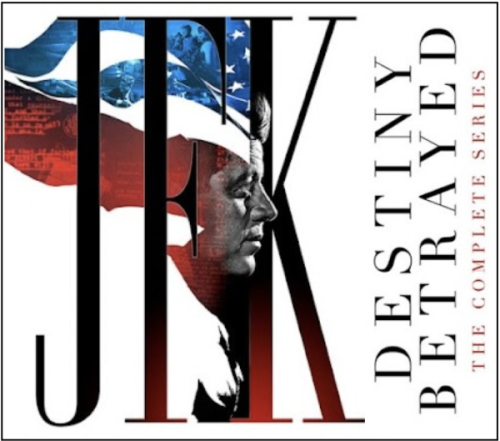
BY LAURENT GUYÉNOT • UNZ REVIEW • JANUARY 21, 2023
I have watched Oliver Stone’s documentary on the assassination of JFK, both the short version, JFK Revisited: Through the Looking Glass, and the long version in four episodes, JFK: Destiny Betrayed. I recommend the latter, which I will discuss here. Although the technical parts (the bullets, the autopsy, Oswald’s CIA handlers) are interesting and partly new, I will focus exclusively on the theory regarding the main culprits and their motive. And I will discuss the larger work of James DiEugenio, who wrote the film—and probably interviewed the different contributors, although Stone appears to be doing it. … continue
Blog Roll
 Aletho News
- Col Douglas Macgregor: Iran May Seize Kuwait ON THE GROUND
- US Army turns to older PAC-2 Patriot missiles as war against Iran drains stockpiles
- James Woolsey, influential neocon and Iraq War booster, dies at 84
- Midazolam and morphine deaths
- US Benefits From Oil Supply Disruptions in Strait of Hormuz – Ex-UK Ambassador
- Iran: UK decision to aid US strikes amounts to ‘act of aggression’
- Number of US casualties in war with Iran higher than officially disclosed
- Ian Proud: Anti-Russian Sanctions Do Not Work – How the Ukraine War Ends
- Italian newspaper forced to pay for smearing ‘Putinists’
- Iran will destroy multiple energy facilities for every bridge, power plant struck by US: Report
- If Americans Knew
- ISRAELI MEDIA: ‘An Inferno’: Gazans Face Sweltering Conditions in Tent Camps for Third Summer in a Row
- Israel’s Coordinated Campaign to Propagandize Conservatives in America
- The Israeli Spy Behind PragerU’s Plan to Rewrite American Education To Indoctrinate Children
- The President of the World Jewish Congress just sent a warning to every Potential AMERICA FIRST Candidate wishing to run for U.S. Congress
- Life in displacement tents under Gaza’s summer sun is “an inferno” – Daily Update
- Israel targets X users, right-wing media with $2 million ad push
- ‘Our role is to hold on’: Palestinian artists in Israel after October 7
- ‘My Father Is a Hero’: Detained Palestinian Dr. Hussam Abu Safiya’s Son Speaks to Zeteo
- Israel threatens to seize ancient water reservoirs near Bethlehem
- Series of Reports Ignored by Media Show Jeffrey Epstein’s Extensive Work With Israeli Intelligence
- No Tricks Zone
- Greenland’s Ice Sheet Was Supposed To Be Rapidly Melting Away. It Hasn’t Been.
- Global Temperature Trend Has Cooled Over The Past 6500 Years, Scientists Have Found
- Wind Energy Means Going Back To The Middle Ages, Says German Professor Horst-Joachim Lüdecke
- New Study: A 40-Fold Increase In Earth’s Main Greenhouse Gas Contributes To Cooling The Ocean
- New Study Highlights The ‘Dominant Role’ Of Aerosol/Cloud Interactions In Shaping Climate
- Munich’s First-Ever Green Party Mayor Declares First Ever City Water Use Restrictions… Fines Up to 50,000 €!
- Experimental Lab Research: The Climate Sensitivity To A 400-Fold Increase In CO2 Is 0.1°C
- Fatal Snobbery: In France, It’s Better To Die From A Heatwave Than To Do As Americans
- New Study: NASA’s Models Wildly Underestimate The Capacity Of Clouds To Alter Solar Radiation
- Polar Freezeover: Western Arctic Early July Sea Ice Exceeds 1980s Average
 Aletho News