The FBI is sued for withholding Facebook censorship records
By Dan Frieth | Reclaim The Net | October 7, 2022
The FBI has been sued for withholding records of communications with Facebook about the Hunter Biden laptop story.
In an appearance on Joe Rogan’s podcast in August, Meta CEO Mark Zuckerberg said that before the 2020 election, the FBI warned Facebook about Russian propaganda.
“The background here is that the FBI came to us – some folks on our team – and was like, ‘Hey, just so you know, you should be on high alert. We thought there was a lot of Russian propaganda in the 2016 election, we have it on notice that basically there’s about to be some kind of dump that’s similar to that,’” he said.
The FBI did not explicitly mention the laptop story but Facebook thought the story fit the pattern that the federal agency described and decided to limit the reach of the story.
Following Zuckerberg’s comments, the America First Legal (AFL), a legal nonprofit founded by former Trump adviser Stephen Miller, requested the FBI for the communications it had with Facebook between October 1, 2020, and November 15, 2020. The FBI refused to comply, claiming the request could not be done “with a reasonable amount of effort” because it was “overly broad.”
This week, the AFL filed a lawsuit to force the FBI to comply with its request.
We obtained a copy of the lawsuit for you here.
The lawsuit states: “Barely a month before the 2022 midterm election, FBI officials continue to suppress information of great interest to American voters and stonewall AFL’s request for records relating to the FBI’s collusive scheme with Facebook to censor news and information about the contents of Hunter Biden’s laptop.”
The AFL is convinced there was “comprehensive collusion” between the FBI and Big Tech to put Joe Biden in the White House.
“The evidence is that during the 2020 Presidential election campaign, the FBI conspired and combined with large corporations, including Facebook, to censor and suppress the damning evidence of
Biden family corruption and influence peddling found on Hunter Biden’s laptop,” said AFL Senior Counselor Reed Rubinstein.
“This was done to help Joe Biden and the Democrats win the 2020 election.”
Republican Senators Ron Johnson and Chuck Grassley wrote letters to FBI Director Chris Wray and Zuckerberg asking for the names of the employees involved in the communications about “Russian disinformation.”
“The American people deserve to know whether the FBI used Facebook as part of their alleged plan to discredit information about Hunter Biden,” the senators said in the letters.
Food, energy, housing: True German inflation is 56 percent
Free West Media | October 7, 2022
Prices are skyrocketing and we are all getting poorer – everyone feels the price shock, but in statistics it shows up much smaller. Official inflation figures are around 10 percent. But many citizens notice in their everyday life: Prices are rising – in the supermarket, at the gas station – much faster.
The true inflation is much higher: That’s why there is now the inflation radar from pleiticker.de – one can find it updated daily on their homepage. They have calculated price developments in the areas that really matter: housing, energy and basic foodstuffs. With the latest figures, inflation there was a whopping 56,3 percent over the past year – and 11,6 percent over the past week alone. For the average net income of a German household (€3 600), this means a loss in value of €1 296. This is mainly driven by the rise in energy costs. The price of electricity has risen by an unbelievable 344 percent in the past year.
The official figures, on the other hand, are hardly meaningful: The figures from the Federal Statistical Office are significantly lower and not very plausible for the reality of people’s lives for two reasons: On the one hand, it includes hundreds of products in its unrealistic “shopping basket”. On the other hand, the price shock for electricity and gas only becomes visible in the Federal Statistical Office’s inflation calculator with a long delay. Instead of the market price, the current consumer price is used, which reflects even more favorable market prices from the past. The real market price only reaches the end consumer after many weeks.
Germany economy is grinding to a halt
The German economy is slipping as a consequence of the exploding electricity and gas prices and the galloping inflation, which has now solidified in the double-digit range. The former Bild editor-in-chief Julian Reichelt has been documenting the German economic bankruptcy with a new project, called pleiticker.de.
The project is described as follows on the website pleiticker.de: “Every day, companies collapse under the exploding energy costs and file for bankruptcy. More and more people can no longer afford to live. Pleitticker.de documents the crisis that Economics Minister Robert Habeck doesn’t want to see […] The truth is: the wave of bankruptcies has long been here.”
At the beginning of September, the Economics Minister said: “I can imagine that certain sectors will simply stop producing for the time being. Don’t become insolvent.”
This is illustrated on the website not only by the sheer numbers, but also by numerous reports on the effects of the failed policy – for example on already known company bankruptcies, impending waves of insolvencies in clinics and other sectors or the mass terminations of gas customers by the public utility company.
The website also examines actual inflation, because according to Reichelt, the so-called “shopping basket” of the Federal Statistical Office does not reflect the price increases for many everyday products, but, for example, prices for home cinema systems, surfboards, services from domestic staff or visits to the opera. Essentially these are items and services that few avail themselves of.
Reichelt’s new portal therefore calculates the authentic inflation rate in the areas of housing, energy and staple foods.
Journalists who touted ‘climate’ price hikes demand pay rise
Hacks from the German regional public broadcaster WDR, have been demanding inflation compensation for themselves – in order to cope with the price increases that they themselves have demanded
Lorenz Beckhardt, WDR journalist and Quarks editor, called for a “warning strike in WDR” on Twitter: “With a few exceptions”, public service broadcasting is not done by people who “earn top salaries”. He does not offer any details on his own remuneration and whether he counts himself among his “struggling colleagues”.
The journalists want to push through a 5 percent salary hike and inflation compensation – mainly to be able to cope with the massively rising food and energy prices. For this reason they stopped work on Wednesday, October 5.
The irony is particularly biting: Not long ago, Lorenz Beckhardt had personally demanded price increases – for the sake of the “environment”. In July 2019 he appealed to politicians in a comment on: “Make meat, driving cars and flying so damn expensive that we can put an end to it. Please! Quickly!”.
Now that he has got what he wanted, he is whining about money. For the likes of Beckhardt this is obviously not a contradiction.
Totally clueless or complicit politicians?
The next hurdle facing the Scholtz federal government’s energy policy is that nobody in Berlin can say how much gas will actually be available to supply the country in winter. Despite – allegedly – well-filled storage tanks, gas in unknown quantities are not intended for Germany at all, but flows abroad.
Officially, Germany’s gas storage facilities are more than 90 percent full. But that is no reason for relief, because the gas is not reserved for German consumers and companies. The news magazine Focus recently reported on a letter from the Ministry of Economic Affairs to the deputy chairman of the Union parliamentary group, Jens Spahn, which stated: “The Federal Government does not have any knowledge of where the individual stored gas is going.”
The Federal Network Agency told the German weekly Bild am Sonntag: “The stored gas is largely owned by gas traders and suppliers who often operate across Europe.”
Particularly riling is that this also applies to the gas that Trading Hub Europe buys with state aid and has stored under trusteeship of the Federal Network Agency in the former Gazprom storage facility in Rehden. So, although this gas was financed with tax money, it is not reserved for Germany.
It can be purchased by all national and international companies registered on the German gas market to the highest bidder. For German gas customers, whether private or corporate, this is tantamount to a resounding slap in the face: their own government obviously shows no interest in ensuring energy security and giving preference to German customers.
CDU politician Jens Spahn, also criticized this outrage: “The very expensive gas bought in our storage facilities must reach German consumers in winter,” he demanded. In view of the crisis, that should actually go without saying, but in Germany, of course, politicians are pursuing Anglo-Saxon priorities.
Incidentally, neighboring Austria has a similar problem: according to the head of Austria’s largest energy storage company, RAG, a gas storage capacity of 85 percent should be reached by the end of the month. But even there, the country owns just under half of the gas.
The geopolitical consequences of the OPEC+ agreement

By Hazem Ayyad | MEMO | October 7, 2022
Amir Hossein Zamani Nia, Iran’s OPEC governor, announced when he left a meeting with representatives of the 13 member states of the Organisation of Petroleum Exporting Countries (OPEC) and their ten allies – known as OPEC+ – the decision to reduce oil production by two million barrels per day for November.
The initial reactions to the large production cut were hysteria. One American journalist asked the Saudi Minister of Energy, Prince Abdulaziz Bin Salman, if he was worried about the American reaction to the production cut. He sarcastically told her to enjoy the sun in Vienna; a clear indication of the difficulties that Europeans will face next winter.
The American reactions to the decision of the OPEC+ countries were quick and distinct. White House press secretary Karine Jean-Pierre commented on the decision by saying it was clear that the OPEC+ alliance was “aligning with Russia” and was making a “short-sighted decision” to reduce oil production at the height of the conflict in Ukraine.
White House National Security Adviser Jake Sullivan noted that US President Joe Biden was feeling “disappointed” with the decision of the OPEC+ alliance to reduce its oil production.
The reactions confirm President Biden’s failure to manage the sanctions against Russia and the dismantling of the OPEC+ alliance, whose decisions ruined the ambitions of the US administration, the US Treasury, and the Federal Reserve to fight inflation and reduce interest rates.
The OPEC+ alliance has once again proven its strength and the unity of its countries, which include Iran, Saudi Arabia, the UAE and Russia. Despite the disparity, competition and conflict between its countries, the OPEC+ agreement exceeded the limits of technical performance confirmed by UAE Energy Minister, Suhail Al Mazrouei, when his country announced it was joining the efforts to reduce production. Its geopolitical reach extended from the Gulf and Yemen to the Red Sea and the Mediterranean.
The agreement that included regional opponents such as Iran, Saudi Arabia and the UAE, and international sponsors such as Russia, stressed the geopolitical dimensions as it coincided with a meeting held by the Russian President’s Special Envoy to the Middle East and Africa, Deputy Foreign Minister Mikhail Bogdanov, on Wednesday evening with the Emirati Ambassador to Moscow, Mohammed Ahmed Al-Jaber, to discuss the situation in Yemen and the Gulf region after the expiry of the deadline for the truce agreement in Yemen on 2 October.
This meeting came at the request of the Emirati ambassador and coincided with threats made by a member of the Political Bureau of the Houthi movement, Muhammad Al-Bakhiti. He said: “We have the ability and the courage to strike the Saudi and Emirati oil facilities if our demands are not met.”
The meeting with the Emirati ambassador coincided with a press conference held by the US special envoy to Yemen, Tim Lenderking, during which he discussed his country’s position on renewing the truce in Yemen between the countries of the Arab coalition, led by Saudi Arabia and the UAE, and the Houthi group. The US official held the Houthis responsible for hindering the reaching of an agreement without providing practical solutions for resuming the truce or dealing with Houthi threats.
These actions and movements confirm the connection between the regional files and their connection to the international mediations led by both America and Russia in Yemeni. Saudi Arabia and the UAE view the OPEC+ agreement as a trump card and a comprehensive framework that allows activating mediations and truces in Yemen, with the positive and consensual atmosphere it provides, which the Biden administration was unable to provide. This is despite its frequent talk about security cooperation in the Red Sea and the Gulf and naval and air manoeuvres, but it quickly turned into a political and economic framework that serves Israel and its interests more than it serves the interests of Riyadh and Abu Dhabi.
OPEC+ has shifted from a technical framework to an emerging economic and geopolitical framework; fuelled by the Ukrainian war and Russian demands. The tense American reactions deepened the Arab Gulf states’ mistrust of the American partner, which repeatedly failed to deal with the Yemeni and Iranian file. It also failed to deal with the economic requirements of the Gulf states and their political and cultural specificity, which put them in conflict with the powers of the region and threatened their political and religious legitimacy.
This article first appeared in Arabic in Arabi21 on 6 October 2022.
OPEC+ decision to cut oil counteracts Europe’s idea of price cap on Russian energy
US and Europe can no longer make condescending and hegemonic demands on energy producers
By Ahmed Adel | October 7, 2022
The European Commission is hoping to impose a cap on gas prices as the current energy crisis will inevitably deepen over the winter. However, European Union member states are divided over the proposed measures, which are designed to lower soaring inflation amid Moscow’s response to sanctions imposed for its military operation in Ukraine.
Although France, Italy, Poland and 12 other EU countries urged the Commission to propose a broader price cap targeting all wholesale gas trade, the Netherlands, Denmark and Germany – Europe’s biggest gas buyer – are among those opposed against the measure as they believe capping prices could endanger the security of supply as it undermines the EU’s ability to attract gas deliveries.
It is recalled that in early September, Russian President Vladimir Putin described the idea of a price cap as “stupid”, highlighting that the EU was “in no position to dictate”. After warning that the EU would “freeze” if such a cap was imposed, Putin said: “We will not supply gas, oil, coal, heating oil – we will not supply anything.”
While EU leaders are doggedly and obsessively calling for a price cap, industry experts show their scepticism, and in some cases concern on the repercussions of such an action. It is already noted that EU sanctions imposed against Russia are already affecting European economies far worse than the Russian economy.
In this light, chairman and CEO of French energy major TotalEnergies, Patrick Pouyanné, said on October 5: “Honestly, I am not sure that a price cap on Russian oil is a good idea.”
“What I am sure is that if we do that (cap), then Putin will say that ‘we don’t sell my oil’ – and the price will not be at $95, it will be at $150,” Pouyanné said.
For her part, Elisabetta Cornago, a senior energy researcher at the Centre for European Reform, explained that “It’s hard to picture such a level of market intervention. This is uncharted territory.” Another expert, Bram Claeys, a senior advisor at the Regulatory Assistance Project, said that the energy price cap would “quickly start costing billions” because it would force governments to continually subsidise the difference between the real market price and the artificially capped price.
Despite the scepticism from energy experts, the head of the European Commission, Ursula von der Leyen, maintains the need to introduce a ceiling on the price of Russian gas. At the end of August, she announced that the European Commission was taking quick and long-term measures to improve the situation amid rising electricity prices in the EU.
However, it appears that Russia is already pre-emptively responding to price cap suggestions by convincing its partners in OPEC+ (Organization of the Petroleum Exporting Countries) to reduce oil production by 2 million barrels per day from November. This will cause a severe crisis, which will reverberate in Europe and the United States, especially as the OPEC+ decision was made just weeks before the US midterm elections.
For this reason, the White House angrily said in a statement that Biden was “disappointed by the shortsighted decision by OPEC+ to cut production quotas while the global economy is dealing with the continued negative impact of Putin’s invasion of Ukraine.”
OPEC+ comprises of 24 members, many of them close partners with Russia, such as Saudi Arabia, the United Arab Emirates, Iran and Venezuela, and not a single member is Western. In addition, the most influential members have significant differences with Washington, and unlike in decades past, are not afraid to push back to defend their own interests.
Washington is trying to impose the No Oil Producing and Exporting Cartels, or NOPEC bill, which is designed to protect US consumers and businesses from oil spikes. However, OPEC’s most influential members have warned that this legislation would cause chaos in the energy market.
Saudi Energy Minister Prince Abdulaziz bin Salman said on October 5: “We will continuously prove that OPEC+ is here not only to stay but here to stay as a moderating force to bring about stability.”
It is recalled that when Biden arrived in Saudi Arabia earlier this year on a mission to urge one of the world’s largest oil exporters to ramp up production in a bid to help bring down gasoline prices, OPEC+ raised oil output by a minuscule 100,000 barrels per day in what was widely seen as an insult to Biden.
In this way, it is demonstrated that Western influence over energy is waning and that OPEC+ members are behaving more confidently in protecting their own interests. Putin has delivered on every warning he has made whenever a red-line was crossed, and there is little doubt that if Europe imposes a cap, he will counteract Europe’s economic aggression by significantly cutting energy flows, which will make prices soar. There is effectively very little Europe and the US can do to stop this and they must accept the fact that they are at the mercy of OPEC+ and can no longer impose their condescending and hegemonic demands over the organisation and its member states.
Ahmed Adel is a Cairo-based geopolitics and political economy researcher.
Cause of Mahsa Amini’s death revealed by coroner in Iran
Samizdat | October 7, 2022
Mahsa Amini, whose death in police custody led to mass protests in Iran, did not die due to physical violence, but from cerebral hypoxia, or lack of oxygen to the brain, a coroner’s report has determined.
The 22-year-old woman was arrested by the Islamic Republic’s morality police in Tehran on September 13 for wearing an “inappropriate” headscarf. Her family claimed she was tortured and collapsed after being hit on the head.
According to the forensic report, quoted by Iran’s official news agency IRNA on Friday, Amini’s death was “not caused by a blow to the head or vital organs of the body.”
The document said Amini had underlying conditions stemming from surgery on a benign brain tumor she had undergone when she was eight.
The report stated that the woman suddenly lost consciousness and collapsed while in custody, then regained consciousness before falling again.
“Due to the ineffective cardio-respiratory resuscitation in the first critical minutes, she suffered severe hypoxia and as a result brain damage despite recovery from cardiac functioning,” the report said, adding that the woman died due to “multiple organ failure caused by cerebral hypoxia.” It did not specify whether Amini had suffered any injuries.
The largest of the protests over Amini’s death have occurred in Iran’s western Kurdistan Province, where she was from. More than 150 people have died in clashes with police, according to the Iran Human Rights group, as cited by the Associated Press.
US admits Kiev killed Russian journalist Daria Dugina
But it remains silent about Western possible involvement in the crime

By Lucas Leiroz | October 7, 2022
In a recent article published by The New York Times, it was reported that US intelligence believes Kiev authorized the terrorist attack that murdered Russian journalist and activist Daria Dugina, daughter of the political scientist and philosopher Aleksandr Dugin. With this, the prevailing narrative on the case in the US takes on an accusatory tone against Ukraine, but the silence remains on the connivance of Western countries, which refused to help the Russians to capture those responsible for the attack.
The article cites unidentified sources that confirm the Russian version that Dugina’s death was caused by an intelligence operation planned, authorized, and executed by Kiev’s agents. According to NYT’s sources, information confirming the Ukrainian authorship of the attack was shared among US officials recently, thus corroborating the suspicions previously showed not only by Moscow, but also by many experts around the world.
The article, however, emphasizes that the operation was conducted exclusively by Ukrainian officials, with no US agents participating. Apparently, American intelligence did not take note of any planned Ukrainian attack and only obtained confirmation about the plans of its Ukrainian partners much later, with the Americans even “admonishing” Kiev for having conducted such a bold operation.
“The United States took no part in the attack, either by providing intelligence or other assistance, officials said. American officials also said they were not aware of the operation ahead of time and would have opposed the killing had they been consulted. Afterward, American officials admonished Ukrainian officials over the assassination, they said”, the article mentions.
It is curious to observe how the American media has suddenly changed its assertion, after months denying the veracity of the reports published by the Russian government on the case. Some Western journalists even spread conspiracy theories about the possible involvement of the Russian state itself in the attack, trying to create the story that Moscow had planned a false flag operation to justify a military escalation.
Over time, however, the veracity of the Russian explanation of the case became undeniable. Russia did not initiate any escalation in the conflict, which made the false flag plot lose credibility. And the very Ukrainian practice of murdering civilians became so well known that it could no longer be hidden. Thus, for the NYT disseminating this type of content precisely at this time serves American interests perfectly, as a large media vehicle is getting ahead in releasing an “official version” of the facts, preemptively taking control of the narrative.
It is important to emphasize that American intelligence does not act in defense of “press freedom” when it communicates data to the major newspapers. There are always well-defined strategies and clear objectives to be achieved. In this case, the objective is to isolate the blame for the attack in Kiev and to exempt Western countries from any co-responsibility before Russian investigations go even deeper and other data are revealed. Now, any eventual Western involvement could be called a “conspiracy theory”.
However, it is curious to think that there is such a lack of communication between the Ukrainian and American intelligences. The Ukrainian neo-Nazi regime not only serves as a proxy for American interests but is virtually guided by the US in all its decisions, with NATO agents acting among the strategists in Kiev. It is hard to believe that NATO was not even aware that an operation as complex as the one that killed Daria was being planned by its partners.
However, Western contribution to Daria’s assassination goes beyond that. Western countries refused to cooperate with Russia to capture Daria’s murderer even after Moscow published official data on the conclusion of its investigations. Daria’s assassin, the Ukrainian spy, member of the Azov Battalion Natalya Vovk, after committing the crime fled to Estonia and then to Austria. Russia asked for cooperation and asked European authorities to help find the killer but received no response. In fact, this can be interpreted as a form of “participation”, considering that Western countries deliberately prevented Russia from capturing a criminal responsible for the death of a civilian, even though there was sufficient evidence of Vovk’s involvement in the crime.
Now that the Americans have admitted that their proxies killed an innocent civilian – and assuming the narration that the Ukrainians acted alone to be true – the least the Europeans should do is a formal apology and start cooperating so that Ukrainian criminals do not freely cross their borders when they are wanted in other countries. And the US should commit to preventing Kiev from doing anything like that again.
It remains to be seen, however, if the West is really innocent in this case or if this NYT’s publication was just a strategic move to take control of the narrative before something more frightening is revealed in the near future.
Lucas Leiroz is a researcher in Social Sciences at the Rural Federal University of Rio de Janeiro; geopolitical consultant. You can follow Lucas on Telegram.
Lavrov explains why Russia sees Ukraine as a threat
Samizdat | October 7, 2022
A call by Ukrainian President Vladimir Zelensky for NATO members to deploy nuclear weapons against Russia is a reminder of why Moscow launched military action against his country, Russian Foreign Minister Sergey Lavrov has said.
“Yesterday, Zelensky called on his Western masters to deliver a preemptive nuclear strike on Russia,” Moscow’s top diplomat stated during a media conference on Wednesday.
In doing so, the Ukrainian leader “showed to the entire world the latest proof of the threats that come from the Kiev regime.” Lavrov said Russia’s special military operation had been launched to neutralize those threats.
He dismissed as “laughable” an attempt to downplay Zelensky’s words made by his press secretary, Sergey Nikoforov.
“We all remember how [Zelensky] declared in January Ukraine’s intention to acquire nuclear weapons. Apparently, this idea has long been stuck in his mind,” the Russian minister said.
On Thursday, Zelensky told the Australian Lowy Institute that NATO must carry out preemptive strikes against Russia so that it “knows what to expect” if it uses its nuclear arsenal. He claimed that such action would “eliminate the possibility of Russia using nuclear weapons,” before recalling how he urged other nations to preemptively punish Russia before it launched its military action against his country.
“I once again appeal to the international community, as it was before February 24: Preemptive strikes so that [the Russians] know what will happen to them if they use it, and not the other way around,” he said.
His spokesman then claimed that people interpreting Zelensky’s words as a call for a preemptive nuclear strike were wrong, and that Ukraine would never use such rhetoric.
Whodunit?
By Way of Deception, Thou Shalt do War
By Doug E. Steil | Aletho News | October 7, 2022
With the mainstream crying Russia, which makes zero sense… (I have the keys to the taxi I’m driving, which pays my bills but to turn it off, I’ll blow it up also:
On 25 July 2022, Gazprom announced it will reduce gas flows to Germany to 20% of the maximum capacity, or 50% of the current throughput. The company shut down the pipeline for 10 days because of maintenance.
On 31 August 2022, Gazprom halted any gas delivery through Nord Stream 1 for three days, officially because of maintenance. On 2 September 2022, the company announced that natural gas supplies via the Nord Stream 1 pipeline would remain shut off indefinitely until the main gas turbine at the Portovaya compressor station near St Petersburg was fixed from an engine oil leak.
And the alternative mainstream crying USA, which makes more sense, but the plethora of memes and ease in which the ‘almost mainstream’ talks about this option… including the infamous ‘thank you USA’ tweet from the (Jewish) former Polish foreign minister, Sikorski, who then deleted it (after millions of views and re-tweets)… it all looks remarkably ‘black or white’; and this, as always, should be a red flag.
Who? How? Why? are the questions everyone is asking… but no one asked when?
So when did this happen?
On 26 September 2022, Danish and Swedish authorities reported a number of explosions at both Nord Stream lines (only string A in NS2): the resulting damage causing a series of gas leaks. The European Union considers the incident to be intentional sabotage.
Anything else occured on September 26, 2022?
Rosh Hashanah 2022 began in the evening of Sunday, September 25 and ended in the evening of Tuesday, September 27.
Ah… but what is Rosh Hashanah ?
Rosh HaShanah (Hebrew: רֹאשׁ הַשָּׁנָה, Rōʾš hašŠānā, lit. “head of the year”) is the Jewish New Year. The biblical name for this holiday is Yom Teruah (יוֹם תְּרוּעָה, Yōm Tərūʿā), literally “day of shouting or blasting.” It is the first of the Jewish High Holy Days (יָמִים נוֹרָאִים, Yāmīm Nōrāʾīm; “Days of Awe”).
Literally day of shouting or BLASTING?
Who suffers most with Nordstream being blown up? Germany. Do a little google search for « germans to freeze this winter »… there are thousands of articles… most written even before september…
Nordstream was a way for Germany to get gas direct from Russia, without paying expensive transit costs through Eastern European middlemen… Eastern European middlemen.

Serbia furious over latest anti-Russia sanctions
Samizdat | October 6, 2022
The Serbian government has slammed the latest package of EU sanctions targeting Russia’s oil exports, describing it as the “first EU sanctions package” against Serbia.
Restrictions on the maritime transportation of Russian oil would make it too expensive for Serbia and severely hit the nation’s economy, government officials said on Thursday. In a scathing statement, Serbian Interior Minister Aleksandar Vulin called the EU “the place of our future humiliation and suffering.”
Belgrade will now be “forced to buy more expensive Iraqi oil and thus lose hundreds of millions of euro,” he argued, accusing neighboring Croatia, which is an EU member state, of lobbying for the new measures.
Vulin said the only “consistent” feature of EU policy is “revenge on free nations,” and decried the fact that Western Balkan nations had not been exempted from the latest batch of anti-Russia measures.
The EU “introduced not the eighth package of sanctions against Russia but the first sanctions package against Serbia,” the minister said. He argued that this was why it is “better to be a militarily and politically neutral country” rather than a member of a club of nations that allows the “[psychological] complexes” of its members to run the show.
Serbian Prime Minister Ana Brnabic was equally critical of the new sanctions, saying they were introduced “at the expense of the lives and living standards” of all Serbian people. “It will cost us hundreds of millions of euro,” Brnabic told Serbia’s Happy TV broadcaster.
“What they thought they would do to Russia they did to us on Wednesday, because we depend on the oil pipeline in Croatia,” the prime minister added, accusing Brussels of “using energy for political blackmail and retribution.”
On Thursday, the EU announced the eighth package of restrictions on Russia which include a price cap and “further restrictions” on the maritime transportation of Russian crude oil and petroleum products to third countries. Serbia imports Russian oil by sea through a Croatian port terminal on the island of Krk, from which it is then transported through a pipeline to Serbian territory.
The new measures would make such imports at least 20% more expensive, according to Serbian media. In June, Serbian President Aleksandar Vucic warned that Serbia would not be able to import Russian oil after November 1 due to EU sanctions.
New York Times sacks Gaza journalist for expressing support for Palestinian resistance
MEMO | October 6, 2022
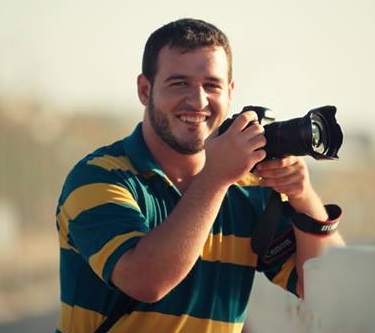
Palestinian photojournalist, Hosam Salem, has been fired by the New York Times for expressing support for Resistance against Israeli occupation. The Gaza- based journalist has been working as a freelancer for the American outlet since 2018, but was dismissed after a dossier compiled by a pro-Israel group, accusing Salem of anti-Semitism, was presented to the Times.
Since joining the Times, Salem has been covering critical events in Gaza, such as the weekly protests at the border fence with Israel. He carried out an investigation into the Israeli killing of field nurse Razan Al-Najjar and, more recently, the May 2021 Israeli offensive on the Gaza strip, which killed at least 254 Palestinians, including 66 children, 39 women and 17 elderly people.
Details of his dismissal were revealed by Salem himself on Twitter. He said that the decision to fire him was made based on a report prepared by a Dutch editor – who obtained Israeli citizenship two years ago – for a website called “Honest Reporting”. The anti-Palestinian group is a staunch supporter of Israel and is often accused of peddling false narratives in Western media about Israel’s human rights violations.
Salem said that the dossier used by the Times to dismiss him used examples of social media posts in which he expressed support for Palestinian Resistance against Israeli occupation. “My aforementioned posts also spoke of the resilience of my people and those who were killed by the Israeli army – my cousin included – which “Honest Reporting” described as ‘Palestinian terrorists,'” said Salem on Twitter.
Salem claims that the editor of the dossier later wrote an article stating that he had succeeded in sacking three Palestinian journalists working for the Times in the Gaza Strip, based on allegations of anti-Semitism.
“Not only has “Honest Reporting” succeeded in terminating my contract with The New York Times, it has also actively discouraged other international news agencies from collaborating with me and my two colleagues,” Salem continued, while warning of the silencing of Palestinian voices.
“What is taking place is a systematic effort to distort the image of Palestinian journalists as being incapable of trustworthiness and integrity, simply because we cover the human rights violations that the Palestinian people undergo on a daily basis at hands of the Israeli army.”
Doctors Call for Investigation Into FSMB Attacks on Physicians, Ties to Big Pharma
By Suzanne Burdick, Ph.D. | The Defender | October 4, 2022
Scroll down for video
Dr. Emanuel Garcia, a New Zealand doctor who said he believes he lost his medical license for questioning and speaking out against the official COVID-19 narrative, also believes that the U.S.-based Federation of State Medical Boards (FSMB) played a role.
“We desperately need a real and deep investigation into this private entity that is pulling strings worldwide,” Garcia told The Defender.
Garcia — a psychoanalyst and psychotherapist who received his M.D. from the University of Pennsylvania in 1986 — is board-certified in psychiatry and neurology by the American Board of Psychiatry and Neurology. He has lived in New Zealand since 2006.
Garcia was a public health consultant psychiatrist until the end of October 2021, when he resigned from his position at the Hutt Valley District Health Board rather than get a COVID-19 vaccine, he said.
His medical license came up for renewal with the Medical Council of New Zealand at that same time.
Garcia reapplied for his license to keep it — but instead of receiving a successful renewal notice from the country’s medical council, Oct. 29, 2021, he received a letter stating that the council had “resolved” to suspend him from practicing because, “Dr. Garcia’s conduct raises one or more questions about the appropriateness of his conduct or the safety of his practice.”
In an interview with The Defender, Garcia said:
“Apparently, the chief psychiatrist of my hospital reported me to the medical council because I made these videos wherein I spoke about natural immunity, the early treatment, how ridiculous it was to try to eliminate a respiratory environment.”
The council found fault with Garcia’s lack of “adherence” to the council’s May 6, 2021, guidance statement, “COVID-19 Vaccine and Your Professional Responsibility,” and his lack of “adherence” to other statements made by the council.
Council Chair Dr. Curtis Walker said there was no place for “anti-vaccine messages” in a medical professional’s practice — or on their social media.
In its letter, the council listed complaints about Garcia’s behavior, including that he wrote an open letter to the prime minister titled, “Another Disastrous National Lockdown,” posted videos about COVID-19 on Voices For Freedom, YouTube and Odysee, and voiced opinions about the handling of COVID-19 on social media that did not align with the council’s statements.
Garcia called the letter “a farce.” He said none of the things he did were “great” or “revolutionary” — in his mind, he was pointing out “basic things” to the public as he witnessed the unfolding of the COVID-19 pandemic and the New Zealand government’s response to it.
Garcia didn’t fight the suspension because he was “sick of their duplicity” and “wanted out.”
“My lawyers were advising me to fight and to sign a so-called ‘voluntary undertaking’ which would have muzzled me,” he said.
If he had signed the voluntary undertaking, Garcia would have agreed to not say anything that ran counter to the council’s statements on COVID-19. The idea was, he said, that doctors who signed a voluntary undertaking were signaling to the council that they were willing to “play by their rules” and that the council, therefore, would “be more lenient with the punishment they dole out” — such as fines or suspension of the doctors’ license.
“I refused,” Garcia said. “I gave a lot of talks at parliament during the protests here in New Zealand, and I spoke freely — unfettered.”
Garcia said he chose to retain his freedom of speech and was able to “fully disengage” from the council through the use of common law, or equity law, to legally sever his professional ties to the council.
“According to the rules and principles of equity, I exercised my equitable right to annul, abrogate and cancel my registration with the Medical Council of New Zealand,” Garcia said.
Soon afterward, Garcia learned about the council’s connection with the International Association of Medical Regulatory Authorities (IAMRA), which is the international arm of the FSMB.
“The Chair-Elect of the IAMRA, Joan Simeon, just happens to be the CEO of the Medical Council of New Zealand, and the Secretary of the IAMRA, Dr. Humayun Chaudhry, just happens to be the President and CEO of the FSMB,” Garcia said.
Doctors worldwide who have “questioned things” have come under attack by their medical boards — and these medical boards “all come under the aegis of the FSMB,” Garcia said.
Garcia told The Defender :
“We have to do something different. We have to create an entirely new medical system that is out of the grip of these board-run matrices, one that honors basic medical precepts and practices rather than following algorithmic guideline-driven procedures engineered by bureaucrats.
“There is an opportunity for a magnificent renaissance of healthcare and it WON’T happen within the existing totalitarian system, it has to come from us.”
FSMB report targets practitioners of alternative medicine
Most doctors have not heard of the FSMB and are unaware of its influence, according to Garcia. He, himself, was unaware until his colleague, Dr. Bruce Dooley, a U.S.-trained medical practitioner who also lives in New Zealand, told him about it.
Dooley recently spoke out publicly about his knowledge of the FSMB.
In an “explosive” Sept. 24 interview with FreeNZ’s Liz Gunn, Dooley explained that the FSMB and IAMRA are private “registered charities with ‘hidden and anonymous’ donors who oversee disciplinary action of licensed medical doctors.”
Dooley — who trained at Jefferson Medical College (now called Sidney Kimmel Medical College) in Philadelphia, has a master’s in immunology and virus research from Villanova University and is a medical practitioner licensed in Hawaii, Florida and New Zealand — said the FSMB and IAMRA particularly target clinicians working beyond the Big Pharma paradigm, whom they label as “fringe” or “quack.”
“Big money must not be allowed to beat integrity and experience,” said a New Zealand Doctors Speaking Out With Science spokesperson in a Sept. 28 press release about Dooley’s interview with Liz Gunn.
In the late 1990s and early 2000s, while he was the president of the Florida chapter of the American College for Advancement in Medicine (ACAM), Dooley witnessed first-hand the FSMB’s attack on doctors who practice complementary and alternative medicine (CAM).
ACAM is a nonprofit organization dedicated to educating physicians and other healthcare professionals on the safe and effective application of integrative medicine.
At the rate ACAM was growing during the late 1990s, the “world’s medical scene” would have become a “totally different thing” if the FSMB had not attacked integrative doctors 25 years ago, Dooley told The Defender.
“We had 1,200 members,” Dooley said, as doctors from New Zealand, Australia and Europe who were exploring integrative medicine were joining ACAM in large numbers and bringing with them their financial resources.
“We had a million dollars in the bank,” he added.
As a leading CAM practitioner, Dooley testified about the value of CAM during the Clinton administration for the White House Commission on Complementary and Alternative Medicine Policy.
During this time, Dooley also investigated the FSMB by attending its annual meetings as a paying conference participant. He noted how during conference sessions, FSMB leaders encouraged doctors to harass their fellow doctors who were offering natural health treatments.
Moreover, Dooley obtained a report produced by the Special Committee on Health Care Fraud (later renamed the Special Committee on Questionable and Deceptive Health Care Practices) showing that the FSMB perceived CAM and doctors who practiced it to be a “risk to public health.”
The FSMB’s governing body in April 1997 accepted the committee’s report as policy.
The report — which is no longer available on the FSMB website but which Dooley shared with The Defender — negatively labeled CAM as “questionable” practices that could constitute “health care fraud.”
The report said:
“In April 1995, Federation President Robert E. Porter, MD, established a special committee on health care fraud. The need for such a committee arose from the proliferation of unconventional and unproven medical practices and promotions in the United States, some of which may be questionable and thereby pose a risk to public health, safety and welfare.”
But according to Dooley, the committee’s motivation was not to ensure public well-being but to ensure that Big Pharma continued to get money. Natural and integrative medicine treatments, such as CAM, were getting in the way of profits for pharmaceutical companies.
The committee’s report said, “It has been estimated that up to $100 billion is lost to health care fraud in the United States annually.”
The committee members added:
“Medical interventions that do not conform to prevailing scientific standards are becoming increasingly popular.
“It is estimated that in 1990, Americans made 425 million visits to providers of ‘unconventional’ medicine, exceeding the number of visits to all U.S. primary care physicians, at a cost of approximately $13.7 billion.”
According to Dooley, the committee’s statements are essentially anti-competitive. “It’s such an anti-competitive piece,” he told The Defender, adding:
“Basically, the end says to the medical councils, ‘Look, we’ve got to stop this. This questionable medicine stuff is growing too fast. You need to get on board with us to pretty much slap down these doctors.’”
Now, 25 years later, Dooley said, the FSMB is employing a similar tactic against doctors who share what the FSMB calls “misinformation” or “disinformation” about COVID-19.
Some doctors, like Garcia, who questioned the pharma-driven global response to the COVID-19 pandemic had their licenses suspended.
Moreover, the FSMB actively seeks to influence federal and state legal policies, thus suggesting it may have played a direct role in generating California’s new law, signed last week, that punishes doctors who share “misinformation” or “disinformation” about COVID-19 with their patients.
The FSMB’s report obtained by Dooley openly stated:
“Through its Legislative Services Department and government relations firm, the Federation monitors federal legislative initiatives to identify proposals that could impact state medical boards.
“Upon the identification of such measures, the Federation develops strategies to intervene and oppose measures that could negatively affect state medical boards. The committee supports and encourages the Federation in its legislative efforts to protect the authority of state medical boards to regulate the practice of medicine, both conventional and unconventional.”
Indeed, the FSMB’s current website says it plays a “crucial role” in advocating for federal and state policies that “positively impact the health and safety of patients and the medical regulatory system.”
Could Sherman Anti-Trust Act be key to exposing FSMB?
Dooley agreed with Garcia that there needs to be a full and transparent investigation into who exactly funds the FSMB.
An effective way to accomplish that, he said, would be for a group of doctors who practice CAM or who have lost their licenses due to sharing COVID-19 “misinformation” to form a class-action lawsuit against FSMB for violating the Sherman Anti-Trust Act.
Dooley said he voiced this idea in the late 1990s, to a class-action law firm. “After I went to two of their [FSMB’s] meetings, I actually took tapes and everything they had given out.”
“They’re quite arrogant, and they just tape everything. People are talking about ‘quack this’ and ‘how to get the quack’ in your area,’” he said.
Dooley said he told the law firm:
“Look at this. This is anti-competitive. I can get 100 doctors together who have all been ‘beaten up’ by their medical boards, all in the same way. Then we can, under discovery, find out who supports this ‘monster.’
“Because that’s the only way you’re going to get their books.”
Garcia and Dooley participate in New Zealand Doctors Speaking Out With Science, a group that has written letters to the New Zealand government expressing concern about the Pfizer COVID-19 shot, “as well as the implication from our regulatory bodies that we would be considered incompetent in our duties if we provided fully informed consent about this procedure.”
Garcia told The Defender that New Zealand Doctors Speaking Out With Science steering committee member, Dr. Matt Shelton — a primary care medical doctor since 1985 and a lecturer and examiner in integrative medicine — has had his license suspended twice.
The Defender contacted Shelton, but he was unable to give an interview by deadline.
In a Sept. 28 press release for Dooley’s interview with Liz Gunn of FreeNZ, New Zealand Doctors Speaking Out With Science said it “agrees with Ontario Supreme Court Judge Pazaratz,” who asked if “misinformation is even a real word … or has it become a crass, self-serving tool to pre-empt scrutiny and discredit your opponent?”
Watch Dooley’s interview with Liz Gunn on FreeNZ here:
Suzanne Burdick, Ph.D., is a reporter and researcher for The Defender based in Fairfield, Iowa. She holds a Ph.D. in Communication Studies from the University of Texas at Austin (2021), and a master’s degree in communication and leadership from Gonzaga University (2015). Her scholarship has been published in Health Communication. She has taught at various academic institutions in the United States and is fluent in Spanish.
This article was originally published by The Defender — Children’s Health Defense’s News & Views Website under Creative Commons license CC BY-NC-ND 4.0. Please consider subscribing to The Defender or donating to Children’s Health Defense.
Featured Video

Broke Princes: Saudi Arabia’s Powder Keg
or go to
Aletho News Archives – Video-Images
From the Archives
Registered Israeli foreign agent driving contrived campus antisemitism crisis
By Wyatt Reed | The Grayzone | December 17, 2023
Lawsuits accusing top US universities of harboring antisemitism all originate from one source: a corporate law firm that fielded the pro-settler ex-US ambassador to Israel, and which was registered as a foreign agent of an Israeli principal as recently as 2021.
The firm now represents professional Israel lobby activists posing as victimized “Jewish students” and seeking to crush the free speech rights of Palestine solidarity activists. … continue
Blog Roll
 Aletho News
- Did Israel lose the midterms?
- How Iran defeated Trump’s Israel First GOP
- De-escalating the conflict: What the OSCE, the UN, and Europe are (not) doing to prevent war
- Desperate For A Renewed Iran War, Israel Dusts Off The WMD Deception.
- US Elections Offer Choice Between ‘Bad and Worse’ as Both Parties Serve War Lobby – ex-UN Expert
- Ghalibaf warns US government not to betray voters who rejected war
- Broke Princes: Saudi Arabia’s Powder Keg
- Albania’s Crisis: Rama, Israeli Investments and the Demand for Accountability
- Hezbollah Categorically Denies Syrian Accusations: We Aim at Confronting Israeli Enemy, Not Undermining Syria’s Stability
- Trump claims funding to Israel ending in 2026 as merger of Israeli–US armies looms
- If Americans Knew
- An error has occurred; the feed is probably down. Try again later.
- No Tricks Zone
- New Study: The Net Fossil Fuel Contribution To Rising Atmospheric CO2 Has Been Zero For 500 Years
- Germany’s Green Energy Transition Becoming Increasingly Expensive…Another 6 Trillion Euros!
- Sudden Stratospheric Warming, Powerful El Niño Combination May Lead To Extreme Europe Cold, Energy Crisis!
- Two New Studies Find Thwaites Glacier Melt Cannot Be Driven By Human Activity Or A Warming Ocean
- E-Cars Reduce CO2 Emissions By Only 41% Compared To Internal Combustion Engine Vehicles
- Predictions Made By Renowned Climate Professor Over Past Decades Have Been Proven To Be Poor
- New Study Suggests Large Regions Of The Pacific Ocean Have Been Cooling For The Last 80 Years
- Germany’s Green Energy Debacle: High Energy Costs Force Kahla Porzellan to Close After 182 Years!
- New Study: 50 Years Of The Most Aggressive ‘Net Zero’ Policies Can Only Affect The Global Climate By 0.03°C
- US September “Heat” Was No Record…Many Records Set Decades Ago

