Prof. Ted Postol: Iran Already Achieved NUCLEAR DETERRENCE Against Israel
Dialogue Works | April 3, 2026
Daniel Davis / Deep Dive – April 3, 2026
Inside China Business | April 3, 2026
Foreign central banks and institution are selling off their holdings of US Treasury bonds. The war against Iran is driving bondholders to dump US government debt at a record pace, and foreign Treasury holdings at the NY Fed are at the lowest level in nearly fifteen years. The heavy liquidations are driving bond yields in the United States higher, and borrowing costs for government, and American households and businesses, are spiking higher.
Resources and links:
Foreign Central Banks Cut New York Fed Treasury Holdings To 2012 Lows https://finimize.com/content/foreign-…
China is dumping US treasuries and buying Gold https://www.fxstreet.com/analysis/chi…
Foreign central banks sell US Treasuries amid war in Iran https://ft.pressreader.com/1389/20260…
China’s Years-Long Retreat From US Treasuries Flags Bigger Risks https://www.bloomberg.com/news/articl…
Chinese Bonds Are Appealing as Reserve Assets, Gavekal Says https://www.bloomberg.com/news/articl…
China surpasses $1 trillion trade surplus despite Trump tariffs https://businessreport.co.za/business…
Lesson 3 (above). Balance of Payments — Why Current and Capital Accounts Net Out. https://www.aei.org/carpe-diem/khan-a…
By Eman Abusidu | MEMO | April 3, 2026
A Bahia state lawmaker has formally urged President Luiz Inácio Lula da Silva to bar Israeli military personnel from entering Brazil, following a series of controversial incidents involving Israeli tourists in Bahia. The measure argues that individuals who took part in military operations in Gaza and Lebanon could be held accountable for acts described in the document as genocide.
The proposal, submitted by state representative Hilton Coelho of the Socialism and Liberty Party (Psol), calls on the federal government to adopt measures preventing individuals linked to alleged human rights violations from using Brazil as a tourist destination or refuge. The document characterises such acts as potential genocide, war crimes, and crimes against humanity.
Coelho grounds the request in Brazil’s Federal Constitution, which prioritises human rights, peace, and the rejection of violence in international relations, as well as the Migration Law (No. 13.445/2017), which permits authorities to deny entry to foreigners suspected of serious violations.
The proposal outlines operational measures, including monitoring arrivals through the Federal Police to identify individuals who participated in military operations, immediate denial of entry where applicable, and international coordination to restrict cross-border movement of those under suspicion.
The initiative comes amid increasing controversy in Bahia, particularly in coastal destinations such as Itacaré and Morro de São Paulo, which have become popular among Israeli tourists, many of whom travel after completing mandatory military service. Local businesses have adapted to this demand, offering Hebrew-language services and tailored hospitality, making the segment economically relevant.
However, tensions have escalated. On 14th March, three Israelis were arrested during a protest in Itacaré against the presence of Israeli tourists. Footage from the scene showed clashes between demonstrators and police intervention. Authorities reported simultaneous opposing demonstrations, reflecting a divide within the local population.
Residents have also reported incidents involving alleged racism, aggression, and public disturbances attributed to some visitors. In parallel, there have been legal complaints filed in Brazil against Israeli individuals over alleged actions during the war in Gaza, with reports indicating that some left the country before investigations could advance.
Congressman Coelho argues that allowing entry to individuals linked to such allegations risks normalising human rights violations and contradicts Brazil’s foreign policy principles.
He is calling for coordinated action by the Ministries of Justice and Foreign Affairs to enforce stricter entry controls.
The proposal will undergo review within Bahia’s Legislative Assembly before being forwarded to the federal government. The administration of President Lula has not yet issued an official response.
Critics of the proposal contend that the measure could be viewed as discriminatory and may create legal and diplomatic challenges for Brazil.
Simultaneously, several lawmakers and members of the Brazilian parliament, particularly from left-wing parties, have withdrawn their signatures from a bill seeking to define “antisemitism” in Brazil, in a significant political reversal that came only days after the proposal was introduced.
The withdrawals followed Palestinian criticism and warnings that the bill could be used to curb criticism of Israeli occupation policies.
According to documents, Bill No. 1424/2026 was submitted to the Brazilian Congress on 26th March 2026, by lawmaker Tabata Amaral and others under the title: “Definition of Antisemitism for the Purpose of Guiding National Public Policies.”
The bill defines antisemitism as “a certain perception of Jews, which may be expressed as hatred toward them.” It also states that manifestations of antisemitism “may target the State of Israel as a collectivity representative of the Jewish people,” while adding that “criticism of Israel similar to that directed against any other country cannot be regarded as antisemitic.”
The proposal further links antisemitism to the crime of racism under Brazilian law and recommends using a list of examples issued by the International Holocaust Remembrance Alliance, or IHRA, as guidance in interpreting the concept.
But the bill, which initially appeared to enjoy support from lawmakers across different party lines, quickly faced pushback inside Congress.
According to procedural texts, the withdrawal requests used direct language, including: “Requests the withdrawal of the signature from Bill No. 1424/2026, which defines antisemitism for the purpose of guiding national public policies.” One request stated: “I request the removal of my signature from Bill 1424/2026.”
The deputy Heloiza Helena said her name had been included among the signatories without her authorisation, describing the move as unacceptable. She also pointed to the sensitivity of the issue for Palestinians amid what she described as daily attacks, including the killing of children and the destruction of hospitals and schools.
While the deputy Ana Paula Lima said she removed her signature after a deeper assessment of the proposal, in order to avoid any possible restrictions on what she called “legitimate political debate.”
Press TV – April 3, 2026
Iranian Foreign Ministry spokesman Esmaeil Baghaei has revealed hard evidence on the involvement of some Persian Gulf Arab states in the unprovoked US-Israeli aggression against the Islamic Republic.
In a post on social media platform X on Friday, Baghaei published photos of a drone, which was shot down in southern Iran on Thursday, noting that only two regional states possess this drone, without naming them.
“This drone was downed by our brave armed forces over the beloved city of Hafiz and Saadi, Shiraz,” he said, referring to the two prominent Persian poets.
“It could be another (hard) evidence of direct participation and active complicity of some states of the region in US-Israel crime of aggression and war crimes against Iran,” Baghaei said.
The spokesman demanded “clarification” by “either of the TWO STATES of the region that are the users of this drone!”
The downed drone initially appeared to be an American MQ-9. However, military experts say it is actually a Wing Loong-2 drone, which is operated by Saudi Arabia and the United Arab Emirates.
Last month, Foreign Minister Abbas Araghchi said Iran’s neighboring countries should “promptly” clarify their position regarding their role in the “slaughter” of Iranian civilians by the Israeli regime and the United States.
In a post on his X account in mid-March, Araghchi said hundreds of Iranian civilians, including children, have been killed in Israel-US bombings.
“Reports claim that some neighboring states that host US forces and permit attacks on Iran are also actively encouraging this slaughter,” the top Iranian diplomat stated.
He said positions should be promptly clarified on the mass killing of Iranian civilians.
The US and Israel started the latest round of unlawful military aggression on Iran on February 28, some eight months after they carried out unprovoked attacks on the country.
The attacks led to the martyrdom of Leader of the Islamic Revolution Ayatollah Seyyed Ali Khamenei and hundreds of Iranian civilians, including women and children, as well as several senior military commanders.
Iran has carried out extensive retaliatory attacks on US assets in the region and on locations in the Israeli-occupied territories since the very first day of the US–Israeli aggression.
The Islamic Republic says it respects the sovereignty and territorial integrity of its neighbors and that its reprisal attacks are directed at US assets and bases on their soil.
It has also warned regional countries not to allow their territory to be used for attacks against Iran.
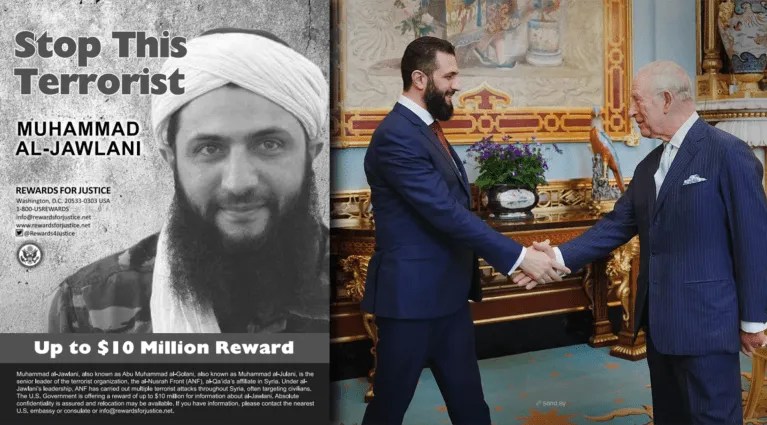
By Kit Klarenberg | The Grayzone | April 3, 2026
When Syria’s “interim” leader Ahmed al-Sharaa touched down in London on March 31, he was given a much warmer welcome than many once thought possible. As the longtime leader of Syria’s Al-Qaeda branch, the US had been offering a $10 million bounty for information on his location just 15 months prior. Yet here was Al-Sharaa, proudly posing for photo ops with King Charles and Prime Minister Keir Starmer.
British intelligence had been working towards this day for almost two decades. The path for al-Sharaa’s rule was cleared by MI6 after years of mentoring under Jonathan Powell, who now serves as National Security Advisor to Starmer. The time had come for Britain to formally anoint its Syrian puppet.
The ongoing US-Israeli war on Iran, and the Strait of Hormuz’s closure, were reportedly at the top of Starmer and al-Sharaa’s agenda. The British premier praised his counterpart’s supposed success in battling ISIS, while al-Sharaa thanked London for its assistance in pushing for sanctions on Syria’s ruined economy to be lifted. The pair have enjoyed warm relations since al-Sharaa’s seizure of power in December 2024, which Starmer publicly celebrated as a golden opportunity for London to “play a more present and consistent role throughout the region.”
Ever since, the British have systematically steered Damascus’ self-appointed government towards recognition and welcome by Western states. In May 2025, as al-Sharaa’s death squads massacred Alawites and other ethnic and religious minorities, US President Donald Trump received his Syrian counterpart in the oval office, where he gifted him a bottle of Trump-branded cologne. The BBC acknowledged this development would have been “unthinkable just months ago.”
Al-Sharaa took the next steps in January 2026, when he signed an unpopular US-brokered accord with Israel, which former Syrian President Bashar Assad had steadfastly refused to endorse for decades.
The impacts of the deal were immediately visible. As Al-Sharaa’s forces swept through Kurdish territory in north east Syria, the Kurds’ erstwhile Israeli backers refused to intervene, and US envoy Tom Barrack publicly declared that the American partnership with the Kurds had “expired.”
Within weeks, al-Sharaa’s forces wrested control of the country’s wheat and oil-producing areas, which had been under US-led occupation for years. Though Syria and Israel have yet to formally normalize relations, al-Sharaa describes relations between the countries as “good.” Today, Syria’s airspace and ground territory is routinely used by Israel and its Western sponsors to wage war on Iran.
Though the rapid transition took many by surprise, the campaign to re-establish Western control over Syria was actually set in motion years ago.
Starmer’s top advisor also groomed al-Sharaa for power
Among the most important vehicles for grooming the former Syrian Al Qaeda warlord known as Mohammed Jolani into the politician, Ahmad Al-Sharaa, was a supposed conflict resolution NGO known as Inter-Mediate. Founded by Jonathan Powell, a former advisor to PM Tony Blair who helped negotiate the Good Friday accords in Northern Ireland, works closely with the British Foreign Office and MI6.
Powell’s Inter Mediate cultivated al-Sharaa’s militant Hayat Tahrir al-Sham (HTS) faction for power for years before the December 2025 palace coup, and now boasts a dedicated office within the presidential palace in Damascus.
Coincidentally, Powell took up the post as Starmer’s advisor mere days before HTS declared themselves Syria’s government. As a confidant of Tony Blair, Powell was a key figure in the push for the criminal 2003 Anglo-American Iraq invasion, helping shape bogus intelligence claiming that Baghdad posed a biological and chemical weapons threat to justify the illegal intervention.
Despite his role in the destruction of Iraq, British media has reported that Powell “may have more influence over foreign policy than anyone in government after the Prime Minister himself.” Today, Powell is charged with “coordinating all UK foreign policy, security, defence, Europe, and international economic issues.”
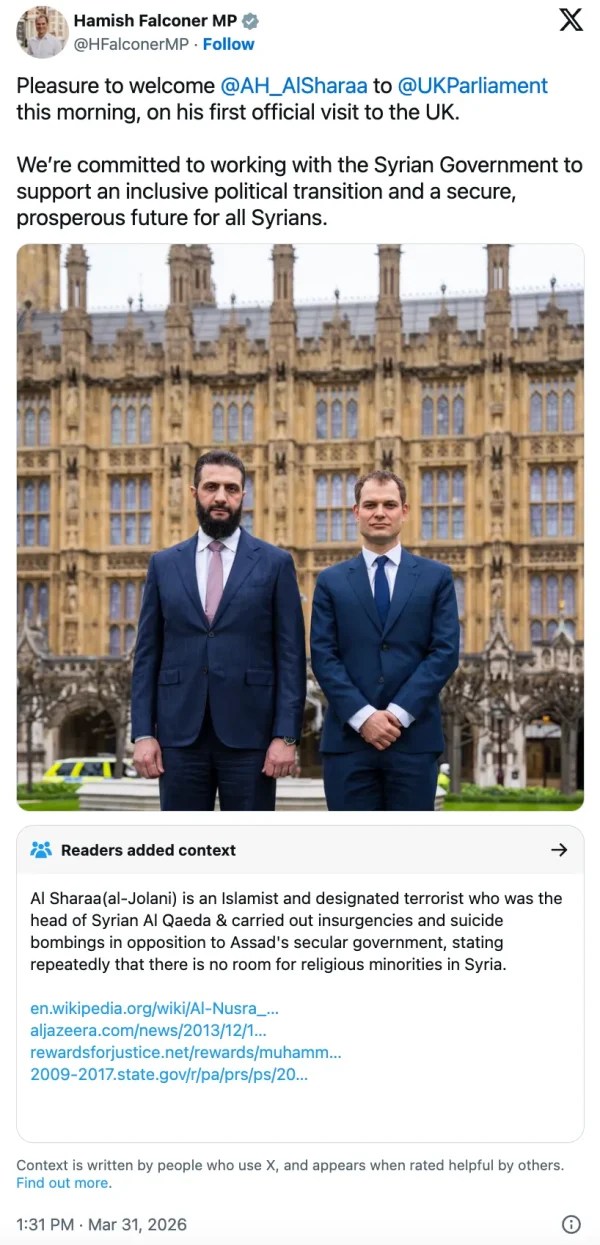
Al-Sharaa was also personally welcomed by Hamish Falconer, an intelligence-aligned Member of Parliament who spent years collaborating with MI6 as the British foreign office’s Terrorism Response Team leader and once served as a hostage negotiator in talks with the Taliban.
Falconer is a close associate of Amil Khan, a British intelligence contractor who worked obsessively to generate sympathetic coverage of HTS while plotting to undermine this outlet due to our critical reporting on Syrian jihadists and their friends in the British government.
Hamish’s father, Charlie Falconer, was a longtime friend and former roommate of former Tony Blair. Following Blair’s May 1997 election victory, Falconer senior was elevated to the unelected House of Lords, then served in a series of high-ranking government posts throughout his pal’s tenure, often coordinating with Jonathan Powell.
While there, the elder Falconer applied “huge pressure” to Attorney General Lord Goldsmith to change his conclusion that invading Iraq was completely illegal. This intervention may have played a decisive role in enabling the illegal war of aggression. Today, it’s been reported that many on Downing Street are “growing increasingly wary about the influence of… smooth Blairites.”
According to one British outlet, top officials in London are purportedly asking, “at what point… does ‘experience’ and ‘guidance’ become ‘control’?” The same question must be asked of MI6’s longstanding links to al-Sharaa.
British intel set up al-Sharaa’s civil apparatus
It is uncertain when British contact with HTS began. But Robert Ford, who served as the US ambassador to Syria from 2011 to 2014, disclosed that in 2023 Inter-Mediate sought his personal assistance in rebranding HTS from “terrorists” into politicians. Ford met repeatedly with al-Sharaa, who reportedly expressed no remorse about the massacres and atrocities he perpetrated in Iraq. Al-Sharaa had served five years in the US military’s notorious Camp Bucca jail for his involvement with Al Qaeda in Mesopotamia. He was released in 2011 – just in time for the Syrian dirty war.
In September 2025, former-MI6 chief Richard Moore admitted Britain’s foreign spying agency had been courting HTS long before its seizure of Damascus. “Having forged a relationship with HTS a year or two before they toppled Bashar, we forged a path for the UK Government to return to the country within weeks” of the fall of Assad, Moore boasted.
British psychological warfare operations and ‘aid’ efforts greatly assisted HTS’ consolidation of power in areas of Syria it occupied. As The Grayzone revealed in the immediate aftermath of Assad’s fall, leaked documents show MI6 was well-aware that reports of the group’s split from Al Qaeda were a fantasy.
Nevertheless, British propaganda efforts portrayed dangerous, chaotic HTS-occupied territory as a “moderate” success story, in order to demonstrate “a credible alternative to the [Assad] regime,” per the leaks. Central to these psy-ops were British-created assets including the Free Syrian Police (FSP) and White Helmets.
Framed by Western media as providing vital humanitarian services to local populations, these ostensibly independent agencies enjoyed fawning coverage in mainstream media. In reality, the pair collaborated closely with extremist groups, including HTS, and were complicit in hideous atrocities.
Whether intentional or not, HTS was “significantly less likely to attack opposition entities… receiving support” from the British government, a UK intelligence contractor stated. The work of the White Helmets and FSP greatly enhanced the terrorist group’s credibility as a governance actor and service provider among Syrians. When HTS took power outright in northwest Syria, the FSP became the territory’s formal police force. Since Assad’s ouster, the White Helmets have been tapped by British intelligence assets to run the country’s emergency services.
Despite al-Sharaa’s refusal to repudiate his extremist past, British diplomats initiated a series of meeting with him and other HTS warlords from December 2024 onwards. The public encounters continued even as legacy media outlets acknowledged these summits were completely illegal, as HTS was a proscribed terror group under British law. Starmer did not formally lift this designation initially, but nonetheless led calls for the removal of sanctions on Syria by all Western countries.
In March 2025, the UK terminated the majority of its Syria sanctions, and the rest of the EU followed shortly. With the revocation of US sanctions in July, Syria had effectively been welcomed back into the fold of the so-called international community.
While London’s man in Damascus appears eager to please Starmer and his counterparts in Western capitals, his sectarian politics remain a source of domestic credibility. In January, al-Sharaa’s forces overran northeastern Syria, and freed many ISIS fighters from Kurdish-run prisons, where MI6 had long-managed covert propaganda operations to influence inhabitants. Many freed ISIS brides reportedly refused repatriation to their home countries, “because their husbands are with” al-Sharaa.
Al Mayadeen | April 3, 2026
The Israeli occupation army has acknowledged that disarming Hezbollah is not among the objectives of the current war, marking a significant reversal from positions held just two weeks prior, and a tacit admission of the limits of its military options in Lebanon.
“Israel’s” Channel 12 first reported the shift, with Israel Hayom military correspondent Lilach Shoval confirming that dismantling Hezbollah’s weapons is “not on the agenda.”
Yedioth Ahronoth described it as a formal change in the army’s direction, especially as the reversal came only two weeks after the army had publicly insisted it would pursue the full dismantling of Hezbollah’s arsenal.
The army now defines its primary objectives against Hezbollah as significantly weakening the group, establishing “a deep defensive line”, and demolishing dozens of homes along the frontline villages, mirroring the “yellow line” model applied in Gaza.
On disarmament, Israeli army officials admitted that “we must be modest on this issue.”
A sharp reversal
The course reversal stands in stark contrast to the maximalist rhetoric that defined the aggression’s opening weeks. Israeli War Minister Israel Katz had vowed to “separate Lebanon from the Iranian arena and strip Hezbollah of its ability to threaten, changing once and for all the situation in Lebanon,” explicitly invoking the Gaza model.
Meanwhile, IOF Chief of Staff Eyal Zamir declared the campaign would end with “Hezbollah suffering a devastating blow,” while Finance Minister Bezalel Smotrich went further, calling for the Litani River to become the entity’s “new border with the Lebanese state.”
Katz had also announced on March 24 that the IOF would establish a permanent security zone inside Lebanon up to the Litani River. He stated that all homes in border-adjacent villages would be demolished and that the return of displaced Lebanese civilians would be “completely prevented.”
Where officials once spoke of transforming Lebanon’s strategic landscape, the occupation army now concedes that full disarmament would require “a full occupation of Lebanon and the systematic dismantling of military infrastructure in every village,” conditions it realizes are unrealistic.
Notably, Israeli officials maintained that only the IOF, not the Lebanese state or any other party, could disarm Hezbollah, while simultaneously acknowledging that the conditions to do so do not exist.
‘A complex arena’
Earlier in the week, Israeli Channel 11, citing former army and Mossad officials, reported that “the Lebanese arena differs entirely from any other in terms of its complexity and military entanglement.”
Retired Major General and former Mossad chief Danny Yatom said Hezbollah fighters in southern Lebanon “hold a relative advantage over the Israeli army due to their deep familiarity with the terrain,” adding that “every tree trunk and every small hill can serve as an ambush position.”
He cautioned that even controlling territory up to the Litani River “would not solve the problem of rockets and shells,” and stressed that the real challenge lies in adapting at the tactical level, not merely the strategic one.
Lieutenant Colonel (res.) Oren Leshem, a former senior Israeli Air Force officer, was equally candid, saying there is “no magic solution to the Lebanon issue” and that the army has tried every available approach over the past 18 years, including during the Second Lebanon War, yet the situation “remains complex and highly challenging.”
Channel 14 added that “the problem in Lebanon is that military forces are constantly on the move and exposed, while Hezbollah exploits the terrain to target them.”
By Kit Klarenberg | The Cradle | April 3, 2026
On 7 March, the British government contractor Siren Associates unveiled Monitor Lebanon, a “real-time situational awareness platform” framed as a public safety tool “designed to help individuals and organizations understand and navigate Lebanon’s rapidly evolving security environment.”
The tool sifts vast swaths of “open-source information” from “news agencies, verified social media accounts, Telegram channels, conflict monitoring initiatives, and traffic data systems.”
Presented as a lifeline for journalists, humanitarian workers, businesses, and civilians during Israel’s ongoing war on Lebanon, the platform carries a far more operational intelligence function. Behind the humanitarian branding lies a sophisticated surveillance infrastructure embedded deep within the Lebanese state.
At the core of Monitor Lebanon is a live interactive incident map tracking “reported security events and key operational information.” The data is highly detailed, including information on “affected areas, road conditions, hospital locations, and other indicators that help users understand how developments may affect movement and access.”
A press release announcing the platform’s launch asserts Monitor Lebanon was initially constructed to provide Siren Associates staff with “a clearer view” of local events, before being rolled out for general public use.
“Already, team members displaced by the ongoing hostilities have been using it to check for reported strikes near their homes and to track evacuation orders. But many more people are navigating the same uncertainty, so we want to make this tool available to anyone who may benefit from clearer, real-time information.”
How did a British contractor produce such a detailed, nationwide surveillance platform instantly as the occupation state escalated its assault on Lebanon?
The answer lies in nearly two decades of British-backed penetration.
As The Cradle revealed in September 2021, Siren has received tens of millions of pounds from London to “professionalize” Lebanon’s Internal Security Forces (ISF). Staffed by former British military, intelligence, and policing officials, the company operates in Lebanon’s security sector in plain sight, yet largely beyond scrutiny.
Embedding control through ‘reform’
Siren’s footprint inside Lebanon’s state apparatus is extensive. The company maintains close ties with senior ISF officers, political figures, ministries, and intelligence branches. It has also cultivated future leadership within the ISF through training and recruitment programs.
In May 2019, Siren established Lebanon’s Command and Control Center with British funding. The installation provides the ISF with “state-of-the-art equipment, information and communication technology systems, [and] an analysis and planning room,” purportedly to strengthen the security forces’ intelligence capabilities.
In practice, it embedded a direct channel for British intelligence into Lebanon’s internal security infrastructure.
Such access grants London visibility over investigations, operations, and internal data flows. Over time, this has enabled the systematic accumulation of sensitive information on Lebanese citizens.
The scale of this data collection expanded dramatically during the COVID-19 pandemic. Siren quietly built COVAX, the digital backbone of the Lebanese government’s COVID19 vaccine rollout. Users could register, schedule appointments, and receive vaccine certificates. Over four million people used the service, logging extraordinary amounts of personal information in the process.
What appeared as public health infrastructure operated as a mass data capture system.
From welfare to surveillance architecture
COVAX became the foundation for broader digital penetration. In 2021, the World Bank allocated $246 million to Lebanon for social assistance. Siren used its existing infrastructure to launch DAEM, whereby citizens could apply for social assistance “in record time.”
Carole Alsharabati, Siren’s longtime research chief, has explained that “the idea [was] to deploy a system that was fully digitized from A to Z, just like we did for the vaccine.”
“The registration, the selection, then the payment, the cash transfer, the verification, the dashboard, etcetera. Everything was digitized. And we used the same framework, the same ecosystem, the same machines, the same security protection, the same data governance approach we used in the vaccine.”
Alsharabati described Lebanon at the time as a “very difficult environment,” with the experience of building DAEM “a wild journey.” After all, the country lacked a unique ID system, digital identification, or any established data governance rules, procedures, or even cybersecurity.
However, “nothing stood in the way of Siren’s determination to tackle these and many other challenges.” Evidently, the British and Lebanese governments were happy with the results. It was just the beginning of Siren’s new role in Beirut, constructing deeply intrusive databases on citizens.
This work has been replicated in multiple fields over the years, culminating in Monitor Lebanon’s recent launch. Much of this activity passed entirely under the public radar. It was not until December 2024 that Siren’s central COVAX role was openly admitted on the company’s official website, for example. That same month, Siren announced it had built a bespoke resource for the ISF, collating “operational data to inform decision making around mission planning, resourcing and management.”
Under the project’s auspices, British intelligence created a network of six separate Command and Control Centers across the country, linked digitally to 22 regional operation rooms. A “digital platform that enables the capture and analysis of crime and operational data” was also developed.
In December 2024, too, Siren disclosed how it had introduced “e-governance tools connecting more than 20 ministries, 1,000 municipalities and 1,500 mukhtars [local governments].” Unmentioned was a major scandal that erupted over this effort upon its rollout two years prior.
According to Lebanese daily Al-Akhbar, the platforms produced by Siren were not secure, and permitted the firm to harvest the data of millions of users. Dubbed IMPACT, the resource allowed citizens to access a variety of government services, including applying for welfare payments.
The British embassy in Beirut, which funded the platform to the tune of $3 million, denied any wrongdoing, as did Siren. Nonetheless, local digital rights group SMEX expressed grave concerns over the security of private information stored by IMPACT, which was highly sensitive in nature.
Mapping a society for war
That Siren hoards an enormous amount of invasive information as a result of its work for and with the ISF is underlined by an April 2025 study, funded by Britain’s International Development wing. It probed “irregular maritime migration from Lebanon over the past three years,” placing the phenomenon in the context of Beirut’s “ongoing political, socio-economic, and security crises.”
The research sought to ascertain “who is migrating, why they are choosing to leave by sea, and what risks they face – particularly across gender lines.”
In September 2025, London renewed Siren’s ISF contract, allocating £46.3 million (around $61.3 million) – a significant increase. The timing raises serious questions about how much of that funding went into building Monitor Lebanon ahead of renewed Israeli escalation.
Since Operation Al-Aqsa Flood in October 2023, British activity in West Asia has pointed toward deeper involvement in a wider war effort targeting Iran and its allies.
In November that year, London attempted to secure unrestricted military access to Lebanese territory under the pretext of “emergency missions.” The proposal would have allowed British forces to operate freely, armed and immune from prosecution.
Public backlash forced Beirut to reject the plan. But the infrastructure remained.
Through Siren, Britain has built a digital panopticon spanning Lebanon’s institutions and population. This system provides real-time intelligence with clear military applications.
From Tel Aviv’s perspective, the benefits are obvious. Such data can be used to identify, track, and target members of Hezbollah and their support networks. It can also map civilian environments in ways that facilitate precision strikes.
The parallel to Palantir’s predictive surveillance platforms is clear.
Targeting the Axis of Resistance
Siren’s projects consistently overlap with services provided by Hezbollah. This is not accidental.
For years, British intelligence has worked to undermine the resistance movement’s social base by constructing parallel state structures.
For example, under the terms of a Foreign Office-funded youth radicalization effort, London sought to create an alternative to Beirut’s Hezbollah-run Ministry of Youth and Sport. It was hoped that “young, talented students and graduates” would thus reject the group.
There is little sign of these initiatives having borne fruit. A promptly deleted 23 March Daily Telegraph report documented how Lebanese Christians wholeheartedly embrace Hezbollah, and are determined to resist western-inspired efforts by Beirut’s army to disarm the resistance faction. “How can we as Christians in this area not be with Hezbollah?” a local citizen asked the newspaper perplexedly.
“They protect our churches. They helped us fight ISIS. During COVID, they gave us free care in their hospitals. When there was no electricity, they gave us generators. They even put up a Christmas tree at Christmas. How can we not be with them now?”
Despite the practical impossibility of disarming Hezbollah, it is a fantasy long harbored by western powers, which has gained in ever-mounting urgency since Israel’s genocide of Palestinians in Gaza commenced.
A British parliamentary briefing in September 2025 expressed optimism that the election of former Lebanese Armed Forces (LAF) commander Joseph Aoun as president would weaken Hezbollah’s military wing.
That same month, US special envoy to Syria Tom Barrack openly proposed equipping the LAF “so they can fight their own people.”
He acknowledged that Israel’s aggression since October 2023 had only increased Hezbollah’s popularity, while offering “zero” incentive for disarmament.
Aoun’s presidency has not dismantled Hezbollah. Israeli military escalation continues, with mounting losses on the battlefield and rising civilian casualties across Lebanon.
While its catastrophic military losses accumulate daily, innocent Lebanese civilians are being killed in significant numbers. The line of responsibility for their deaths may lead directly back to London, courtesy of Siren Associates.
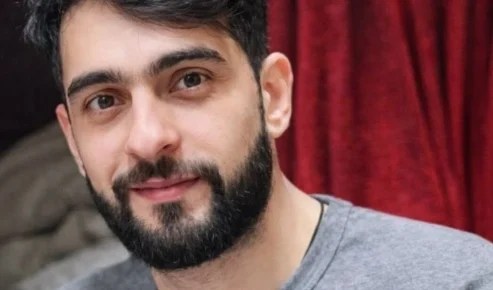
Al Mayadeen | April 3, 2026
A Bahraini man detained during last month’s missile strikes on the kingdom has died in custody under contested circumstances, sparking renewed scrutiny of the country’s security practices amid wartime tensions.
Mohammad al-Mousawi, a Bahraini national who was detained as Bahrain came under attack from Iran, disappeared for several days before his family was contacted and asked to retrieve his body from a military hospital, relatives said. They reported that his body bore multiple injuries, including slash marks, bruising, and wounds on the soles of his feet.
His death has quickly become a flashpoint in the country, with critics accusing authorities of reverting to tactics used to suppress protests during the 2011 uprising.
Bahrain, which hosts the US Navy’s Fifth Fleet, has detained dozens of individuals since the outbreak of the war, including people accused of:
“They want to make sure nobody challenges the state’s narrative and silence any voices not telling the story of the war how they want it to be told,” said Sayed Ahmed al-Wadaei of the Bahrain Institute for Rights and Democracy, a London-based advocacy group.
Bahraini Interior Ministry dismisses clear evidence
The Interior Ministry claimed al-Mousawi had been arrested on suspicion of spying for Iran, an allegation his family denies. Authorities also dismissed circulating images of his injuries as “inaccurate and misleading,” while insisting that the country is acting to protect national security.
In a statement, the government rejected accusations of sectarian discrimination, saying all actions were carried out in accordance with the law and that independent bodies are responsible for investigating claims of abuse.
Al-Mousawi had previously spent around 11 years in prison as part of a 21-year sentence on charges widely regarded as false, including accusations of arson and alleged membership in a “terrorist cell”. His family and rights groups have clarified that these charges are false and fabricated.
Severe abuse evident on al-Mousawi, Bahrain denies the obvious
A relative and a close family friend said Mohammad al-Mousawi disappeared on March 19 after attending prayers with two companions who also remain missing. Both spoke to the Associated Press on condition of anonymity, citing fears of reprisals. Rights groups have long accused Bahraini authorities of carrying out enforced disappearances.
On March 27, the family said they were called to collect his body. A relative who viewed it at the morgue reported signs of severe abuse, including injuries consistent with whipping using cables, as well as apparent electrocution and cigarette burns.
The Associated Press reviewed images of the body that showed marks consistent with accounts from five witnesses who said they saw it in person, all speaking anonymously. Bahrain’s Interior Ministry said al-Mousawi had been held by the National Security Agency, whose arrest powers were restored in 2017 after being revoked following the 2011 unrest.
The Ministry dismissed the images as “inaccurate and misleading,” while a military hospital attributed the death to a heart attack. His family said he had no known preexisting conditions. Ahmed Banasr of Physicians for Human Rights said the injuries were consistent with blunt force trauma, noting that wounds on the soles of the feet suggested abuse rather than a fall or fight.
Bahrain’s long record of repression, violence seeps into al-Mousawi’s case
Human rights organizations say the detention and death of Mohammad al-Mousawi mark a new phase in Bahrain’s long-running crackdown on opposition, which peaked during the 2011 protests. That year, the ruling Al Khalifa family suppressed mass demonstrations with support from Saudi and Emirati forces.
“It remains to be seen how far the government will go in its crackdown on people,” said exiled Bahraini activist Maryam al-Khawaja, whose father is imprisoned in Bahrain. “What we are witnessing now is certainly far more severe than in recent years,” she added.
Since the start of the war on Iran, at least 41 people, including migrant workers, have been arrested on accusations of publishing images of Iranian strikes. Some face charges of “treason”, which can carry penalties ranging from life imprisonment to the death penalty. In one case, 21-year-old Hussein Futeil and a friend were detained after posting videos of themselves waving a portrait of Iranian leader Sayyed Ali Khamenei during a protest outside the US Embassy.
According to his father, Naji Futeil, the two briefly reappeared after hours of questioning before Hussein later informed his family he faced five charges, including misuse of social media, incitement of hatred, and treason. Rights advocates say the cases reflect a broader effort to silence opposition, with Sayyed Ahmed al-Wadaei stating authorities aim to ensure no one challenges the state’s narrative.
Sputnik – 03.04.2026
The secretary of war’s dismissal of Army Chief of Staff General Randy George and two other top generals signals intensifying rot in the Department amid the Iran war, former senior DoD insider-turned whistleblower Karen Kwiatkowski says.
General George represented “experience in Army battlefield operations,” while general David Hodne and major general William Greene Jr had “their pulse on the readiness, and more importantly the attitudes and thinking,” of younger soldiers, Kwiatkowski told Sputnik.
They see the Iran conflict as an “illegal and unneeded war,” driven by politics, ego and a foreign power (Israel), and understand “the real damage inflicted on US forces and installations” in the Middle East over the past month, the retired Air Force Lt. Col. added.
Hegseth’s “poor leadership skills,” disrespect for service members, and “religious invocations for slaughter,” have earned him “several degrees of contempt,” and Kwiatkowski suspects that sentiments of “no confidence and dislike” are “roiling throughout the ranks.”
“The reasons for the purges are Hegseth’s fear of organizational and political dissent of the leadership of the military,” stemming from “endless needless wars compounded by command mistakes” by recent administrations, from Covid vax mandates to the Iran crisis.
If this affects even 10-20% of the military, that’s a serious problem and the Pentagon will no longer have a fighting force it can rely on, no matter how many “yes men generals” are tapped to replace those who have been ousted, Kwiatkowski fears.
“Hegseth and the generals recognize there is no trust up or down the chain of command. Hegseth believes he can command that trust through sycophants; the generals very likely prefer a more structural approach of more and better training, and better civilian leadership… which is impossible at this time,” she summed up.
The Cradle – April 3, 2026
Greek shipping companies have secretly transported oil, coal, and military cargo to Israel using deceptive maritime tactics, according to a report by the No Harbour for Genocide campaign reviewed exclusively by Middle East Eye (MEE) and published on 2 April.
The investigation found that at least 57 covert crude oil shipments reached Israeli ports between May 2024 and December 2025, during Israel’s genocide of Palestinians in Gaza.
These deliveries, totaling roughly 47 million barrels, were routed via Turkiye with vessels disabling tracking systems and listing false destinations to bypass Ankara’s embargo.
Ships departing from the Turkish port of Ceyhan often reported destinations such as Port Said or Damietta in Egypt, before switching off their automatic identification systems, going dark in the Mediterranean, and later reappearing after docking in Israel, primarily in Ashkelon.
Satellite imagery reviewed by MEE confirmed their presence during these blackout periods.
The majority of these vessels were managed by Kyklades Maritime Corporation and Thenamaris Ships Management, linked to the Alafouzos and Martinos families.
Neither company reportedly responded to requests for comment, MEE said.
In 2025, at least 13 shipments carried military cargo, including ammunition and machine-gun components used by Elbit Systems, with Greek-managed ships involved in multiple deliveries.
Coal shipments were also documented. Between October 2023 and February 2026, eight covert deliveries totaling 751,000 tonnes were transported from South Africa using similar concealment tactics.
“Shipowners turn off their tracking systems, falsify destinations, and endanger seafarers, all to profit from it,” said Ana Sanchez of the campaign. “We know who they are, we know what they’re doing, and now so does everyone else.”
The report states that oil delivered through the Baku–Tbilisi–Ceyhan (BTC) Pipeline was refined into fuel for Israeli military use.
Turkish journalist and author Erman Cete, writing for The Cradle, says Israel’s war effort is sustained by a global energy network anchored in the BTC pipeline, which supplies a significant share of its crude oil needs.
He notes that this supply chain is reinforced by international legal agreements and major energy firms, with oil continuing to flow from multiple countries – including states that publicly criticize Tel Aviv – highlighting a broader system of sustained economic and political complicity.
Al Mayadeen | April 3, 2026
The United Nations Security Council on Friday postponed a vote on a draft resolution authorizing force in the Strait of Hormuz, as divisions deepen among major powers amid the ongoing war on Iran.
Iranian Foreign Minister Abbas Araghchi warned ahead of the session that any move within the Council could escalate tensions further. “Any provocative action by the aggressors and their supporters, including in the UN Security Council regarding the situation in the Strait of Hormuz, will only complicate the situation,” he said.
The vote, initially scheduled for today, concerned a Bahrain-led proposal that would allow the use of “defensive” force to protect commercial shipping in the strategic waterway. The measure is backed by the United States and several Gulf states, which have been heavily impacted by the disruption of maritime traffic.
However, the session was delayed with no new date announced. Russia, China, and France have raised objections to earlier drafts, particularly over language that could authorize military action, warning that such steps risk widening the war.
Diplomatic wrangling has already forced Bahrain to revise the proposal multiple times. Earlier versions reportedly included language permitting “all necessary means,” a formulation commonly interpreted as allowing military force, before being scaled back under pressure from opposing members.
The evolving text has been repeatedly watered down in an effort to avoid a veto, shifting from explicit authorization of force toward more limited “defensive” measures, with additional conditions on how any action would be carried out.
Despite backing the broader push led by Bahrain and the United States, France has played a more complex role in negotiations. Paris has participated in drafting efforts while also resisting stronger provisions, joining Russia and China in blocking earlier versions of the resolution during the so-called “silence procedure”, effectively preventing its automatic adoption.
At the same time, France has pushed for de-escalation and a delayed or limited mandate instead of immediate authorization of force, amid concerns that military action would further destabilize the situation.
The dispute unfolds against the backdrop of a severe crisis in the Strait of Hormuz, driven by Iranian restrictions imposed in retaliation for US-Israeli aggression. The resulting disruption to tanker traffic has triggered a major shock to global energy markets.
Despite the military buildup, Iran has maintained a controlled approach to maritime transit, allowing selective passage for non-hostile states while restricting vessels linked to the United States, “Israel,” and their allies.
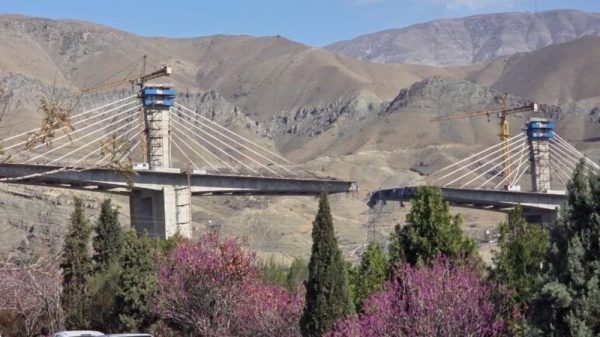
By M. K. BHADRAKUMAR | Indian Punchline | April 3, 2026
The only clue the US President Donald Trump has given in his prime time televised speech on Wednesday at the White House regarding the ending of his war in Iran is that the core “objectives are nearing completion” and that he is “very close” to finishing the war.
The big question is whether Trump is any longer in command of the situation. For all practical purposes, the war seems set to cascade as the US is preparing for a potential ground operation in Iran and threatens to destroy “bridges next, then electric power plants”.
Revealing himself primarily as YHWH (Yahweh) in the Old Testament — the personal, holy, and covenant-making Creator who demands exclusive worship from Israel — Trump thundered, “Over the next two to three weeks, we are going to bring them [Iranians] back to the Stone Ages, where they belong” .
Yet, Iran is in no mood to surrender. Tehran has lost respect for Trump and instead sees him as a master craftsman of the art of deception. The Iranian statements underscore that the US intelligence lacks even the foggiest idea of its capabilities to retaliate.
Perhaps, the most vicious no-holds-barred phase of the war is about to begin, with a dynamics of its own — in particular, taking into account the Israel factor, which is a revisionist power seeking to alter the established international order, rules, territorial boundaries or distribution of power in the West Asian region to better serve the establishment of a Zionist state of Greater Israel.
Israel is keeping its options open to further territorial expansion, the latest evidence being the assault on Lebanon and its back-tracking from US-backed negotiations with Syria. Unsurprisingly, Iran insists that any peace deal must encompass all issues of regional stability and security.
Wars have consequences. They leave behind a lot of debris. But this is not about Iran’s reconstruction alone for which of course, it is legitimately seeking war reparations and a security guarantee.
The bottom line is, after creating new facts on the ground, Trump may simply walk away to the golf course. The most consequential new reality is that the Strait of Hormuz is transforming as a waterway.
By coincidence, the first reaction to Trump’s address on Wednesday came from the global oil market, as prices of rose to $105 per barrel. The Oil Price magazine which provides forward-looking intelligence for energy traders and investment professionals was spot on in its prognosis that “Long-suffering energy investors finally have a reason to smile, with the sector on track to outperform the broader market by its widest margin on record, driven by Middle East conflict … The energy sector’s 14-week winning streak far exceeds previous bull runs.
“Oil & Gas stocks have easily outpaced the erstwhile high-flying tech sector… Leading the charge are U.S. oil majors” — Exxon Mobil returned 33.1% YTD; Chevron Corp (28.5%); Occidental Petroleum (49.6%); ConocoPhillips (38.5%); Marathon Petroleum (43.8%). Wall Street must be feeling elated.
According to Financial Times:
“[US War Secretary] Pete Hegseth’s broker at Morgan Stanley contacted BlackRock in February to make a multimillion-dollar investment in a defence-focused Exchange-Traded Fund (ETF) called IDEF.
“This $3.2 billion fund is built around companies that benefit from increased military spending, including RTX, Lockheed Martin, Northrop Grumman, and Palantir — all major Pentagon contractors.
“The request came just weeks before the U.S.-Israeli strike on Iran, a campaign Hegseth helped shape and strongly supported within the Trump administration.”
Larry Johnson, who worked in the CIA and is by far one of the best American commentators on Trump’s war (and geopolitics in general), wrote a blog this week titled Who Else, Besides Pete Hegseth, is Trying to Use the War in Iran to Get Rich? To quote him, “If you do the analysis on the weapons expended so far in the month-long war with Iran, the opportunity for war profiteering is quite clear… The high expenditure rates, combined with historically low peacetime production [of weaponry] have created a serious “race of attrition” that cannot be quickly reversed.”
Johnson flagged as example that both Patriot and THAAD interceptors are primarily manufactured by Lockheed Martin. He adds, “Which means that Lockheed Martin can expect a major influx of cash to boost production and try to replenish exhausted missile air defence inventories. I wonder who else in the Trump administration and the US Congress are making money off this bloody war?”
Setting aside the sleaze and corruption endemic to America’s wars, like night follows the day, the single new fact on the ground today that has explosive potential and can bring the roof down on the international financial system is the terrible beauty about the Strait of Hormuz as Iran decided to control the use of the waterway by outsiders in war conditions, which is nothing unusual (eg., Straits of Bosphorus which Turkey and Russia control.)
Since the waterway passes through the territorial waters of Iran and Oman, these two countries are entitled to have a say in the regime of maritime traffic in war conditions. It’s a legitimate demand. Nonetheless, Iran is showing flexibility by allowing traffic by “benign” vessels not linked to the two enemy countries, US and Israel. It stands to reason that this flexibility will eventually transform in a post-war scenario into a rational, efficient, secure regime.
Meanwhile, the cascading price of oil has the potential to impact the world economy. Since petrodollar recycling is also involved, this will hit international finance as well — the western banking system in particular — unless it is resolved quickly, smoothly and peacefully with the consent of Iran and Oman. Trump has tactfully made it the concern of Europeans and the Gulf Arab states, the US’ partners in crime in petrodollar recycling who help prop up the dollar as “world currency.”
Hopefully, India’s stance, as articulated by Foreign Secretary Vikram Misri at a meeting hosted in London yesterday, provides a ramp that can be the basis of a permanent solution — namely, “the way out of the crisis consisted of de-escalation and a return to the path of diplomacy and dialogue among all concerned parties.”
Notably, India did not sign up to the meeting’s final statement which expressed readiness by participants to contribute to “appropriate efforts to ensure safe passage through the Strait.” Meanwhile, India’s direct talks with Tehran have been productive and yielded positive results.

or go to
Aletho News Archives – Video-Images
By F. William Engdahl – New Eastern Outlook – 11.04.2022
Amid the ongoing global inflation crisis, NATO heads of state and mainstream media repeat a mantra that high energy prices are a direct result of Putin’s actions in Ukraine since end of February. The reality is that it is the western sanctions that are responsible. Those sanctions including cutting SWIFT interbank access for key Russian banks and some of the most severe sanctions ever imposed, are hardly having an impact on the military actions in Ukraine. What many overlook is the fact that they are increasingly impacting the economies of the West, especially the EU and USA. A closer look at the state of the global supply of diesel fuel is alarming. But Western sanctions planners at the US Treasury and the EU know fully well what they are doing. And it bodes ill for the world economy.
While most of us rarely think about diesel fuel as anything other than a pollutant, in fact it is essential to the entire world economy in a way few energy sources are. The director general of Fuels Europe, part of the European Petroleum Refiners Association, stated recently, “… there is a clear link between diesel and GDP, because almost everything that goes into and out of a factory goes using diesel.” … continue
 Aletho News If Americans Knew No Tricks Zone
