Europe Commits Suicide-by-Sanctions
By Ron Paul | September 12, 2022
A Swiss billboard is making the rounds on social media depicting a young woman on the telephone. The caption reads, “Does the neighbor heat the apartment to over 19 degrees (66F)? Please inform us.” While the Swiss government has dismissed the poster as a fake, the penalties Swiss citizens face for daring to warm their homes are very real. According to the Swiss newspaper Blick, those who violate the 66 degree heating limit could face as many as three years in prison!
Prison time for heating your home? In the “free” world? How is it possible in 2022, when Switzerland and the rest of the political west have achieved the greatest economic success in history, that the European continent faces a winter like something out of the dark ages?
Sanctions.
While long promoted – often by those opposed to war – as a less destructive alternative to war, sanctions are in reality acts of war. And as we know with interventionism and war, the result is often unintended consequences and even blowback.
European sanctions against Russia over its invasion of Ukraine earlier this year will likely go down in history as a prime example of how sanctions can result in unintended consequences. While seeking to punish Russia by cutting off gas and oil imports, European Union politicians forgot that Europe is completely dependent on Russian energy supplies and that the only people to suffer if those imports are shut down are the Europeans themselves.
The Russians simply pivoted to the south and east and found plenty of new buyers in China, India, and elsewhere. In fact, Russia’s state-run Gazprom energy company has reported that its profits have increased by 100 percent in the first half of this year.
Russia is getting rich while Europeans are facing a freezing winter and economic collapse. All because of the false belief that sanctions are a cost-free way to force other countries to do what you want them to do.
What happens when the people see dumb government policies making energy bills skyrocket as the economy grinds to a halt? They become desperate and take to the streets in protest.
This weekend thousands of Austrians took to the streets in a “Freedom Rally” to demand an end to sanctions and the opening of Nord Stream II, the gas pipeline on the verge of opening earlier this year. Last week an estimated 100,000 Czechs took to the streets of Prague to protest NATO and EU policy. In France, the “Yellow Vests” are back in the streets protesting the destruction of their economy in the name of “defeating” Russia in Ukraine. In Germany, Serbia, and elsewhere, protests are gearing up.
Even the Washington Post was forced to admit that sanctions on Russia are not having the intended effect. In an article yesterday, the paper worries that sanctions are inflicting “collateral damage in Russia and beyond, potentially even hurting the very countries that impose them. Some even worried that the sanctions intended to deter and weaken Putin could end up emboldening and strengthening him.”
This is all predictable. Sanctions kill. Sometimes they kill innocents in the country targeted for destruction and sometimes they kill innocents in the country imposing them. The solution, as always, is non-intervention. No sanctions, no “color revolutions,” no meddling. It’s really that simple.
Copyright © 2022 by Ron Paul Institute.
Algeria to discuss joining BRICS with Russia
The BRICS bloc represents an alternative to western economic hegemony, and can serve as a powerful tool to bypass economic sanctions
The Cradle | September 11, 2022
According to media reports on 8 September, the newly appointed Russian ambassador to Algeria, Valeryan Shuvayev, announced that the North African country’s president, Abdelmajid Tebboune, will likely visit Moscow before the end of the year to discuss mutual cooperation between the two countries.
Tebboune’s potential visit will center around Algeria’s desire to join the Brazil, Russia, India, China, and South Africa (BRICS) group of emerging economies.
The BRICS group of nations represents the world’s most prominent economies outside of the western hemisphere.
In his first media appearance outside of the Russian embassy in Algeria, Shuvayev stated that President Tebboune sent a letter to Russia’s President Vladimir Putin regarding his country’s desire to join BRICS.
In May, Russian Foreign Minister Sergey Lavrov visited Algeria and met with President Tebboune, as well as his Algerian counterpart, Ramtane Lamamra, where they discussed a boost in relations between both countries, and the intention to sign a number of agreements in the near future that will further enhance the relationship between Moscow and Algiers.
Two months later, in late July, Tebboune referred to the BRICS group as a significant “economic and political power” which is of interest to the North African state and added that his country holds the necessary criteria to be included into the organization.
In mid-August, former Algerian Industry Minister, Ferhat Ait Ali, said during an interview: “This bloc seeks to attract countries that are neither poor nor very rich, but rather countries that [can serve as an] alternative to Western hegemony.”
The BRICS group “includes two historical allies and partners for Algeria to trust in… namely China and Russia, and other partners who have no problem in the progress of our economic system in parallel with theirs,” the former Algerian minister added.
Algeria and Russia have historically enjoyed a smooth relationship. The Soviet Union was the first country to establish diplomatic relations with Algeria following its independence from French colonial occupation in 1962.
The BRICS group of emerging economies represents a beneficial alternative to the dominant US and western-led economic system, especially for countries negatively affected by western sanctions.
In June, the Islamic Republic of Iran submitted an application to become a member of the BRICS group. Tehran’s Foreign Ministry spokesperson, Saeed Khatibzadeh, said at the time that the bloc’s member countries represent 30 percent of the world’s GDP and 40 percent of the global population.
US, E3 untrustworthy; Iran pursues an agreement to secure its interests: Marandi
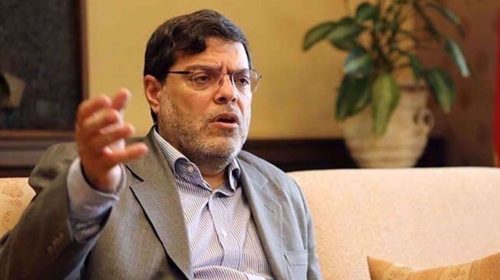
Press TV – September 11, 2022
An advisor to the Iranian negotiating team has described the US government and the three European signatories to the 2015 nuclear deal as “untrustworthy”, stating that Tehran pursues an agreement that best secures its national interests.
During an interview on Saturday night, Mohammad Marandi said Iran was not the party that withdrew from the 2015 deal, officially known as the Joint Comprehensive Plan of Action (JCPOA), emphasizing that the three European countries (France, Britain, and Germany) obediently follow the policies of whoever is in the White House.
He added that Iran knows that any possible accord will fail unless the Western countries put an end to their false accusations against Tehran.
Marandi noted that the European troika and Washington are aware of the peacefulness of the Iranian nuclear program, stressing that Iran wants to reach an agreement that would secure its rights.
During the interview with the Lebanese Arabic-language al-Mayadeen television news network, he continued, “We cannot trust the Americans and Europeans,” highlighting that “the three European countries are all allies of the United States. They are not neutral, and we should not be deceived by their propaganda.”
Marandi also took a swipe at Director General of the International Atomic Energy Agency (IAEA) Rafael Grossi, stating that he “stands with Europeans and Americans, and is submissive to them.”
The advisor to the Iranian negotiating team went on to say that a European official once confirmed during the course of JCPOA revival negotiations in the Austrian capital of Vienna that Iran’s demands are rightful, but “the Americans are the ones who are delaying and procrastinating” the talks.
Marandi stressed that Iran is “ready to sign the agreement,” noting that “the Europeans need the agreement more than Iran, because of their need for gas.”
On the issue of Iranian natural gas, he told al-Mayadeen that “Iran sells its gas and oil, and is able to obtain financial revenues,” adding that “the longer the agreement is delayed, the bigger the problem for Europe would be because it wants gas as the winter is approaching.”
The European energy crisis comes as tensions persist between Russia and the West over Moscow’s offensive in Ukraine. Natural gas prices have soared in Europe to all-time highs since the West began unleashing waves of sanctions against Moscow.
Ever since, Russia’s Gazprom has drastically reduced its gas deliveries to Europe, saying that the anti-Russia sanctions have blocked the delivery of a turbine needed to stream gas to Europe via pipeline.
‘A weak Biden’
As for the United States, Marandi said, “US President Joe Biden is weak, and suffers from internal and economic problems before the midterm elections.”
Marandi added that “the Europeans have no problem in reaching an agreement, but rather the problem lies with weak Biden [administration].”
On Saturday, Iran slammed the latest “unconstructive and ill-considered” statement issued by the three European signatories to the JCPOA, saying they must accept the consequences if it continues to follow Israel’s lead.
“It is regrettable that by [issuing] such an ill-considered statement, the three European countries have followed in the footsteps of the Zionist regime down a path that will lead to the failure of negotiations,” the Iranian Foreign Ministry Spokesman Nasser Kan’ani said.
‘US’s support for terrorists’
Marandi also condemned Washington over its support for the terrorist Mujahedin-e-Khalq Organization (MKO) that has been hosted by Albania since 2016, stating that its members have been carrying out attacks against Iran.
On Wednesday, Albania, which has for years hosted the anti-Iran MKO terrorists in collusion with the US, severed diplomatic ties with Tehran, accusing it of orchestrating a July “cyberattack” against Tirana.
Kan’ani identified the United States, the Israeli regime, and the MKO as the “third parties” that have propelled Tirana into taking the decision.
Russia’s Permanent Representative to the International Organizations in Vienna, Mikhail Ulyanov, described the latest statement issued by three major European powers about Iran as “very untimely”.
“Very untimely indeed. Right at a critical moment at the #ViennaTalks and on the eve of the session of the #IAEA Board of Governors,” Ulyanov, who also leads the Russian delegation at the Vienna talks on Iran nuclear deal, wrote in a tweet.
In a press release on Saturday, France, Britain, and Germany raised serious doubts as to Iran’s intentions and commitment to a successful outcome on the JCPOA, claiming that Tehran’s position contradicts its legally binding obligations and jeopardizes prospects of restoring the nuclear deal.
The European trio said they have “negotiated with Iran, in good faith, since April 2021, to restore and fully implement” the JCPOA, along with other participants to the deal and the United States.
The United States, under former president Donald Trump, abandoned the agreement in May 2018 and reinstated unilateral sanctions that the agreement had lifted.
The talks to salvage the agreement kicked off in the Austrian capital city of Vienna in April last year, months after Joe Biden succeeded Trump, with the intention of examining Washington’s seriousness in rejoining the deal and removing anti-Iran sanctions.
Despite notable progress, the US indecisiveness and procrastination caused multiple interruptions in the marathon talks.
German President Says Homeless Numbers May Rise Amid Cost-of-Living Crisis
Samizdat – 11.09.2022
More people in Germany may become homeless this winter as soaring costs of living keep adding pressure on vulnerable households, President Frank-Walter Steinmeier warned on Sunday.
Over 300,000 Germans do not have a home, Steinmeier told a conference at his Bellevue residence. Of them, 45,000 are forced to sleep rough on the streets.
“More than 300,000 is a huge figure! And let’s be clear: this number may rise in the coming months. The war and crises may increase the number of people suffering from lack of housing in fall and winter,” he said.
Germany marks the Day of the Homeless on September 11. The German president traditionally invited people who do not have a roof over their head to his Berlin residence in the upscale Tiergarten neighborhood.
Steinmeier said that the problem of homelessness was more acute than ever at this time of crisis. He urged politicians to make sure that “the topic is not relegated to the bottom of the political agenda”.
Germany and other European countries are suffering from soaring inflation and immense energy prices caused by Brussels’ decision to impose sanctions on Russia after the start of the special military op in Ukraine. As a result, gas prices and energy bills at record-high levels have become a major issue for many Europeans.
The West is poised to throw Yemen under the bus again to fuel its economic war on Russia
By Robert Inlakesh | Samizdat | September 11, 2022
Strained by the consequences of the ongoing conflict between NATO and Russia over Ukraine, France may be destroying all prospects for peace in Yemen, in a bid to secure energy resource from the United Arab Emirates.
Considered to be home to the worst humanitarian crisis in modern history, according to the United Nations, earlier this year, its people saw glimmers of hope towards ending its seven-year long war. A ceasefire truce, which has largely held since April, has been viewed as the first step towards reaching a UN-mediated solution for peace between the Ansarallah government in Sanaa and the Saudi-led coalition forces which claim to represent the internationally backed Yemeni government in exile.
According to UN estimates, the total number of people killed in Yemen’s war already reached 377,000 by the beginning of 2022. The civilian death rate is said to have doubled, according to the Norwegian Refugee Council (NRC), since the controversial withdrawal of UN human rights monitors last October.
Although Saudi coalition forces and Ansarallah, popularly referred to in Western media as the “Iran-backed Houthi rebels,” have managed to keep fighting to a minimum during the past months, another major player in the south of Yemen has recently decided to go on the offensive. The Southern Transitional Council (STC), often called Yemen’s southern separatists, are backed by the United Arab Emirates (UAE) and declared the start of a new military operation in the Abyan province “to cleanse it of terrorist organisations.” This follows territorial gains by the STC, in neighboring Shawba province, against the Muslim Brotherhood aligned Islah Party and others. The offensives launched by the UAE-backed STC have been regarded as a major challenge to UN efforts to end the conflict in Yemen, as well as having imperiled the Saudi initiative, which it calls the ‘Yemen Presidential Council,’ aimed at solidifying the legitimacy of the alternative Yemeni leadership in exile.
Where France Comes In
Although its role is little known to the Western public, Paris is the third largest arms supplier to the UAE and Saudi Arabia for their war efforts in Yemen, ranking just behind the US and UK. In fact, Germany, Spain and Italy have also sold weapons that have been used in the devastating war. Despite criticism, from human rights groups, of French weapons being used by Abu Dhabi and Riyadh to commit war crimes, the sale of weapons has continued from France.
April 15, 2019, French investigative magazine, Disclose, published an expose on Paris’s role in Yemen’s war. The information presented was based on a leaked French Military Intelligence (DRM) report dating back to September, 2018, clearly proving that the country had sold offensive weapons that were used in civilian areas, a charge that the French government has denied. As far back as June, 2018, credible reports began to emerge that French special forces units were operating on the ground in Yemen, alongside forces belonging to the UAE. Last December, Paris decided to further tighten its relationship with Abu Dhabi, signing its largest ever weapons sale to the UAE, worth 19.23 billion US dollars according to a report from Reuters.
France first turned to the US
France is now desperately in need of alternative energy suppliers to Russia, in order to meet its required needs, fearing that as the winter hits, Moscow may strategically cut off its natural gas completely. As part of NATO, Paris is backing a US-led initiative which seeks to make Russia pay an economic and military price for its offensive in Ukraine, however, this strategy has majorly backfired economically.
US President Joe Biden made two major foreign policy pledges when running for office in 2020, which are relevant to the current French predicament. The first being to revive the Obama-era Iran nuclear deal and the second being to find a diplomatic solution to the war in Yemen. Due to the ongoing NATO-Russia conflict, seeking a revival of the Iran nuclear deal has re-emerged on the political agenda of his administration in a major way. Iran, free from sanctions, could become an alternative source to fill the energy needs of Europe in the future, yet it could take some time for this to actually happen.
On the issue of the war in Yemen, Joe Biden pledged as part of his first speech on his government’s foreign policy goals, that he would hold Saudi Arabia to account and seek to find a solution to the crisis in Yemen. However, the war in Ukraine clearly changed his approach to Riyadh, so much so that Washington signaled in the review a decision to not sell offensive weapons to the Saudi government. The US President was heavily criticized by Human Rights Watch for traveling to Saudi Arabia in July.
Despite US attempts to have Gulf Cooperation Council (GCC) states increase their oil production, none have yet complied in the manner that Washington had hoped for. Specifically in the cases of the UAE and Saudi Arabia, it is clear that both are seeking to fast track their journey to diversify their economies. That has meant them hanging onto their strategic reserves of oil and gas, during a global energy crisis, which has made fiscal sense for them. In the cases of Venezuela and Iran, despite the US having seemingly reached out to both, neither seem to be a real replacement to Russia in the near future.
All Bets On Yemen
France is now looking for alternatives on its own. In June, the European Union announced that it had signed an agreement with Israel and Egypt. Under the deal, Israel will send gas through pipelines to Egypt, where it will then be transported to Europe. Although this may work, Tel Aviv does not have the capacity to replace Moscow as Europe’s main supplier of gas. Israel seeks to double its gas output, but in doing so is already running into potential problems over its maritime border dispute with Lebanon and its planned extraction of gas from the ‘Karish field’ in September, considered to be located in a disputed area. Lebanese Hezbollah has even threatened to strike all of Israel’s gas facilities in the event that Beirut is not given a fair deal to access its own resources.
French President, Emmanuel Macron, has attempted to persuade resource rich Algeria to become part of the EU’s solution, also going on a three-day trip to Algiers in order to mend ties. Algeria, which maintains close relations with Moscow, withdrew its ambassador from Paris for three months last year, during a diplomatic row. Macron had accused the Algerian President Abdelmadjid Tebboune’s government of “exploiting memory” and “rewriting history” of the colonial era and even questioned the legitimacy of Algeria as a State prior to French settler-colonial rule there. Around 1.5 million Algerians were killed in the battle for independence from France, which its resistance eventually managed to win in 1962. The tone of the French president has now dramatically changed from that of last year, with Macron remarking that both nations “have a complex, painful common past. And it has at times prevented us from looking at the future.”
The other major alternative path that France seems to be now seeking, is through its close alliance with the UAE. As mentioned above, it has been clear for some time that Paris has been involved in supplying weapons, logistical support and even boots on the ground to its allies in Abu Dhabi and Riyadh, aiding their fight in Yemen. However, it is also clear that the UAE has not been interested in cutting into its strategic oil reserves to meet the demands of Europe.
In July, as President Macron hosted the Emirati President, Mohammed bin Zayed al-Nahyan, in Paris, the French ministry of economy announced a new strategic energy agreement between the UAE and France. An aide to the French president noted that France was eager to secure diesel fuel from the UAE, hinting that the cooperation agreement involving France’s ‘Total Energies’ and the UAE’s ‘ADNOC’ may be linked. Although it is unknown as to what the specifics of the “strategic agreement” are, it has been speculated that the deal could potentially be worth billions.
Then, in August, the UAE-backed STC suddenly began new offensive operations in both the Shabwa and Abyan provinces. It just so happens that the STC forces decided to take over the energy sites in the Shabwa province too. Leading human rights NGOs had urged Paris to keep in mind Abu Dhabi’s human rights abuses in the advent of the signing of the strategic energy agreement, calls clearly not heeded. On August 21st, when UAE-backed forces seized the oil facilities in Yemen’s south, it may have been with the French deal in mind. Yemen’s former foreign minister, Dr. Abu Bakr al-Qirbi stated on Twitter that “preparations are being made to export gas from the Balhaf facility in light of increased international gas prices.” This was then followed by an announcement from the parliament of the Sana’a-based National Salvation Government, warning of suspicious movement from both US and French forces.
The key Balhaf facility, in Yemen’s Shabwa province, has reportedly been turned into a base for forces belonging to the UAE, with allegations suggesting that Paris could “provide protection for the facility through the French Foreign Legion.” There are also countless reports of the UAE looting resources from Yemen, which would seem to support the idea that they could be attempting to extract them to send to France. The latest reported looting of Yemen’s resources, from June, quotes Yemeni officials as having alleged that a Gulf Aetos tanker, carrying 400,000 barrels of Yemeni crude oil, had departed from Rudum port and was being operated by the UAE.
What these offensive moves by the STC also mean, is that the Saudi-backed forces in Yemen and Ansarallah will likely also get involved in the combat too. This could mean the dissolution of the ceasefire truce between the two sides, the renewal of the Ansarallah offensive to take the oil rich Marib province from the Saudi-backed forces and the death of any potential peace initiative to end the war.
It is unlikely that Ansarallah will stay silent, if the STC are aiding in the theft of Yemen’s resources for the sake of France. One of the major reasons behind the dramatic escalation of violence last year, was the Ansarallah offensive, launched with the aim of taking out the last northern stronghold of the Saudi-led coalition, Marib. The purpose of taking the resource rich area would be to stop the looting of Yemen’s resources, which according to reports is amounting to the theft of millions of barrels per year. Some sources claim that an unofficial agreement is in place between the US and Saudi governments, to purposefully keep the resources of Yemen away from its people and instead, divert the profits to Saudi banks.
Part of the reason why there was a Yemeni revolution in 2011, then a seizure of power in 2015 by Ansarallah in conjunction with the country’s military, was the popular belief that the past two Presidents of Yemen, Ali Abdullah Saleh and Abdrabbuh Mansour Hadi, were corrupt. The people of Yemen were fed up with Saleh for a multitude of reasons, primarily that he mismanaged resources, had sold out to the United States and was corrupt. President Hadi was later to be seen as a stooge, controlled completely by the Saudis.
Perhaps the biggest problem here however, is not just that Yemen is a resource rich country, with a starving population, being torn apart by foreign powers, but also that nobody even knows what their governments are involved in. On August 25, then British prime minister, Boris Johnson, stated, about rising energy bills, that “While people are paying energy bills, people in Ukraine are paying with blood”. Yet, it may turn out that for Europe to keep the lights on, the people of Yemen will pay with their blood. Except in this case, the UK, US and France can’t blame that bloodshed on Moscow, this is their own doing.
Robert Inlakesh is a political analyst, journalist and documentary filmmaker currently based in London, UK. He has reported from and lived in the occupied Palestinian territories and currently works with Quds News.
Pro-Western Bots Behind Vast Majority of Russia-Ukraine Tweets Studied, New Report Finds
Samizdat – 11.09.2022
A bombshell report has revealed that one of the largest bot armies ever discovered was secretly working to advance Western interests in NATO’s ongoing proxy war on Russia in Ukraine.
Researchers at the University of Adelaide who studied 5.2 million tweets published in the weeks after Russia’s special military operation in Ukraine have published an alarming new study which found that 60% to 80% of those posts were shared by fake accounts – and 90% of them were in favor of Kiev.
According to their groundbreaking research, fake accounts using hashtags like #IStandWithUkraine, #IStandWithZelenskyy, and #ISupportUkraine were utilized en masse to perpetuate myths like the “Ghost of Kiev” – a non-existent pilot that pro-Ukraine influencers held up for months as an example of supposed anti-Russian gallantry before the Kiev regime’s military quietly acknowledged he never existed.
Such bots were deployed at key moments in the conflict, like when fighting began in Mariupol and when Russia gained a foothold in its first major Ukrainian city, researchers found.
According to information compiled by the Stanford Internet Observatory and Graphika, one pro-US page targeting Central Asian social media users went as far as doctoring a photograph of Puerto Rican actress Valeria Menendez in an effort to convince audiences that there were real human beings behind the influence campaign.
The impact that networks of such bot accounts may have had on public perceptions surrounding the Ukraine proxy war has yet to be determined.
But with Western audiences increasingly preoccupied by more immediate issues like the energy crisis spawned by anti-Russia sanctions or the lack of drinkable water in US cities such as Jackson, Mississippi, polls show that interest in the Ukraine conflict has fallen at least twenty-fold since late February – and it’s likely that the bots’ operators have experienced a serious decline in engagement.
Switzerland May Build Radioactive Waste Storage Facility Near German Border

Samizdat – 11.09.2022
The Swiss Federal Office of Energy (BFE) has stated that an area of northern Switzerland near the border with Germany might be used for the construction of a nuclear waste storage facility.
The Swiss government has yet to approve a deep geological repository for spent nuclear fuel and other radioactive waste, due to be located in the region of Nordlich Lagern, north of Zurich.
BFE spokeswoman Marianne Zuend told Reuters that the project was initiated by the National Cooperative for the Disposal of Radioactive Waste (NAGRA), a company which plans to propose the Nordlich Lagern site on Monday.
“This is only an announcement of where they (Nagra) would like to build,” Zuend pointed out, adding that the BFE is overseeing the process.
She also said that “All the details will have to be elaborated now by NAGRA to be put into the official demand that they will submit in about two years’ time to the authorities.”
According to NAGRA, the proposal also has yet to get the green light from the Swiss parliament, with the government not expected to make a final decision on the site until 2029. The construction of the repository may only start in 2045.
AFP news agency, in turn, quoted NAGRA spokesman Felix Glauser as saying that they “chose Nordlich Lagern as the safest site for a deep geological repository.”
He referred to “extensive investigations” that he said “have shown that Nordlich Lagern is the most suitable site and has the largest safety reserves.”
The German Federal Ministry for the Environment has voiced concern regarding NAGRA’s plans, which were also slammed by Christian Kuhn, a member of the German parliament (Bundestag) from Baden-Wurttemberg.
He argued that the proximity of the planned nuclear waste storage site to Baden-Württemberg village in Hohentengen “poses a problem both during the construction phase and during the operation of the repository.”
Right now, there are four active nuclear power plants (NPPs) in Switzerland, which may reportedly continue their operation as long as their safety is guaranteed.
When will Covid reporting start to tell the truth?
By Guy Hatchard | TCW Defending Freedom | September 9, 2022
The writer is in New Zealand.
TWO and a half years into the Covid saga, the public is still faced with an information blackout. The data is very concerning indeed, but no one in parliament or the MSM wants to get in front of it. Instead many are still stuck stoking the fear factor. As Professor Vinay Prasad, an American haematologist-oncologist and health researcher, wrote a few days ago: ‘Legitimising irrational anxiety is bad medicine’.
Early on in our efforts to publicise the dangers of biotechnology medicine, I had an email exchange with Jesse Mulligan, a popular commentator with RNZ Afternoons. His perspective on Covid vaccination was as follows.
December 6, 2021: ‘I feel like anybody aiming to critique such an obviously positive public health measure should begin and end their messaging reminding people that any risks/flaws in the vaccine are minor compared to the horrific impacts of getting Covid . . . I don’t have the time to correspond with you on this at length but, for what it’s worth, if you’re putting people off getting a largely safe vaccine by what you’re writing about it, I think you need to review how you approach writing these messages.’
Mulligan quoted from Ministry of Health directives and had also read some questioning scientific articles, but he could not get past the conclusion that vaccination was an obvious public good and for this reason he declined to have me on his show.
The ‘obvious public good’ narrative has come in for some recent criticism. The BMJ printed an opinion piece in July entitled Time to assume that health research is fraudulent until proven otherwise? Or try this referenced substack article which reports that the negative harm/benefit ratio in the Moderna and Pfizer vaccine trials has been acknowledged in a scientific journal article. In other words there is more harm than benefit.
For me, the central early point of pandemic misinformation has been the underlying assumption that biotech medicine interventions could be safe. There really was little or no evidence to justify such an attitude, in fact, as I have discussed, there was a great deal of published pre-pandemic evidence to justify caution.
Given the central role of DNA in human physiology, altering its function was from the outset potentially catastrophic. We are now facing Covid vaccine outcomes which not only involve serious individual adverse effects, but also potentially affect whole populations into the longer term. These outcomes include:
· Elevated excess all-cause death rates and lowered longevity
· Lowered birth rates and fertility
The evidence for these is patchy because governments are not rushing to publish data, but it is still very convincing. So concerning in fact, that the Israeli government has covered up key data and scientific conclusions.
The latest comprehensive evidence for Covid vaccine-induced excess all-cause mortality can be found in this analysis: Excess mortality in Germany 2020-2022.
It is extraordinary that this perilous new normal has found its way into advertising messages, but not into serious commentary. Today I watched a TV ad for a funeral home which arranges alternative and appropriate funerals for those dying young, whilst a British Heart Foundation appeal featured a young woman collapsing on the football field. It did so to encourage donations.
Sudden deaths among all ages are being normalised in the public’s mind because they really are happening at a rate that dwarfs the past, as insurance data confirms. However here in New Zealand we are still being subjected to puerile government advertising devoid of scientific caution. Like this Ministry of Health promotion which turned up this morning:
GET YOUR SECOND BOOSTER – I’ve had three shots, do I really need another booster? Current evidence shows your protection against severe infection slowly decreases over time – GET YOUR SECOND BOOSTER
No mention of safety, no mention of efficacy, and the term ‘current evidence’ used as if this advert is scientifically up to date and reliable. It isn’t.
Why is it so unfashionable to be concerned about rising death rates and lowered birth rates? You might find a clue in this frightening pre-pandemic article from the government-owned Canadian Broadcasting Corporation Medically assisted deaths could save millions in health care spending: Report. Are higher death rates good news for people with this kind of perspective? We hope not.
We are clearly on a learning curve here. The poor vaccination outcomes were not anticipated, the adverse effects were initially disbelieved on principle and blamed on misinformation.
It is understandable that in the uncertain early days of Covid, people [trusted] the official MoH narrative, but continuing to do so now doesn’t fit the published scientific narrative or the public data. Caution was and is a very scientific strategy, it never deserved bad press.
Those offering advice to the public need to be more discerning if they wish to contribute to the well being and longevity of our society. MSM language has become extreme, and it is increasingly polarising without foundation in science.
There is still a chance for journalists to cover the pandemic with an open mind. It is happening elsewhere. GB News for example has gained one of the largest prime-time news audiences in the UK. Why not initiate a more open public debate? Cooling rhetoric and decreasing polarisation can only lead to better outcomes. Fresh air never harms anyone – it can save lives.
Wisconsin Healthcare Workers Who Had Religious, Medical Exemptions Must Get Novavax COVID Shot or Lose Job
By Suzanne Burdick, Ph.D. | The Defender | September 9, 2022
A Wisconsin hospital this week said it is withdrawing medical and religious exemptions for some employees from the hospital’s COVID-19 vaccine mandate, giving those employees until Sept. 21 to get the Novavax vaccine.
Froedtert & the Medical College of Wisconsin, which operates 11 hospitals and more than 45 health centers and clinics throughout the midwest and employs more than 2,000 physicians, in an email said the Novavax vaccine option “eliminates conflicts” for those who originally declined COVID-19 vaccination for religious or medical reasons.
The U.S. Food and Drug Administration in July granted Emergency Use Authorization of the Novavax COVID-19 vaccine for adults ages 18 and up. While the prior COVID-19 vaccines made by Pfizer, Moderna and Johnson & Johnson used fetal cell lines from unborn fetuses in various stages of development and testing, the Novavax vaccine is made differently and does not use human fetal cell lines.
Froedtert employees who don’t get the first Novavax dose by Sept. 21 will be terminated as Froedtert will consider them to have “voluntarily resigned,” the company said.
The hospital said in a statement:
“Froedtert Health requires staff and providers be fully vaccinated against COVID-19 as a federal requirement that is monitored for compliance. We join many other health systems around southeast Wisconsin and the U.S. that have made vaccination a condition of employment.
“The Novavax vaccination for COVID-19 is now available. This protein-based vaccination option eliminates conflicts for those staff with religious or medical exemptions caused by mRNA-based vaccines and other concerns.
“Since those staff are now eligible for a vaccination that does not conflict with their religious beliefs or medical situation, their exemption will expire. This affects a small percentage of staff with a vaccine exemption. Eligible staff continue to be exempt from a COVID-19 vaccine for religious and medical reasons.
“Froedtert Health respects the right of staff and providers to engage in activity protected by state and federal law.”
A Froedtert employee who spoke anonymously to WISN 12 News on Wednesday said Froedtert’s abrupt demand will have negative repercussions.
“Anyone in healthcare knows we’re very understaffed and overworked right now and this is just going to take away a lot of nurses from the bedside,” she said. “This will affect patient care and safety.”
Although according to Froedtert, as of October 2021 — their most recent count — nearly 99% of their employees had been vaccinated against COVID-19, the employee said she thought about 100 nurses would be affected.
The employee, a Catholic, said the previous vaccines were against her religious beliefs because of the ingredients. However, the Novavax vaccine also goes against her religious beliefs, she said.
“Now that we’re two, almost three years into this [COVID-19 pandemic] and we know more, we should be able to make our own educated decision,” she said.
She added:
“It’s my body, my temple. God is within us. If we’re uncomfortable, or not sure about something, then we shouldn’t do it.”
The employee said she’s presently unsure what she will do.
“I carry the health insurance for our family. I have a week to decide if I feel comfortable taking this vaccine otherwise I honestly don’t know. I don’t know if any other healthcare facilities in this area even take exemptions,” she said.
Froedtert officials said their recent exemption withdrawal complies with federal regulations that mandate all employees must be vaccinated against COVID-19 or have legitimate religious or medical exemptions.
Mark Goldstein, an employment lawyer, told WISN 12 News employees affected by the mandate could “attempt to recast their religious exemption as a more generalized claim.”
“Quite frankly,” he added, “some of it depends on how strident they are in that regard.”
The hospital’s requirement is that employees be fully vaccinated against COVID-19, but not that they have to get the new Omicron-specific booster shot made by Pfizer and Moderna.
Novavax pushed on unvaccinated despite safety concerns
As The Defender reported in late July when the Centers for Disease Control and Prevention (CDC) recommended the Novavax COVID-19 vaccine for adults age 18 and up, Operation Warp Speed in 2020 awarded Novavax — which like Moderna, had never brought a product to market before COVID-19 — a secret contract worth $1.6 billion (now being reported as $1.8 billion).
It was one of the largest taxpayer handouts channeled through Operation Warp Speed.
The media characterized the Novavax injection as a “game changer” in comparison to the mRNA and adenovirus-vectored gene therapy shots, claiming it should be “reassuring to those who are hesitant.”
In fact, according to the CDC’s advisors, the unvaccinated represent the “primary target population for Novavax.”
Some media outlets claimed Novavax — made with recombinant moth-cell-based nanoparticle technology, the problematic surfactant polysorbate 80 and a never-before-approved nanoparticulate adjuvant called Matrix-M — is “free of side effects.”
However, the day after the FDA issued its Novavax authorization, the European Medicines Agency (EMA) updated its product information for the Novavax shot to disclose “new” side effects.
The EMA’s list of side effects included “severe allergic reaction [anaphylaxis] and unusual or decreased feeling in the skin” (called paresthesia and hypoesthesia, respectively).
In addition, the EMA said it would assess myocarditis and pericarditis as Novavax side effects — safety signals that also were on display in the FDA’s briefing document on Novavax.
And in clinical trials, older adults who received the Novavax vaccine experienced an increased incidence of hypertension compared to those in the placebo group.
Not as ‘traditional’ as portrayed
The Novavax vaccine relies on a protein-based technology used for decades, leading some media outlets to portray it as a “traditional” vaccine compared with other COVID-19 vaccines that use newer technologies.
But according to Dr. Meryl Nass, an internist with a special interest in vaccine-induced illnesses, chronic fatigue syndrome and toxicology, the media’s portrayal of Novavax as a more traditional vaccine is not accurate.
Nass, a member of the Children’s Health Defense (CHD) scientific advisory committee, pointed out that the Novavax shot contains a novel adjuvant, Matrix-M, “so it is not really an old-fashioned shot.”
Nass raised safety concerns specific to the adjuvant, while others voiced concerns about Novavax being linked to heart inflammation and blood clots, and the fact that the vaccine was designed for use against the original Wuhan strain of SARS-CoV-2 — not the Omicron variants that are dominant today.
Adjuvant used in Novavax linked to autoimmune disease
Because Novavax is a protein subunit vaccine, it uses just the spike protein as the antigen rather than the whole pathogen (an inactivated or attenuated virus). Using the whole pathogen would expose the host to the virus’ entire protein coat instead of just one protein.
Protein subunit vaccines are often less immunogenic (less likely to provoke the immune system) than vaccines that use whole pathogens as the antigen, and may not generate a strong enough immune response.
That’s why they require the use of an adjuvant — in this case, Matrix-M — in addition to the antigen to get a stronger immune response.
However, few adjuvants are both potent and non-toxic enough for clinical use.
The proposed primary series for Novavax is two intramuscular injections 21 days apart at the dose level of 5 µg of the recombinant spike protein and 50 µg of the Matrix-M adjuvant.
Matrix-M, originally called QS-21, was one of the saponins derived from Quillaja saponaria, which is the soap bark tree native to Chile.
Some reports point out that the Matrix-M adjuvant — unlike the polyethylene glycol (PEG) lipid used in mRNA vaccines — is not linked to anaphylaxis (a severe allergic reaction), making it more attractive to people who are allergic to PEG.
But according to Nass, while it’s true that Matrix-M — which is not found in any other vaccines in the U.S. — isn’t linked to anaphylaxis, it is linked to autoimmune diseases.
“While touted as a replacement for the PEG lipid found in the mRNA vaccine, Matrix-M is less likely to cause anaphylaxis but more likely to cause autoimmune diseases,” Nass said.
Nass voiced other safety concerns about Novavax technology, including the use of moth cells.
According to the University of Nebraska Medical Center, where Novavax Phase 3 clinical trials were conducted, the Novavax vaccine uses moth cells to create a nanotechnology version of the COVID-19 spike protein.
Nass said insect cells can be used to grow proteins rapidly. “There is one flu vaccine made the same way: Flublok,” Nass said. Flublok is one of two egg-free flu vaccines licensed for use in the U.S.
“How many insect and viral proteins or other molecules are being injected into you when you get the Novavax vaccine — which is a function of how purified the vaccine is — is unknown,” Nass said.
Novavax still uses the spike protein
The SARS-CoV-2 virus encodes 29 proteins, but Novavax — like Pfizer, Moderna and Johnson & Johnson — chose to target only the spike protein.
As previously reported in The Defender, it is not known if the spike protein itself is safe.
“We have known for a long time that the spike protein is a pathogenic protein,” said Byram Bridle, Ph.D., associate professor of viral immunology at the University of Guelph, Ontario. “It is a toxin. It can cause damage to our body if it gets into circulation.”
According to Brian Hooker, Ph.D., P.E., CHD’s chief scientific officer, “If you wanted to pick the most toxic protein, you know what represents the highest virulence, the highest amount of damage on the COVID-19 virus? You would pick the spike protein.”
The spike protein “has been consistently shown to create clotting issues in the blood,” Hooker said.
Suzanne Burdick, Ph.D., is a reporter and researcher for The Defender based in Fairfield, Iowa. She holds a Ph.D. in Communication Studies from the University of Texas at Austin (2021), and a master’s degree in communication and leadership from Gonzaga University (2015). Her scholarship has been published in Health Communication.
This article was originally published by The Defender — Children’s Health Defense’s News & Views Website under Creative Commons license CC BY-NC-ND 4.0. Please consider subscribing to The Defender or donating to Children’s Health Defense.
400 Doctors and Professionals Declare International Medical Crisis Due to Covid Vaccine Injuries and Deaths
BY WILL JONES | THE DAILY SCEPTIC | SEPTEMBER 10, 2022
Over 400 doctors, scientists and professionals from more than 34 countries this morning declared an international medical crisis due to “diseases and death associated with the ‘COVID-19 vaccines’”.
Launched at a press conference on Saturday, September 10th, the declaration states: “We are currently witnessing an excess in mortality in those countries where the majority of the population has received the so-called ‘COVID-19 vaccines’. To date, this excess mortality has neither been sufficiently investigated nor studied by national and international health institutions.”
It continues:
The large number of sudden deaths in previously healthy young people who were inoculated with these ‘vaccines’ is particularly worrying, as is the high incidence of miscarriages and perinatal deaths which have not been investigated.
A large number of adverse side effects, including hospitalisations, permanent disabilities and deaths related to the so-called ‘COVID-19 vaccines’, have been reported officially.
The registered number has no precedent in world vaccination history.
The declaration, which originates among concerned medics and professionals in India, makes eight “urgent” demands, including an immediate stop to the vaccinations and investigation of all deaths in previously healthy people.
Read the full text below, and if you are a doctor, scientist or other professional, do consider signing.
DECLARATION OF INTERNATIONAL MEDICAL CRISIS DUE TO THE DISEASES AND DEATHS CO-RELATED TO THE ‘COVID-19 VACCINES’
We, the medical doctors and scientists from all over the world, declare that there is an international medical crisis due to the diseases and deaths co-related to the administration of products known as ‘COVID-19 vaccines’.
We are currently witnessing an excess in mortality in those countries where the majority of the population has received the so-called ‘COVID-19 vaccines’. To date, this excess mortality has neither been sufficiently investigated nor studied by national and international health institutions.
The large number of sudden deaths in previously healthy young people who were inoculated with these ‘vaccines’, is particularly worrying, as is the high incidence of miscarriages and perinatal deaths which have not been investigated.
A large number of adverse side effects, including hospitalisations, permanent disabilities and deaths related to the so-called ‘COVID-19 vaccines’, have been reported officially.
The registered number has no precedent in world vaccination history.
Examining the reports on CDC’s VAERS, the U.K.’s Yellow Card System, the Australian Adverse Event Monitoring System, Europe’s EudraVigilance System and the WHO’s VigiAccess Database, to date there have been more than 11 million reports of adverse effects and more than 70,000 deaths co-related to the inoculation of the products known as ‘Covid vaccines’.
We know that these numbers just about represent between 1% and 10% of all real events.
Therefore, we consider that we are facing a serious international medical crisis, which must be accepted and treated as critical by all states, health institutions and medical personnel worldwide.
Therefore, the following measures must be undertaken on an urgent basis:
- A worldwide ‘stop’ to the national inoculation campaigns with the products known as ‘COVID-19 vaccines’.
- Investigation of all sudden deaths of people who were healthy previous to the inoculation.
- Implementation of early detection programmes of cardiovascular events which could lead to sudden deaths with analysis such as D-dimer and Troponin, in all those that were inoculated with the products known as ‘COVID-19 vaccines’, as well as the early detection of serious tumours.
- Implementation of research and treatment programmes for victims of adverse effects after receiving the so-called ‘COVID-19 vaccine’.
- Undertaking analyses of the composition of vials of Pfizer, Moderna, Astra Zeneca, Janssen, Sinovac, Sputnik V and any other product known as ‘COVID-19 vaccines’,
by independent research groups with no affiliation to pharmaceutical companies, nor any conflict of interest. - Studies to be conducted on the interactions between the different components of the so-called ‘COVID-19 vaccines’ and their molecular, cellular and biological effects.
- Implementation of psychological help and compensation programmes for any person that has developed a disease or disability as a consequence of the so-called ‘COVID-19 vaccines’.
- Implementation and promotion of psychological help and compensation programmes for the family members of any person who died as a result of having been inoculated with the product known as ‘COVID-19 vaccines’.
Consequently we declare that we find ourselves in an unprecedented international medical crisis in the history of medicine, due to the large number of diseases and deaths associated with the ‘vaccines against COVID-19’. Therefore, we demand that the regulatory agencies that oversee drug safety as well as the health institutions in all countries, together with the international institutions such as the WHO, PHO, EMA, FDA, UK-MHRA and NIH respond to this declaration and act in accordance with the eight measures demanded in this manifesto.
This Declaration is a joint initiative of several professionals who have been fighting for this cause. We call on all doctors, scientists and professionals to endorse this statement in order to put pressure on the entities involved and promote a more transparent health policy.
Featured Video

Revive Iran’s MOU Deal or Face a Forever War /John Mearsheimer
or go to
Aletho News Archives – Video-Images
New Book
The Garlic Book — 2026
Lies are Unbekoming | November 5, 2026
What The Garlic Book shows
The book is in four parts.
 Part One, The Record, treats the history of garlic as evidence. From the clay garlic bulb placed in an Egyptian grave nearly six thousand years ago, through the Ebers Papyrus, through Hippocrates, Dioscorides, Pliny and Galen, the Arab physicians under Avicenna, the medieval herbals, Culpeper, and the plague years, to the last era in which Western physicians prescribed garlic as a matter of course, which ran from 1850 to 1945. It closes with the living traditions that never stopped using it, and with the folklore of charms, vampires and the evil eye.
Part Two, The Chemistry and the Evidence, sets out what is known about why a clove has no smell until it is cut, and why the order of crush, rest and heat changes the medicine. It then reads the clinical evidence against the historical record — bacteria, blood and vessels, cancer epidemiology, metals and fatigue — and names the trials that went against garlic as directly as the trials that went for it, including the 2007 Stanford trial funded by the US National Institutes of Health which found that raw garlic, garlic powder and aged garlic extract moved LDL cholesterol no more than placebo did. It then turns to onion, garlic’s closest relative, and reads the newer evidence published since 2015, before closing with the whole of the record through the terrain lens.
Part Three, Why Medicine Set It Aside, asks the question directly. One chapter contrasts the pharmaceutical model of isolating a single active compound with the folk model of combining whole plants, and reports what the garlic evidence says about which model works better. One chapter examines the economics of research on a plant that cannot be patented. One chapter — Fire Cider — tells the story of a folk preparation whose name was taken into a United States trademark by a Massachusetts company in 2012, and won back by three herbalists in 2014 who documented forty years of prior use through Rosemary Gladstar and her students into the older tradition.
Part Four, Garlic in Practice, is the working manual — the kitchen pharmacy, traditional uses by body system, a full chapter on safety and interactions, and a complaint-by-complaint practical guide. The book closes with The Trial That Was Never Run — a one-chapter reading of the whole evidential architecture.
At the back: two appendices (a traditional list of uses, and a preparation quick-reference), a full bibliography, and a live index.
Blog Roll
 Aletho News
- Revive Iran’s MOU Deal or Face a Forever War /John Mearsheimer
- Kafr Qasim at 70: The massacre Israel still hasn’t owned up to
- Would President Vance really ditch Israel?
- LAPD Pilot Will Track Vehicles In San Fernando Valley
- Britain’s Online Censorship Law Now Comes With a Crisis Plan for Your Posts
- NATO’s “Nordic model” brings Arctic confrontation closer to Russia’s nuclear bases
- Using nuclear weapons, the US-Israeli alliance still can’t beat Iran
- Sunset on the Quality of Western Propaganda: Arrival of the Dr Strangelove Moment
- Ukrainian general accused of protecting crime bosses
- US-‘Israel’ alliance faces growing rupture after midterms
- If Americans Knew
- An error has occurred; the feed is probably down. Try again later.
- No Tricks Zone
- New Study: The Net Fossil Fuel Contribution To Rising Atmospheric CO2 Has Been Zero For 500 Years
- Germany’s Green Energy Transition Becoming Increasingly Expensive…Another 6 Trillion Euros!
- Sudden Stratospheric Warming, Powerful El Niño Combination May Lead To Extreme Europe Cold, Energy Crisis!
- Two New Studies Find Thwaites Glacier Melt Cannot Be Driven By Human Activity Or A Warming Ocean
- E-Cars Reduce CO2 Emissions By Only 41% Compared To Internal Combustion Engine Vehicles
- Predictions Made By Renowned Climate Professor Over Past Decades Have Been Proven To Be Poor
- New Study Suggests Large Regions Of The Pacific Ocean Have Been Cooling For The Last 80 Years
- Germany’s Green Energy Debacle: High Energy Costs Force Kahla Porzellan to Close After 182 Years!
- New Study: 50 Years Of The Most Aggressive ‘Net Zero’ Policies Can Only Affect The Global Climate By 0.03°C
- US September “Heat” Was No Record…Many Records Set Decades Ago

